A narrow entrance above a broad store
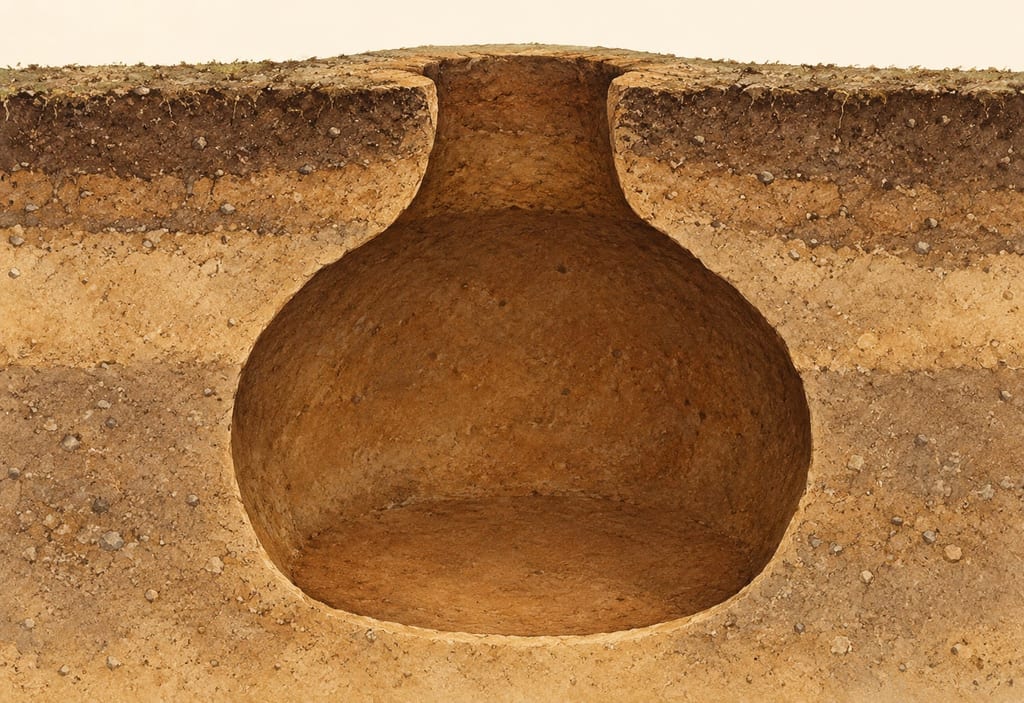
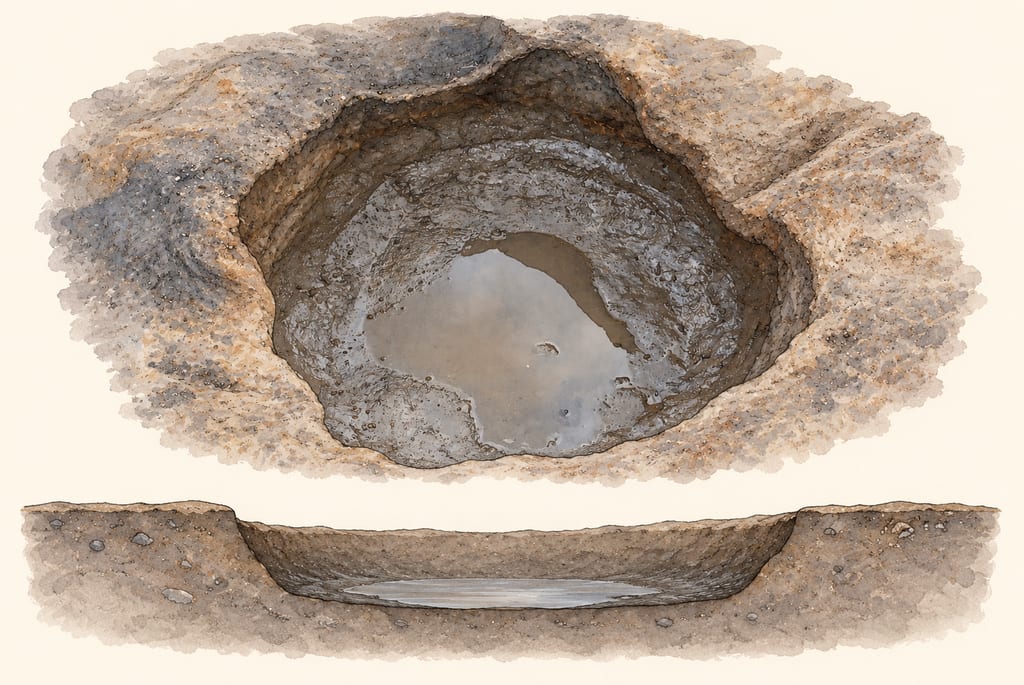
At Sannai Maruyama, a settlement in Aomori, storage pits were dug outside the residential area at the edges of flat ground. Some of the excavated features have a flask-like outline: a small opening leads to a much broader floor. The site interprets them as places for storing nuts or chestnuts, although that is a probable function rather than a statement about every pit's contents.
The largest pits reach about two metres deep. The official description does not give their mouth width, floor diameter, lining, cover, or exact excavation sequence. The profile matters because a narrow opening sits above a larger storage space, but the available account does not specify how people accessed or closed each example.
Sources for this section
Storage evidence, not fermentation
These features belong to a settlement with a long Jōmon occupation and substantial plant use. The site profile describes the broader settlement chronology as approximately 3900–2200 BCE; that range should not be mistaken for a precise date on an individual pit. The storage-pit page itself presents the nut or chestnut interpretation as probable.
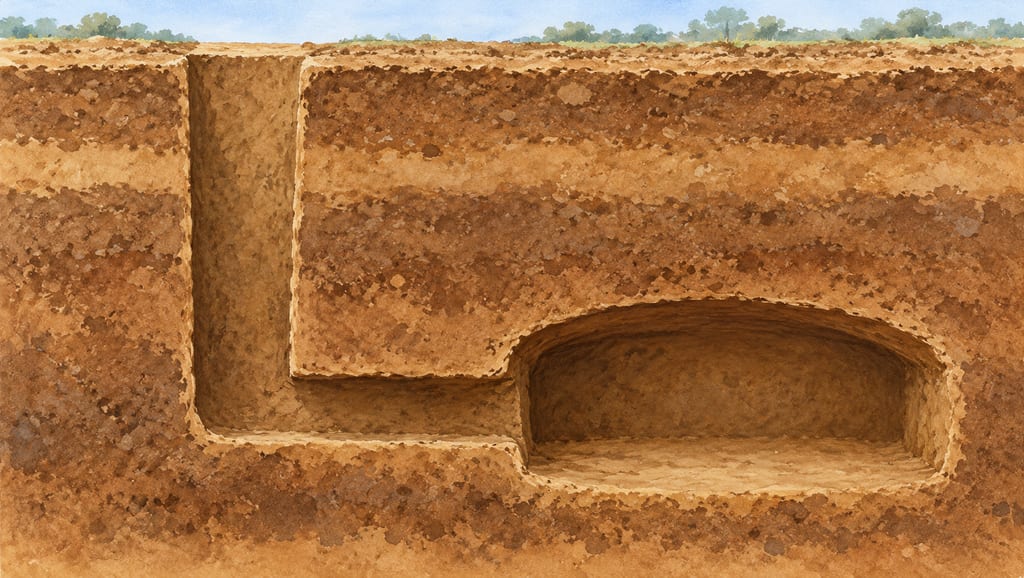
The excavated form supports a dug storage structure, not a fermentation vessel. The sources inspected do not document fermentation, a moisture-control system, a lining material, or a standard preservation method. The narrow-mouth, broad-floor form is reported for some pits, so it should not be imposed on every underground feature at the site.
Sources for this section
Limits of reconstruction
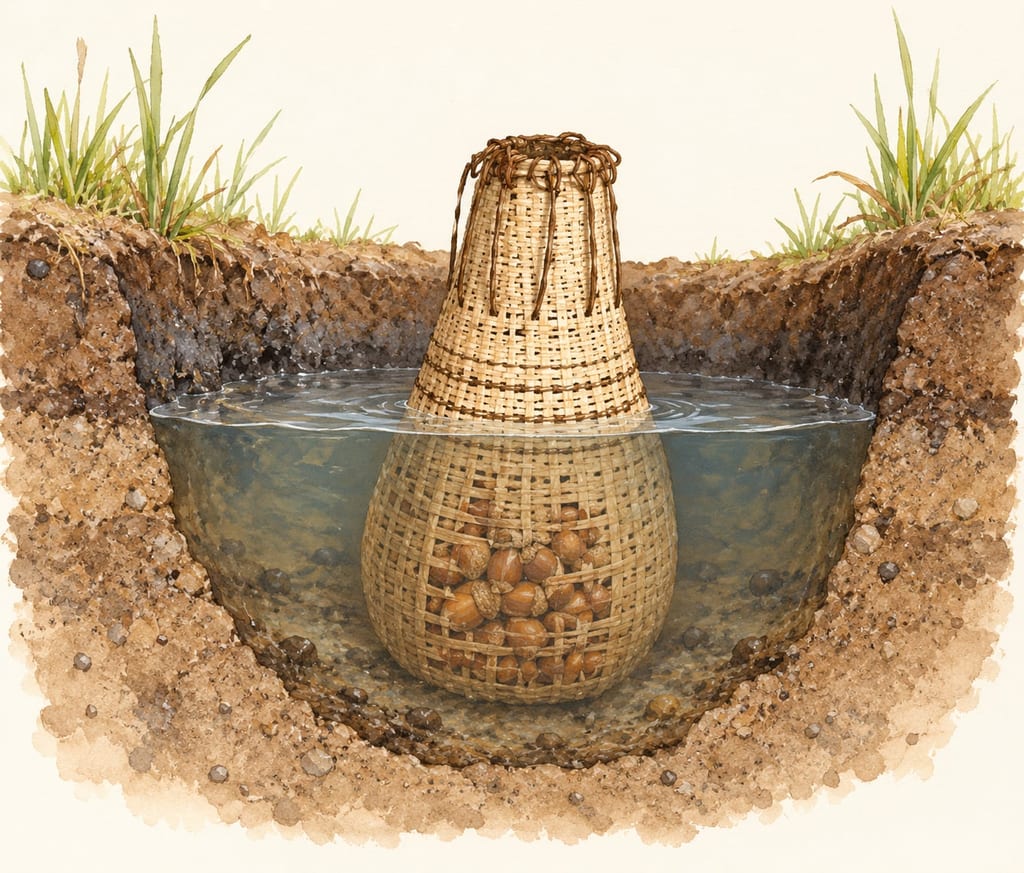
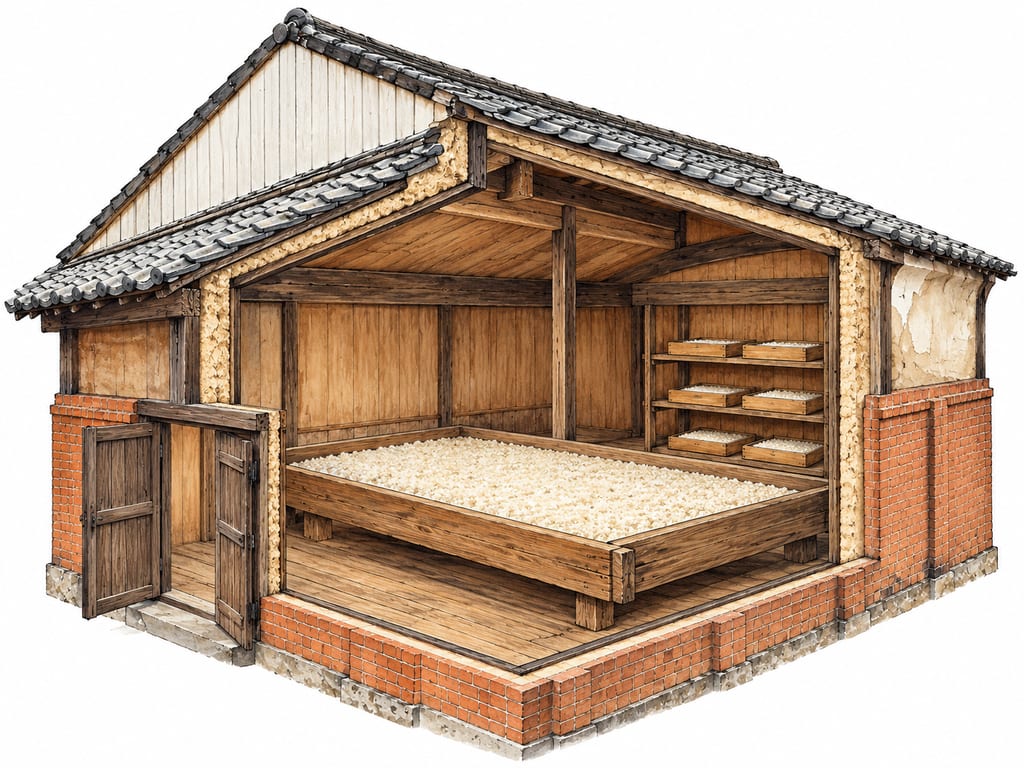
The official page includes a photograph of a pit during excavation, which supports the archaeological subject but does not show a complete reconstructed fill or closure. A more detailed cutaway would need evidence for the unseen floor contents, lining and sealing; those details are not specified in the inspected account. This record therefore describes only the supported profile and probable storage use.
Sources for this section
History
The Sannai Maruyama site's official account identifies flask-shaped storage pits with a narrow opening and large floor, interpreted as nut or chestnut stores. Individual pits are not separately dated in that account.
Site
SettingOutside the Sannai Maruyama settlement, along the edges of a flat area.
GroundThe official site description establishes dug pits but does not identify soil type, wall treatment or lining.
ClimateNot described in the pit account.
FootprintSome larger examples reached approximately 2 metres in depth; mouth width and floor dimensions are not specified.
NotesThe flask profile is reported for some, not all, storage pits. Their contents are interpreted as nuts or chestnuts rather than identified in every feature.
A build is made where it stands: moving it means building it again.
Places
Sannai Maruyama Site, Aomori City
Historical attestation · Locality evidenceUNESCO reference point for component 1632-007, Sannai Maruyama Site. Locates the 23.5 ha archaeological site, not a separately surveyed individual storage pit.