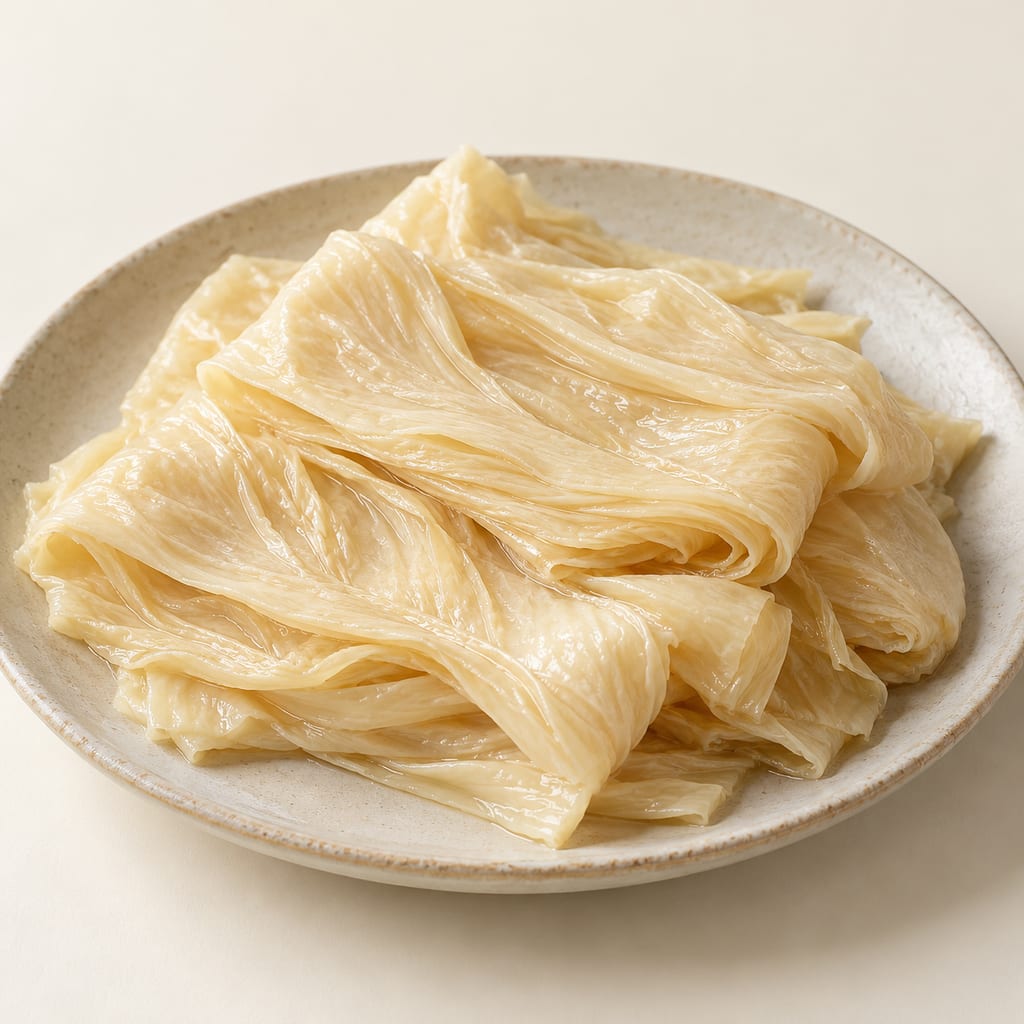
Yuba (soy milk skin)
The protein-lipid film that forms on hot soy milk, lifted sheet by sheet from a wide shallow pan; eaten fresh, or dried for later use.
 FermenteaWhere food goes to change
Built structures · Incubators and warm holds
yuba pan · yusen pan
A wide shallow pan of soy milk standing in a controlled hot-water bath, so that the bath heats evenly while the open surface forms film after film of yuba.
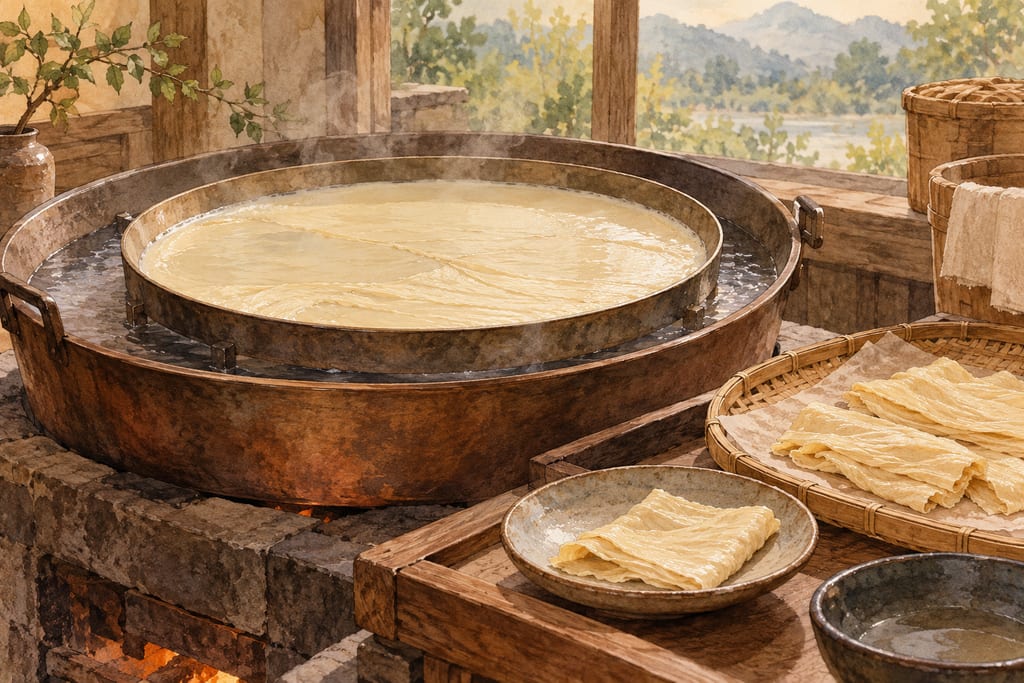
A wide shallow pan of soy milk stands in a controlled hot-water bath. The bath heats evenly while the open surface forms film after film of yuba.
This is a documented arrangement. MAFF's Kyoto yuba page describes soy milk poured into a pot fitted with a square wooden frame and warmed over a hot-water bath (yusen) or low heat, with each film lifted by hand or skewer. Li and colleagues (2026) stood a stainless-steel pot of 7% solids soy milk, boiled for 3 minutes first, with its base fully immersed in an 85 °C bath, and lifted a film every 20 minutes until none formed. Chen's group also used an 85 °C bath. A home version built from a circulator and a household pan is untested.
Yuba is a protein-lipid film that assembles at the soy milk and air interface. Heated proteins denature and bond, oil bodies are trapped, and evaporation densifies the film.
Each sheet is as large as the exposed surface, so width matters and depth does not. The bath caps the heat reaching the pan base at the bath temperature, while the open surface loses water.
Yuba: the pan's film is lifted as each sheet forms. The laboratory study gives the process; the Kyoto entry gives the traditional frame and bath.
Measure the milk temperature just below the surface, the time between sheets, the number of sheets, and the milk volume and solids (Li used 7%).
The laboratory reports give the bath setpoint, not the milk temperature. The milk level falls by evaporation and as films are lifted. Sheets per litre are unreported.
No storage data exists for fresh home yuba.
Kyoto yuba is a traditional method described in MAFF's food-heritage entry. The 2026 laboratory study used a stainless-steel pot in an 85 °C bath. The home circulator version is untested.
A build is made where it stands: moving it means building it again.
The Kyoto yuba entry describes soy milk poured into a pot with a square wooden frame over a hot-water bath (yusen) or low heat.
The protein-lipid film that forms on hot soy milk, lifted sheet by sheet from a wide shallow pan; eaten fresh, or dried for later use.
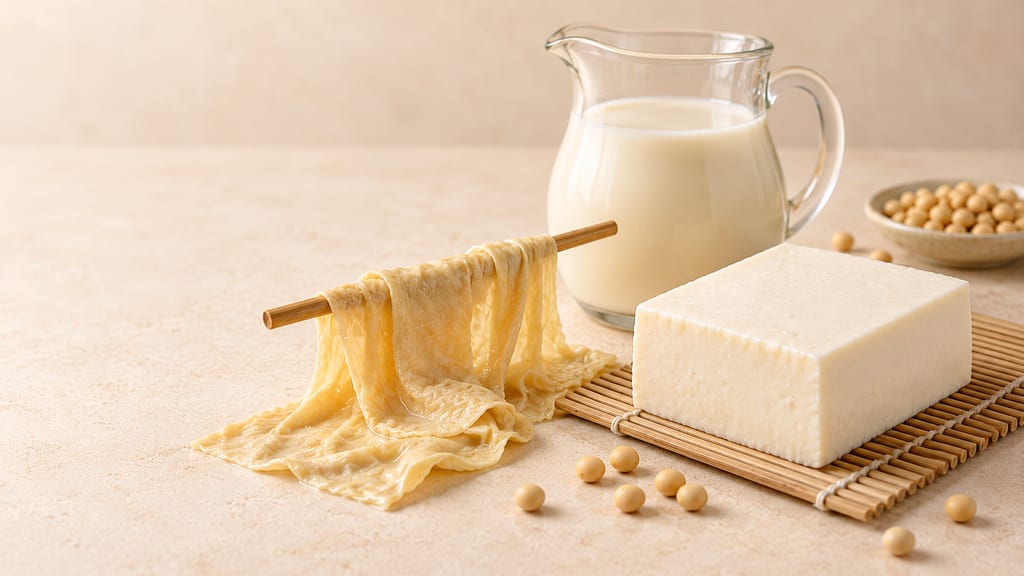
Soybeans become a drink, a set curd or a lifted skin depending on how the hot milk is held: still in a deep container, broken and pressed in a mould, or spread wide in a shallow pan.
A slow cooker, a brewing kettle or a dehydrator can take over the hard part of many old food crafts, once you see each appliance as a set of physical functions and give it the right container.
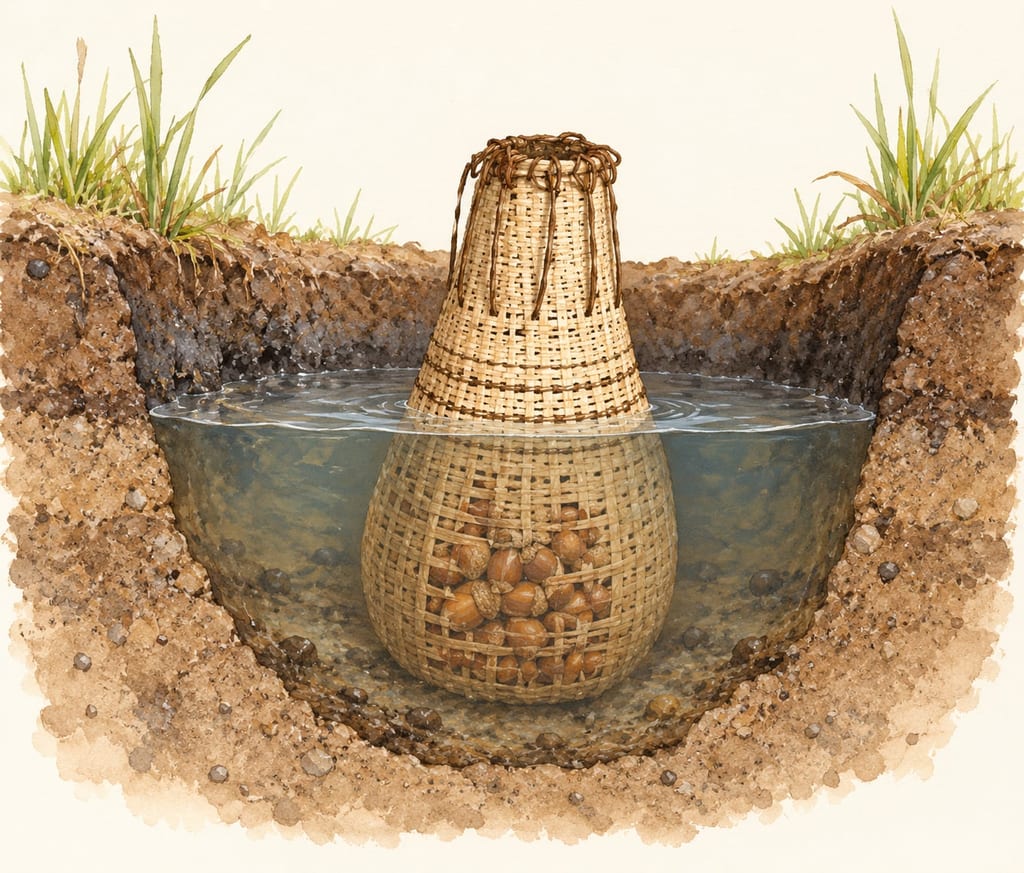
At Higashimyo in Saga, 155 round Early Jōmon storage pits were about 40–70 cm wide and 1 m deep. More than 700 baskets were recovered; Saga City interprets acorn soaking as a possible use, not a documented arrangement.
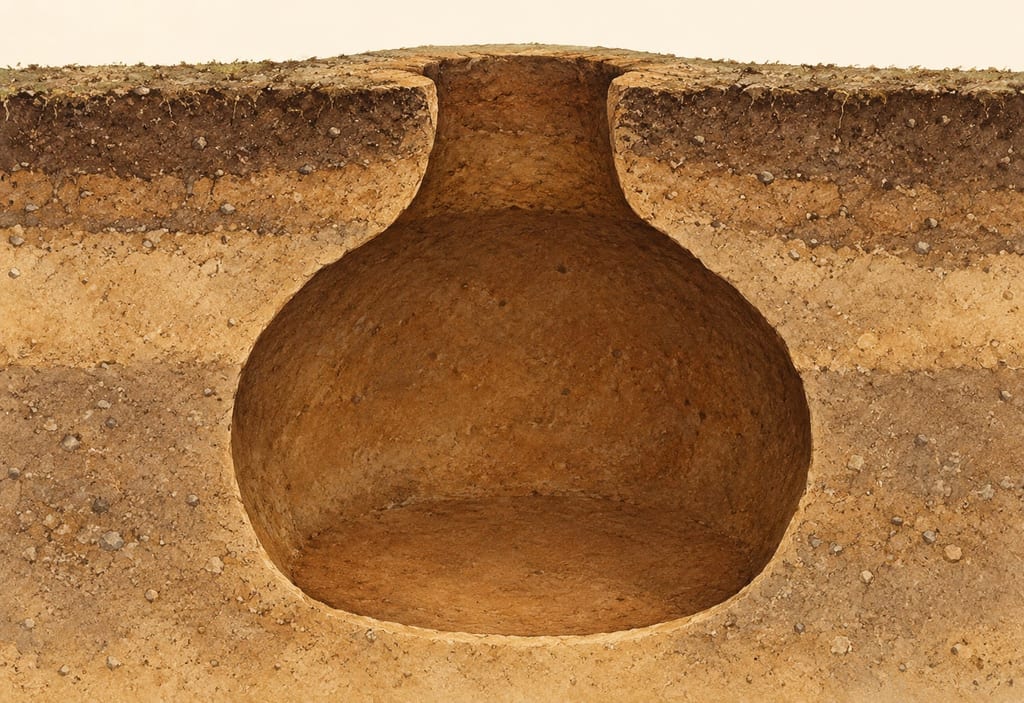
At Sannai Maruyama in Aomori, some Jōmon storage pits had a narrow mouth and broad floor, with larger examples reaching two metres deep; nuts or chestnuts are the proposed stores.
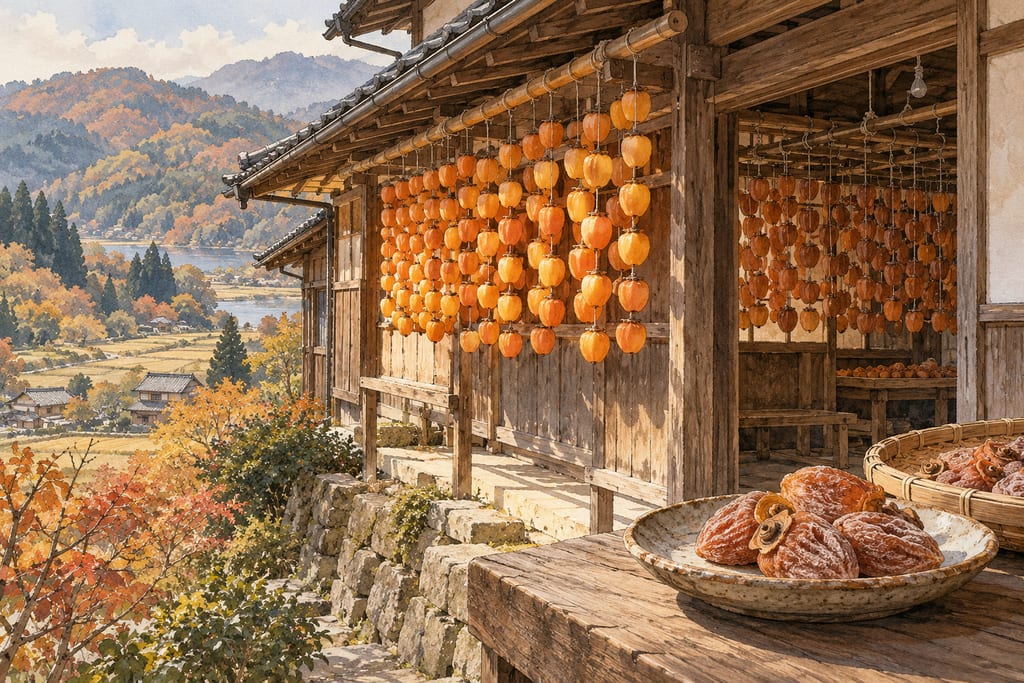
A wooden hut attached to a house in Shimane Prefecture, Japan, where persimmons are hung in the sun and wind and then dried indoors for hoshigaki.
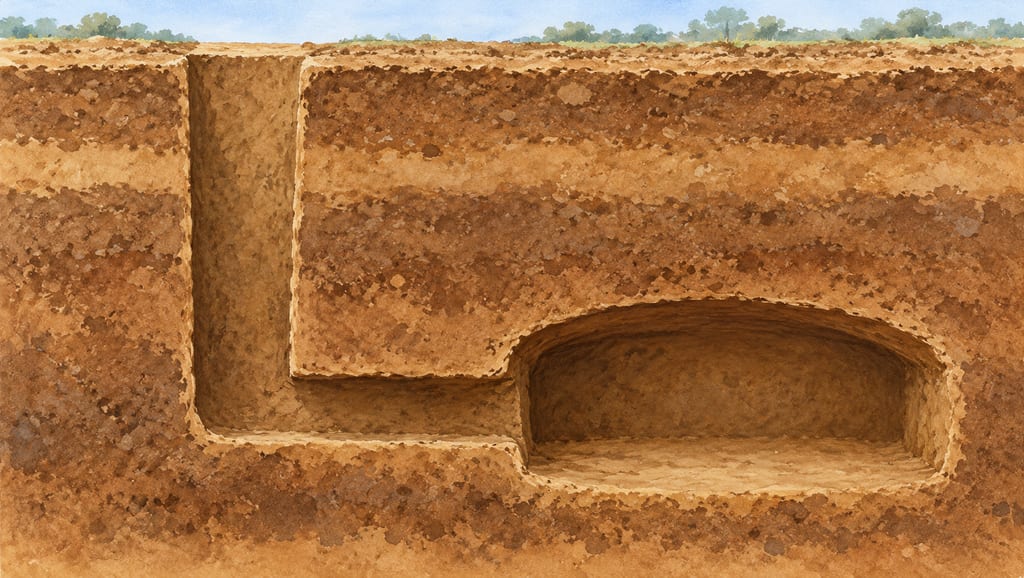
A source-bounded account of Edo’s subterranean kōji chambers: shafts led through narrow passages to low rooms cut into Kantō loam for cultivating kōji. Excavated examples vary by site.
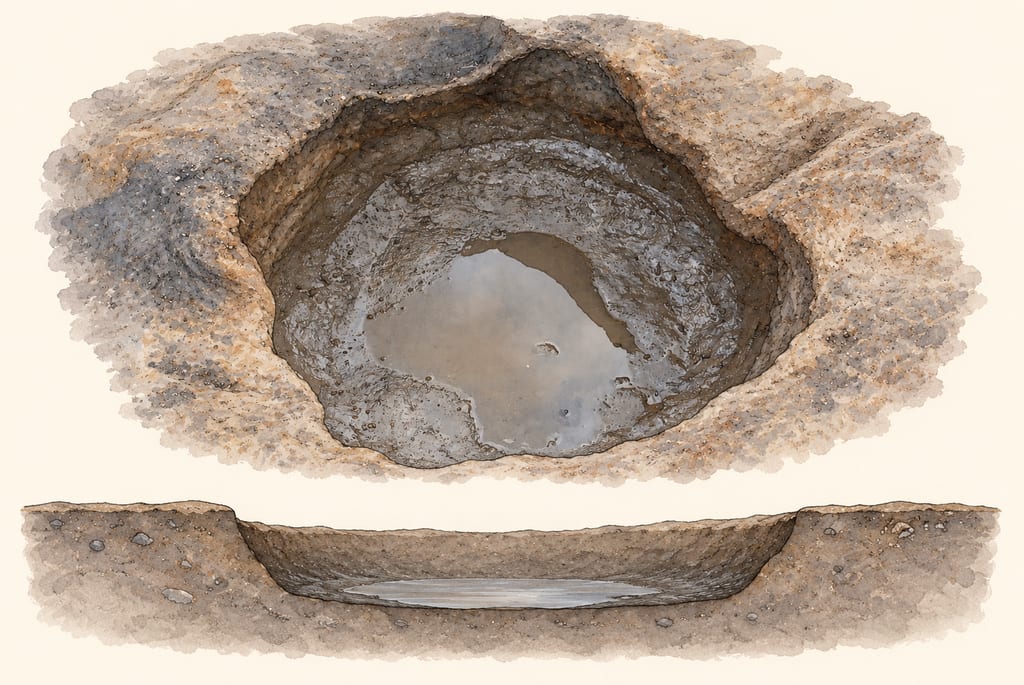
At Maeda Site in Aira, southern Kyushu, a late Middle Jōmon wetland held 72 pits associated with more than 100,000 acorns. The pits were dug in a groundwater-fed valley; their use may have included storage or soaking and sorting.
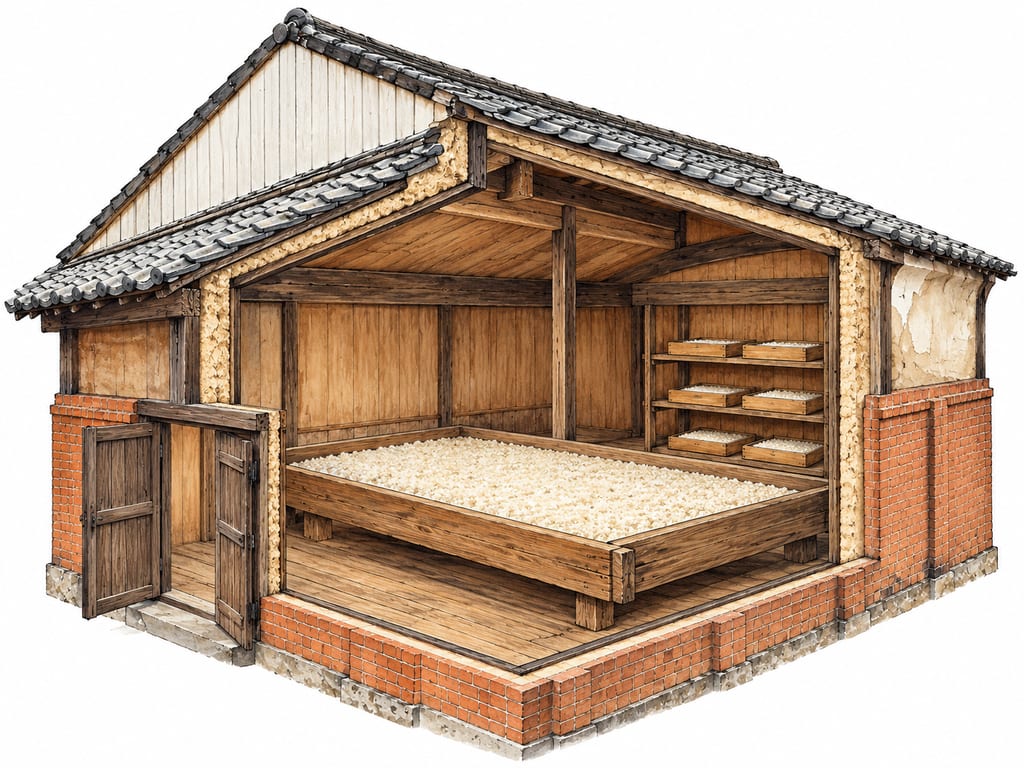
A Japanese koji-making work area may combine a broad toko bed, tana shelves for trays and an insulated koji-muro room. The terms describe distinct scales; sources document more than one working arrangement.

Soft, spreadable Calabrian pork sausage made with a great deal of red chilli and fatty pork, stuffed into natural casings, sometimes smoked and matured while staying soft.

A way to add independent temperature logging to an existing food dehydrator without changing its built-in controls or protections. It is a monitoring method, not a rewiring plan.

Pleurotus cystidiosus is the abalone mushroom, a cultivated oyster-type fungus with dark brown caps that grows more slowly and is more demanding than other Pleurotus species.

A dark, balanced vinegar from Emilia-Romagna made by combining cooked or concentrated grape must with wine vinegar, then acetifying and refining it in wood under a protected specification.

A living dairy inoculum that starts controlled cream fermentation, developing acidity and aroma before sour cream or cultured butter is finished.

A small electric incubator holds jars at a selected temperature for yogurt and other documented warm food preparations. Controls, capacity and vessel arrangement vary by model.

Adygean salt is a seasoned table salt associated with Adygea and the wider North Caucasian culinary tradition. Salt is blended with garlic and a variable selection of herbs and spices; the exact mix depends on the named style and maker.

The African Caesar-group mushroom, Amanita masasiensis, is a wild ectomycorrhizal species of central and southern African woodlands, eaten locally. The genus contains deadly poisonous species, so identification needs care.
No community contributions have been published for this entry yet.
Sign in to contribute. Published comments and photos are free to read.
Ministry of Agriculture, Forestry and Fisheries (MAFF), JapanMethod
京湯葉(きょうゆば)|にっぽん伝統食図鑑:農林水産省Cited in: Overview; Documented uses
Ministry of Agriculture, Forestry and Fisheries (MAFF), JapanMethod
身延ゆば(みのぶゆば)|にっぽん伝統食図鑑:農林水産省Foods 15(6):1094 (MDPI), 2026Method
Microwave Pretreatment of Soybeans Prior to Soaking Enhances Mechanical and Rehydration Properties of YubaCited in: Overview; How it works; Documented uses; Measuring; Limits
Foods 14(16):2916 (MDPI), 2025Method
Characterization of Whey Protein Isolate–Soymilk Complexes Modified by Transglutaminase and Their Application in Yuba Film