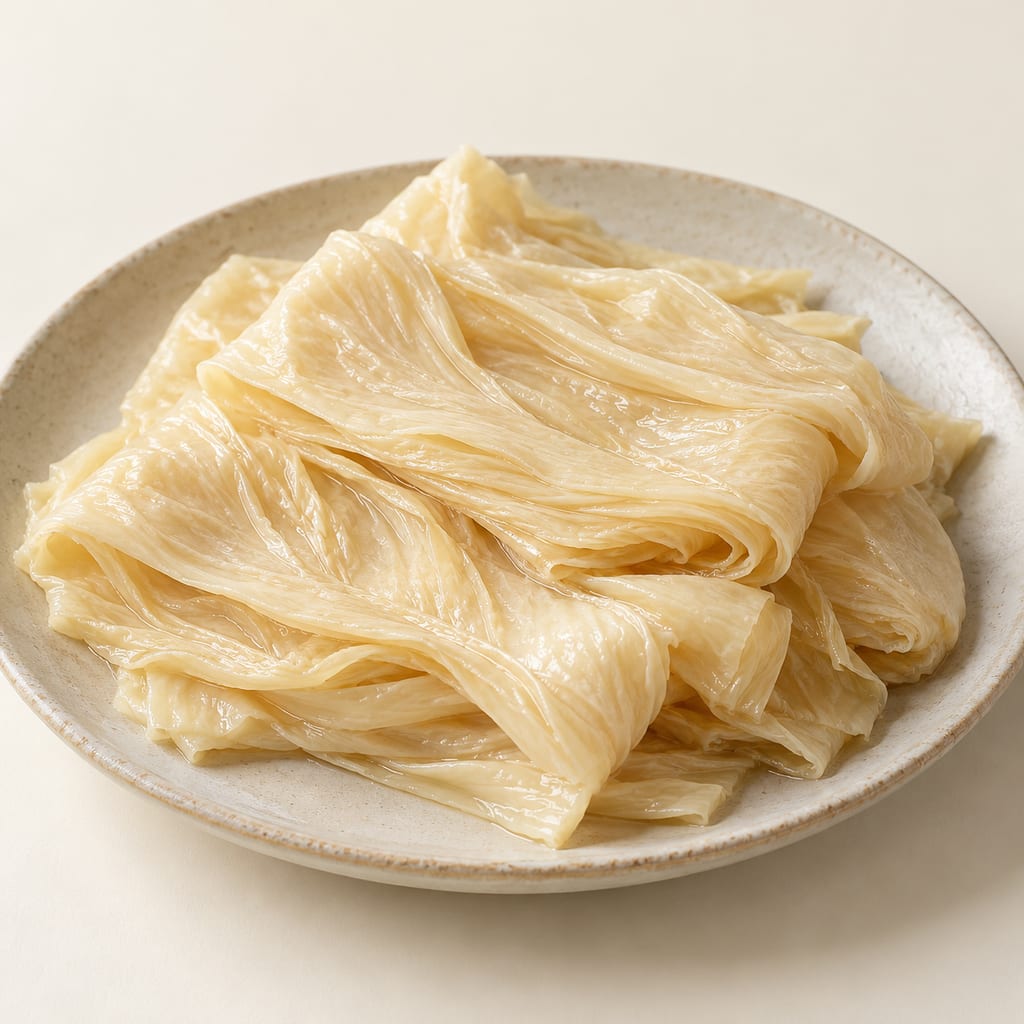
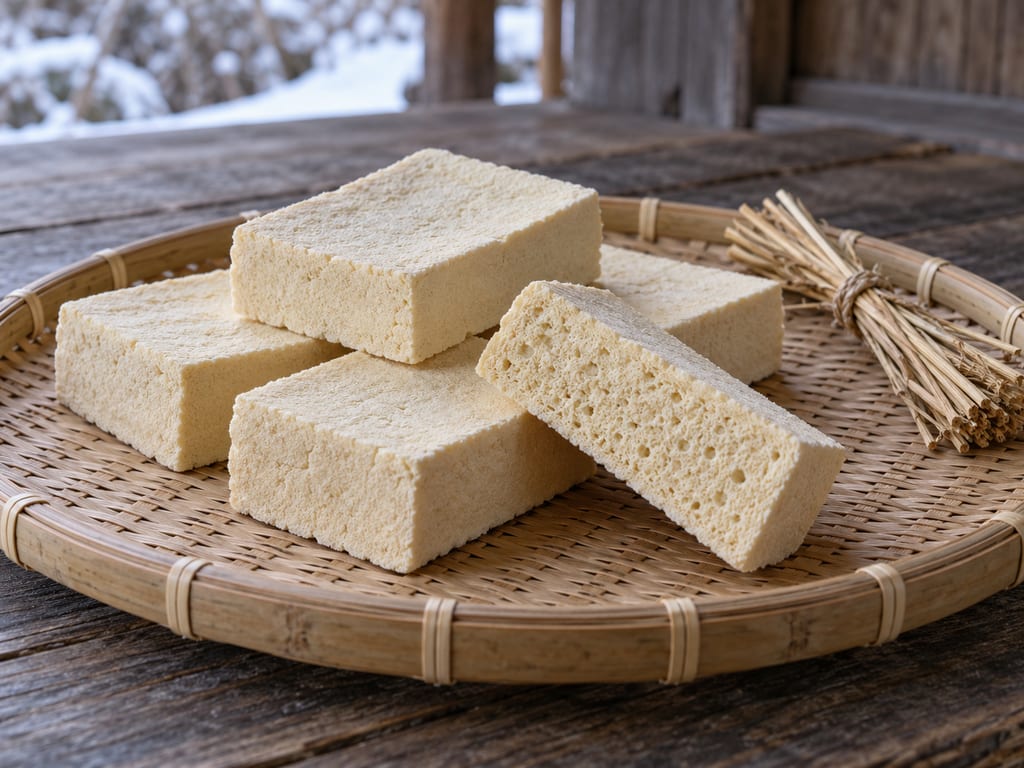
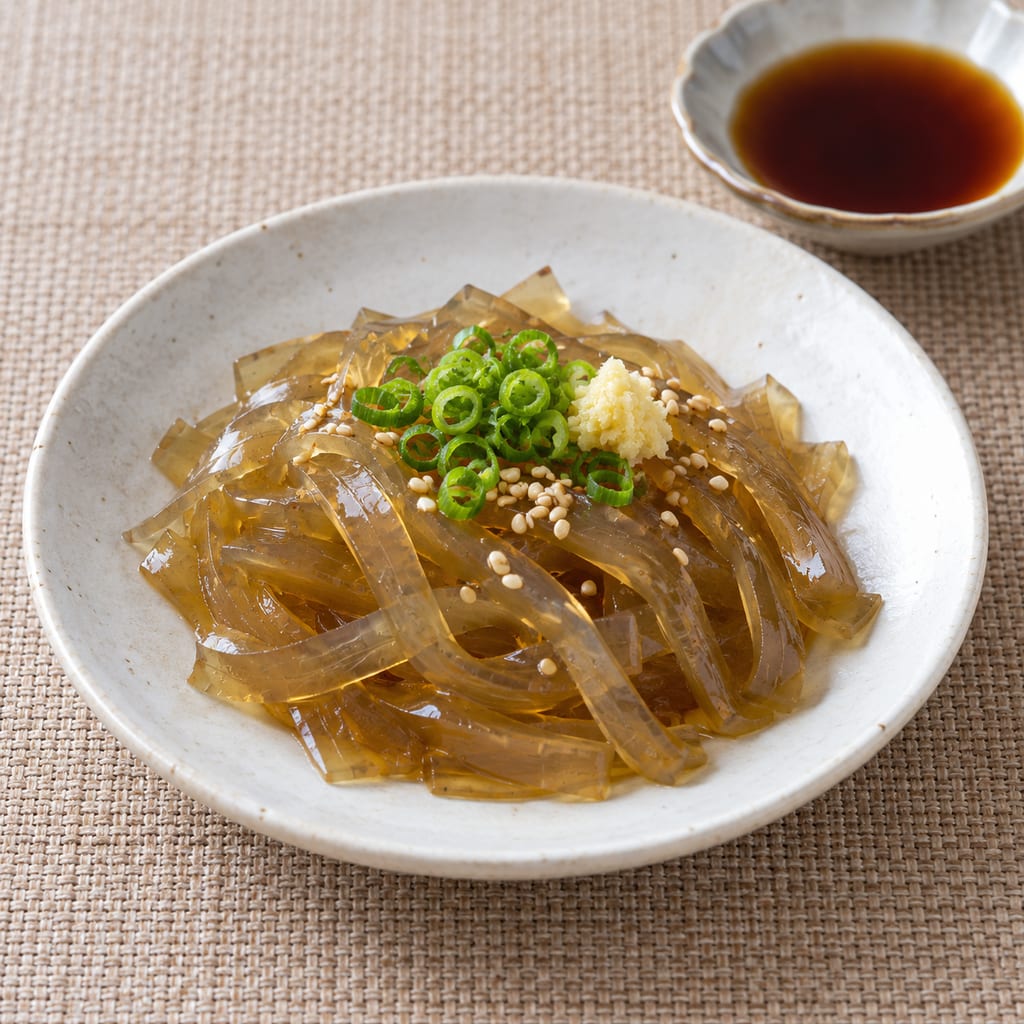
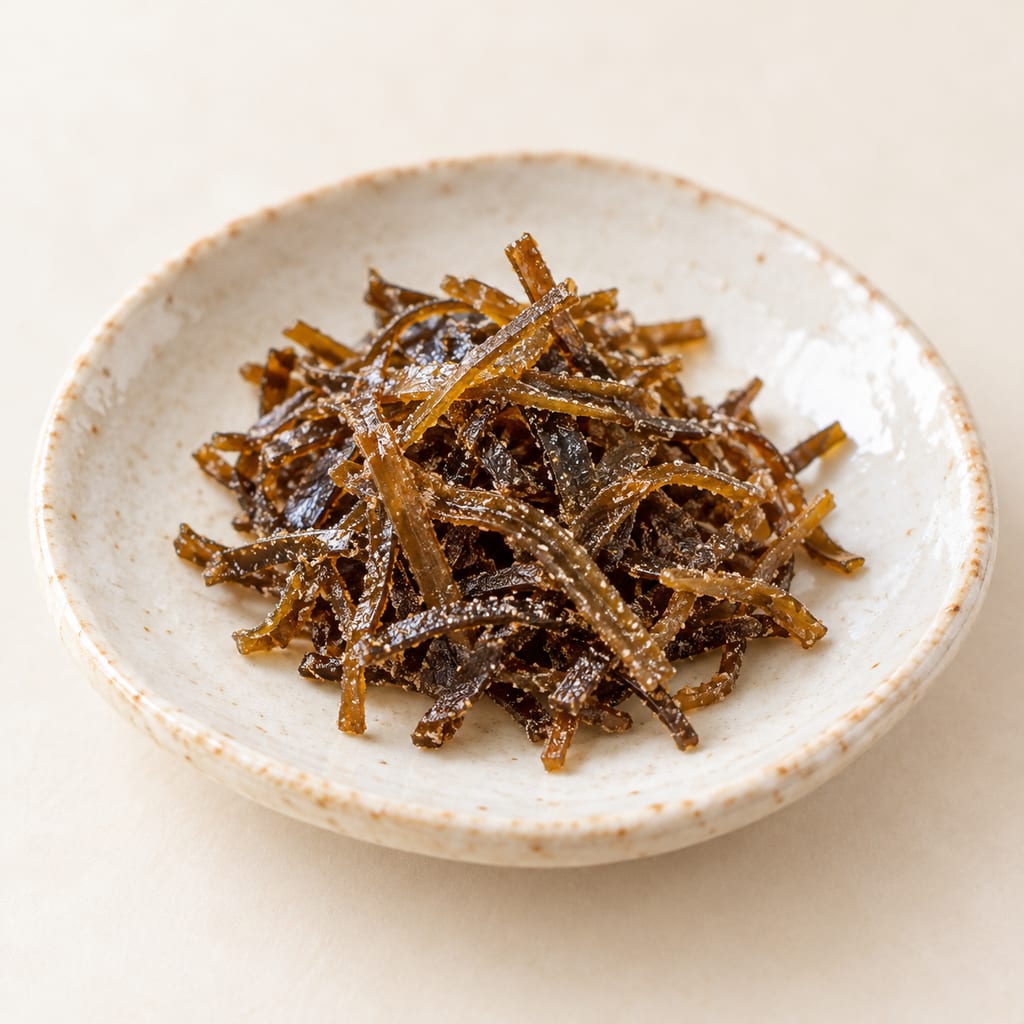
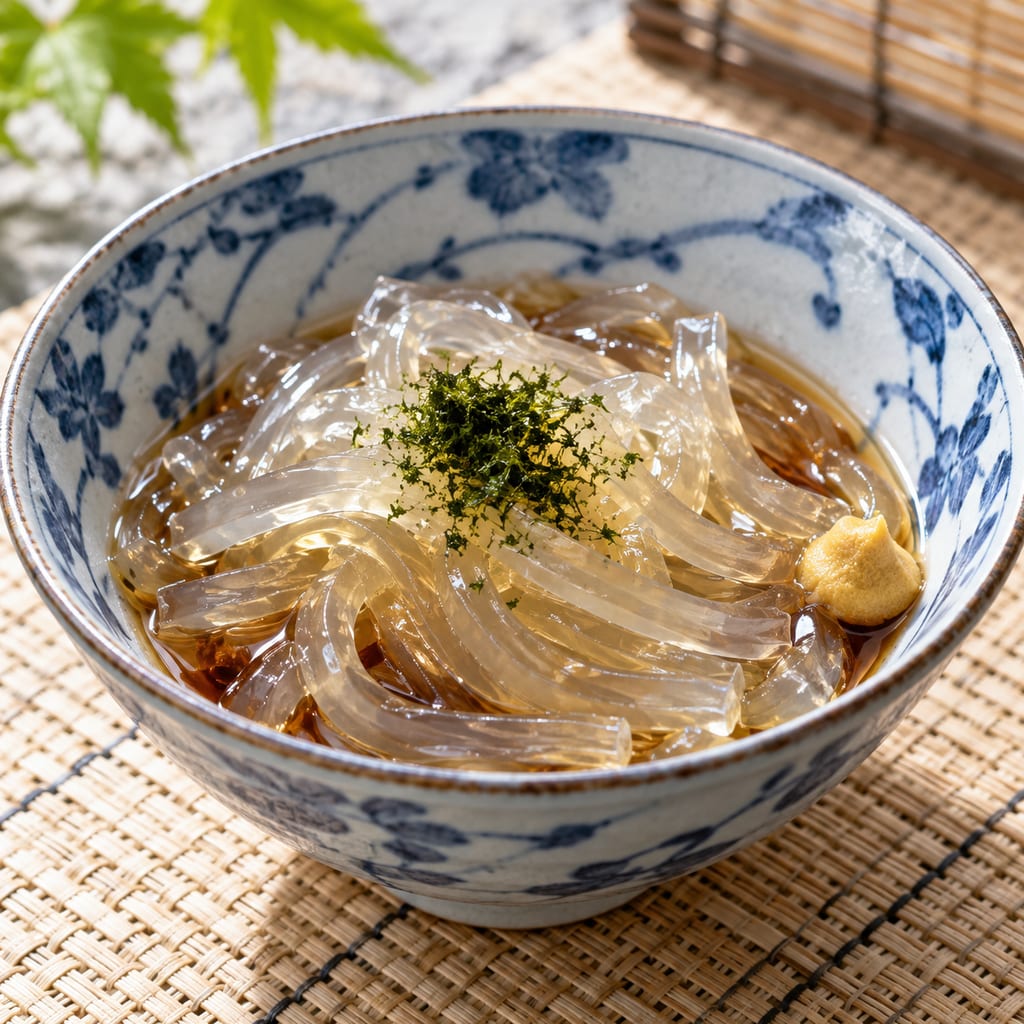
Yuba is the thin skin that forms on the surface of soy milk as it is held warm. The film is mostly protein and fat, and it is lifted off by hand or with a skewer, one sheet at a time, as each one sets. Fresh sheets are eaten soft, often in a simmered dish or as sashimi-style slices in Minobu. They can also be dried and rehydrated later. Shurtleff and Aoyagi's account of the film says that the earliest Chinese reference is a record of 1695, and the word yuba is recorded in 1813, so the name is later than the thing.
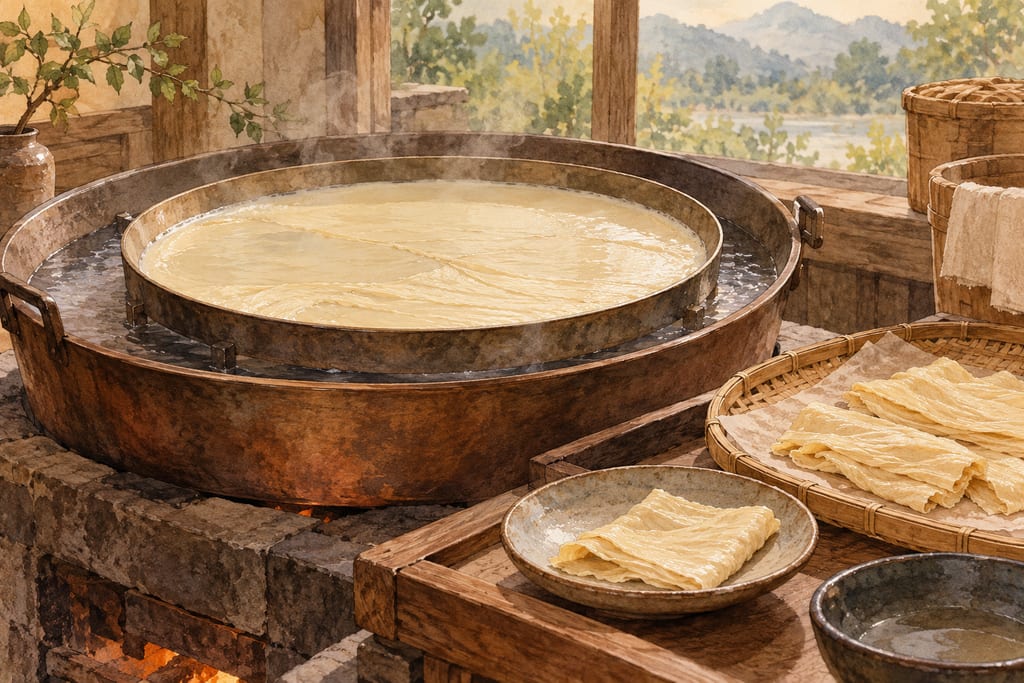
The sources hold two traditions apart. Kyo-yuba from Kyoto is made in a pot fitted with a square wooden frame, warmed over a hot-water bath or on low heat, and its films are lifted by hand or skewer. Minobu yuba in Yamanashi is made in a flat pan with a stick. Each is a documented preparation, and neither is merged with the other here.
The Kyoto method starts from soy milk made by soaking, grinding and simmering the beans over low heat, then separating the milk from the okara. The milk is poured into the framed pot and warmed over the hot-water bath, the yusen, or over low heat. As the surface heats, a thin film forms. It is lifted off by hand or with a skewer, and that first sheet is fresh yuba, or hikiage yuba. The later sheets are the same product, lifted as they form.
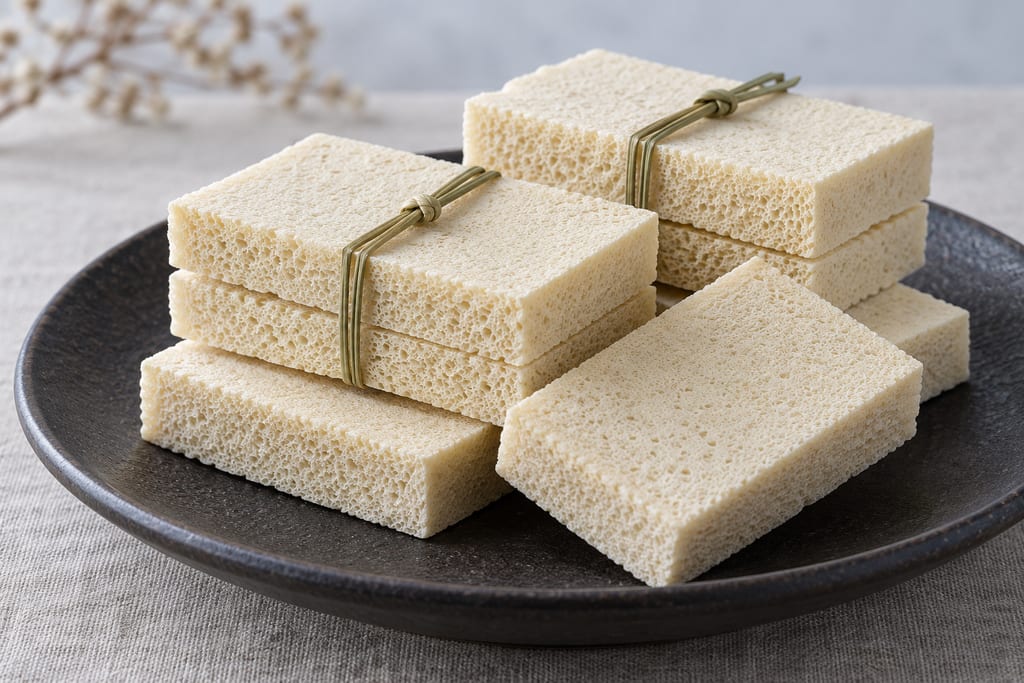
For dried yuba the fresh sheets are dried, and the dried form is rehydrated before use. The sources give no drying time or temperature for the Kyoto method.
A 2026 study in Foods used soy milk at 7.0% solids and pH 7.5, boiled for three minutes, and poured into a stainless steel pot whose base sat in a water bath held at 85°C. A film was collected every 20 minutes until no further film formed, and the films were dried at 60°C for six hours. The study is a controlled laboratory report, and its milk temperature was not reported, so it is not a home schedule.
A film every twenty minutes puts the yield in the study's hands, not the cook's. Shurtleff and Aoyagi cite a 1921 record of fifteen to twenty films from one batch. The sources give no sheets-per-litre figure for a home pan.
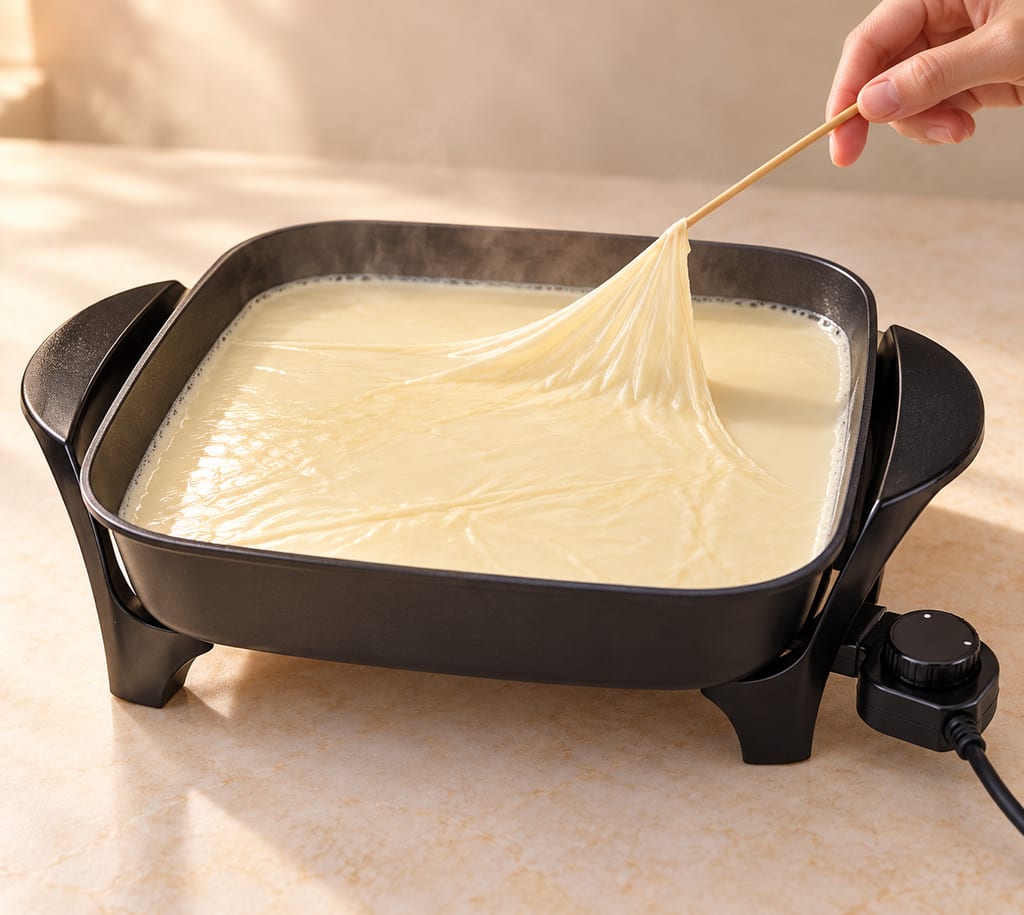
A hotplate or electric skillet route appears in a Japanese cooking publication that a dossier describes, but that publication was not identified, so its heat settings and pan are not sourced and the route is not given here as a method. Using an appliance for the hold is an untested adaptation, and the Kyoto pan over a controlled hot-water bath is the documented route to follow.
The home milk temperature and the bath setting that reaches it are not given. The pan size, the sheets per litre and the evaporation rate are not reported. No storage time is given for fresh yuba, and the dried form's storage is not stated beyond rehydration before use.
The earliest Chinese reference given is a 1695 record of doufupi and fuzhu, which the sources tie to the film. The Japanese temple traditions that MAFF gives are not confirmed by the documents read.
Ingredients
Scaling: source batch only
Soy milk for yuba (filtered)boiled 3 minutes before panning (Li et al.)
Amount not stated
Li et al. used 7.0% solids, pH 7.5; volume not given
Method
Risks and precautions · Standard risk
Fresh yuba is a perishable food. No shelf life for home-made fresh yuba is given in the sources, so treat it as a fresh food and do not keep it on the basis of this page.
The bath setting is not the temperature of the milk. Probe the milk just below the surface.
Soak the soybeans, grind them in a mill and simmer the slurry over low heat; separate the soy milk from the okara (Kyoto method).
Pour the soy milk into a pot fitted with a square wooden frame and warm it over a hot-water bath (yusen) or over low heat.
When a thin film forms on the surface, lift it off by hand or with a skewer. This first sheet is fresh yuba (hikiage yuba); lift the later films as they form.
For dried yuba, dry the fresh sheets and rehydrate them before use. The source gives no drying time or temperature for this method.
Conditions
Temperature80–90°C
Temperature controlIncubated
Places
Kyoto, Japan
Traditional preparation · Locality evidence
Kyo-yuba, the Kyoto form. Shurtleff and Aoyagi give Japan's oldest yuba shop as 1716.
A portable electric skillet or shallow hotplate can provide a wide, open heated surface for a modern home adaptation of yuba making. It is not the traditional Kyoto or Minobu yuba pan, and its control dial does not measure the soy milk.
A wide shallow pan of soy milk standing in a controlled hot-water bath, so that the bath heats evenly while the open surface forms film after film of yuba.
A traditional Fukuoka seaweed jelly made by boiling dried egonori, sometimes with igisu, until it forms a thick extract that sets into soft sheets, eaten cold with soy sauce, vinegar and aromatic condiments.
A Japanese jelly made by boiling agar-rich red seaweed, straining the extract and letting it set, then pressing it into strands served with vinegar-soy sauce or sweet syrup.
Japanese reddish-brown vinegar from sake lees matured about three years, turned to vinegar by acetic bacteria; the vinegar of Handa and Edomae sushi rice.
A thick, naturally sweet rice-and-koji preparation used to add body and sweetness to marinades, dressings and sauces. This method follows a published Marukome home recipe and is an enzyme-conversion hold, not a way to grow koji mould.
Amabito no Moshio is a modern, pale beige Japanese seaweed salt made from Seto Inland Sea water and hondawara seaweed. Its documented factory method concentrates filtered brine in kettles, then separates and dries the salt.
Fresh firm tofu is made by coagulating cooked soybean milk, then draining and pressing the curds into a sliceable block. This version follows a published nigari method and traces tofu’s varied, contested history.
A Korean-style soy drink of cooked whole soybeans blended with cold water, sesame and salt and served at once; tofu-making soy milk is a different, filtered milk.
A gelling polysaccharide extracted from red seaweeds, sold as kanten strips or powder; it sets firm at a low concentration and stays solid until about 85 °C.
A Dominican table and seasoning condiment of sour orange juice, mixed with lime and salt and bottled raw; garlic, oregano or a hot pepper may be added for meat or a spicier bottle.
Cicerbita alpina is an alpine perennial whose tender shoots and leaves have been eaten raw or cooked. Sámi milk preparations and modern Carnian dishes are distinct uses, with serious identification and preservation limits.
Japanese skipjack tuna cooked, then repeatedly smoked and dried over a wood fire by the hand-fired tebiyama method into a hard block for shaving into dashi: the first stage of katsuobushi.
Bechamel is a white sauce of milk thickened with a butter and flour roux, one of the French mother sauces, and the base from which Mornay and other cheese and cream sauces are made.
Community
No community contributions have been published for this entry yet.
Share what you made
Sign in to contribute. Published comments and photos are free to read.