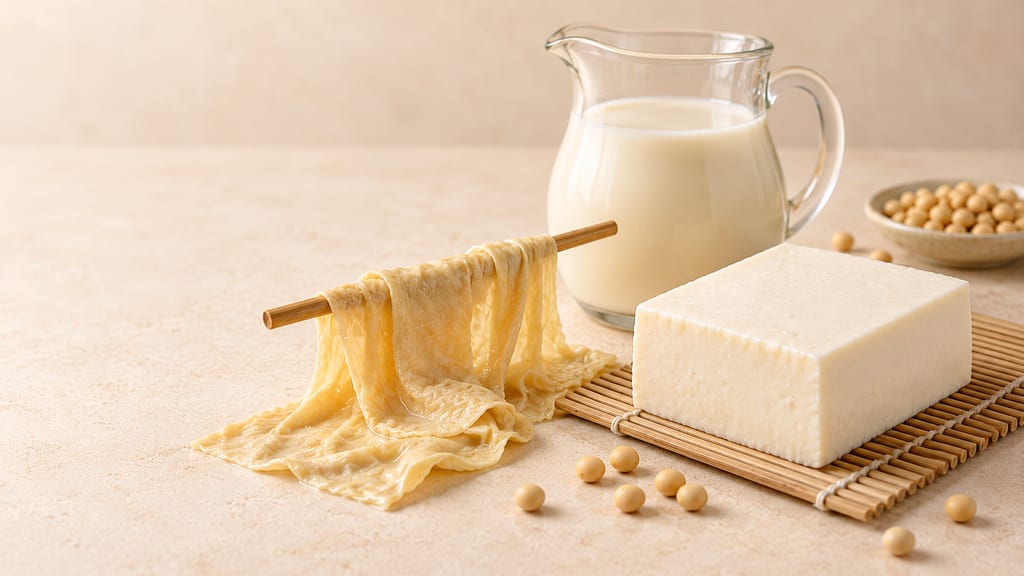
Soy milk, tofu and yuba: why the pot's shape matters
Soybeans become a drink, a set curd or a lifted skin depending on how the hot milk is held: still in a deep container, broken and pressed in a mould, or spread wide in a shallow pan.
 FermenteaWhere food goes to change
Traditional method
凍り豆腐 (kōri-dōfu) · kōya-dōfu · shimi-dōfu · kori-tofu · Iwadeyama kōri-dōfu
Japanese tofu frozen, aged below freezing, thawed and dried to a light sponge that is simmered in dashi; Iwadeyama makes it in winter air.
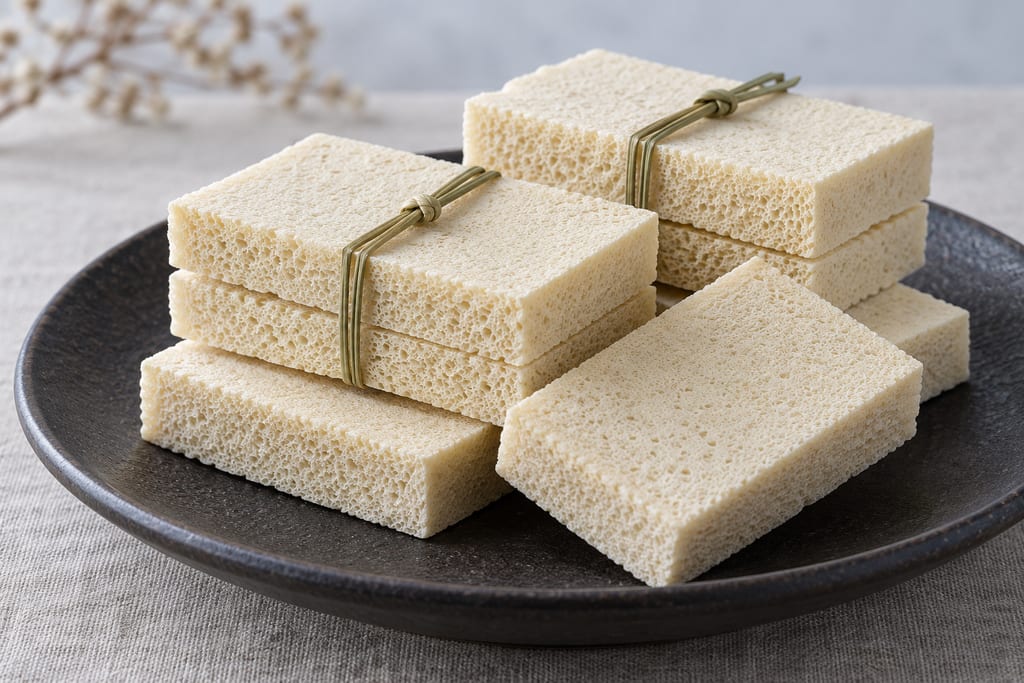
Kōri-dōfu is tofu that has been frozen, aged below freezing, thawed and dried until it becomes a light, porous sponge. The name means frozen tofu. It is rehydrated before cooking and then simmered in dashi.
MAFF lists it among the processed bean products of Japan, beside koya-dōfu and shimi-dōfu, and describes it as a tofu made by drying. The Iwadeyama district of Miyagi is the best-known place where it is still made by the winter method.
The documented Iwadeyama route runs from December to March. Tofu is made from Miyagi-grown soybeans and nigari, aged for about two weeks just below freezing, thawed, soaked to remove bitterness, tied with igusa rush, hung, frozen again and dried in the cold, dry winter air for about a week.
The freezing opens the curd into a sponge and the winter air dries it without heat. MAFF describes the method in these terms and gives no temperature for the ageing stage, so that figure is unknown here.
The FAO account of soybean protein products describes the industrial process, which differs from the Iwadeyama route. Tofu is set with calcium chloride, cut into tablets, frozen and held frozen for up to three weeks, thawed, pressed to remove much of its water, air-dried, cured with ammonia gas and packaged. Before use the blocks are rehydrated.
A 2022 trial of soy kōri-tofu used a product made with high-pressure pressing, freezing, ageing and drying to about 8 per cent moisture. A 2025 study compared frozen tofu aged at −3 °C with tofu aged at −21 °C; the warmer ageing hardened the tofu more. These studies describe production, not a home method.
No home method for kōri-dōfu is documented in the work reviewed here. A home freezer can perform the freezing stage, but no source gives a drying endpoint, a moisture target or a safe way to dry frozen tofu at home. A frozen block that has not been dried is not yet kōri-dōfu.
Until a validated home route exists, the Iwadeyama method is the reference for the product and the industrial account is the reference for the process steps.
MAFF documents the Iwadeyama tradition. It records the 1842 start as local tradition and the 1876 shipments from a district gazetteer. The regional name and the GI status are the best-attested facts about the product.
Scaling: source batch only
Ammonia-gas curing is an industrial step in the FAO account and is not part of any home method.
A home-frozen block is not kōri-dōfu until it is dried; no home drying endpoint is documented.
The GI-registered Iwadeyama kōri-dōfu.
Local tradition says the forerunner method (hyō-dōfu) was learned here; no primary source dates it.
Soybeans become a drink, a set curd or a lifted skin depending on how the hot milk is held: still in a deep container, broken and pressed in a mould, or spread wide in a shallow pan.
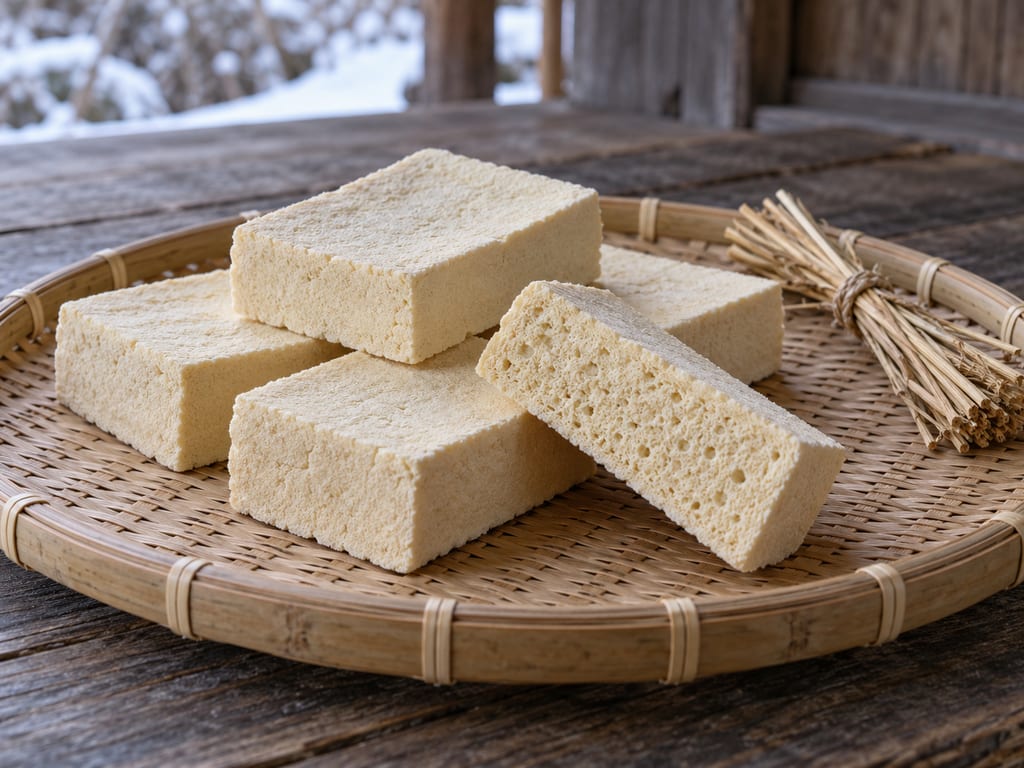
Tofu frozen, thawed, pressed and dried into a porous, durable soybean food; Japanese sources trace the tradition to the late Kamakura period.
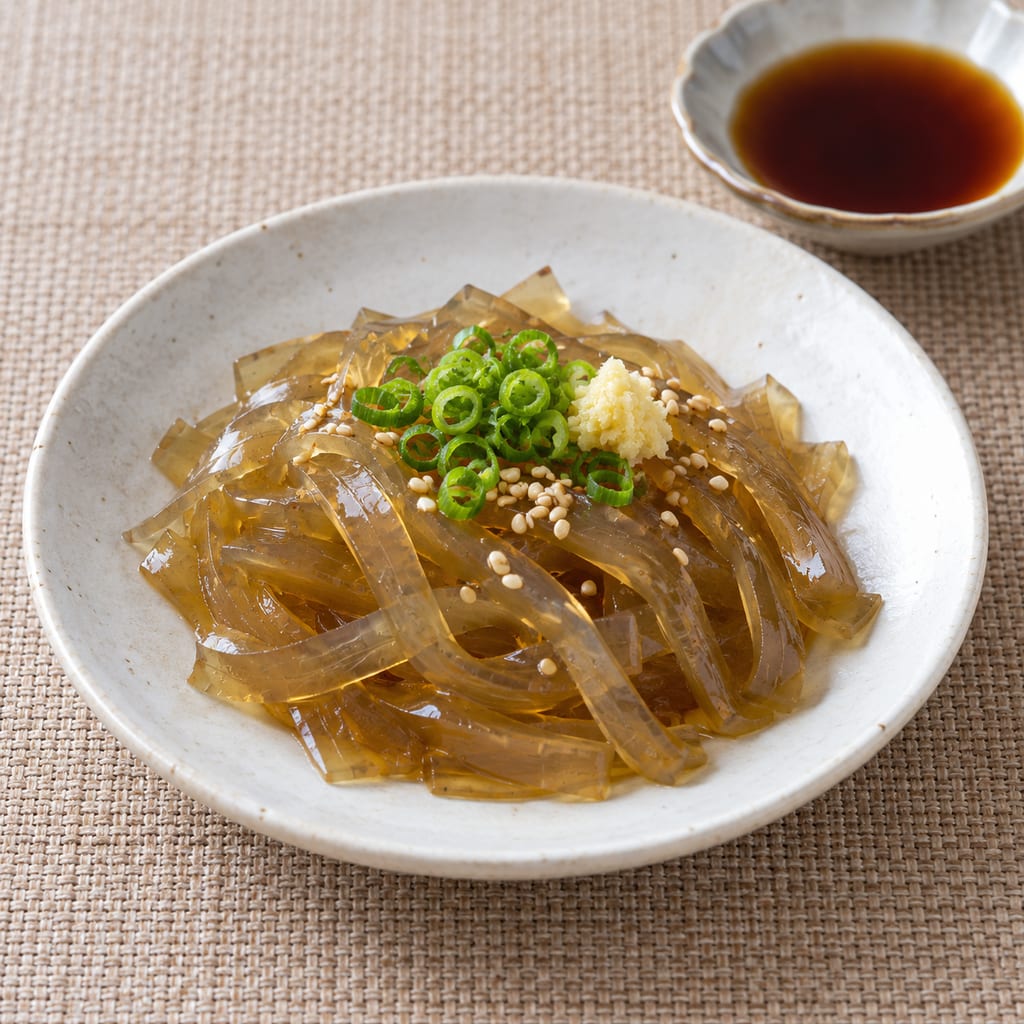
A traditional Fukuoka seaweed jelly made by boiling dried egonori, sometimes with igisu, until it forms a thick extract that sets into soft sheets, eaten cold with soy sauce, vinegar and aromatic condiments.
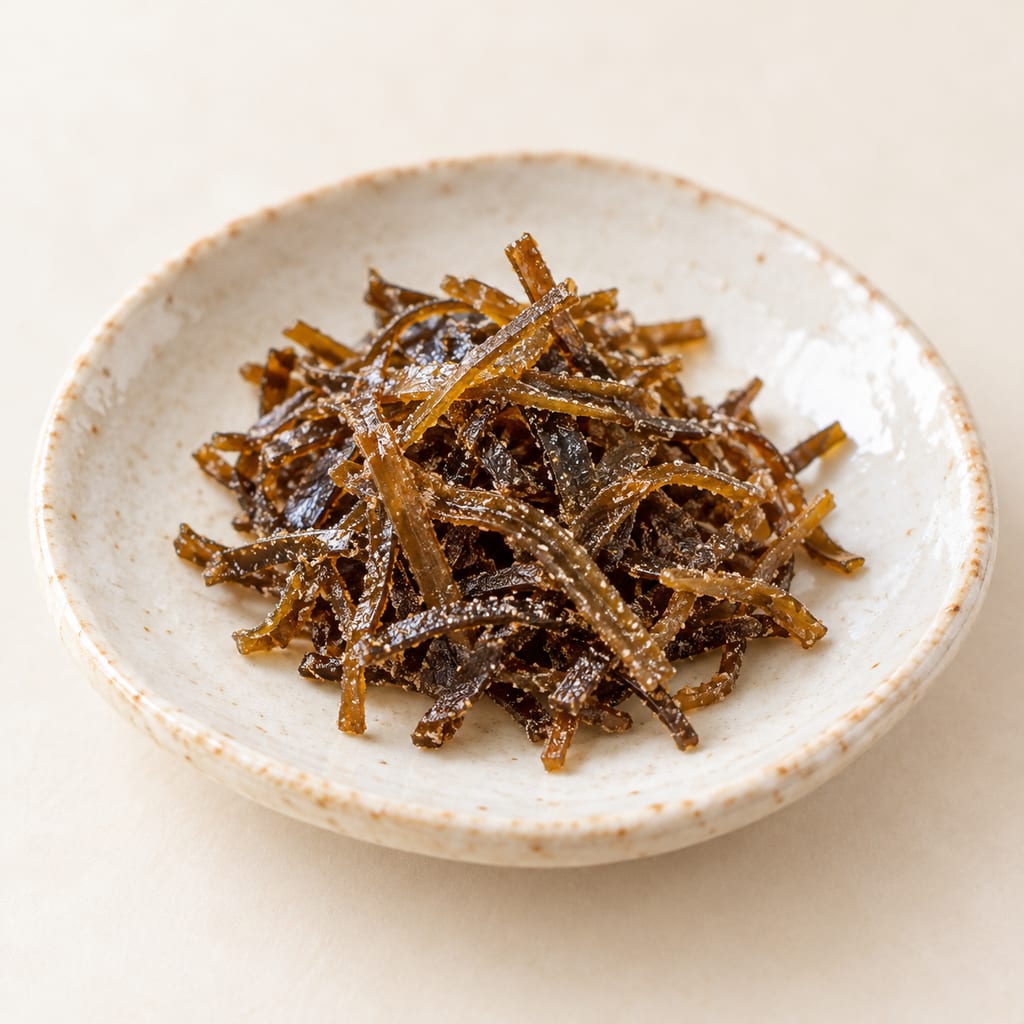
Japanese kelp simmered in soy sauce and seasonings, sometimes dried and salted, eaten with rice or used as an umami seasoning.
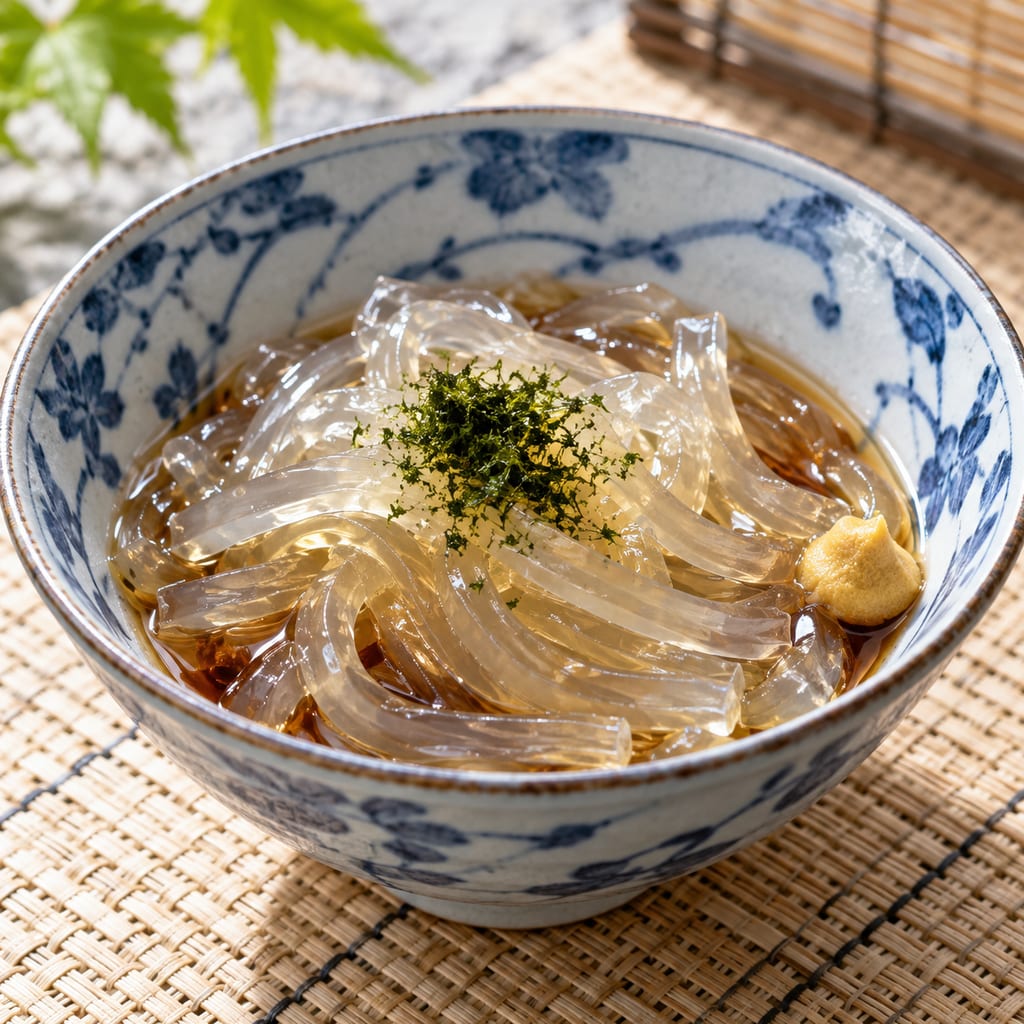
A Japanese jelly made by boiling agar-rich red seaweed, straining the extract and letting it set, then pressing it into strands served with vinegar-soy sauce or sweet syrup.
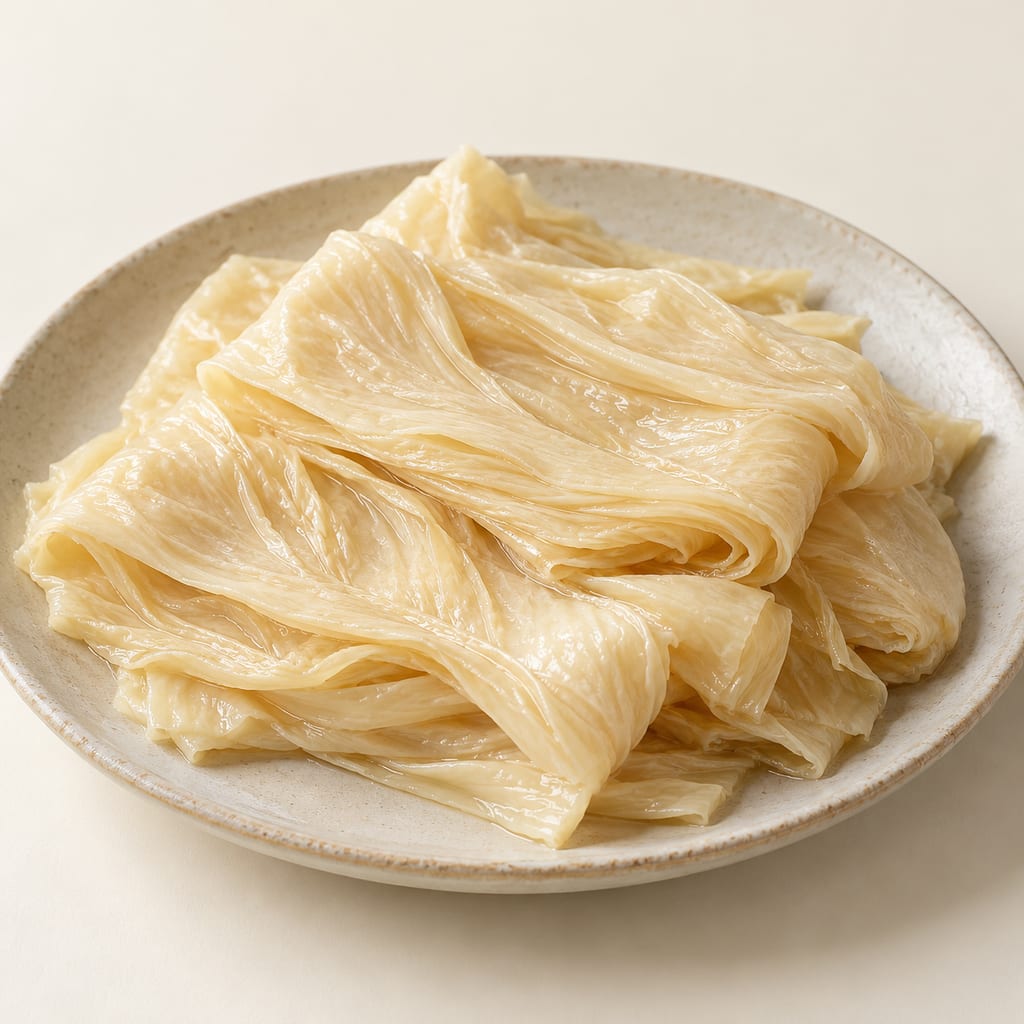
The protein-lipid film that forms on hot soy milk, lifted sheet by sheet from a wide shallow pan; eaten fresh, or dried for later use.

Japanese reddish-brown vinegar from sake lees matured about three years, turned to vinegar by acetic bacteria; the vinegar of Handa and Edomae sushi rice.

A thick, naturally sweet rice-and-koji preparation used to add body and sweetness to marinades, dressings and sauces. This method follows a published Marukome home recipe and is an enzyme-conversion hold, not a way to grow koji mould.
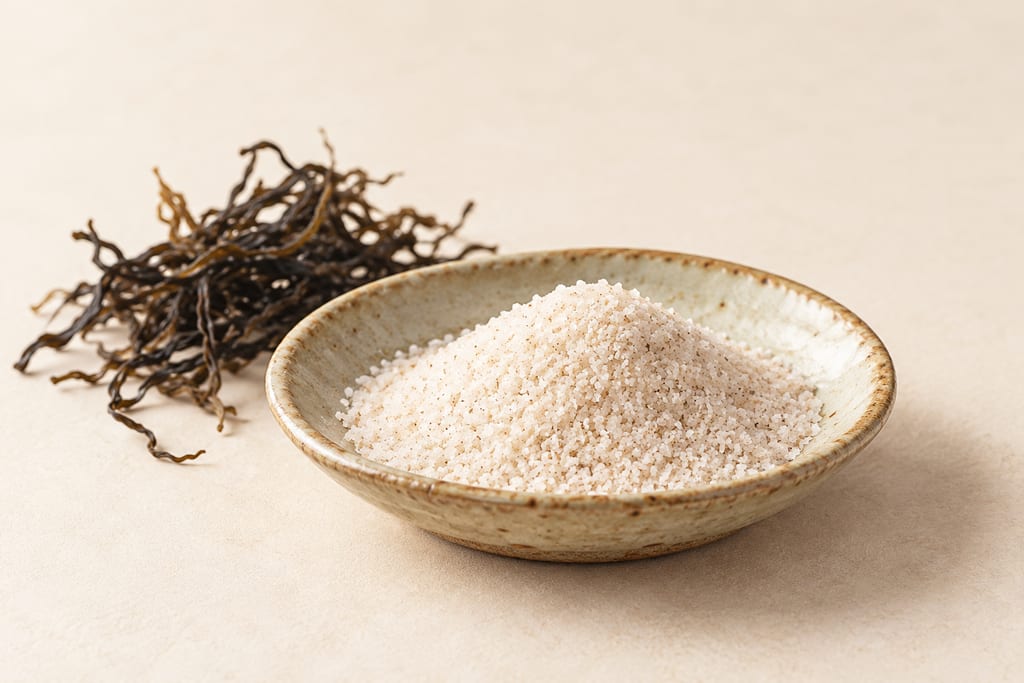
Amabito no Moshio is a modern, pale beige Japanese seaweed salt made from Seto Inland Sea water and hondawara seaweed. Its documented factory method concentrates filtered brine in kettles, then separates and dries the salt.
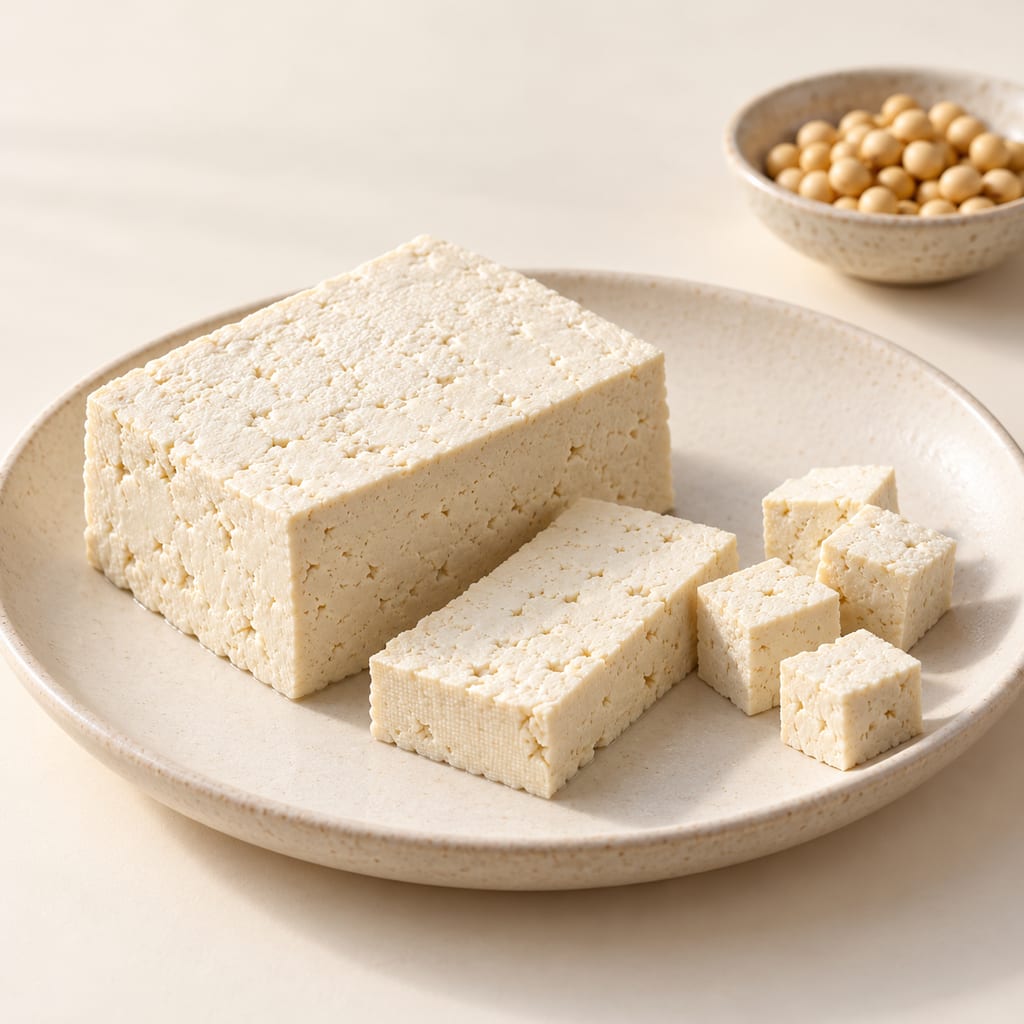
Fresh firm tofu is made by coagulating cooked soybean milk, then draining and pressing the curds into a sliceable block. This version follows a published nigari method and traces tofu’s varied, contested history.
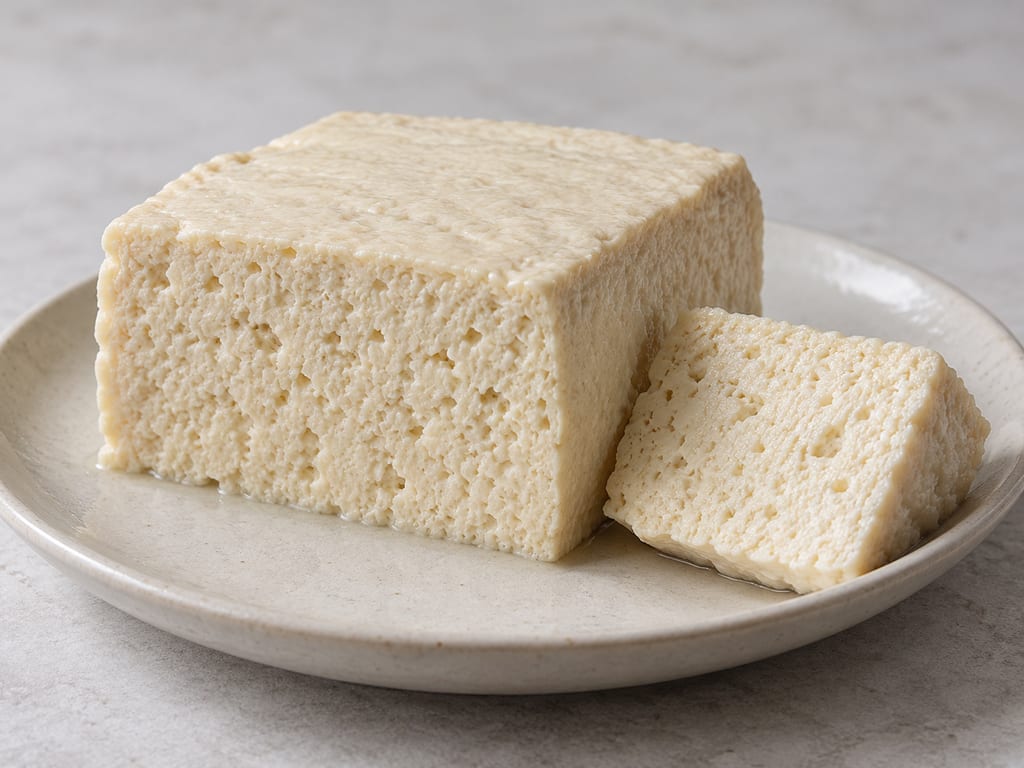
Drained firm tofu frozen in a home freezer so that ice reshapes the curd into a firmer, spongy, porous block for cooking; not the dried kori-dofu.
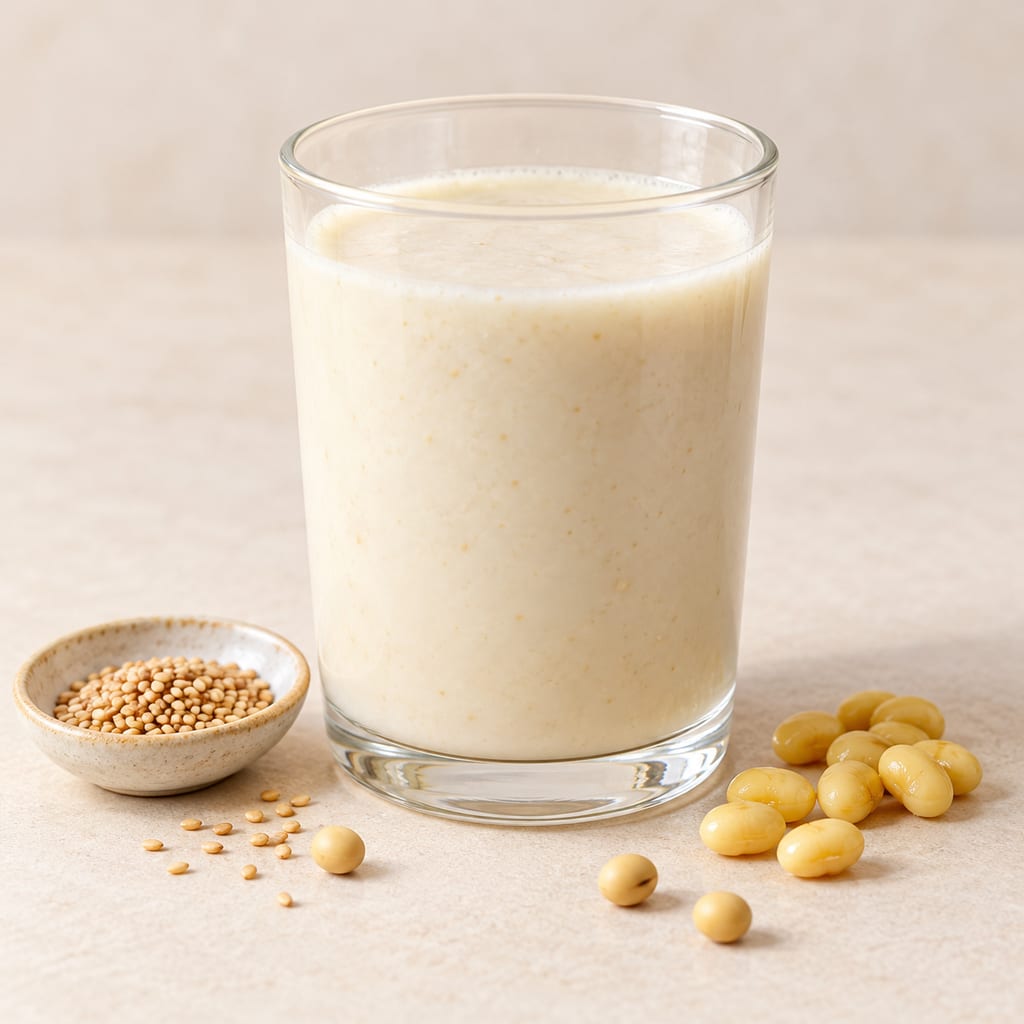
A Korean-style soy drink of cooked whole soybeans blended with cold water, sesame and salt and served at once; tofu-making soy milk is a different, filtered milk.

A Cap-Pelé boucanière is an Acadian herring-smoking building. The documented Willie Niles example is a one-storey wood-frame structure with a ridge smoke vent and interior bays for hanging fish-bearing cannes.

Achcharu is a family of Sri Lankan vinegar pickles made with mixed vegetables or seasonal fruit and a piquant spice dressing. This version is a quick, refrigerated, non-fermented mixed-vegetable pickle.

The acocote is a long, hollowed and dried gourd used to draw aguamiel from a mature maguey. It is a harvesting tool: the sap is transferred to a separate vessel before it ferments into pulque.

Adrak murabba preserves young ginger in sugar syrup, a sweet South Asian preparation recorded in Indian cookery and food-processing sources.

Parkia biglobosa seeds are fermented into regional West African seasonings, including nététou, iru, dawadawa and soumbala. The yellow fruit pulp is a separate food, and names and methods vary by place.

A refined common-wheat flour blended for a broad range of baking; its protein and behavior vary with wheat, milling and market.

The almond mushroom, Agaricus subrufescens, was cultivated in eastern North America in the 1800s, lost its market, and returned as a cultivated mushroom from Brazil, where it is grown under several names.
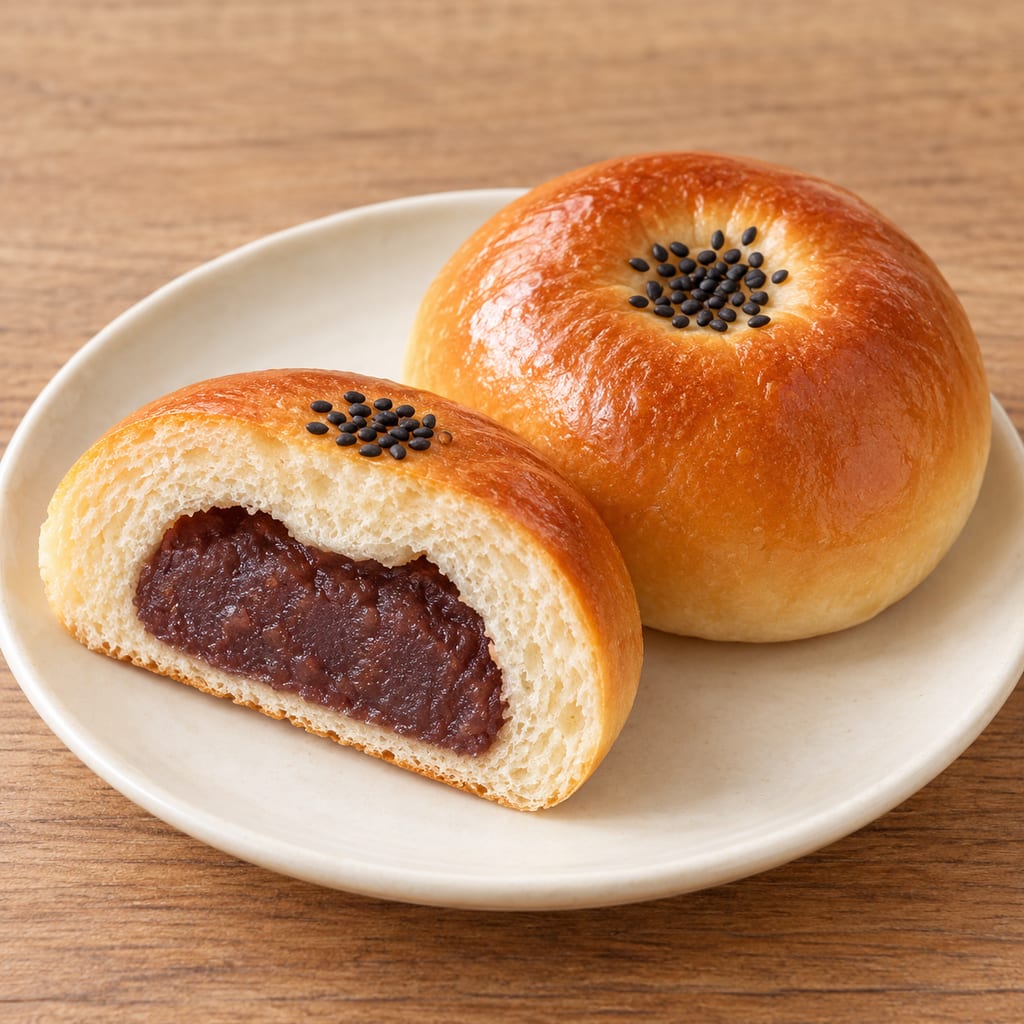
Anpan is a soft wheat bun filled with sweet red-bean paste and finished with egg wash and black sesame. This dough rises with commercial instant yeast.
No community contributions have been published for this entry yet.
Sign in to contribute. Published comments and photos are free to read.
Ministry of Agriculture, Forestry and Fisheries (MAFF), JapanMethod · History · Use
凍り豆腐(こおりどうふ)|にっぽん伝統食図鑑:農林水産省December to March, Miyagi soybeans and nigari, two-week sub-zero ageing, thaw, soak, igusa, refreeze, one-week winter drying, 1842, 1876, GI 2018
Cited in: What kōri-dōfu is; The Iwadeyama winter method; Making it at home
FAO (Agricultural Services Bulletin No. 97, 1992)Method
Technology of production of edible flours and protein products from soybeans. Chapter 9.calcium chloride, up to 3 weeks frozen, press, air-dry, ammonia gas, rehydrate
Cited in: Industrial production and modern studies
Ministry of Agriculture, Forestry and Fisheries (MAFF), JapanDefinition
Processed bean products | Traditional Foods in Japan : MAFFkori-dofu made by drying; koyadofu, shimidofu
Cited in: What kōri-dōfu is
Nutrients 15(1):49 (MDPI), 2022Method
Effect of 4-Week Consumption of Soy Kori-tofu on Cardiometabolic Health Markers: A Double-Blind Randomized Controlled Cross-Over Trial in Adults with Mildly Elevated Cholesterol Levelshigh-pressure pressing, freezing, ageing, drying to 8% moisture
Cited in: Industrial production and modern studies
LWT – Food Science and Technology 238, 2025Science
Effects of ripening conditions on protein conformation and quality of frozen tofu prepared by different coagulants−3 °C vs −21 °C ageing
Cited in: Industrial production and modern studies