
Adjustable yogurt-maker
A small electric incubator holds jars at a selected temperature for yogurt and other documented warm food preparations. Controls, capacity and vessel arrangement vary by model.
 FermenteaWhere food goes to change
Equipment · Jars, pots and crocks
にしん鉢 · Nishin bowl · Aizu herring bowl
A rectangular Aizu Hongo-yaki ceramic bowl made for layering Hokkaido dried herring with sanshō leaves in Aizu's nishin no sanshōzuke; it is documented as a marinating dish, not fermentation equipment.
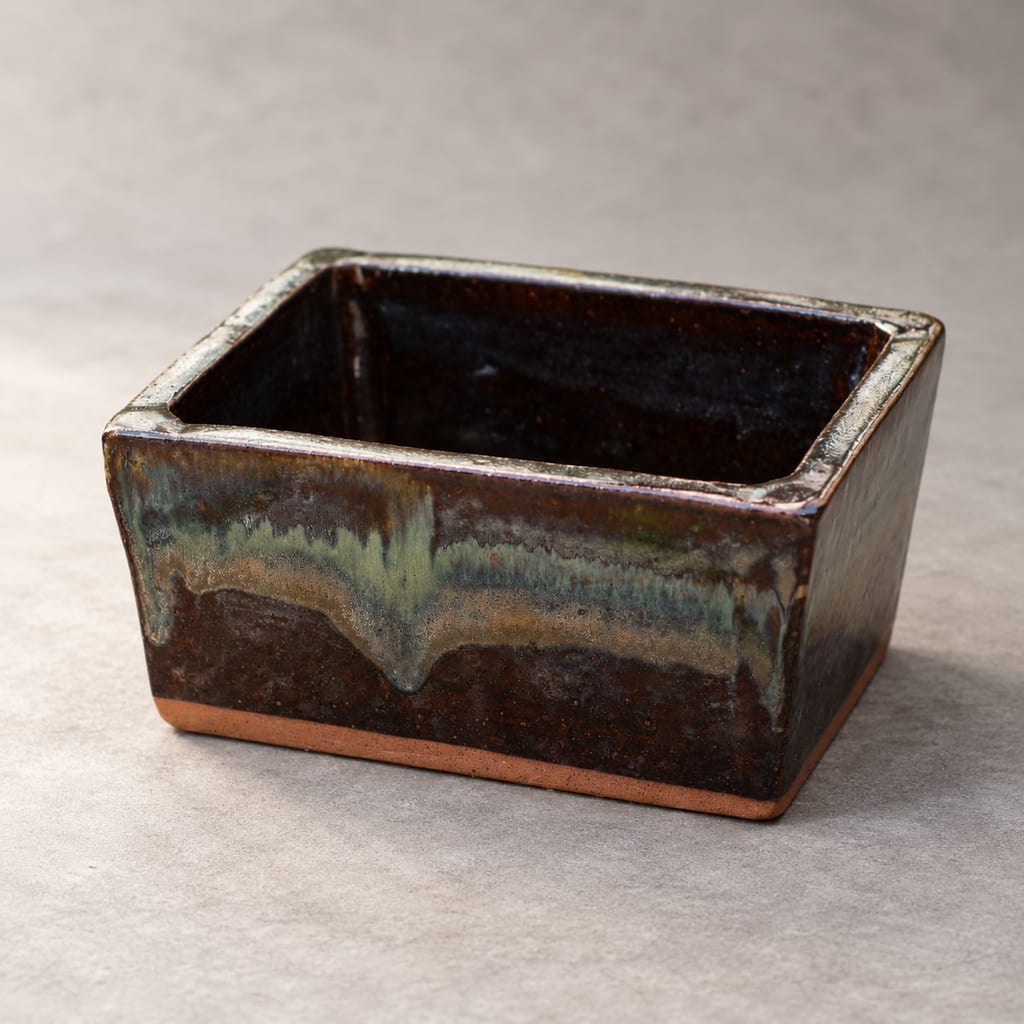
Nishin-bachi (にしん鉢) is a dedicated rectangular ceramic bowl associated with nishin no sanshōzuke, Aizu's dried-herring and Japanese-pepper-leaf dish. Japan's Ministry of Agriculture, Forestry and Fisheries (MAFF) says the form is said to be Aizu Hongo-yaki pottery and is sized to fit migaki-nishin, or dried herring. Fukushima Prefecture likewise identifies it as a ceramic vessel for this regional dish. Sources call it a bowl or hachi, but do not give a standardized capacity or dimensions; those should not be inferred from its rectangular shape.
Aizu is inland. The Fukushima Prefectural Board of Education explains that dried fish was brought inland by boat along the Agagawa River and that Hokkaido migaki-nishin were eaten in Aizu from around the middle of the Edo period. MAFF places the herring trade and its value as a storable protein in the broader Edo-period context. Neither source dates the invention of this particular bowl, so the dish's history should not be mistaken for a proven manufacturing date for nishin-bachi. The bowl is documented as purpose-made for fitting and layering the fish rather than as an all-purpose crock.
The prefectural account describes the bowl as Aizu Hongo-yaki and names an amber glaze (ame-yū). It says the glaze has relatively little cooling crazing, oil staining or water leakage and resists salt and acid; those are the prefecture's descriptions, not independently tested performance specifications for every bowl. The same article says nishin-bachi received a Grand Prix at the 1958 Brussels World's Fair and are still made. Aizu Hongo-yaki's cooperative independently records the 1958 prize for a nishin-bachi from Munakata kiln. MAFF also reports continued tradition and sale in Fukushima Prefecture.
The documented use is to marinate dried herring with sanshō leaves, soy sauce, vinegar and sake. The sources do not establish fermentation as the bowl's defining function, so this record does not classify it as fermentation equipment. Recipe descriptions differ on marinating time, and that variation is not a property of the vessel.
The dated sources establish the Aizu herring dish and the local ceramic tradition, but do not date the invention of the nishin-bachi itself. The vessel-specific prize date is 1958.
Regional use; this row does not imply that every Aizu household used the same vessel.
The prefectural source associates nishin-bachi with Aizu Hongo-yaki. This does not claim all examples came from one kiln.
A small electric incubator holds jars at a selected temperature for yogurt and other documented warm food preparations. Controls, capacity and vessel arrangement vary by model.
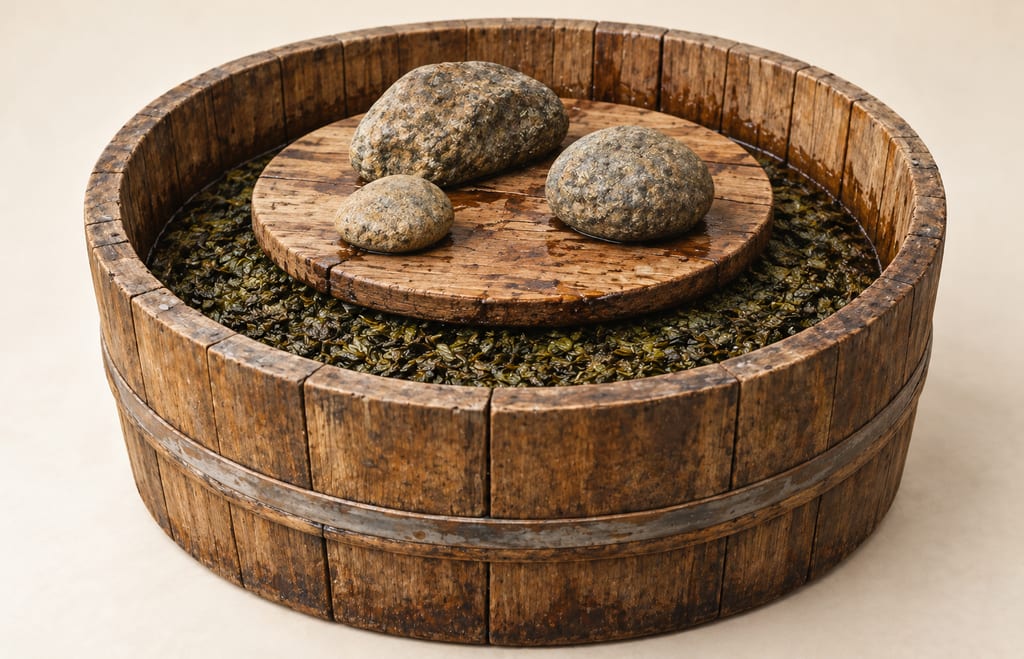
A large wooden tub used in Tokushima to ferment heated, worked Awabancha leaves with their cooking liquor. Its size and construction details are not specified in the sources.
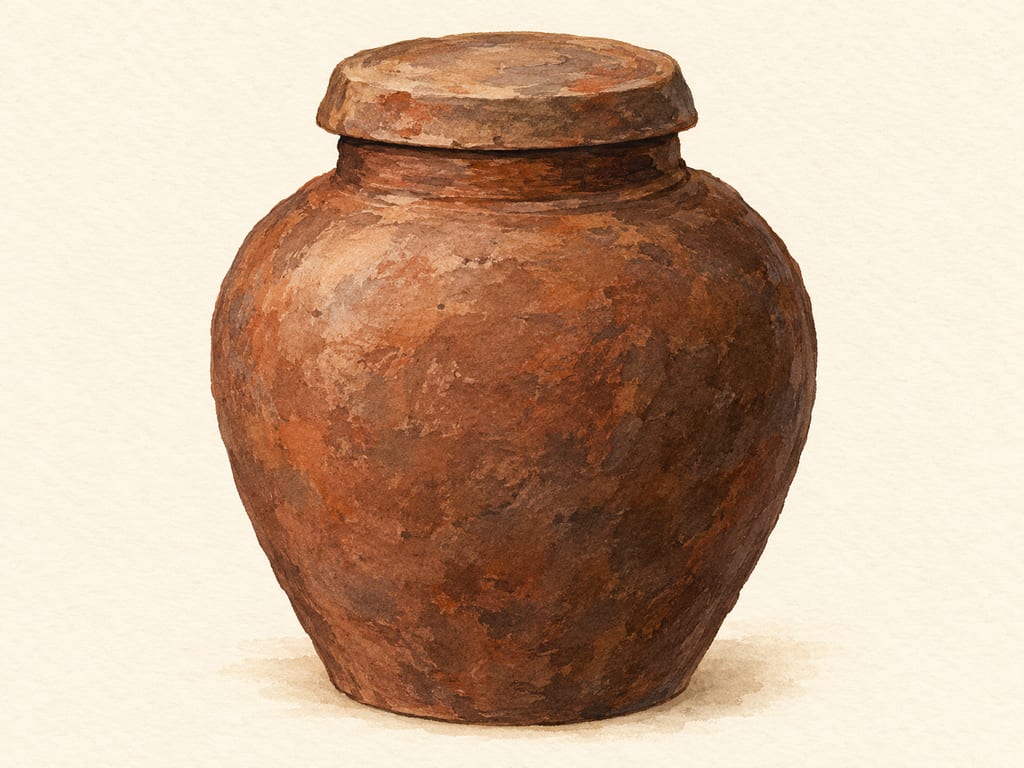
A ceramic jar used in Okinawa to store and mature distilled awamori into kusu; it holds the finished spirit after distillation rather than fermenting the rice mash.
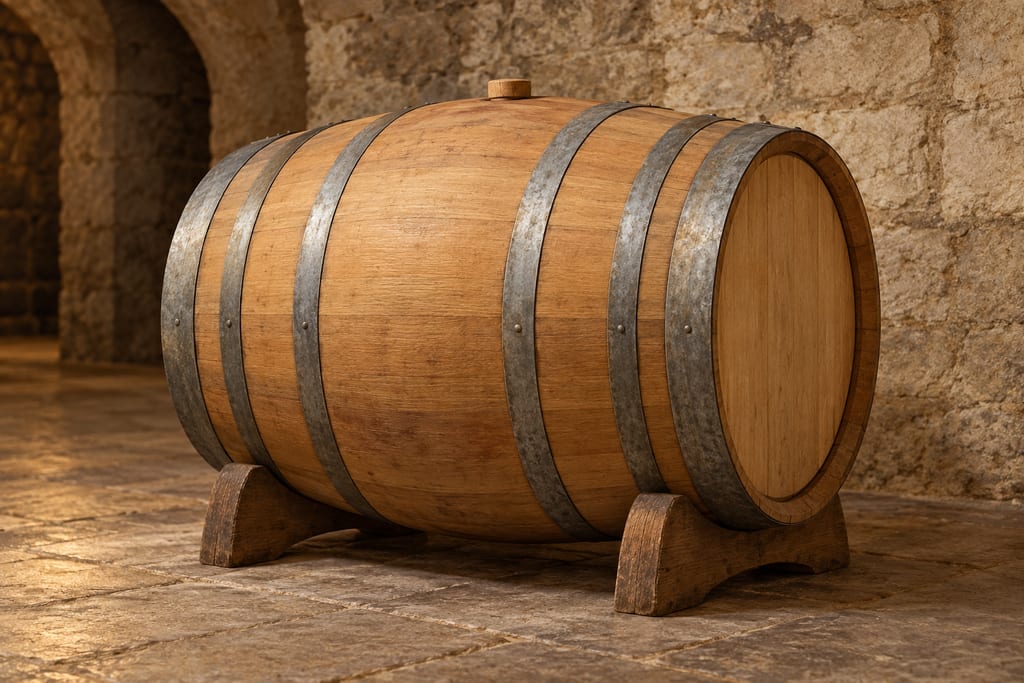
Coopered vessels use shaped staves and hoops, but portable barrels, large foeders and upright wooden vats serve different roles. Materials and uses vary by place and process.
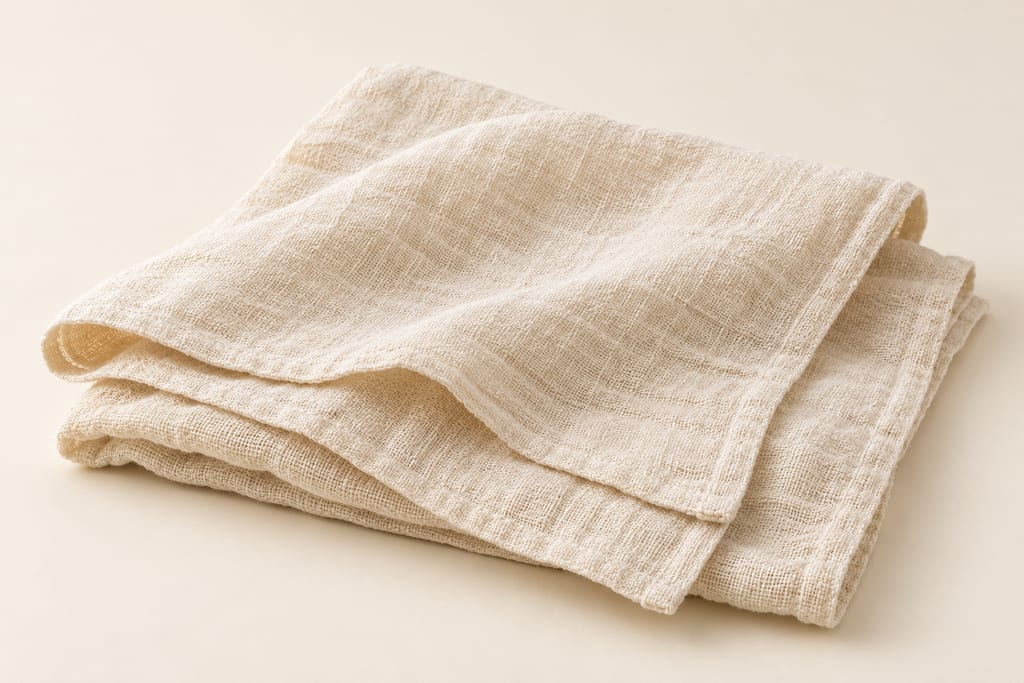
A cloth listed for steaming rice in a rice-koji method and identified as cloth for a koshiki in a brewery-museum caption; its fiber, weave, and size are not specified.
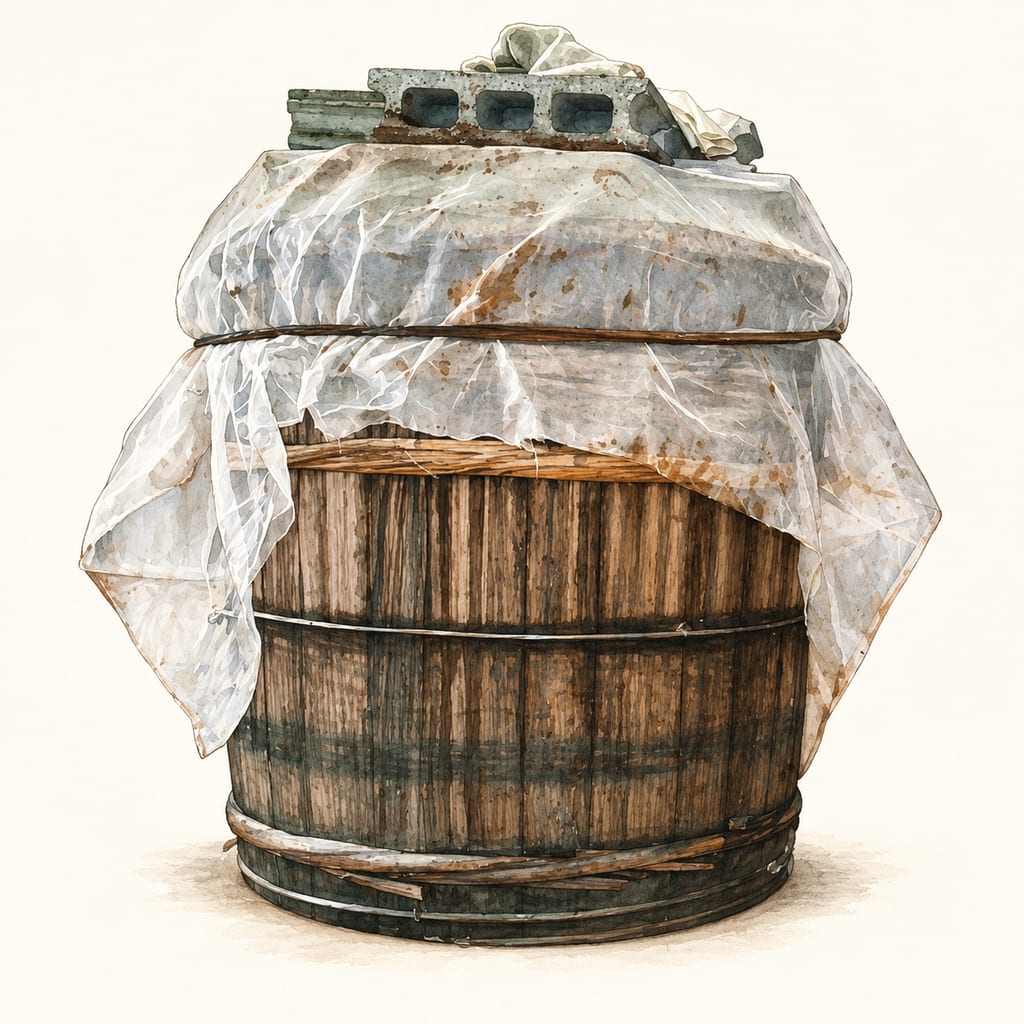
A Goishicha weighted tub holds tea leaves and steaming liquor during the second, wet fermentation stage in Ōtoyo, Kōchi. A current producer photograph documents one covered wooden tub under concrete-block weight.
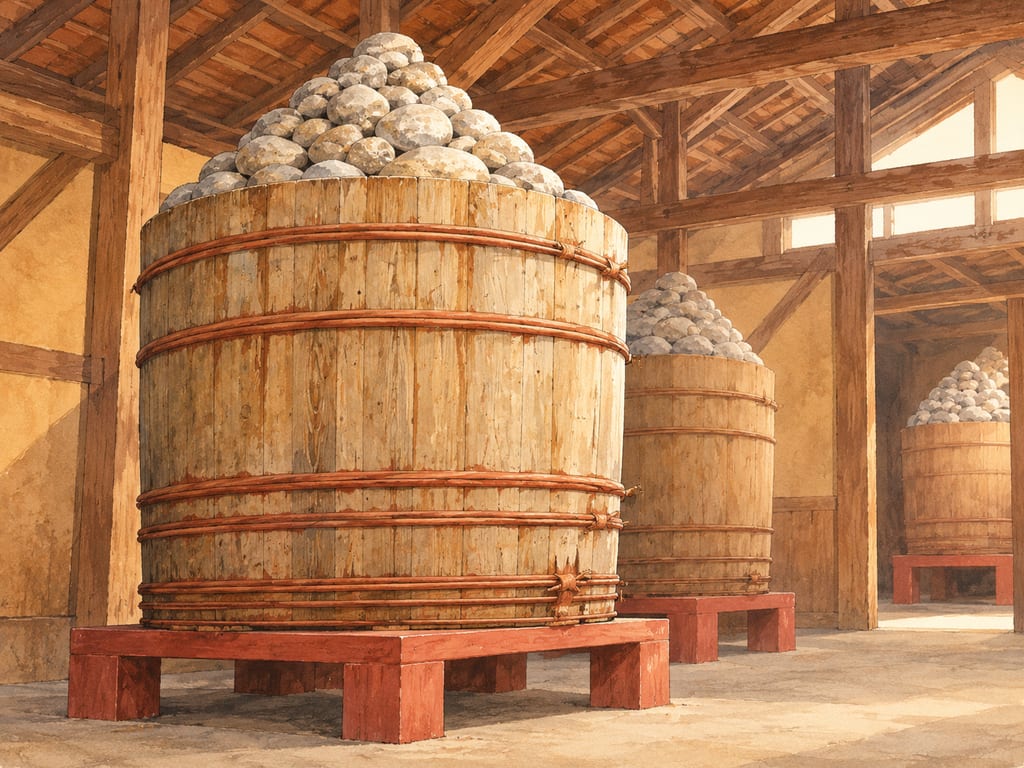
A coopered wooden kioke used by Kakukyu in Okazaki for Hatcho miso: a broad vat capped with a carefully stacked pyramid of river stones during maturation lasting more than two years.
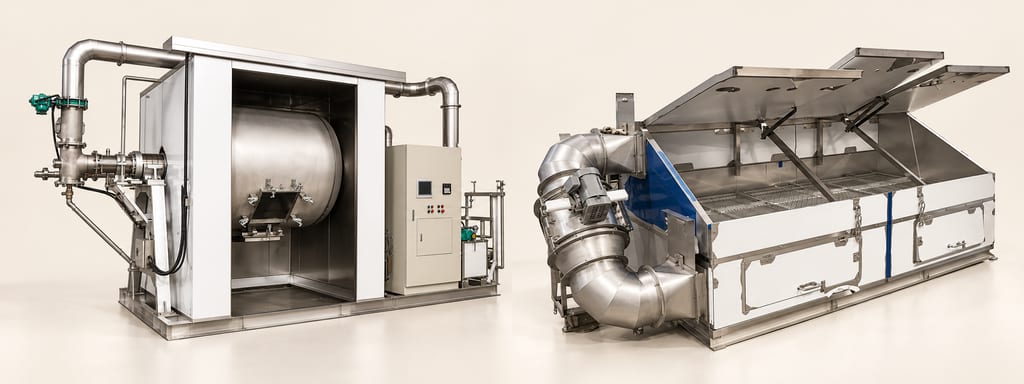
Industrial koji machines cultivate mold on prepared grain before sake, shochu, miso or soy-sauce production. Commercial designs include rotating drums and aerated beds.
No community contributions have been published for this entry yet.
Sign in to contribute. Published comments and photos are free to read.
Ministry of Agriculture, Forestry and Fisheries (Japan)History · Form · Use · Geography
Nishin no sanshozuke | Our Regional CuisinesMAFF places the cuisine across Aizu and describes Hokkaido dried herring transported there in the Edo period.
It describes a special rectangular nishin-bachi said to be Aizu Hongo-yaki and sized to the dried fish.
The bowl is used to layer dried herring and sanshō leaves with soy sauce, vinegar and sake; the page notes contemporary continuation and sales in Fukushima Prefecture.
MAFF labels its displayed dish image illustrative and directs secondary image users to its image-use terms.
Cited in: An Aizu bowl for dried herring; Why the dish took this form; Ceramic, glaze and present continuity; Relationship to fermentation
Fukushima Prefectural Board of EducationHistory · Form · Geography
にしんの山椒漬け(にしんのさんしょうづけ)The Board describes Aizu as far from the sea and says dried fish was brought by boat along the Agagawa River.
It associates the dish with Hokkaido migaki-nishin consumed in Aizu from around the middle of the Edo period.
It describes the dedicated square kittate bowl, also called nishin-bachi, and the Aizu regional dish.
Cited in: Why the dish took this form; Relationship to fermentation
Fukushima Prefecture, Tourism Exchange BureauMaterials · Use · History
コラム:会津の伝統を形作る焼き物「会津本郷焼」The prefectural article identifies nishin-bachi as an Aizu Hongo-yaki ceramic vessel for nishin no sanshōzuke.
It describes amber glaze and claims the bowl has qualities suited to soy- and vinegar-based marinade; those claims are presented here as the prefectural article's account, not as an independent material test.
The prefectural article reports a 1958 Brussels World's Fair Grand Prix and continued production.
Cited in: An Aizu bowl for dried herring; Ceramic, glaze and present continuity
Aizu Hongo-yaki Business CooperativeHistory · Manufacture
歴史・年表 (History and chronology)The cooperative records a Munakata kiln nishin-bachi receiving the Brussels World's Fair Grand Prix in 1958.
The cooperative documents the broader Aizu Hongo-yaki pottery and porcelain production tradition; this is not a date for the invention of nishin-bachi.
Cited in: Ceramic, glaze and present continuity