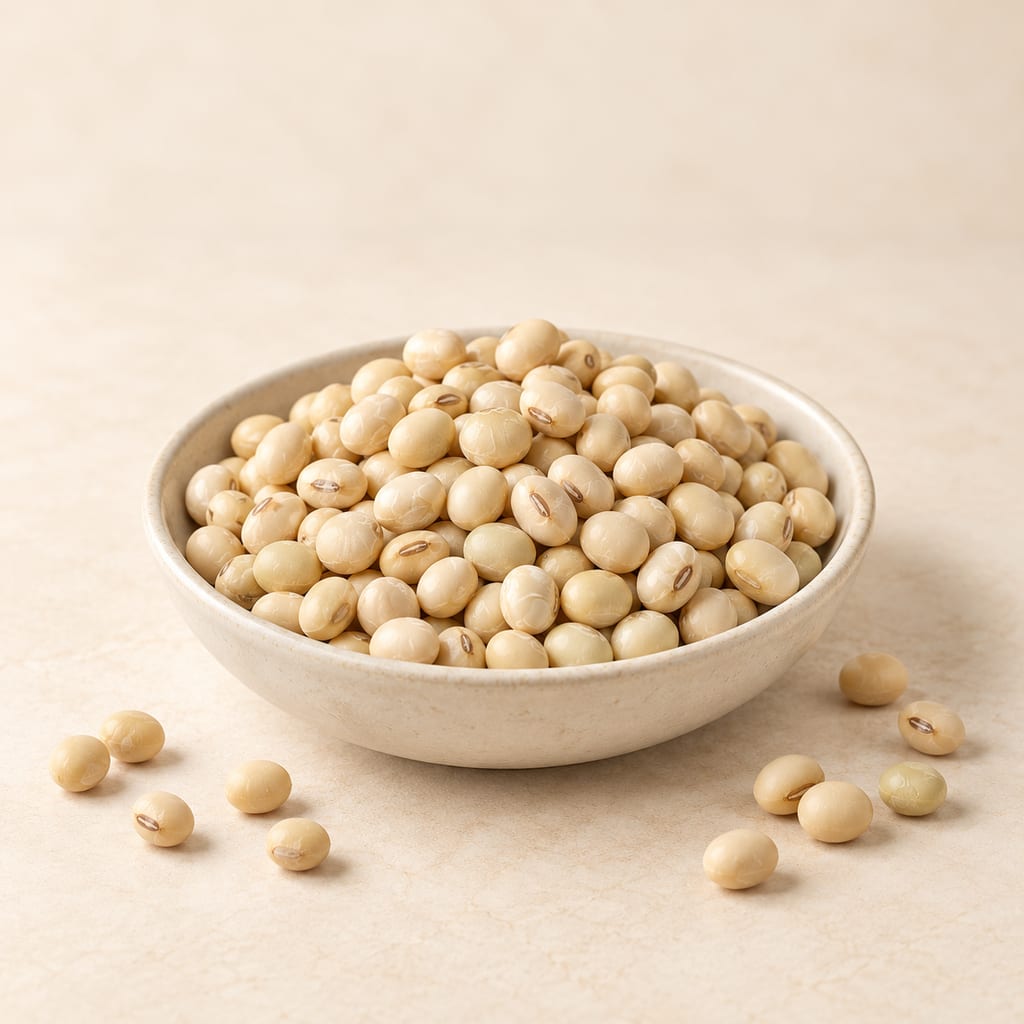
Soybeans
Soybeans are the mature dry seeds of Glycine max, about 40 percent protein and 20 percent oil, the substrate of tempeh, natto, miso, soy sauce and many other fermented foods.
 FermenteaWhere food goes to change
Equipment · Bamboo, leaf and wraps
藁苞納豆 (わらづと納豆) · Warazuto · Rice-straw natto bundle
A natto warazuto is a rice-straw bundle that encloses soybeans during natto fermentation. Documented Japanese forms vary by region: Ibaraki examples include boat-like bundles, while Yamagata accounts describe straw tubes.
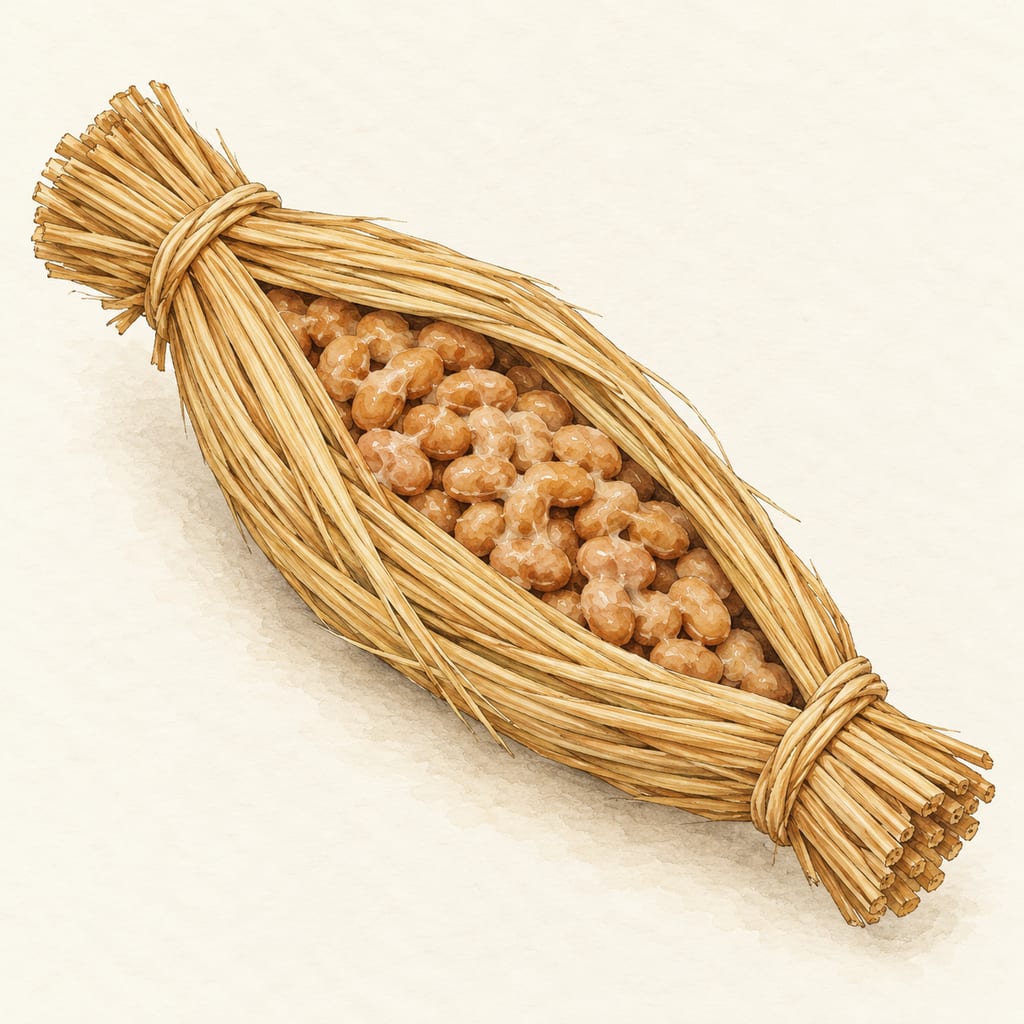
A natto warazuto (藁苞納豆, わらづと納豆) is a bundle of rice straw that encloses soybeans as they ferment into natto. Unlike a pottery jar, the packet is porous and made from the plant material around it. The name refers to the straw bundle, but sources show that a single universal shape should not be assumed: the tied sheaf can be tapered and boat-like, while other regional accounts describe a tube.
The Ibaraki Food and Agriculture Portal illustrates an open, boat-shaped packet holding natto, with closed bundles beside it. It marks the photograph as illustrative. MAFF describes Ibaraki warazuto as bundles of straw into which simmered beans are hand-stuffed; it also records their continued sale as gifts and describes local efforts to maintain straw supply and packet-making work.
The sources preserve different local descriptions. In Yamagata, MAFF recounts home-made winter natto made by placing boiled beans in a straw tube and keeping it warm near a kotatsu for one or two nights; beans that did not become stringy could be used in natto soup. This account is not evidence that every warazuto is a tube or that its timing is a general household instruction.
A 2025 Tohoku MAFF article documents naturally dried rice straw shaped by hand into boat-like warazuto for Hiyama natto in Noshiro, Akita, alongside Akita Shirakami soybeans. The Ibaraki gift-product description and the Akita Hiyama account therefore support regional variation in form, not one standard pattern.
The bundle holds the beans while allowing the packet to remain open to its surroundings; it is not a sealed, oxygen-excluding jar. Straw's presence alone does not prove that a current product ferments without an added culture: MAFF's description of commercial Ibaraki production includes a Bacillus starter and controlled warm, humid conditions. That modern process should not be projected onto every historical or household account.
The sources do not give standard dimensions, capacity, a universal construction method, a reuse or sanitation protocol, or a securely dated origin. MAFF presents the Minamoto no Yoshiie story as legend, so it cannot establish when or where the bundle was invented. The evidence supports a family of regional straw enclosures and their use with soybeans, rather than one timeless design.
MAFF documents warazuto natto in Ibaraki, including Mito; this is not an origin claim.
MAFF recounts home-made natto in straw tubes; this differs from the Ibaraki boat-like form.
Tohoku MAFF documents boat-shaped hand-made warazuto for Hiyama natto; the source does not pinpoint a workshop locality.
Soybeans are the mature dry seeds of Glycine max, about 40 percent protein and 20 percent oil, the substrate of tempeh, natto, miso, soy sauce and many other fermented foods.
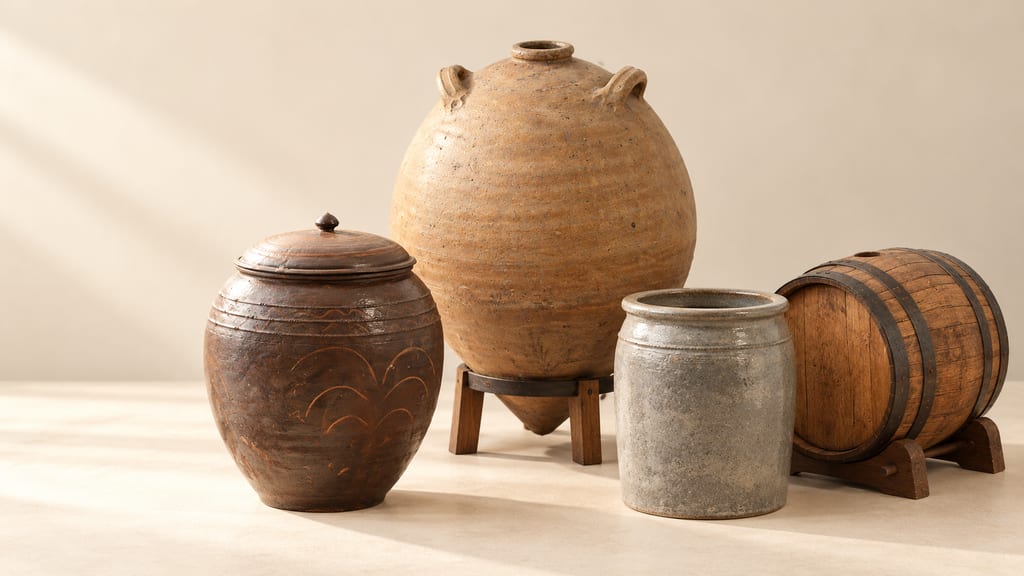
Jars, barrels, skins, leaves, pits and whole rooms decide much of what happens to fermented and cured food. This is how a container works on its contents, and how people in different places chose theirs.

A small electric incubator holds jars at a selected temperature for yogurt and other documented warm food preparations. Controls, capacity and vessel arrangement vary by model.
A large wooden tub used in Tokushima to ferment heated, worked Awabancha leaves with their cooking liquor. Its size and construction details are not specified in the sources.

A ceramic jar used in Okinawa to store and mature distilled awamori into kusu; it holds the finished spirit after distillation rather than fermenting the rice mash.
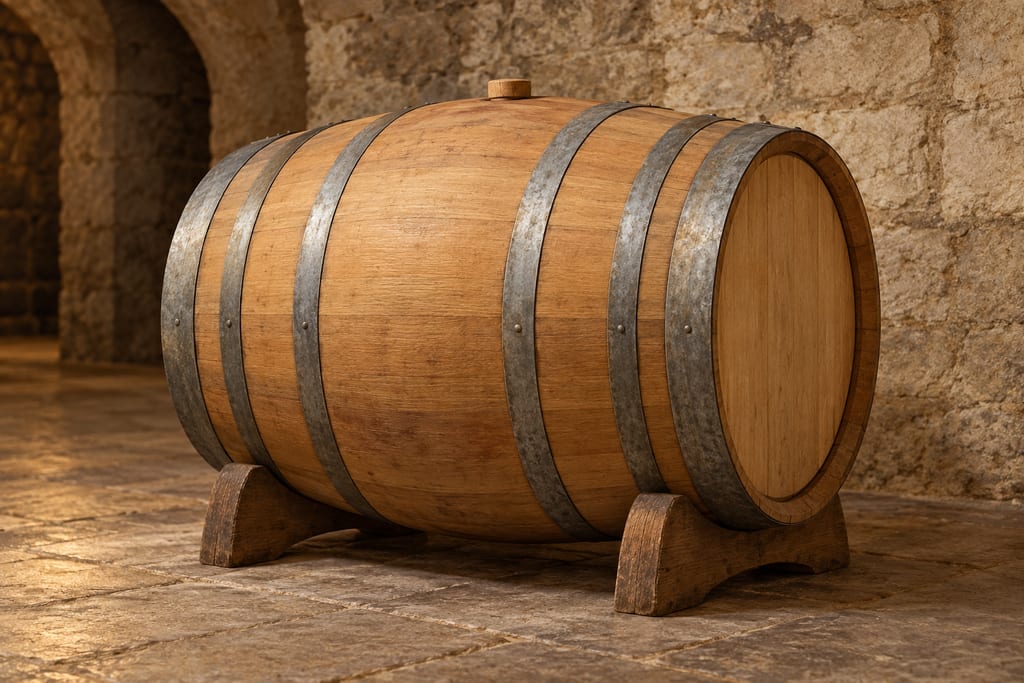
Coopered vessels use shaped staves and hoops, but portable barrels, large foeders and upright wooden vats serve different roles. Materials and uses vary by place and process.
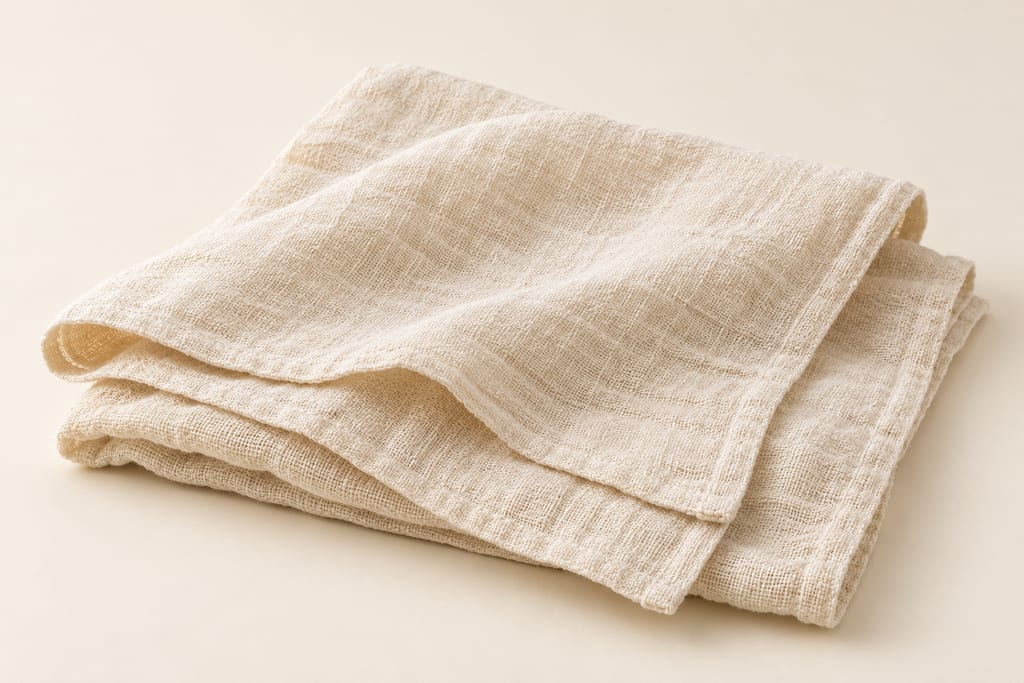
A cloth listed for steaming rice in a rice-koji method and identified as cloth for a koshiki in a brewery-museum caption; its fiber, weave, and size are not specified.
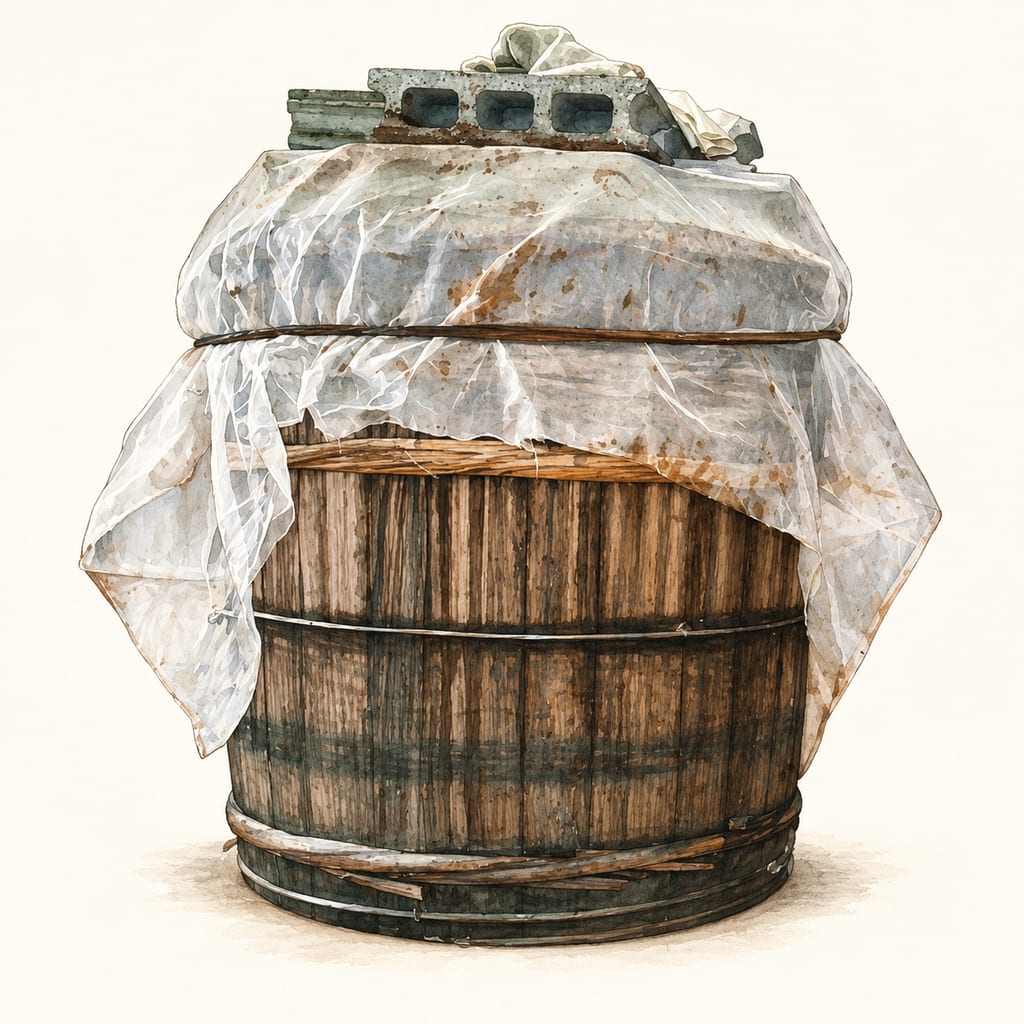
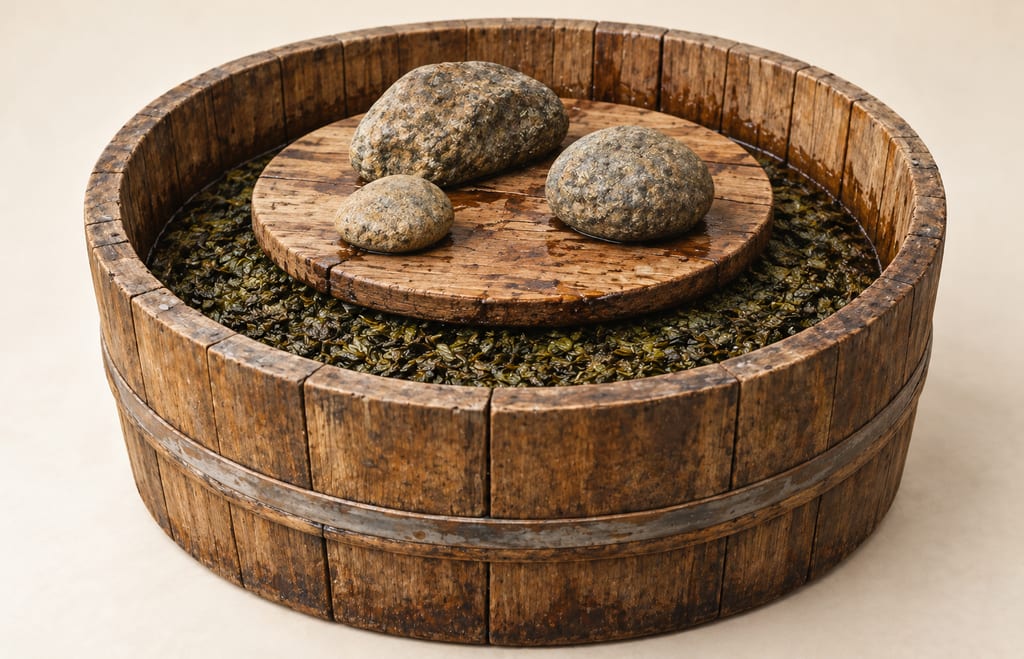
A Goishicha weighted tub holds tea leaves and steaming liquor during the second, wet fermentation stage in Ōtoyo, Kōchi. A current producer photograph documents one covered wooden tub under concrete-block weight.
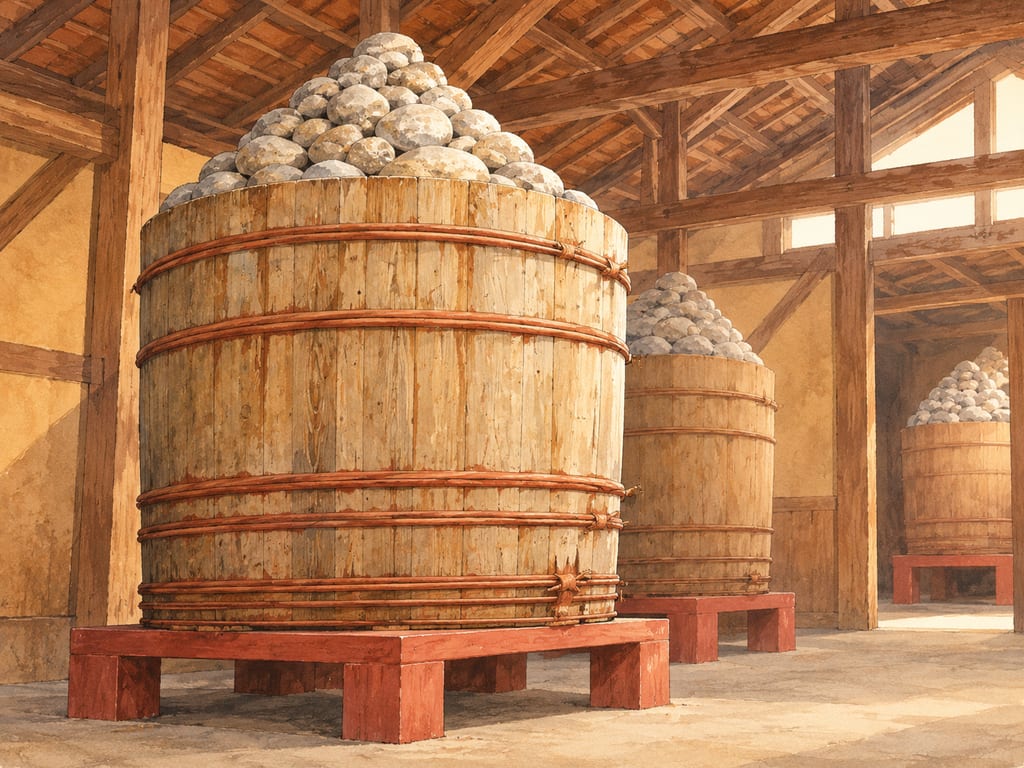
A coopered wooden kioke used by Kakukyu in Okazaki for Hatcho miso: a broad vat capped with a carefully stacked pyramid of river stones during maturation lasting more than two years.
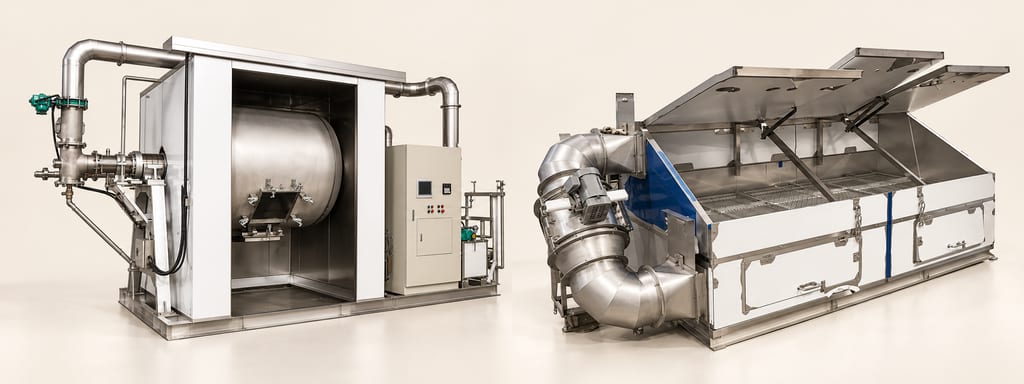
Industrial koji machines cultivate mold on prepared grain before sake, shochu, miso or soy-sauce production. Commercial designs include rotating drums and aerated beds.
No community contributions have been published for this entry yet.
Sign in to contribute. Published comments and photos are free to read.
Ministry of Agriculture, Forestry and Fisheries, JapanForm · Geography · History · Manufacture
Natto | Traditional Foods in JapanIbaraki, including Mito City, is a documented region for natto.
Warazuto natto uses straw wrapping; the page describes bundles hand-stuffed with simmered soybeans.
Current commercial processes may use a Bacillus starter and controlled temperature and humidity; this does not establish spontaneous inoculation by straw.
The Yoshiie origin account is identified as legend.
Cited in: A bundle that acts as its own vessel; Regional forms are not interchangeable; What the straw does—and what remains uncertain
Ministry of Agriculture, Forestry and Fisheries, JapanForm · Geography · Traditional use
Natto-jiru, Yamagata PrefectureThe account describes home-made natto as winter food and boiled soybeans placed in a straw tube, held warm near a kotatsu for one or two nights.
This Yamagata tube form differs from the boat-like Ibaraki examples.
Cited in: Regional forms are not interchangeable; What the straw does—and what remains uncertain
Tohoku Regional Agricultural Administration Office, Ministry of Agriculture, Forestry and Fisheries, JapanForm · Geography · Manufacture
Hiyama natto, Noshiro City, Akita PrefectureA 2025 article documents naturally dried rice straw hand-made into boat-shaped warazuto for Hiyama natto.
The described natto uses Akita Shirakami soybeans, cultivar Ryuho.
Cited in: Regional forms are not interchangeable
Ibaraki Food and Agriculture PortalForm · Image
July 10 is Natto Day! Higeta Foods [Straw natto, bagged]The page shows an illustrative image of an open boat-like straw bundle with natto and two closed bundles.
It describes straw packets hand-packed by Higeta Foods near Tsuchiura; no individual photographer or open image licence is stated.
Cited in: A bundle that acts as its own vessel