
Rice koji
Rice koji is steamed white rice through which koji mold has grown. It carries the enzymes that turn rice starch into sugar, and it is the starting point of sake, sweet miso, amazake and shio koji.
 FermenteaWhere food goes to change
Equipment · Baskets, trays and beds
A shallow tray or basket carries grain or another solid food material during a mold-growing stage. Japanese koji trays and Southeast Asian bamboo trays share a broad function, but have distinct forms, histories and local uses.
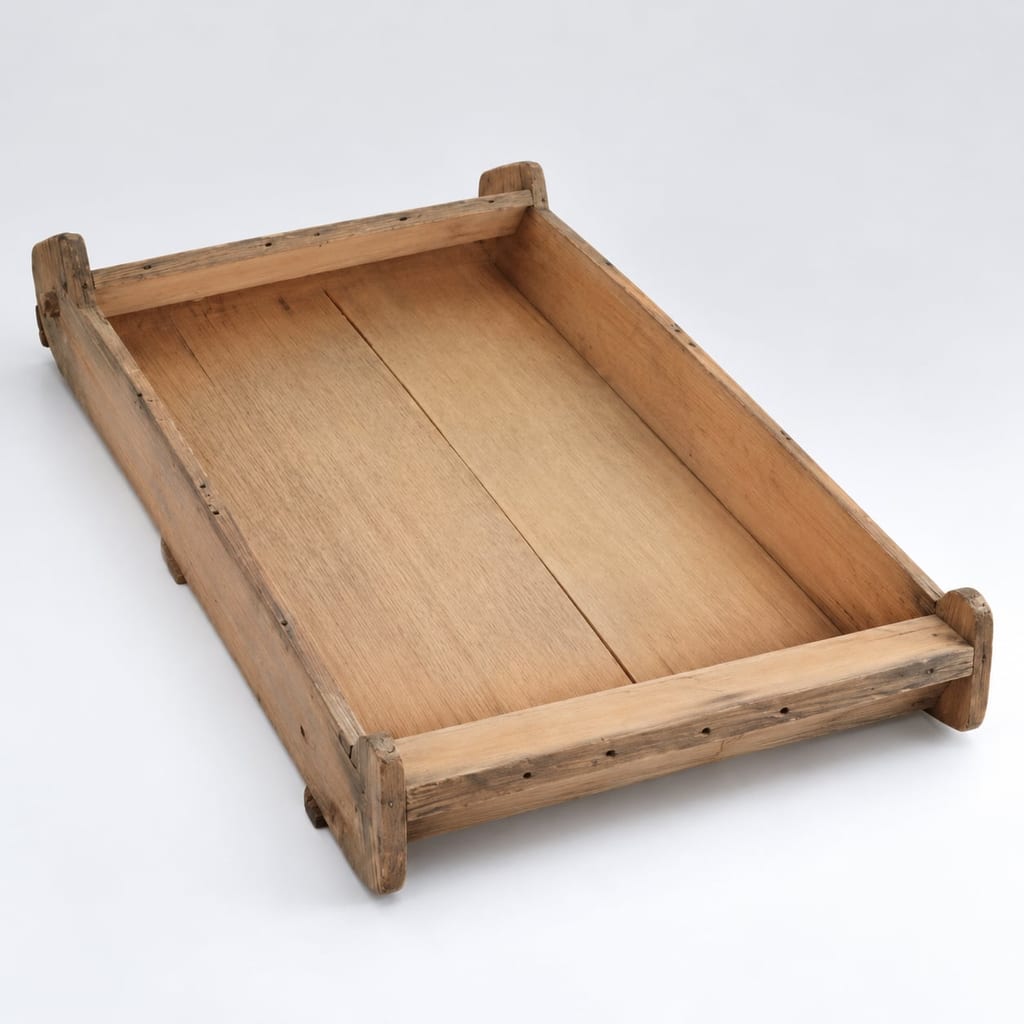
A shallow cultivation tray or basket is a portable holder for a layer of solid food material during a mold-growing stage. Its usefulness comes from the shallow bed and open working surface: the material can be spread, tended and moved without treating it as a deep liquid ferment. The name here describes a functional family, not a single vessel with one standard shape.
That distinction matters. A rectangular wooden koji-buta, a woven bamboo tray and a draining basket are not interchangeable objects, even when they appear in related stages of food production. This page compares documented examples and does not infer a shared origin or design from their similar role.
The Japan National Tax Agency and National Research Institute of Brewing present the futa-koji tray method as one contemporary sake-brewing example. They describe shallow wooden trays called koji-buta, stacked during the work, and distinguish them from the larger koji-bako box. The government guide documents the tool's use; it does not say that all koji is made in this way.
A Tokyo Museum Collection record catalogs a tray for making kōji dated to the twentieth century, with a recorded size of 41.0 × 19.4 × 3.2 cm. Iinuma Honke, a brewery, separately lists a retired wooden tray that it says was actually used for koji-making, measuring 54 × 35 × 7 cm. Those measurements belong to two particular objects, not a standard.
Keith H. Steinkraus's technical history describes traditional Chinese-style soy-sauce production across several Southeast Asian countries. In the account, bamboo baskets and a bamboo tray appear in the handling of the solid material before the brine stage. The passage cites reports from a 1978 regional workshop and treats local production as varied; it does not supply one tray size or establish that every listed country used an identical piece of equipment.
JIRCAS describes its Thai fermented-food database as drawing on a 1995 Kasetsart University reference, with later updates. A 2016 chapter by Busaba Yongsmith and Wanna Malaphan documents a separate Thai Loog-Paeng starter example and identifies a bamboo tray in its figure. This is a locally named starter-cake use, distinct from the Japanese koji-buta form; the sources do not establish a shared history between them.
In both sets of examples, the tray or basket is a carrier and working surface. It is not itself a chamber or a guarantee of stable conditions. A brewery room, workers' handling and other equipment are separate parts of the documented Japanese method; the Southeast Asian account likewise distinguishes the tray stage from later storage in jars.
The sources support wooden and bamboo forms, but no universal depth, capacity, cleaning method or first-use date. Museum measurements and current brewery listings help readers recognize individual Japanese examples, while the broader comparison shows why a shallow tray should not be replaced by a sealed jar in an illustration of this equipment.
The Edo-Tokyo Museum catalogs one tray for making kōji as a twentieth-century object. Current Japanese brewing and brewery sources document named wooden trays, while a 2004 technical history describes bamboo baskets and trays in Southeast Asian soy-sauce production. These are attestations of particular forms, not the origin date of the category. A 2016 Springer chapter also documents a Thai Loog-Paeng starter example with a bamboo tray.
A tray or basket holds solid material; it does not regulate the surrounding room or process by itself.
Source →The evidence documents local examples rather than one standard design, capacity, or shared origin for all shallow trays and baskets.
Source →This row identifies the documented Japanese koji-buta/futa example, not the whole equipment category.
The source describes bamboo baskets and trays in traditional Chinese-style soy-sauce production reported across several Southeast Asian countries; it does not claim one identical design in each country.
This is a named Thai example of a bamboo tray use, distinct from the Japanese wooden koji-buta.
Rice koji is steamed white rice through which koji mold has grown. It carries the enzymes that turn rice starch into sugar, and it is the starting point of sake, sweet miso, amazake and shio koji.

A small electric incubator holds jars at a selected temperature for yogurt and other documented warm food preparations. Controls, capacity and vessel arrangement vary by model.
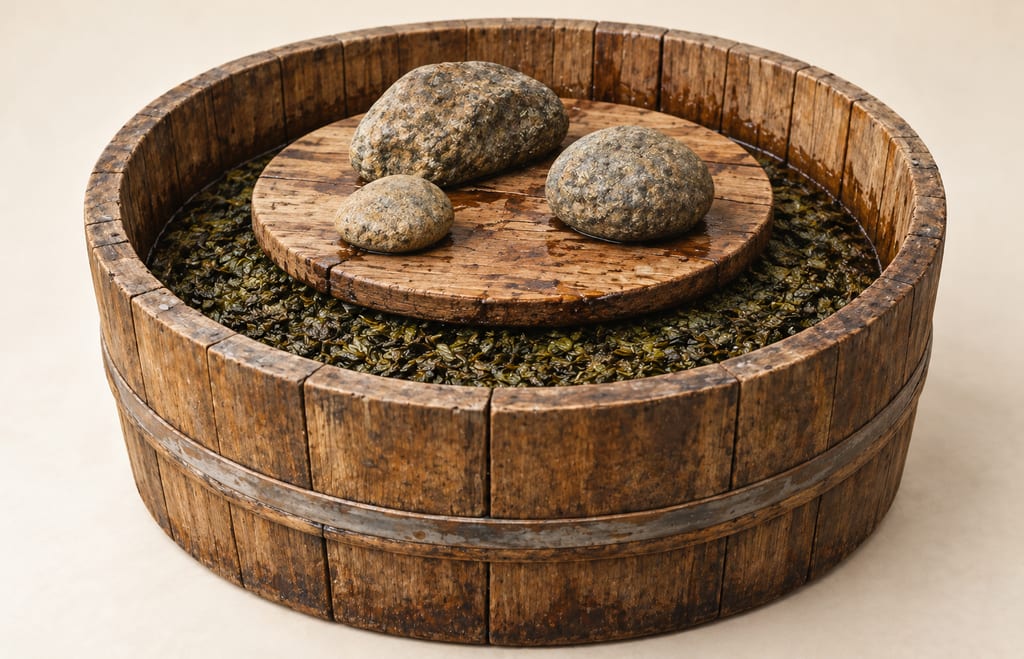
A large wooden tub used in Tokushima to ferment heated, worked Awabancha leaves with their cooking liquor. Its size and construction details are not specified in the sources.
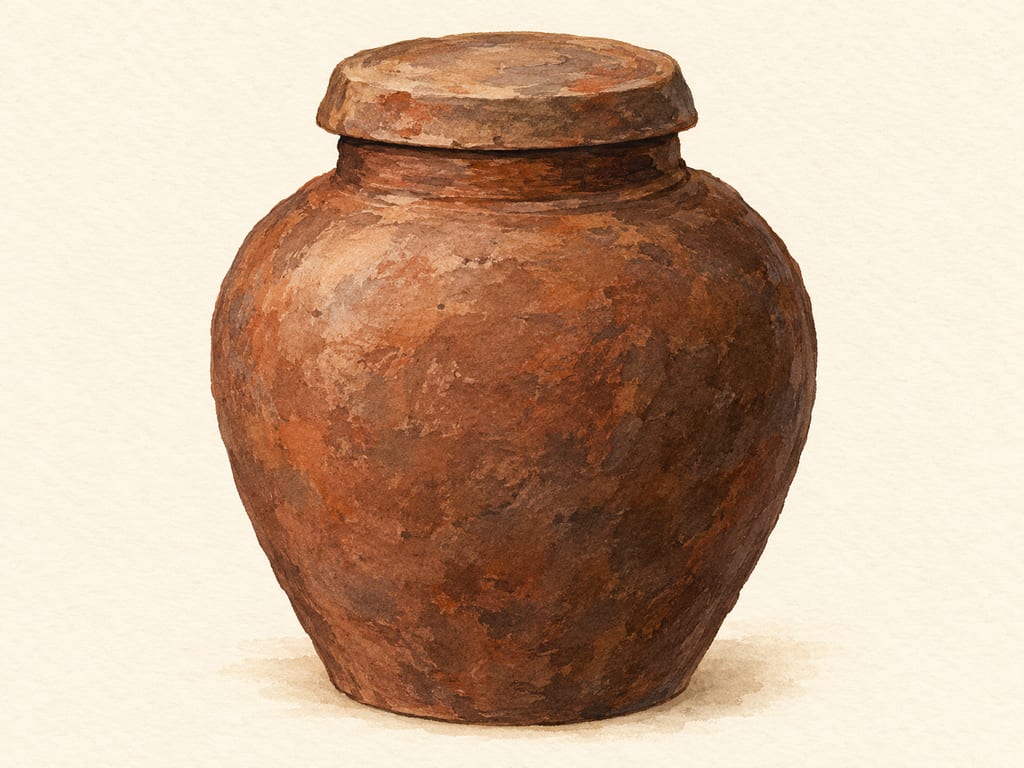
A ceramic jar used in Okinawa to store and mature distilled awamori into kusu; it holds the finished spirit after distillation rather than fermenting the rice mash.
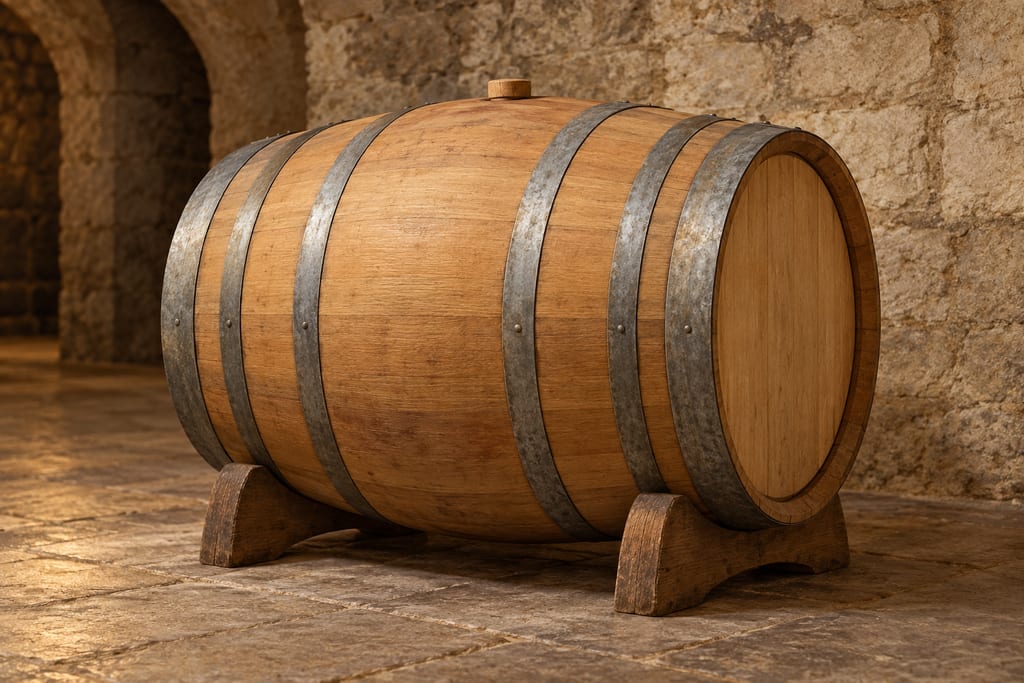
Coopered vessels use shaped staves and hoops, but portable barrels, large foeders and upright wooden vats serve different roles. Materials and uses vary by place and process.
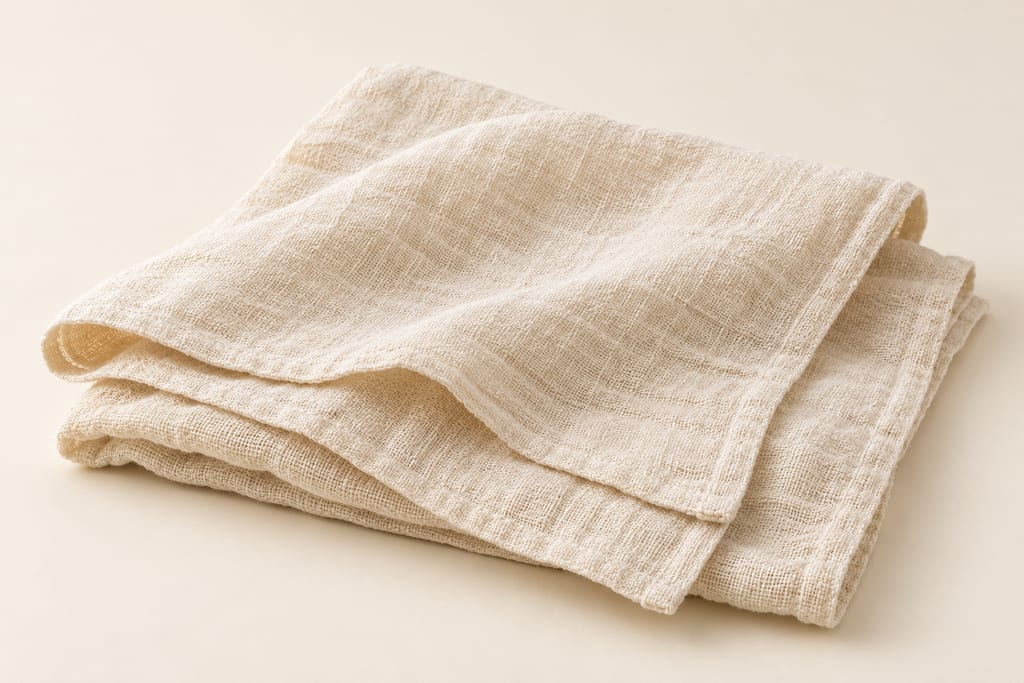
A cloth listed for steaming rice in a rice-koji method and identified as cloth for a koshiki in a brewery-museum caption; its fiber, weave, and size are not specified.
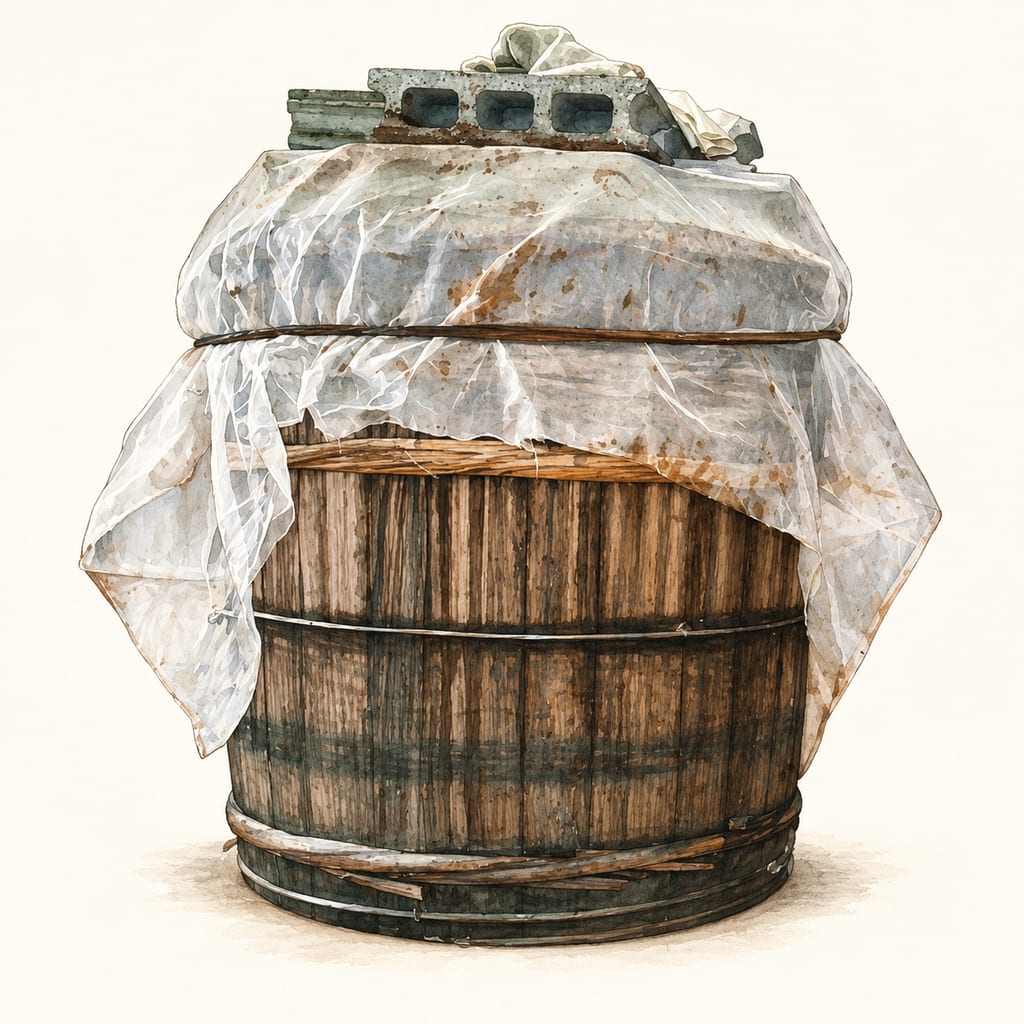
A Goishicha weighted tub holds tea leaves and steaming liquor during the second, wet fermentation stage in Ōtoyo, Kōchi. A current producer photograph documents one covered wooden tub under concrete-block weight.
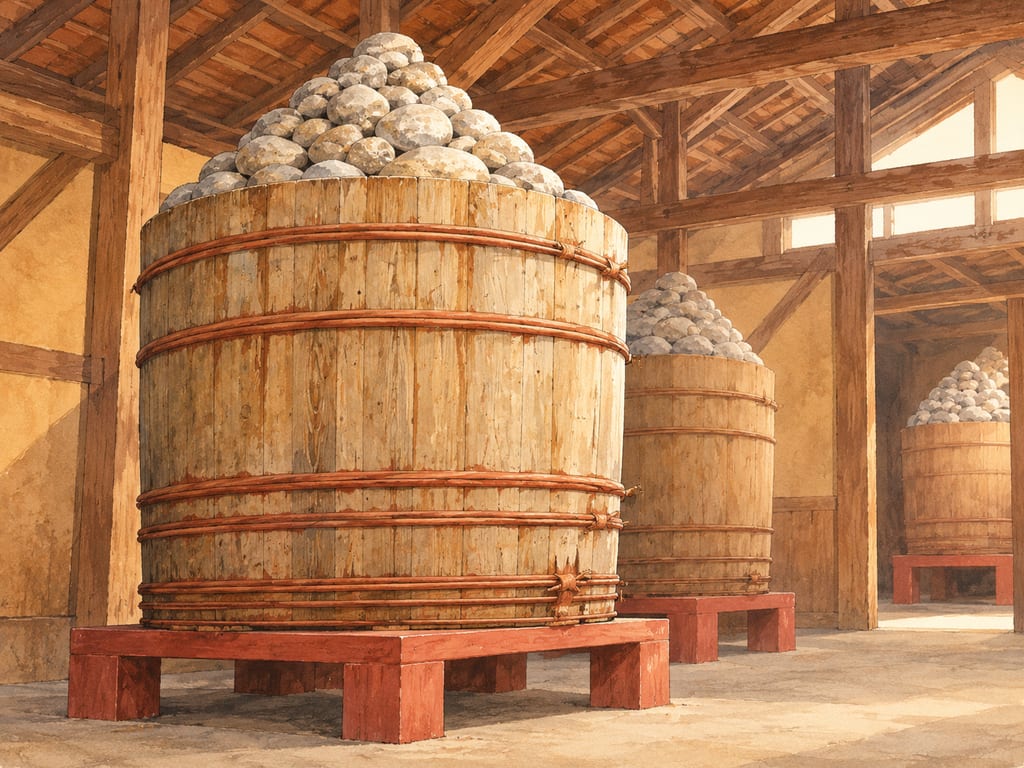
A coopered wooden kioke used by Kakukyu in Okazaki for Hatcho miso: a broad vat capped with a carefully stacked pyramid of river stones during maturation lasting more than two years.
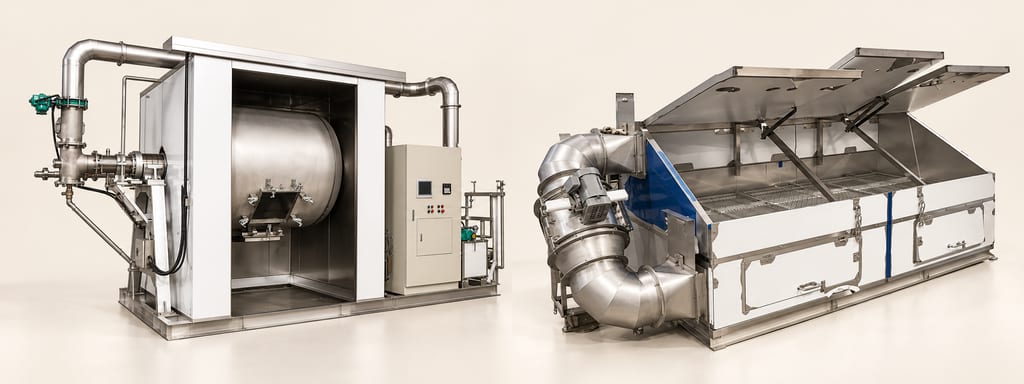
Industrial koji machines cultivate mold on prepared grain before sake, shochu, miso or soy-sauce production. Commercial designs include rotating drums and aerated beds.
No community contributions have been published for this entry yet.
Sign in to contribute. Published comments and photos are free to read.
Japan National Tax Agency; National Research Institute of BrewingEquipment · Method
Koji Making: How to Make KojiThe futa-koji sake example uses shallow wooden koji-buta trays that are stacked and repositioned; the document also names a larger koji-bako as a different container.
Cited in: One broad function, many local forms; The Japanese wooden koji-buta; What the equipment does not settle
Edo-Tokyo Museum; Tokyo Metropolitan Foundation for History and Culture (ToMuCo)Object record · History
Tray for Making Kōji (Malted Rice), Collection ID 04000069The museum record dates this specific object to the twentieth century and records dimensions of 41.0 × 19.4 × 3.2 cm; it does not establish a universal size or origin.
Cited in: The Japanese wooden koji-buta; What the equipment does not settle
Iinuma HonkeObject record · Materials · Image reference
Koji-buta (used brewery tray)The brewery identifies this as a tray actually used in koji-making and now kept in storage; its product listing gives one example's size as 54 × 35 × 7 cm. The photograph shows it empty.
Cited in: The Japanese wooden koji-buta; What the equipment does not settle
Marcel Dekker, Inc.History · Equipment
Industrialization of Indigenous Fermented Foods, Second Edition, Revised and ExpandedA chapter on Southeast Asia describes traditional Chinese-style soy-sauce production reported in several countries and identifies bamboo baskets and a bamboo tray in the preliminary solid-food stage. Its account refers to a 1978 workshop and does not provide a universal design or tray dimensions.
Cited in: One broad function, many local forms; Bamboo trays in Southeast Asian accounts; What the equipment does not settle
Japan International Research Center for Agricultural Sciences (JIRCAS)Source context · Geography
Database of Fermented Foods of ThailandJIRCAS explains that the database draws on a 1995 reference compiled by Kasetsart University's Institute of Food Research and Product Development, with later updates. This identifies the institutional basis of the Thai material; it does not itself establish a tray design.
Cited in: Bamboo trays in Southeast Asian accounts
Springer Science+Business Media New YorkHistory · Equipment · Geography
Traditional Fermented Foods in ThailandThe chapter's Loog-Paeng figure identifies a bamboo tray in the documented Thai starter-cake sequence; it is a separate example from Japanese koji-buta.
Cited in: Bamboo trays in Southeast Asian accounts