A field of working jars
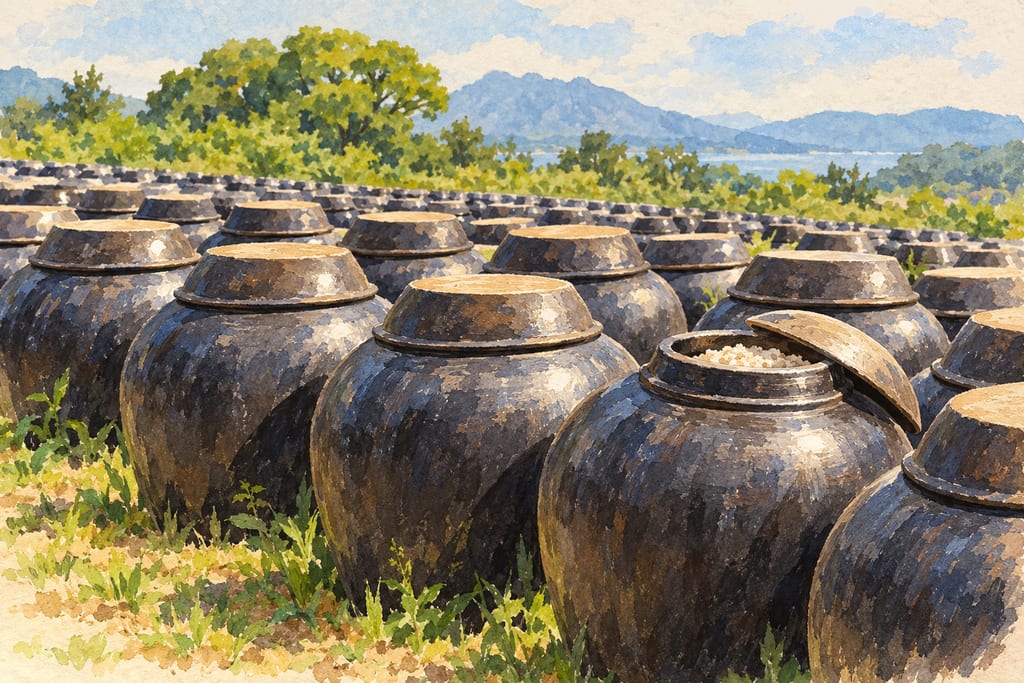
A kurozu kame is a large fired ceramic jar used in an outdoor field, or tsubobatake, to make and mature Kagoshima's jar-made rice vinegar. At Sakamoto Kurozu, rows of dark, rounded jars stand close together in open fields. Each jar is treated as a small production vessel in its own right. The working installation is therefore both a pot and a landscape of pots: hundreds or thousands of vessels exposed to the same changing weather while each batch develops separately.
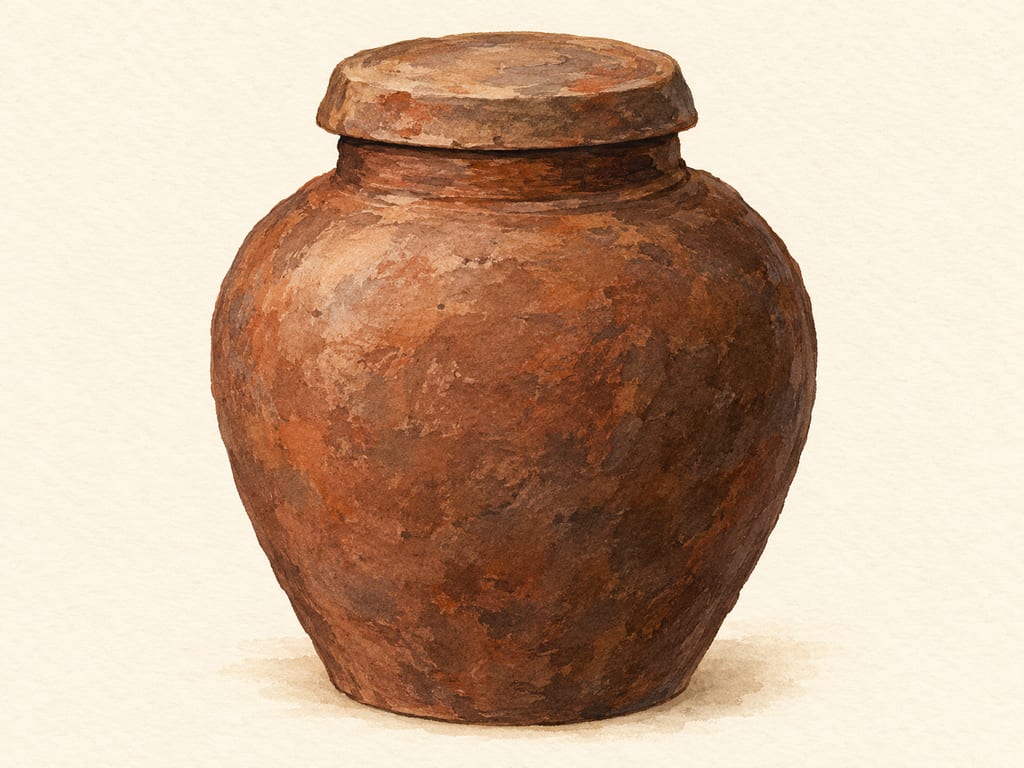
The jars are commonly shown with a broad shoulder, substantial belly, small mouth and shallow cover. Those cues describe the jar field depicted by the producer; they are not a universal ceramic specification. The cover protects the opening, but it should not be assumed to make the vessel hermetically sealed. The documented process changes over time and includes acetic fermentation, so the cover is not evidence of one unchanging airtight condition.
Sakamoto's account describes around 52,000 jars across ten fields. That is a producer-reported count of its own installation, not a standard field size or the capacity of one jar. Neither Sakamoto nor the government summary supplies a general working volume or dimensions for this equipment record, so those measurements are left open.
Sources for this section
One vessel through successive stages
Sakamoto describes steamed rice, rice koji and underground water as the three ingredients placed in the jar. Its published sequence begins with preparation and koji sprinkling, then moves through saccharification and alcohol fermentation, acetic fermentation, and maturation. The same jar carries the successive transformations rather than handing the batch from one dedicated vessel to another.
That does not mean the activity inside is static. Different microorganisms and conditions matter at different points, and the producer describes sunlight and the local environment as part of its outdoor method. The pot provides a stable ceramic body around the batch while its opening and cover allow the producer to inspect and tend it. Kakuida's account likewise describes outdoor Aman jars, seasonal preparation and craftsmen looking into the individual jars.
The long residence time is part of the equipment's use. Sakamoto reports one to five years for its kurozu, while Kakuida describes a minimum three-year maturation for its own products. These are producer-specific descriptions, not a single required schedule for every jar-made vinegar.
Sources for this section
Pottery, weather and attention
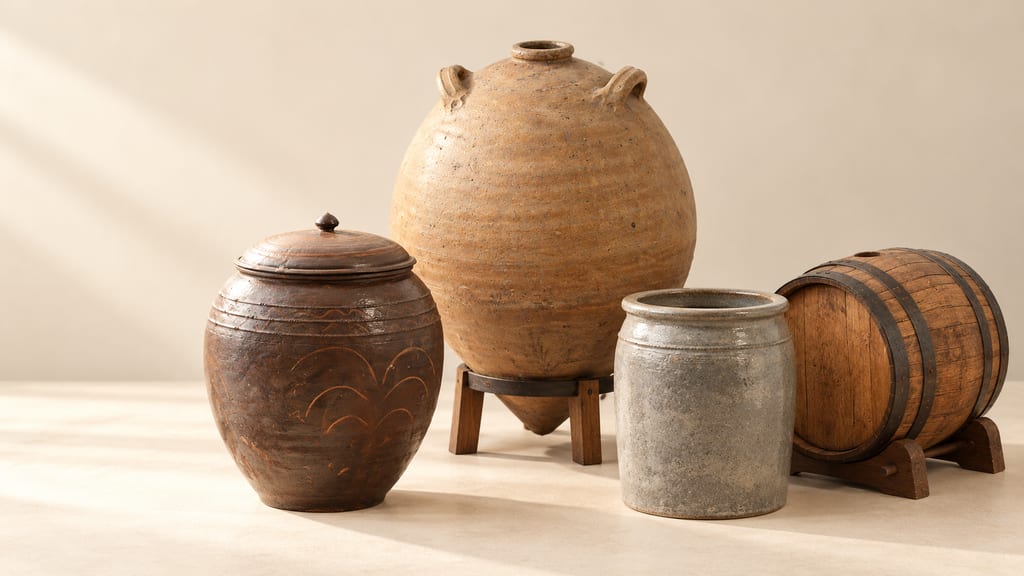
The ceramic body is chosen to suit an outdoor process exposed to warm days and cooler nights. Kakuida says it has tried different jars and now uses custom-designed Shigaraki ware for its process. Sakamoto's current source describes ceramic production jars but does not identify every vessel as the same clay, glaze or kiln tradition. It would be misleading to turn a producer's specification into a rule for the whole Fukuyama jar field.
The jars are not unattended storage. Sakamoto says brewing technicians inspect each pot daily, using their senses to follow the batch. Kakuida also describes its brewers checking jars one by one. The vessels are arranged so workers can move among them, uncover an opening for inspection, and care for an individual batch. No standard cleaning interval, repair method or replacement life is published in the sources used here.
The outdoor setting matters, but the jar is not a magic fermenter. The producer's description ties the method to local conditions, resident microorganisms, ingredients and seasonal work. A single pot taken elsewhere would not, by itself, reproduce the Fukuyama method or guarantee the same result.
Sources for this section
A documented Kagoshima tradition
Sakamoto places the start of its jar-made rice vinegar in Fukuyama around 1800. Japan's Ministry of Agriculture, Forestry and Fisheries identifies Fukuyama and Hayato in Kirishima City as the production area for Kagoshima no Tsubozukuri Kurozu and says the area's production began at least in the early nineteenth century. The local climate and access to traditional ceramic jars are part of the government's explanation for the area's suitability.
This history belongs to a regional method and its producers, not to the age of every jar now standing in a field. Modern fields continue to use the jar as a working fermentation vessel, and the production process remains a subject of local identity. The equipment record links to the existing Kurozu black vinegar preparation, which describes the product made in these jars.
Sources for this section
History
Sakamoto Kurozu dates jar-made rice vinegar in Fukuyama to around 1800. Japan's Ministry of Agriculture, Forestry and Fisheries lists Kagoshima jar-made kurozu and says production in the area began at least in the early nineteenth century. These are production traditions associated with the method and locality, not dates for every surviving jar.
Equipment details
CapacityThe sources consulted do not give a working volume for the individual jar; field jar counts must not be confused with capacity.
SizeNo inspected source provides dimensions for this item class; sizes vary and remain unstated.
PowerNo power The jar is a passive vessel; outdoor light and seasonal conditions inform the documented process.
How you get oneBought from a maker A producer selects ceramic jars for its process; Kakuida describes testing and commissioning jar designs. No universal maker or specification is established.
CareSakamoto describes brewers checking each jar daily during long fermentation and maturation. Kakuida likewise describes individual inspection. The sources do not give a universal washing, repair, or replacement schedule.
Made of
- Fired ceramic — Jar body and shallow cover
Producer sources describe ceramic jars used outdoors; the specific clay body and glaze vary by producer.
Limits
The vessel alone does not define the method: local climate, resident microbes, seasonal practice, ingredients, and close attention all matter. Jar counts at a producer's fields are not a jar capacity specification.
Source →Places
Fukuyama, Kirishima
Traditional preparation · Locality evidenceDocumented production locality for Kagoshima jar-made kurozu; this does not claim every jar was manufactured here.