
Rice koji
Rice koji is steamed white rice through which koji mold has grown. It carries the enzymes that turn rice starch into sugar, and it is the starting point of sake, sweet miso, amazake and shio koji.
 FermenteaWhere food goes to change
Equipment · Instruments
A plug-in humidity controller that reads a cabled sensor and switches separate humidifying and dehumidifying loads. It controls relative humidity, not temperature, and is distinct from the ITC-308 temperature controller.
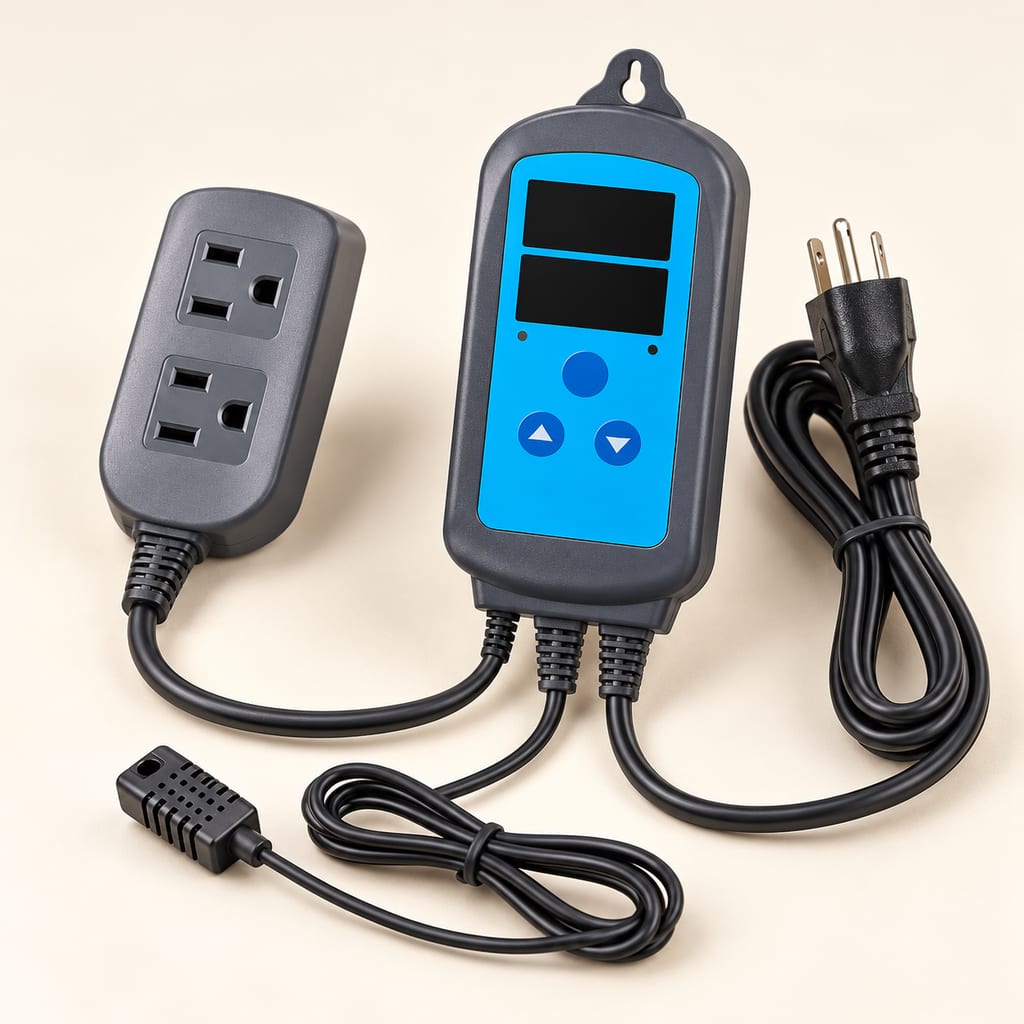
The INKBIRD IHC-200 is a mains-powered controller built around relative-humidity measurement. Its cable carries a sensing head into the room or enclosure being monitored; the controller compares that reading with a set value and switches connected equipment. The maker describes two relay outputs, one for humidification and one for dehumidification, so the unit can call for a humidifier when the air is too dry or a dehumidifier when it is too damp.
That function separates it from the ITC-308 temperature controller. The ITC-308 responds to a temperature probe and switches heating or cooling appliances. The IHC-200 is not a temperature instrument: the manufacturer lists temperature measurement as absent on the regular model. The related controllers share a broad relay-and-sensor approach, but their measured variables and suitable loads differ. The IHC-200-WIFI is a distinct sibling model with app connectivity; this record is for the non-Wi-Fi IHC-200.
The manufacturer specifies a humidity measurement range of 5 to 99.99% relative humidity and a control range of 5 to 99% RH, with stated accuracy of ±3% RH. The sensor lead is listed at 2 metres. The controller can display the current value, adjust calibration, set a target and differential, set high- and low-humidity alarms, and report sensor faults. The maker also describes a delay protection feature for output switching.
The displayed number belongs to the sensor's immediate surroundings. Air can vary within a cabinet because of circulation, door openings, warm and cool surfaces, and moisture sources. The controller does not map those differences, measure a food's internal moisture, or determine water activity. Calibration can adjust the instrument's indicated value, but it cannot replace checking the sensor against a suitable reference or measuring the food by the method required for the process.
The IHC-200 is a switch, not a humidifier or dehumidifier. Its two outputs connect to appliances that add or remove moisture. The manufacturer describes the unit as plug-and-play and lists two switched outputs, 100–240 V AC input at 50/60 Hz, a maximum 10 A output and consumption under 3 W. The combined equipment still has to suit the space: a sensor cannot compensate for an undersized appliance, leaking enclosure, poor circulation or uneven moisture distribution.
In a food room or drying cabinet, humidity can affect drying and surface conditions, but this controller alone does not specify a safe curing schedule or prove a batch is ready. A product may need checks of temperature, mass loss, acidity, salt or water activity as well as ambient RH. The manufacturer documents general humidity management and other application contexts, not a validated fermentation process. Use the controller only as one component of a separately designed and verified system.
The IHC-200 series page distinguishes the standard IHC-200 from the IHC-200-WIFI and lists US, EU, UK and AU plug types. The Wi-Fi model adds app monitoring and control, while the standard model has no app connection. The manufacturer's comparison also marks temperature measurement absent on both of those IHC-200 variants, unlike the ITC-608T. Confirm the item label and plug version before relying on the product table.
No ingress-protection rating or cleaning method is stated, so keep the mains body and socket block away from water, and do not assume the sensor can be immersed.
The manufacturer's current product listing and manual document the IHC-200 but do not establish its launch date.
The controller switches external humidifying and dehumidifying appliances through mains outputs; the manufacturer lists a maximum 10 A output.
Hazard sourceThe controller measures ambient relative humidity and switches appliances; its reading does not establish a food's moisture content, water activity or safety.
Hazard sourceCheck the exact model's input, plug, output limit and the connected appliance's own instructions before connecting a load.
Control sourceTreat relative-humidity readings as a measurement at the sensor location; independently verify the process endpoint that matters to a food.
Control sourceThe product page lists a 10 A maximum output; no fermentation safety limit or process validation is supplied.
The standard IHC-200 is a humidity controller, not a temperature controller: the manufacturer says it does not measure temperature. The Wi-Fi and ITC-608T variants have different capabilities.
Source →The stated ±3% RH accuracy and humidity ranges are manufacturer specifications. The value is a sensor-location reading, not a measurement of food water activity or a guarantee that a whole chamber is uniform.
Source →The manufacturer lists maximum 10 A output; check the actual regional controller and connected load against the supplied instructions.
Source →Documented for international use, with no single place of origin assigned.
Rice koji is steamed white rice through which koji mold has grown. It carries the enzymes that turn rice starch into sugar, and it is the starting point of sake, sweet miso, amazake and shio koji.
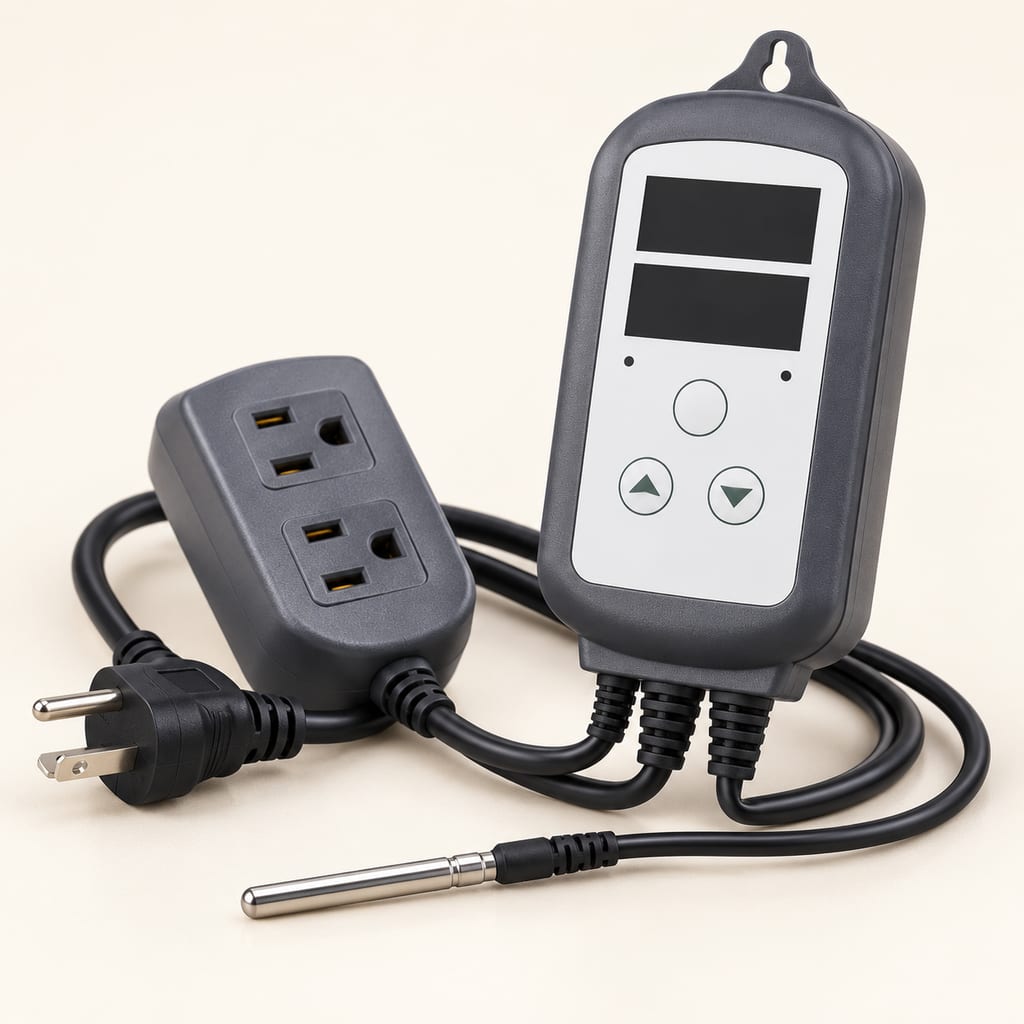
The INKBIRD ITC-308 is a plug-in, probe-led temperature controller with separate heating and cooling outputs. Its relays switch compatible appliances; they do not heat, cool or validate the food themselves.
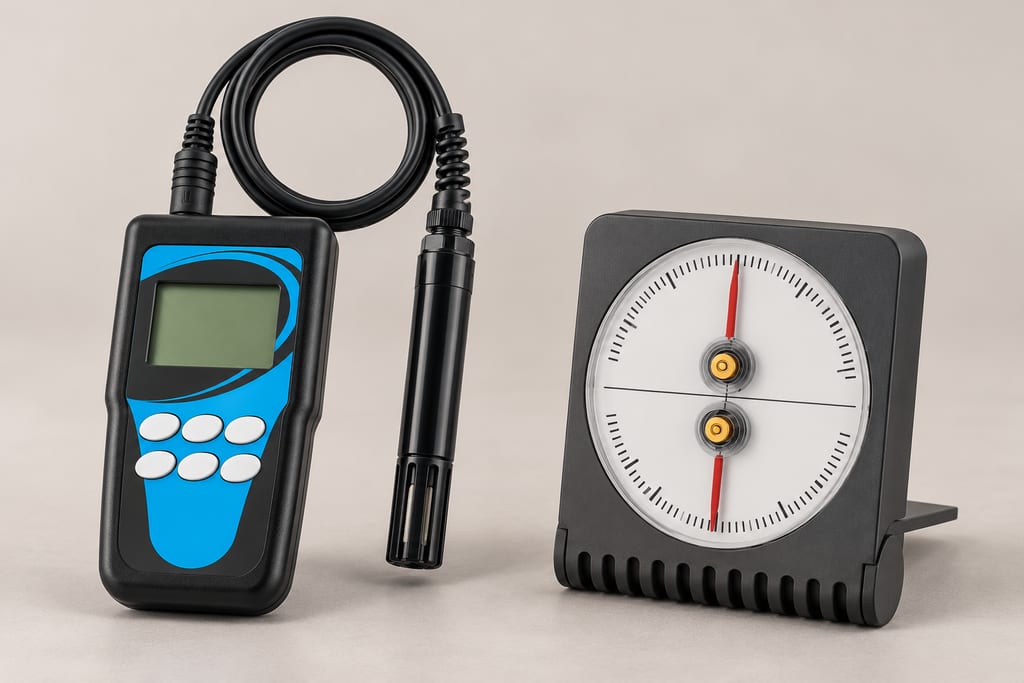
A thermo-hygrometer measures air temperature and relative humidity. It observes local conditions but does not control humidity or directly measure a food’s water activity.

Soft, spreadable Calabrian pork sausage made with a great deal of red chilli and fatty pork, stuffed into natural casings, sometimes smoked and matured while staying soft.

A way to add independent temperature logging to an existing food dehydrator without changing its built-in controls or protections. It is a monitoring method, not a rewiring plan.

Pleurotus cystidiosus is the abalone mushroom, a cultivated oyster-type fungus with dark brown caps that grows more slowly and is more demanding than other Pleurotus species.

A dark, balanced vinegar from Emilia-Romagna made by combining cooked or concentrated grape must with wine vinegar, then acetifying and refining it in wood under a protected specification.

A living dairy inoculum that starts controlled cream fermentation, developing acidity and aroma before sour cream or cultured butter is finished.

A small electric incubator holds jars at a selected temperature for yogurt and other documented warm food preparations. Controls, capacity and vessel arrangement vary by model.

Adygean salt is a seasoned table salt associated with Adygea and the wider North Caucasian culinary tradition. Salt is blended with garlic and a variable selection of herbs and spices; the exact mix depends on the named style and maker.

The African Caesar-group mushroom, Amanita masasiensis, is a wild ectomycorrhizal species of central and southern African woodlands, eaten locally. The genus contains deadly poisonous species, so identification needs care.
No community contributions have been published for this entry yet.
Sign in to contribute. Published comments and photos are free to read.
INKBIRDProduct specifications · Operation · Safety · Market reach
Digital Humidity Controller IHC-200 SeriesThe page identifies the IHC-200 and IHC-200-WIFI as distinct model selections and offers US, EU, UK and AU plug formats.
The IHC-200 product table specifies 100–240 V AC, 50/60 Hz input, maximum 10 A output, less than 3 W consumption, humidity measurement 5–99.99% RH and control 5–99% RH, with stated ±3% RH accuracy and a 2 m sensor.
The manufacturer describes dual relay outputs for separate humidification and dehumidification, alarms, calibration, delay protection and a capacitive humidity sensor.
The page distinguishes the Wi-Fi model's app functions and temperature monitoring as absent from the regular model.
The product page advertises international shipping but says US orders may ship from a US warehouse or China factory depending on stock; this does not establish a single manufacture location for every unit.
Cited in: A humidity controller, not a temperature controller; What the controls measure and switch; Separate appliances do the conditioning; Variants, reach and practical limits
INKBIRDOperation · Setup · Limits
IHC-200 Humidity Controller Instruction Manual (English)The manufacturer provides an English instruction manual for the IHC-200, linked from its manual page. The scanned PDF is not text-searchable, so no unverified detailed control sequence is quoted here.
Cited in: What the controls measure and switch; Variants, reach and practical limits