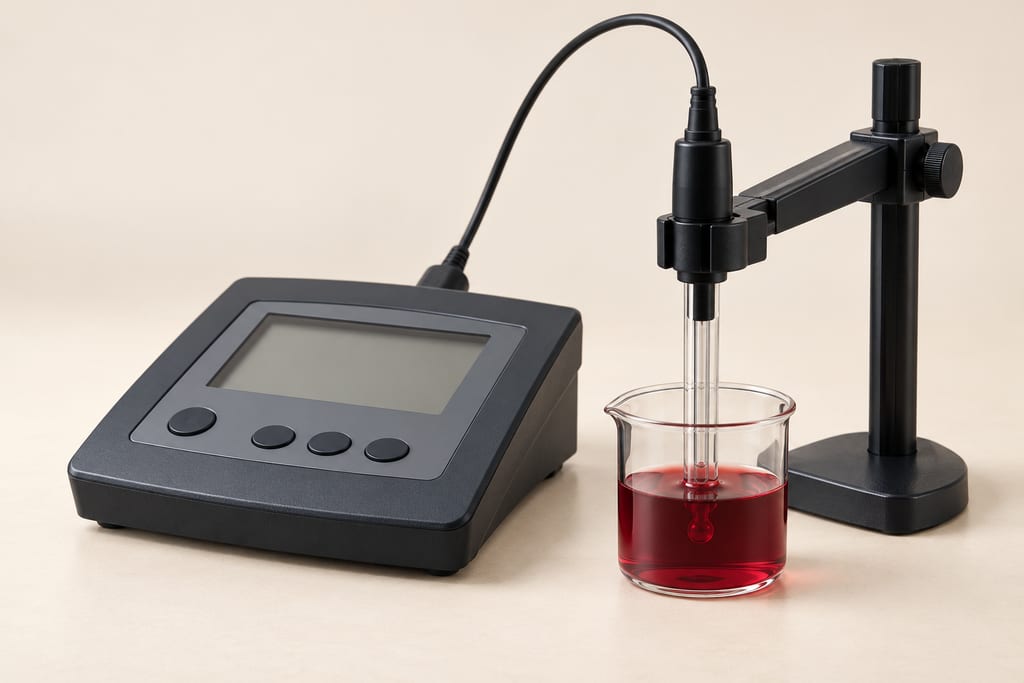
pH meter
A pH meter pairs an electronic readout with a probe to measure a prepared sample. Probe choice, calibration and representative sampling affect the reading, so the model and method must fit the food.
 FermenteaWhere food goes to change
Equipment · Instruments
A bench-scale vessel system combines measurement and mechanical control for fermentation research. Vessel materials, fittings and control options vary; a research bioreactor is not a validated food process.
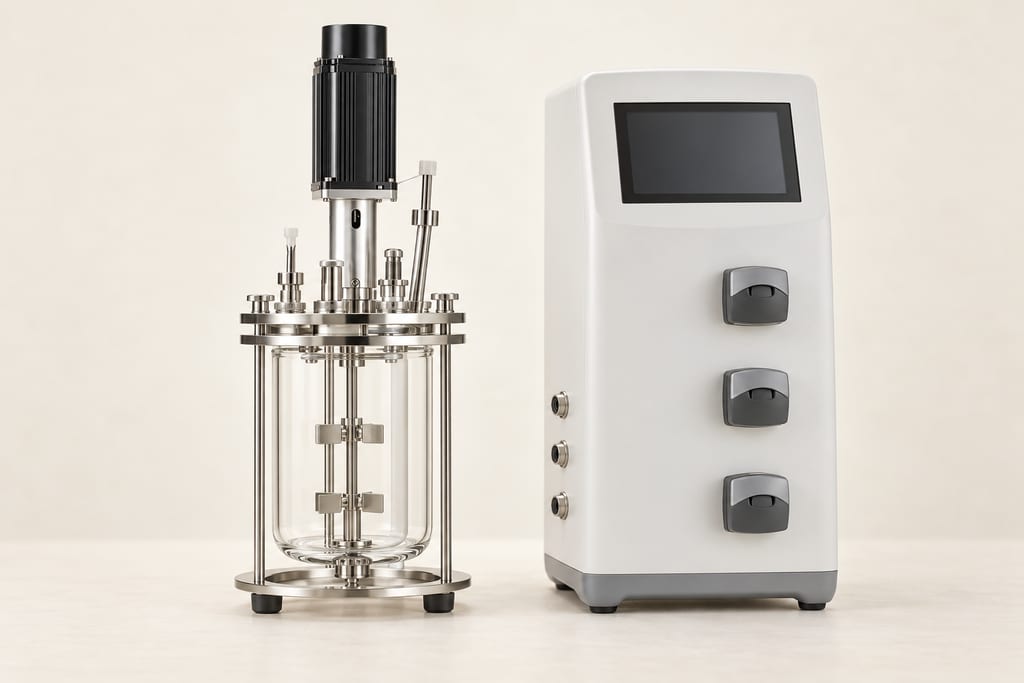
An instrumented laboratory bioreactor is a manufactured vessel system used to observe and control selected conditions during fermentation research. It differs from a household fermenting jar because the vessel is built to accept measurement and mechanical-control components. The equipment does not identify which food is being made, determine whether a process is safe, or replace a product-specific validated method.
The exact scope here is a modern laboratory instrument, not a traditional fermentation vessel. The category includes bench systems used in research and process development; manufacturer catalogues describe applications beyond food as well. A named model such as Eppendorf BioFlo 120 is one example only, not a definition of the entire class.
A representative glass system has a transparent vessel, a fitted headplate, a motor-driven mixing assembly and a separate control unit. Depending on the configuration, the assembly can also accept sensors, temperature-management accessories and connections for sampling or other process functions. The arrangement of these parts is not universal: vessel materials, drive types, control hardware and accessories vary by manufacturer and application. A separate [pH meter](/equipment/ph-meter) can measure a prepared sample; it is not a component of every bioreactor, whose integrated sensors vary by configuration.
Eppendorf’s product information illustrates one current family with glass vessels and stainless-steel headplates. That example is useful for recognizing the form, but its named products, dimensions, accessories and advertised operating capabilities should not be generalized to other systems. This page therefore records only the broad equipment type and representative material choices.
When equipment is used in a food process, food-contact surfaces and maintenance matter. FDA’s food CGMP summary says equipment must be adequately cleanable and maintained to protect against contamination. A catalogue description or laboratory vessel material does not by itself establish suitability for every food, cleaning regime or production setting; the operator must follow applicable food-safety requirements and the equipment maker’s documentation.
Monitoring values describe what the installed sensors measured at their locations. They do not independently establish product composition, safety, shelf life or process validation. A laboratory bioreactor is a research tool, not a household recipe or a guarantee that a fermentation is safe. The sources inspected here establish current equipment forms but do not establish a place of invention, a single manufacturing location or a traditional regional use.
The inspected manufacturer catalogue describes current bench-scale vessel and controller systems; it does not establish an invention date or the first use of this equipment class.
The inspected manufacturer page documents a product family but gives no place of invention, manufacture, or documented food use; the FDA source is U.S. guidance for food equipment generally, not evidence of where this bioreactor type is used.
A pH meter pairs an electronic readout with a probe to measure a prepared sample. Probe choice, calibration and representative sampling affect the reading, so the model and method must fit the food.

Soft, spreadable Calabrian pork sausage made with a great deal of red chilli and fatty pork, stuffed into natural casings, sometimes smoked and matured while staying soft.

A way to add independent temperature logging to an existing food dehydrator without changing its built-in controls or protections. It is a monitoring method, not a rewiring plan.

Pleurotus cystidiosus is the abalone mushroom, a cultivated oyster-type fungus with dark brown caps that grows more slowly and is more demanding than other Pleurotus species.

A dark, balanced vinegar from Emilia-Romagna made by combining cooked or concentrated grape must with wine vinegar, then acetifying and refining it in wood under a protected specification.

A living dairy inoculum that starts controlled cream fermentation, developing acidity and aroma before sour cream or cultured butter is finished.

A small electric incubator holds jars at a selected temperature for yogurt and other documented warm food preparations. Controls, capacity and vessel arrangement vary by model.

Adygean salt is a seasoned table salt associated with Adygea and the wider North Caucasian culinary tradition. Salt is blended with garlic and a variable selection of herbs and spices; the exact mix depends on the named style and maker.

The African Caesar-group mushroom, Amanita masasiensis, is a wild ectomycorrhizal species of central and southern African woodlands, eaten locally. The genus contains deadly poisonous species, so identification needs care.
No community contributions have been published for this entry yet.
Sign in to contribute. Published comments and photos are free to read.
EppendorfRepresentative equipment form · Components and variation
Glass BioreactorsEppendorf describes glass stirred-tank systems as vessel, headplate and accessories such as motor, impeller, sensors and connections for monitoring or handling.
The product family includes different vessel and accessory configurations; the page is evidence for one manufacturer's designs, not a universal specification.
Cited in: A vessel system for measured research; Common parts, changing configurations; Food-contact care and what the readings mean
EppendorfNamed representative example · Materials
BioFlo® 120 BioreactorsEppendorf describes one family of autoclavable glass vessels with stainless-steel headplates and an overhead drive, offered in different configurations.
BioFlo 120 is a named product example and is not a synonym for all laboratory bioreactors.
Cited in: A vessel system for measured research; Common parts, changing configurations
U.S. Food and Drug AdministrationFood contact equipment maintenance · Cleanability
Current Good Manufacturing Practices (CGMPs) for Food and Dietary SupplementsFDA summarizes food CGMP requirements concerning equipment design, cleanability and maintenance.
The general food-equipment requirements do not certify a particular laboratory bioreactor or validate a fermentation process.
Cited in: Food-contact care and what the readings mean