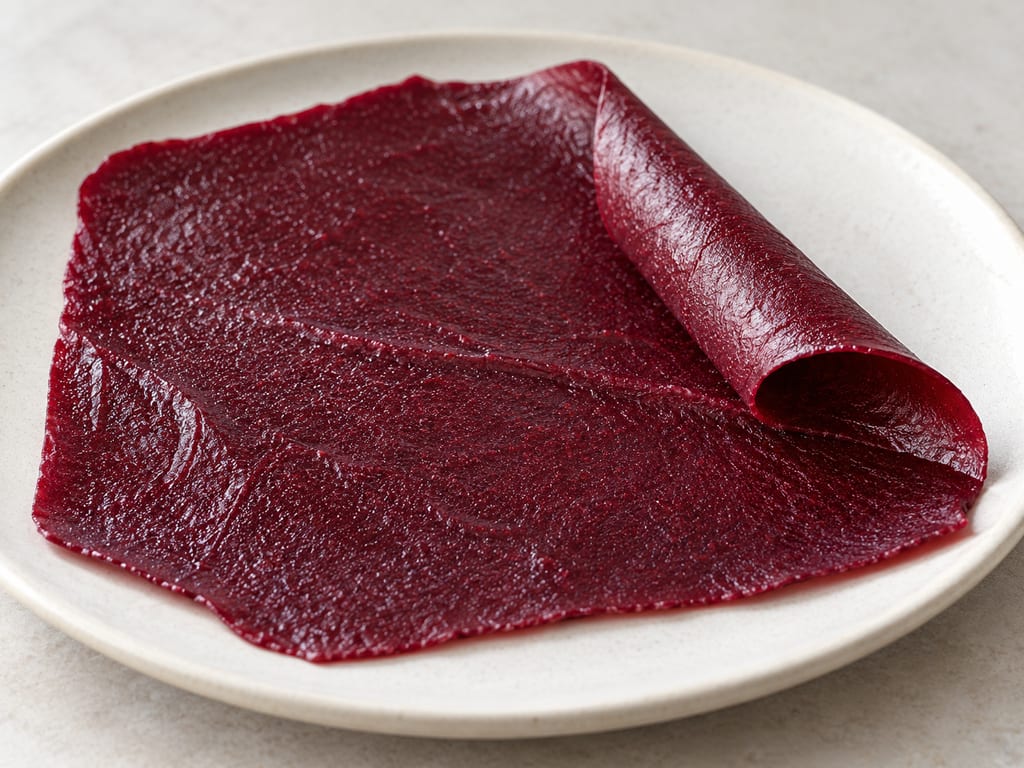
Fruit leather
Fruit pulp spread into thin sheets or shaped into cakes and dried, a compact, portable way of keeping fruit in western and central Asia and among Indigenous North Americans.
 FermenteaWhere food goes to change
Built structures · Drying kilns and dryers
A dehydrator or drying box set up with mesh trays for slices and herbs and solid liners for purées, drying by warm moving air to a recipe's own endpoint.
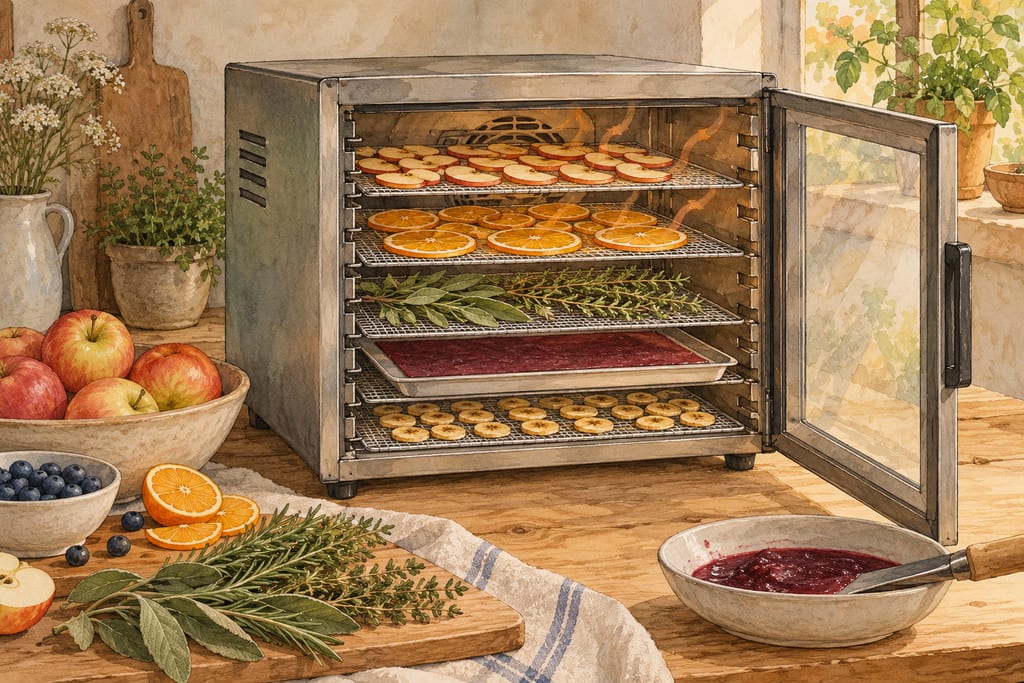
A drying cabinet replaces sun and wind with controlled airflow and heat. It dries fruit sheets, herbs, sliced vegetables and steamed sweet potato. The lined trays take purées that mesh trays cannot hold.
Moving air carries water from the surface. Heat speeds evaporation, but too much case-hardens the surface (Excalibur, Brød & Taylor). Evaporation keeps wet food cooler than the air. Solid liners block airflow from below, so the thickness of the purée controls the drying.
Endpoints are food-specific: no indentation at a leather's centre, crumbling herbs, brittle vegetables. Cabinet humidity is not the food's water activity. Water activity is measured on a sample in a sealed chamber (FDA).
Fruit leather is dried on lined trays at 140 °F (University of Georgia mango leather recipe).
Herbs are dried in a single layer at 95 to 115 °F (University of Georgia herb guide, from So Easy to Preserve).
Hoshiimo (proposed): steamed sweet potato slices dried in the cabinet, as described in Japanese food-ministry material. Tarhana (proposed): drying of the fermented dough, from a Brazilian study of tarhana fermentation.
Measure the thickness, the load, the room humidity, the drying time and the recipe's dryness test. Condition the food and check for condensation before storage.
A cabinet does not reproduce sunlight's chemistry or outdoor day-and-night cycling. Air humidity and weight loss do not establish water activity.
The sources are current appliance guides and extension recipes. They describe drying by controlled airflow and heat in place of sun and wind. They do not date the first use of a drying cabinet.
A build is made where it stands: moving it means building it again.
Condensation in stored dried food can let it spoil, and mouldy food is not safe to eat.
Hazard sourceCool completely before packing.
Control sourceRe-dry any food that shows condensation. Discard mouldy food.
Control sourceDocumented for international use, with no single place of origin assigned.
Fruit pulp spread into thin sheets or shaped into cakes and dried, a compact, portable way of keeping fruit in western and central Asia and among Indigenous North Americans.
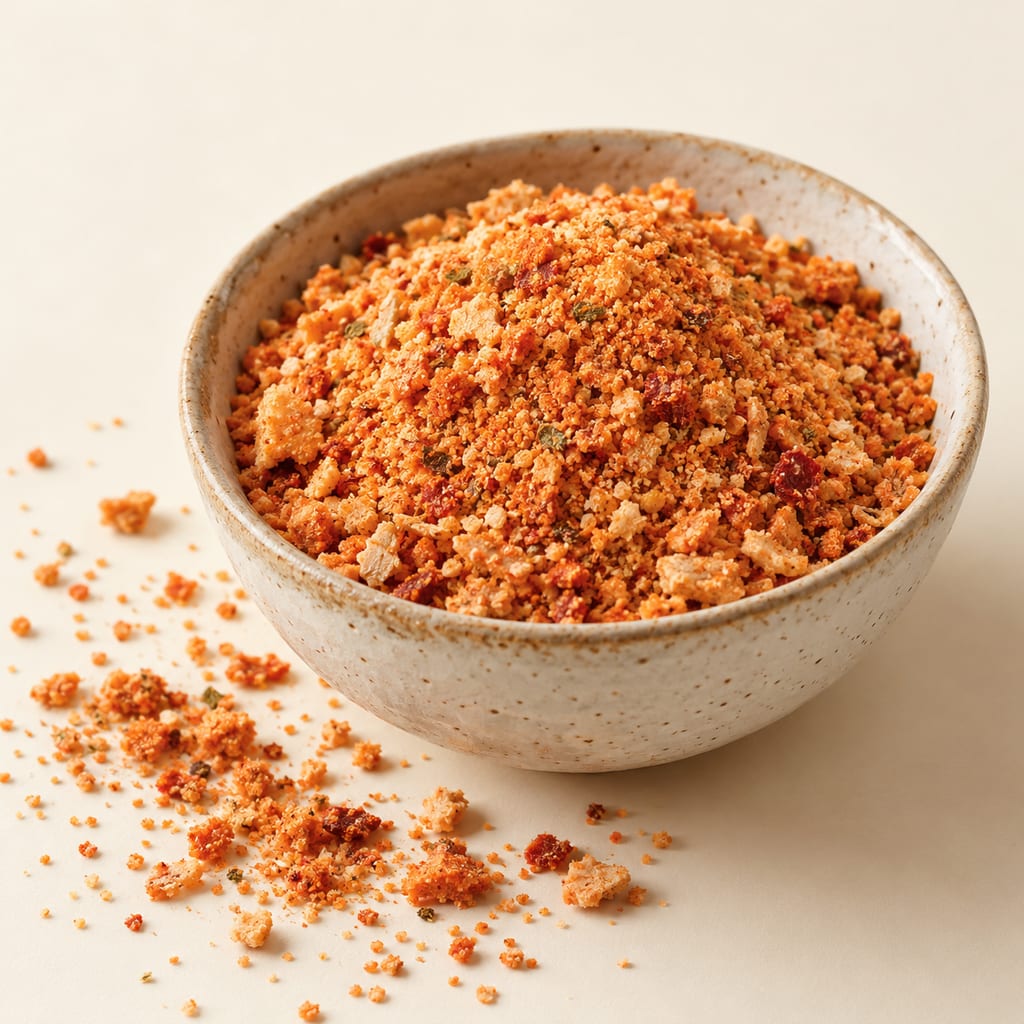
Tarhana is a Turkish soup base: yoghurt, flour or semolina and usually onion, tomato and red pepper, fermented as a dough for days, rubbed into grains and dried.
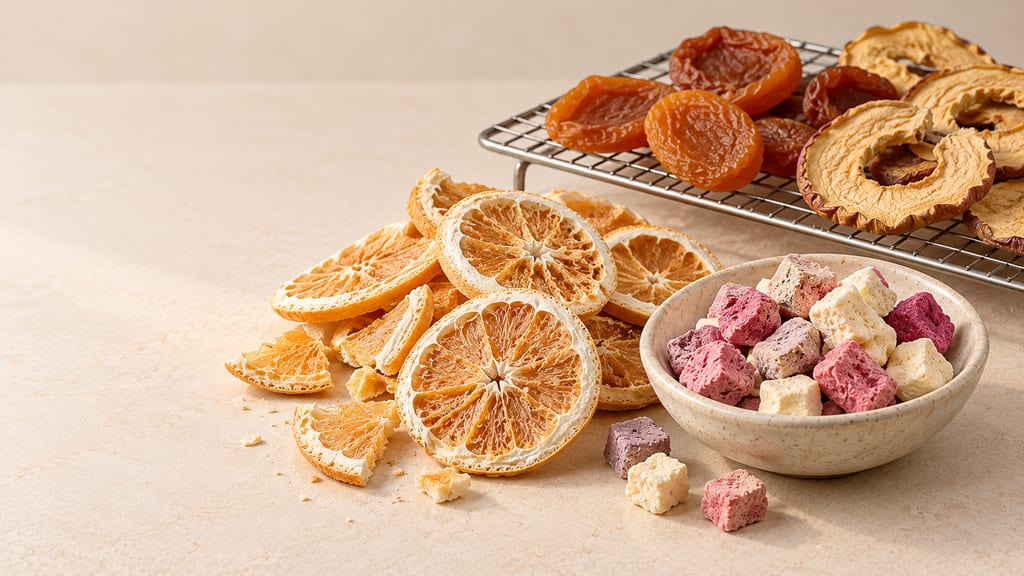
A dehydrator turns fruit purée into leather and steamed sweet potato into hoshiimo without sun or wind; a freeze dryer works differently. Both stop microbes growing by removing water, and neither replaces a step that kills them.

Soft, spreadable Calabrian pork sausage made with a great deal of red chilli and fatty pork, stuffed into natural casings, sometimes smoked and matured while staying soft.

A way to add independent temperature logging to an existing food dehydrator without changing its built-in controls or protections. It is a monitoring method, not a rewiring plan.

Pleurotus cystidiosus is the abalone mushroom, a cultivated oyster-type fungus with dark brown caps that grows more slowly and is more demanding than other Pleurotus species.

A dark, balanced vinegar from Emilia-Romagna made by combining cooked or concentrated grape must with wine vinegar, then acetifying and refining it in wood under a protected specification.

A living dairy inoculum that starts controlled cream fermentation, developing acidity and aroma before sour cream or cultured butter is finished.

A small electric incubator holds jars at a selected temperature for yogurt and other documented warm food preparations. Controls, capacity and vessel arrangement vary by model.

Adygean salt is a seasoned table salt associated with Adygea and the wider North Caucasian culinary tradition. Salt is blended with garlic and a variable selection of herbs and spices; the exact mix depends on the named style and maker.

The African Caesar-group mushroom, Amanita masasiensis, is a wild ectomycorrhizal species of central and southern African woodlands, eaten locally. The genus contains deadly poisonous species, so identification needs care.
No community contributions have been published for this entry yet.
Sign in to contribute. Published comments and photos are free to read.
Brød & TaylorMethod
Support (product specifications and FAQ: Folding Proofer & Slow Cooker, Sourdough Home, Sahara Folding Dehydrator)Cited in: Overview
National Center for Home Food Preservation (University of Georgia)Method
Food DehydratorsNational Center for Home Food Preservation (University of Georgia)Method
Mango LeatherCited in: Documented uses
National Center for Home Food Preservation (from So Easy to Preserve, 6th ed., Bulletin 989)Method
HerbsCited in: Documented uses
U.S. Food and Drug AdministrationMethod
Water Activity (aw) in FoodsCited in: Endpoints and water activity; Limits
National Center for Home Food Preservation (University of Georgia)Method
Packaging and Storing Dried FoodsCited in: Measuring
Ministry of Agriculture, Forestry and Fisheries, JapanMethod
Hoshiimo | Traditional Foods in JapanCited in: Documented uses
Food Science and Technology, SciELOMethod
A functional food: a traditional Tarhana fermentation (Food Science and Technology (Campinas) 37(2), 2017)Cited in: Documented uses