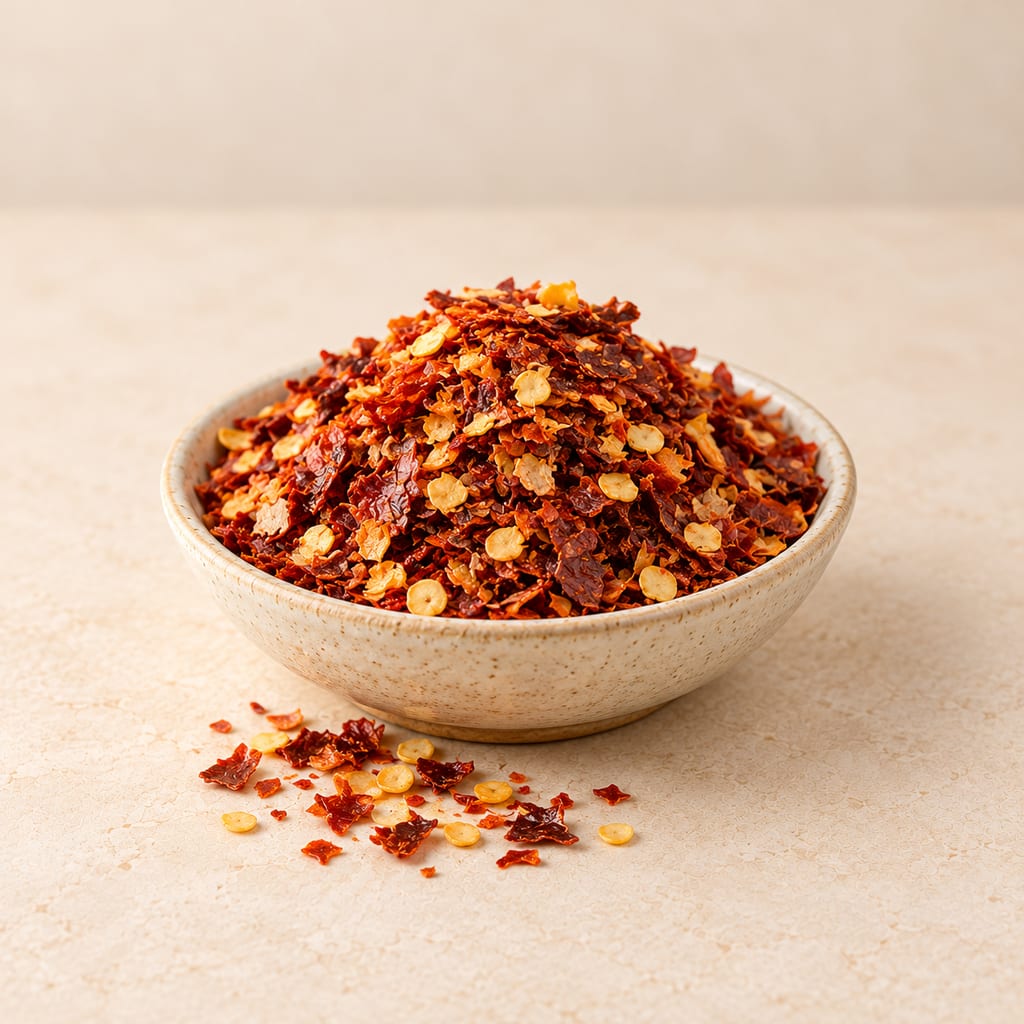
Calabrian pepper flakes
Calabrian pepper flakes are dried red Capsicum annuum from Calabria, crushed into coarse pieces; Peperoncino di Calabria is a protected geographical indication.
 FermenteaWhere food goes to change
Tabasco chile is the small, upright, pungent fruit of Capsicum frutescens 'Tabasco', a cultivar long used in Louisiana pepper sauce.
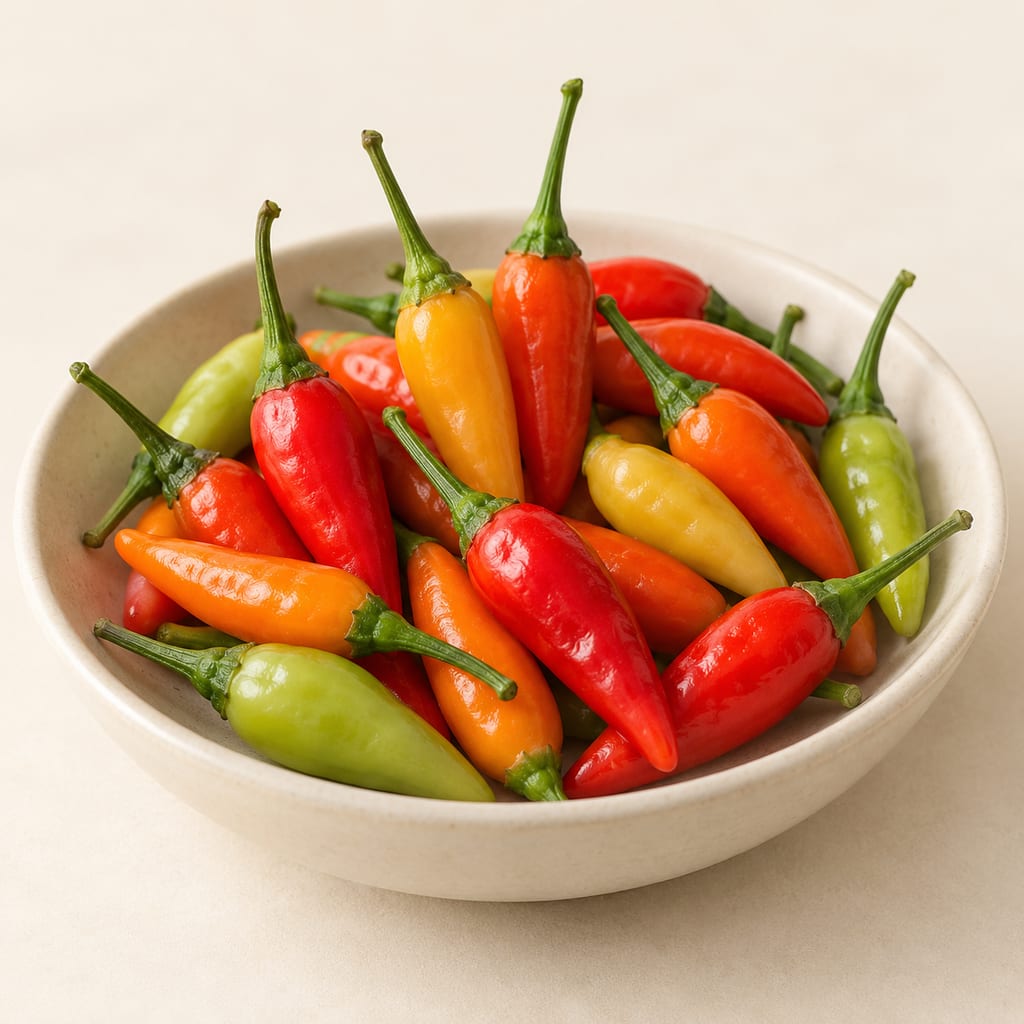
Tabasco chile is the cultivar or cultivar group of Capsicum frutescens used for the pepper known by the same name. The fruits are small, tapered, and held upright on the plant; they mature through pale green, yellow, and orange to red. Capsicum frutescens is one of the cultivated species of the American genus Capsicum. A pepper called Tabasco is distinct from TABASCO® brand sauce, which is a finished condiment.
Tabasco is also the name of a Mexican state. Cornell Botanic Gardens says the pepper reached the United States from Tabasco in 1846. A historical account instead describes pods given to Edmund McIlhenny by an unidentified traveler from Mexico or Central America and treats parts of that story as uncertain. A horticultural paper places commercial U.S. use of C. frutescens for sauce in the 1840s. Commercial production of McIlhenny's sauce began on Avery Island, Louisiana, in 1868. The available sources do not settle the cultivar's deeper origin or one exact transfer route.
UF/IFAS and LSU AgCenter give the pepper a range of 30,000–50,000 Scoville heat units. That figure describes the chile; McIlhenny Company rates its Original Red sauce at 2,500–5,000 SHU after the pepper mash is processed with other ingredients. A sensory study of Brazil's BRS Avai Tabasco cultivar found mainly herbal, sweet-herbal, and pepper-like aroma impressions. It studied one cultivar selection, so those notes should not be treated as a fixed flavour profile for every Tabasco pepper.
Tabasco chile is used in pepper sauces. McIlhenny describes its branded mash as aged in white-oak barrels for up to three years; that commercial description is not a home process specification. This ingredient account does not establish a safe fermentation or storage method. Use a separately sourced, validated process for any home-fermented sauce.
Cornell gives 1846 from Tabasco, Mexico; another account says Mexico or Central America. Neither establishes the cultivar's deeper origin.
Documented place of commercial sauce production and pepper harvest; not the cultivar's claimed birthplace.
Commercial Capsicum frutescens sauce use is reported by the 1840s; the source does not locate it more precisely.
Calabrian pepper flakes are dried red Capsicum annuum from Calabria, crushed into coarse pieces; Peperoncino di Calabria is a protected geographical indication.
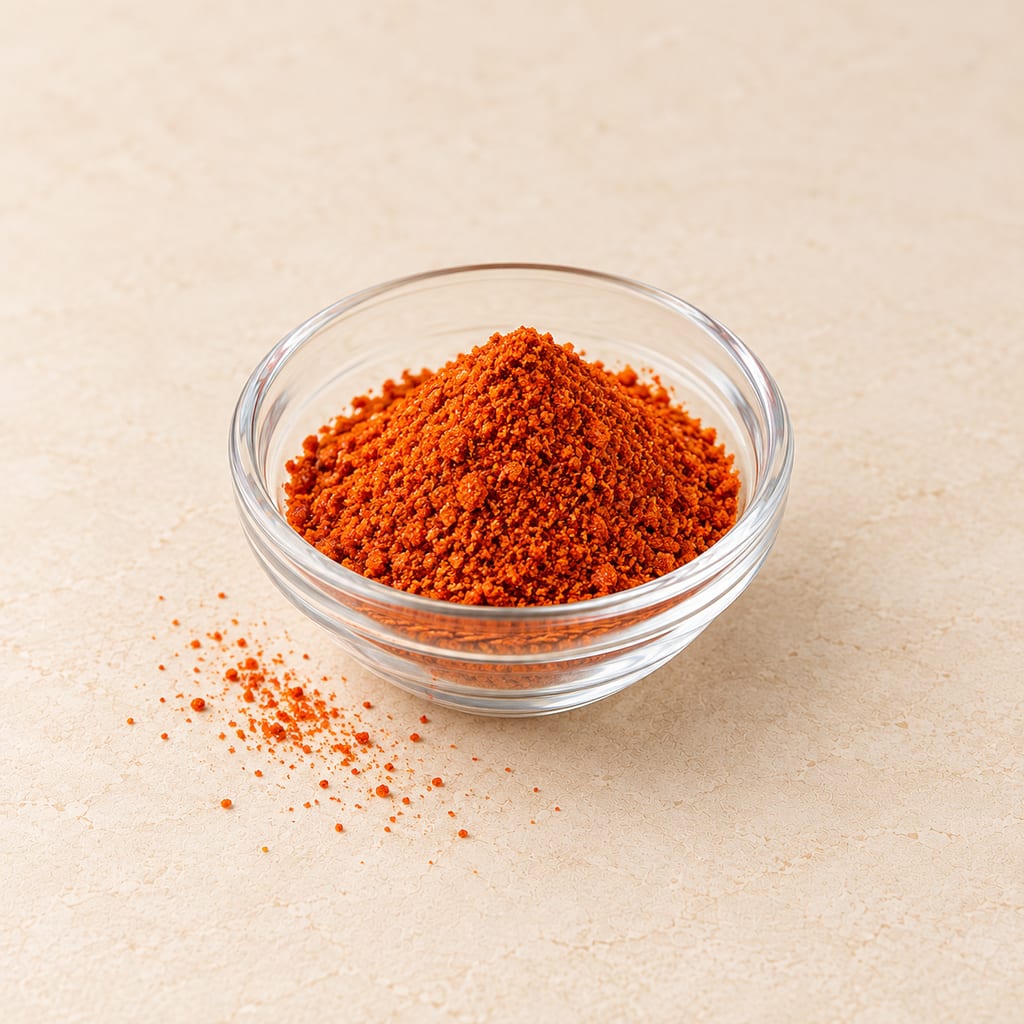
Cayenne is a very pungent red powder from dried, ground hot chilli pods, mostly Capsicum annuum, and the name of the long red peppers it comes from.
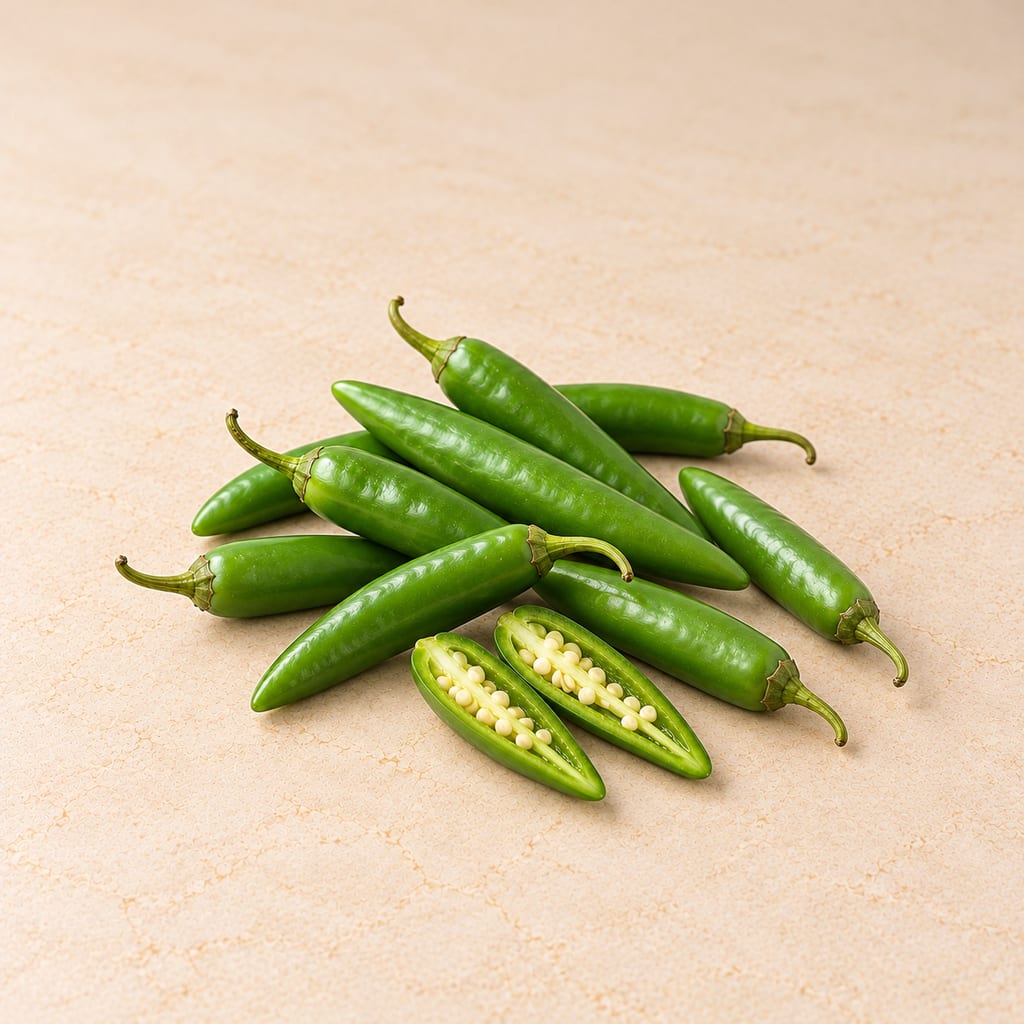
Chilli is the pungent fruit of Capsicum plants, native to the Americas and eaten fresh, dried, ground or fermented in cuisines around the world.
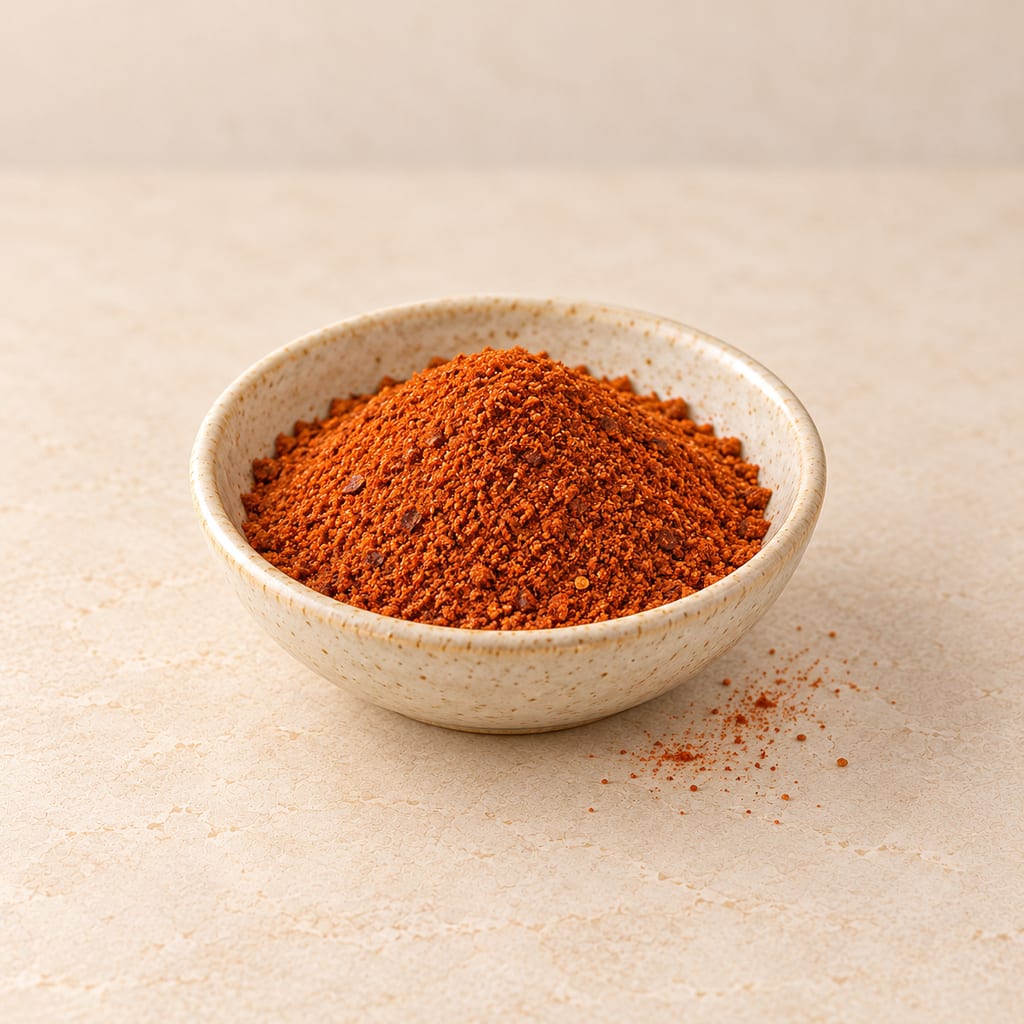
Chilli powder is dried chilli fruit ground fine, sold either as plain ground chillies or, in the United States, as a seasoning blend with salt, garlic and cumin.
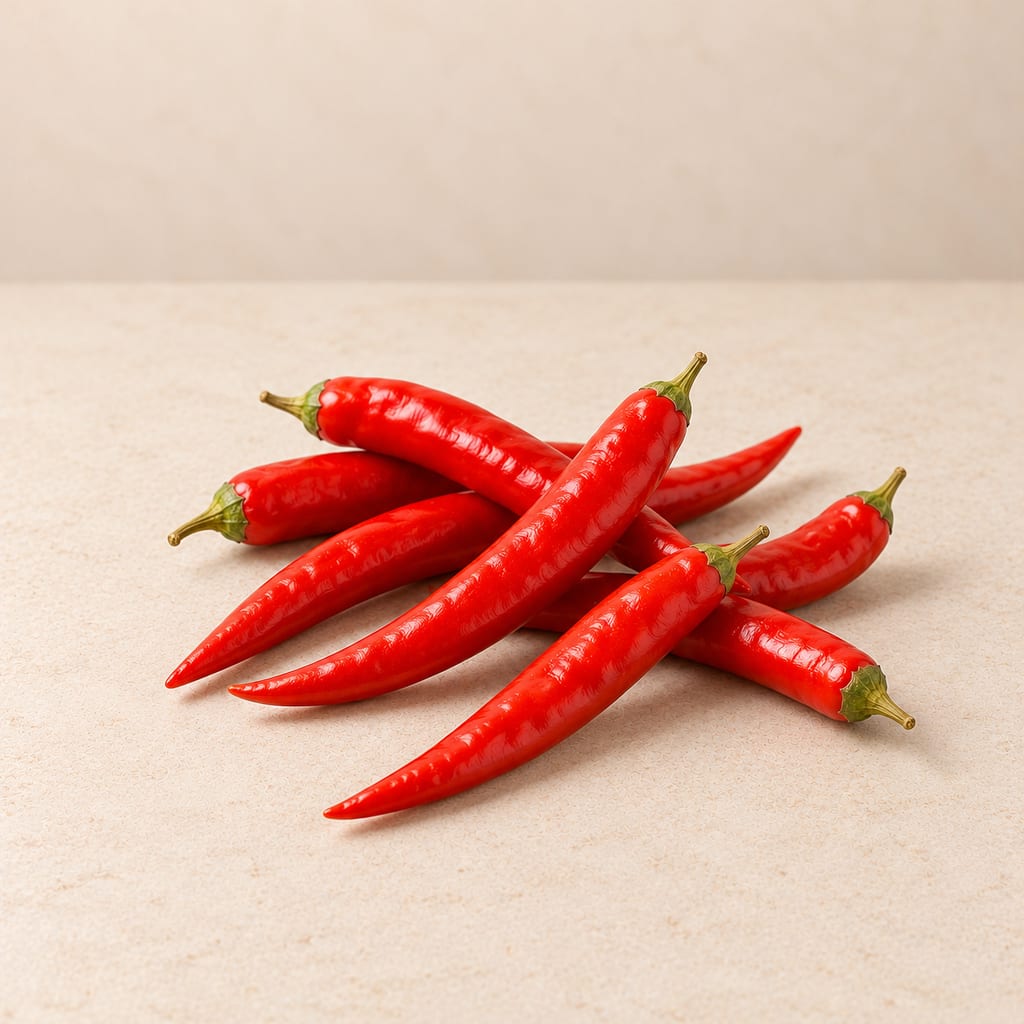
Red chilli is the ripe, red fruit of a Capsicum pepper plant, used fresh, dried, as flakes or as powder to add heat, colour and flavour to pickles, ferments, sauces and stews.
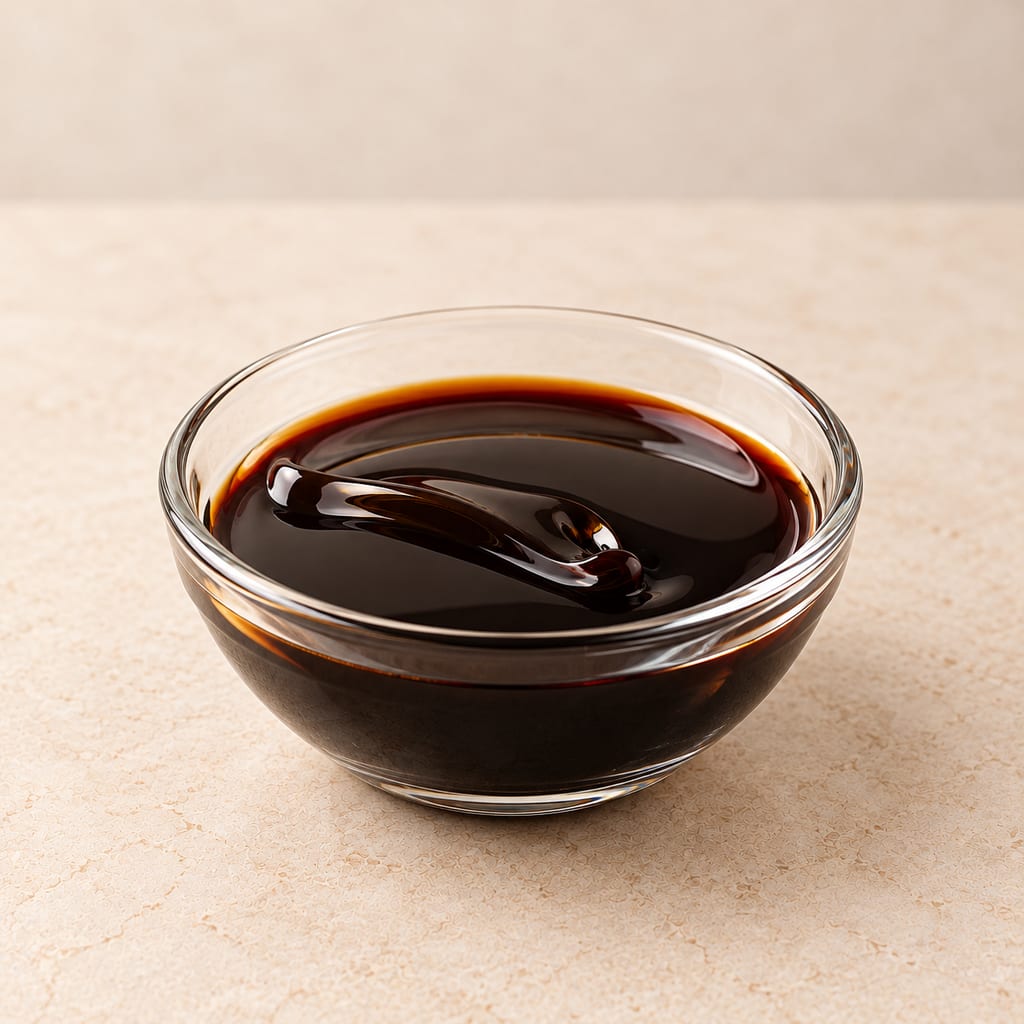
Cane syrup is sugarcane juice boiled down until it is thick and sweet, or the first syrup left after sugar is crystallised. Historical American recipes used it as a sweetener in ham cures.

A Cap-Pelé boucanière is an Acadian herring-smoking building. The documented Willie Niles example is a one-storey wood-frame structure with a ridge smoke vent and interior bays for hanging fish-bearing cannes.

Achcharu is a family of Sri Lankan vinegar pickles made with mixed vegetables or seasonal fruit and a piquant spice dressing. This version is a quick, refrigerated, non-fermented mixed-vegetable pickle.

The acocote is a long, hollowed and dried gourd used to draw aguamiel from a mature maguey. It is a harvesting tool: the sap is transferred to a separate vessel before it ferments into pulque.

Adrak murabba preserves young ginger in sugar syrup, a sweet South Asian preparation recorded in Indian cookery and food-processing sources.

Parkia biglobosa seeds are fermented into regional West African seasonings, including nététou, iru, dawadawa and soumbala. The yellow fruit pulp is a separate food, and names and methods vary by place.

Japanese reddish-brown vinegar from sake lees matured about three years, turned to vinegar by acetic bacteria; the vinegar of Handa and Edomae sushi rice.

A refined common-wheat flour blended for a broad range of baking; its protein and behavior vary with wheat, milling and market.

The almond mushroom, Agaricus subrufescens, was cultivated in eastern North America in the 1800s, lost its market, and returned as a cultivated mushroom from Brazil, where it is grown under several names.
No community contributions have been published for this entry yet.
Sign in to contribute. Published comments and photos are free to read.
UF/IFAS ExtensionIdentity · Growing · Heat
Pepper Production in Miami-Dade County, FloridaTabasco is a variety of Capsicum frutescens, named after the Mexican state of Tabasco; fruit is upright, tapered, about 1.5 inches, ripening from greenish through yellow and orange to red; source reports 30,000–50,000 Scoville units.
Cited in: Identity and fruit; Heat and aroma
LSU AgCenterIdentity · Heat · Growing
GNO Gardening October 2024Tabasco is the best-known Capsicum frutescens variety; LSU reports its pungency at 30,000–50,000 SHU.
Cited in: Heat and aroma
Cornell Botanic GardensHistory · Geography
Tabasco PepperDescribes the plant as Capsicum frutescens Tabasco Group and says it was brought from Tabasco, Mexico, to the United States in 1846 before reaching Avery Island, Louisiana. This date differs from other accounts.
Cited in: A debated route to Louisiana
Archaeology Magazine Archive / Archaeological Institute of AmericaHistory · Geography
Spicy Digs at Tabasco BirthplaceAn account says McIlhenny received pods from a traveler, possibly a Confederate veteran, from Mexico or Central America; the exact source and route are uncertain. It records commercial sauce production on Avery Island from 1868, in a building later replaced in 1905.
Cited in: A debated route to Louisiana
Food Science and TechnologyFlavour · Science
Odor-contributing volatile compounds of a new Brazilian tabasco pepper cultivar analyzed by HS-SPME-GC-MS and HS-SPME-GC-O/FIDA sensory study of the Brazilian BRS Avai Tabasco pepper cultivar found its strongest odor impressions herbal, sweet-herbal, and pepper-like. The authors caution that findings concern this cultivar and that aroma differences across C. frutescens genotypes need further study.
Cited in: Heat and aroma
Metabolites 9(10):206Science · Heat
Placenta, Pericarp, and Seeds of Tabasco Chili Pepper Fruits Show a Contrasting Diversity of Bioactive MetabolitesIn ripe red Capsicum frutescens Tabasco fruit, the placenta accumulated most capsaicinoids, the compounds mainly associated with pungency.
McIlhenny CompanyCommercial use · Method
TABASCO® Brand Original Red SauceThe producer describes its branded sauce as pepper mash aged in white-oak barrels for up to three years and reports a finished-sauce rating of 2,500–5,000 SHU. These are sauce details, not pepper heat values.
Cited in: Heat and aroma; Use in pepper mash
McIlhenny CompanyGeography · Modern use
Avery Island 2018 Pepper Harvest UpdateMcIlhenny Company says it harvests red pepper fruit on Avery Island from seedstock associated with the first sauce in 1868. This is producer history, not proof that all Tabasco peppers originate there.
American Society for Horticultural ScienceIdentity · History
HORTSCIENCE 42(1):16–19 (2007)A scientific paper identifies Capsicum frutescens as a cultivated Capsicum species and describes Tabasco as its best-known variety; it reports commercial U.S. use of C. frutescens for sauce by the 1840s.
Cited in: A debated route to Louisiana
Wikimedia CommonsImage rights
File:Capsicum frutescens Tabasco 3zz.jpgPhoto page identifies Capsicum frutescens 'Tabasco' at the U.S. National Arboretum and licenses the image CC BY-SA 4.0.
Wikimedia CommonsImage rights
File:Capsicum frutescens (Tabasco).JPGPhoto page identifies Capsicum frutescens (Tabasco) at the Musée de Toulouse and licenses the image CC BY 3.0.
Wikimedia CommonsImage rights
File:Tabasco pepper.jpgThe author captions the photo Tabasco pepper and licenses it CC BY-SA 3.0.
Wikimedia CommonsImage rights
File:Tabasco pepper Nov 2010.JPGThe author identifies the image as Tabasco pepper plants with pods in several colours and releases it into the public domain.
Wikimedia CommonsImage rights
File:Tabasco pepper (Capsicum frutescens) in Athens on August 11, 2023.jpgThe file identifies the plant as Tabasco pepper (Capsicum frutescens) in Athens and licenses the photo CC BY-SA 2.0.
USDA Agricultural Marketing ServiceIdentity
Limited Scope Technical Evaluation Report: Flavors - Handling/ProcessingThe report identifies Tabasco as a cultivar of Capsicum frutescens and distinguishes it from habanero, a C. chinense cultivar.
Cited in: Identity and fruit