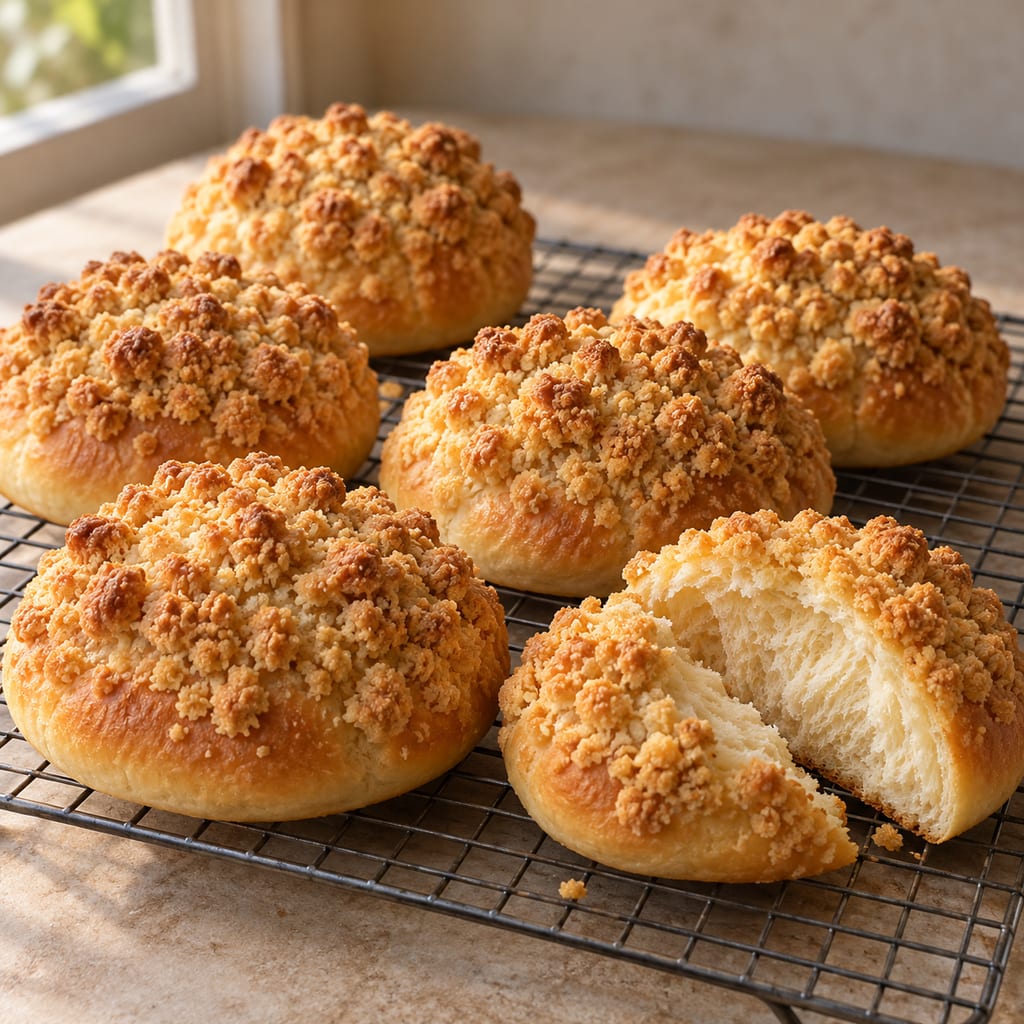
Soboro-ppang (Jennifer’s 10-bun recipe)
Ten soft, sweet yeast buns with a crisp, peanut butter streusel topping, shaped by hand and baked until golden.
 FermenteaWhere food goes to change
Modern adaptation
Hotteok (호떡) · Hoddeok
Maangchi’s eight-piece hotteok wraps a brown-sugar, cinnamon and walnut filling in yeast dough, then fries and presses the parcels in a pan.
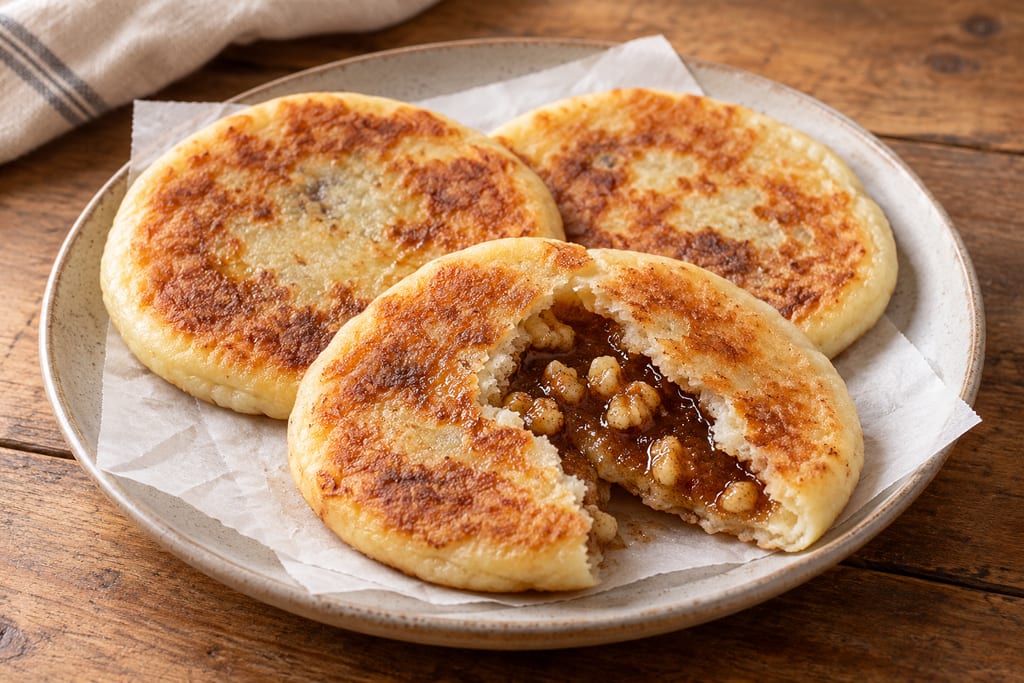
Maangchi's hotteok is an eight-piece, yeast-raised dough filled with brown or turbinado sugar, cinnamon and walnuts, then pressed flat and cooked in a lightly oiled pan. The recipe says to serve it hot, soon after cooking, when the sugar has melted into syrup.
The Academy of Korean Studies encyclopedia records a historical account connecting hotteok's arrival in Korea with Chinese migrants in the 1880s. A 2022 Korean folklore study cautions that older foods called hotteok were described as steamed or brazier-baked as well as griddled, and may not have resembled today's sugar-filled pancake. The modern recipe here is not assigned an ancient origin.
Mix lukewarm water with sugar, yeast, salt and oil, then add the measured dough flour. The dough rises for about an hour at room temperature until doubled, is deflated, and rises again for 10–20 minutes. Mix the filling while it rests.
Divide the dough into eight balls, keeping unused dough covered. Flatten each piece, add the sugar mixture in the middle and pinch the edges closed. A careful seal helps keep the syrup inside while the dough is pressed and turned in the pan.
For making ahead, Maangchi says in a comment that the unfilled dough can be refrigerated for up to a day and should be filled just before cooking and eating. She does not specify when in the proofing sequence to refrigerate it or how to resume the dough, so this note does not add a separate schedule.
Cook one ball at a time in a lightly oiled nonstick pan over medium heat for about 30 seconds. Turn it when the underside is lightly golden and press it into a thin round with a broad spatula. After about a minute, turn it again, lower the heat to very low, cover and cook for one more minute. The source gives no numeric pan temperature.
The sugar filling melts into syrup and can be much hotter than the browned dough. Let each pancake cool briefly before biting; no exact cooling time is specified. Maangchi advises serving cooked hotteok hot and gives no cooked-leftover storage duration. Her comment gives separate refrigerated storage guidance for unfilled dough. Flour is raw before cooking, so do not taste the dough and clean hands and surfaces after handling it.
The Academy of Korean Studies encyclopedia records an account that hotteok arrived in Korea with Chinese migrants in the 1880s and describes later changes in its fillings and cooking methods. A 2022 Korean folklore study argues that older foods called hotteok included different preparations, so the modern sugar-filled, oil-cooked pancake should not be projected unchanged into earlier periods. These sources offer historical interpretations, not a settled earliest-attestation date.
Yield 8 pieces · Scaling: source batch only
Flour is raw before cooking and can carry harmful germs; do not taste uncooked dough.
Hazard sourceThe filling melts into hot syrup inside the pancake and can burn the mouth or skin.
Hazard sourceDo not taste raw dough. Wash hands and surfaces after handling flour, then cook the pancakes according to the recipe.
Control sourceHandle the pancakes carefully and let the filling cool briefly before biting; the centre remains hotter than the browned outside.
Control sourceThe sugar filling becomes hot syrup. Let the pancake cool briefly before biting; no fixed cooling time is provided.
The source recommends serving hot and gives no storage duration.
Maangchi presents this as a Korean street snack; this source does not establish a birthplace.
Ten soft, sweet yeast buns with a crisp, peanut butter streusel topping, shaped by hand and baked until golden.
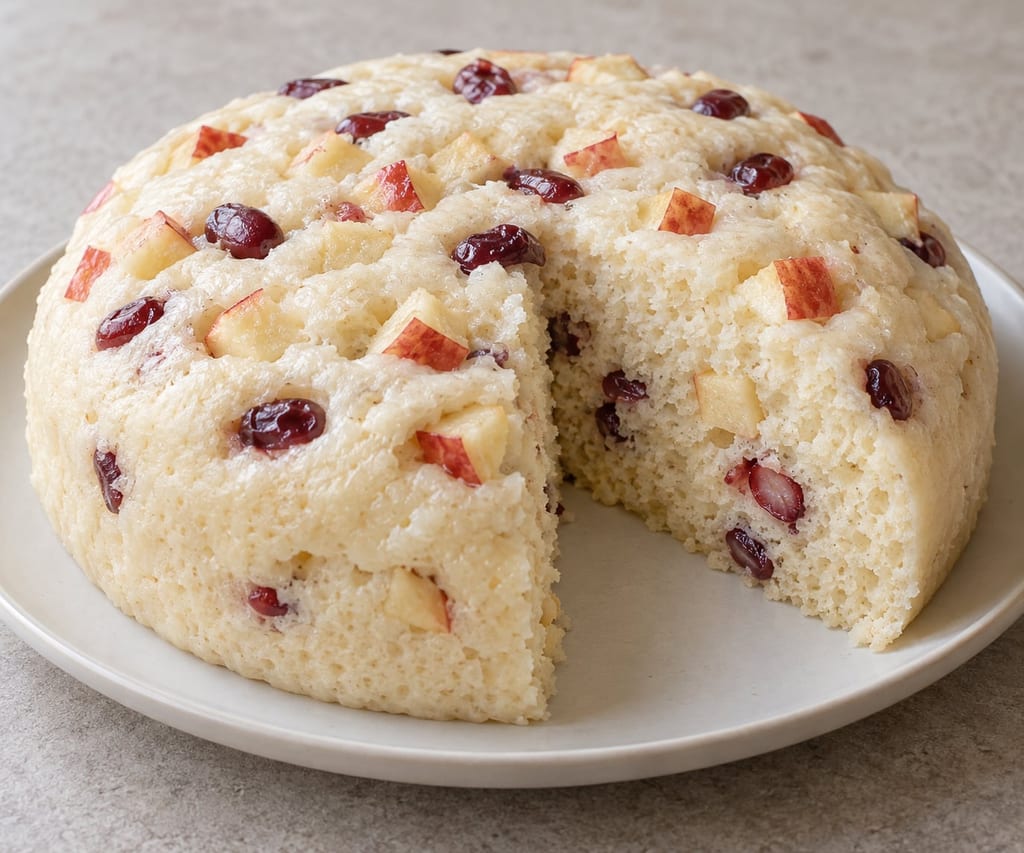
A soft Korean steamed wheat bread leavened with dry yeast and raw makgeolli, with apple pieces and fresh beans folded through the surface.
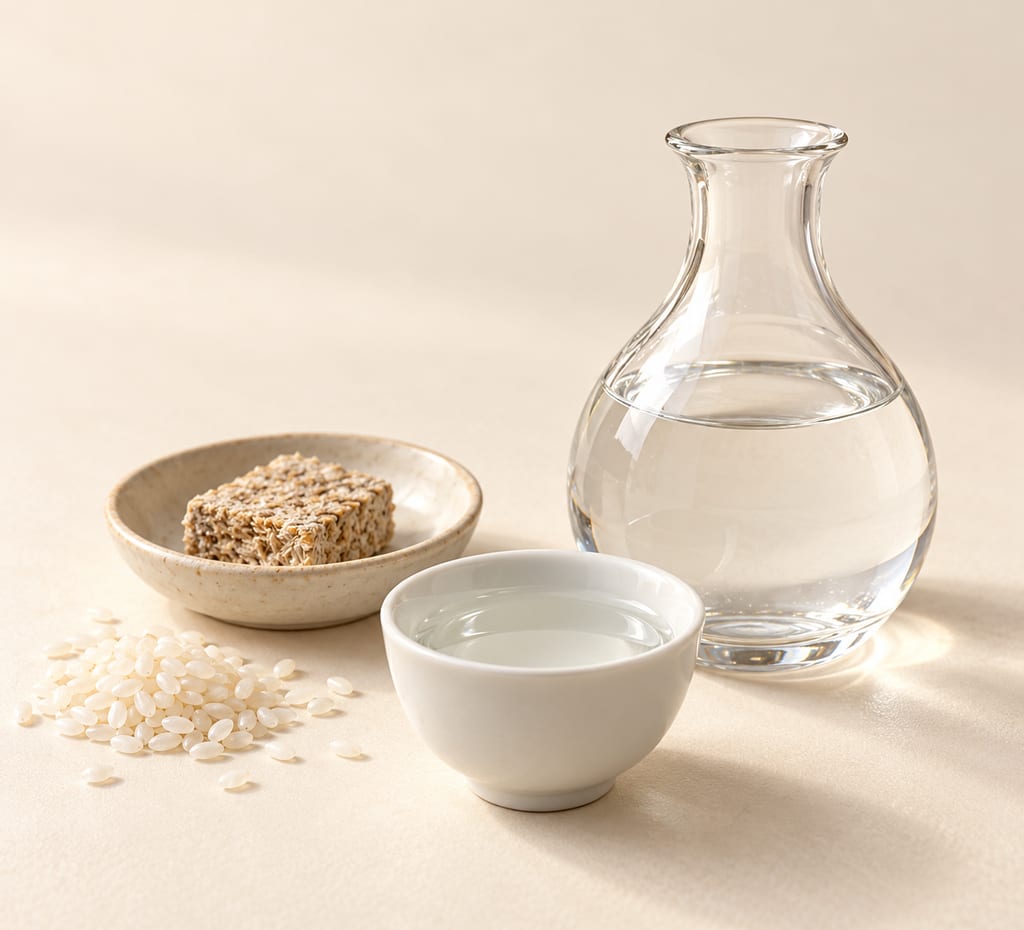
Andong soju is a rice spirit from North Gyeongsang, distilled from steamed rice and wheat nuruk. This method makes the starter before fermenting the rice mash in a jar.
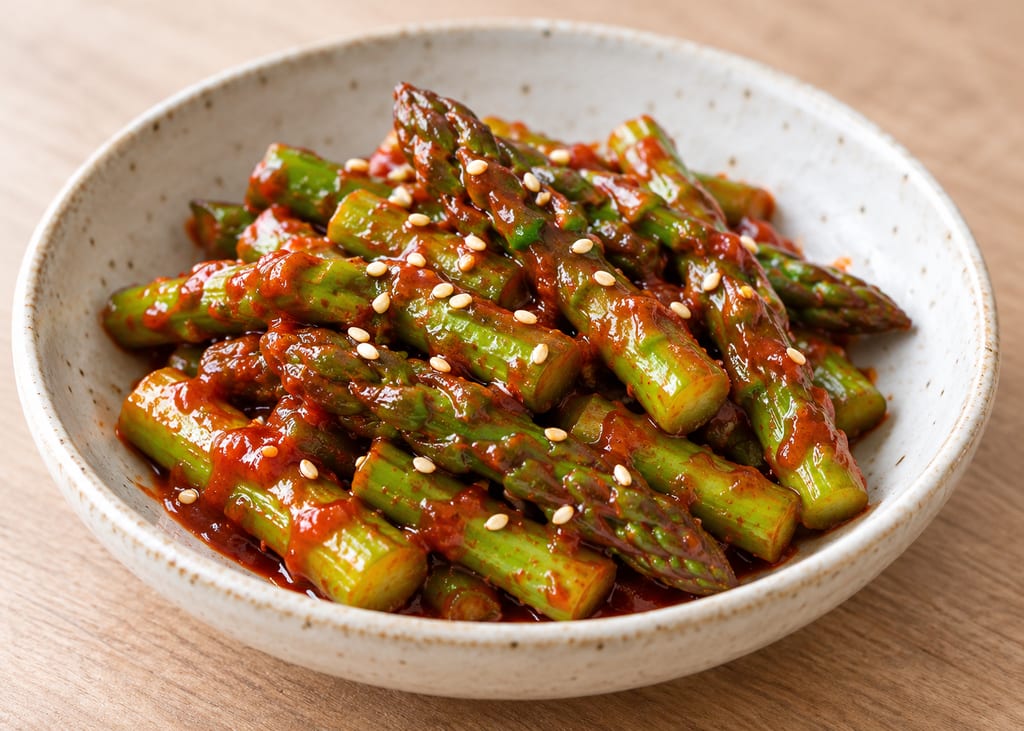
A Korean banchan of blanched asparagus dressed with a sweet-sour cho-gochujang sauce; Hyosun's version cools the spears in ice water before tossing.
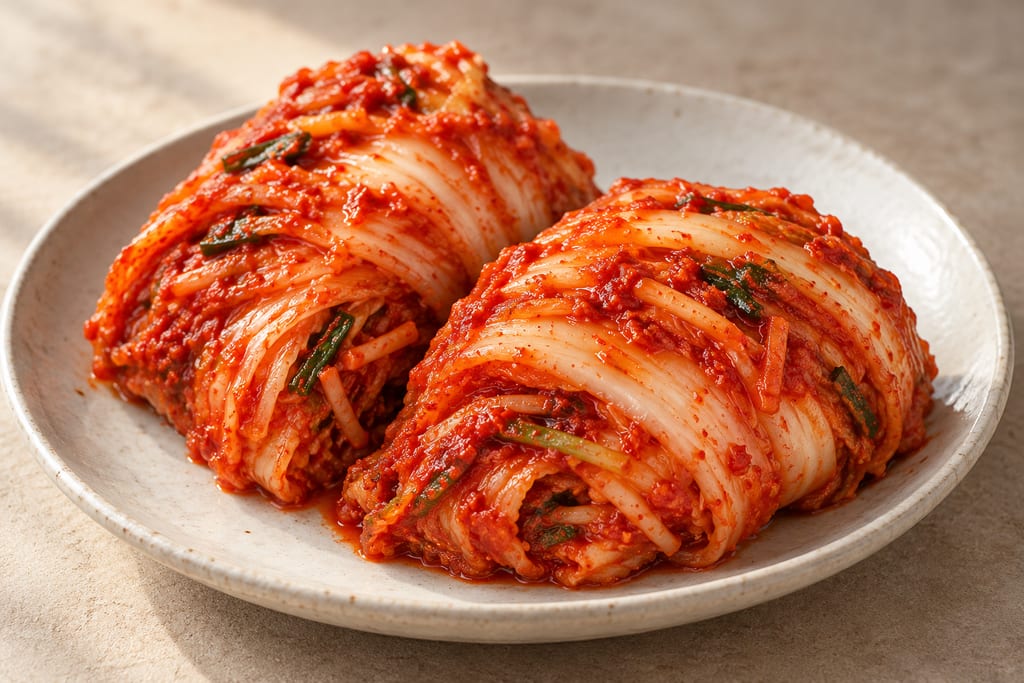
Napa cabbage salted, seasoned with a paste of gochugaru, garlic, ginger and salted seafood, and left to sour through lactic fermentation; Korea's everyday winter preserve.
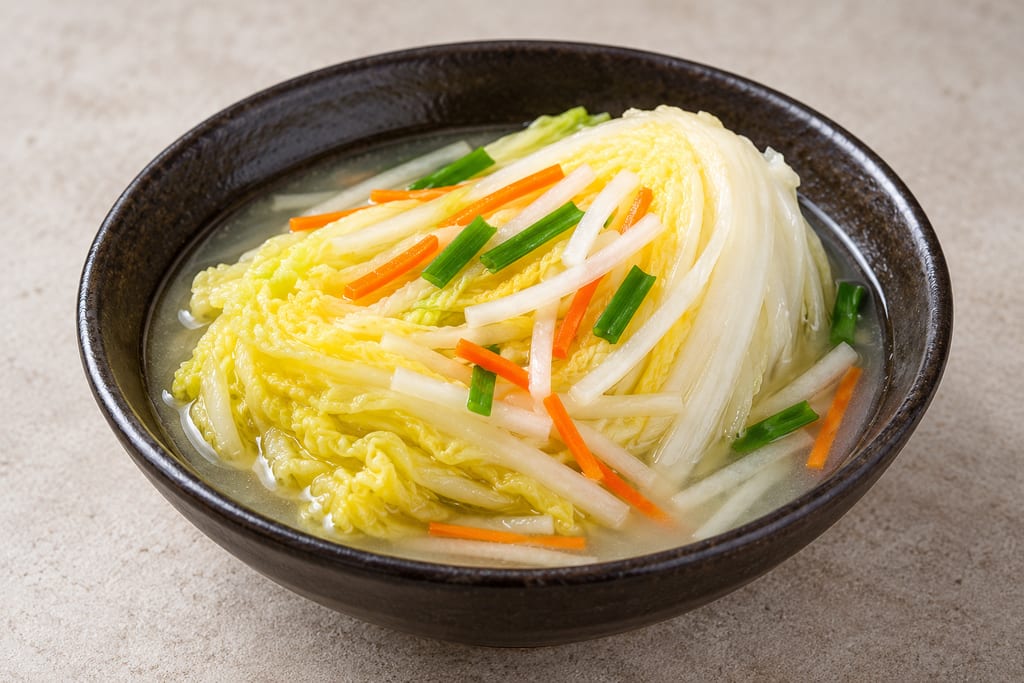
Napa cabbage is brined and filled with pear, radish, alliums, chives and fruit; this Korean kimchi omits red pepper flakes.
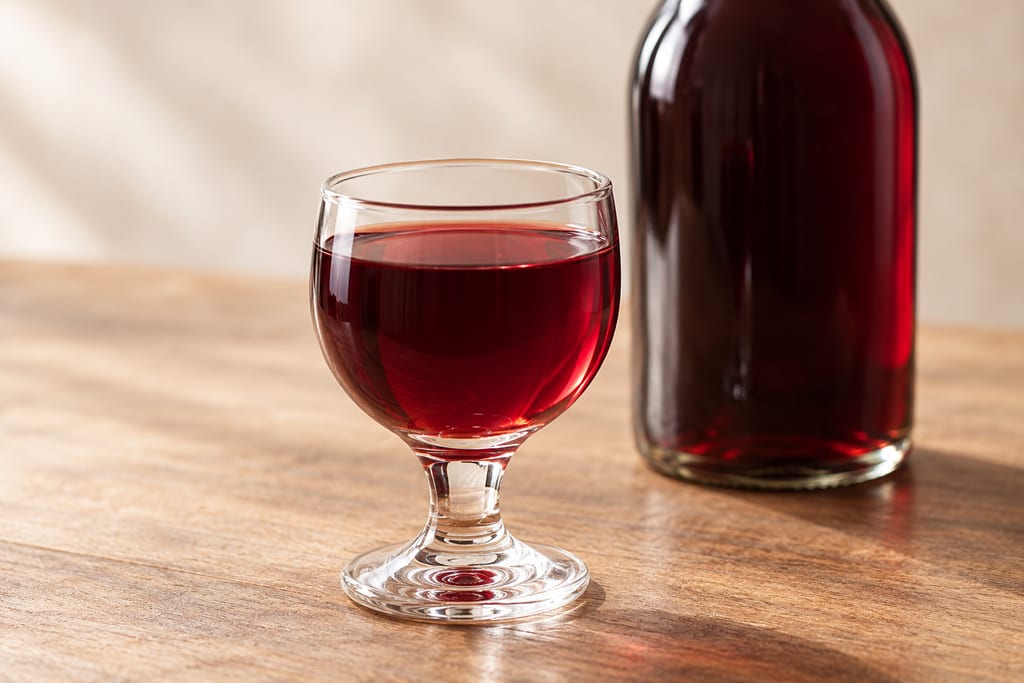
Korean black raspberry wine: crushed bokbunja berries with their seeds, sweetened to 20 °Brix, fermented 15 days at 25 °C with wine yeast, filtered and matured three months.
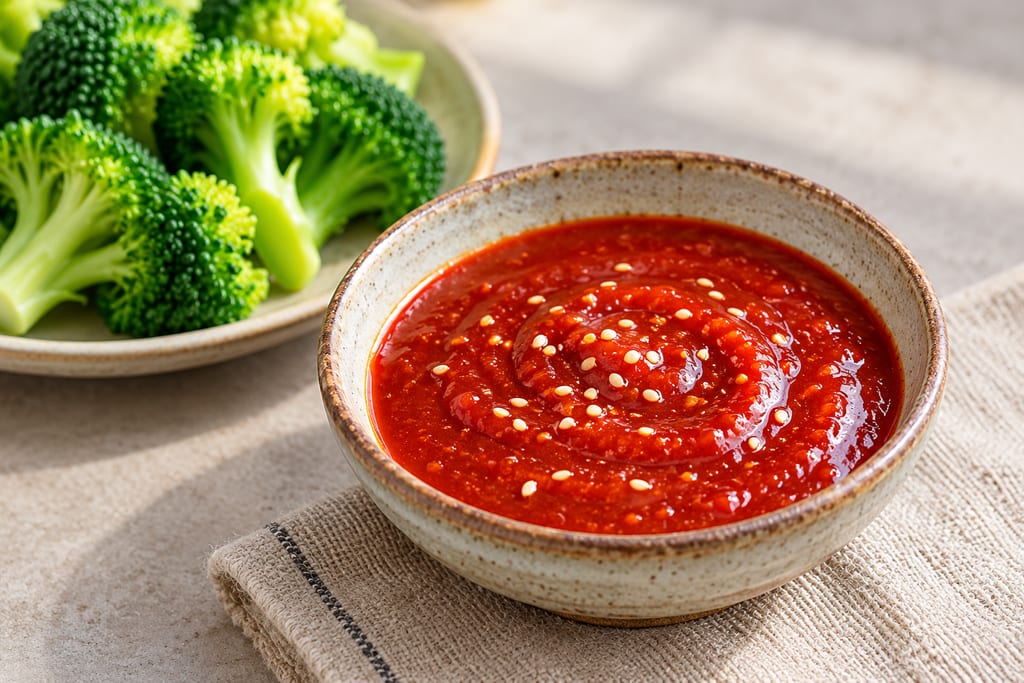
Chogochujang is a Korean sweet-sour sauce made by seasoning gochujang with vinegar and sugar. This development batch adds water and toasted sesame seeds, with optional garlic for the portion being served.
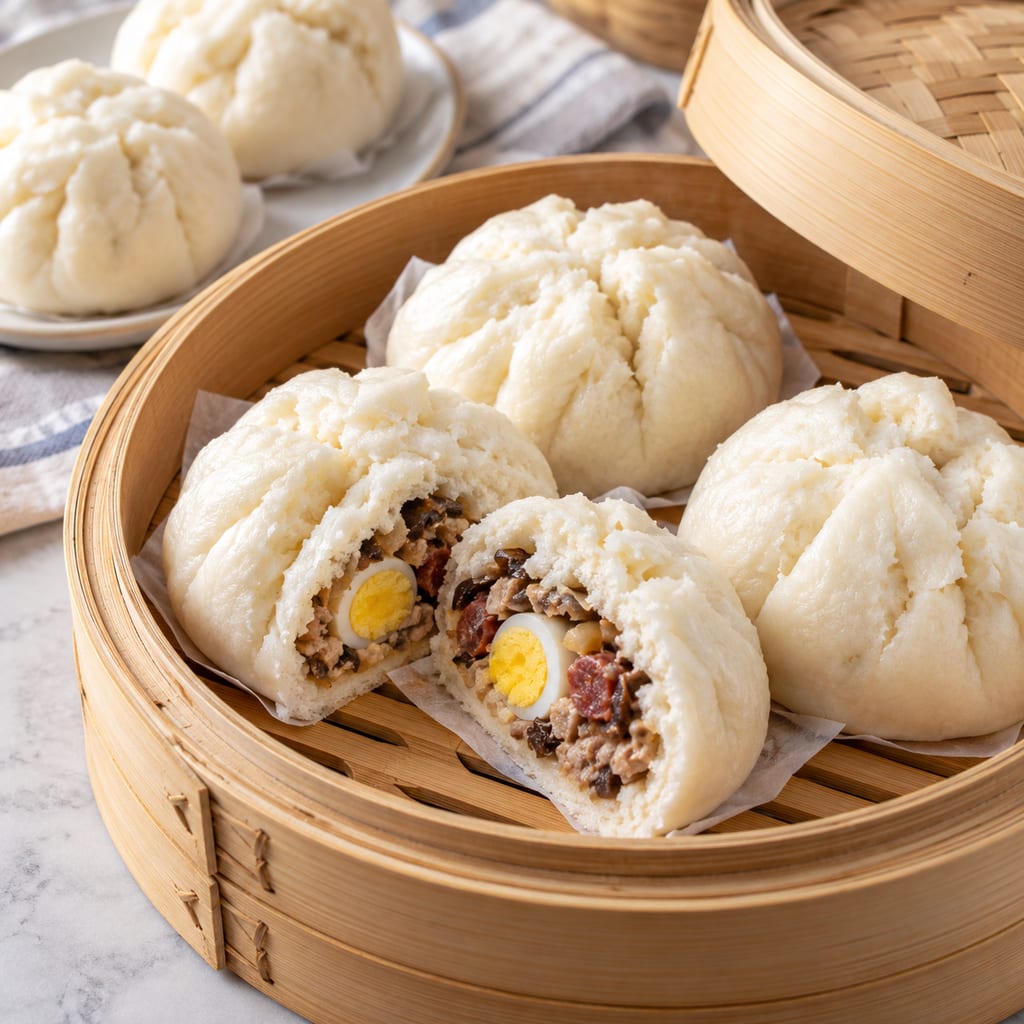
Vietnamese steamed wheat buns wrapped around seasoned pork, mushrooms, Chinese sausage and hard-boiled quail eggs. This from-scratch version uses yeast and self-rising flour.
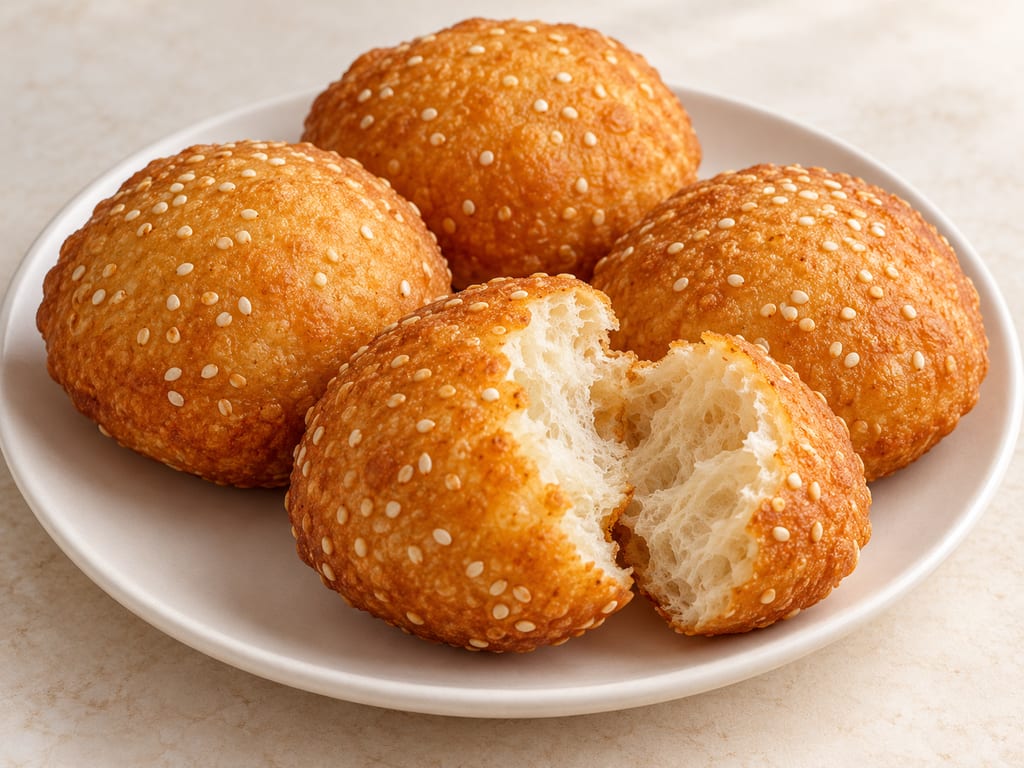
Bánh tiêu is a lightly sweet Vietnamese fried bread coated with sesame. A yeast-raised dough with baking powder is rolled into small rounds and fried until puffed and golden.
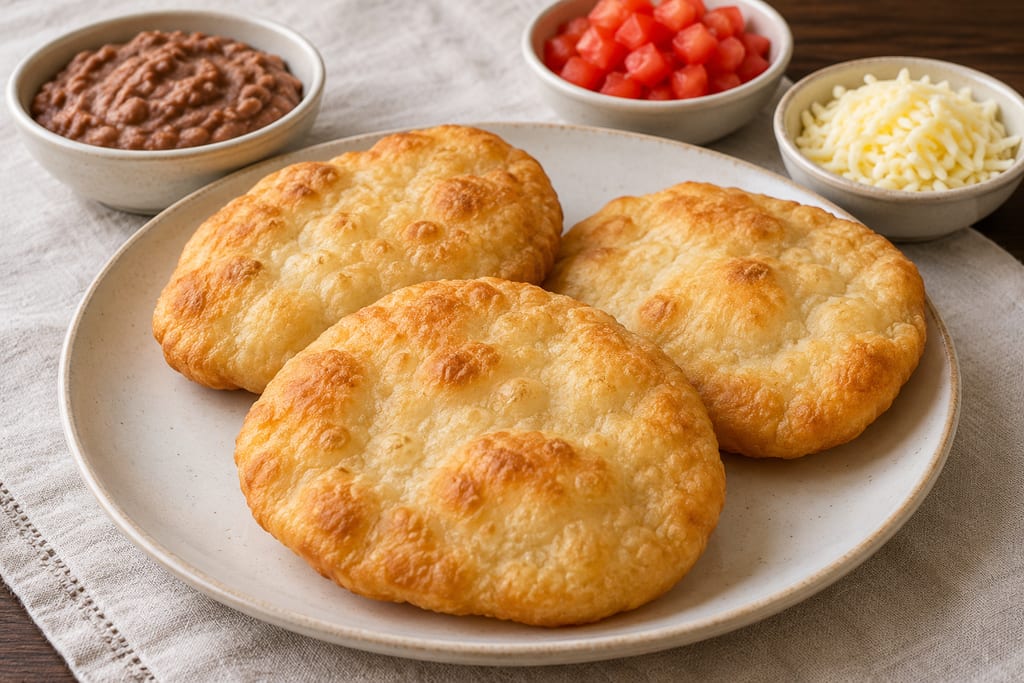
A Belizean fried breakfast bread made from baking-powder dough with evaporated milk, shaped into rounds and fried until golden.
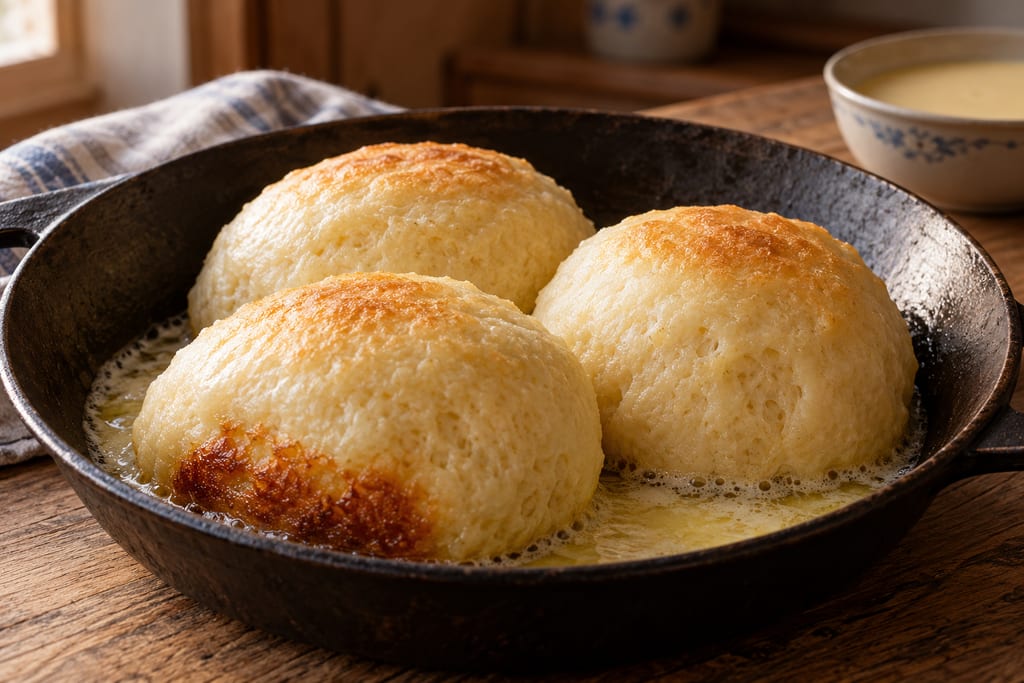
Allgäu Dampfnudeln are enriched wheat buns proofed in a covered casserole and cooked in milk and butter until the liquid nearly cooks away.
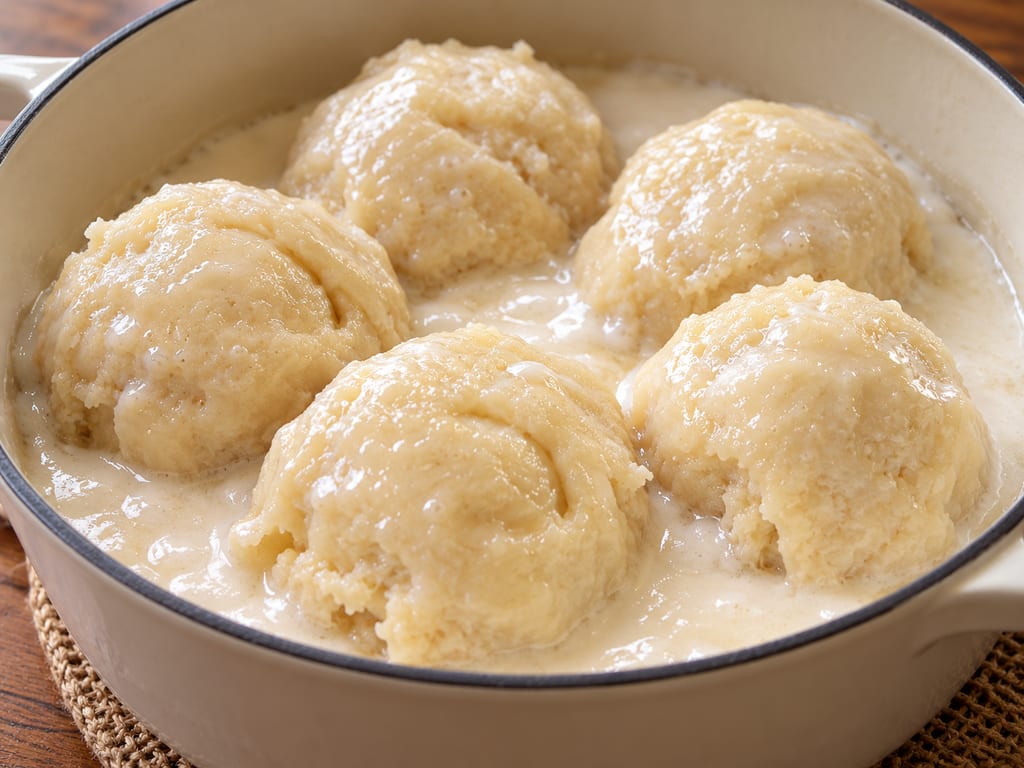
Soft yeast buns shaped by hand and simmered covered in coconut cream diluted with water in a deep pot. This Fijian home version uses a clean knife or fork inserted into the center as its doneness cue.
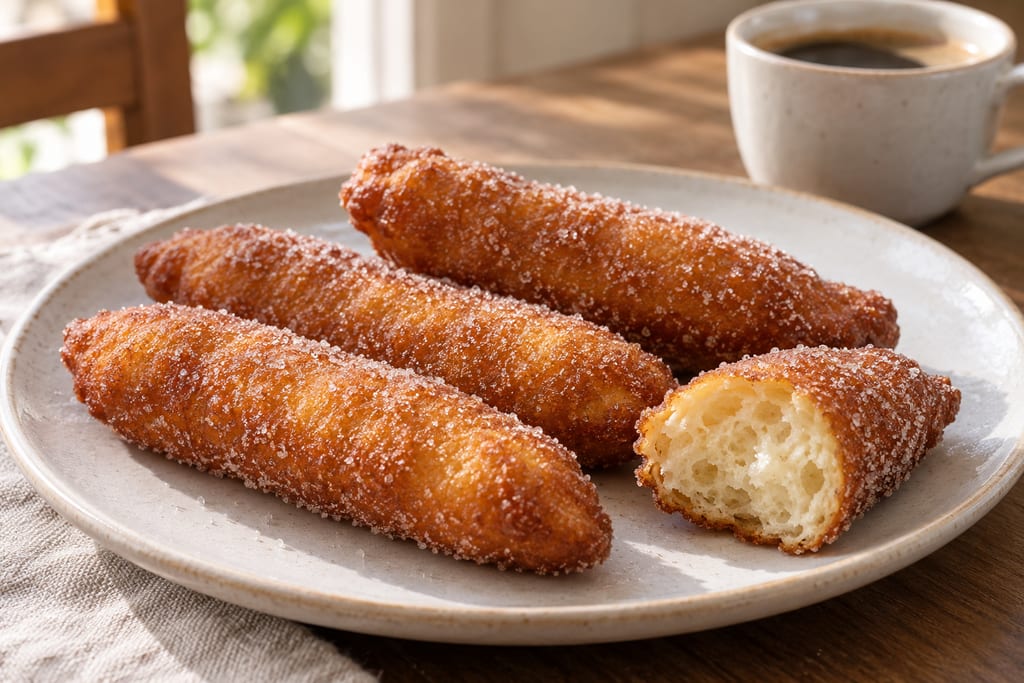
Firi firi is a yeast-raised coconut doughnut piped into long pieces and deep-fried at 170°C, traditionally eaten for breakfast or dessert in Tahiti.
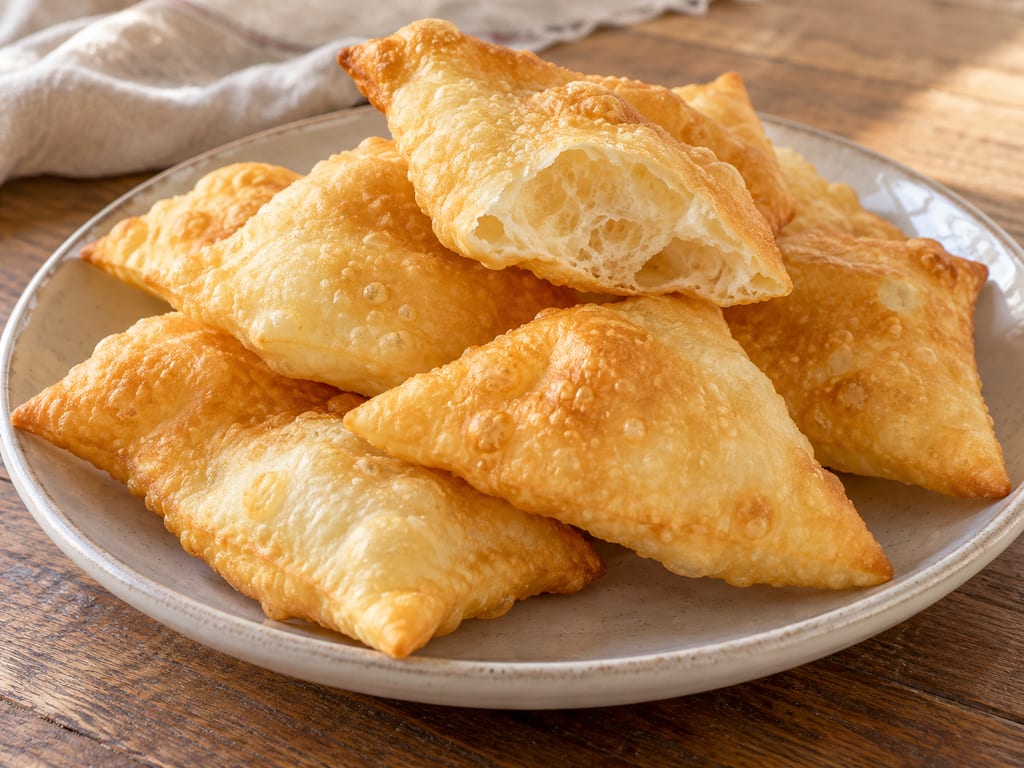
This Emilia-Romagna home version uses a measured flour-and-milk dough with yeast, shapes it into small diamonds or squares, and fries them in peanut oil.
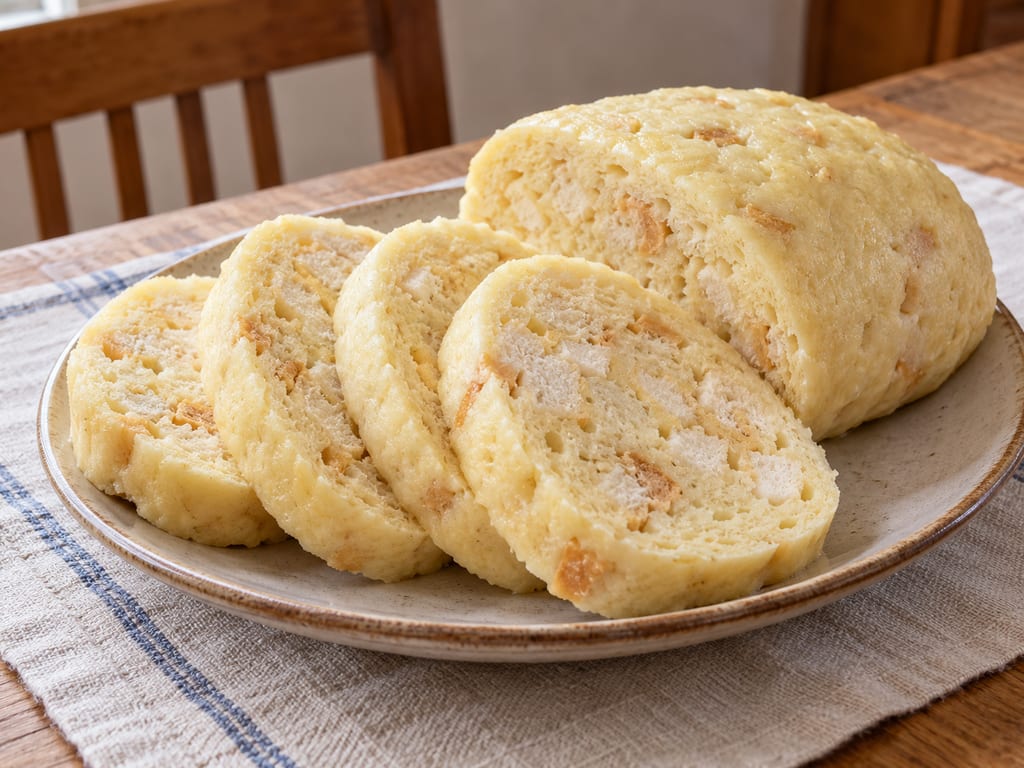
Czech houskové knedlíky are yeast-raised flour dumplings studded with stale white roll cubes, shaped as logs and steamed until tender for serving with sauce.
No community contributions have been published for this entry yet.
Sign in to contribute. Published comments and photos are free to read.
MaangchiRecipe · Method · Identity · Geography
Sweet pancakes with brown sugar syrup filling (Hotteok)The source's eight-piece dough formula uses one cup lukewarm water, two tablespoons white sugar, two teaspoons dry yeast, half a teaspoon kosher salt, one tablespoon oil, two cups flour and about half a cup more for the board.
The filling combines half a cup turbinado or brown sugar, one teaspoon cinnamon and two tablespoons chopped walnuts.
The dough rises about one hour until doubled and again for 10–20 minutes; filled balls are pan-cooked 30 seconds, pressed flat, browned about one minute, then covered for a final minute over very low heat. The source says the filling melts to syrup and advises serving hot, soon after cooking; it gives no storage duration.
In a comment reply, Maangchi says unfilled dough can be refrigerated for up to one day and should be filled just before cooking and eating; the page gives no stored-dough restart or proofing schedule.
Cited in: A sweet street snack with a changing history; Fill and seal eight pieces; Press, brown and cool briefly
Encyclopedia of Korean Culture, Academy of Korean StudiesHistorical claim
HotteokThe encyclopedia attributes an introduction of hotteok to Korea by Chinese migrants in the 1880s and describes changes in Korean fillings and cooking methods; this is recorded as an attributed account, not a settled first attestation.
Cited in: A sweet street snack with a changing history
Korean Folklore SocietyHistorical claim
호떡의 연원과 변화 양상 고찰 — 쌍화점에서 안흥찐빵까지 (Study on the origin and development of Hotteok)The 2022 article distinguishes older records that describe different methods from the current oil-griddled sugar-filled form; the continuity and origin of the modern form are treated as debated rather than assumed.
Cited in: A sweet street snack with a changing history
Centers for Disease Control and PreventionFood safety
Raw Flour and DoughRaw dough and batter may contain harmful germs; do not taste them and clean hands and surfaces after handling flour.
Cited in: Press, brown and cool briefly