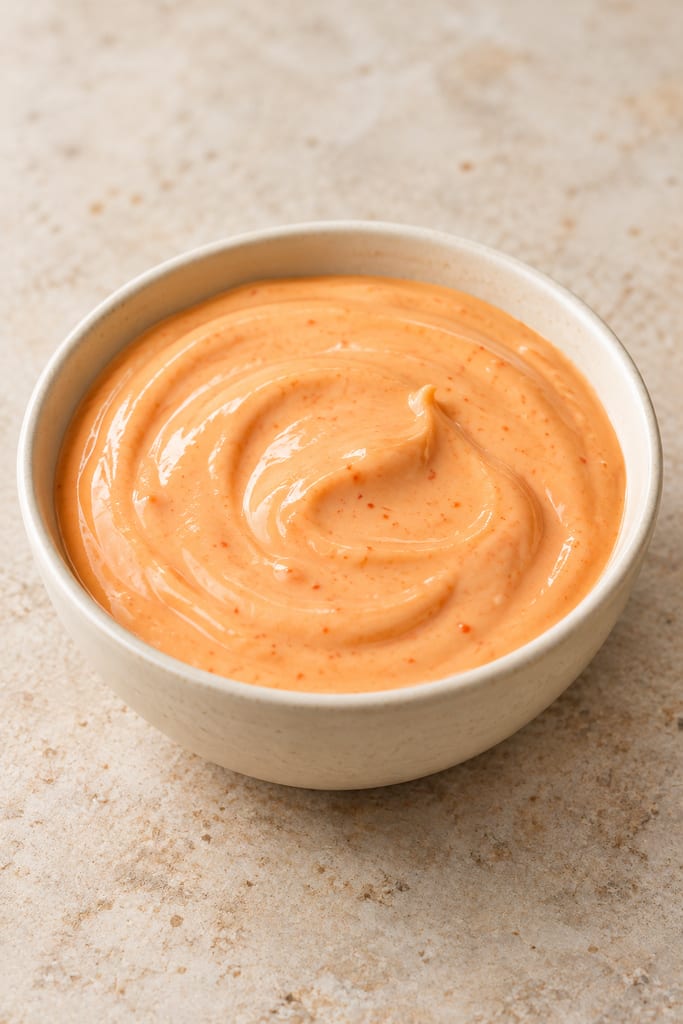
Sriracha mayonnaise
A contemporary, untested mix of finished mayonnaise, sriracha and lime juice, with starting amounts per 100 g mayonnaise.
 FermenteaWhere food goes to change
Modern adaptation
Sriracha sauce · Thai-style sriracha
Red chillies and garlic simmer in distilled vinegar, then blend with sugar and salt into a smooth, sharp, sweet-hot table sauce associated with Thailand’s Si Racha coast.
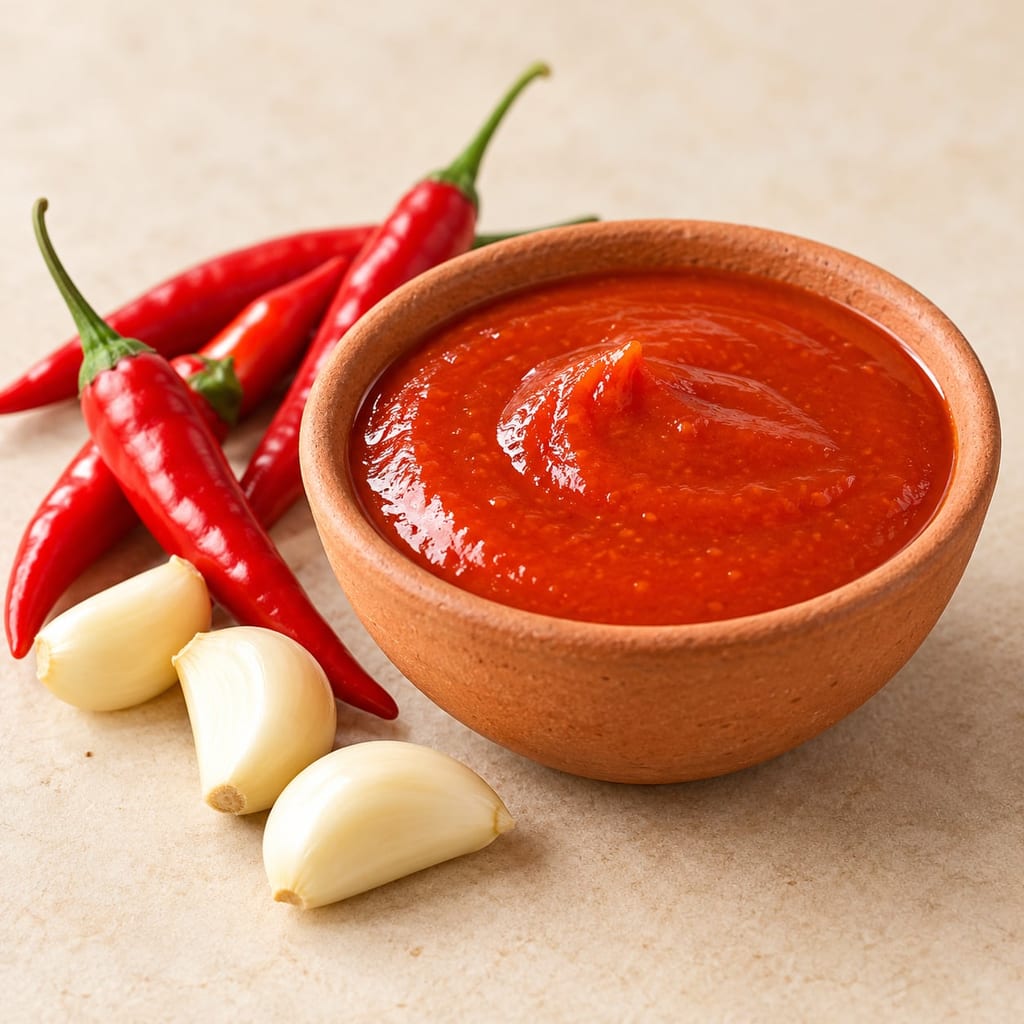
Sriracha is a place-name that became a broad sauce label. Si Racha is a coastal district in Thailand’s Chonburi province, on the Gulf of Thailand. Reporting from the area describes local chilli sauces served with seafood and dry noodle dishes. These sauces are not a single standardized formula: the reporters found local makers whose sauces differed in sweetness, sourness and thickness, and Thai sources who regarded the familiar US rooster-brand sauce as a separate adaptation.
The historical record does not settle on one inventor. Voice of America reported competing local accounts, including a claim that the sauce began around the 1930s, while a local researcher it interviewed could not verify the story. A family history reported by Colorado Public Radio adds another strand: relatives remembered an ancestor making a chilli sauce for sale, but the family account itself differed over which generation should receive the attribution. Those memories document a living tradition; they do not prove that one family created every sauce later called Sriracha.
The name became globally familiar through a different route. David Tran, a Vietnamese immigrant who settled in the United States, developed a commercial sauce for customers in Los Angeles. Thai and US accounts describe his sauce as distinct from the local Thai versions. Sources connect it to food such as pho in the early restaurant market, while the product later became a widely used table condiment. Its red jalapeño base and thick, smooth profile are not evidence that all Sriracha must use those peppers or taste the same.
This recipe follows Pailin Chongchitnant’s published Thai-style cooked method. It is useful to name that scope because “Sriracha” can refer to place-based Thai sauces, commercial products and many home recipes. The page does not claim to reconstruct the oldest Si Racha formula, nor to reproduce a particular Thai maker’s bottle. It gives one documented modern preparation that a cook can make and adjust.
Sriraja Panich, the Si Racha brand, tells its own history in English: the sauce began in 1935 at Trok Laem Fan in Si Racha District, Chonburi Province, made by Thanom Chakkapak for family seafood meals, then reached neighbours and local buyers, and ThaiTheparos acquired the company in 1984. These are the maker's claims. They document one company's account, not proof that this was the first sriracha sauce or the earliest use of the name.
The locality is officially spelled Si Racha, while Sriracha and Sriraja Panich appear in product and English-language naming. The company's FAQ attributes its brand spelling to restrictions on registering Thai place names as trade names or trademarks; that is the company's explanation, not an independent account of Thai law.
The maker lists red goat peppers, Thai garlic pickled for seven days, sugar, vinegar and sea salt, and says selected chillies are aged for at least three months before blending. It does not disclose the production schedule, acidity, temperature controls or storage validation, so ageing is not enough to call every stage microbial fermentation or to infer a home-safe process. It describes its flavour as a balance of heat, sourness, saltiness and sweetness with a thick texture, and names Medium Hot and Strong Hot formulas, with bird's-eye chilli added to a Very Spicy one. No heat values are given, and the wording sets no standard for other makers.
Huy Fong's current product page lists Sriracha, Chili Garlic and Sambal Oelek as separate products and distinguishes a smooth chilli puree from the chunky Chili Garlic. The Thailand Foundation article describes Huy Fong's sauce as based on red jalapenos and as more sour than the Thai counterpart it discusses. None of these descriptions is a shared ingredient list or process for the whole family, and the cooked home method on this page is a different preparation from each.
The defining operation here is a short simmer in vinegar, followed by blending, straining and a second simmer with sugar and salt. The first simmer softens garlic and chilli tissue. Blending breaks the cooked material into a purée; pressing it through a fine sieve removes coarse skins and seeds, producing a smoother sauce. A final simmer lets the seasoning dissolve and lets the cook taste and correct the balance. The method relies on heat and mechanical processing. It does not rely on a period of microbial fermentation.
That distinction matters because another family of sauces sold or described as Sriracha is fermented. Pailin’s overview distinguishes the cooked Thai-style approach from Vietnamese-style fermented sauces. Fermentation is a separate process with its own ingredients, time, microbial activity and controls; it cannot be inferred from the word “Sriracha,” from a chilli’s time in vinegar, or from the sauce’s sharp taste. This method should therefore be classified as non-fermented even though its vinegar tastes acidic.
The ingredients play complementary roles. Red chilli supplies aroma, color and capsaicin heat. Capsaicin is the compound associated with the burning sensation from hot peppers; the intensity is not fixed by the recipe’s weight alone because varieties and individual peppers vary. Garlic begins pungent and becomes softer as it cooks. Vinegar brings sharpness and provides the liquid in which the solids simmer. Sugar rounds the sharp edge and perceived heat, while salt makes the flavours more distinct. Since the source instructs the cook to taste and adjust sugar at the end, sweetness is a deliberate balancing step rather than a precise chemical endpoint.
Straining is a texture choice with a practical consequence: pressing harder keeps more pulp in the sauce, while stopping earlier yields less sauce and a thinner result. The recipe’s approximate one-cup yield is a source estimate, not a guaranteed volume. Pepper size, liquid retained in the pulp, seed removal and sieve pressure all change how much passes through. A cook can keep the strained chilli solids for another dish, but the source does not give a tested storage duration for them.
Pailin names red spur chillies as an option associated with Thai sauce-making and also suggests familiar red varieties such as Fresno or red serrano for a home batch. She notes red jalapeños as the basis of the US commercial style. These choices do not make one version more authentic than another; they set different flavour and heat profiles. A small amount of hotter Thai chilli can be used to raise the heat, but the final intensity remains variable.
The source recipe roughly chops the peppers and simmers them with lightly crushed garlic. It does not require removing the seeds before cooking. Pailin offers straining the cooking vinegar to remove seeds when a milder result is wanted, or keeping them for more heat. Pepper veins and seeds are easy to treat as a proxy, but the distribution of capsaicin varies; Utah State Extension emphasizes handling peppers carefully and notes the heat is concentrated in the inner pepper tissue. The reliable kitchen decision is to choose a milder variety or reduce the hot-pepper share, then taste cautiously after cooking.
Gloves are useful when handling hot peppers, especially while chopping and transferring the solids. Do not rub your eyes or face. Wash hands, the knife, board, blender parts and work surface after preparation. Utah State Extension recommends selecting firm, smooth chillies without mold or soft decay. Freshness does not tell a cook exactly how hot a pepper will be, so small taste tests are safer than assuming that two peppers of the same named variety will match.
Local Si Racha sauces are reported as seafood accompaniments and as condiments for dry noodles. The precise pairing varies by maker and meal, so it is more accurate to treat those as documented uses than as a rule that every Thai household follows. The smoother cooked sauce here can be spooned beside grilled or fried seafood, stirred into noodles, or served as a table condiment where sweet, sour and chilli heat are welcome.
Pailin’s recipe points readers toward Thai dishes including a Pad Thai variation, sweet-and-sour stir-fry and Thai omelette. These uses show how a sauce can work as both an accompaniment and a seasoning ingredient. Start with a small spoonful in a cooked dish, taste, then add more; its vinegar and sugar will affect the dish’s balance as well as its heat. A commercial sauce may be thicker, sweeter, saltier or more concentrated, so substitution by volume is not always exact.
The historical and culinary distinction is useful at the table. A sauce served in Si Racha, a Thai-style cooked home version and a thick commercial American bottle may share a name while differing in ingredients, texture and intended pairing. The recipe here provides a flexible red chilli sauce, not a claim that one style represents the whole region.
The method is short, but its preservation status is not. Pailin’s published instructions provide cooking and refrigeration advice, but they are not a tested canning process. This batch has no validated shelf-stable endpoint, and its approximate cup of vinegar does not by itself prove that every portion reaches a safe acidity. Blending, straining, pepper choice and the amount of vinegar retained can all change the finished mixture. Do not bottle it for the pantry, water-bath can it, or borrow a processing time from a different hot-sauce recipe.
Cool the small batch promptly in a shallow clean container or use an ice bath, then refrigerate it. USDA guidance allows small amounts of hot food to go directly into the refrigerator and recommends shallow containers for faster cooling; perishable food should not remain unrefrigerated beyond two hours. Keep the sauce cold and use it within a short conservative working window; freeze surplus promptly rather than treating this as a validated shelf-life claim. Discard sauce left warm too long or showing unexpected spoilage, and do not taste it to decide whether it is safe.
The source method gives a low simmer and a sensory endpoint—garlic soft enough to blend—not a calibrated preservation temperature. The recipe consequently asks for a gentle simmer until tender and does not invent a precise temperature or acidification target. It scales poorly as a preservation method: doubling a home batch doubles the volume but does not create a validated cooling or canning process. For longer storage, use a separately tested preservation recipe exactly as written, rather than retrofitting this one.
The name carries a Thai coastal association, multiple local histories remain unresolved, and later adaptations have become globally recognisable. A household method is not a protected formula or a verified shelf-stable product.
The simplest adjustment is the pepper. A cook who wants a softer sauce can start with Fresno or red jalapeño peppers, while red serrano or Thai peppers can move the flavour toward sharper heat. Pailin’s source describes several suitable choices; it does not provide an exact heat-equivalence table. Avoid presenting a substitution as a one-for-one Scoville match. If the first batch is too hot, a milder batch can be mixed in at serving time, but adding more vinegar or sugar is not a safety correction and does not guarantee a shelf-stable sauce.
Sweetness is also adjustable within the source’s own range. Begin with the quarter cup of sugar and taste only after the chilli mixture has been cooked and blended. Add the extra tablespoon gradually, then use the second only if the sauce still tastes too sharp. Sugar cannot neutralize capsaicin in a measurable way; it changes the overall flavour impression. The goal is not to make the sauce taste like a particular branded bottle, but to balance the vinegar and chilli for the chosen peppers.
Texture can be adjusted by how much cooking liquid is carried into the blender and how firmly the solids are pressed through the sieve. The method aims for a smooth sauce. If a cook leaves the seeds in, the strained liquid can carry visible specks and may feel hotter. A coarser texture is a preference, not a historical claim. For consistency between batches, note the pepper variety and the amount of liquid retained rather than relying on the name Sriracha alone.
These adjustments do not turn the recipe into a fermented sauce. There is no resting period for spontaneous fermentation, no starter culture and no fermentation endpoint. Nor do they reproduce a regional sauce simply by changing peppers. Reports from Si Racha describe sauces shaped by local makers and seafood use; the modern home formula here is useful precisely because it states what it is: one cooked, vinegar-based version informed by a published recipe.
The name is tied to Si Racha, Thailand, but accounts disagree about who first made the sauce and when. This published recipe is a modern cooked adaptation, not a definitive historical formula.
Yield 1 cup · Scaling: source batch only
Hot chilli oils can irritate skin and eyes during chopping and blending.
Hazard sourceThis vinegar-simmered recipe has no tested shelf-stable or home-canning process.
Hazard sourceA cooked sauce is perishable and should be cooled and refrigerated promptly.
Hazard sourceWear gloves for hot chillies, avoid touching eyes, and wash hands and utensils after preparation.
Control sourceCool promptly in a shallow container or ice bath and refrigerate; do not leave perishable food unrefrigerated for more than two hours.
Control sourceKeep refrigerated and use within a short conservative working window; freeze surplus promptly. Do not can or store at room temperature.
Control sourceThis recipe is not fermented, shelf-stable, or tested for home canning. Vinegar flavour and a short simmer do not establish a safe room-temperature process.
Use fresh chillies without soft spots, mold or decay; pepper heat varies by variety and batch.
The name and regional sauce tradition are associated with Si Racha; the sources do not establish a single inventor or this exact formula as the original.
This is a modern Thai-style cooked adaptation, not a claim to reproduce every regional sauce.
A contemporary, untested mix of finished mayonnaise, sriracha and lime juice, with starting amounts per 100 g mayonnaise.
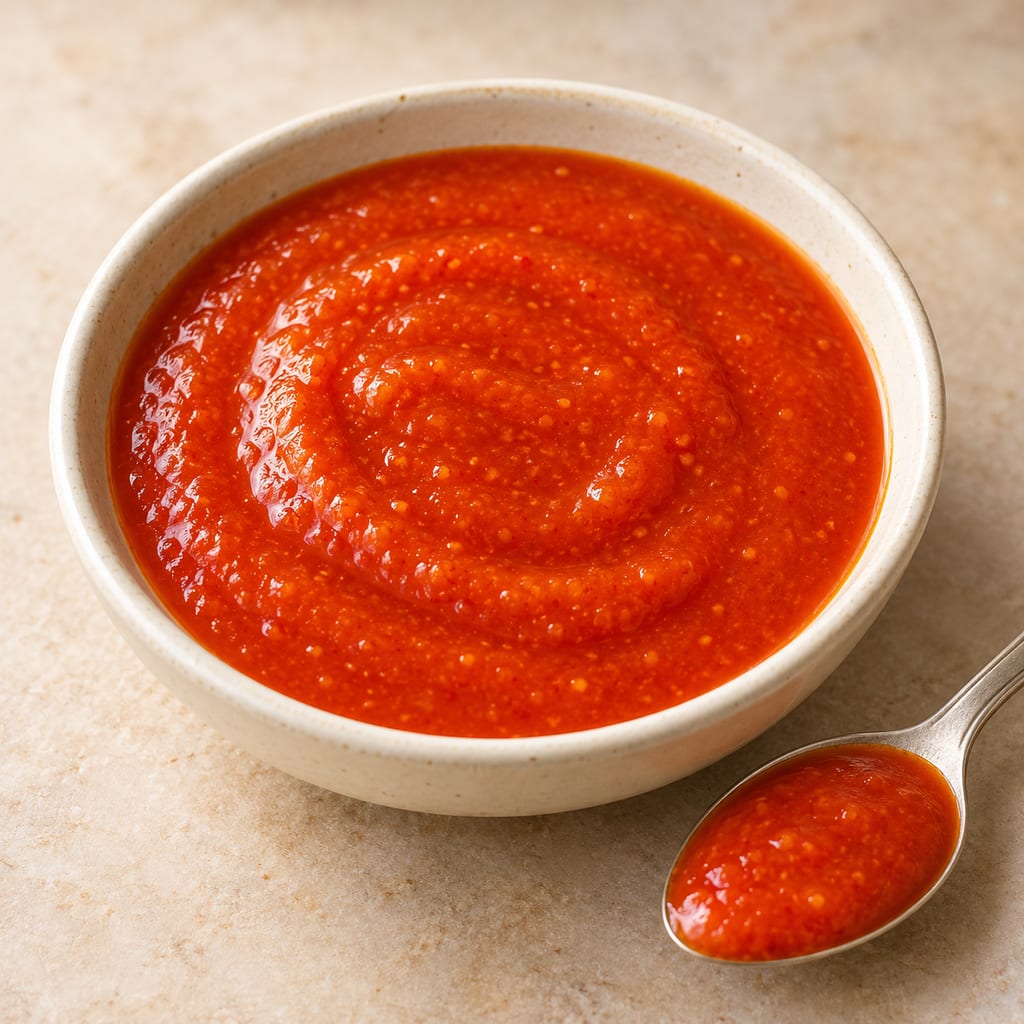
Ripe red chillies, garlic, labelled 5% vinegar, sugar, water and salt are blended, simmered and blended smooth into a cooked chilli sauce.
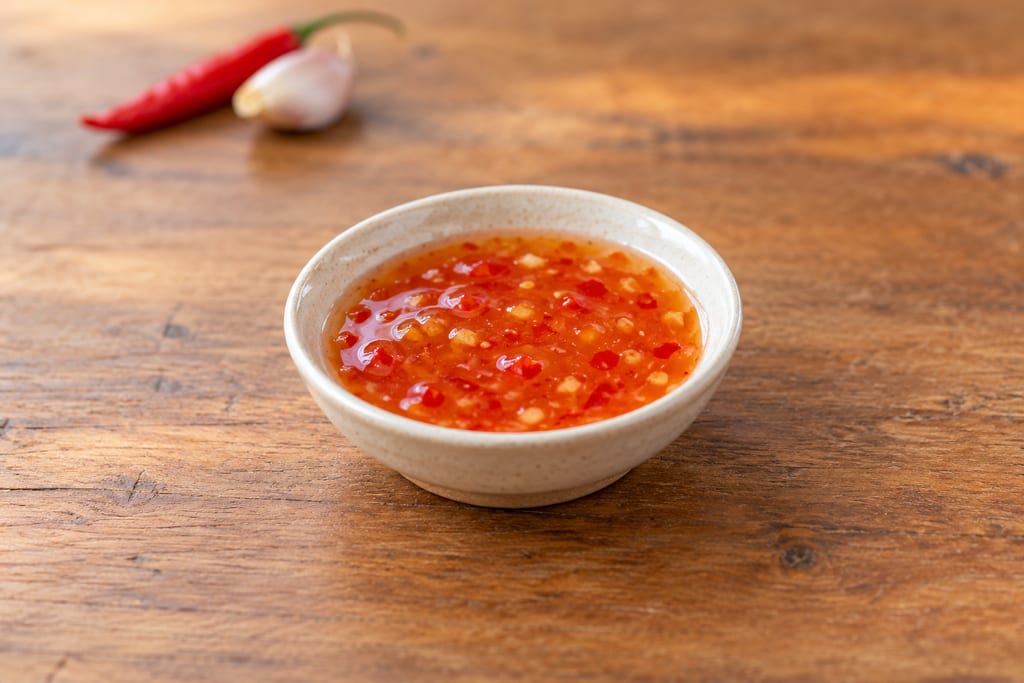
A cooked Thai-style sweet chilli dip combines red chillies, garlic, sugar and vinegar, then uses a small cornflour slurry to give this batch a glossy, spoonable body.
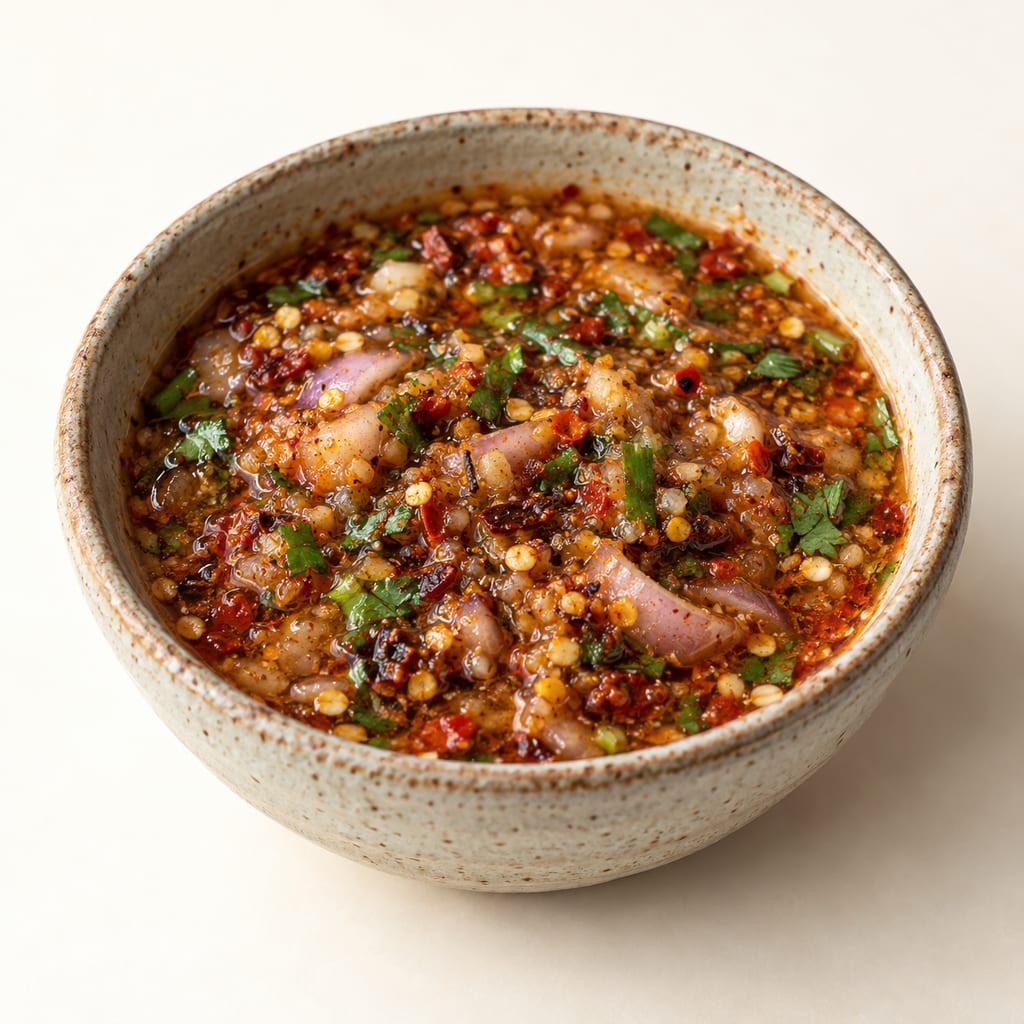
Roasted chillies, shallot and garlic are pounded and loosened with fermented and plain fish sauce, boiled water and lime into a sharp Isan dip for grilled meat and fish.
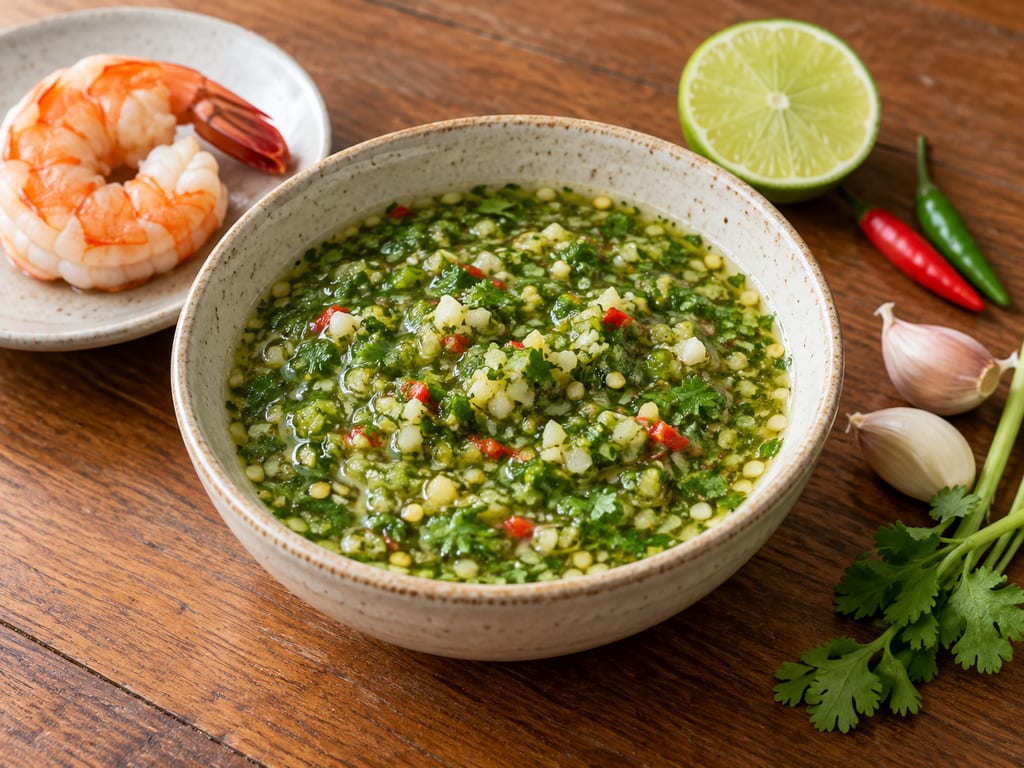
A Thai seafood dipping sauce of chiles, garlic, cilantro stems, fish sauce, lime juice and palm sugar, pounded or briefly blended for a coarse texture.
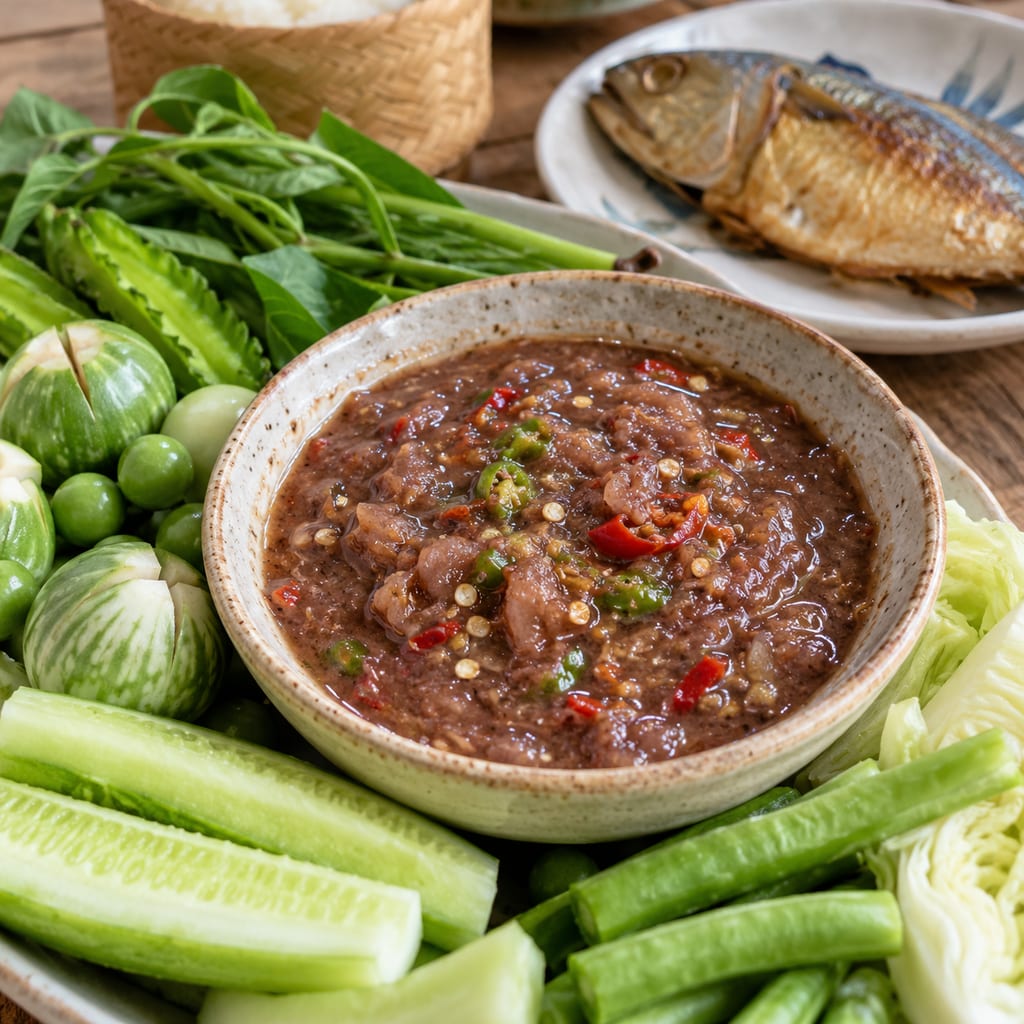
Nam prik kapi is a Thai dip of matured shrimp paste pounded with garlic, bird's eye chilli and lime or tamarind, eaten with vegetables and rice.
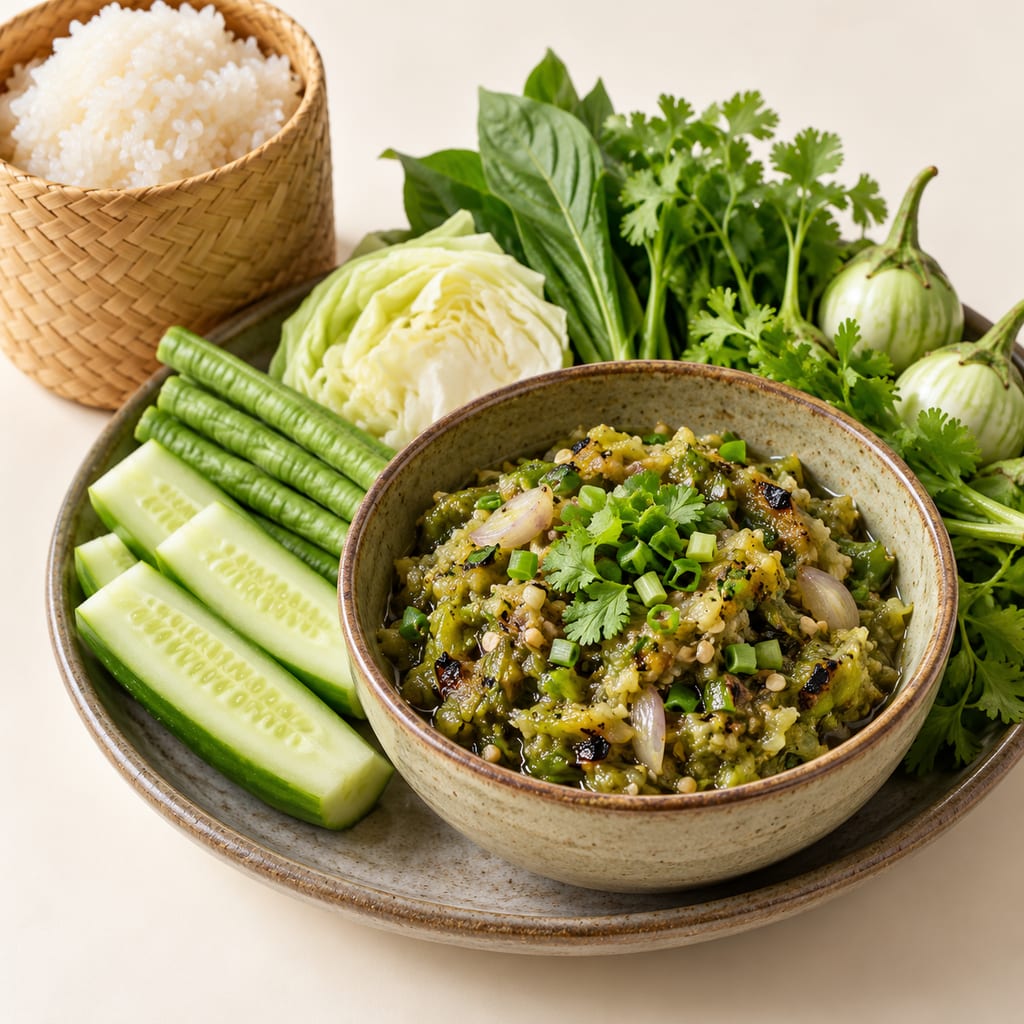
Grilled young green chillies, shallots and garlic are pounded with salt into a coarse northern Thai dip, finished with coriander and spring onion and eaten with sticky rice and vegetables.
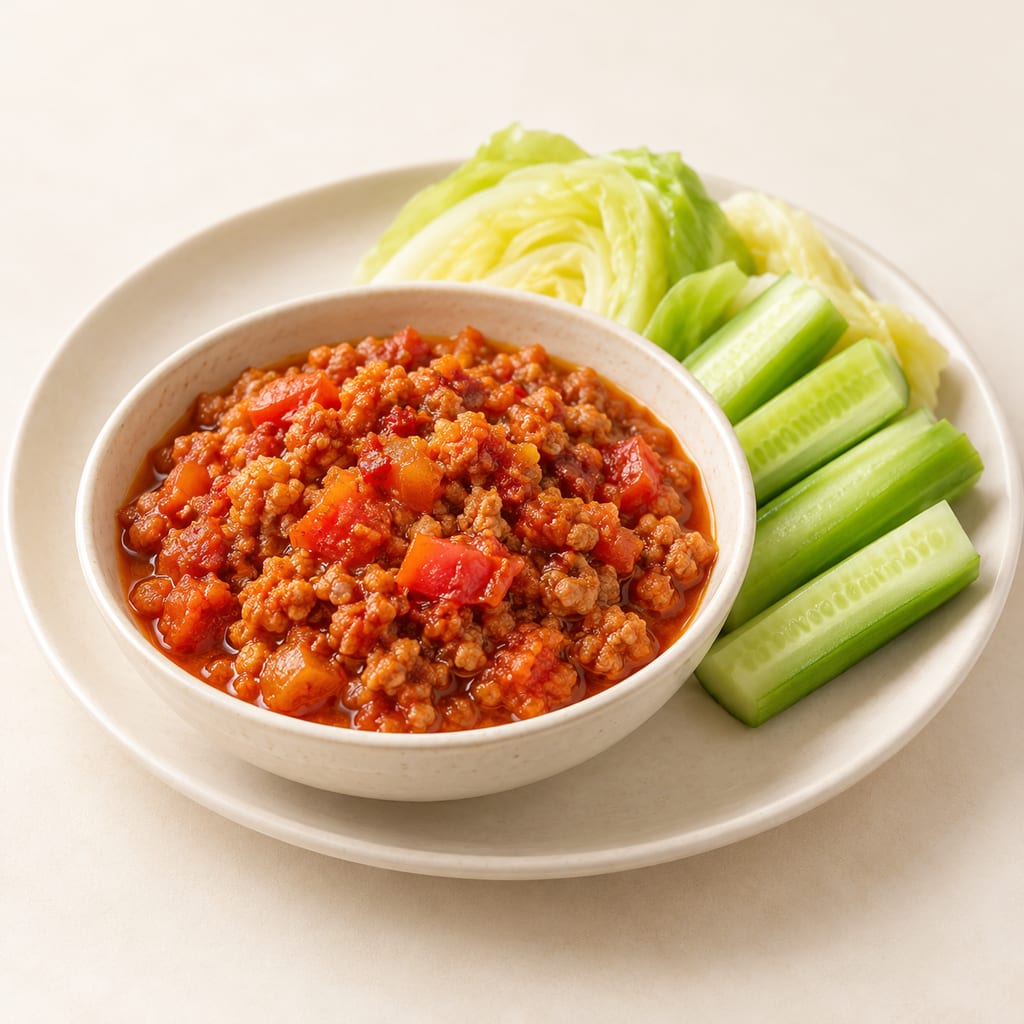
Nam prik ong is a cooked Northern Thai dip of chilli, tomato and minced pork, seasoned with fermented soybean and eaten with vegetables, pork rind and eggs.
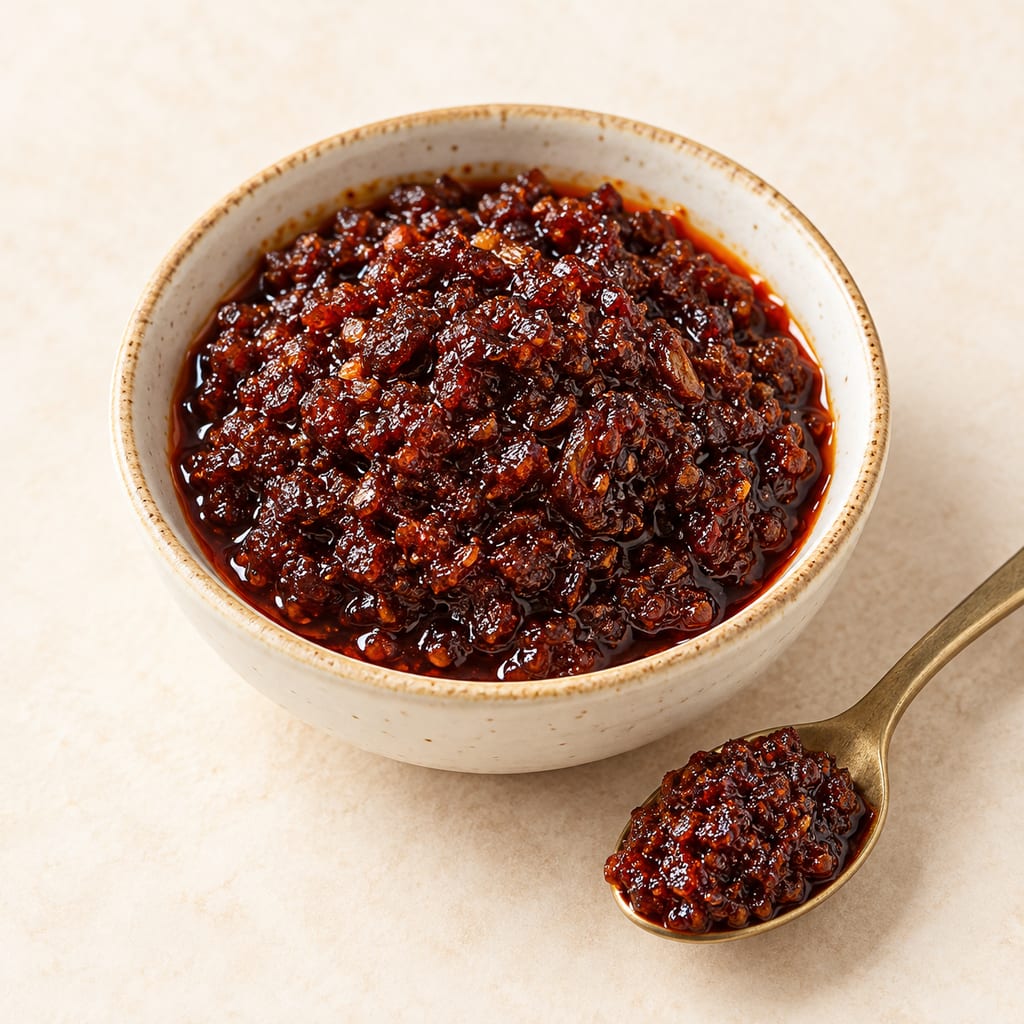
Nam prik pao is a Thai roasted chilli paste, sweet, salty and sour with only mild heat, used as a dip, a spread and a seasoning for cooked dishes.
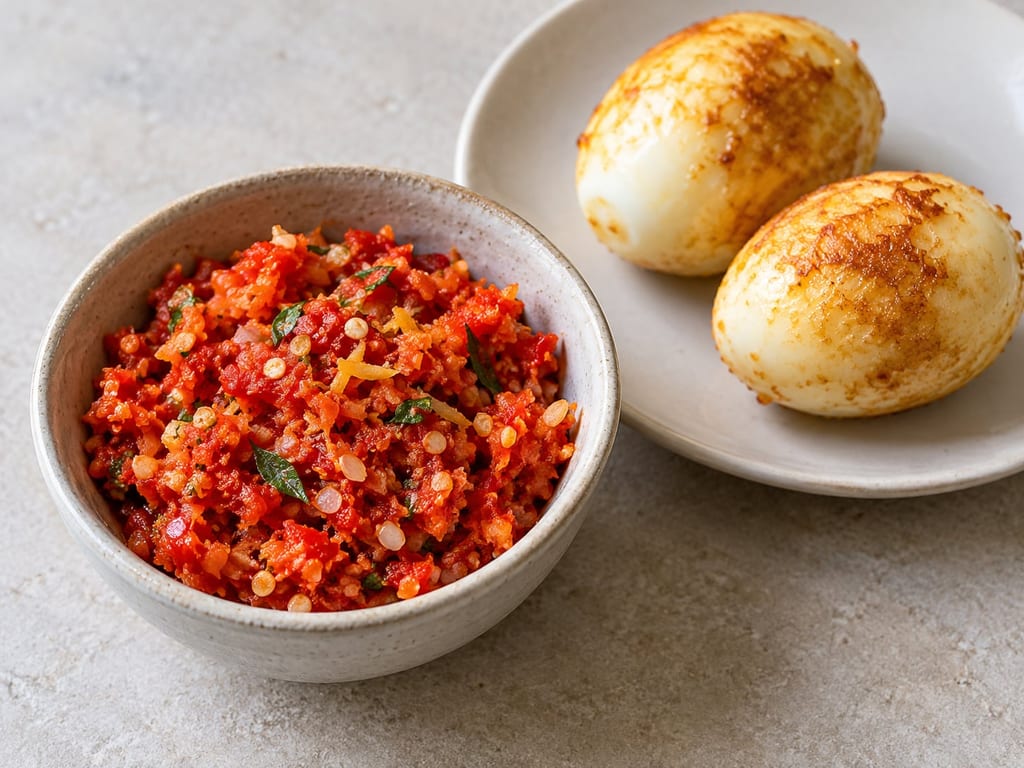
Ai-manas is described as a very hot chilli paste served with Timorese meals. One published version blends fresh chillies, shallots, garlic, Thai basil, ginger, lemon and salt, and serves it with eggs. Sources do not establish a standard formula, precise birthplace or earliest date.
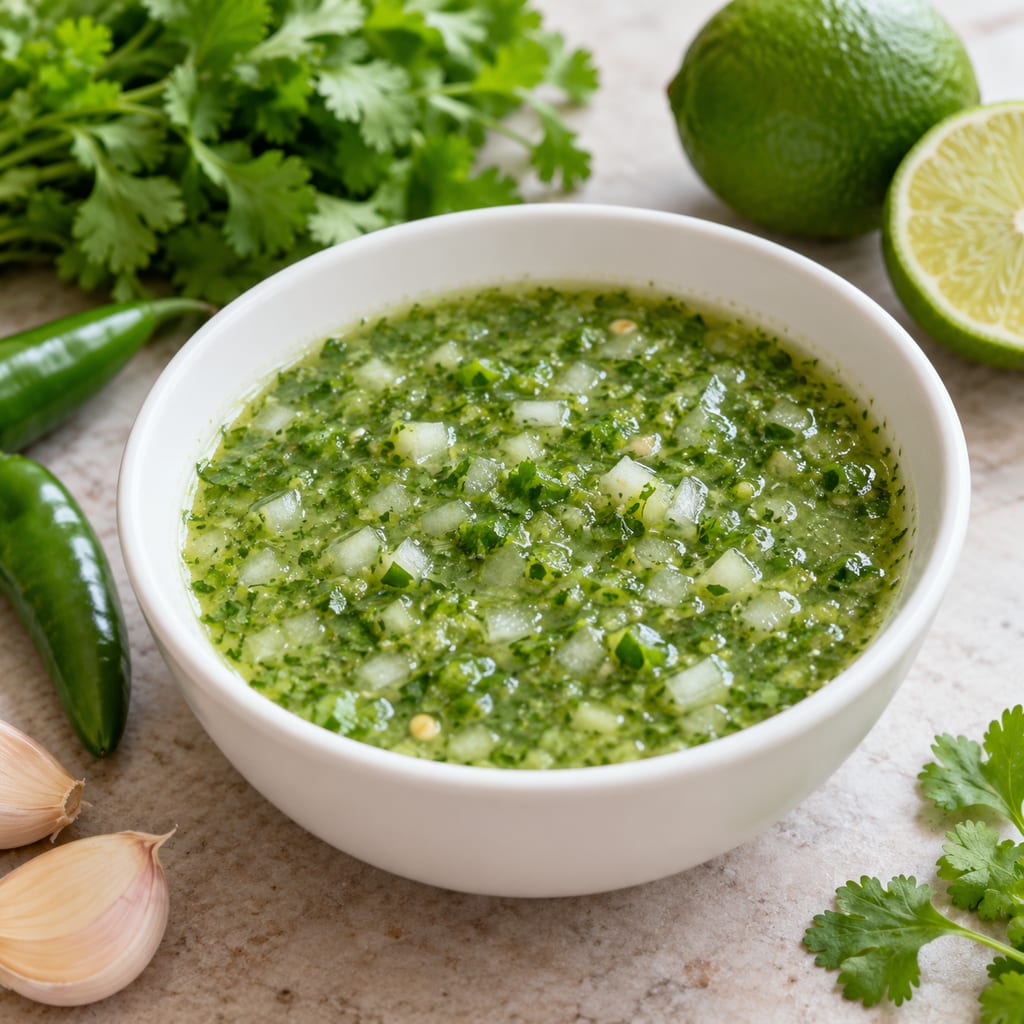
A fresh, uncooked Ecuadorian table sauce of hot pepper, cilantro, garlic and lime, served with most everyday dishes.
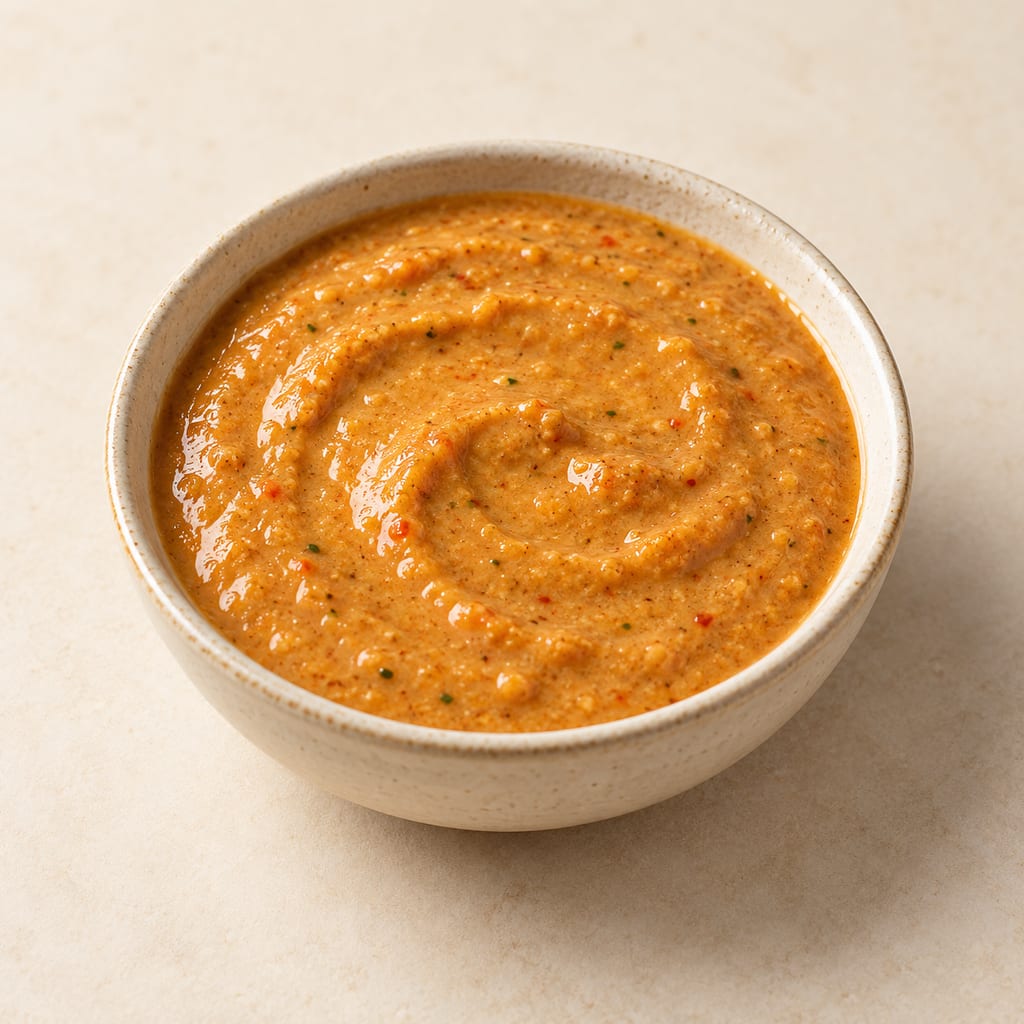
A spicy peanut hot sauce from the Popayán and Cauca region of Colombia, traditionally served with pipián empanadas and tamales.
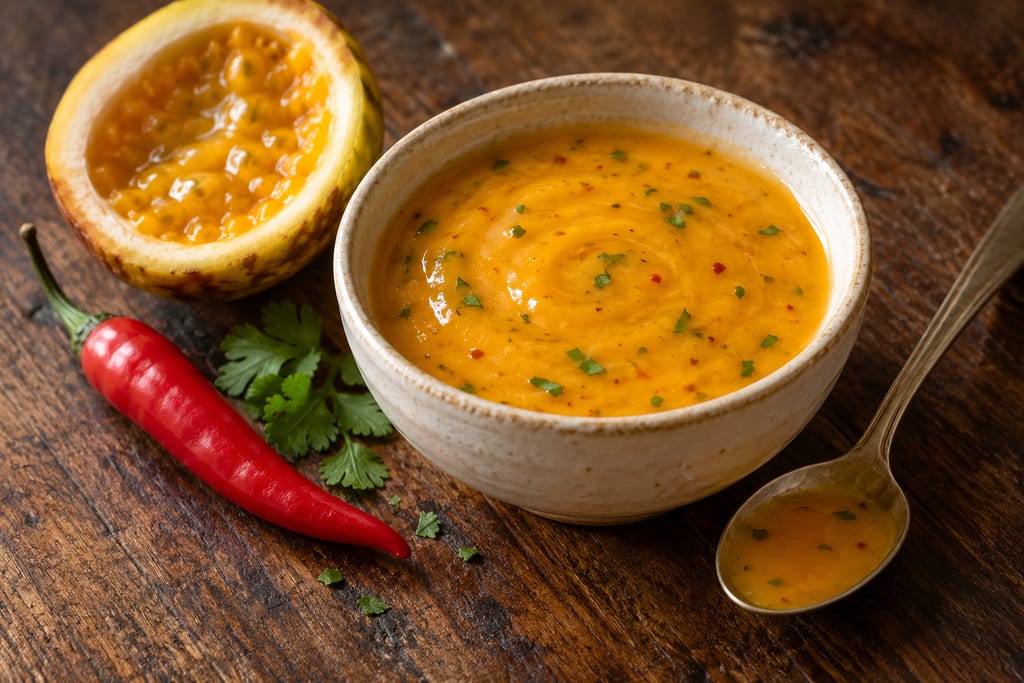
A contemporary Ecuadorian hot sauce that pairs passion fruit juice with boiled chile peppers, oil and lime.
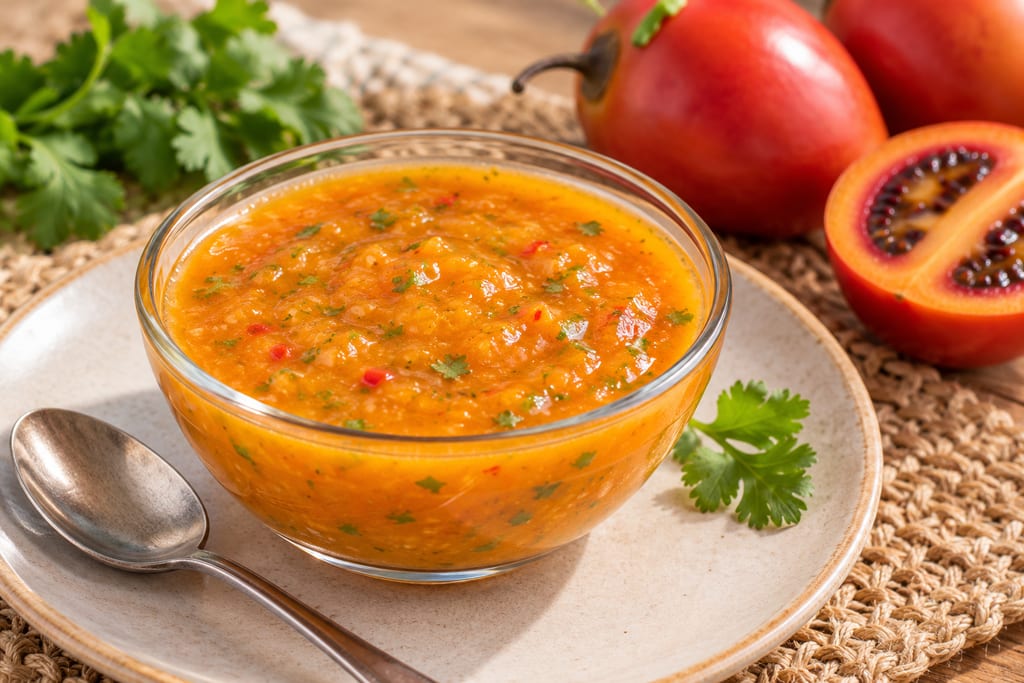
An Ecuadorian hot sauce built on tamarillo, a tart fruit that gives a sharper, fleshier base than ordinary tomato salsa.
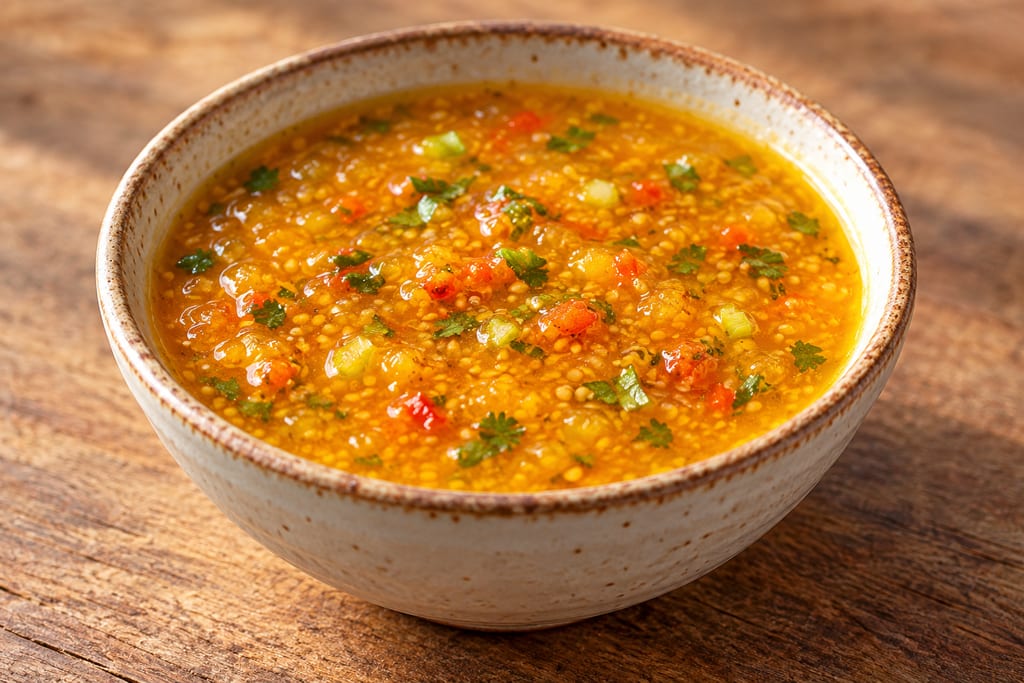
A sweet, tart and spicy Colombian sauce of uchuva, the yellow physalis fruit, with hot pepper, scallion, cilantro and lime.
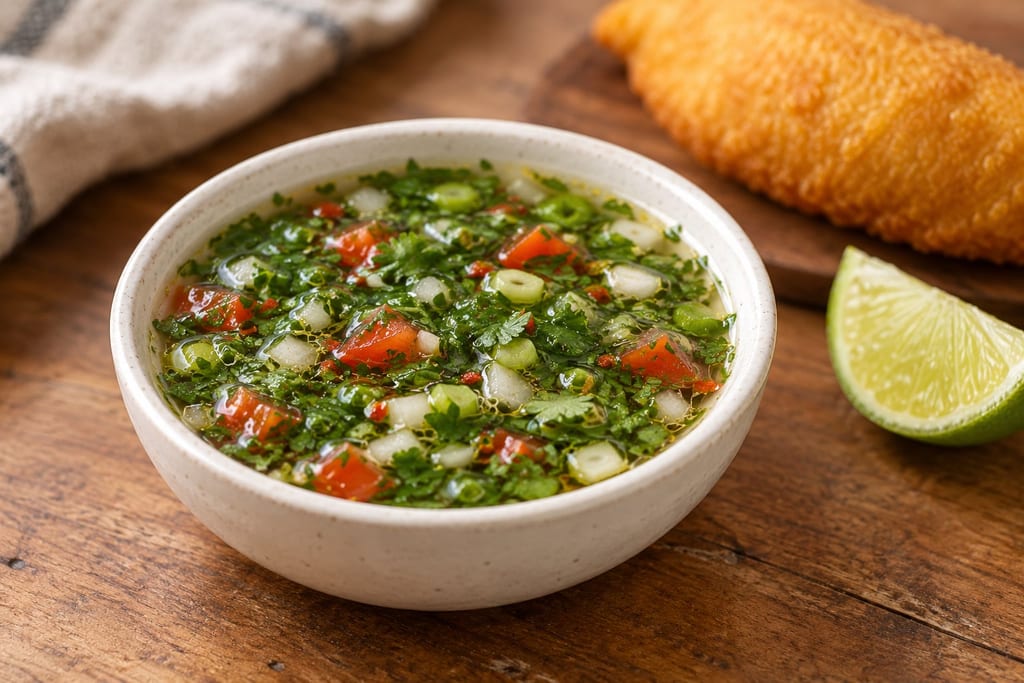
A fresh Colombian table condiment of chopped herbs, scallion and tomato in a vinegar and chile base, served beside fried and filled dishes.
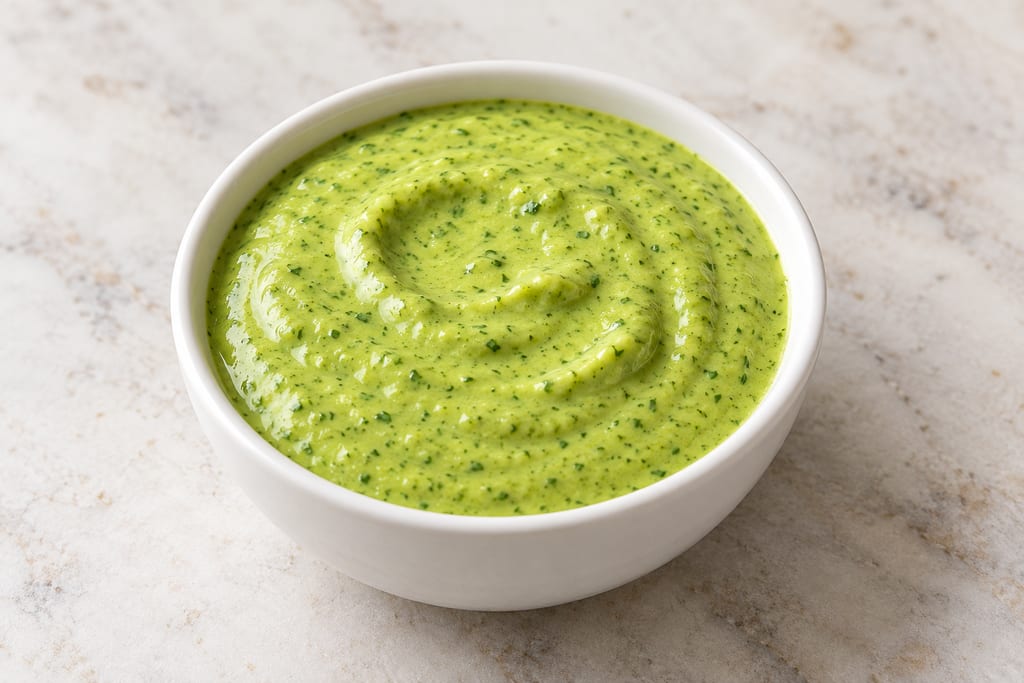
Ají verde is a Peruvian green sauce of coriander, chilli, onion and garlic in a mayonnaise or cheese base. It is best known through Peruvian restaurant cooking abroad.
No community contributions have been published for this entry yet.
Sign in to contribute. Published comments and photos are free to read.
Hot Thai KitchenMethod · Ingredients · Pepper choice
Homemade Sriracha Hot Sauce Recipe & VideoSource batch quantities and cooked method
Pepper options and seed-straining choices
Cited in: Cooked, not fermented; Choosing peppers and setting the heat; Using a Thai-style cooked sauce; A small batch and its limits; Adjustments that stay within the method
VitamixMethod context
Make Your Own Thai Chili Sauces at HomeDistinction between a cooked Thai-style sauce and fermented Vietnamese-style sauce
Cited in: Cooked, not fermented; Adjustments that stay within the method
Thailand Foundation, Ministry of Foreign Affairs of ThailandHistory · Geography · Use
Sriracha: Adding FlavorThai regional and US commercial versions differ; David Tran's later US development
Cited in: A name that travels; Maker accounts of Si Racha sauce; Using a Thai-style cooked sauce
Voice of AmericaHistory · Geography · Use
American ‘Sriracha’ Tests Thai TastebudsSi Racha regional association and seafood use; conflicting origin accounts; US adaptation and pho use
Cited in: A name that travels; Choosing peppers and setting the heat; Using a Thai-style cooked sauce; Adjustments that stay within the method
Colorado Public RadioOral history
In Home of Original Sriracha Sauce, Thais Say Rooster Brand Is Nothing To Crow AboutA family oral-history account of sauce-making and disagreement over an early family attribution
Cited in: A name that travels
Utah State University ExtensionIngredient handling
How to Preserve ChilesCapsaicin exposure, pepper variability, selection and handling
Cited in: Choosing peppers and setting the heat; A small batch and its limits
USDA Food Safety and Inspection ServiceCooling safety
Can you put hot food in the refrigerator?Prompt cooling in shallow containers or ice bath; two-hour unrefrigerated limit
Cited in: A small batch and its limits
National Center for Home Food Preservation, University of GeorgiaPreservation limits
Easy Hot SauceCanning safety depends on a tested recipe and process; that schedule does not apply to this recipe
Cited in: Cooked, not fermented; A small batch and its limits
ThaiTheparos PLC / Sriraja PanichHistory · Ingredients
The origin of Sriraja PanichThe maker's own account: its sauce began in 1935 at Trok Laem Fan in Si Racha District, Chonburi, made by Thanom Chakkapak for family seafood meals; ThaiTheparos acquired the company in 1984.
Lists red goat peppers, Thai garlic pickled for seven days, sugar, vinegar and sea salt, with chillies aged at least three months before blending.
Cited in: Maker accounts of Si Racha sauce
ThaiTheparos PLC / Sriraja PanichNaming · Flavour
Sriraja Panich The Taste of the OriginalAttributes the brand spelling to restrictions on registering Thai place names as trade names; names Medium Hot and Strong Hot formulas and a Very Spicy formula with bird's-eye chilli; describes its flavour as a balance of heat, sourness, saltiness and sweetness.
Cited in: Maker accounts of Si Racha sauce
Huy Fong Foods, Inc.Commercial product
Huy Fong Foods, Inc. - Known Worldwide for Our HOT Chili SaucesLists Sriracha, Chili Garlic and Sambal Oelek as separate products and distinguishes a smooth chilli puree from the chunky Chili Garlic product.
Cited in: Maker accounts of Si Racha sauce