
Avocado (ripe flesh)
Ripe avocado flesh is the soft, buttery, fat-rich pulp of Persea americana, eaten raw. It is low in acid, so it is a fresh ingredient that needs care in chilled dishes.
 FermenteaWhere food goes to change
Mushrooms
The prince (Agaricus augustus) is a large wild mushroom with a pale, brown-scaled cap and sweet almond-like aroma. Field guides describe it as edible, with species-specific contaminant cautions.
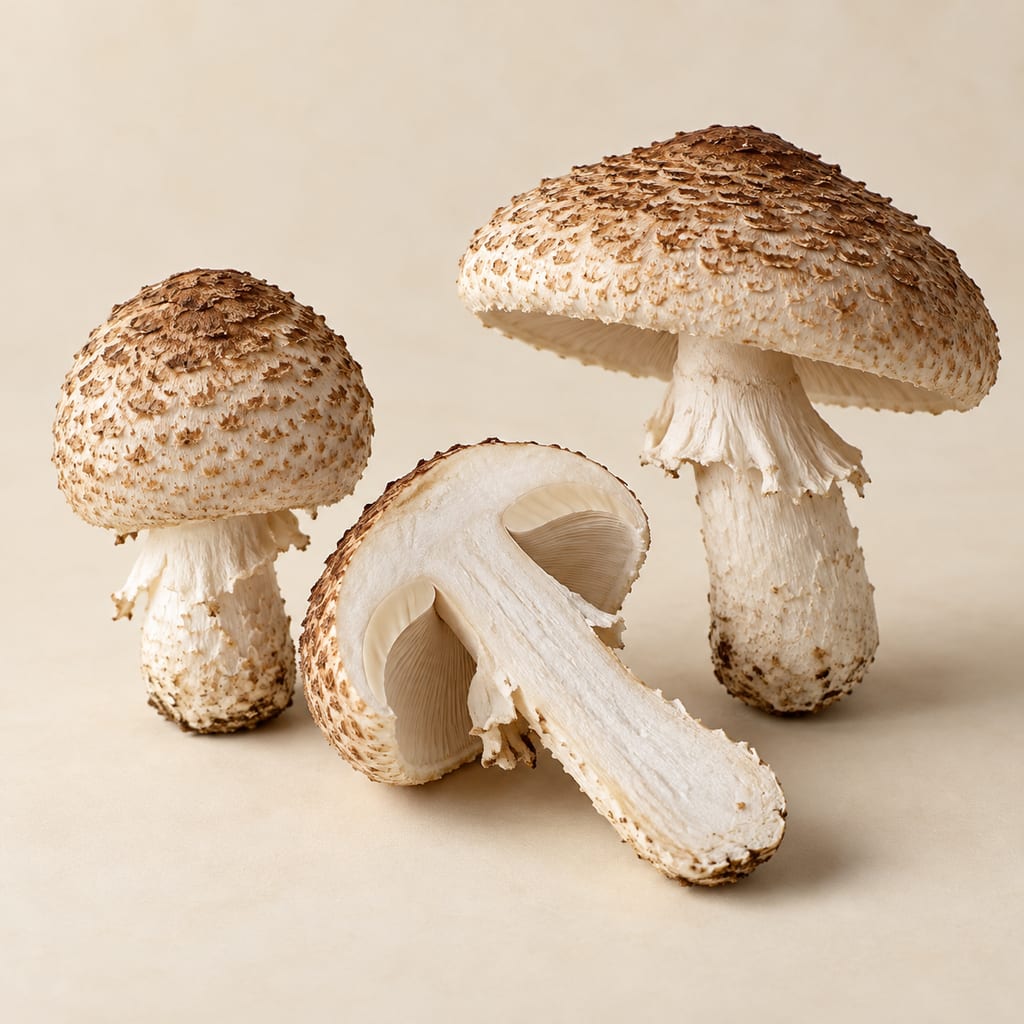
Agaricus augustus Fr. is a large member of Agaricaceae, usually recognized by its substantial build and a pale cream to yellow-brown cap covered in close chestnut or brown fibrous scales. The cap begins egg-shaped or rounded and expands from convex toward flat; field accounts commonly report widths around 10–25 cm, sometimes larger. Its free gills begin pale, turn pinkish, then deepen to chocolate or purple-brown as the spores mature. A broad hanging ring remains on the stout pale stem, whose lower part often carries brown scales. The thick white flesh may yellow slowly or take on reddish-brown tones with age or handling.
The aroma is often called sweet, almond-like, bitter-almond-like or anise-like. Descriptions vary between sources and specimens. That aroma, the cap scales, ring, size and darkening gills are useful features in a field account, not a stand-alone safety test. Naturalis and regional guides place the species among saprotrophic fungi: it feeds on dead organic matter rather than forming a mycorrhizal partnership with trees.
The species is reported from humus-rich soils in broad-leaved, coniferous and mixed woodland, often along woodland edges. Field accounts also record it in parks, gardens, hedges and other sheltered sites. Finding it beneath a conifer does not mean it is partnered with that tree: the cited sources classify it as a decomposer.
The supplied research row places it in Europe and North America. Broader field summaries report a range extending through mainland Europe, Asia, northern Africa and much of North America, with introduced records in Australia. Those summaries do not show that it is native, common or gathered for food in every part of that range. Local sources support occurrence in Ireland, California and western Washington. Flora of Australia records it in Queensland, New South Wales, Victoria and Western Australia; the New Zealand Organisms Register treats its status there as uncertain because similar species may be undescribed and sequence confirmation is needed.
Fruiting season changes with region and weather. A British and European field guide gives mid-June through late October; the Irish forestry guide places it in late summer to autumn. MykoWeb describes California fruiting during warmer months, particularly late summer and, near the coast, after foggy weather. The Kitsap Peninsula guide records late summer and early fall in western Washington. The Australian key provides state occurrence records but no local season. These windows should not be transferred across continents or treated as a fixed worldwide calendar.
European and North American field guides describe the prince as a highly regarded edible mushroom with firm, thick flesh and a pronounced almond or anise-like aroma. Its large cap and substantial stem give it a meaty presence. These are contemporary culinary descriptions and suggestions, not evidence of a particular historic tradition or a single standardized preparation.
Guides suggest frying it or adding it to stews, pasta or risotto; a western Washington guide also mentions drying. The available sources do not give a shared quantity, cooking time, temperature, storage duration or rehydration ratio. Older specimens may contain fly larvae; the Irish guide advises checking them, which is a quality concern rather than a safety test.
The evidence reviewed here supports a wild edible mushroom with a favorable reputation in field guides, but it does not establish a substantial species-specific food history, named traditional dish, cultivation tradition or trade history. Fries's 1838 treatment is a nomenclatural record, not evidence that the species was first discovered or eaten then. The common name “the prince” is not a basis for a story of royal use.
Agaricus augustus may be used as a cooked mushroom ingredient, but no source in this set documents it as a starter culture, fermenting organism or traditional fermentation substrate. Its fermentation role should remain unspecified. This account does not infer microbial activity, preservation effects or fermented results from the fact that it is a mushroom.
Edible descriptions do not establish that an unidentified wild specimen is safe. Agaricus includes species that cause illness, and appearance, smell or a color reaction cannot confirm identity. The Irish forestry guide describes rapid yellow staining in A. xanthodermus as a distinction, but color reactions vary and are not a household safety test. This page is not a foraging guide; a wild specimen requires competent local identification, and uncertainty means it should not be eaten.
A Nordic Council of Ministers risk assessment places A. augustus among wild mushrooms for which expert identification should be documented for commercial marketing. It reports efficient cadmium accumulation and recommends regular monitoring of cadmium content. It also cautions against eating large amounts because of potentially high phenylhydrazine derivatives and cadmium. The assessment does not provide a universal safe serving size or a way to make an uncertain specimen safe. A regional mycological guide separately cautions about chemical treatments and heavy-metal accumulation in landscaped sites.
Contaminants are not reliably visible, smelled or tasted. Cooking, drying or removing larvae does not resolve uncertain identification or chemical contamination. The cited sources support caution, not a claim that every specimen has the same contaminant level or that one locality is necessarily contaminated.
The evidence supports identity, saprotrophic ecology, occurrence in multiple regions, local seasonal descriptions, culinary reputation and species-specific contaminant cautions. It does not support a deep cultural history, fermentation function, cultivation method, nutrition profile, storage life, safe serving size or a precise worldwide season. Places below distinguish general occurrence from local culinary descriptions; they do not turn a field guide into proof of a traditional food use.
European field-guide coverage and culinary preparation suggestions; this does not establish a single regional tradition or uniform occurrence throughout Europe.
The forestry guide documents Irish occurrence and season, but this row does not infer a food-use relationship.
MykoWeb documents California habitats and fruiting; a region-specific preparation tradition is not established here.
The local mycological society records the species and suggests drying; this does not establish traditional use.
Ripe avocado flesh is the soft, buttery, fat-rich pulp of Persea americana, eaten raw. It is low in acid, so it is a fresh ingredient that needs care in chilled dishes.
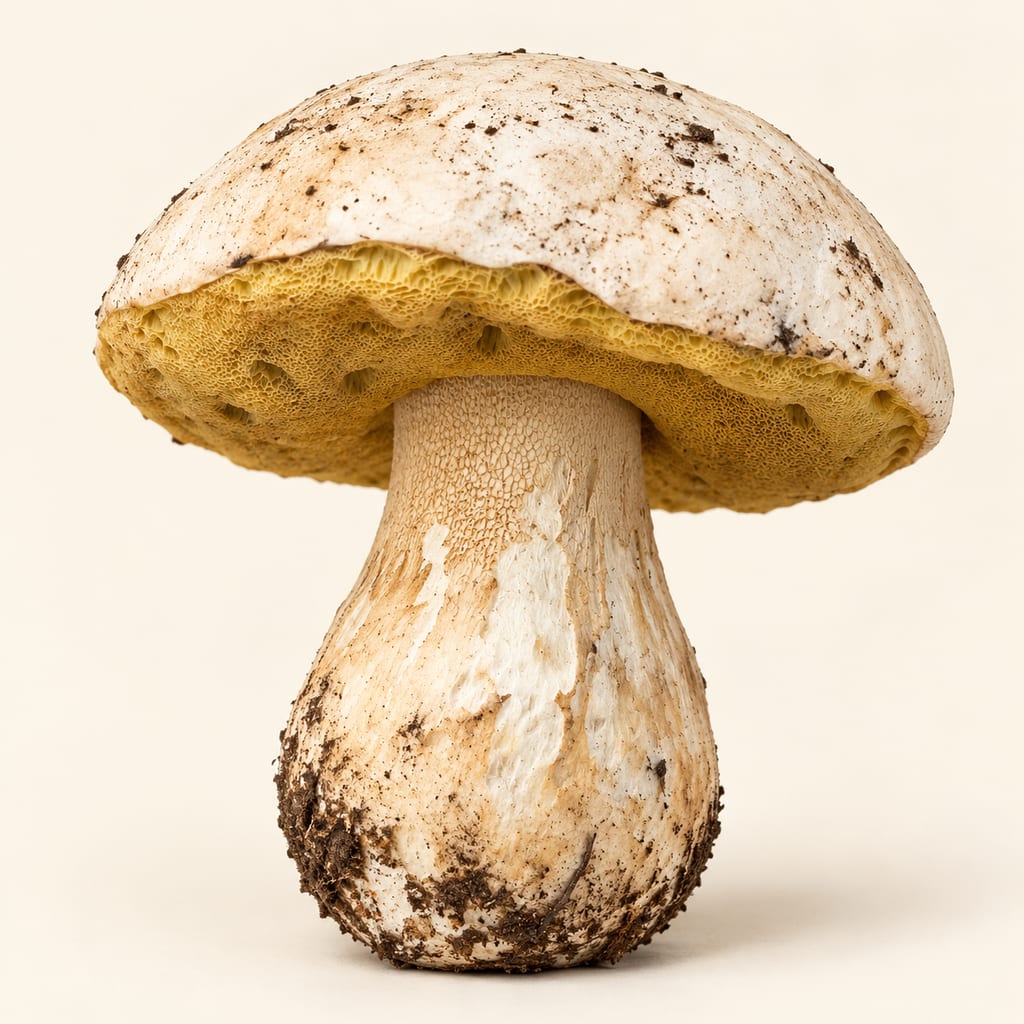
Boletus barrowsii, the white king bolete, is a western porcini relative with documented local food use in Mexico. Its pale cap and netted stem are not enough for field identification.
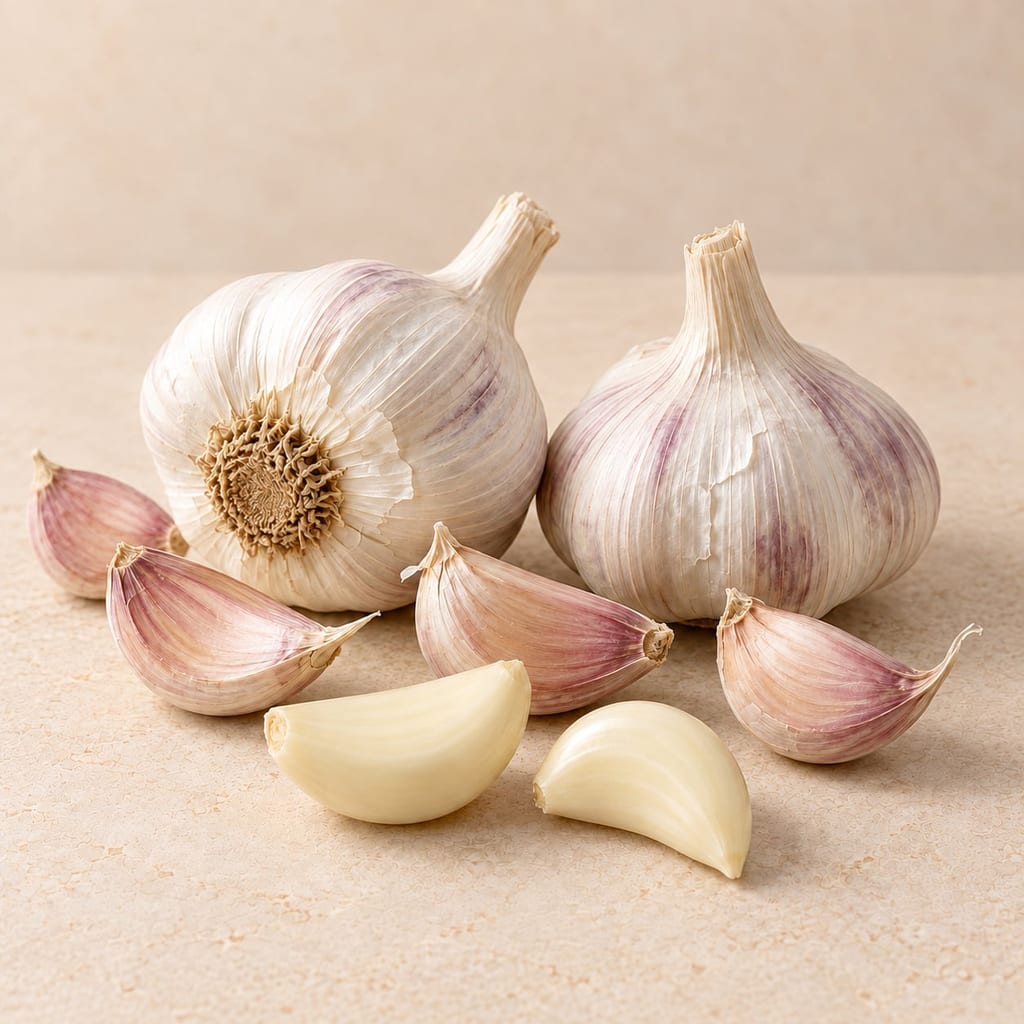
Garlic cloves are the separate bulblets of Allium sativum, pungent only once cut. They flavour herb salts, ferments such as Thai som-fak, and countless cooked dishes.
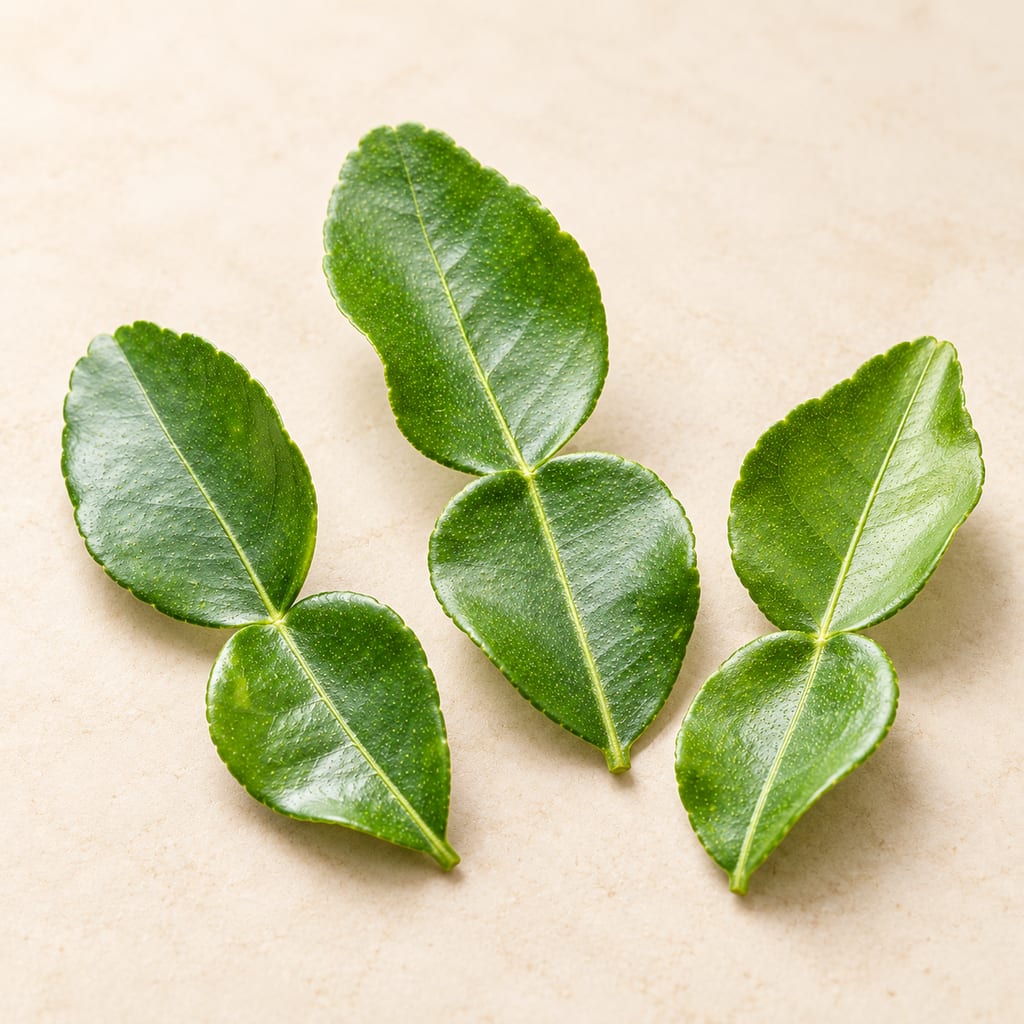
Kaffir or makrut lime leaves are the aromatic foliage of Citrus hystrix, used whole for infusion or finely cut in soups, curries and seasonings.
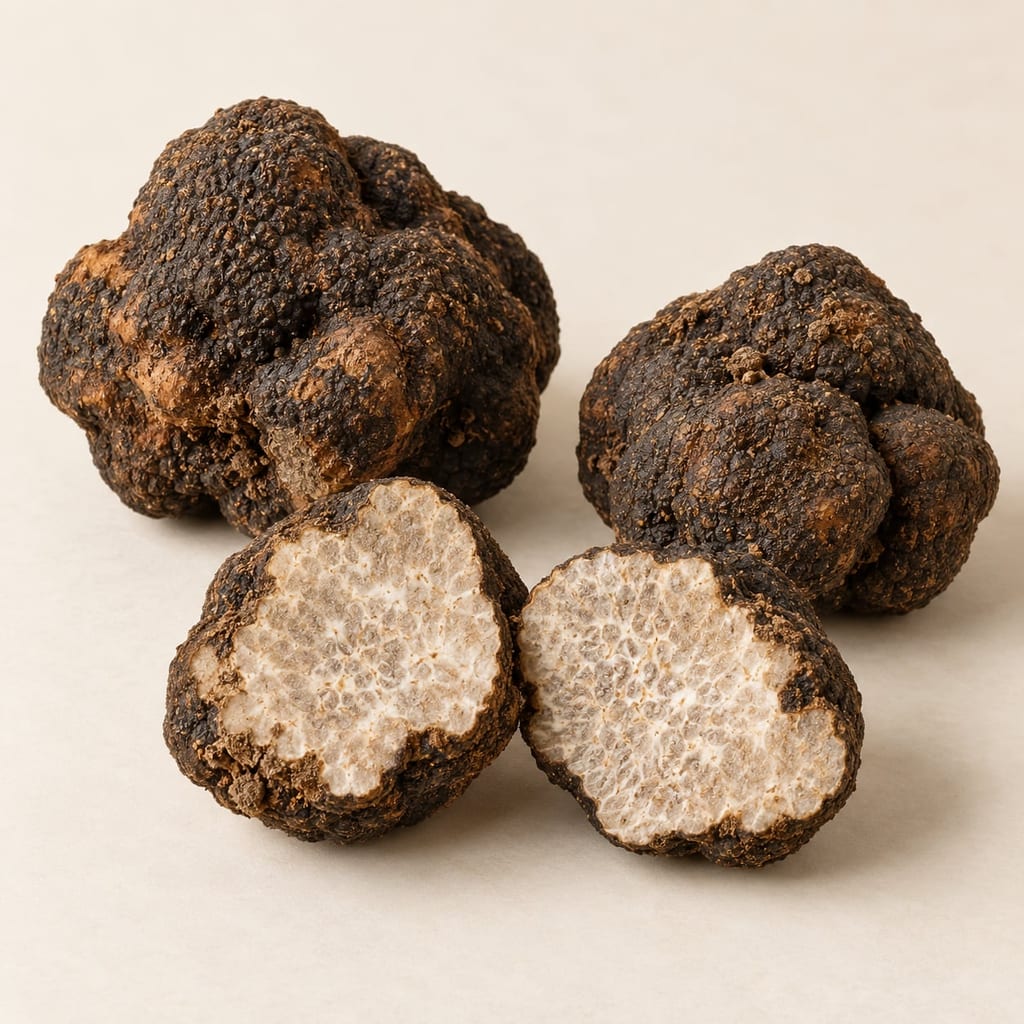
Kalapuya brunnea, the Oregon brown truffle, is a native truffle of the Pacific Northwest that is shaved raw over warm food. Sources describe it as a gourmet edible, and its safe identification needs an expert.
Heat-treated milk from domestic goats supplies lactose, proteins and fat for cultured dairy and cheese; its heat treatment and composition affect how it behaves in the vat.
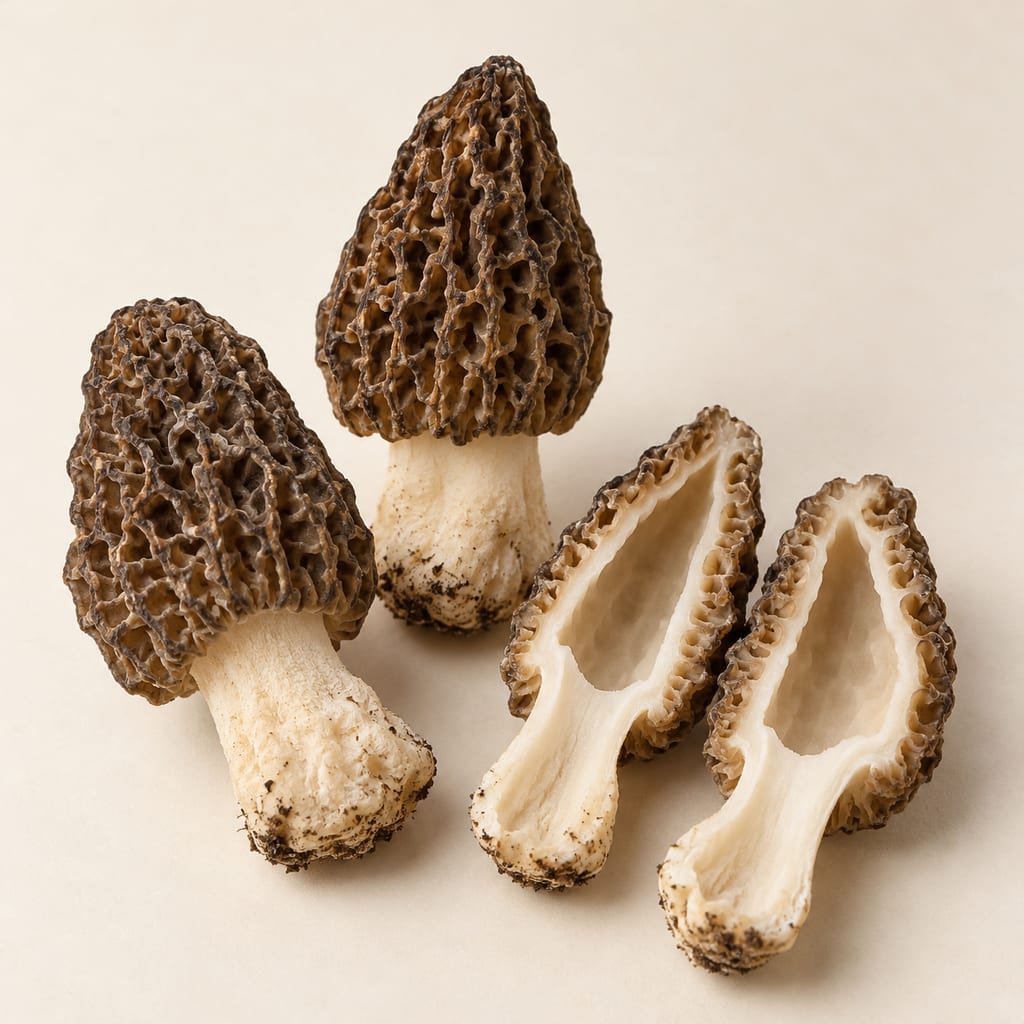
Morchella snyderi, Snyder's morel, is a true morel found under conifers in western North America in spring. It is eaten only well cooked, because raw or undercooked morels can cause serious illness.
No community contributions have been published for this entry yet.
Sign in to contribute. Published comments and photos are free to read.
Nordic Council of MinistersSafety · Commercial guidance
Mushrooms traded as food. Vol II, sec. 2: Nordic risk assessments and background on edible mushroomsA. augustus efficiently bioaccumulates cadmium; regular control is recommended.
The risk assessment cautions against large amounts because of potentially high phenylhydrazine derivatives and cadmium.
Expert-verified identity is required for commercial marketing.
Cited in: Habitat, distribution and season; Food history and fermentation; Safety and selection limits; Evidence boundaries
Naturalis Biodiversity CenterIdentity · Ecology
Agaricus augustus — Interactive Guide to Mushrooms and other fungiMorphology, almond-like odour, humus-rich habitats and saprotrophic classification.
Cited in: Identity and character; Evidence boundaries
COFORD / Ireland Department of Agriculture, Food and the MarineIdentity · Ecology · Season · Caution
Forest Fungi in Ireland: Agaricus augustusIrish habitats and late-summer-to-autumn season; larvae in older specimens; distinction described for A. xanthodermus.
Cited in: Identity and character; Habitat, distribution and season; Safety and selection limits; Evidence boundaries
Flora of Australia / LucidcentralIdentity · Distribution
Agaricus augustus Fr.Rich-soil habitat and Queensland, New South Wales, Victoria and Western Australia records; no seasonal claim.
Cited in: Habitat, distribution and season
MykoWebIdentity · Ecology · Season
California Fungi: Agaricus augustusMorphology, aroma, warm-month fruiting especially late summer, coastal fog association and California habitats.
Cited in: Identity and character; Habitat, distribution and season
Kitsap Peninsula Mycological SocietySeason · Culinary use · Caution
The PrinceLate-summer/early-fall in western Washington; drying suggestion; chemical-treatment and heavy-metal cautions for landscaped areas.
Cited in: Habitat, distribution and season; Culinary use; Safety and selection limits
First NatureDistribution · Use · Taxonomy
Agaricus augustus Fr. — The PrinceBroad distribution summary, habitat and culinary reputation.
Cited in: Culinary use; Food history and fermentation
Paul JordanSeason · Use · Identity
Field Guide to Edible Mushrooms of Britain and Europe: Agaricus augustusMid-June through late October; woodland margins and hedges; cooking suggestions and drying.
Cited in: Habitat, distribution and season; Culinary use
Wild Food UKSeason · Identity · Caution
The PrinceUK seasonal range, morphology and cadmium caution; secondary corroboration.
Cited in: Culinary use; Food history and fermentation
National Center for Biotechnology InformationTaxonomy
Taxonomy Browser: Agaricus augustus, Taxonomy ID 160858Taxonomic name and placement; not treated as an authoritative nomenclatural source.
New Zealand Organisms Register / Manaaki Whenua – Landcare ResearchDistribution uncertainty
Agaricus augustus Fr. 1838New Zealand biostatus is uncertain; similar taxa require sequence confirmation.
Cited in: Habitat, distribution and season