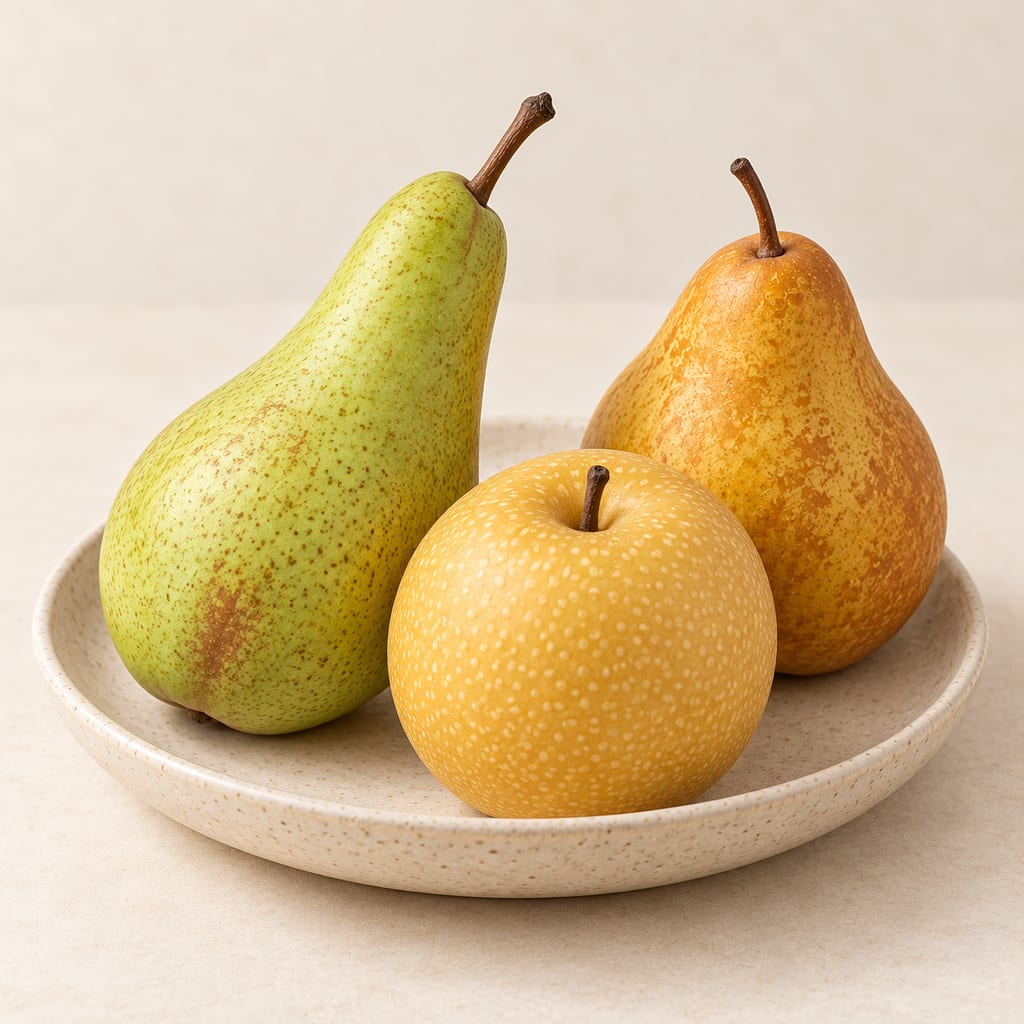
Pear
Pears are Pyrus fruits used fresh, pressed for perry, or crushed for fruit spirits; cultivar, species and ripening stage shape each preparation.
 FermenteaWhere food goes to change
Mushrooms
Kalapuya brunnea, the Oregon brown truffle, is a native truffle of the Pacific Northwest that is shaved raw over warm food. Sources describe it as a gourmet edible, and its safe identification needs an expert.
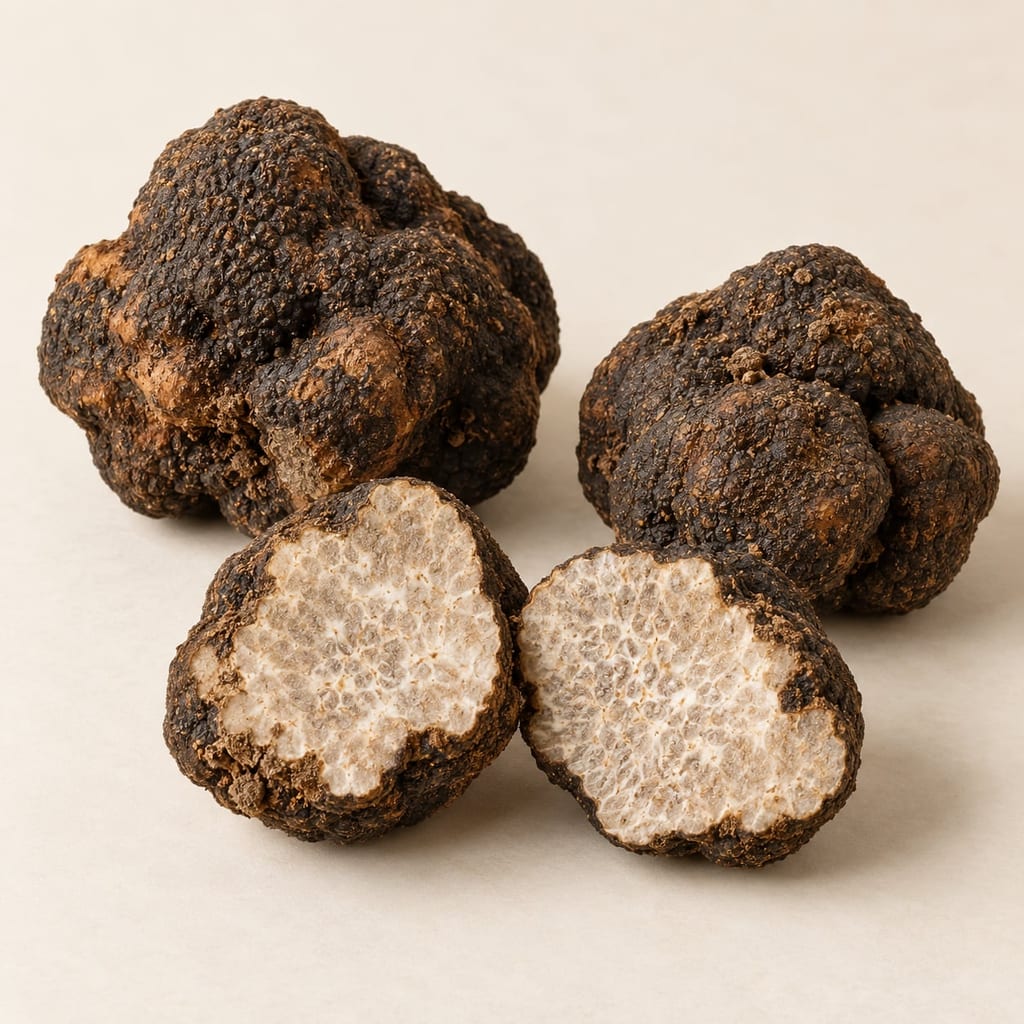
Kalapuya brunnea, known as the Oregon brown truffle, is a truffle of lowland and foothill forests in western Oregon and northern California. It is one of four native Oregon truffles that extension sources treat as gourmet edibles. It grows underground and is found by its aroma and by the ground above it rather than by any visible fruit body.
The accepted name in the extension summary is Kalapuya brunnea. Earlier work placed the species in the genus Leucangium under the name Leucangium brunneum. The catalogue entry gives the epithet with a single letter-change spelling, brunnea, and this page keeps the spelling of the accepted name.
The outer skin is orange-brown and granular to warty. The flesh is firm and mostly white, with grey spore pockets that give a marbled look. The fruit body is larger than the white truffles and is found in a more limited range. It has a garlicky smell.
The species grows in lowland and foothill forests, mainly west of the Cascade Range and in the Coast Range foothills above the Willamette Valley. The extension summary associates the gourmet specimens with Douglas-fir trees and notes that it often fruits in the same places and seasons as the Oregon black truffle. The season given is September through February.
The truffle is not cooked. It is shaved thinly over warm, fatty foods such as eggs, meat, butter or cream sauce. A fat can take on its aroma if it is stored sealed with the truffle, without direct contact.
The summary advises an airtight container with more air space than truffles, lined with paper towels, kept refrigerated and dry, with the truffles not touching each other. It stays usable for about a week, depending on the species.
Many truffle species are not gourmet edibles. The extension summary says spongy, squishy, hollow or powdery truffles are not edible, and that edible specimens are firm, close to a pencil eraser in texture, with a marbled or speckled interior. The summary states that none of Oregon's native truffle species is poisonous, and it also advises never to eat a wild truffle or mushroom unless it has been identified with absolute confidence. This page gives no identification verdict beyond that.
Lowland and foothill forests west of the Cascades and above the Willamette Valley; a collecting range, not a cultivated origin.
Named in the same extension summary as part of the species' range.
Pears are Pyrus fruits used fresh, pressed for perry, or crushed for fruit spirits; cultivar, species and ripening stage shape each preparation.
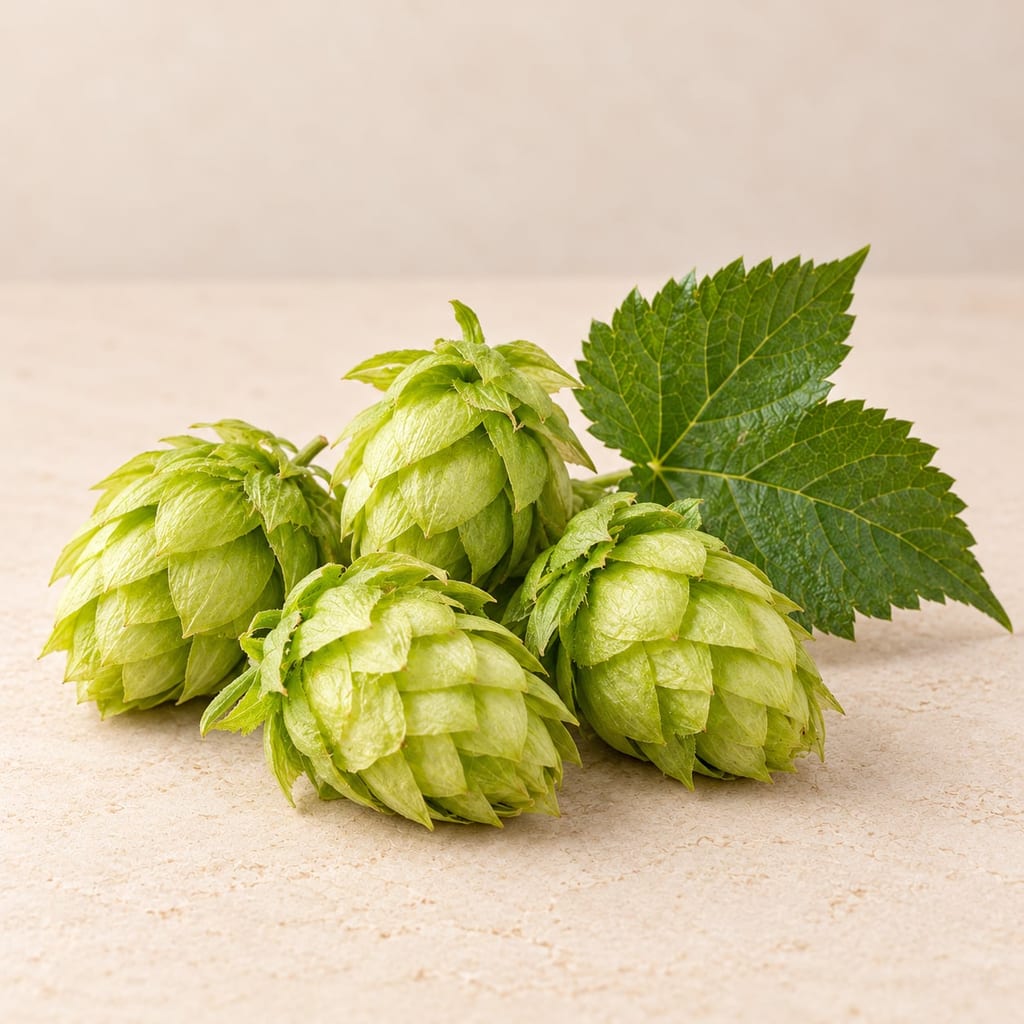
An Oregon-bred Fuggle-related aroma hop whose cones and pellets contribute bitterness and aroma through the brewer's choice of crop and addition stage.
A named liquid Saccharomyces cerevisiae culture used for restrained, malt- and hop-forward ale fermentation; its living cells and package format require product-specific handling.
No community contributions have been published for this entry yet.
Sign in to contribute. Published comments and photos are free to read.
Oregon State University ExtensionIdentity · Ecology · Food use · Storage · Safety
Oregon Native Edible Truffles (EM 9369)Accepted name Kalapuya brunnea, formerly Leucangium brunneum; description; Douglas-fir association; range; September to February season; shaved over warm fatty foods; storage; lookalike cues; statement that none of the native Oregon truffles is poisonous with a never-eat-unidentified advice.