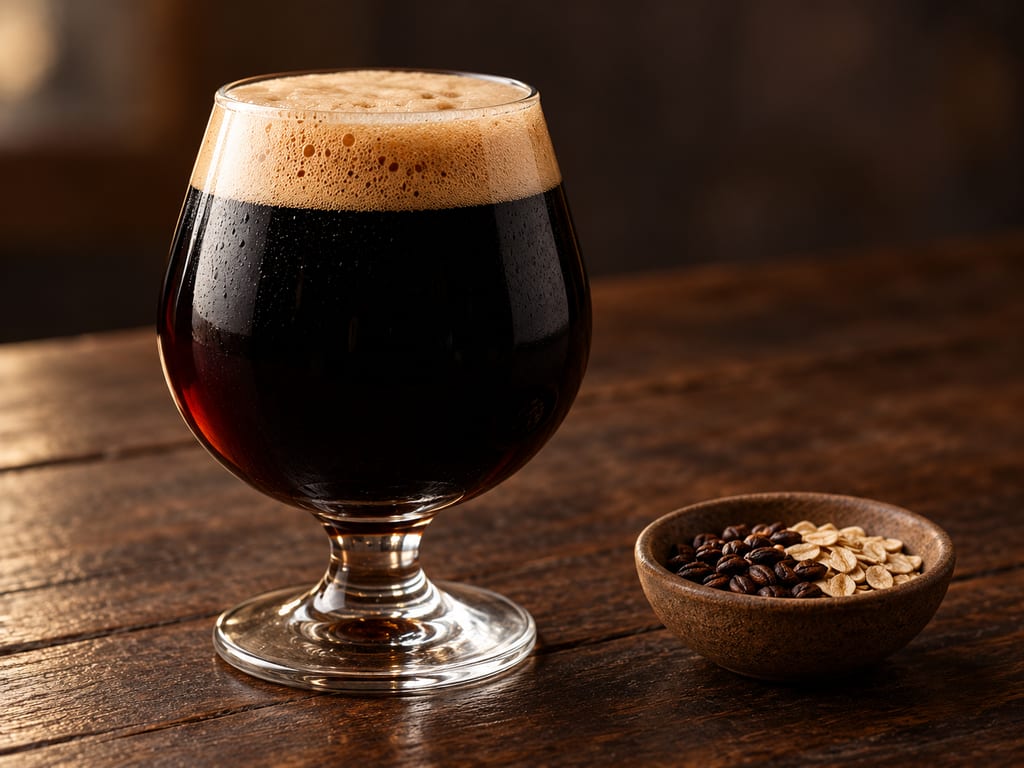
Dark Cellar imperial stout
An all-grain imperial stout with pale malt, roasted barley, dark malts and oats, fermented with an American ale-yeast starter.
 FermenteaWhere food goes to change
Cultures
A named liquid Saccharomyces cerevisiae culture used for restrained, malt- and hop-forward ale fermentation; its living cells and package format require product-specific handling.
Wyeast 1056 American Ale is a commercially maintained liquid brewing culture of Saccharomyces cerevisiae. The number identifies Wyeast's strain offering; it is not a species name or a synonym for every yeast sold for American ale. Its job is to ferment wort, transforming suitable sugars into fermentation products while growing and changing the beer's flavour. The bought culture is an ingredient in that process, rather than the finished drink.
1056 has a clean, crisp profile with low fruitiness and mild ester production. It is intended for beers in which malt and hops have a prominent place. This restrained profile makes it a flexible ale culture: it can support different ingredient combinations without being chosen chiefly for an assertive fermentation aroma. Clean is a sensory description, however, rather than an absence of yeast metabolism.
The product listing gives low-to-medium flocculation, apparent attenuation of 73–77%, an apparent alcohol tolerance of 11% ABV and a fermentation range of 60–72°F, paired on the page with 16–22°C. These are manufacturer descriptors for comparing and using the culture. The composition of a particular wort and the condition and management of the yeast still influence the actual fermentation.
Wyeast opened its laboratory to brewers in 1986 and identifies Hood River, Oregon, as its home. Supplying maintained liquid cultures gave professional and home brewers access to a selection of fermentation organisms. That commercial setting is part of this ingredient's history: a brewer could choose a named culture rather than describe the ferment only by a broad category such as ale yeast.
The company's anniversary archive associates an early 1986 mention of 1056, also called Chico Ale, with Sierra Nevada Brewing. Its reputation is closely connected with Sierra Nevada Pale Ale. This places the culture within the growth of American craft beer and the demand for beers that express malt and hop character. The maintained culture and the beer in which it became familiar belong to related histories.
Its culinary role is wider than a single famous pale ale. Wyeast's own style examples include American IPA, double IPA and Irish red ale. A restrained fermentation profile can support a beer dominated by hops or one with a different balance of malt character. The common culture offers a connection among those preparations while their grists and hop schedules produce different drinks.
Maintaining a named yeast involves more than saving a little finished beer. In Wyeast's professional production, an archived cold culture bank supplies yeast for propagation on malt extract as the primary carbohydrate source. The organism is multiplied in a controlled manufacturing setting before it is supplied as a liquid suspension. Preserving and growing a culture are separate operations, each serving the consistency of the resulting ingredient.
Quality checks accompany professional propagation and the finished culture, and retained samples allow later testing. These operations connect a stored organism with a reproducible manufactured ingredient. After dispatch, the liquid culture also passes through transport, storage and handling before it reaches wort. That later history affects the living material the brewer eventually uses, making the package identity and condition important alongside the chosen strain.
A liquid culture carries cells in a medium rather than as a dry granular product. This affects purchasing and handling: the brewer is receiving a living suspension that must remain in useful condition. The product name identifies the chosen strain offering, while its package format, date and handling history supply additional information needed for the brew.
The homebrewing Activator package contains the culture and a smaller internal nutrient packet. Breaking that inner packet releases nutrients into the yeast slurry. Metabolic activity then generates carbon dioxide, which can swell the outer package. The visible change is useful because something biological is happening inside the closed pack before it reaches the wort.
Activation and propagation are different. The internal feed is intended to start metabolism; it does not significantly increase the number of cells. A swollen package should therefore not be interpreted as a newly grown large starter. Equally, the maker states that activation is beneficial but is not a requirement before inoculation. The package system is a handling aid within the culture's use.
Wyeast's company timeline places the Activator release in 2006, following the earlier Propagator format. That packaging history is more recent than the culture's earlier commercial record. Keeping the two apart explains why an old reference to the strain and a modern instruction for its package need not describe the same physical product format.
Saccharomyces cerevisiae can rapidly turn sugars into ethanol and carbon dioxide. It can do so with or without oxygen under suitable sugar-rich conditions. The ability to ferment in the presence of oxygen is commonly called the Crabtree effect. Oxygen in the starting environment therefore does not simply mean that the organism abandons alcoholic fermentation and produces no alcohol.
This biology helps connect the culture with the visible progress of a brew. Sugar consumption supplies the organism's metabolism, cells can grow, and gas leaves the fermenting liquid. The wort is becoming a different chemical environment as alcohol accumulates and available nutrients change. Research on the species explains these general behaviours without measuring a particular package of 1056 in an individual brewer's wort.
Ale yeast is consequently an active production organism. It is not merely a flavouring dissolved into a finished liquid, and the quantity added cannot be understood in the same way as an inert seasoning. The aim is to establish a suitable population in the environment where fermentation will take place, then allow that population to complete the intended work.
A starter is a separate culture prepared to increase the yeast available for a brew. Its purpose differs from activating the small nutrient pouch. Growth needs both usable substrate and the cell components that allow further budding. Wyeast's starter guidance identifies sugar supply and membrane sterols as important constraints; sterols are diluted as cells bud, and insufficient reserves can limit continued growth.
Oxygen has a role in that preparation because it supports replenishment of sterols. Agitation can help growth by removing carbon dioxide from suspension and introducing some oxygen. These are explanations for a growth stage, not directions to aerate a finished beer. The timing and purpose of an operation determine whether it belongs in culture preparation or later handling.
A starter also multiplies any unwanted organisms that entered with the culture or equipment. Providing favourable growth conditions is not selective proof that only the desired yeast is present. The benefit of additional yeast therefore belongs with careful handling of the separate culture. Starter preparation is a process in its own right, rather than a way to make an uncertain culture reliable merely by making more of it.
Yeast fermentation creates aroma-active compounds as well as ethanol and gas. Acetate esters are one example. In brewers' yeast, alcohol acetyltransferase activity contributes to acetate ester formation and responds to its surrounding conditions. That makes ester production a biological reaction rather than a fruit flavour added from outside the fermentation.
For 1056, the product-specific description is mild ester production and low fruitiness, with mild citrus character reported in cooler fermentations. The underlying enzyme activity provides a route by which a living culture contributes aroma to the drink. A restrained profile still includes products of metabolism: the difference lies in their balance and sensory prominence alongside the other ingredients.
The maker's choice of American IPA as one application illustrates the sensory purpose. Hop aroma and bitterness can be prominent against a supporting malt and fermentation background. A different yeast with a stronger fermentation character would change that balance even if the brewer retained the same hops. Culture selection is therefore part of the composition of the drink.
Apparent attenuation concerns the change in wort gravity during fermentation. A hydrometer responds to density, and the resulting beer contains alcohol as well as residual dissolved material. Since ethanol is less dense than water, an apparent measurement is different from a calculation that corrects for alcohol. It is not a direct statement that the same percentage of every sugar molecule has been consumed.
The manufacturer's 73–77% range is useful as a strain descriptor, while wort fermentability and fermentation conditions remain relevant to the final result. Laboratory comparisons of wort attenuation methods also show why a measurement needs its method and context. A number obtained from a test is not independent of how the test was performed.
For a brewer, this means planning and observation serve different purposes. A culture description helps choose an ingredient; actual gravity readings help follow what happened in the batch. An expected range should not be substituted for measuring the beer or treated as proof that any fermentation outside that range has one particular cause.
Flocculation is the reversible aggregation of yeast cells. In industrial Saccharomyces cerevisiae, a general flocculation mechanism involves interactions between lectin-like proteins on one cell and carbohydrate structures on neighbouring cell walls. Available sugars and cell physiology can influence this behaviour. The resulting groups differ from isolated suspended cells in the way they separate from the liquid.
The 1056 listing's low-to-medium flocculation is the strain-specific information. The maker notes that filtration is normally needed for bright beer. That observation concerns appearance and separation; it does not mean the culture is incapable of fermentation. Alcohol production and the formation and settling of cell aggregates are related parts of the brewing process with different practical consequences.
Cell aggregation involves contacts between cells, rather than simply a collection of particles that happen to be near each other. The reversible nature of flocculation means that attachment is itself a changing property. Available sugars and the population's physiological condition can influence those contacts. The beer's clearing therefore follows both the behaviour of the yeast and the conditions in which the cells are held.
The linked Dark Cellar imperial stout formulation calls for a two-litre starter of Wyeast 1056 American Ale. This is a documented use beyond pale ale: roasted ingredients and the rest of the grain bill provide a dark malt context for the culture. The starter volume describes a prepared starter, not two litres of concentrated commercial yeast slurry.
That example makes ingredient roles clear. The grain and mash produce the wort, hops contribute their compounds during the schedule, Irish moss assists separation, and yeast performs fermentation. Selecting 1056 is one decision within that system. Its comparatively restrained profile supports the formulation without explaining the whole beer's flavour or establishing a universal starter size for other batches.
Choose a correctly identified package and keep its date and directions with it. Wyeast recommends refrigeration and fresh use; prolonged warm storage can deplete reserves and lengthen the delay before activity. The practical concern is maintaining a useful culture through transport and storage, rather than preserving only the appearance of an unopened pouch.
Pitch requirements change with wort volume, strength and temperature. The maker's standard direct-pitch guidance is conditional, and colder or stronger fermentations can require more cells. A culture code by itself does not determine a pack count for every brew. Use the supported recipe and the directions for the actual package together.
Follow fermentation with measurements rather than airlock activity alone. Gas escaping from a vessel is an observation, but its presence or absence is not a complete account of the liquid's gravity or progress. Package swelling, a lively starter and a quiet airlock each describe one stage or sign; none independently proves that the finished beer has reached its intended endpoint.
Yeast is fungal biomass rather than a cereal grain, but a purchased culture also has its production medium. The professional liquid culture is supplied in a malt-based suspension. The organism and the surrounding liquid are consequently distinct parts of the manufactured form. Package ingredient information is needed for the actual preparation in hand, particularly when the medium matters to the person using it.
Read the current package information for dietary needs and the other ingredients of the eventual beer. Selecting a named yeast does not remove the identity of the grains used in the wort. The culture's role is to make fermentation possible; a finished drink's ingredient and allergen information requires the complete formulation.
The deeper historical lineage remains unresolved; Wyeast's anniversary account records different archived versions. No genetic equivalence to other suppliers' Chico cultures, individual-pack assay, universal shelf life or home-pack allergen absence is established here.
Manufacturer's documented base and production context; not the biological origin of the yeast.
Deep historical lineage is unresolved; no fictional older brewery/place chain or genetic equivalence inferred.
An all-grain imperial stout with pale malt, roasted barley, dark malts and oats, fermented with an American ale-yeast starter.
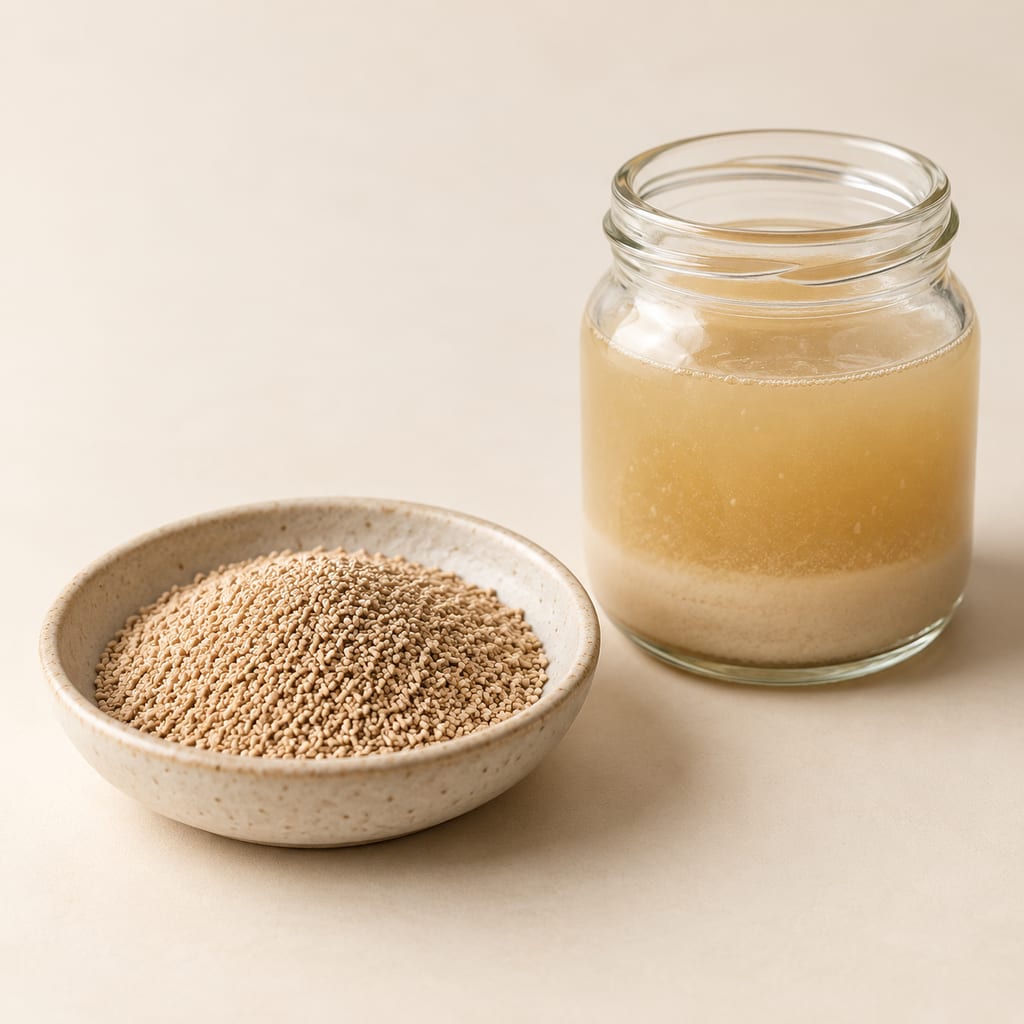
Ale yeast is a broad group of Saccharomyces cerevisiae brewing cultures, not one strain. Style labels such as English, American, Belgian or wheat beer do not identify an interchangeable culture.
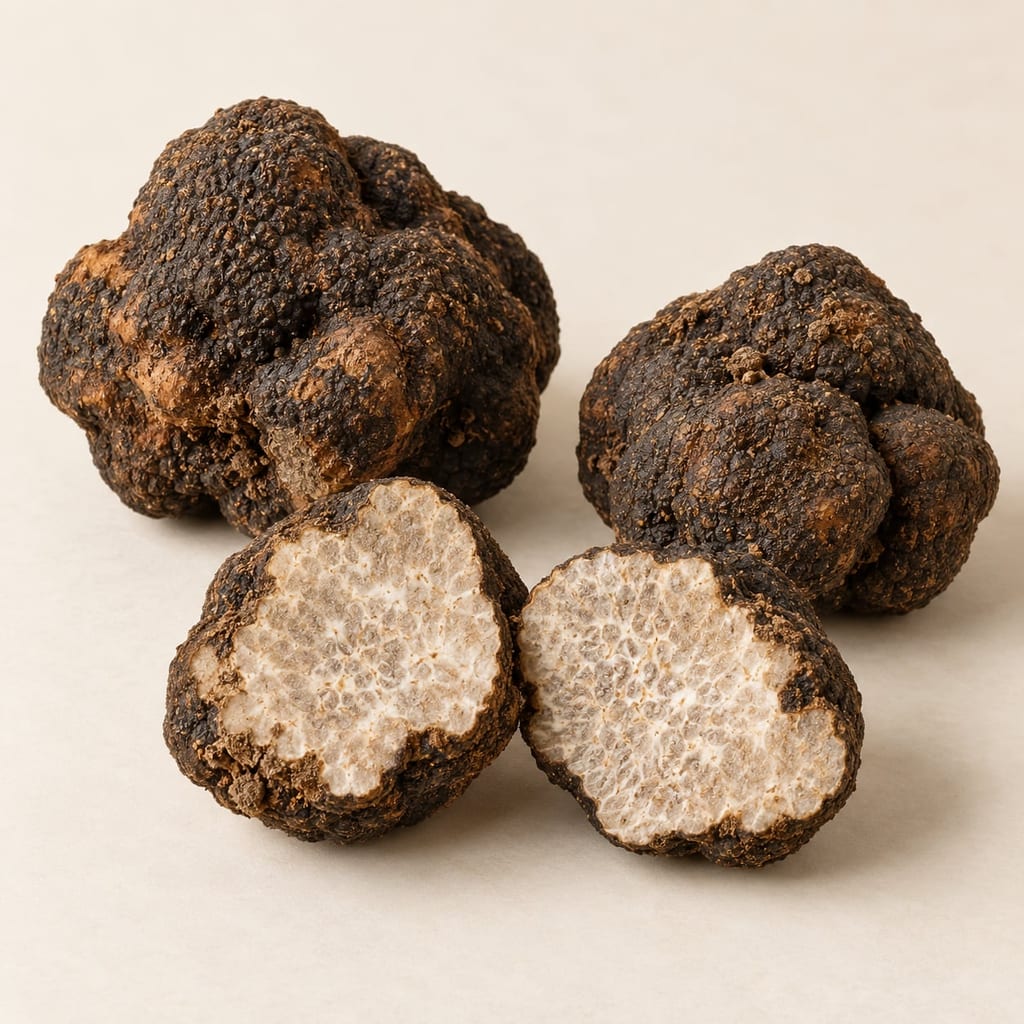
Kalapuya brunnea, the Oregon brown truffle, is a native truffle of the Pacific Northwest that is shaved raw over warm food. Sources describe it as a gourmet edible, and its safe identification needs an expert.
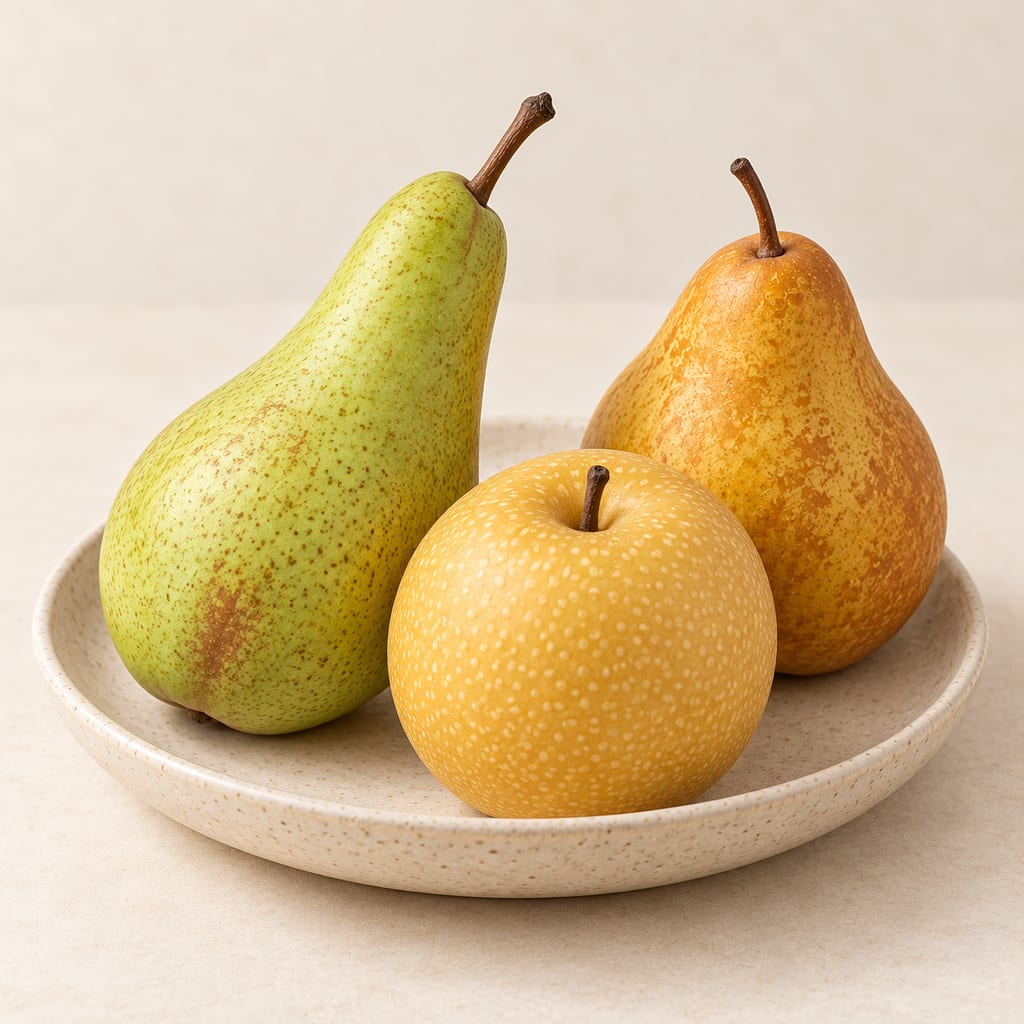
Pears are Pyrus fruits used fresh, pressed for perry, or crushed for fruit spirits; cultivar, species and ripening stage shape each preparation.
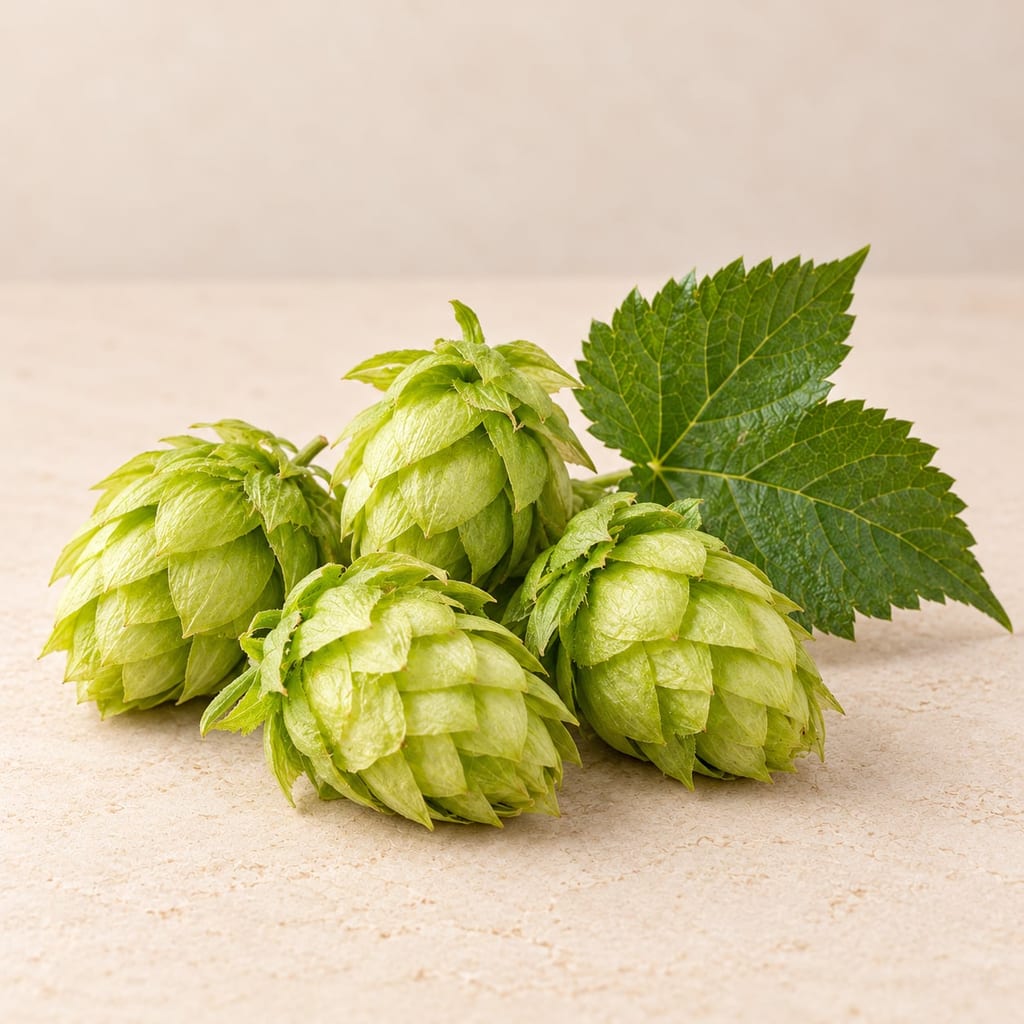
An Oregon-bred Fuggle-related aroma hop whose cones and pellets contribute bitterness and aroma through the brewer's choice of crop and addition stage.

Soft, spreadable Calabrian pork sausage made with a great deal of red chilli and fatty pork, stuffed into natural casings, sometimes smoked and matured while staying soft.

A way to add independent temperature logging to an existing food dehydrator without changing its built-in controls or protections. It is a monitoring method, not a rewiring plan.

Pleurotus cystidiosus is the abalone mushroom, a cultivated oyster-type fungus with dark brown caps that grows more slowly and is more demanding than other Pleurotus species.

A dark, balanced vinegar from Emilia-Romagna made by combining cooked or concentrated grape must with wine vinegar, then acetifying and refining it in wood under a protected specification.

A living dairy inoculum that starts controlled cream fermentation, developing acidity and aroma before sour cream or cultured butter is finished.

A small electric incubator holds jars at a selected temperature for yogurt and other documented warm food preparations. Controls, capacity and vessel arrangement vary by model.

Adygean salt is a seasoned table salt associated with Adygea and the wider North Caucasian culinary tradition. Salt is blended with garlic and a variable selection of herbs and spices; the exact mix depends on the named style and maker.

The African Caesar-group mushroom, Amanita masasiensis, is a wild ectomycorrhizal species of central and southern African woodlands, eaten locally. The genus contains deadly poisonous species, so identification needs care.
No community contributions have been published for this entry yet.
Sign in to contribute. Published comments and photos are free to read.
Wyeast LaboratoriesIngredient context
1056 American Ale1056 American Ale is Saccharomyces cerevisiae with a clean, crisp profile, mild esters, low-to-medium flocculation and the manufacturer's stated attenuation, alcohol and temperature descriptors.
Cited in: A named living culture; Mild ester production still involves enzymes; Attenuation describes a measured change; Cells gather and beer clears; Limits of the strain record
Wyeast LaboratoriesIngredient context
About Wyeast LaboratoriesWyeast opened in 1986 in the commercial culture era and is based in Hood River, Oregon; its Activator format followed the Propagator in 2006.
Cited in: Liquid yeast within American craft brewing; What the Smack-Pack activates
Wyeast LaboratoriesIngredient context
Most Iconic StrainsWyeast's anniversary archive associates an early 1986 mention of 1056/Chico Ale with Sierra Nevada and records different archived versions with unresolved deeper lineage.
Cited in: Liquid yeast within American craft brewing; Limits of the strain record
Tamara Logsdon / Wyeast LaboratoriesIngredient context
Q2 Legacy Curation: Featured and Limited Release StrainsAmerican IPA, double IPA and Irish red ale are listed applications for 1056's restrained fermentation profile.
Cited in: Liquid yeast within American craft brewing; Mild ester production still involves enzymes
Wyeast LaboratoriesIngredient context
Premium Liquid Yeast for Professional BrewingWyeast's professional yeast is a malt-based liquid suspension propagated from a cold culture bank, with quality checks and retained samples.
Cited in: A culture bank becomes a bought ingredient; The organism and the medium are different identities; Limits of the strain record
Wyeast LaboratoriesIngredient context
Activator Smack-Pack SystemThe Activator's inner nutrient packet starts yeast metabolism, generating carbon dioxide and package swelling; activation is beneficial but not mandatory.
Cited in: A culture bank becomes a bought ingredient; What the Smack-Pack activates; Purchase and storage follow the living product
Wyeast LaboratoriesIngredient context
Frequently Asked QuestionsActivation does not significantly grow the cell population. Refrigeration, fresh use, wort-specific pitching and gravity observations guide culture handling.
Cited in: What the Smack-Pack activates; Purchase and storage follow the living product; Limits of the strain record
Alexander Smulsky / Wyeast LaboratoriesIngredient context
Making a Yeast StarterStarter growth depends on sugar supply and membrane sterols; budding dilutes sterols, oxygen and agitation can support growth, and contaminants can multiply alongside the culture.
Cited in: Growth, membranes and the starter
Arne Hagman and Jure Piškur / PLOS ONE,2015Ingredient context
A Study on the Fundamental Mechanism and the Evolutionary Driving Forces behind Aerobic Fermentation in YeastSaccharomyces cerevisiae produces ethanol and carbon dioxide under anaerobic and sugar-rich aerobic conditions; aerobic fermentation is known as the Crabtree effect.
Cited in: Sugar becomes fermentation products
Kazuo Yoshioka and Naoki Hashimoto / Agricultural and Biological Chemistry,1981Ingredient context
Ester Formation by Alcohol Acetyltransferase from Brewers' YeastAlcohol acetyltransferase associated with brewers' yeast contributes to acetate ester formation and responds to environmental conditions.
Cited in: Mild ester production still involves enzymes
Chuck Hanning and Scott Bickham / Beer Judge Certification ProgramIngredient context
Yeast and FermentationApparent attenuation reflects gravity change without correcting for alcohol's lower density; wort composition and strain behaviour affect the fermentation result.
Cited in: Attenuation describes a measured change
W. Hagen and H. Schwarz / European Brewery Convention Analysis Committee,1999Ingredient context
Determination of Fermentability (Final Attenuation) of WortReference and rapid wort-fermentability tests give method-dependent attenuation limits and precision.
Cited in: Attenuation describes a measured change
Ashima Nayyar et al. / Journal of the Institute of Brewing,2017Ingredient context
Flocculation in industrial strains of Saccharomyces cerevisiae: role of cell wall polysaccharides and lectin-like receptorsReversible flocculation in industrial Saccharomyces cerevisiae involves lectin-like cell-wall receptors, carbohydrate interactions and effects of nutrient sugars.
Cited in: Cells gather and beer clears
American Homebrewers AssociationIngredient context
2026 Official Big Brew RecipesDark Cellar imperial stout uses a two-litre starter of Wyeast 1056 American Ale alongside its malt, hop and fining additions.
Cited in: In a strong, dark beer
US Food and Drug AdministrationIngredient context
Food AllergiesProduct ingredient and allergen information concerns the supplied preparation; a species name alone does not describe the medium or cross-contact conditions.
Cited in: The organism and the medium are different identities