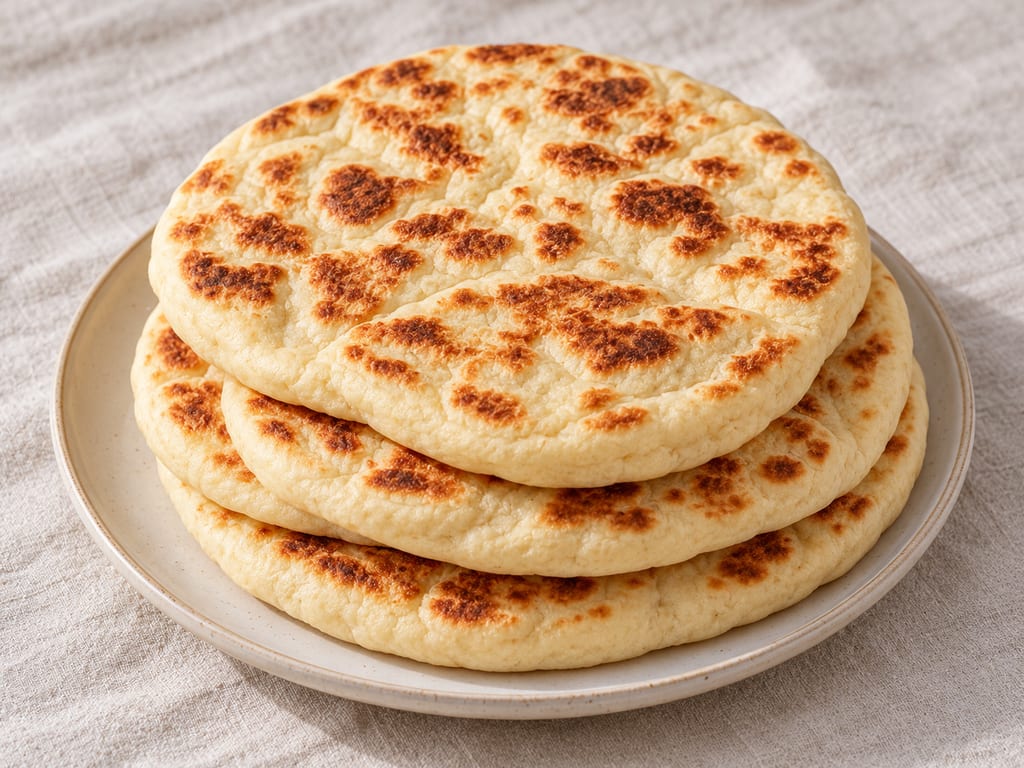
Bazlama
This Turkish bazlama uses yeast, plain yogurt and olive oil for a soft dough cooked in a skillet. Shape it into twelve small or six larger rounds, flip as bubbles appear, and wrap the breads to keep them soft.
 FermenteaWhere food goes to change
Ramadan pide
This Ramadan pide is a large Turkish yeast bread patterned with a shallow lattice, brushed with egg and yogurt, and topped with sesame and nigella. This home method makes one 28–30 cm loaf and bakes it in a hot oven.
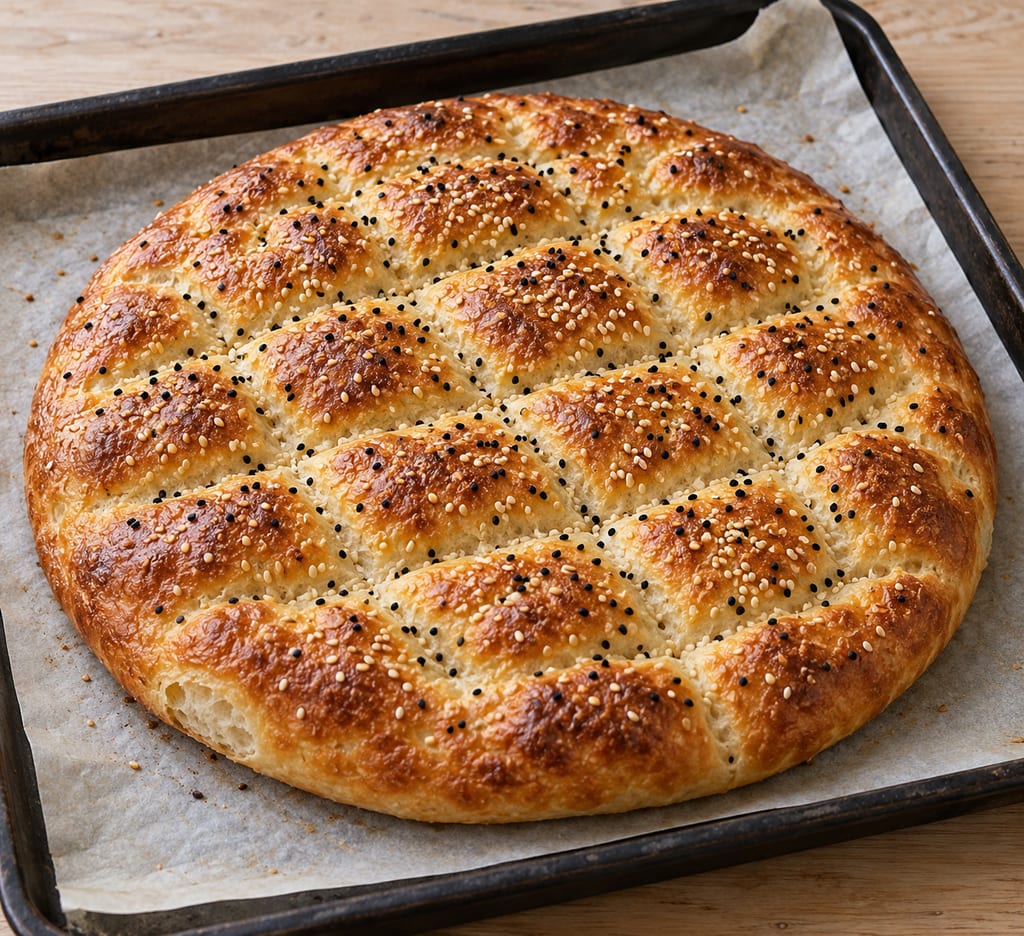
Sabrina Ghayour identifies this bread as ramazan pidesi, traditionally made and served during Ramadan. Her household version makes a broad round loaf with a pressed lattice, egg-and-yogurt glaze, sesame and nigella. This is the plain Ramadan loaf: the Turkish word pide is also used for filled or topped boat-shaped breads, a different preparation.
The recipe is attributed to Turkey at country level. It does not establish an exclusive birthplace or date the bread's first appearance.
The formula uses 500 g strong white flour, a generous but unmeasured amount of crushed sea-salt flakes, one heaped teaspoon caster sugar, a 7 g sachet of fast-action dried yeast and 300 mL lukewarm water. A drizzle of olive oil and two tablespoons of thick Greek yogurt are also mixed into the dough. Because the author does not measure the salt or oil, this record keeps both quantities open rather than substituting guessed amounts.
Stir 50 mL of the water into the yeast and let it stand for five minutes. Add the yeast mixture and remaining water to the flour, salt and sugar, rinsing the yeast cup into the bowl. Add the oil and yogurt; mix with a fork and bring together by hand. Knead for one minute, cover and rest for ten minutes. Repeat this knead-and-rest cycle twice more.
Line a large deep tray with baking paper. Stretch the dough into a 28–30 cm circle, cover it and rest somewhere warm for one hour. About ten minutes before the rest ends, heat the oven to 220°C conventional or 200°C fan (425°F/Gas Mark 7). Press a criss-cross pattern into the dough with the edge of a small plate. Do not cut through the dough; the source emphasizes leaving the lattice as indentations.
Beat one egg yolk with one additional tablespoon of Greek yogurt. Brush the glaze over the loaf and scatter one heaped teaspoon of sesame seeds and half a teaspoon of nigella seeds over it. Bake for about 22 minutes, until browned, then cool a little before serving. The source does not provide a center-temperature check. It gives no complete active-time or storage estimate.
Do not taste the raw dough. Raw flour can carry harmful bacteria, so keep it away from ready-to-eat foods and clean hands, tools and work surfaces after handling it. Handle the egg hygienically and bake the glaze with the bread; the source gives about 22 minutes at its stated oven setting, but no internal-temperature check.
The loaf contains wheat, milk, egg and sesame, all major food allergens. Do not serve it to anyone who must avoid them. Use care with the hot tray and oven.
Ramazan pidesi is tied to a calendar as well as to a baking method. Sabrina Ghayour calls the bread traditionally made and served during Ramadan ramazan pidesi, then explains that she shortens the name to pide when she makes it at home. Türkiye's Ministry of Culture and Tourism describes iftar as the evening meal and the practices around breaking the daily fast. It notes that pide is commonly eaten at iftar tables, which may be shared with friends, neighbours and relatives. The ministry places pide within a wider social setting of preparation and shared meals rather than describing a single recipe as the only form.
This link to Ramadan matters to how a reader understands the loaf. The name identifies a seasonal bread and a customary occasion; the recipe itself is a contemporary home preparation by Sabrina Ghayour, featured from Persiana Easy. It is not a recipe collected from a particular village, a record of one family's history, or proof of where the bread first appeared. The historical period remains undated. The wider iftar tradition was inscribed on UNESCO's Representative List in 2023 as a multinational cultural element represented by Türkiye, Azerbaijan, Uzbekistan and Iran. That inscription concerns iftar practices, not a historical dating of this specific pide formula.
At home, this loaf can sit at a shared meal after baking, but the method does not prescribe a specific menu. The author suggests eating the bread with soups and stews, using it for a sandwich, or setting it on the table whole so people can slice or pull pieces away. Those uses are possibilities given by the recipe writer; the source does not say that every Ramadan table serves the same dishes or that the bread is reserved exclusively for iftar.
The word pide covers more than one bread in Turkish food writing. The atlas distinguishes this wide round Ramadan loaf from the filled or topped, boat-shaped pide prepared as a meal. Ghayour's recipe matches the Ramadan form: one broad circle, a pressed crosshatch, a brushed glaze and a seed topping. The name alone is not enough to identify which form a recipe makes. Shape, treatment and occasion all matter here.
The wider Turkish bread production diagram in the Best Bread Production Handbook includes flour, sugar, salt, yeast, water, sesame and yogurt, and sets out mixing, a first proof, dividing and rounding, intermediate proof, disk shaping, further shaping and baking. That diagram is a production-flow overview, not a second home formula. It does not give the amounts or timings used by Ghayour, nor does it establish that every regional or bakery pide follows the same sequence. It does show that dividing, rounding and proofs are recognized stages in a Turkish pide process, while this particular home recipe keeps its batch as one loaf and moves from mixing and short rests directly to shaping.
The recipe also differs from pide breads made with fillings. There is no meat, cheese or vegetable mixture to prepare, and no boat edge to pinch around a topping. Its surface decoration is part of the dough: the plate edge presses a lattice into the round, and the glaze and seeds sit on top. Preserving this distinction keeps the Ramadan bread from becoming a generic page for every food carrying the word pide.
The source makes one large loaf from 500 g strong white flour, 300 mL lukewarm water, 7 g fast-action dried yeast, one heaped teaspoon of caster sugar and two tablespoons of thick Greek yogurt. It also calls for a good drizzle of olive oil and a generous amount of crushed sea-salt flakes, but gives no measurements for either. The dough is later glazed with one egg yolk beaten with one additional tablespoon of yogurt, then topped with a heaped teaspoon of sesame seeds and half a teaspoon of nigella seeds. This record retains the source's split between measured and unmeasured lines rather than silently assigning a standard salt percentage or oil weight.
That choice affects repeatability. Flour and water are given in weights and volume, while salt is described by appearance and oil by a casual pouring cue. A reader can reproduce the listed measurements, but cannot calculate the dough's salt percentage or added oil percentage from the page. The salt is not merely a finishing sprinkle: the source mixes it into the dough. Yet without an amount, the source does not support a precise salt level, and the handbook or general baking guidance cannot fill that recipe-specific gap. Likewise, measuring a drizzle by a new convention would change the source formula.
The two tablespoon portions of yogurt have different jobs in the written method. The first two tablespoons go into the dough. The additional tablespoon is beaten with the yolk and brushed over the shaped bread. They should be recorded as separate uses because one is incorporated during mixing while the other forms the surface wash. The source lists lukewarm water but does not state a numeric range. Its oven setting is explicit; its dough water temperature and warm resting-place temperature are not.
General baking references help explain the ingredients without turning these explanations into additional instructions. Wheat flour contains gluten-forming proteins that help structure bread. Water hydrates flour and distributes dissolved ingredients; yeast uses available sugars and produces carbon dioxide during fermentation. Sugar contributes sweetness and can affect crust colour. Salt affects flavour and dough strength and can slow yeast activity. Yogurt and oil enrich this particular dough, while egg and yogurt form the surface glaze. These are broad baking principles, not a guarantee that one ingredient amount or substitution will give a particular texture in this recipe.
Rather than kneading continuously for several minutes, Ghayour asks for a one-minute knead followed by a ten-minute covered rest, repeated three times. The recipe's order is precise even though it does not explain the reason for choosing this rhythm. A short rest gives the dough time between brief handling periods; a baker can follow the sequence without treating it as interchangeable with a long uninterrupted knead. The source does not say to wait for a particular volume increase during these three rests, so they should not be relabelled as a measured proof.
The later one-hour rest is different in both duration and purpose in the source's sequence: it occurs after the dough has been stretched into its final round, and the loaf is covered in a warm place. This is the final rest before baking. The recipe does not provide a target expansion, a dough temperature or a test for readiness at the end of this hour. The one-hour time is therefore retained as the author's instruction, not converted to a claim that all kitchens or flour brands will produce identical dough.
A production handbook diagram for Turkish pide includes pre-proofing, dividing and rounding, an intermediate proof, disk shaping and additional shaping before baking. Comparing the diagrams is useful because it shows that process stages can be arranged and named more finely in production settings. It is not a reason to add those separate proofing stages to this home method. Ghayour's formula says to bring the dough together, knead and rest it in the bowl, then stretch it into one large round for the final rest. A reader should follow the documented route rather than combine the two flows into an untested hybrid.
Each timing also has a different relationship to the clock. The three short cycles take 33 minutes of named kneading and resting when counted as three one-minute kneads plus three ten-minute rests. The shaped loaf then rests for one hour. The oven preheats during the final ten minutes of that rest, and the bake takes about 22 minutes. Mixing, shaping, handling the hot tray and cooling add time, but the source does not give their durations or an overall total.
The source calls for a large, deep baking tray lined with baking paper. It places the dough directly on the lined tray and stretches it into a circle 28–30 cm across. This is a broad loaf, not a set of small individual rolls. Keeping the dimensions visible helps explain why the source recommends the largest tray available: the shaped dough needs to lie flat without overhanging the paper or tray.
At the end of the warm rest, the pattern is made with the edge of a small side plate. The plate is turned on its side and pressed into the dough in a criss-cross pattern. Ghayour explicitly warns against using a knife because the goal is not to cut through the loaf. The indentation should remain a surface pattern in the soft dough, rather than a set of slits dividing it into strips. This distinction helps preserve the shape as a single bread while forming the visible lattice associated with this recipe.
The recipe does not prescribe a particular plate diameter, pressure or number of crossing lines. It gives a practical tool and a clear boundary: press an indentation, do not cut through. The atlas notes the same shape requirement in shorter form, describing a pronounced rim and indented lattice or diamond pattern. The source method does not give a separate instruction to make a raised rim or to pinch dough around the edge, so that feature is not added as a step here. If the dough springs back while marking, the published recipe supplies no recovery timing; it is better to avoid inventing one.
The single round also distinguishes the home loaf from the filled pide method. No filling is added before or after the pattern is pressed. Its surface remains open for glaze and seeds, and the dough is transferred to the oven on the same tray on which it was shaped. This makes the lined tray part of both shaping and baking, so the reader can prepare it before moving the dough.
The glaze uses the additional tablespoon of thick Greek yogurt and one egg yolk. Ghayour directs the baker to beat them together and brush the mixture over the dough after patterning. Sesame and nigella are sprinkled on top after glazing. No brushing amount beyond this mixture is specified, and the method does not instruct the reader to reserve part of the glaze or add seeds at a later stage. The sequence matters because the seeded top is prepared immediately before baking.
The oven setting is 220°C conventional or 200°C fan, also expressed by the source as 425°F and Gas Mark 7. Preheating begins ten minutes before the shaped rest is complete. The loaf bakes for about 22 minutes, until browned, then cools a little before serving. Those details give the home method a clear target setting and a visual finish cue. The source does not name a rack position, preheated stone, steam pan, water spray or internal temperature; none is necessary to represent its stated route, and none is added as if tested.
Color is not the same as a validated internal-temperature endpoint. This recipe is a cooked bread, not a shelf-stable preservation process, and no safety claim should be inferred from appearance alone. The published method gives a time and browned surface for its home loaf, but it does not supply a measured center temperature. General food-safety advice is included to handle flour and egg carefully, while the exact source baking instruction remains clear and unchanged.
The surface seeds are part of this formula and bring an allergen concern as well as flavour and appearance. Sesame is a major food allergen. Nigella is not sesame and the two should not be conflated, but sesame is explicitly present in the topping. The recipe also contains wheat flour, yogurt made from milk and egg yolk. Anyone who must avoid any of these should not eat the bread; using an alternative ingredient would create a different formula that this source does not validate.
The kitchen setup is modest but size matters. The method needs a large mixing bowl, a fork, a clean tea towel, a small cup for activating the yeast, a small side plate to mark the pattern, baking paper, a large deep tray and an oven. It does not require a stand mixer or a baking stone. The source's domestic approach begins with hand mixing and hand kneading in the bowl and finishes by stretching the loaf on its lined tray.
The recipe supplies a few monitoring cues instead of instrument readings. The yeast-water mixture sits for five minutes. The dough is handled through the specified kneading/rest sequence, then left covered in a warm place for an hour after shaping. The oven is set by its thermostat, and the loaf bakes for the stated period until browned. These cues are useful for following this formula, but they do not establish dough temperature, proof volume, oven accuracy or a measured doneness endpoint. The recipe gives no direction to compensate for a particular oven.
Some amounts are necessarily less reproducible than others. Flour, water, yeast, sugar, yogurt, egg and seed quantities are given, while salt and oil are not. Extra flour may be used if needed during kneading, but the source does not state a final amount. Different salt flake sizes also make an unmeasured 'generous amount' difficult to translate between kitchens. The record preserves those gaps at the ingredient lines and does not supply a standardized substitute.
The source gives a yield of one large loaf and a diameter, so the page is a source-batch recipe rather than a scale-up formula. Dividing it into several smaller breads would change the shaping and bake; no divided yield or adjusted time is provided. The bread production handbook describes dividing and rounding for its broader Turkish pide flow, but does not authorize a smaller scale of this particular home formula. For faithful reproduction, keep the dough as one loaf and use the listed dimensions.
Ghayour suggests pide alongside soups and stews, as a sandwich, or whole at the table so diners can slice or pull pieces from it. This makes the loaf flexible in how it is served without changing the dough or its Ramadan association. The bread can be brought to a shared meal as one large round, and its pattern gives an obvious surface along which people can orient a knife or tear pieces. The recipe does not specify a topping beyond the yogurt-and-egg glaze with sesame and nigella.
The author includes a sandwich example with mortadella, pickled cucumbers, tomatoes and mayonnaise. That suggestion is her personal serving idea, not an ingredient list for the bread and not a required accompaniment. It also illustrates that a Ramadan-named loaf can be used beyond one ceremonial or seasonal table. The page does not state that a particular sandwich is traditional or that the bread is only eaten during the month.
The recipe says to leave the bread to cool a little before serving. It does not give storage conditions, a shelf-life, a reheating method or a freezing instruction. This record therefore avoids promising how long a homemade loaf remains fresh or safe. If a reader needs storage guidance, it should come from a suitable tested source for bread storage rather than from assumptions based on this bake.
Before baking, flour and dough are uncooked foods. FDA guidance warns that raw flour may carry harmful bacteria; do not taste this dough or the flour, keep them away from ready-to-eat foods, and wash hands, utensils and work surfaces after handling. This applies during mixing, kneading and shaping, including flour added to the work area if the dough sticks.
The egg yolk is mixed into the yogurt glaze and the glaze is baked on the bread. Raw shell eggs can contain Salmonella, so handle the egg cleanly and wash hands and equipment after it is cracked. The method bakes the glazed loaf at its stated oven setting for about 22 minutes, until browned. Since the recipe provides no internal-temperature check, this record does not invent one or represent its brown-color cue as a laboratory safety validation.
Use the hot tray and oven with care when loading and removing the bread. Keep raw egg and flour away from ready-to-eat items and clean surfaces before serving. The bread contains wheat, milk, egg and sesame. People with allergies to any of these should avoid it; merely removing the visible topping would not remove the wheat, milk or egg from the formula, and no tested substitution is offered here.
Sabrina Ghayour identifies the bread as ramazan pidesi and says it is traditionally made and served during Ramadan; she uses the shorter name pide for her home version. The source gives no dated first attestation or exclusive origin claim.
Yield 1 large bread · Scaling: source batch only
Uncooked flour may carry harmful bacteria.
Hazard sourceRaw shell eggs can carry Salmonella; the glaze is baked on the bread.
Hazard sourceThe recipe contains wheat flour, yogurt, egg yolk, and sesame.
Hazard sourceThe bread is baked in a hot oven and handled on a tray.
Hazard sourceDo not taste raw dough. Keep flour and dough away from ready-to-eat foods, then wash hands, utensils and work surfaces after handling.
Control sourceHandle raw egg hygienically and bake the glaze with the bread; the source's bake instruction is about 22 minutes until browned. It gives no internal-temperature verification.
Control sourceThis bread contains wheat, milk, egg and sesame; do not serve it to anyone who must avoid those allergens.
Control sourceUse care when placing and removing the tray from the hot oven.
Control sourceContains wheat, milk, egg and sesame, all major food allergens.
Do not taste raw dough. Handle egg hygienically and use care with the hot oven.
Sabrina Ghayour identifies ramazan pidesi as bread traditionally made and served during Ramadan. This supports a country-level association and Ramadan context, not an exclusive origin claim.
This Turkish bazlama uses yeast, plain yogurt and olive oil for a soft dough cooked in a skillet. Shape it into twelve small or six larger rounds, flip as bubbles appear, and wrap the breads to keep them soft.
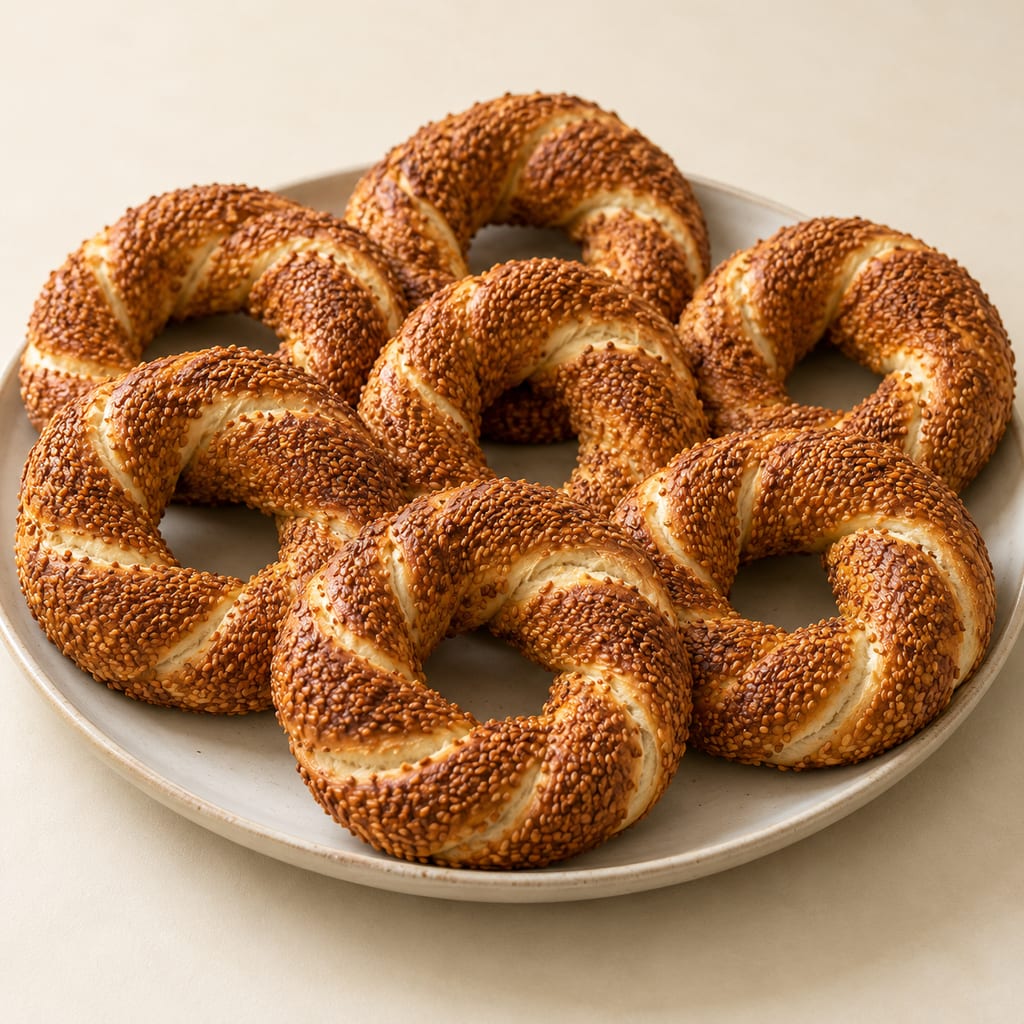
This Turkish street-food bread is shaped from twisted yeast dough into rings, dipped in a diluted molasses sauce and sesame, then baked. This home recipe makes seven rings and includes a clear sesame-allergen warning.
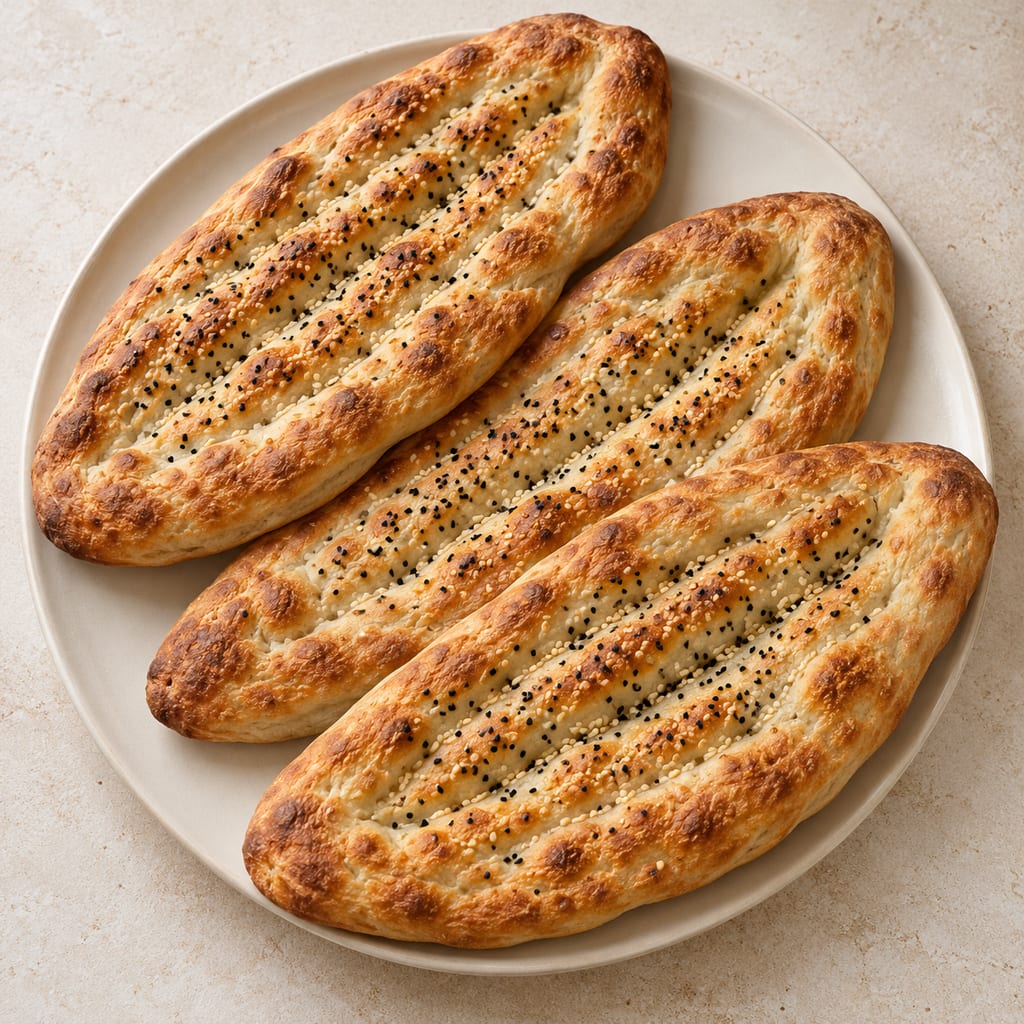
A long oval Afghan wheat bread, leavened with yeast, grooved along its length and baked until crisp outside and chewy within.
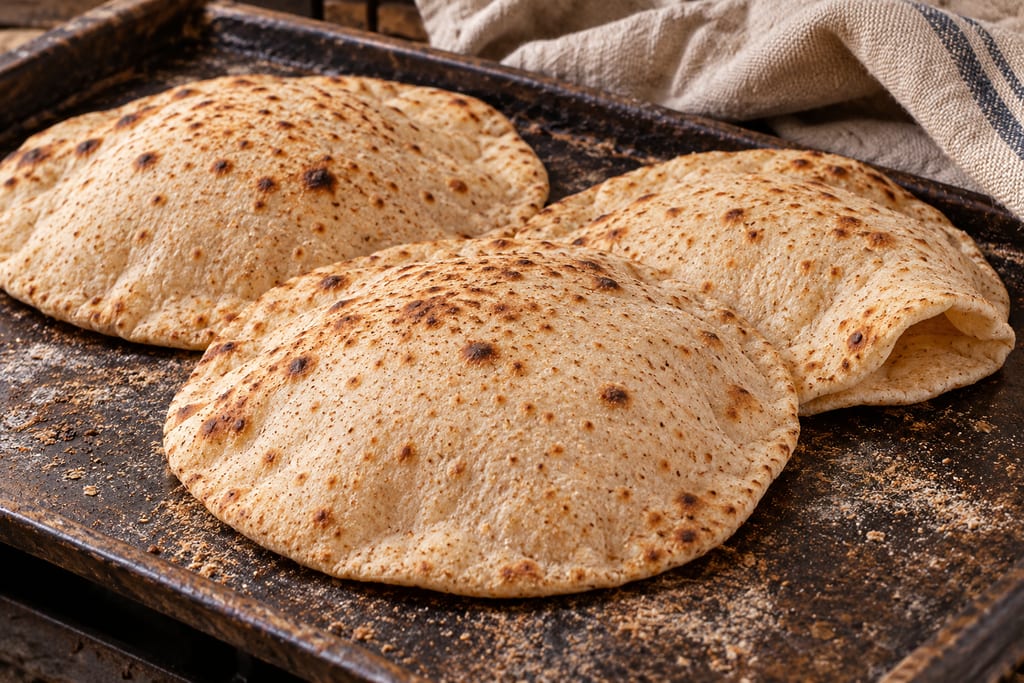
This home adaptation of Egyptian aish baladi uses a refrigerated yeast biga, whole-wheat dough, bran dusting and a very hot baking surface to make 16 pocketed rounds.
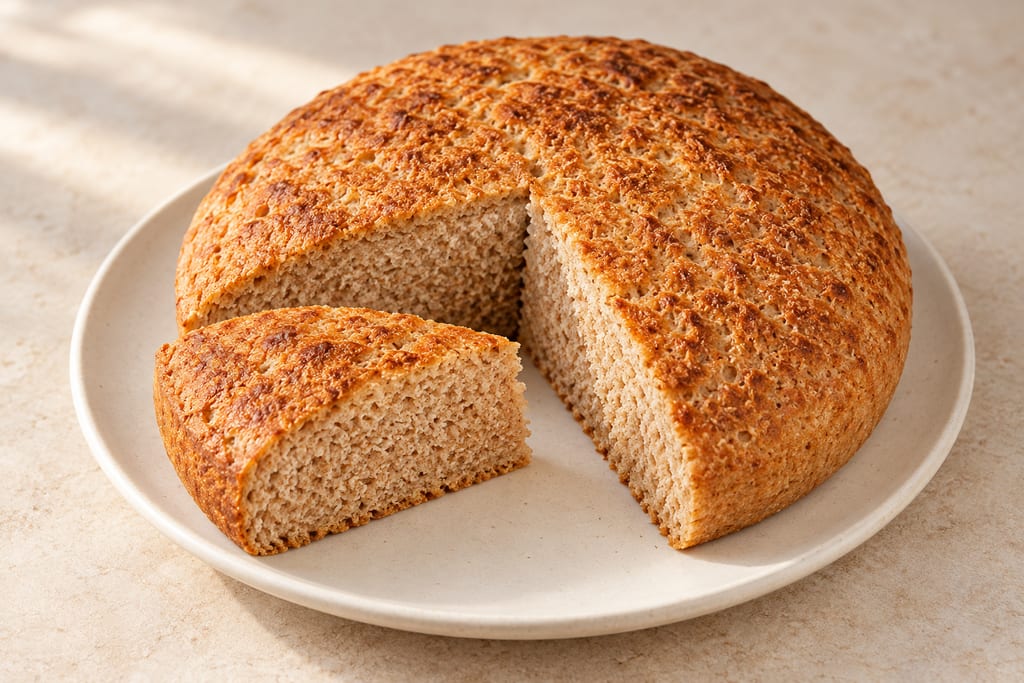
This oven-baked Amdo balep uses yeast, whole-wheat and white flour, a long covered rise and a two-sided bake in a heavy oven-safe pot.
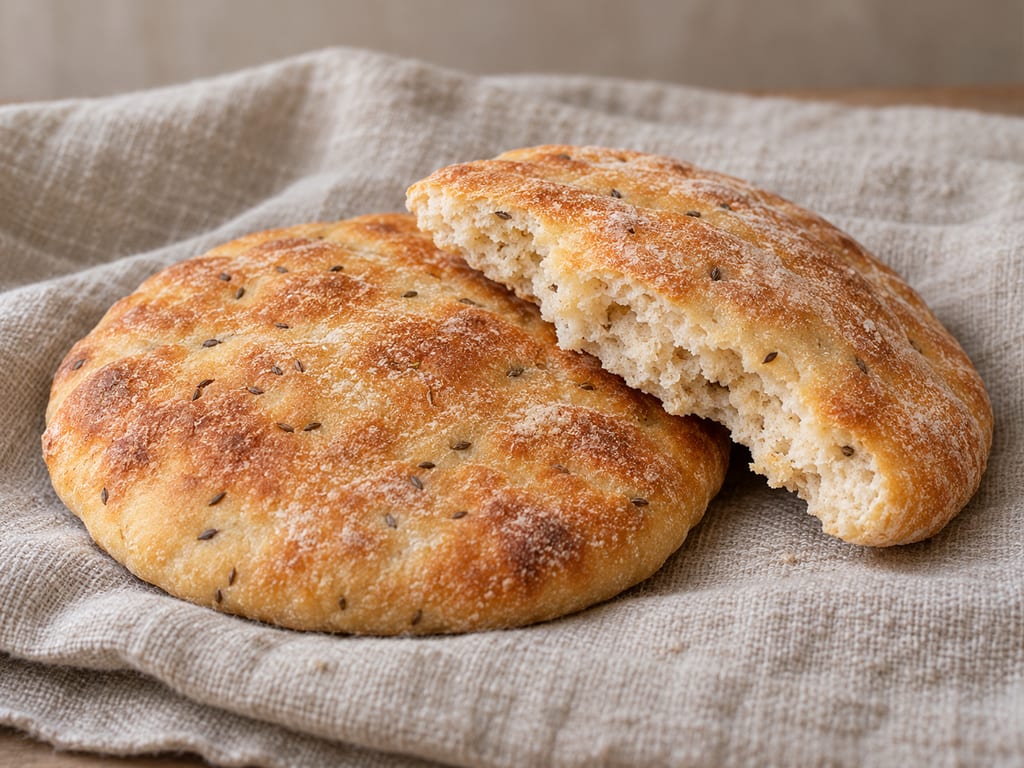
A measured, yeast-raised Ayacucho chapla home method shared by Thermomix Peru presenter Roxanna Salaverry. It makes thin, anise-scented rounds baked at 240°C; the historic qunchu-leavened form is documented separately.
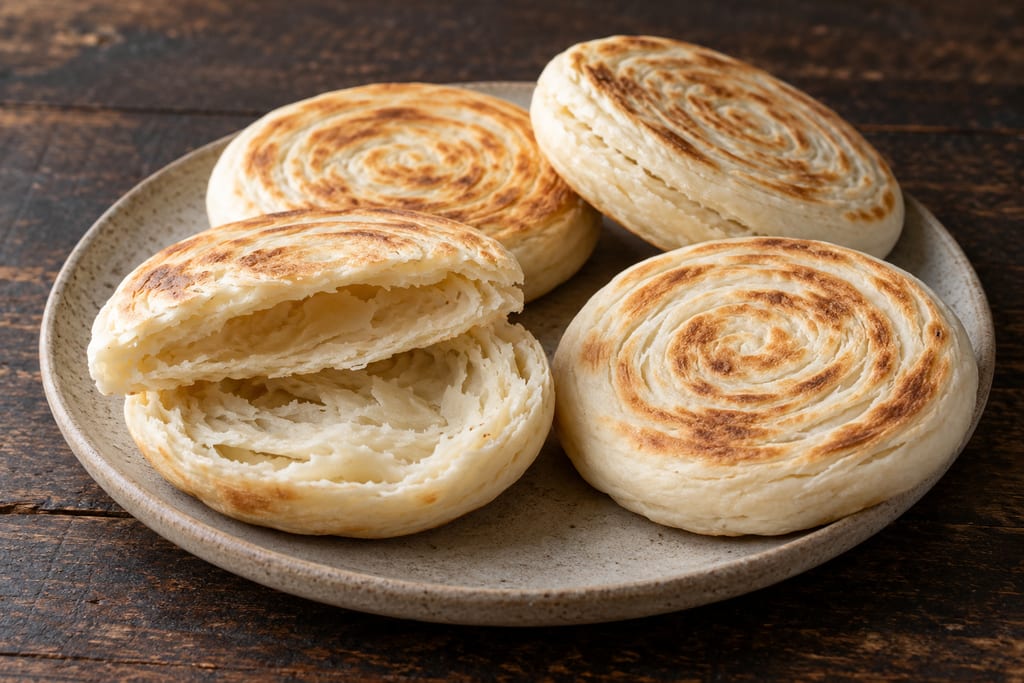
This Shaanxi-associated yeast flatbread uses a simple water dough, coiled shaping and a skillet bake. It is the bread used in roujiamo, not the filled meat dish.
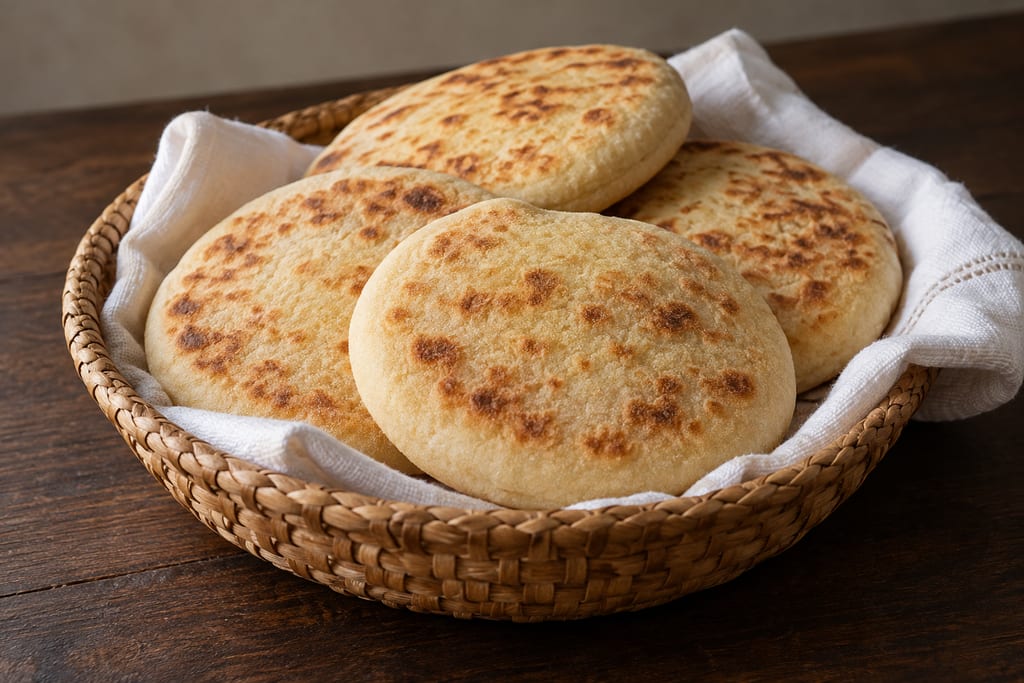
A Moroccan yeast-raised semolina pocket bread cooked on a dry pan or griddle; this measured batch makes about twenty 4-inch rounds.
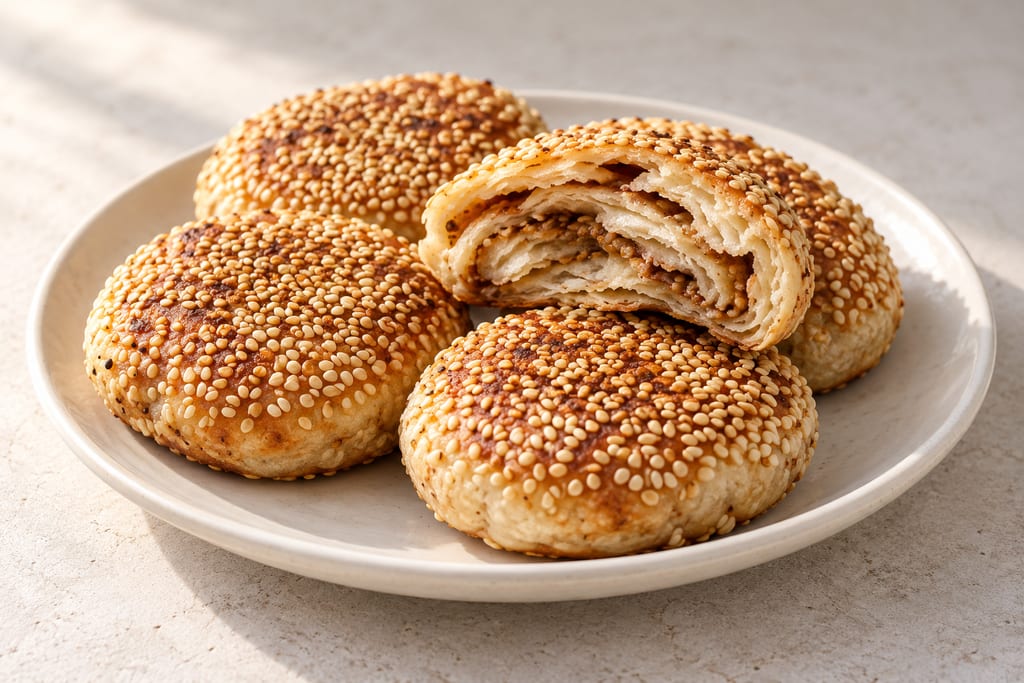
A Beijing-style yeast dough is layered with seasoned sesame paste, sealed into small buns, briefly pan-fried, seeded, and baked.
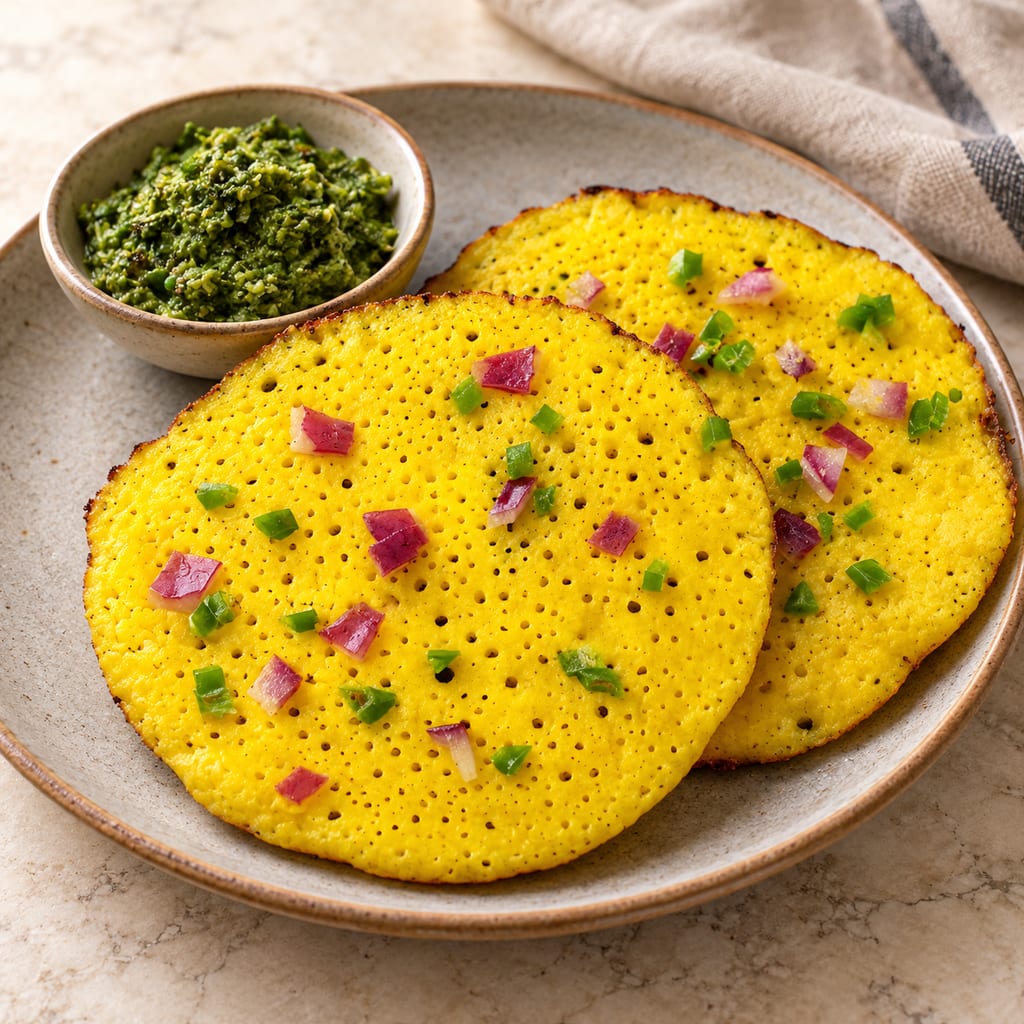
Spongy rice-and-coconut pancakes associated with Goa, cooked on one side from a batter that a multicooker's yogurt programme lets rise overnight.
No community contributions have been published for this entry yet.
Sign in to contribute. Published comments and photos are free to read.
Nigella.com; guest recipe from Persiana EasyInspiration · Method · Geography · History
Turkish Pide BreadThe author identifies this bread as ramazan pidesi traditionally made and served during Ramadan; her home method makes one large bread. Ingredients are 500 g strong white flour, an unspecified generous amount of crushed sea-salt flakes, a heaped teaspoon caster sugar, 7 g fast-action dried yeast, 300 mL lukewarm water, an unmeasured drizzle of olive oil, 2 tbsp thick Greek yogurt plus 1 tbsp for glaze, 1 egg yolk, 1 heaped tsp sesame and ½ tsp nigella. The method repeatedly kneads one minute and rests ten minutes three times, stretches dough to 28–30 cm, rests warm one hour, scores a lattice without cutting through, glazes and bakes at 220°C conventional/200°C fan (425°F/Gas 7) for 22 minutes until browned.
Cited in: A bread for Ramadan; Build the dough through short rests; Shape, pattern, glaze and bake; Flour, egg and allergen care; The bread in the Ramadan table; A round pide among other breads called pide; What the measured formula can and cannot tell us; Why the method alternates kneading and resting; Stretch a single round and mark its surface; Glaze, seeds and the hot bake; Equipment, cues and practical limits; Serve it as the source describes; Handle raw flour and egg with care
U.S. Food and Drug AdministrationSafety
Handling Flour Safely: What You Need to KnowRaw flour may carry harmful bacteria; do not taste raw flour or dough, keep it away from ready-to-eat foods and clean hands and surfaces after handling.
Cited in: Flour, egg and allergen care; Handle raw flour and egg with care
U.S. Food and Drug AdministrationSafety
Assuring the Safety of Eggs and Menu and Deli Items Made From Raw, Shell EggsRaw shell eggs may contain Salmonella; FDA advises cooking egg-containing foods thoroughly and washing hands, utensils and surfaces after raw egg contact. The source recipe bakes the egg-yolk glaze as part of the bread.
Cited in: Flour, egg and allergen care; Glaze, seeds and the hot bake; Handle raw flour and egg with care
U.S. Food and Drug AdministrationSafety
Food AllergiesWheat, milk and egg are major food allergens; sesame is also a major food allergen.
Cited in: Flour, egg and allergen care; Glaze, seeds and the hot bake; Handle raw flour and egg with care
Republic of Türkiye Ministry of Culture and Tourism, General Directorate of Living Heritage and Cultural ActivitiesHistory · Geography
Iftar and its Socio-Cultural TraditionsThe ministry describes iftar as a meal and set of practices at the end of the Ramadan fasting day, often shared with friends, neighbors and relatives. It says pide is commonly consumed at iftar tables. The multinational Iftar and its Socio-Cultural Traditions element was inscribed on UNESCO's Representative List in 2023 on behalf of Türkiye, Azerbaijan, Uzbekistan and Iran. This documents cultural setting, not a first attestation or exact origin of this specific loaf.
Cited in: The bread in the Ramadan table; Serve it as the source describes
Erasmus+ project publicationMethod
Best Bread Production HandbookThe handbook's Turkish pide process diagram places mixing, pre-proof, dividing/rounding, intermediate proof, disk shaping, further shaping and baking in sequence; it lists wheat flour, sugar, salt, yeast, water, sesame and yogurt among ingredients. It is a production-flow reference, not the source for this home's quantities or times.
Cited in: A round pide among other breads called pide; What the measured formula can and cannot tell us; Why the method alternates kneading and resting; Equipment, cues and practical limits
King Arthur BakingMethod
Bread 101General bread guidance: wheat flour's gluten-forming proteins help give bread structure; yeast fermentation generates carbon dioxide that raises dough; water hydrates flour and dissolves ingredients; salt strengthens dough and slows yeast; sugar affects flavor, tenderness and crust color; dairy can contribute flavor, tenderness and browning; fats can tenderize bread. These are general baking explanations, not measurements or guarantees for this particular formula.
Cited in: What the measured formula can and cannot tell us; Why the method alternates kneading and resting