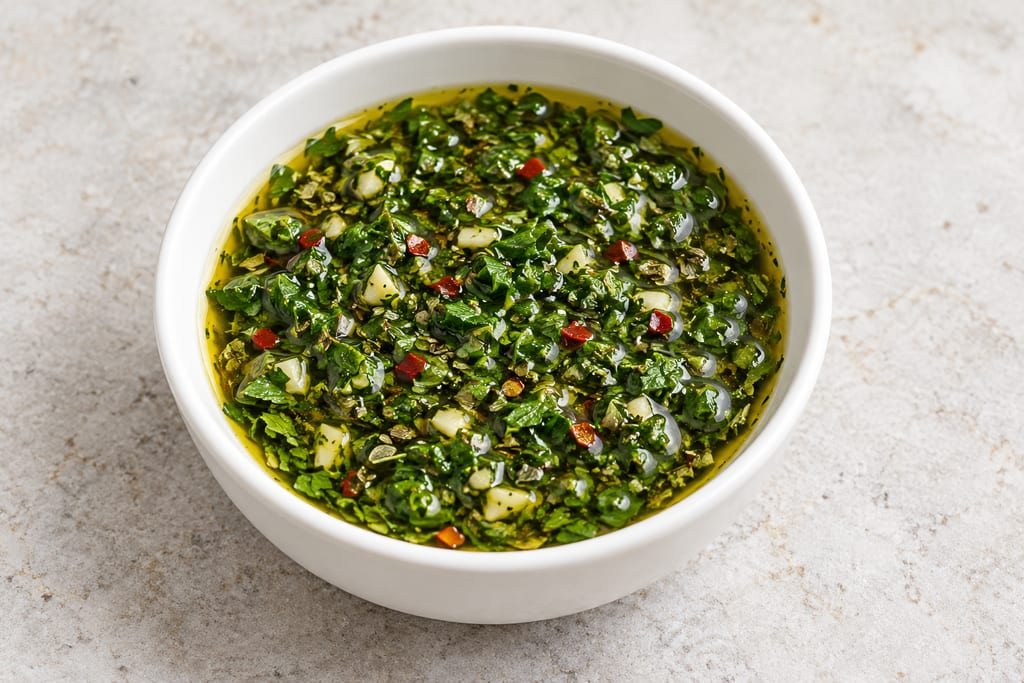
Chimichurri
Chimichurri is an uncooked sauce of chopped parsley, garlic, oregano, oil and vinegar from Argentina. It is spooned over grilled meat and has spread across Latin America.
 FermenteaWhere food goes to change
Salsa criolla · Argentine criolla sauce
Argentine salsa criolla is a raw relish of finely diced peppers, onion and tomato dressed with olive oil, vinegar and lemon, served cold with grilled meat. The name covers different sauces across Latin America.
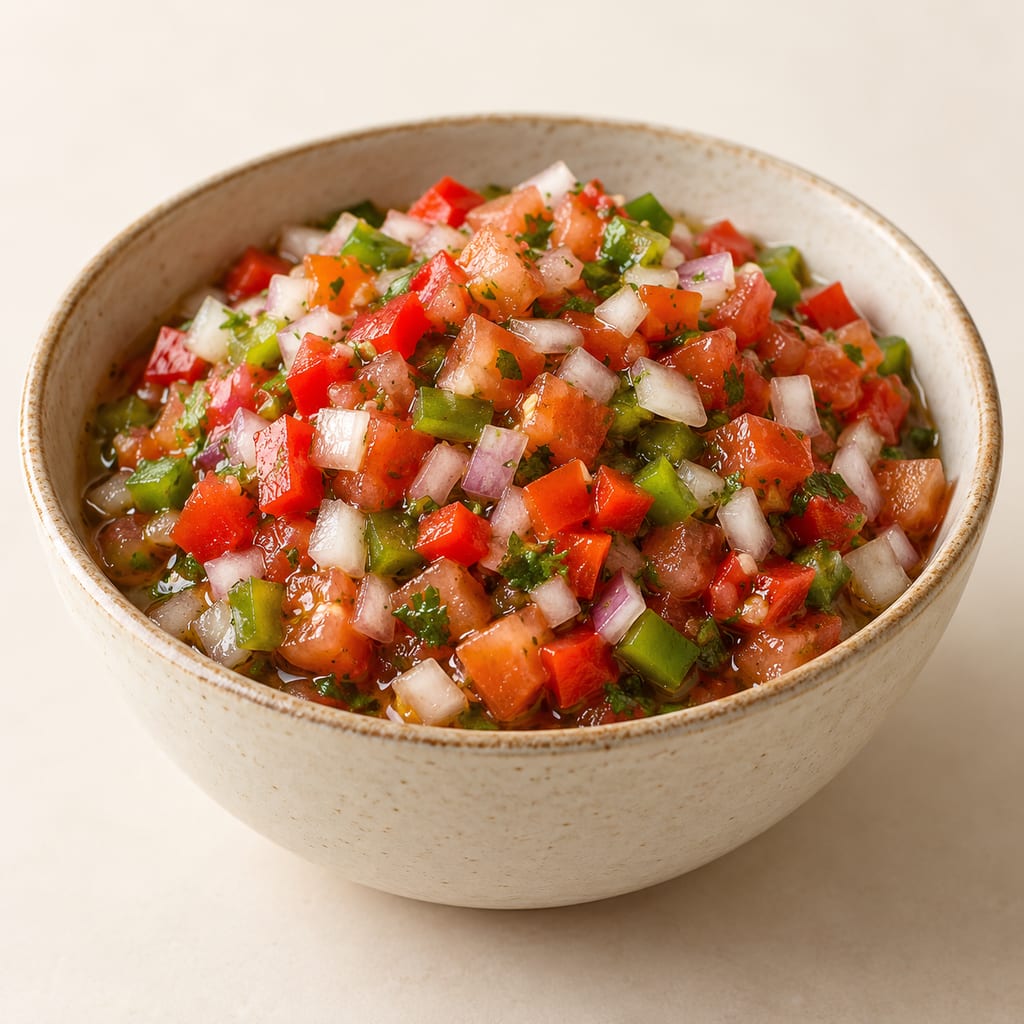
Salsa criolla is a raw relish of finely chopped vegetables, dressed with oil and acid and served cold. In Argentina it is the sauce that goes with the grill: a bowl of diced pepper, onion and tomato, loose with olive oil and sharp with vinegar and lemon, set beside the meat rather than cooked into it. Its texture is the point. Each piece of vegetable keeps its shape, so the sauce reads as a salad, not a purée.
The name is shared across several countries and does not mean one sauce. Wikipedia describes salsa criolla as a Latin American relish usually made from onion, tomato, garlic, vinegar, chilli and bell pepper, olive oil and herbs, and places it in Peru, Argentina, Uruguay, Cuba, Puerto Rico and Nicaragua. The Peruvian base is onion, red bell pepper, tomato, lime or vinegar and oil. The Argentine version is a separate preparation under the same name, and a reader should not treat a Peruvian onion relish or a cooked creole sauce as the same thing.
A typical Argentine formula, as one recipe describes it, uses half a red pepper and half a green pepper, one medium onion, half a tomato, the juice of half a lemon, about 100 millilitres of mild olive oil, two tablespoons of red wine vinegar, a teaspoon of sea salt and three-quarters of a teaspoon of black pepper. Cumin and cilantro appear in other versions, and the recipe leaves them out.
The method is simple and is built around resting. The peppers, tomato and onion are cut small and combined. Lemon juice goes in first and the mixture rests for about ten minutes, which softens the raw onion and lets it take on the acid. The oil follows, then the vinegar, salt and pepper, and a final rest of five to ten minutes before tasting. The cook adjusts the oil or acid at the end, because the balance is a matter of taste and of how fresh the vegetables are.
Onion gives the sharp, sweet bite that softens when it rests in acid, which is why the recipe rests the mix before the oil. Peppers add colour and a green or sweet edge, and the choice between red and green changes both. Tomato supplies juice and body, and its seeds are removed so the sauce does not run.
Oil carries the flavour of the other ingredients and gives the sauce its loose, glossy texture. The recipe asks for a mild oil, so the taste of the vegetables is not overwhelmed. Vinegar and lemon give the acidity that sharpens the mix and that also gives it some preservative character, though the sources do not measure it and do not treat it as a safety control.
Salt and black pepper are the last seasoning, added after the vegetables have had time to release their juice, so the salt can be checked against the finished texture.
Recipe blogs describe differences from one place to another. One says Buenos Aires versions can have a generous amount of fresh cilantro. Another says Salta versions use local chillies and are served with traditional empanadas or grilled chorizo. A third says that many Argentine families have their own version, some heavier on chilli and others leaning to vinegar or fresh herbs. These are descriptive claims from recipe sites and not from a survey, so they are recorded as variation rather than as a map of recipes.
Peruvian and Argentine versions differ in emphasis. Peru's version leans on lime and fresh chilli, while the Argentine version is described as more vinegar-forward. The sources compare the two only in general terms, and the difference is a matter of emphasis rather than a fixed rule.
Salsa criolla is served cool or cold, after the meat comes off the grill. The recipe lists vacío, short ribs, choripán, grilled chicken, fish, grilled vegetables, milanesa napolitana and lomito sandwiches as dishes it goes with. It is spooned over or beside the meat, not used as a marinade or a basting sauce.
Its role at the table is to cut through fat and to add freshness. A grill meal is rich, and a bright, acidic relish with raw onion and pepper gives a contrast in texture and taste. That is why the sauce is treated as a finishing condiment rather than as a cooking ingredient.
Refrigerated storage is the sensible rule. The recipe source says the sauce can technically keep for up to 30 days in the refrigerator, but it recommends an airtight container and eating it within a couple of days. The vegetables soften and give off moisture over time, so the texture changes, and the sauce should not be left out at room temperature.
The sources do not give a yield for the formula, do not test shelf life, and do not measure pH. The origin of the Argentine version is not documented, and the origin stories that circulate, including a legend about Spanish and Italian immigrants, are not supported by a dated source. The page records the formula and its variations and leaves the origin open.
Salsa criolla is a Latin American relish found in Peru, Argentina, Uruguay and other countries. The Argentine version is a regional and family preparation; its origin is not documented in the sources used here.
Scaling: source batch only
A raw, moist vegetable relish softens and releases moisture over time, and the sources advise cold storage. The sources do not test its shelf life.
Hazard sourceKeep the sauce refrigerated in an airtight container and serve it cool, not left out at room temperature
Control sourceThe source says the sauce can technically keep refrigerated for up to 30 days but recommends eating it within a couple of days.
Smell and taste are not reliable checks of a stored batch.
Found across Argentina and served with asado; the sources describe family and regional variation without a single documented origin.
A recipe blog says Salta versions use local chillies and are served with empanadas or grilled chorizo; it is a blog claim, not a scholarly source.
Chimichurri is an uncooked sauce of chopped parsley, garlic, oregano, oil and vinegar from Argentina. It is spooned over grilled meat and has spread across Latin America.
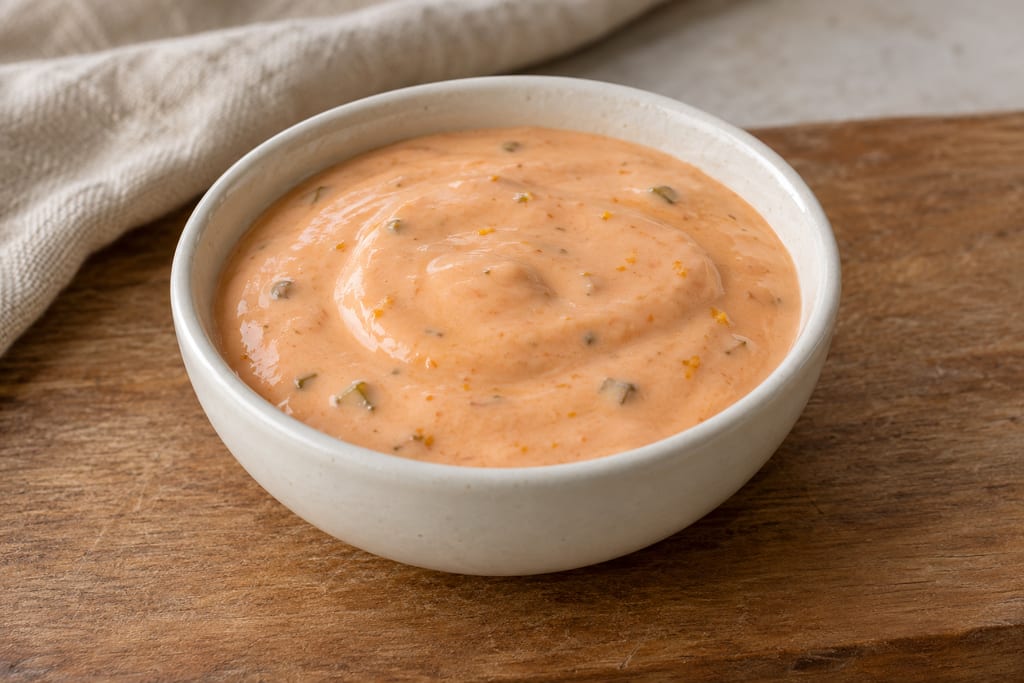
A cold mayonnaise-and-tomato condiment family with distinct documented forms in Argentina, Peru and Puerto Rico; this draft records a Peruvian caper-and-orange version and keeps its regional relatives separate.
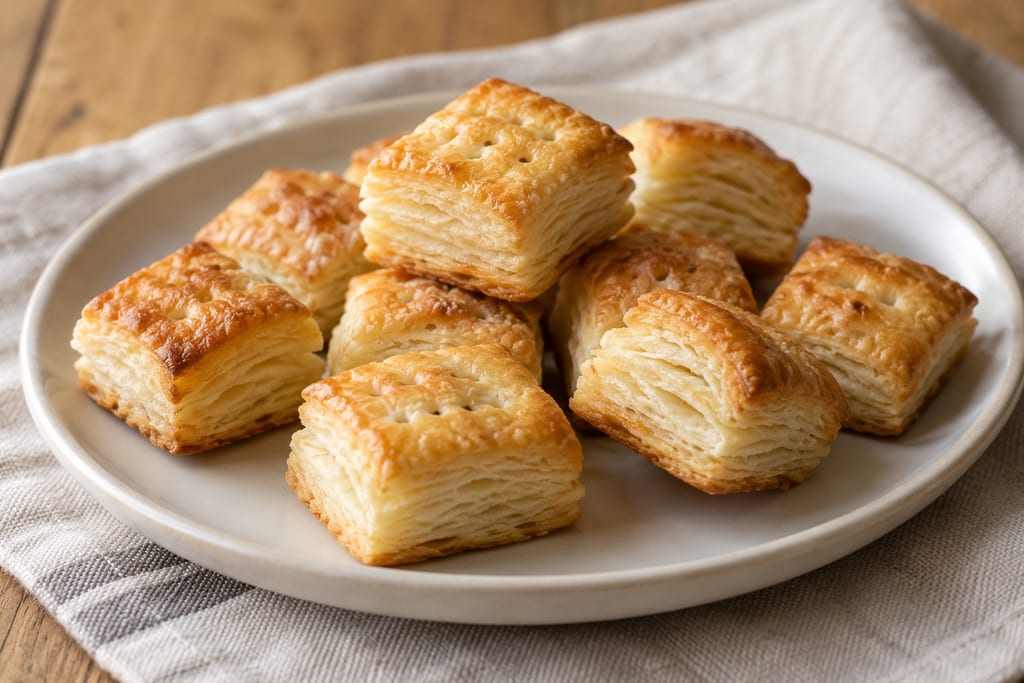
Small Argentine laminated bread bites made with wheat dough, yeast and beef fat or pork lard; this version follows a 40-piece home recipe.
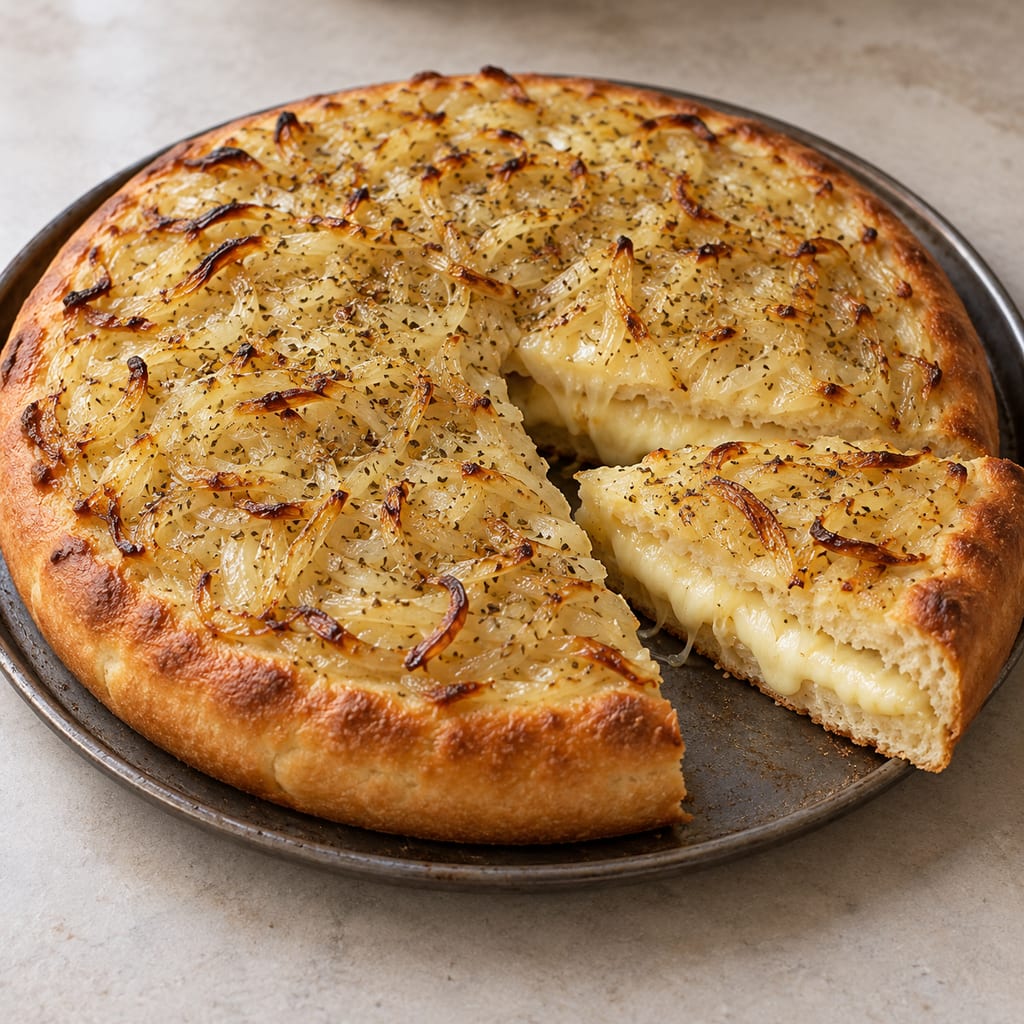
An Argentine-style onion-topped yeast bread with mozzarella and Emmental sealed inside.
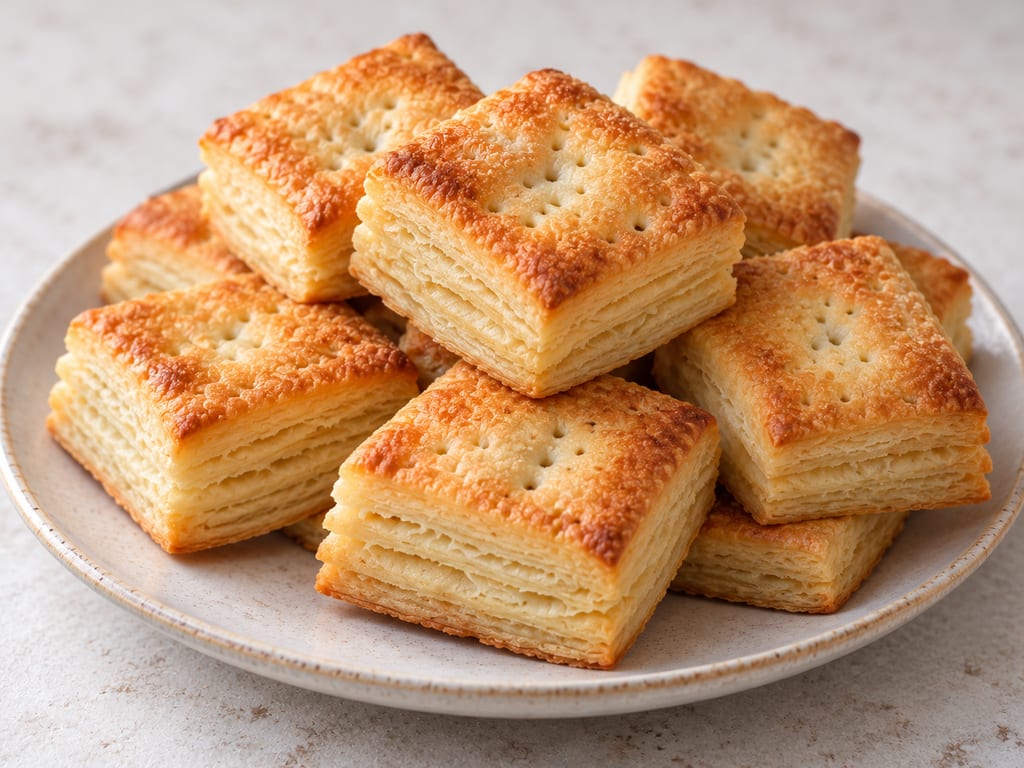
Libritos de grasa are small Argentine laminated yeast rolls made with wheat flour and beef fat, folded into book-like pieces and served with mate.
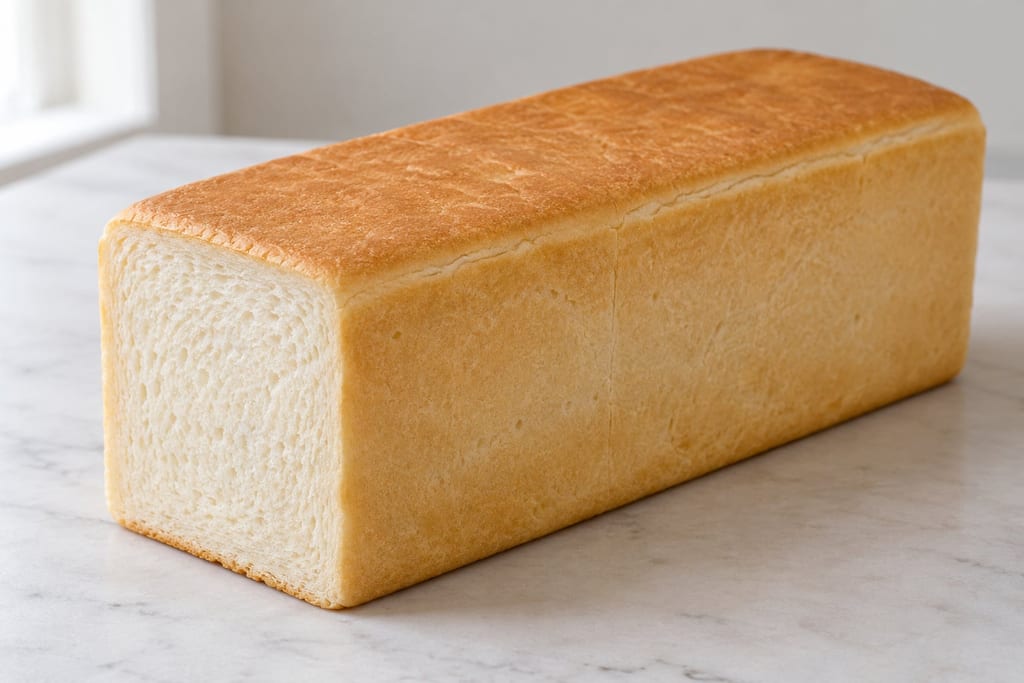
A soft, fine-crumbed pan de miga for thin sandwich slices, made with wheat flour, milk powder, butter and dry yeast in a lidded loaf pan.
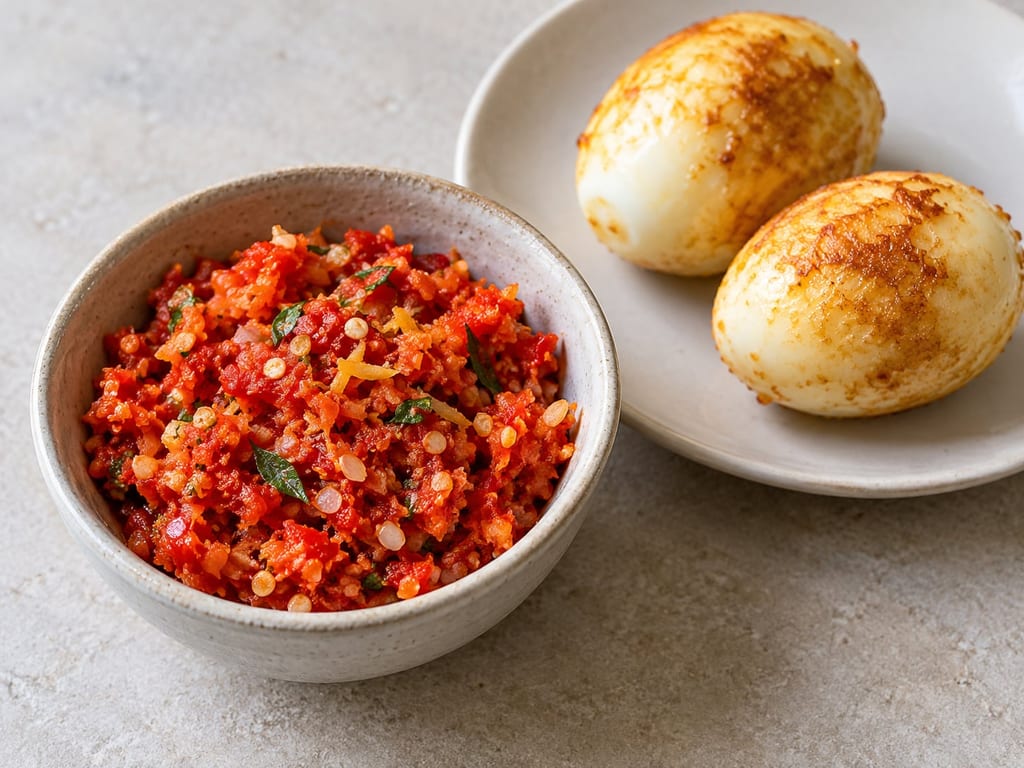
Ai-manas is described as a very hot chilli paste served with Timorese meals. One published version blends fresh chillies, shallots, garlic, Thai basil, ginger, lemon and salt, and serves it with eggs. Sources do not establish a standard formula, precise birthplace or earliest date.
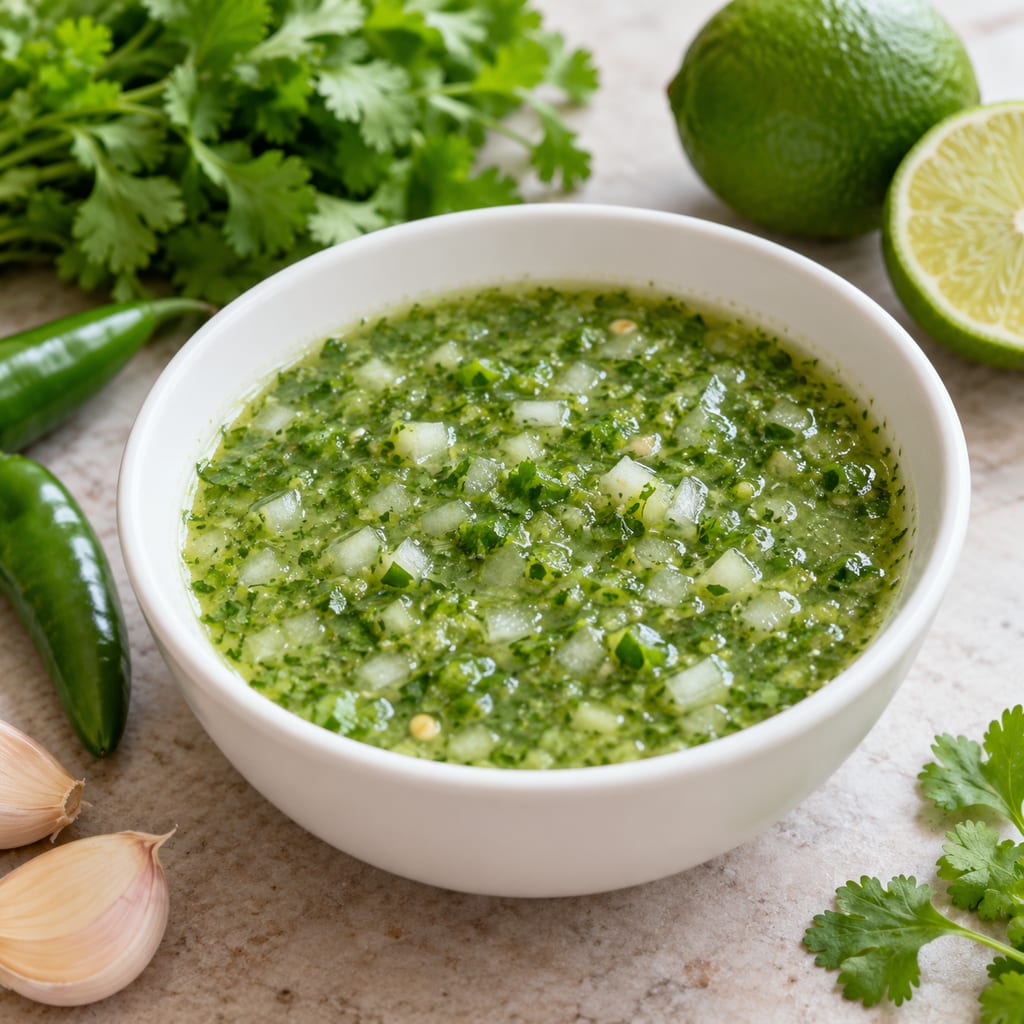
A fresh, uncooked Ecuadorian table sauce of hot pepper, cilantro, garlic and lime, served with most everyday dishes.
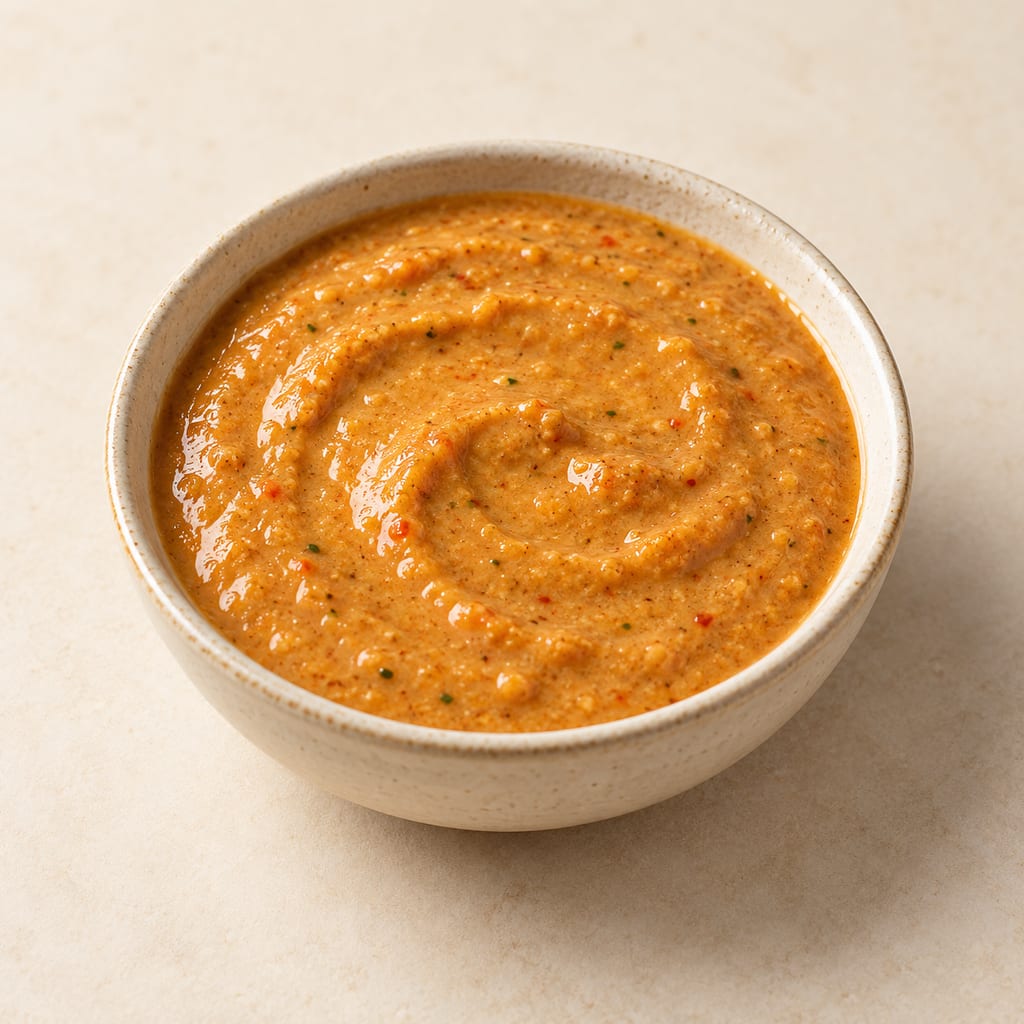
A spicy peanut hot sauce from the Popayán and Cauca region of Colombia, traditionally served with pipián empanadas and tamales.
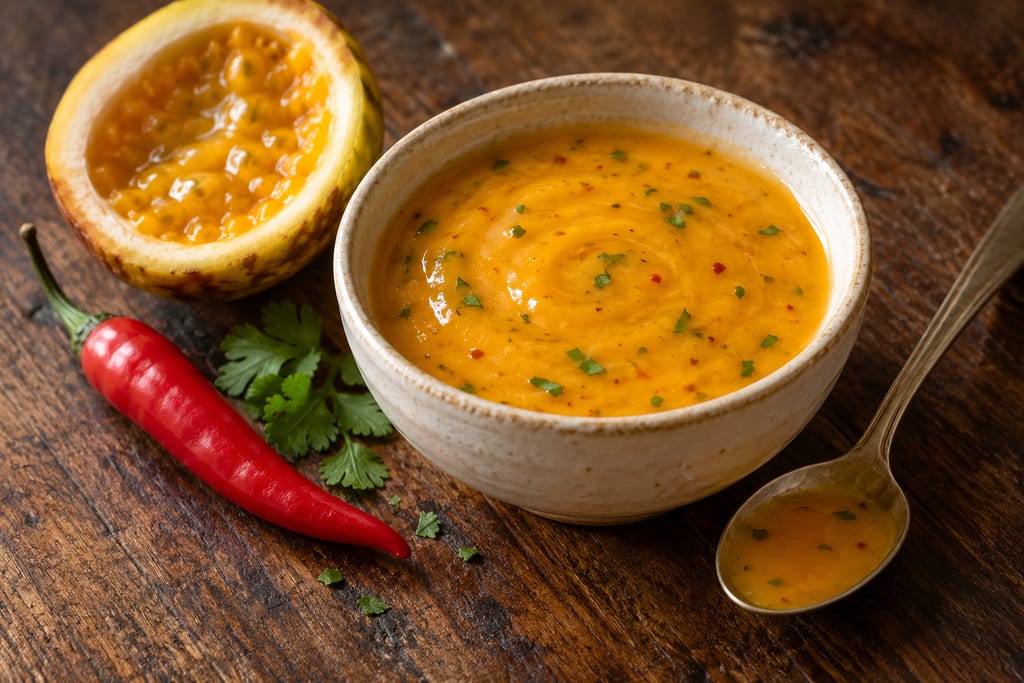
A contemporary Ecuadorian hot sauce that pairs passion fruit juice with boiled chile peppers, oil and lime.
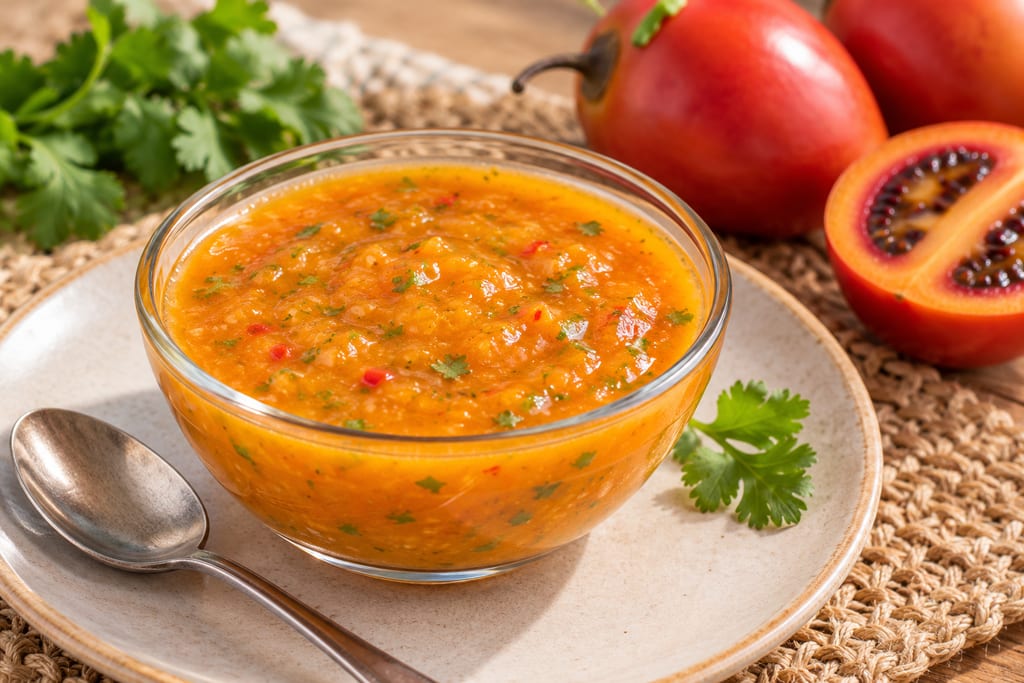
An Ecuadorian hot sauce built on tamarillo, a tart fruit that gives a sharper, fleshier base than ordinary tomato salsa.
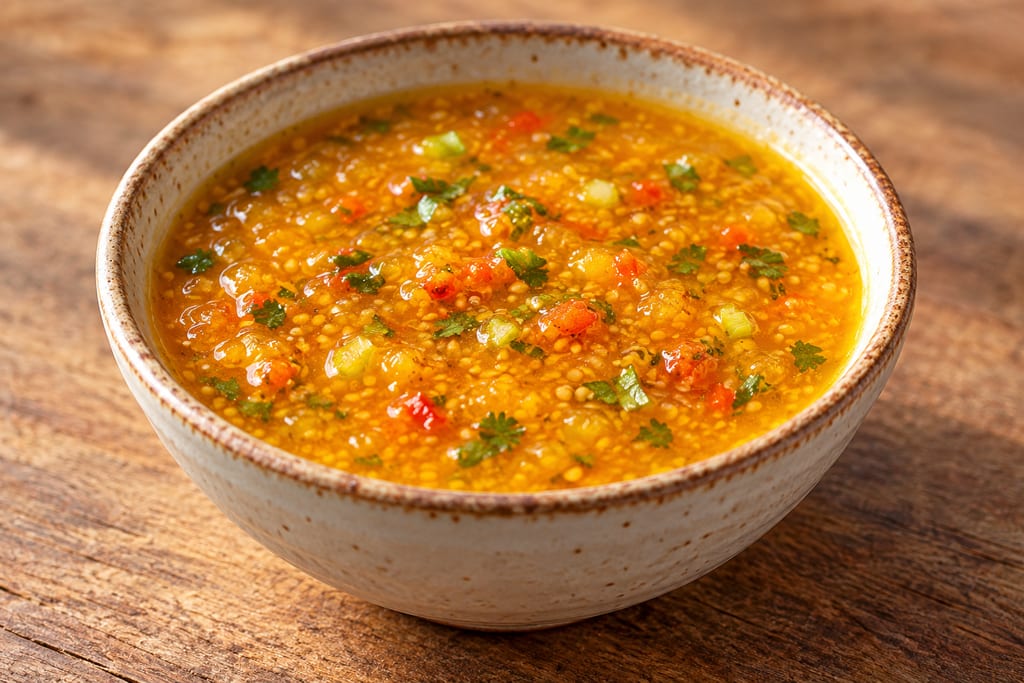
A sweet, tart and spicy Colombian sauce of uchuva, the yellow physalis fruit, with hot pepper, scallion, cilantro and lime.
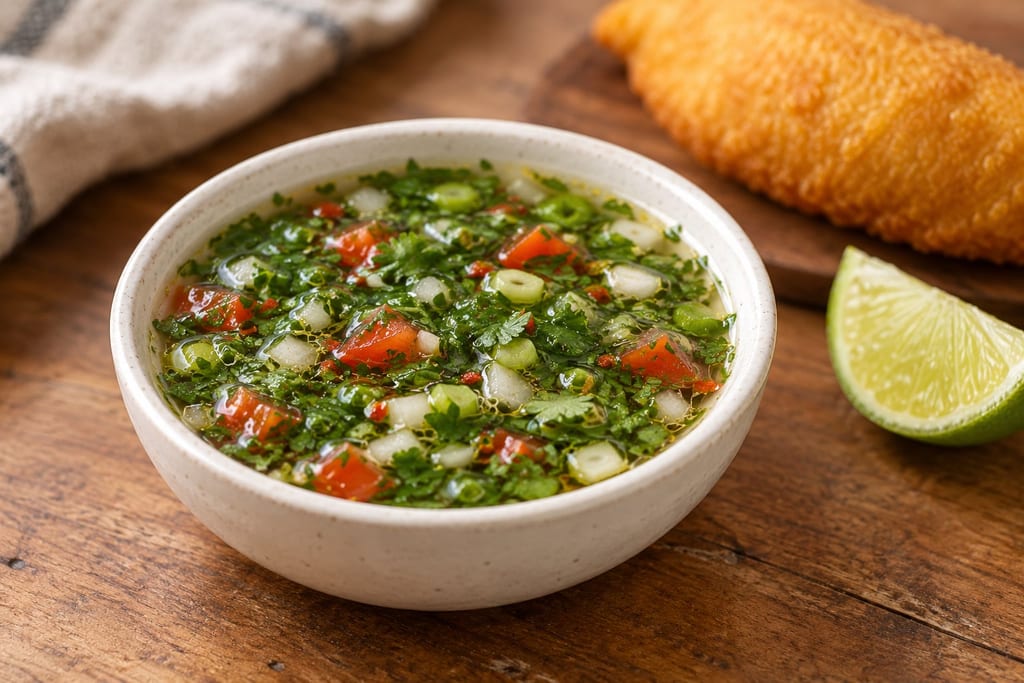
A fresh Colombian table condiment of chopped herbs, scallion and tomato in a vinegar and chile base, served beside fried and filled dishes.
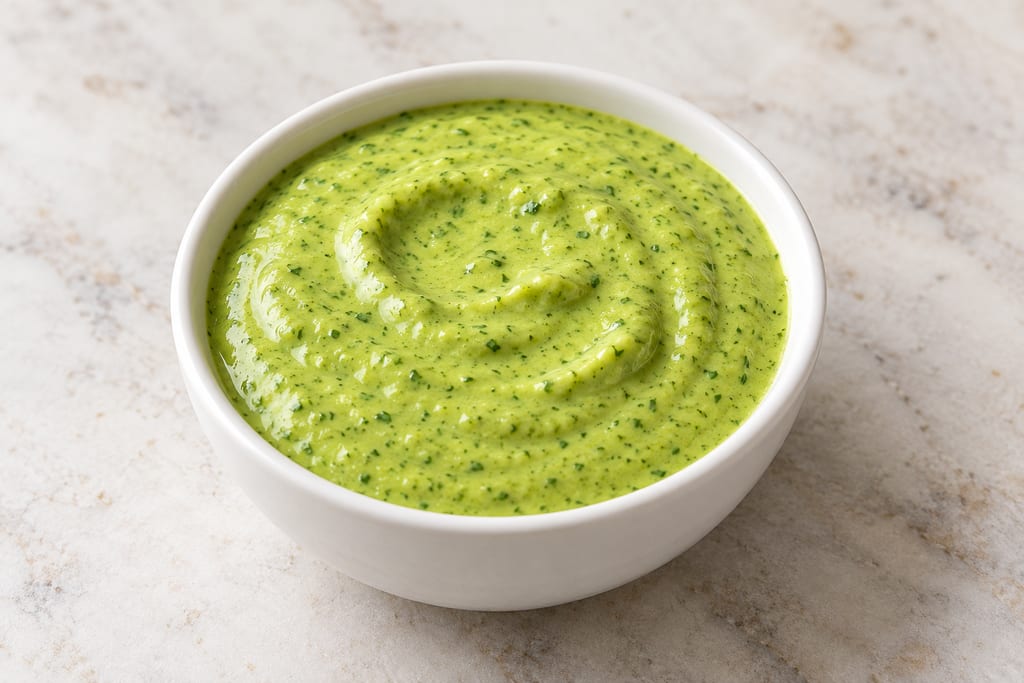
Ají verde is a Peruvian green sauce of coriander, chilli, onion and garlic in a mayonnaise or cheese base. It is best known through Peruvian restaurant cooking abroad.
No community contributions have been published for this entry yet.
Sign in to contribute. Published comments and photos are free to read.
Argentine AsadoMethod · History
Salsa Criolla (Argentine Fresh Steak Sauce)Ingredients with quantities
Resting times and steps
Refrigerated storage advice and a 30-day technical limit
Serving with grilled meats, chorizo and sandwiches
WikipediaBackground
Salsa criollaPeruvian base of onion, red bell pepper, tomato, lime or vinegar and oil
Found in Argentina, Uruguay, Cuba, Puerto Rico and Nicaragua
The article gives no Argentine preparation
Argentine AsadoHistory
How to prepare a tasty salsa criolla recipe for your asadoRegional claims: Buenos Aires cilantro, Salta local chillies