Salt: the mineral, the work and the foods it makes
Salt seasons a meal, shapes fermentation and preserves food. Its history follows the people who mine, harvest, trade and transform it, and the choices hidden inside an ordinary packet.
 FermenteaWhere food goes to change
Modern method
smoked sea salt
Flaky or coarse sea salt takes on hickory smoke in a pellet grill. A shallow tray lets the smoke reach the crystals before they cool for airtight storage.
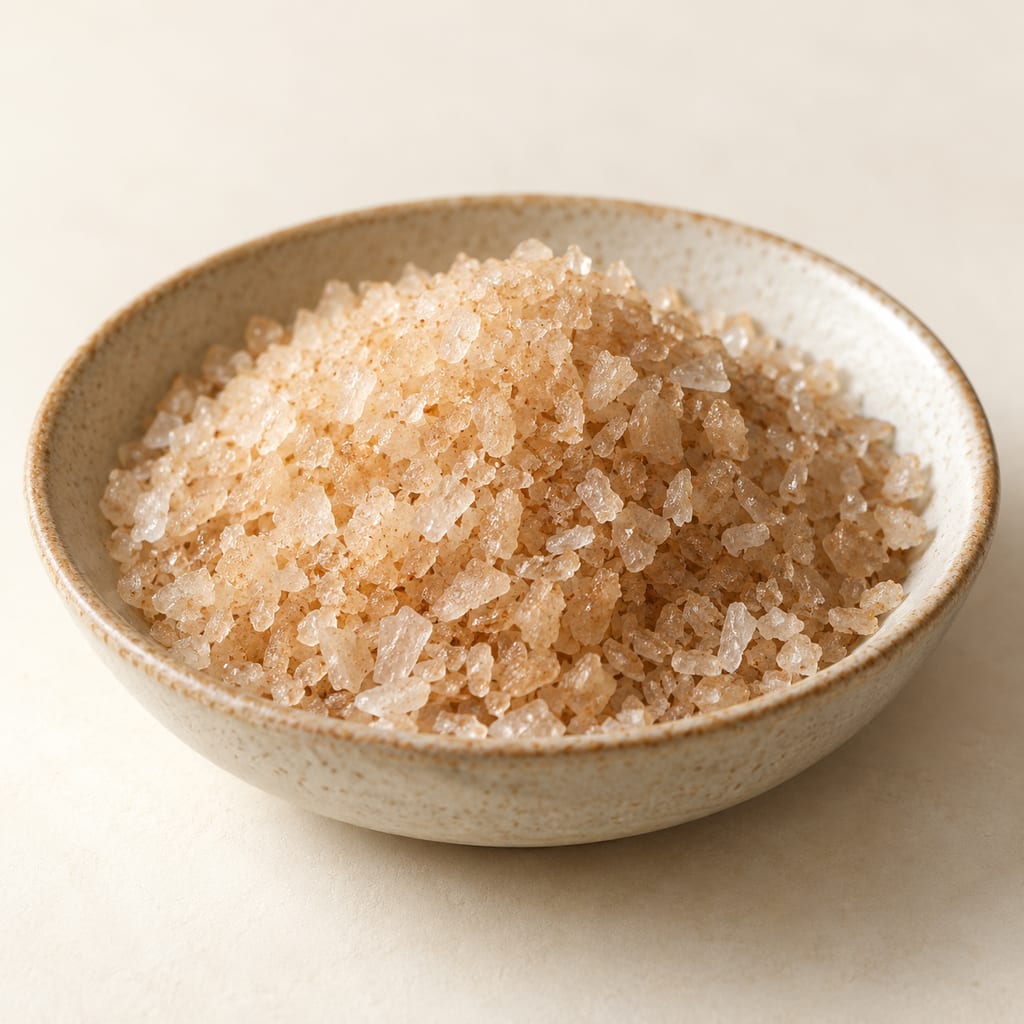
The maker recommends this smoked salt with corn, green beans, steak and creamy pasta dishes. It directs cooks to cool the salt completely and store it airtight, but gives no shelf life. **Mechanism and evidence limits:** Smoke deposits flavour compounds on exposed salt crystals; the broad, shallow bed increases exposed surface. The manufacturer gives a temperature, time, fuel and cooling/storage instruction, but does not validate preservation or set a storage duration. Follow grill instructions. Do not infer safety from colour, smell or taste. **Sources:** [Traeger, “Smoked Salt”](https://www.traeger.com/recipes/smoked-salt) (batch, hickory pellets, 225°F temperature, grill setup, time, yield and airtight-storage direction).
2 cups flaky or coarse sea salt; hickory wood pellets; pellet grill with lid and a rimmed baking sheet (upper grate preferred). **Method:** With the lid closed, preheat the pellet grill to 225°F (107°C), about 15 minutes. Spread salt on a rimmed baking sheet and put it on the grill, preferably on an upper grate. Smoke at 225°F for at least 2 hours, stirring occasionally. The maker says longer smoking gives stronger smoke flavour and a darker colour. Cool completely, then store airtight. This is the maker’s distinct warm-smoking method; do not combine it with cold-smoke or charcoal-grill schedules. The page gives no shelf life. **Difficulty (1–5):** temperature 3; monitoring 3; equipment 4; timing 3; scaling 3; **overall 4**. The rating reflects grill management and dedicated equipment, not food-safety risk. **Food and use:** The maker recommends this smoked salt with corn, green beans, steak and creamy pasta dishes. It directs cooks to cool the salt completely and store it airtight, but gives no shelf life. **Mechanism and evidence limits:** Smoke deposits flavour compounds on exposed salt crystals; the broad, shallow bed increases exposed surface. The manufacturer gives a temperature, time, fuel and cooling/storage instruction, but does not validate preservation or set a storage duration. Follow grill instructions. Do not infer safety from colour, smell or taste. **Sources:** [Traeger, “Smoked Salt”](https://www.traeger.com/recipes/smoked-salt) (batch, hickory pellets, 225°F temperature, grill setup, time, yield and airtight-storage direction).
Smoke deposits flavour compounds on exposed salt crystals; the broad, shallow bed increases exposed surface. The manufacturer gives a temperature, time, fuel and cooling/storage instruction, but does not validate preservation or set a storage duration. Follow grill instructions. Do not infer safety from colour, smell or taste. **Sources:** [Traeger, “Smoked Salt”](https://www.traeger.com/recipes/smoked-salt) (batch, hickory pellets, 225°F temperature, grill setup, time, yield and airtight-storage direction).
Traeger documents a contemporary hickory pellet-grill preparation and uses with corn, green beans, steak and creamy pasta. It does not establish the origins of smoked salt.
Yield 20 servings · Scaling: source batch only
The inspected method does not establish a traditional place of origin; a publisher address is not an origin.
Salt seasons a meal, shapes fermentation and preserves food. Its history follows the people who mine, harvest, trade and transform it, and the choices hidden inside an ordinary packet.
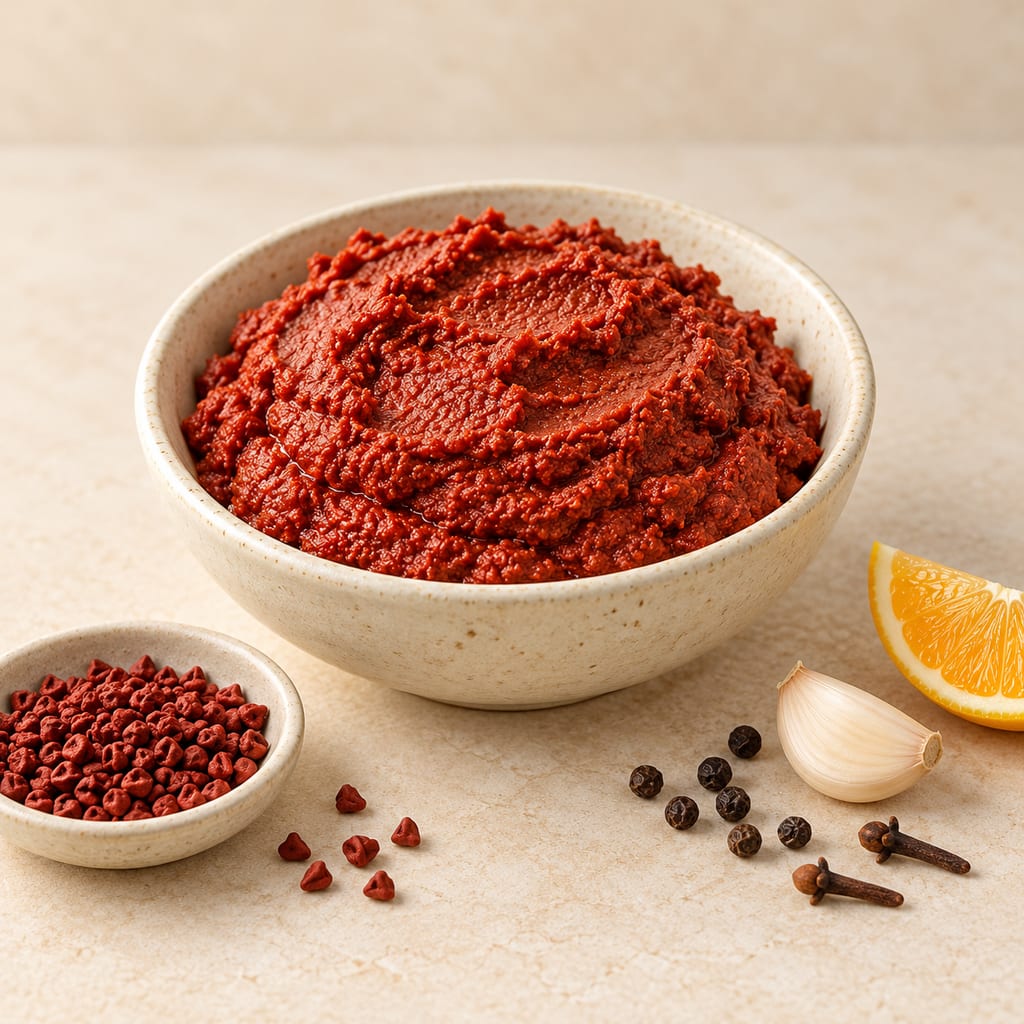
A Yucatecan recado rojo is a brick-red seasoning paste built on annatto seed, garlic and sour orange. This measured home version shows one route into a much wider family of market and household recados.
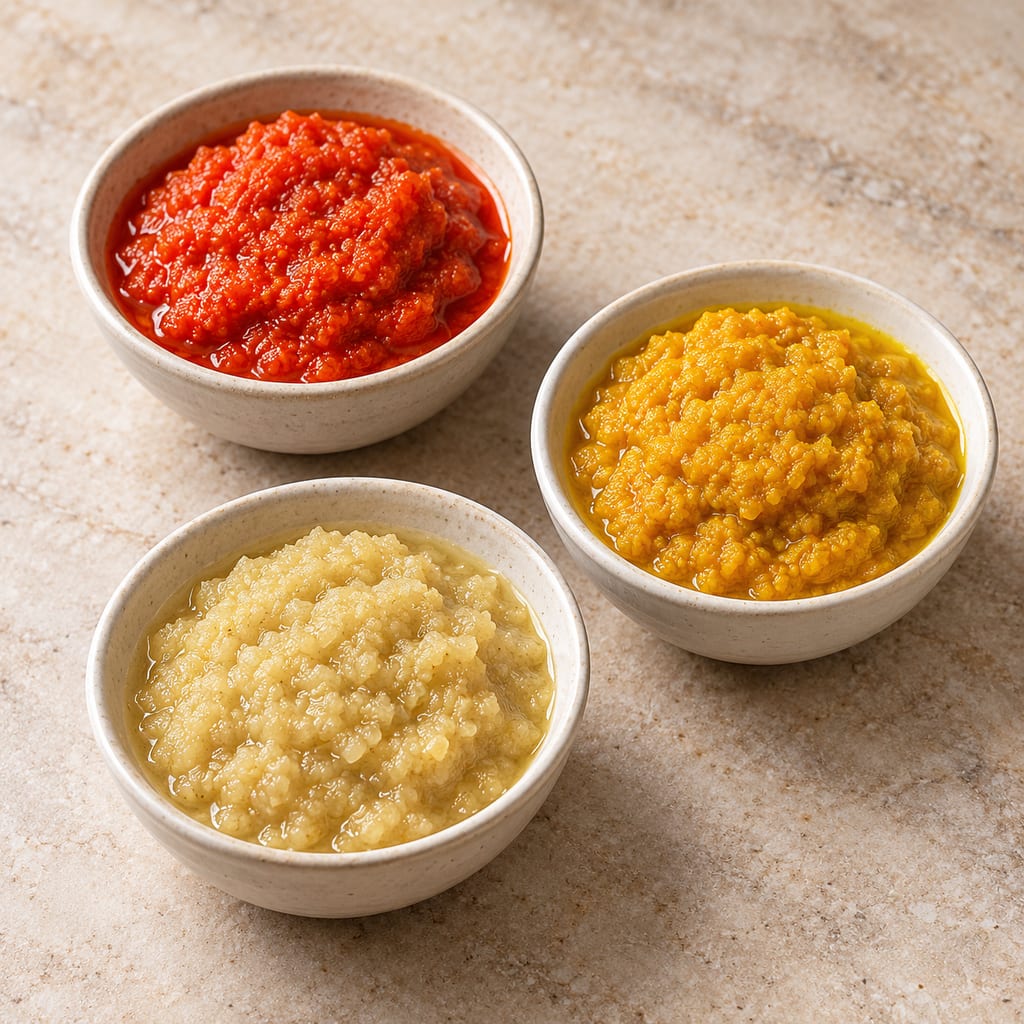
Bumbu dasar are the ground spice bases of Indonesian cooking: a white paste of shallot, garlic and salt, with chile added for red and turmeric for yellow, cooked into dishes.
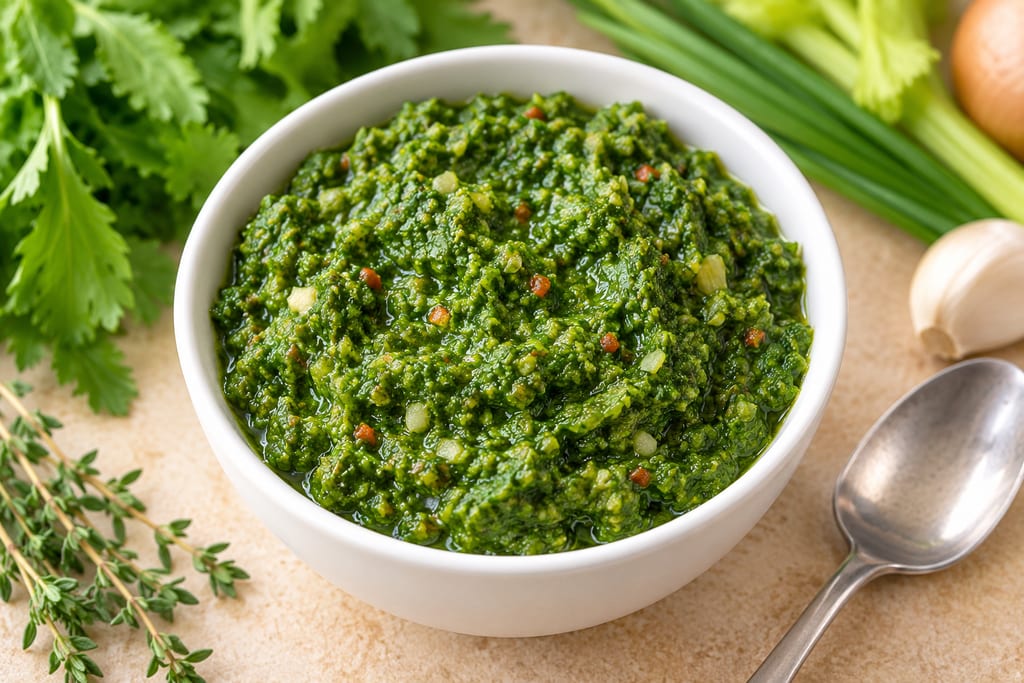
A fresh herb and aromatic paste of chadon beni (culantro), thyme, chives, celery, onion, garlic and peppers, blended with vinegar and water and used as the base for Trinidadian cooking.
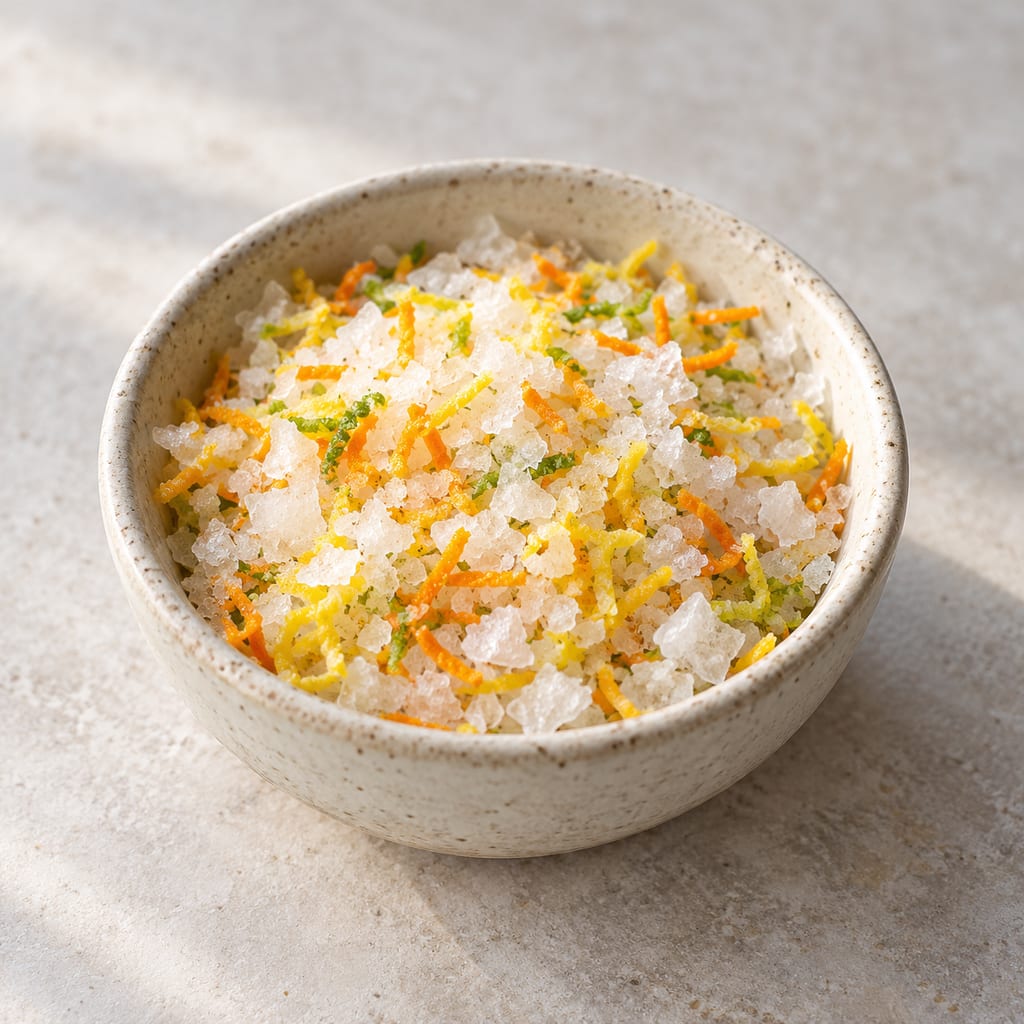
Citrus zest is rubbed into coarse or flake salt and dried on a tray. This peel-based seasoning preserves the chosen citrus aroma without adding juice.
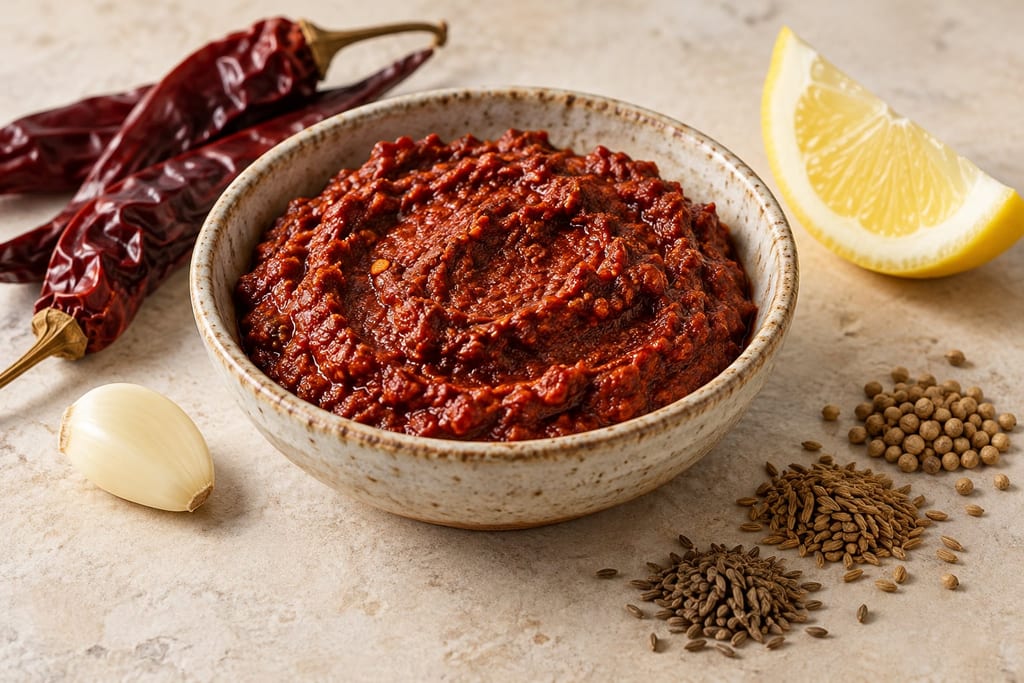
A fresh chilli paste made from rehydrated dried red peppers, garlic, olive oil, lemon and warm spices; this small-batch formula adapts the harissa family rather than reproducing a tested Tunisian method.
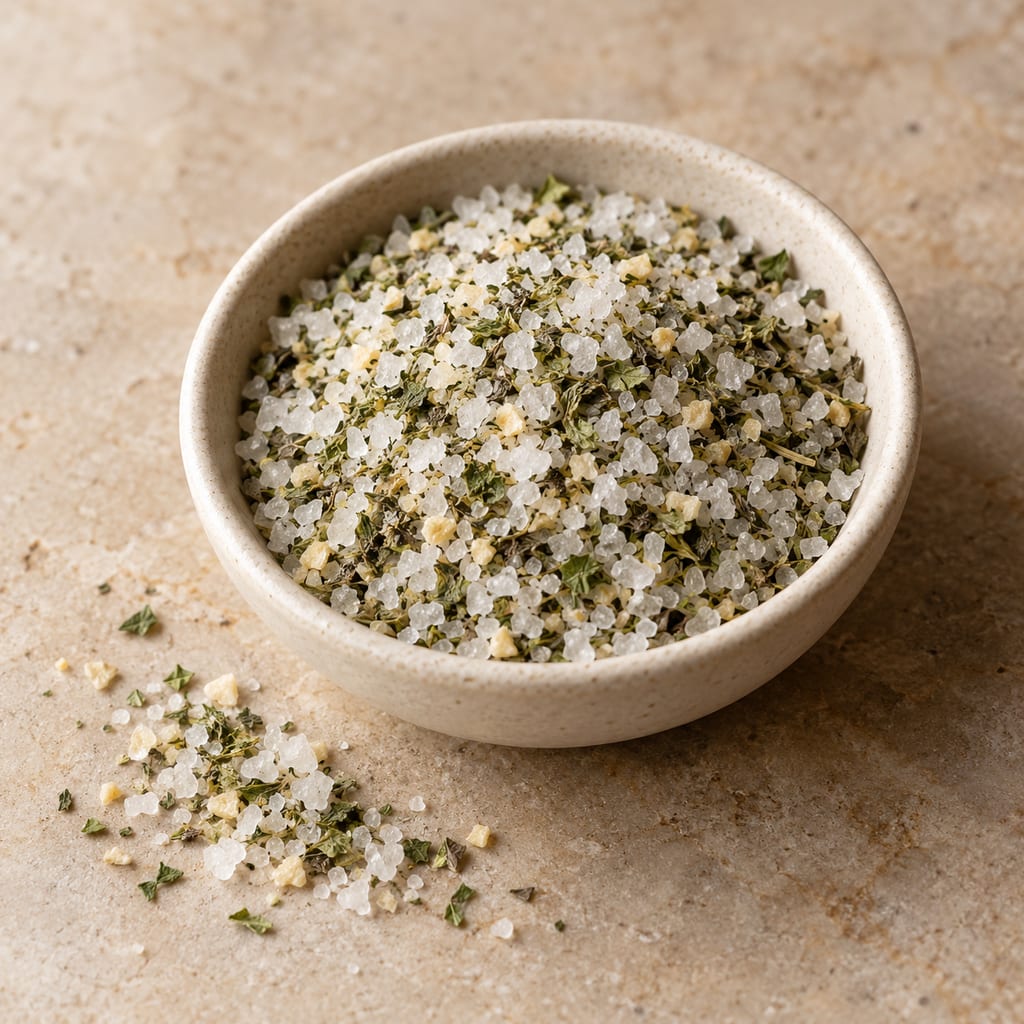
Fresh garlic and pungent herbs are chopped with kosher salt, then dried in the warmth of a switched-off oven. The blend keeps the selected herbs together in one seasoning.
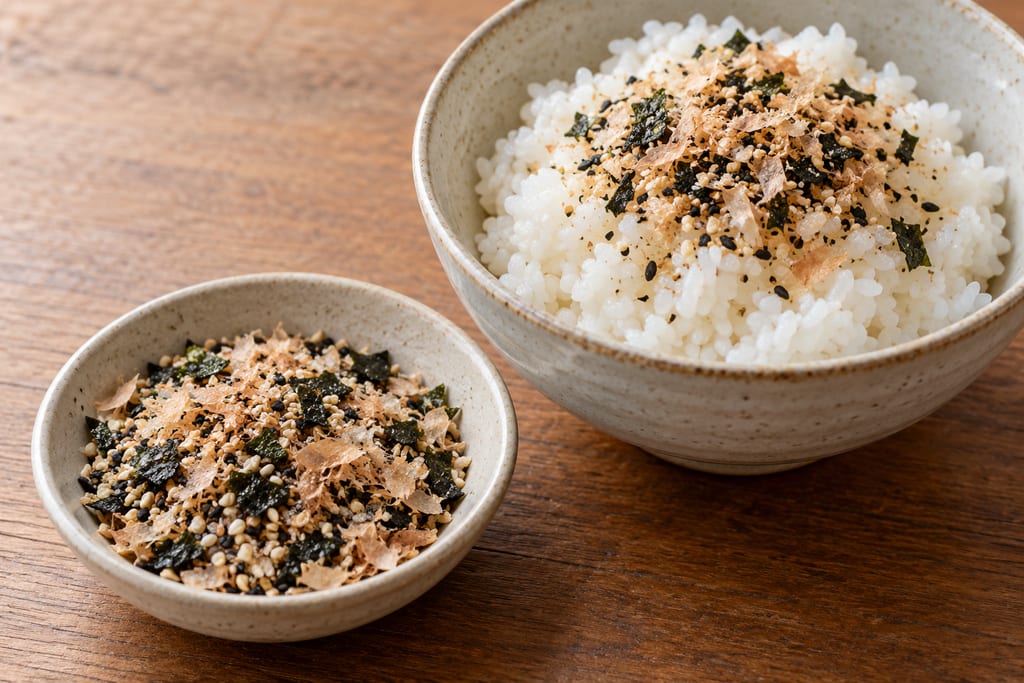
A dry Japanese rice seasoning of sesame, bonito, nori, sugar and salt. This documented home blend is one specific formula within a varied category with several early product histories.
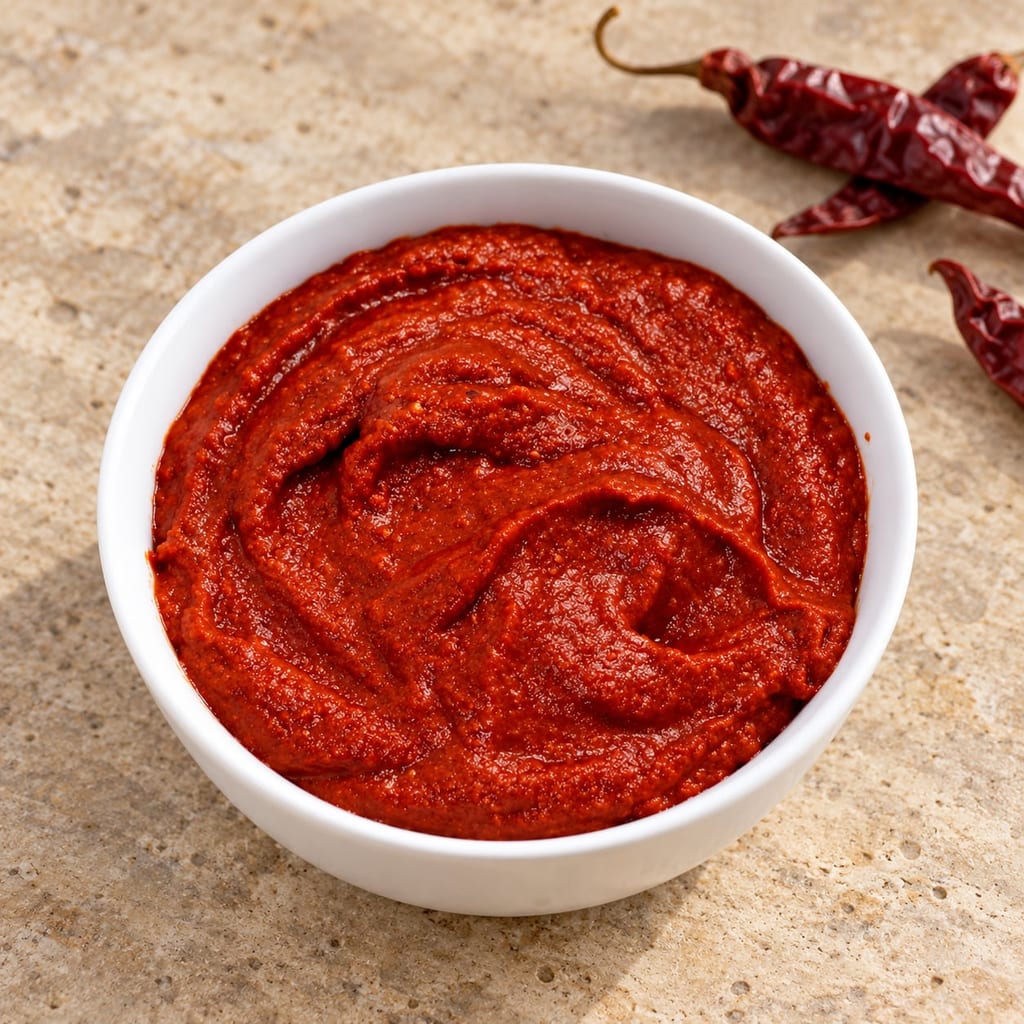
Recheado is a red Goan spice paste of Kashmiri chillies, garlic and spices ground in vinegar, best known as the stuffing for fried fish such as mackerel.
No community contributions have been published for this entry yet.
Sign in to contribute. Published comments and photos are free to read.
TraegerInspiration · Method
Smoked Salt2 cups flaky or coarse sea salt; hickory pellets; preheat pellet grill lid closed at 225°F/107°C for about 15 minutes; rimmed baking sheet, upper grate preferred; smoke at least 2 hours with occasional stirring; cool completely and store airtight; recipe lists 20 servings.
Cited in: The seasoning and its use; Equipment and preparation; What the process changes