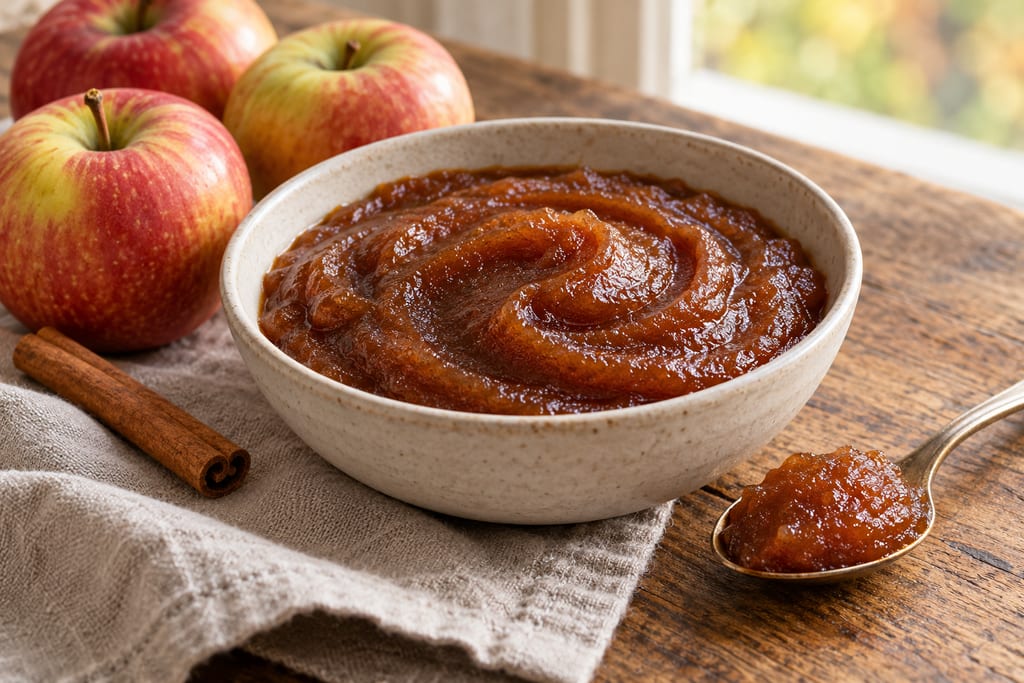
Fruit butter (appliance routes)
A smooth fruit pulp cooked down with sugar and spice until it holds its shape on a spoon, made by three documented routes in a slow cooker, a microwave or an electric multicooker.
 FermenteaWhere food goes to change
Equipment · All-in-one appliances
microwave
A domestic electric oven uses a magnetron to generate microwaves that heat food in the cavity. Oregon State documents it for small-batch fruit butter; it is not a home canning processor.
Microwave ovens grew out of radar technology developed during the Second World War. The National Museum of American History records a commercial Radarange bought by a Cleveland restaurant in 1947, then a Tappan RL-1 designed for home use in 1955. That first home model was large and expensive: the museum reports that only 34 were made in its first year, at a listed retail price of $1,295. The appliance later became a familiar household tool as designs and prices changed. These dates describe the U.S. record represented in the museum collection, not a single worldwide adoption timeline.
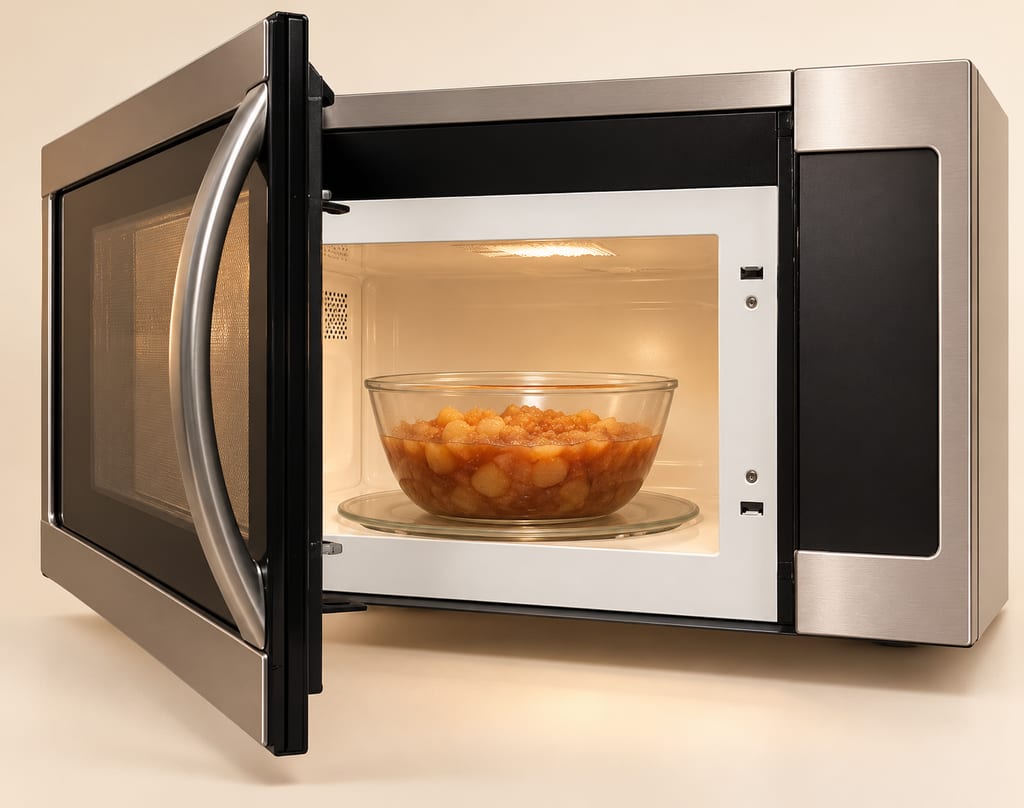
A domestic microwave is a manufactured electrical appliance with a metal cooking cavity, a magnetron, door and safety interlocks, and commonly a glass tray or turntable. Models differ in cavity size, arrangement, controls and installation; the item image shows one generic open-door form, not a specification for every oven.
The magnetron generates microwaves that reflect inside the metal cavity and are absorbed by food. The FDA explains that absorbed microwave energy becomes heat as water molecules vibrate; it does not make food radioactive. Glass, paper and many similar materials allow microwaves to pass through, although a container can become hot from the food it holds. The correct cookware depends on the oven's instructions. Metal cookware or foil generally should not be used because it can reflect the energy, cook food unevenly and possibly damage the appliance.
The common phrase that a microwave cooks food from the inside out is misleading. The FDA says thick foods are heated primarily by microwaves in their outer layers, while heat conducts into the center. A turntable rotates food through different positions in the cavity, but stirring remains useful for dishes that heat unevenly.
Oregon State University Extension includes microwave cooking among four ways to finish fruit butter. It recommends small batches, a large container with room for bubbling, and frequent stirring. Its microwave apple-butter method starts with eight medium apples and one cup of cider or juice in a two-quart glass casserole. The covered fruit is heated until soft, stirred every three minutes, then passed through a food mill or sieve. Sugar and spices are added to the purée; uncovered heating and stirring continue until it thickens. The published guide warns that cooking times vary with the oven and says high-wattage units may need lower power.
The microwave's role is the heating appliance; it does not replace the fruit mill, the stirring or the user's judgment about thickness. The Extension guide's water-reduction rationale is practical: because the mixture is less likely to scorch than on a pan base, less moisture may be needed and the later thickening stage can take less time. A large bowl matters because the bubbling purée can rise and boil over.
Microwave cooking can make fruit butter, but the domestic oven itself does not supply a validated shelf-stable canning process. The National Center for Home Food Preservation does not recommend processing freshly filled jars in microwave ovens because this does not prevent all risks of spoilage. Follow a tested preservation method for the finished butter rather than treating the microwave's cooking stage as jar processing.
This boundary also distinguishes a home oven from industrial microwave-assisted thermal sterilisation (MATS). MATS is an engineered in-package process in which sealed foods move through a designed thermal system; product composition, packaging and cold-spot heating require validation. A household microwave used to soften apples or heat a meal is not an industrial MATS line and does not establish a sterilisation schedule.
Oregon State recommends small batches, a large container to prevent boil-over, and frequent stirring for microwave fruit butter. Time varies between ovens; the guide says high-wattage ovens may need reduced power.
Source →A domestic microwave is not a tested canning process: the National Center for Home Food Preservation does not recommend processing freshly filled jars in microwave ovens because it does not prevent all risks of spoilage.
Source →This records U.S. historical microwave development and adoption evidence in one museum record; it is not a claim that the domestic microwave originated only here or was used only here.
A smooth fruit pulp cooked down with sugar and spice until it holds its shape on a spoon, made by three documented routes in a slow cooker, a microwave or an electric multicooker.
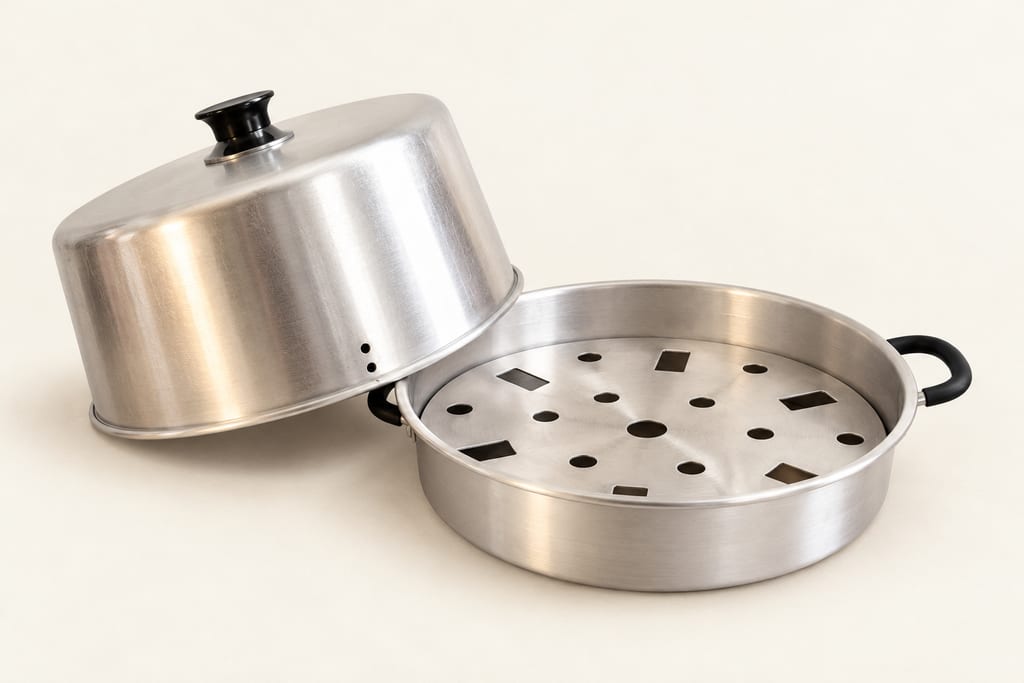
A shallow rack base and tall vented cover process jars in atmospheric steam. NCHFP limits the method to tested high-acid or acidified recipes requiring no more than 45 minutes, including altitude adjustment; this is not pressure canning.
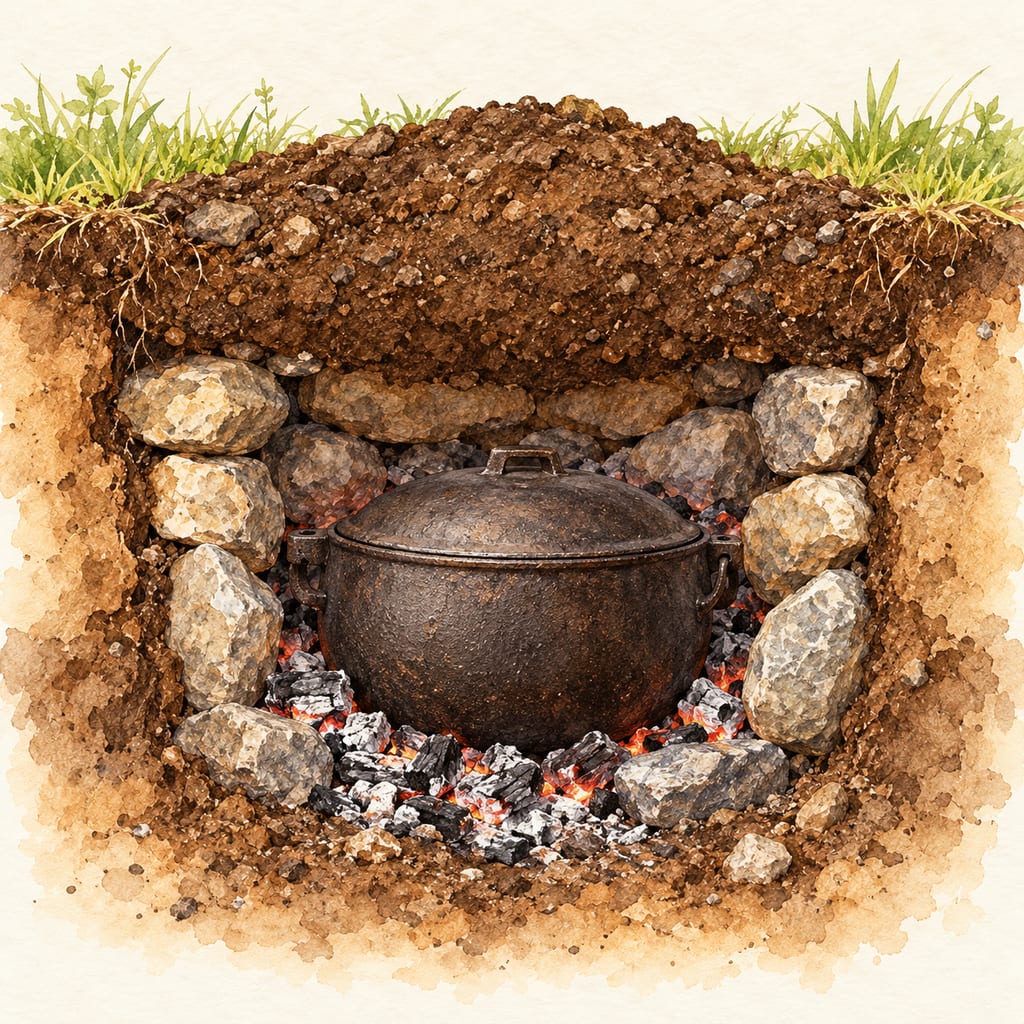
A covered iron vessel used in Maine bean-hole cooking, set into a preheated stone-lined pit and buried for a slow cook.
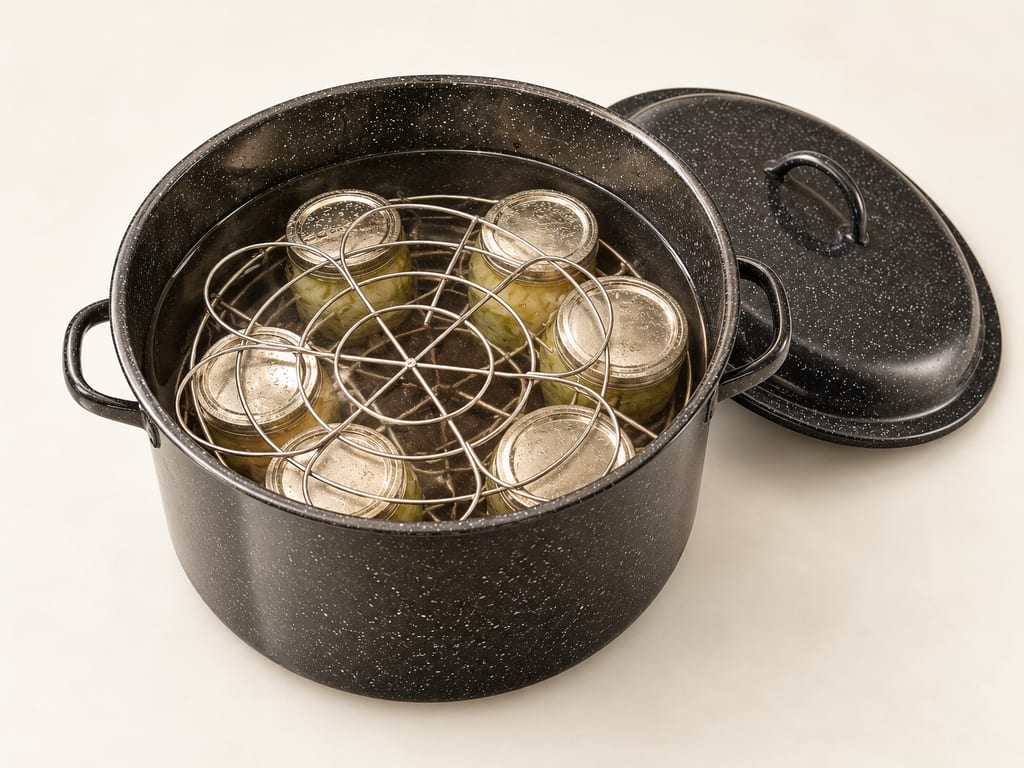
A deep, lidded pot with a removable rack processes jars beneath boiling water. It is intended for foods with tested boiling-water processes; low-acid foods require pressure canning.
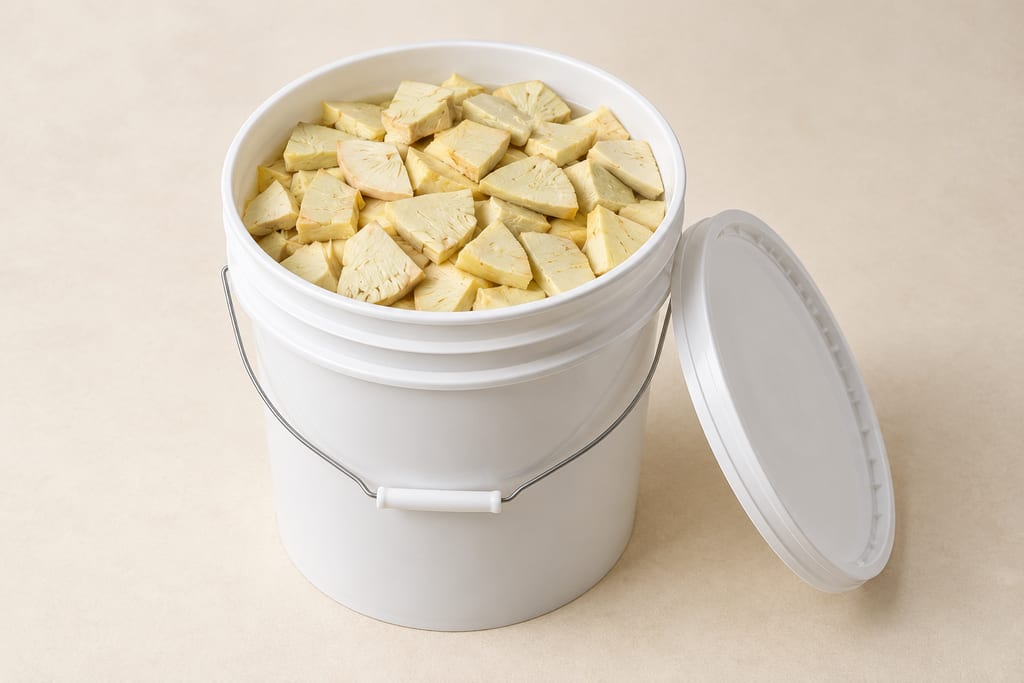
A contemporary household enclosure for preparing mā, fermented breadfruit, documented in Hawai‘i using food-safe buckets, coolers or large sealable bags in place of a pit.
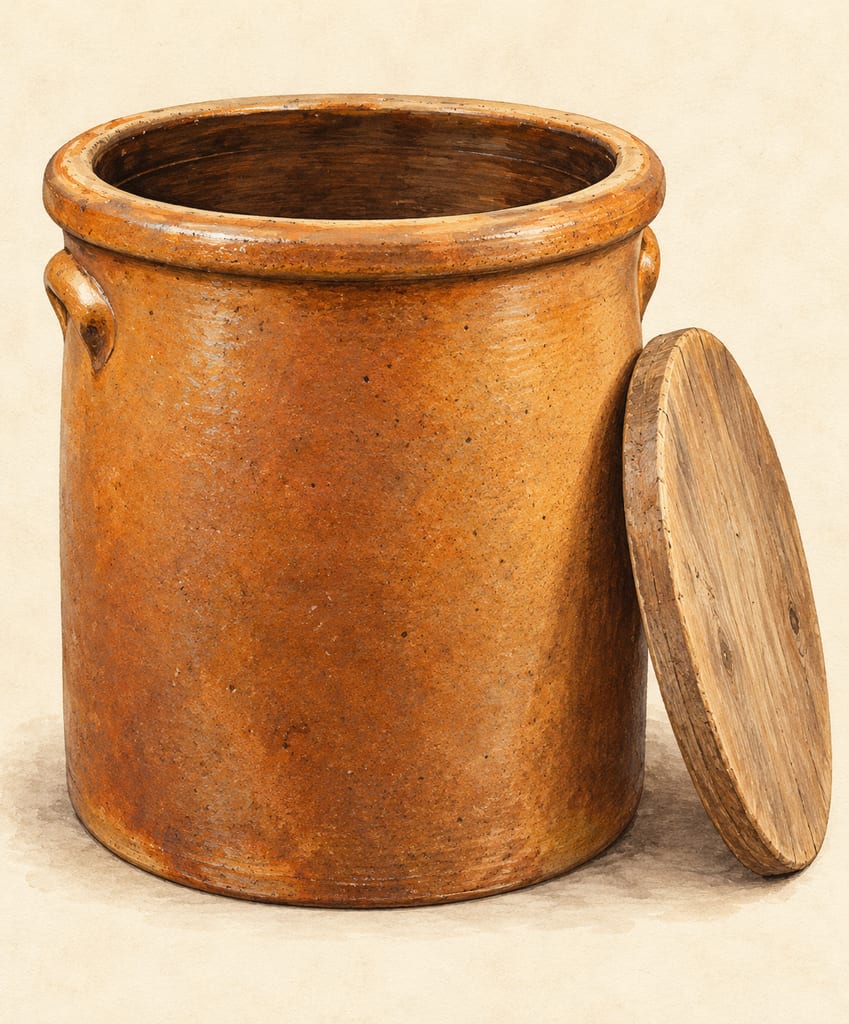
Containers for salt-curing fish and meat range from broad-mouthed stoneware crocks to tubs, cut-down barrels and chests. Their material, depth, cover and ability to retain or drain liquid shape how the food sits in salt or brine.
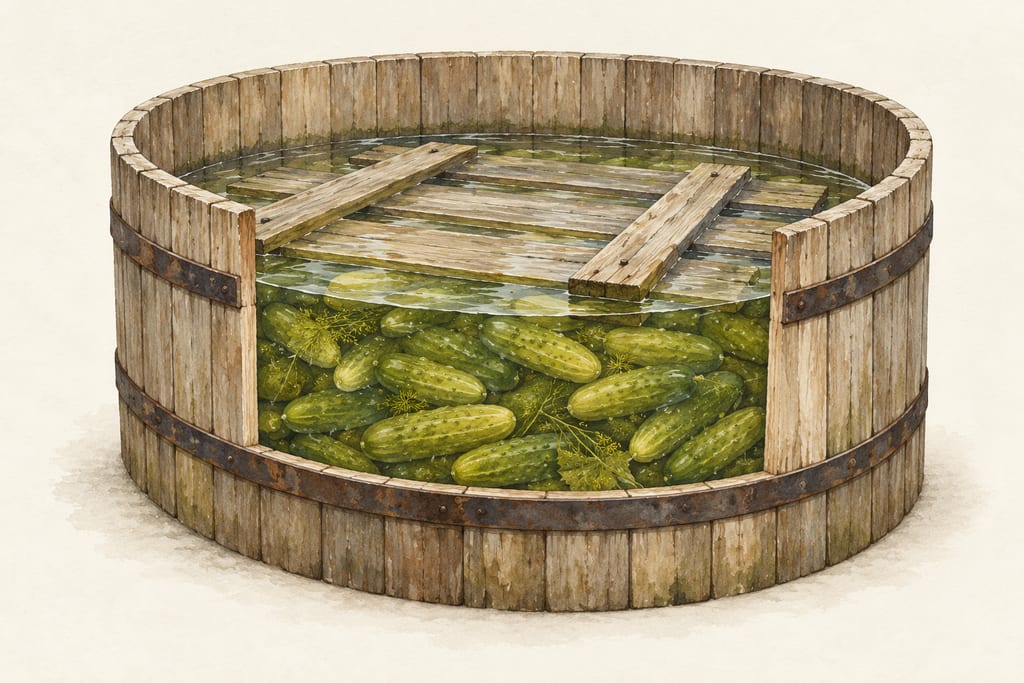
A bulk brining vat holds cucumbers and other vegetables under cover brine for fermentation and storage. North Carolina sources document a mid-century wooden tank yard and later outdoor fiberglass systems.
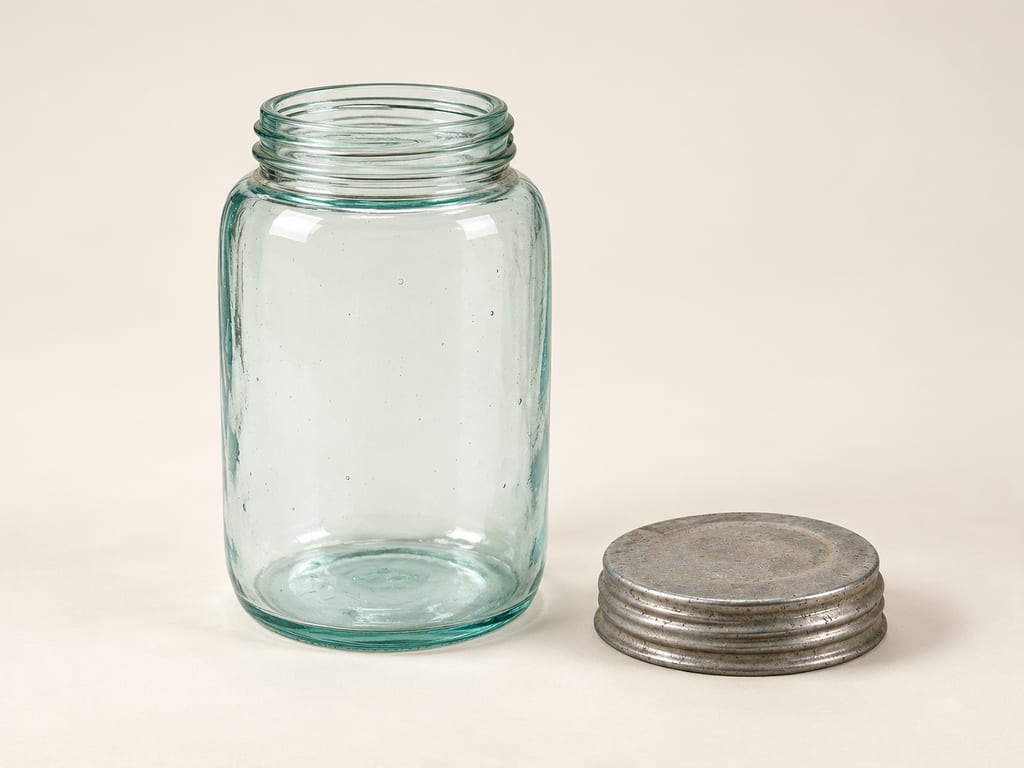
Threaded, heat-processing jars hold food and a fitted lid during a tested canning process; jar size and process belong to the specific recipe.
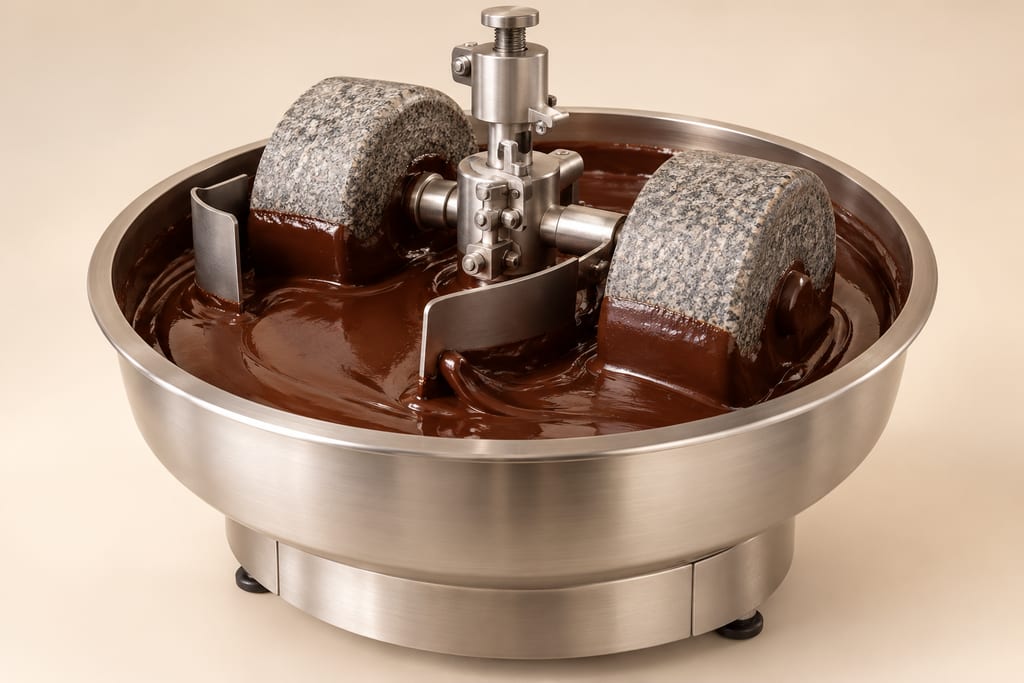
A chocolate refiner or melanger uses powered rotation and stone rollers to refine cocoa mass. Some models also process nut and seed pastes; design, material and operating limits vary.

Soft, spreadable Calabrian pork sausage made with a great deal of red chilli and fatty pork, stuffed into natural casings, sometimes smoked and matured while staying soft.

A way to add independent temperature logging to an existing food dehydrator without changing its built-in controls or protections. It is a monitoring method, not a rewiring plan.

Pleurotus cystidiosus is the abalone mushroom, a cultivated oyster-type fungus with dark brown caps that grows more slowly and is more demanding than other Pleurotus species.

A dark, balanced vinegar from Emilia-Romagna made by combining cooked or concentrated grape must with wine vinegar, then acetifying and refining it in wood under a protected specification.

A living dairy inoculum that starts controlled cream fermentation, developing acidity and aroma before sour cream or cultured butter is finished.

A small electric incubator holds jars at a selected temperature for yogurt and other documented warm food preparations. Controls, capacity and vessel arrangement vary by model.

Adygean salt is a seasoned table salt associated with Adygea and the wider North Caucasian culinary tradition. Salt is blended with garlic and a variable selection of herbs and spices; the exact mix depends on the named style and maker.

The African Caesar-group mushroom, Amanita masasiensis, is a wild ectomycorrhizal species of central and southern African woodlands, eaten locally. The genus contains deadly poisonous species, so identification needs care.
No community contributions have been published for this entry yet.
Sign in to contribute. Published comments and photos are free to read.
Oregon State University Extension ServiceDocumented use · Fruit butter method · Limits
Fruit butters (SP 50-304)The guide presents microwave cooking as a fruit-butter method; it recommends small batches, a large container, and frequent stirring.
Its microwave apple-butter method uses apples and cider or juice in a two-quart glass casserole, first covered until soft and then uncovered with sugar and spices until thick; times vary between ovens.
The guide advises reducing power on high-wattage ovens and following tested processing recommendations separately.
Cited in: A small-batch fruit-butter use
U.S. Food and Drug AdministrationEquipment form · Heating principle · Care · Safety
Microwave OvensThe FDA says microwave ovens have been regulated since 1971 and that the magnetron produces microwaves reflected by the metal cavity and absorbed by food.
Microwave energy becomes heat in food; thick foods are not cooked from the inside out, as their inner layers heat mainly through conduction.
Follow oven instructions for containers and discontinue use when door, hinges, latches or seals are damaged or the door does not close properly.
Cited in: From radar technology to a home appliance; How it heats food
National Museum of American History, Smithsonian InstitutionHistory · Documented model · Materials · Geography
Tappan Model RL-1 Microwave OvenThe museum identifies the Tappan RL-1 as the first microwave oven designed for home use, developed with Raytheon, with 1955 initial production and a $1,295 retail price.
The museum reports only 34 units in the first production year, a 1956 example with steel casing, glass door, an internal glass tray and an included recipe drawer.
The object record says a commercial Radarange was bought by a Cleveland restaurant in 1947; this is distinct from the 1955 home-designed model.
Cited in: From radar technology to a home appliance
National Center for Home Food Preservation, University of GeorgiaPreservation limits · Safety
Equipment and Methods Not RecommendedThe Center does not recommend processing freshly filled jars in microwave ovens because this practice does not prevent all risks of spoilage.
Cited in: Not a canning system
Washington State UniversityIndustrial contrast · Process validation
Microwave assisted thermal processing of homogeneous and heterogeneous food packed in a polymeric containerWSU's MATS research studies microwave-assisted thermal processing of packaged foods in an engineered cavity and thermal system.
The research studies food and packaging behavior and cold-spot heating; it does not provide a general home microwave canning process.
Cited in: Not a canning system