
Techniques
Not the red ones: fermenting wild mushrooms without a starter
Seto and Russian foragers on the Estonian border still salt russulas and ceps and let them ferment for weeks. What grows in the jar, why it varies, and why the tradition is fading.
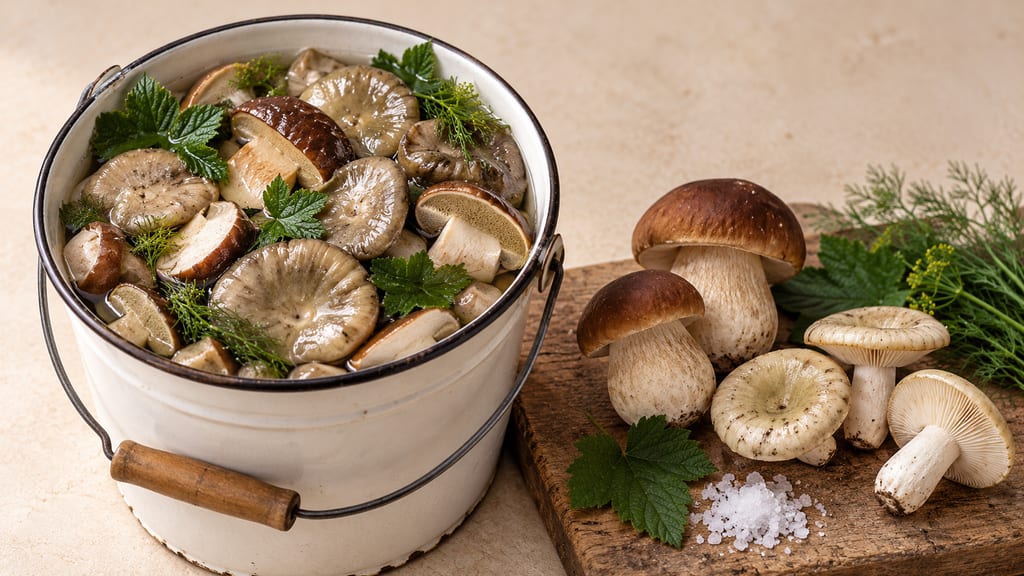
Hot-salted the Pechory way: parboiled russulas and ceps layered with blackcurrant leaves and dill, left to ferment for at least six weeks.
"Not the red ones, they are slimy"
In the Pechory district, on the Russian side of the border with Estonia, mushroom picking is a matter of firm opinions. Setos pick russula and purovik, one forager told the researcher Olga Belichenko, and not the red ones, they are slimy. Purovik is the Seto name for the cep, Boletus edulis. The remark became the title of Belichenko's 2022 study of how the Seto and Russian communities of the district gather and keep their mushrooms, and it carries the logic of the whole tradition: choose the mushrooms that will survive what comes next.
What comes next is a ferment with no starter. Nobody adds a culture or a spoonful of an old batch. The bacteria that sour the mushrooms come from the mushrooms themselves, from the herbs packed with them and from the bucket. This is spontaneous fermentation, the oldest way of making most fermented foods, and it works for wild mushrooms in Eastern Europe as it does for oyster mushrooms in Thailand. It is also the least predictable way, and that is the other half of this story.
Hot salting in Pechory
The method Belichenko recorded is called hot salting. The mushrooms are parboiled in salted water, and then they are left to ferment for at least one and a half months. One Seto woman, born in 1950, described it step by step: boil the mushrooms in salted water, let them steep in the cooking liquid, rinse them, and pack them in layers in a bucket with blackcurrant leaves and dill. She left out garlic. Her mother had told her it made the mushrooms ferment more and spoil sooner.
The choice of species follows from the method. Russulas, makõsiin in Seto, stay crunchy through boiling and fermenting, and so do ceps. Rough-stalked boletes, Leccinum, turn slimy with age and are picked young. Chanterelles, salted, come out rubbery, and one respondent preferred to parboil hers and make them into cutlets instead. Morels and false morels were washed, soaked and boiled, but nobody described salting them.
The market agreed with the kitchen. A procurement price list from Pechory in 1983, which Belichenko found, paid most for young, firm mushrooms, the kind that came through boiling and lactic fermentation intact.
What grows in the jar
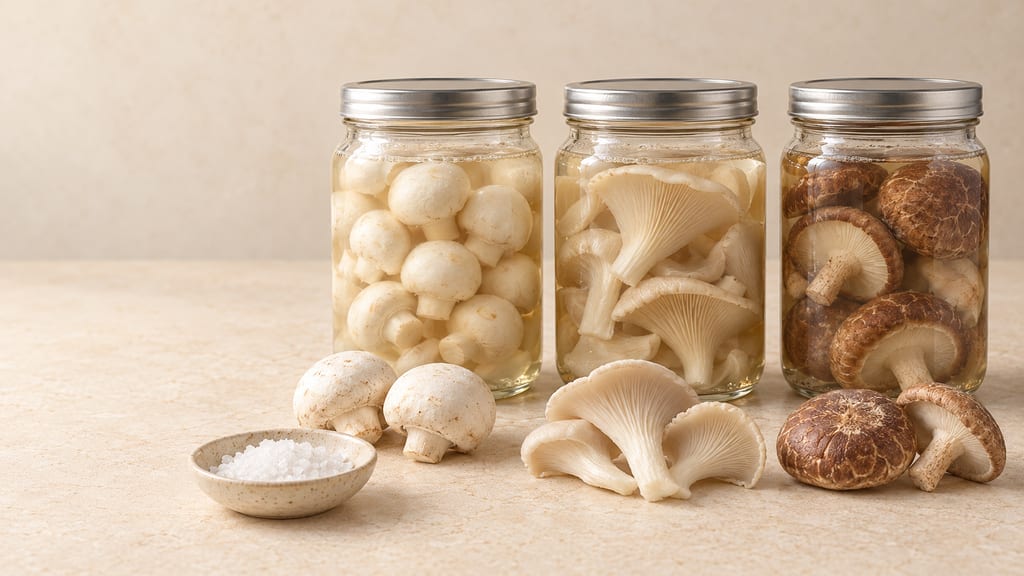
The fieldwork says what people do; it does not say which microbes do the work. No one has yet published a study of the bacteria in a Seto bucket of salted russulas. The closest evidence comes from a laboratory in Lublin, in Poland, where researchers let button mushrooms ferment on their own to see what turned up.
They sliced white button mushrooms two millimetres thick, covered them with a brine of 2% salt, sealed them in 300 ml jars and left them at 28 °C for five days, with no sugar and no starter. Then they identified the lactic acid bacteria that had grown, 110 isolates in all. More than half, 52.73%, were Leuconostoc mesenteroides. About a quarter, 26.36%, were Lactococcus lactis. Lactiplantibacillus plantarum made up 18.18%, and its close relative Lactiplantibacillus paraplantarum the last 2.73%.
That mix is the point of a spontaneous ferment. Four different bacteria, with different tastes for sugar and different tolerances for acid, share the work, and their balance decides how fast the ferment sours and how it ends up tasting. The same team went on to use mushroom-born strains of L. plantarum as defined starters, picking one organism out of the crowd to do the job on its own.
The Thai version
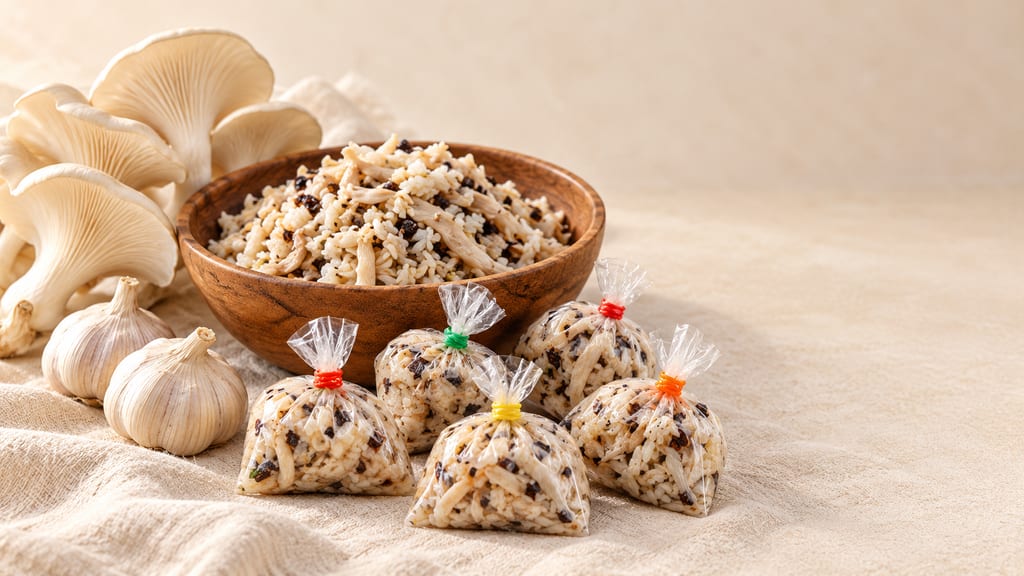
Far to the south-east, Thai cooks make Nham Hed, a sour fermented oyster mushroom, on the same principle. Steamed mushrooms are mixed with garlic, salt, pepper and cooked rice and packed tight, and the microbes already present do the rest. Left to itself, a batch typically takes seven to ten days to turn.
A 2025 study by Thai researchers measured how slow that is. Batches given a starter of lactic acid bacteria soured quickly and were finished in four days. The spontaneous batch, made the traditional way, acidified far more slowly over the same period and needed seven days. That slow start is exactly why researchers reach for starters, and exactly what a traditional maker accepts in exchange for the flavour of the wild mix.
A practice that is fading
In Lithuania, a team of mycologists interviewed 106 people, with a median age of 68, across five ethnographic regions in 2022 and 2023. They wanted to know how a small nation forages and uses its mushrooms. One of their photographs shows a jar of fermented mushrooms from Eastern Aukštaitija, mostly chanterelles and russulas.
Their conclusion about preserving is blunt: the traditional methods of salting or fermenting have largely been replaced by pickling and freezing. The oldest respondents still valued the old methods, and remembered them as a way of getting through times of scarcity, but the authors describe the techniques as close to disappearing. Spontaneous mushroom fermentation, in other words, is now a memory in many of the places that practised it.
Why spontaneous means unpredictable
A spontaneous ferment depends on what arrives with the ingredients. Two buckets of russulas from two forests, two Thai kitchens, two jars of button mushrooms in the same laboratory can start with different microbes and end differently. Salt, temperature and time push the balance towards the acid-loving lactic bacteria, but they do not guarantee it, and a ferment that is too warm, too weak in salt or too slow to sour can go another way.
The traditional methods carry their own controls, learned by experience. The Pechory method parboils the mushrooms in salted water before they are packed, gives the ferment at least six weeks, and starts with firm, young mushrooms that keep their texture. Even the advice about garlic is a piece of process knowledge, passed from mother to daughter.
What experience cannot check
Some risks cannot be smelled. In 2024, two people in Germany fell ill with botulism, caused by botulinum neurotoxin type A, after eating milkcap mushrooms from a commercial 500 g jar of mushrooms in brine. Germany's Robert Koch Institute found the toxin in an unopened jar from one of the households, and the product was recalled across several countries. Clostridium botulinum grows without air, in moist, poorly acidified food, and its toxin gives no warning smell or taste.
The other risk is the mushroom itself. A spontaneous ferment does nothing to make a misidentified mushroom safe, and the Pechory foragers' care about which species to pick is the first safety step, not a matter of taste. Neither the fieldwork nor the laboratory work here gives a tested salt level, temperature or storage time for salted wild mushrooms. They describe a living tradition and the microbes that can drive it; they do not turn it into a recipe.
Related
Read more
One known microbe: steering a mushroom ferment with a defined starter
Blanched mushrooms do not sour easily on their own. Polish researchers found that a lactic bacterium taken from fermented mushrooms does the job fastest, and measured what fermenting does to the food.
Two microbes, one ferment: what a yeast adds to Thai Nham Hed
Lactic acid bacteria make a mushroom ferment sour and safe to keep. Add a yeast beside them and the smell changes. A Thai study of Nham Hed shows what the yeast does, and what it cannot do.
Discussed in this article
Button mushroom
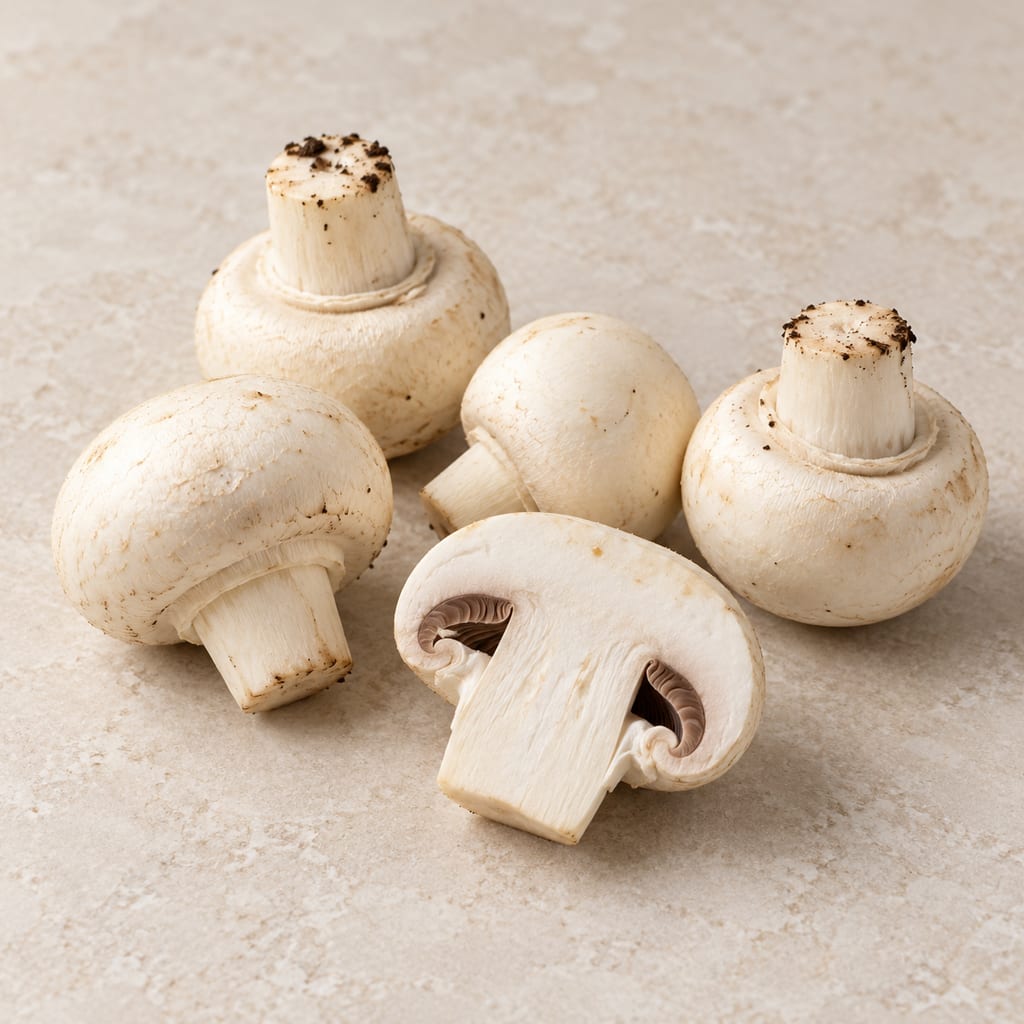
A cultivated form of Agaricus bisporus sold young as a button and at more mature stages as cremini or portobello, used fresh or preserved in everyday cooking.
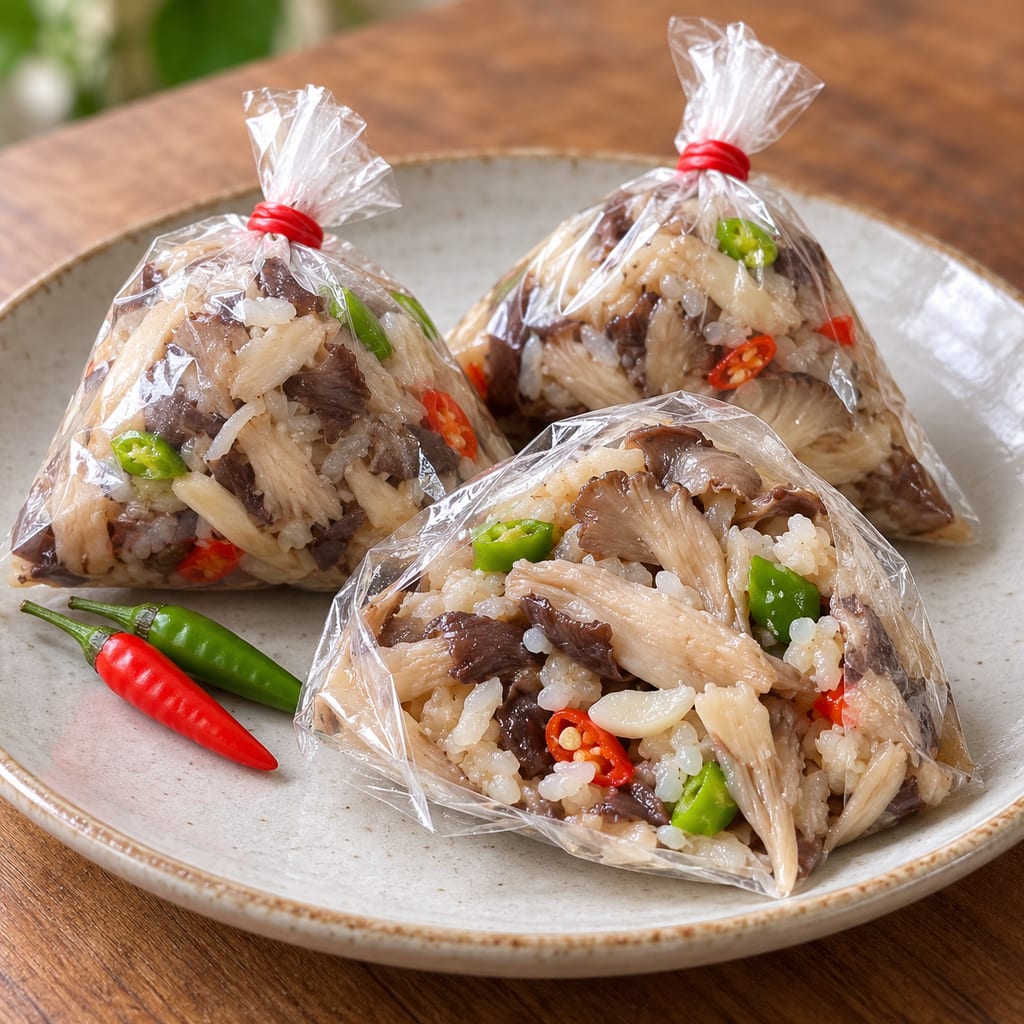
Nham Hed (Thai Fermented Mushrooms)
A Thai sour mushroom preparation: shredded steamed oyster mushrooms, cooked rice, garlic and salt packed into small parcels and soured by lactic acid bacteria over a few days.
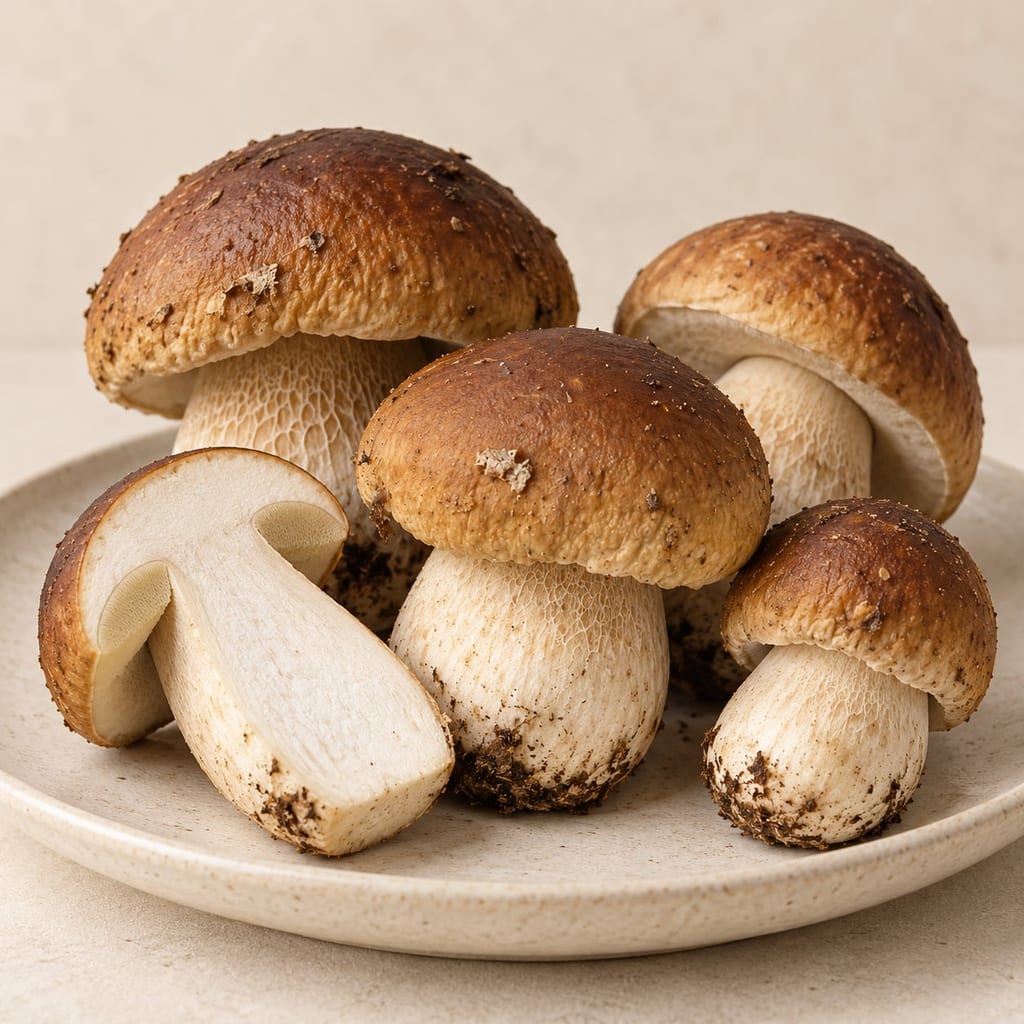
Porcini
Porcini are prized wild ectomycorrhizal mushrooms from several closely related Boletus species, harvested chiefly from forests and sold fresh, dried or frozen for their firm texture and concentrated savoury aroma.
Community
No community contributions have been published for this entry yet.
Share what you made
Sign in to contribute. Published comments and photos are free to read.
Sources
Études finno-ougriennes
"Setos pick russula and purovik, and not the red ones, they are slimy" (Belichenko, 2022)Cited in: "Not the red ones, they are slimy"; Hot salting in Pechory; Why spontaneous means unpredictable; What experience cannot check
Foods
Spontaneously fermented fruiting bodies of Agaricus bisporus as a valuable source of new isolates of lactic acid bacteria with functional potential (Skrzypczak et al., 2020)Cited in: What grows in the jar; Why spontaneous means unpredictable
Trends in Sciences
Improving Nham Hed quality and safety through co-starter fermentation with Lactiplantibacillus plantarum NH48/12 and Saccharomyces cerevisiae TISTR 5110 (Saithong, Permpool, Tewaruth Chitisankul and Nitipan, 2025)Cited in: The Thai version; Why spontaneous means unpredictable
Journal of Ethnobiology and Ethnomedicine
Diversity of ethnomycological knowledge and mushroom foraging culture in a small nation: case of Lithuania (Motiejūnaitė et al., 2024)Cited in: A practice that is fading
Food Safety News
Botulism affects two in Germany; link to Russian productCited in: What experience cannot check
Gaps
- No study has identified the microbes in a traditional Seto or Lithuanian salted mushroom ferment.
- No tested salt level, temperature or storage time is available for salted wild mushrooms from these sources.
Updated 2026-10-29