
Techniques
Two microbes, one ferment: what a yeast adds to Thai Nham Hed
Lactic acid bacteria make a mushroom ferment sour and safe to keep. Add a yeast beside them and the smell changes. A Thai study of Nham Hed shows what the yeast does, and what it cannot do.
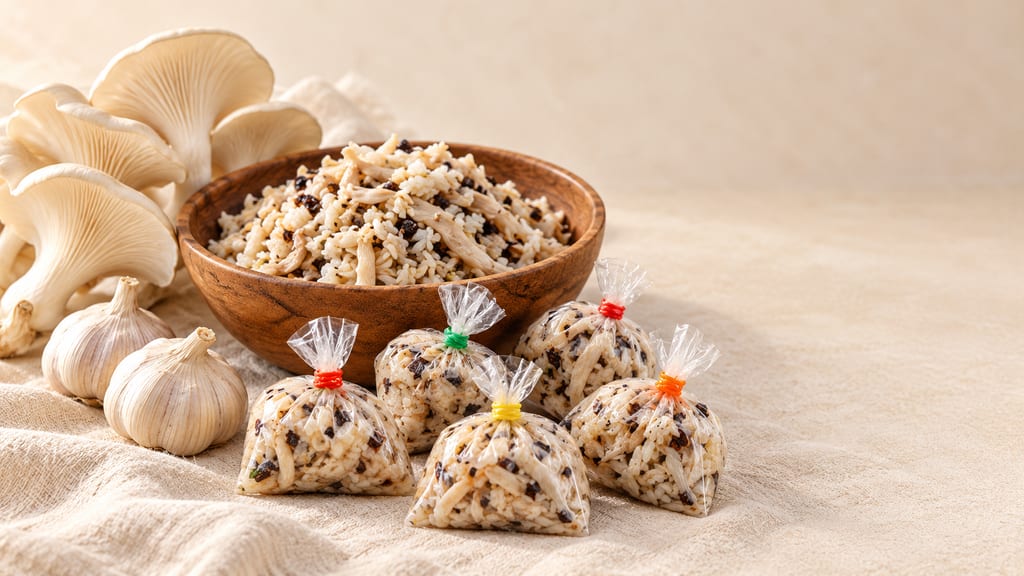
Nham Hed: shredded oyster mushroom, rice and garlic, packed tight to sour.
A sour mushroom from Thailand
Nham Hed is a Thai fermented oyster mushroom. Steamed mushrooms are mixed with garlic, salt, pepper and cooked rice, packed tight and left to sour. Left to its own microbes, the batch takes seven to ten days to turn. The result is sour and garlicky, with the same balance of rice, garlic and salt as a much better-known Thai ferment.
That flavour belongs to nham, or naem, the fermented pork sausage. Its recipe follows the same logic: lean pork and pork rind, garlic, salt, cooked glutinous rice, pepper and bird's-eye chilli, wrapped in banana leaves and fermented at room temperature for three to five days. The rice gives the bacteria sugar to turn into acid, the salt holds back what should not grow, and the garlic carries the taste. Salt is normally kept at 2 to 3% of the mix: under 2% and the sausage spoils, above 3% it is too salty.
A mushroom has none of the fat or rind of pork, but the method carries over, and so does its weak point. A spontaneous ferment depends on whatever bacteria and yeasts arrive with the ingredients and the room. Some batches sour quickly and taste clean. Others are slow to sour, and a slow ferment leaves more time for the wrong microbes to grow.
Food scientists answer that with a starter: a known culture added at the beginning, so the right organisms outnumber the rest from the first hour. The usual starter for vegetables and mushrooms is a lactic acid bacterium. This story is about what happens when a yeast is added beside it.
Two organisms, two jobs
A lactic acid bacterium does the work that makes a ferment keep. It turns sugars into lactic acid, and as the acid builds, the pH falls to a point where most spoilage and disease organisms cannot grow. Lactiplantibacillus plantarum is the species used as the bacterial starter in every mushroom study described here.
Acid, though, is mostly sourness. Much of what makes a ferment smell interesting comes from other compounds, and yeasts are good at making them. A yeast that ferments sugar makes small amounts of ethanol, and ethanol can combine with the organic acids the bacteria produce to form esters, the compounds behind many fruity smells. The bacterium supplies the acid and the yeast supplies the alcohol; together they make something neither makes alone.
The two can also feed each other. As the bacteria break down proteins they release peptides and free amino acids that a yeast can use, and the yeast's own products can change how the bacteria behave. The authors of the Nham Hed study offer that exchange as a likely explanation for what they saw, while noting that they did not measure it directly.
The Nham Hed trial
In 2025 a team from Kasetsart University and Thaksin University tested a co-starter on Nham Hed made from Pleurotus pulmonarius, the Indian oyster mushroom, bought from a farm in Phatthalung Province in southern Thailand. Their batch recipe was 1 kg of steamed mushrooms, 150 g of steamed rice, 100 g of crushed garlic and 25 g of salt, fermented in sealed plastic bags at 30 ± 2 °C.
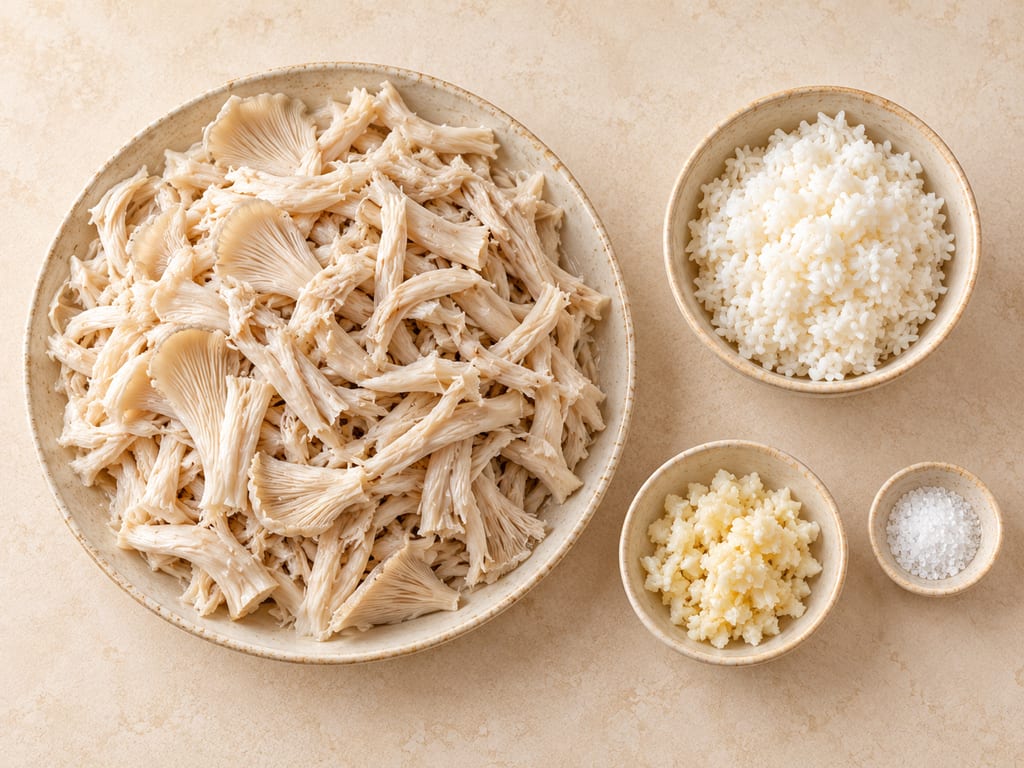
The bacterium was Lactiplantibacillus plantarum NH48/12 and the yeast was Saccharomyces cerevisiae TISTR 5110, the same species as baker's and brewer's yeast. The team first tried the bacterium at 0 to 4% of the batch weight, then added the yeast at 0.1 to 0.3% to batches carrying 4% bacterium. They settled on 4% bacterium with 0.1% yeast and compared three versions: the traditional spontaneous ferment, the bacterium alone and the bacterium with the yeast.
The starters changed the timetable. In the inoculated batches the pH fell from 6.4–6.5 to between 3.2 and 3.7, while the spontaneous batch soured far more slowly. The inoculated batches were finished in four days; the spontaneous one ran for seven. In the co-starter batch the yeast reached about 100 million cells per gram, 8 log CFU/g, within two days.
What the yeast changed
The clearest difference was in the smell. Thirty tasters scored the three products on a nine-point scale. For odour, the spontaneous ferment scored 5.33, the bacterium alone 6.53 and the co-starter 7.30, and each score differed significantly from the others. The chemistry agreed: two aroma compounds appeared only in the co-starter batch. One was ethyl butanoate, an ester with a fruity smell, exactly the kind of compound that forms when yeast ethanol meets bacterial acid. The other was benzeneacetaldehyde, a compound with a sweet, floral note.
Taste was a different story. The bacterium alone scored 6.68 and the co-starter 6.58, and the paper's own table marks the two as not significantly different. Both beat the spontaneous ferment at 5.35. For overall liking, the co-starter came out on top at 7.23, against 6.40 for the spontaneous ferment and 6.23 for the bacterium alone. Appearance and texture did not differ between the three.
The free amino acids moved too. Glutamic acid, the amino acid behind savoury taste, measured 516.24 mg per 100 g in the spontaneous ferment, 523.34 with the bacterium and 547.56 with the co-starter. Serine and leucine followed the same pattern, while histidine and lysine were lower in the starter batches. The table gives single values without statistics, so these are small differences in one set of batches rather than a proven effect.
Reading the results carefully
The study is useful and also small, and its paper has loose ends that matter if you want to rely on it. Its text says the co-starter scored significantly higher for taste than the other two, but its table shows otherwise. It describes five disease organisms, Escherichia coli, Staphylococcus aureus, Clostridium perfringens, Bacillus cereus and Salmonella, as not detected in any sample, but it points to a table that contains sensory scores, and it does not say which day was tested or how sensitive the tests were. A count of bacteria and yeasts over time is shown in graphs, and the numbers in the graphs and in the text do not fully match.
None of that makes the result wrong. It means the result covers those strains, those amounts, that recipe and that temperature, measured once. It does not show that another yeast, another bacterium or another ratio would behave the same way, and a pathogen test on a few batches is not a safety validation of the method.
Other mushrooms, other partners
A Chinese study from 2024 paired the same bacterial species with a different yeast, Kazachstania bulderi, to pickle king oyster mushrooms, Pleurotus eryngii. Both strains came from homemade Sichuan paocai, the brine-pickled vegetables of south-western China. The mushrooms were boiled and fermented in water with 2% salt and 1% sugar at 25 °C for seven days. The yeast alone barely soured the pickle, taking it only from pH 5.78 to around 4.9. The bacterium alone reached pH 3.48 by 48 hours. Together they soured faster at the start, reaching pH 4.29 after eight hours against 4.58 for the bacterium alone, and settled at 3.58 by 24 hours. The yeast batches carried more esters, the bacterial ones more ketones and aldehydes, and the combination gave the widest range of aroma compounds.
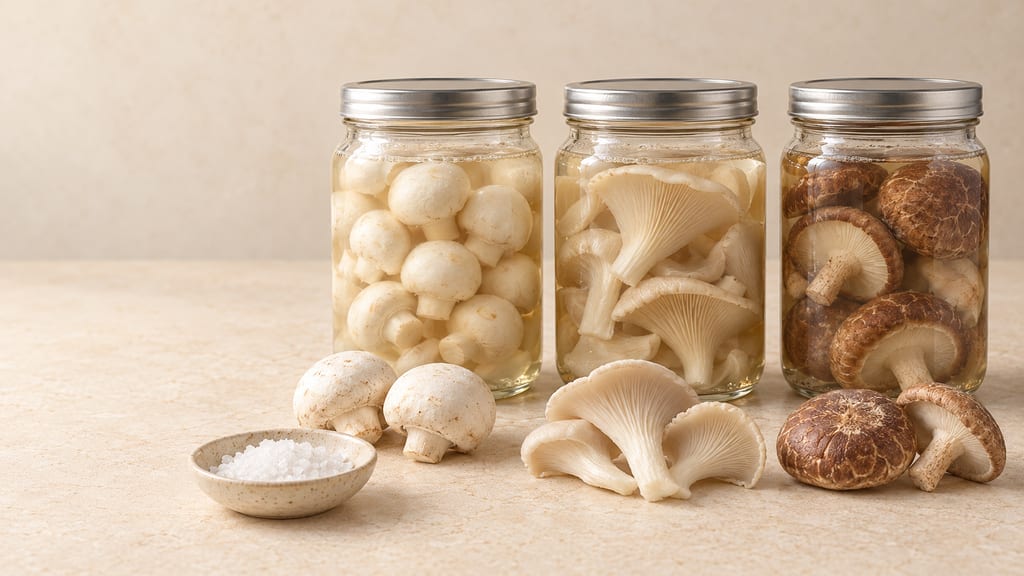
Most mushroom starter work still uses a bacterium alone, and it works. One 2025 study fermented button, shiitake and oyster mushrooms with a new strain, Lactiplantibacillus plantarum EK11. The mushrooms were blanched at 100 °C for three minutes, fermented at 21–22 °C for seven days and then kept at 5 °C for five more weeks. By day seven the pH was between 3.6 and 3.75, the bacteria were still above 10 million per millilitre after six weeks, tasters scored the products between 6.83 and 8.04 out of 9, and the starter produced no biogenic amines.
Researchers in Thailand have developed other mushroom nham as well. A study of a fermented Bhutan oyster mushroom product, made from Pleurotus eous, reported a finished pH of 4.41 to 4.51 and lactic acid bacteria at about 10 to 100 million per gram, with none of the tested pathogens, yeasts or moulds found.
What a yeast can and cannot add
Put together, the mushroom studies tell a consistent story. The lactic acid bacterium is what makes a mushroom ferment safe to keep: it sets the acid, and a well-chosen strain sets it quickly. A yeast adds something different. In both co-starter trials it widened the range of aroma compounds, and in the Nham Hed trial tasters could smell the difference and liked the result more.
For a home cook the lesson is about roles rather than recipes. A yeast is a flavour partner, not a preservative, and it never replaces the acid. If a mushroom ferment does not sour, adding yeast will not rescue it. And because every one of these results belongs to particular strains, recipes and temperatures, none of them supplies a storage time or a safe holding temperature for a co-starter ferment made at home.
No study yet measures how the bacterium and yeast trade nutrients inside a mushroom ferment, or tests a co-starter across many batches with full pathogen data. Nham Hed made with two microbes remains a promising flavour experiment with good early results, built on a method that has always relied on the bacteria.
Related
Discussed in this article
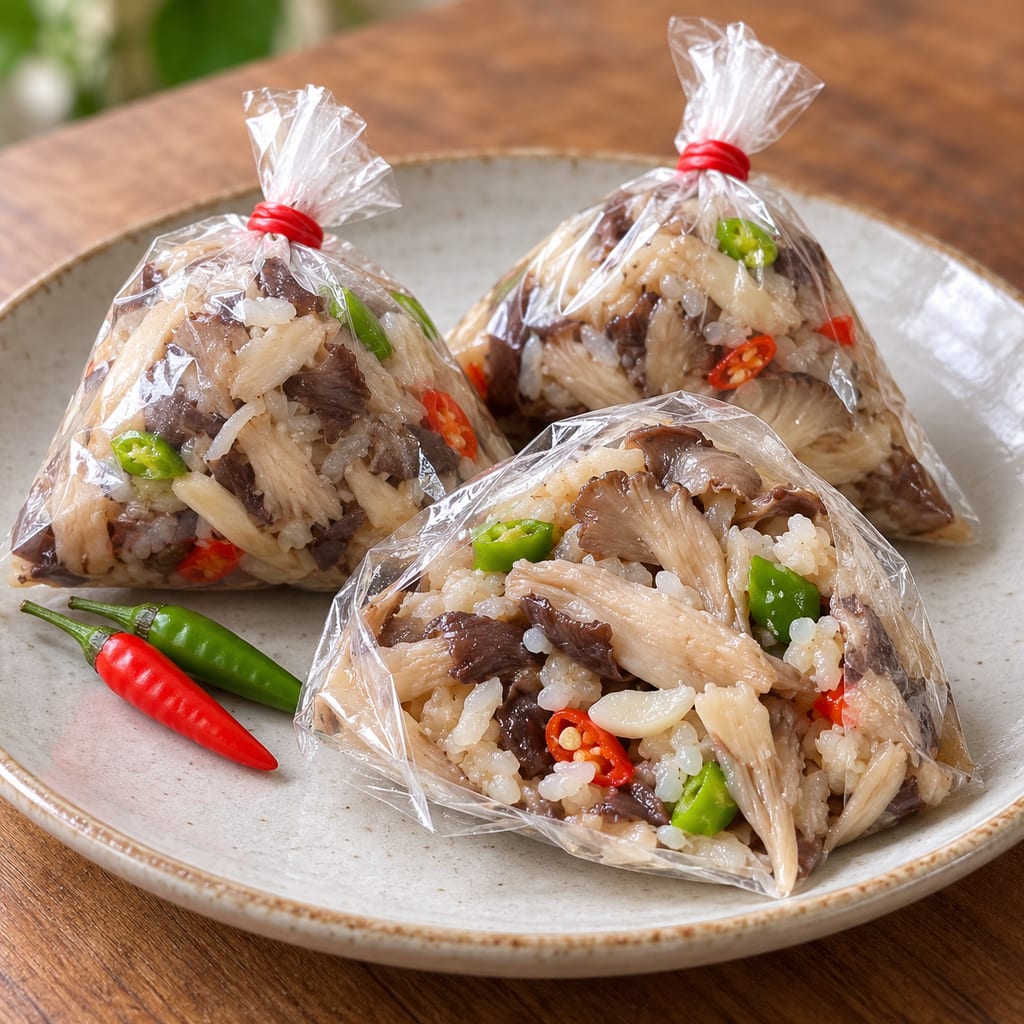
Nham Hed (Thai Fermented Mushrooms)
A Thai sour mushroom preparation: shredded steamed oyster mushrooms, cooked rice, garlic and salt packed into small parcels and soured by lactic acid bacteria over a few days.
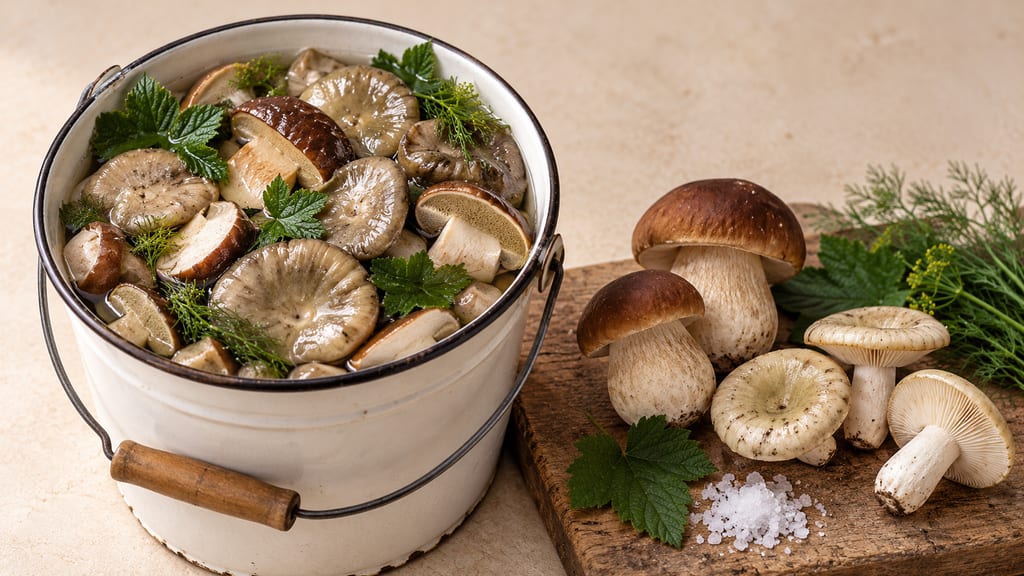
Not the red ones: fermenting wild mushrooms without a starter
Seto and Russian foragers on the Estonian border still salt russulas and ceps and let them ferment for weeks. What grows in the jar, why it varies, and why the tradition is fading.
One known microbe: steering a mushroom ferment with a defined starter
Blanched mushrooms do not sour easily on their own. Polish researchers found that a lactic bacterium taken from fermented mushrooms does the job fastest, and measured what fermenting does to the food.
Community
No community contributions have been published for this entry yet.
Share what you made
Sign in to contribute. Published comments and photos are free to read.
Sources
Trends in Sciences
Improving Nham Hed quality and safety through co-starter fermentation with Lactiplantibacillus plantarum NH48/12 and Saccharomyces cerevisiae TISTR 5110 (Saithong, Permpool, Tewaruth Chitisankul and Nitipan, 2025)Cited in: A sour mushroom from Thailand; Two organisms, two jobs; The Nham Hed trial; What the yeast changed; Reading the results carefully; What a yeast can and cannot add
Fermentation
Exploration of co-inoculation of Lactiplantibacillus plantarum and Kazachstania bulderi for potential use in mushroom Pleurotus eryngii pickle fermentation (Gou et al., 2024)Cited in: Two organisms, two jobs; Other mushrooms, other partners; What a yeast can and cannot add
Foods
Possibilities of using the new Lactiplantibacillus plantarum EK11 strain as a starter culture for the fermentation of the fruiting bodies of edible mushrooms (Jabłońska-Ryś and Przygoński, 2025)Cited in: Other mushrooms, other partners; What a yeast can and cannot add
Japan International Research Center for Agricultural Sciences
Naem (Thai fermented foods database)Cited in: A sour mushroom from Thailand
Asian Health, Science and Technology Reports
The nutritional value and antioxidant activities of the developed Thai fermented Bhutan oyster mushroom (Pleurotus eous) (Tangsombatvichit, Khuenson and Matthayom)Cited in: Other mushrooms, other partners
Gaps
- No study measures the nutrient exchange between the bacterium and the yeast inside a mushroom ferment.
Updated 2026-10-29