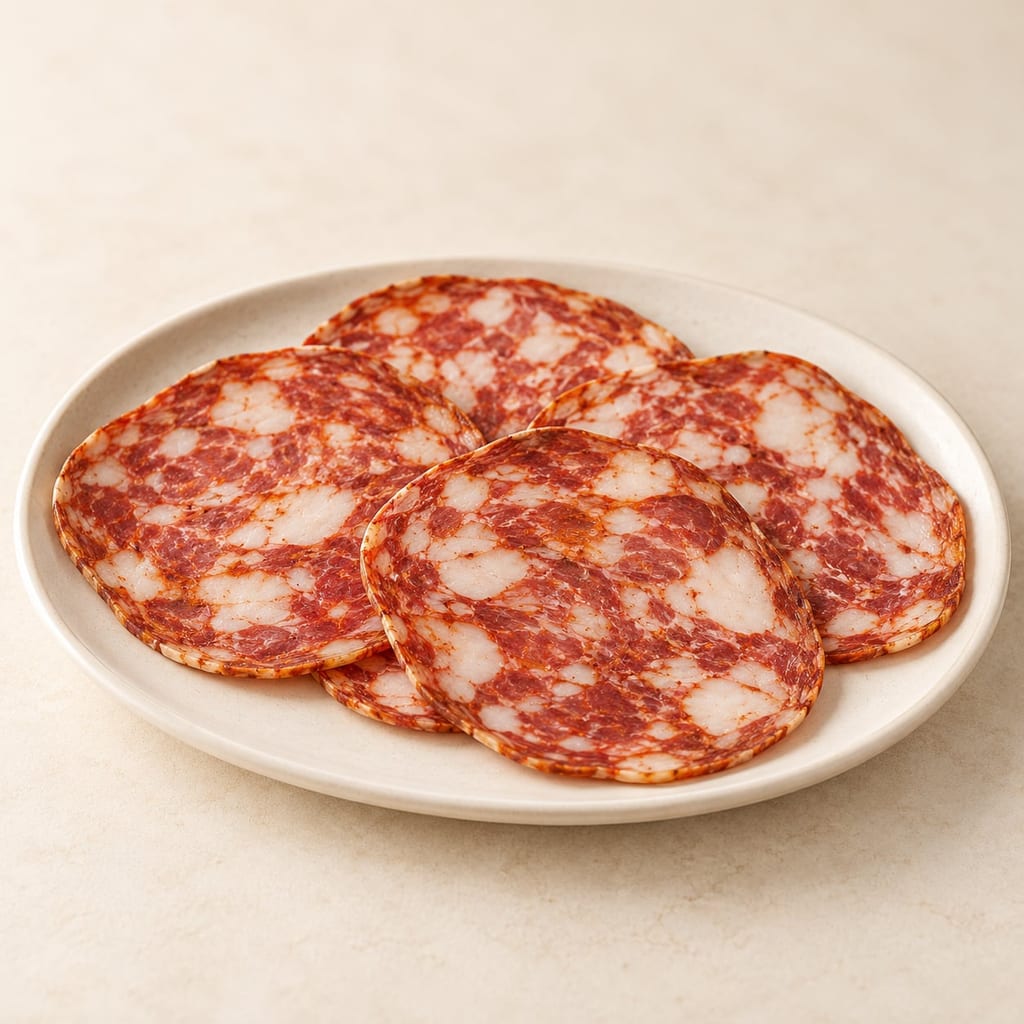
Ventricina, starter-cultured
A documentary account of a modern ventricina-style salami source and its Abruzzese context. This page provides no preparation directions or validated home process.
 FermenteaWhere food goes to change
Substrates
Raw pork belly combines muscle and adipose tissue in layers. Its fat content varies, and a recipe weight of belly is not a measured weight of pure fat.
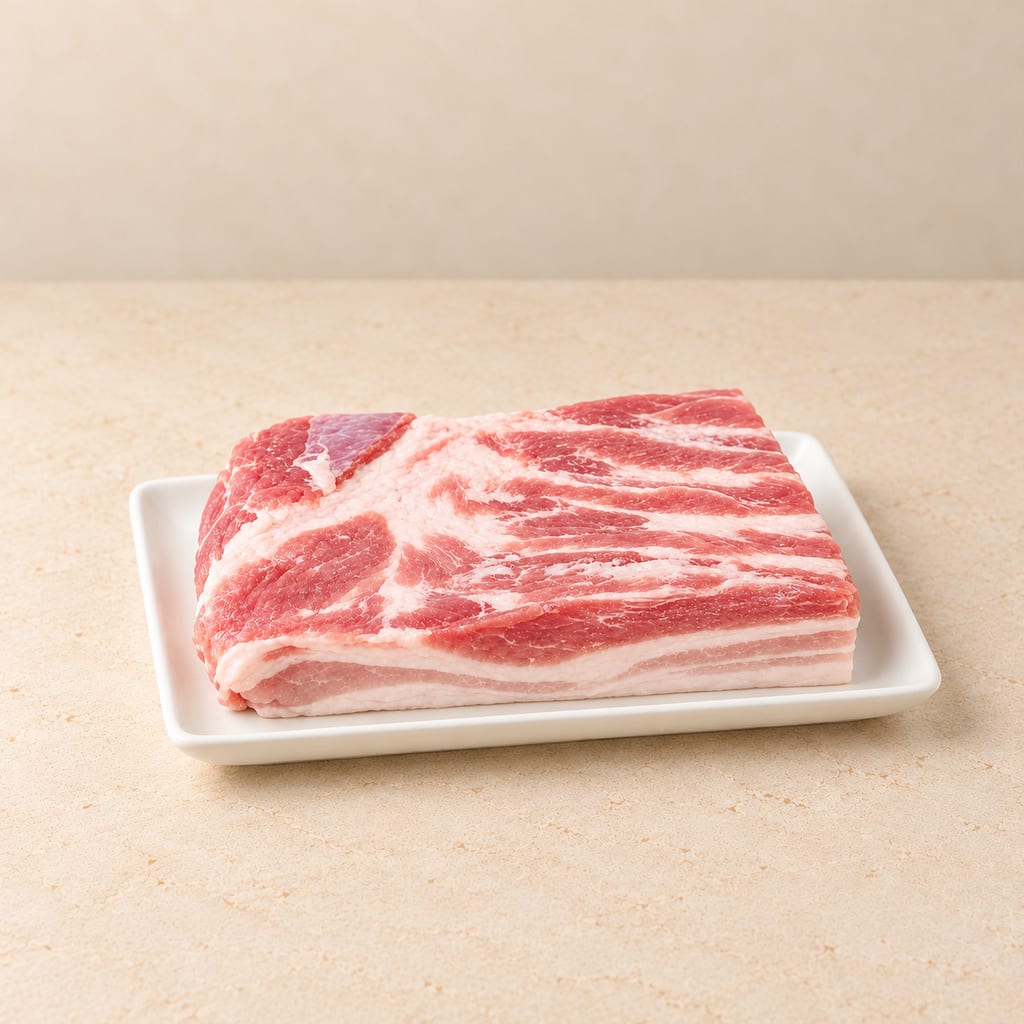
Pork belly is the underside of the pig: the broad strip of the side that lies below the loin and runs from the shoulder end to the leg end. Cut across, it shows bands of pale fat alternating with thinner bands of dark lean. The Korean name for the grilled cut, samgyeopsal, means "three-layer meat", and the Italian dictionary Treccani defines pancetta in the same terms, as the ventral region of the pig made of fatty layers alternating with thin layers of meat. The lean is not one muscle but several, with the long flank muscle (rectus abdominis) as its most visible band, and the fat lies both between the muscles and under the skin.
It is the largest primal cut of the carcass, about 16 to 18 percent of carcass weight, and in many markets the most valuable. Surveys of Chinese and Korean consumers put belly above shoulder butt and loin, and its price runs several times that of most other primal cuts. The same cut goes to the grill, the braising pot and the bacon cure. A belly is typically 20 to 60 percent fat and 22 to 55 percent lean by weight, and that spread, wider than for almost any other cut, explains most of what a cook or sausage-maker has to know about it.
Belly comes from the domestic pig, Sus scrofa domesticus, the domesticated subspecies of the Eurasian wild boar, Sus scrofa. Pigs were among the first livestock. Archaeological evidence shows domestication under way in the Near East by about 10,500 years ago, from Anatolian wild boar, and mitochondrial DNA shows domestic pigs travelling into Europe with Near Eastern farmers about 8,500 years ago.
What happened next is one of the odd stories of animal breeding. Over the following millennia the incoming pigs interbred with European wild boar so thoroughly that modern European pigs carry only about 4 percent Near Eastern ancestry on average, and the researchers, who analysed 63 ancient nuclear genomes, concluded that pigs were not domesticated a second time in Europe. A gene variant for black coat colour, probably from Anatolia, is among the few Near Eastern traits that stayed. For the cook the relevance is practical: the pig on the plate has been reshaped many times by selection. In recent decades breeding and feeding aimed at lean carcasses made bellies thinner, softer and lower-yielding for processors, which is why the fat content of a belly is no longer something to assume.
A butcher makes a belly by removing everything around it. In the United States Department of Agriculture specification for fresh pork, the belly (item 408) is prepared from the side after the leg, shoulder, loin, fatback and spareribs have been taken off. Bones and cartilage are removed, nearly all the leaf fat is trimmed away, and the fatback is cut off within 1.5 inches (3.8 cm) of the outer curve of the back. The two ends must be roughly straight and parallel, the flank muscle must be at least a quarter of the belly's width at the leg end, and the belly must be free of the soft, porous, dark mammary tissue that sits along the ventral edge.
Variants are defined as separate items. Bone-in belly (408B) leaves the spareribs attached, with at least 11 intact ribs unless the buyer accepts 9. Skinless belly (409) has the rind removed, leaving a smooth surface. Single-ribbed belly (409A) removes the rib bones one at a time and leaves the rib fingers, the cartilage and the sternum in place. Weights are given in bands: a standard belly is 12 to 16 or 16 to 20 pounds (about 5.4 to 7.3 or 7.3 to 9.1 kg), a skinless one 9 to 12 or 12 to 15 pounds (about 4.1 to 5.4 or 5.4 to 6.8 kg).
This is why belly and fatback are different purchases. Both supply pork fat, but fatback is the fat taken from the back, trimmed off when the belly is made, while belly is a layered cut with muscle in it. Swapping one for the other changes the texture, the cooking behaviour and the proportion of lean in a mixture, not only the look of the pieces.
A Korean research group measured how far bellies differ. They took bellies from 78 crossbred pigs (Landrace and Yorkshire crossed with Duroc), slaughtered at about 175 to 190 days old, cut them to the Korean pork cutting specification a day after slaughter and measured the fat in each. The bellies fell into three groups: low fat, 20 percent or less (15 bellies, mean 19.4 percent); medium fat, 21 to 30 percent (30 bellies, mean 26.3 percent); and high fat, 31 percent or more (33 bellies, mean 32.9 percent). The fatter bellies came from heavier pigs, about 109 kg live weight in the low-fat group against about 119 kg in the high-fat group, and the pigs in the fattier groups also carried more trimmed fat overall, trimmed fat yields of 14.3 percent in the low-fat group and 21.2 percent in the high-fat group.
The differences showed up in the pan. Cooking loss fell as fat rose, in a range of about 16 to 20 percent, and the high-fat bellies held less moisture. Eight trained panellists tasted grilled slices on a seven-point scale and scored the high-fat group higher for flavour, juiciness and tenderness; overall acceptance was 5.92 for high fat against 5.55 for medium and 5.42 for low. The aroma chemistry differed too. Leaner bellies gave more of the roasted, meaty pyrazines and thiazoles that come from Maillard browning, while fatter bellies gave more nonanal and octanal, aldehydes from oleic acid with a fatty, oily note. The leaner group also had a higher share of polyunsaturated fatty acids, which are the ones that oxidise fastest.
The trade-off the authors point out is cost: a fatter belly means more fat deposited on the carcass and more of it trimmed away. Their groups are research categories from one set of Korean farms, not retail grades, so they show the direction of the effect more than they give numbers for any shop-bought slab.
The names for belly carry both an anatomical and a culinary meaning, and it helps to keep them apart. Pancetta, a diminutive of pancia (belly), is first the cut itself. As a food it is the belly salted with its rind, or rolled once the rind is removed, and sometimes smoked; Treccani notes that the smoked form is what English calls bacon. Raw belly is none of these. It has had no salt, no cure and no smoke, and a recipe that asks for fresh belly is asking for a different material from a packet of cured pancetta.
The same distinction runs through Korean. The word segyeopsal appears in print in the newspaper Dong-A Ilbo on 3 November 1934, and the modern samgyeopsal in a Chosun Ilbo recipe on 3 January 1959, where it was used for a boiled preparation, not for grilling. Cured bacon keeps differently from the fresh cut: a state health department chart gives bacon about 7 days in the refrigerator and 1 month in the freezer, against 3 to 5 days refrigerated for fresh pork.
In Hangzhou the belly is braised. Dongpo pork is made from pork about half fat and half lean, cut into cubes and stewed in a sealed casserole over low heat with Shaoxing wine, sugar, vinegar, ginger and scallion. The result is described as red-glowing, soft like tofu without falling apart, rich and glutinous without being greasy. The dish is named for the Song-dynasty poet and official Su Dongpo, and the story told in Hangzhou is that locals gave him pork and wine at the Spring Festival to thank him for dredging West Lake, and that he had his household stew them and gave the dish to the labourers. It is a local tradition, not a documented event.
In Korea the same cut is grilled. Samgyeopsal is cooked on a tabletop grill and cut with scissors into bite-sized pieces, then wrapped with rice, vegetables and condiments in a lettuce or perilla leaf; on Jeju it is eaten with a fermented anchovy sauce, and many meals finish with fried rice made in the leftover fat. The dish is younger than it feels. Rising incomes in the late 1960s pushed up the price of beef and turned cooks to pork, and by the mid-1980s improved breeds and feed had raised pork quality while lean cuts went for export to Japan, leaving the fattier belly cheap at home. A cut that the export trade passed over became the national barbecue.
Fermented sausage uses belly for its fat. The regional account of Ventricina del Vastese, a coarse salami from the Medio and Alto Vastese area of Abruzzo, separates the lean cuts (loin, tenderloin, leg and shoulder) from the fatty ones, which include pancetta and the fat covering the ham. The meat is cut by knife, with care to avoid smearing the fat, so that distinct pieces of fat and lean stay visible in the finished sausage.
The same preference appears in modern home recipes. One ventricina recipe uses 600 g of lean pork and 400 g of fatty belly, so the belly is 40 percent of the meat by weight. That is a recipe proportion, not a fat percentage. A belly in the range the Korean study measured, 19 to 33 percent fat, would put roughly 80 to 130 g of fat into 400 g of belly, and the lean pork adds its own. The fat fraction of the mixture therefore depends on the belly that is bought, and two bellies of the same weight can give noticeably different sausages.
Smearing is the reason for cold, sharp work. Fat that warms up spreads over the lean particles instead of staying in pieces, and the paste that results changes how the sausage dries and how it looks when sliced; fermented-sausage guidance from the British Columbia Centre for Disease Control describes it as a defect to avoid. The belly is the substrate, not the culture. In the sausage the souring comes from lactic acid bacteria working on added sugars, which lowers the pH; fat contributes texture, moisture behaviour and flavour but does no fermenting of its own.
A useful order states what the recipe needs: raw belly, with or without rind, with or without bone, whole or cut to size. A commercial rindless, boneless block shows the layers plainly, broad bands of white fat and thinner dark lean, but the eye cannot tell a 20 percent belly from a 32 percent one, and no label reads the fat for the buyer. A cook who needs a certain balance asks the butcher about the pig and the cut, and weighs what to trim. A leaner belly loses more liquid in cooking, and a fattier one means more trimming.
Fresh pork keeps 3 to 5 days in a refrigerator at 40 °F (4 °C) or below and, frozen at 0 °F (-18 °C), is listed for 4 to 8 months for best quality. For sausage, belly is cut with the meat kept cold, because warm fat smears. Rind and bone are removed or kept according to the recipe.
Raw pork needs handling that keeps its juices off foods eaten uncooked, and some of its hazards survive traditional preservation. The Centers for Disease Control and Prevention name raw or undercooked pork and wild game as routes of trichinellosis, and state that salting, drying and smoking alone do not consistently kill Trichinella larvae. A cured or dried surface is therefore no evidence that the parasite has been dealt with. Fermented-sausage guidance lists bacterial, parasitic and other hazards for fermented meat, and the controls that address them belong to a validated process for the particular product.
Pork is mammalian meat, and people with alpha-gal syndrome, an allergy to a sugar molecule found in most mammals, may react to it; their clinicians advise avoiding it. Trimming the visible fat does not remove the allergen. Seasoned, cured and smoked belly products bring their own ingredients, so a plain raw cut is the easiest form to check against a label.
alpha-gal (mammalian meat)
Where the domestic pig is first attested; a claim about the animal, not the cut.
Home of braised Dongpo pork; the origin story is tradition, not record.
Belly used as the fatty cut in a regional salami; not the origin of the cut.
Grilled samgyeopsal and the belly studied for fat level.
A documentary account of a modern ventricina-style salami source and its Abruzzese context. This page provides no preparation directions or validated home process.
Cantharellus magnus is a large Chinese chanterelle recorded in five provinces. A national scientific catalogue lists it as edible, but evidence here does not establish preparation or local food traditions.
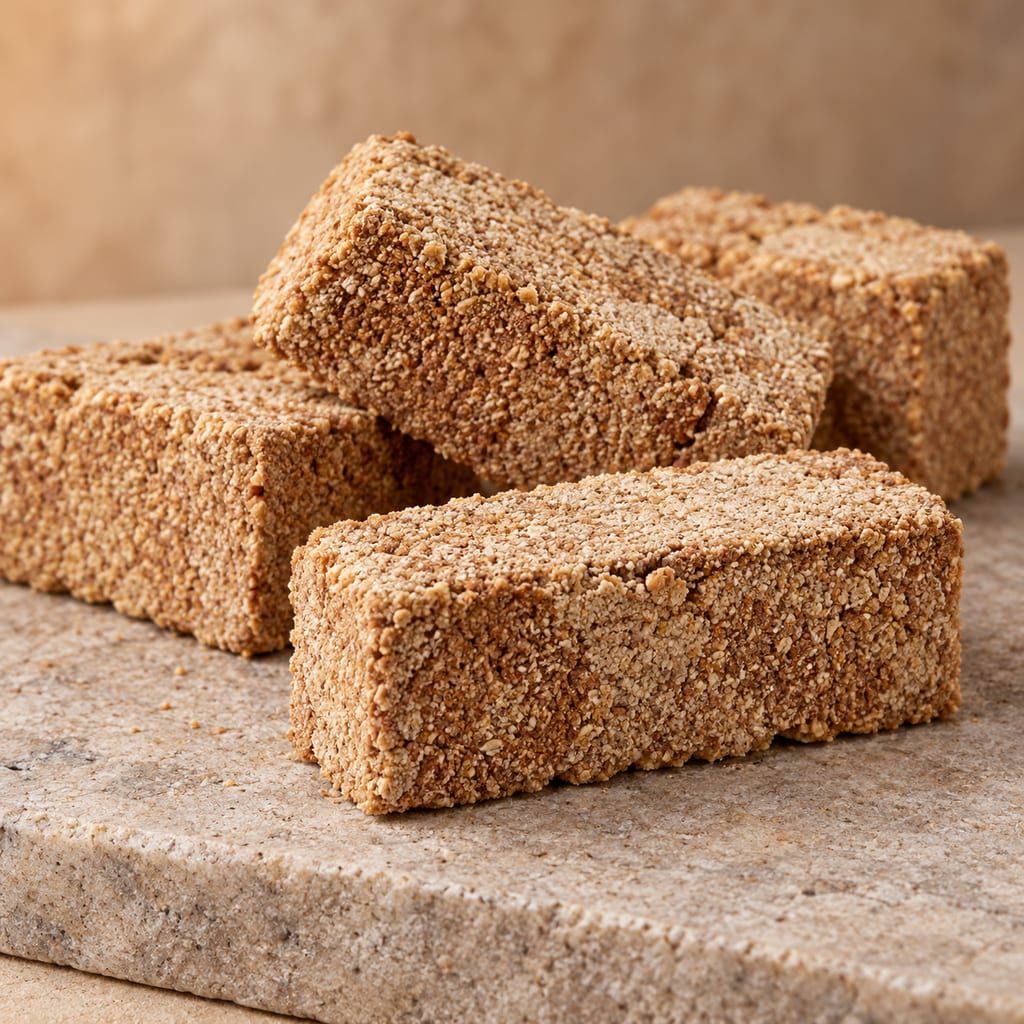
Maiqu (麦曲, wheat qu) is a wheat-based enzyme starter used in Chinese huangjiu such as Shaoxing wine; it is a starter category, not one defined strain.
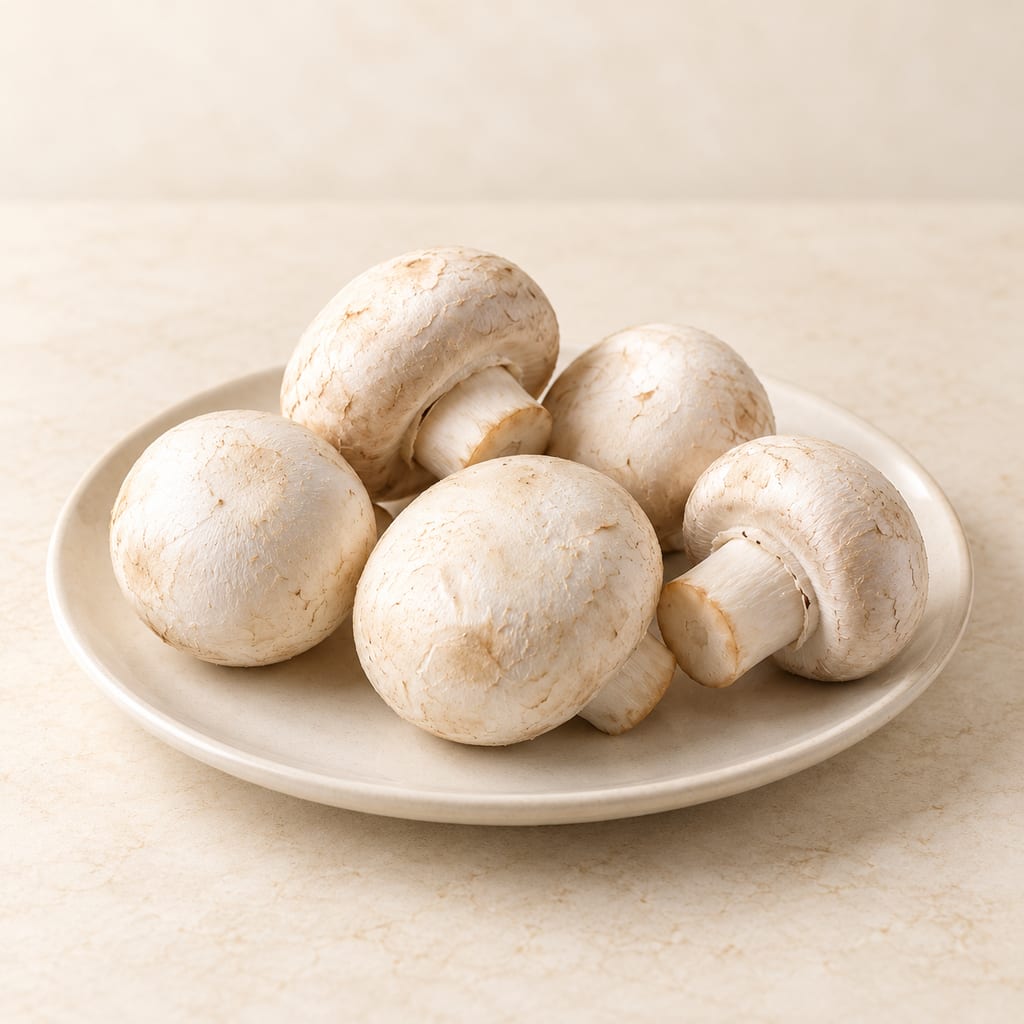
Mushrooms are the edible fruiting bodies of fungi, cultivated or gathered, and each species has its own texture, aroma and handling needs. Fresh, dried and roasted forms differ in water and in flavour compounds.
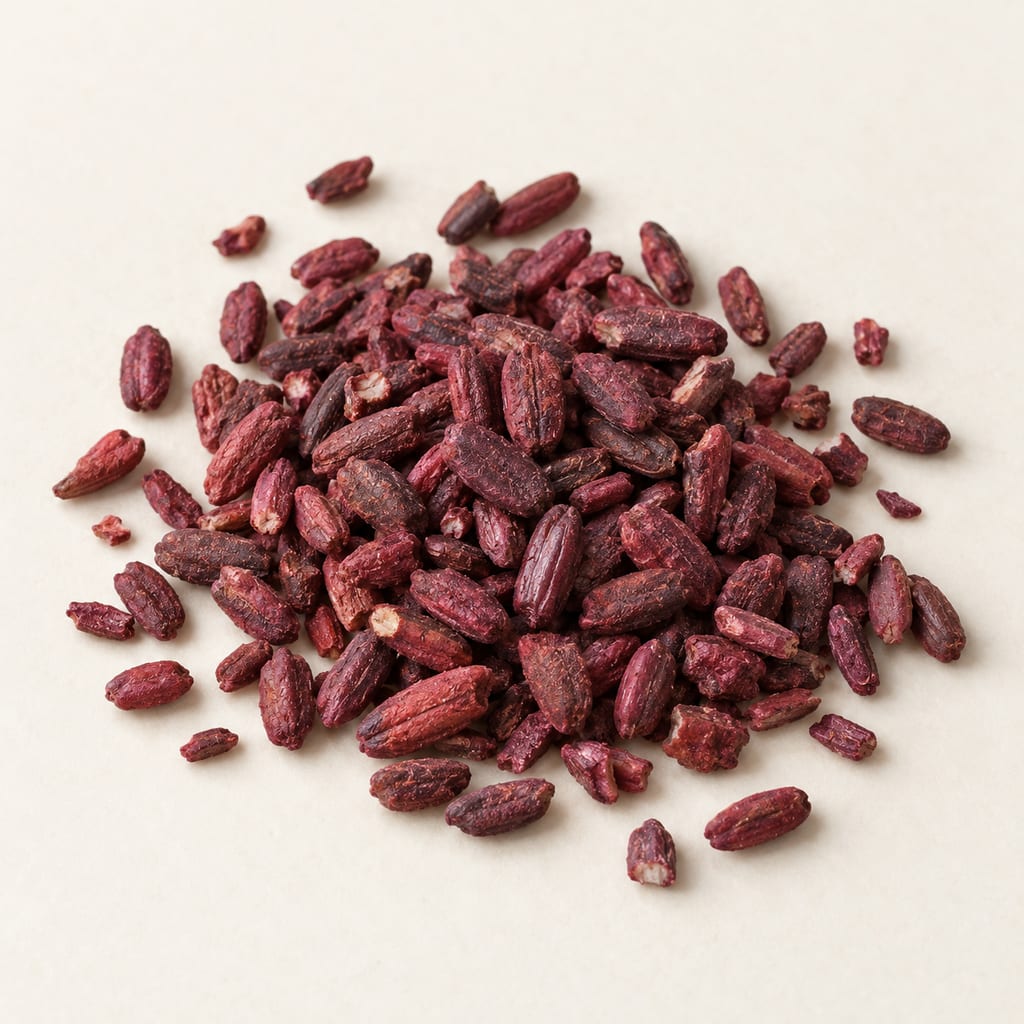
Wuyi hongqu is a regional red rice starter from the Wuyi area of Fujian, described as a mixed Monascus and Aspergillus culture used in rice wine and, in one report, cereal vinegar.

At North Abydos in Egypt, a fixed early Dynastic brewery comprised parallel semi-subterranean installations with rows of ceramic mash vats; excavation reports revise their number, scale and estimated batch capacity.

Ají amarillo is the orange-yellow Peruvian chilli cultivar group of Capsicum baccatum, used to colour and season huancaína sauce and ají de gallina. Published heat estimates do not establish one range for the named cultivar.

Toasted almonds are whole sweet almond kernels dry-roasted until golden to brown. Heat replaces their marzipan note with a roasted, nutty one; they thicken and flavour romesco.

Kodiak salmon, halibut and cod cut as seg'aq and hung on an initaq rack to become tamuuq, with kac'amaasaq and kupcuunaq named as different results.

Aniseed is the dried ripe fruit of Pimpinella anisum, an aromatic Apiaceae spice commonly called a seed. It adds a sweet, warm aroma to breads such as Moroccan krachel and South African mosbolletjies, and is distinct from star anise.

A fixed Late Chalcolithic installation in Areni-1 cave combined a shallow clay pressing basin with a large jar set into the cave floor and storage vessels nearby.

Ripe avocado flesh is the soft, buttery, fat-rich pulp of Persea americana, eaten raw. It is low in acid, so it is a fresh ingredient that needs care in chilled dishes.

A portable dome and pan used over a hearth, with embers on the lid and heat from below. Regional peka and saç forms share this principle while differing in materials, pan shape and how the food is cooked.
No community contributions have been published for this entry yet.
Sign in to contribute. Published comments and photos are free to read.
USDA Agricultural Marketing ServiceCut definition
Institutional Meat Purchase Specifications: Fresh Pork, Series 400The IMPS fresh-pork specification defines belly items 408, 408B, 409 and 409A, how the belly is separated from leg, shoulder, loin, fatback and spareribs, the minimum flank-muscle width, and weight bands.
Cited in: How the cut is taken; Choosing and keeping belly
Animal Bioscience; Van-Ba Hoa and colleaguesComposition · Quality research
Meat quality characteristics of pork bellies in relation to fat levelSeventy-eight crossbred pigs; bellies grouped by fat as 20 percent or less (n = 15), 21 to 30 percent (n = 30) and 31 percent or more (n = 33); cooking loss, moisture, fatty acids, volatile compounds and sensory scores by group; belly 16 to 18 percent of carcass weight; belly fat 20 to 60 percent and lean 22 to 55 percent.
Cited in: A cut made of layers; The animal behind it; How much fat a belly carries; The fat sausage-makers want; Choosing and keeping belly
TreccaniNames and forms
PancéttaPancetta as the ventral region of the pig with fatty layers alternating with thin layers of meat, and its salted, rolled and smoked forms.
Cited in: A cut made of layers; Belly, pancetta and bacon
PNAS; Laurent A. F. Frantz and colleaguesAnimal history
Ancient pigs reveal a near-complete genomic turnover following their introduction to EuropeAncient DNA evidence: domestic pigs reached Europe with Near Eastern farmers about 8,500 years ago and were largely replaced genetically by European wild boar lineages; about 4 percent Near Eastern ancestry in modern European pigs.
Cited in: The animal behind it
CREA Alimenti e NutrizioneUse in sausage
Materia primaVentricina del Vastese: lean and fatty cuts are listed separately, fatty cuts include pancetta; knife cutting that avoids smearing fat.
Cited in: The fat sausage-makers want
Two Guys & a CoolerUse in sausage
Ventricina SalamiA modern ventricina recipe using 600 g lean pork and 400 g fatty pork belly, coarse-ground or hand-chopped.
Cited in: The fat sausage-makers want
British Columbia Centre for Disease ControlProcess safety
Safety of Fermented Foods: Fermented SausageFat smearing during sausage preparation, sugar use by lactic acid bacteria, acidification and hazards of fermented sausage (June 2026 guidance).
Cited in: The fat sausage-makers want; Raw pork, parasites and allergy
Centers for Disease Control and PreventionSafety
About TrichinellosisRaw or undercooked pork as a route for Trichinella; salting, drying and smoking alone do not consistently kill the parasite.
Cited in: Raw pork, parasites and allergy
Centers for Disease Control and PreventionDietary context
About Alpha-gal SyndromeAlpha-gal is found in mammalian meat including pork; clinician-led avoidance for diagnosed alpha-gal syndrome.
Cited in: Raw pork, parasites and allergy
Vuur & RookRetail form
Pork belly without rind & bone 400 gramsA commercial rindless, boneless belly block as one retail form of the cut, with its raw layers visible in the product photograph.
Cited in: Choosing and keeping belly
Animal Diversity Web, University of Michigan Museum of ZoologyScientific name
Sus scrofa (wild boar)Sus scrofa as the species and Sus scrofa domesticus as the domesticated subspecies.
Cited in: The animal behind it
Minnesota Department of HealthStorage
Storing and Preserving: cold food storageFresh pork: 3 to 5 days refrigerated at 40 F, 4 to 8 months frozen at 0 F; bacon 7 days refrigerated, 1 month frozen.
Cited in: Belly, pancetta and bacon; Choosing and keeping belly
Morning Calm, Korean AirHistory · Use
SamgyeopsalName meaning, first print appearances in 1934 and 1959, rise of pork in Korea, grilling and wraps, Jeju accompaniment.
Cited in: A cut made of layers; Belly, pancetta and bacon; Belly in the kitchen, from Hangzhou to Seoul
Hangzhou Government (ehangzhou.gov.cn)Use · Regional variation
Dongpo PorkHangzhou braised pork, half fat and half lean, stewed in wine; texture; the West Lake origin anecdote.
Cited in: Belly in the kitchen, from Hangzhou to Seoul