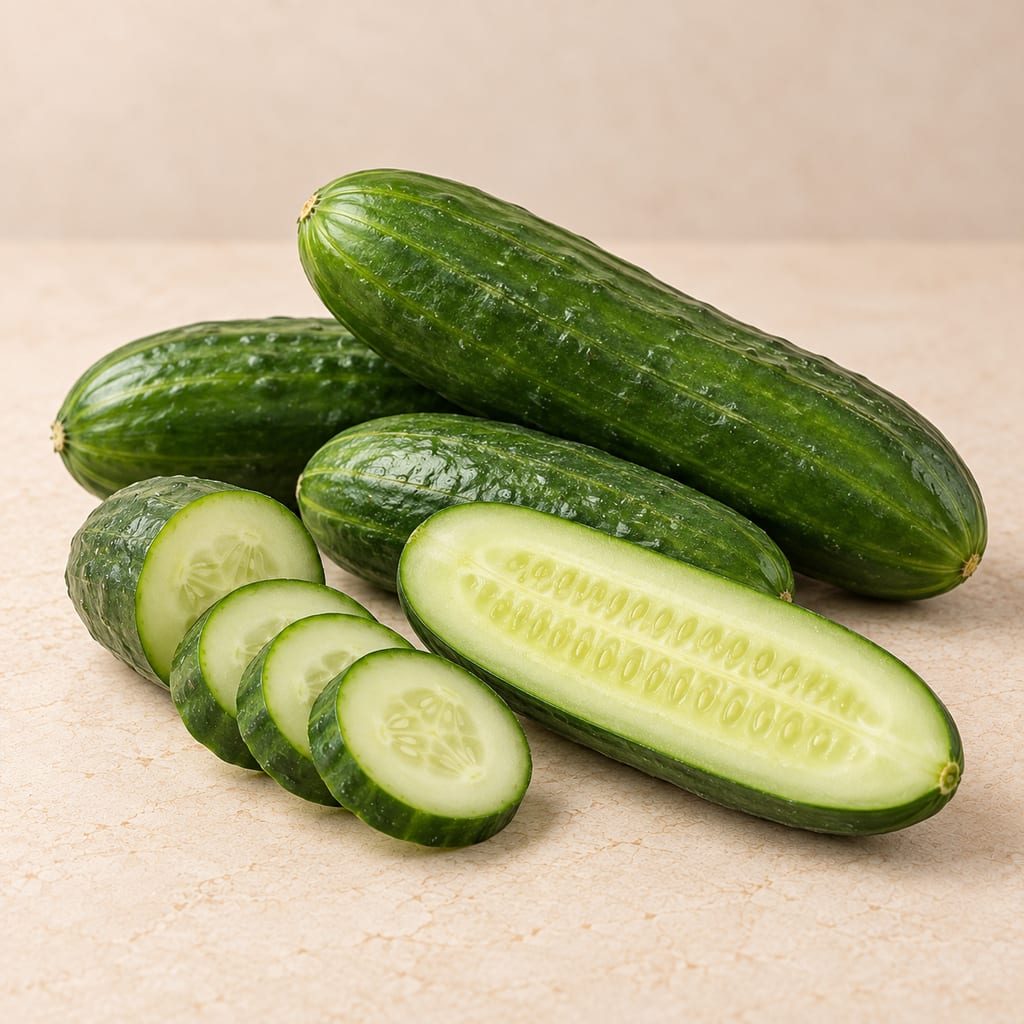
Cucumber
Cucumber is the watery fruit of Cucumis sativus, domesticated in India, and the classic raw material of brine pickles from New York dills to Nepali khalpi and Korean oi-sobagi.
 FermenteaWhere food goes to change
Sweet gherkins · Sweet cucumber pickles
Sweet gherkin pickles are small whole cucumbers preserved in a spiced, sweet vinegar syrup. This four-day U.S. canning method uses repeated hot-water soaks, staged syrup additions, and a boiling-water process.
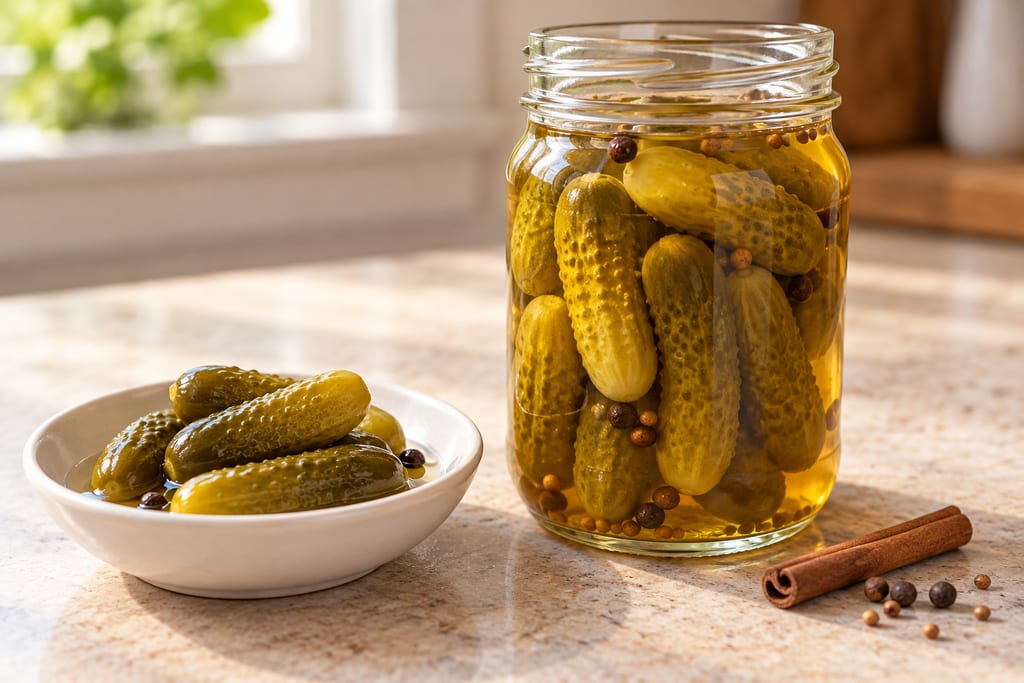
These sweet gherkins are whole cucumbers, chosen at no more than 1 1/2 inches, then preserved in a clear, sweet-sour syrup seasoned with turmeric, celery seed, mixed pickling spice and cinnamon. They are not relish: the fruit stays whole, apart from a fork prick, and the syrup remains the preserving liquid. The result belongs with bright, sweet, spiced pickles served a few at a time beside rich or salty food.
The word gherkin can refer to small cucumbers selected for pickling, but it also appears in trade and food writing as a name for the finished pickle. Here it means the small cucumber used in a specific tested process. The NCHFP formula does not identify a named cultivar, so the instruction is practical rather than botanical: select firm pickling cucumbers under the stated size. A larger slicing cucumber is not made equivalent by cutting it down; other recipes, such as cucumber relish or bread-and-butter slices, have their own size and method.
The recipe is a particular American home-canning formula, not a universal definition of sweet gherkins. It yields six to seven pints, and the careful combination of salt, sugar, vinegar, timing and heat distinguishes it from a jar of refrigerator pickles or a fermented dill pickle. Its four-day calendar is part of its character: the cucumbers are treated with successive hot liquids, then the syrup is concentrated by staged additions before the jars are processed.
Pickles are older than this formula, but familiar origin stories often outrun the evidence. Sarah Pruitt's history review describes early Mesopotamian pickling as a claim whose exact origin is unknown; it does not establish that the earliest preserved foods were cucumbers, much less sweet gherkins made by this method. The safest historical distinction is between pickling as a broad preservation practice and a named recipe whose dates and ingredients can be documented.
Peter Atkins traces vinegar- and sugar-preserved fruit and vegetables in Britain from household preparations toward commercial manufacture in the later eighteenth century. From the 1760s, preserved goods were sold at scale; after about 1830, factories increasingly adopted mechanized methods and production lines. Before reliable refrigeration, sealed jars and bottles could carry pickles and sauces through the grocery trade and over long distances. Vinegar also affected the vessels people chose: acid could react with lead glazes, so nonreactive stoneware or glass mattered. These are histories of commercial preserving, not proof that the NCHFP's four-day formula descends unchanged from a British factory pickle.
Pickles also mattered as an expected accompaniment. In her account of British food politics, Nadja Durbach recounts Magnus Pyke's memory that officials wanted gherkins grown for soldiers who expected pickles with cold meat. The point is cultural as much as practical: a sharp, sweet, or salty pickle could make a plain meal feel complete, even when it supplied little energy. In the United States, Pruitt describes Dutch farmers and pickle sellers in seventeenth-century New York and later wartime allocations of pickle production. These examples show how preserving connected gardens, shops, armies and daily meals, while leaving the origins of this exact sweet pickle undocumented.
This recipe preserves cucumber through a vinegar-based acid system and a boiling-water canner process. It is not a fermentation. In a lactic cucumber ferment, naturally present or introduced lactic-acid bacteria use available sugars and produce acid as the food cures in salt brine over time. Here the source instead supplies vinegar at a stated 5 percent acidity; the recipe's acidity comes from that measured ingredient, not from waiting for bacteria to grow.
Acidity changes the environment in which spoilage organisms could grow, and NCHFP stresses that the acid level must be adequate and uniform throughout a pickled product. That is why its guidance treats vinegar, food, and water proportions as controlled recipe variables, not flavor suggestions. The hot syrup and boiling-water canner are separate physical heat treatments. They are not microbial fermentation stages, and a jar's glossy surface or sweet aroma cannot demonstrate that the acid balance or canner process was correct.
Salt has a role in the early soak, but it does not turn these cucumbers into a fermented pickle. Canning or pickling salt is specified in the formula; NCHFP notes that anticaking materials in some salts can cloud brines and that flake salt varies in density. The ingredient form matters because the recipe measures by volume. A flaked or coarse salt may pack differently in a half cup, so using the published salt and quantity keeps the formula aligned with its evidence.
The blossom-end trim is a small step with a stated quality reason: cucumber blossoms may carry an enzyme that makes pickles excessively soft. That is different from the recipe's acidity control. A soft pickle is a quality failure; an unsafe acid balance is a safety failure. Texture, color, and flavor can guide a cook's assessment of quality, but they cannot replace measured recipe proportions and the specified canning process.
Small firm cucumbers are chosen because the method keeps them whole. Uniform small size lets a batch fit the intended pint jars and gives the vinegar syrup a consistent form to surround. The source selection guidance gives about 1 1/2 inches for gherkins. It does not name a cultivar, so no particular seed variety should be treated as required. Freshness matters: the general guidance says to choose firm produce without spoilage and to measure carefully, because the produce-to-liquid proportion affects quality and can affect safety.
Vinegar provides the measured acidity and the sharp edge that balances the high sugar quantity. The specified 5 percent is a label requirement, not an invitation to use a weaker homemade vinegar or to dilute the recipe. Sugar makes the defining sweet syrup and supplies body; the eight cups are added in stages, so each reheating occurs with a different share of the total sugar. Because this is a canning formula, the amount is not casually reduced to suit a less sweet palate. A change that seems small in flavor can also take the recipe outside its tested proportions.
The salt does not sit in the final ingredient list as a topping. It is used in hot water during the early treatment, then the cucumbers move into the spiced vinegar-sugar syrup. The formula's half cup is part of the published process. NCHFP recommends canning or pickling salt for clarity and predictable measuring; it does not say that salt is the acid source in this recipe.
Turmeric, celery seed, mixed pickling spice and cinnamon supply the aromatic profile. The NCHFP list is specific about the amounts and uses whole mixed spice rather than a newly invented blend. Fennel is optional, and vanilla is optional at the final syrup boil. Keeping the options where the source places them matters: vanilla does not go in at the beginning, and optional ingredients do not authorize changes to the required vinegar and cucumber balance. Each spice should be fresh enough to smell recognizable; old pantry spices lose aromatic force, though the source gives no replacement measure.
The process begins with washing and trimming, not with a jar of finished pickles. The blossom-end slice is discarded while a short piece of stem remains. The cucumbers are placed in a suitable large container and covered in boiling water. Six to eight hours later, drain them and cover with 6 quarts of fresh boiling water containing 1/4 cup of the measured salt. On the second day, drain again and repeat that salted hot-water cover with the remaining 1/4 cup. This sequence is unusual enough that it should be followed from the source rather than shortened by intuition.
On the third day the cucumbers are drained and pricked with a table fork. The first syrup uses three cups of vinegar and three cups of sugar, with turmeric, celery seed, mixed pickling spice, cinnamon and optional fennel; the mixture is brought to a boil and poured over the fruit. Six to eight hours later, the syrup is saved, combined with two more cups each of sugar and vinegar, reheated to a boil and returned to the cucumbers. The stored liquid is reused rather than discarded, so the measured acidic component remains part of the system.
On day four the syrup is saved again. Two additional cups of sugar and one cup of vinegar are boiled with it and poured over the gherkins. After another six to eight hours, the syrup is drained and saved for its final heating with the last cup of sugar and optional vanilla. The cucumbers are then packed into sterile pint jars and covered with the hot syrup, leaving half an inch of headspace. The source gives six to seven pints, so the exact number depends on how the cucumbers fit and how much liquid each jar takes.
The long sequence lets the syrup change in a measured way while the cucumbers remain whole. A cook may notice changes in color, gloss, and the intensity of spice as the liquid is reheated and poured again; those are observations of the preparation, not independent tests of safety. The source does not provide a chemical analysis or a separate pH endpoint for this recipe, so the defensible control remains the exact formulation, 5 percent vinegar, jar size, headspace and processing schedule it publishes.
The word pickle covers methods that should not be collapsed into one household recipe. NCHFP separates quick-process vinegar pickles, which are not fermented, from dill cucumbers cured in salt brine and from relishes made with chopped vegetables. This page follows the sweet gherkin route. A relish has a different cut and a cooked, chopped form; a fermented dill cucumber has a microbial acidification stage that this formula lacks.
Even two sweet canning formulas may be meaningfully different. NCHFP's 14-day sweet pickles use cucumbers two to five inches long, a sequence of salt treatments, and syrup reheated on successive days through day fourteen. The four-day gherkin recipe uses cucumbers no larger than one and a half inches and its own sugar-vinegar balance and timing. One schedule cannot be shortened into the other, and their quantities should not be blended.
Regional names describe further distinctions. The CBI overview discusses tiny French cornichons, dill pickles common in Eastern Europe, sweet-sour bread-and-butter cucumbers, and garlic-and-dill kosher-style pickles. Those labels signal differences in cucumber size, seasoning and process, not interchangeable instructions. A jar marked cornichons may be much smaller and sharper than these U.S.-style sweet gherkins; a dill pickle may be fermented or quick-packed depending on its recipe. Read the process, not only the name on the label.
Serve sweet gherkins as a small sharp-sweet counterpoint: next to cold meat, cheese, sandwiches, or a rich plate where vinegar cuts through fat. Pickles are also chopped and drained for sauces and mayonnaise-based condiments; the recipe data already connect this product with tartar-style mayonnaise and burger sauce. Draining chopped pickle keeps free syrup from thinning a sauce. The gherkin itself can be served whole, halved lengthwise, or cut across so that each bite retains the sweet vinegar and spice.
Choose intact cucumbers that feel firm and fit the source's size limit. The method does not ask the cook to peel or slice them; a fork prick is its only puncture before the jar stage. Whole cucumbers therefore retain a different shape and use from sliced bread-and-butter pickles, relish, or mustard cucumbers. If a batch yields six pints rather than seven, that is within the published range; the difference is not a cue to top up jars with extra water or vinegar.
The recipe's final process time depends on elevation: five minutes for pints from zero to one thousand feet, ten minutes from one thousand one to six thousand feet, and fifteen minutes above six thousand feet. Use that exact schedule with the specified pint jars. The NCHFP page does not state a shelf life or opened-jar duration for this recipe, so none is promised here. Keep the process information with the recipe when making it; a beautiful jar or a familiar smell cannot certify that its acidity and heat treatment were adequate.
The National Center for Home Food Preservation's Sweet Gherkin Pickles formula is adapted from the USDA Complete Guide to Home Canning, revised 2015. That establishes a documented modern household procedure, not its invention date or place of origin. Peter Atkins documents English factory-made vinegar- and sugar-preserved foods expanding from domestic to industrial production from the 1760s and mechanized factory methods from about 1830; that is a broader pickle history, not evidence for the exact formula here.
Scaling: source batch only
Acidity is a safety control in vinegar pickles; changing the vinegar, cucumber, or water proportions or using vinegar with unknown acidity can leave the product inadequately acidified.
Hazard sourceNCHFP says spoilage organisms including yeasts and molds can affect pickles and gives processing times by jar size and elevation.
Hazard sourceThe blossom end may contain an enzyme that causes excessive softening; the source directs the cook to remove a thin slice.
Hazard sourceUse the exact published proportions and vinegar labeled 5 percent acidity; do not substitute vinegar of unknown strength or alter the cucumber, vinegar, or water balance.
Control sourceSelect firm cucumbers at the size specified for this recipe and remove the blossom end as instructed.
Control sourceUse pint jars and the boiling-water canner process time for the canner's elevation exactly as listed by NCHFP.
Control sourceThis preparation is a vinegar pickle, not a lactic fermentation; do not apply a fermented-dill method to it.
Do not infer safe acidity or a sound seal from appearance, odor, taste, or a bubbling brine. The source gives no storage duration, so none is stated here.
This row records the U.S. household method in the National Center for Home Food Preservation; it does not claim that sweet gherkins originated in the United States.
Cucumber is the watery fruit of Cucumis sativus, domesticated in India, and the classic raw material of brine pickles from New York dills to Nepali khalpi and Korean oi-sobagi.
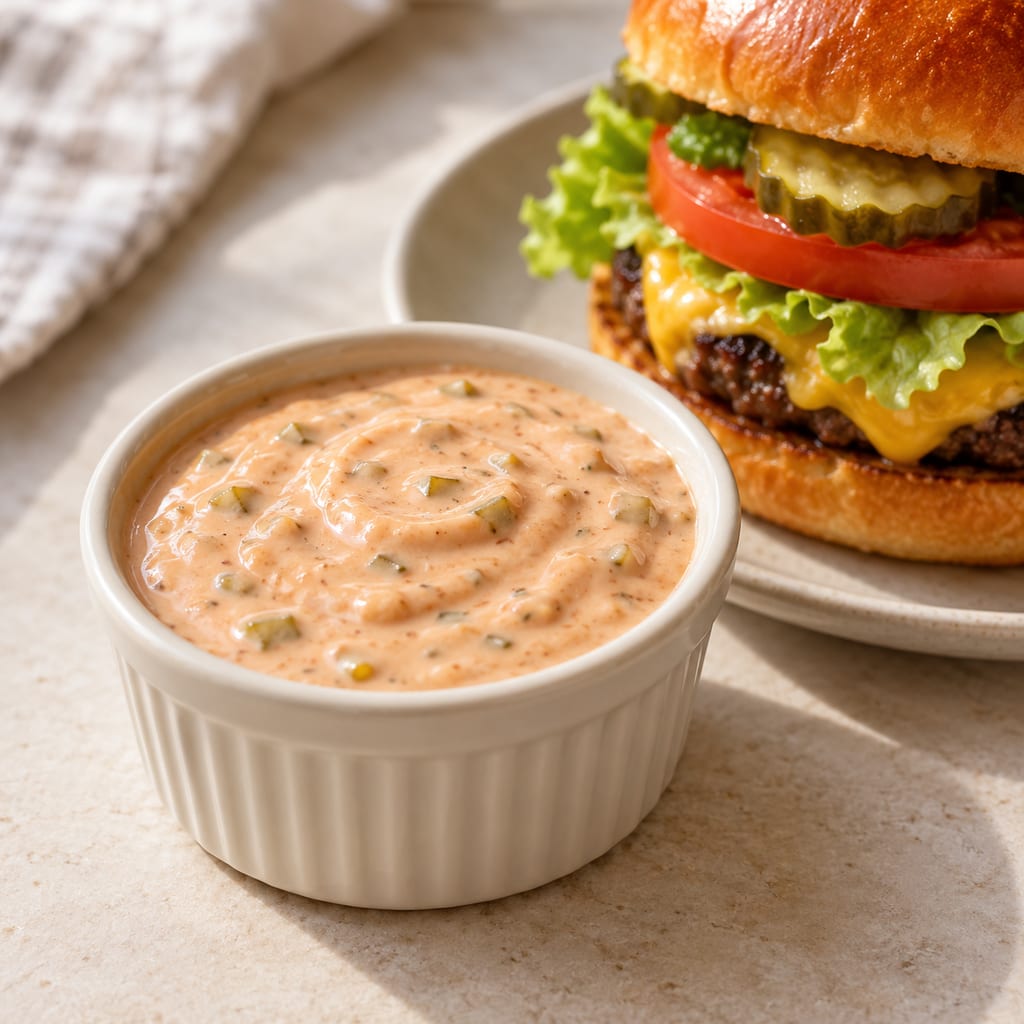
Mayonnaise mixed with ketchup, drained pickle relish and yellow mustard makes a tangy, pickle-flecked sauce for burgers; these proportions are an untested starting point.
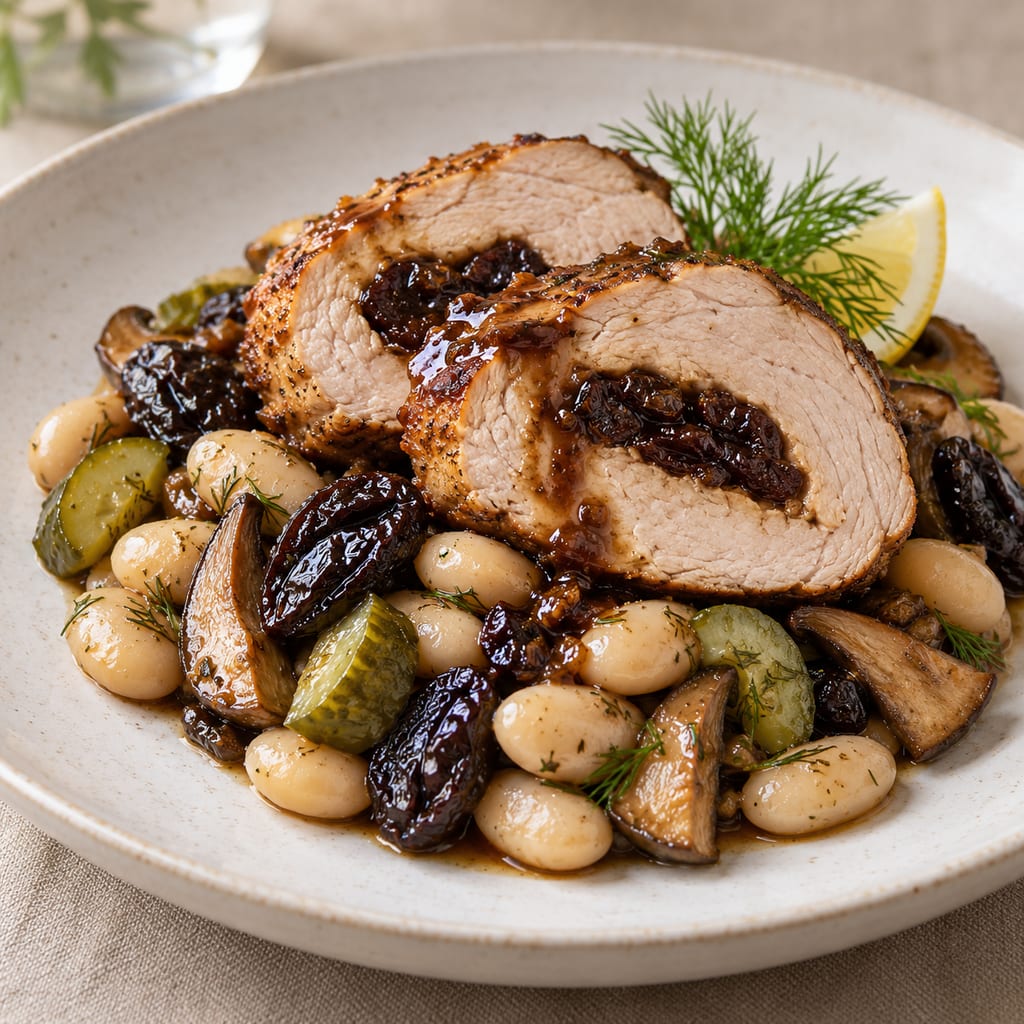
This Polish competition recipe stuffs pork loin with suska and serves it with a bean salad containing more smoked-and-dried plums.
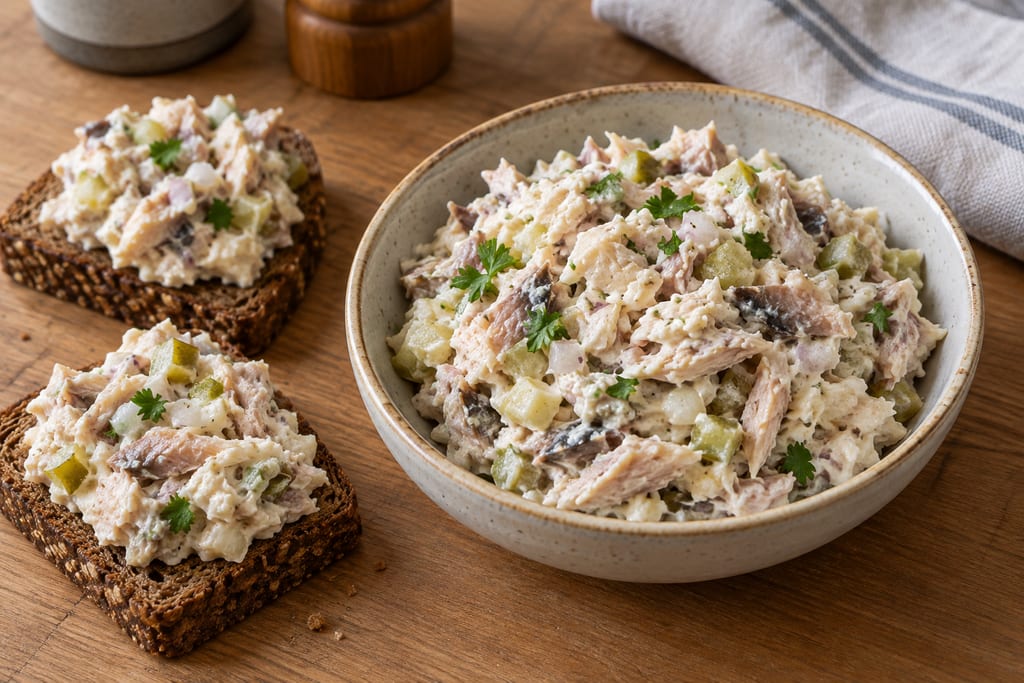
A quick Czech spread folds ready-smoked mackerel into quark, pickles, onion, mustard and lemon for serving with bread.
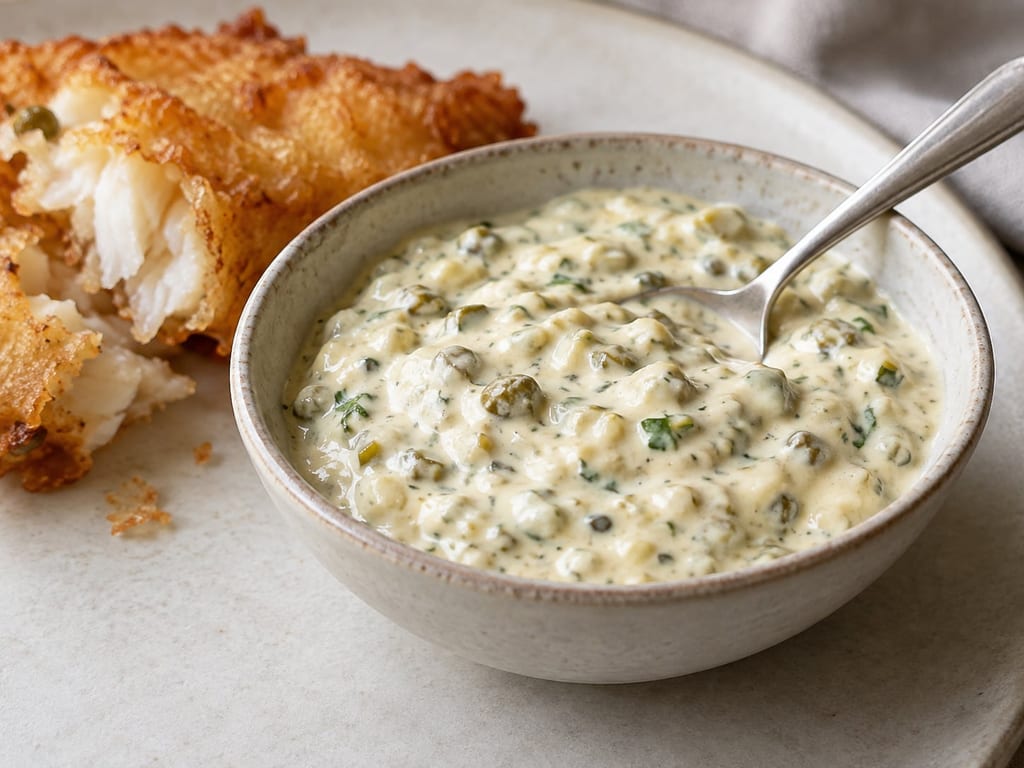
Drained pickled cucumber, capers and unspecified herbs turn finished mayonnaise into a fresh fish and seafood accompaniment; these archived amounts are untested starting points.
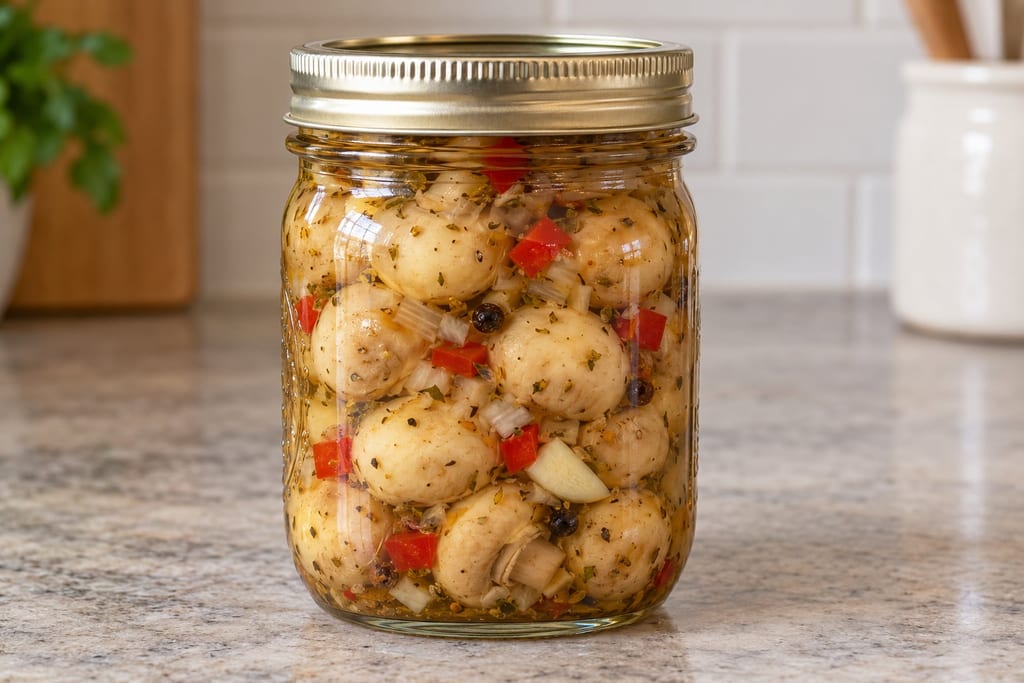
Small whole button mushrooms cooked in an acid and oil marinade and sealed in half-pint jars for shelf storage, using the tested US home-canning method.
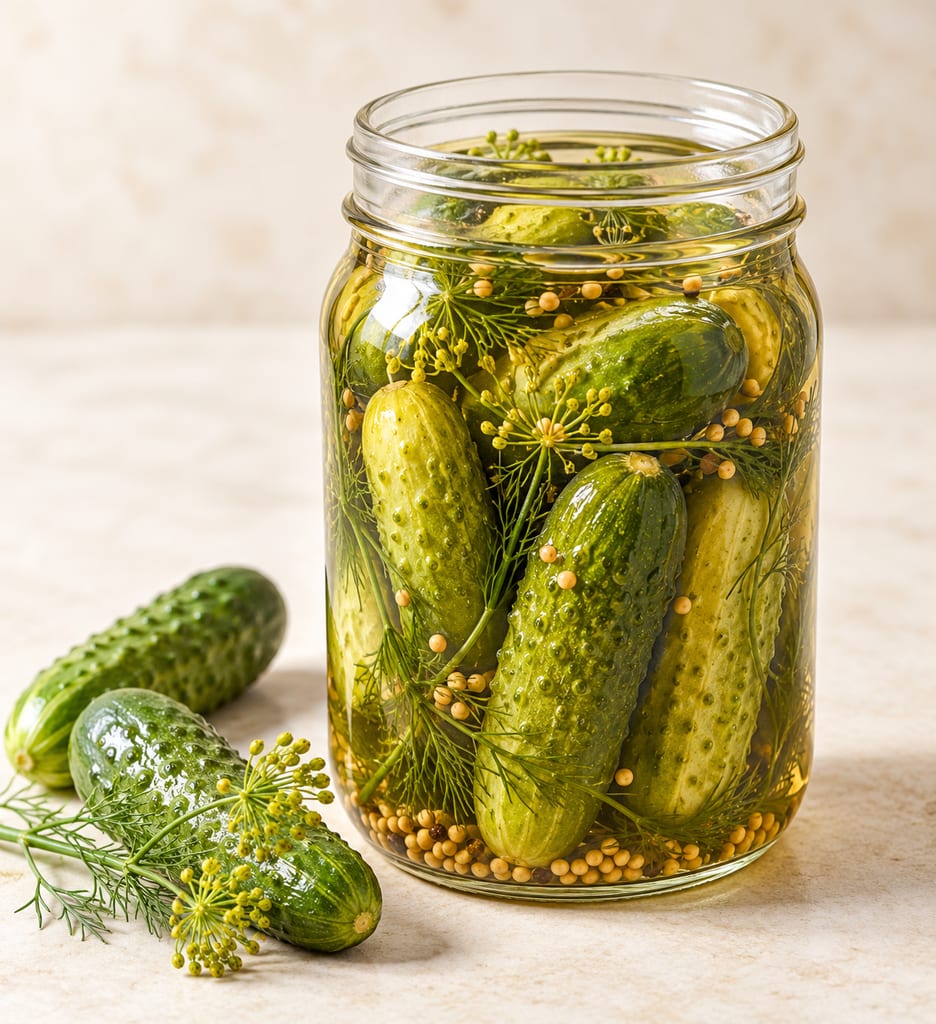
Whole small cucumbers are soaked in a measured salt solution, packed with dill and mustard seed, then covered with a boiling 5% vinegar brine and processed in a boiling-water canner.
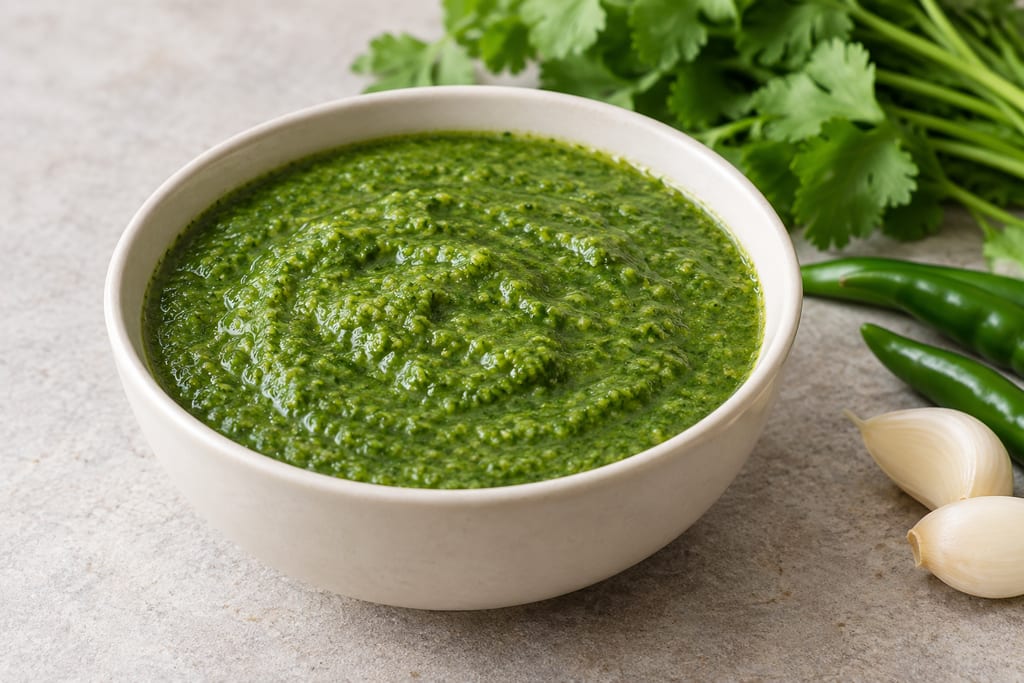
Afghan coriander chatni is a sharp, hot herb sauce with garlic and vinegar. A 2008 Afghanistan manual records green or red pepper and optional walnut; heat and household versions vary.
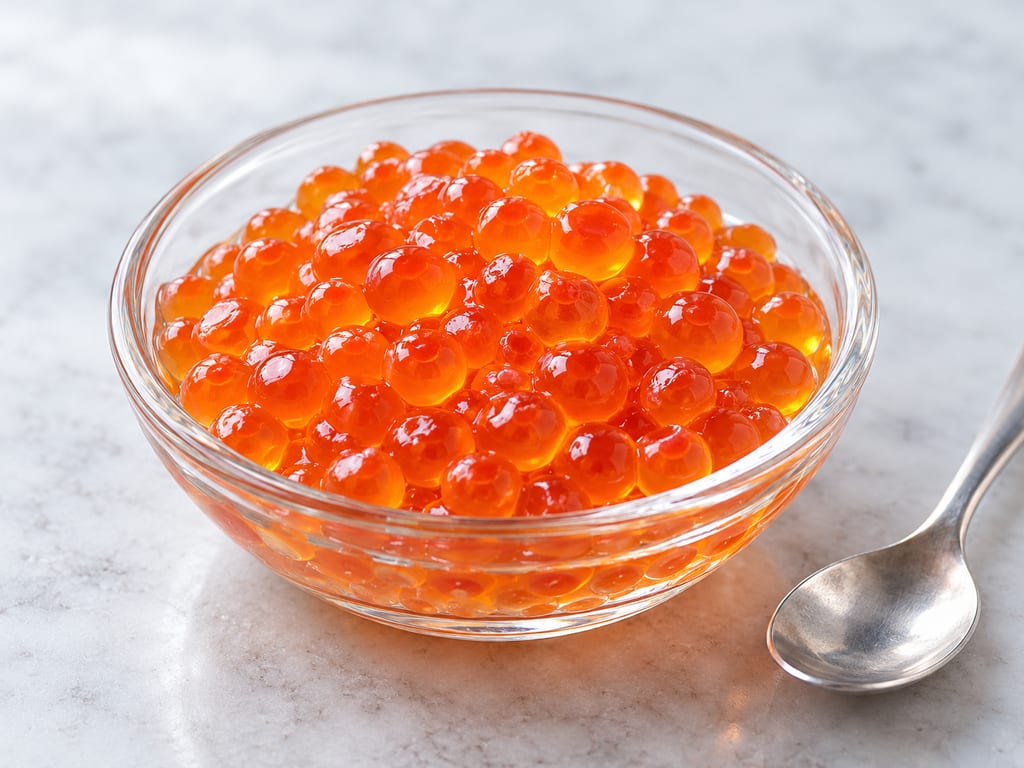
Salmon roe is separated from skeins and treated in two salt-water stages using a University of Alaska Extension formula.
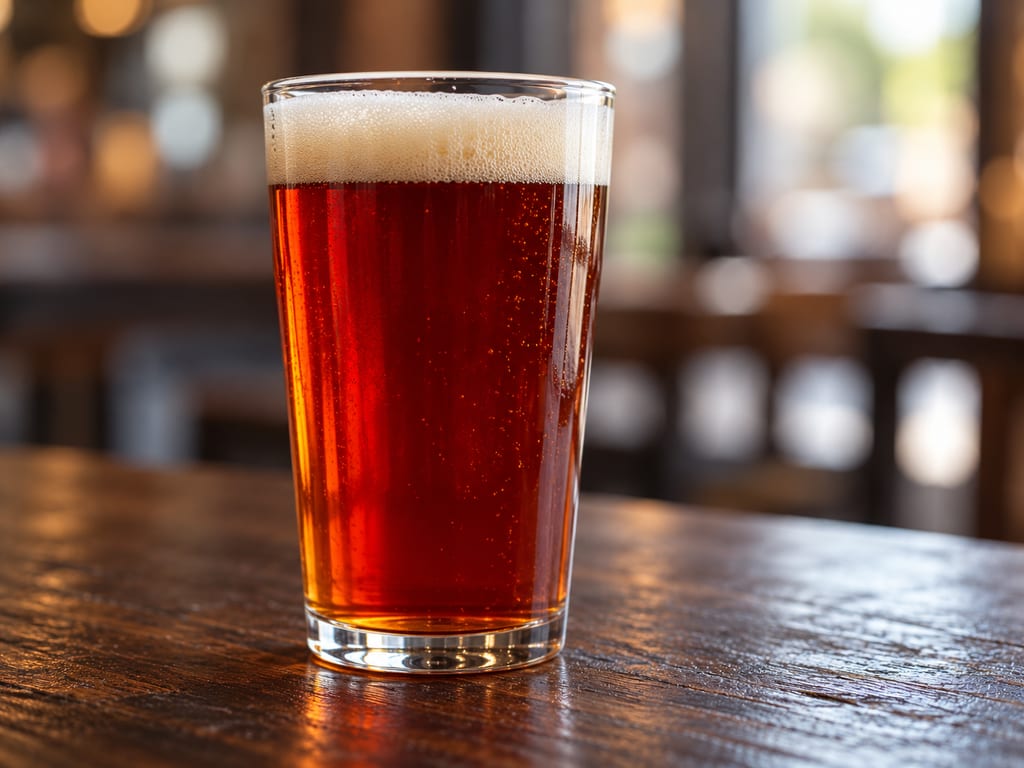
A deep amber-red American ale brewed from pale, Munich, CaraVienne and chocolate malts, bittered with Columbus hops and finished with Amarillo.

Kodiak salmon, halibut and cod cut as seg'aq and hung on an initaq rack to become tamuuq, with kac'amaasaq and kupcuunaq named as different results.
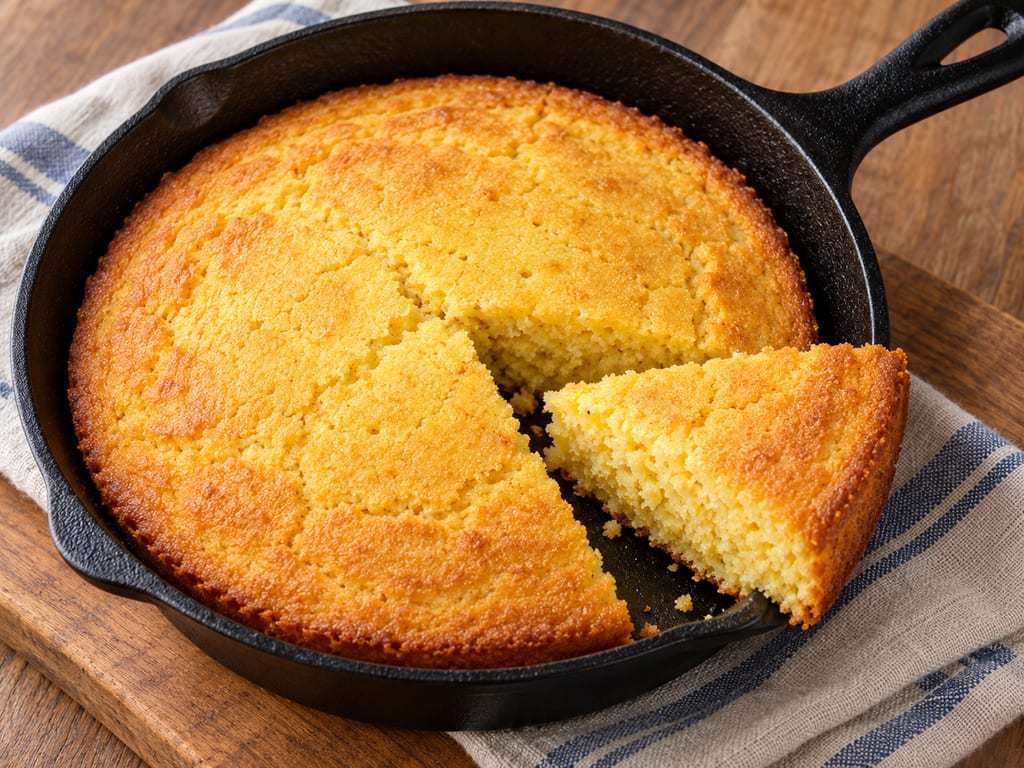
A modern cornmeal-and-wheat cornbread that King Arthur Baking describes as a compromise between Northern and Southern styles. The batter is baked in a pan or as muffins and served warm.
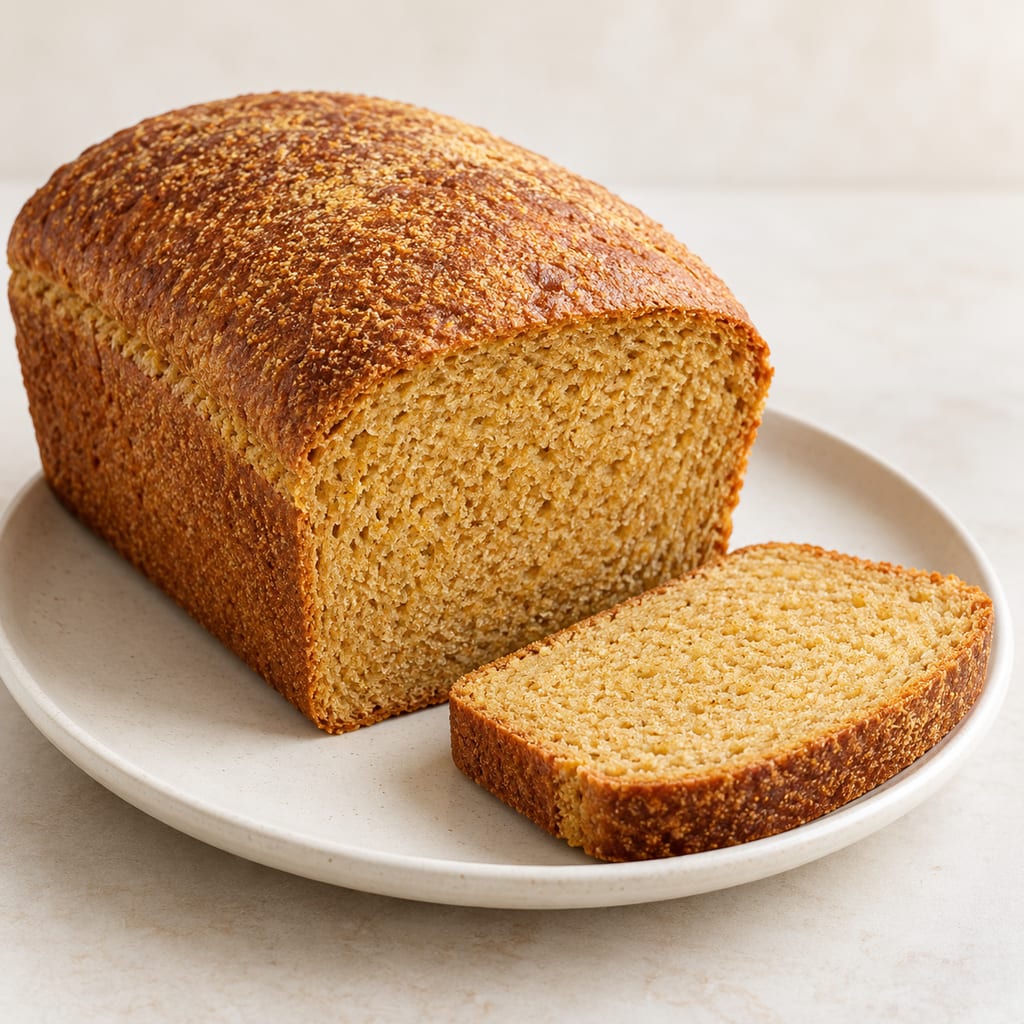
Anadama is a New England yeast loaf made with wheat flour, cornmeal and molasses. Scalded cornmeal enriches the dough, while molasses lends sweetness and a dark crust; it is especially good toasted or beside soup and baked beans.
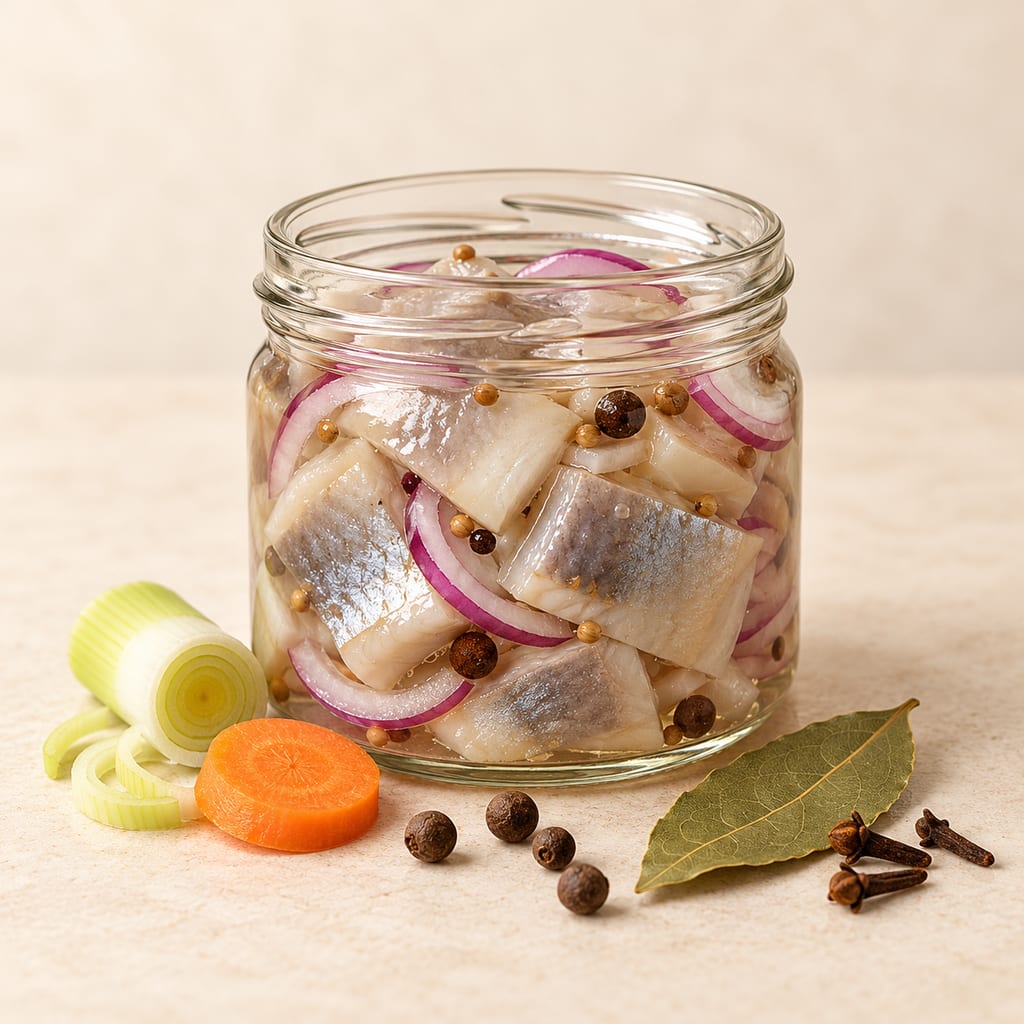
A Swedish ready-to-dress herring preparation: add the classic sliced aromatics and spices to already prepared herring, then serve or chill for fuller flavour.

Achcharu is a family of Sri Lankan vinegar pickles made with mixed vegetables or seasonal fruit and a piquant spice dressing. This version is a quick, refrigerated, non-fermented mixed-vegetable pickle.
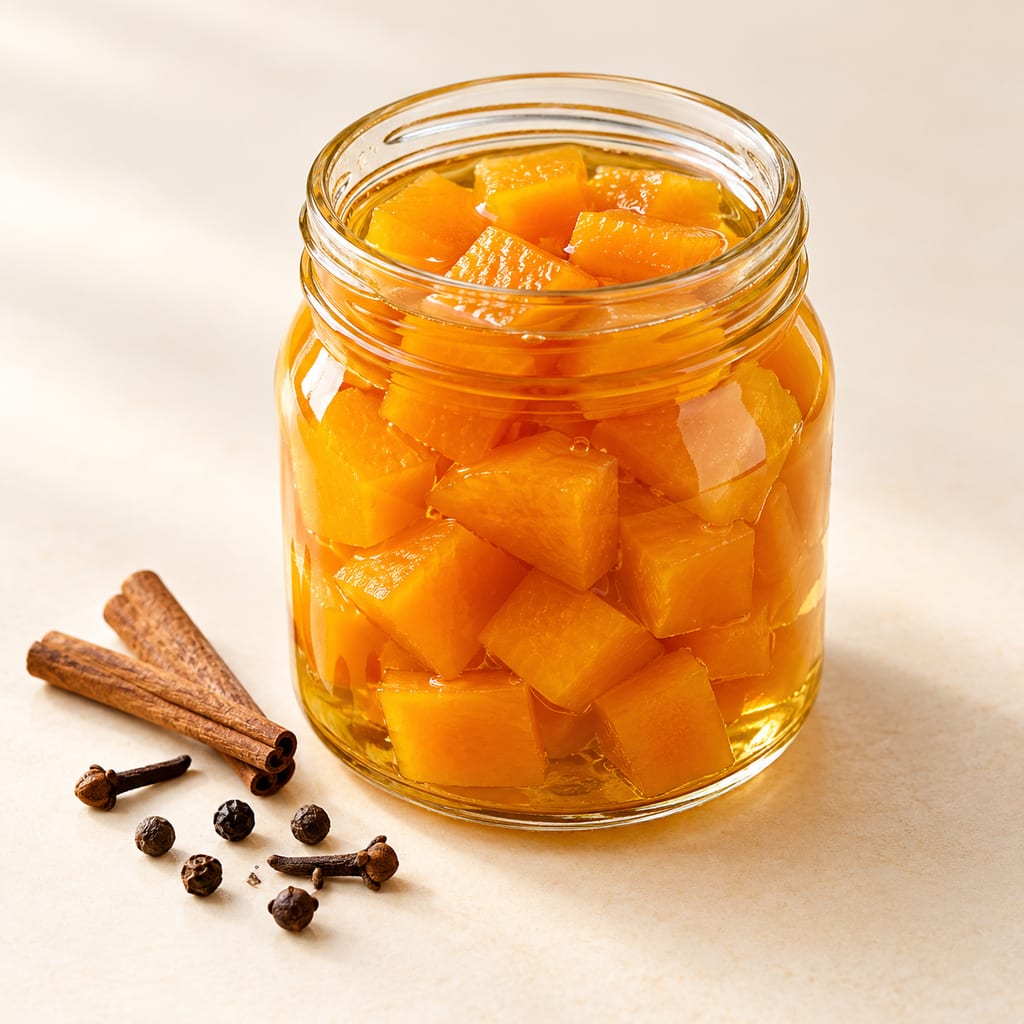
Ball sweet pumpkin pickles: Cupboard: exact published Ball formulation and water-bath process.
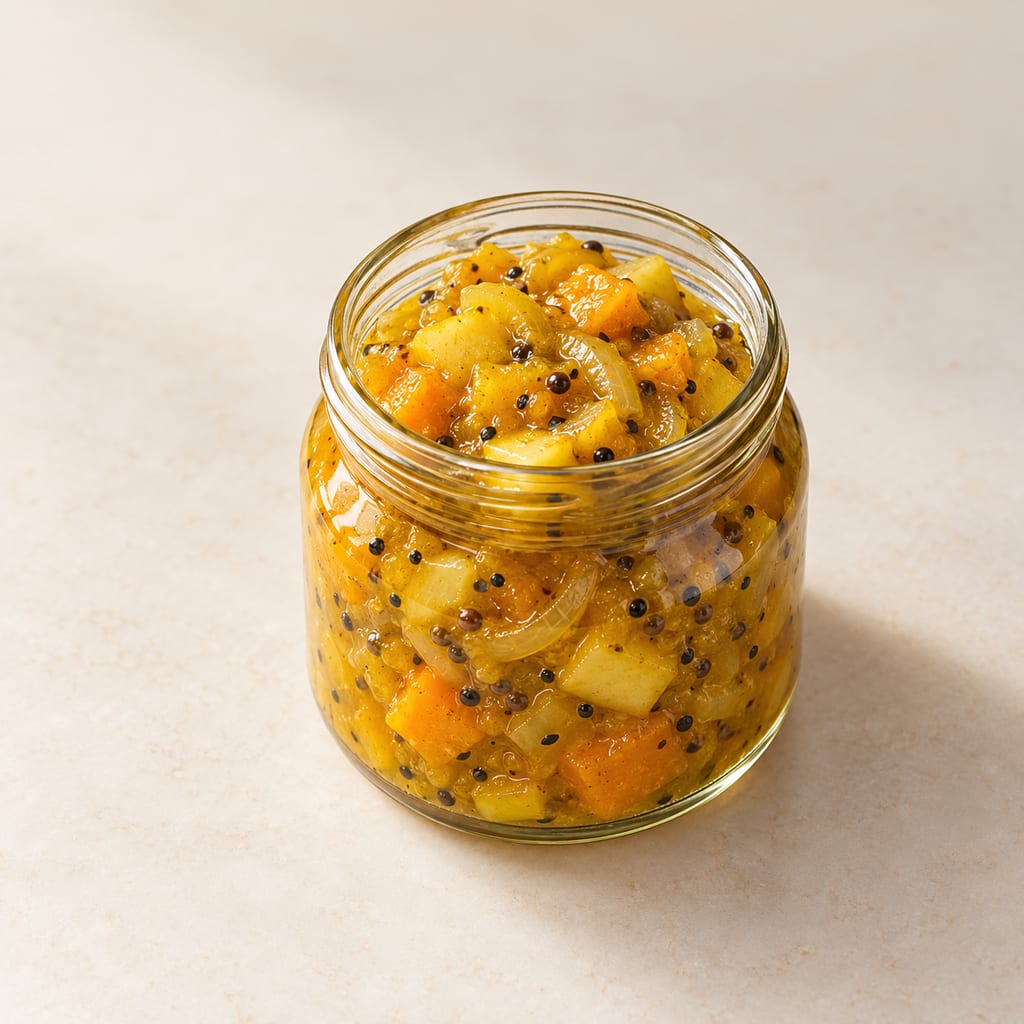
British pumpkin, apple and mustard pickle: Freeze for winter; small fresh portion refrigerated up to 48 hours.
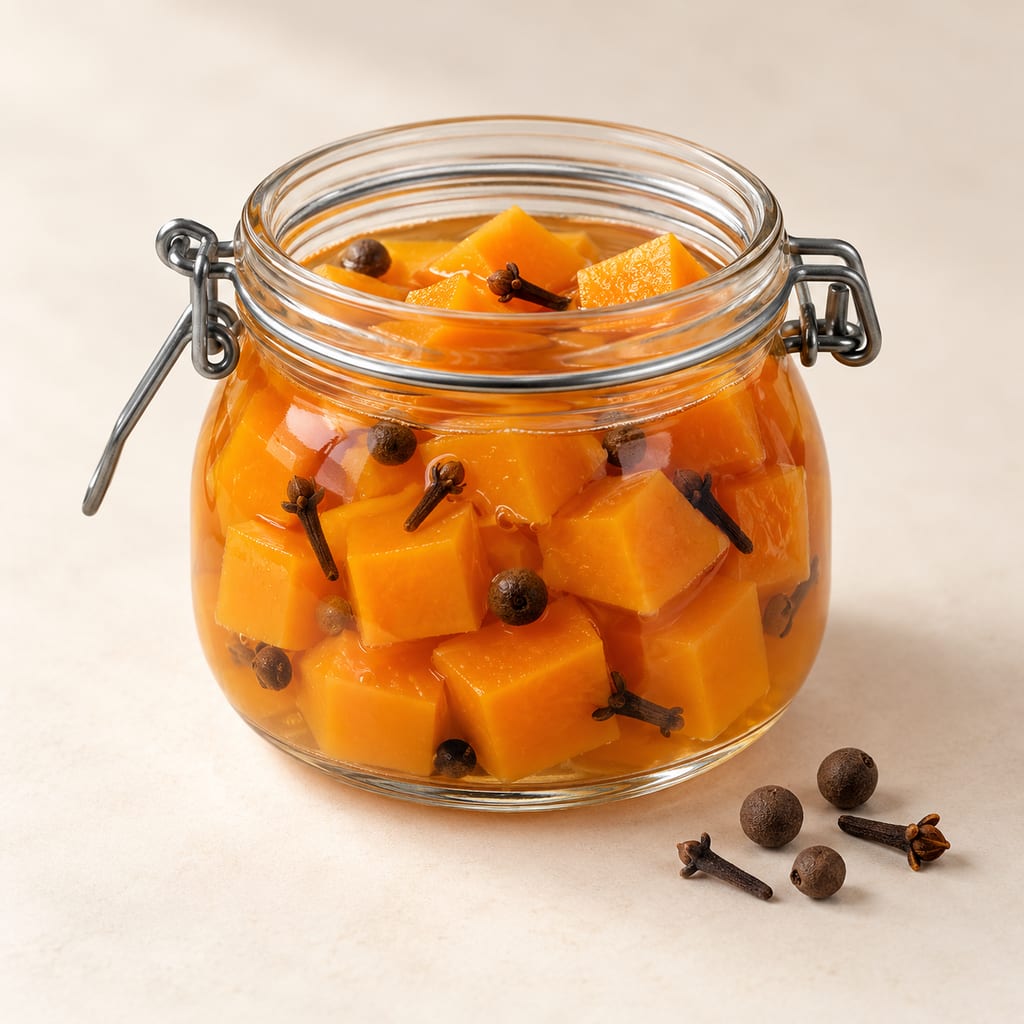
Dynia marynowana: Freeze for winter; small fresh portion refrigerated up to 48 hours.
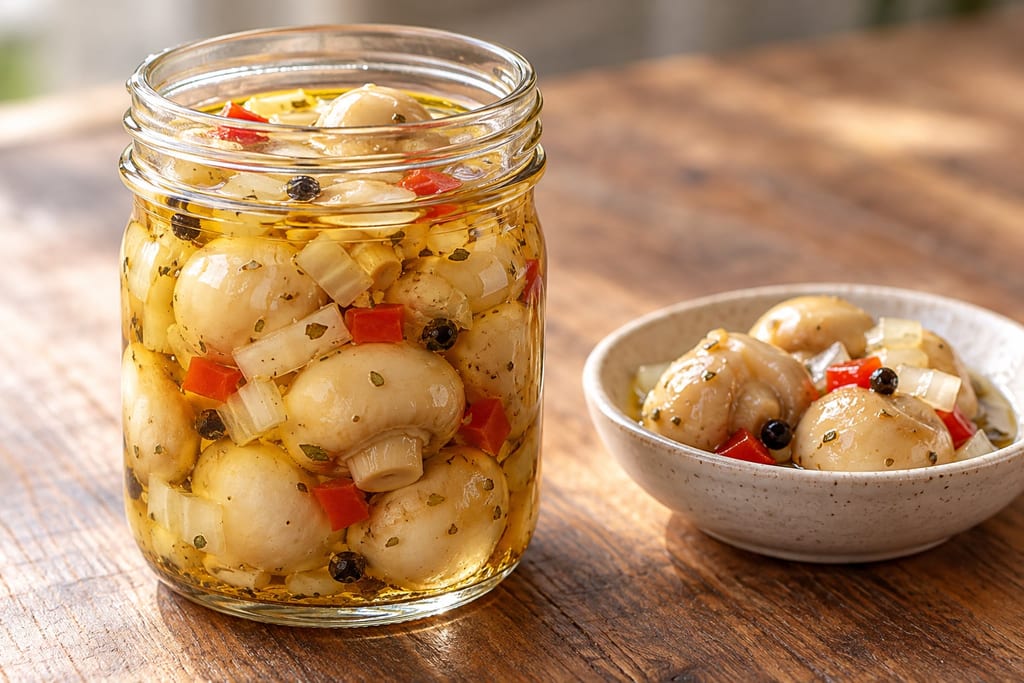
Small edible mushrooms are briefly cooked and packed in a seasoned vinegar marinade, a sweet-sour preserve served cold in Poland and neighbouring cuisines.

Fried or cooked food covered in a vinegar-based preparation, the heat and the externally supplied acid working together; a family of methods whose early form is a Roman instruction for treating fried fish with hot vinegar.
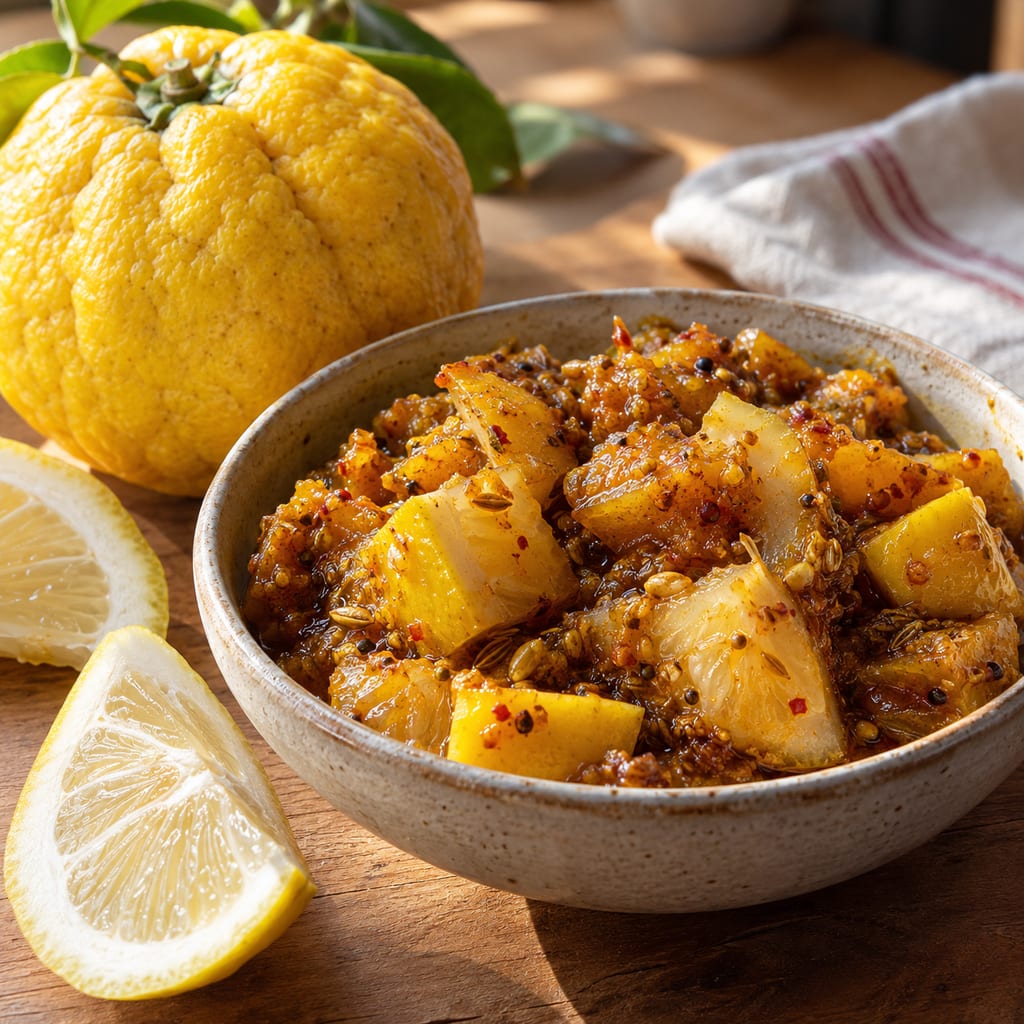
Ripe Himalayan galgal is boiled, sun-dried and cooked with mustard oil, spices and jaggery before a further rest in a ceramic jar.
No community contributions have been published for this entry yet.
Sign in to contribute. Published comments and photos are free to read.
National Center for Home Food PreservationMethod · Yield · History · Safety
Sweet Gherkin PicklesThe exact ingredient quantities, optional fennel and vanilla, 6–7 pint yield, four-day sequence, blossom-end trim, 1/2-inch headspace, and altitude-adjusted pint processing times.
The page identifies the formula as adapted from the USDA Complete Guide to Home Canning, revised 2015.
Cited in: What makes a sweet gherkin; Vinegar acidifies; microbes do not make this pickle; Why the ingredients are staged this way; Four days of water, salt and syrup; Serving, choosing and keeping the result in view
National Center for Home Food PreservationClassification · Science · Safety · Ingredient context
General Information on PicklingFresh-pack or quick-process pickles are not fermented; relishes are made from chopped fruit or vegetables cooked with seasonings and vinegar.
Acidity is a safety concern; proportions of vinegar, food, or water must not be altered and unknown-acidity vinegar should not be used.
Fresh cucumbers should be firm and free of spoilage; the blossom end may contain an enzyme that softens pickles.
Five-percent white distilled or cider vinegar is recommended; canning or pickling salt is recommended.
Cited in: Vinegar acidifies; microbes do not make this pickle; Why the ingredients are staged this way; Four days of water, salt and syrup; Sweet gherkins beside other cucumber pickles
National Center for Home Food PreservationIngredient selection · Quality
Selection of Fresh CucumbersSelect firm cucumbers; the cited guidance gives about 1 1/2 inches for gherkins and 4 inches for dills.
Cited in: What makes a sweet gherkin
National Center for Home Food PreservationIngredient context
Salts Used in PicklingCanning or pickling salt is recommended; anticaking agents can cloud the brine, and flake salt varies in density and is not recommended.
Cited in: Vinegar acidifies; microbes do not make this pickle; Why the ingredients are staged this way
National Center for Home Food PreservationVariation · Method comparison
14-Day Sweet PicklesA separate tested sweet pickle uses 2- to 5-inch cucumbers, a staged salt-water treatment, and daily syrup reheating through day 14; it is not the four-day small-gherkin method.
Cited in: Sweet gherkins beside other cucumber pickles
National Center for Home Food PreservationVariation · Method comparison
Dill PicklesA separate dill pickle method uses salt brine and fermentation over weeks; that microbial process is distinct from vinegar acidification in this recipe.
Cited in: Sweet gherkins beside other cucumber pickles
HISTORY / A&E Television NetworksHistory
The Juicy 4,000-Year History of PicklesThe author explicitly says exact origins are unknown while discussing claims of early Mesopotamian pickling; those claims do not identify this recipe or establish an invention date.
The article describes New York cucumber pickling in barrels by Dutch farmers from the 1650s and U.S. pickle production allocated to the armed forces in the 1940s.
Cited in: A food with a long history and several different histories
Chapter 3 in The Food Industries of Europe in the Nineteenth and Twentieth Centuries, AshgateHistory · Geography
Vinegar and Sugar: the Early History of Factory-made Jams, Pickles and Sauces in BritainCommercial vinegar- and sugar-preserved foods scaled from domestic manufacture in Britain from the 1760s; factory methods and mechanization were adopted from about 1830.
Vinegar acidity shaped storage materials, while sealed containers and labels connected preserving to transport, grocery trade, and brand trust.
Cited in: A food with a long history and several different histories
Cambridge University PressHistory · Use
The Politics of Pickles (Introduction to Many Mouths)Durbach recounts Magnus Pyke's account that British wartime officials called for gherkin-growing land because soldiers expected pickles with cold meat; this demonstrates a cultural and provisioning role rather than a nutritional one.
Cited in: A food with a long history and several different histories; Serving, choosing and keeping the result in view
Centre for the Promotion of Imports from developing countries (CBI), Netherlands Enterprise AgencyGeography · Variation · Use
The European Market Potential for Pickled Cucumbers and GherkinsThe report describes cornichons as very small gherkins in French cuisine, dill pickles in Eastern European markets, bread-and-butter cucumbers as sweet-sour, and kosher dill pickles with garlic and dill; these styles are distinct products, not substitutes for this tested recipe.
The report lists pickled cucumbers as household foods used as ingredients, condiments, or appetizers across European cuisines.
Cited in: Sweet gherkins beside other cucumber pickles; Serving, choosing and keeping the result in view