
Lunu dehi
Lunu dehi is Sri Lankan salted lime pickle. This version sun-dries cut, salt-stuffed ripe limes, then packs them with dried lime juice, chillies, spices and vinegar.
 FermenteaWhere food goes to change
Spices and aromatics
Red chilli powder is ripe red chilli pods dried and ground, sold pure or blended, and used for heat and red colour in pickles, chutneys, pastes and spice mixes.
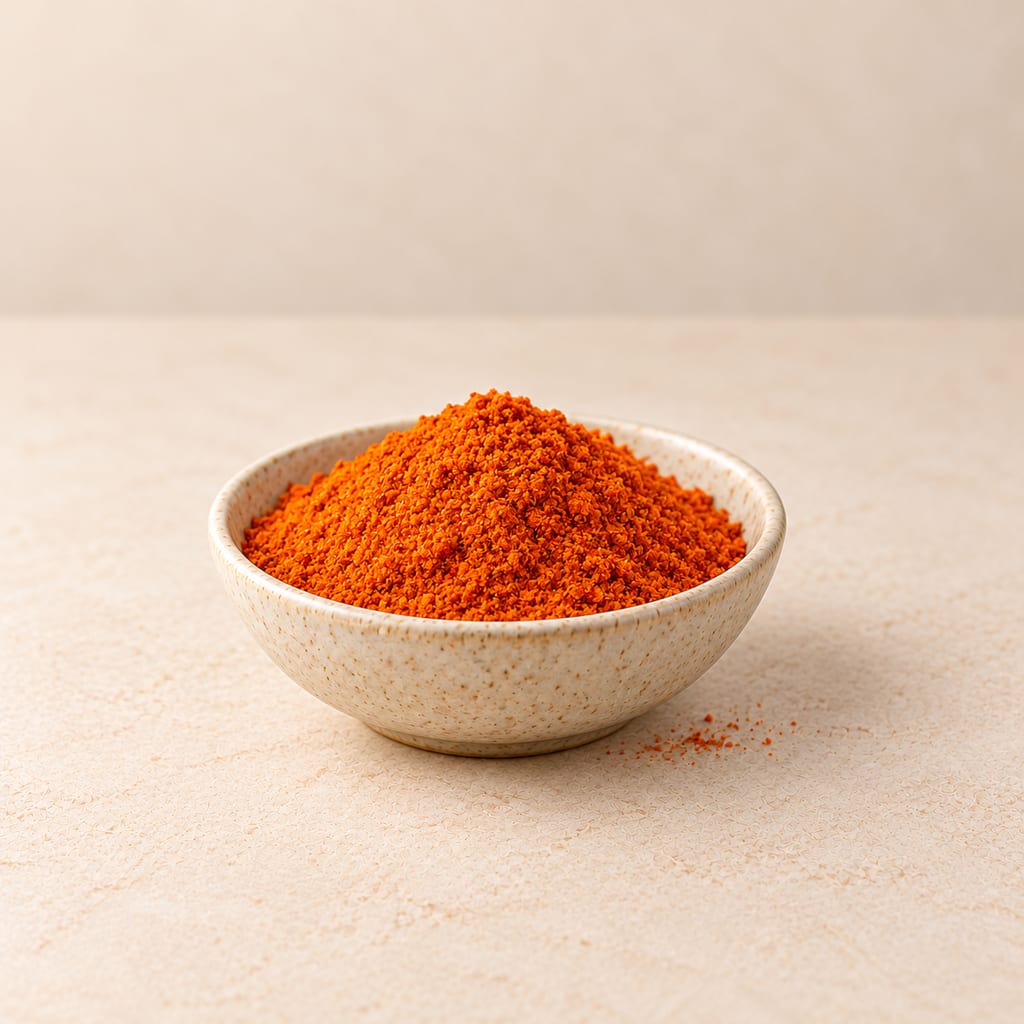
Red chilli powder is the dried, ground fruit of one or more chilli varieties, and the name hides more than it tells. Pure ground chilli contains only the chilli fruit, while a blend mixes the chilli with other spices such as cumin, onion, garlic powder and sometimes salt, and a hot blend adds cayenne. Red chillies are the most common base. Heat is not consistent from one powder to the next, because it depends on the chillies in the bag and the recipe of the blend.
The word red points to ripe pods. A chilli left on the plant turns from green to red as chlorophyll gives way to carotenoids, mainly capsanthin and capsorubin, which are described as unique, powerful and highly stable. The pigment profile and concentration change with maturity, so the colour of a powder reflects when the chillies were picked as well as which variety they were. Red chilli powder is the product that carries the colour, and often the heat, of a pickle, chutney or paste.
Because any dried red chilli can be ground, the powder comes in many named types, and which one a recipe means is often left unsaid. The list of single-chilli powders includes Aleppo, ancho, cayenne, chipotle, chile de árbol, jalapeño, New Mexico, pasilla and piri piri. Gochugaru is the Korean version, made from sun-dried red peppers called taeyangcho; it runs from fine powder to flakes and is described as spicy, sweet and slightly smoky, and that made from Cheongyang chillies is finer and hotter. Ata gun powder is used in Yoruba cooking. The ancho, whose name means wide, is the dried poblano: a broad, flat, heart-shaped pod that ripens to a red so dark it is nearly black, and one that is often ground into powder; its close relative the mulato is darker, sweeter and softer. Paprika is a powder of dried red Capsicum annuum, traditionally of the Longum group; the milder kinds are mostly flesh with most seeds taken out, while hotter ones keep some seeds, stalks and calyces. Spanish pimentón is made from small round fruits of several annuum varieties, and the one called pimentón de la Vera is smoked over oak.
Cayenne deserves a note, because its powder is often not what the name says. The cayenne chilli is a Capsicum annuum, long and tapering, typically 10 to 25 centimetres, usually rated at about 30,000 to 50,000 Scoville units, though some rate 20,000 or less. Its name is thought to come from kyynha, the word for capsicum in Old Tupi, spoken in Brazil. The fruits are usually dried and ground, but cayenne powder is often a blend of other chilli types, frequently without cayenne in it, and may or may not include seeds. In North America cayenne is the main pepper in crushed red pepper.
Kashmiri chilli powder is the best-known colour powder of India. The pods are wrinkled and rough, often brownish when dried in the traditional way, and their pigment is densely concentrated. They add a deep red colour and flavour without making food overly pungent, and are rated mild, at 1,000 to 2,000 Scoville units, though market powders sold under the Kashmiri name have been tested at far higher figures, 48,000 and 60,000 units for two brands, so the name alone is no guarantee. Reported capsaicin content is 0.325 percent in one figure from India's Spices Board and 0.126 percent in some qualities in a 1999 study, and the American Spice Trade Association colour value is given as 54.10. The chillies are traditionally sun-dried for a long time and are harvested in winter, grown mainly in Jammu and Kashmir and Himachal Pradesh and also in Goa, and India is the largest producer and consumer. Byadagi chillies are often used as a substitute because demand for the Kashmiri type is high. In Indian kitchens the powder goes into tandoori chicken, tiger prawns, pickles, chutneys, pav bhaji and misal pav, mainly for colour.
Heat is the property cooks most want to compare, and the Scoville scale is the usual yardstick. Scoville units originated with Wilbur Scoville in 1912, and since the 1980s heat has been measured by high-performance liquid chromatography. On that scale a bell pepper rates zero, a poblano dried as ancho about 1,000 to 1,500, a guajillo about 2,500 to 5,000, a Kashmiri type 1,000 to 2,000, a cayenne 30,000 to 50,000, and a piri piri or bird's eye 50,000 to 100,000. Those are ranges for the whole chilli, and a powder made from them inherits the range. Heat also depends on the growing season: water-stressed plants can produce hotter fruit, and in habanero the capsaicin concentration rises in some parts of the fruit under water shortage.
Colour is measured separately. The American Spice Trade Association colour value quoted for Kashmiri powder, 54.10, belongs to a mild powder, which shows that colour and heat are separate qualities: Kashmiri chilli is valued for a deep red that does not make food overly pungent. Hungarian paprika is graded from sweet to hot, from the delicate különleges through édesnemes, félédes and rózsa to the hot erős, and Spain sells pimentón as dulce, agridulce or picante. The pimentón de la Vera holds a Denomination of Origin covering about 1,500 hectares and some 4.5 million kilograms a year, and the unsmoked pimentón de Murcia is made from bola or ñora peppers dried in sun or kilns.
Powdered chilli depends on the spread of the chilli itself. Capsicum annuum was domesticated in Mesoamerica about 6,000 years ago, and Indigenous Americans cultivated the cayenne type for about 7,000 years before Columbus carried chillies to the rest of the world around 1493. They were common in Spanish gardens by the middle of the sixteenth century, appeared in Italy by 1526, Germany by 1543 and the Balkans by 1569, where they became paprika. Portuguese traders took them to Africa, Arabia, Goa, Sri Lanka and Malacca, and the earliest Chinese record dates from 1591.
The commercial chili powder of the United States has a documented origin. D. C. Pendery and William Gebhardt created the first American commercial blends for chili con carne. Gebhardt ran Miller's Saloon in New Braunfels, Texas, where fresh chillies were available only seasonally; he imported ancho peppers from Mexico, ground them three times in a small meat grinder, and produced the first commercial chili powder in 1894. Hungarian paprika has its own history: the earliest Hungarian dictionary entry, from 1604, calls it Török-bors, Turkish pepper, and the name paprika entered Hungarian use in 1775.
Powder is the end of a drying process. Paprika is commonly made by sun-drying that can take up to 10 days in good conditions, and the drying method, the cultivar and the length of storage all affect its final colour. Gebhardt's first commercial powder was made by grinding dried ancho peppers three times in a small meat grinder. The sources used here give no figures for how quickly ground chilli loses colour or flavour.
Two hazards belong to the product. The first is mould toxin. Chillies are among the staple commodities regularly contaminated with aflatoxins, along with maize, peanuts, rice and wheat, and spices in general are affected. Moulds can invade the crop before harvest or in storage, prolonged high humidity and drought stress raise the risk, and the conditions that favour aflatoxin production include a moisture content of at least 7 percent and temperatures between 13 and 40 degrees Celsius. Chronic exposure is linked to liver and gallbladder cancer. The practical defences named in the general literature are keeping crops from getting damp, rejecting mouldy material and testing batches of ingredients before use; the article that gives these facts is about the toxin in general and offers no chilli-specific limits or storage times. The second hazard is adulteration. Brick powder is a known adulterant of Kashmiri chilli powder, and published work includes methods for detecting illegal dyes in chilli products, so a powder's colour proves nothing about what is in it.
Red chilli powder is almost always added to a pickle for its colour, heat and aroma, not to start the fermentation. Its role is clearest in the salt-and-vinegar preserved limes of Sri Lanka called lunu dehi. In one published method, about ten yellow, ripe limes are stuffed with copious amounts of salt, dried in the sun until the skins turn light brown, and packed into a jar with a teaspoon each of chilli powder and kochchi miris (a chilli), crushed peppercorns, sugar and the sun-dried juice; vinegar is poured in to cover, and the sealed bottle is kept undisturbed in a cool, dry place. The page says the bottle can last up to five years and that older ones taste better, a claim about keeping quality that is a cook's statement, not a safety finding. Salt and vinegar, not the chilli, are what preserve the limes.
Gochugaru in kimchi plays the same part. In an Oregon State University Extension recipe, half a cup of dried Korean chilli flakes seasons about two pounds of napa cabbage after it has been salted for one to two hours; the kimchi then ferments at 20 to 22 degrees Celsius for 24 to 36 hours and for a week after that, reaches an optimal pH of 4.2 as lactic and acetic acids form, and carries a final salt concentration of 2 to 5 percent. The lactic acid bacteria on the vegetables do the fermenting; the chilli supplies colour, heat and flavour. The capsaicinoids that give the heat sit in vesicles on the placenta of the fruit, so the placenta carries the main store of heat in a ground pod; no source used here measures how heat or colour behave in a finished pickle.
The first question to ask of a jar is whether it is pure ground chilli or a blend, because a blend carries salt, cumin or garlic that change a recipe. The second is which chilli it is made from, since heat ranges from the mildness of a Kashmiri or paprika type to the sharpness of cayenne or piri piri. A third is whether it includes seeds and stalks, which make a powder hotter and coarser. Colour is not a reliable guide to quality, given what is known about adulteration.
The recipes on this site that call for red chilli powder, such as pickles from Himachal Pradesh and Sri Lankan preserved limes, do not say which chilli it is, so cooks should treat their quantities as written and judge heat by tasting. The sources consulted give no shelf life for ground chilli, so none is stated. No allergen is recorded for it. The heat is the main hazard: capsaicinoids bind to pain receptors in the mouth and throat.
Several points remain open. The recipes that name red chilli powder do not identify the chilli, the blend or the heat grade. Published Scoville figures for Kashmiri powders disagree by a wide margin. And no measured data was found for pigment loss or microbial behaviour of ground chilli in pickles.
India is the largest producer and consumer of Kashmiri red chilli powder; the row says nothing about the origin of red chilli powder in general.
Chilli powder is used in the preserved limes called lunu dehi; the row does not claim the powder is made there.
First commercial American chili powder blend, ground from ancho peppers by William Gebhardt; a blend, not pure chilli powder.
Lunu dehi is Sri Lankan salted lime pickle. This version sun-dries cut, salt-stuffed ripe limes, then packs them with dried lime juice, chillies, spices and vinegar.

A gelling polysaccharide extracted from red seaweeds, sold as kanten strips or powder; it sets firm at a low concentration and stays solid until about 85 °C.
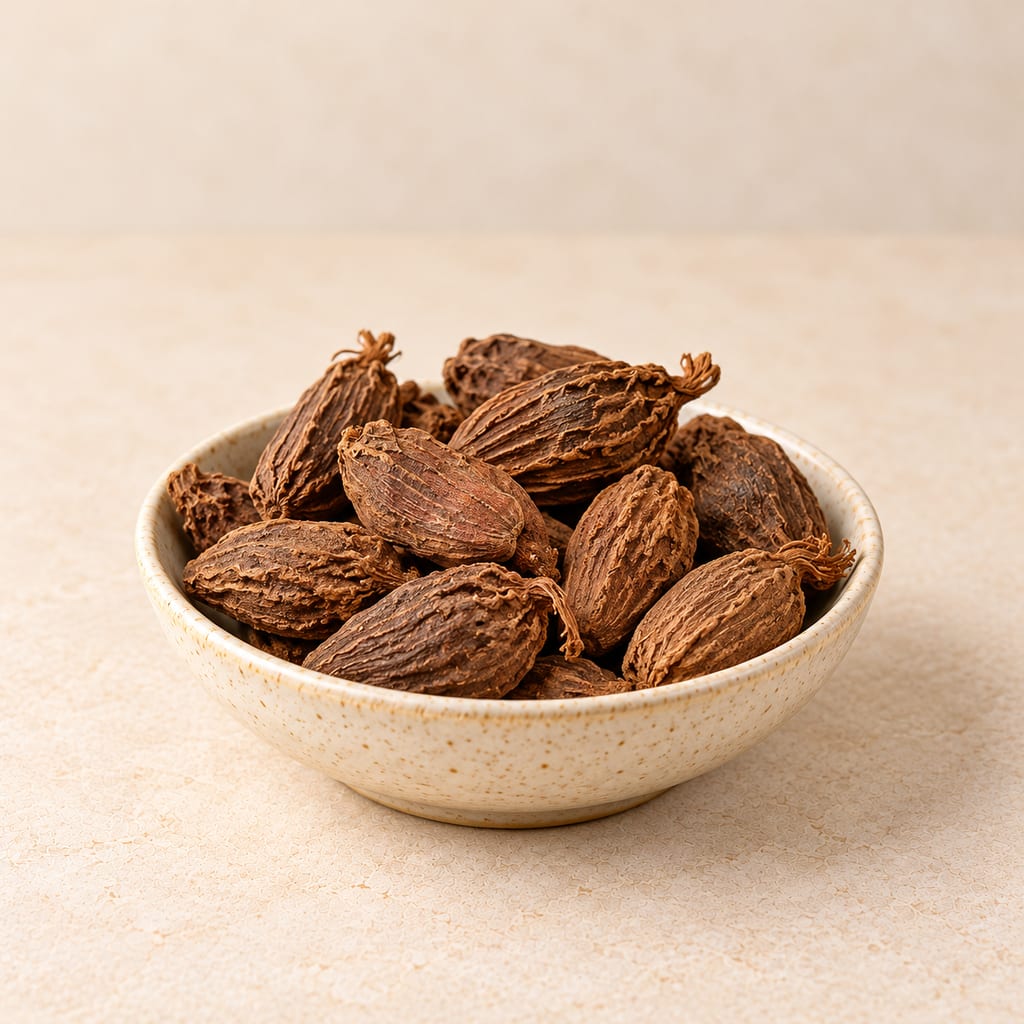
Alainchi is the large or black cardamom of the eastern Himalaya, the dark, smoke-dried pods of Amomum subulatum. Its camphor-cool, smoky seeds season Himalayan and North Indian cooking and a sweet Nepali lapsi achar.
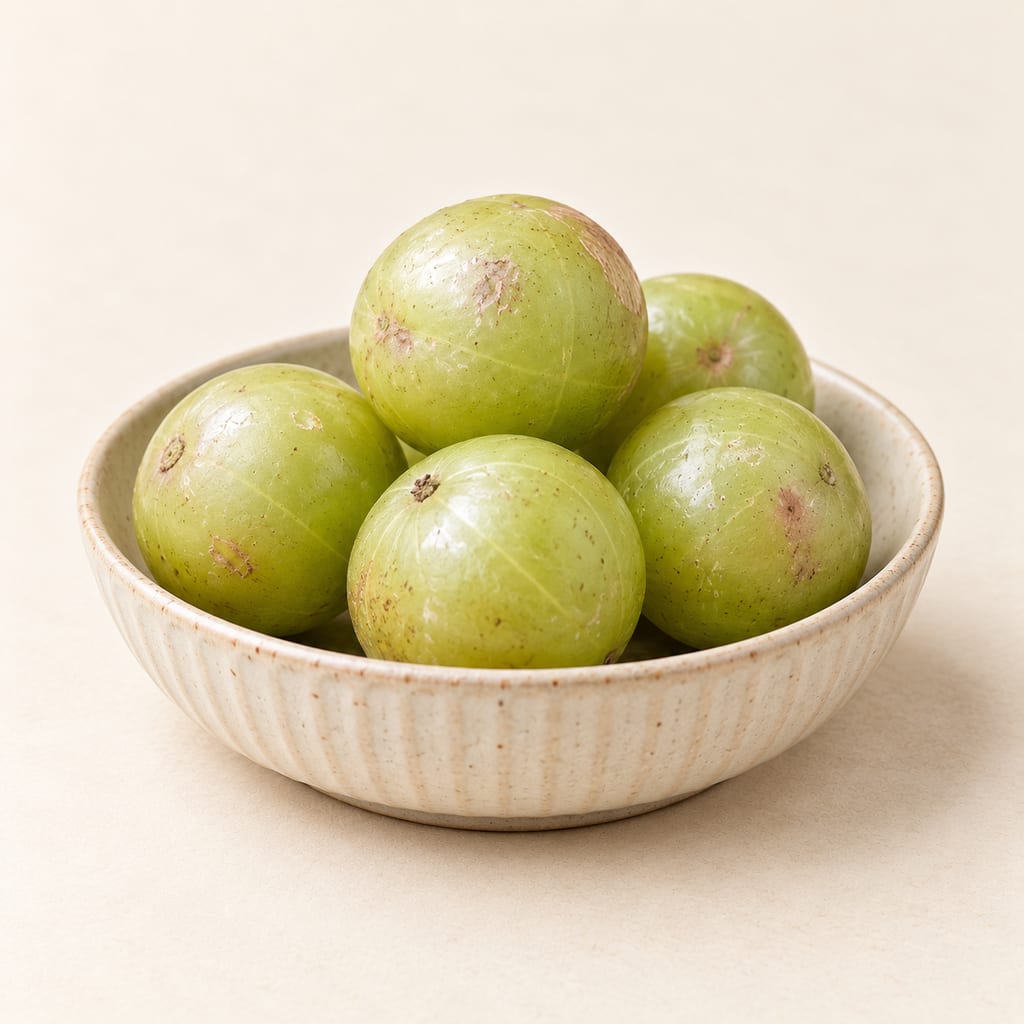
Amla is the firm, sharply sour fruit of Phyllanthus emblica. Cooks transform it into murabba, pickles, chutneys, drinks and dried snacks.
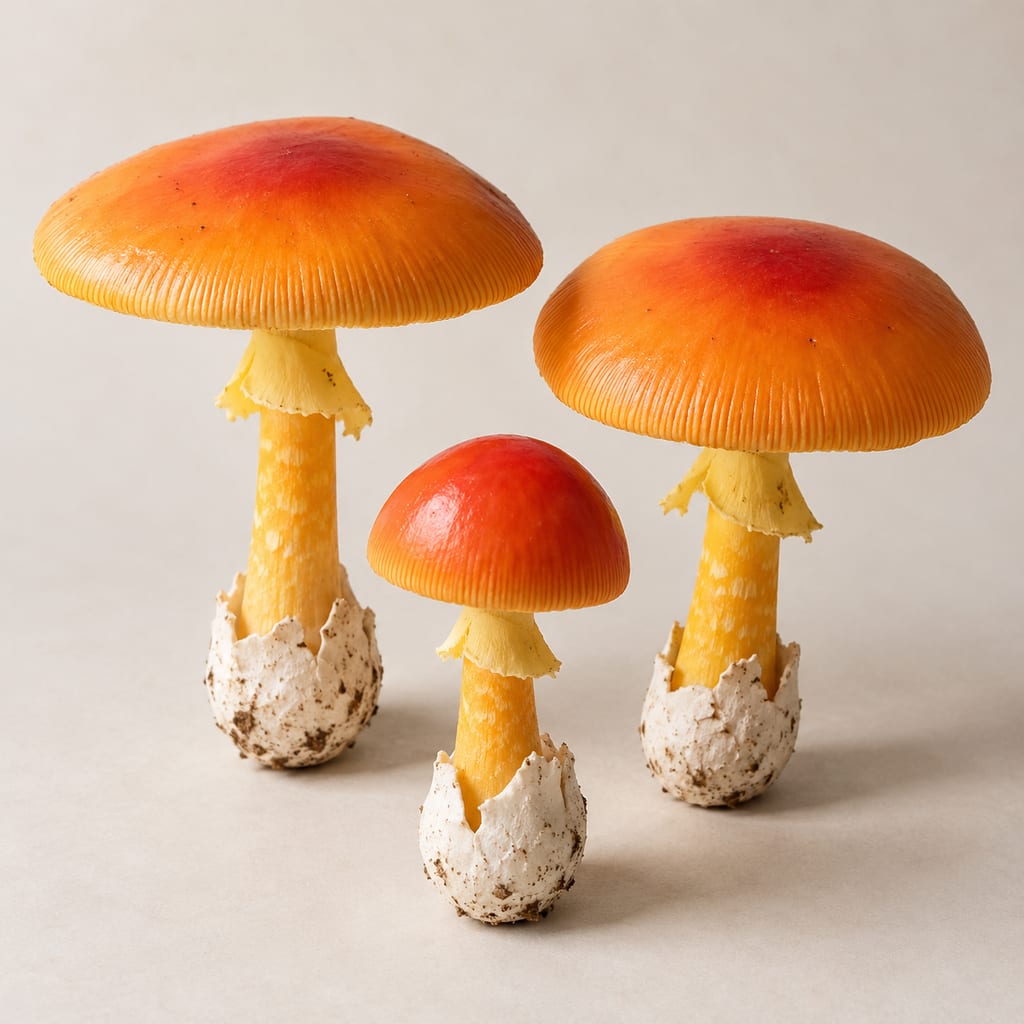
A wild Asian Amanita reported as food in regional literature and listed in China’s edible-fungi catalogue. Lookalikes include lethal species; this record is not a guide to identifying wild mushrooms.
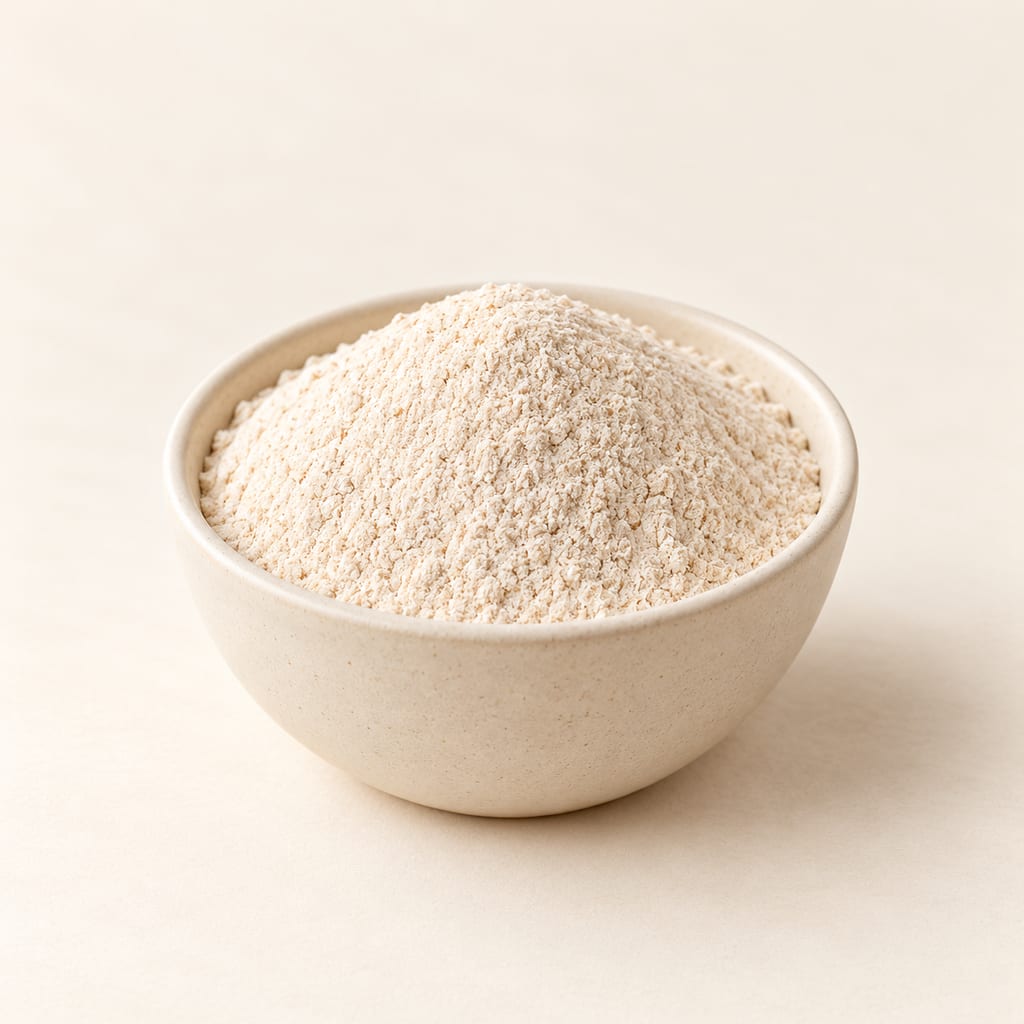
Atta is wheat flour used across South Asian bread traditions. Indian standards distinguish wheat flour (atta) from resultant atta; milling route and particle size shape its behavior in chapati dough.
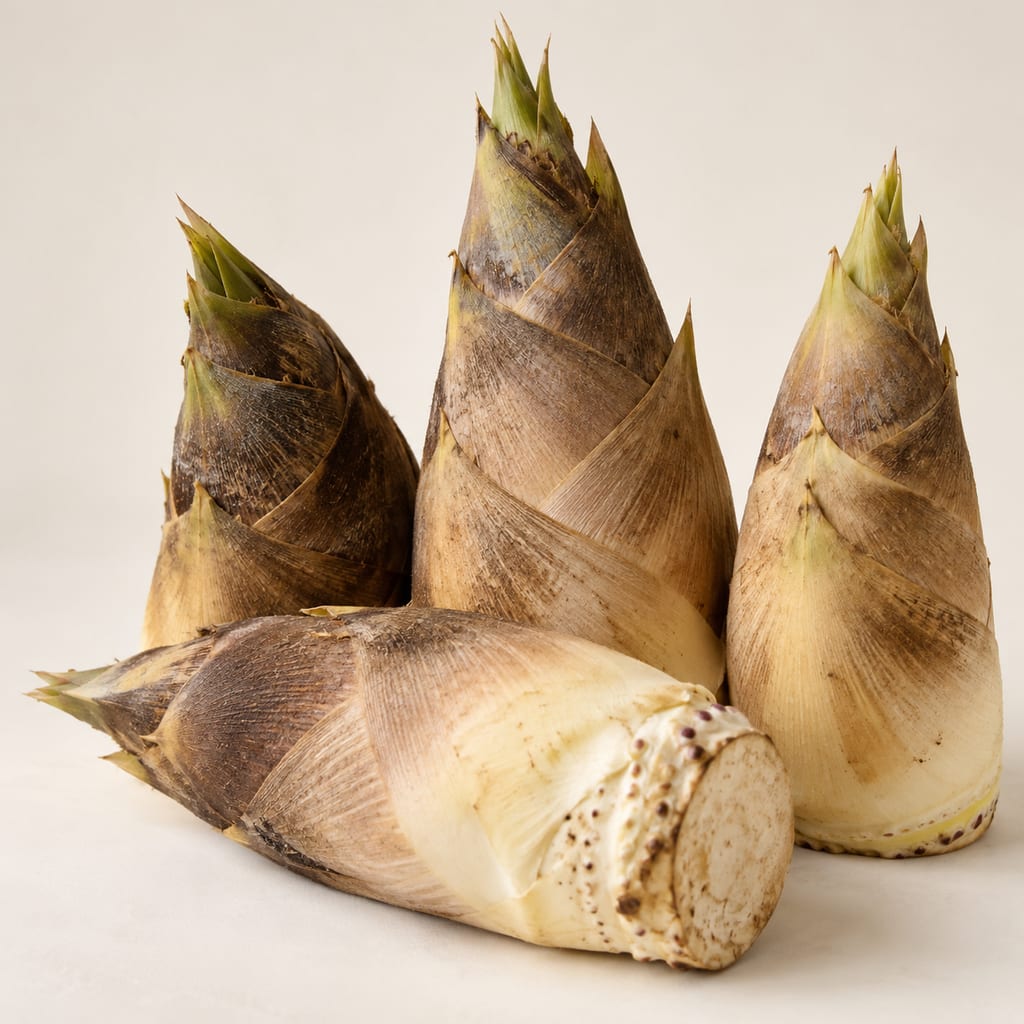
Bamboo shoots are the young culms of many bamboo species, eaten after boiling or leaching in Asia, and fermented into sour and preserved foods in the Himalayas, northeast India and Burma.
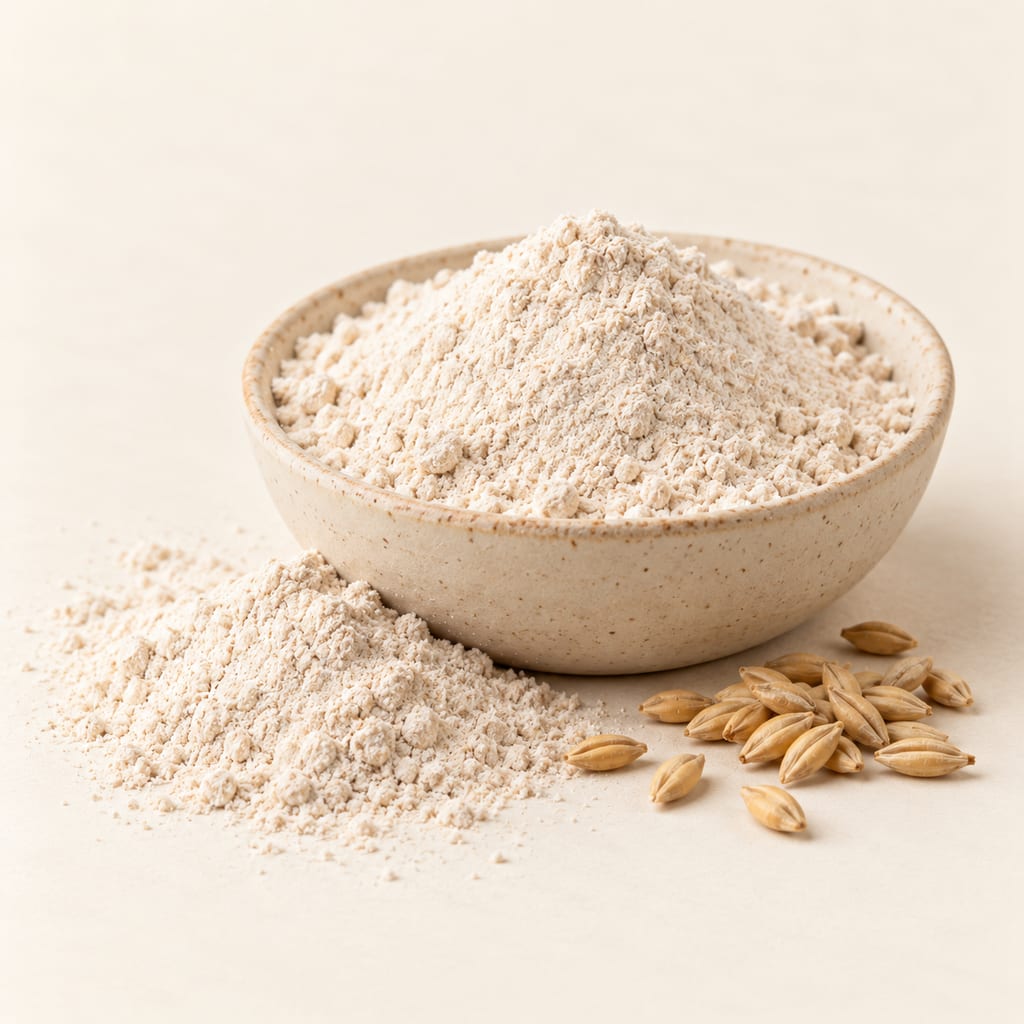
Barley flour is ground barley grain; whether it comes from pearled or hulless kernels, its milling and limited wheat-like gluten-forming ability shape the doughs and foods it can make.

Black carrot is the anthocyanin-pigmented Eastern carrot (Daucus carota var. atrorubens), the purple root that preceded orange types and still colours kanji and şalgam.

A Dominican table and seasoning condiment of sour orange juice, mixed with lime and salt and bottled raw; garlic, oregano or a hot pepper may be added for meat or a spicier bottle.

Cicerbita alpina is an alpine perennial whose tender shoots and leaves have been eaten raw or cooked. Sámi milk preparations and modern Carnian dishes are distinct uses, with serious identification and preservation limits.

Japanese skipjack tuna cooked, then repeatedly smoked and dried over a wood fire by the hand-fired tebiyama method into a hard block for shaving into dashi: the first stage of katsuobushi.

A Swedish-style spirit vinegar made by fermenting neutral alcohol with live vinegar bacteria, with a separate guide to commercial ättika strengths.

A yeast-raised wheat ring shaped from a firm dough, briefly boiled and baked. This source-batch formula gives a gently malted crust and a chewy crumb.

A warm dip of garlic, anchovy and olive oil, often enriched with butter, that Piedmont serves over a flame with raw and cooked vegetables and bread.

Bechamel is a white sauce of milk thickened with a butter and flour roux, one of the French mother sauces, and the base from which Mornay and other cheese and cream sauces are made.
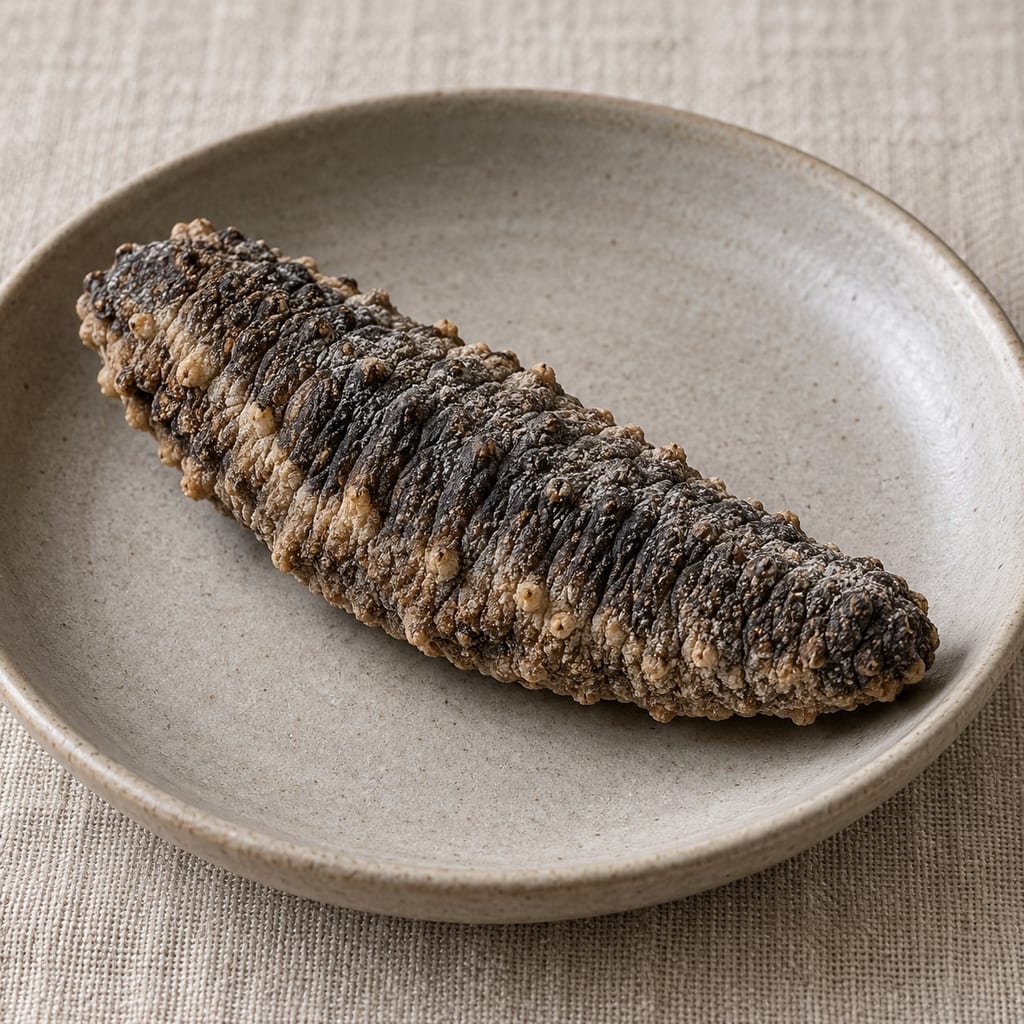
Sea cucumber cleaned, boiled and dried, sometimes with smoke, into a long-keeping trade product; Makassan processing in Arnhem Land is documented from at least the eighteenth century.
No community contributions have been published for this entry yet.
Sign in to contribute. Published comments and photos are free to read.
WikipediaIdentity · History
Chili powderPure ground chilli versus blends
Named single-chilli powders
Gebhardt and the 1894 commercial powder
Cited in: What the name covers; A family of powders; How the powder came to be; Choosing and keeping it
WikipediaIdentity · History
PaprikaPaprika and pimentón, drying and colour, Hungarian history
Cited in: A family of powders; Comparing heat and colour; How the powder came to be; Making it, and what can go wrong; Choosing and keeping it
WikipediaIdentity
Korean chili pepper (gochugaru)Sun-dried taeyangcho, textures, flavour
Cited in: A family of powders
WikipediaIdentity
PoblanoAncho as the dried poblano, heat range, often ground to powder
Cited in: Comparing heat and colour
WikipediaIdentity
Guajillo chiliGuajillo heat range of about 2,500 to 5,000 Scoville units
Cited in: Comparing heat and colour
WikipediaIdentity
Cayenne pepperCayenne chilli, heat, name from Old Tupi, powder often a blend
Cited in: A family of powders; Comparing heat and colour; How the powder came to be
WikipediaIdentity · Use · Safety
Kashmiri chiliMild colour chilli, heat figures, capsaicin and colour values
Growing regions, uses, brick powder adulteration
Cited in: A family of powders; Comparing heat and colour; Making it, and what can go wrong; Choosing and keeping it; Open questions
WikipediaHistory
Capsicum annuumDomestication in Mesoamerica about 6,000 years ago
Cited in: How the powder came to be
WikipediaHistory · General
Chili pepperSpread of chillies after 1493
Capsaicinoids bind to pain receptors
Illegal dyes in chilli products
Cited in: Comparing heat and colour; How the powder came to be; Making it, and what can go wrong; Choosing and keeping it
WikipediaSafety
AflatoxinChillies among commodities regularly contaminated; moisture and temperature conditions; health effects
Cited in: Making it, and what can go wrong
Antioxidants (Basel), via PubMedScience
Carotenoids of Capsicum Fruits: Pigment Profile and Health-Promoting Functional AttributesCapsanthin and capsorubin, highly stable; profile varies with maturity
Cited in: What the name covers; What it does in pickles and ferments
HortiDailyScience
NMSU researchers investigate how super hot peppers pack their powerful punchCapsaicinoid vesicles on the placenta in most chillies
Cited in: What it does in pickles and ferments
Explore Sri LankaUse · Method
Lunu Dehi: a Friendly ZestPreserved limes with salt, sun-drying, chilli powder, peppercorns, sugar and vinegar
Claimed keeping time of up to five years
Cited in: What it does in pickles and ferments; Open questions
Oregon State University ExtensionFermentation
Kimchi basicsGochugaru quantity in a measured kimchi, fermentation temperature and time, pH 4.2, salt 2 to 5 percent
Cited in: What it does in pickles and ferments