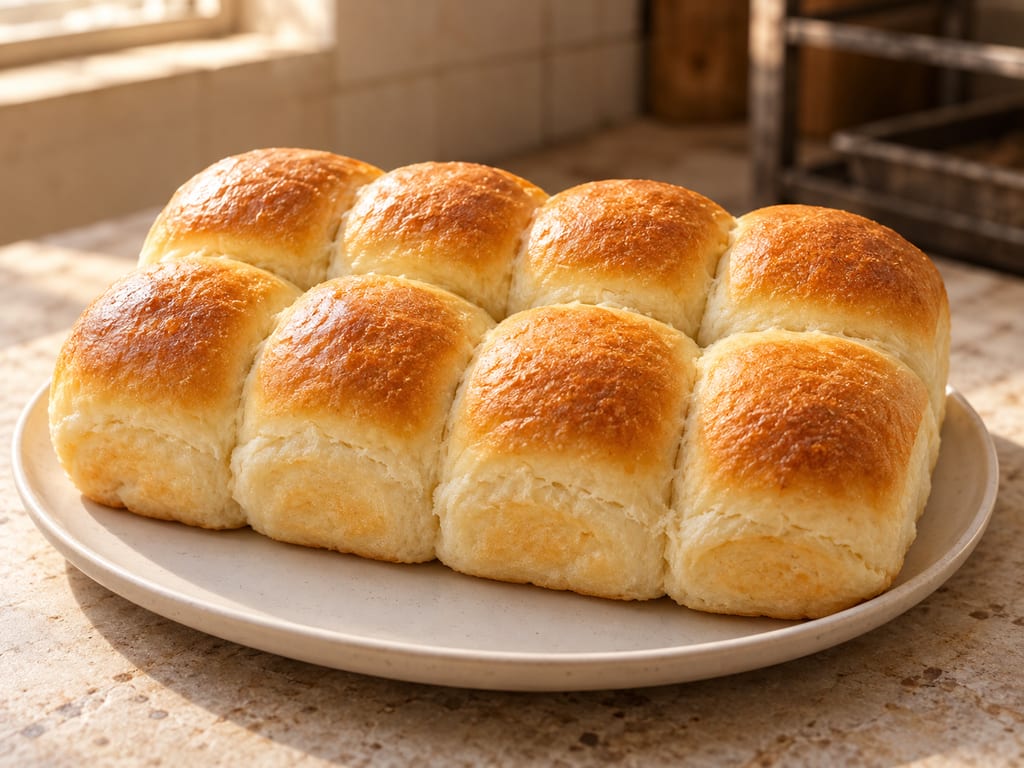
Mumbai ladi pav
Soft Mumbai-style wheat rolls made with an instant-yeast sponge and baked together. This home batch makes eight.
 FermenteaWhere food goes to change
Traditional method
तीळाची चटणी (tilachi chutney) · Maharashtrian sesame chutney
A Maharashtrian dry chutney of slowly roasted sesame and coconut ground fine with garlic, chilli powder, cumin, tamarind and sugar, kept in a bottle and eaten as a winter side.
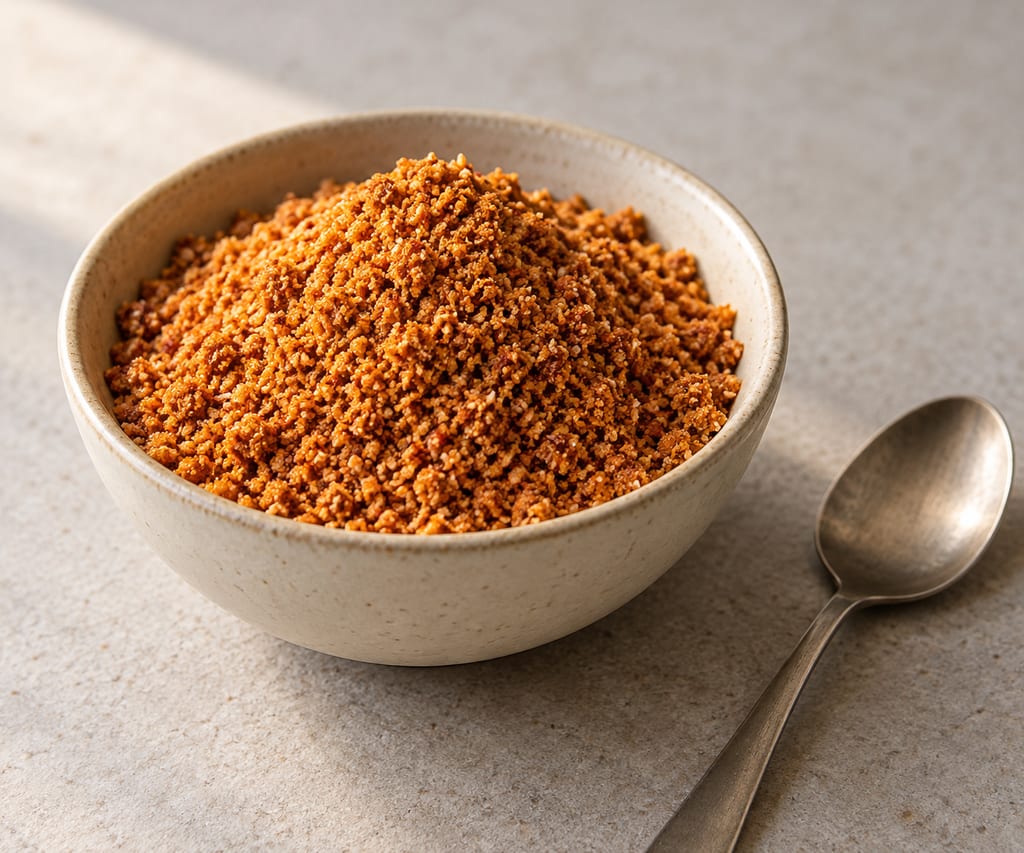
Tilachi chutney is a Marathi dry chutney, a ground seasoning powder rather than a wet sauce. Its base is til, sesame, roasted slowly and ground with dry coconut and garlic, with chilli, cumin, tamarind and a little sugar giving heat and sourness. Sujata Nerurkar's Royal Chef page, from 2019, gives the version above and describes sesame as a food traditionally eaten in winter for its warmth, and as a good fallback when there is no vegetable in the house.
The page does not say how it is eaten. Dry chutneys of this kind usually go beside bread or rice, but no inspected source here says so for this one.
The recipe is for 8 to 10 people and takes about 30 minutes: 2 cups plain, unpolished sesame seeds, half a cup of dry coconut, 10 to 12 garlic cloves, 2 teaspoons red chilli powder, 1 teaspoon cumin, a 1-inch piece of tamarind, 1 teaspoon sugar and salt to taste. Sesame is roasted on low heat until fragrant and lightly browned, the grated coconut until light pink-golden, and both are ground fine with the rest. The page gives no cup weights, salt quantity, roasting times or yield. The tamarind is described only as 1 inch, which likely means a small piece.
A separate 2017 Marathi page from Chavishta Food calls its sesame, coconut and peanut powder tilkut. It uses 1 vati of sesame, a quarter vati of dry coconut and a quarter vati of peanut powder with tamarind, chilli and spices. The ingredients are roasted and pulsed coarsely. The page warns that longer grinding releases oil and makes the powder moist. The vati is not defined as a volume and storage is not stated. It is a different formula, with peanut, and is not a variant of the recipe above.
Sesame chutney is also made in Uttarakhand, as a wet condiment. An ICAR-VPKAS cookbook of Uttarakhand cuisine lists 100 g sesame, one lemon, 5 to 10 g cumin, green chillies and salt; sesame is roasted with the cumin, ground with chillies and salt, and lemon is added. It says the condiment is generally eaten in winter. A separate eUttaranchal page for a Pahadi-style version uses 3 to 4 tablespoons of sesame, coriander, garlic, green chillies, 3 to 4 tablespoons of yoghurt or lemon juice, salt and optional sugar, and also describes winter use with pairings.
These are separate source batches from a different region. The winter descriptions are not prevalence surveys and neither establishes an origin.
The dry and wet versions all roast and grind. None describes a starter or any fermentation. Roasting changes the flavour and texture of the seeds and coconut, and the lemon or yoghurt in the Uttarakhand versions adds acidity but not a fermentation stage.
No inspected source gives a tested storage time, a measured water activity or a moisture limit for dry sesame chutney. The bottle in the instructions is a container, not a preservation step. Sesame is an allergen, and the limited food-safety excerpt found for this entry does not settle current Indian labelling rules. A NIFTEM cookbook lists a Til ki Chutney, but its PDF could not be retrieved, so nothing here rests on it.
The page says sesame is traditionally eaten in winter because it gives warmth. No source dates the chutney or gives an origin.
Yield 9 servings · Scaling: source batch only
Sesame seeds are the main ingredient.
Hazard sourceThe page says to bottle the chutney for later use but gives no storage duration, no refrigeration advice and no measured moisture or water activity.
Hazard sourceThe instruction to bottle the chutney is not a tested storage protocol. No inspected source gives a keeping time for dry sesame chutney.
Do not treat a dry-looking chutney as shelf-stable; no source measures its moisture.
Two Marathi recipe pages label their sesame chutneys Maharashtrian; neither gives an origin or a narrower locality.
Soft Mumbai-style wheat rolls made with an instant-yeast sponge and baked together. This home batch makes eight.
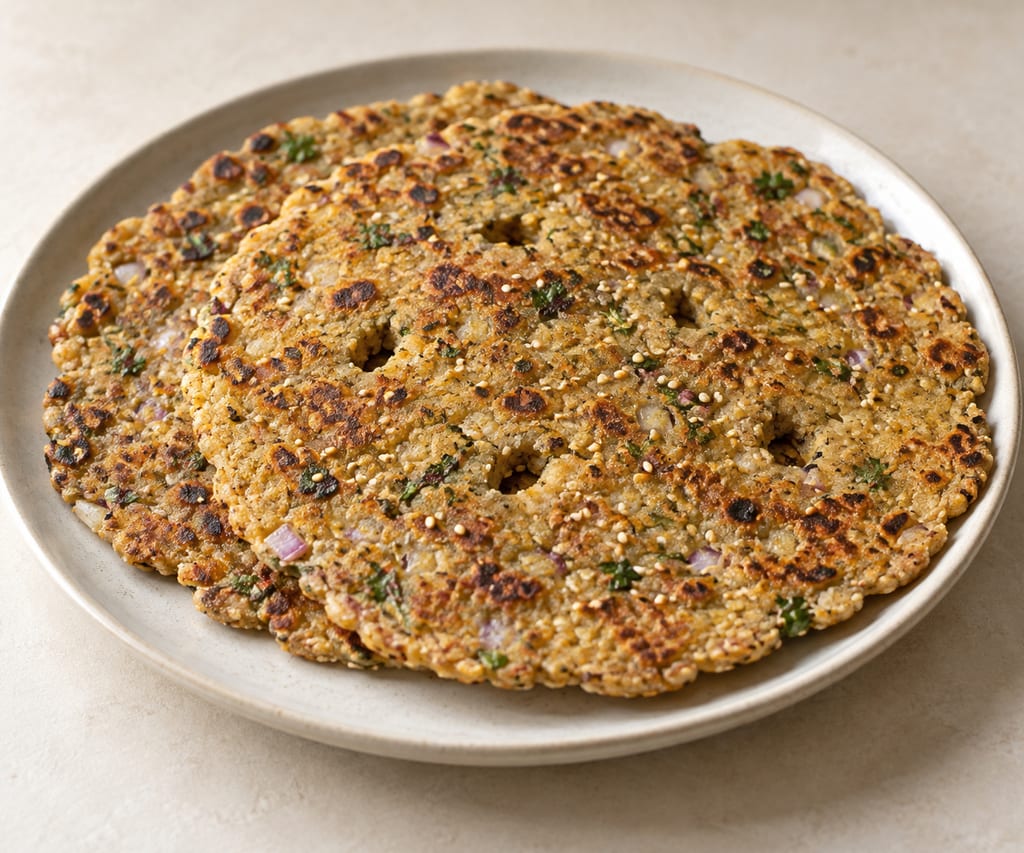
A Maharashtrian multigrain flatbread, patted by hand and cooked on a hot griddle. This home version mixes five flours with onion, sesame and spices.
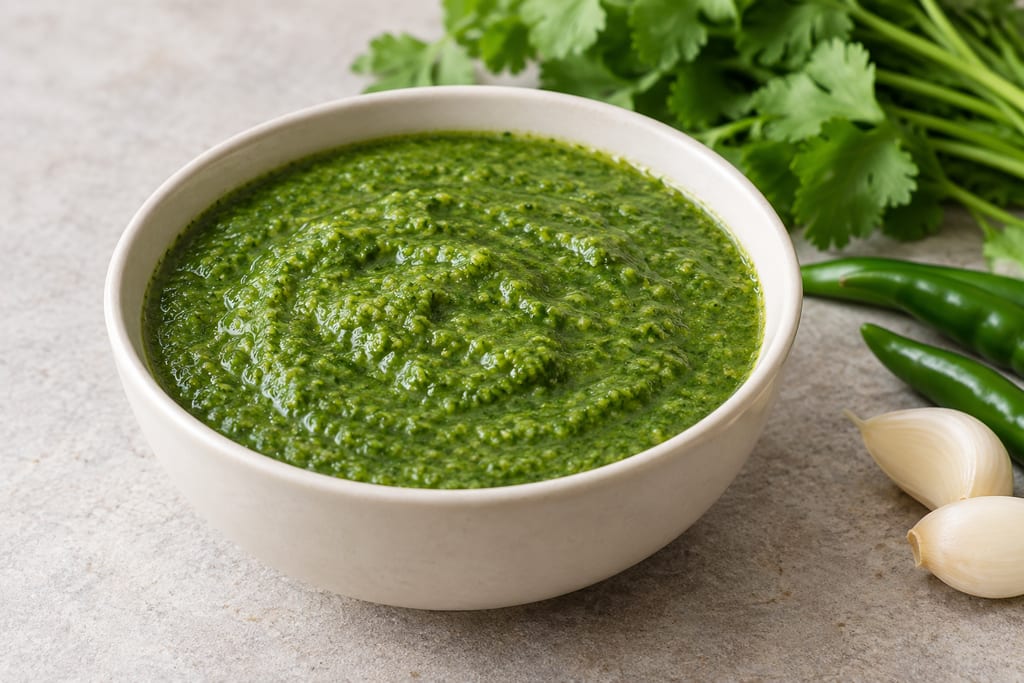
Afghan coriander chatni is a sharp, hot herb sauce with garlic and vinegar. A 2008 Afghanistan manual records green or red pepper and optional walnut; heat and household versions vary.
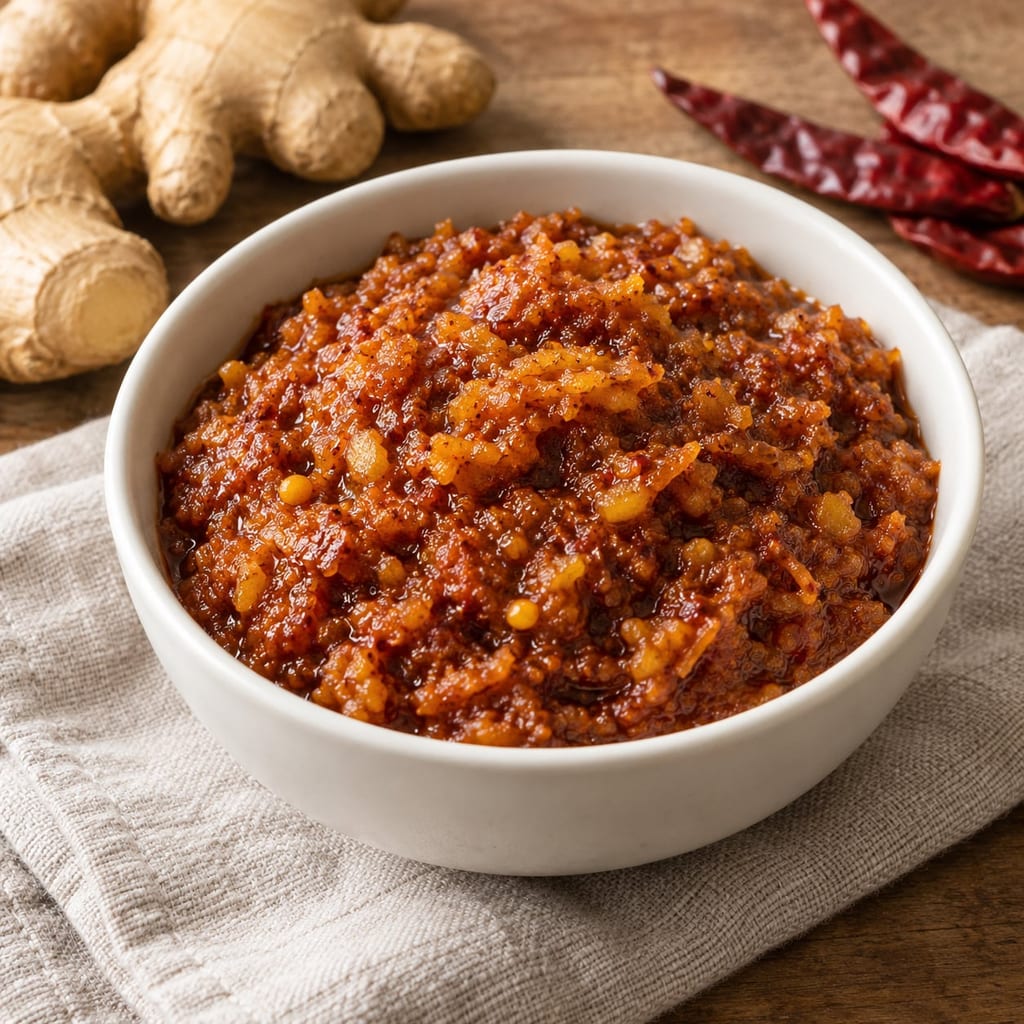
An Andhra ginger-and-urad chutney in which browned dal and briefly fried ginger and chillies are cooled, then ground with jaggery to a coarse paste.
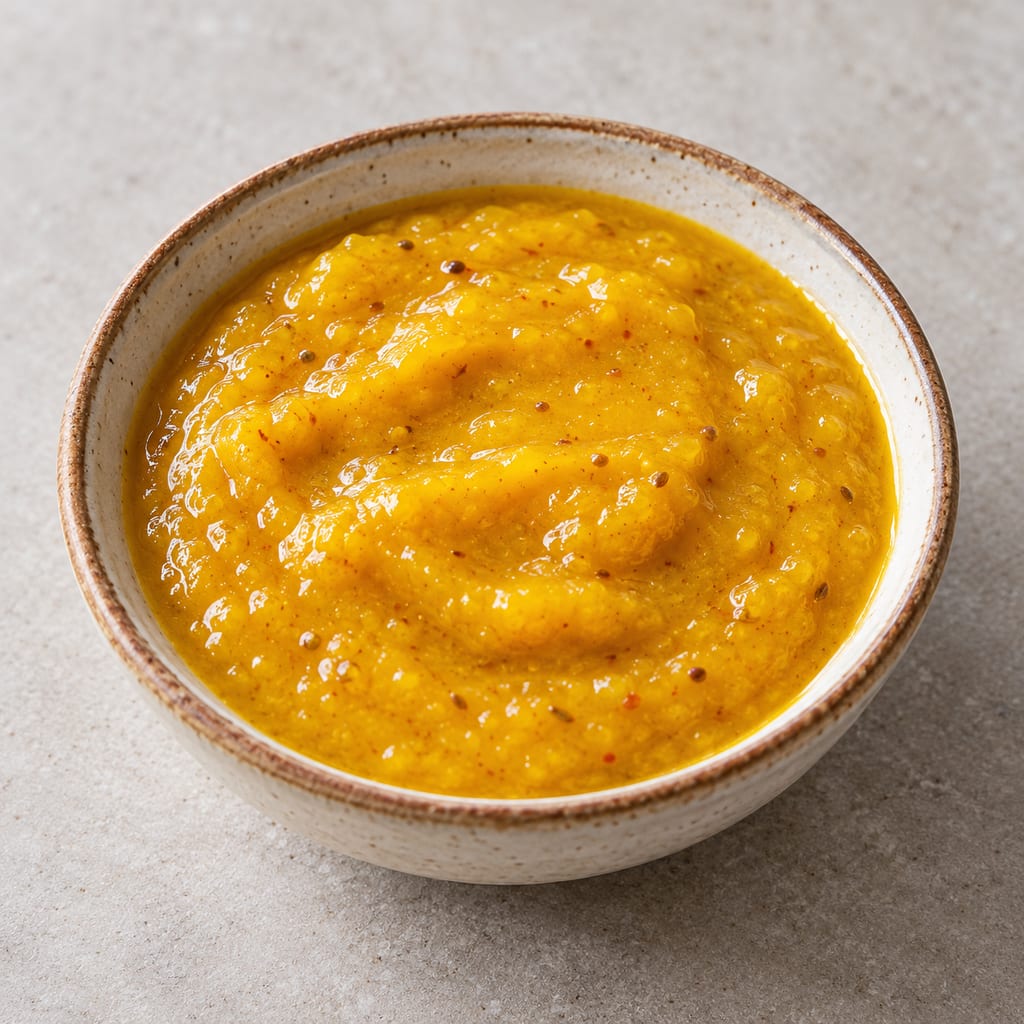
This cooked amba follows a Jewish Food Society recipe that simmers ripe mango with onion, garlic, mustard seed and warm spices into a tangy Middle Eastern condiment.
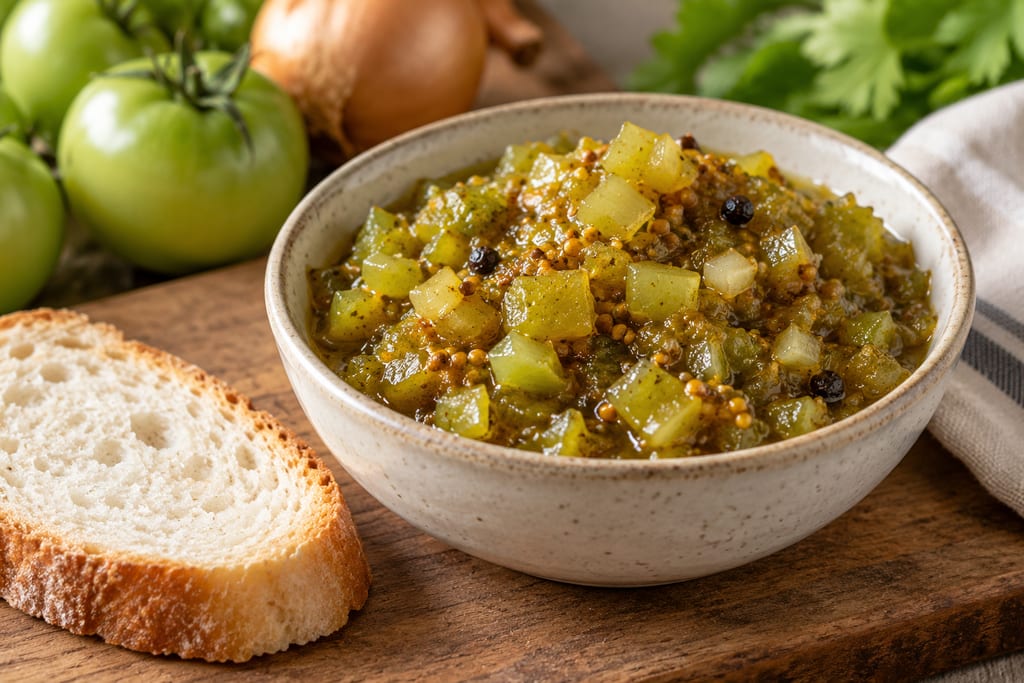
Australian green tomato pickles and relishes vary. This partial version follows ABC Western Victoria’s 2018 pickle recipe, not Beerenberg’s commercial formula. Sources document examples from 1944 onward, not a single origin.
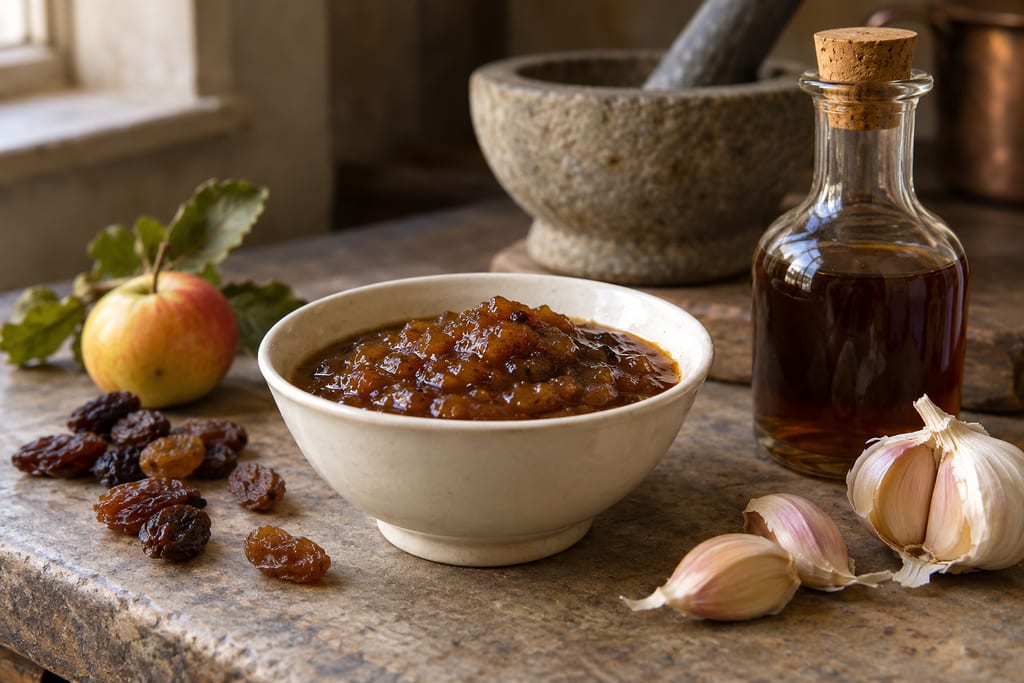
Eliza Acton's Bengal receipt for chetney sauce: stoned raisins and a hard acid fruit pounded with brown sugar, ginger, salt, cayenne and garlic, then thinned with vinegar to the consistence of thick cream.
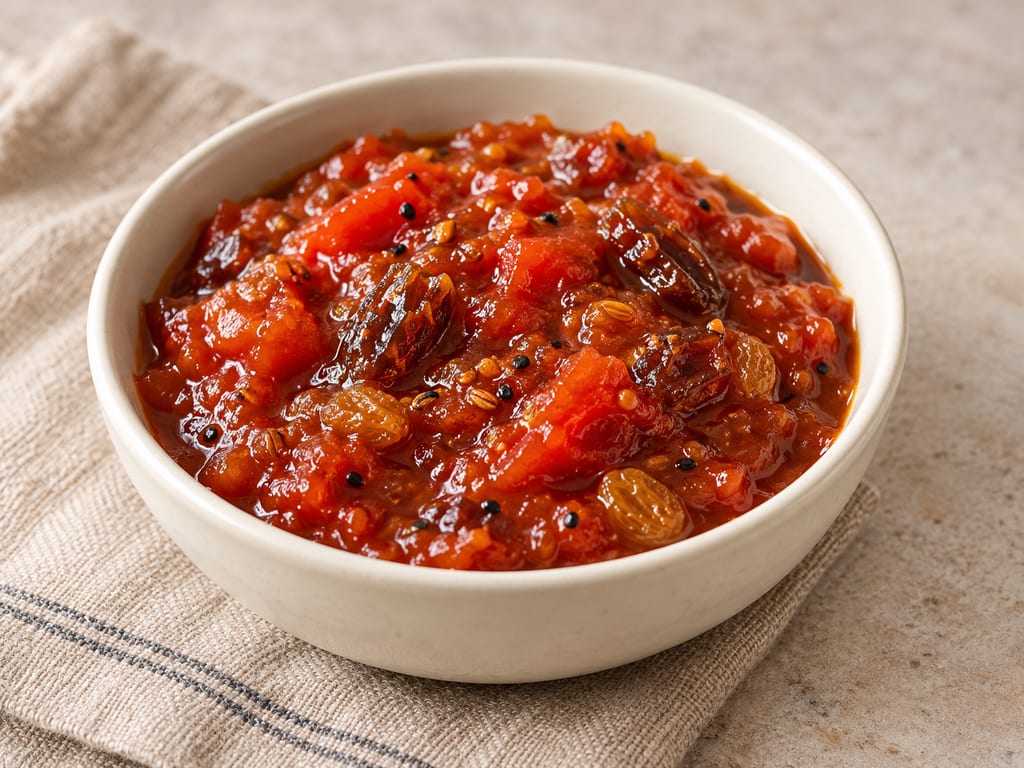
A cooked Bengali meal chutney combining tomatoes, dates, raisins, ginger and panch phoron.

A spicy South African vegetable relish of onion, carrot, pepper, tomato, curry seasoning and beans, cooked briefly and served warm or cold beside pap and grilled meat.
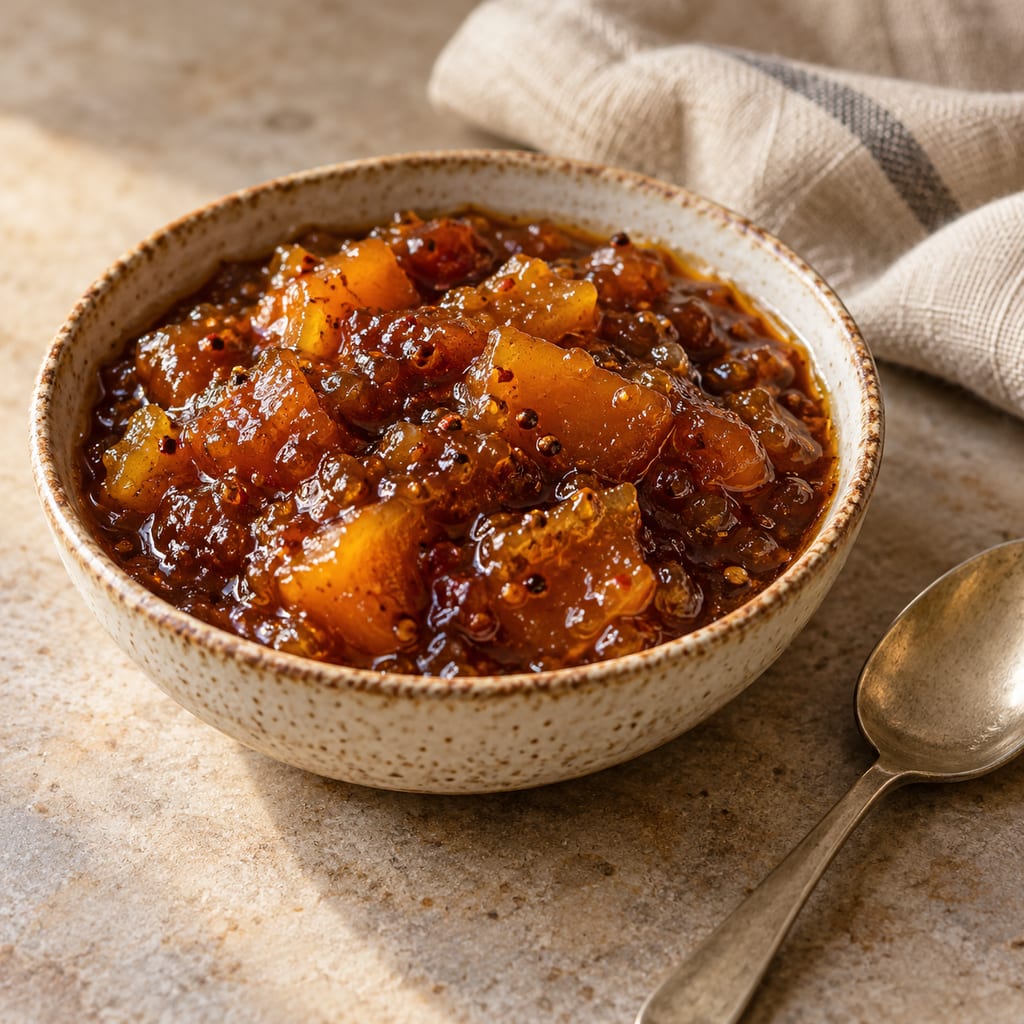
A broad account of cooked chutney traditions: fruit or vegetables combined with sugar, spices and sometimes acid, often boiled into a thick condiment. This record is historical and process context, not a formula or storage recipe.
No community contributions have been published for this entry yet.
Sign in to contribute. Published comments and photos are free to read.
Royal Chef SujataMethod · History · Geography
Maharashtrian Style Tilachi Chutney Recipe in MarathiIngredients, method, servings and time
Winter use of sesame; bottle for later use
Cited in: A dry sesame chutney; The source batch; Roasting, not fermentation; Limits
Chavishta FoodVariant
तीळकूट, तीळाची चटणी, Sesame Chatni / TilkutTilkut formula with peanut powder and grinding caution
Cited in: Tilkut, a coarser relative
ICAR-Vivekananda Parvatiya Krishi Anusandhan Sansthan (ICAR-VPKAS)Variant
Nutritious and Healthful Traditional Cuisine of Uttarakhand HimalayasUttarakhand wet sesame chutney batch and winter use
Cited in: Uttarakhand sesame chutneys are wet and different
eUttaranchal / Brijmohan BishtVariant
Til Ki Chutney - Recipes of Uttarakhand- Kumaoni Garhwali DishesPahadi-style wet sesame chutney with coriander, garlic and yoghurt or lemon
Cited in: Uttarakhand sesame chutneys are wet and different
