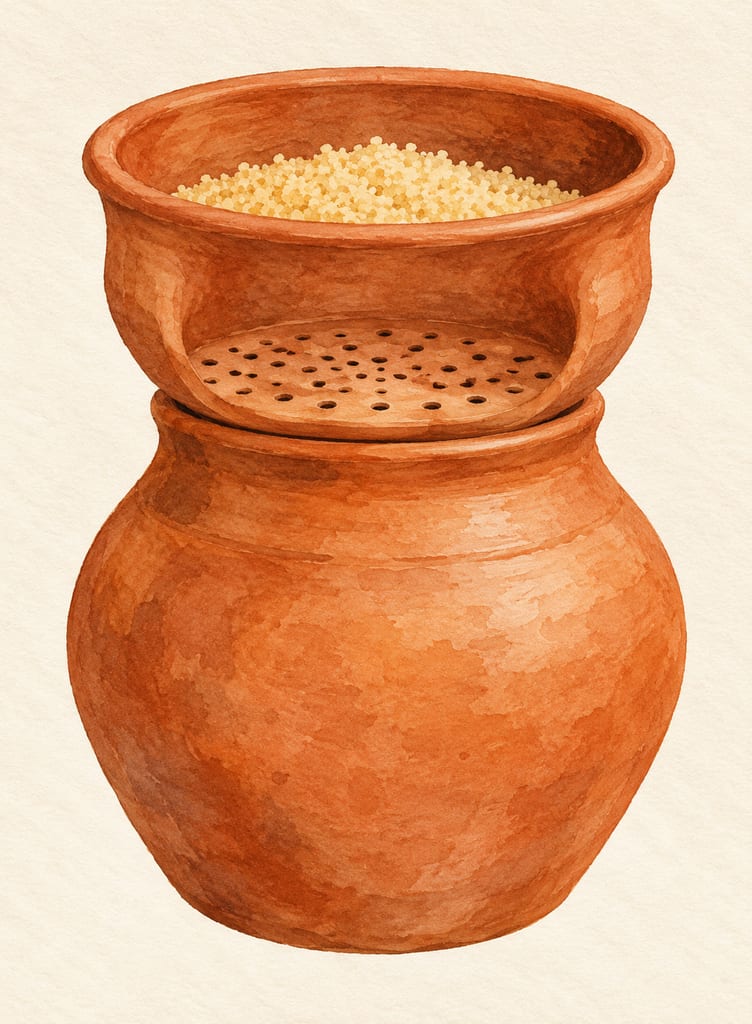
Couscous steamer
A two-part steamer for couscous: a perforated upper chamber sits over a lower pot that produces steam. Clay, basketry and metal forms are documented in different places and periods.
 FermenteaWhere food goes to change
Equipment · Jars, pots and crocks
Khlii storage vessels hold prepared meat beneath rendered fat or oil. Traditional terracotta jars and present-day plastic tubs are both recorded forms in Morocco.
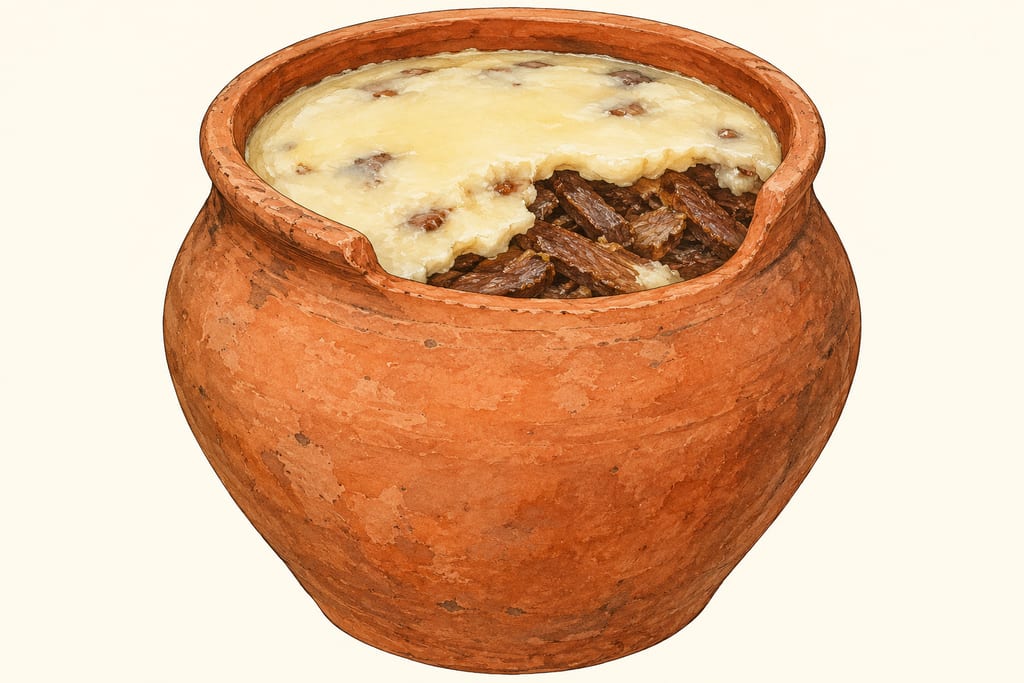
Khlii turns meat into a store that can be eaten over time. In Morocco, its preparation is associated with keeping meat after Eid celebrations, weddings and feasts, when families may have more meat than they will use fresh. Fez is a particularly prominent center, and the preserved meat appears in meals from breakfast through the day.
The jar enters after cooking. It holds meat under its cooking fat or oil, setting the prepared food aside for later use. Khlii has a long history in Morocco, but no dated beginning is established for this jar form; the food's broad historical record cannot date this vessel.
Khlii, also called khlea, is meat preserved by drying and cooking, then kept under fat or oil. Its storage vessel holds the prepared meat with the covering fat around it. Traditional Moroccan storage uses sealed terracotta jars; present-day market tubs may also be plastic. These are different material choices for the same storage role, not one fixed design.
The storage jar is separate from the cooking pot: the meat is cooked in a copper cauldron, then transferred to the jar under fat or oil. The cauldron handles heat and evaporation; the jar holds the prepared food.
A fat or oil layer covers the meat and may set as it cools. The covering limits the meat's exposure to air as part of this storage arrangement. This does not make khlii a ferment: it is a cooked, dried meat product kept in fat.
Keep the jar tightly closed in a dry, dark place. No particular lid shape, gasket, jar geometry, wall thickness or standard volume is established. Plastic tubs are one present-day retail form, not a universal household choice. Capacity and dimensions cannot be inferred from the name.
Fez is strongly associated with khlii, and the food is also prominent in Marrakech. The Cedar Forest region is linked with khlea, and Fez is a distribution center. These are places where khlii and its storage are used; they do not establish that the jar originated there or that a particular pottery community made it.
Khlii is eaten across the year in dishes such as eggs, breads, soups and stews; the fat may also be used on its own in cooking. The container lets households and sellers keep the prepared meat for later use. Preparation and storage have shifted alongside market availability and household habits, so modern tubs can sit alongside the older terracotta form. No single jar size or acquisition route is shared across these settings.
Use a clean, dry container and close it after packing. Opened containers are refrigerated or frozen. These practices do not establish a universal storage life or safety guarantee. A traditional jar cannot make an improperly prepared product safe. No date, standard measurements or maker have been established for this specific jar form.
Terracotta storage jars are part of Moroccan khlea practice, but no dated attestation for the jar form is established. Broad claims about khlii's antiquity do not date this particular vessel.
The terracotta jar is a storage vessel; khlea is cooked separately in a copper cauldron.
Source →Khlii is documented as Moroccan food stored in terracotta jars; this does not identify one origin of the jar.
A prominent khlii center and market; this records use with the food, not manufacture of the jar.
A city with a documented khlii tradition; a local pottery source is not identified.
A two-part steamer for couscous: a perforated upper chamber sits over a lower pot that produces steam. Clay, basketry and metal forms are documented in different places and periods.
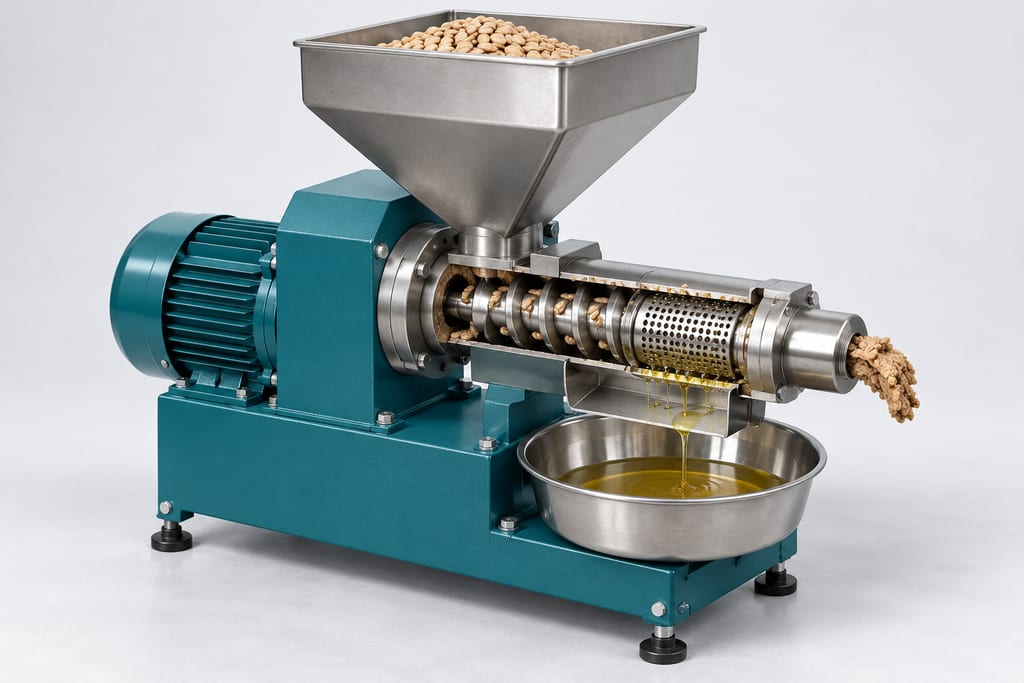
A screw press advances prepared material through a cage, squeezing out oil while solid press cake leaves separately.
A ceramic Ezzir jar holds salted butter during smen maturation in Algeria; a goatskin Chekoua is documented for churning the sour milk beforehand. Sources also report animal-skin containers, but do not establish a single shared form.
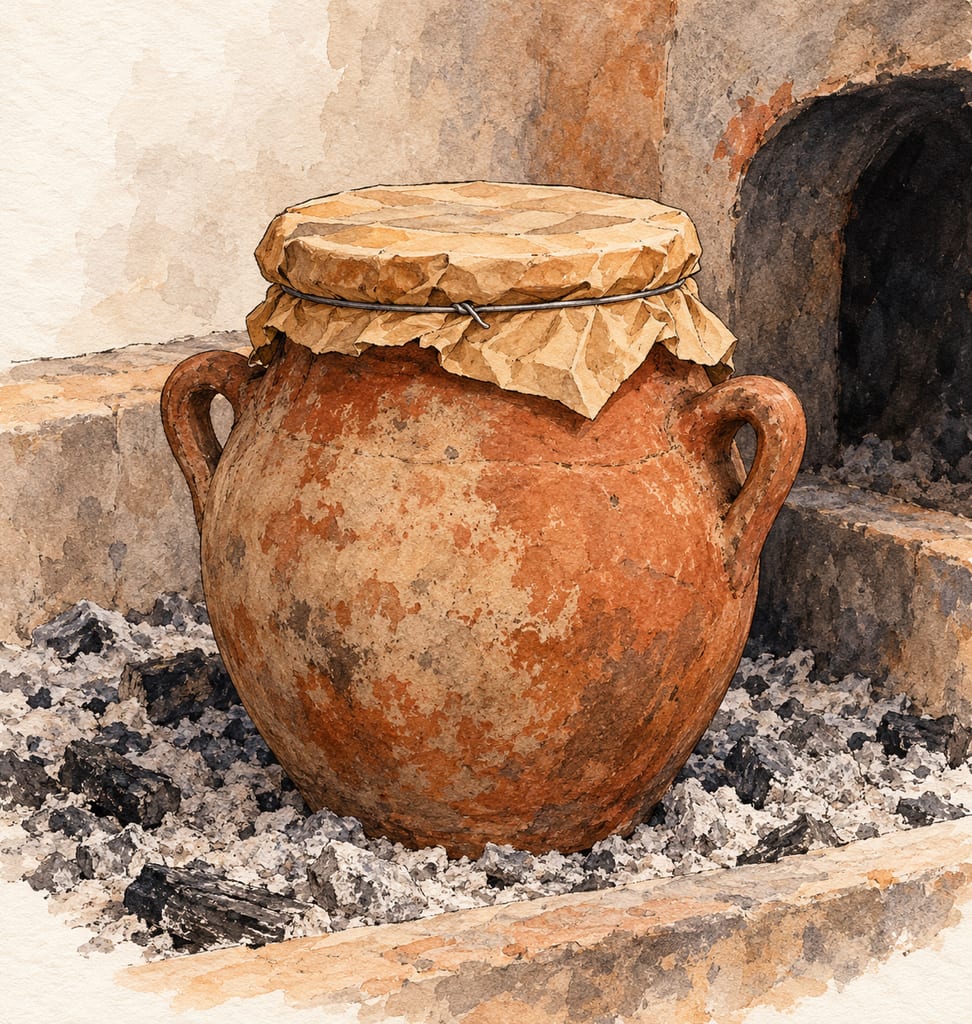
A purpose-made terracotta vessel, also called tangia or kallouch, for Marrakech’s slow-cooked tanjia. Potters make it mainly in Marrakech; a fernatchi cooks the closed jar among managed furnace embers.
No community contributions have been published for this entry yet.
Sign in to contribute. Published comments and photos are free to read.
World Intellectual Property Organization (WIPO) and Moroccan Industrial and Commercial Property Office (OMPIC)Form · Materials · Storage · Geography · History
Scoping study on the gastronomic tourism sector in MoroccoPlaces khlea in the Cedar Forest region and identifies Fez as a distribution center, with broader prominence around Fez and Marrakech.
Describes storage in tightly sealed terracotta jars in a dry, dark place.
Distinguishes the storage jar from the copper cauldron used for cooking.
Does not provide a dated attestation for the storage jar itself.
Cited in: Keeping meat for later use; A storage jar, not a cooking pot; The meat, fat and closure; Fez and Moroccan use; Handling and evidence limits
Taste of MarocForm · Geography · History · Care · Use · Visual reference
Moroccan Preserved Meat – Khlii or KhleaDescribes khlii stored in cooking fats and shows contemporary plastic containers in a Fez market photograph.
Mentions traditional clay urns without dating the vessel form or giving standard size or maker.
Identifies Fez and Marrakech as prominent khlii centers and recommends clean, dry storage containers and chilling or freezing opened containers.
Cited in: Keeping meat for later use; A storage jar, not a cooking pot; The meat, fat and closure; Fez and Moroccan use; Handling and evidence limits