
Ayran
Ayran is Turkey’s cold, savoury yogurt drink: plain yogurt is loosened with water and lightly salted, then whisked smooth or aerated into a soft cap of foam.
 FermenteaWhere food goes to change
Substrates
Goat milk is the liquid milk of domestic goats, used as a drink, a cheesemaking substrate and the base of regional dairy foods. Its composition varies among animals and farms, and its species name does not say whether it is pasteurized.
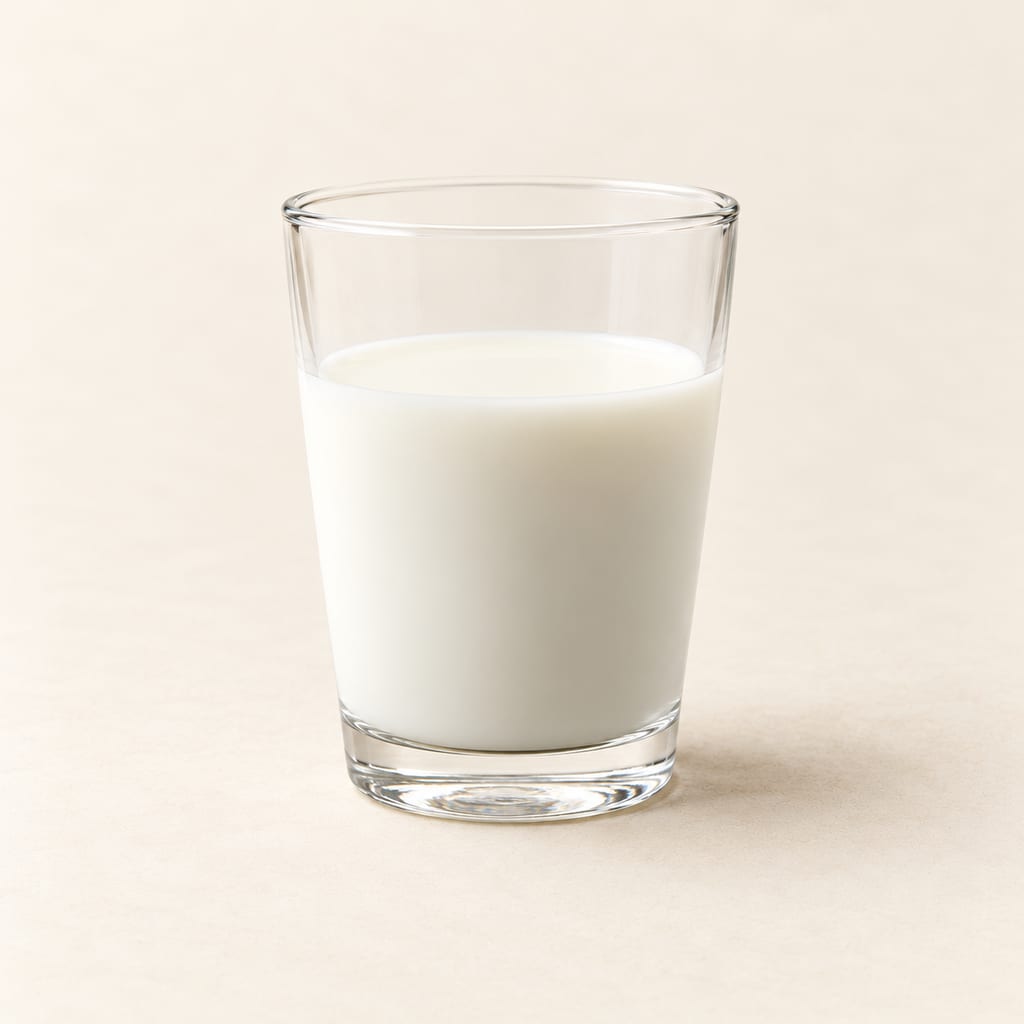
Goat milk is the mammary secretion of a domestic female goat, Capra hircus. It is a liquid dairy ingredient that can be bought or used directly as milk, before culturing, fermentation, curdling, concentration or drying turns it into another product. In Spanish it is leche de cabra, the name used in Mexican official product descriptions.
The name answers which animal supplied the milk. By itself it does not tell you whether the milk is raw or pasteurized, whole or reduced-fat, homogenized, fresh or powdered, or mixed with another species’ milk. Those are separate product choices and need to be read from the source, recipe or label.
Fresh goat milk is an opaque, pale liquid, but colour and appearance cannot identify breed, composition, treatment or safety. Its aroma and flavour can vary. The broad term covers milk from animals with different genetics, feeding, lactation and farm conditions, so it does not promise one fixed taste or a single cheesemaking behaviour.
Goats became one of the earliest managed dairy animals in southwest Asia, but animal domestication and milking are not the same event. Archaeological evidence places early goat management in the highlands of western Iran roughly 10,000 calibrated years ago. The evidence used for this conclusion follows changes in the age and sex patterns of goat bones, supported by direct dating; it demonstrates a transition toward herding, not the date when people first drank or processed goat milk.
Milk residues tell a later and different story. Studies of ancient pottery have identified dairy use by the seventh millennium BCE across parts of the Near East and southeastern Europe, with the species mix varying by region. The strongest early cattle association lies in northwestern Anatolia. For a more specific caprine record, a 2026 study combined lipids in pottery, proteins in human dental calculus, animal remains and radiocarbon dates from the Iranian Plateau. It documents goat and sheep dairy exploitation in the Zagros from the seventh millennium BCE.
This is the oldest direct evidence described by those studies, not a certificate for the first goat milking or an ancient cheese recipe. The archaeological material records a shared sheep-and-goat dairy practice and does not identify a named modern food. The distinction matters: a domestic goat may have been present long before a particular pot retained milk traces, while the earliest preserved trace cannot reveal every earlier household practice.
Goats supply milk in different kinds of farming systems. In many lower-capital smallholder systems, herds can be kept on land where other dairy production is difficult, and the daily supply may fit household use better than a large collection network. FAO describes milk production across West and Central Africa and the Caribbean as primarily household-scale, with some community trade. These are documented examples, not a description of every goat keeper in those regions.
Goat dairying also includes specialized commercial breeds and crossbreeding. Saanen, Anglo-Nubian, Toggenburg, Alpine and West African Dwarf are among the widely distributed dairy breeds named by FAO. Breed names do not guarantee a particular yield or composition. Goat lactation can be relatively persistent rather than having one sharply pronounced peak, although feed changes and other farm conditions can alter a supply over the season.
A study of eight farms in Negeri Sembilan and Selangor in Malaysia illustrates why a universal milk specification is misleading. The researchers compared Saanen and Jamnapari-type goats under different feeding systems and found substantial differences among the collected farm milks. Those results describe those farms and animals; they cannot be copied onto all goat milk. A goat’s breed, feed, lactation stage, parity, health, management, season and environment all affect the milk that reaches a cheesemaker.
Like other mammalian milks, goat milk is mostly water carrying several kinds of dispersed material: fat globules, proteins, milk sugar, minerals and smaller components. FAO describes its broad composition as similar to cow milk. That comparison is a useful starting point, not a statement that the milks are identical or interchangeable in every recipe.
Most milk protein is casein, organized in tiny particles called micelles; the rest includes whey proteins. Fat is dispersed as globules, while lactose and many minerals occupy the surrounding liquid. These arrangements help explain how milk behaves when it is acidified, heated or treated with a coagulant. A percentage alone cannot describe a milk’s full processing behaviour.
Goat casein is genetically variable. In particular, the amount of the αs₁-casein fraction may vary with the animal’s casein-gene variants. Research reviews associate those differences with milk protein composition and with variation in coagulation, curd firmness and cheese texture. It is one reason two goat milks from different herds may respond differently even when both are correctly described as goat milk.
These details are practical for cheesemakers. Milk with different protein and solids profiles can form different curds and yield different amounts of whey or retained moisture. A cheese method must be followed as written for its particular milk and process. Swapping cow, sheep and goat milk without checking the recipe can change curd formation and texture; the broad ingredient name alone gives no conversion or adjustment.
Cheese begins when milk proteins gather into a curd and separate from watery whey. Acid and enzyme coagulants take different routes: acid changes the conditions around the casein particles, while rennet enzymes alter the stabilizing material at their surface so particles can join. Some methods use an acid-producing culture as well as rennet. These are distinct actions, even when they occur in one cheese make.
After a curd forms, cutting it into pieces increases its exposed surface and can increase whey release. Stirring, heating, draining, pressing, salting and ripening are later stages that vary by cheese. This general description explains the material changes; it is not a goat-milk recipe or a set of safe process limits. A recipe’s own sources and milk specification must establish its actual quantities, temperatures and timings.
Goat milk is used for fresh, brined, pressed and ripened cheeses, as well as cultured and acidified milk foods. The regional examples are numerous, but one place’s method should not be treated as the universal way to use the milk. The Mexican protected Cajeta de Celaya specification identifies goat milk as its base ingredient and defines a product associated with named municipalities in Guanajuato. Some lower-season formulations may include a limited cow-milk portion, while the premium categories keep goat milk as the sole milk; that product rule does not define goat milk itself.
Goat milk may also be sold for drinking, fermented into regional dairy foods or dried for later food manufacture. The common thread is the ingredient’s role as a milk substrate. Fermentation, curdling, concentrating, sweetening and drying create distinct foods with their own ingredients, stages and safety controls. A page about goat milk should not stand in for a method to make yoghurt, kefir, cheese or cajeta.
Start with the species and treatment named by the seller or recipe. ‘Goat milk’ identifies the animal; ‘raw’, ‘pasteurized’, ‘whole’, ‘reduced-fat’, ‘powdered’ and ‘condensed’ describe different properties or processing states. A product labelled as a blend may include milk from another animal. Read the ingredient list and the maker’s storage directions rather than assuming that a recipe’s shorthand matches the product on the shelf.
Milk intended for a particular cheese should match the source recipe’s specification. A method written for pasteurized milk does not become a raw-milk method because a nearby farm sells raw goat milk. Nor can a general cow-milk recipe be converted by replacing only the species name: the protein profile, fat and total solids can affect coagulation and curd behaviour.
Fresh milk quality is affected by animal health, feed, handling and time after milking. The research on Malaysian farms shows how much composition can differ across real herds and feeds. There is no single visual cue that reports its protein, fat or microbial state. Smell, colour, cream line or a clean-looking container cannot establish that milk is pathogen-free or pasteurized.
Goat milk contains milk proteins and lactose. Milk allergy is an immune response to proteins; lactose intolerance concerns difficulty digesting the milk sugar. These conditions are not the same, and the word ‘goat’ does not remove either concern.
People with cow-milk allergy should not treat goat milk as an established safe alternative. In a clinical laboratory study, the alpha-caseins from cow, sheep and goat showed cross-reactions in the tested patients. The result does not predict every person’s response, but it rules out a blanket claim that switching species makes the milk allergy-safe. Follow a clinician’s advice and check product labels.
Pasteurization does not remove the allergenic milk proteins or lactose. Fermenting or making cheese may change composition, but that does not prove that a finished food is safe for someone with milk allergy or lactose intolerance. Any medical suitability claim needs evidence for that specific person and product.
‘Raw ingredient’ can mean an ingredient used as a starting material; ‘raw milk’ has a specific food-safety meaning: milk that has not been pasteurized. Goat milk is not safer because it comes from a small herd or an animal that looks healthy. Good farm practices can reduce contamination but cannot guarantee that raw milk is free of harmful germs.
Raw milk can carry bacteria and other pathogens that cause serious illness. CDC lists Campylobacter, Cryptosporidium, E. coli, Listeria, Brucella and Salmonella among germs linked to raw milk and dairy foods. Brucellosis is a particular example of a disease associated with goats and contaminated unpasteurized milk. Babies and young children, older adults, pregnant people and people with weakened immune systems face greater risk of severe illness.
Choose pasteurized goat milk and dairy products for the safer option. Keep perishable milk under the storage conditions on its label and protect it from contamination during handling. Neither traditional use nor a clean farm appearance can verify safety; smell, taste, bubbling or a home measurement cannot establish that milk contains no pathogens. Making cheese or cultured milk from raw goat milk is not made safe simply because the product acidifies, drains or matures.
Goat milk is produced and used in several regions, and its geography is not a single point on a map. FAO records goat-milk production in West Africa, Central Africa and the Caribbean, and describes goat dairying across a wider set of arid and semi-arid systems. It also documents goat milk’s place in cheese production around the Mediterranean and in Latin America, with raw or acidified milk use described in Africa and South Asia. These broad associations do not mean every community uses milk in the same way.
The Iranian Plateau provides an early archaeological association with caprine dairy exploitation, particularly the Zagros Mountains, where goat and sheep milk are documented from at least the seventh millennium BCE. This is a historical attestation, not a claim that goat milk began there. In Mexico, the goat-milk base of Cajeta de Celaya ties a specific milk use to Guanajuato and its named municipalities, not to an origin for all goat milk.
The map therefore follows documented production and use. Some places represent current farming or customary uses; others represent a specific historic dairy find. Their relationships and dates matter as much as their names. A national boundary or an archaeological site should never be stretched into a claim that one modern regional cheese, drink or confection has existed there unchanged since prehistory.
Milk proteins.
Archaeological evidence records sheep and goat dairy exploitation by this period; it does not establish the first goat milking or a named modern food.
FAO documents goat milk as a cheese substrate in Mediterranean countries; this is a broad use association, not an origin claim.
FAO documents goat milk as a cheese substrate in Latin America; this is a broad use association, not an origin claim.
FAO records goat-milk production, usually for household consumption, with some community trade.
FAO records goat-milk production, usually for household consumption, with some community trade.
FAO records goat-milk production, usually for household consumption, with some community trade.
FAO describes raw or acidified goat milk use in the region; this documents a food practice, not a safety endorsement.
The Cajeta de Celaya geographical-indication declaration defines goat milk as the product’s base in Celaya and named nearby municipalities; this is a specific food use, not an origin claim for goat milk.
Ayran is Turkey’s cold, savoury yogurt drink: plain yogurt is loosened with water and lightly salted, then whisked smooth or aerated into a soft cap of foam.
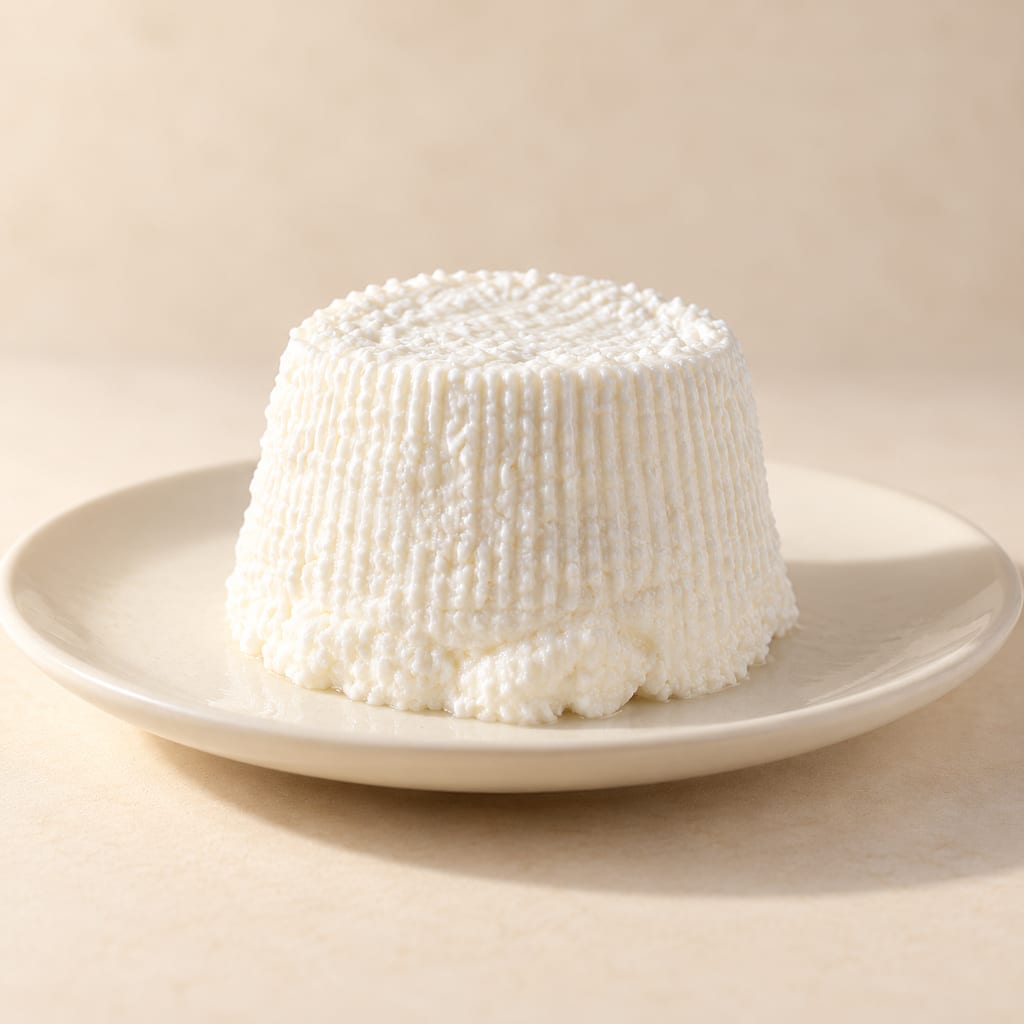
Corsican Brocciu is a whey cheese made by heating sheep's or goat's whey with whole milk and salt, then gently draining the flocculated curds. It is eaten fresh or salted and ripened as Brocciu passu.
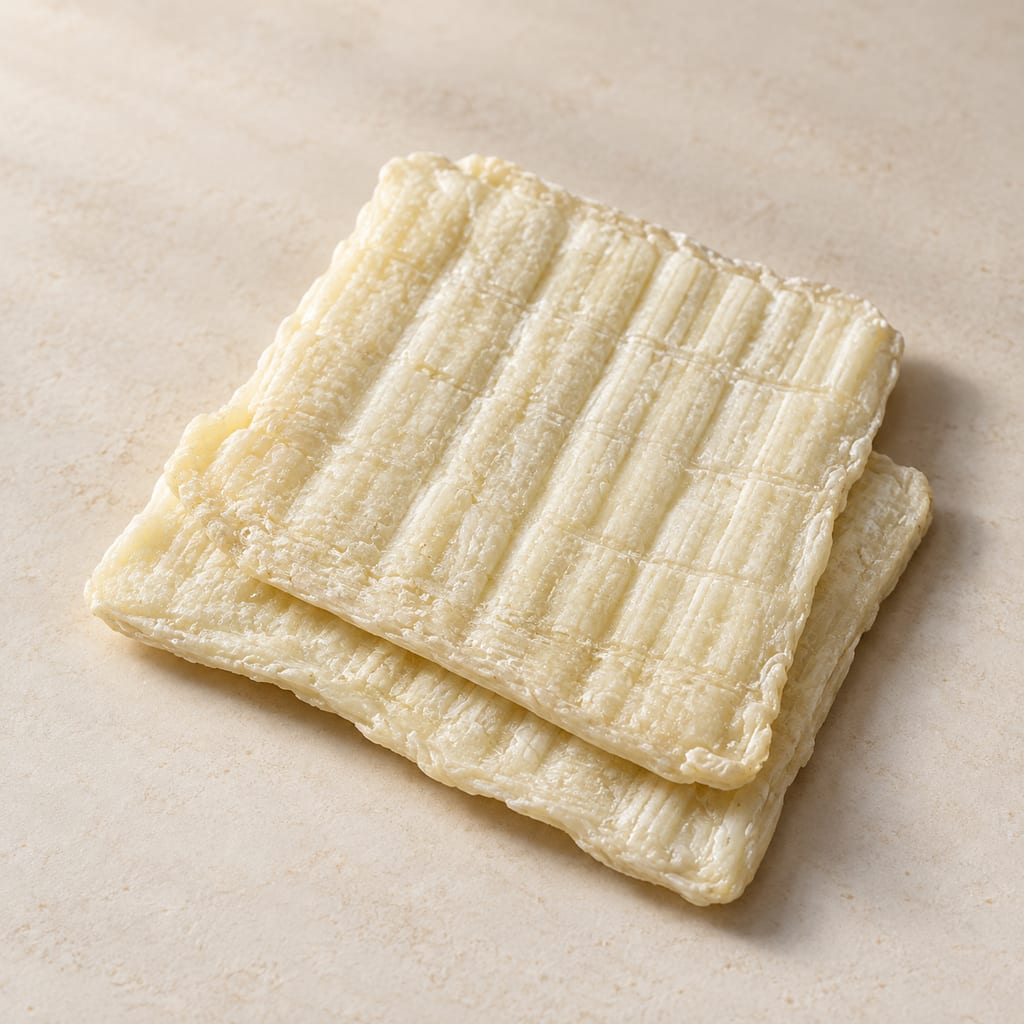
Tchoukou, also called Tikomart, is a thin, dry Nigerien cheese made to keep seasonal milk for later use. Documented methods use animal rennet, shape drained curd into sheets and dry it.

From sour breads and milk to savoury seeds, cassava staples and living beers, African fermentation follows the crop, the community and the work of transformation.
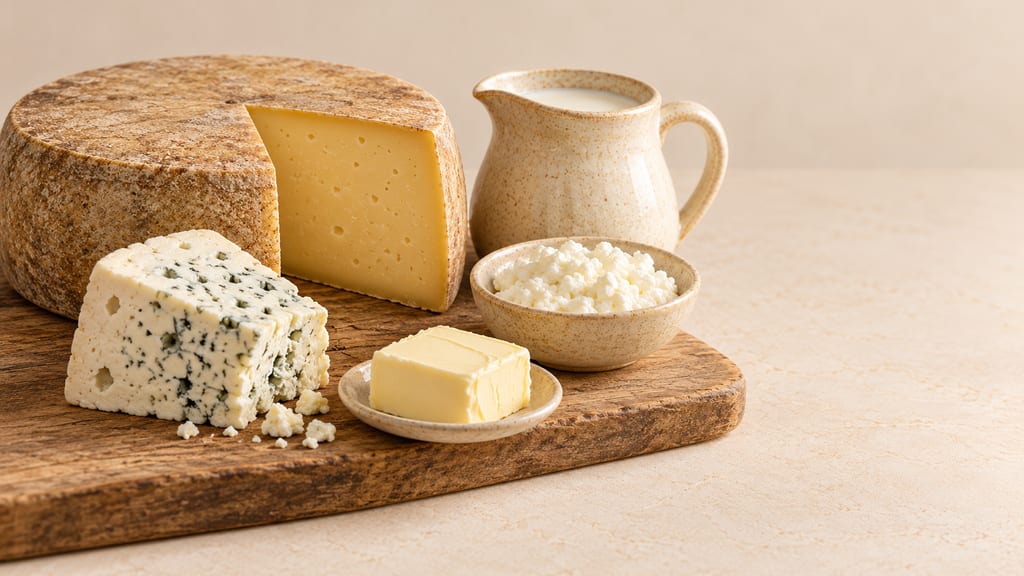
Follow milk into cheese, cultured drinks, butter, dried curds and sweets: a journey through the animals, seasons and household decisions behind the world's dairy foods.
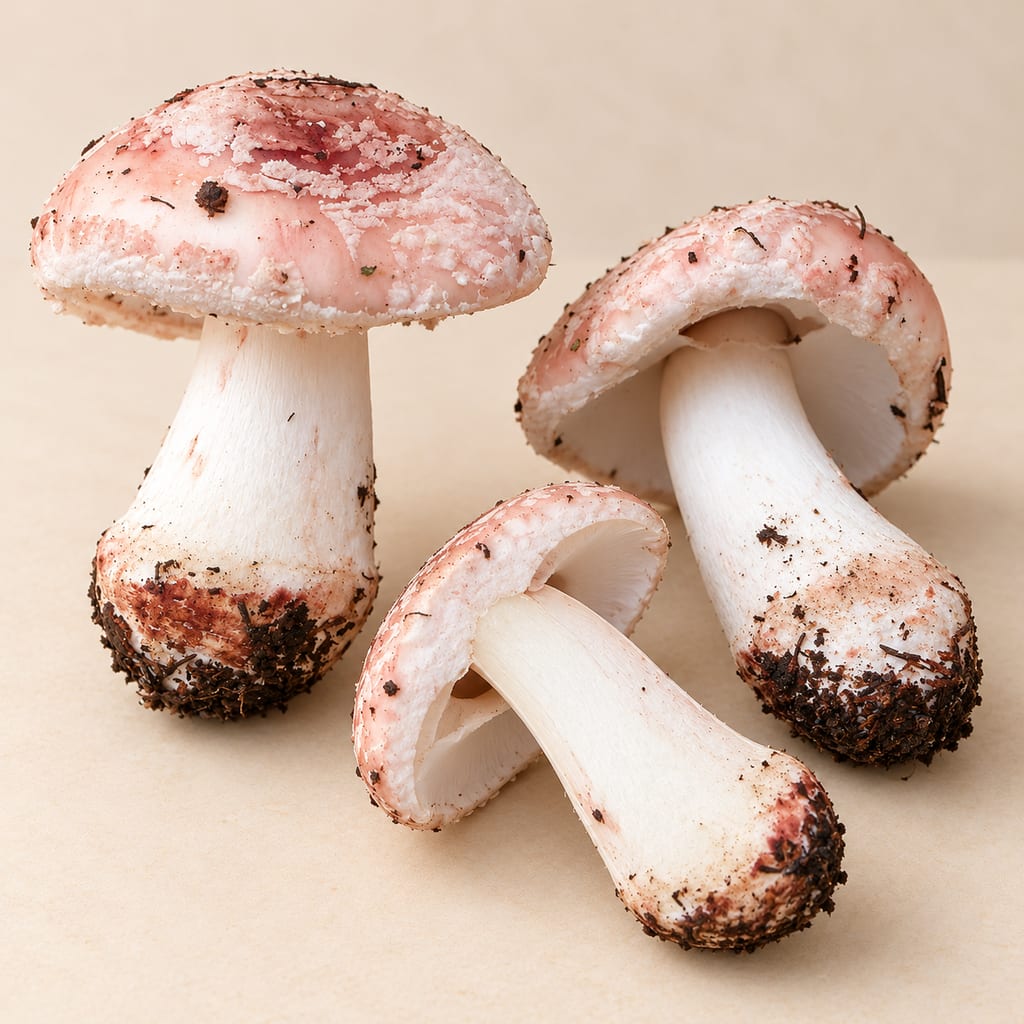
Amanita novinupta is a western North American blusher, a forest mushroom recorded as food in Mexico, and one that must be cooked because its raw flesh is toxic.

Ripe avocado flesh is the soft, buttery, fat-rich pulp of Persea americana, eaten raw. It is low in acid, so it is a fresh ingredient that needs care in chilled dishes.
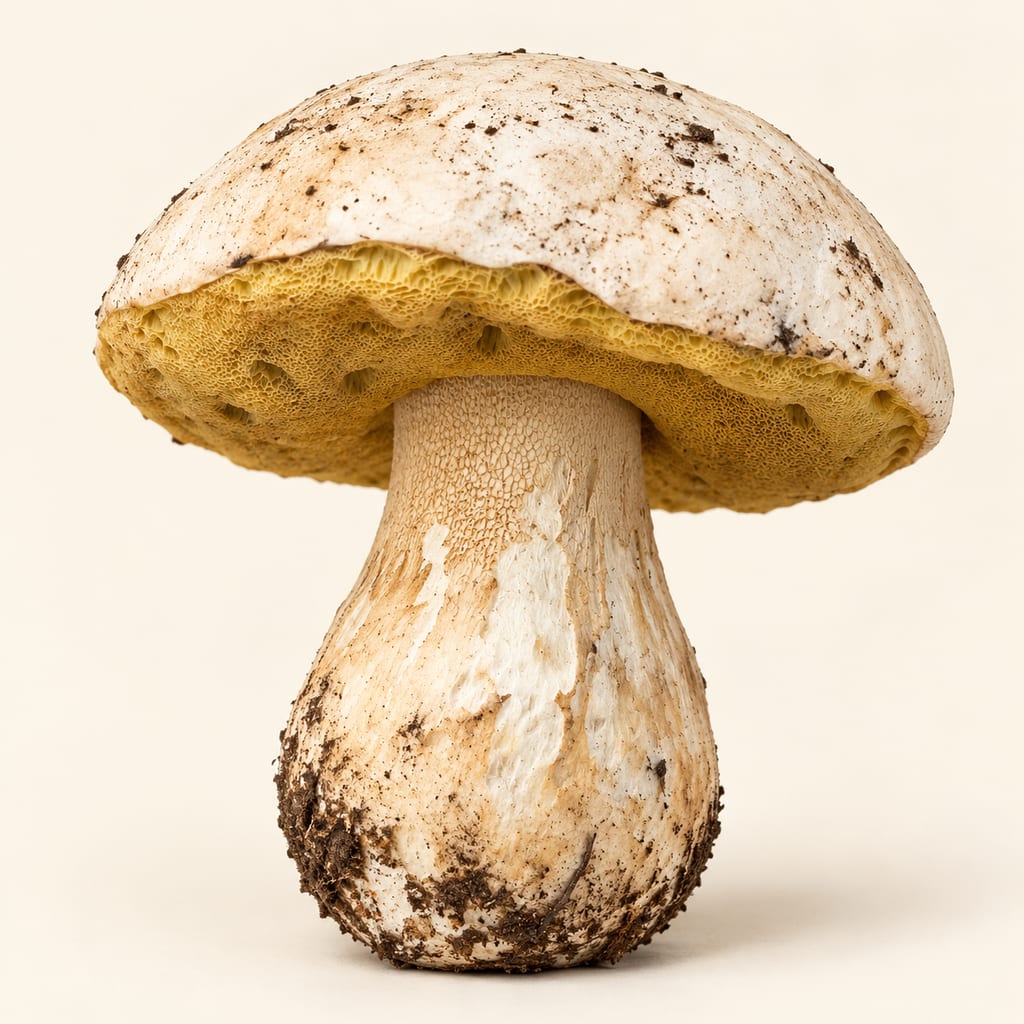
Boletus barrowsii, the white king bolete, is a western porcini relative with documented local food use in Mexico. Its pale cap and netted stem are not enough for field identification.
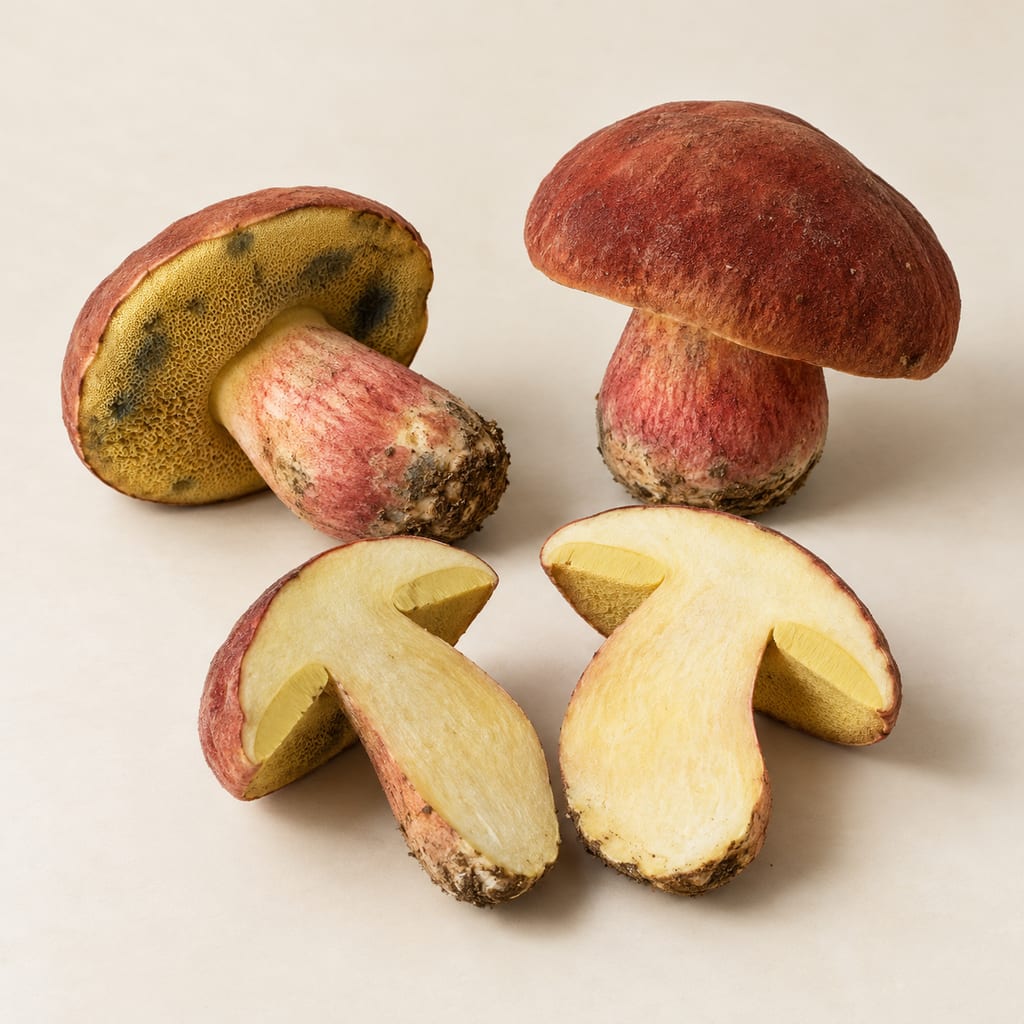
A red-and-yellow bolete described from Michigan and also listed in Mexican fungal records. Historical sources classify it as food, but its species limits, Mexican range and safe food use need careful qualification.
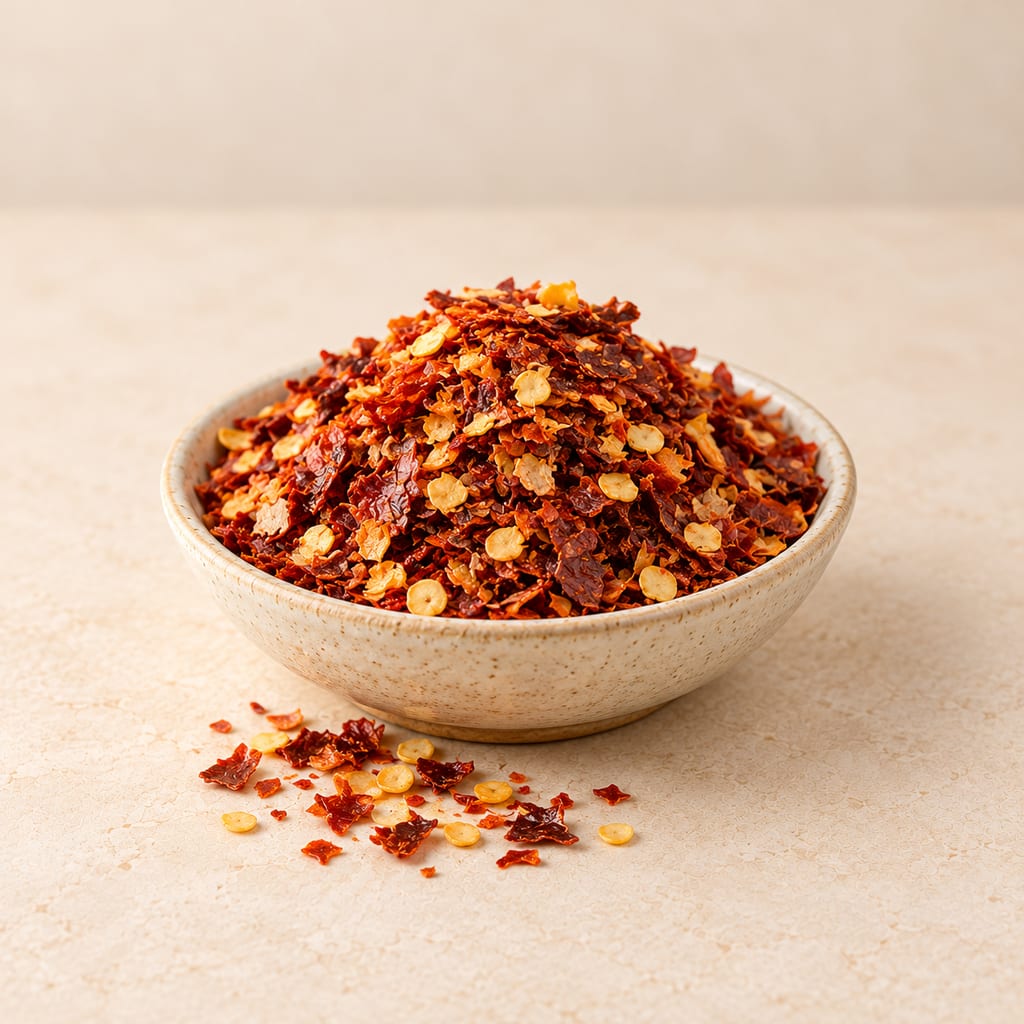
Calabrian pepper flakes are dried red Capsicum annuum from Calabria, crushed into coarse pieces; Peperoncino di Calabria is a protected geographical indication.
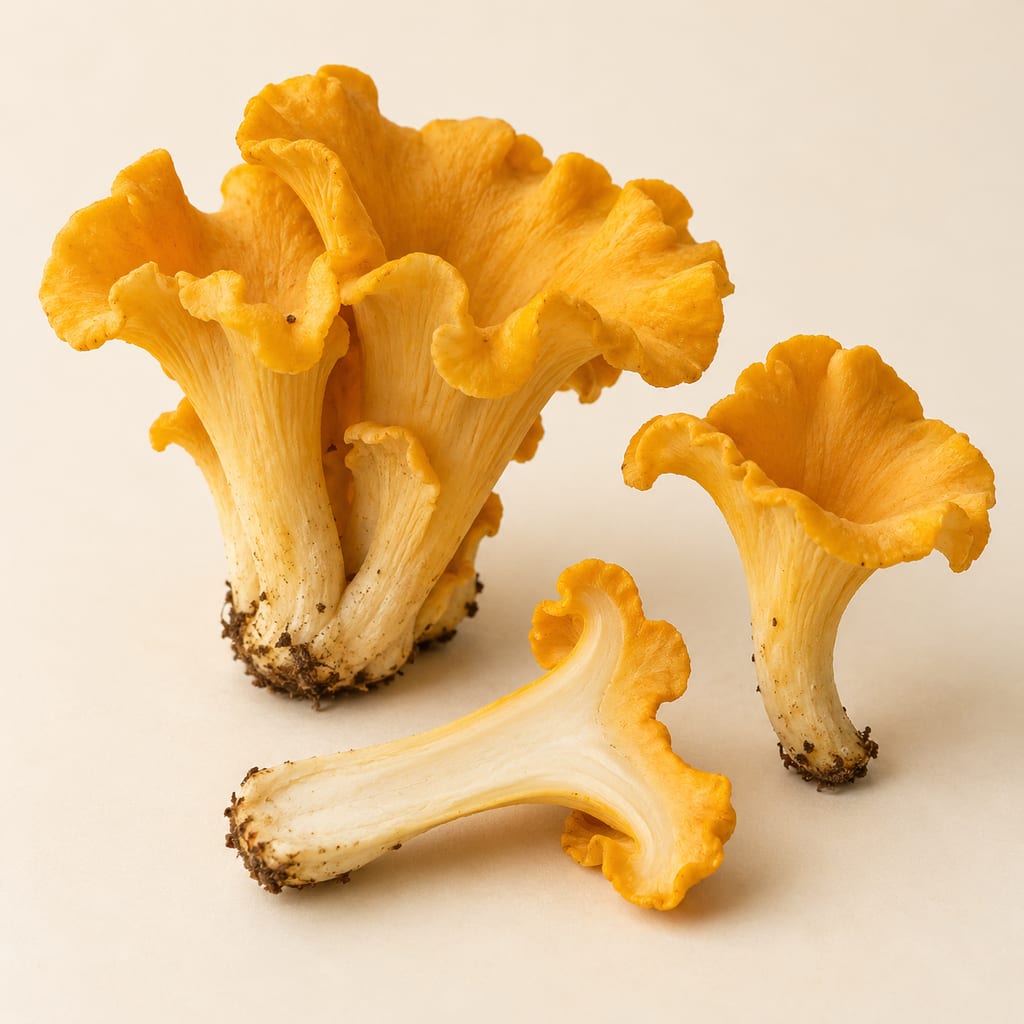
Cantharellus odoratus, the fragrant chanterelle, is a North American and Central American oak-woodland fungus. It was sold in a Veracruz market in the 1980s and in Guatemala in 2002, and its name is still disputed.
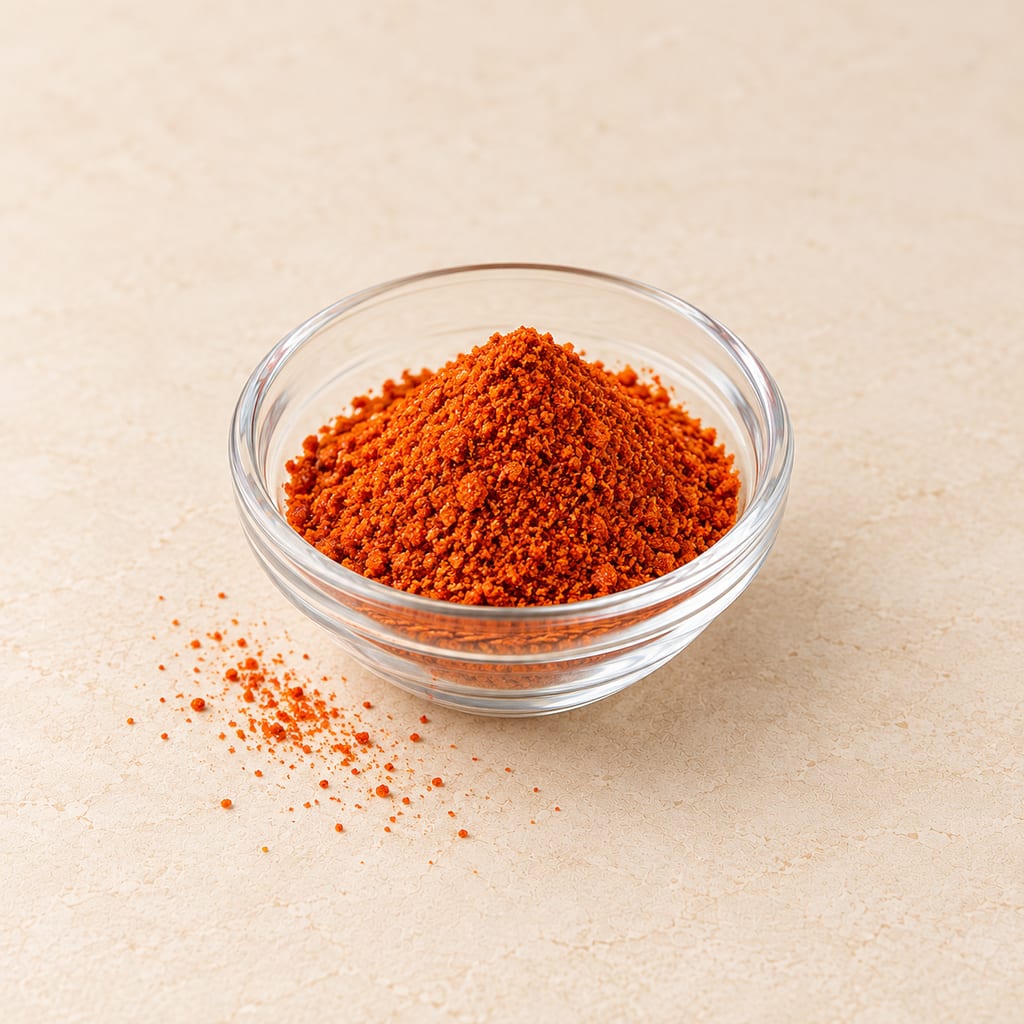
Cayenne is a very pungent red powder from dried, ground hot chilli pods, mostly Capsicum annuum, and the name of the long red peppers it comes from.
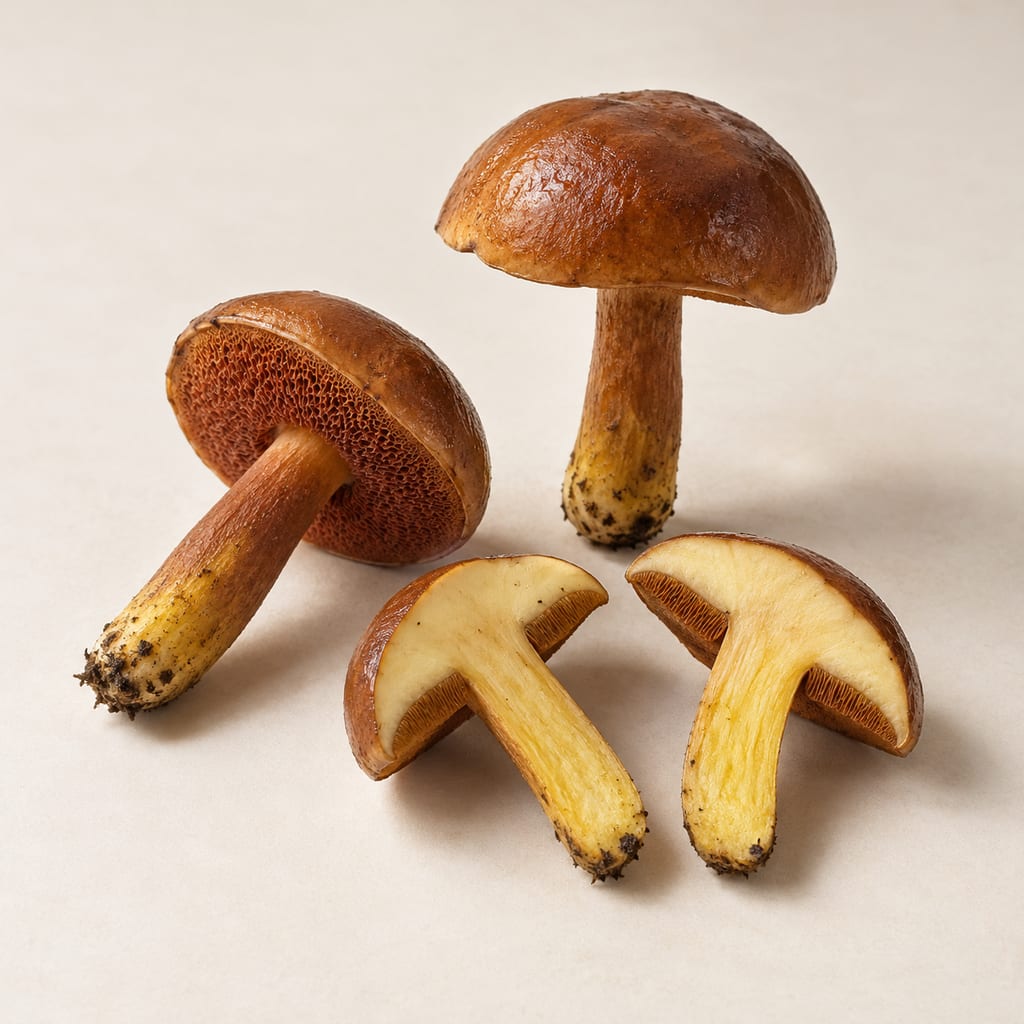
A peppery woodland bolete with historical edible labels and reported condiment use in Querétaro. Current mycological references call its edibility suspect or unestablished; this entry does not recommend consumption.

At North Abydos in Egypt, a fixed early Dynastic brewery comprised parallel semi-subterranean installations with rows of ceramic mash vats; excavation reports revise their number, scale and estimated batch capacity.

Ají amarillo is the orange-yellow Peruvian chilli cultivar group of Capsicum baccatum, used to colour and season huancaína sauce and ají de gallina. Published heat estimates do not establish one range for the named cultivar.

Toasted almonds are whole sweet almond kernels dry-roasted until golden to brown. Heat replaces their marzipan note with a roasted, nutty one; they thicken and flavour romesco.

Kodiak salmon, halibut and cod cut as seg'aq and hung on an initaq rack to become tamuuq, with kac'amaasaq and kupcuunaq named as different results.

Aniseed is the dried ripe fruit of Pimpinella anisum, an aromatic Apiaceae spice commonly called a seed. It adds a sweet, warm aroma to breads such as Moroccan krachel and South African mosbolletjies, and is distinct from star anise.

A fixed Late Chalcolithic installation in Areni-1 cave combined a shallow clay pressing basin with a large jar set into the cave floor and storage vessels nearby.

A portable dome and pan used over a hearth, with embers on the lid and heat from below. Regional peka and saç forms share this principle while differing in materials, pan shape and how the food is cooked.
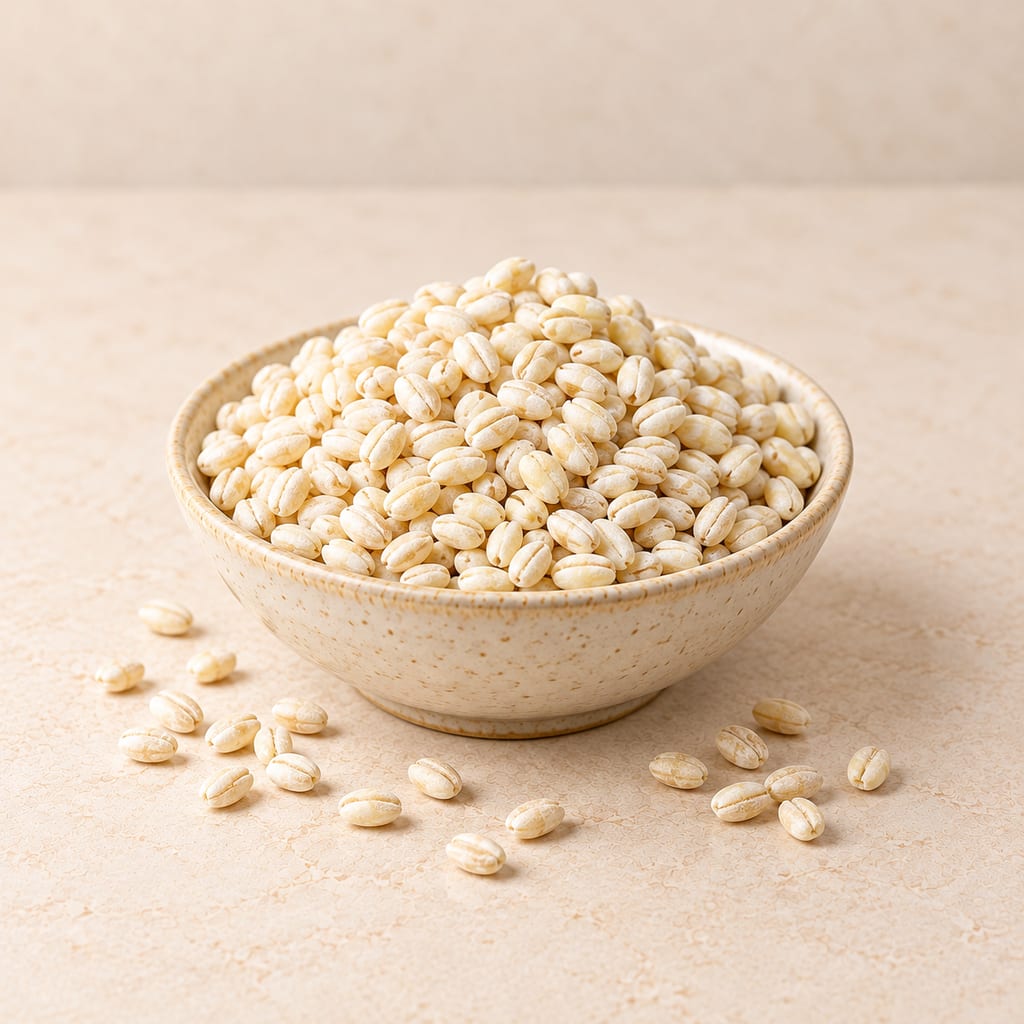
Barley is a hardy cereal, domesticated in the Middle East over 10,000 years ago, eaten whole, pearled or milled, malted for brewing, and grown with koji mold for barley miso.
No community contributions have been published for this entry yet.
Sign in to contribute. Published comments and photos are free to read.
NCBI TaxonomyIdentity
Capra hircus (Taxonomy ID: 9925)NCBI Taxonomy identifies Capra hircus as the domestic goat.
Cited in: Milk from a goat
Food and Agriculture Organization of the United NationsComposition · Uses · Geography
Milk compositionGoat milk has a composition broadly similar to cow milk; the same FAO page explains that species, breed, age, diet, lactation stage, parity, farming system, environment and season influence milk colour, flavour and composition.
FAO describes goat milk as a cheese ingredient in Mediterranean countries and Latin America, and records raw or acidified milk use in Africa and South Asia.
Cited in: Milk from a goat; The milk that enters the vat; From liquid milk to cheese and cultured foods; Choosing and identifying a milk; Milk has many places of use, not one birthplace
Food and Agriculture Organization of the United NationsProduction · Geography
Small ruminantsFAO describes goat dairying in diverse smallholder systems; goats supply milk in West Africa, Central Africa and the Caribbean and are often kept in small flocks in arid and semi-arid regions.
FAO names Saanen, Anglo-Nubian, Toggenburg, Alpine and West African Dwarf as widely distributed dairy goat breeds and describes a relatively persistent goat lactation curve.
Cited in: Herds, breeds and milk supply; Milk has many places of use, not one birthplace
ScienceHistory
The initial domestication of goats (Capra hircus) in the Zagros mountains 10,000 years agoFaunal measurements and direct radiocarbon dates document early management and goat domestication in the highlands of western Iran at about 10,000 calibrated calendar years ago; this study concerns domestication, not the first use of goat milk.
Cited in: A dairy animal with a long history
NatureHistory
Earliest date for milk use in the Near East and southeastern Europe linked to cattle herdingAnalysis of pottery residues and animal remains identified milk use by the seventh millennium BCE, with regional differences; early milk use in all sites is not established as goat milk specifically.
Cited in: A dairy animal with a long history
Nature Human BehaviourHistory · Geography
Caprine dairy exploitation on the Iranian Plateau from the seventh millennium BCThe 2026 archaeological study combines dairy lipid residues from pottery, human dental-calculus proteins, faunal evidence and direct radiocarbon dating to document sheep and goat dairy exploitation in the Zagros from the seventh millennium BCE; this is an early direct record, not proof of a first practice or a named modern product.
Cited in: A dairy animal with a long history
Laboratoire des Sciences du Climat et de l’EnvironnementHistory · Geography
Goat and sheep milk were exploited as early as the 7th millennium BC on the Iranian PlateauThe research institute involved in the study reports goat and sheep milk exploitation in the Zagros from at least the seventh millennium BCE and explains the combination of archaeological methods; the finding does not locate the first goat milking.
Cited in: A dairy animal with a long history; Milk has many places of use, not one birthplace
Frontiers in GeneticsComposition · Cheesemaking
Review: Genetic and protein variants of milk caseins in goatsGoat casein genes are highly polymorphic; alpha-S1-casein expression varies by genotype and breed, and casein variants are associated with milk composition and differences in coagulation and cheese-gel properties.
Cited in: From liquid milk to cheese and cultured foods
Tropical Life Sciences ResearchComposition · Production
A Comparative Study on Physicochemical Characteristics of Raw Goat Milk Collected from Different Farms in MalaysiaAn eight-farm study in Negeri Sembilan and Selangor measured composition in Saanen, Saanen-cross and Jamnapari-type goat milk and found variation among farms, breed types and feed systems; the reported values describe that Malaysian sample, not a universal goat-milk specification.
Cited in: Herds, breeds and milk supply; The milk that enters the vat; Choosing and identifying a milk
Food and Agriculture Organization of the United NationsCheesemaking
Small-Scale Dairy Farming Manual, Volume 1, Technology Unit 10.3: Small Scale Cheese MakingFAO explains that casein micelles can be destabilized by acid or enzymes, that acid and rennet follow different coagulation mechanisms, and that cutting and curd handling influence whey drainage. This is general dairy science rather than a goat-milk-specific method.
Cited in: From liquid milk to cheese and cultured foods
Secretaría de Economía, Diario Oficial de la FederaciónUse · Geography
Declaración de protección de la Indicación Geográfica Cajeta de CelayaThe Mexican geographical-indication declaration identifies goat milk as the base of Cajeta de Celaya, defines its municipalities in Guanajuato, and permits up to 50 percent cow milk in some lower-season formulations while excluding that substitution from premium categories.
Cited in: Milk has many places of use, not one birthplace
Dirección General del Servicio de Información Agroalimentaria y Pesquera, Gobierno de MéxicoUse · Geography
Cajeta: dulce tradicional mexicanoMexico's agricultural information service describes cajeta as a traditional Mexican sweet made mainly with goat milk and names its uses in pastry and desserts; the material documents use, not the origin of goat milk.
Cited in: Milk has many places of use, not one birthplace
Centers for Disease Control and PreventionSafety
Raw MilkCDC states that raw milk can carry harmful germs, clean farm practices cannot guarantee it is free of pathogens, pasteurization kills harmful germs, and pasteurized milk offers the same nutritional benefits without raw-milk consumption risks.
Cited in: Milk allergy and lactose are different; Raw milk needs a clear safety warning
Centers for Disease Control and PreventionSafety
About BrucellosisCDC identifies goats among animals that can carry Brucella and explains that people can acquire brucellosis from unpasteurized milk or dairy products made from contaminated milk.
Cited in: Raw milk needs a clear safety warning
AllergyAllergens
Allergenicity of alpha-caseins from cow, sheep, and goatThe tested alpha-caseins from cow, sheep and goat showed cross-reactivity in the studied patients; goat milk is not established as a safe substitute for people with cow-milk allergy.
Cited in: Milk allergy and lactose are different
Health CanadaAllergens
Milk - A priority food allergenMilk allergy is an immune reaction to milk proteins and is distinct from lactose intolerance; related ruminant milks can cross-react.
Cited in: Milk allergy and lactose are different