
Goat milk
Goat milk is the liquid milk of domestic goats, used as a drink, a cheesemaking substrate and the base of regional dairy foods. Its composition varies among animals and farms, and its species name does not say whether it is pasteurized.
 FermenteaWhere food goes to change
Tikomart
Tchoukou, also called Tikomart, is a thin, dry Nigerien cheese made to keep seasonal milk for later use. Documented methods use animal rennet, shape drained curd into sheets and dry it.
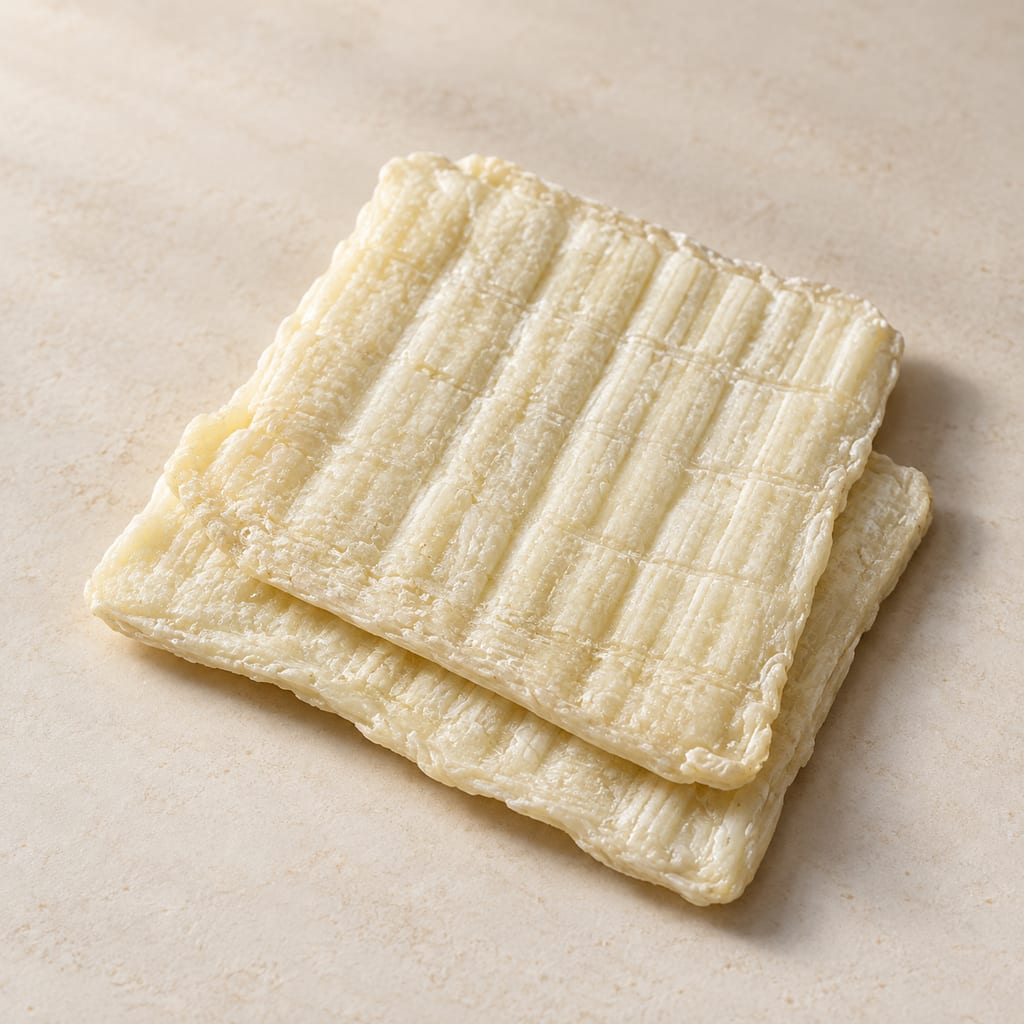
Tchoukou is a dry, pressed cheese made in Niger. In Hausa it is called Tchoukou; a related Tuareg name is Tikomart. The finished cheese is a thin, firm sheet, often rectangular. It can be eaten dry, softened in hot tea or crumbled into millet porridge. Its purpose is practical as well as culinary: turning a short season of abundant milk into food that can be carried, sold or kept for the months when milk is scarcer.
The cheese belongs to pastoral production across Niger's Sahelian areas. Historical and development accounts describe women in herding households as the principal processors, managing milk during the rainy season, when pasture and water increase and milk becomes plentiful. In remote areas without an organized milk-collection route, fresh milk is perishable and difficult to sell quickly. Pressing and drying provided a way to use the surplus rather than let it exceed what a household could consume. Sales also brought money for other household needs.
The evidence places production in more than one part of the country. A FAO project worked around Tabalak and Ibécéten in Tahoua; a 2013 sector study covered production and trade in Tahoua, Zinder and Diffa. Those records identify documented production areas, not a single birthplace. FAO's account describes Tchoukou as a long-standing tradition, but it supplies no first date. Its 1989 project start is a dated record of work on the cheese, not the date the cheese was invented.
The name also appears in official product-recognition records. In 2023 OAPI described the Fromage Tchoukou du Niger as a collective mark. A 2024 technical fiche loosely calls that recognition a geographical indication; the more precise OAPI record distinguishes the collective mark from the protected geographical indications awarded to other Nigerien products.
Tchoukou is not defined by a single milk species or a single unchanging workshop formula. Older FAO descriptions list cow, goat, sheep and camel milk, while the 2024 RECA technical sheet presents a cow-milk batch. The 2013 Niger study and older FAO project records show that preparation and equipment also vary: one account describes hand shaping on woven mats, while the newer guide presents moulds, a pressing board and a raised drying frame.
The shared form comes from a small sequence of physical changes. Rennet sets milk proteins into a curd; draining and pressure remove whey; spreading the curd into a sheet increases the area exposed to moving air. The cheese becomes firm as it loses moisture. It is not a ripened cheese in the familiar cave-aged sense: the 1989 FAO description says the traditional product is dried, with the rennet's enzyme activity contributing maturation rather than a long finishing stage.
These similarities do not make every reported method interchangeable. One historic description leaves milk unheated, uses an animal rennet preparation and dries the curd on straw at ambient conditions. The 2024 RECA fiche instead instructs makers to heat the milk in a water bath, uses a quantified amount of a prepared rennet infusion, and shapes the curd in moulds. The two methods belong in the record as separate documented approaches. The instructions below follow the RECA fiche; they do not combine its heating step with the older raw-milk method.
The 2024 fiche starts with ten litres of local cow milk and one hundred millilitres of prepared rennet infusion. It describes the milk as raw before processing, then instructs the maker to heat it in a bain-marie. The infusion is prepared separately from dried caillette, the abomasum of a young ruminant. The fiche does not identify the animal species, the size of the dried piece or the source of the animal. Those missing details matter: rennet strength varies, and the quantity of infusion is not a guarantee that every preparation will set milk identically.
For the infusion, the guide uses a half-filled 500 millilitre bottle of whey, a few pieces of dried abomasum, ginger and kimba. It leaves the amount of each solid unspecified and rests the mixture for twenty-four hours. Some processors, it says, use water or pasteurized milk instead of whey; some add salt or chilli. These are recorded variations, not measured substitutions with a stated effect on coagulation. Kimba is identified as Guinea pepper, but the guide does not provide a botanical name. It should remain under that local ingredient name rather than being assigned a species by guess.
Whey carries dissolved milk components and provides the liquid base for extracting the coagulant from the abomasum. The rennet's enzymes act on milk proteins to form a gel-like curd, which can then be lifted and drained. Ginger and kimba are present in the described infusion, but the fiche gives no dose and does not explain whether they are included for flavour, preservation or another purpose. This page therefore does not assign them a biochemical role the source does not establish.
The recipe uses a broad rennet ingredient record plus separate ingredient links for the abomasum, whey, ginger and kimba named in the preparation. The guide's one ratio—one hundred millilitres of infusion for ten litres of milk—belongs to this particular technical method. It should not be scaled as if the strength of the infusion were standardized, nor used to replace the local knowledge that determines when this curd is ready.
The equipment list is modest but specific: a sieve, stainless-steel vessel, water-bath pot and heat source, thermometer, cold-water basin, bucket, spatula, filter for the infusion, measuring cup, fork, moulds, taloche-like pressing board, drying frame and clean white cloth. The method also uses a small 500 millilitre bottle for the rennet infusion. The mould gives the curd its thin sheet form; the board presses whey out; the frame supports the cheese while air passes around it.
The fiche begins with hygiene. It asks the processor to wash hands and equipment with soap and water, wear clean work clothing, use gloves and a hair covering, and keep tools dedicated to milk work. It also warns against actions that can contaminate the work area. These are the source's practical controls; they cannot substitute for a safe milk process or a validated drying endpoint.
First filter ten litres of milk through a clean sieve to remove visible material. The guide next calls its heat treatment pasteurization: warm the milk in a stainless-steel container set in a larger pot of water. A thermometer is placed at the centre of the milk. When it reaches 85 °C, hold that temperature for twenty minutes, adjusting the heat as needed. Remove the milk vessel and place it in a basin of cold water. The fiche gives no target temperature for adding rennet, so none is supplied here.
While the milk is being prepared, make the rennet infusion in its separate bottle. Add dried young-ruminant abomasum, whey to about halfway up the bottle, ginger and kimba. Shake the mixture and leave it for twenty-four hours. Filter one hundred millilitres of the liquid into the ten litres of milk and stir with a spatula. Close the bucket and allow the milk to coagulate. The technical sheet gives neither a setting time nor a test for a set curd, so it cannot support a precise wait or an invented readiness signal.
Once curd has formed, transfer it by measuring cup into moulds arranged on the drying frame. Use a fork to spread each portion across its mould into a rectangular sheet. Place the taloche-like board over the mould and press for fifteen to twenty minutes so whey drains away. Remove the board and moulds. Cover the sheets with clean white cloth to keep flies off, then place the frame in sun, shade or a ventilated area for drying.
The final drying instruction is deliberately incomplete: the fiche gives no number of hours, water-activity target or other measurable endpoint. It says to separate sheets that have stuck and keep the finished sheets in a dry place, but does not state a shelf life. The method can be transcribed at the precision the source supplies; a reader must not treat an unspecified drying interval or a dry-looking surface as proof of safe preservation.
The earlier FAO description records a different household method. It says milk was not heat-treated, and describes animal rennet from a lamb or kid abomasum, or industrial rennet. The curd was ladled onto straw mats, pressed to remove most of the whey, left unsalted and dried at ambient conditions. It associates the practice with Peul and Tuareg communities and describes aerated aznam baskets as one way Tuareg families stored the cheese. Its stated storage duration is a record of that tradition, not a safety limit validated for a present-day home batch.
The FAO project account from Tabalak gives more procedural detail: a small piece of cleaned, dried rennet stomach was steeped in whey; the strength varied with the animal material and how long it had been used. The processor added the infusion by dipping a twig into it and stirring the milk. Curd was shaped by hand on a woven grass mat, pressed and drained, then moved to a separate drying mat. That account reports a short pressing period and seasonal drying durations for the described practice. Those figures describe that account's method and climate; they are not missing steps to splice into the newer RECA instructions.
The same FAO project also reports a more controlled production setup at Ibécéten, using large basins, measured powdered rennet, moulds, a draining surface and raised metal drying frames. It describes that as an improved workshop technique, separate from the household method. A 2021 report from a Niamey producer describes another modern workshop approach: collected milk, heating, fresh-curd production, pressing and ventilated drying. That producer's method is useful evidence of contemporary adaptation, but it does not establish one universal formula.
The differences are more than small preferences. Rennet may be prepared from animal tissue or supplied as industrial product; milk may be heated or left raw; the curd may be spread by hand or moulded; mats, moulds and frames offer different contact and drainage surfaces. Salt and spices also differ between accounts. A single catch-all method would conceal meaningful production choices and could imply a consistency the sources do not support.
Tchoukou was made both to eat at home and to sell. The dry cheese travels more easily than fresh milk or soft curd, and older accounts describe it as a way to carry surplus from the rainy season into the dry months. It can be eaten alone, dipped in hot tea or crumbled into millet porridge. These are practical ways to soften or combine a durable sheet with familiar foods; the exact preparation depends on the household and the cheese.
One familiar pairing is millet. FAO describes Tchoukou eaten with a millet ball or crumbled into millet porridge; the cheese's savoury dairy character complements a grain-based staple. Another use is to soften a piece in hot tea. The cheese can also be incorporated into Toudoudi or Labdourou, according to the RECA fiche's cited companion preparation guide. These are uses documented for this Nigerien product, not a claim that every household serves it in the same way.
Contemporary production has also grown beyond household preservation. A 2021 account follows Rakia Zazi, who developed milk collection and a small processing workshop, employing other women and selling fresh and dried dairy products. Her account emphasizes that the dried cheese can be transported and sold beyond the immediate production area, while fresh products are more difficult to move. It shows the continuing place of women processors and dairy work in local livelihoods without reducing a diverse tradition to a single producer's story.
Milk can carry disease-causing bacteria even when it looks and smells normal. The CDC recommends pasteurized milk and dairy products. The 2024 RECA fiche begins with raw milk and then gives a specific heat treatment—85 °C for twenty minutes in a bain-marie, measured in the centre of the milk. That is the guide's stated process. It should not be presented as independent proof that every later step, the rennet infusion or the finished cheese is safe.
A 2013 Niger study described several contamination routes in traditional production and sale: milk was sometimes not filtered; rennet infusions varied and could be kept in ways that allowed microbes to grow; mats and containers were not always clean; curd could be handled by hand; and drying or market display could expose sheets to dust, flies or other debris. The report's findings describe the producers and conditions it observed. They do not justify a blanket judgement about all Nigerien makers, but they make the importance of process hygiene concrete.
A 2025 study of Tchoukou samples sold in Niamey gives another specific warning. The authors report that every analyzed sample had unsatisfactory yeast and mould results, that 83 percent had unsatisfactory coliform and E. coli results, and that Salmonella was found in half of the samples. Those results concern the study's market collection during August 2024; they cannot tell us the prevalence in every region, producer or household. They do show why a dry sheet or a long-standing preservation tradition cannot be treated as microbiological proof.
The newer technical fiche addresses some handling and milk heating, but it leaves important questions open. It provides no clotting time, drying duration, measurable moisture endpoint, validated storage period or packaging instruction. The older FAO account's storage statement belongs to the historical description and cannot be borrowed as a shelf life for the newer RECA batch. This recipe therefore records the process without claiming that the fiche has validated a full safety system.
Do not taste, smell or inspect a batch to decide whether it is safe. Do not assume that extra drying, hot tea or later cooking corrects contamination. Keep the documented heat and hygiene steps distinct from the unknown drying control, and follow current local food-safety guidance. Until a validated drying endpoint and post-process handling method are available, the source evidence does not support a safety guarantee or a room-temperature shelf-life claim.
The batch basis in the 2024 fiche is ten litres of cow milk and one hundred millilitres of rennet infusion. The amount of dried abomasum, the ginger and kimba pieces, and the whey volume are described by container level or by a few pieces rather than a weighed formula. The finished yield is not reported. Rennet potency is variable in the older sources, so the one ratio should remain attached to this fiche rather than scaled to a different rennet or milk species.
The equipment helps explain the sheet's form. The mould makes the curd shallow and rectangular; the pressing board helps whey leave the curd; and a raised frame supports the sheets as they dry. The source also specifies a sieve, bucket, thermometer, stainless vessel, spatula, fork and cloth. It does not give mould dimensions, sheet thickness for this exact RECA batch, drying-frame design or the weather conditions needed to reach a stable endpoint.
Tchoukou rewards attention to its regional context: the seasonal work of pastoral households, the skill of women who transform milk, the adaptation of tools to mobile or village production and the many ways families eat a durable cheese. The available sources allow us to describe one recent technical method and to compare it carefully with earlier practices. They do not justify pretending that all makers follow the same procedure, or that a thin dried cheese needs no further food-safety evidence.
Tchoukou is a dry cheese made in Niger by pastoral communities. The available sources describe it as a way for women to turn rainy-season milk surplus into food kept for the dry season; they do not establish when it began.
Scaling: source batch only
Raw milk can carry pathogens, and the CDC recommends choosing pasteurized milk and dairy products. A visual or sensory check cannot establish microbiological safety.
Hazard sourceA 2013 Niger study records unfiltered milk, variable rennet preparations and exposure to dust, insects and inadequately cleaned mats in traditional settings. These are documented hazards, not universal claims about every producer.
Hazard sourceA 2025 Niamey study of cheese sampled from sellers reported unsatisfactory yeast/mould results in all samples, coliforms and E. coli in 83%, and Salmonella in 50%. The finding concerns that study's market samples and is not a prevalence estimate for all Tchoukou.
Hazard sourceThe 2024 fiche gives no drying duration, moisture target or storage time, so its drying stage cannot be interpreted as a validated preservation or pathogen-control step.
Hazard sourceThe 2024 RECA fiche specifies heating the milk to 85 °C for 20 minutes in a bain-marie, measured at the centre with a thermometer. This is the source's stated process control; the fiche is not independent validation of the complete cheese process.
Control sourceWash hands and dedicated equipment with soap and water; wear clean work clothes; keep flies off sheets with clean cloth, following the RECA fiche.
Control sourceDo not treat raw-milk coagulation, drying, appearance or taste as proof that cheese is safe.
The described sheet gives no validated drying endpoint or storage duration; keep this method within its source limits and do not infer shelf stability.
Sources associate Tchoukou with Niger and pastoral milk-processing communities; this country-level row does not claim one birthplace.
FAO describes its project in the Tabalak area and the 2013 study lists producer groups in Tabalak; these are documented production associations, not an origin claim.
A 2013 Niger study documented production and trade in Tahoua Region.
A 2013 Niger study documented production and trade in Zinder Region.
A 2013 Niger study documented production and trade in Diffa Region.
Goat milk is the liquid milk of domestic goats, used as a drink, a cheesemaking substrate and the base of regional dairy foods. Its composition varies among animals and farms, and its species name does not say whether it is pasteurized.
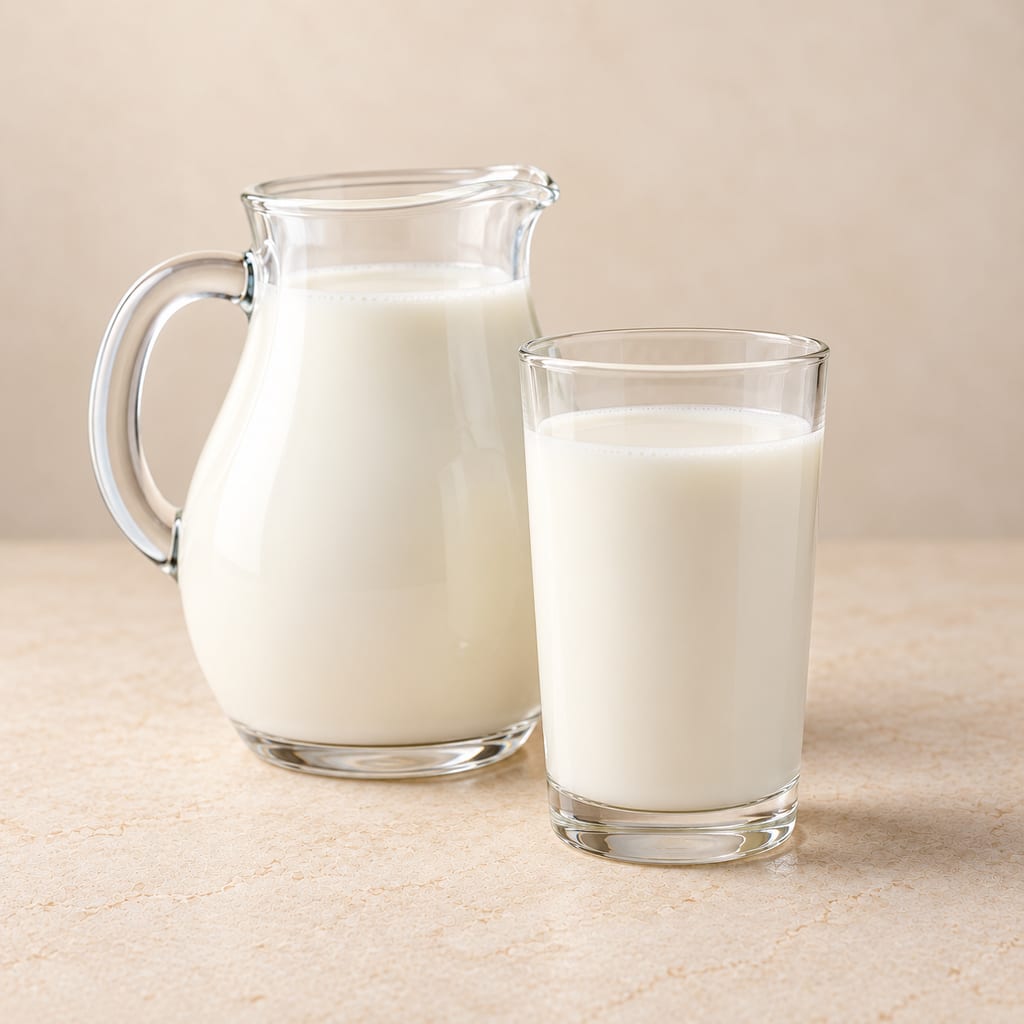
Cow milk in its whole-fat category supplies fat, proteins and lactose for cooking, cultured dairy and cheese. Heat treatment and homogenization are separate product choices.
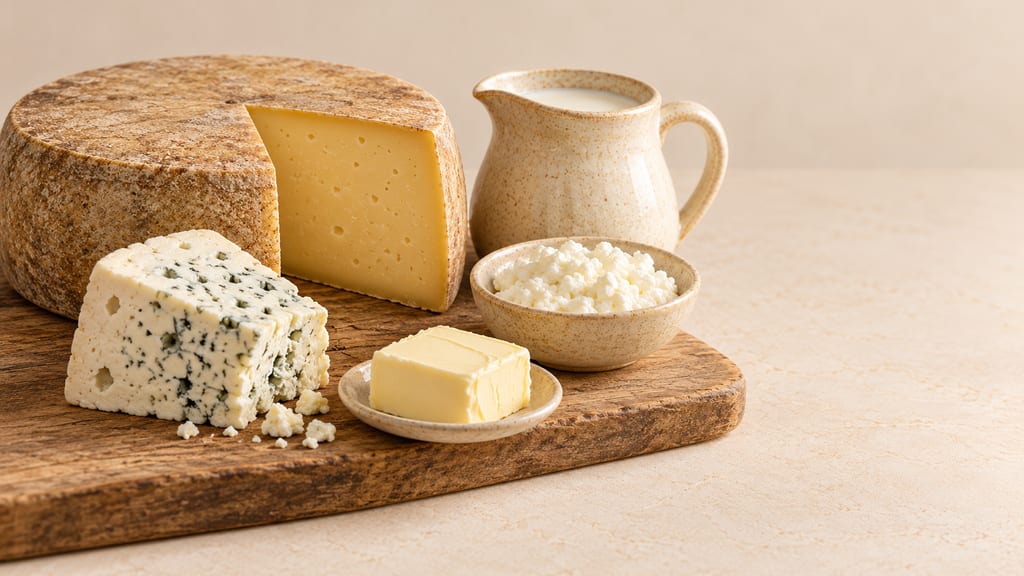
Follow milk into cheese, cultured drinks, butter, dried curds and sweets: a journey through the animals, seasons and household decisions behind the world's dairy foods.
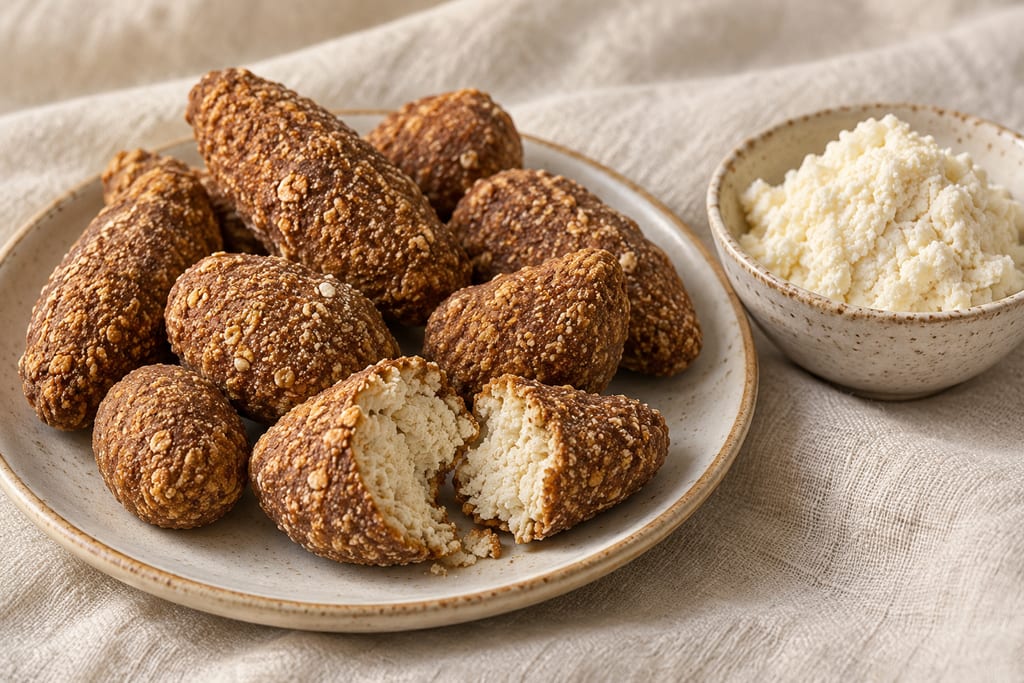
A two-stage Altai dairy preparation: sour chegen is heated into soft aarchi, then portions are drained, pressed and traditionally smoked into firm kurut.
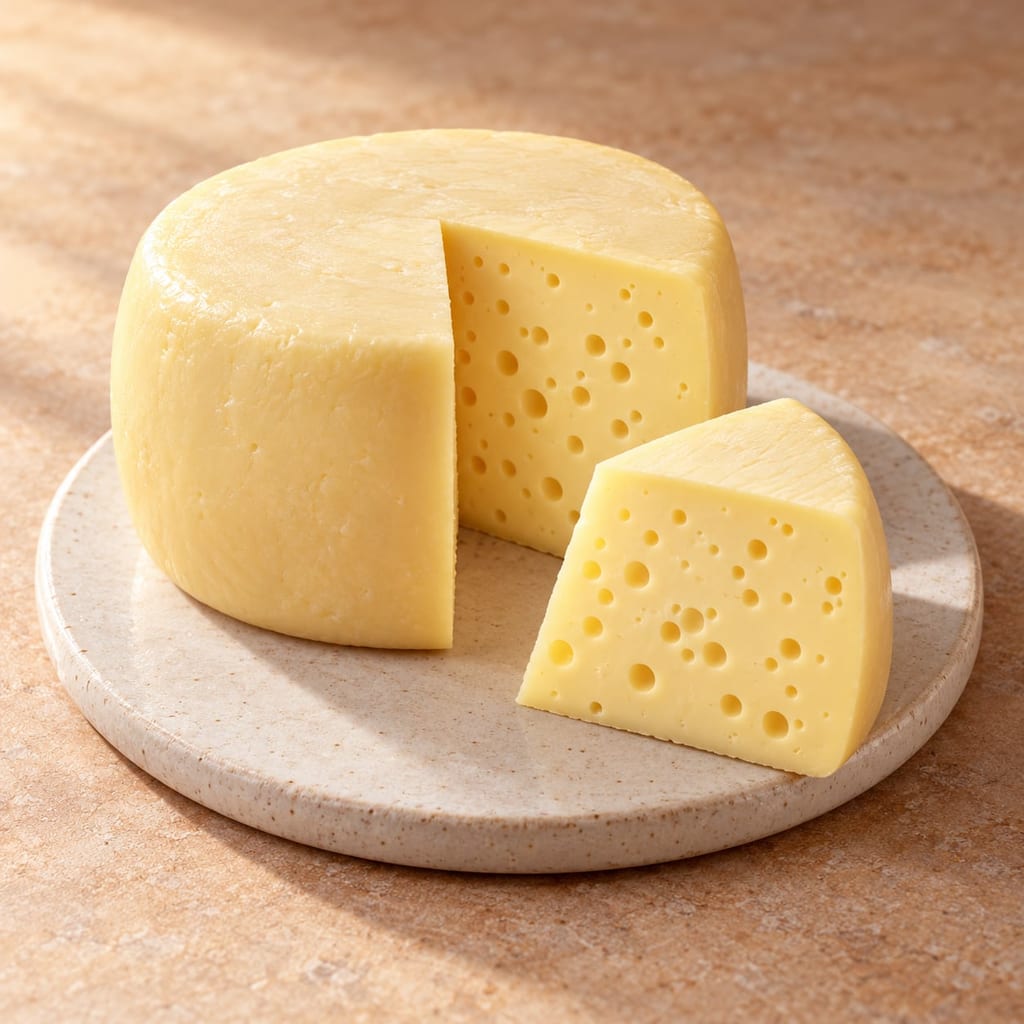
A washed-curd cheese with propionic bacteria, warmed by hot water in two steps and then held in a warm room for weeks so the bacteria can form its holes.

Beyaz peynir is a Turkish white cheese matured in brine. Sheep milk, alone or mixed with other milks, gives a close-textured cheese cut into blocks and packed in cans.
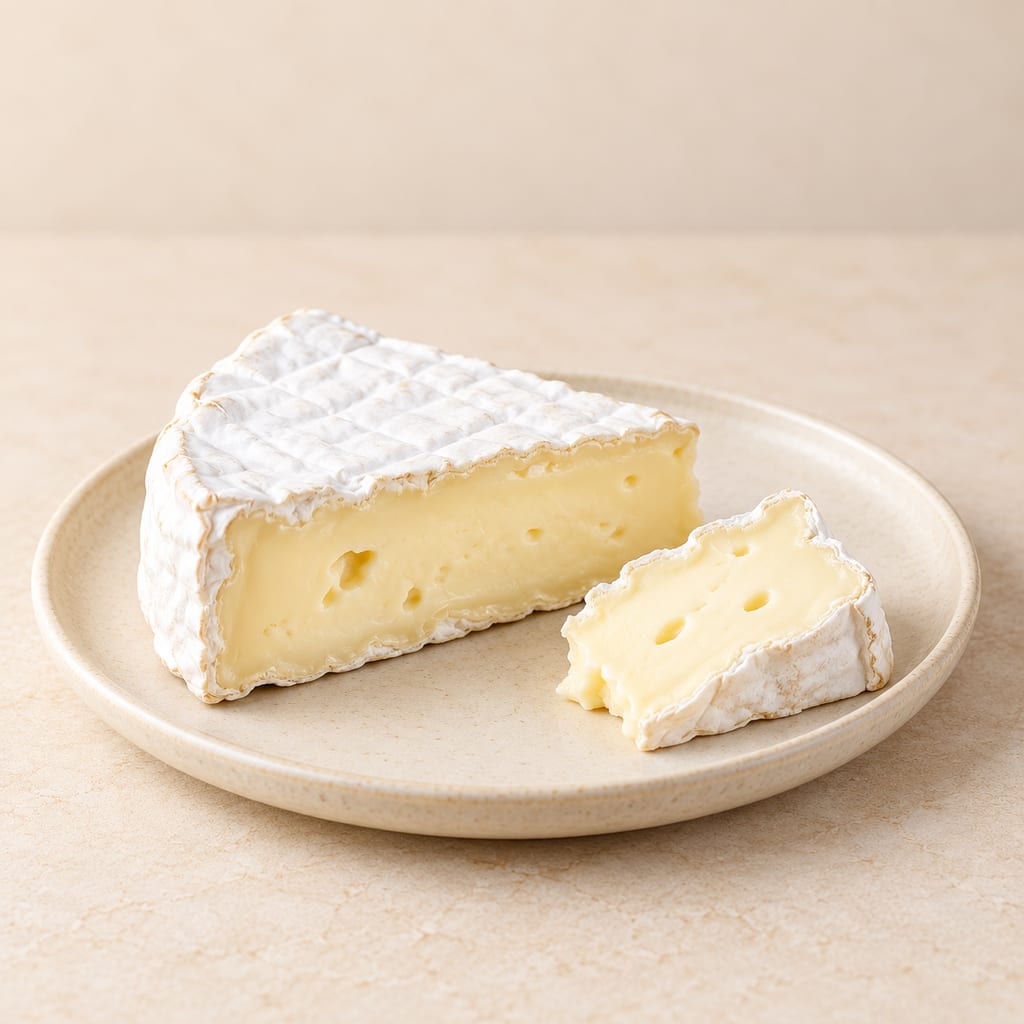
A cream-enriched Brie with a white bloomy rind and a softening center, made from pasteurized milk with lactic and surface cultures.
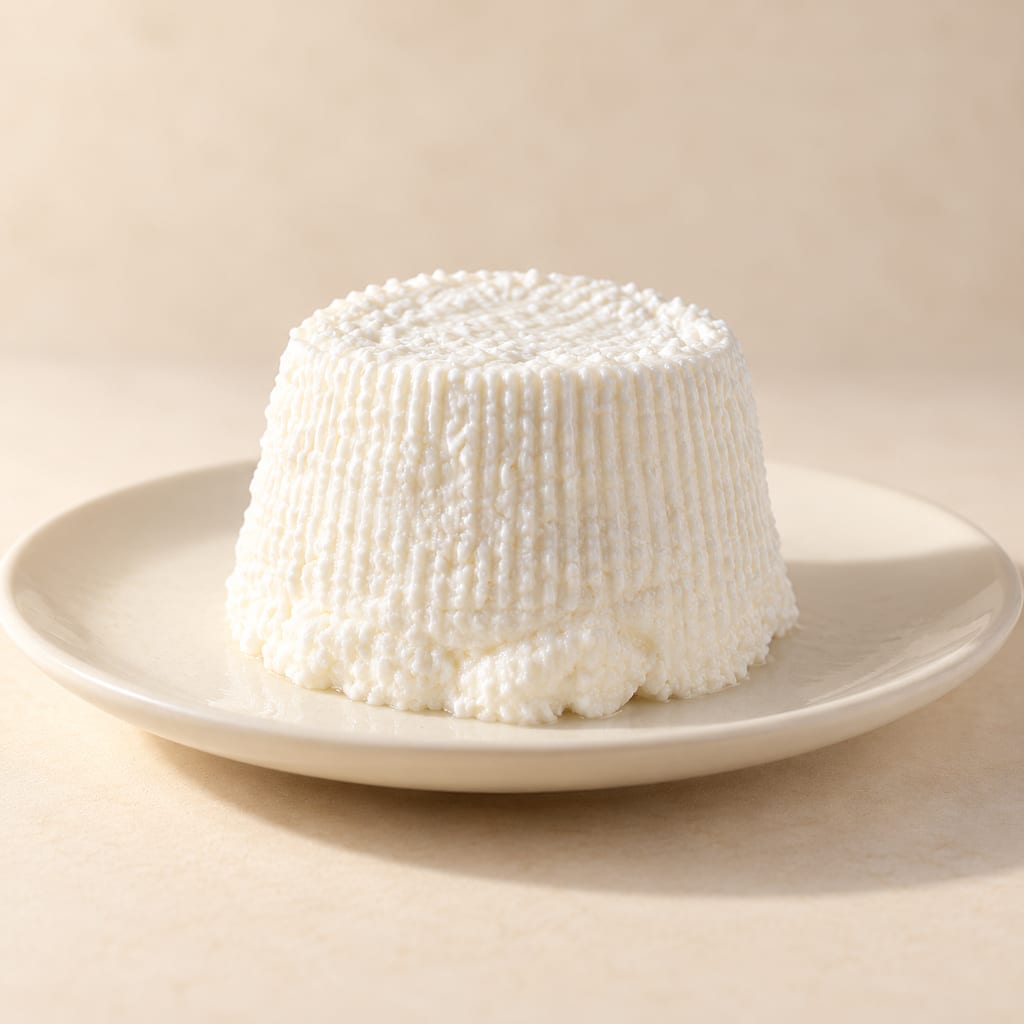
Corsican Brocciu is a whey cheese made by heating sheep's or goat's whey with whole milk and salt, then gently draining the flocculated curds. It is eaten fresh or salted and ripened as Brocciu passu.
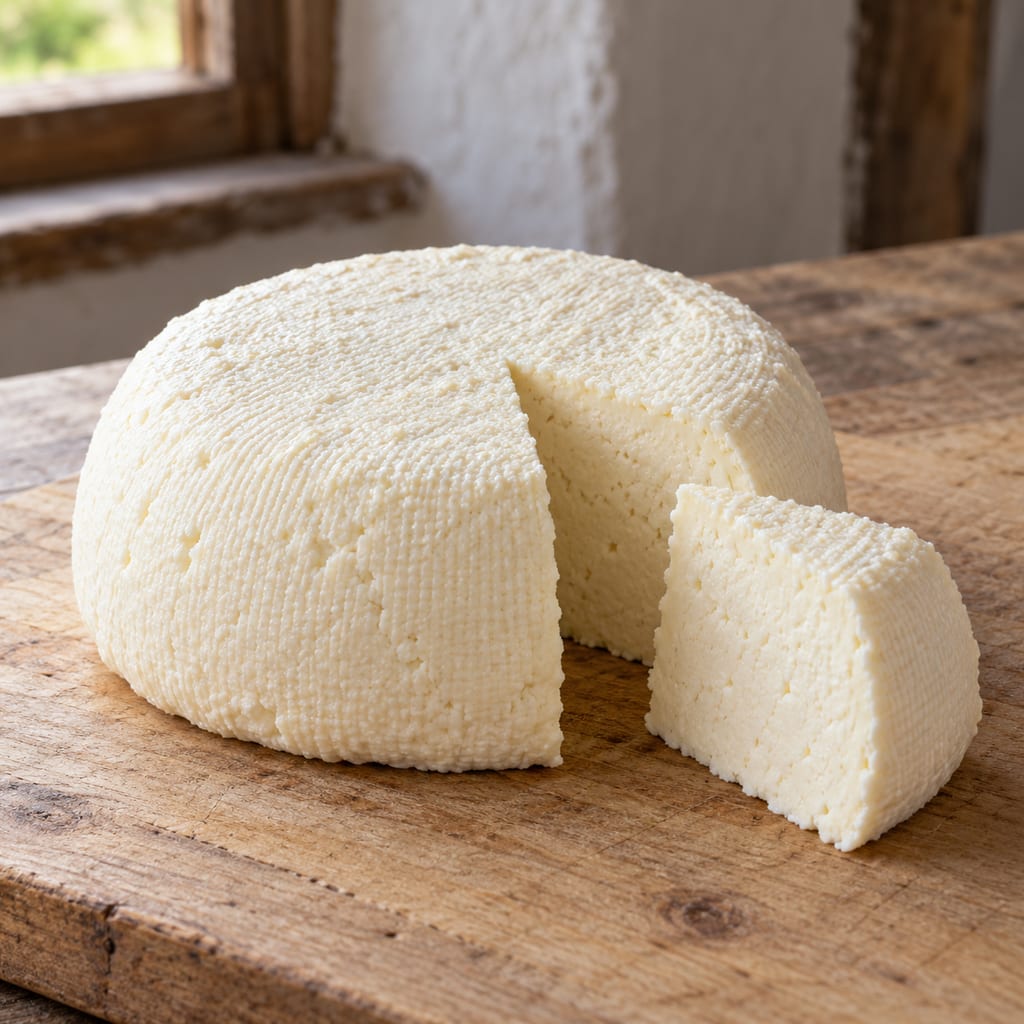
Budz is a traditional Hutsul rennet-set cheese made from sheep, cow or goat milk in the Ukrainian Carpathians, forming a fresh curd that can be eaten, smoked or processed into salted bryndza.
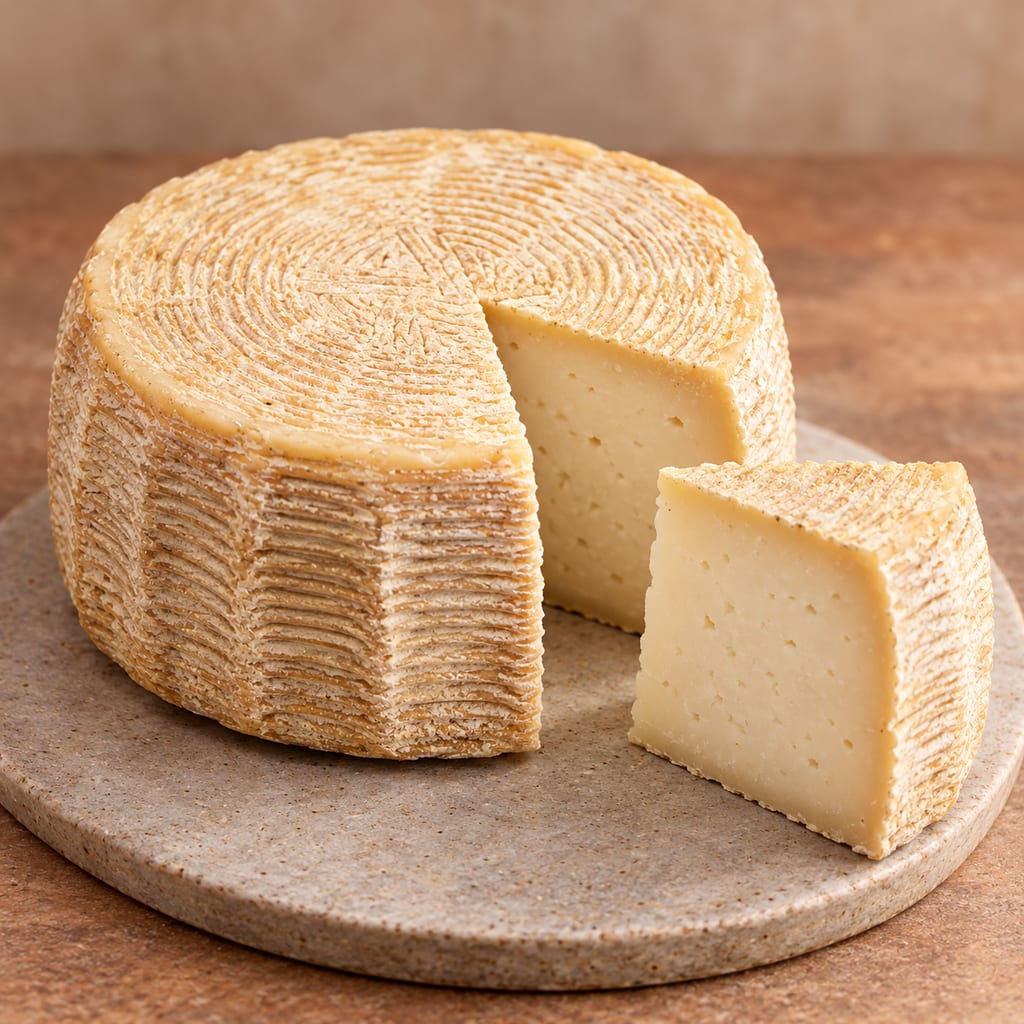
A scalded cheese moulded in baskets and re-cooked in its forms in hot whey, made alongside a ricotta from the same milk, then acidified, brined and aged for months.
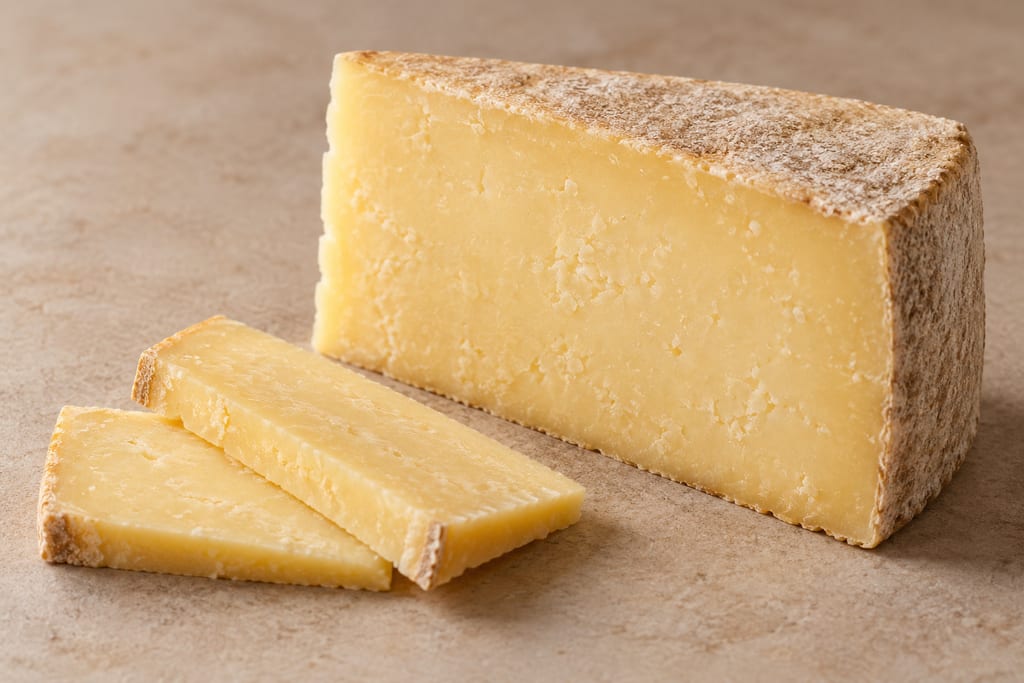
A pressed cheese whose curd is cooked slowly, then cheddared: kept warm in slabs that are turned and stacked for hours before milling, salting and pressing.

Soft, spreadable Calabrian pork sausage made with a great deal of red chilli and fatty pork, stuffed into natural casings, sometimes smoked and matured while staying soft.

A way to add independent temperature logging to an existing food dehydrator without changing its built-in controls or protections. It is a monitoring method, not a rewiring plan.

Pleurotus cystidiosus is the abalone mushroom, a cultivated oyster-type fungus with dark brown caps that grows more slowly and is more demanding than other Pleurotus species.

A dark, balanced vinegar from Emilia-Romagna made by combining cooked or concentrated grape must with wine vinegar, then acetifying and refining it in wood under a protected specification.

A living dairy inoculum that starts controlled cream fermentation, developing acidity and aroma before sour cream or cultured butter is finished.

A small electric incubator holds jars at a selected temperature for yogurt and other documented warm food preparations. Controls, capacity and vessel arrangement vary by model.

Adygean salt is a seasoned table salt associated with Adygea and the wider North Caucasian culinary tradition. Salt is blended with garlic and a variable selection of herbs and spices; the exact mix depends on the named style and maker.

The African Caesar-group mushroom, Amanita masasiensis, is a wild ectomycorrhizal species of central and southern African woodlands, eaten locally. The genus contains deadly poisonous species, so identification needs care.
No community contributions have been published for this entry yet.
Sign in to contribute. Published comments and photos are free to read.
Réseau National des Chambres d’Agriculture du Niger (RECA)Method · Ingredients · Equipment · Safety · Uses · Geography
Fiche technique sur la transformation du lait local en fromage sec Tchoukou2024 technical sheet provides the cow-milk method, 10 L milk to 100 mL rennet infusion, 85 °C for 20 minutes in a water bath, 24-hour rennet infusion, 15–20-minute pressing, tools, hygiene guidance and use.
The sheet gives no coagulation time, drying time, measurable drying endpoint, yield or storage duration.
Cited in: A family of sheets, not one fixed specification; Milk and the rennet infusion; The RECA technical-sheet method; How people eat it; Safety and what the evidence does not establish; A practical record with clear limits
Food and Agriculture Organization of the United NationsHistory · Geography · Method · Equipment · Uses · Safety
Amélioration de la technologie du fromage tchoukou au NigerFAO describes Tchoukou/Tikomart as a traditional cheese made by women in Niger's pastoral areas to preserve rainy-season milk for the dry period.
Its 1989-1993 Tabalak/Ibécéten project account details a distinct traditional process and a separate improved production method, including rennet variation, mats, shaping, pressing and drying.
The account documents contamination concerns from unfiltered milk, variable rennet and exposed or unclean processing surfaces.
Cited in: A dry cheese for a seasonal dairy economy; A family of sheets, not one fixed specification; Milk and the rennet infusion; Older hand methods and an improved workshop process; A practical record with clear limits
Bureau de Restructuration et de Mise à Niveau de l’Industrie du Niger; Cabinet Afrique Conseil et AccompagnementHistory · Geography · Method · Safety
Étude sur l’amélioration de la technologie de production et de conservation du TchoukouThe 2013 sector study covers Tchoukou production and trade in Tahoua, Zinder and Diffa.
It describes traditional handling and hygiene limitations; in its observations, rennet potency and hygiene varied and products could be exposed to dust and flies.
Cited in: A dry cheese for a seasonal dairy economy; Safety and what the evidence does not establish
Food and Agriculture Organization of the United NationsIdentity · History · Method · Geography · Uses
The technology of traditional milk products in developing countries, section 1.13: TchoukouFAO records Tchoukou in Niger among Peul and Tuareg producers, describes its thin dry sheet shape, milk species, rennet method, seasonal making, and use with tea or millet.
This older documented method leaves milk unheated, uses ambient drying and no salt, and must remain distinct from the 2024 RECA method.
Cited in: A dry cheese for a seasonal dairy economy; A family of sheets, not one fixed specification; Older hand methods and an improved workshop process; How people eat it; A practical record with clear limits
Journal of Applied Life Sciences InternationalSafety
Evaluation of the Physico-Chemical and Microbiological Quality of the Traditional Fromage Tchoukou Cheese Sold in NiameyA 2024 survey sampled cheese from vendors in Niamey; the 2025 paper reports unsatisfactory yeast/mould results in all analysed samples, coliforms and E. coli in 83%, and Salmonella in 50%. These are limited study findings, not general prevalence.
Cited in: Safety and what the evidence does not establish
Centers for Disease Control and PreventionSafety
Raw MilkRaw milk may carry disease-causing germs; good farm practices cannot guarantee it is free from harmful germs; CDC recommends choosing pasteurized milk and dairy products.
Cited in: Safety and what the evidence does not establish
Organisation Africaine de la Propriété Intellectuelle (OAPI)Geography · History
Remise officielle des certificats d’enregistrement des IGP Oignon Violet de Galmi et Kilichi du Niger, des marques collectives Fromage Tchoukou du Niger et Peau de Chèvre Rousse de MaradiOAPI reports that Fromage Tchoukou du Niger received a collective mark in the 2023 certificate ceremony; this corrects the 2024 RECA fiche's imprecise reference to it as a geographical indication.
Cited in: A dry cheese for a seasonal dairy economy
Le360 AfriqueModern adaptation · Method · Uses
Vidéo. À la découverte du tchouhou, le traditionnel fromage séché nigérienA report from a Niamey cheese workshop records modern milk collection, pasteurization, fresh-curd pressing and ventilated drying, as described by producer Rakia Zazi. It reports her own workshop method, not a universal Tchoukou process.
Cited in: Older hand methods and an improved workshop process; How people eat it