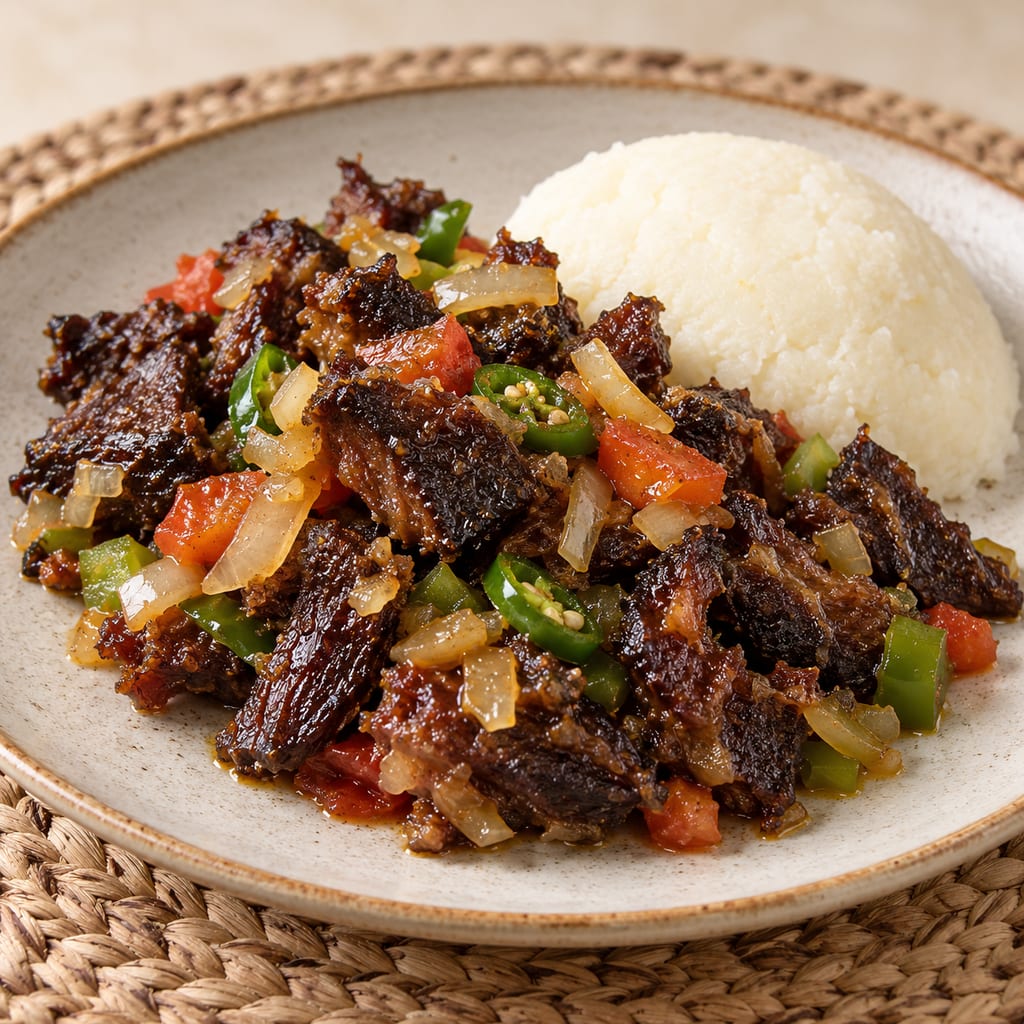
Alina's Oondhingu
Alina Magano Johannes’s Oondhingu is a family dish from Onyaanya, Oshikoto, in northern Namibia: softened dried beef fried with vegetables and served with pap.
 FermenteaWhere food goes to change
Traditional method
Omaere · Omashikwa · Mpofu
A cultural record of omaere, soured milk associated with Otjiherero-speaking communities in Namibia and Botswana, and documented through household accounts of calabash vessels and fermentation.
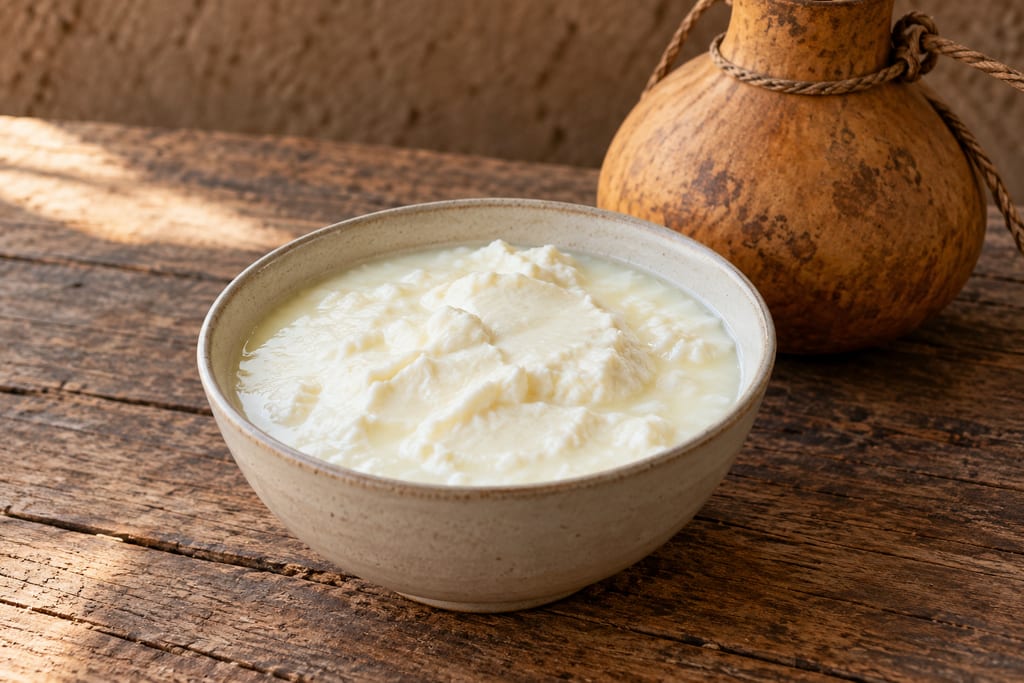
Omaere is a traditional soured-milk food associated particularly with Otjiherero-speaking communities in Namibia and Botswana. It is produced by allowing milk to ferment in a container carrying an established community of microorganisms, traditionally a calabash.
The result is acidic, thicker than fresh milk and often naturally separated into curd and whey. It can be drunk directly or eaten with cereal porridge. Depending on the producer, vessel and fermentation stage, the texture can range from pourable sour milk to a more substantial cultured dairy food.
The Otjiherero name is omaere. In Namibian publications, the name is sometimes used alongside omashikwa, an Oshiwambo term, and mpofu, a Rukwangali term, for related fermented buttermilk products.
This overlap needs qualification. Not every preparation called omaere necessarily follows the root-assisted fermentation and churning method documented for omashikwa. Some Herero processes retain and sour the whole milk, while other regional processes deliberately separate butter from the fermented dairy.
Omaere is a cultural and technological category rather than a single standardised dairy formula.
The principal ingredient is mammalian milk, most commonly cow's milk, although milk from other domestic animals can be used in related pastoral traditions.
The traditional fermentation vessel may be made from the mature fruit of the bottle gourd, Lagenaria siceraria. Unlike the fruit used to make omagongo, the gourd is not an ingredient. Its dried, hollow shell provides the container in which fermentation takes place.
For cattle-keeping communities, milk is more than a beverage. It converts grazing vegetation, which humans cannot directly digest, into food containing fat, protein, minerals and carbohydrate.
Milk production fluctuates with rainfall, pasture availability, animal condition and lactation cycles.
A household may have surplus milk during favourable periods but less during drought or seasonal shortages. Fermentation helps manage the time between milking and consumption, although the degree of actual preservation depends on the process and hygiene.
Cultured milk also provides a means of transforming a short-lived liquid into products with different textures, flavours and uses.
Traditional Herero milk handling involves specialised vessels and forms part of a broader system of cattle ownership, domestic work, hospitality and household identity.
Among Himba and related Herero communities, ethnographic descriptions distinguish milk allocated to particular ritual or domestic purposes, milk stored for souring, and milk placed in vessels for churning.
These distinctions are important because milk does not automatically become one interchangeable fermented product simply by standing in a gourd.
Some milk is fermented and consumed as sour milk. Other milk is churned into butter and buttermilk, while butterfat can undergo additional processing.
The household therefore transforms fresh milk into several different foods using fermentation and physical separation.
The practice predates modern commercial dairying, but the precise origin of omaere cannot currently be established.
One important physical object is a Herero vessel catalogued by the Linden-Museum Stuttgart as a bottle for milk and sour milk.
Made from bottle gourd and leather, it measures approximately 42 centimetres in height and diameter. Its production is dated to around 1900.
The museum records its acquisition in colonial Namibia by 1903.
This is direct material evidence of the existence of specialised milk containers at that time. It does not establish when the technique originated.
The object's colonial provenance also requires attention. The circumstances of acquisition are incompletely documented, and its presence in a European museum should not be mistaken for an uninterrupted or neutral historical record.
The fermentation tradition is additionally documented through contemporary ethnographic, microbiological and food-technology investigations.
A 2018 University of Botswana study examined omaere associated with Herero communities and described the use of previously fermented milk, plant materials and reusable containers.
Commercially produced fermented milk is now sold under the name omaere in Namibia.
The commercial product preserves the recognisable food identity, but its ingredients, starter cultures, manufacturing controls and packaging may differ from rural household production.
Fresh milk is a biologically rich substrate.
Lactose, its principal carbohydrate, can be metabolised by suitable lactic acid bacteria. These organisms produce lactic acid and other metabolites.
As lactic acid accumulates, the pH decreases.
The acidification changes the electrical charges of milk proteins, particularly the casein micelles that remain dispersed in fresh milk.
Around the isoelectric region of casein, approximately pH 4.6, the stability of these micelles diminishes substantially. They aggregate into a gel or curd.
That change explains why milk can become thick without requiring animal rennet.
The resulting gel traps water and fat. Over time, some liquid may separate as whey.
Several groups of microorganisms are associated with African fermented dairy products, including lactococci, lactobacilli and other lactic acid bacteria.
Their relative proportions vary by household, region, milk treatment and the fermentation vessel.
Some produce acid efficiently from lactose. Others contribute flavour compounds or modify the texture through exopolysaccharide production.
Exopolysaccharides are large carbohydrate molecules produced by certain microorganisms. They can increase viscosity and create a smooth or occasionally rope-like texture.
Other metabolic products include acetaldehyde, diacetyl and organic acids, all of which can influence the aroma.
Diacetyl is particularly associated with buttery notes. It arises through microbial metabolism involving compounds such as citrate.
Fermentation can also promote proteolysis, the breakdown of proteins into peptides and amino acids. Excessive or uncontrolled proteolysis can produce bitterness.
The organisms present depend partly on what is already growing in the fermentation container.
A traditional milk gourd is not simply a historical substitute for a plastic bottle.
Its interior surface can retain traces of previous fermentations, including microorganisms in residual dairy material and surface-associated communities.
When fresh milk is introduced, organisms already adapted to the acidic milk environment have an opportunity to multiply.
This is a form of back-slopping: transferring microorganisms from one fermentation to the next.
In some households, a small amount of finished omaere is deliberately retained and mixed with fresh milk. In others, the principal microbial carryover is associated with the vessel itself.
The distinction matters for reproducibility.
A vessel that has developed a stable fermentation community can produce recognisable characteristics across batches, although such stability is not guaranteed.
Repeated contamination with undesirable organisms is also possible.
The surface properties of a gourd differ from those of stainless steel or glass. Its porosity, cleaning method and drying conditions influence microbial survival.
Traditional vessels are therefore part of both the food's flavour identity and its sanitation challenges.
A fresh, unused gourd will not necessarily behave like one used regularly for sour milk.
The University of Botswana study records several descriptions of omaere associated with Herero households. It describes cow's milk, the ondjoupa calabash, and a range of household practices rather than one standard formula.
Some accounts describe raw milk and microorganisms carried by a previously used vessel or retained fermented milk. Some households also use plant material, including roots identified as Boscia albitrunca or Acacia mellifera. These details are reported cultural practices, not recommendations for a home process.
A three-to-five-day room-temperature duration is reported as household practice. It is not a suggested duration, a validated method, or a safe endpoint for reproducing the process.
Accounts describe variation in sourness and thickness, occasional whey separation, and sometimes the addition of fresh milk when the product is considered too sour. Sensory qualities identify preferences and variation but do not verify safety.
The names used for Namibian fermented dairy can overlap, but important process differences remain.
Omashikwa is extensively documented in north-central Namibia. A studied process adds selected roots, often Boscia albitrunca or baobab, to milk in a calabash and allows fermentation.
One documented omashikwa method ferments for three to four days at approximately 30–37°C, then removes the roots and churns the fermented milk for two to three hours to separate butter.
The remaining buttermilk is the finished product.
Those figures should be attached specifically to that process, not automatically transferred to every Herero omaere recipe.
A reported omashikwa sample had approximately 3.3% protein, 1.6% fat, 90% moisture, 4.6% lactose and pH 3.3. These figures describe tested material and are not universal nutritional specifications for omaere.
Mabisi is another southern African cultured milk, particularly associated with Zambia. It may also use spontaneous fermentation and repeated inoculation but has its own regional production systems.
Omashikwa, omaere and mabisi illustrate related techniques rather than one identical named food.
Omaere can be consumed on its own, particularly as a sour, refreshing dairy drink.
It is also paired with stiff cereal porridges.
An Otjiherero name for stiff porridge is oruhere. Related foods include Oshiwambo oshifima and other maize or millet preparations.
The contrast between sour milk and relatively neutral cereal porridge is a practical and flavourful combination.
The porridge contributes carbohydrate and bulk, while the fermented milk contributes protein, fat, minerals, acidity and moisture.
The combination can function as a meal rather than merely a drink with a snack.
Cultured milk may also be mixed with thinner gruels.
Contemporary commercial omaere has additional applications in cooking and baking, although these should be distinguished from specifically documented historical recipes.
Successful acidification generally produces a pleasantly sour smell and a recognisable cultured-milk texture.
The appearance may be smooth, curdled or partially separated depending on production and agitation.
Whey separation is not necessarily spoilage. It can arise naturally from changes in the milk-protein gel.
Similarly, mild butteriness or other fermentation-derived aromas may be characteristic of the particular microbial community.
Concerning signs include abnormal colours, visible mould, significant gas production inconsistent with the expected process, obvious putrid odours or unexpectedly slimy textures.
There is no universal appearance-based test that guarantees safety.
Temperature and pH measurements can improve process monitoring, but they must be interpreted alongside milk treatment, microbiological controls and contamination risks.
A batch that turns sour has not thereby been proven free of pathogens.
The main food-safety concern is the use of raw milk and uncontrolled fermentation.
Raw milk can contain harmful microorganisms, including Listeria monocytogenes, pathogenic Escherichia coli, Salmonella and Campylobacter.
Lactic acid bacteria can inhibit some undesirable organisms through acidification and other antimicrobial activity, but this protection is not absolute.
In particular, dangerous organisms may be present before fermentation has produced sufficient acidity.
General food-safety guidance favours pasteurised milk and controlled inoculation; the cited cultural study does not establish a validated home protocol for omaere.
Equipment should be thoroughly cleaned and the finished product refrigerated.
The cited traditional research does not establish a universal safe temperature, pH target or refrigerated shelf life for all omaere production.
The fact that some studied samples did not contain detectable pathogens cannot be generalised to every household batch.
The practice predates modern commercial dairying. Traditional Herero milk handling involves specialised vessels and belongs to a wider system of cattle ownership, domestic work, hospitality and household identity: ethnographic descriptions among Himba and related Herero communities distinguish milk allocated to particular ritual or domestic purposes, milk stored for souring, and milk placed in vessels for churning. Those distinctions matter, because milk does not become one interchangeable fermented product simply by standing in a gourd; some is soured and drunk, other milk is churned into butter and buttermilk, and butterfat may be processed further. The object in Stuttgart also needs its provenance read carefully: the circumstances of acquisition are incompletely documented, and its presence in a European museum should not be mistaken for an uninterrupted or neutral historical record. The tradition is further documented through contemporary ethnographic, microbiological and food-technology work, and fermented milk is now sold commercially under the name omaere in Namibia.
Scaling: source batch only
Raw milk can contain Listeria monocytogenes, pathogenic Escherichia coli, Salmonella and Campylobacter, and dangerous organisms may be present before fermentation has produced sufficient acidity.
Hazard sourceThe calabash's porous interior retains microorganisms from previous fermentations, so repeated contamination with undesirable organisms is possible and reusing a spoiled batch perpetuates it.
Hazard sourceAdding fresh milk changes the acidity and can introduce additional microorganisms; it should not be assumed to improve microbiological safety.
Hazard sourceThe botanical identity of a root or bark additive matters, and substituting a superficially similar plant without identification and an established food-use tradition would be unsafe.
Hazard sourceA batch that turns sour has not thereby been proven free of pathogens: lactic acid bacteria inhibit some undesirable organisms but the protection is not absolute.
The 3.3% protein, 1.6% fat, 90% moisture, 4.6% lactose and pH 3.3 figures describe one tested omashikwa sample and are not specifications for omaere.
Whey separation is not necessarily spoilage; it can arise naturally from changes in the milk-protein gel. Abnormal colours, visible mould, gas production inconsistent with the process, putrid odours or unexpected sliminess are the concerning signs.
There is no appearance-based test that guarantees safety.
That some studied samples contained no detectable pathogens cannot be generalised to every household batch.
This entry documents a culturally situated preparation but is not a validated home-fermentation protocol. The cited sources do not establish a controlled home method or a safe endpoint for reproducing the described multi-day ambient process.
Sensory sourness, texture, whey separation, pasteurised starting milk, or an inherited vessel culture alone do not demonstrate that a particular batch is safe.
A country-level association with Otjiherero-speaking communities, as the sources record them. No locality is claimed, and the related omashikwa of north-central Namibia is a separate documented process.
A country-level association from the University of Botswana study, which describes the ondjoupa calabash, the plant additions and the three-to-five-day room-temperature fermentation.
Alina Magano Johannes’s Oondhingu is a family dish from Onyaanya, Oshikoto, in northern Namibia: softened dried beef fried with vegetables and served with pap.
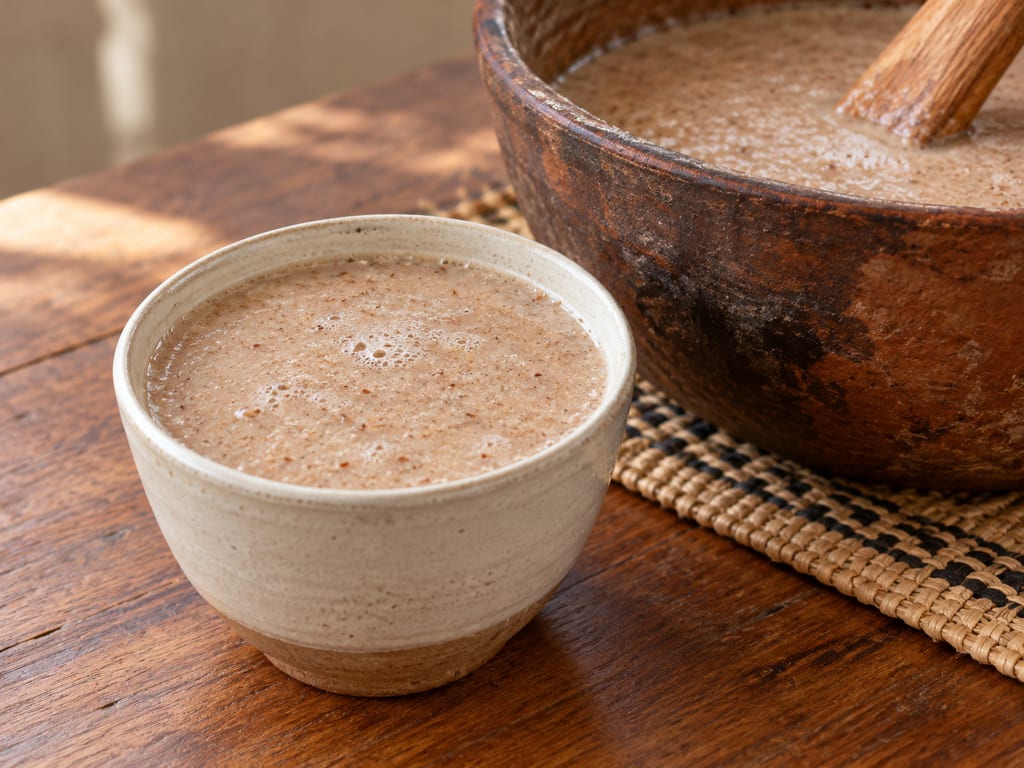
A Namibian everyday drink of pearl-millet flour scalded with hot water, thinned with sorghum malt and bran and soured quickly by a spoonful of the previous batch.
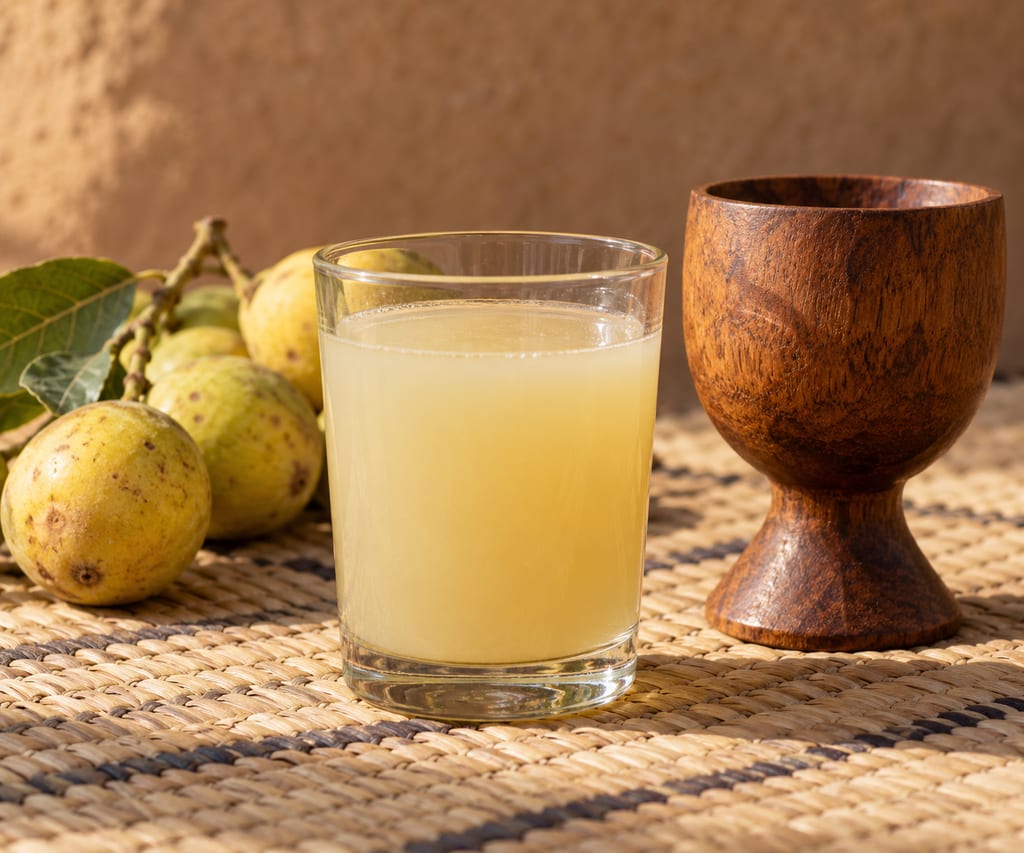
The fermented marula drink of northern Namibia's Aawambo communities, pressed from ripe Sclerocarya birrea fruit and left to the yeasts already on it, and drunk at the Oshituthi shomagongo festival.
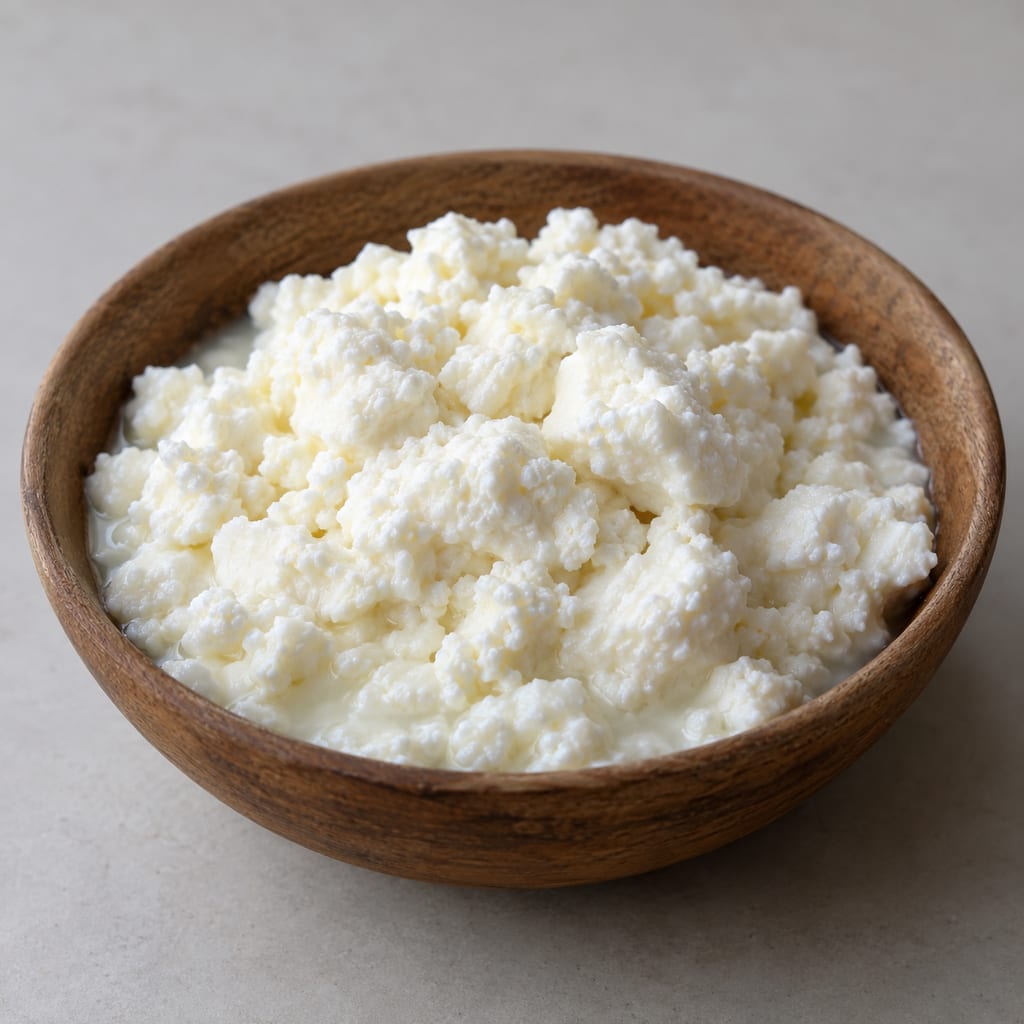
Aarts is a soft Mongolian curd made by draining boiled fermented yogurt; it remains wet, unlike aaruul, which is dried.
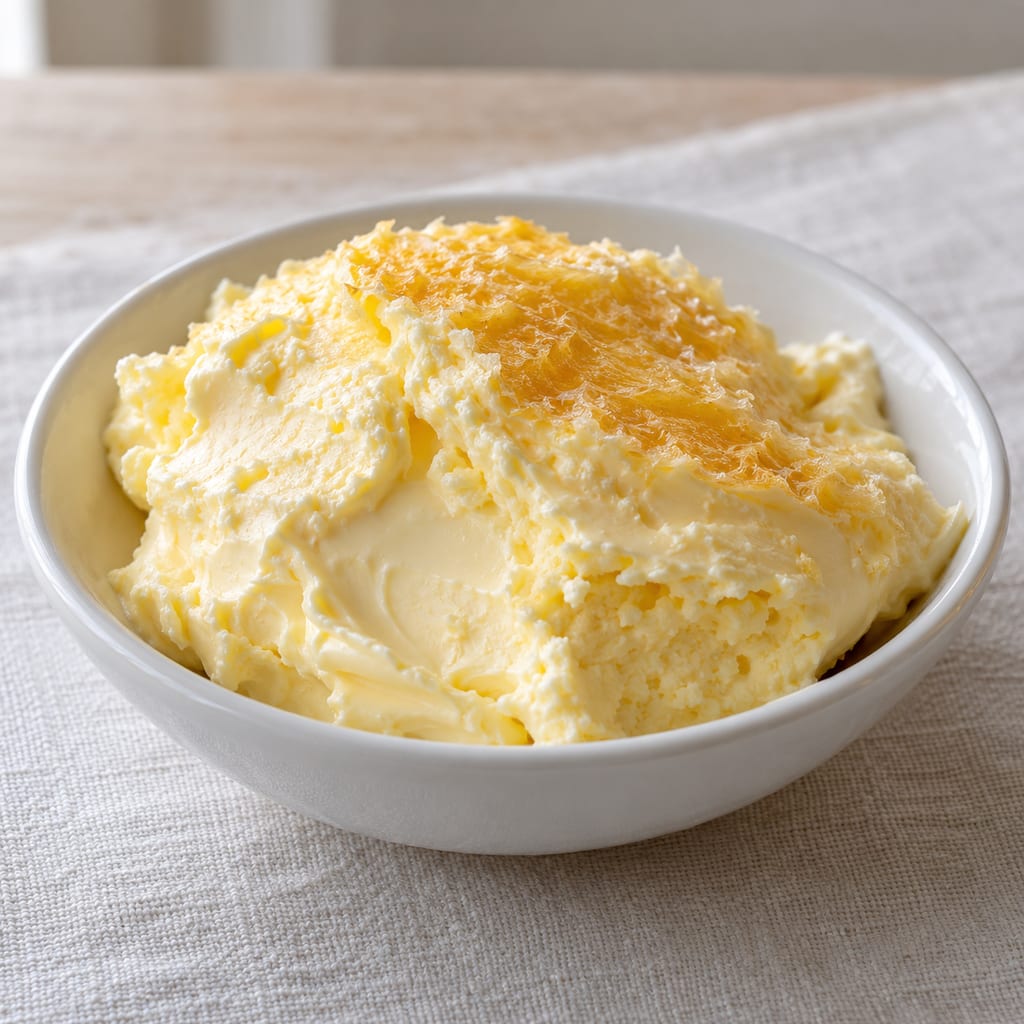
High-fat cream scalded below boiling for at least an hour until a thick crust forms, then cooled hard so the crust sets and the cream beneath thickens.
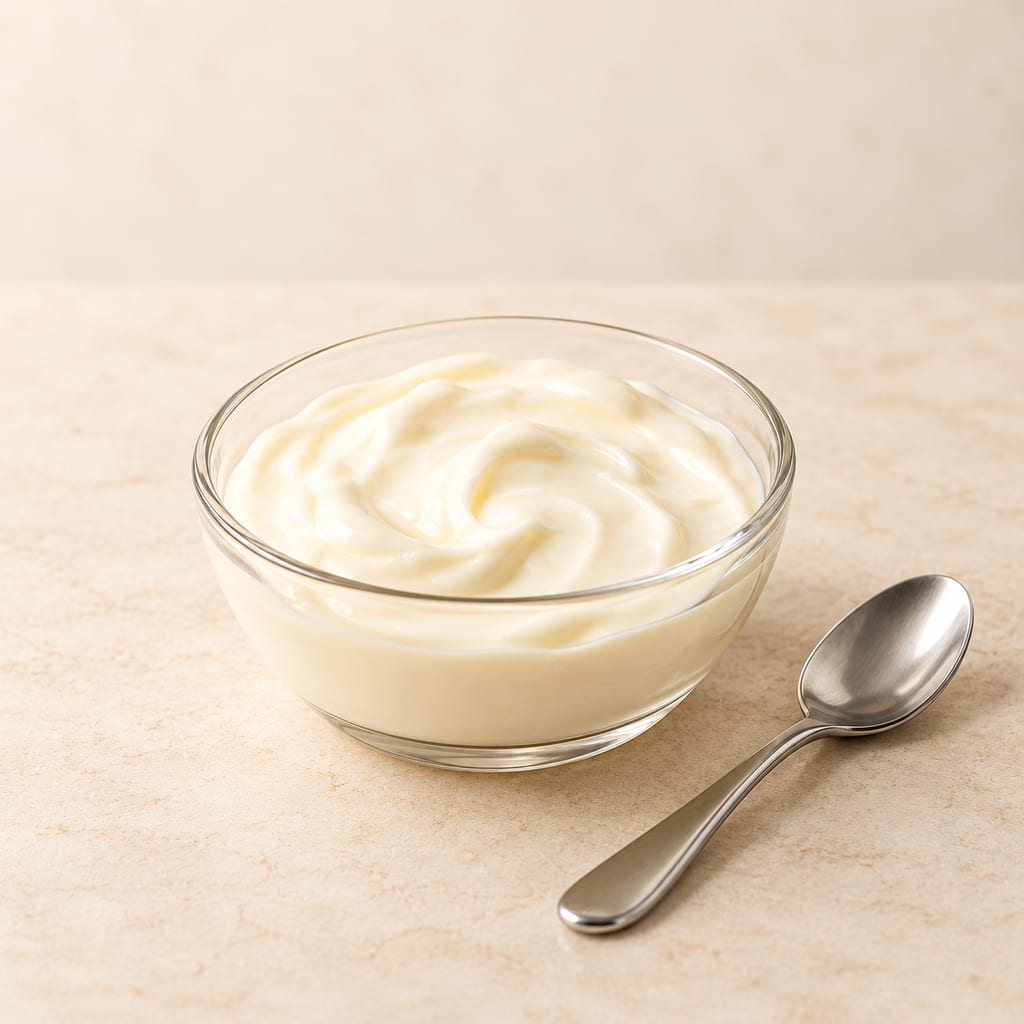
Crème fraîche is cream soured by lactic cultures into a thick, mild topping. It suits fruit and desserts as well as soups, sauces and other savoury dishes.
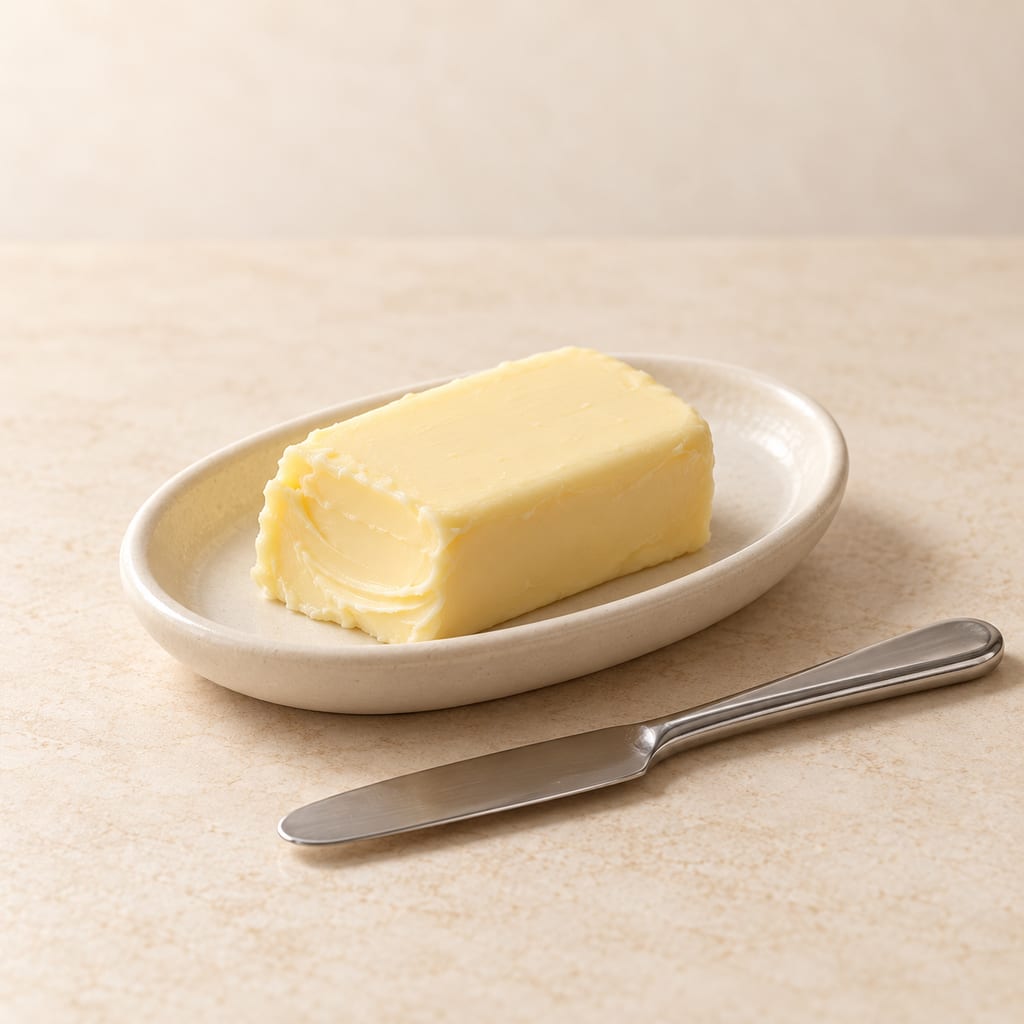
Cultured butter is churned from cream soured with lactic cultures. Its lightly tart flavour comes from the cultured cream, which separates into butter grains and buttermilk.
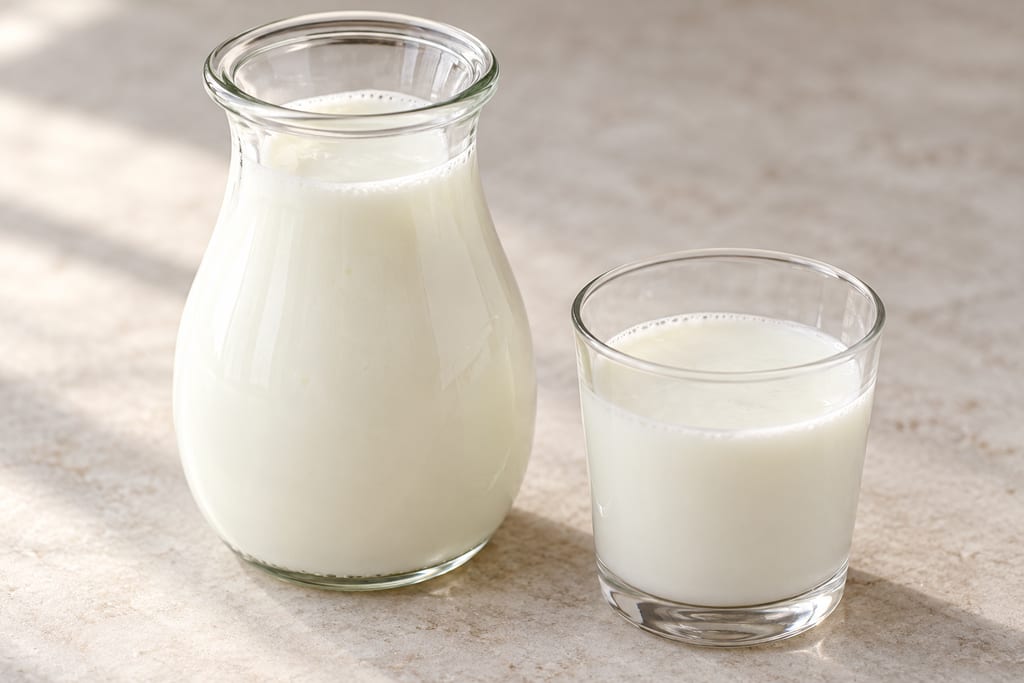
Cultured buttermilk is skim milk soured with a lactic starter into a tangy drink. This Canadian home method sets the milk without churning cream.
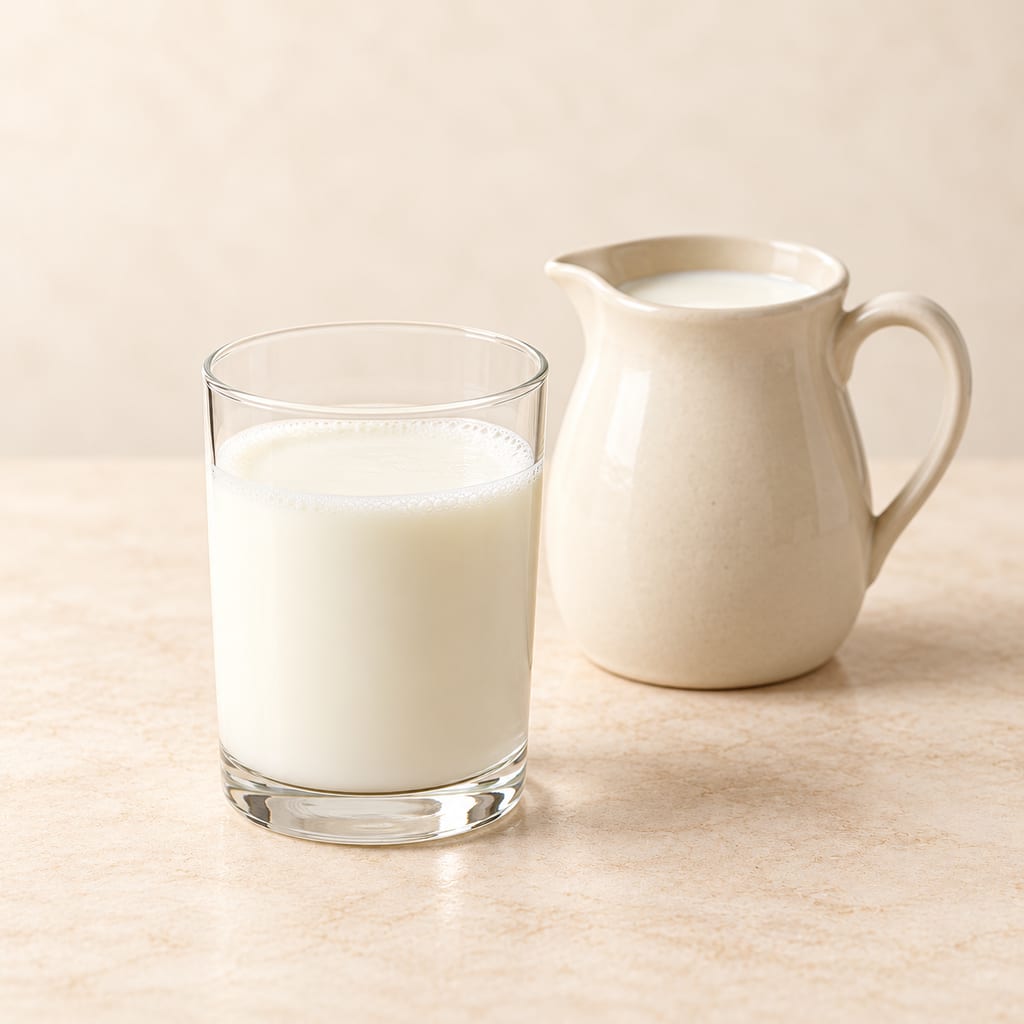
Milk thickened with a packet of buttermilk culture makes a tangy drink and a baking ingredient. This warm-incubated version uses whole milk.
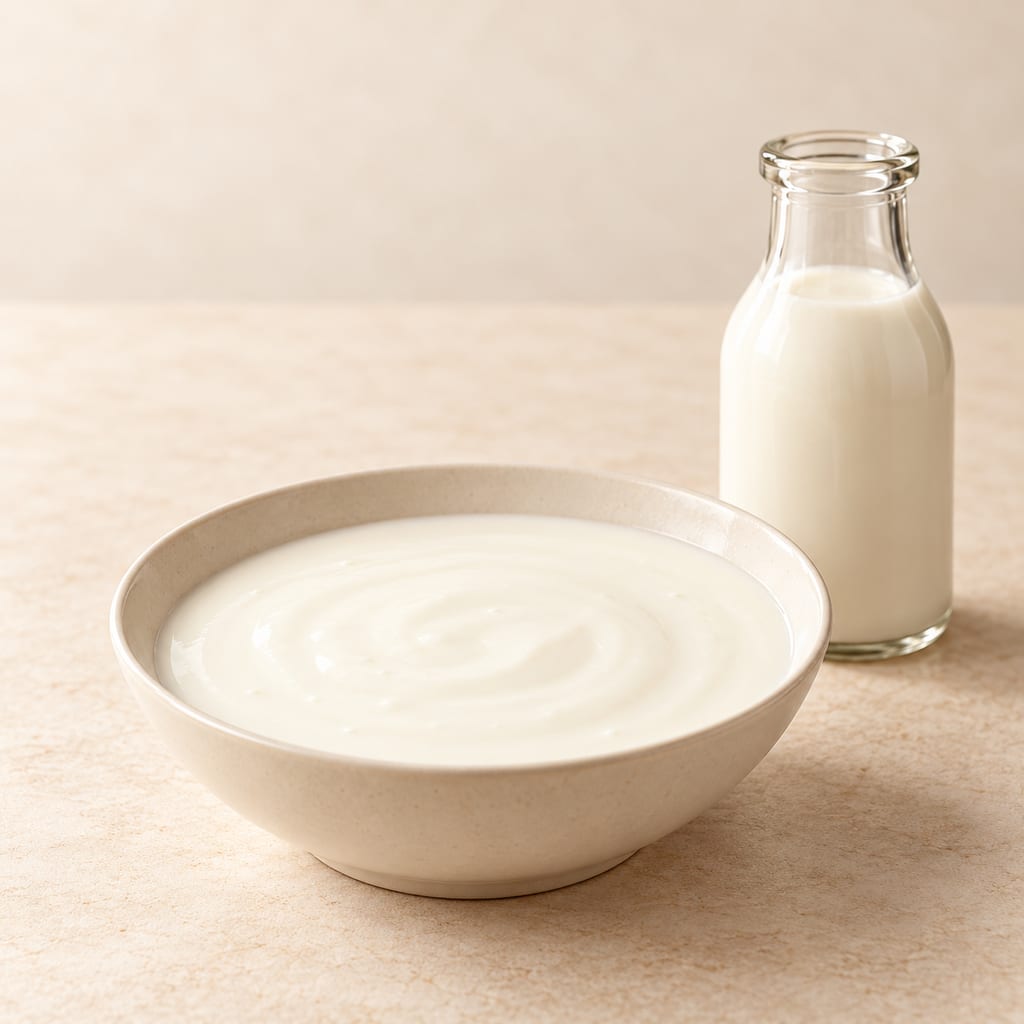
Filmjölk is a Swedish cultured milk with mild acidity and a spoonable body. This recurring batch uses filmjölk from the previous batch to culture fresh milk.
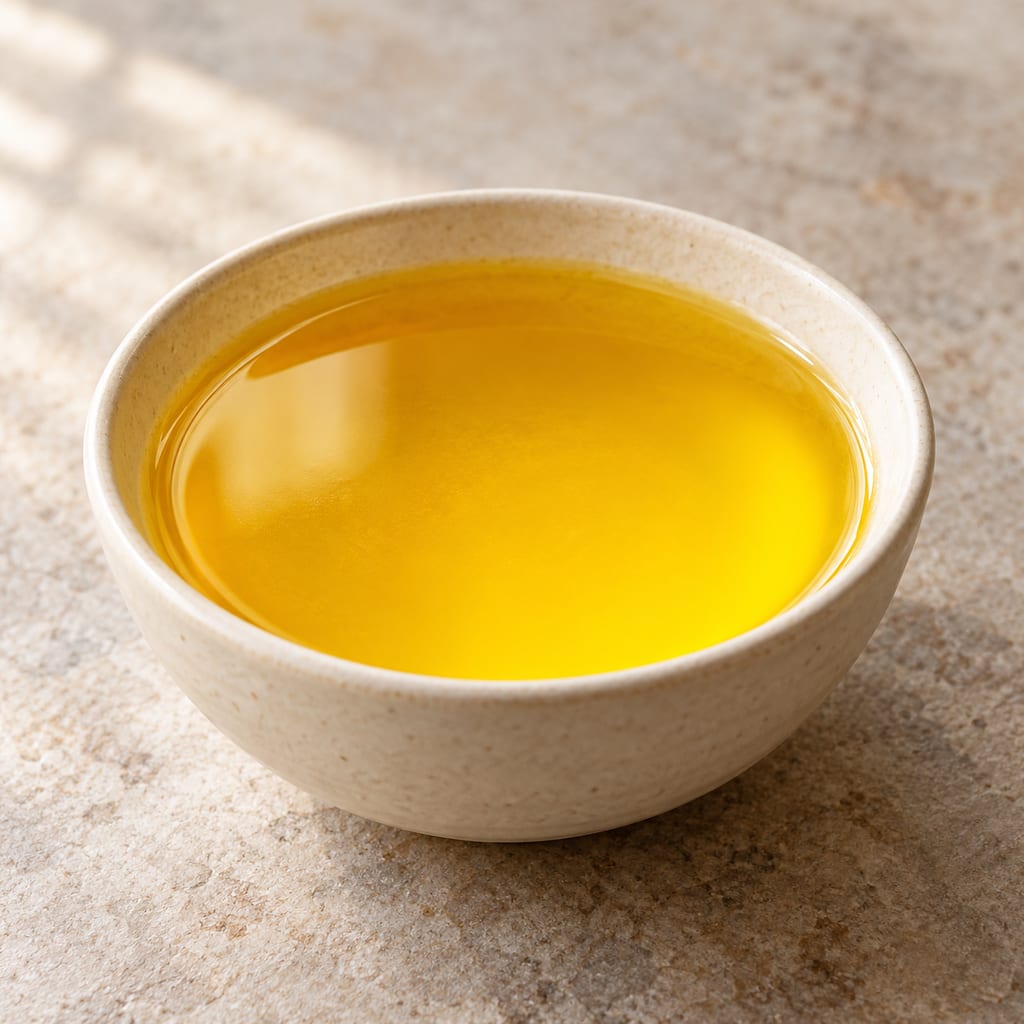
Butter heated until most water leaves and the milk solids separate, giving a fat that keeps far longer than butter. Rendering applies the same heat to animal tissue to make lard and tallow.

A Cap-Pelé boucanière is an Acadian herring-smoking building. The documented Willie Niles example is a one-storey wood-frame structure with a ridge smoke vent and interior bays for hanging fish-bearing cannes.

Achcharu is a family of Sri Lankan vinegar pickles made with mixed vegetables or seasonal fruit and a piquant spice dressing. This version is a quick, refrigerated, non-fermented mixed-vegetable pickle.

The acocote is a long, hollowed and dried gourd used to draw aguamiel from a mature maguey. It is a harvesting tool: the sap is transferred to a separate vessel before it ferments into pulque.

Adrak murabba preserves young ginger in sugar syrup, a sweet South Asian preparation recorded in Indian cookery and food-processing sources.

Parkia biglobosa seeds are fermented into regional West African seasonings, including nététou, iru, dawadawa and soumbala. The yellow fruit pulp is a separate food, and names and methods vary by place.

Japanese reddish-brown vinegar from sake lees matured about three years, turned to vinegar by acetic bacteria; the vinegar of Handa and Edomae sushi rice.

A refined common-wheat flour blended for a broad range of baking; its protein and behavior vary with wheat, milling and market.

The almond mushroom, Agaricus subrufescens, was cultivated in eastern North America in the 1800s, lost its market, and returned as a cultivated mushroom from Brazil, where it is grown under several names.
No community contributions have been published for this entry yet.
Sign in to contribute. Published comments and photos are free to read.
ubrisa.ub.bwMethod · Science
University of Botswana study of omaereA 2018 University of Botswana study of omaere associated with Herero communities: the use of previously fermented milk, plant materials and reusable containers, with fermentation over three to five days at room temperature.
The traditional calabash is known locally as an ondjoupa; dried, crushed root material is sometimes placed in the bottom of the vessel, and plants recorded in connection with omaere include Boscia albitrunca and Acacia mellifera.
A recorded practice of adding fresh milk when the fermented product is considered too sour, and of retaining a portion of fermented milk in the container as the next starter.
Cited in: What is omaere?; Documented history; The calabash as a microbial habitat; Documented household practice; Quality and common problems; Safety considerations
Linden-Museum StuttgartHistory
Bottle for Milk and Sour Milk (Omaere)A Herero vessel catalogued as a bottle for milk and sour milk, made from bottle gourd and leather, approximately 42 centimetres in height and diameter, dated to around 1900 and acquired in colonial Namibia by 1903. The circumstances of acquisition are incompletely documented.
Cited in: Documented history
University of NamibiaScience · History
Traditional fermented foods and beverages of NamibiaNamibian fermented products, methods and microbial characteristics, 2017: omaere alongside omashikwa, an Oshiwambo term, and mpofu, a Rukwangali term, for related fermented buttermilk products.
Microorganisms associated with African fermented dairy products including lactococci, lactobacilli and other lactic acid bacteria, whose proportions vary by household, region, milk treatment and vessel.
Cited in: Milk and pastoral life; The microbiology of sour milk; Omaere, omashikwa and related dairy products; Safety considerations
International Journal of Food Science & TechnologyMethod · Science
Technology and properties of OmashikwaTechnology and properties of omashikwa, 2007: one documented method adds selected roots, often Boscia albitrunca or baobab, to milk in a calabash, ferments for three to four days at approximately 30-37°C, then removes the roots and churns the fermented milk for two to three hours to separate butter, leaving the buttermilk as the finished product.
A reported omashikwa sample had approximately 3.3% protein, 1.6% fat, 90% moisture, 4.6% lactose and pH 3.3. These describe tested material and are not universal specifications for omaere.
Cited in: The microbiology of sour milk; Omaere, omashikwa and related dairy products
scialert.netHistory
General Practices on Indigenous Knowledge System Technology in Selected Regions of NamibiaGeneral practices on indigenous knowledge system technology in selected regions of Namibia, 2012: fermented dairy, local names and traditional food uses.
Cited in: Milk and pastoral life; How it is eaten
The NamibianInspiration
Fermented MilkContemporary Namibian food-culture context, including commercially produced fermented milk sold under the name omaere.
Cited in: Documented history; How it is eaten