
Ají amarillo
Ají amarillo is the orange-yellow Peruvian chilli cultivar group of Capsicum baccatum, used to colour and season huancaína sauce and ají de gallina. Published heat estimates do not establish one range for the named cultivar.
 FermenteaWhere food goes to change
Cultures
A mixed dairy starter selected for acidification and aroma. The documented Queso Andino culture has no identified modern strain blend or commercial formulation.
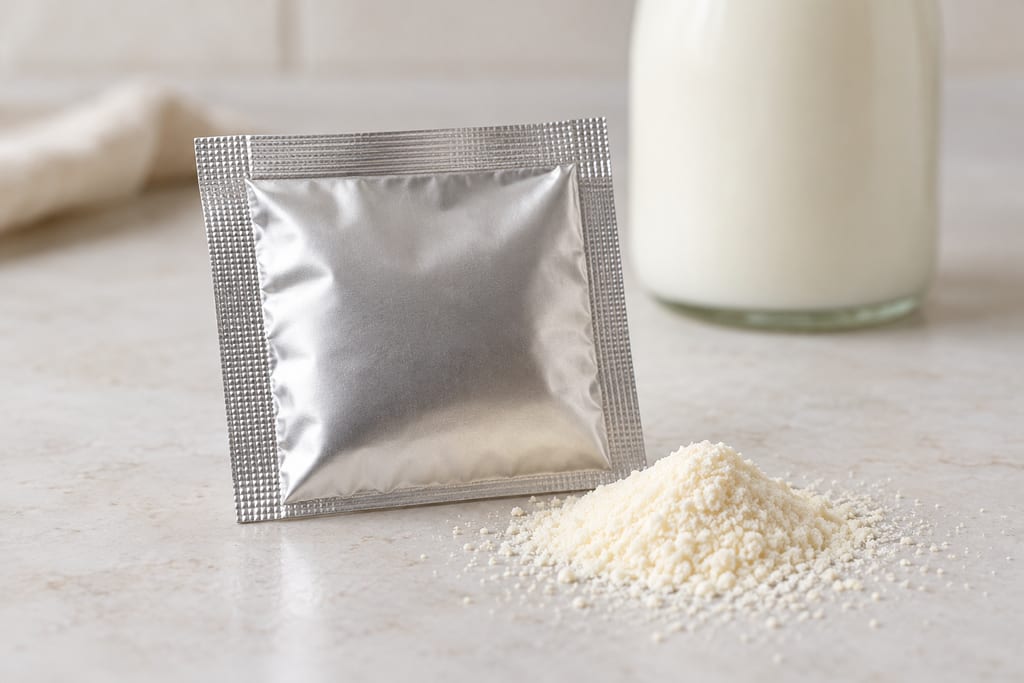
An aroma-forming and acid-producing dairy starter introduces a mixture of living bacteria into milk. The acidifying activity changes the milk and curd environment; the aroma activity contributes another set of fermentation products. A cheesemaker can seek both properties in one starter without expecting every member of the mixture to do the same work.
The name describes function rather than a particular commercial product. A supplied concentrate and a starter maintained in milk are possible forms of a dairy culture, with different concentrations and handling. The culture is the input used to begin fermentation. The ripened cheese made with it is a separate food, shaped by rennet, curd handling, salt and maturation as well as bacterial growth.
A documented Queso Andino method uses this kind of mixed starter in whole cow milk. Its account names aroma-forming and acid-producing strains but leaves the exact species, proportions and commercial identity unspecified. That makes the combined function clearer than the identity of a packet a present-day maker could buy.
Butter making helped establish the practical value of selecting dairy bacteria. Ripening cream before churning changed its acidity and flavour. A useful starter could bring desirable organisms into a new batch, reducing dependence on the changing population already present in the incoming cream.
Vilhelm Storch’s 1893 patent described choosing flavour-producing bacteria from butter, ripened cream or buttermilk, cultivating them separately and adding a culture to heated milk or cream. The method connected flavour with selected microbial activity before the mechanical separation of butter. It was a way of managing fermentation within a familiar food-making sequence.
Commercial cultures subsequently became available in liquid and dry forms. In their 1914 dairy-bacteriology manual, H. L. Russell and E. G. Hastings described cultures dried with absorbing materials such as milk sugar, milk powder or starch. The dormant dry preparation and the growing liquid culture offered different ways of supplying organisms to a dairy.
Their account emphasized repeatability: selected bacteria could be introduced from one day to the next, while a naturally maintained starter could change. The milk or cream still mattered. Its existing bacteria could compete during ripening, so starter choice belonged alongside the preparation of the dairy material rather than replacing it.
By 1926, researchers were separating the question of butter aroma from a simple measure of acid production. S. Orla-Jensen, A. D. Orla-Jensen and Bernhard Spur examined organisms associated with aroma that grew poorly in milk on their own. Their appearance under the microscope did not readily distinguish them from other dairy cocci.
Changing the growth medium changed what the organisms could do. In mixtures of milk and yeast extract, the aroma bacteria produced substantially more acid than in milk alone. The researchers used this behaviour and the type of lactic acid formed to place the organisms within the Betacocci of their period’s classification.
The experiments showed that a weak result in one medium could hide biological capacity expressed in another. They also found that citrate-associated gas production could change during propagation. Neither cell shape nor one apparently absent activity gave a complete account of a starter organism.
The work did not produce an immediate practical improvement for cream ripening. Organisms grown with yeast extract did not subsequently perform better in plain milk or cream. That result is part of the history too: a laboratory medium could reveal an organism’s properties without becoming a successful dairy method. Its use is not a recommendation to supplement a cheese starter with yeast extract.
The 1926 investigators also struggled to count aroma bacteria among the other organisms in a starter. A medium that encouraged their growth encouraged other lactic bacteria too, making simple selection unreliable. Examining individual isolates revealed more than the general appearance of the culture. This gives historical substance to the idea of a mixed starter: its useful activities could come from components that were difficult to distinguish in the working milk. A visibly similar culture could contain a different balance, and growth in a chosen laboratory medium could change which part of that population became most apparent.
The Queso Andino account prints the starter groups as Betacocus and Streptococus. Those spellings preserve a broad historical description. They do not disclose a modern species list, the number of strains or the way the mixture was maintained.
Betacoccus belongs to an older bacterial classification and is not a validly published current genus name. The Betacocci discussed in early dairy research were grouped through properties that included the kind of lactic acid and other fermentation products they formed. Historical Streptococcus terminology also covered dairy organisms whose naming has since changed.
A modern culture label may identify lactococci and leuconostocs much more closely. Those names can help explain comparable acid and aroma functions, but they cannot be substituted retrospectively for the unidentified Andean mixture. The old terminology is part of the documented starter’s description, rather than a concealed recipe for a modern blend.
Lactic acid bacteria use lactose, milk’s principal sugar, and produce lactic acid. The resulting increase in acidity changes the conditions around milk proteins and minerals. This gives the starter an influence on curd development even when rennet supplies the principal enzymatic set.
Rennet acts on casein at the surface of its particles, allowing aggregation. Acid changes the environment in which those particles and the forming curd exist. The two ingredients therefore make different interventions. A recipe can require both without asking them to duplicate one another.
The curd is then a material to be worked. Cutting exposes more surface; stirring, heating and draining change whey removal and retained moisture. The starter’s acid production proceeds within that sequence rather than creating the whole cheese by itself. Later ripening also involves enzymes and other microbial activity, so the initial souring is only part of the food’s flavour development.
Milk contains citrate as well as lactose. Only particular lactic acid bacteria can use citrate through the pathways associated with dairy aroma. Its metabolism can lead towards acetoin and diacetyl, with diacetyl contributing a recognizable buttery note.
The route passes through smaller compounds including oxaloacetate and pyruvate. Cell-free experiments with organisms then called Streptococcus diacetilactis and Leuconostoc citrovorum demonstrated citrate cleavage and formation of products including acetate, carbon dioxide and acetoin. The tested strains differed in whether they possessed the citrate-splitting enzyme.
Getting citrate into the cell is another part of the process. In Lactococcus lactis biovar. diacetylactis, a citrate permease transports it across the membrane. Work on that organism showed that citrate availability, acidity and nutrient limitation affected regulation of citrate use. The culture’s surroundings therefore influence an aroma pathway as well as the organisms’ growth.
These mechanisms help explain the purpose of an aroma component in a mixed starter. They do not establish the exact pathway or strain composition of the Queso Andino mixture, whose organisms were not identified at that level.
Acid and buttery aroma are different outcomes, even when they develop within the same fermentation. A culture that sours milk strongly does not necessarily produce the aroma balance desired for a particular dairy food. The amount of citrate present is only one influence.
Comparisons of citrate-using lactic acid bacteria found differences in the formation of acetoin and diacetyl, including when citrate use began during growth. Experimental buttermilk made with a selected Leuconostoc strain likewise showed that aroma formation depended on conditions and its association with lactococci. The organisms’ names alone did not predict the finished result.
This is why selecting an aroma culture means more than choosing a stronger acidifier. A dairy maker needs a blend whose activities suit the milk and the intended process. An experimental change in nutrient supply is evidence about the organisms tested, rather than a general instruction to add citrate to an existing cheese formula.
The documented Queso Andino process places the culture in a soft ripened cow-milk cheese made in mountain Peru and Ecuador. The cheese technology was developed through local dairying and later Swiss technical cooperation. The 1990 survey describes improvements beginning in the Lima-area mountains in the early 1970s and subsequent spread among rural dairies.
In that make, milk receives the starter before rennet coagulation. The curd is cut and stirred, then some whey is removed and replaced with hot water. Washing helps produce the soft texture described for the cheese. Pressing, brining and ripening follow, giving the starter one role among several connected operations.
The record documents the culture’s use, rather than its place of manufacture or the origin of its organisms. Peru and Ecuador are supported associations for the cheese-making application. Swiss cooperation belongs to the history of the dairy technology; it does not make Switzerland the established birthplace of the starter.
A milk-grown starter carries living bacteria in the medium in which they have multiplied. A frozen concentrate or freeze-dried preparation supplies a concentrated inoculum with its own formulation. These forms can serve related purposes while requiring different quantities and handling.
Commercial direct-vat inoculation moves the separate starter-growing operation away from the working dairy batch. The culture is introduced directly into the milk being processed. A dairy that propagates a mother or bulk starter instead adds another sequence of medium preparation, inoculation, growth and cooling before cheesemaking begins.
The Queso Andino description measures its starter as a liquid volume. That historical quantity cannot be converted into a universal spoonful or fraction of a concentrated packet. The formulation, activity and intended milk volume must come from the particular product or fully specified maintained culture. A shared description such as aroma-forming does not establish equal strength.
In a mixed starter, organisms need not grow at the same rate under every condition. Temperature, inoculation and the preparation of the growing medium can favour one component over another. Repeated transfers are therefore a form of cultivation that can change performance, rather than merely preserving a fixed mixture indefinitely.
Contamination creates another pressure. Yeasts, moulds and unwanted bacteria can enter during handling, while bacteriophages can disrupt susceptible starter bacteria. Clean equipment and controlled cultivation help protect the selected population. An irregular acidification pattern can have several causes, including biological interference, rather than simply an insufficient quantity of culture.
For a purchased starter, follow its current technical sheet for storage and use. For a maintained starter, follow a complete procedure that identifies the culture and its propagation conditions. This generic ingredient description supplies neither a universal storage life nor a revival schedule for the unidentified Queso Andino blend.
A starter may contain milk-derived growing media or carriers, but its formulation must be checked for the actual product. Bacterial names alone do not establish an allergen declaration. A culture maintained in milk is a milk ingredient, and a commercial product needs its own ingredient and allergen information.
Starter selection also sits within the complete dairy process. Milk handling, clean food-contact surfaces, appropriate cooking and cooling, and protection from contamination remain necessary. The aroma and acid functions describe useful fermentation activity; they do not independently establish that a cheese process controls its pathogens. Choose the culture within a documented method that explains the whole food, from the milk entering the vat to the finished cheese’s handling.
Exact formulation and carrier are unreported. A milk-maintained starter contains milk; check commercial product declarations.
Documented use in Queso Andino, not starter manufacture or microbial origin.
Documented use in Queso Andino, not starter manufacture or microbial origin.
The culture supplier, strain-isolation places and exact composition are not identified.
Ají amarillo is the orange-yellow Peruvian chilli cultivar group of Capsicum baccatum, used to colour and season huancaína sauce and ají de gallina. Published heat estimates do not establish one range for the named cultivar.
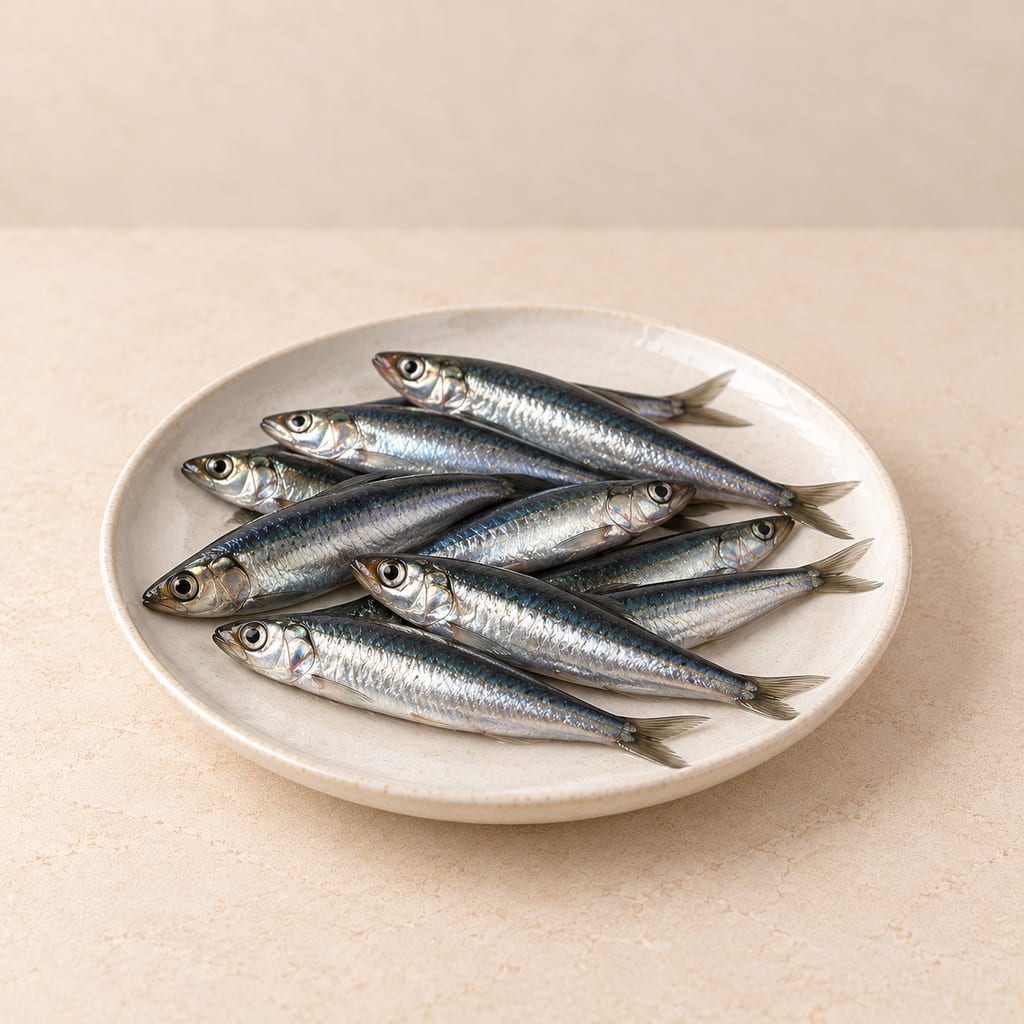
Anchovies are small schooling sea fish of the family Engraulidae, eaten fresh or dried and above all salted: as fillets in oil, whole salted fish or fish sauce.

Ripe avocado flesh is the soft, buttery, fat-rich pulp of Persea americana, eaten raw. It is low in acid, so it is a fresh ingredient that needs care in chilled dishes.
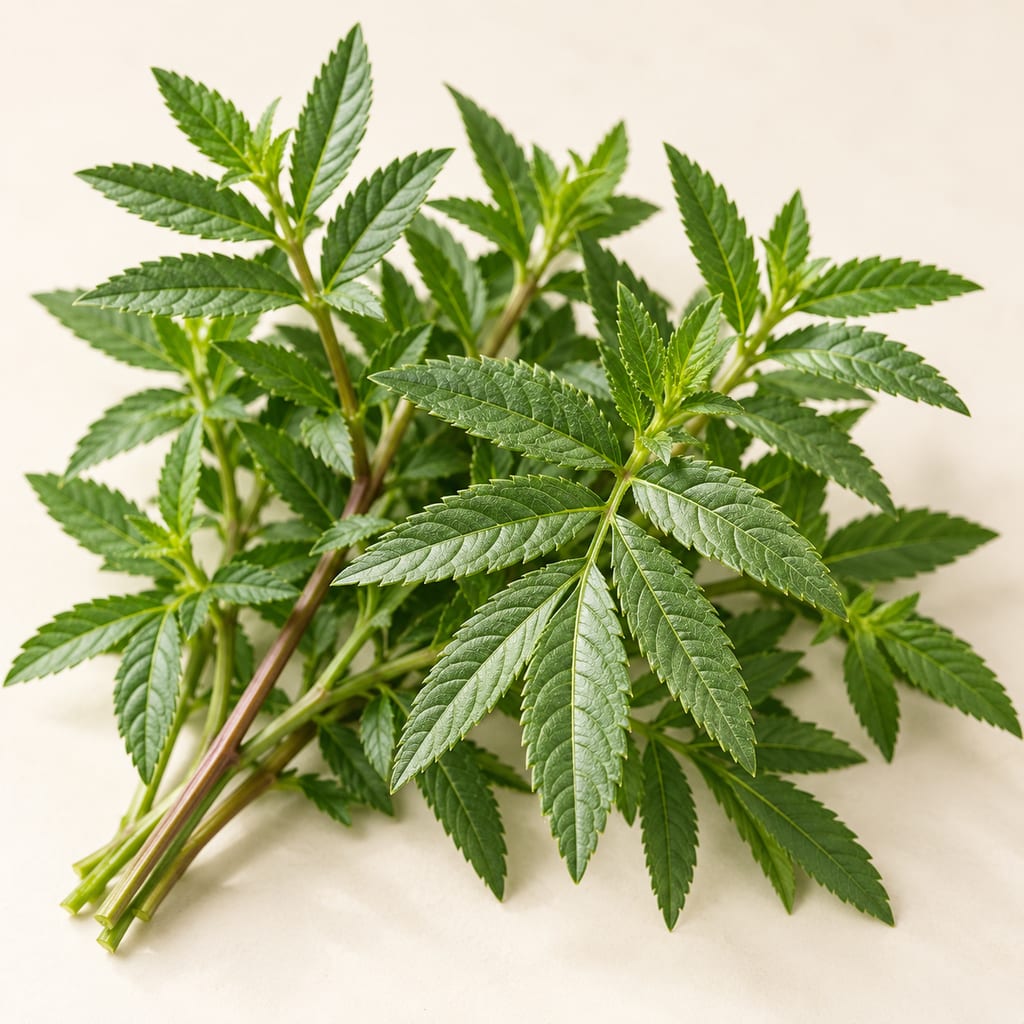
Chincho is the aromatic leaf of Tagetes elliptica, a perennial Andean herb used especially to season pachamanca in Peru's central highlands.
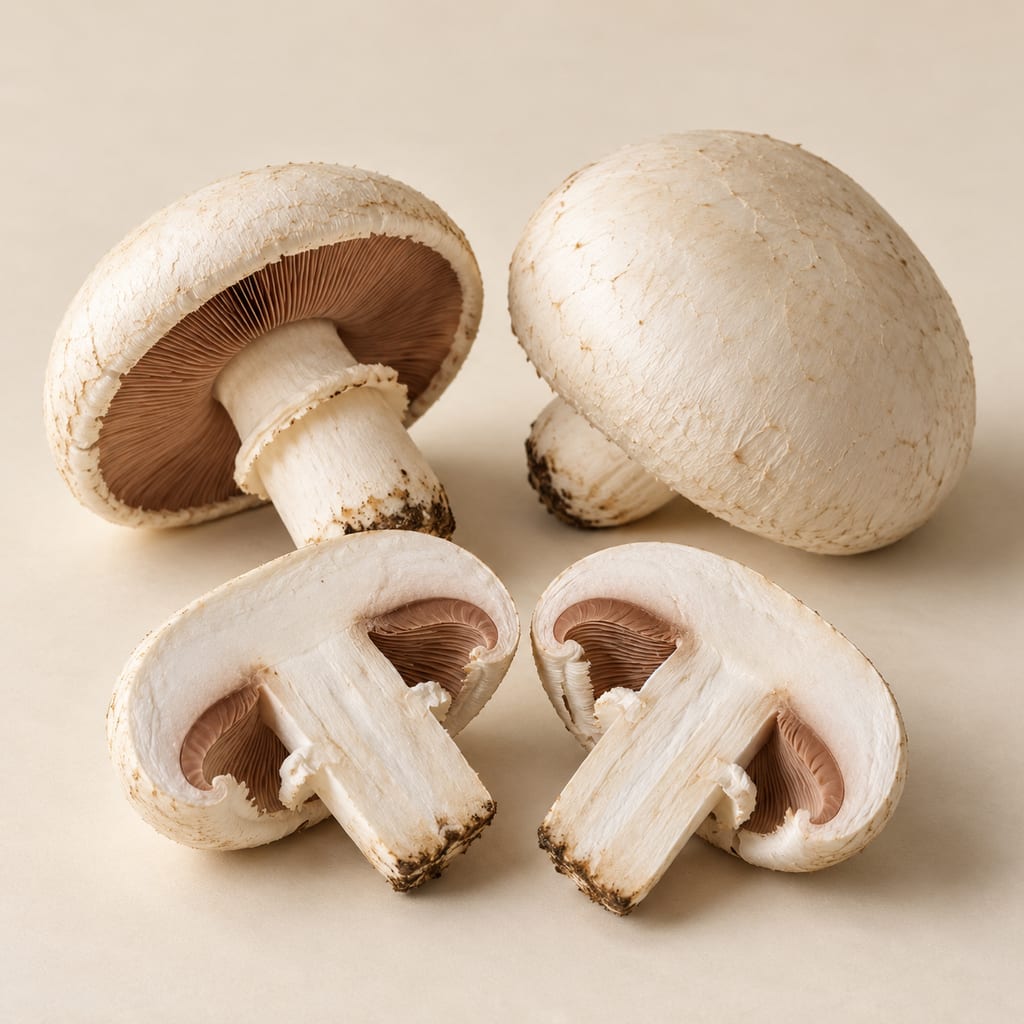
The field mushroom (Agaricus campestris) is a wild grassland fungus with a long record of cooked food use in several regions. Local names, seasons and practices belong to particular communities.
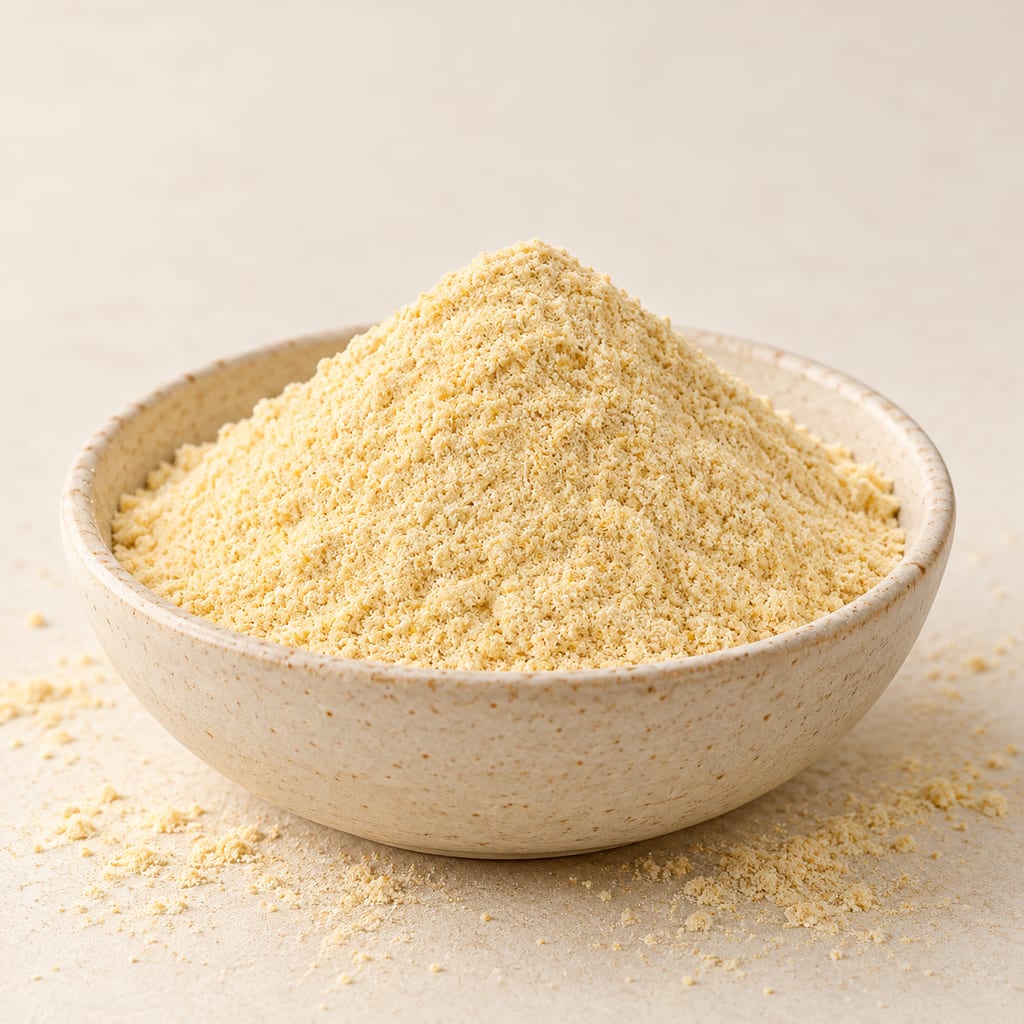
Jora flour is ground malted maize, produced by germinating, drying and milling corn kernels. It provides the enzymatic starch breakdown essential for chicha de jora.
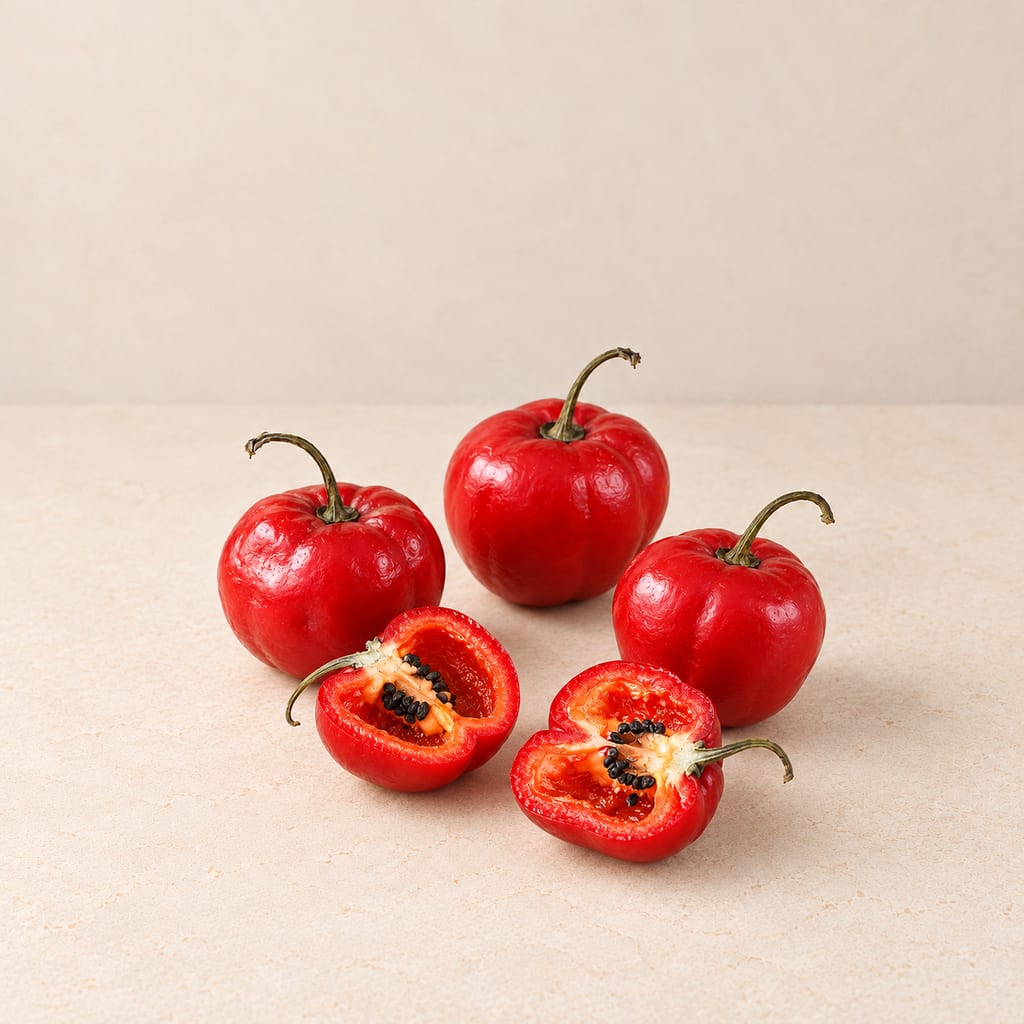
Locoto is the Bolivian name for Capsicum pubescens, an Andean chilli with thick-walled fruit, distinctive dark seeds and heat that varies between plants and harvests.
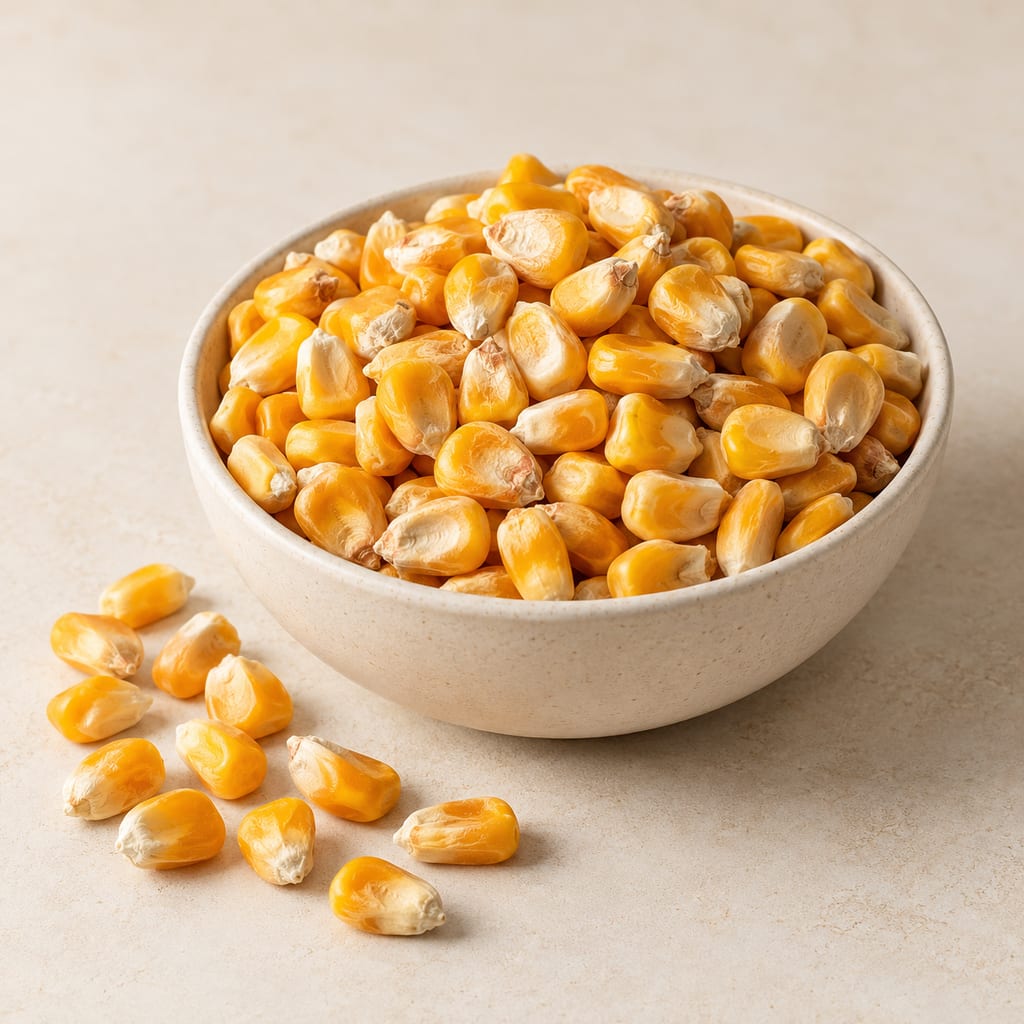
Maize is the foundational grain of Andean fermentation. Its role in brewing chicha de jora depends on germination into jora, a malted form generating enzymes and sugars necessary for alcoholic fermentation.
No community contributions have been published for this entry yet.
Sign in to contribute. Published comments and photos are free to read.
Food and Agriculture Organization of the United Nations
Small-Scale Dairy Farming Manual, Volume 1, Technology Unit 10.1: Starter CulturesThe starter-culture chapter explains milk souring, liquid, frozen and freeze-dried formats, pure and mixed cultures, preferred growth temperatures, propagation hygiene and packet-specific directions.
Cited in: Two jobs in one dairy starter; Acidification changes the working milk and curd; Keeping the mixture means keeping a balance; Read the formulation as well as the microbial description
United States Patent Office
Method of Making Butter, US495381AVilhelm Storch’s patent describes selecting flavour-producing bacteria from dairy foods, cultivating them separately and adding them to heated cream or milk before ripening and churning. It does not identify the formulation used for Queso Andino.
Cited in: Selected starters changed cream ripening
H. L. Russell, Madison, Wisconsin
Outlines of Dairy Bacteriology, 10th editionContemporary primary textbook: cream-ripening starter selection, commercial liquid/dry starter formats, absorbing carriers and dormant dry cultures, repeatability and competing flora, acid-forming organisms in buttermilk/cottage cheese. Historical medical and broad safety claims not adopted.
Cited in: Selected starters changed cream ripening; A liquid starter and a concentrate enter the vat differently
New Mexico State University Cooperative Extension
Making Homemade Cheese, Guide E-216Distinct starter/rennet roles, curd/whey separation and later handling; clean surfaces, appropriate cooking, cooling and contamination control. Its numerical home pasteurization and rennet equivalence claims not adopted.
Cited in: Acidification changes the working milk and curd; Read the formulation as well as the microbial description
Tetra Pak, Dairy Processing Handbook
Cultures and Starter ManufactureBulk versus concentrated direct-inoculation cultures, cultivation and propagation stages, contamination and balance of organisms affected by conditions. No industrial doses or temperatures prescribed.
Cited in: A liquid starter and a concentrate enter the vat differently; Keeping the mixture means keeping a balance
Journal of Dairy Science
A Method to Use Leuconostoc mesenteroides ssp. cremoris 91404 to Improve Milk FermentationsThe original abstract describes Leuconostoc 91404 with lactococci in experimental buttermilk. Citrate, acidity and handling affected measured aroma. The experiment did not test the Queso Andino starter or establish household supplementation or storage instructions.
Cited in: More acid does not necessarily mean more aroma
US Food and Drug Administration
Food AllergiesMilk allergen and protein-mediated allergy; importance of ingredient/allergen declarations.
Cited in: Read the formulation as well as the microbial description
Food and Agriculture Organization of the United Nations
The technology of traditional milk products in developing countries, entry 3.18: Queso AndinoThe Queso Andino entry names a mixed aroma-and-acid starter with the printed terms Betacocus and Streptococus, without defining its formulation. It describes whole cow milk, rennet, curd washing and later cheesemaking stages, and production in Peru and Ecuador. Swiss cooperation in the 1970s concerns cheesemaking development, not the starter organisms’ origin.
Cited in: Two jobs in one dairy starter; Older bacterial names need their historical context; The Andean cheese gives the starter a particular setting
Food and Agriculture Organization of the United Nations
The technology of traditional milk products in developing countries, FAO Animal Production and Health Paper 85: front matter and forewordPublished in Rome in 1990, the FAO survey includes Part B questionnaire replies from 1987 and 1988. Its account identifies gaps and limits to verifying the replies; it is not a validated cheesemaking protocol.
Cited in: The Andean cheese gives the starter a particular setting
Journal of Bacteriology
The Butter Aroma BacteriaThe 1926 paper distinguishes aroma and acid production, discusses limitations of microscope identification, citrate-gas activity, nutrient-medium effects and culture proportions, and reports unsuccessful practical improvement after yeast-extract propagation. Its historical Betacocci terminology does not define the later Andino formulation.
Cited in: Butter aroma posed a different question from souring; Older bacterial names need their historical context
LPSN, Leibniz Institute DSMZ
Genus: BetacoccusHistorical proposed genus not validly published; no identification of FAO starter inferred.
Cited in: Older bacterial names need their historical context
Food and Agriculture Organization of the United Nations
Small-Scale Dairy Farming Manual, Volume 1, Technology Unit 10.3: Small Scale Cheese MakingMilk structures, distinct acid and rennet mechanisms, whey separation, curd handling and ripening context. No old numeric process guidance generalized.
Cited in: Acidification changes the working milk and curd
Journal of Bacteriology
Role of citritase in acetoin formation by Streptococcus diacetilactis and Leuconostoc citrovorumThe original abstract describes cell-free citrate conversion to acetate, oxaloacetate, pyruvate, carbon dioxide and acetoin, with strain differences in citritase. Historical organism names are retained; the study did not test the Queso Andino starter.
Cited in: Citrate offers a route towards buttery aroma
Microbial Biotechnology
Citrate, low pH and amino acid limitation induce citrate utilization in Lactococcus lactis biovar diacetylactisThe abstract and introduction describe citrate permease CitP and condition-dependent regulation in the study’s culture model. This was not an Andino experiment or a household supplementation trial. The article appeared online on 7 December 2017 and in the March 2018 issue of Microbial Biotechnology, 11(2):369–380.
Cited in: Citrate offers a route towards buttery aroma
Applied and Environmental Microbiology
Citric acid metabolism in hetero- and homofermentative lactic acid bacteriaThe paper reports strain-dependent acetoin and diacetyl formation from citrate and differences over time. The printed author line names D. F. Drinan, S. Tobin and T. M. Cogan. Its experimental cultures do not establish the composition or operating conditions of the Andino starter.
Cited in: More acid does not necessarily mean more aroma