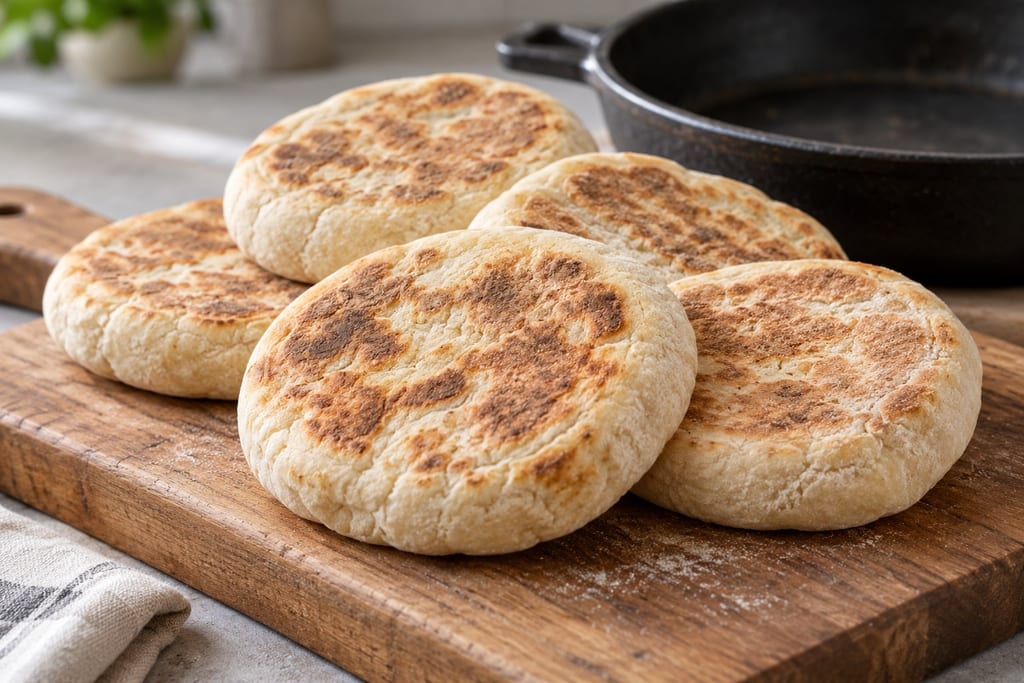
Bolo do caco: pan-and-oven version
Sweet-potato wheat breads with fresh yeast, browned in a pan and finished in the oven. This is the bread component of Teleculinária's scrambled-egg dish.
 FermenteaWhere food goes to change
Modern method
broa · broa de milho e centeio
This modern home broa de milho uses scalded maize flour and a wheat-flour yeast sponge; it is distinct from Northern Portuguese maize-and-rye sourdough breads.
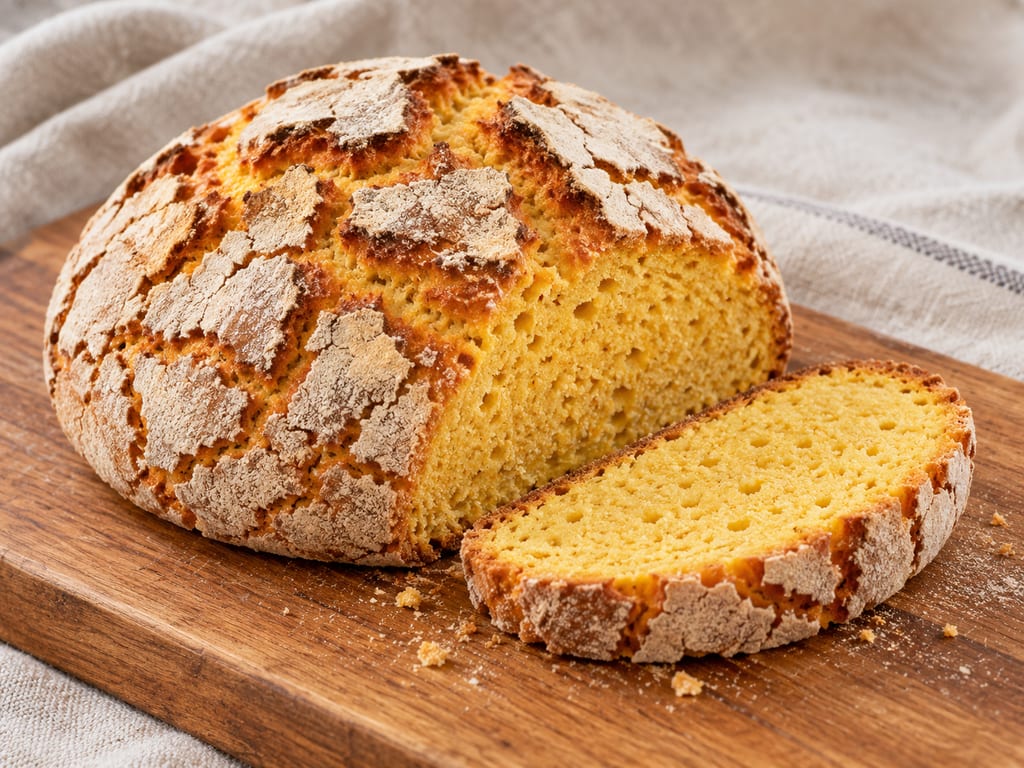
Broa is a family name, not a single fixed formula. The Portuguese agriculture directorate’s general description identifies Northern Portuguese broa with maize and rye flour in proportions that vary by region, from roughly two parts maize to one part rye through equal parts. It describes a fermented piece of dough saved from the previous bake as starter. A separate DGADR entry, Broa de Milho e Centeio, names a particular area between the Douro and Tâmega and describes a broad, high loaf with a wood-fired bake.
A study by João M. Rocha and F. Xavier Malcata describes farm-made broa from four Northern Portuguese subregions: Alto Minho, Basto, Avintes and Vale do Sousa. The study discusses maize and rye flour and dough inoculated with covered fermented dough carried from batch to batch. It reports that two producers in its sample added some wheat. This evidence supports variation within the tradition; it does not make wheat part of every formula.
The recipe below follows a separate modern home recipe by Ana Veiga. It scalds maize flour, uses wheat flour and instant yeast, and includes no rye or saved old dough. Those ingredients and steps belong to this version only. It should not be read as a measured reconstruction of a traditional maize-and-rye sourdough loaf.
We Travel Portugal presents this as Broa de Milho. The recipe makes one loaf, listed as eight servings, from 320 g maize flour, 160 g wheat flour split between sponge and final dough, 5 g instant yeast, 410 mL water in three measured additions, 40 g sugar and 10 g fine salt. The formula has no rye. The source recommends medium-coarse yellow maize flour and says its Portuguese type 70 flour may take more water; it warns that cornstarch is not a suitable substitute. Because grading names vary by country, use maize flour rather than a product labelled corn starch.
First scald the maize flour with boiling water while the yeast-and-wheat sponge rises for 30 minutes. Combine the cooled scald and sponge with the remaining flour, sugar, salt and water, then leave the mixed dough covered for one hour. The recipe does not knead the dough. It rounds it by rotating the dough in a floured bowl, then bakes one loaf on a parchment-lined tray at 250°C for about 45 minutes.
The author suggests the loaf should be golden and offers a hollow-sounding tap on its base as a baking cue. That sound is not a validated safety measure. The page gives no storage period. It describes broa as bread served in Portugal and suggests it alongside soups or rich meat dishes; its crumbs also feature in the named dish Bacalhau com Broa.
This precise household formula is a modern yeast-raised adaptation. Northern Portuguese broa traditions are documented separately as maize-and-rye breads, often inoculated with dough saved from a prior bake. These records do not date this particular home formula or establish one origin for the broader bread family.
Yield 8 servings (one loaf) · Scaling: source batch only
Flour can carry harmful bacteria; do not taste the raw dough.
Hazard sourcePouring boiling water into maize flour can splash and burn.
Hazard sourceBake the loaf before eating; keep raw flour and dough from ready-to-eat food, and wash hands, tools and work surfaces after handling them.
Control sourcePour boiling water carefully into a stable heatproof bowl and let the scald cool before mixing the sponge into it.
Control sourceDo not taste raw flour or dough. The source gives no validated finished-product storage period.
The home recipe identifies the bread as Portuguese but does not give a locality.
Sweet-potato wheat breads with fresh yeast, browned in a pan and finished in the oven. This is the bread component of Teleculinária's scrambled-egg dish.
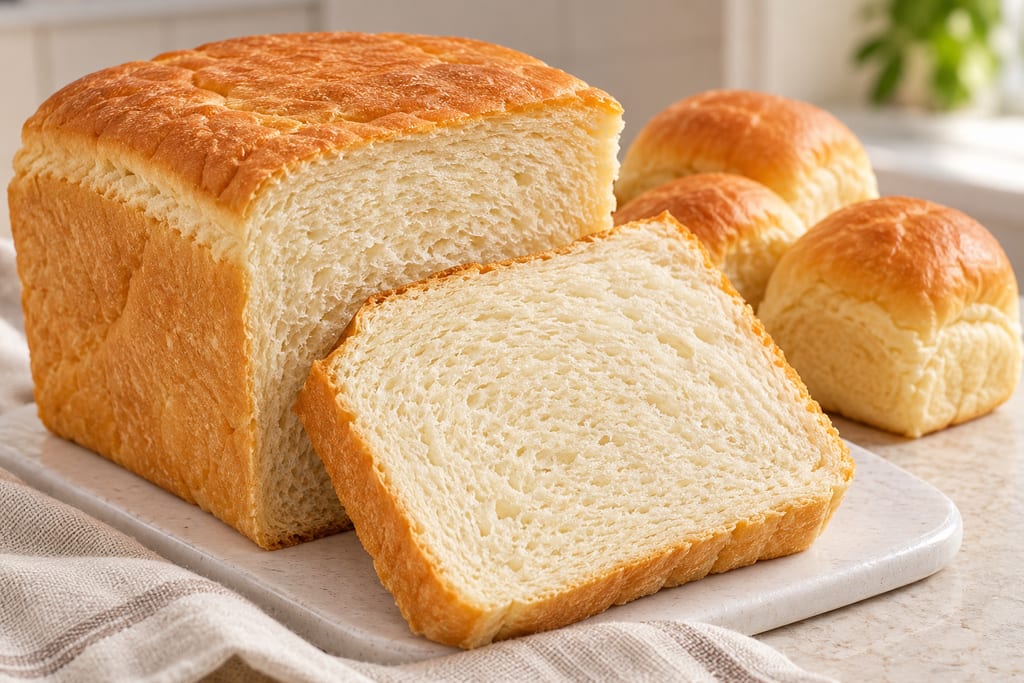
This softer home-style Agege bread uses a scalded flour paste, an enriched yeast dough and a 9×5-inch loaf pan, with rolls from the extra dough.
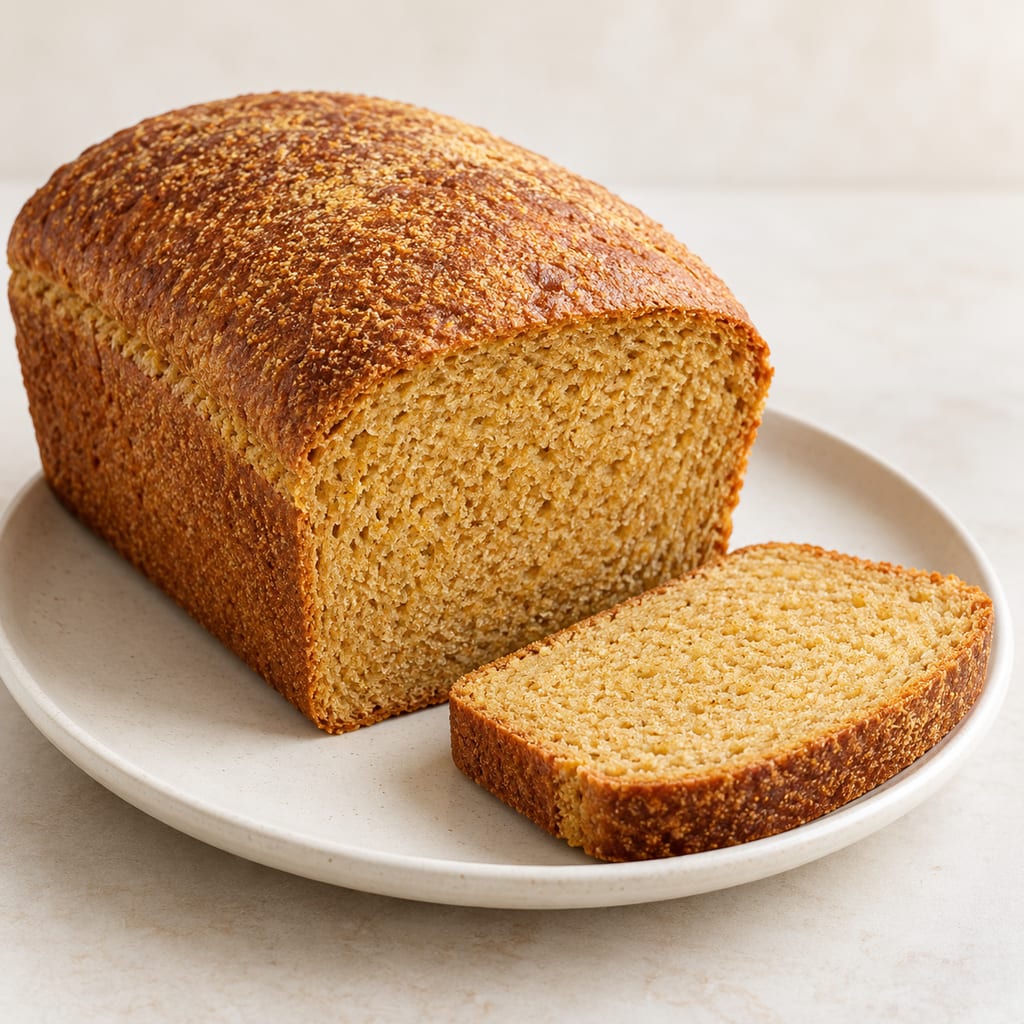
Anadama is a New England yeast loaf made with wheat flour, cornmeal and molasses. Scalded cornmeal enriches the dough, while molasses lends sweetness and a dark crust; it is especially good toasted or beside soup and baked beans.

A yeast-raised wheat ring shaped from a firm dough, briefly boiled and baked. This source-batch formula gives a gently malted crust and a chewy crumb.
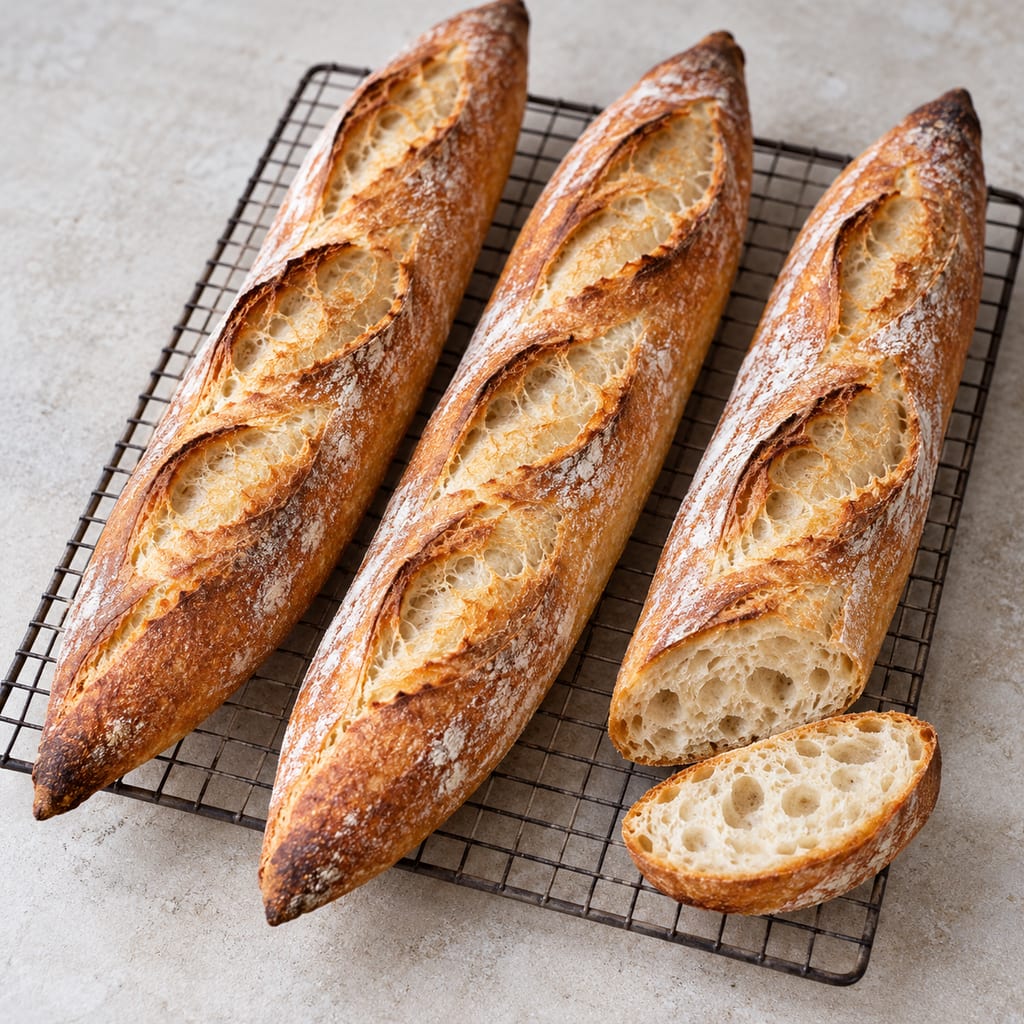
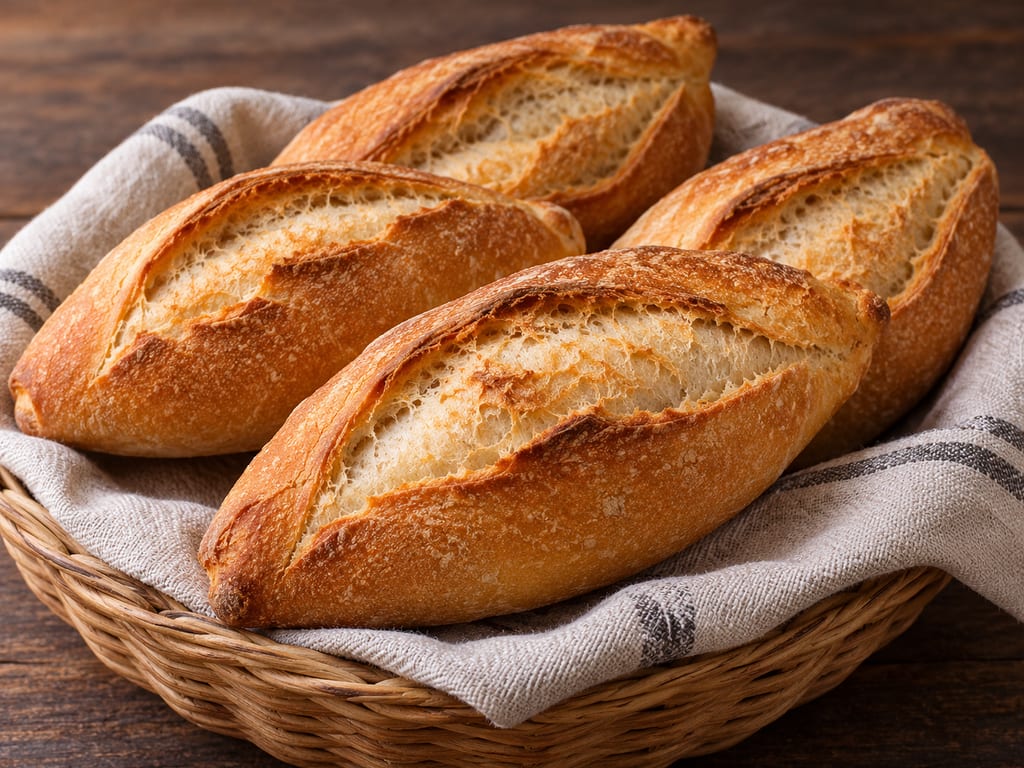
Three long, crusty wheat loaves made with an overnight yeast poolish, shaped by hand and baked with steam for a crisp crust.
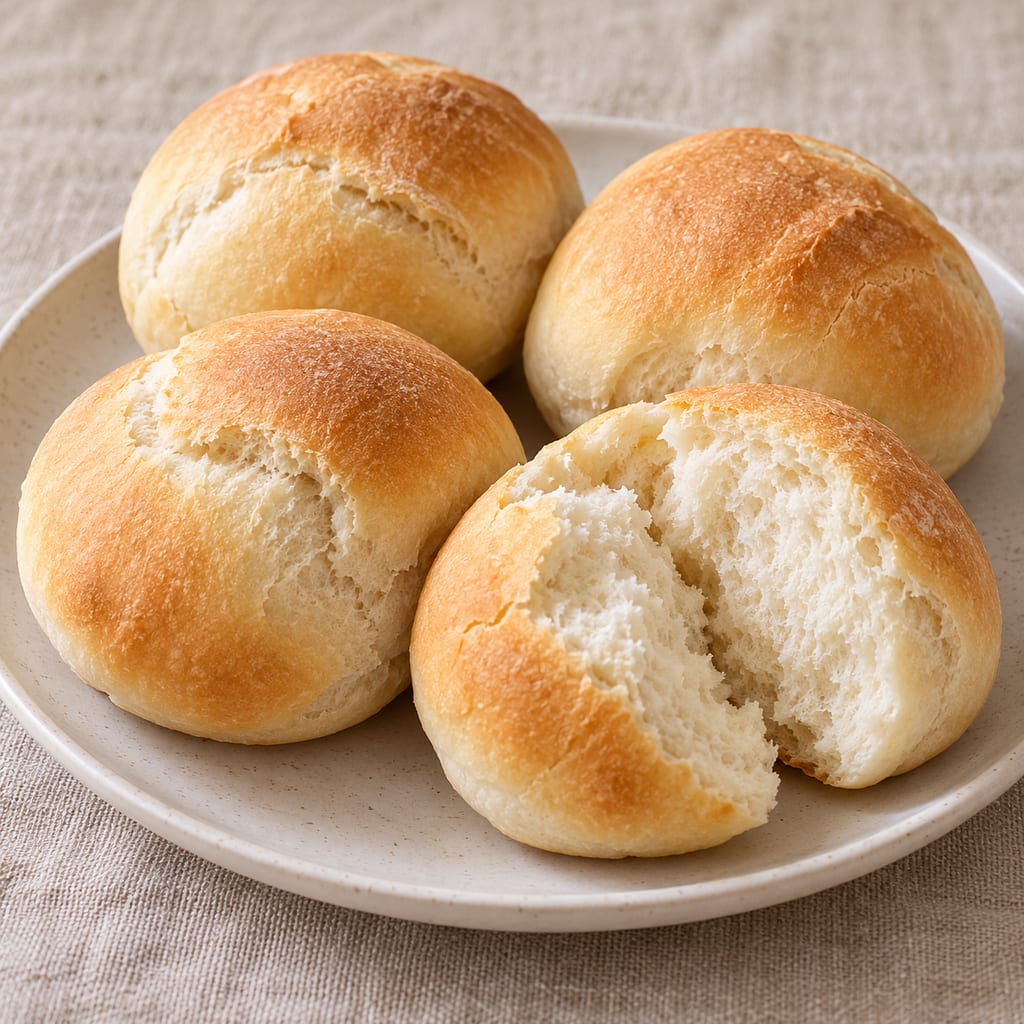
A lightly salted, yeast-raised Barbadian roll, baked in a dozen-roll home batch and often split for cutters.
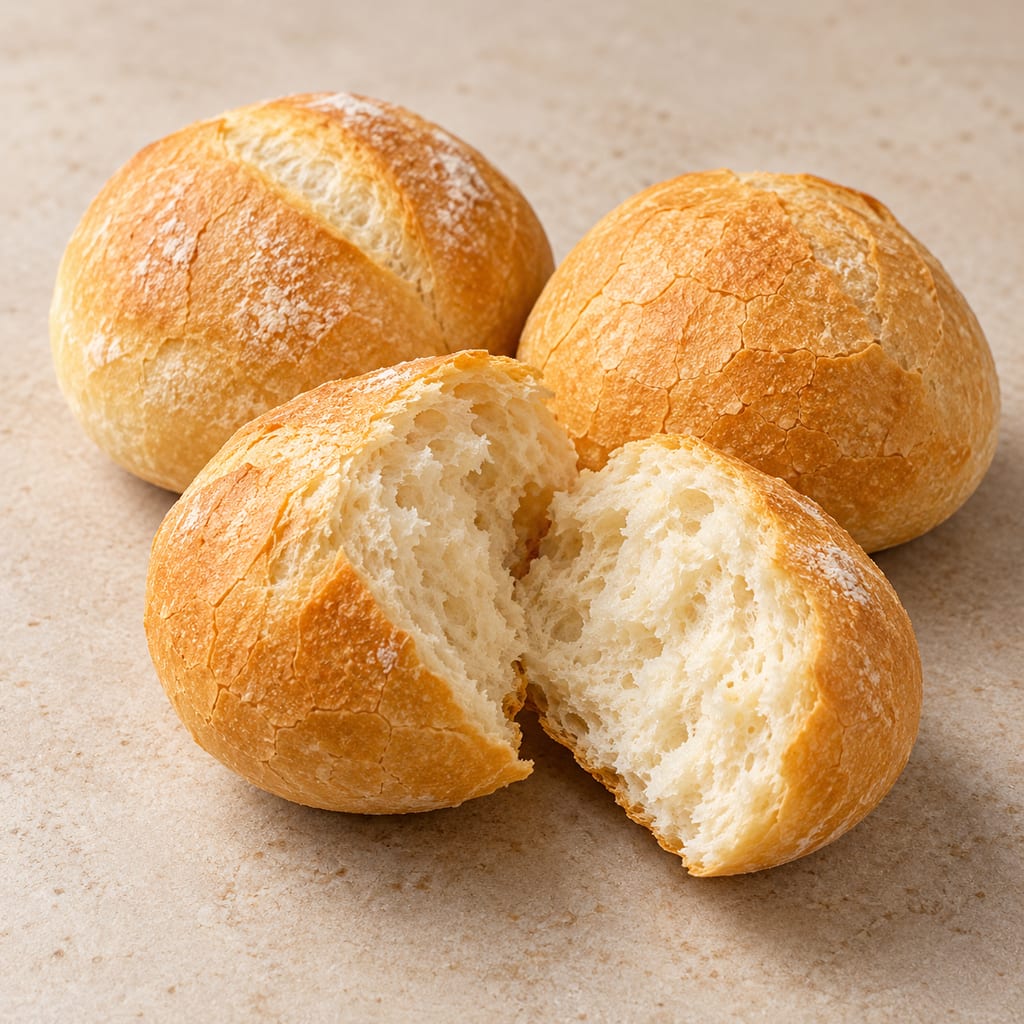
A crisp Belgian roll made from a supplier’s Croc-flour dough, mixed by hand or machine, proofed in rounds and baked with steam.
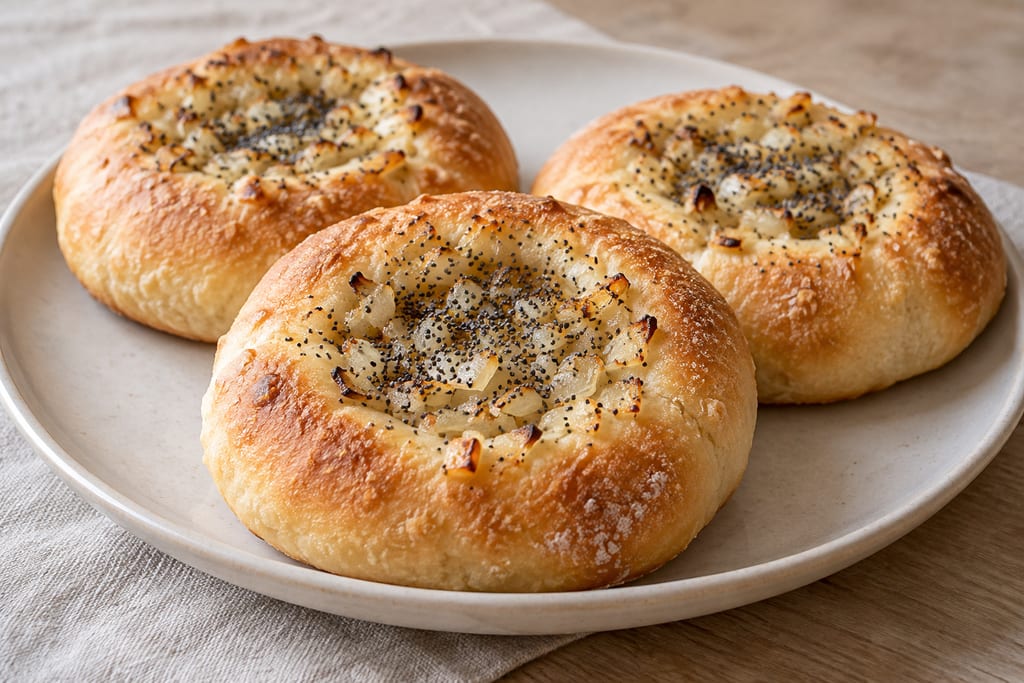
Bialys are soft, yeasted wheat rolls baked without boiling, each shaped with an onion-filled central depression instead of a hole.
A measured, commercial-yeast home method for Guadalajara-style birote salado, with a six-hour preferment, shaped rolls and a two-temperature steam bake. This formula contains no egg.
No community contributions have been published for this entry yet.
Sign in to contribute. Published comments and photos are free to read.
We Travel PortugalModern home recipe
Broa de Milho – How to Make Portuguese Corn BreadOne-loaf formula for a scalded maize-flour dough with a separate wheat-flour and instant-yeast sponge.
Exact ingredient amounts, timed rests and rise, bowl-shaping method, 250°C oven setting and approximate 45-minute bake.
Specifies medium-coarse maize flour rather than cornstarch and describes the bread as Portuguese.
Cited in: Ana Veiga’s scalded maize home version
DGADR, Produtos Tradicionais PortuguesesOfficial description of Northern Portuguese broa family
BroaDescribes broa as maize-and-rye bread with regional proportions ranging from about two-thirds maize and one-third rye to equal parts.
Describes backslopping with dough saved from the previous bake and wood-fired baking.
Cited in: A maize-and-rye bread family
Universidade Católica Portuguesa repositoryStudy of traditional broa flour and sourdough
Contributions of Maize and Rye Flour for the Microbial Ecology of Sourdough for a Portuguese Traditional Sourdough BreadDescribes traditional farm-level broa in Northern Portugal as maize-and-rye dough inoculated with previously fermented dough kept covered between batches.
Samples came from Alto Minho, Basto, Avintes and Vale do Sousa; the study says two producers added some wheat.
Cited in: A maize-and-rye bread family
DGADR, Produtos Tradicionais PortuguesesNamed regional maize and rye variant
Broa de Milho e CenteioDescribes a distinct loaves made with maize and rye flours in the Entre Douro e Tâmega area, with old fermented dough and a wood-fired oven. This source describes that variant, not Ana Veiga's recipe.
Cited in: A maize-and-rye bread family
U.S. Food and Drug AdministrationFood safety
Handling Flour Safely: What You Need to KnowFlour is raw and can carry harmful bacteria; do not taste raw flour or dough; cook flour-containing foods before eating and clean hands, utensils and work surfaces after handling flour.