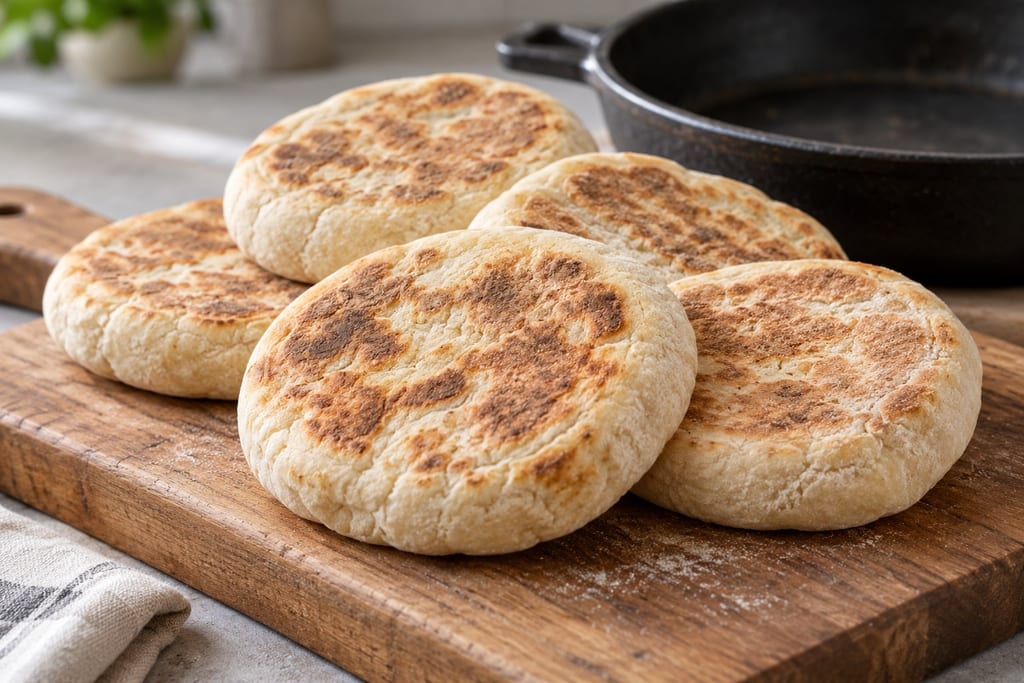
Bolo do caco: pan-and-oven version
Sweet-potato wheat breads with fresh yeast, browned in a pan and finished in the oven. This is the bread component of Teleculinária's scrambled-egg dish.
 FermenteaWhere food goes to change
Modern adaptation
Pão Alentejano · Pão de trigo do Alentejo
A rounded Alentejo wheat loaf with a raised folded head. This home adaptation uses a fresh-yeast preferment, then proofs the shaped loaf and bakes it with steam.
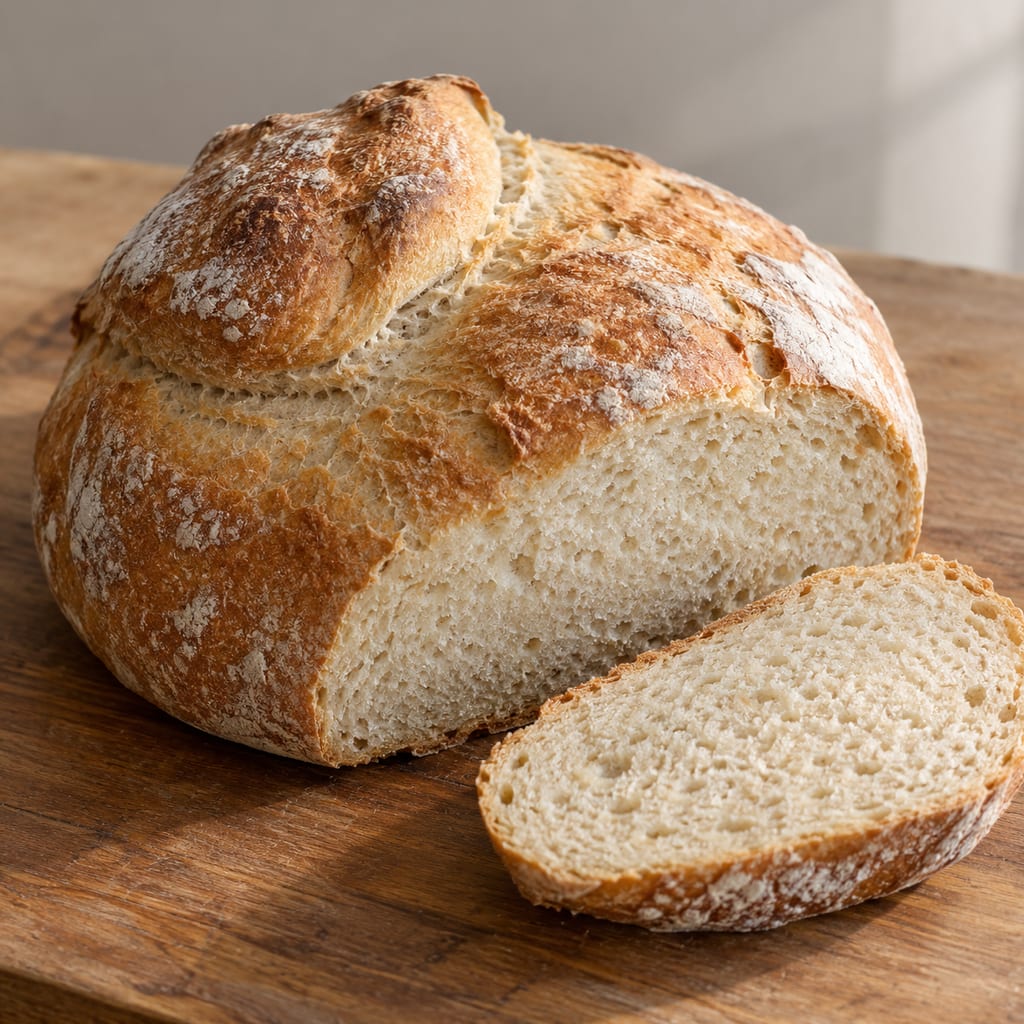
Pão alentejano is a wheat bread associated with Alentejo, Portugal. Regional sources describe a loaf with a raised folded head, a firm or crisp crust and a substantial crumb. It is everyday food and a base for regional dishes such as açorda and migas; it is also eaten with olives, cheese or sausage. Those associations describe the regional bread, not a single household formula.
The traditional leaven described by AlentejoTurismo is a piece of dough saved from one kneading and carried into the next batch. Its report that one starter near Monsaraz is about four centuries old refers to that bakery's culture, not the age of every Alentejo loaf. The measured method on this page follows a different, explicitly modern home route: a small preferment with fresh baker's yeast, followed by wheat dough. It aims for the raised head shape but does not reproduce a bakery's long-kept natural leaven.
M. Ferreira's Pãomania method starts with a preferment of 100 g Type 65 wheat flour, 60 mL warm water and 5 g fresh baker's yeast. Cover it and leave it in a warm place for about one to two hours, until it doubles and shows bubbles. For the main dough, combine this preferment with 700 g flour, 10 g salt and about 400 mL warm water, adding the water gradually because the recipe says it may vary with the flour.
Knead by hand for 15–20 minutes, or use a stand mixer with a dough hook for 10–15 minutes, until smooth and elastic. Cover the dough in a lightly oiled bowl and proof for about 1½–2 hours at 20–25°C until doubled. The author suggests one or two folds during this rise. Divide the dough into a larger body and smaller top piece, attach the smaller piece as the raised head, then proof on a tray for another 30–60 minutes until puffy and light.
The home recipe heats the oven to 250°C with a second tray on a lower shelf. Load the bread, then pour one glass of water into the hot tray to make steam. Keep hands and face away from the sudden steam. Bake at 250°C for five to ten minutes, then reduce the oven to 200°C and bake for a further 30–40 minutes. The recipe's overview lists a 50–60-minute bake, while these detailed stages add up to 35–50 minutes; this entry preserves the conflict rather than choosing a time not supported by the page. Cool the loaf completely on a wire rack before slicing.
Regional descriptions mention wood-fired ovens, but this household recipe uses a domestic oven and does not claim to duplicate that equipment or a professional bake. The distinctive head shape and the fresh-yeast preferment are documented features of this particular home route.
The U.S. Food and Drug Administration warns that raw flour can carry harmful bacteria. Do not taste the dough before baking, keep it separate from ready-to-eat foods, and wash hands and utensils after handling it. Adding water to the hot lower tray creates an abrupt release of steam; use oven protection and keep your face and hands clear.
The AlentejoTurismo account describes pão alentejano as a regional table bread, commonly served with olives, sausage, cheese and regional dishes such as açorda and migas. It describes the traditional natural leaven as a portion of dough retained from a previous bake and mentions one old starter near Monsaraz said to be about 400 years old. That age belongs to one starter, not to the bread or all Alentejo leavens. The measured recipe here is a modern home method using fresh yeast in a same-day preferment, not that traditional retained-dough process.
Yield 1 large loaf (about 1.2 kg) · Scaling: source batch only
Wheat flour is raw and uncooked dough should not be tasted.
Hazard sourceThe instructions pour water into a hot tray in a 250°C oven to create steam.
Hazard sourceDo not taste raw dough. Wash hands, bowls, utensils and surfaces after handling flour and dough.
Control sourceKeep hands and face clear of the hot lower tray when adding water; expect a sudden release of steam and use oven protection.
Control sourceDo not taste raw dough; keep it separate from ready-to-eat food and clean up after handling flour.
Adding water to the hot tray releases steam. Use oven protection and keep your face and hands clear.
Regional tourism and the Portuguese traditional-products catalogue document the bread in Alentejo; no narrower birthplace is claimed.
Sweet-potato wheat breads with fresh yeast, browned in a pan and finished in the oven. This is the bread component of Teleculinária's scrambled-egg dish.
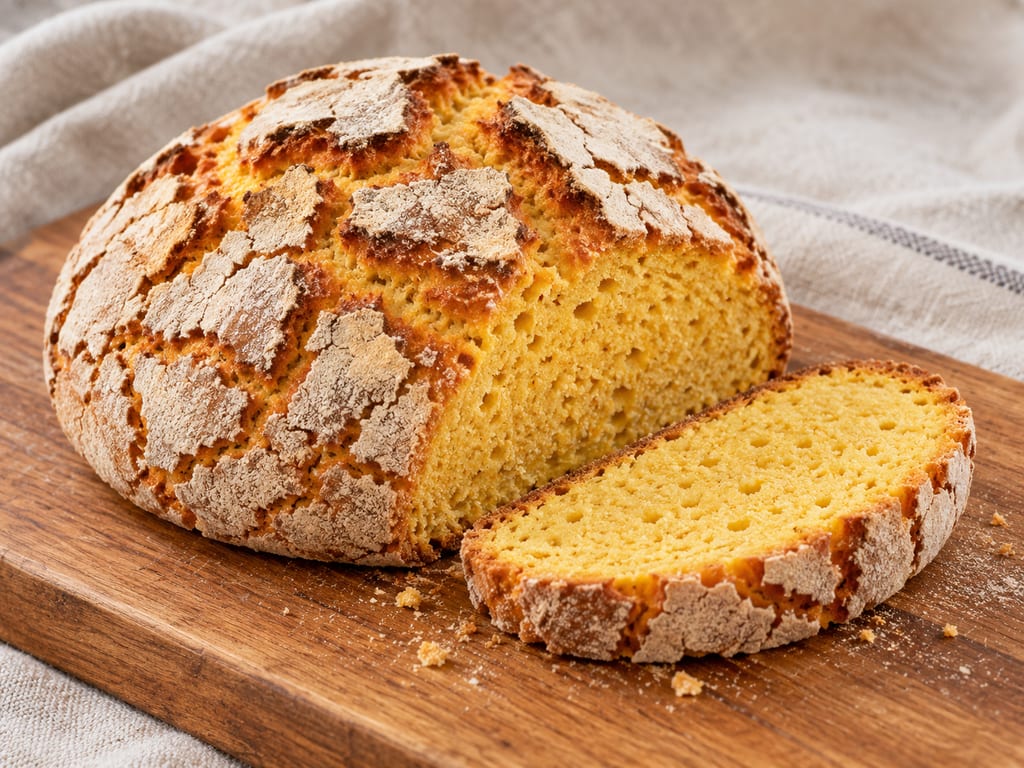
This modern home broa de milho uses scalded maize flour and a wheat-flour yeast sponge; it is distinct from Northern Portuguese maize-and-rye sourdough breads.
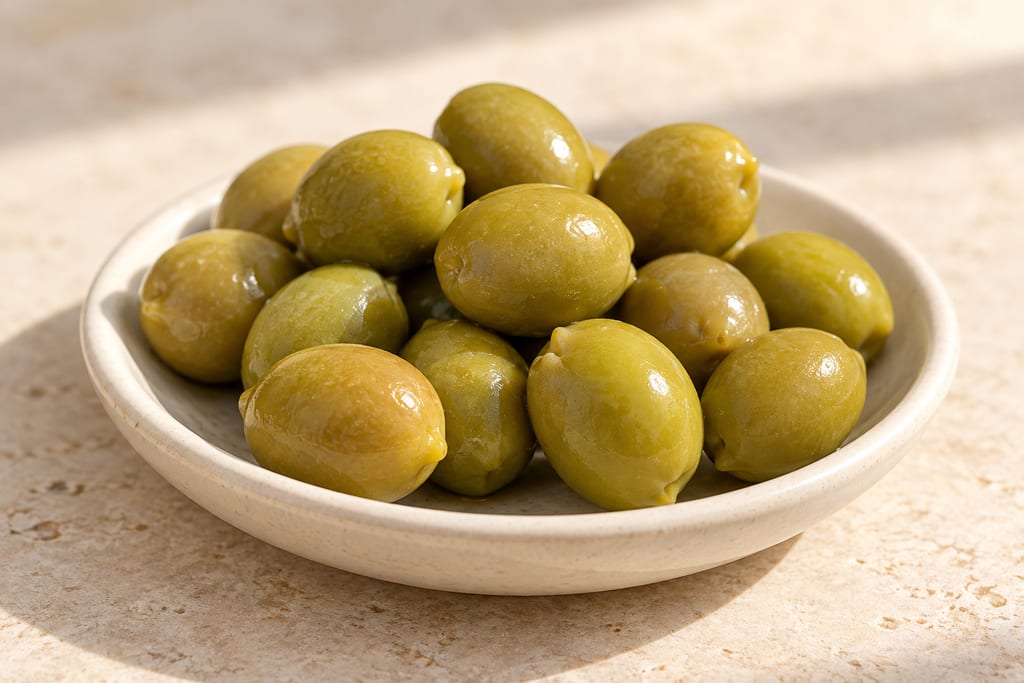
A Portuguese table-olive product from the Negrinha cultivar in northeastern Portugal, sold in three commercial styles, two of them brined fermentations and one oxidised to black.
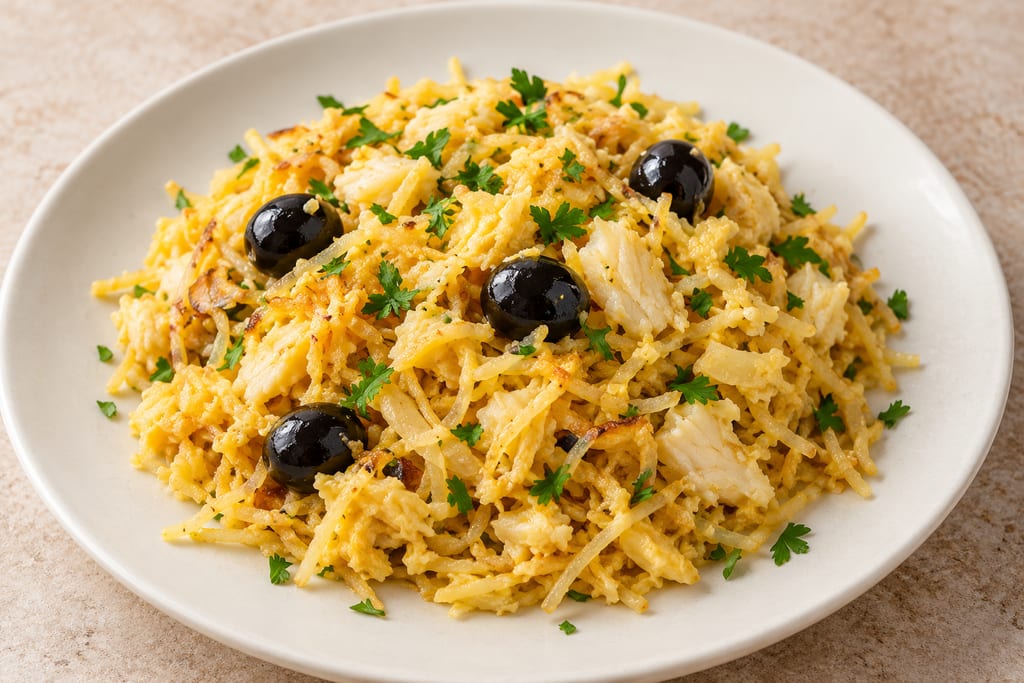
Lisbon's salt cod dish: shredded desalted cod and fine fried potato matchsticks folded through softened onion and bound with beaten egg, finished with parsley and black olives.
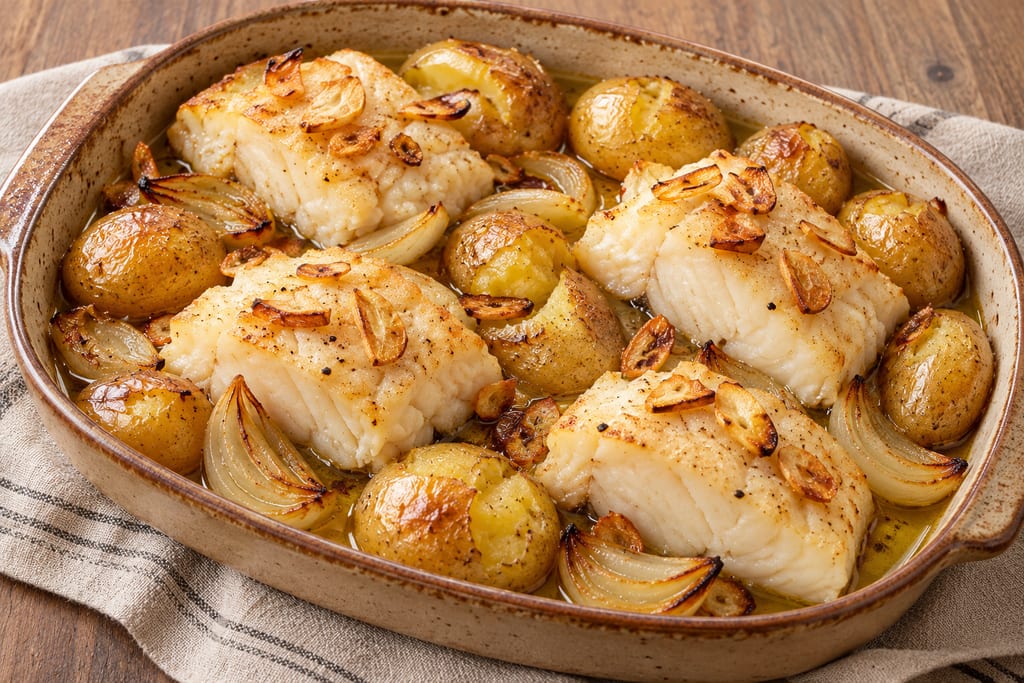
Thick pieces of desalted salt cod roasted in olive oil with garlic and onion, served with small potatoes cooked and then crushed until their skins split.
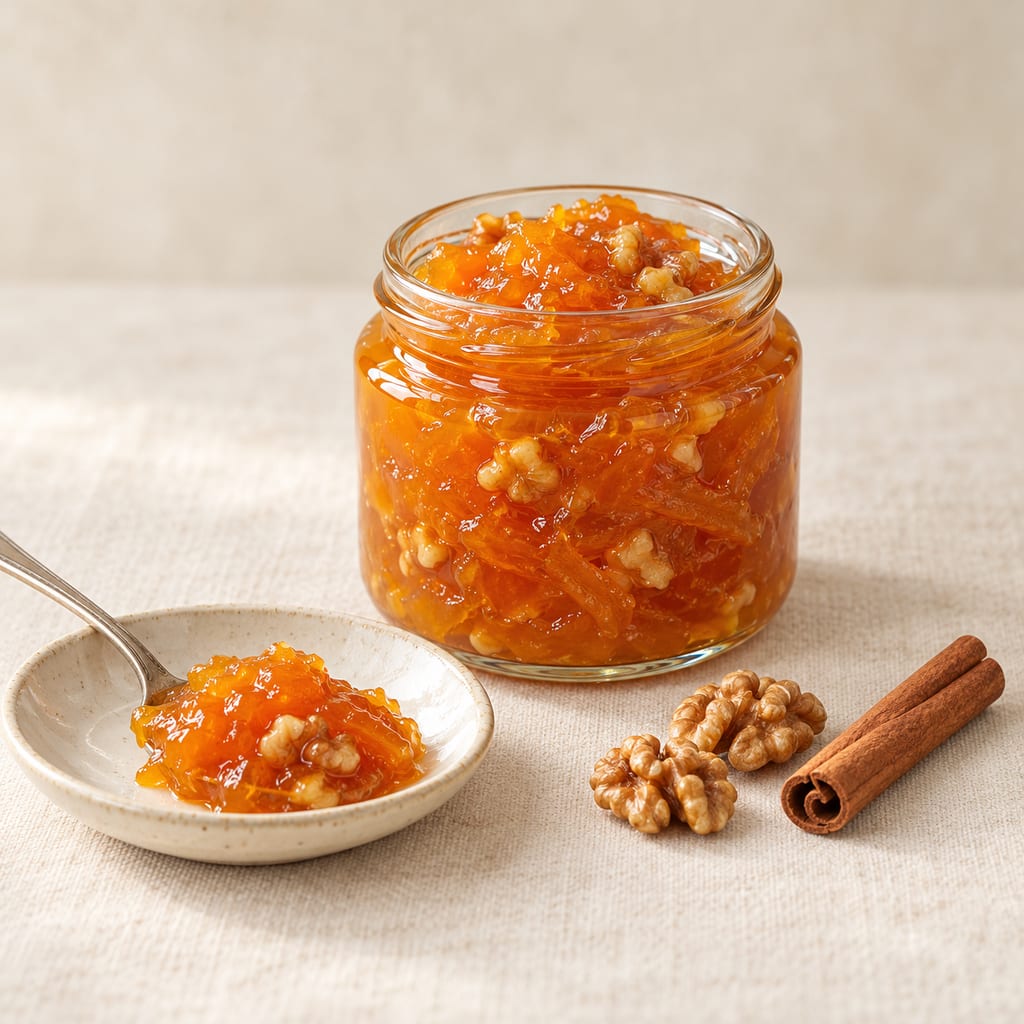
Portuguese pumpkin jam cooked with cinnamon and optional walnuts. A sweet spread to refrigerate or freeze, rather than a home-canned preserve.
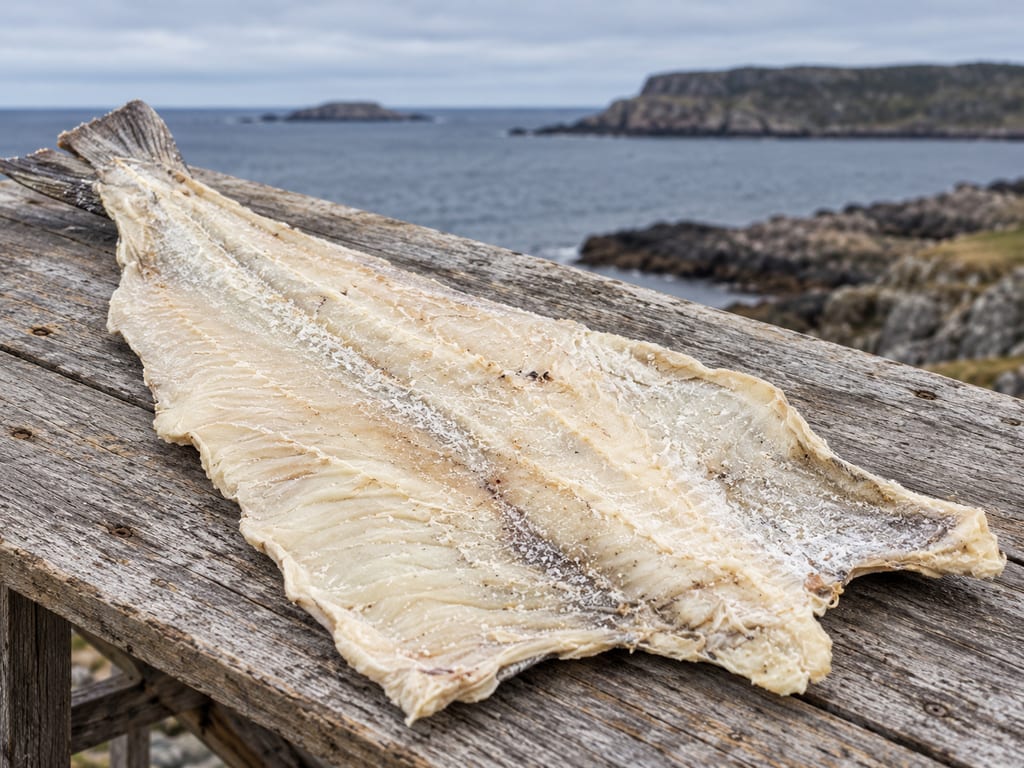
Atlantic cod split, salted and dried on raised flakes along the Newfoundland and Labrador shore, manufactured ashore for markets across the Atlantic.

Portuguese pumpkin jam: Freeze for winter; small fresh portion refrigerated up to 48 hours.
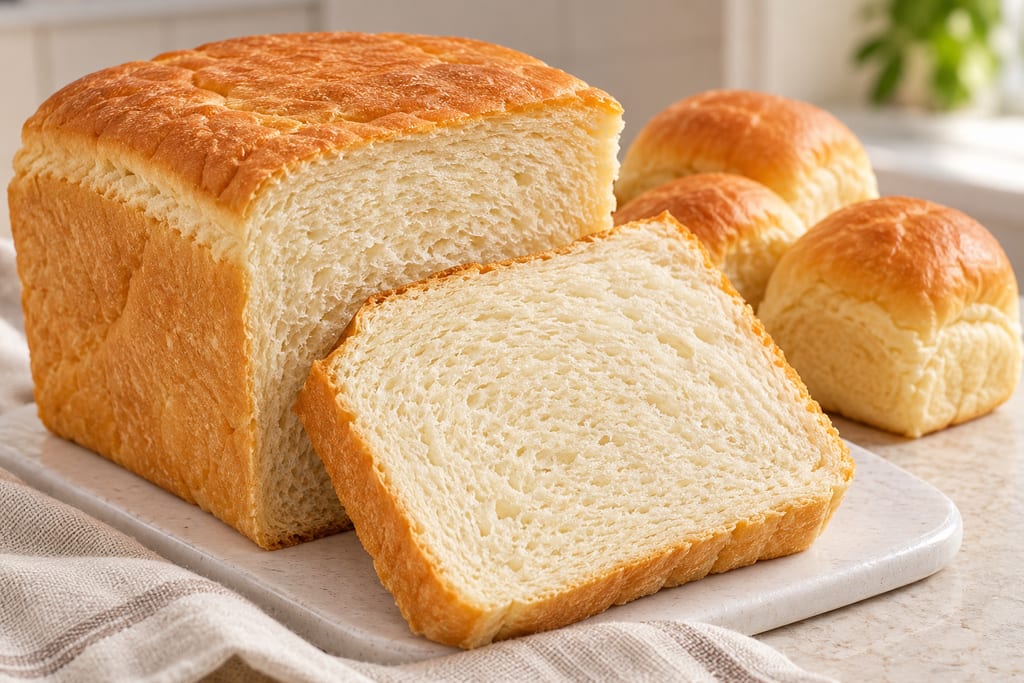
This softer home-style Agege bread uses a scalded flour paste, an enriched yeast dough and a 9×5-inch loaf pan, with rolls from the extra dough.
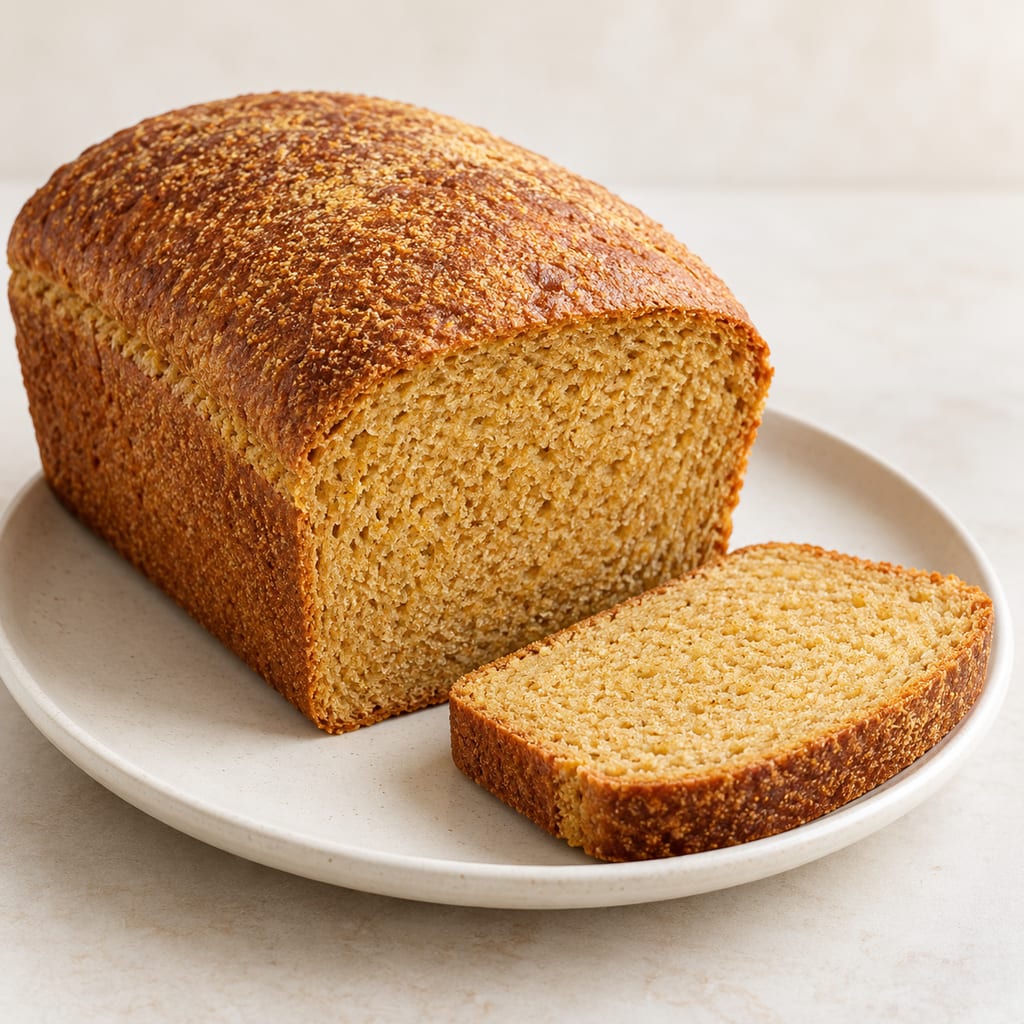
Anadama is a New England yeast loaf made with wheat flour, cornmeal and molasses. Scalded cornmeal enriches the dough, while molasses lends sweetness and a dark crust; it is especially good toasted or beside soup and baked beans.

A yeast-raised wheat ring shaped from a firm dough, briefly boiled and baked. This source-batch formula gives a gently malted crust and a chewy crumb.

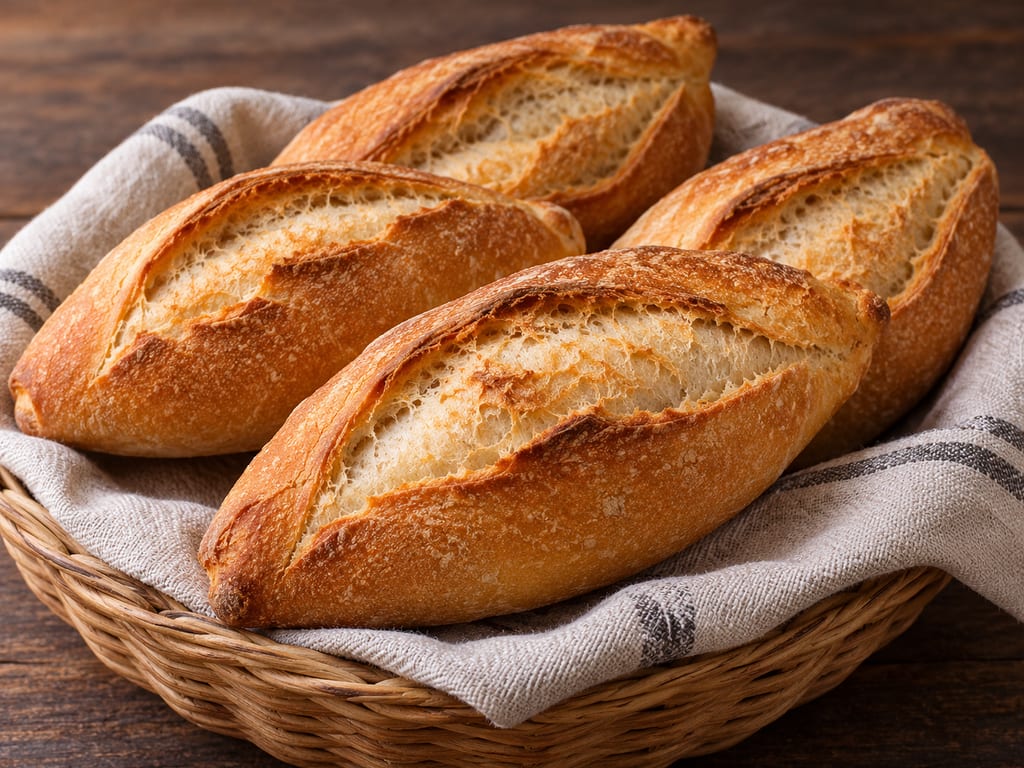
Three long, crusty wheat loaves made with an overnight yeast poolish, shaped by hand and baked with steam for a crisp crust.

A lightly salted, yeast-raised Barbadian roll, baked in a dozen-roll home batch and often split for cutters.
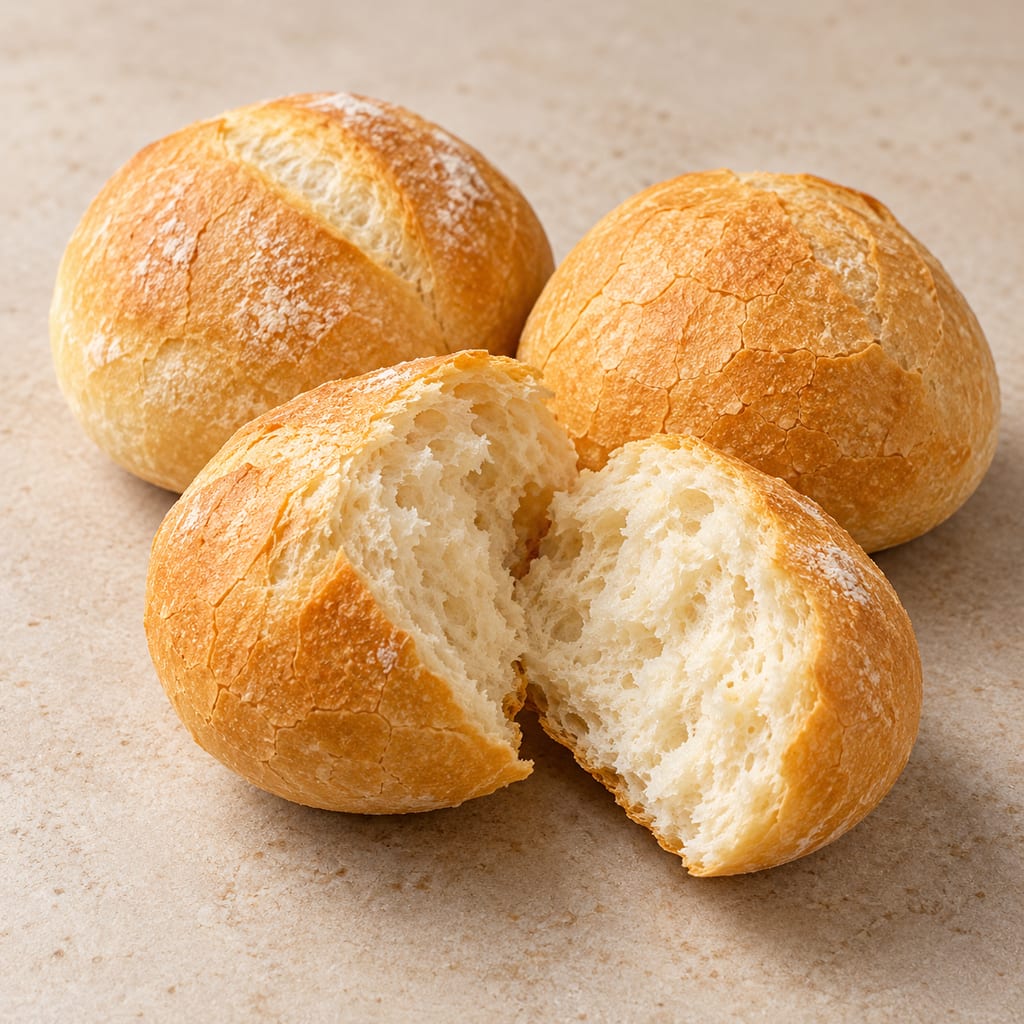
A crisp Belgian roll made from a supplier’s Croc-flour dough, mixed by hand or machine, proofed in rounds and baked with steam.
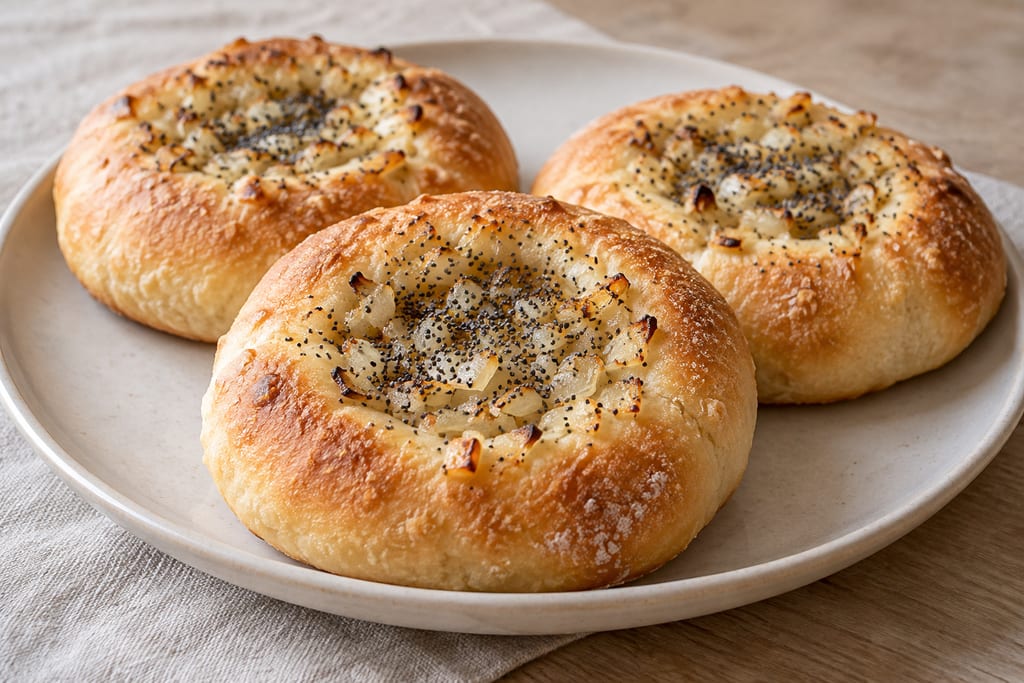
Bialys are soft, yeasted wheat rolls baked without boiling, each shaped with an onion-filled central depression instead of a hole.
A measured, commercial-yeast home method for Guadalajara-style birote salado, with a six-hour preferment, shaped rolls and a two-temperature steam bake. This formula contains no egg.
No community contributions have been published for this entry yet.
Sign in to contribute. Published comments and photos are free to read.
PãomaniaInspiration · Method
Pão Tradicional AlentejanoThe home method makes one loaf of about 1.2 kg from 100 g flour, 60 mL water and 5 g fresh yeast in a preferment, then 700 g flour, about 400 mL water and 10 g salt.
It gives a 1–2-hour preferment, hand kneading or stand-mixer timings, a 1½–2-hour first rise at 20–25°C, head shaping, a 30–60-minute final proof and a staged 250°C/200°C bake.
The overview says baking takes 50–60 minutes, while the detailed bake steps total 35–50 minutes; the discrepancy is retained. The author presents this fresh-yeast method as an accessible home version and suggests mature sourdough as a separate adaptation.
Cited in: A bread of the Alentejo; Make the preferment and dough; Bake with steam
AlentejoTurismo.ptHistory · Geography · Food use
Pão AlentejanoThe page describes pão alentejano as a regional bread eaten with olives, sausage, cheese and as the base for açorda, migas and other dishes.
It describes natural leaven as saved dough from one kneading for the next and says a bakery near Monsaraz has a starter said to be about 400 years old; this is one starter, not a date for the bread.
The page documents a bread-making demonstration at Monte da Azinheira Grande in Ferreira do Alentejo.
Cited in: A bread of the Alentejo
Direção-Geral de Agricultura e Desenvolvimento Rural (DGADR), Produtos Tradicionais PortuguesesHistory · Geography · Food use
Pão de Trigo do AlentejoThe Portuguese traditional-products fiche identifies Alentejo as the region and Pão Alentejano as another name for Pão de Trigo do Alentejo.
It describes a 1–1.5 kg wheat bread with a raised folded head, light brown crust and pale crumb, traditionally baked in a wood-fired oven.
The fiche describes saved dough as homemade leaven, a covered rise of about five hours subject to kneading and season, and its use in regional dishes such as açorda and migas. The English page was indexed in full, while the site blocked direct open during this research.
Cited in: A bread of the Alentejo; Bake with steam
U.S. Food and Drug AdministrationSafety
Handling Flour Safely: What You Need to KnowRaw flour may carry harmful bacteria. Do not taste raw flour or dough; wash hands and utensils after handling.
Cited in: Handle flour and steam safely