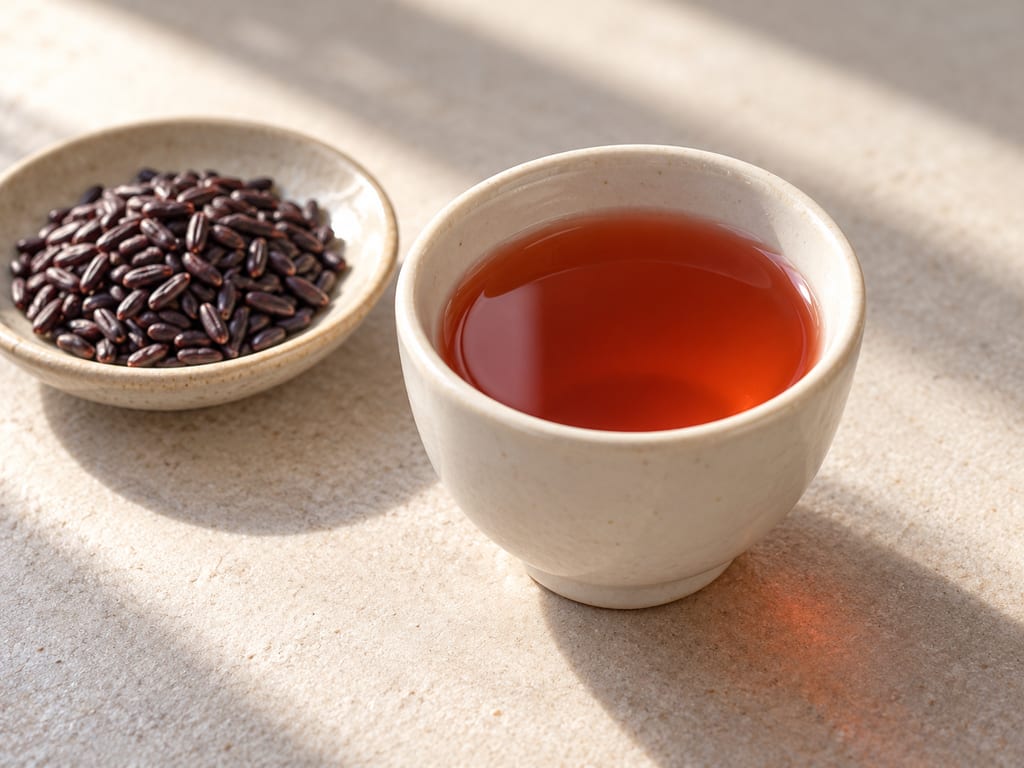
Dahyangheukmi yakju
A clear Korean rice wine made with aromatic Dahyangheukmi pigmented rice, matching rice-flour nuruk and takju yeast.
 FermenteaWhere food goes to change
Substrates
Dahyangheukmi (다향흑미) is a registered Korean black-rice cultivar with an aromatic, non-glutinous grain. It has been used to make rice-flour nuruk, yakju and gochujang in published studies.
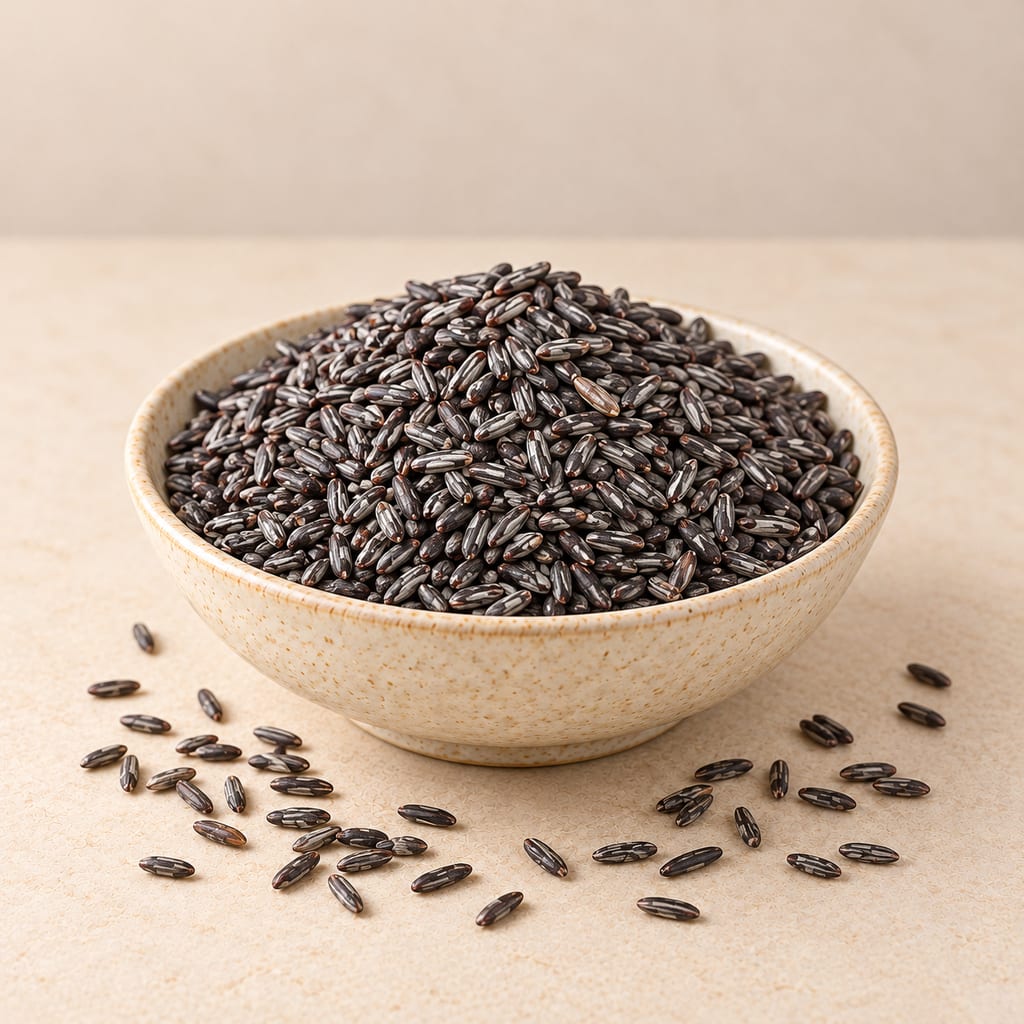
Dahyangheukmi, written 다향흑미 in Korean, is a named cultivar of black rice bred in South Korea. It was bred by the Food Crop Research Institute of the Jeollanam-do Agricultural Research and Extension Services at Naju, in the south-west of the country. A plant variety protection application, number 2017-118, was filed on 27 February 2017, and the variety was registered on 25 June 2018 as variety protection right number 7257. The grain in the studies described below was the 2018 harvest.
The studies describe a non-glutinous rice, mebyeo in Korean, the ordinary type as opposed to glutinous or sticky rice. The brown grain, with the bran still on, weighs 24.2 grams per 1,000 grains, which the authors of a yakju study call somewhat large, and its shape is medium-round. Its black colour is described as better than that of other coloured rices, and its aroma as very outstanding. That last phrase is the authors’ own characterisation and not a measurement; a second source, covered below, measures aroma by a marker compound.
Almost everything else known about this exact cultivar comes from a few Korean food-science studies that used it as a raw material. That is a narrow evidence base, and this page says so where it matters. It does not borrow facts from other black rices, and it does not turn measurements of finished yakju or gochujang into claims about the raw grain.
Black rice is a type of Oryza sativa, the Asian rice. The colour comes mainly from anthocyanins, water-soluble plant pigments that are present in higher amounts by weight than in other coloured grains, and the bran hull holds much of the pigment. The grain is deep black and usually turns deep purple when cooked. A gene called Kala4 activates anthocyanin production. The taste is mild and nutty, similar to brown rice, with a similar fibre content. In Korea, pigmented rice is sorted by bran colour into black, red and green rice, and black rice is reported to be rich in cyanidin 3-O-glucoside, an anthocyanin.
The pigment sits in the bran hull, and the blends the Jeollanam-do institute sells are of pigmented brown rice. Compared with white rice, brown rice is richer in protein, fat, fibre and vitamins. The Rural Development Administration, summarising work of the Jeollanam-do institute, adds that the anthocyanin pigments abundant in black rice have antioxidant effects. Because that agency’s figures apply to blends of several cultivars, they are not stated here as properties of this rice.
Pigmented rice is a small part of Korean farming. The authors of the yakju study write that it was introduced to Korea from China around 1990, is grown mainly in Jeollanam-do, and makes up roughly 5 percent of rice output, with limited use in processed foods. Earlier work had made sikhye, a sweet rice drink, gum, soy sauce and udon from it, but rarely liquor. Marketers of black rice elsewhere call it forbidden rice and claim it was once reserved for Chinese royalty; the history is uncertain, and the claim has no bearing on this Korean cultivar.
Most coloured rices lack aroma, which is why the yakju authors picked this one. The National Institute of Crop Science of the Rural Development Administration studied domestically bred aromatic rice cultivars and compared them with imported basmati and jasmine types. It reports a polymorphism in the BAD2 gene, the betaine aldehyde dehydrogenase 2 gene linked to aroma, that six domestic cultivars share with the imported aromatic rices; these six are 40 percent of the cultivars studied, and all six have high 2-acetyl-1-pyrroline, the main aroma compound. Dahyangheukmi is one of the six. The institute’s own ranking of the compound names other cultivars, so this page does not rank Dahyangheukmi against them.
The Jeollanam-do institute also sells the grain in blends, developed to promote rice consumption. A three-colour blend of yellow, black and white rice combines 조명1호, Dahyangheukmi and 아랑향찰로, and a five-colour blend of yellow, black, white, red and green rice combines 보드라미, Dahyangheukmi, 백옥찰, 적진주찰 and 녹원찰벼. In both, Dahyangheukmi is the black component. The agency’s nutrition comparison with white rice, 2.1 to 2.6 times the vitamins, about 2.9 times the minerals, 4.7 to 5.6 times the antioxidants and 2.0 to 2.6 times the fibre, describes the blends and not this rice alone.
Yakju, in the sense used in these studies, is Korean clear rice wine, the drink also called cheongju. Its names are a reminder of two contrasts: cheong means clear, against takju, which means turbid and usually refers to makgeolli, and yakju is translated as medicinal wine. In the traditional account it is usually brewed from November to March, with steamed rice, nuruk and water fermenting for 16 to 25 days at no more than 14 to 16 °C, and finishes at about 14 percent alcohol by volume; the study below brewed warmer and shorter. Cheongju made with black rice is among the varieties the tradition knows.
The 2021 study from Sunchon National University brewed one yakju from Dahyangheukmi and one from a white rice, Hanareum, to compare them. The formula was 2 kilograms of rice, washed, soaked for 5 hours, drained for 2 hours, steamed for 1 hour and cooled to 30 °C, then mixed with 200 grams of rice-flour nuruk, 6 grams of takju yeast and 3 litres of brewing water, and fermented for 11 days at 23 to 25 °C. The black-rice yakju was called PY and the white-rice yakju WY.
The two behaved differently. The pH of PY started at 4.77 and stayed between 4.58 and 4.77, while WY fell from 4.82 to 3.90 on day three and then rose again. Both reached 0.40 to 0.48 percent titratable acidity by day eleven. Ethanol was 13.43 percent in PY and 13.23 percent in WY on day five, and by day eleven it was 14.6 and 13.5 percent. PY held more organic acids, 1,225.87 milligrams percent against 1,021.69, with succinic acid the largest, at 544.34 against 318.72. It also held more total polyphenols, 35.96 against 16.29 milligrams percent, and more flavonoids, 19.01 against 6.36, and its antioxidant activity was about twice that of WY; its DPPH radical scavenging was 74.29 percent, against 85.15 percent for vitamin C as a reference.
Colour tracked the rice. Lightness in PY fell from 72.95 to 43.84 and redness rose from 14.96 to 19.29, which the authors attribute to anthocyanins leaching out as fermentation proceeds. In tasting on a nine-point scale PY scored slightly higher for colour, flavour, taste and overall preference, but none of those differences was statistically significant. The study is small: one batch for each wine, and most analyses on three samples. It supports the conclusion that this rice is worth developing as a yakju, and no more.
Nuruk is the Korean fermentation starter, related to the Chinese jiuqu. It carries moulds, mainly Aspergillus oryzae, A. luchuensis and Rhizopus oryzae, lactic acid bacteria such as lactobacilli, and yeasts, mainly Pichia anomala and Saccharomyces cerevisiae. The Aspergillus supplies amylase, which breaks rice starch into sugars; yeasts turn the sugars into alcohol; lactobacilli make lactic acid; and Rhizopus supplies protease and lipase that break down protein and fat in the outer layers. The traditional nuruk is a wheat cake, moistened, shaped and hung to ferment for two to four weeks in a heated room, made in summer or autumn by families and mass produced in factories since the 1920s. It has been used in Korea since the Three Kingdoms period, the third century CE by one account, and Chinese records place its first use in Korea in 1123; the related Chinese jiuqu goes back to the Warring States period, from the fifth century BCE.
The Dahyangheukmi nuruk of the studies is a modern, simpler version made from flour. The rice is dry-milled in a pin mill through a 100-mesh sieve, kneaded with boiling water, and, at 30 °C, mixed with 0.3 percent starter. The yakju study used 40 percent water and a commercial white-koji starter; the gochujang work used 30 percent water and four starters. The cake is incubated for 48 hours at 30 °C and 85 percent humidity, uncovered for seven days at 25 °C and 85 percent humidity, and dried to about 10 percent moisture.
Compared with white-rice nuruk, the black-rice nuruk had a saccharogenic, or sugar-making, power of 1,186.67 against 1,160.00 SP per gram, a difference that was not significant, and a protease activity of 378.90 against 316.08 tyrosine milligrams per minute, which was. The authors note that the Korean standard for a suitable nuruk is a beta-amylase activity of at least 300 SP. In the gochujang study, nuruk pH ranged from 5.83 for the Aspergillus oryzae cake to 4.15 for the A. niger cake, and titratable acidity from 1.60 to 2.69. The ash of black-rice nuruk was 1.10 to 1.14 percent against 0.42 percent for white, and all the samples held under 14 percent moisture, which the authors say supports storage stability.
Gochujang is Korea’s red chilli paste, a savoury, sweet and spicy fermented condiment. A typical recipe is about 25 percent red pepper powder, 22.2 percent glutinous rice, 5.5 percent meju powder, 12.8 percent salt, 5 percent malt and 29 percent water. The sweetness comes from the starch of cooked glutinous rice, which saccharifying enzymes convert as the paste ages. A mid-ninth-century Chinese document records a Korean pepper paste long before chillies arrived in Korea, introduced to East Asia by Portuguese traders in the early sixteenth century, and a 1614 Korean encyclopedia mentions a chilli. Commercial production reached the mass market in the early 1970s.
Two studies from the same Sunchon group replaced the malt of gochujang with nuruk made from black rice flour. A batch of 40 grams of malt powder, 600 millilitres of water, 200 grams each of glutinous rice powder and chilli powder, 100 grams of salt, 150 grams of meju powder and 150 grams of nuruk was aged sealed at 25 °C for 90 days. Over that time the pH fell from 5.27 to 5.59 down to 4.60 to 4.85, and titratable acidity rose from 1.15 to 1.45 percent to 2.76 to 3.71 percent. The panel of ten rated the paste made with pigmented Aspergillus oryzae nuruk highest in every item, and the authors conclude that it has practical value.
The second study measured more. Amino nitrogen at day 90 was 837.55 milligrams per 100 grams in the white-rice control and 867.36 to 1,102.35 in the pigmented-nuruk pastes, which the authors attribute to the higher protease activity of the black-rice nuruk. Polyphenols were 6.04 milligrams per gram in the control and up to 10.57 in the black-rice pastes, and DPPH scavenging was 53.43 percent in the control against 71.31 to 79.63 percent. The pigmented pastes also measured less red than the control, which the authors explain by the dark purple-black of the rice reducing the perceived redness.
No source gives the raw grain's composition, its protein, anthocyanin or amylose content, or an ordinary cooking evaluation for this cultivar. The breeders' full description, its field yield, the area it is grown over and whether it can be bought as a single-cultivar rice are also not reported; the grain appears in the literature as a research and regional blending rice. The filing date of the variety application is given as 27 February 2017 in the yakju paper, while another record reportedly gives 8 March 2017.
Everything measured in yakju, gochujang or nuruk belongs to those products and to the specific process used. A reader choosing a rice for another purpose should treat these studies as evidence about the use of the rice in fermentation, and not as a statement about how it cooks, tastes or keeps.
The yakju formula suggests a way to prepare the rice: wash it, soak it for five hours, drain it for two, steam it for an hour and cool it to 30 °C before mixing. In the studies the grain was stored at room temperature until used, and no source gives a storage life. Because the pigment sits in the bran hull and leaches into liquid, a ferment made from this rice takes on colour as it goes, and the finished liquid will not look like one made from white rice.
The Food Crop Research Institute of the Jeollanam-do Agricultural Research and Extension Services at Naju bred and registered the cultivar; the row names the breeder’s province and no field.
Pigmented rice generally is grown mainly in Jeollanam-do; the sources give no cultivation area for this cultivar.
Pigmented rice was introduced to Korea from China around 1990; the row concerns the lineage of pigmented rice in Korea, not this cultivar.
A clear Korean rice wine made with aromatic Dahyangheukmi pigmented rice, matching rice-flour nuruk and takju yeast.
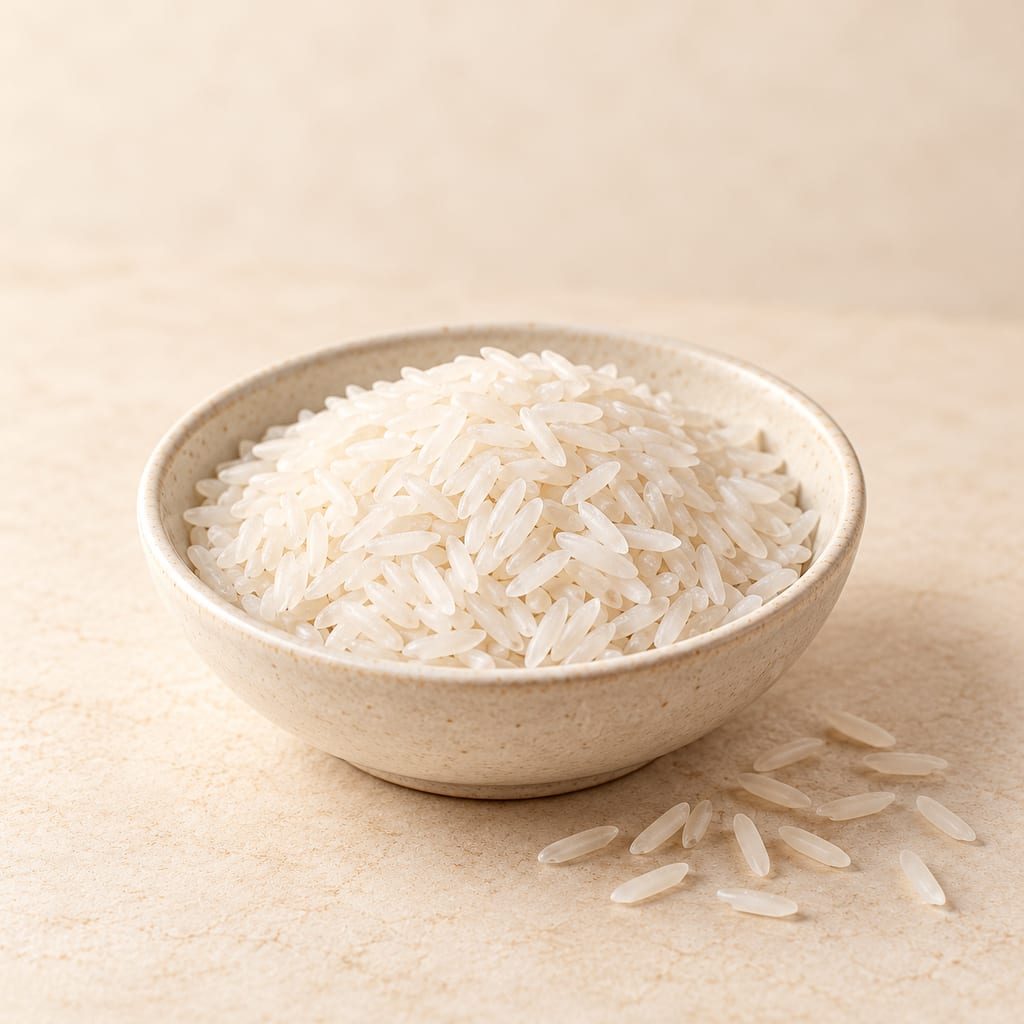
Rice contributes starch to flatbreads, steamed breads, batters and many distinct fermentations. Its species, milling and starch character shape how it cooks, binds, expands and feeds enzymes.
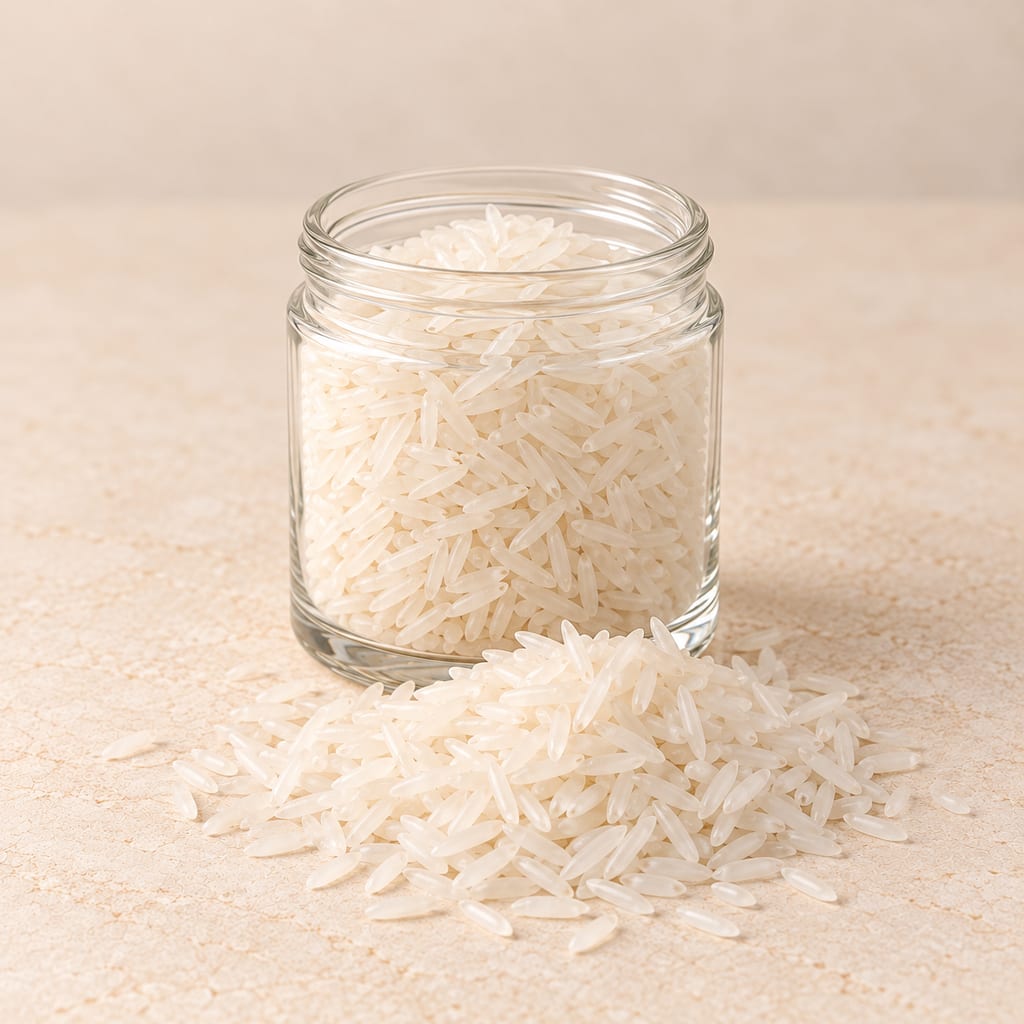
Thai indica rice is the starch-bearing grain Sakimoto steams for Yonaguni awamori koji. The producer names its origin and rice group, but no cultivar, lot or grain grade.
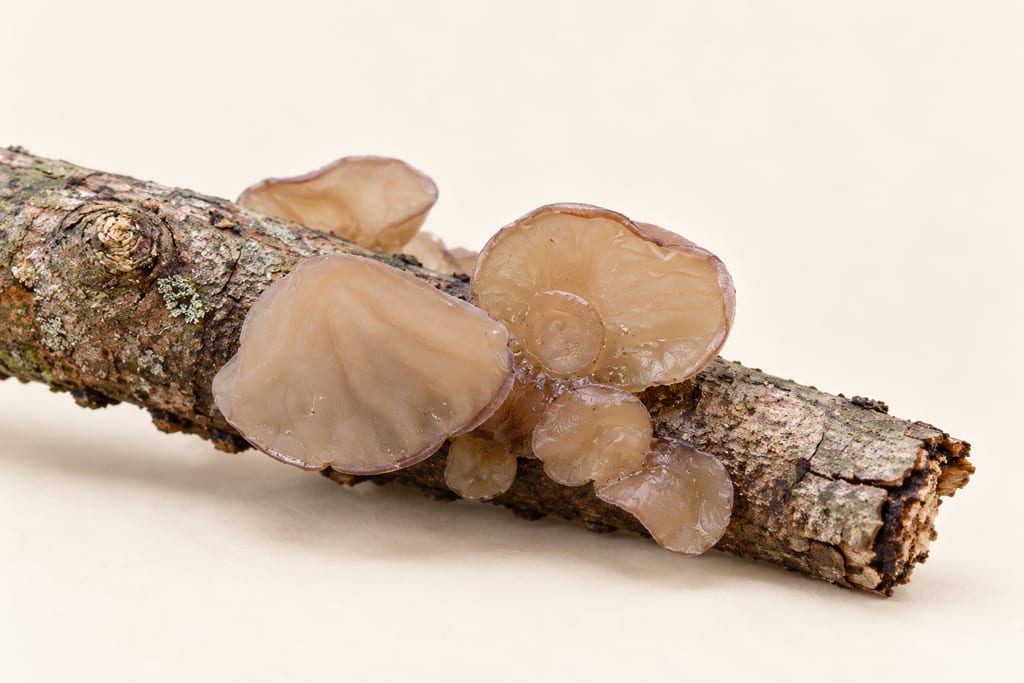
A small wood-decaying jelly fungus recognized as a distinct East Asian species. A Chinese edible-fungi catalogue lists it as edible, but species-specific preparation and safety evidence remain limited.

Soft, spreadable Calabrian pork sausage made with a great deal of red chilli and fatty pork, stuffed into natural casings, sometimes smoked and matured while staying soft.

A way to add independent temperature logging to an existing food dehydrator without changing its built-in controls or protections. It is a monitoring method, not a rewiring plan.

Pleurotus cystidiosus is the abalone mushroom, a cultivated oyster-type fungus with dark brown caps that grows more slowly and is more demanding than other Pleurotus species.

A dark, balanced vinegar from Emilia-Romagna made by combining cooked or concentrated grape must with wine vinegar, then acetifying and refining it in wood under a protected specification.

A living dairy inoculum that starts controlled cream fermentation, developing acidity and aroma before sour cream or cultured butter is finished.

A small electric incubator holds jars at a selected temperature for yogurt and other documented warm food preparations. Controls, capacity and vessel arrangement vary by model.

Adygean salt is a seasoned table salt associated with Adygea and the wider North Caucasian culinary tradition. Salt is blended with garlic and a variable selection of herbs and spices; the exact mix depends on the named style and maker.

The African Caesar-group mushroom, Amanita masasiensis, is a wild ectomycorrhizal species of central and southern African woodlands, eaten locally. The genus contains deadly poisonous species, so identification needs care.
No community contributions have been published for this entry yet.
Sign in to contribute. Published comments and photos are free to read.
Korean Society of Food Preservation; Han, Lee, Kim, Kim, Woo, Jeong, Kim and Huh, Sunchon National UniversityCultivar identity · Method · Results
Quality and antioxidant characteristics of ‘Yakju’ prepared with pigmented rice flour ‘Nuruk’ (Korean J. Food Preserv. 28(2): 240-251, 2021)Registration, breeder, grain traits of Dahyangheukmi; rice-flour nuruk method; yakju formula; enzyme, pH, ethanol, organic acid, polyphenol, colour and sensory results; stated caveats.
Cited in: A black rice with a name and a number; What makes a rice black; Aroma, and what it was measured as; In the yakju jar; Nuruk from black rice flour; What the sources do not say; Using the grain
Korean Society of Food Preservation; Lee et al., Sunchon National UniversityNuruk · Gochujang
Quality characteristics of ‘Kochujang’ made with pigmented rice flour ‘Nuruk’ by various fungal strains during aging (Korean J. Food Preserv. 27(6): 694-703, 2020)Nuruk strains, pH, acidity, ash and moisture; gochujang formulation; pH and acidity changes in 90 days; colour and sensory results; description of the cultivar and of pigmented rice generally.
Cited in: A black rice with a name and a number; What makes a rice black; Nuruk from black rice flour; In gochujang; What the sources do not say; Using the grain
Korean Society of Food Preservation; Lee, Shim and HuhGochujang · Antioxidant
Comparison of quality characteristics and antioxidant activity of ‘Kochujang’ comprising ‘Nuruk’ made from pigmented or white rice flour (Korean J. Food Preserv. 28(6): 799-809, 2021)Amino nitrogen, polyphenols, DPPH and other results at day 90; statement that the paper reports no origin, anthocyanin content or cultivation area for the cultivar.
Cited in: A black rice with a name and a number; In gochujang; What the sources do not say
National Institute of Crop Science, Rural Development Administration, Korea; posted 16 November 2020Aroma
Quality and aroma component characteristics of domestically bred aromatic rice varieties (Korean title: 국내육성 향미 품종의 품질 및 향기성분 특성)BAD2 polymorphism shared with basmati and jasmine types; six domestic cultivars, 40 percent, with high 2-acetyl-1-pyrroline; Dahyangheukmi among them.
Cited in: Aroma, and what it was measured as
Rural Development Administration, Korea, from the Jeollanam-do Agricultural Research and Extension ServicesBlends · Pigmented rice
Blended rice for health management (Korean title: 이제 건강관리는 블렌딩쌀로, 비만걱정 끝!), 5 April 2018Three-colour and five-colour blends containing Dahyangheukmi; blend nutrition comparison with white rice; general statements on pigmented rice.
Cited in: What makes a rice black; Three-colour and five-colour rice; What the sources do not say
WikipediaPigment · Secondary
Black riceAnthocyanin colour, bran hull, deep purple when cooked, Kala4 gene, mild nutty taste, forbidden rice marketing.
Cited in: What makes a rice black
WikipediaStarter · History · Secondary
NurukMicroorganisms and their roles; wheat nuruk; hanging; history dates; factory production since the 1920s.
Cited in: Nuruk from black rice flour
WikipediaGochujang · Secondary
GochujangIngredients and typical proportions; role of rice starch; history; commercial production from the early 1970s.
Cited in: In gochujang
WikipediaYakju · Secondary
Cheongju (also called yakju)Meaning of cheongju and yakju; season, duration, temperature and alcohol content of brewing.
Cited in: In the yakju jar