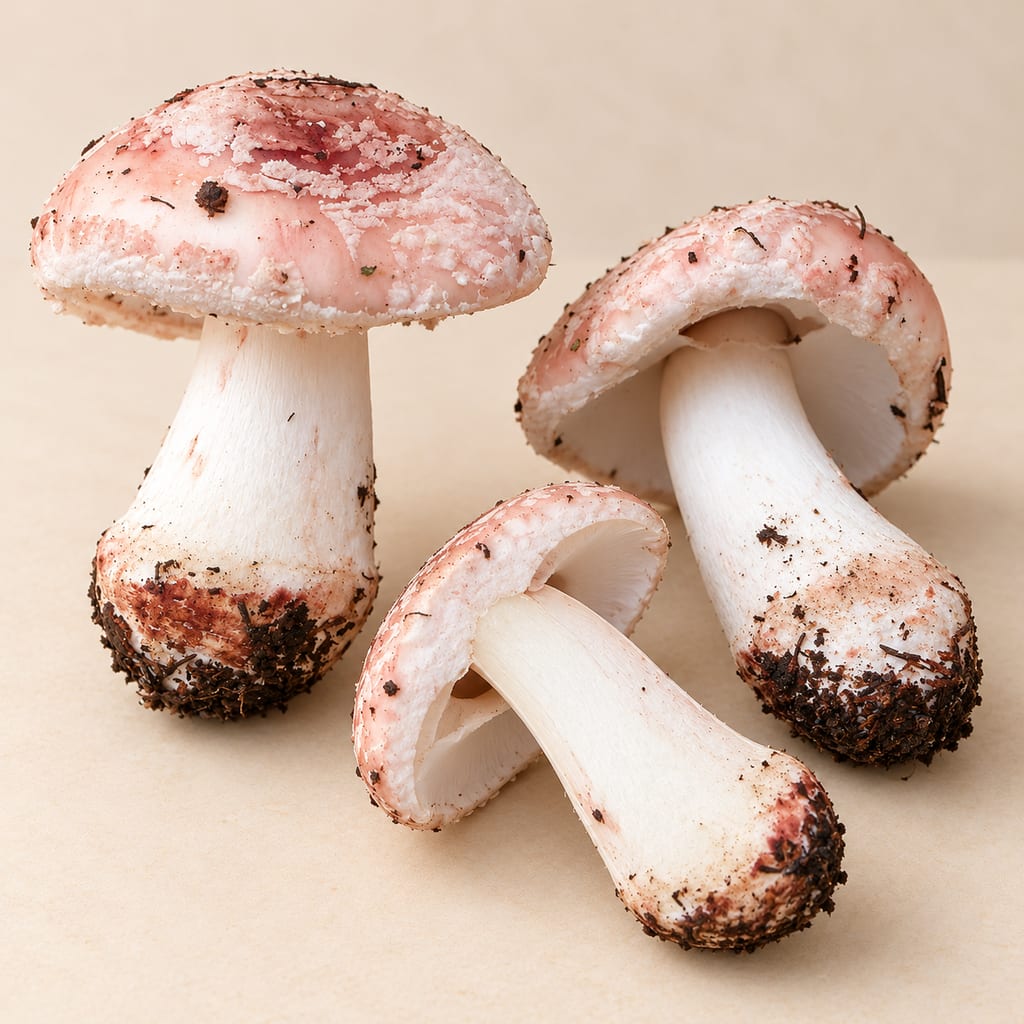
American blusher
Amanita novinupta is a western North American blusher, a forest mushroom recorded as food in Mexico, and one that must be cooked because its raw flesh is toxic.
 FermenteaWhere food goes to change
Spices and aromatics
Lippia alba, bushy lippia, is an aromatic shrub of the Americas whose leaves are steeped as a tea, added to sauces in Mexico and used in folk medicine.
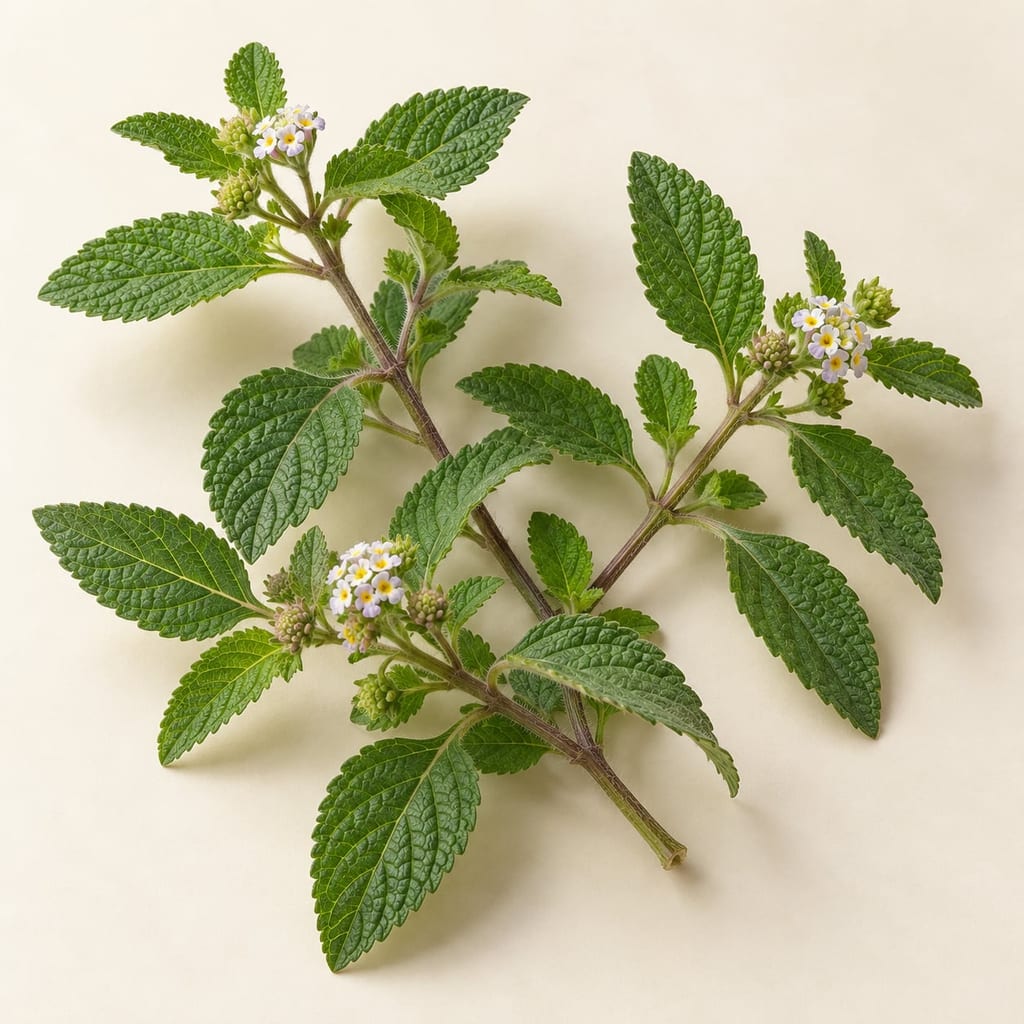
Lippia alba (Mill.) N.E.Br. ex Britton & P.Wilson is a flowering shrub of the vervain family, Verbenaceae. It is a multi-branched plant that reaches about 1.5 metres, with leaves 1 to 3 centimetres long set in opposite pairs or in threes, and small flowers on spikes in white, pink or pale blue-purple. The leaves carry a strong scent, and that scent is the reason the plant is used.
Its names vary from place to place: bushy lippia and bushy matgrass in English, hierba negra, juanilama, pamporegano, poleo and pitiona in Spanish-speaking regions, and erva-cidreira in Brazil. The species has many botanical synonyms, among them Lantana alba and Camara alba.
The plant is native from southern Texas through Mexico, Central America and the Caribbean to South America. It also grows in Australia and India, where it probably arrived through human introduction. It is widely grown as an ornamental for its foliage and flowers as well as an herb.
The leaves are customarily steeped into a tea. In Mexico they are also added to sauces, and a commercial produce supplier describes them as edible raw or cooked. The same listing mentions Oaxacan dishes that use the leaves, and a general reference names mole sauces from Oaxaca; neither gives a method, so no dish procedure is recorded here.
No source consulted describes the leaf being fermented, cured or used as a starter. Its place on this site is as an aromatic herb that appears in teas and sauces, not as a fermentation ingredient in its own right.
The essential oil does not have one fixed composition. Constituents listed for the species include geranial and neral (the two forms of citral), limonene, carvone, linalool, myrcene, caryophyllene, camphor, eucalyptol and others, and which of them dominate depends on the plant.
A Brazilian field trial of 16 genotypes from one germplasm collection, grown together in the Distrito Federal, sorted them into chemical types. Citral reached 56.7 per cent in the richest genotype and appeared alone and with limonene or myrcene. Carvone appeared only together with limonene, up to 46.9 per cent. Linalool appeared alone and with limonene, up to 89.8 per cent. Plants sold or gathered under the same name can therefore smell and taste quite different, and a leaf from one source is not a guide to another.
A review of the ethnobotany of the genus Lippia reports the plant in Brazilian traditional medicine as a remedy for stomach disorders and as an antiseptic. The USDA ethnobotanical database lists many folk uses for the species by country: stomach-ache in Mexico and Curacao, colds, flu, fever and chest colds in Trinidad, digestive complaints in Curacao, colitis and dyspepsia in Panama, and use as a nervine in Brazil. The entries are citations of older surveys and do not name the plant part used.
These are records of what people have done, not evidence that the plant works.
No toxicity data for Lippia alba itself were found. A 2022 Brazilian review of the genus Lippia notes that intoxications can follow the ingestion of excessive amounts of these plants when they are used inappropriately, but that review covers the genus and its toxicity findings are not transferred to this species here. No dose, steeping time or safe limit for tea or sauce use was found.
Do not confuse the species with Lippia graveolens, Mexican oregano, which the USDA database also records. Because the oil's composition varies so much between plants, a leaf from an unfamiliar source should not be assumed to behave like one you know.
Leaves added to sauces, including Oaxacan dishes; country-level, not an origin claim.
Traditional medicinal use as erva-cidreira; chemical types studied in the Distrito Federal. Country-level.
Folk use for colds and fever recorded in surveys cited by the USDA database; country-level.
Amanita novinupta is a western North American blusher, a forest mushroom recorded as food in Mexico, and one that must be cooked because its raw flesh is toxic.

Ripe avocado flesh is the soft, buttery, fat-rich pulp of Persea americana, eaten raw. It is low in acid, so it is a fresh ingredient that needs care in chilled dishes.
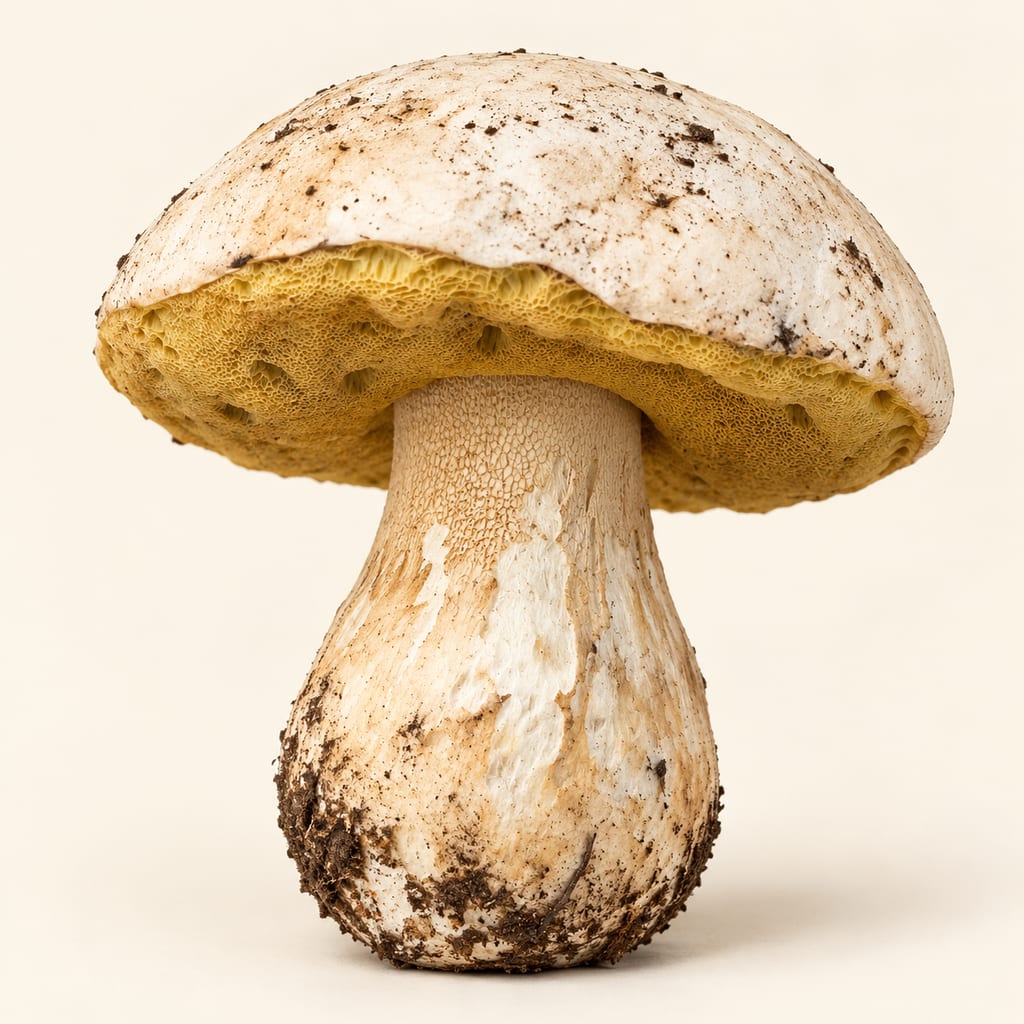
Boletus barrowsii, the white king bolete, is a western porcini relative with documented local food use in Mexico. Its pale cap and netted stem are not enough for field identification.
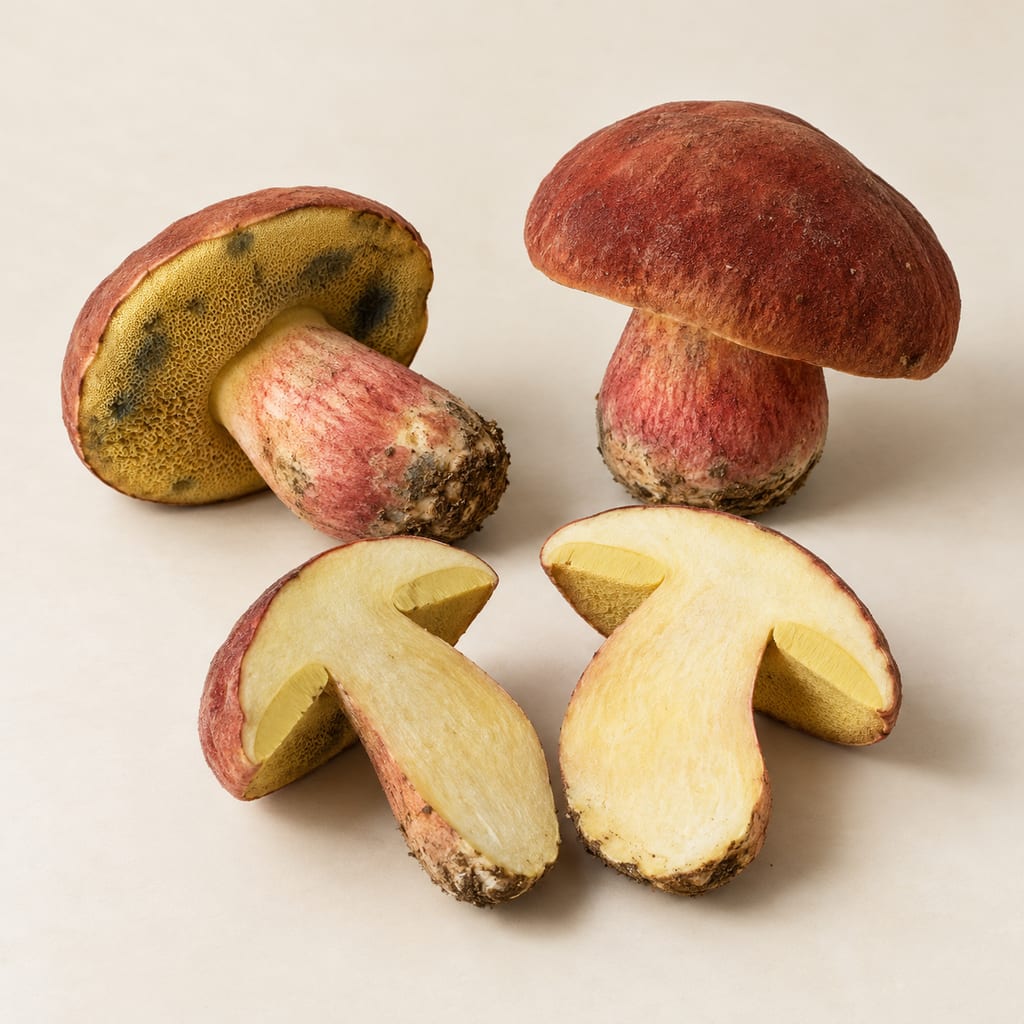
A red-and-yellow bolete described from Michigan and also listed in Mexican fungal records. Historical sources classify it as food, but its species limits, Mexican range and safe food use need careful qualification.
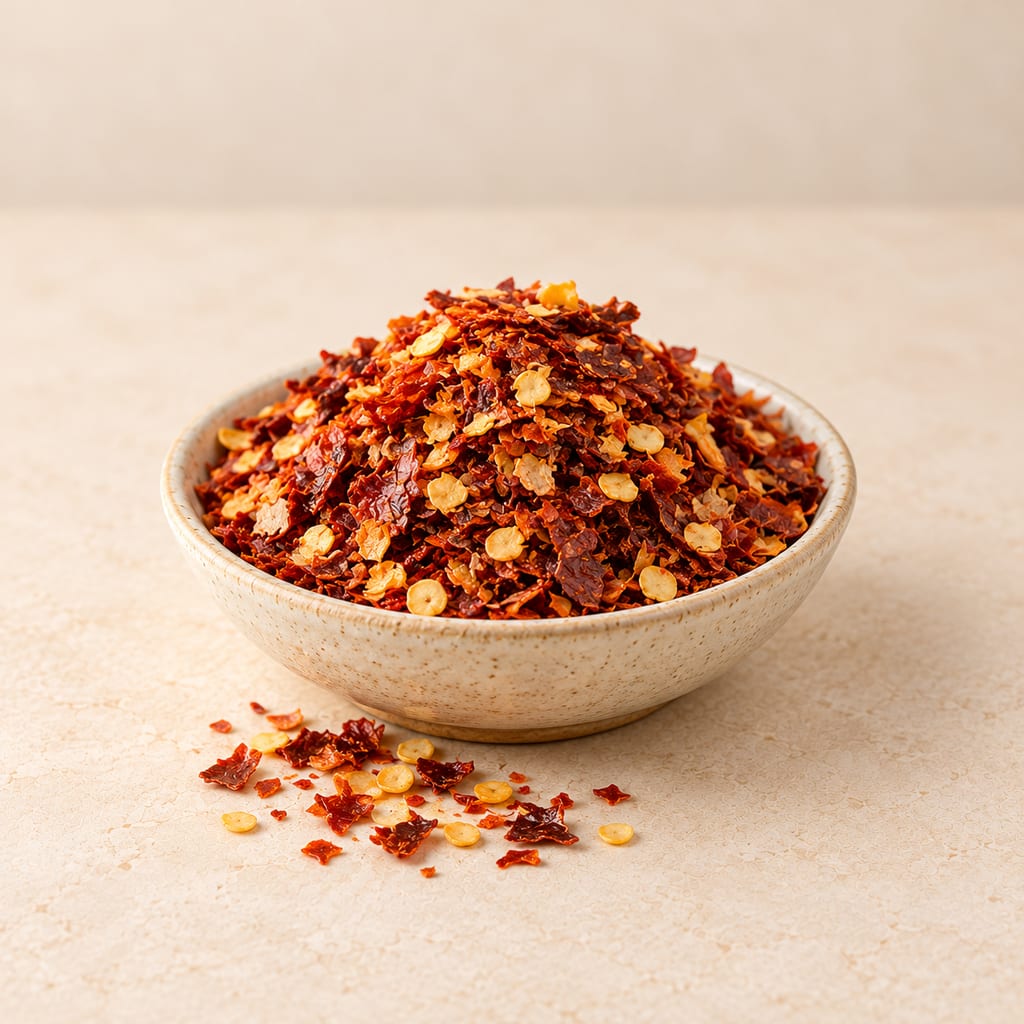
Calabrian pepper flakes are dried red Capsicum annuum from Calabria, crushed into coarse pieces; Peperoncino di Calabria is a protected geographical indication.
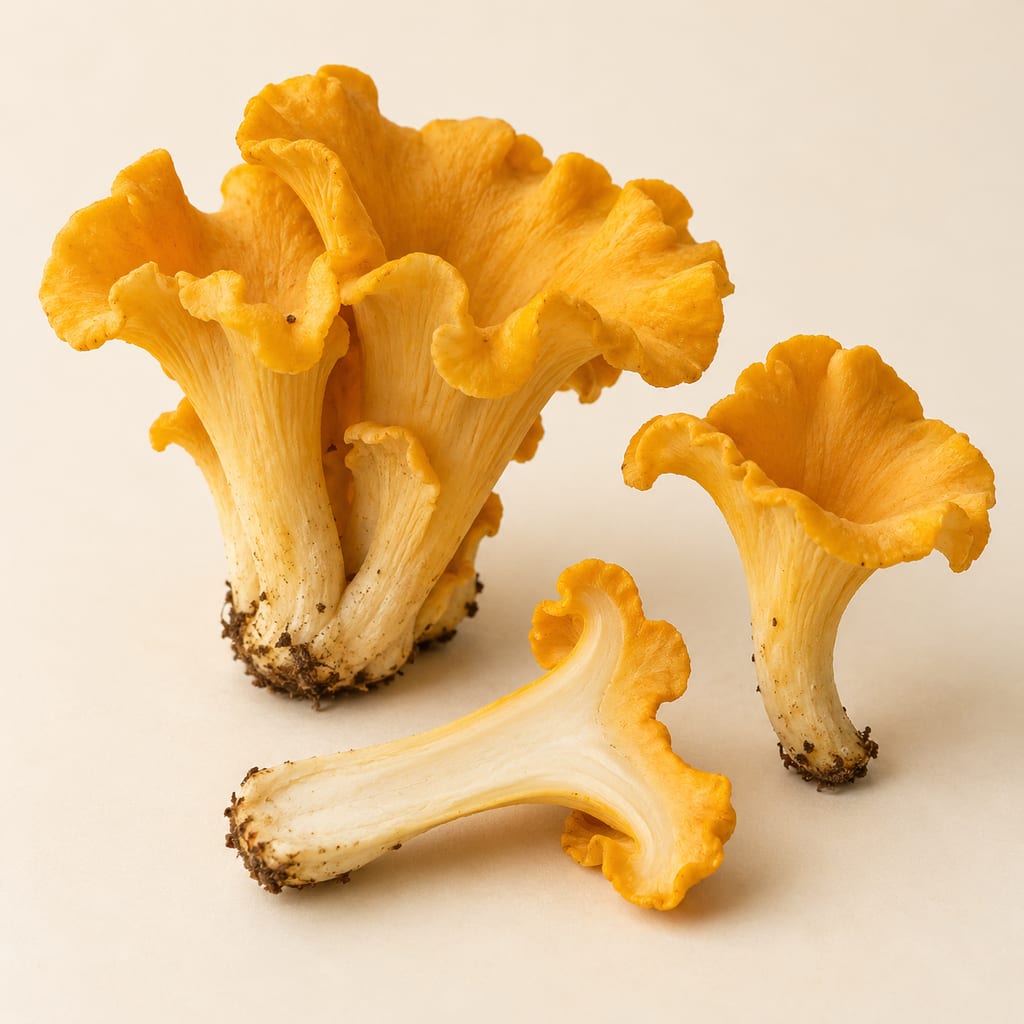
Cantharellus odoratus, the fragrant chanterelle, is a North American and Central American oak-woodland fungus. It was sold in a Veracruz market in the 1980s and in Guatemala in 2002, and its name is still disputed.
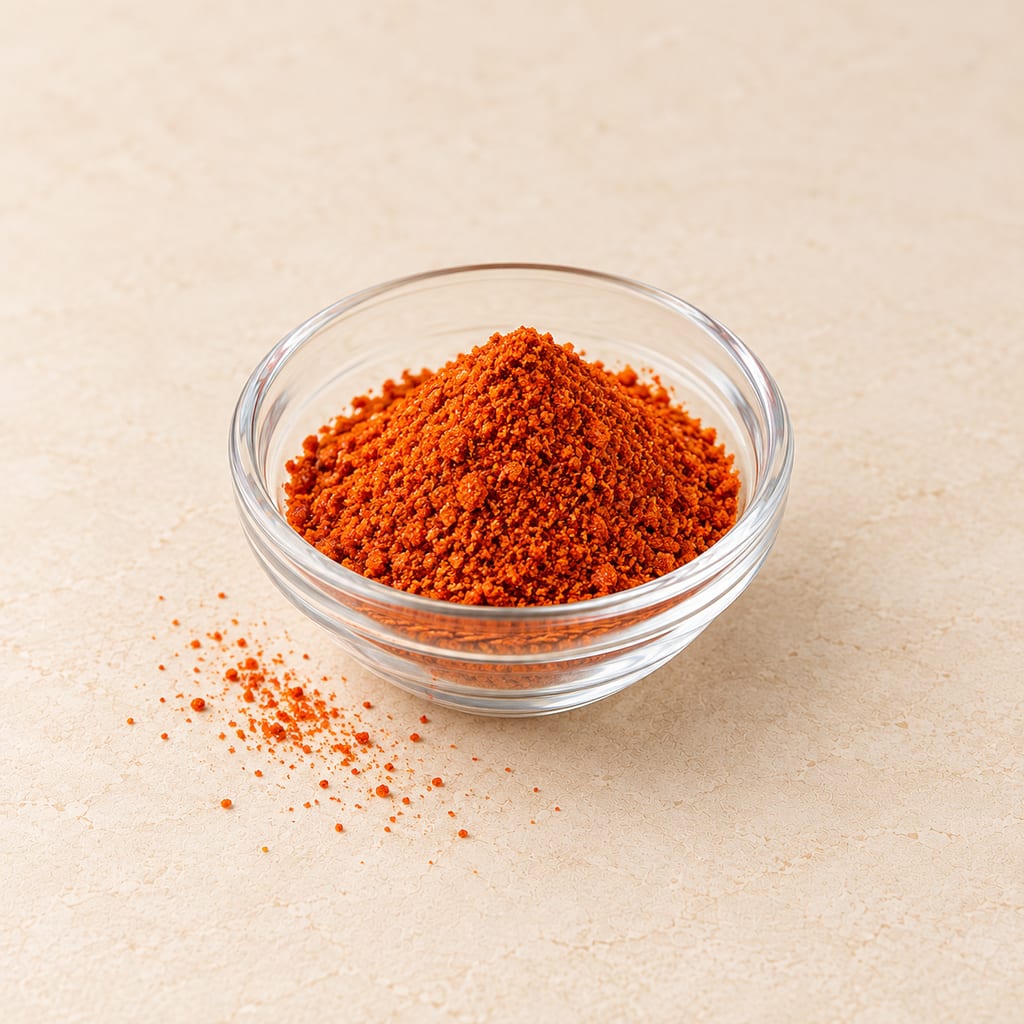
Cayenne is a very pungent red powder from dried, ground hot chilli pods, mostly Capsicum annuum, and the name of the long red peppers it comes from.
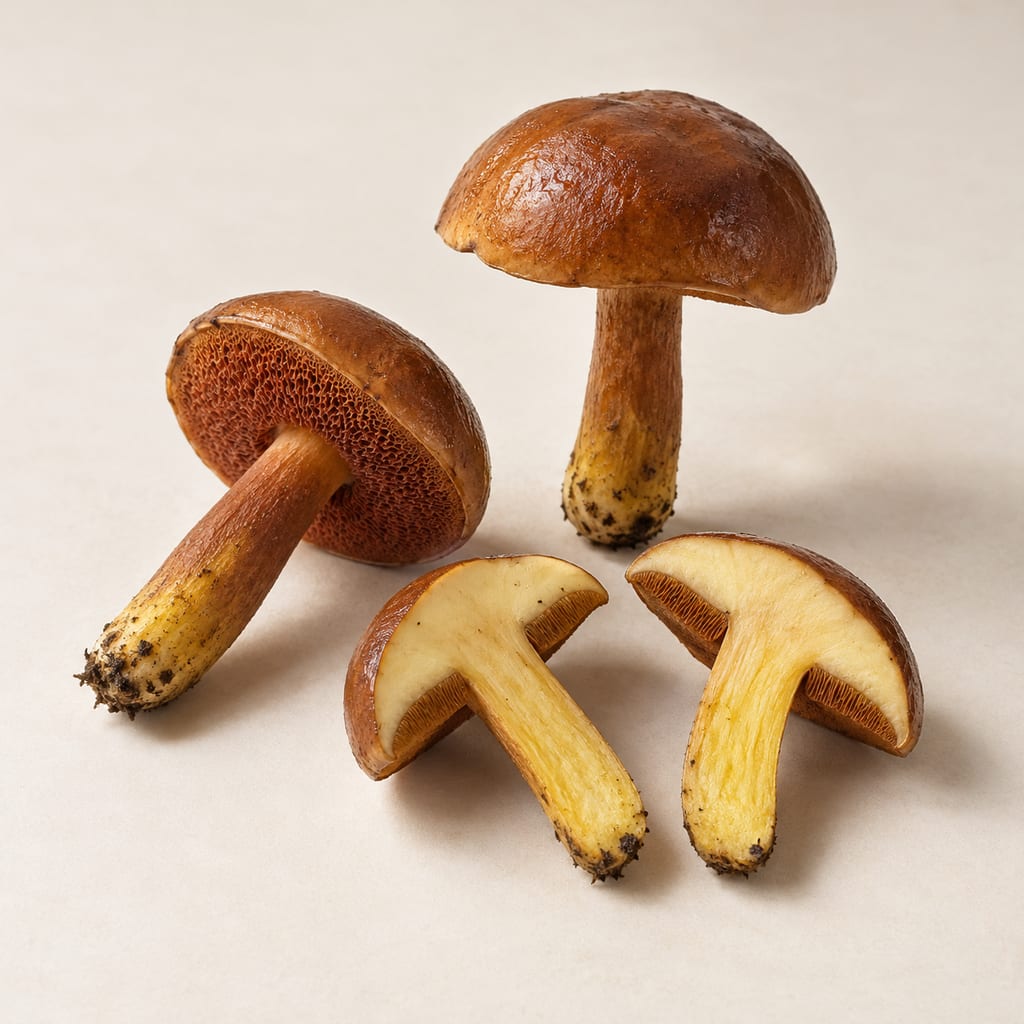
A peppery woodland bolete with historical edible labels and reported condiment use in Querétaro. Current mycological references call its edibility suspect or unestablished; this entry does not recommend consumption.
No community contributions have been published for this entry yet.
Sign in to contribute. Published comments and photos are free to read.
WikipediaIdentity · Geography
Lippia albaVerbenaceae shrub, synonyms and common names.
Size and leaf description.
Native range and introduced range.
Leaves flavour foods such as Oaxacan mole sauces.
Essential oil composition varies between plants.
Cited in: What it is; Where it grows; Tea and kitchen use; Aroma and chemical types
USDA Phytochemical and Ethnobotanical DatabasesUses · Safety
Ethnobotanical plant: Lippia albaFolk uses recorded by country, with citation years from 1973.
Lippia graveolens, Mexican oregano, is recorded separately.
Cited in: Traditional medicine; Safety and limits
Research, Society and DevelopmentUses · Safety
Ethnobotanical use of Lippia Linn. (Verbenaceae): a literature reviewBrazilian traditional medicine use for stomach disorders and as an antiseptic.
Genus-level note that intoxications can follow excessive or inappropriate use.
Cited in: Traditional medicine; Safety and limits
Specialty ProduceUses
Lippia Alba LeavesLeaves steeped as tea; added to sauces in Mexico; edible raw or cooked; Oaxacan dishes mentioned without method.
Cited in: Tea and kitchen use
Horticultura Brasileira 28(4), 2010; Jannuzzi and othersIdentity
Agronomic evaluation and identification of Lippia alba chemotypes from Distrito Federal, BrazilSixteen genotypes grown in one field trial; citral up to 56.7 per cent, carvone up to 46.9 per cent with limonene, linalool up to 89.8 per cent.
Cited in: Aroma and chemical types