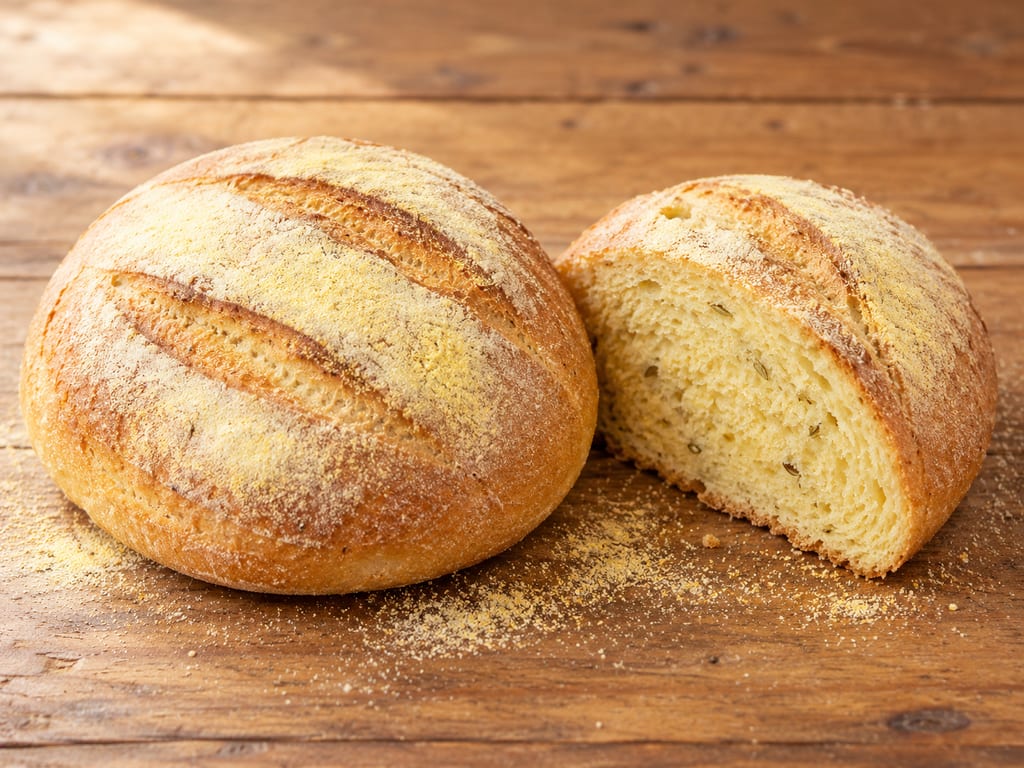
Brazilian broa de milho
Brazilian broa de milho is a lightly sweet wheat-and-fine-maize bread with fennel and dry yeast, shaped into two small loaves for a Festa Junina or coffee break.
 FermenteaWhere food goes to change
Modern method
pão de sal · cacetinho
A Brazilian wheat roll with a crisp crust, this home batch uses dry baker’s yeast and a steam-assisted oven bake.
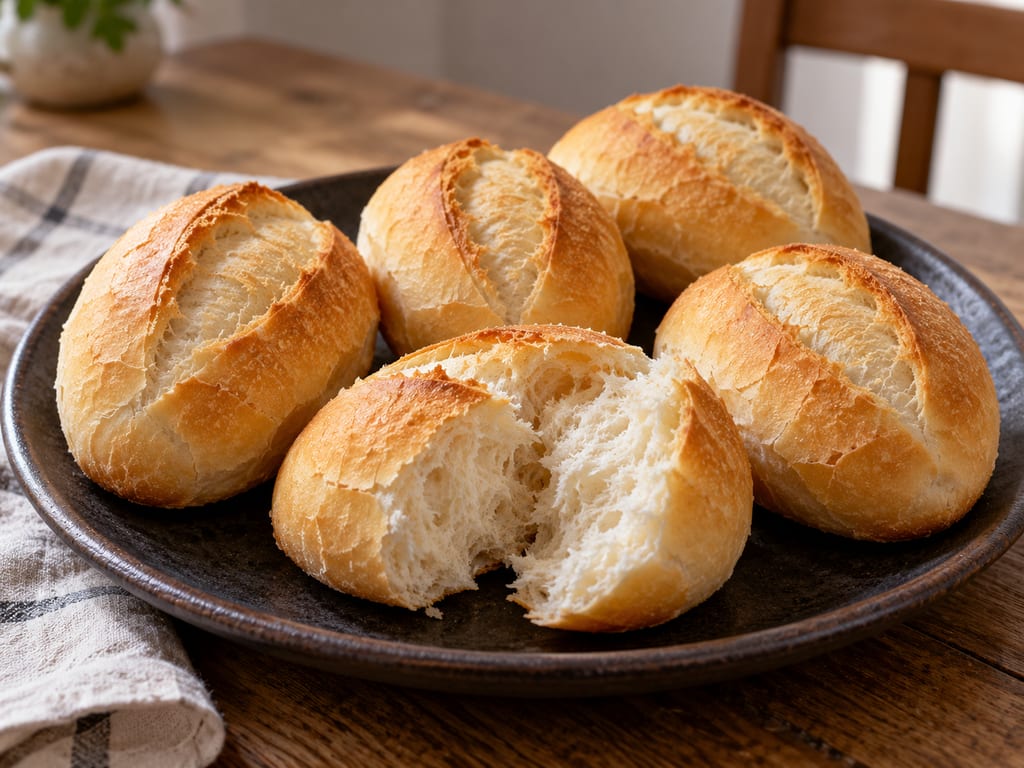
Pão francês is a crisp-crusted wheat roll that Receitas Globo presents as a home recipe suitable for household use or sale. The page gives a batch of nine. It says the roll is common at Brazilian breakfast and afternoon snacks, and reports that regional names include pão de sal and cacetinho. These are contemporary usage notes from the publisher, not proof of one uniform formula across Brazil or a claim about the bread's origin.
The selected recipe uses wheat flour, dry biological yeast, sugar, unsalted butter, water and salt. It produces small rolls rather than a long French baguette. Commercial bakery versions may differ in flour treatment, mixing equipment or formula; this page records the named household batch, which does not specify improvers or bakery machinery.
Set out and weigh the six listed ingredients. Combine the dry ingredients, add the water gradually, then add the unsalted butter last. Knead until the dough is smooth. The source does not state a dough temperature, hydration adjustment or mixing-machine option. Follow its gradual water addition and texture cue without treating them as a tested substitute for the specified weight.
Cover the dough and let it ferment for about 40 minutes. The page gives no room-temperature range or dough rise percentage for this first stage. It also does not define a preferred cover or container; use a clean bowl large enough for the dough to rise and cover it while it rests. Those are practical household choices, not additional source measurements.
Divide the dough into nine pieces, shape them as rolls and set them on baking trays. Let the shaped rolls ferment for about 40 minutes, until doubled in volume. The source gives both a time and a visual rise cue for this second stage; it does not give a numerical proof temperature. The recipe then directs the baker to score each roll with a blade before baking.
Bake in a hot oven at 200°C (392°F) with steam for 12–15 minutes, or until the crust is golden. Household ovens differ, so the instruction is not expanded into an untested water or ice technique. Use only an oven's documented steam feature or a method approved by its manufacturer, and protect hands and face from hot steam and metal.
This method calls for two fermentation stages of about 40 minutes each, followed by a 12–15 minute bake. A total duration is not reported. The stages and oven preparation may overlap in a home schedule, but no complete elapsed-time estimate is supplied. The stated yield is nine rolls; no weight per roll or scale-up formula is given.
The listed equipment is ordinary household bread gear: a bowl for mixing and rising, a work surface, a way to divide and shape dough, a scoring blade, baking trays and an oven capable of the stated bake. The recipe does not require a special mixer or industrial equipment. It does require steam but leaves the means of producing it unspecified. Do not infer a steam pan, spray technique or water-injection procedure from the word “steam.”
The difficulty rating reflects kneading to a smooth texture, timing two rises, judging the second rise, scoring evenly and coordinating a hot bake. Batch scaling is not tested. A larger batch may need additional tray or oven capacity, but this source gives no adjustment.
The article links pão francês, pão de sal and cacetinho as names used in different Brazilian regions. Its page is associated with the television program É de Casa, and it frames this batch for home consumption or sale. Brazil is recorded at country precision because the source does not identify the recipe's precise locality or the bread's first attestation.
Receitas Globo describes the rolls as crisp and flavorful and places them at breakfast and afternoon snacks. It does not give storage or reheating instructions. This record therefore makes no shelf-life claim. The formula contains wheat; the source offers no tested gluten-free or other substitution path.
The contemporary Globo page describes pão francês and reports pão de sal and cacetinho as regional names. It does not establish the food’s origin or earliest attestation.
Yield 9 rolls · Scaling: source batch only
The source requires oven steam but does not explain a household steam setup; use only an oven's documented method and avoid unapproved improvisation around hot steam and metal.
The source gives no proof-temperature or finished-storage duration; the stated bake-to-golden instruction is not an independently validated safety endpoint.
Contains wheat.
Receitas Globo presents this as a home-use or sale recipe and reports pão de sal and cacetinho as regional names; this is not an origin claim.
Brazilian broa de milho is a lightly sweet wheat-and-fine-maize bread with fennel and dry yeast, shaped into two small loaves for a Festa Junina or coffee break.
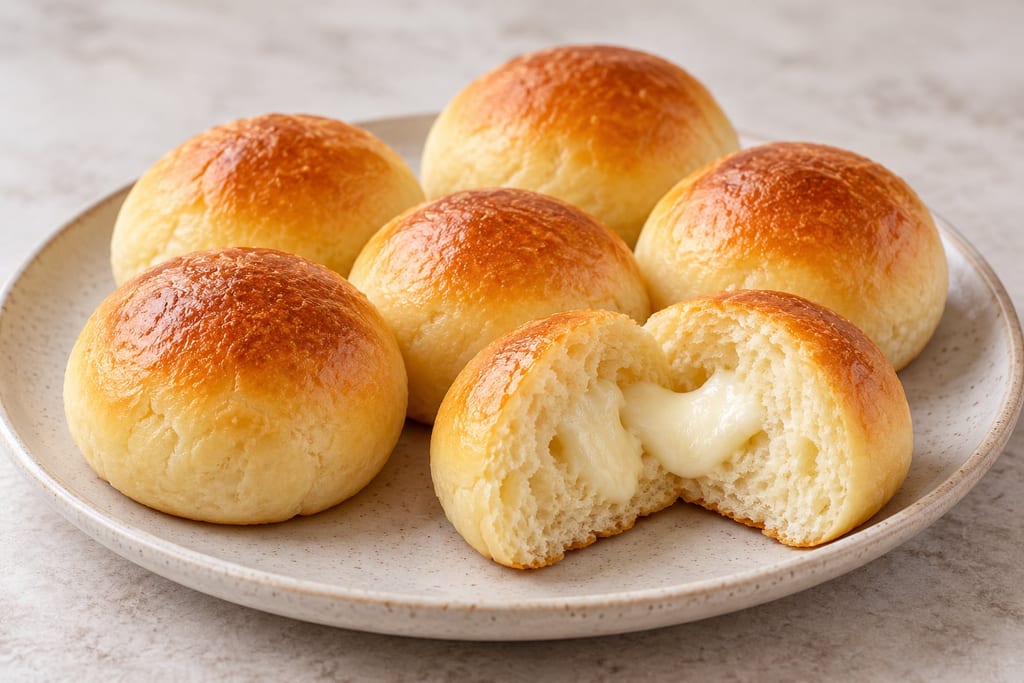
Soft Brazilian yeast rolls use cooked mashed potato in an enriched dough, with mozzarella cubes enclosed before baking.
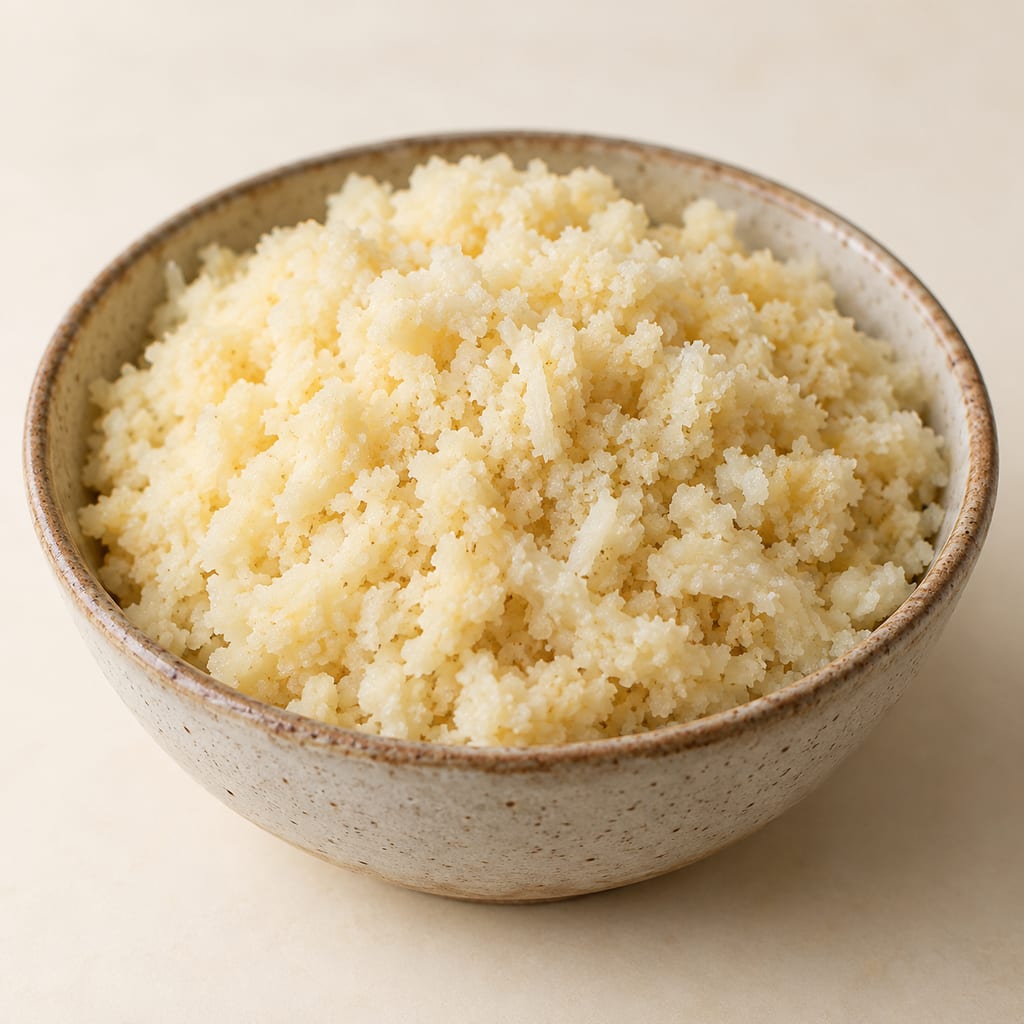
A documentary account of puba (carimã), a Brazilian fermented cassava pulp. It records one 1998 study batch and reported uses; it is not a household recipe or a validated cassava-safety method.
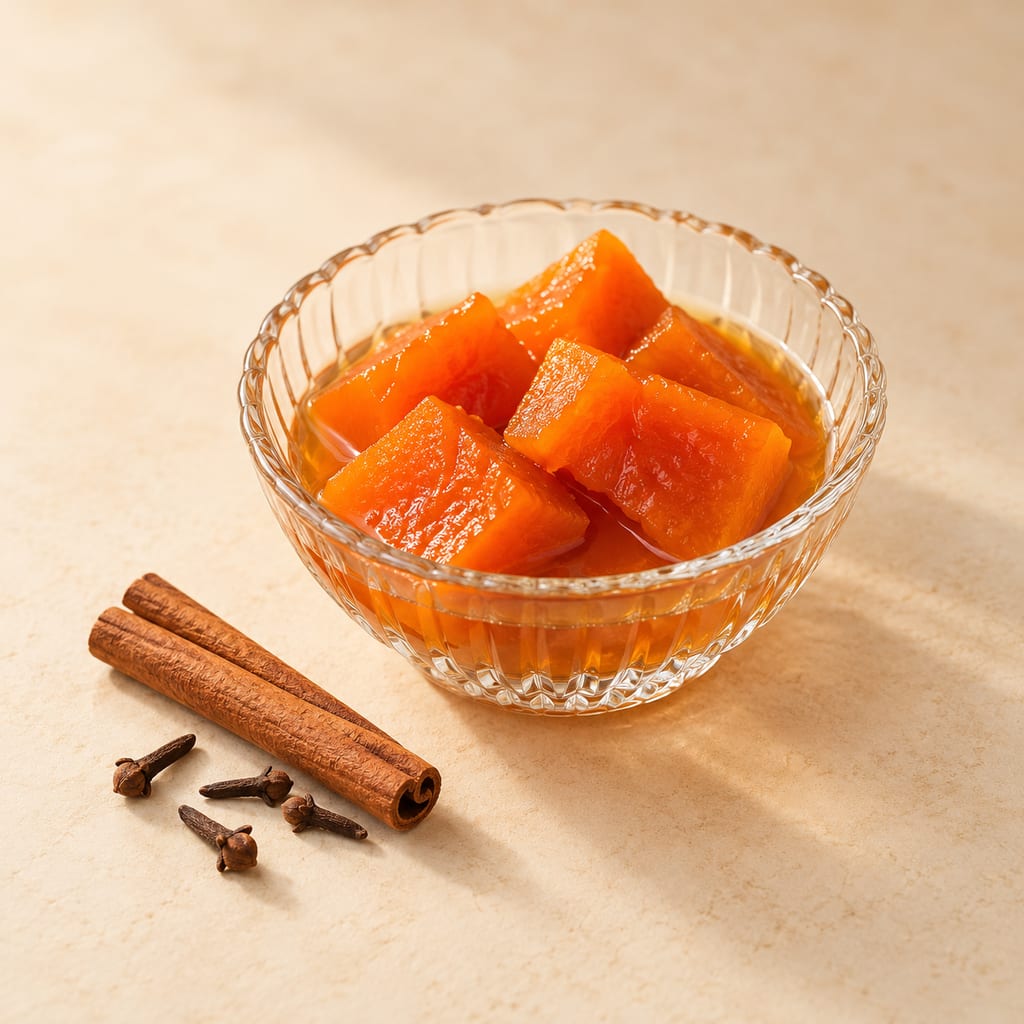
Brazilian doce de abóbora: Freeze for winter; small fresh portion refrigerated up to 48 hours.
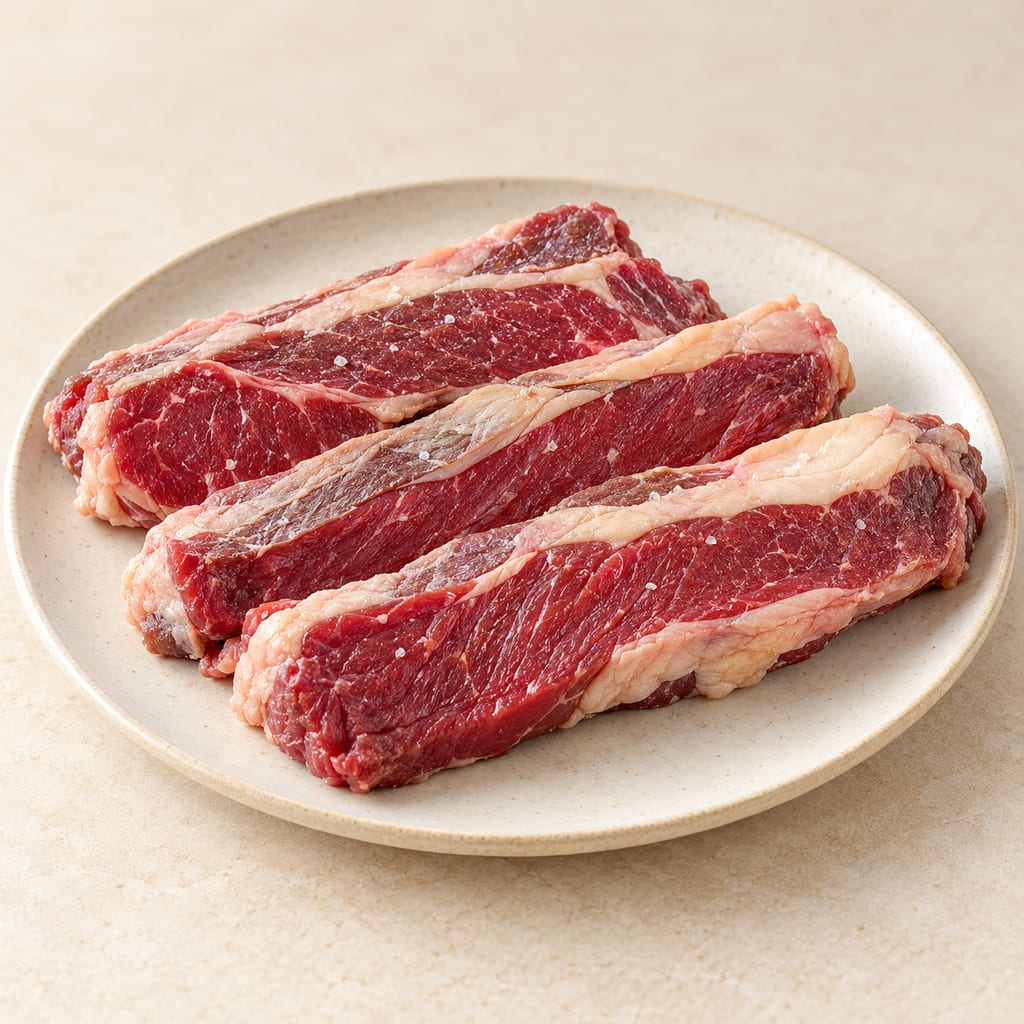
Beef given limited salt and partial surface drying, a short-keeping Brazilian meat that is much less durable than fully dried charque and is treated as a cold-chain product.

Vinagre de caju is made by fermenting cashew-apple juice into an alcoholic base, then aerating it so acetic bacteria can convert ethanol into acid. Brazilian guidance records the sequence, but not a complete home-scale formula.
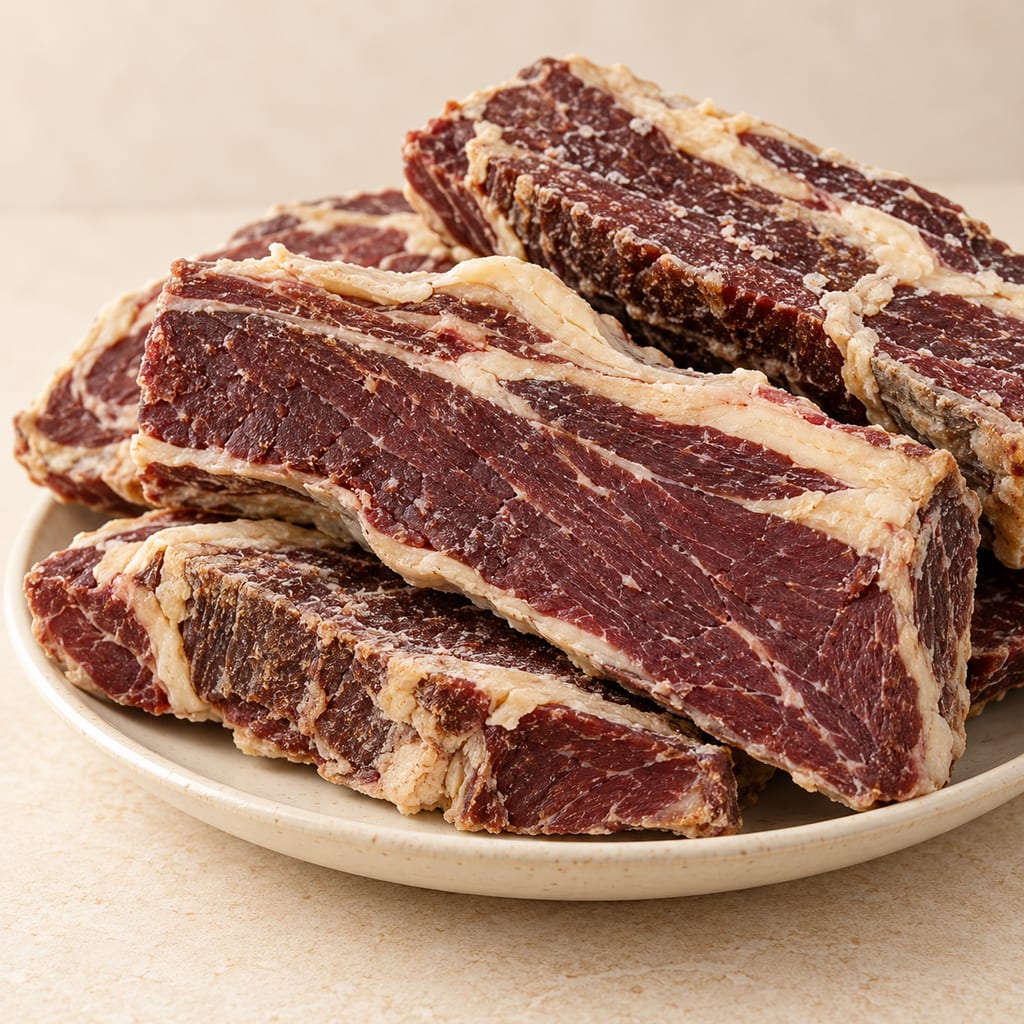
Beef salted heavily and dried into a strongly preserved ingredient that is desalted before it is cooked in stews; a Brazilian form of salt-dried meat that keeps far longer than the lightly salted carne-de-sol.
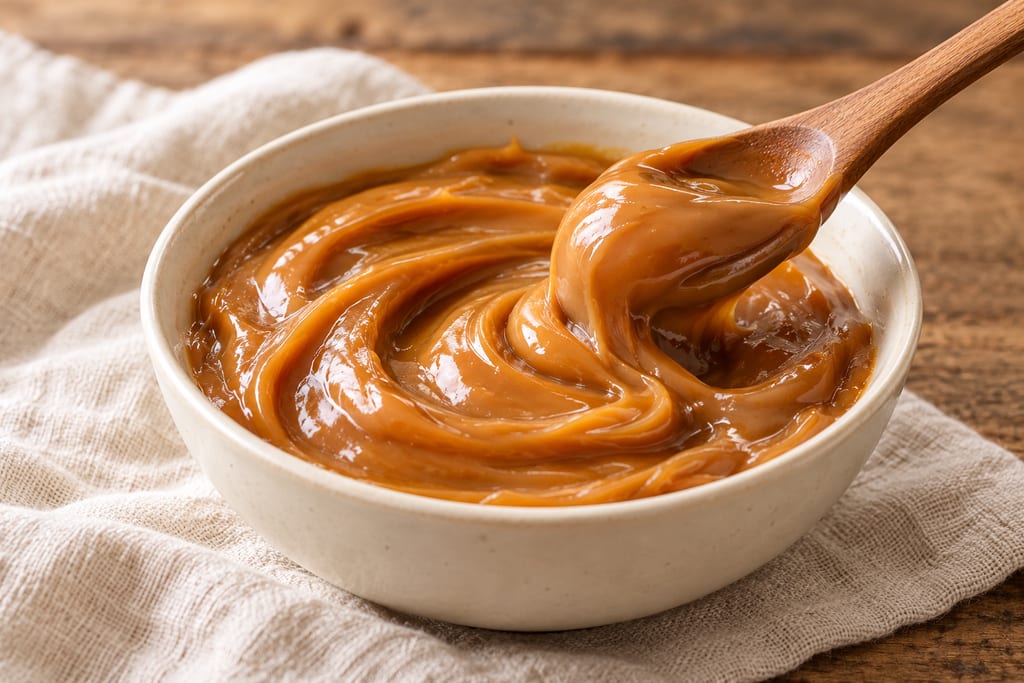
Dulce de leche and its relatives, including Mexican cajeta from goat's milk, are milk and sugar cooked slowly until thick and brown. The name changes across Latin America, and the browning gives each its character.
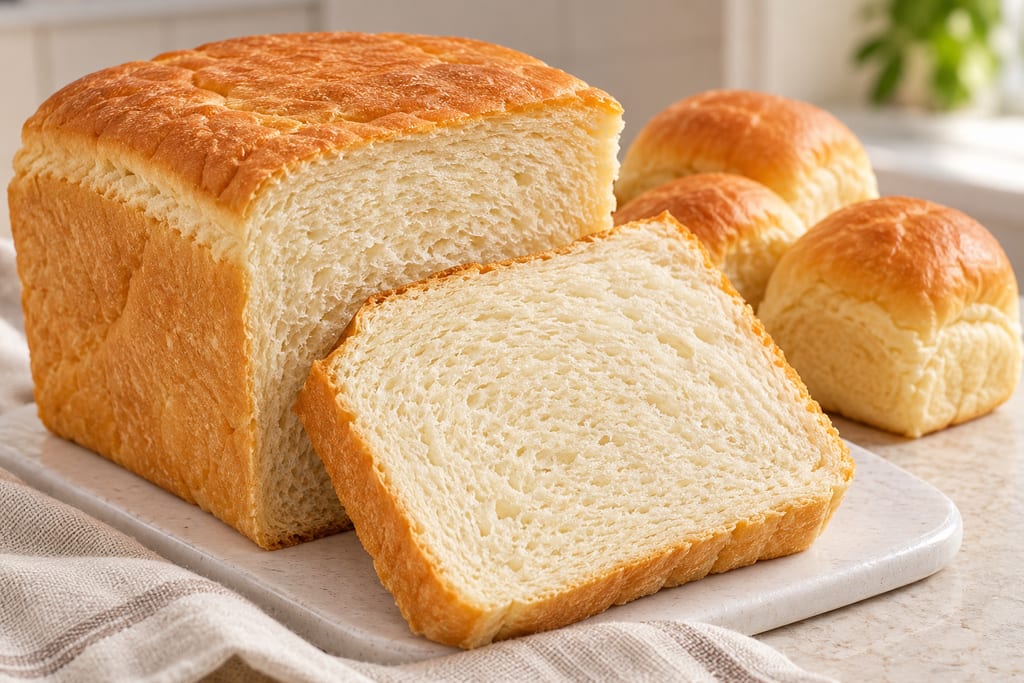
This softer home-style Agege bread uses a scalded flour paste, an enriched yeast dough and a 9×5-inch loaf pan, with rolls from the extra dough.
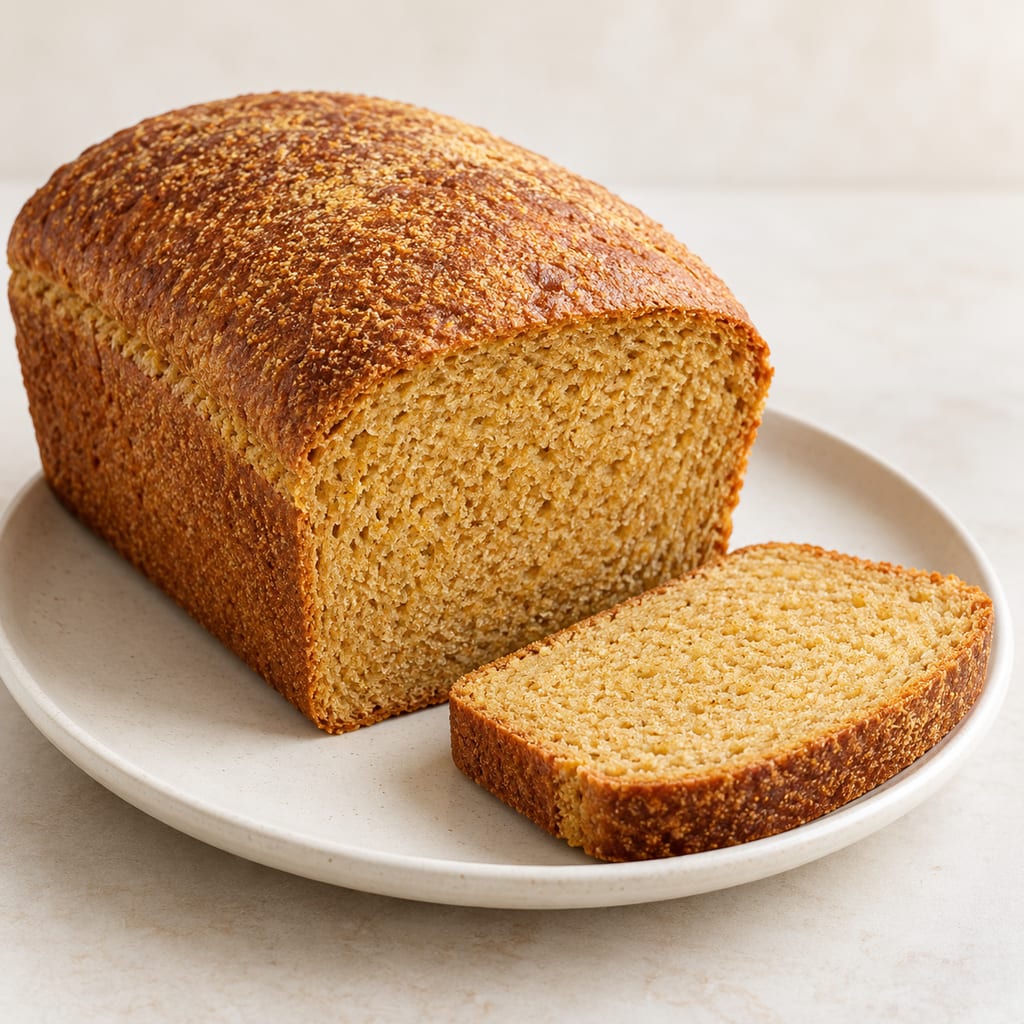
Anadama is a New England yeast loaf made with wheat flour, cornmeal and molasses. Scalded cornmeal enriches the dough, while molasses lends sweetness and a dark crust; it is especially good toasted or beside soup and baked beans.

A yeast-raised wheat ring shaped from a firm dough, briefly boiled and baked. This source-batch formula gives a gently malted crust and a chewy crumb.
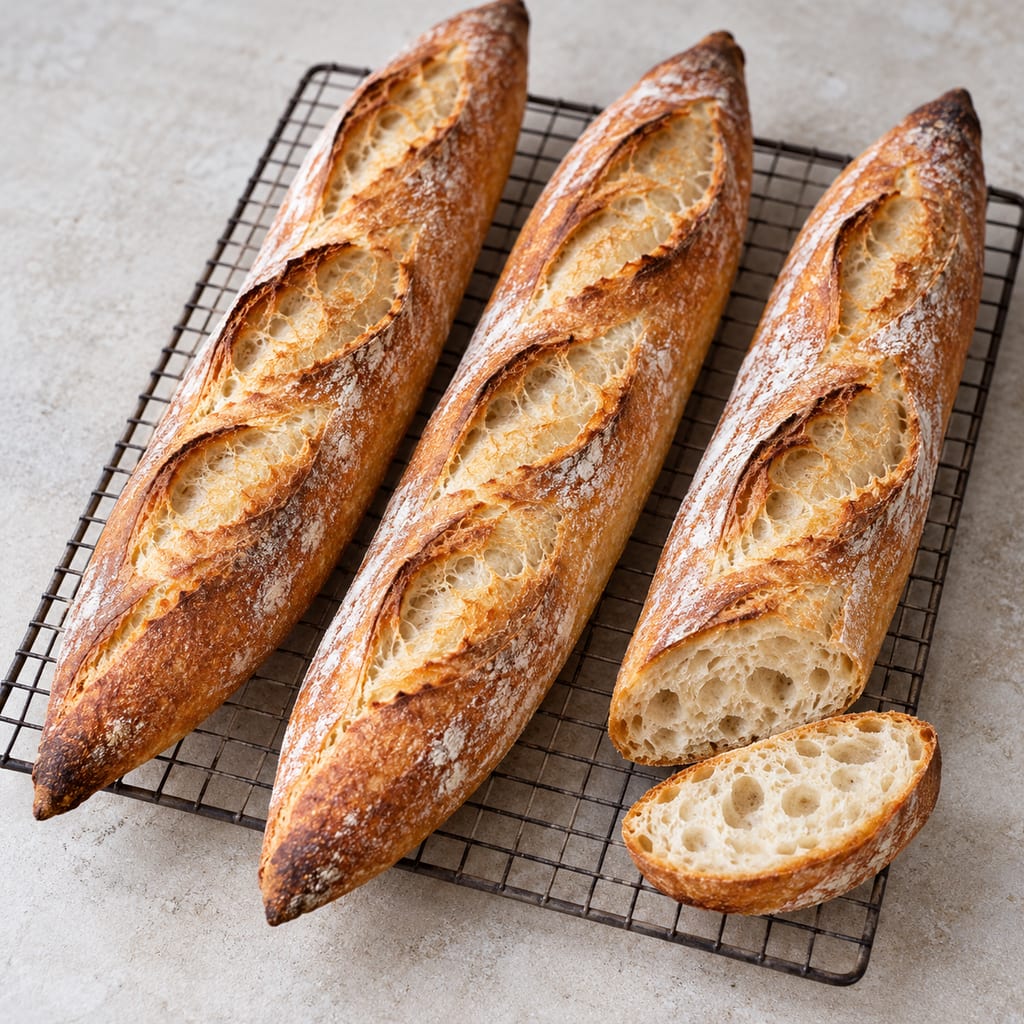
Three long, crusty wheat loaves made with an overnight yeast poolish, shaped by hand and baked with steam for a crisp crust.
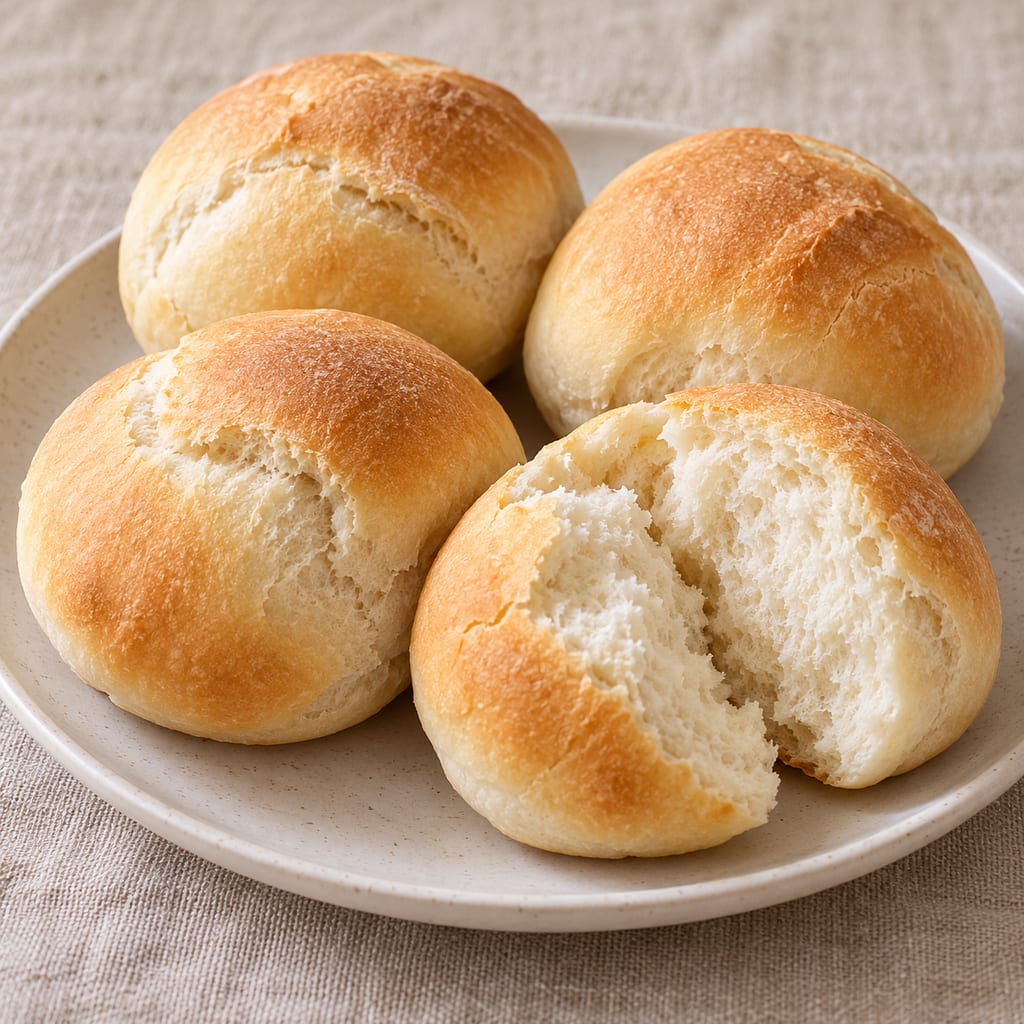
A lightly salted, yeast-raised Barbadian roll, baked in a dozen-roll home batch and often split for cutters.
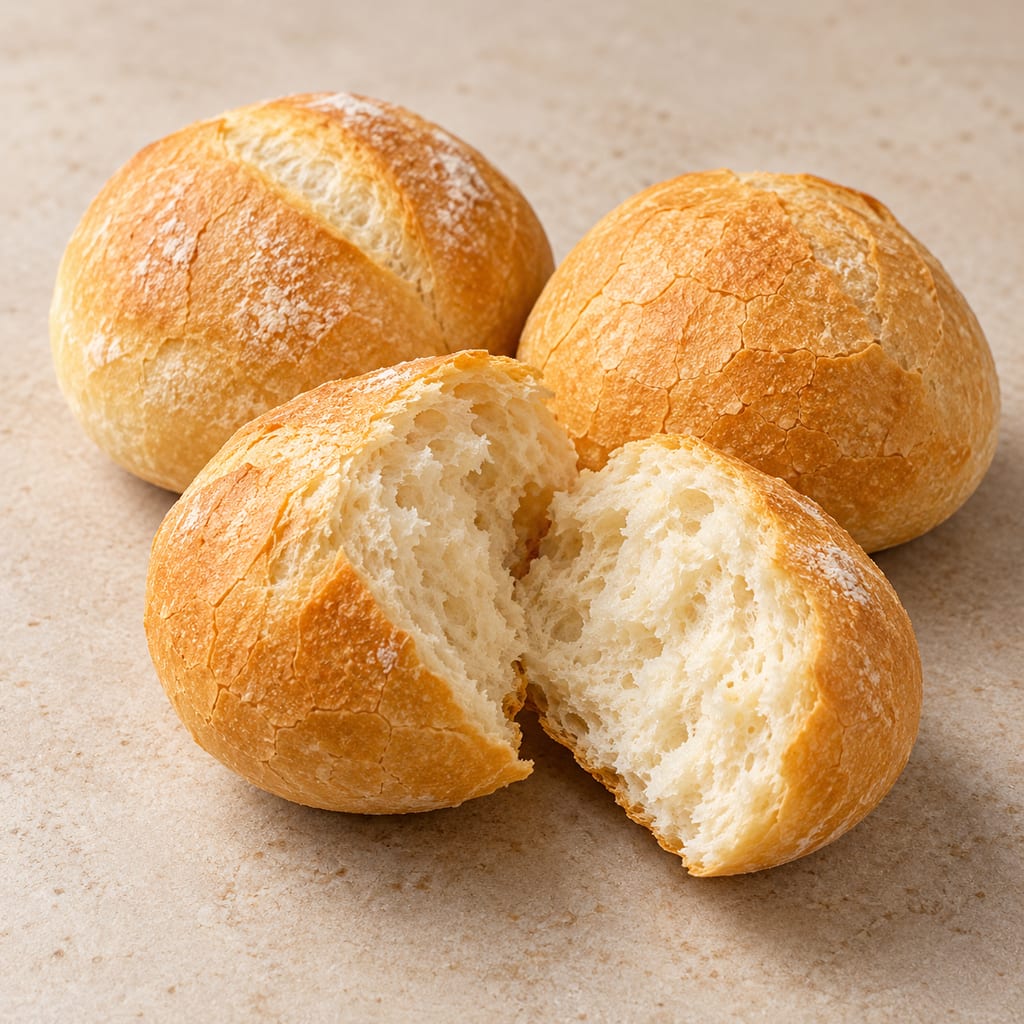
A crisp Belgian roll made from a supplier’s Croc-flour dough, mixed by hand or machine, proofed in rounds and baked with steam.
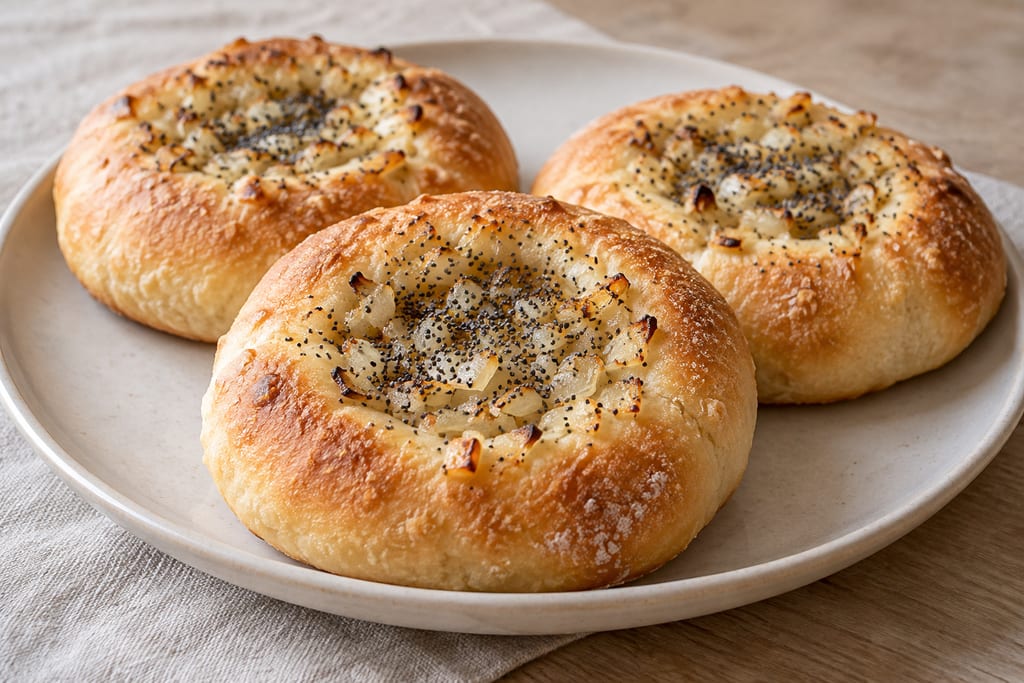
Bialys are soft, yeasted wheat rolls baked without boiling, each shaped with an onion-filled central depression instead of a hole.
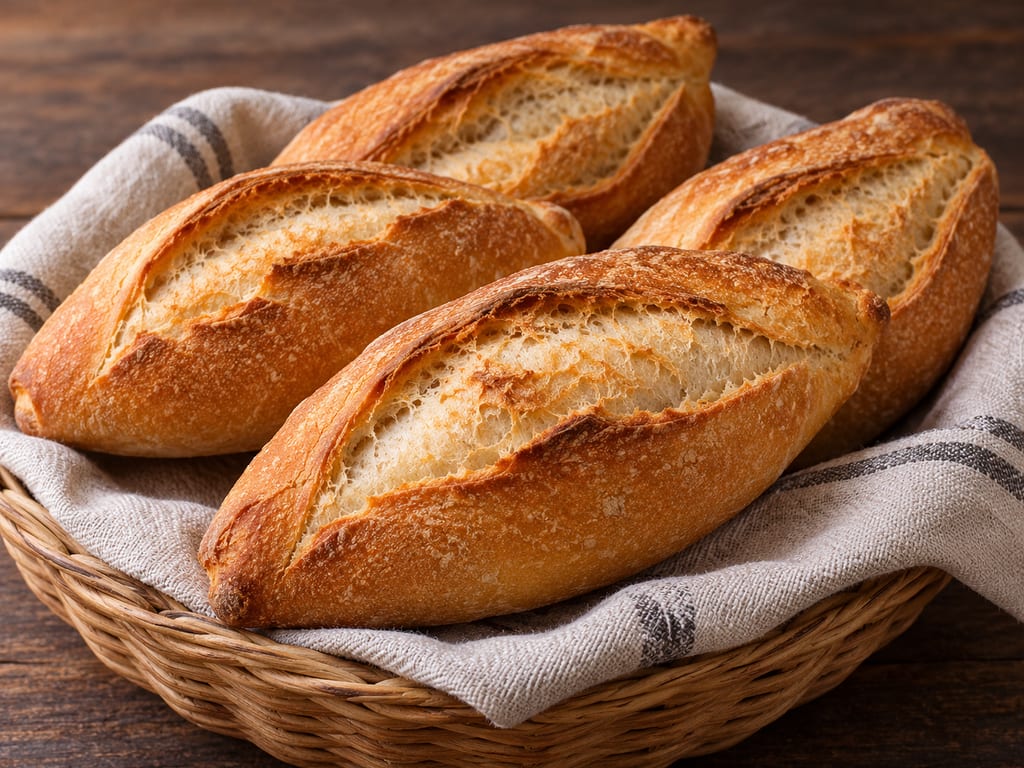
A measured, commercial-yeast home method for Guadalajara-style birote salado, with a six-hour preferment, shaped rolls and a two-temperature steam bake. This formula contains no egg.
No community contributions have been published for this entry yet.
Sign in to contribute. Published comments and photos are free to read.
Receitas / É de Casa (Globo)Inspiration · Home method · Modern use
Pão francêsReceitas Globo identifies this as a home-use or sale recipe from É de Casa; lists nine rolls, breakfast/afternoon snack uses, and the regional names pão de sal and cacetinho.
The source formula and steps: 500 g wheat flour, 10 g dry biological yeast, 5 g sugar, 5 g unsalted butter, 275 mL water, 10 g salt; two approximately 40-minute fermentation stages, nine shaped rolls, scoring, 200°C oven with steam for 12–15 minutes or until golden.
No total time, proof temperature, steam-generation procedure, or finished storage duration is supplied.
Cited in: A Brazilian everyday roll; Mixing and the first rise; Shaping, scoring and baking; Timing, equipment and batch limits; Names, place and serving