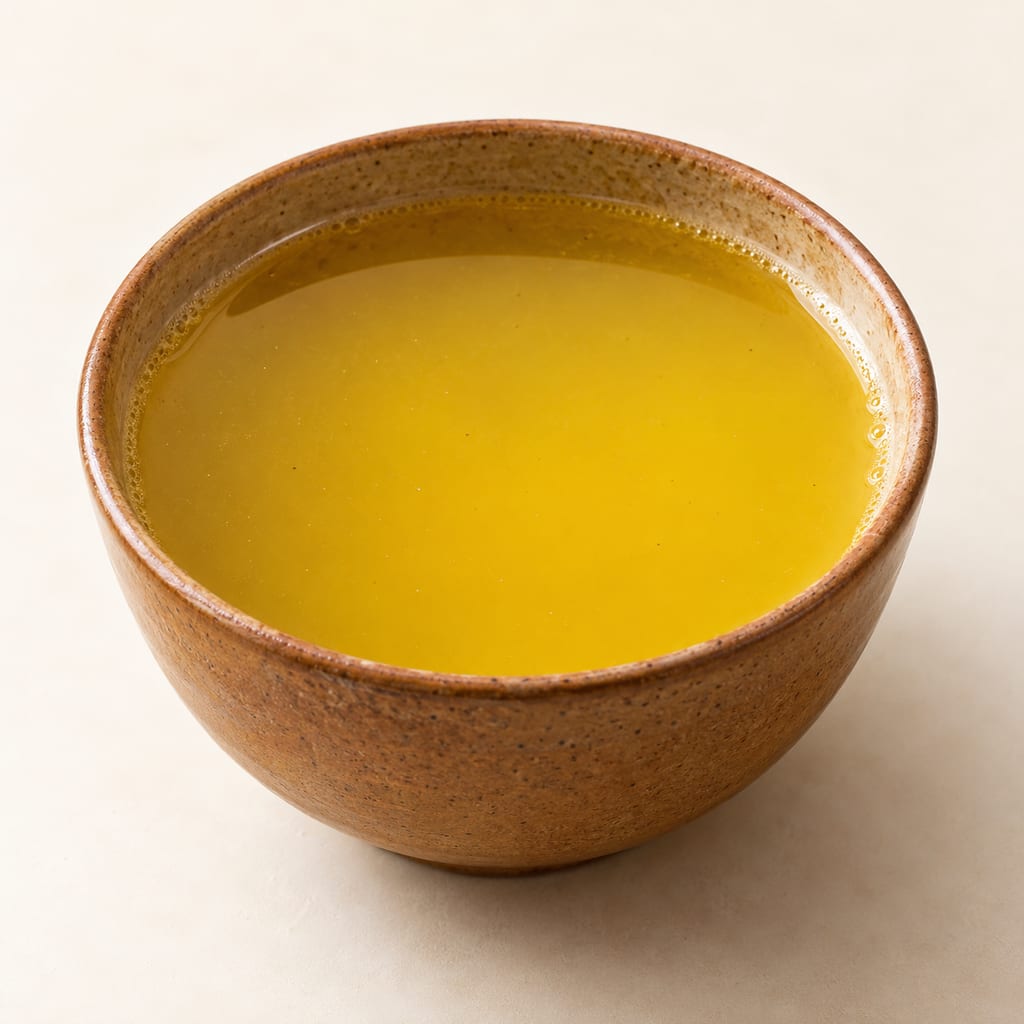
Tucupi
Tucupi is a yellow, sour liquid from the Brazilian Amazon, made from the juice of bitter manioc that is settled, fermented and cooked. It is the base of duck in tucupi and tacacá.
 FermenteaWhere food goes to change
Traditional method
Tucupí negro · Ají negro · Tucupí preto · Ommaï · Kígai · Do-hmepa · Ualako · Casaramá · Black chilli
Tucupi negro is a dark, pungent sauce that Amazonian Indigenous women make by pressing bitter cassava, settling its starch and simmering the juice for hours until it thickens.
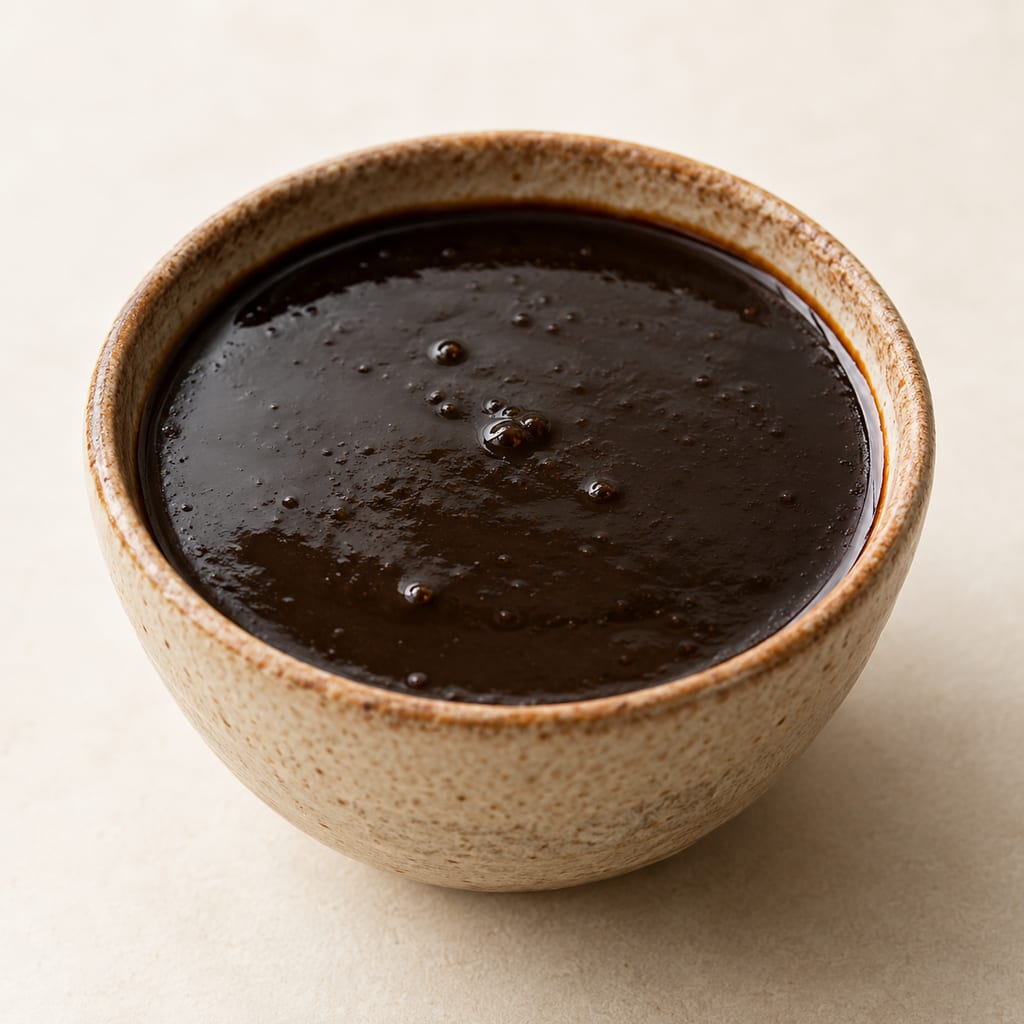
Tucupi negro is a dark sauce made from yuca brava, the bitter form of cassava (Manihot esculenta). Yuca brava is toxic when raw, and the sauce is the product of a process that removes that toxicity while concentrating the flavour of the root. Its English name in the Slow Food listing is black chilli, although the sauce is not a chilli product; peppers are an addition.
Producers and buyers describe it as having an umami-like flavour. The 2019 account records that the sauce is thin like broth in some communities and pasty in others, and that each community makes it a little differently.
The sauce has many names. Slow Food lists ommaï (Uitoto), kígai (Muinane), do-hmepa (Bora) and ualako (Yucuna), and the 2019 account adds tucupí preto, ají negro and casaramá. The names follow the peoples who make it, and the sauce is traditionally made by Uitoto, Bora, Muinane, Ocaina, Andoke, Nonuya and Yucuna peoples of Northwest Amazonia.
Women distinguish their own version from those of other groups. The Slow Food account notes that the knowledge is at risk, because younger women rarely make the sauce and the recipe may be lost within a generation.
The bitter root is peeled, washed and chopped, then soaked in stream water. The sources disagree on how long: Slow Food gives one to two days, and the 2019 account says several days. The soaked pieces are pounded in a mortar carved from a hollow tree trunk and pressed in a long woven strip, which is wrapped, hung and twisted for several hours.
The juice that comes out carries starch. It is left to rest for several hours so the starch settles, and the starch is removed. The starch becomes flour for roasting or cassava bread, or starch cassava and cahuana.
The starch-free juice is then simmered for five to eight hours until it thickens. Hot peppers go in at this stage. The Slow Food account says that filtering and cooking remove the cyanide present in raw manioc, and that is why the sources treat these steps as essential.
The 2019 account describes a sequence: the boiled juice becomes tucupí, and that juice reduced further becomes tucupí negro. Tucupí is the lighter sauce, and tucupí negro is the darker, more concentrated one.
Fresh manioc can be grated and sieved without soaking, which the Slow Food account describes as a variant giving a sweeter and lighter sauce.
The sauce is a seasoning and a dip. It is eaten daily with cassava bread, used as a marinade for meat and fish, and added to stews. Traditional dishes named in the 2019 account include tacacá and pato no tucupí.
On festive occasions it is mixed with fish, meat, ants, vegetables, palm flowers and oily seeds to make dishes that identify each group's cooking. Doña Brazi, the producer named in the 2019 account, mixes it with sauvà ants, which the account says give a lemongrass-like flavour.
In Pucaurquillo the sauce is now sold packaged. The 2019 account reports 24 women employed across the expanded communities, earnings twice as high per volume as before, and 200 ml bottles sold for about 40 soles. The Yuti brand is one commercial route.
Some city restaurants have adopted the sauce, and the 2019 account names Lima, Roraima and Bogotá kitchens where it is used with seafood, mushrooms and game.
The sources do not give quantities, a fermentation duration or a yield for household making, so this page gives none. The date of origin is unknown. The Yuti page gives no production dates, and the history of cassava processing in general does not date this sauce.
Several peoples name the sauce differently, including ommaï (Uitoto), kígai (Muinane), do-hmepa (Bora) and ualako (Yucuna). Its use beyond Indigenous communities is recent. The 2019 account records it in Lima restaurants and in packaged sale from Pucaurquillo.
Scaling: source batch only
The raw root is described as the poisonous form of manioc. The sources say filtering and cooking remove its cyanide, and they give no measured endpoint.
Hazard sourcePressing, starch removal and long simmering, as the Slow Food account describes them
Control sourceDo not make this from raw bitter cassava without a validated detoxification method. The sources describe traditional practice and give no measured limit.
Taste and aroma do not show that cyanide has been removed.
A Bora and Huitoto village where women make tucupí negro for sale. Other Ampiyacu communities are named in the same source.
Several Indigenous peoples of Northwest Amazonia make the sauce, each with its own version. The sources do not date its origin.
Tucupi is a yellow, sour liquid from the Brazilian Amazon, made from the juice of bitter manioc that is settled, fermented and cooked. It is the base of duck in tucupi and tacacá.
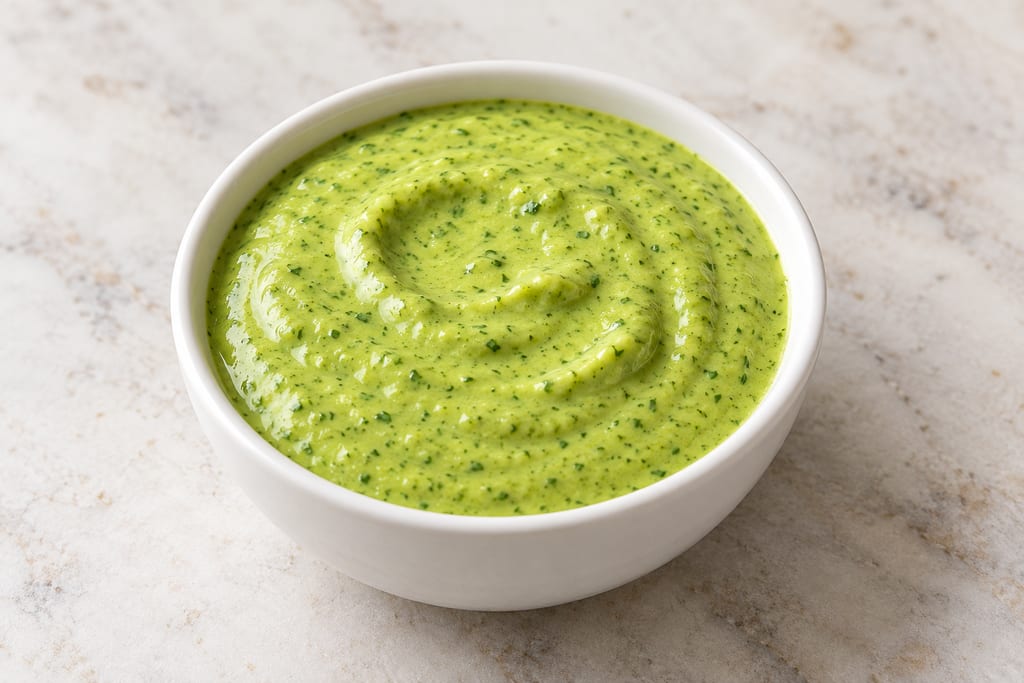
Ají verde is a Peruvian green sauce of coriander, chilli, onion and garlic in a mayonnaise or cheese base. It is best known through Peruvian restaurant cooking abroad.
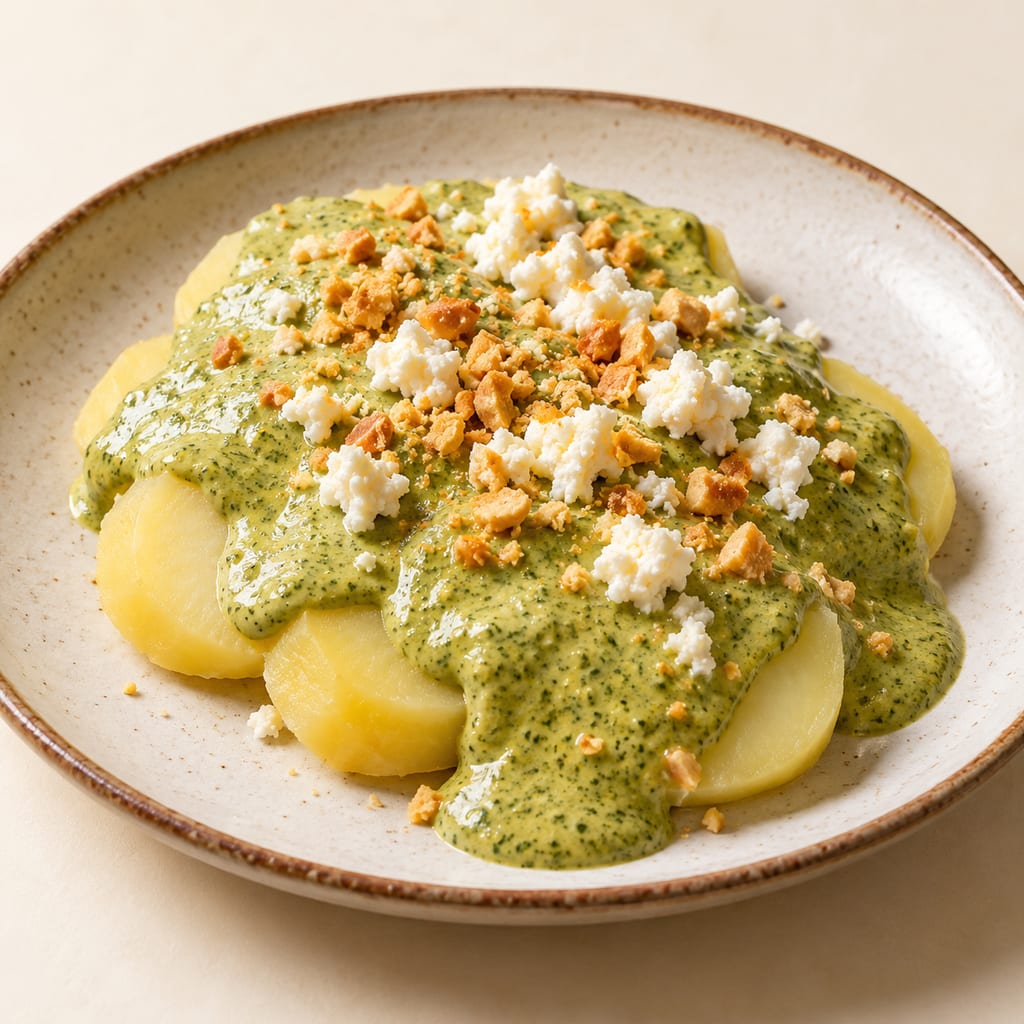
Ocopa is a sauce from Arequipa, Peru, of huacatay, dried mirasol chillies, nuts, fresh cheese and soda crackers. It is usually spooned over boiled potatoes.
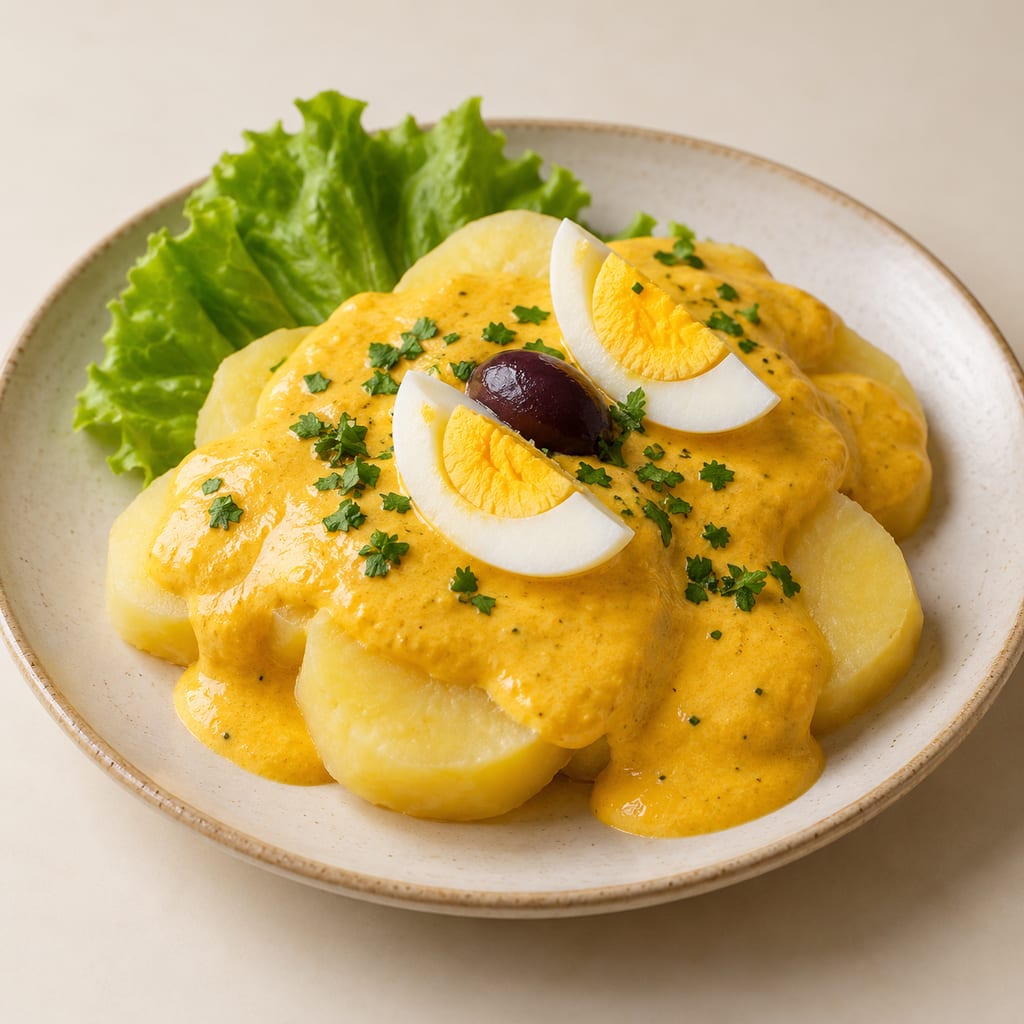
A creamy Peruvian sauce of ají amarillo, fresh cheese and milk, served with potatoes. This source-based version sautés aromatics before blending the sauce.
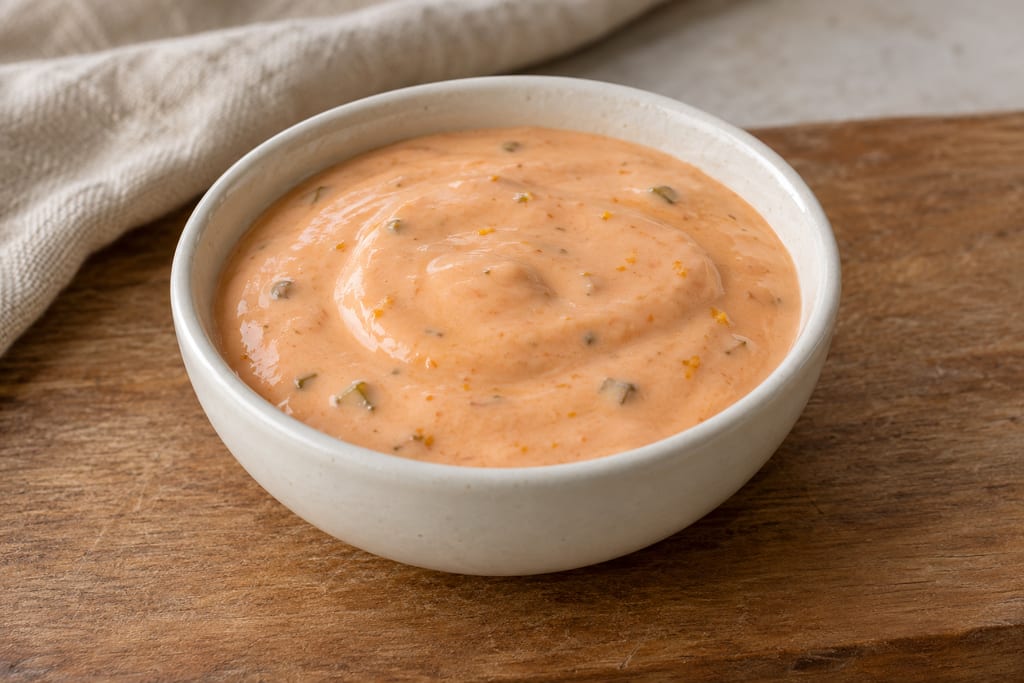
A cold mayonnaise-and-tomato condiment family with distinct documented forms in Argentina, Peru and Puerto Rico; this draft records a Peruvian caper-and-orange version and keeps its regional relatives separate.
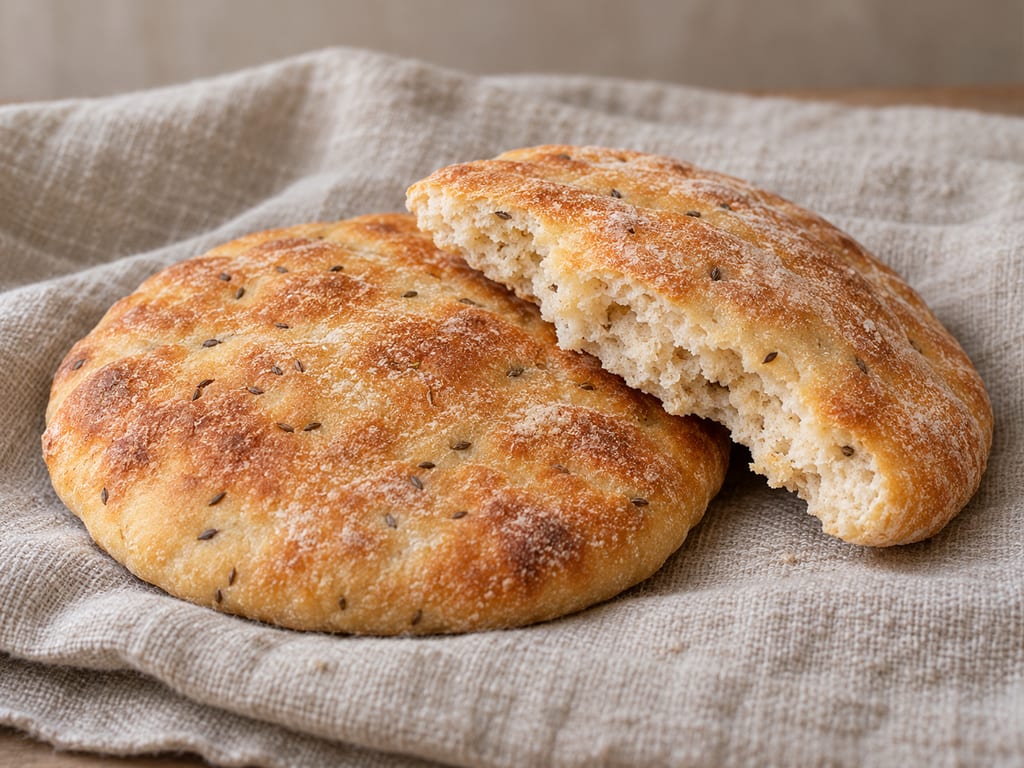
A measured, yeast-raised Ayacucho chapla home method shared by Thermomix Peru presenter Roxanna Salaverry. It makes thin, anise-scented rounds baked at 240°C; the historic qunchu-leavened form is documented separately.
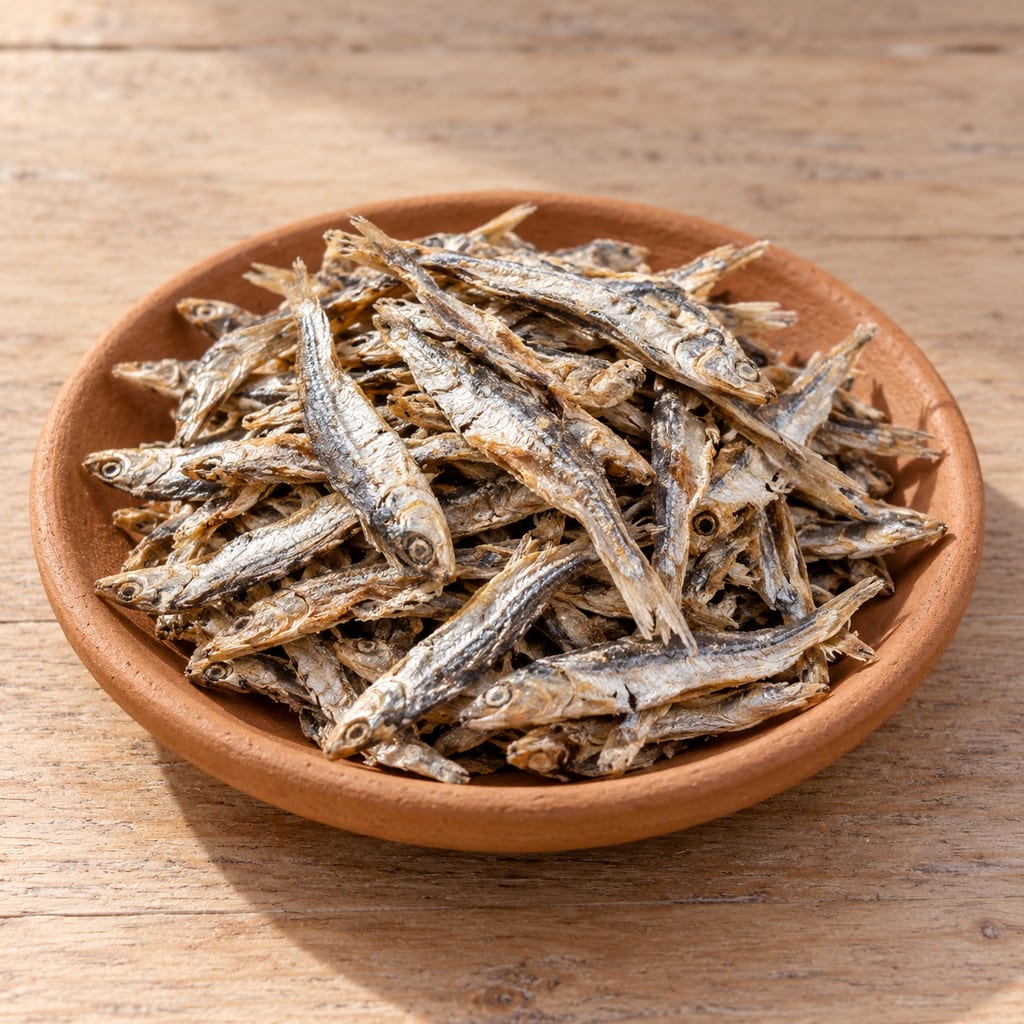
Anchoveta salted, drained of sanguaza and sun-dried on sand or stones at Caleta de Carquín, a technique declared part of Peru's cultural heritage in 2016.
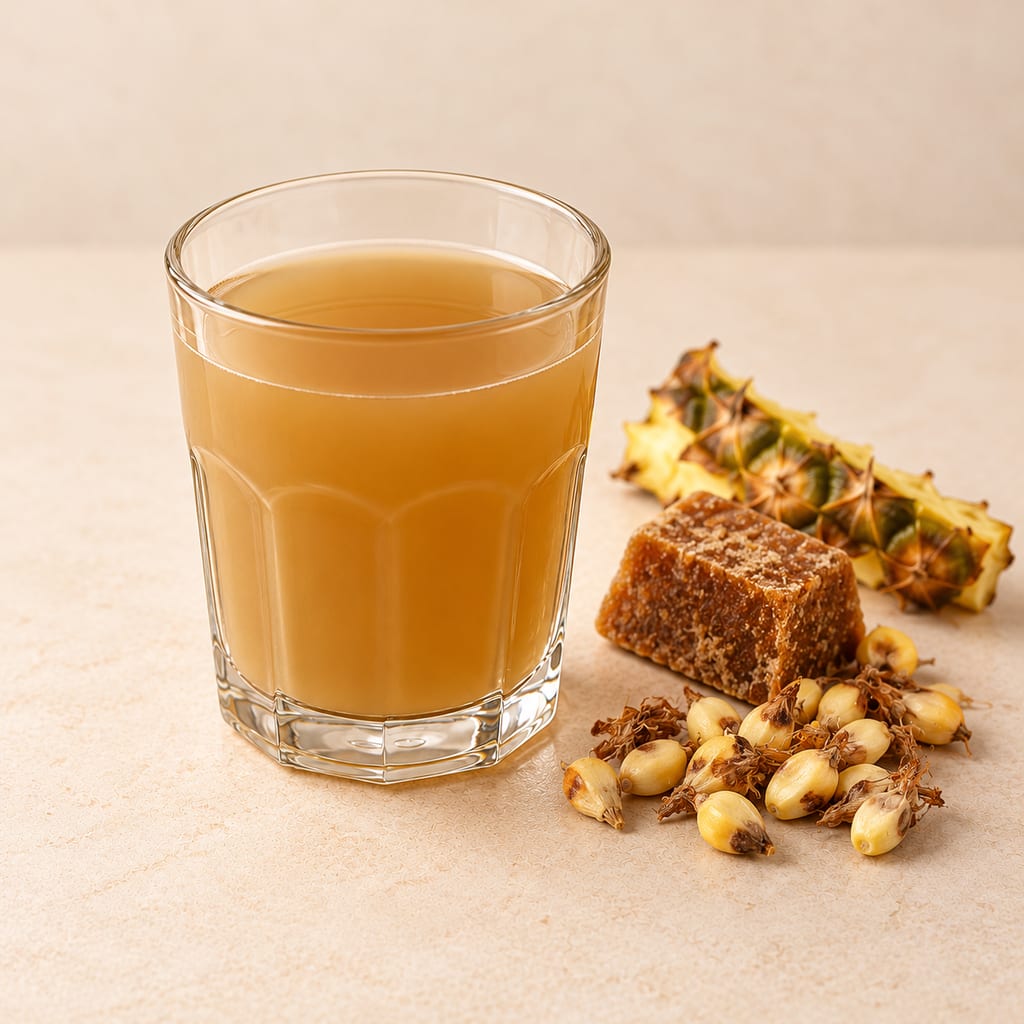
A contemporary Ecuadorian recipe simmers jora flour with spices, then adds panela and pineapple peel before a short spontaneous ferment. Its particular aromatics and measurements belong to this published adaptation.
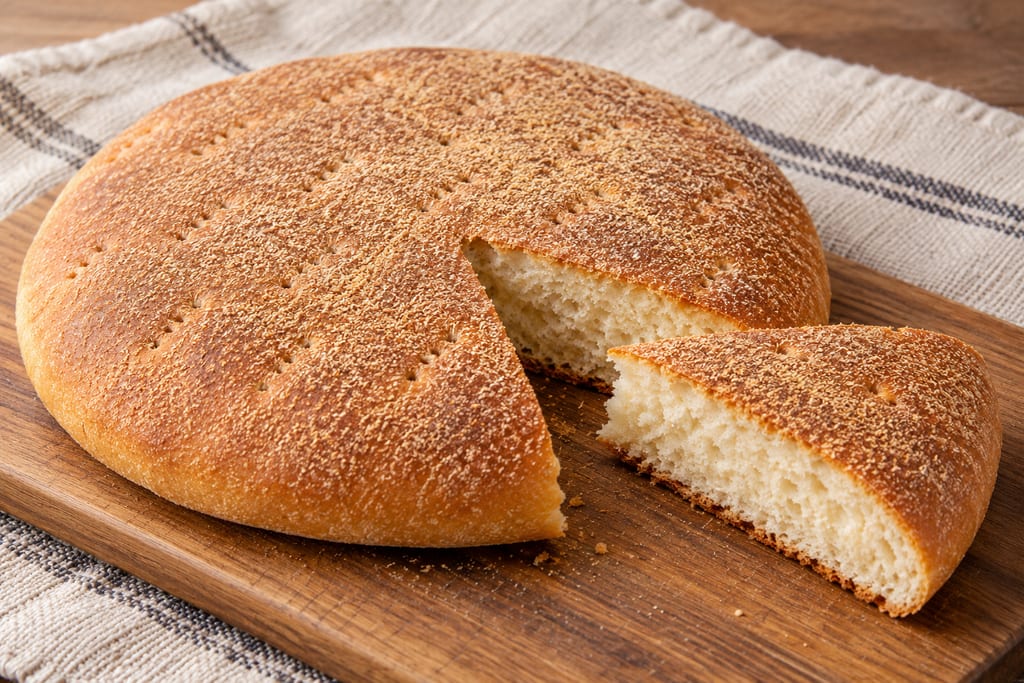
Pan chuta is a broad, lightly sweet wheat loaf associated with Oropesa in Cusco; this home-scale version uses chamomile, brown sugar and butter.
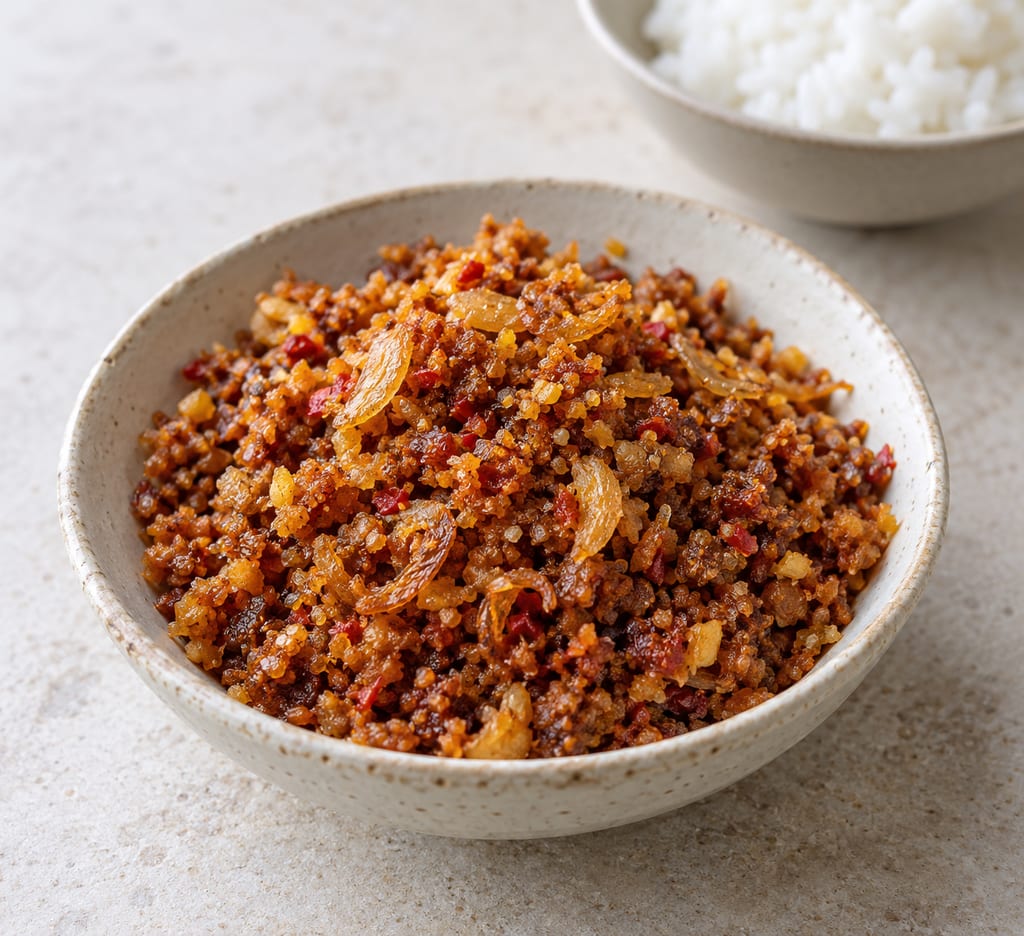
A Myanmar relish of dried shrimp, fried eschalot and garlic, chilli, turmeric, tamarind and ngapi. Naomi Duguid’s published recipe makes about 1 cup; it contains crustacean shellfish.
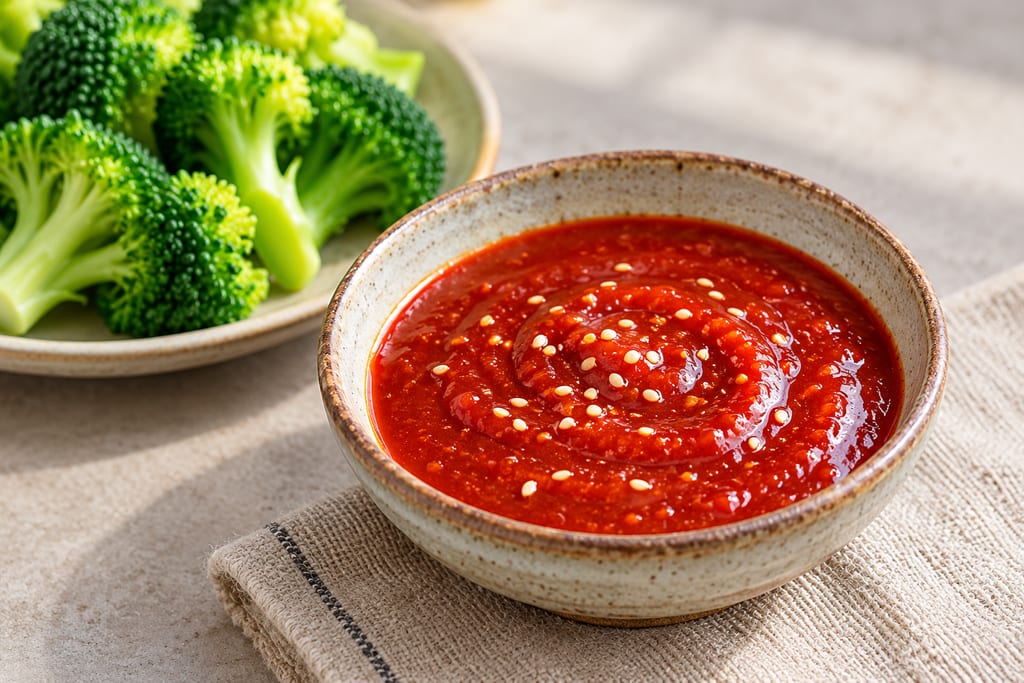
Chogochujang is a Korean sweet-sour sauce made by seasoning gochujang with vinegar and sugar. This development batch adds water and toasted sesame seeds, with optional garlic for the portion being served.
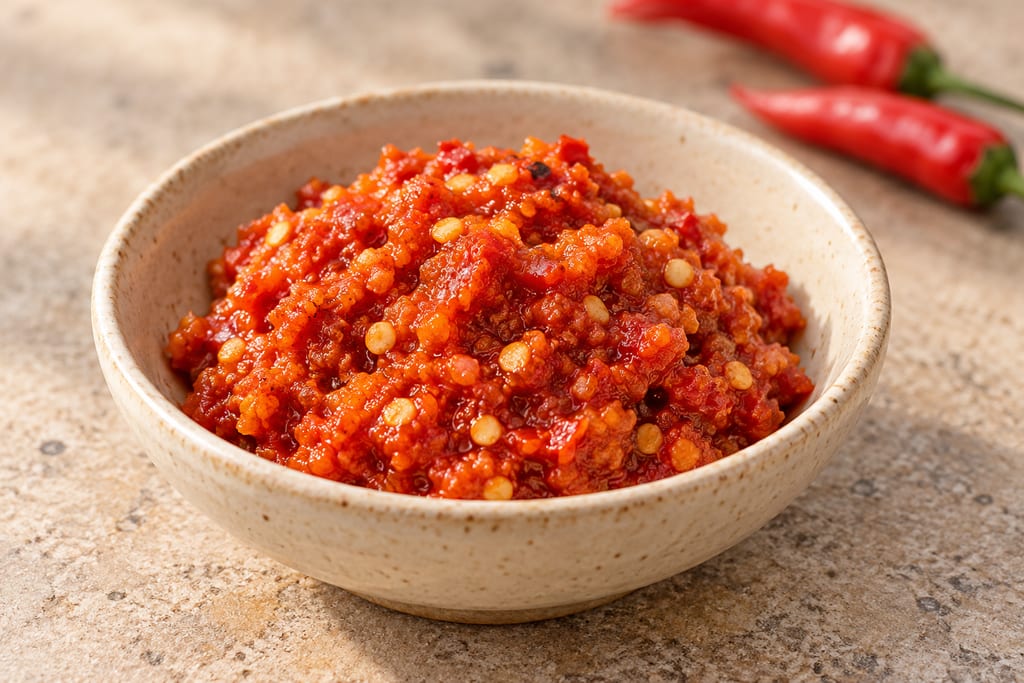
Dinanche, or donne' dinanche, is a Chamorro hot pepper paste of crushed chillies that Guam cooks use on its own or stir into fina'denne'. Its versions range from pepper alone to ones with eggplant, miso or coconut milk.
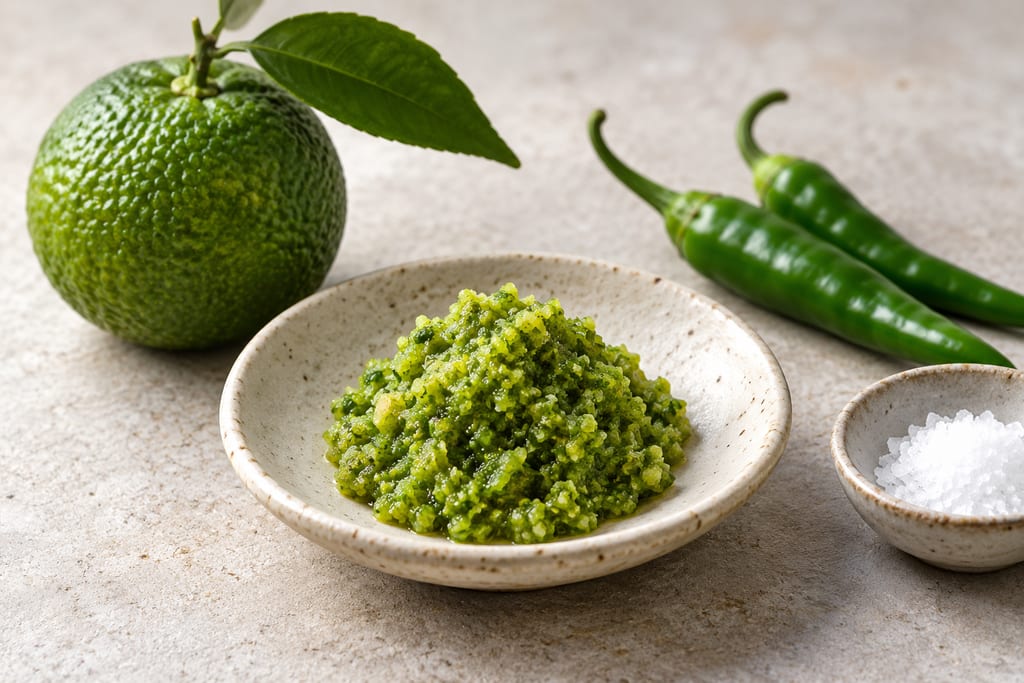
A fresh, uncooked yuzu and green chilli paste inspired by Kyushu’s yuzu kosho, made here as an untested small-batch seasoning rather than a preservation formula.
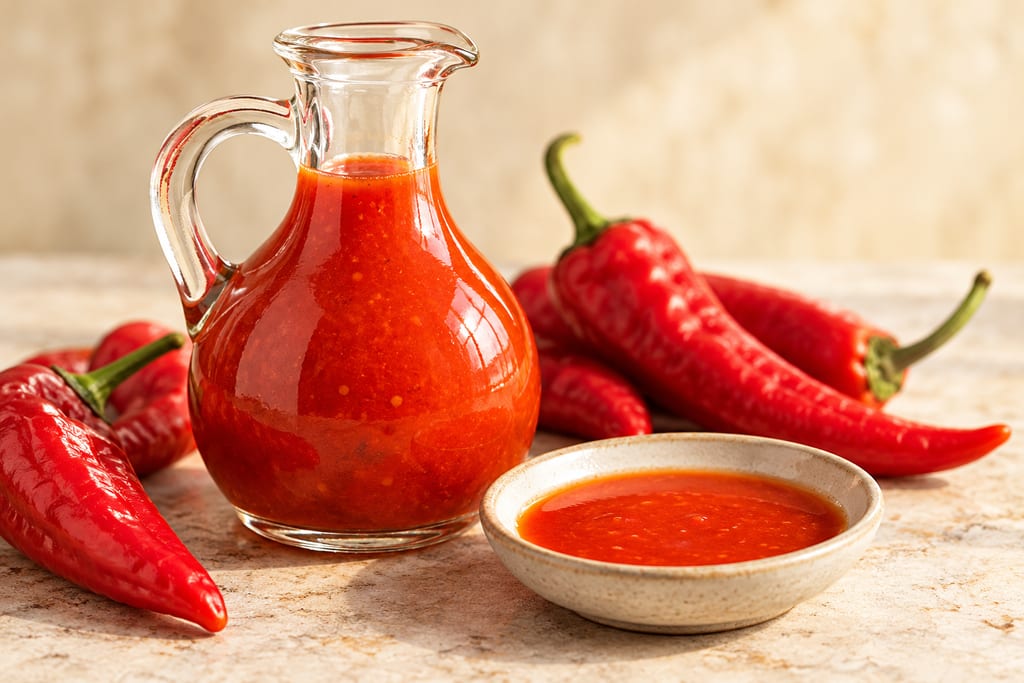
Fresh hot peppers ferment beneath a measured salt brine, then become a bright, tangy sauce blended from the peppers and their liquor.
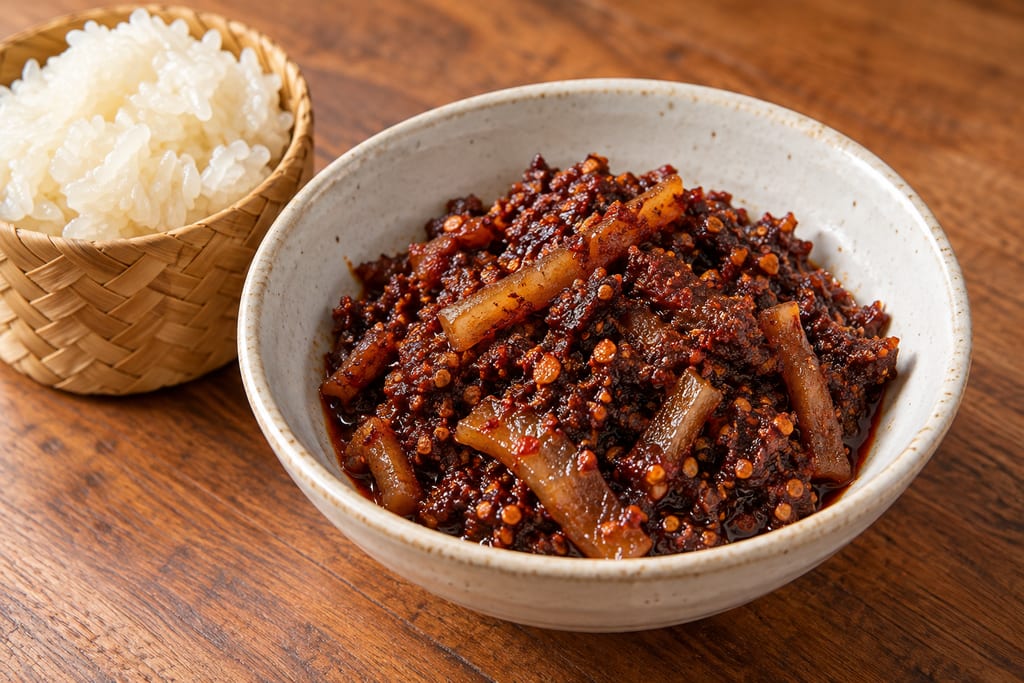
Jeow bong is a Lao paste of dried chilli, shallot, garlic and galangal cooked with buffalo or cow skin, a Luang Prabang specialty eaten with sticky rice and grilled meat.
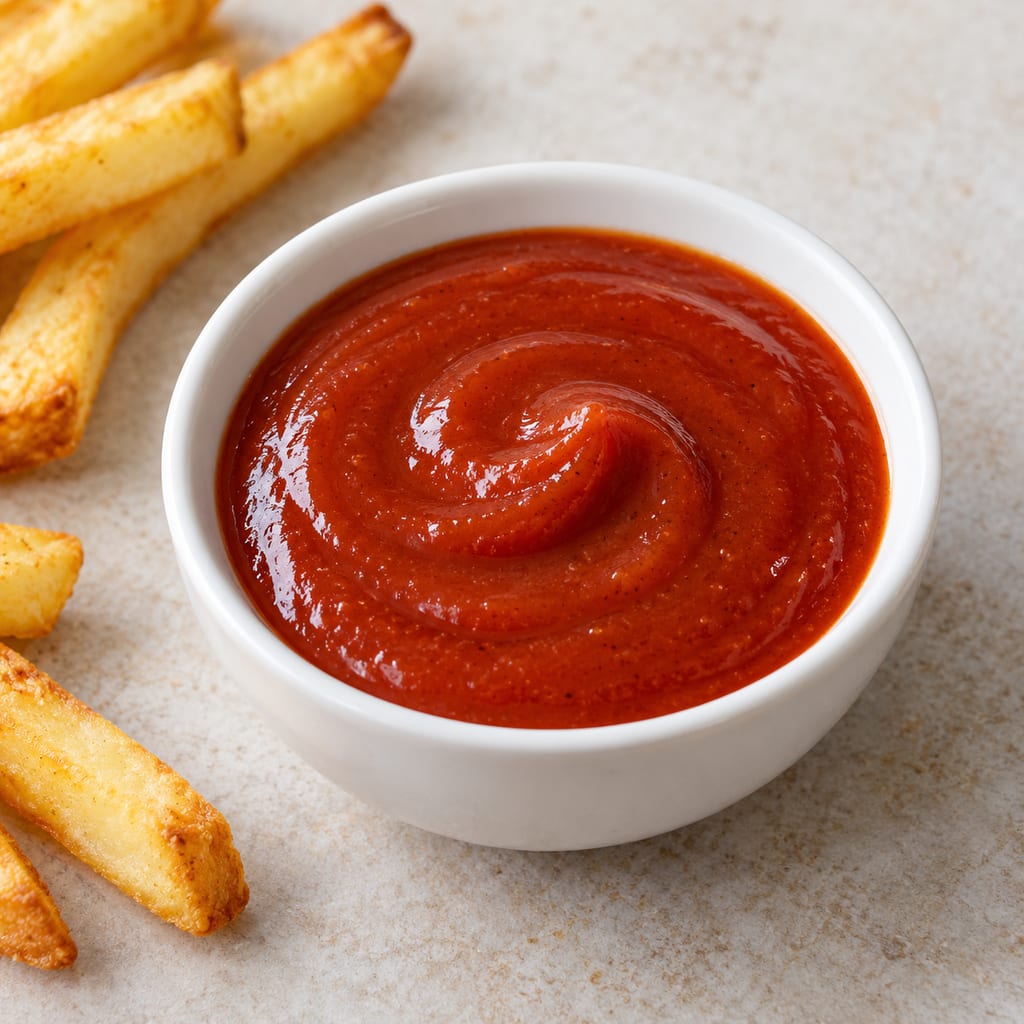
A modern tomato condiment sharpened with the spicy, savoury tang associated with kimchi; this measured version whisk-mixes prepared ketchup and commercial kimchi seasoning.
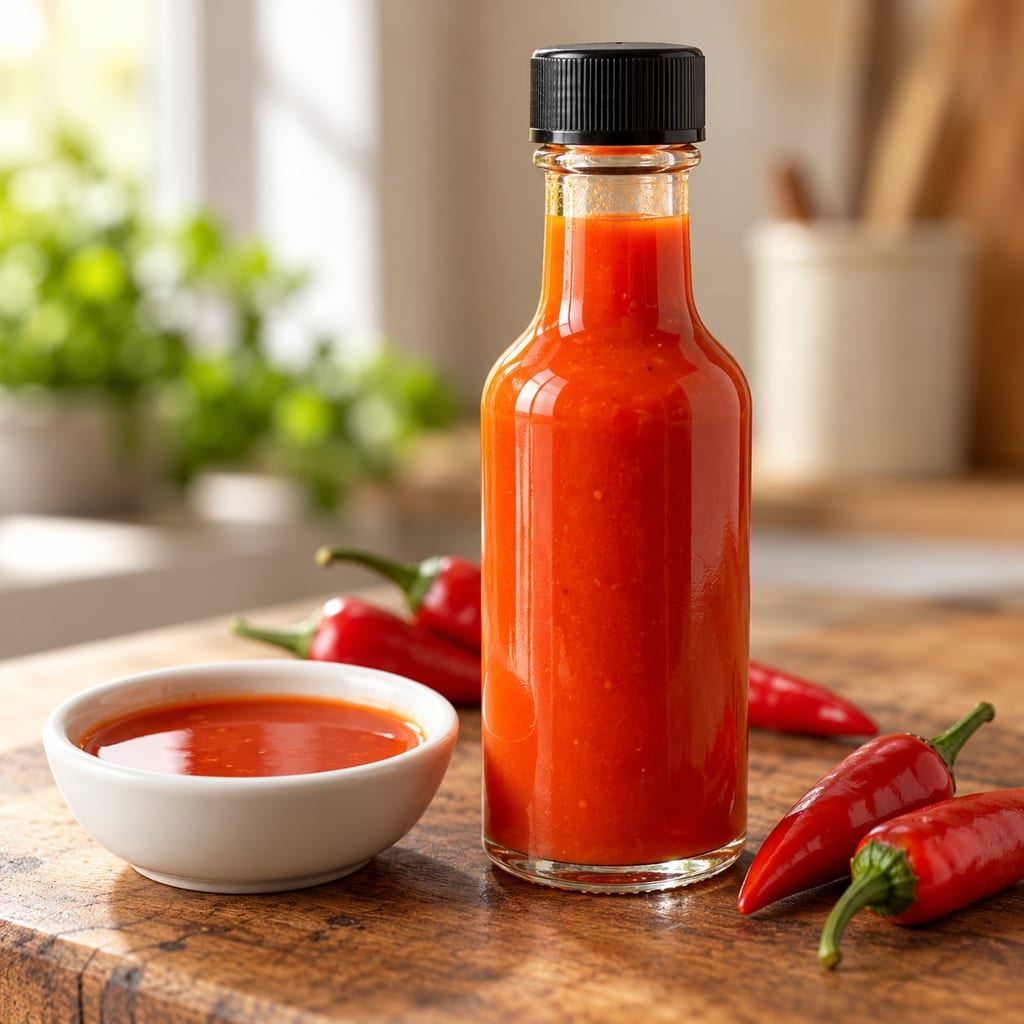
Documentary account of Louisiana pepper sauces, using TABASCO's published barrel-aged commercial process as one specific example; the source does not provide a validated home recipe.
No community contributions have been published for this entry yet.
Sign in to contribute. Published comments and photos are free to read.
Slow Food FoundationMethod · History · Safety
Ají negro - Ark of TasteNames: ommaï (Uitoto), kígai (Muinane), do-hmepa (Bora), ualako (Yucuna); English name black chilli.
Bitter manioc is peeled, washed, chopped and soaked one or two days; pounded in a mortar; pressed in a woven strip for several hours; starch settled from the juice; juice simmered five to eight hours with hot peppers.
The text says filtering and cooking remove cyanide from raw manioc.
Traditionally made by Uitoto, Bora, Muinane, Ocaina, Andoke, Nonuya and Yucuna peoples; women distinguish their version; the knowledge may be lost within a generation.
Cited in: A dark sauce from bitter cassava; Names and peoples; How it is made; Tucupí and tucupí negro; Uses and occasions; Notes
The New WorlderHistory · Uses · Economics
The Obscure Sauce That Is Changing Indigenous Economies in the AmazonYuca brava is peeled and soaked for several days; juice boiled to become tucupí and further reduced to become tucupí negro.
Communities make it differently; some add peppers, seeds or insects; the consistency varies.
Bora and Huitoto women of Pucaurquillo near Iquitos produce it; the mechanised grater cut processing from three hours to 20 minutes; 1,000 litres a month in 2018 and 2,000 in 2019.
Traditional uses include stews, marinades, dips for cassava bread, tacacá and pato no tucupí.
Cited in: A dark sauce from bitter cassava; Names and peoples; How it is made; Tucupí and tucupí negro; Uses and occasions; Packaged sale
YutiUses · Economics
Yuti: tucupí negroMade by Bora, Huitoto and Ocaina women of the Ampiyacu; the sauce is made from bitter cassava and described as having an umami-like flavour.
The page gives no production dates.
Cited in: A dark sauce from bitter cassava; Packaged sale