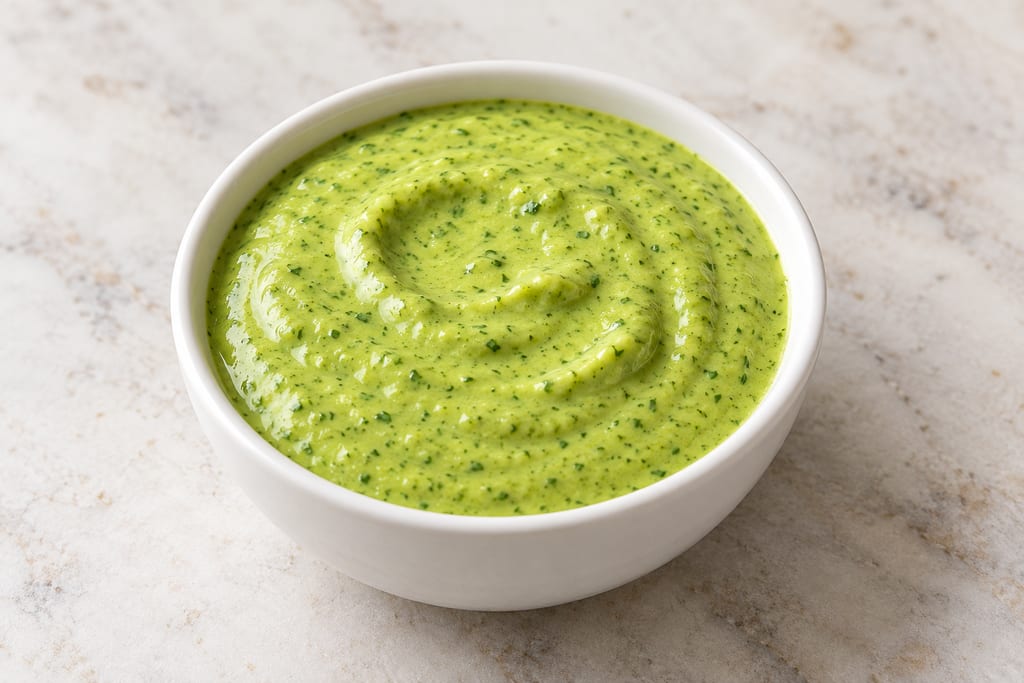
Ají verde (Peruvian green sauce)
Ají verde is a Peruvian green sauce of coriander, chilli, onion and garlic in a mayonnaise or cheese base. It is best known through Peruvian restaurant cooking abroad.
 FermenteaWhere food goes to change
Ocopa arequipeña · Ocopa arequipena
Ocopa is a sauce from Arequipa, Peru, of huacatay, dried mirasol chillies, nuts, fresh cheese and soda crackers. It is usually spooned over boiled potatoes.
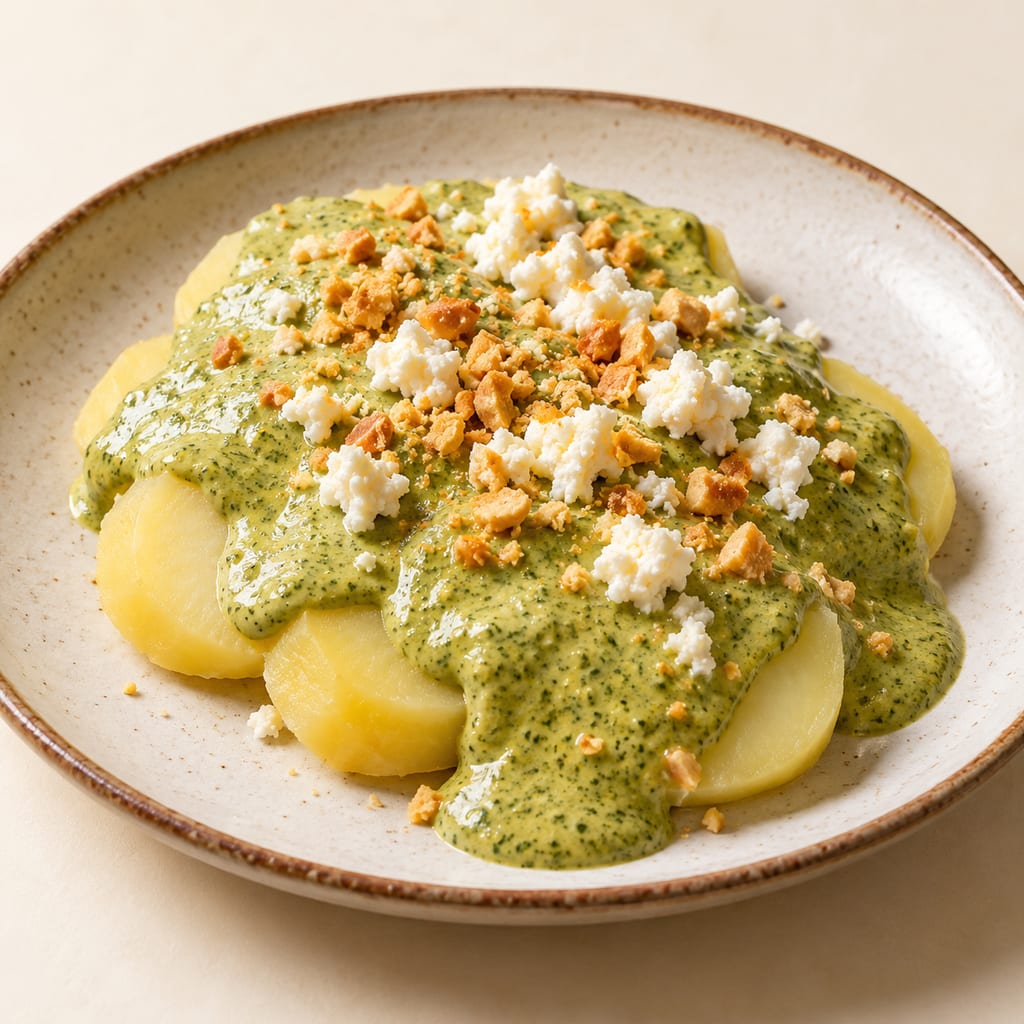
Ocopa is a smooth, pale-green sauce from Arequipa in southern Peru. Its character comes from huacatay, the Andean black mint, which gives the sauce its colour and its strong, resinous herb note. Wikipedia describes it as a smooth sauce flavoured with huacatay, and the Arequipa recipe source notes that the core ingredients have stayed largely the same for at least two centuries.
The sauce is a paste of dried mirasol chillies, nuts, fresh cheese and soda crackers, blended with the chillies' soaking water and oil. Huancaína, the cheese sauce served with potatoes, uses a similar cheese and chilli base, but ocopa is set apart by its nuts and huacatay.
The documented record for ocopa is thin. The Wikipedia article gives an origin in Arequipa, citing Morgan (2012), but no historical narrative. A trade product page offers a Quechua derivation for the name, linking it to a bag that Inca messengers carried on long journeys, filled with ground peanuts, chillies and herbs. That account is folklore; no source read for this page documents it.
The same page says that after the Spanish arrival in the 16th century, milk, cheese, garlic and onion entered the paste and turned it into the thick sauce made today, and that Arequipa later adopted it as a traditional dish that then spread through Peru in many variations. These are the page's own claims and are not supported by a cited source.
The Arequipa home recipe toasts the mirasol chillies briefly in a dry pan, soaks them, and blends them with walnuts, soda crackers, fresh cheese and oil, using some of the soaking water to loosen the paste. Walnuts form the nut base of this version. Other recipes, and the Wikipedia ingredient list, use peanuts instead of or with the walnuts, and some add yellow chilli (ají amarillo).
Huacatay is handled differently from the other ingredients. Its essential oil is volatile and is broken down by the heat of a running blender, so the recipe source advises the cook to switch the machine off and fold the herb in by hand at the end. The sources read do not explain the role of the crackers, beyond naming them as part of the paste.
Ocopa is spooned over boiled potatoes. Wikipedia says it may be served as a dressing for boiled potatoes or as a garnish for cold hard-boiled eggs, and that in Arequipa it is normally accompanied by boiled potatoes or shrimp. The Arequipa recipe source describes restaurant plates with potatoes, hard-boiled egg and black olives, and in some places a slice of fried cheese.
Because the sauce is served across the south of Peru alongside huancaína, its place on the table is as much a regional dish as a sauce. Its use as a dip or as a condiment for other foods is not recorded in the sources read.
The sources read give no shelf life for ocopa and no tested preservation method. The sauce contains fresh cheese and is not cooked, so it should be kept cold and eaten promptly. The USDA food safety guidance cited on this page advises refrigeration within two hours, but that rule is general and is not a validated limit for this recipe.
Open questions: the sources read do not say how far the recipe varies between households, or whether the sauce has an earlier documented form.
No dated source for ocopa was found. The Wikipedia article has no history section. A trade product page links the name to a Quechua word for a bag that Inca messengers reportedly carried, holding ground peanuts, chillies and herbs; that story is folklore and is not documented. The same page places the sauce's thickening with milk and cheese after the Spanish arrival in the 16th century, without citing a source for it.
The sources cite no tested preservation method or storage duration for ocopa; treat it as a fresh, dairy-containing sauce.
Sources place the sauce in Arequipa and describe it as its traditional dish; they do not date its origin.
Ají verde is a Peruvian green sauce of coriander, chilli, onion and garlic in a mayonnaise or cheese base. It is best known through Peruvian restaurant cooking abroad.
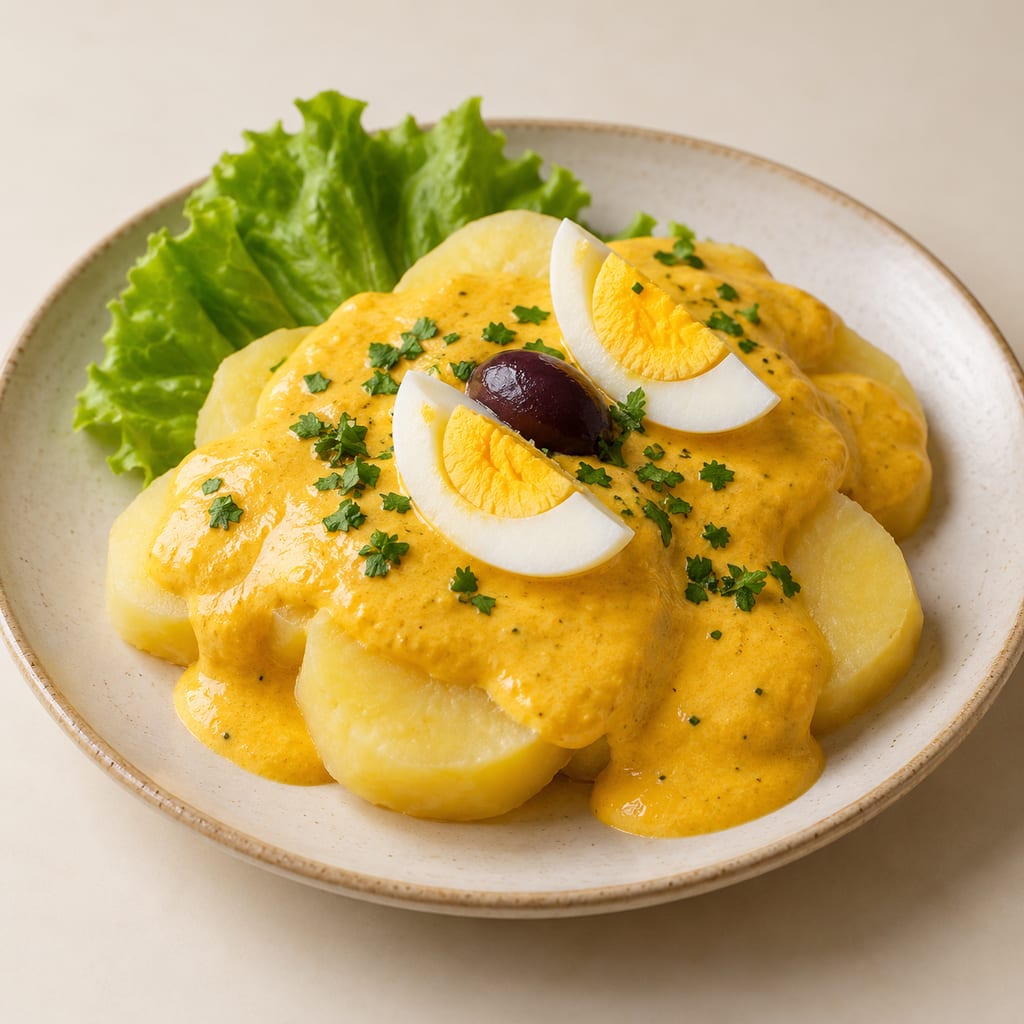
A creamy Peruvian sauce of ají amarillo, fresh cheese and milk, served with potatoes. This source-based version sautés aromatics before blending the sauce.
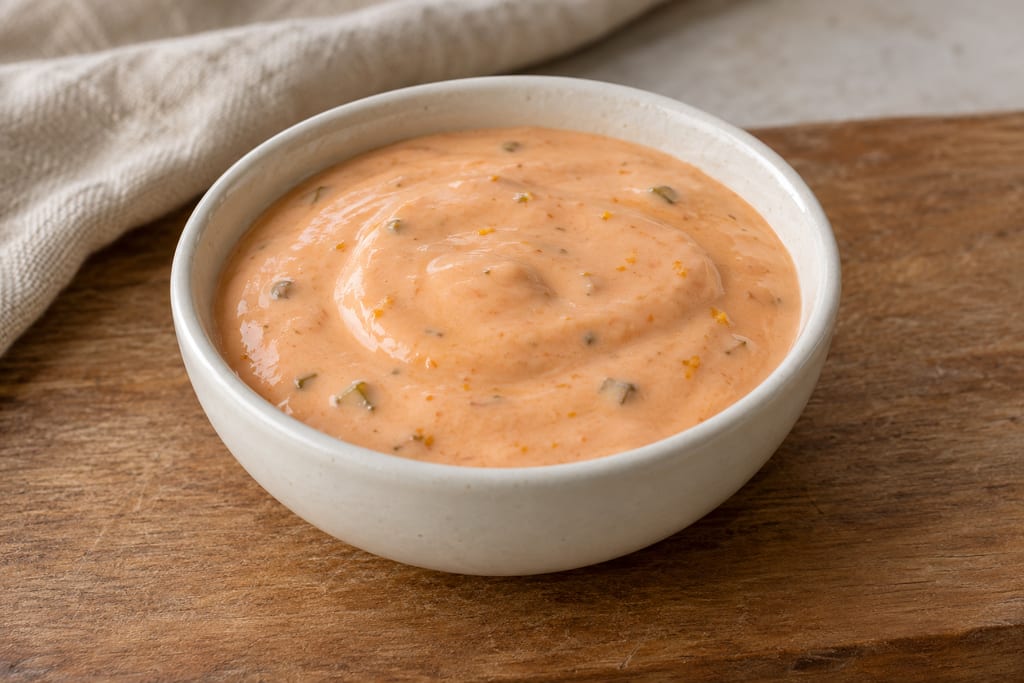
A cold mayonnaise-and-tomato condiment family with distinct documented forms in Argentina, Peru and Puerto Rico; this draft records a Peruvian caper-and-orange version and keeps its regional relatives separate.
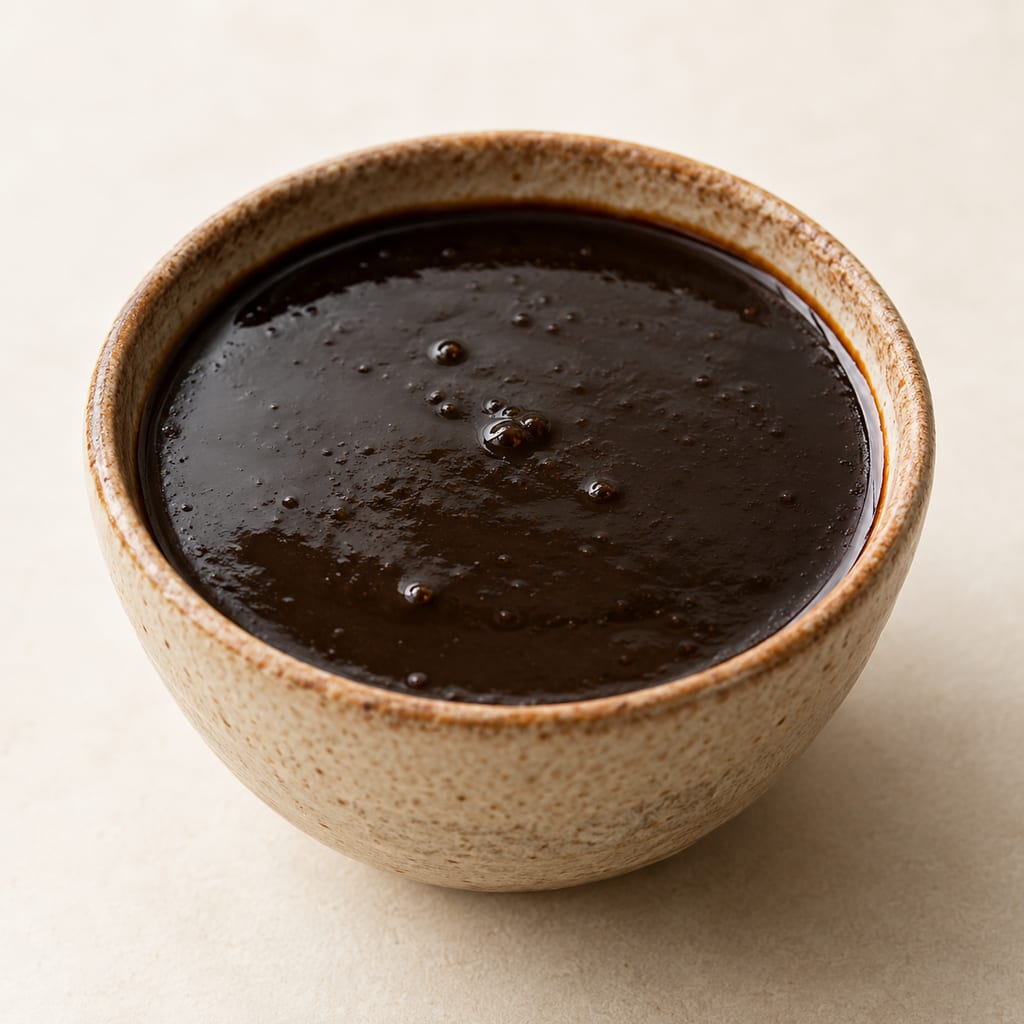
Tucupi negro is a dark, pungent sauce that Amazonian Indigenous women make by pressing bitter cassava, settling its starch and simmering the juice for hours until it thickens.
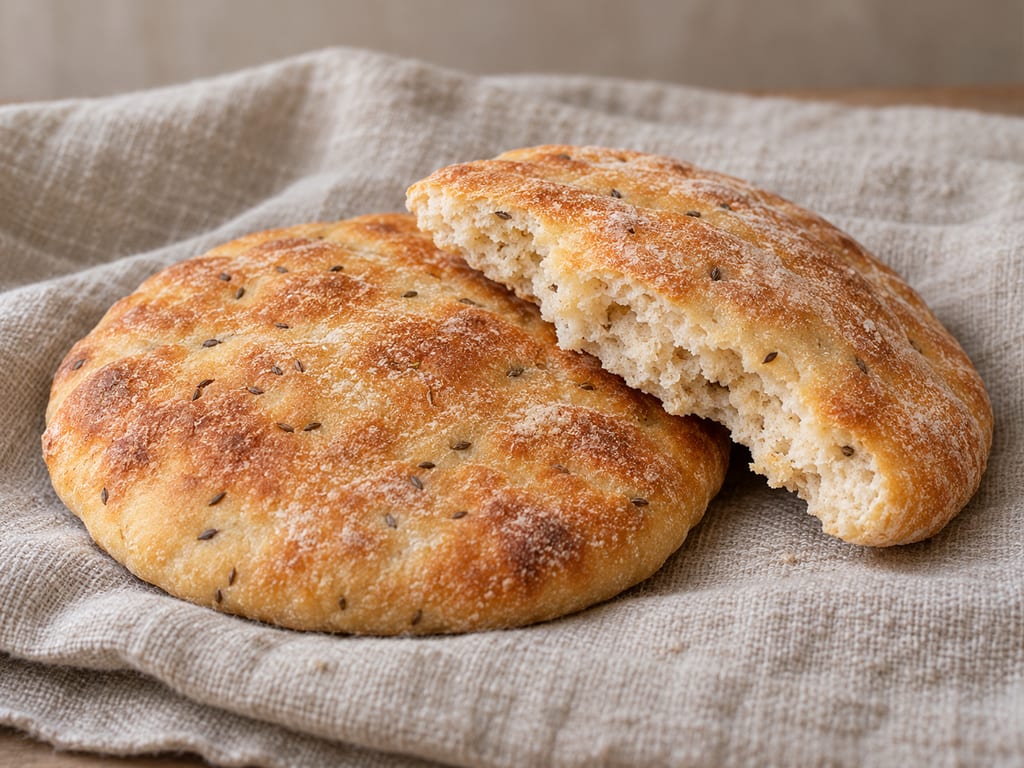
A measured, yeast-raised Ayacucho chapla home method shared by Thermomix Peru presenter Roxanna Salaverry. It makes thin, anise-scented rounds baked at 240°C; the historic qunchu-leavened form is documented separately.
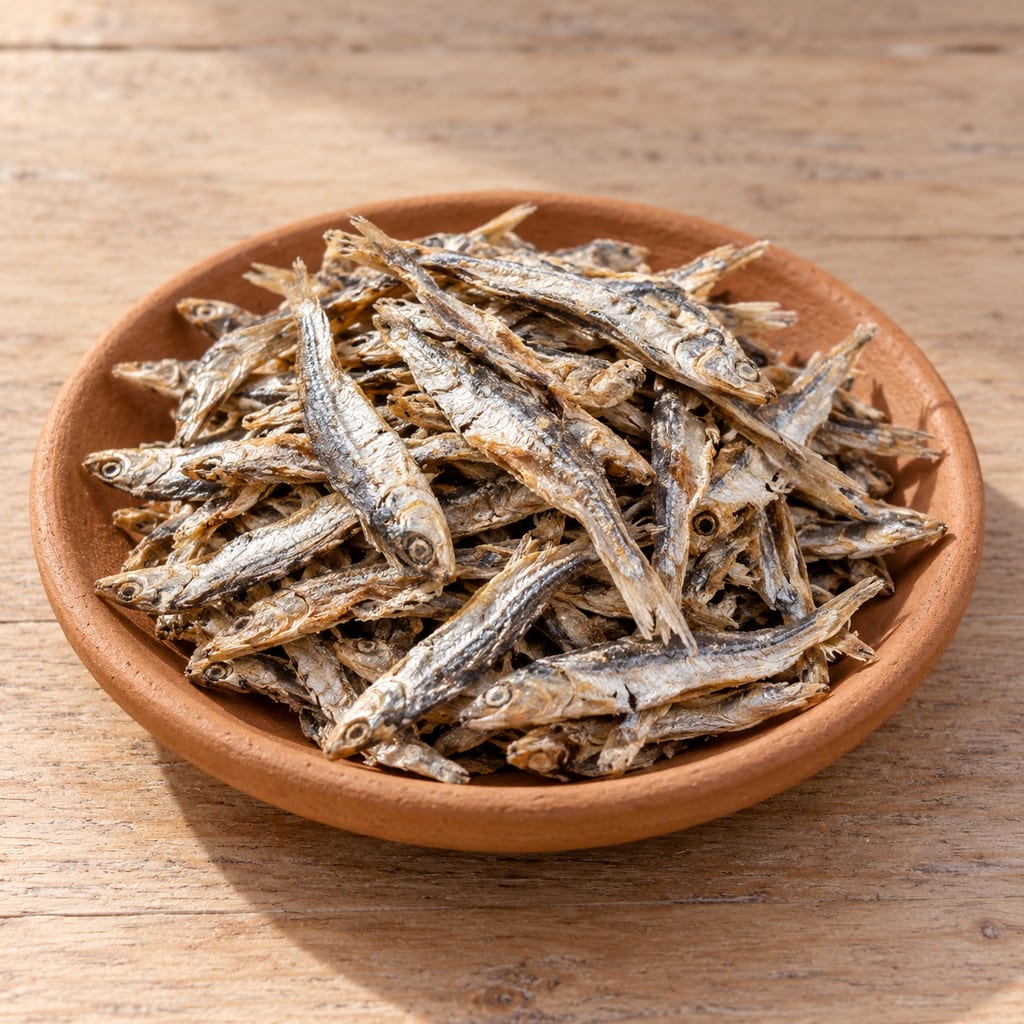
Anchoveta salted, drained of sanguaza and sun-dried on sand or stones at Caleta de Carquín, a technique declared part of Peru's cultural heritage in 2016.
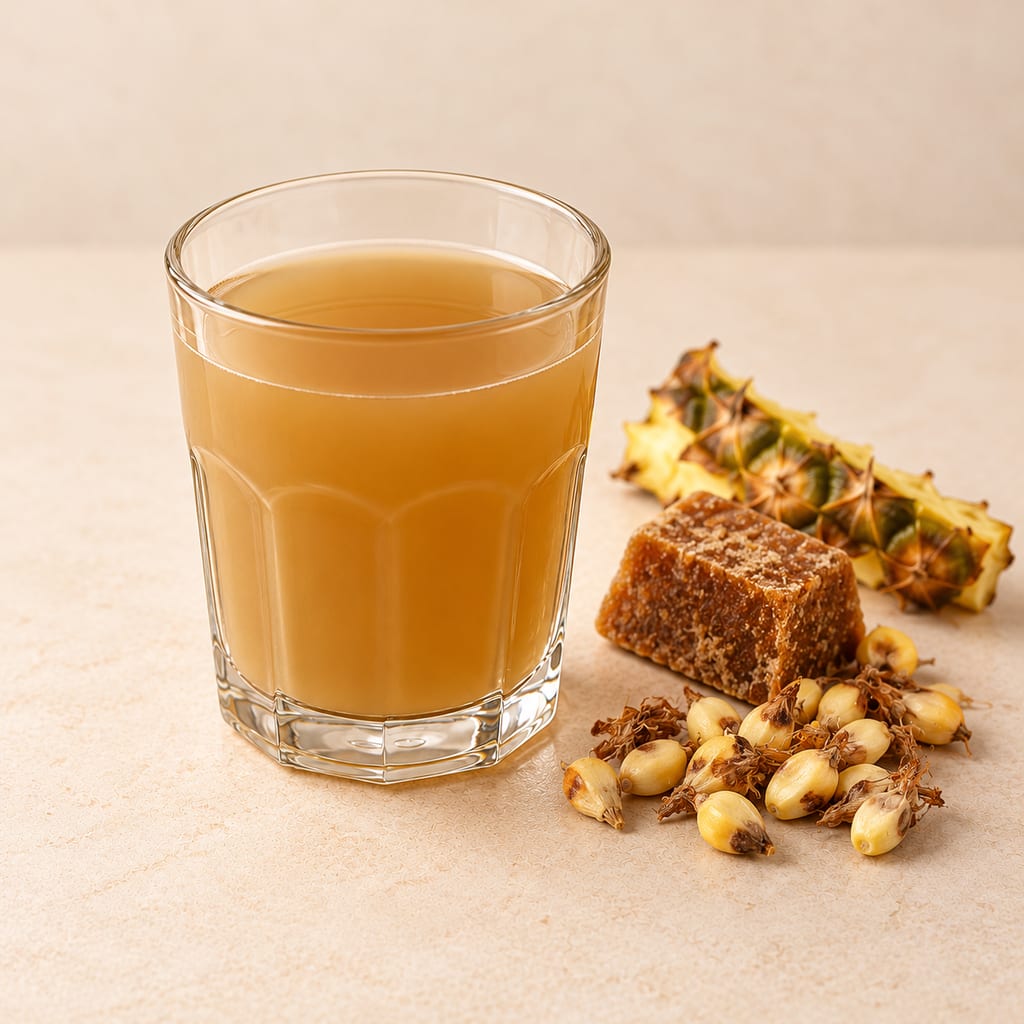
A contemporary Ecuadorian recipe simmers jora flour with spices, then adds panela and pineapple peel before a short spontaneous ferment. Its particular aromatics and measurements belong to this published adaptation.
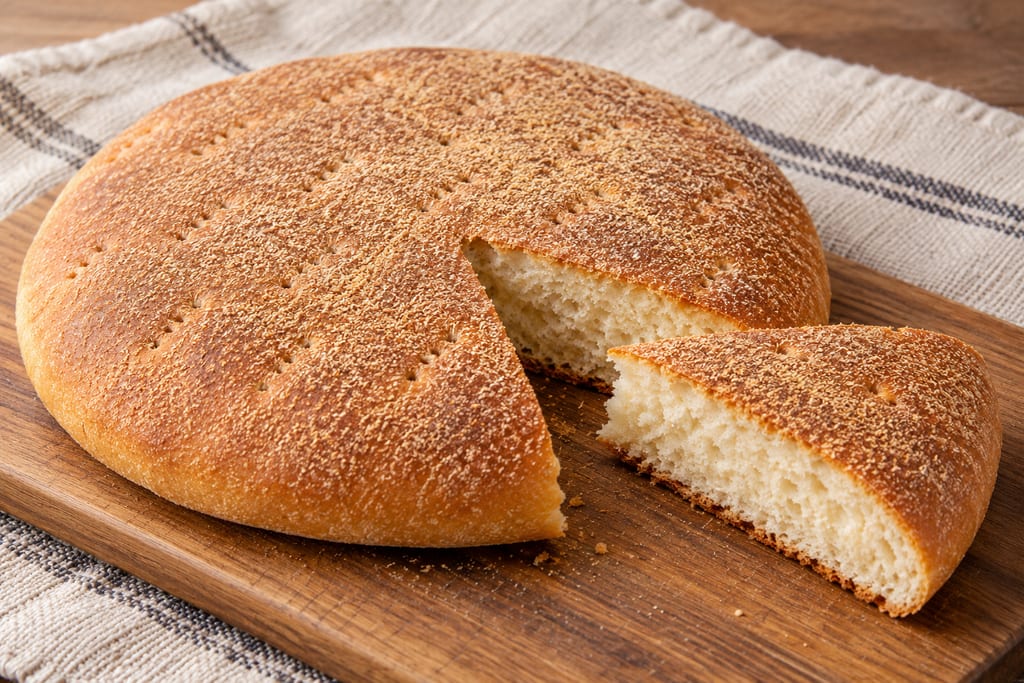
Pan chuta is a broad, lightly sweet wheat loaf associated with Oropesa in Cusco; this home-scale version uses chamomile, brown sugar and butter.
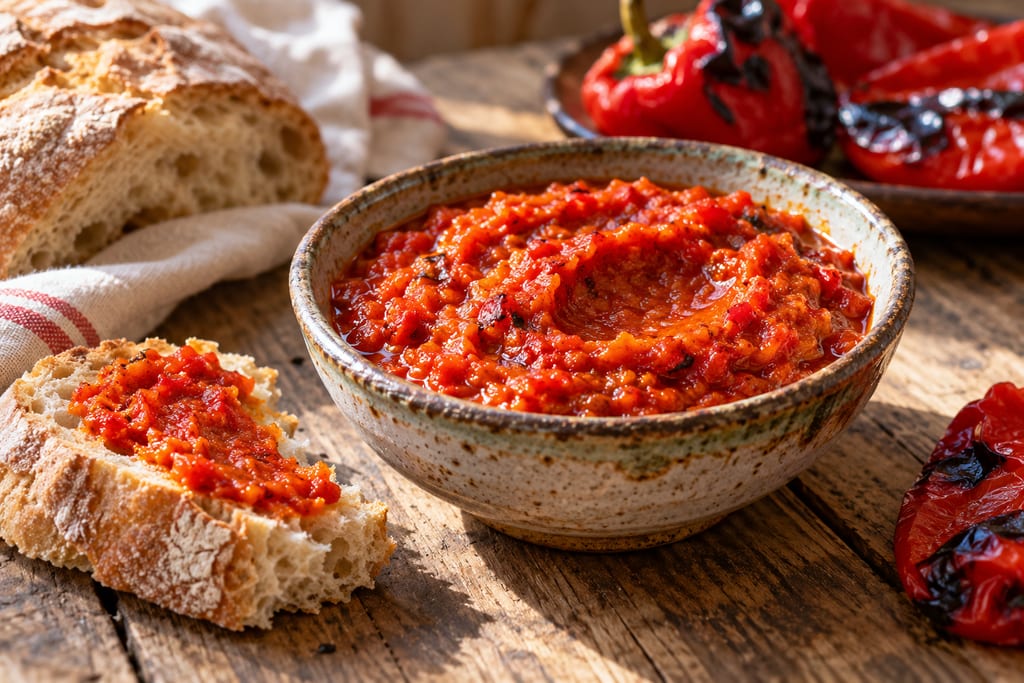
Ajvar is a cooked Balkan pepper preserve built around roasted red peppers, peeled, drained, ground and slowly fried with oil and seasoning. Leskovac’s protected version is a pepper specialty; regional versions vary.
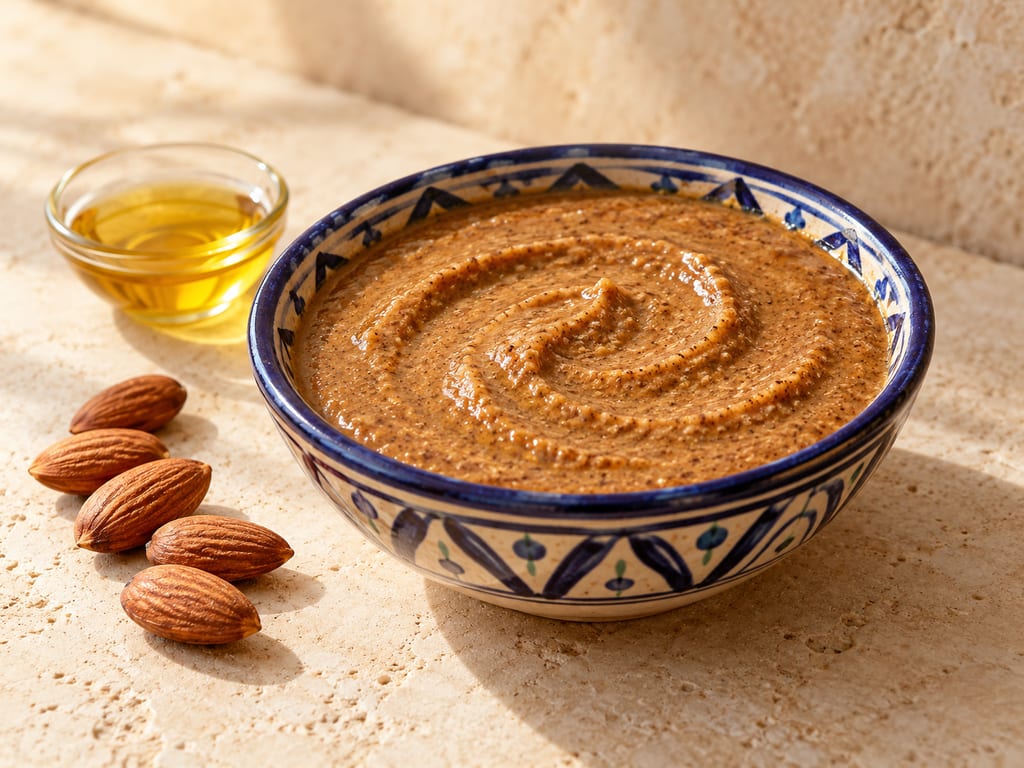
Amlou is a nutty, lightly sweet Moroccan spread of roasted almonds, culinary argan oil and honey. The almonds are ground first, then loosened with oil and sweetened; the balance can range from a thick spread to a dip.
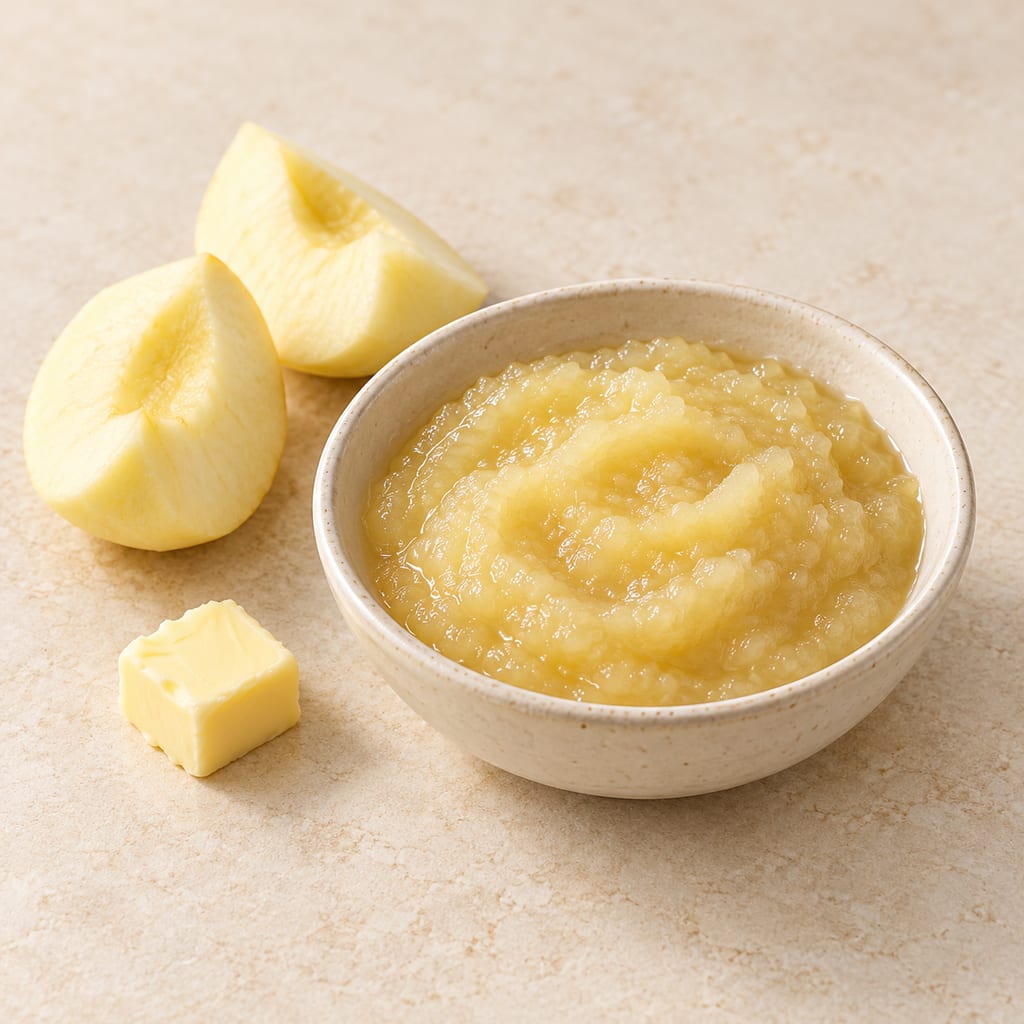
Apple sauce for goose and pork is a plain English accompaniment: cooked apples pulped with water, then sweetened with sugar and finished with a little butter.

A warm dip of garlic, anchovy and olive oil, often enriched with butter, that Piedmont serves over a flame with raw and cooked vegetables and bread.
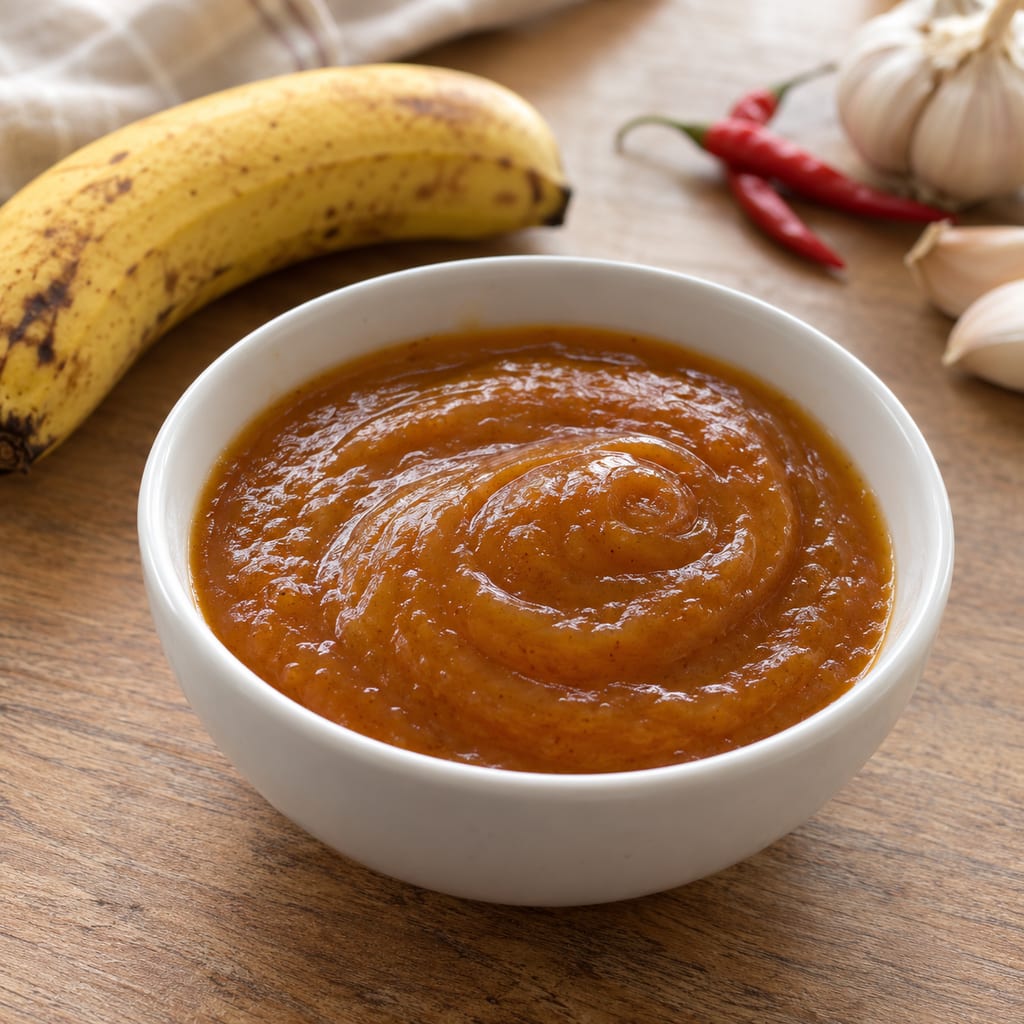
A sweet-hot table sauce of ripe banana simmered with vinegar, sugar, onion, garlic and fresh chilli, in the manner of Philippine banana ketchup. An untested development batch of about 500 g.
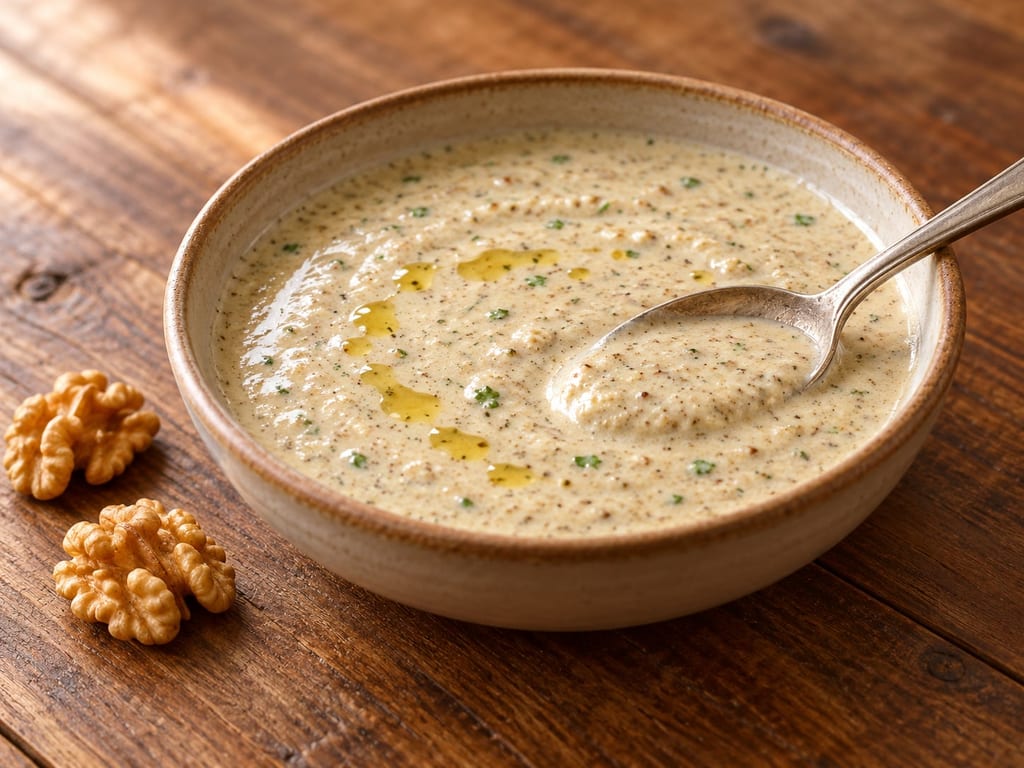
A Georgian walnut sauce of ground walnuts, garlic, vinegar and spices, thinned with water or broth. It is served with poultry, vegetables and bread, and is the sauce of the dish satsivi.
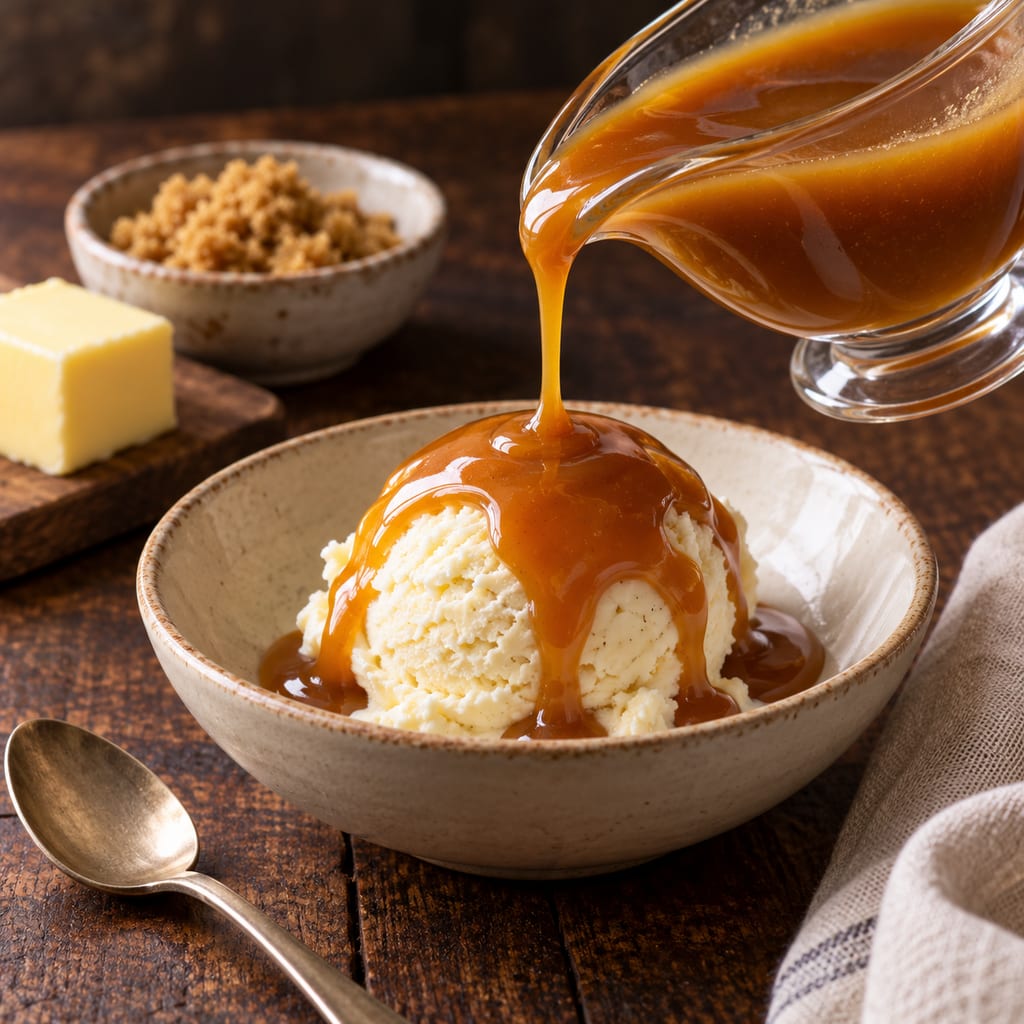
A pourable dessert sauce of brown sugar, butter and cream, with a little corn syrup and salt. It is the sauce form of the butterscotch confection and is made without water, unlike caramel.
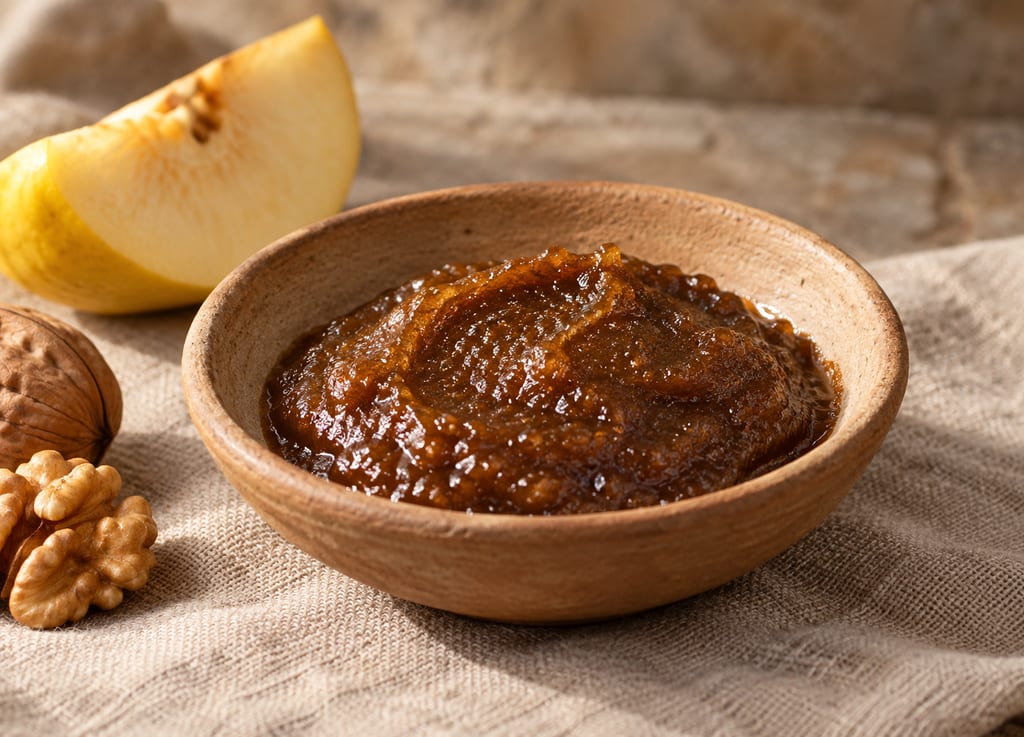
Byzantine murrī is a cooked imitation of murrī from the medieval Arabic repertoire, made from scorched honey, toasted bread, walnuts, quince, carob and spices rather than from a long grain fermentation.
No community contributions have been published for this entry yet.
Sign in to contribute. Published comments and photos are free to read.
WikipediaIdentity · Ingredients · Method · Serving · Origin
OcopaSmooth sauce flavoured with huacatay, originating in Arequipa, citing Morgan (2012).
Ingredients include yellow and mirasol peppers, onion, garlic, evaporated milk, fresh cheese, crackers, peanuts, huacatay, salt and oil.
Served as a dressing for boiled potatoes or a garnish for cold hard-boiled eggs; in Arequipa normally with potatoes or shrimp.
Cited in: A green sauce built on huacatay; Origins and the name; Making it at home; Serving
arequipa.netMethod · Huacatay · Serving
Ocopa arequipeña: origins and home recipeHome recipe for four: dried mirasol pods, 60 g walnuts, a small packet of soda crackers, 100 g fresh cheese, 10 stalks huacatay, salt and oil.
Huacatay essential oil is volatile; cooks switch off the blender and fold the herb in by hand.
Restaurant plates in Arequipa serve potatoes, hard-boiled egg and olives.
Cited in: A green sauce built on huacatay; Making it at home; Serving; Keeping and safety
Specialty ProduceHistory · Name
Huacatay information and factsGives an unsourced Quechua and Inca messenger account of the name and Spanish-period thickening; treated as folklore on this page.
Cited in: Origins and the name
WikipediaServing · Regional
Papa a la huancaínaIn southern Peru (Cuzco, Puno, Arequipa) huancaína is often served with ocopa.
Cited in: A green sauce built on huacatay; Serving
USDA FoodSafety.govSafety
4 Steps to Food SafetyRefrigerate perishable foods within two hours, or one hour above 90 °F (32 °C), and keep the refrigerator at or below 40 °F (4 °C).
Cited in: Keeping and safety