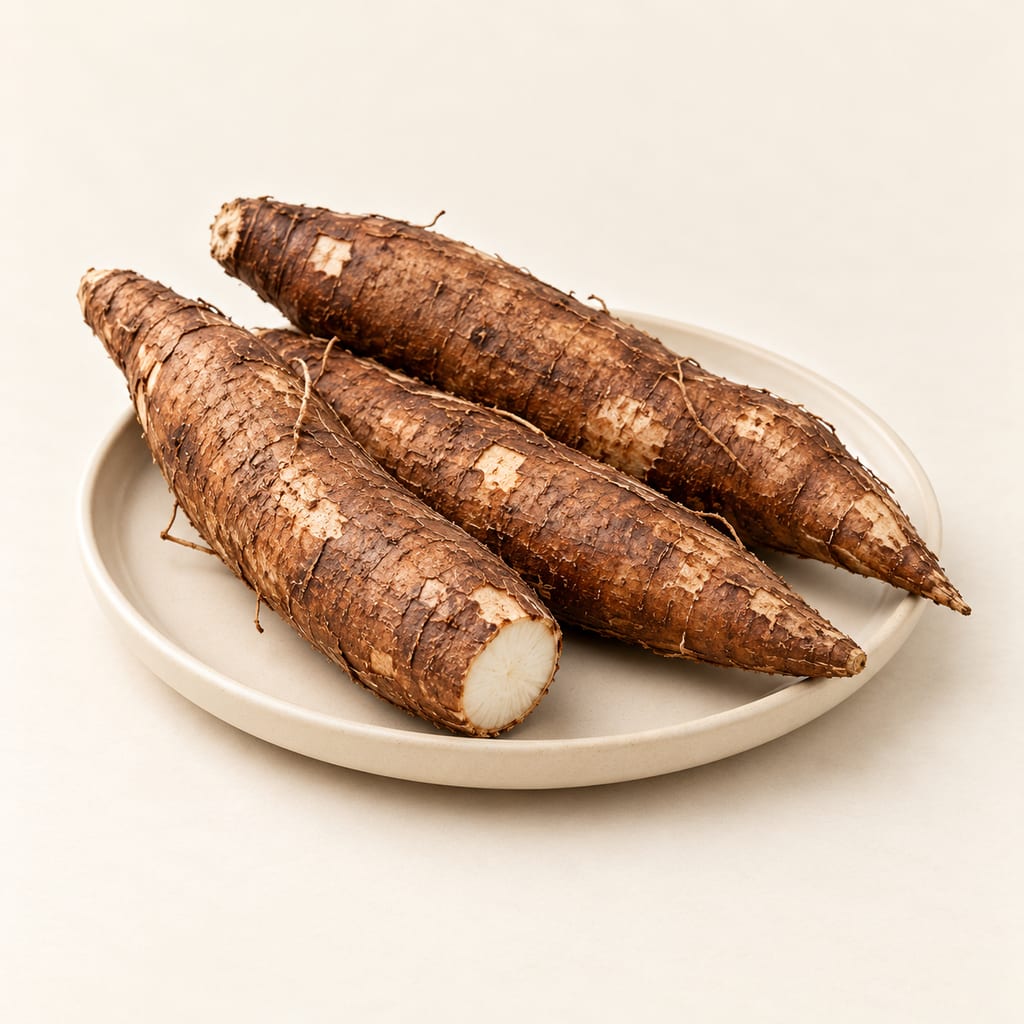
Cassava
Cassava is the starchy root of Manihot esculenta, transformed across Africa into fermented doughs, granules and flours through distinct processes whose safety depends on thorough cyanogen removal.
 FermenteaWhere food goes to change
Traditional method
ntoumba
Cameroonian fermented fresh cassava mixed with red palm oil, wrapped and steamed as a cake.
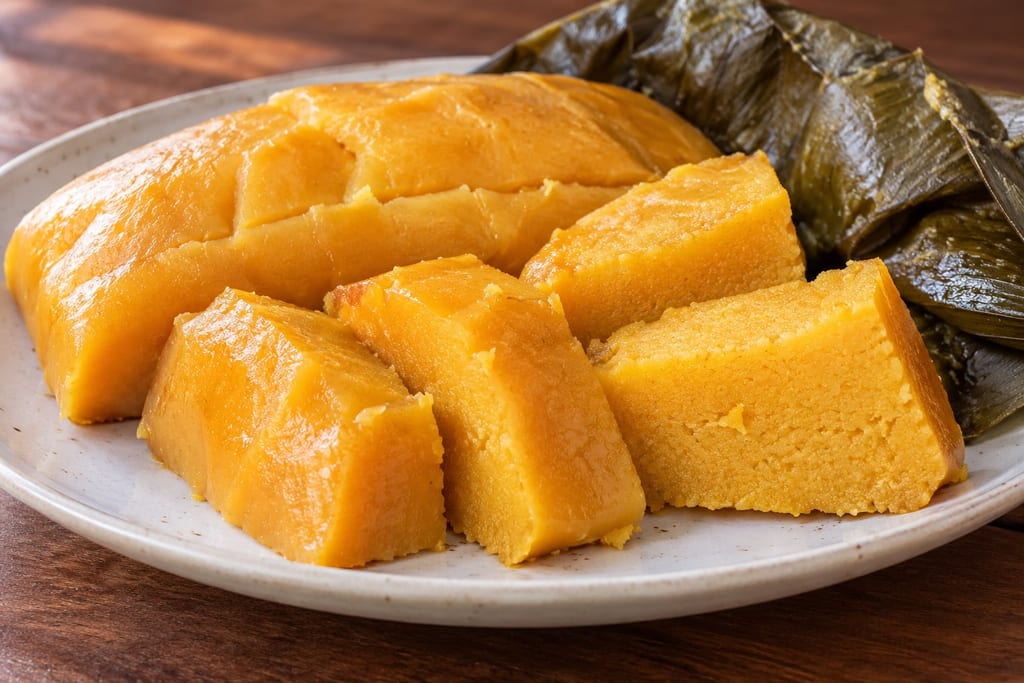
A 2021 WIPO inventory describes Mintoumba, also called ntoumba, as a traditional cake based on a Sawa recipe. It gives no dated first attestation.
Scaling: source batch only
Cassava contains cyanogenic glycosides; residual compounds depend on cultivar, tissue disruption, acidity and heat treatment. The Mintoumba descriptions do not provide a validated product-specific reduction endpoint.
Hazard sourceA 2024 study of fermented cassava foods sampled in Yaounde markets reported Mintoumba mean E. coli and coliform counts of 5.61 log10 CFU/g and coagulase-positive staphylococci of 5.66 log10 CFU/g; these are results from the sampled products, not universal values.
Hazard sourceCassava must be properly processed to reduce cyanogenic compounds. The sources available for this record do not validate Mintoumba-specific processing or a safe endpoint; fermentation and steaming descriptions alone do not establish safety.
Market-sample microbiology from Yaounde is not a home-process test or a safety guarantee.
WIPO's 2021 inventory describes Mintoumba as a traditional Sawa recipe in Cameroon; it does not date its origin.
This is the cultural-zone attribution used by the WIPO inventory, not a claim that the preparation is exclusive to this zone.
Mintoumba was sampled in local markets for a 2022–2023 study; this documents sale and sampling, not place of origin.
Cassava is the starchy root of Manihot esculenta, transformed across Africa into fermented doughs, granules and flours through distinct processes whose safety depends on thorough cyanogen removal.
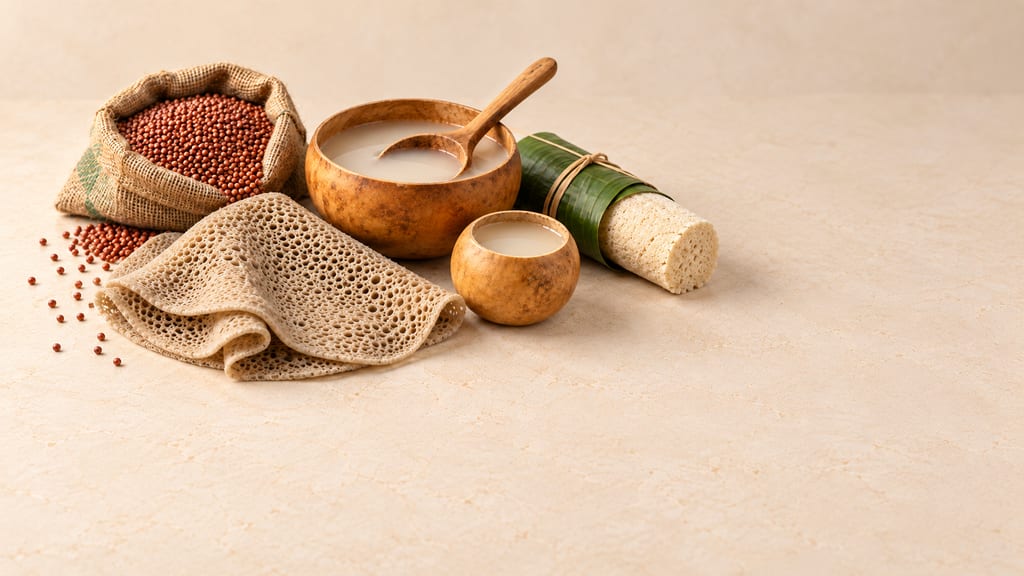
From sour breads and milk to savoury seeds, cassava staples and living beers, African fermentation follows the crop, the community and the work of transformation.
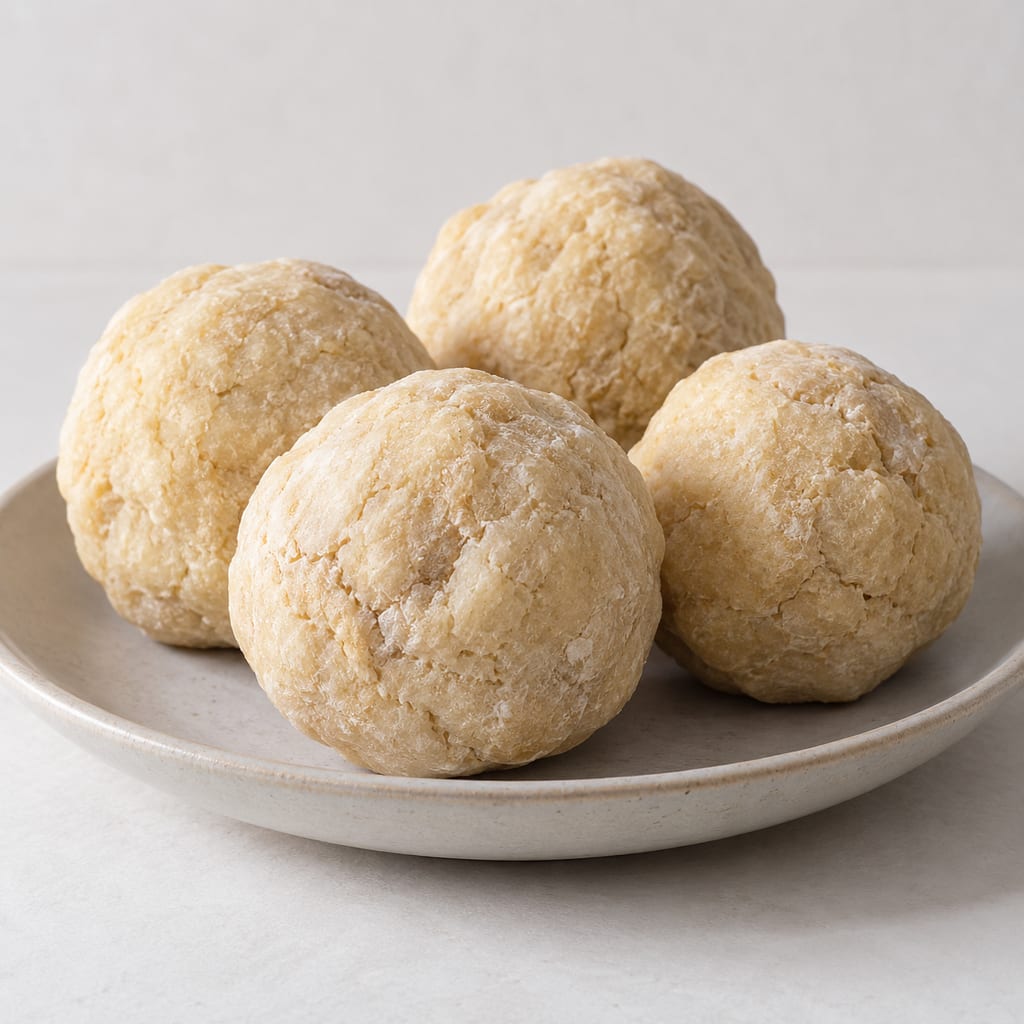
Kumkum is a Cameroonian fermented-cassava preparation described as balls dried over a fireplace and stored or milled into flour. Sources also describe a sun-dried market form; they give no Kumkum-specific safety endpoint.
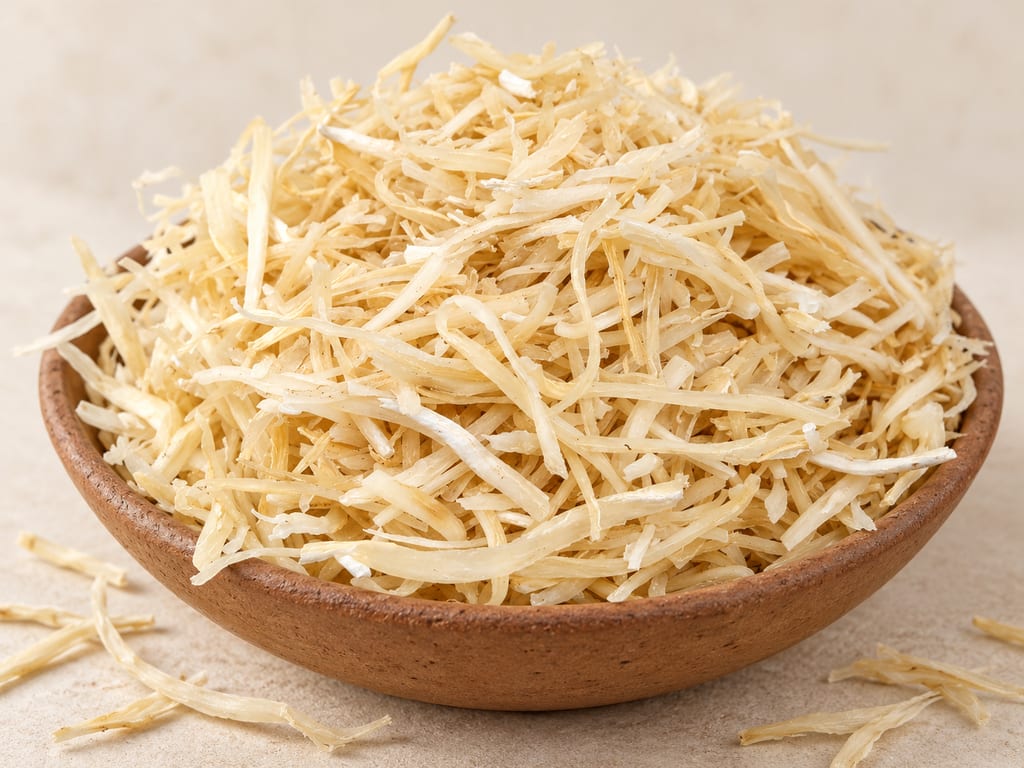
Abacha is a fermented cassava-strip preparation from southeastern Nigeria, sold wet or dried and later rehydrated for meals such as African salad.
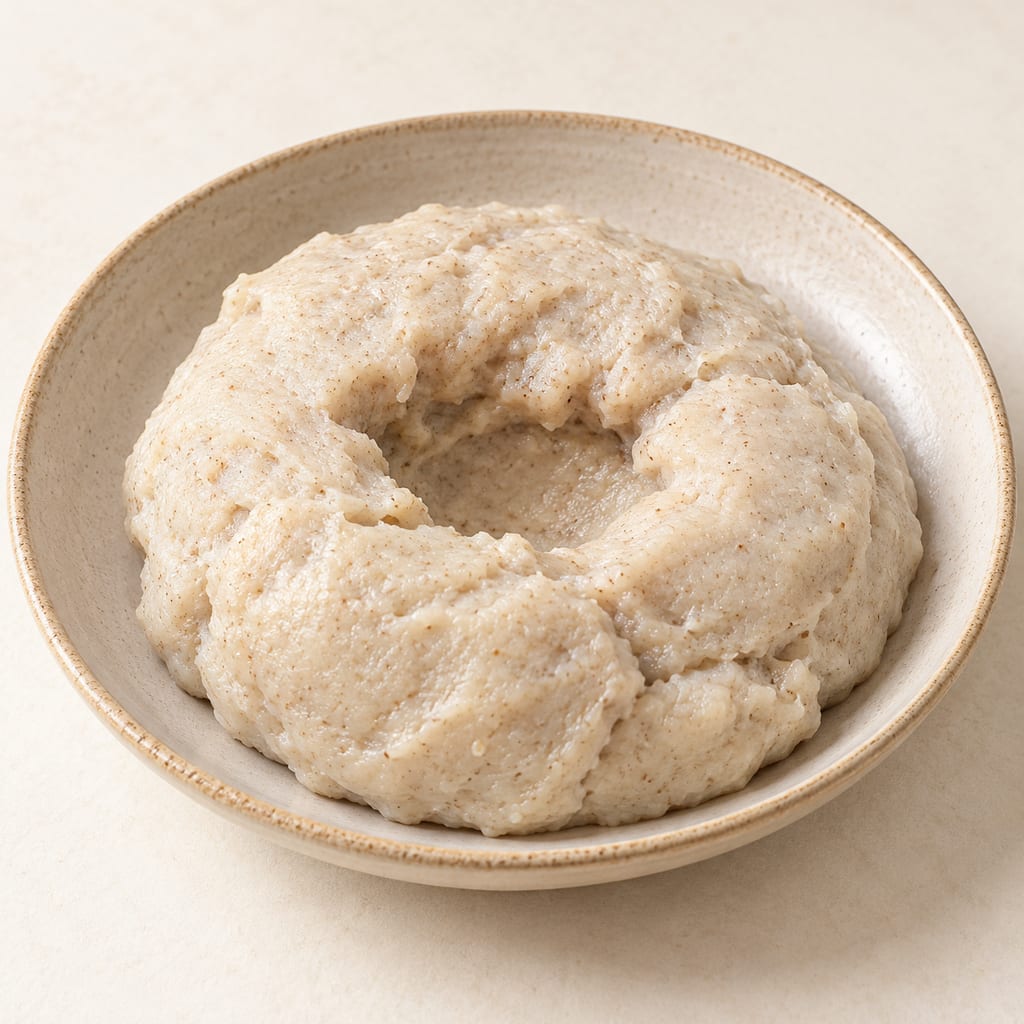
Aceda is Sudan’s firm cereal porridge, commonly made from sorghum and shaped into a smooth mound. Some versions use fermented dough; fermentation is not universal.

Ghanaian sour cassava dough fermented with traditional inoculum and drained during fermentation. It is used as a base for cooked foods such as banku and akple; process variants and safety outcomes differ.

Appam, or hoppers, are South Indian and Sri Lankan rice pancakes made from a fermented coconut-and-rice batter and cooked in a curved pan to a crisp lacy rim and a soft, spongy centre.
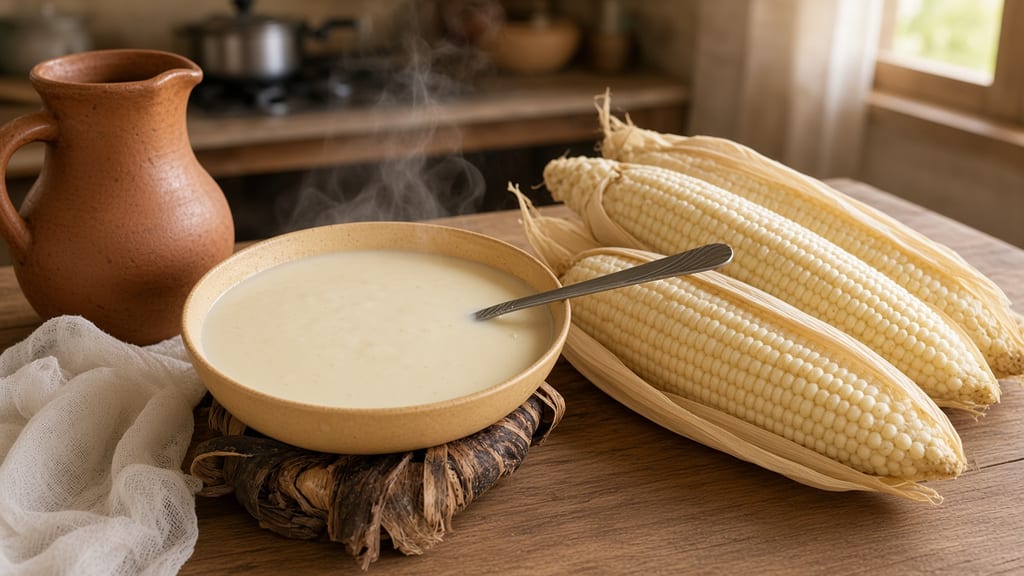
A hot, sour maize drink from Tabasco made from maize that is not lime-cooked. The ground grain sours for half a day, then makers strain it and boil it until thick.
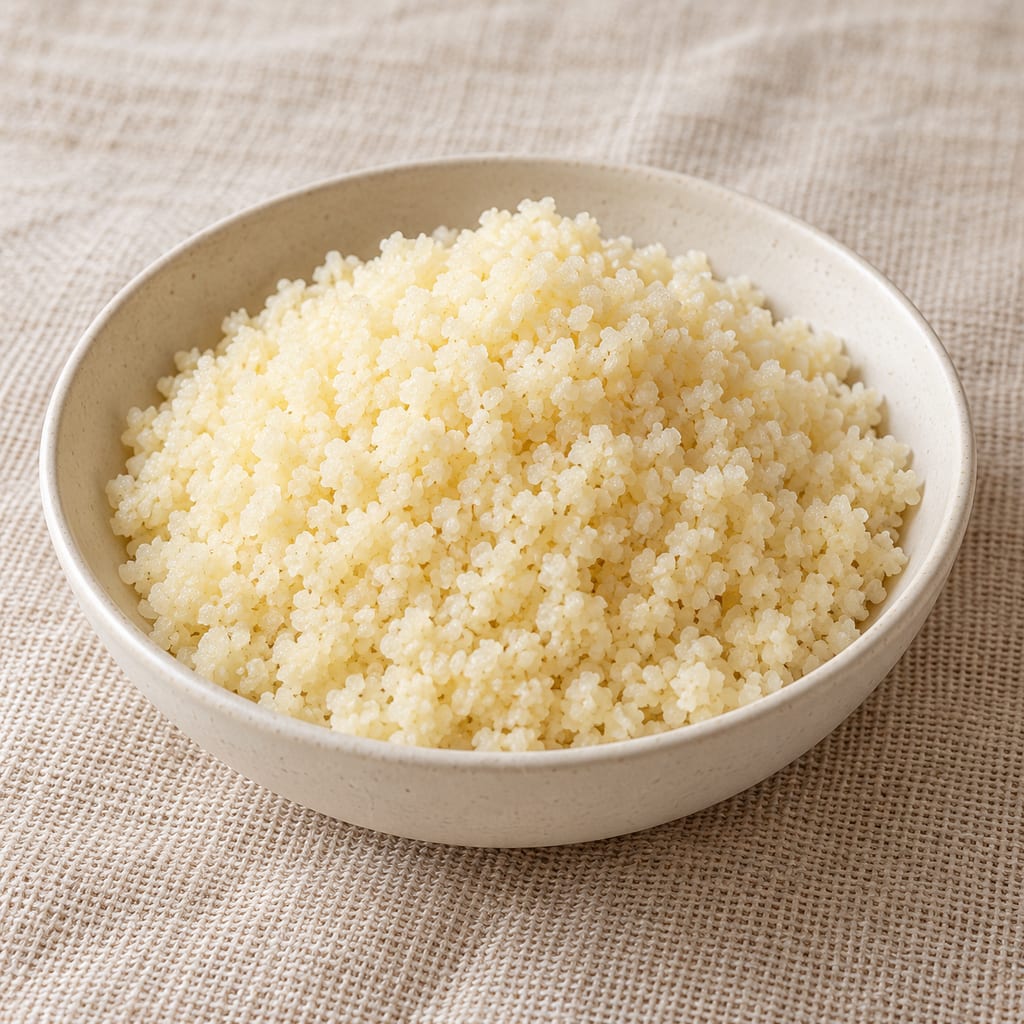
Ivorian cassava semolina: grated cassava is fermented overnight with a traditional inoculum, pressed, sieved into granules, dried and steamed. Documented in a 2006 field study; no sole original process is established.
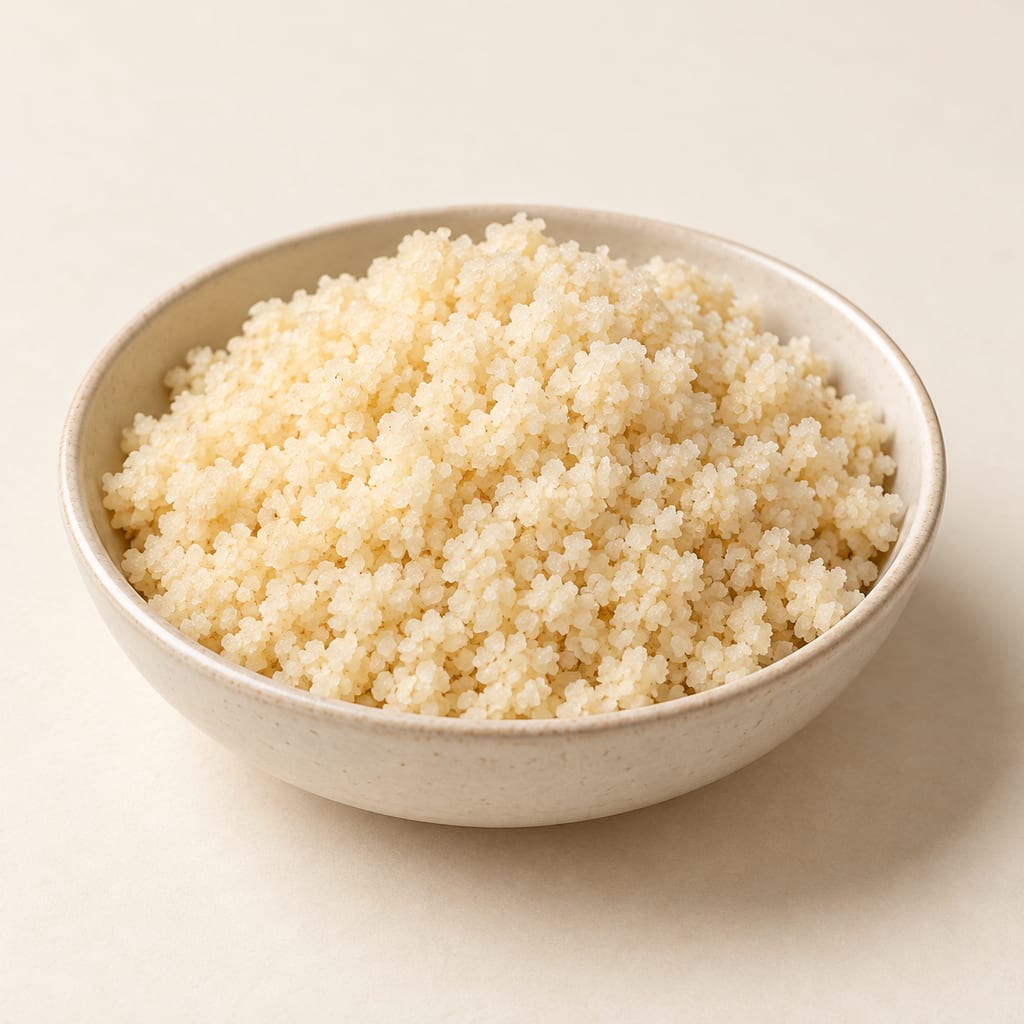
Attiéké is an Ivorian staple of grated cassava fermented with a traditional inoculum, then pressed, sieved, granulated, dried and steamed into fine couscous-like grains.

Crushed or milled barley cooked in water until the starch softens and the mixture thickens, the plainest way a northern household turned stored grain into a meal, here with apple and hazelnut.
No community contributions have been published for this entry yet.
Sign in to contribute. Published comments and photos are free to read.
World Intellectual Property OrganizationIdentity · History · Method · Geography
Exploratory study of the leading culinary traditions of CameroonNames Mintoumba and ntoumba; describes it as a traditional Sawa cake made from fermented fresh cassava and red palm oil, steamed in papillote; served as a snack or with sauce.
African Journal of Agriculture and Food ScienceMethod · Geography · Safety
Microbiological Contamination of Fermented Cassava Products Sold in Local Markets, Yaounde (Cameroon)The study sampled fermented cassava products including Mintoumba in Yaounde markets from November 2022 to April 2023; its figure depicts fermenting cassava roots, pressing and grinding, mixing oil for Mintoumba, and steaming. The Mintoumba samples had the reported mean microbial counts listed in this record; sample measurements are not process limits.
Codex Alimentarius Commission / FAOSafety
Code of Practice for the Reduction of Hydrocyanic Acid (HCN) in Cassava and Cassava Products (CAC/RCP 73-2013)Cassava contains cyanogenic glycosides; residual cyanogens depend on variety, tissue disruption, acidity and heat treatment. The code provides general cassava processing guidance, not a Mintoumba-specific validated endpoint.