Balata gobi
A balata gobi is a natural-rubber mother vessel documented in Wapishana parakari production in Guyana. It holds cassava mash for the second fermentation after the leaf-covered Rhizopus stage.
 FermenteaWhere food goes to change
Traditional method
parakari yeast · bishawad · parakari mother
A source-bounded account of Wapishana Parakari in Aishalton, Guyana. It preserves observations of a Rhizopus stage followed by yeast fermentation; it is not a household recipe or cassava detoxification guide.
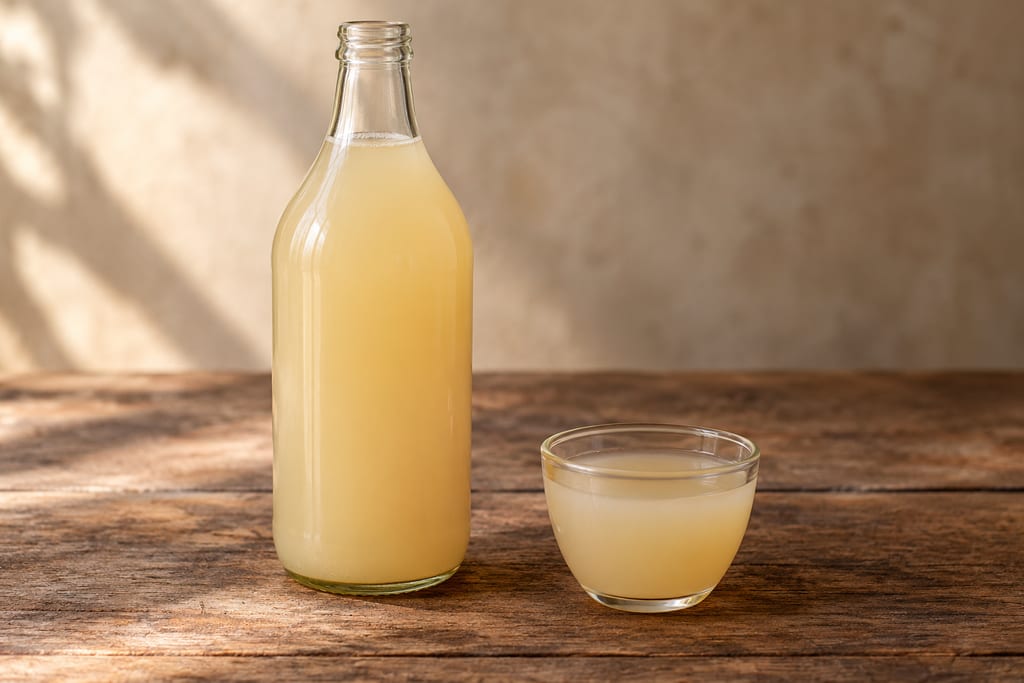
Parakari is a cassava beverage documented in Guyana. This record is scoped to the mold-assisted, two-stage process Henkel observed among Wapishana makers in Aishalton, South Rupununi. The article spells the people's name “Wapisiana”; Pereira's later writing uses “Wapishana.” Both spellings are preserved with their source contexts.
The name does not cover every cassava beer or every Amazonian starch-fermentation method. A Wapichana–Portuguese dictionary cross-glosses Parakari and Pajuaru, but that lexical association is not evidence that the Guyanese Aishalton process and the distinct Ticuna Pajuaru record from Brazil share a method. Cauim, caxiri and tarubá also remain distinct named drinks with their own community and process evidence.
In May 1994, Henkel visited farms in Aishalton and documented two batches made by Wapishana women. He records maker accounts describing the drink as existing “since the beginning of time”; this is community historical testimony, not an archaeological date. The study's journal issue is dated 2005, while its publisher page records online publication in 2017.
Pereira's 2019 community-focused account documents Parakari and cassava work in Maruranau, a separate Wapishana setting. Henkel also reports associations in other people's accounts with Macusi, Patamona and Wai Wai; those mentions do not establish one uniform route or current distribution. A 2020 Cobra Collective page links a community-researcher video from Parikwarinawa, South-Central Rupununi; the video itself was not viewed.
Henkel records fully fermented Parakari as a drink consumed through the day by adults and a sweet, weakly fermented form consumed by children in Aishalton. Pereira describes the thick, starchy drink as food and beverage associated with communal farm work and celebrations. These observations document situated use; they are not a safety assessment or recommendation.
The Cobra Collective frames the Parikwarinawa video as community-led documentation of Parakari, and describes family knowledge as learned through accompanying parents and grandparents and practising across generations. Vimeo's description says village participants made the short film during field training in participatory video and traditional knowledge. These records support the setting and the way knowledge is shared; the video itself was not viewed, so neither page supplies additional preparation steps or validates safety.
Henkel describes a sequence in which cassava bread supports growth of a starch-degrading Rhizopus, followed by alcoholic fermentation by ambient yeasts. The cassava bread is prepared and arranged with starch-enhanced inoculum carried on Trema micrantha leaves. Heliconia leaves cover the solid first-stage bed. After this stage, the material moves to a separate vessel for the later fermentation. The paper calls the mold Rhizopus sp.; it does not establish a species-level identification, and it does not fully characterize the later yeast community.
The two phases do different work: the first makes cassava starch available as fermentable sugars, and the later stage is associated with yeast fermentation. The study observed two large batches of roughly 200 lb of cassava each and describes about 30 production steps. Those are field observations, not a household formula or scale-down instruction. The batches differed in cassava variety and observed rate. No common quantity set, yield, fermentation duration, temperature range or endpoint is entered as a recipe.
Henkel also records the scale of varietal knowledge behind those two batches: his informants distinguished 37 cassava varieties across their farms, reported 20 in Parakari, and considered eight especially desirable for fermentation qualities. Four varieties were reported as Parakari-only; three were slow fermenters and one, maidanair, was fast. This is Aishalton-specific evidence of ingredient diversity and fermentation variation, not a universal variety list or selection rule.
Wapishana makers do not buy a starter. A Wapishana culture account records “parakari yeast” as a local name for the inoculum, and associates bishawad, or “parakari mother”, with Trema micrantha leaves. It describes other inoculum forms as well. These variants stay distinct: a species reported in one study does not show that all community-retained inoculum is the same strain, and the inoculum has no standard form.
The beverage, the inoculum and the two stages are separate things. The name “parakari yeast” is local usage; in Henkel's account the first-stage organism is a Rhizopus mold, and the yeasts of the second stage are ambient ones that the paper does not characterize.
Pereira's Maruranau article records its own Wapishana tool names, processing observations and community descriptions. Its account includes straining with a parakari-tana or manaru and notes bitter outcomes associated with processing variation and insect access where mash was not sealed. These observations complement, but do not replace, Henkel's Aishalton process record.
Barghini's reviews discuss other Amazonian amylolytic fermentations, including distinct tarubá and tiquira studies. Similar cassava substrates, mold activity or lexical cross-glosses do not establish that those drinks use Parakari's inoculum route. No process link is added to generic cassava drinks or the separate Ticuna Pajuaru item.
Henkel's Aishalton study names a stone-point or bicycle grater, a woven matape press, a woven screen, a metal pan over a fire, a mortar and pestle, inoculum and cassava tubs, baskets, large “mother” fermentation vessels and a thermometer used by researchers to measure culture temperature. Pereira's Maruranau account names a woven matapi, a parakari-tana or manaru strainer, clay or balata vessels, and cloth or metal strainers alongside woven forms. These source-specific names are not treated as interchangeable equipment.
The published Parakari fermentation-bed record is linked to this recipe for the solid first stage, and the published balata-gobi record is linked for the later vessel stage. Their links preserve those roles without making either a universal household requirement. The cited studies give no common capacity, material grade, cleaning specification, or validated modern equivalent for the remaining tools.
Both field accounts concern bitter cassava. Cassava contains cyanogenic glycosides that can release hydrogen cyanide, and the Codex Code notes that residual cyanogens depend on variety and growing conditions as well as processing conditions such as tissue disruption, acidity and heat. This general guidance does not validate Parakari or supply a safe limit for its stages.
Pereira warns that improperly processed bitter cassava can be deadly. Henkel's observed sequence is not a household detoxification protocol; neither study reports residual cyanogen tests that establish a safe endpoint. The field article also says ethanol was judged subjectively because reliable measurement was unavailable. Taste, smell, pH, bubbles, visible mold, elapsed time and reported keeping do not establish safety.
The publications do not provide a validated household method, starter specification, residual-cyanogen endpoint, measured alcohol strength, pressure criterion or storage duration. No controls are supplied here. This note does not tell readers how to prepare bitter cassava or imply that fermentation alone makes it safe.
Henkel's May 1994 fieldwork documents Wapishana makers in Aishalton, South Rupununi, Guyana. His paper records maker accounts describing Parakari as existing “since the beginning of time”; that is a community historical account, not an archaeological date. Pereira's 2019 article documents separate Wapishana cassava practice in Maruranau. These studies establish documented settings, not a single origin or one uniform practice.
Scaling: source batch only
Cassava contains cyanogenic glycosides that can release hydrogen cyanide. Codex states that variety and processing conditions affect residual cyanogens; its general guidance does not validate Parakari or establish a product-specific endpoint.
Hazard sourceThe Parakari field studies do not establish a household residual-cyanogen test or endpoint, and Pereira describes deadly outcomes from improperly processed bitter cassava. The community process observations are not safety validation.
Hazard sourceThis source-bounded account is not a household cassava preparation or detoxification protocol. The cited studies do not establish a safe, transferable method for bitter cassava.
The field studies do not establish residual cyanogen, alcohol strength, a validated fermentation endpoint, or a safe storage duration. Taste, smell, pH, bubbles, visible mold and elapsed time are not safety tests.
The study directly documents two Wapishana maker batches at this locality; it does not establish a place of origin or a universal process.
The article documents Wapishana cassava practices and Parakari in this setting; its tools and observations are not automatically identical to Henkel's Aishalton batches.
The page identifies a community-researcher Parakari video from this setting; the video was not viewed, so no process detail is attributed to it here.
A balata gobi is a natural-rubber mother vessel documented in Wapishana parakari production in Guyana. It holds cassava mash for the second fermentation after the leaf-covered Rhizopus stage.
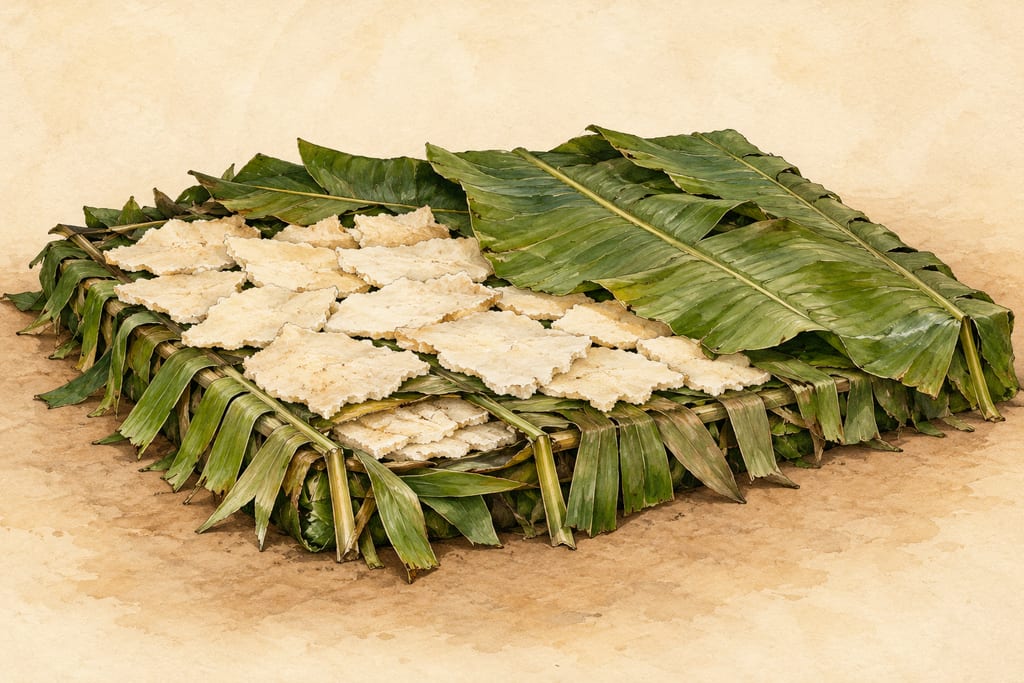
A floor-laid leaf bed holds layered moist cassava bread for parakari’s solid-state first stage. Wapishana and Makushi ethnographies document distinct leaf materials; the bed is opened before its contents move to a separate vessel.
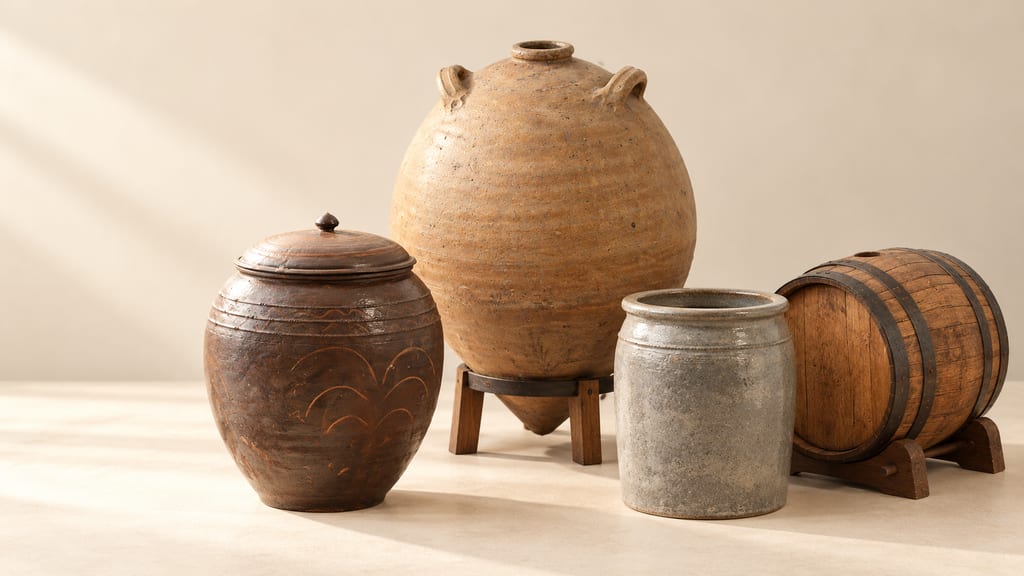
Jars, barrels, skins, leaves, pits and whole rooms decide much of what happens to fermented and cured food. This is how a container works on its contents, and how people in different places chose theirs.
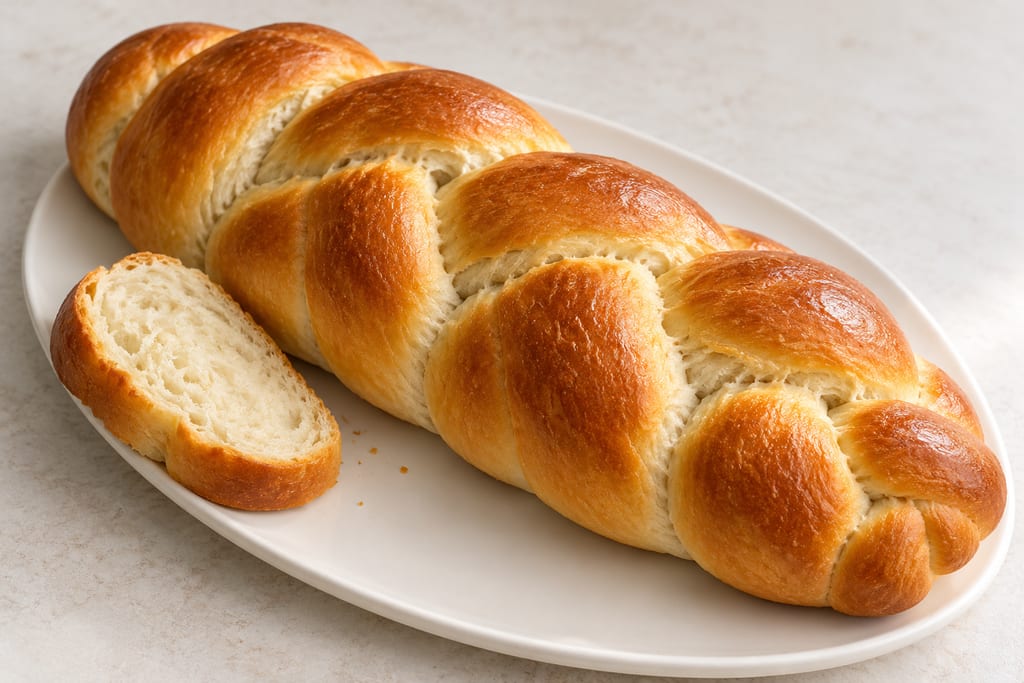
A soft, butter-enriched, eggless Guyanese loaf, shaped into a three-strand plait and baked for Christmas breakfast or everyday meals.
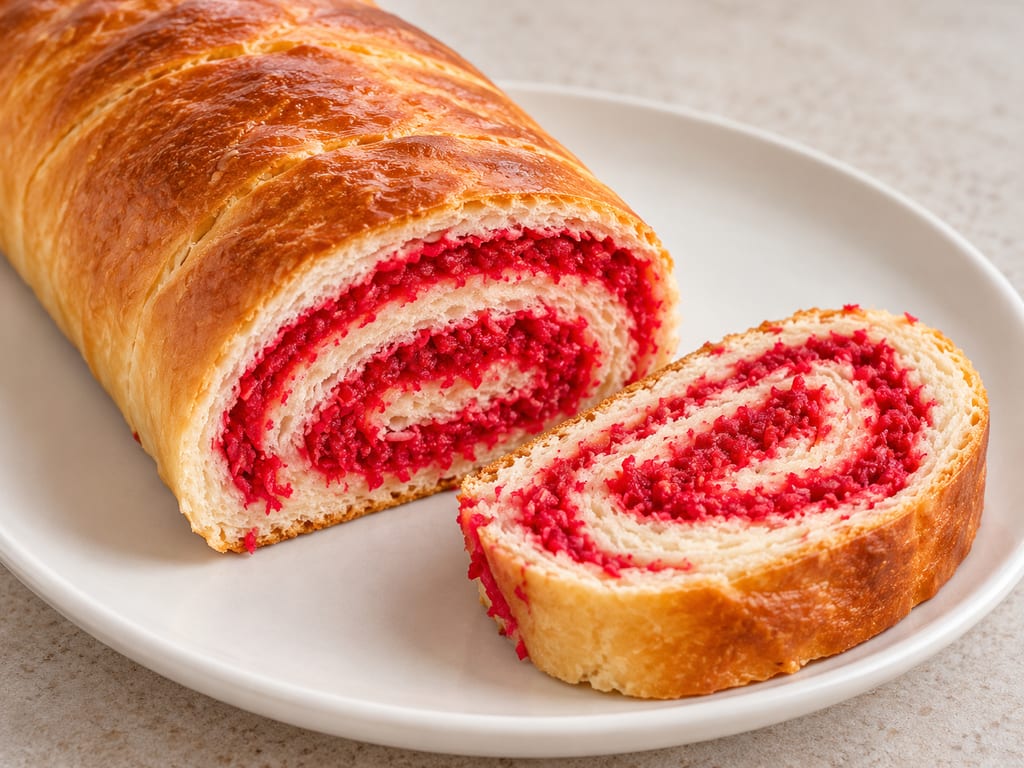
Salara is a Guyanese sweet bread rolled around red coconut, baked as two loaves and sliced for breakfast, tea or a snack.
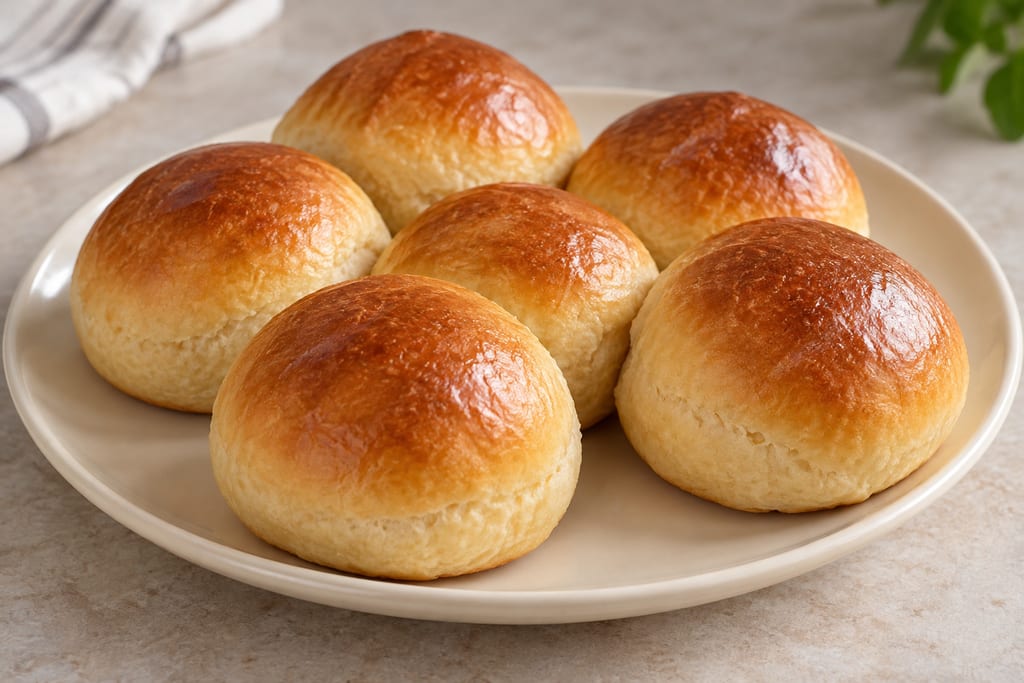
Guyanese tennis rolls are small, round, sweet yeasted breads flavoured with lemon and vanilla. They are often split and eaten with cheddar; this recipe is separate from Guyanese plait bread.
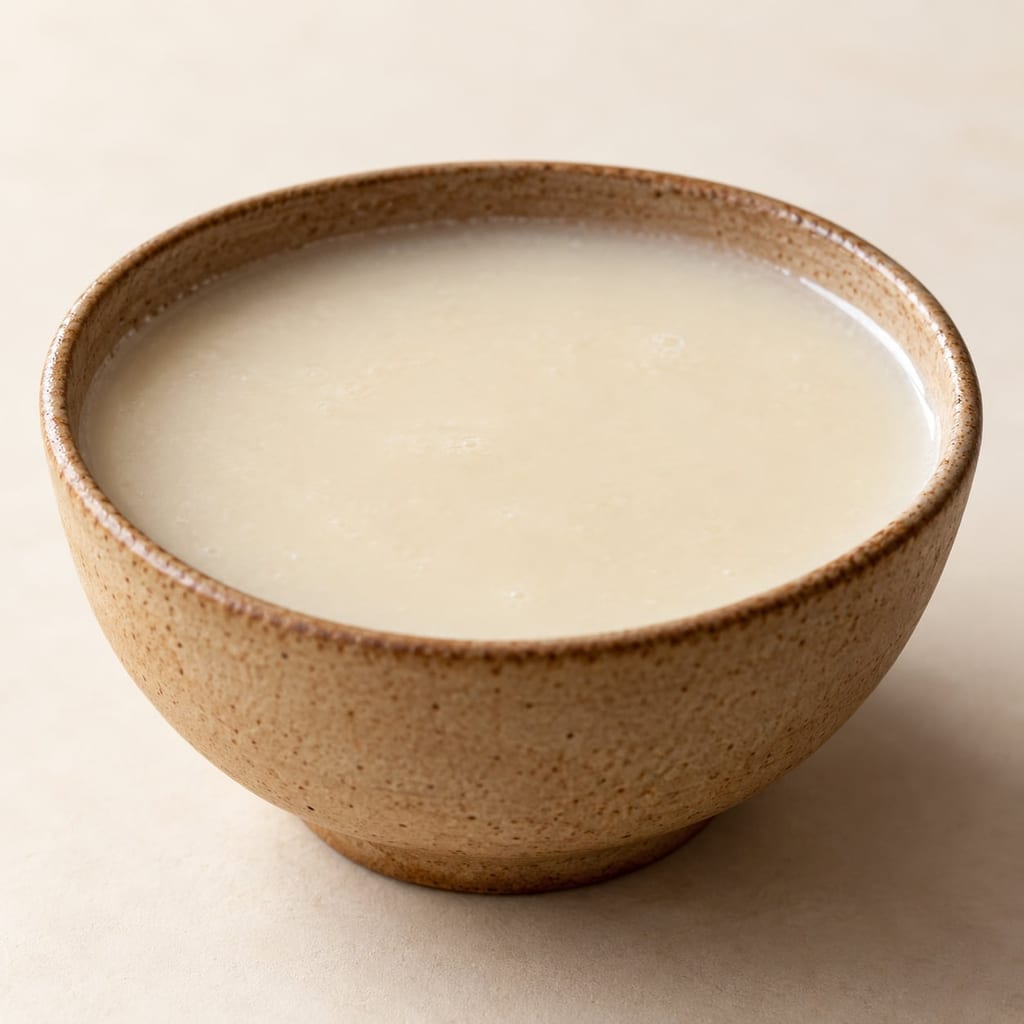
Tarubá is a cassava drink documented in several distinct Amazonian settings. Community-linked accounts describe different beiju-based processes; they do not establish one universal recipe, fermentation culture or safety endpoint.

Soft, spreadable Calabrian pork sausage made with a great deal of red chilli and fatty pork, stuffed into natural casings, sometimes smoked and matured while staying soft.

A way to add independent temperature logging to an existing food dehydrator without changing its built-in controls or protections. It is a monitoring method, not a rewiring plan.

Pleurotus cystidiosus is the abalone mushroom, a cultivated oyster-type fungus with dark brown caps that grows more slowly and is more demanding than other Pleurotus species.

A dark, balanced vinegar from Emilia-Romagna made by combining cooked or concentrated grape must with wine vinegar, then acetifying and refining it in wood under a protected specification.

A living dairy inoculum that starts controlled cream fermentation, developing acidity and aroma before sour cream or cultured butter is finished.

A small electric incubator holds jars at a selected temperature for yogurt and other documented warm food preparations. Controls, capacity and vessel arrangement vary by model.

Adygean salt is a seasoned table salt associated with Adygea and the wider North Caucasian culinary tradition. Salt is blended with garlic and a variable selection of herbs and spices; the exact mix depends on the named style and maker.

The African Caesar-group mushroom, Amanita masasiensis, is a wild ectomycorrhizal species of central and southern African woodlands, eaten locally. The genus contains deadly poisonous species, so identification needs care.
No community contributions have been published for this entry yet.
Sign in to contribute. Published comments and photos are free to read.
Mycologia / The Mycological Society of AmericaIdentity · Method · Ingredients · Geography · History · Equipment · Safety
Parakari, an indigenous fermented beverage using amylolytic Rhizopus in GuyanaFull author-uploaded article HTML inspected in the dossier; its linked PDF endpoint returned 404.
May 1994 Aishalton fieldwork records two Wapishana maker batches, a roughly 30-step process, cassava bread, Rhizopus sp., a Trema micrantha inoculum carrier, Heliconia covers and later alcoholic fermentation by ambient yeasts.
The study's batches differed in cassava variety and observed rate; its field ethanol assessment was subjective and unreliable. It does not validate a household method or safety endpoint.
The study describes phase-specific tools and process observations; no per-image reuse licence was located.
Henkel reports that his two Aishalton informants distinguished 37 cassava varieties; 20 were used for Parakari and eight were considered most desirable for fermentation qualities. Four varieties were used only for Parakari; three were described as slow fermenters and one as fast. These are local varietal observations, not a household selection guide.
Cited in: The Aishalton Parakari record; Places, history and use; Two fermentation stages in the Aishalton account; The inoculum: parakari yeast and bishawad; Tools named in the field studies; Bitter cassava and the limits of the evidence
Mycologia; PubMedMethod · Identity
Parakari, an indigenous fermented beverage using amylolytic Rhizopus in Guyana (PubMed abstract record)Thirty production steps in the Wapisiana village of Aishalton, including selecting specific cassava varieties, controlling temperature and boosting the mold inoculum with purified starch.
A dual process of an amylolytic Rhizopus mold followed by a solid-substrate ethanol fermentation; glucose, pH, flavour, odour and culture characteristics change during fermentation.
Cited in: Two fermentation stages in the Aishalton account
WikipediaMethod · Summary
ParakariGrated cassava drained in a long woven strainer; flour made into bread that is deliberately overcooked; bread soaked, broken up and placed on a bed of leaves with Rhizopus-bearing dried cassava-leaf powder, tapioca starch and dried cassava slices.
A second fermentation in a vessel runs from 1 day to 5 weeks; a shorter time gives a sweeter drink, a longer one a more bitter, alcoholic one.
Archaeology and Anthropology: Journal of the Walter Roth Museum of Anthropology, volume 23Identity · Method · Geography · Uses · Equipment · Safety
Cassava as an Important Part of Wapishana Culture in South-Western GuyanaSelected article pages 4–36 of the 119-page issue PDF were inspected; the article is a community-focused account of cassava practice, especially Maruranau.
Records 'parakari yeast' as a local name for inoculum and associates bishawad, or 'parakari mother', with Trema micrantha leaves; describes other inoculum forms.
Describes local processing, strainers and vessel forms, food and communal uses, and source-specific failures or bitter outcomes.
The article warns that improperly processed bitter cassava can be deadly; it does not give a Parakari-specific residual-cyanogen endpoint or validated household controls.
Cited in: The Aishalton Parakari record; Places, history and use; The inoculum: parakari yeast and bishawad; Wapishana accounts and neighboring processes stay distinct; Tools named in the field studies; Bitter cassava and the limits of the evidence
Boletim do Museu Paraense Emílio Goeldi. Ciências HumanasHistory · Variation
Ethnohistoric review of amylolytic fermentation in AmazoniaFull English HTML and Portuguese abstract were inspected in the dossier.
Reviews historical reports of different Amazonian amylolytic processes; historical names and starch-conversion methods do not establish that every cassava drink is Parakari.
Cited in: The Aishalton Parakari record; Wapishana accounts and neighboring processes stay distinct
Boletim do Museu Paraense Emílio Goeldi. Ciências HumanasHistory · Variation
New data on amylolytic fermentation in the AmazonPublisher-indexed article text and metadata were inspected; direct SciELO open was blocked by a security interstitial.
Discusses other regional amylolytic reports and separately analyzes tiquira and tarubá; the article does not equate them with Parakari.
Cited in: The Aishalton Parakari record; Wapishana accounts and neighboring processes stay distinct
Cobra CollectiveGeography · Use
Indigenous Heritage 2020: Importance of ParakariThe page identifies Parikwarinawa in South-Central Rupununi and links a community-researcher preparation video.
The video was not downloaded, transcribed or viewed; no process details are inferred from it.
No video-specific reuse licence or permission statement was located.
Cited in: Places, history and use
Editora da Universidade Federal de Roraima (EDUFRR)Names
Paradakary Urudnaa: Dicionário Wapichana/Português, Português/WapichanaSelected Wapichana–Portuguese entries and front matter inspected in a hosted copy; printed pp. 78 and 210 cross-gloss Parakari and Pajuaru.
A dictionary entry documents lexical association only, not process identity between the Guyanese Parakari record and the separate Ticuna Pajuaru candidate.
The hosted copy records copyright and all-rights-reserved wording; no copy or excerpt is reproduced here.
Cited in: The Aishalton Parakari record; Wapishana accounts and neighboring processes stay distinct
Codex Alimentarius Commission (FAO/WHO)Safety
Code of Practice for the Reduction of Hydrocyanic Acid (HCN) in Cassava and Cassava Products (CXC 73-2013)The Code states that cassava cyanogenic glycosides can release HCN and that residual cyanogens depend on cassava variety and growing conditions as well as tissue disruption, acidity and heat treatment.
The Code is general cassava guidance; it does not provide a Parakari-specific process validation or safe limit.
Cited in: Bitter cassava and the limits of the evidence
Vimeo / Cobra Collective UKHistory · Geography · Use
Importance of ParakariVimeo's description says the short video was made by participants of Parikwarinawa village in the South Rupununi, Guyana, during field training in participatory video and traditional knowledge.
Only the video landing-page description was inspected; the video itself was not viewed, so no preparation details are attributed to it.
No display licence or permission for public reuse of video stills was established.
Cited in: Places, history and use