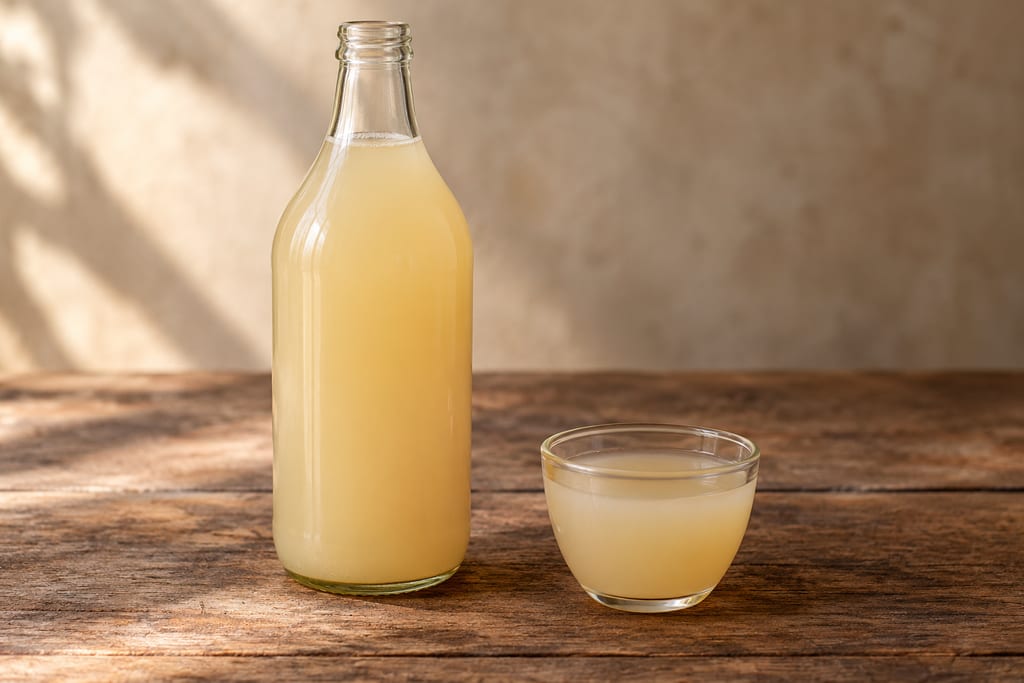
Parakari
A source-bounded account of Wapishana Parakari in Aishalton, Guyana. It preserves observations of a Rhizopus stage followed by yeast fermentation; it is not a household recipe or cassava detoxification guide.
 FermenteaWhere food goes to change
Equipment · Tanks and vats
gobi · gobie · natural-rubber mother vessel
A balata gobi is a natural-rubber mother vessel documented in Wapishana parakari production in Guyana. It holds cassava mash for the second fermentation after the leaf-covered Rhizopus stage.
The balata gobi belongs to a particular moment in making parakari. After cassava bread has been layered and cultured under leaves, the softened, sweetened mass is lifted by hand into a covered vessel. Henkel's account calls the containers large “mother” vessels and identifies natural-rubber gobies alongside buckets. The gobi therefore holds the mash after its first, mold-led stage; it is not the leaf-covered bed where that first stage takes place.
The name is also used in a later Wapishana account: Gerard Pereira describes local round pottery or balata vessels called gobi. That account distinguishes the balata gobi from buckets while placing both among the covered containers used for the next stage. The term describes a vessel role in this practice, rather than a standard manufactured shape.
Parakari's first stage grows Rhizopus on cassava and turns starch into sugars. Once that cultured mass is ready, it moves into the gobi or another covered container for the subsequent fermentation. Henkel reports that the vessel is covered to limit airflow while ambient yeasts ferment the sugars; the mash produces gas, so the cover is periodically loosened and tightened again. The container is part of a two-stage sequence, not a stand-alone fermentation system.
Henkel records natural-rubber gobies and buckets as alternatives for holding this mash, but provides no comparative measurements of oxygen entry, temperature, pressure, taste or fermentation rate. It would be unjustified to claim that rubber itself creates a particular flavour or makes the process safer. The established function is straightforward: the vessel holds the cultured cassava mass under a cover during the second stage, with intermittent pressure release.
Henkel's 2005 paper documents the vessel in a field study of Wapishana parakari in Aishalton, South Rupununi, based on observations made in 1994. A later article on Wapishana cassava culture records balata vessels called gobi in Maruranau context. Together they show the vessel in use in Guyana and preserve a local term; they do not date its origin or establish that every parakari maker uses one.
The available written descriptions do not specify the gobi's capacity, dimensions, construction, lid, lining, source of rubber or method of manufacture. Henkel's Figure 3 includes the transfer into balata vessels, but the accessible record does not establish a repeatable standard profile. The page therefore leaves measurements and construction details unstated. A bucket is a documented alternative, while local round pottery is another vessel described in Pereira's account.
Terry W. Henkel documented natural-rubber gobies as mother vessels for parakari's second fermentation during fieldwork in Aishalton, Guyana, in 1994. Gerard Pereira's later account also records balata vessels called gobi among Wapishana parakari containers. These are dated observations, not an attestation of when the vessel type began.
The sources do not establish a standard capacity, shape, lid design, lining or food-contact specification for gobis.
Source →The sources document use in Guyana; they do not establish a place of invention or a wider distribution.
A source-bounded account of Wapishana Parakari in Aishalton, Guyana. It preserves observations of a Rhizopus stage followed by yeast fermentation; it is not a household recipe or cassava detoxification guide.
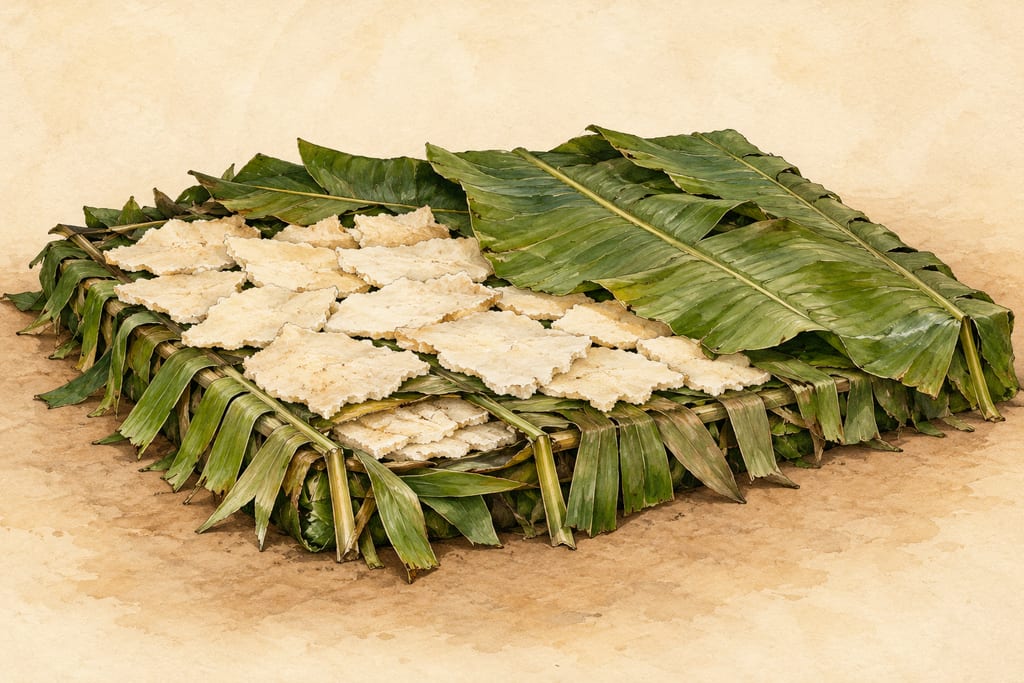
A floor-laid leaf bed holds layered moist cassava bread for parakari’s solid-state first stage. Wapishana and Makushi ethnographies document distinct leaf materials; the bed is opened before its contents move to a separate vessel.
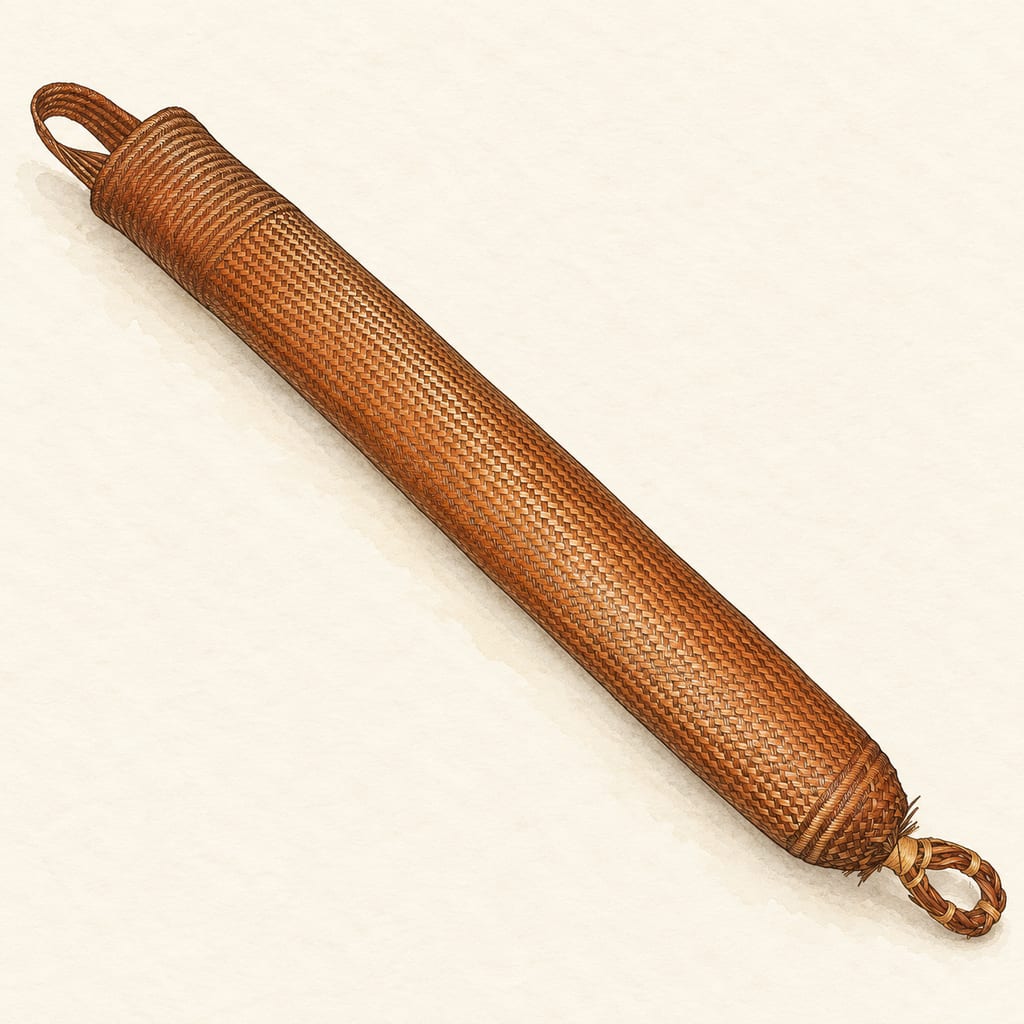
Tipití is a long, flexible woven basket press used to squeeze grated cassava mash. Its looped ends let a maker suspend and stretch the tube; it is a processing tool, not a fermenting vessel.
No community contributions have been published for this entry yet.
Sign in to contribute. Published comments and photos are free to read.
Mycologia 97(1), 1–11; author-uploaded full text on ResearchGateVessel identity · Use · Process · Geography · Image reference
Parakari, an indigenous fermented beverage using amylolytic Rhizopus in GuyanaThe Wapishana field study was conducted in Aishalton, South Rupununi, Guyana, in 1994.
Cultured cassava mass was transferred to large mother vessels identified as natural-rubber gobies or buckets for the second fermentation.
The vessel was covered to block airflow and its cover periodically loosened to release pressure.
Figure 3 caption identifies a panel showing solid-state parakari transferred to balata vessels.
Cited in: A vessel for the second stage; Holding the mash while fermentation continues; What the record can and cannot show
Archaeology and Anthropology: Journal of the Walter Roth Museum of Anthropology, volume 23Vessel identity · Use · Geography · Variation
Cassava as an Important Part of Wapishana Culture in South-Western GuyanaThe Wapishana account names tightly covered buckets, local round pottery and balata vessels called gobi as containers for parakari's secondary fermentation.
Containers are periodically loosened to relieve carbon dioxide build-up and retightened.
Cited in: A vessel for the second stage; Holding the mash while fermentation continues; What the record can and cannot show