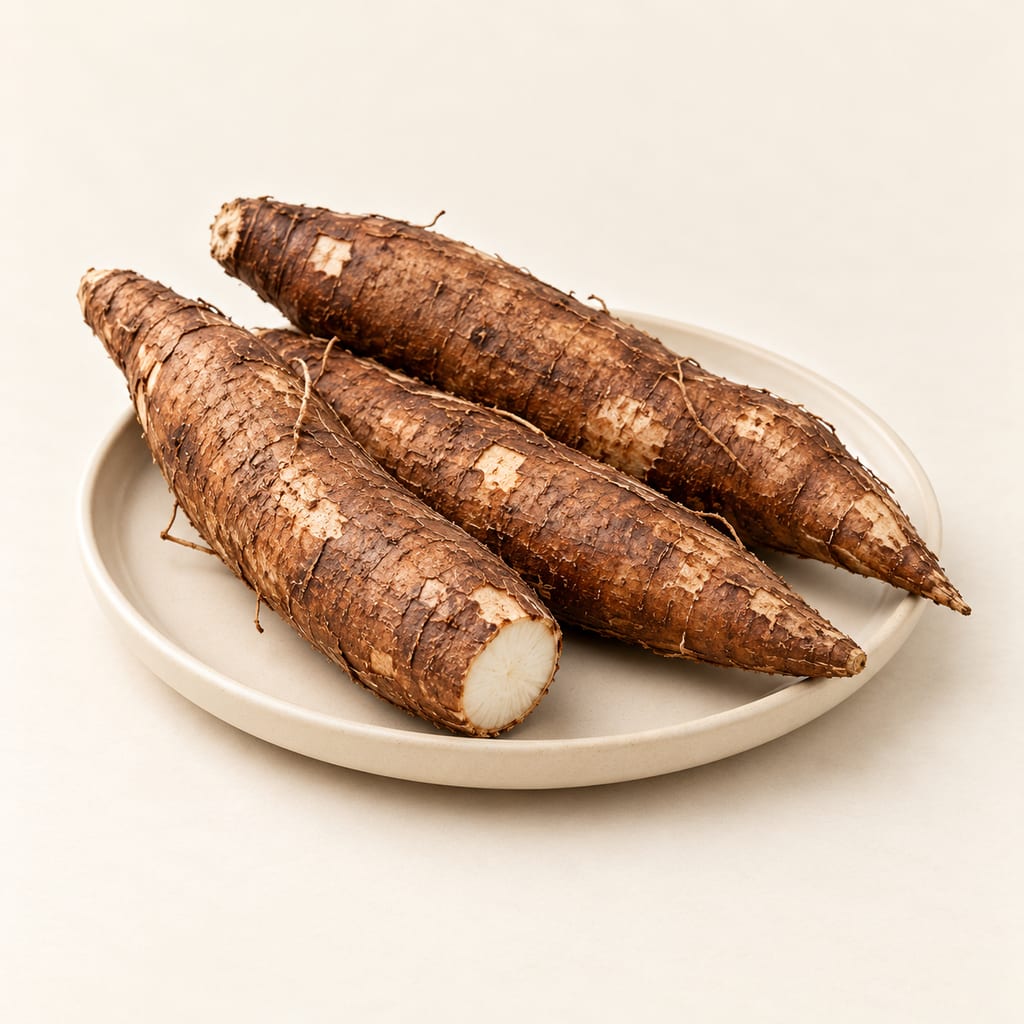
Cassava
Cassava is the starchy root of Manihot esculenta, transformed across Africa into fermented doughs, granules and flours through distinct processes whose safety depends on thorough cyanogen removal.
 FermenteaWhere food goes to change
Equipment · Presses and weights
matapi · cassava squeeze basket · manioc squeezer
Tipití is a long, flexible woven basket press used to squeeze grated cassava mash. Its looped ends let a maker suspend and stretch the tube; it is a processing tool, not a fermenting vessel.
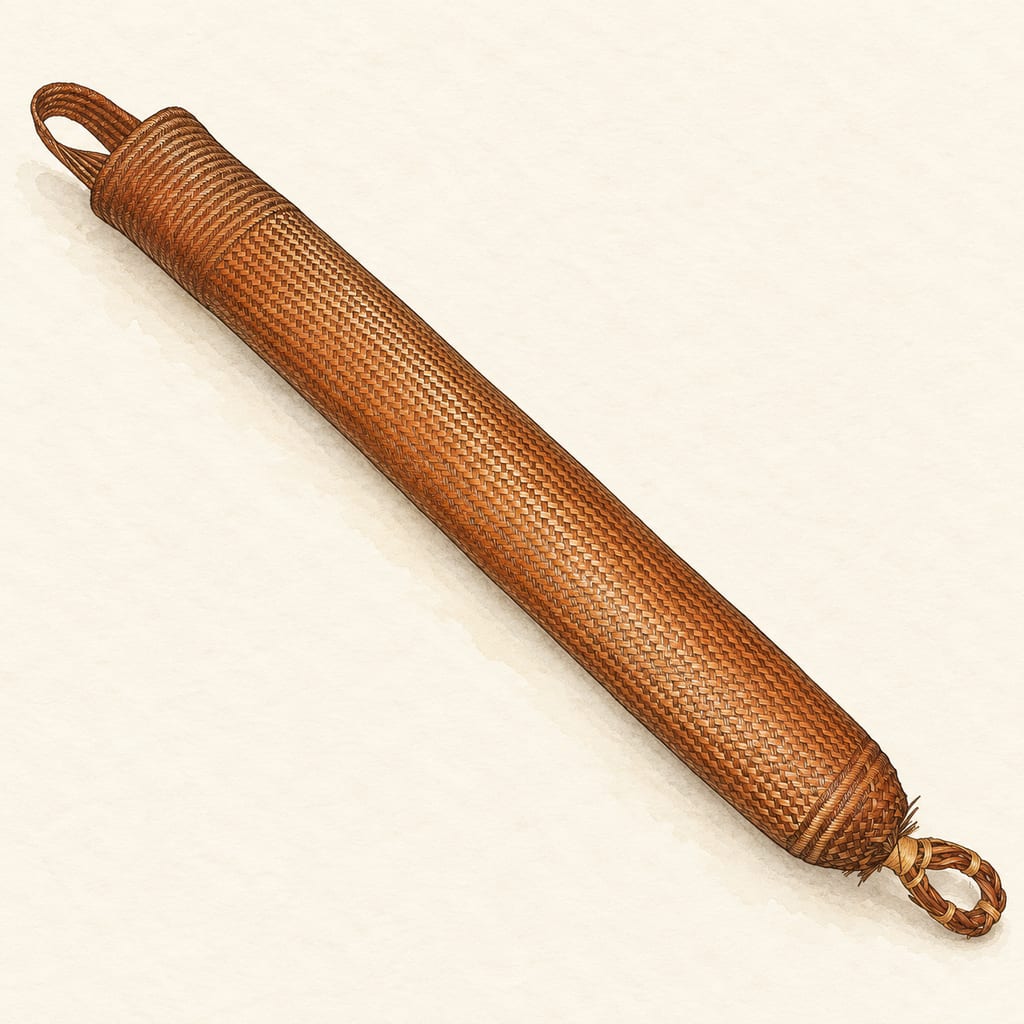
Tipití, also written tipiti, is a flexible tubular press for grated cassava mash. The object is made as a long woven sleeve rather than as a rigid pot: loops at its ends allow it to be suspended and tensioned. The name matapi is also recorded in the supplied research atlas for this family of cassava squeeze baskets. The word does not make every Indigenous basket press identical; the museum records document different communities and specimens.
The available records support plant fibre and weaving as the broad material and construction description. Spurlock lists plant material and the processes cutting, joining and weaving for its WaiWai specimen. The Berlin museum record identifies Cumare plant fibre for its Koripako specimen. Those records do not identify one universal fibre species, maker or weave pattern, so the material detail belongs to each object rather than every tipití.
The FAO’s 1984 cassava chapter describes the tipiti as a long, cylindrical basketry tube. After cassava is grated, mash goes inside; a loop suspends the tube from a house beam or tree branch while the lower end is stretched. As the flexible weave lengthens, its internal space narrows around the mash and liquid drains through the basket weave. Pulling lengthwise therefore creates pressure across the mash without a screw or powered mechanism.
The press changes the texture and moisture of the grated mass; it does not by itself define the food made afterward. The FAO account places squeezing inside a broader series of operations that can include grating, fermentation, sifting and heating, with the order and extent varying by product and region. The sleeve’s function is mechanical dewatering, not fermentation.
Spurlock Museum records a WaiWai tipiti associated with Guyana and dated 1975–1980. Its maker is unknown. The object measures 220.5 cm high, 25.0 cm wide and 18.5 cm deep, and weighs 800 g; the catalog lists plant material and cutting, joining and weaving. These are measurements of that collection object, not a prescribed size or capacity for all presses.
A separate Ethnologisches Museum record, delivered through the Deutsche Digitale Bibliothek, documents a Tipiti made in Brazil’s Rio Negro and Rio Icana region and culturally attributed to Katapolitani (Koripako). Its catalog lists Cumare plant fibre and dimensions of 153 cm long, 15 cm wide and 11.5 cm high. The record notes purchase from Theodor Koch-Grünberg in 1908, which dates its collection history rather than the invention of the tool. Keeping these records distinct helps avoid turning a varied regional form into a single pan-Amazonian template.
Spurlock’s educational account describes grated cassava being pressed in a tipiti during processing, then directed to different foods such as cakes or flour. FAO’s account distinguishes products by the work around the press: fermentation may precede or overlap pressing in one flour route, while other cassava products follow different sequences. A tipiti can therefore appear in food histories that include fermentation, without becoming a fermenter itself.
The Baniwa project’s account is specific about one local pathway: softened cassava called puba, left to ferment in water for about a week, may be mixed in varying amounts with fresh cassava mash and then passed through a tipiti and sieve to become beiju or flour. Its names and sequence describe that Baniwa account, not a universal recipe. The equipment is linked to cassava as the raw substrate and to the existing Farinha de mandioca preparation record; the latter remains a candidate page.
Cassava contains cyanogenic compounds, and the FAO chapter discusses processing as a sequence of operations whose effects depend on the process. A press removes liquid from mash; that fact does not establish a reliable stand-alone detoxification treatment. This page identifies equipment and context rather than giving a method for preparing raw cassava safely.
The inspected records do not give a general capacity, a standard size, current procurement route or cleaning instructions. The listed dimensions belong to two named collection objects, and acquisition of a contemporary replica is not established here. No modern plastic or metal substitute is used to represent the traditional press.
Pressing is one operation in cassava processing; this equipment record cannot establish a complete detoxification method or certify that a batch is safe.
Source →Materials, dimensions and cultural associations vary by specimen; the two museum examples are not a standard specification for all tipitis.
Source →Spurlock identifies the culture as WaiWai and geographic location as Guyana. The record does not name the maker or establish this as the type's exclusive origin.
The DDB metadata assigns production of its Katapolitani (Koripako) specimen to Brazil, Rio Negro and Rio Icana. This does not claim a single origin for all tipitis.
Cassava is the starchy root of Manihot esculenta, transformed across Africa into fermented doughs, granules and flours through distinct processes whose safety depends on thorough cyanogen removal.
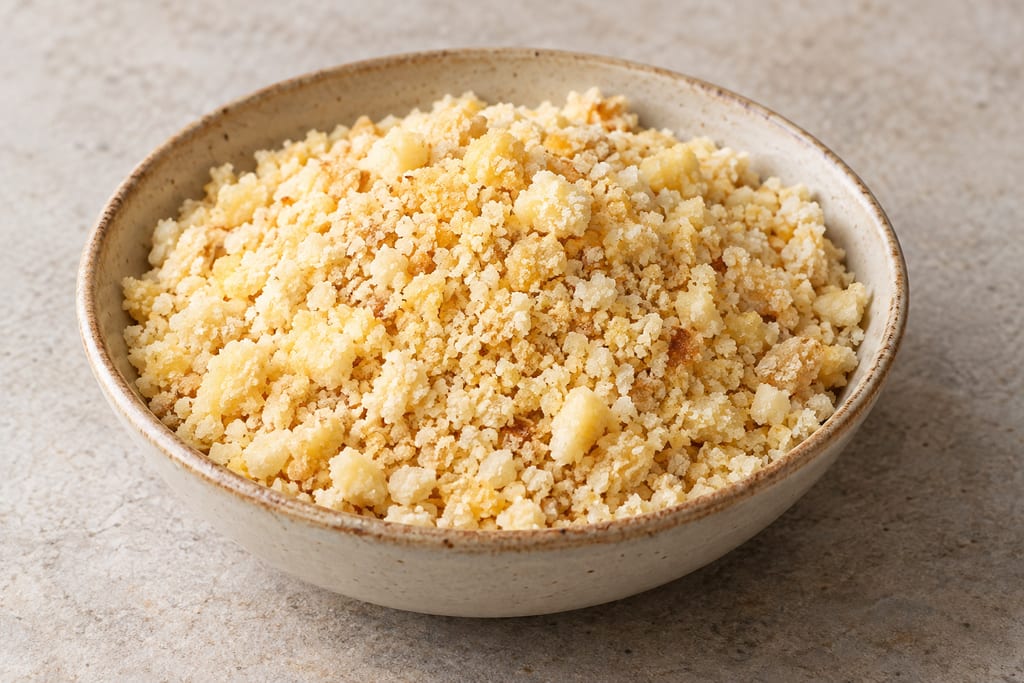
Farinha d’água is a coarse cassava flour associated with Brazil's Amazon and Pará. This page documents one published experiment; it is not a household recipe or validated safety guide.
A balata gobi is a natural-rubber mother vessel documented in Wapishana parakari production in Guyana. It holds cassava mash for the second fermentation after the leaf-covered Rhizopus stage.
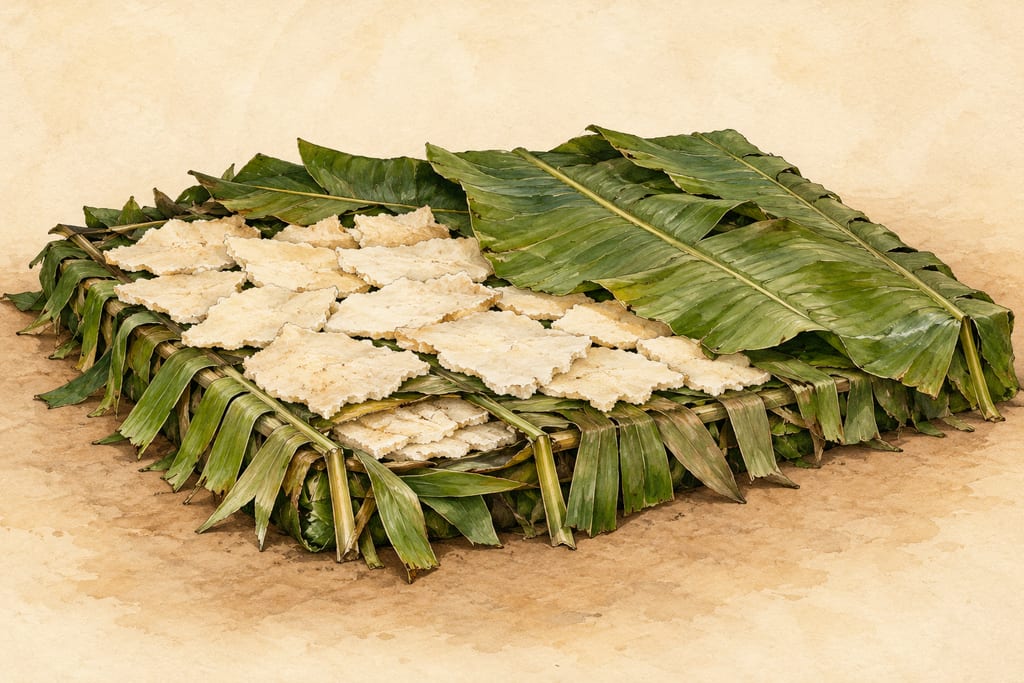
A floor-laid leaf bed holds layered moist cassava bread for parakari’s solid-state first stage. Wapishana and Makushi ethnographies document distinct leaf materials; the bed is opened before its contents move to a separate vessel.

Soft, spreadable Calabrian pork sausage made with a great deal of red chilli and fatty pork, stuffed into natural casings, sometimes smoked and matured while staying soft.

A way to add independent temperature logging to an existing food dehydrator without changing its built-in controls or protections. It is a monitoring method, not a rewiring plan.

Pleurotus cystidiosus is the abalone mushroom, a cultivated oyster-type fungus with dark brown caps that grows more slowly and is more demanding than other Pleurotus species.

A dark, balanced vinegar from Emilia-Romagna made by combining cooked or concentrated grape must with wine vinegar, then acetifying and refining it in wood under a protected specification.

A living dairy inoculum that starts controlled cream fermentation, developing acidity and aroma before sour cream or cultured butter is finished.

A small electric incubator holds jars at a selected temperature for yogurt and other documented warm food preparations. Controls, capacity and vessel arrangement vary by model.

Adygean salt is a seasoned table salt associated with Adygea and the wider North Caucasian culinary tradition. Salt is blended with garlic and a variable selection of herbs and spices; the exact mix depends on the named style and maker.

The African Caesar-group mushroom, Amanita masasiensis, is a wild ectomycorrhizal species of central and southern African woodlands, eaten locally. The genus contains deadly poisonous species, so identification needs care.
No community contributions have been published for this entry yet.
Sign in to contribute. Published comments and photos are free to read.
Spurlock Museum, University of Illinois Urbana-ChampaignArtifact identity · Documented geography · Dimensions · Materials · Manufacture · Period
Tipiti, Manioc Squeezer (2010.01.0535)The record identifies the object as a WaiWai tipiti, with geographic location Guyana and date 1975–1980; maker is unknown.
The record gives dimensions 220.5 cm high, 25.0 cm wide, 18.5 cm deep; weight 800 g; material plant; and manufacturing processes cutting, joining and weaving.
Cited in: A long woven press; Two documented objects, not one standard; Limits and recorded unknowns
Spurlock Museum, University of Illinois Urbana-ChampaignProcessing context · Use
Food and Drink: CassavaThe museum's educational account describes tipiti as a tall woven tube used in South American cassava processing, with grated cassava pulp inside and twisting or pulling to squeeze liquid through the weave.
The article places pressing among multiple cassava-processing stages and identifies museum tipiti objects from Ticuna and WaiWai collections.
Cited in: How the basket press works; Its place in cassava preparations
Deutsche Digitale Bibliothek; data provider: Ethnologisches Museum, Staatliche Museen zu BerlinComparative specimen · Materials · Manufacture · Geography · Dimensions · Image rights
Tipiti — Collections from colonial contextsThe record describes a cassava pressing hose called Tipiti, culturally attributed to Katapolitani (Koripako), with production geography Brazil, Rio Negro and Rio Icana.
It lists plant fibre (Cumare), dimensions 153 cm deep, 15 cm wide and 11.5 cm high, and says the object was purchased from Theodor Koch-Grünberg in 1908.
The General view photograph is credited to Helene Tello and marked Attribution-NonCommercial-ShareAlike 4.0 International.
Cited in: A long woven press; Two documented objects, not one standard; Limits and recorded unknowns
Food and Agriculture Organization of the United NationsMechanism · Processing context · Fermentation context · Limits
Traditional post-harvest technology of perishable tropical staples — Chapter 5: CassavaThe 1984 chapter describes cassava as a crop requiring complex processing, discusses its cyanogenic compounds, and cautions that processing outcomes vary.
It describes South American cassava mash being squeezed in a long cylindrical basketry press called tipiti, suspended by a loop from a beam or tree branch; stretching the press reduces its volume and squeezes out moisture.
The chapter describes distinct cassava flour routes and notes that fermentation differs by product, including in the comparison of gari and farinha.
Cited in: How the basket press works; Its place in cassava preparations; Limits and recorded unknowns
Projeto Arte BaniwaCommunity documented use · Fermentation context · Linked preparation
A farinha de mandioca — Como é utilizadaThe Baniwa project describes fermented softened cassava (puba) mixed with fresh mash and passed through a tipiti and sieve to make beiju or flour.
The same page identifies tipiti as one tool used to extract liquid from grated manioc, within this specific Baniwa preparation context.
Cited in: Its place in cassava preparations