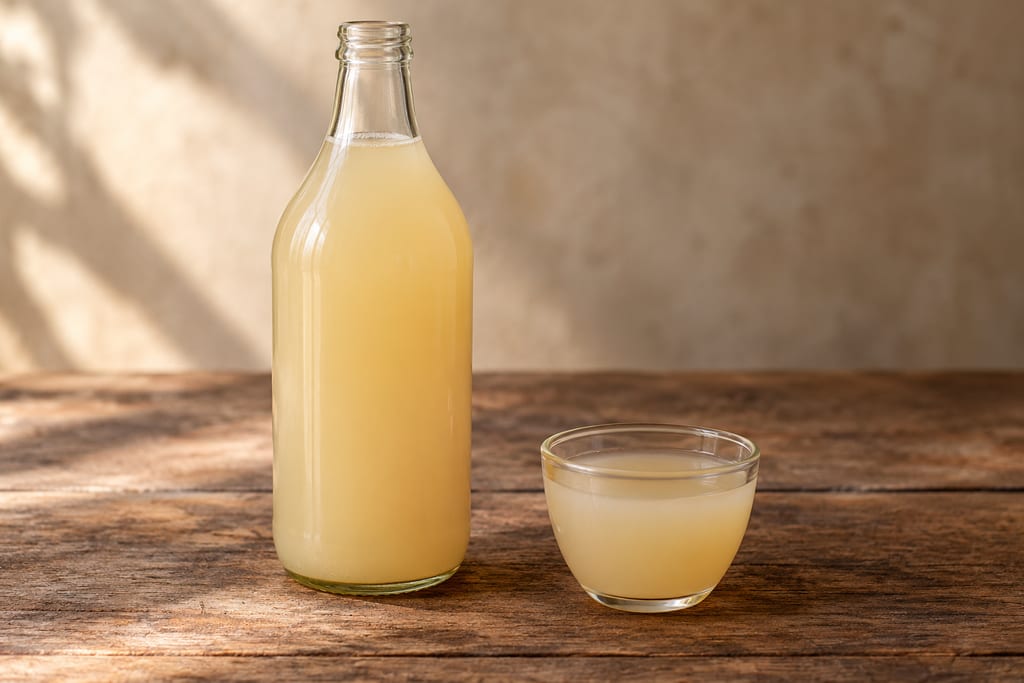
Parakari
A source-bounded account of Wapishana Parakari in Aishalton, Guyana. It preserves observations of a Rhizopus stage followed by yeast fermentation; it is not a household recipe or cassava detoxification guide.
 FermenteaWhere food goes to change
Equipment · Baskets, trays and beds
A floor-laid leaf bed holds layered moist cassava bread for parakari’s solid-state first stage. Wapishana and Makushi ethnographies document distinct leaf materials; the bed is opened before its contents move to a separate vessel.
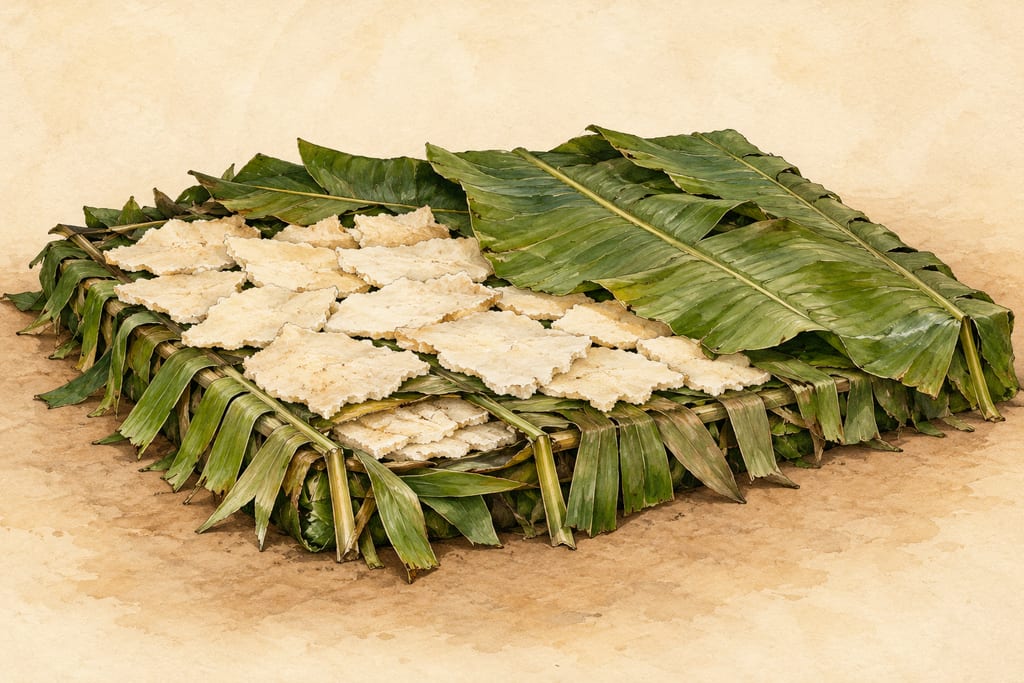
The parakari bed is a low, temporary arrangement laid directly on the floor. In the Makushi account Lewis Daly describes broad leaves arranged in a rectangular shape, with pieces of moist cassava bread layered across them. The leaves form the lining and cover around a solid mass; they are not a rigid basket or a container for free-flowing liquid. The covered bed serves the first, solid-state stage of parakari production. Once this stage is complete, the mass is removed and transferred to a separate vessel for the next fermentation stage. That distinction matters: the leaf bed and the later vessel have different forms and jobs.
Daly’s Makushi fieldwork describes banana, plantain or wild banana leaves identified as Heliconia for the bed, with cassava leaves used within the process and occasionally Trema micrantha. In his Wapishana study at Aishalton, Terry Henkel documents cassava bread laid on Heliconia leaves, with Trema leaves in the bed. These are observations from different communities and studies, not a single interchangeable recipe or botanical rule. The leafy layers are active parts of this equipment: retained leaves carry the culture between batches, while other leaves enclose the bread.
The cited practices are from Guyana’s Rupununi region. Henkel’s detailed field study took place with Wapishana brewers in Aishalton, South Rupununi. Daly’s ethnographic study follows Makushi parakari work in Yupukari and Rewa in the upper Rupununi. Daly describes one bed as roughly six by three feet, a source-specific approximate footprint rather than a standard dimension. The studies do not establish a universal height, capacity, leaf specification or construction method. This record therefore names the observed form and materials without treating any one community’s version as representative of every parakari bed.
Henkel’s field photographs distinguish the leaf-covered bed and layered cassava mass from the later transfer into a “mother” vessel. A vessel shown holding the subsequent liquid fermentation is not the bed itself. The linked source photograph and the accompanying illustration clarify the broad, floor-laid leaf form; neither supplies a standardized engineering drawing or exact dimensions. The cited studies are ethnographic records of Indigenous knowledge and practice, not instructions for reproducing a fermentation process.
Henkel reports Wapishana practice in Aishalton, South Rupununi; Daly documents Makushi practice in Yupukari and Rewa, Guyana.
Leaf choices vary by community and source: Makushi accounts include banana, plantain or Heliconia leaves and generally cassava leaves as inoculum carriers; Henkel documents Heliconia and Trema for Wapishana practice.
Source →This is the temporary solid-state first-stage arrangement; the cited studies describe a separate vessel for the subsequent alcoholic fermentation.
Source →The studies document Wapishana and Makushi parakari practices in Guyana’s Rupununi region; they do not claim every bed is built there or that one form is universal.
A source-bounded account of Wapishana Parakari in Aishalton, Guyana. It preserves observations of a Rhizopus stage followed by yeast fermentation; it is not a household recipe or cassava detoxification guide.
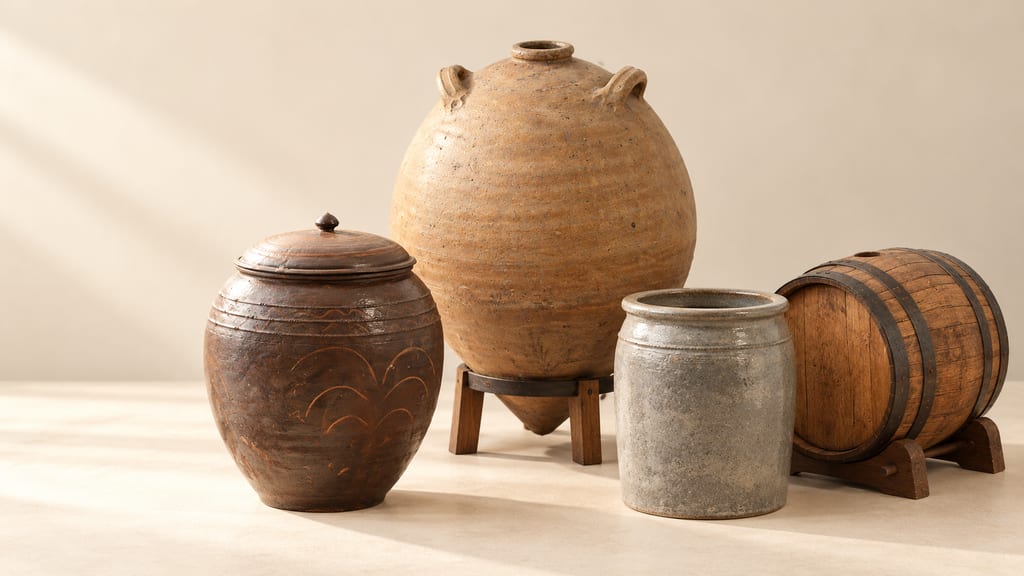
Jars, barrels, skins, leaves, pits and whole rooms decide much of what happens to fermented and cured food. This is how a container works on its contents, and how people in different places chose theirs.
A balata gobi is a natural-rubber mother vessel documented in Wapishana parakari production in Guyana. It holds cassava mash for the second fermentation after the leaf-covered Rhizopus stage.
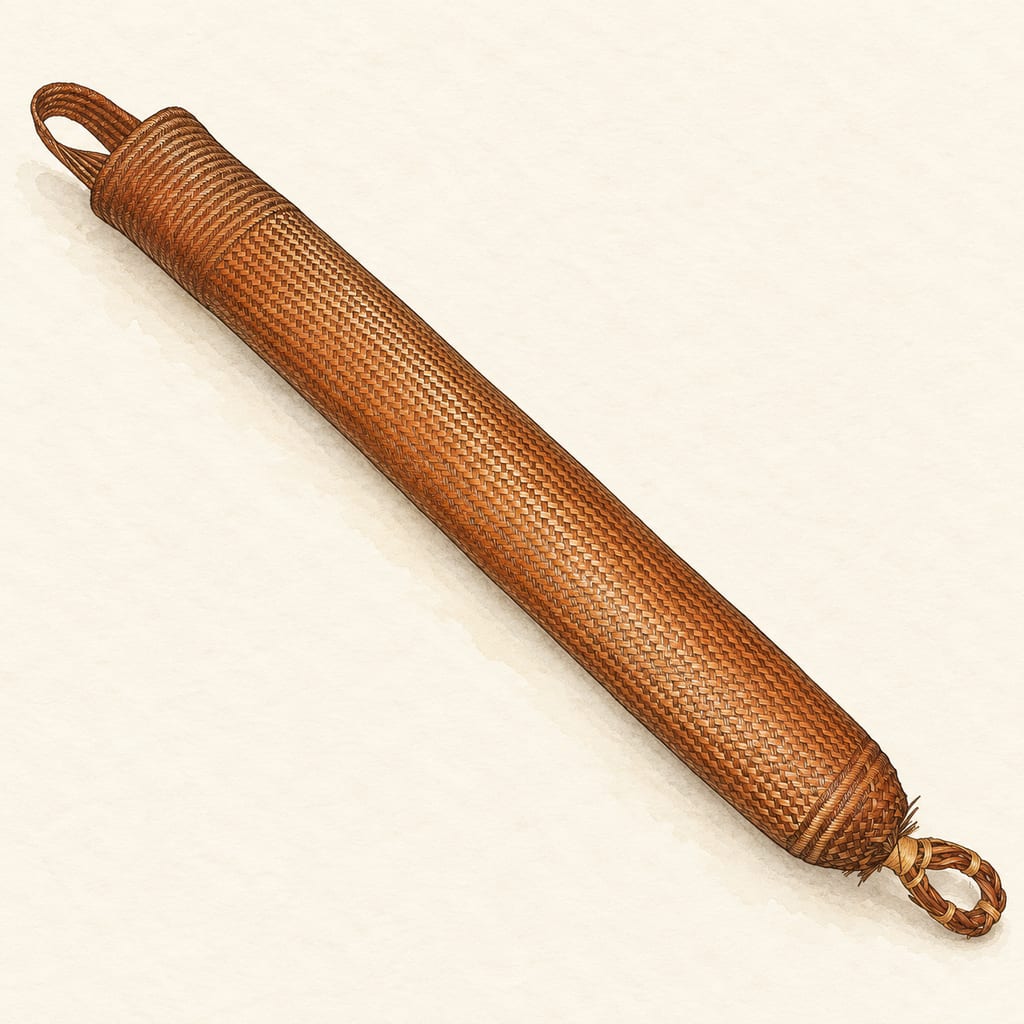
Tipití is a long, flexible woven basket press used to squeeze grated cassava mash. Its looped ends let a maker suspend and stretch the tube; it is a processing tool, not a fermenting vessel.
No community contributions have been published for this entry yet.
Sign in to contribute. Published comments and photos are free to read.
Mycological Society of AmericaPrimary study · Equipment form · Geography
Parakari, an indigenous fermented beverage using amylolytic Rhizopus in GuyanaDocuments parakari production with Wapishana brewers in Aishalton, South Rupununi, Guyana.
Figure 3 depicts cassava bread on Heliconia leaves, Trema leaves in the bed, and transfer of the solid-state product to a separate vessel for Stage II.
Cited in: A temporary bed, not a vat; Documented leaf materials vary; A floor-laid form in the Rupununi; Reading images by fermentation stage
Oxford University PressEthnography · Equipment form · Geography
The Nature of Sweetness: An Indigenous Fermentation Complex in Amazonian GuyanaDocuments Makushi parakari practice in Yupukari and Rewa, Guyana.
Describes a temporary leaf bed laid on the floor, generally using banana, plantain or Heliconia leaves, with layers of moist cassava bread; gives an approximate bed footprint for the observed practice.
Cited in: A temporary bed, not a vat; Documented leaf materials vary; A floor-laid form in the Rupununi; Reading images by fermentation stage
Les actes de colloques du musée du quai Branly Jacques ChiracEthnography · Visual reference · Equipment form
L’imbrication des processus vitaux et des processus techniques dans la gestion et la préparation du manioc chez les Makushi de Yupukari (Guyana)The linked photograph shows cassava bread arranged on a broad leaf bed during Makushi parakari preparation in Yupukari, Guyana.