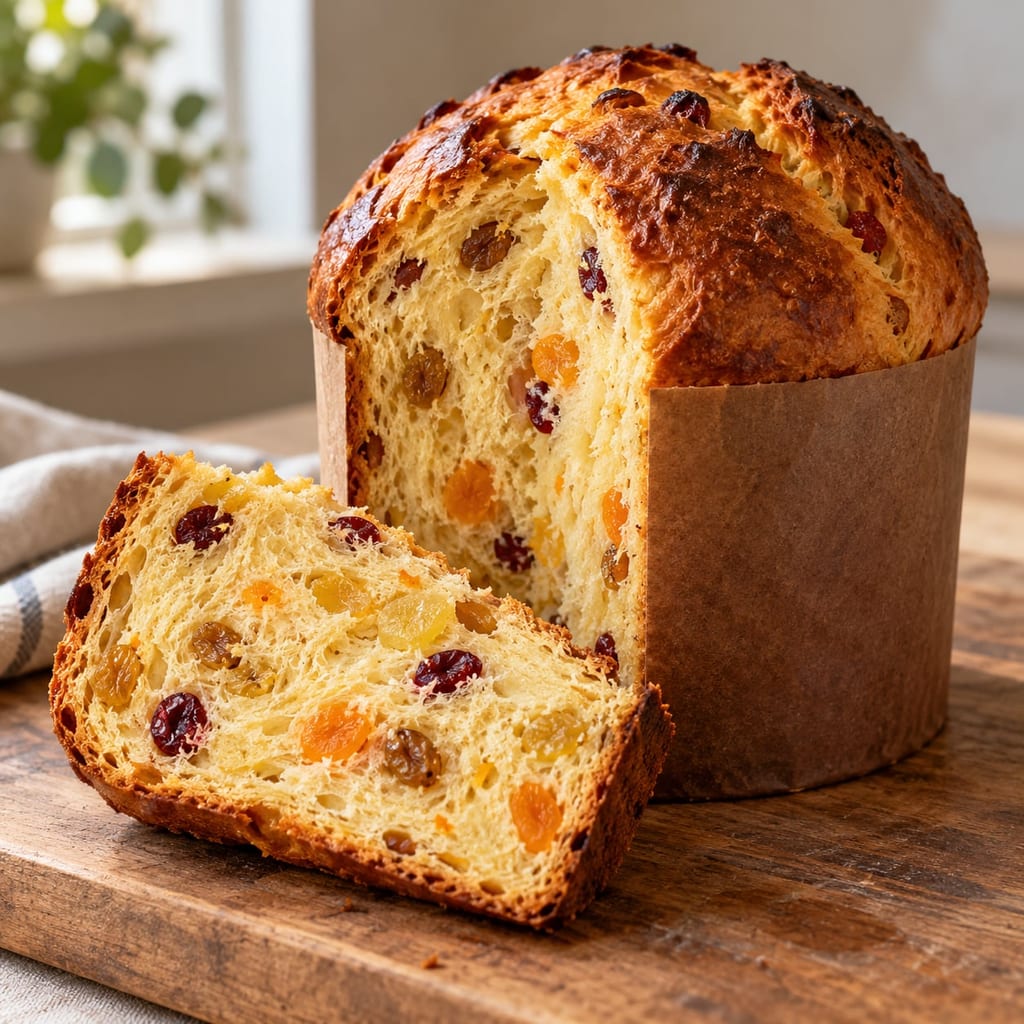
Overnight panettone: King Arthur version
A modern instant-yeast panettone with an overnight flour-and-water preferment and mixed dried fruit. It is separate from specialist sourdough panettone methods.
 FermenteaWhere food goes to change
Modern method
Fügassa alla genovese · Focaccia Genovese
Fresh-yeast focaccia with olive oil and brine in its dimples, made in two 30 × 40 cm trays. It is separate from the sourdough focaccia formula.
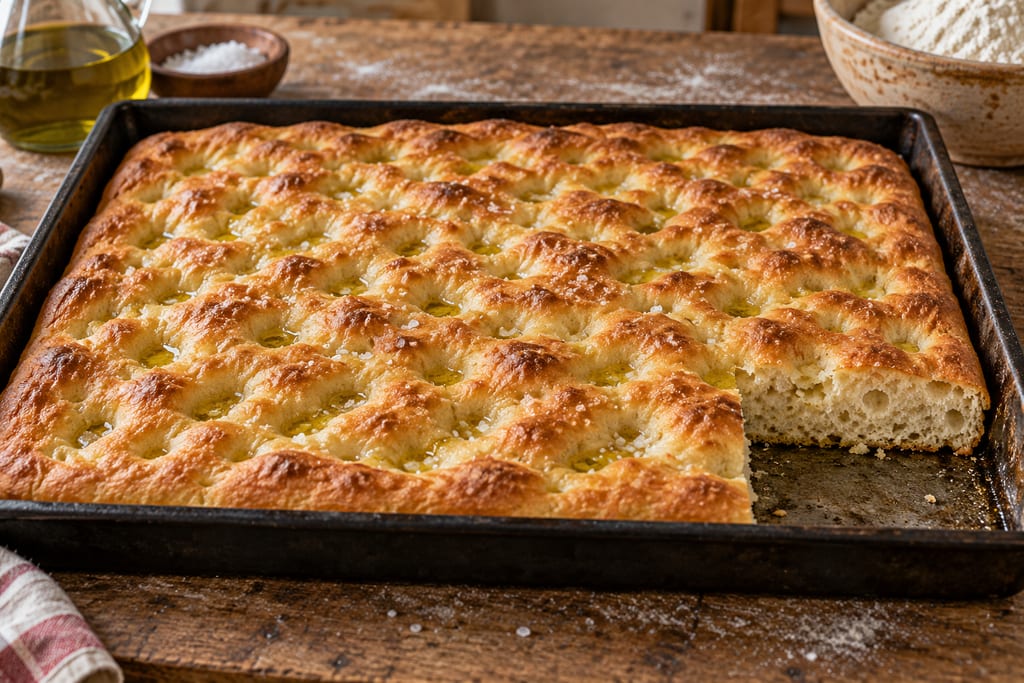
Dimpling creates pockets for the surface dressing. The tray edges must stay in contact with the dough so the liquid remains above it. This fresh-yeast method should remain separate from a sourdough adaptation.
The source recommends storing the baked focaccia in a paper bag for up to one day or freezing it after baking; it advises against freezing raw dough. These are source-specific storage recommendations, not validated safety limits.
Ezio Rocchi's contemporary Genoa-style focaccia formula, published by GialloZafferano. No earliest attestation is established.
Yield 2 30 × 40 cm trays, eight servings total · Scaling: source batch only
Raw grain flour can carry harmful bacteria.
Hazard sourceDo not taste raw dough. Keep flour away from ready-to-eat foods and clean hands, utensils and surfaces after handling.
Control sourceGolden colour is a quality cue, not proof of safety. The bake setting is not a validated internal-temperature endpoint. No validated storage limit is supplied.
Genoese regional association, not a dated birthplace claim.
A modern instant-yeast panettone with an overnight flour-and-water preferment and mixed dried fruit. It is separate from specialist sourdough panettone methods.
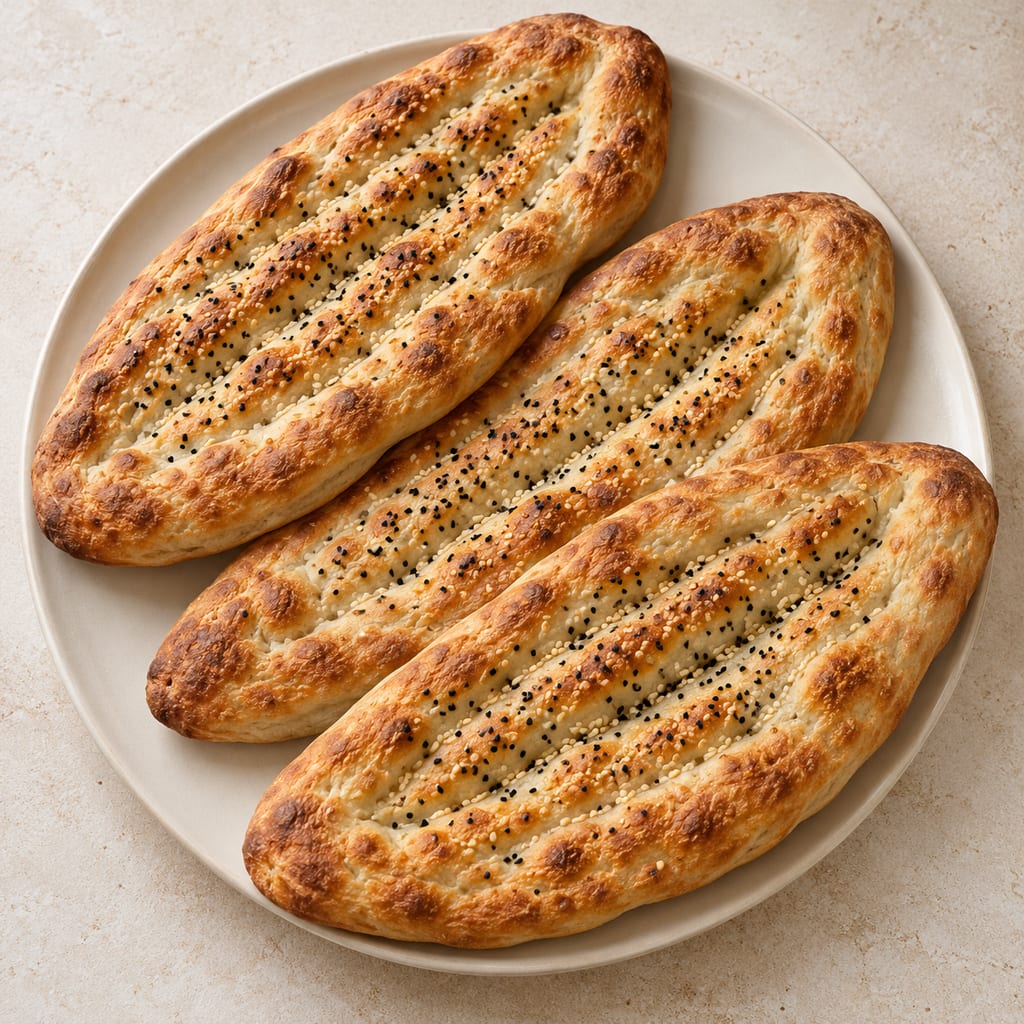
A long oval Afghan wheat bread, leavened with yeast, grooved along its length and baked until crisp outside and chewy within.
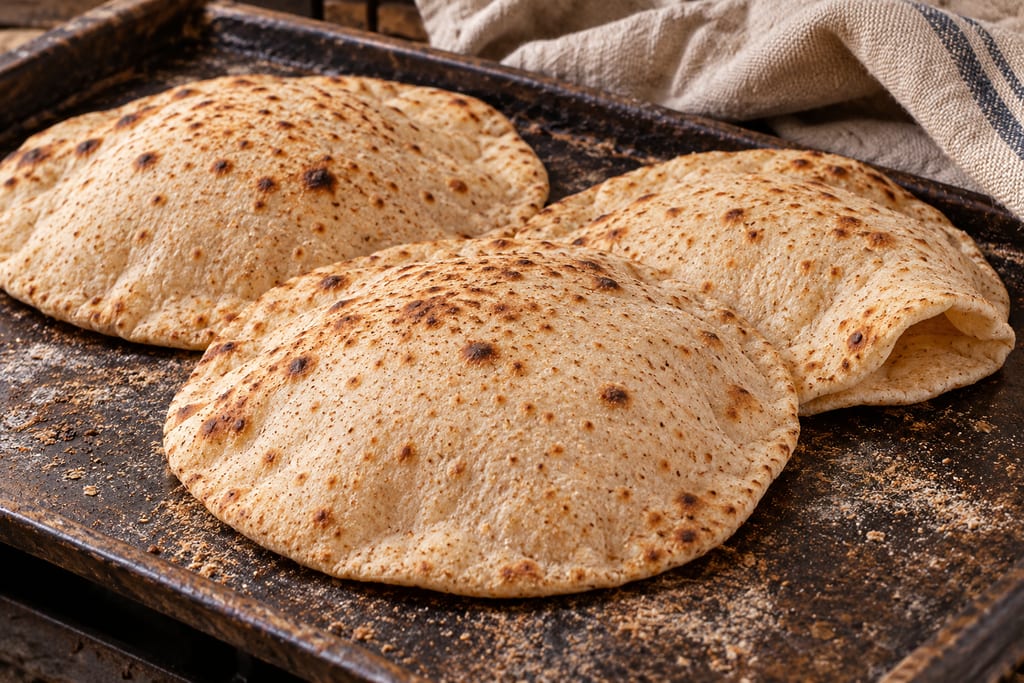
This home adaptation of Egyptian aish baladi uses a refrigerated yeast biga, whole-wheat dough, bran dusting and a very hot baking surface to make 16 pocketed rounds.
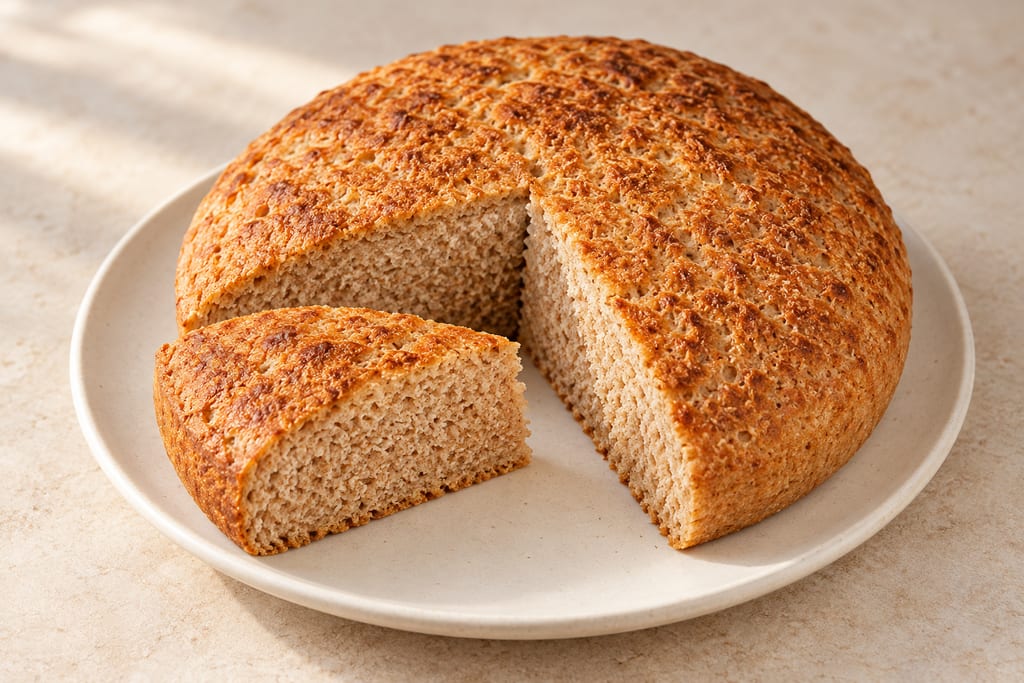
This oven-baked Amdo balep uses yeast, whole-wheat and white flour, a long covered rise and a two-sided bake in a heavy oven-safe pot.
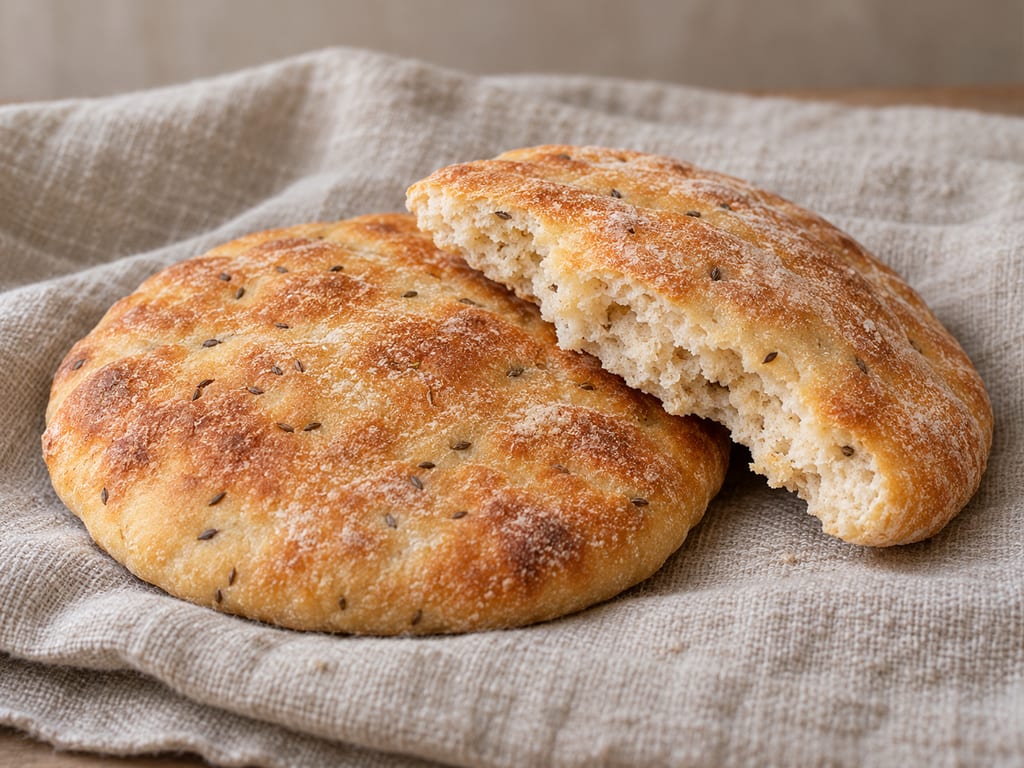
A measured, yeast-raised Ayacucho chapla home method shared by Thermomix Peru presenter Roxanna Salaverry. It makes thin, anise-scented rounds baked at 240°C; the historic qunchu-leavened form is documented separately.
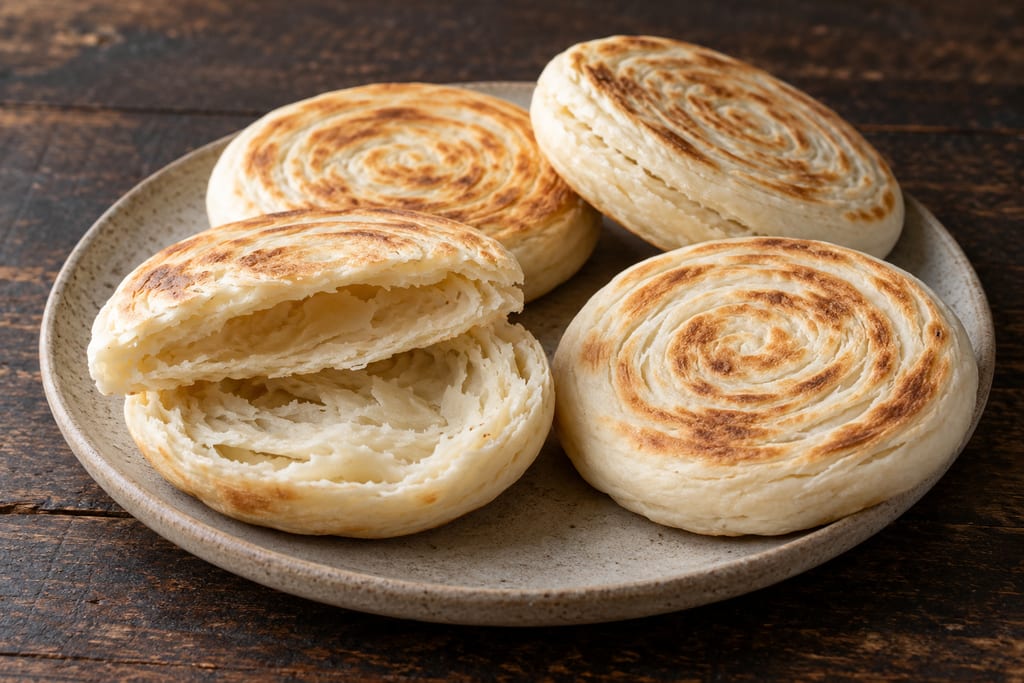
This Shaanxi-associated yeast flatbread uses a simple water dough, coiled shaping and a skillet bake. It is the bread used in roujiamo, not the filled meat dish.
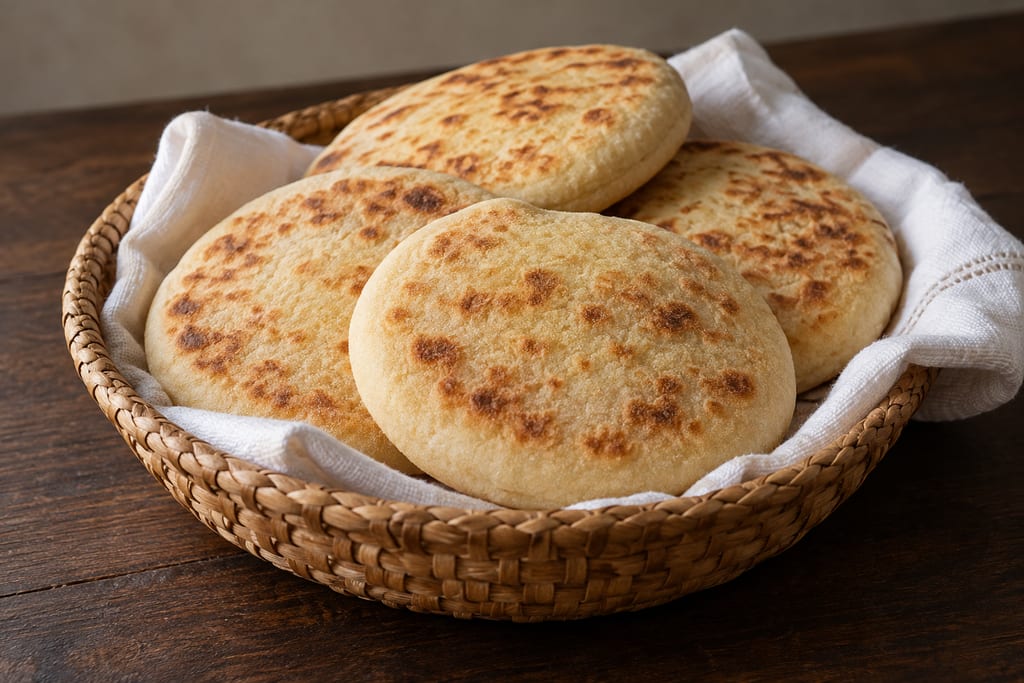
A Moroccan yeast-raised semolina pocket bread cooked on a dry pan or griddle; this measured batch makes about twenty 4-inch rounds.
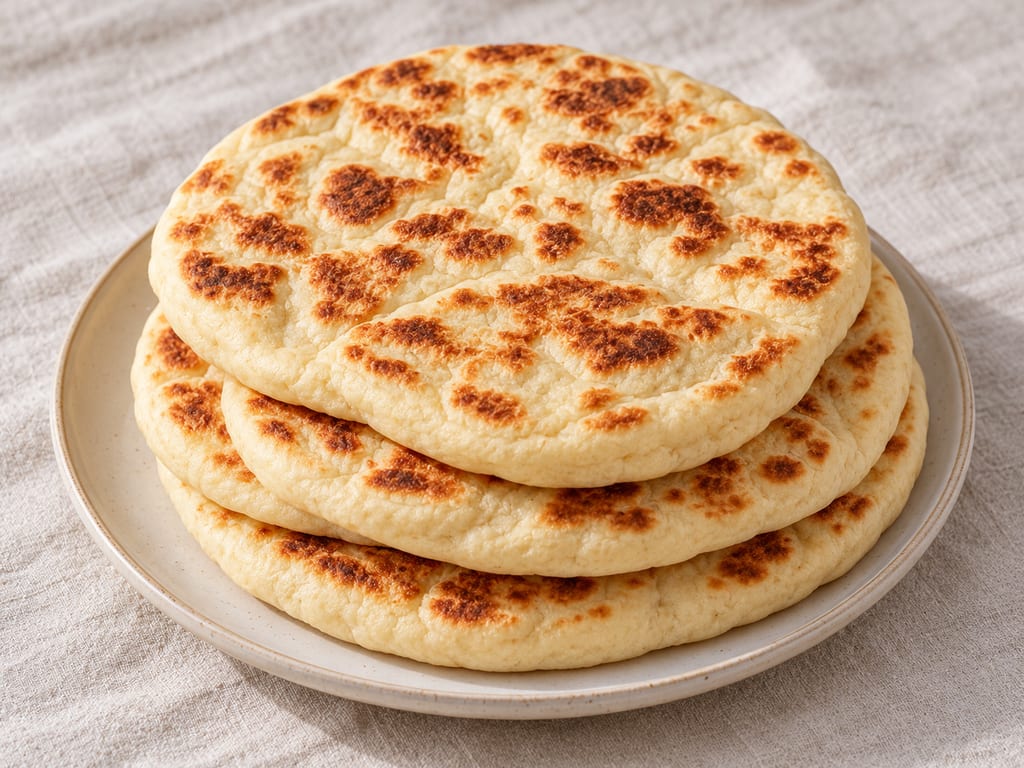
This Turkish bazlama uses yeast, plain yogurt and olive oil for a soft dough cooked in a skillet. Shape it into twelve small or six larger rounds, flip as bubbles appear, and wrap the breads to keep them soft.
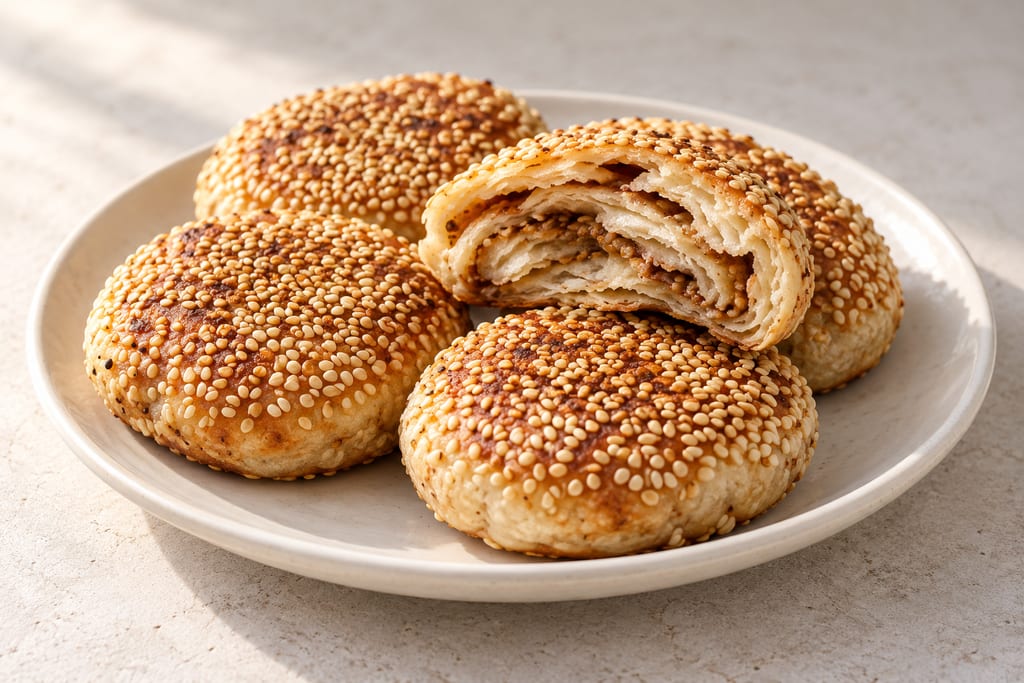
A Beijing-style yeast dough is layered with seasoned sesame paste, sealed into small buns, briefly pan-fried, seeded, and baked.
No community contributions have been published for this entry yet.
Sign in to contribute. Published comments and photos are free to read.
GialloZafferanoRecipe · Identity · Geography
Focaccia (fügassa) alla genovese (Genoa-style focaccia)Two-tray dough, staged rests, dimpling, separate brine batch/application and static-oven bake.
Recommends storing the baked focaccia in a paper bag for up to 1 day, or freezing after baking; it does not recommend freezing raw dough. This is source advice, not a validated safety duration.
Cited in: Oil and brine in the dimples
U.S. Food and Drug AdministrationSafety
Handling Flour Safely: What You Need to KnowRaw flour hazards and handling.