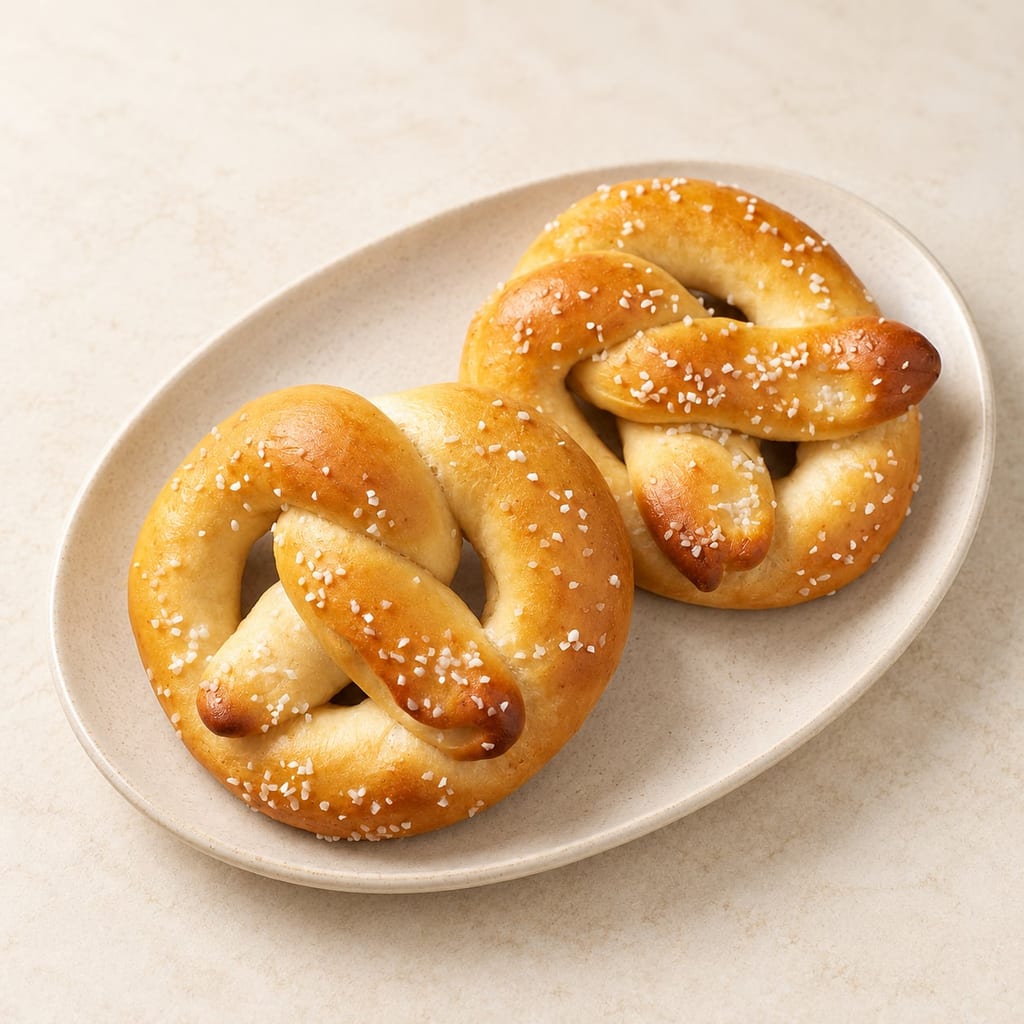
Sourdough discard pretzels
Unfed sourdough starter flavours a soft pretzel dough raised with instant yeast. After a short rest, the dough is shaped, brushed with a sweet wash, salted and baked without a final proof.
 FermenteaWhere food goes to change
Cultures
Sourdough starter is a maintained flour-and-water community of yeasts and bacteria. Commercial baker’s yeast is a separate cultured leavener, used alone or with starter in hybrid dough.
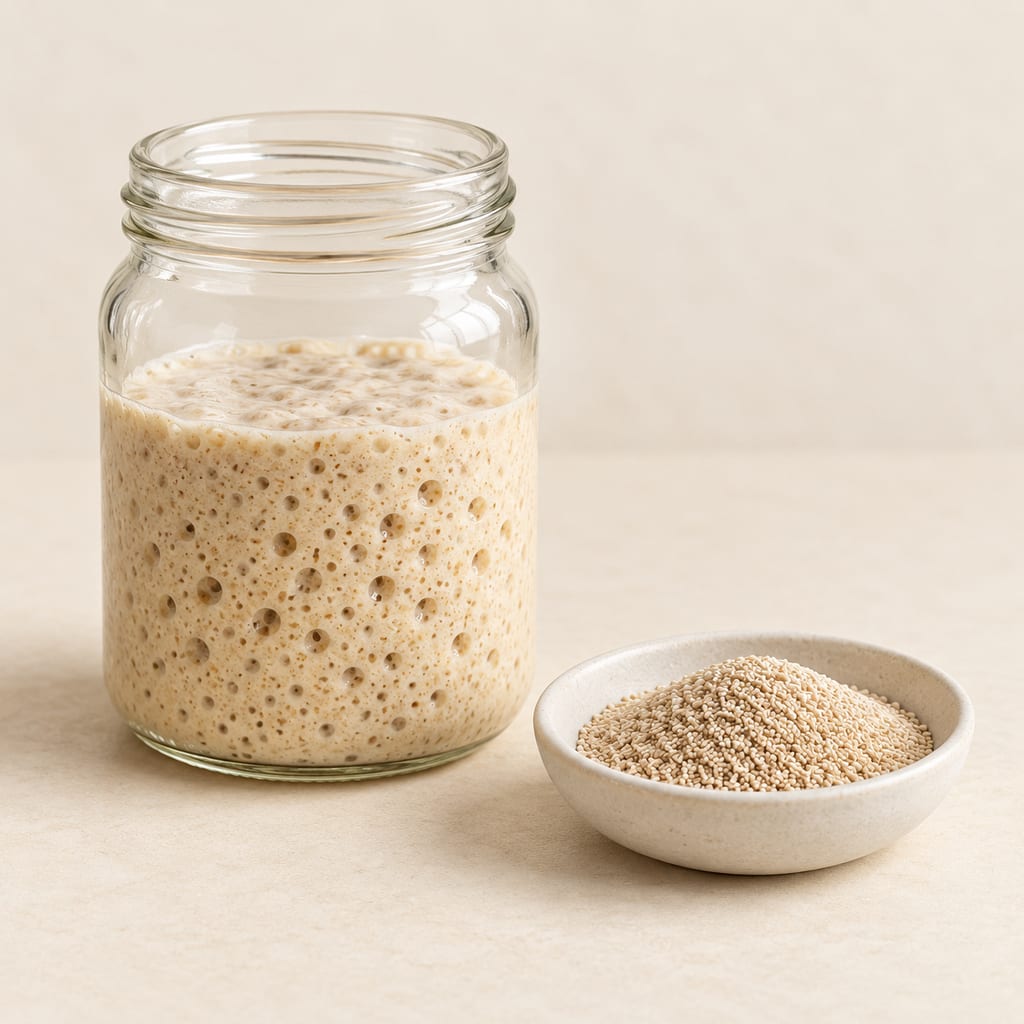
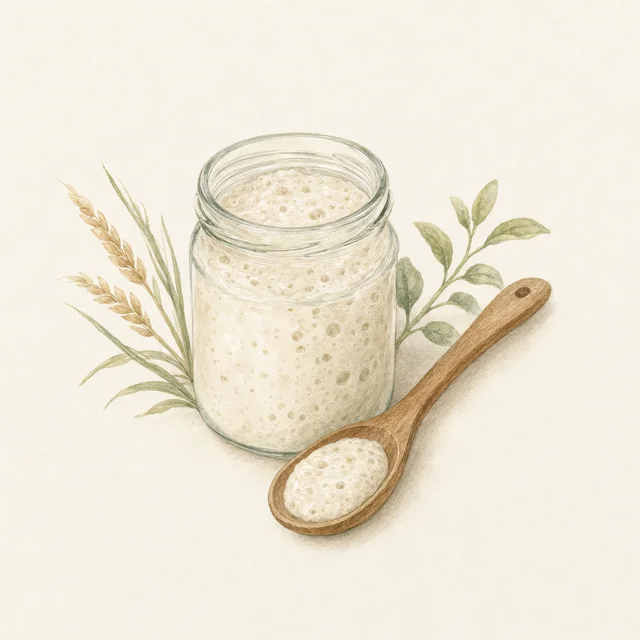
A sourdough starter is a maintained flour-and-water culture in which yeasts and bacteria live and reproduce. A baker uses some of that culture to inoculate dough, then refreshes the portion kept for future baking. It is an ingredient with a history: each feeding carries the organisms and conditions selected through earlier refreshments. A starter is not one universal recipe, strain, or species. Without a laboratory assay, its particular organisms remain unknown.
“Sourdough starter” and “ripe sourdough starter” name different things. The first is the ongoing culture; “ripe” describes its condition at a particular point in its feeding cycle, often when gas production and expansion make it useful for leavening. A refrigerated starter, one just fed, one near its peak, and one that has fallen after peaking can all descend from the same culture but behave differently in dough. “Discard” is simply the portion a baker removes during maintenance or keeps aside for another formula. It does not identify a separate species or guarantee a particular level of acidity or leavening power.
“Sourdough” also covers more than one process. Bakers may propagate a spontaneous flour-water community, inoculate dough with selected bacteria and yeasts, or use dried sourdough preparations. The name alone does not reveal a culture’s composition, maintenance method, or whether commercial yeast also raises the dough.
Commercial baker’s yeast is a separate ingredient category. It is sold as a selected, concentrated leavening culture, commonly in fresh, active-dry, or instant forms. These forms differ in processing and directions for use; a baker should follow product-specific conversion advice rather than substitute the same spoonful automatically. Commercial yeast can be used alone, or alongside sourdough starter. When a formula includes both, it is a hybrid leavening process: the starter brings its flour, water, acids, aromas and microbial activity, while the added yeast is a second, deliberate inoculum. That distinction matters when interpreting flavor, rise and fermentation time.
Leavening grew from observing grain mixtures: flour and water left to ferment, then carried into fresh dough, can produce gas and acids that change texture and taste. This practical knowledge predates microbiology, but the surviving record does not support a single inventor or unchanged culture spreading around the world.
Ancient bread remains are rare and often difficult to identify. Archaeobotanical work at Shubayqa 1 in northeastern Jordan found bread-like remains, about 14,400 years old, made from wild cereals and tubers, but nothing shows they were sourdough-leavened. Microscopic examination of ancient Egyptian bread and brewing remains suggests that Egyptian bakers used yeast in some breads and sometimes used malt; it also describes brewing practices that included yeast inoculation. The evidence establishes varied ancient techniques, not a single Egyptian invention of a culture identical to any starter kept today. A sample of bread can preserve ingredients and structure, but it cannot always reveal how a living culture was maintained.
Over many generations, sourdough practice became embedded in everyday breadmaking across different places. The ecological identity of a starter is not necessarily a simple map of its location. A study that analyzed 500 household starters from four continents found little evidence for broad geographic patterns in their microbial communities; it also cautioned that its results could not resolve every strain-level difference. A separate experiment gave 18 professional bakers in 14 countries the same flour and a standardized starter protocol, yet their starter communities still differed. Together, these findings make a useful correction to romantic claims that a city’s air or one inherited jar automatically explains a loaf’s distinctive flavor. Regional bread traditions are real, but a particular culture’s identity also reflects flour, refreshments, storage, process, exchange and chance.
Commercial baker’s yeast has a different history from spontaneous starters. Packaged cultures make leavening more repeatable, but do not make older methods obsolete: many recipes combine a starter’s flavor with added yeast for lift. It is a process choice, not a contest between “natural” and “artificial” bread.
A fresh mixture begins as flour in water. Flour contributes carbohydrates, proteins and other nutrients, plus microorganisms from the grain and milling environment; water hydrates the particles. Whole-grain, refined wheat and rye flours differ in what they supply. No universal organism set appears in every starter, and no species can be assigned to a jar by sight or smell.
During propagation, flour and water repeatedly supply new material. The baker carries a portion of a fermenting mixture into a fresh feed, a practice called backslopping. In a spontaneous culture, organisms able to grow under the conditions become more prominent over successive refreshments. Flour and water proportions, flour type, temperature, time between feeds and storage conditions all influence this succession. A study of 500 starters detected lactic-acid bacteria, acetic-acid bacteria and yeasts, but the ratios and identities varied. A more tightly controlled experiment still produced diverse cultures among bakers using the same flour and protocol. Those studies describe samples; they do not tell us which organisms live in an untested home starter.
Bacteria and yeasts do different but interacting work. Yeasts ferment accessible sugars and release carbon dioxide, which becomes trapped in dough’s elastic network as small gas cells. The cells expand while dough ferments and again as it heats in the oven. Lactic-acid bacteria convert sugars into lactic acid and, depending on their metabolism and available substrates, may also form acetic acid and other compounds. The acids lower pH and contribute different kinds of tartness; other microbial and flour reactions create aroma precursors and alter dough properties. Yeast fermentation also produces ethanol and volatile compounds, though most ethanol evaporates during baking. The final flavor reflects the community and the flour, but also the mixing, fermentation schedule, shaping and baking.
Three groups of organisms define a starter. Yeasts supply most of the carbon dioxide. Lactic-acid bacteria make lactic acid and sometimes acetic acid. Acetic-acid bacteria, a group long overlooked, turned out in the 500-starter survey to explain much of the variation in dough rise rate and aroma. Commercial baker’s yeast, by contrast, is a single selected species, Saccharomyces cerevisiae, sold fresh, active-dry or instant. A starter is a community of several such species that differs from baker to baker: in a study where bakers from two continents followed one recipe and one flour, the starters were far less uniform than expected, and most of their microbes matched those found in the flour, with some shared with the bakers’ skin.
This is why sourdough leavening cannot be reduced to “bacteria make the bread rise.” Yeast is usually a major source of carbon dioxide; some heterofermentative bacteria can also produce gas. Acidity shapes the dough and its flavor but can inhibit yeast when conditions become unfavorable. The same starter can produce a different result when used at a different stage or proportion, refreshed with a different flour, or fermented under changed conditions. A bubbly jar signals gas production, not a universal baking strength or a microbiological identification.
The flour is both food and microbial habitat. Whole-grain flours bring the bran and germ along with the starchy endosperm; refined flour has had much of those outer portions removed. The two are not interchangeable in a starter without changing texture and fermentation behavior. Rye flour and wheat flour differ in composition and dough structure, and a culture maintained on one may respond differently when switched to another. A starter recipe may deliberately begin with whole-wheat or rye flour and later feed all-purpose flour; that describes one method, not a requirement for all cultures.
Water hydrates flour and affects consistency. Equal flour and water weights make a relatively soft starter, though other hydrations are used. Each refresh also changes the proportion of old culture to new food. Carryover, flour and feeding interval all influence acidity and activity, so no one ratio or clock fits every culture.
One current King Arthur method begins with whole-wheat or pumpernickel flour and water, then transitions to all-purpose flour in later feedings. Its maintenance instructions offer a daily room-temperature schedule and a weekly refrigerated schedule with warm-up feeds before baking. Those quantities and timings are that publisher’s guidance for its own culture, not universal rules.
The retained culture is usually stirred or mixed with its feed so the new flour hydrates evenly. Keeping a portion and removing the rest prevents the total quantity from growing at every feeding. Discard can be baked into recipes designed for unfed starter, but it is not the same as ripe starter: the proportions of fresh flour, water and fermentation products differ, and its leavening strength can be less predictable. A formula that permits ripe starter or discard may be relying on commercial yeast to ensure lift, or may account for those differences in its structure and fermentation. Read the complete formula before treating the two states as equivalent.
In a culture-only loaf, the starter supplies the fermenting community and the baker allows enough time for the dough to develop. Yeasts generate gas; bacteria acidify and contribute aromas. The sour taste can be mild, sharp, fruity or vinegary depending on the process, and “sourdough” does not guarantee a strongly acidic loaf. Longer fermentation or more acidity is not automatically better: over-fermented dough can lose strength, and a starter that has passed its most vigorous stage may raise dough more slowly. The recipe’s schedule and flour determine the practical window.
Hybrid dough deliberately adds commercial yeast to a starter-based formula. King Arthur’s sourdough English-muffin recipe, for example, allows ripe starter or discard while also calling for active-dry or instant yeast. This recipe shows why a hybrid should not be described as purely naturally leavened: its yeast addition is a stated leavening input. The starter still contributes fermented flavor and dough ingredients, but the commercial culture is part of the rise. Other hybrid recipes use a preferment or starter alongside a smaller yeast addition for different reasons.
Commercial yeast’s fresh, active-dry and instant products are related forms of baker’s yeast, not equivalent measures. Active-dry yeast is dried into granules and often used after hydration according to the package; instant yeast is milled and formulated for direct mixing in many doughs; fresh yeast is moist and perishable. These are broad practical distinctions; formulation, manufacturer and jurisdiction can change directions. A baker should use the stated product and its conversion guidance. A sourdough culture cannot be swapped for a measured dose of packaged yeast without changing fermentation and acidity, and yeast cannot reproduce the bacterial acid and aroma profile of a mature mixed culture by itself.
The familiar wheat or rye starter is one member of a much wider family of cereal fermentations. Injera, the Ethiopian fermented flatbread commonly made from teff, develops through its own batter and household or producer practices. A 2023 study isolated dominant lactic-acid bacteria and yeast species from teff injera dough, so the same two groups of organisms are at work as in wheat sourdough, in a different grain. Idli, a South Indian steamed food, is made from rice and black gram: the two are soaked and ground separately, the batter ferments, and it is then steamed. A study of idli fermentation followed the succession of bacteria and fungi in the batter. Both foods are fermented batters with their own microbial communities, not wheat sourdough in another cuisine.
These foods share fermentation, not a single recipe or microbiome. Their grains, hydration, grinding and cooking differ: injera becomes a flexible flatbread, while idli’s rice-and-legume batter is steamed in moulds. Dosa uses a related batter but has a distinct cooking form. Sourdough pancakes, pizza and breads likewise follow their own formulas. The shared technique does not erase each food’s identity.
A culture’s role can also move between the maintained starter and the final dough. Some formulas use only enough starter to contribute flavor and acidity while commercial yeast handles much of the leavening. Others build dough around a ripe starter as the principal leaven. Some dried sourdough products are used to supply flavor or acidity, and may not contain live cultures capable of raising dough. Check the product label and the recipe’s intent before assuming a “sourdough” ingredient is alive, active or a direct substitute for maintained starter.
A maintained culture needs regular access to flour and water. At room temperature it ferments more quickly and generally needs more frequent refreshment; refrigeration slows activity and allows a longer interval between feeds. King Arthur’s home guide describes one daily room-temperature approach and one weekly refrigerated approach. A different baker may use another schedule suited to their flour, hydration, temperature and baking rhythm. Treat a published schedule as a starting method for its own formula, not a shelf-life guarantee for every starter.
Use a clean, food-safe, non-reactive container large enough for the mixture to expand. Cover it so the surface does not dry out, while following the selected method’s advice about how tightly to close the vessel. Leave room for gas and expansion. If a culture has been stored cold, a recipe may call for refreshments at room temperature before use; the number required varies with its condition and the process. Smell, bubbles, rise and a layer of liquid can inform a baker about activity or feeding history, but none proves that a culture is safe. Do not taste raw starter or dough to assess it.
Flour is a raw agricultural product. The US Centers for Disease Control and Prevention warns that raw flour may carry harmful germs, including E. coli and Salmonella, and that grinding or bleaching does not kill them. Fermenting a flour-and-water mixture is not a validated pathogen-kill step. Keep raw flour and dough away from ready-to-eat foods, wash hands and equipment after handling them, and bake or cook dough before eating. Do not let children play with raw flour dough. The sourness or apparent activity of a starter cannot certify safety.
Gluten is a protein in wheat, barley and rye, so a starter fed with those flours contains it; celiac disease is treated with a strict gluten-free diet. A gluten-free culture needs a gluten-free substrate, and its behaviour may differ from a wheat culture. Check the ingredients when serving someone who must avoid gluten. A formula’s use of “sourdough” alone does not identify its grain.
Sourdough is a culture, a process and a family of foods. Its continuity does not mean its microbial composition is frozen: each refresh selects within the community, and each bake turns fermentation into a new bread or batter. To understand a particular starter, ask what flour feeds it, how it is maintained, whether it is ripe or discard, and whether commercial yeast joins it. Those details matter more than a famous name or claim of local “wild” microbes.
wheat, gluten (unless a verified gluten-free substrate is used)
A current US-published home starter method; sourdough itself has many regional traditions.
Unfed sourdough starter flavours a soft pretzel dough raised with instant yeast. After a short rest, the dough is shaped, brushed with a sweet wash, salted and baked without a final proof.
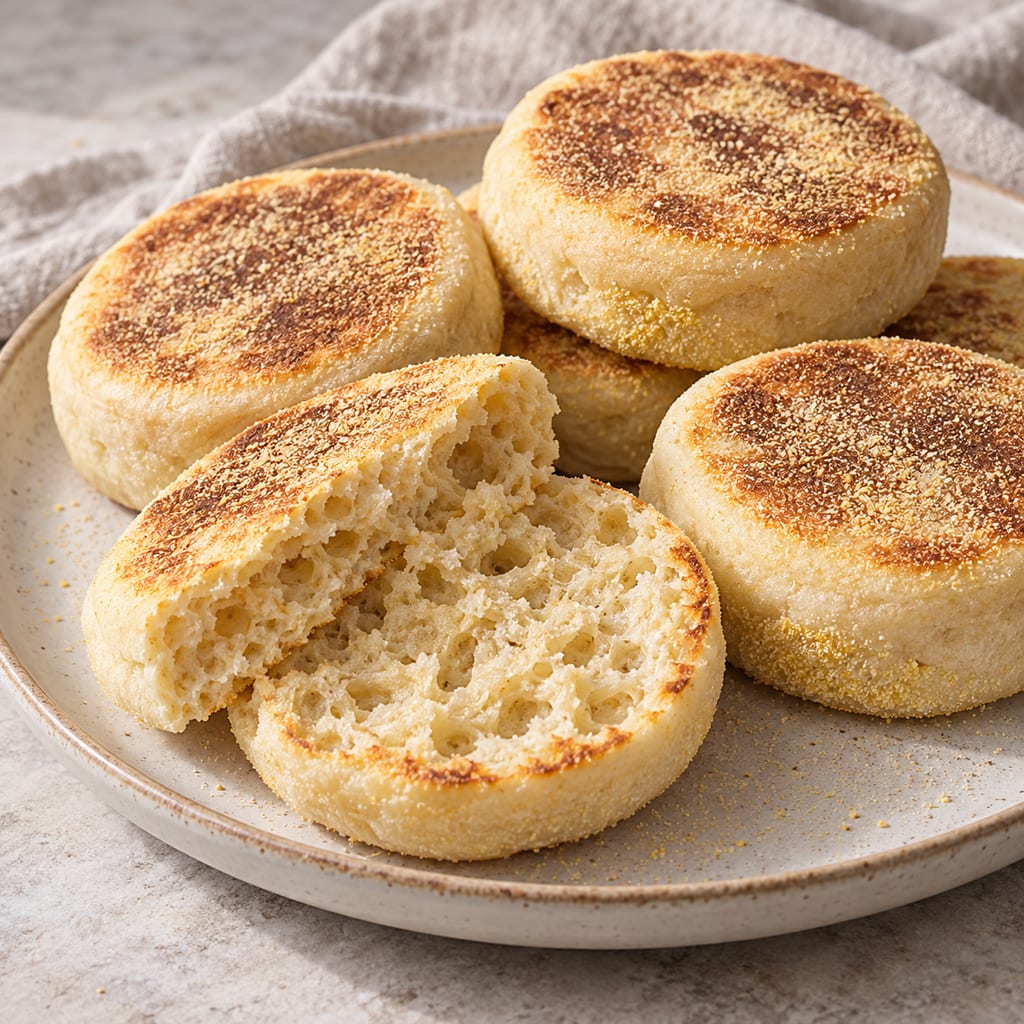
A soft English muffin dough combines sourdough starter with baker’s yeast, then rises, is cut into rounds and cooks on a griddle. The starter adds tang; the added yeast helps it rise.

A refined common-wheat flour blended for a broad range of baking; its protein and behavior vary with wheat, milling and market.

Toasted almonds are whole sweet almond kernels dry-roasted until golden to brown. Heat replaces their marzipan note with a roasted, nutty one; they thicken and flavour romesco.
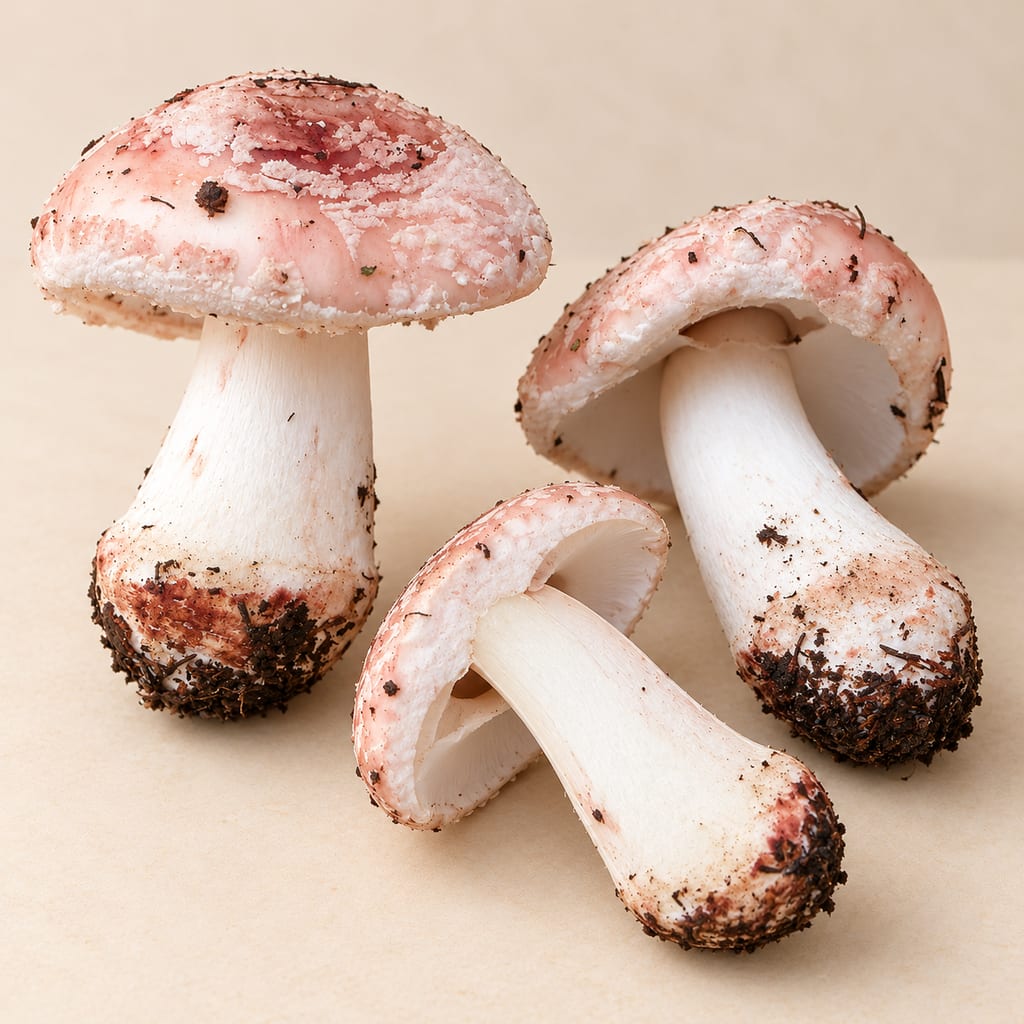
Amanita novinupta is a western North American blusher, a forest mushroom recorded as food in Mexico, and one that must be cooked because its raw flesh is toxic.
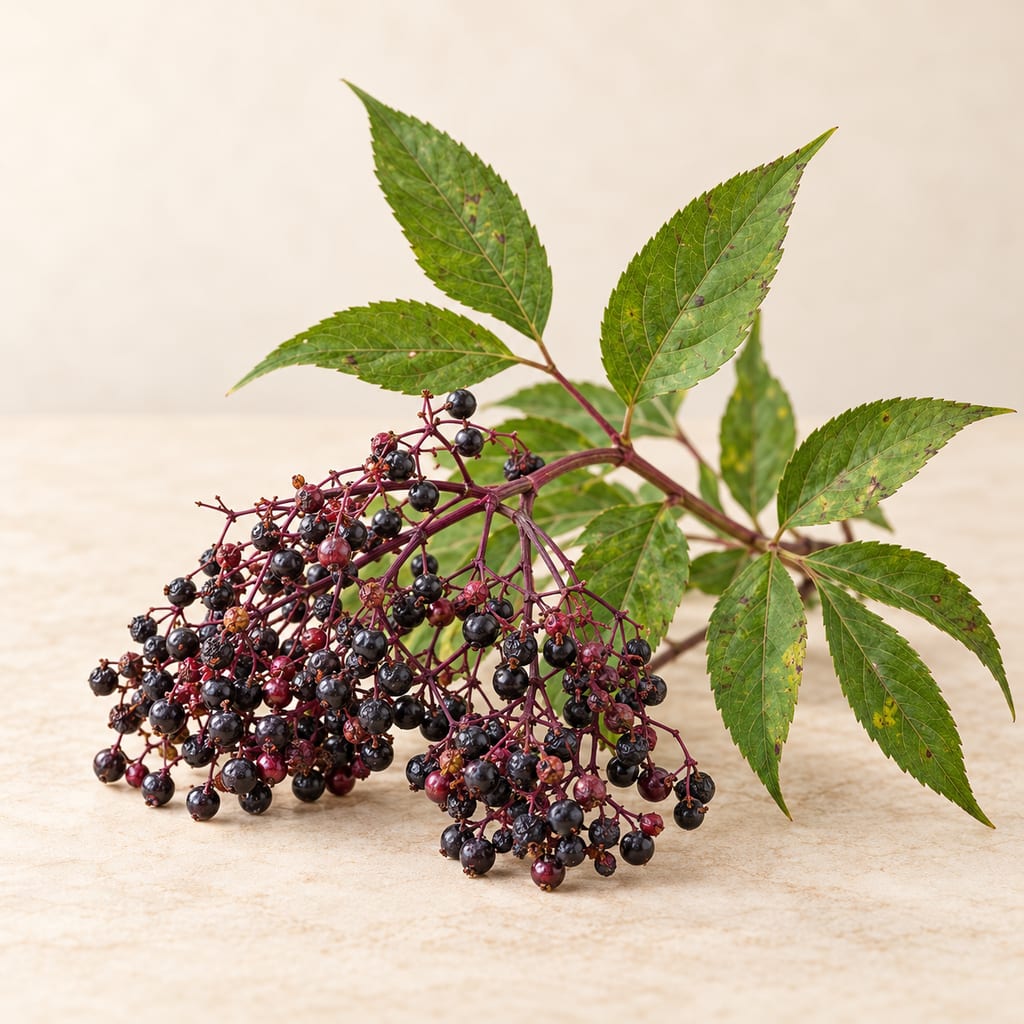
Sambucus canadensis is the accepted name used here for American elderberry. Missouri production guidance and named-cultivar studies give useful regional growing information, while food and analytical sources leave process questions open.
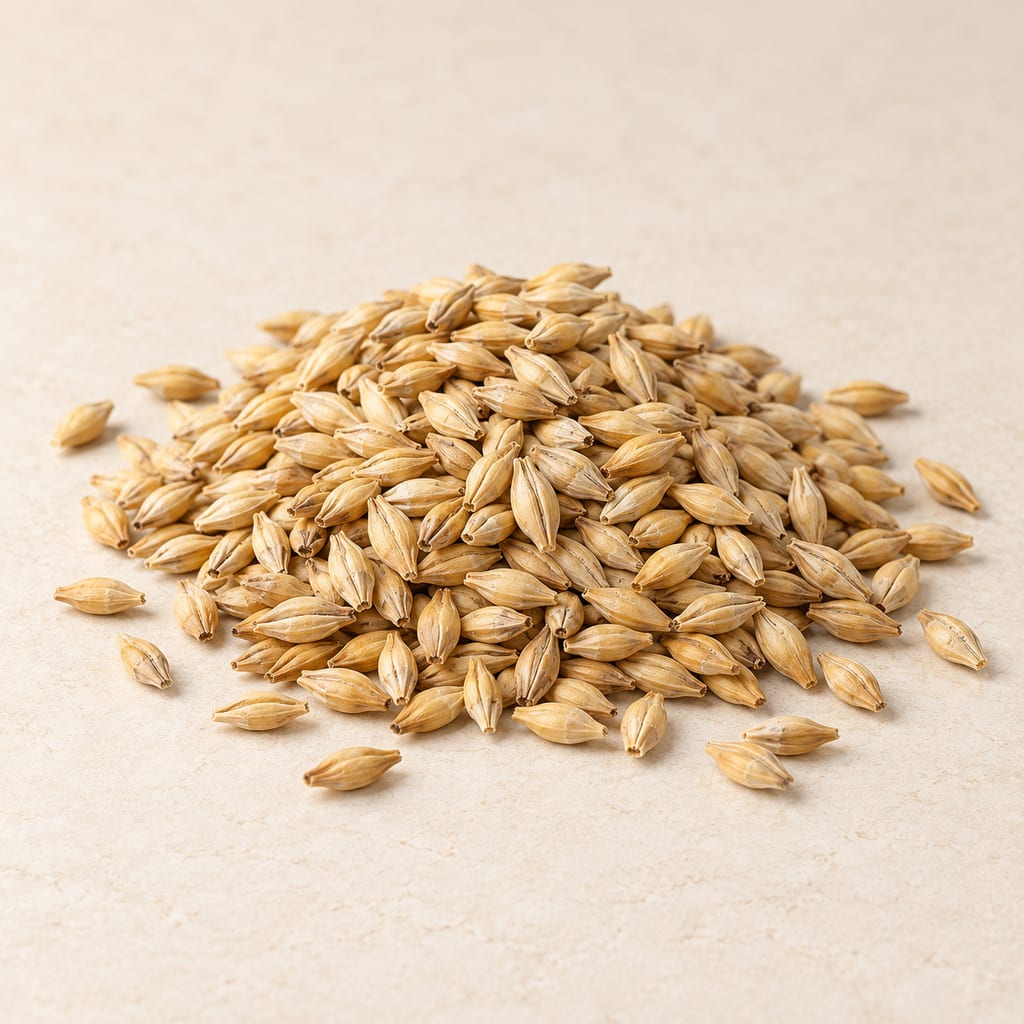
A lightly kilned brewing base made from two-row barley. It supplies starch and enzymes for the mash, with the maltster’s product and lot analysis defining its brewing properties.

Ripe avocado flesh is the soft, buttery, fat-rich pulp of Persea americana, eaten raw. It is low in acid, so it is a fresh ingredient that needs care in chilled dishes.
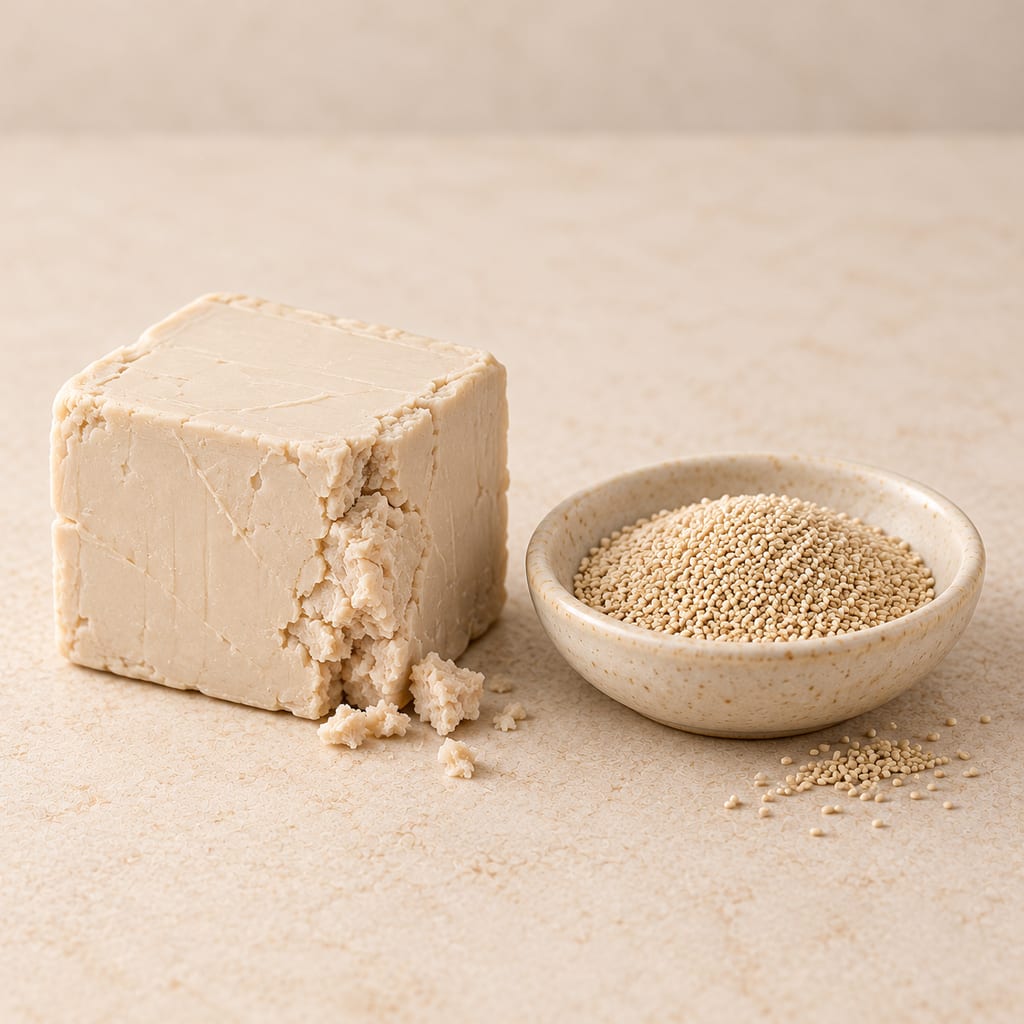
Baker's yeast is a cultivated living leavener, commonly sold fresh or dried. In dough, selected Saccharomyces cerevisiae cells make gas that can raise bread.
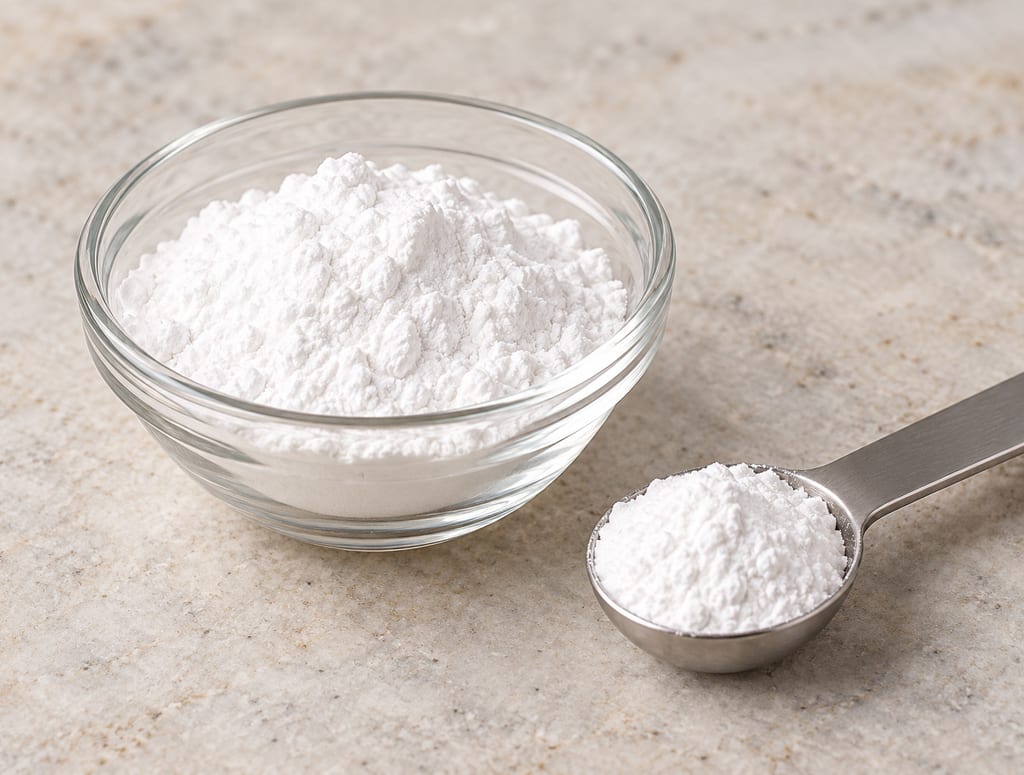
Baking powder is a dry chemical leavener that combines bicarbonate with acid-reacting ingredients and a carrier. Moisture and heat release carbon dioxide for quick breads, batters and griddle cakes.
No community contributions have been published for this entry yet.
Sign in to contribute. Published comments and photos are free to read.
King Arthur BakingMaintenance · Culture · Modern adaptation
Sourdough Starter RecipeA current US-published flour-water starter method; flour and water forms; staged refresh guidance; container guidance.
Cited in: A culture is a community; “ripe” describes a moment; Flour, water and the refresh cycle
King Arthur BakingHybrid culture use · Commercial yeast
Sourdough English Muffins RecipeRecipe specifies ripe (fed) starter or discard plus active dry or instant yeast; maker notes ripe starter gives a more vigorous rise.
Cited in: A culture is a community; “ripe” describes a moment; Culture-only and hybrid baking
Centers for Disease Control and Prevention, National Center for Emerging and Zoonotic Infectious DiseasesFood safety
Raw Flour and DoughUncooked flour can carry E. coli or Salmonella; grinding and bleaching do not kill them; CDC directs readers not to eat raw dough and to bake/cook it and clean hands and surfaces.
Cited in: Keeping, choosing and using a starter safely
King Arthur Baking, Professional ReferenceCommercial yeast types · Leavening mechanism
YeastPage describes commercial S. cerevisiae selection, forms including fresh, active-dry, and instant; conversion and hydration guidance varies by type and manufacturers.
Cited in: A culture is a community; “ripe” describes a moment; What happens in the jar; Culture-only and hybrid baking; Keeping, choosing and using a starter safely
eLifeStarter ecology · Geographic variation · Function
The diversity and function of sourdough starter microbiomesSequenced 500 starters from four continents; little broad geographic signal; microbial composition and function vary; sourdough samples cannot establish identity of an untested culture.
Cited in: A culture is a community; “ripe” describes a moment; A long practice without a single birthplace; What happens in the jar; Flour, water and the refresh cycle; Culture-only and hybrid baking
mSphere, American Society for MicrobiologyStarter ecology · Ingredient/environment influence
Influences of Ingredients and Bakers on the Bacteria and Fungi in Sourdough Starters and Bread18 bakers from 14 countries used standardized flour and protocol; starters remained diverse; results show variation, not a basis to assign organisms to an unassayed starter.
Cited in: A long practice without a single birthplace; What happens in the jar; Flour, water and the refresh cycle
Science; PubMed record, National Library of MedicineHistorical evidence
Investigation of Ancient Egyptian Baking and Brewing Methods by Correlative MicroscopyMicroscopy of ancient bread and brewing remains suggests some breads used flour from raw grain and sometimes malt and yeast; brewing description includes malt and yeast. Not treated as proof of a single sourdough origin.
Cited in: A long practice without a single birthplace
Advances in Applied Microbiology, Elsevier; PubMed recordCulture type definitions · Microbial roles
Microbial Ecology and Process Technology of Sourdough FermentationDistinguishes spontaneous/backslopped, culture-inoculated, and inoculated-then-backslopped processes; associates acidification with LAB and leavening primarily with yeasts and some heterofermentative LAB.
Cited in: What happens in the jar
Peer-reviewed review, PubMed CentralAcidification · Aroma and flavor
Role of lactic acid bacteria and yeasts in sourdough fermentation during breadmaking: Evaluation of postbiotic-like components and health benefitsBroad review of sourdough yeast and LAB roles and acids/flavor; used for general mechanisms only, not specific starter identity.
Cited in: What happens in the jar
King Arthur BakingMaintenance · Storage
Feeding and Maintaining Your Sourdough Starter RecipePublisher presents separate room-temperature daily and refrigerated weekly maintenance approaches; after refrigeration the starter may need feeds before baking.
Cited in: Flour, water and the refresh cycle; Keeping, choosing and using a starter safely
Annual Review of Food Science and TechnologyBaking variation · Definitions
Wheat Sourdough Breadmaking: A Scoping ReviewScoping review analyzed 253 studies and documents variation in leavening agents, quantities, processing conditions and bread outcomes; cautions that the relation between use, process and quality remains difficult to compare.
Cited in: A culture is a community; “ripe” describes a moment; Culture-only and hybrid baking
CyTA - Journal of Food, Taylor & FrancisInjera process example
Isolation and identification of dominant lactic acid bacteria and yeast species from teff (Eragrostis teff) injera dough fermentationStudy of teff injera dough and ersho; used to distinguish this fermentation system from general wheat sourdough. Taxa identified only for the sampled experiment.
Cited in: Beyond wheat bread
Applied and Environmental Microbiology, American Society for MicrobiologyIdli fermentation example
Diversity and Succession of Microbiota during Fermentation of the Traditional Indian Food IdliExamines microbial succession in a naturally fermented rice and black-gram food; evidence is specific to that formulation and study, not generic sourdough.
Cited in: Beyond wheat bread
Journal of Food Science and Technology, PubMed CentralTraditional idli preparation
Preparation of idli batter, its properties and nutritional improvement during fermentationDescribes separate soaking and grinding of rice and black gram, fermentation and steaming; not treated as a wheat-starter method.
Cited in: Beyond wheat bread
Proceedings of the National Academy of SciencesIngredient · Editorial
Archaeobotanical evidence reveals the origins of bread 14,400 years ago in northeastern Jordanthe specific statement that bread-like preparations from wild grains predate agriculture; it does not identify the wheat flour sold as bread flour today.
Cited in: A long practice without a single birthplace
U.S. National Institute of Diabetes and Digestive and Kidney DiseasesDietary context
Definition & Facts for Celiac DiseaseCeliac disease is triggered by gluten, a protein in wheat, barley and rye; treatment is a strict gluten-free diet.
Wheat allergy is a different immune reaction and does not cause long-term damage to the small intestine.
Cited in: Keeping, choosing and using a starter safely