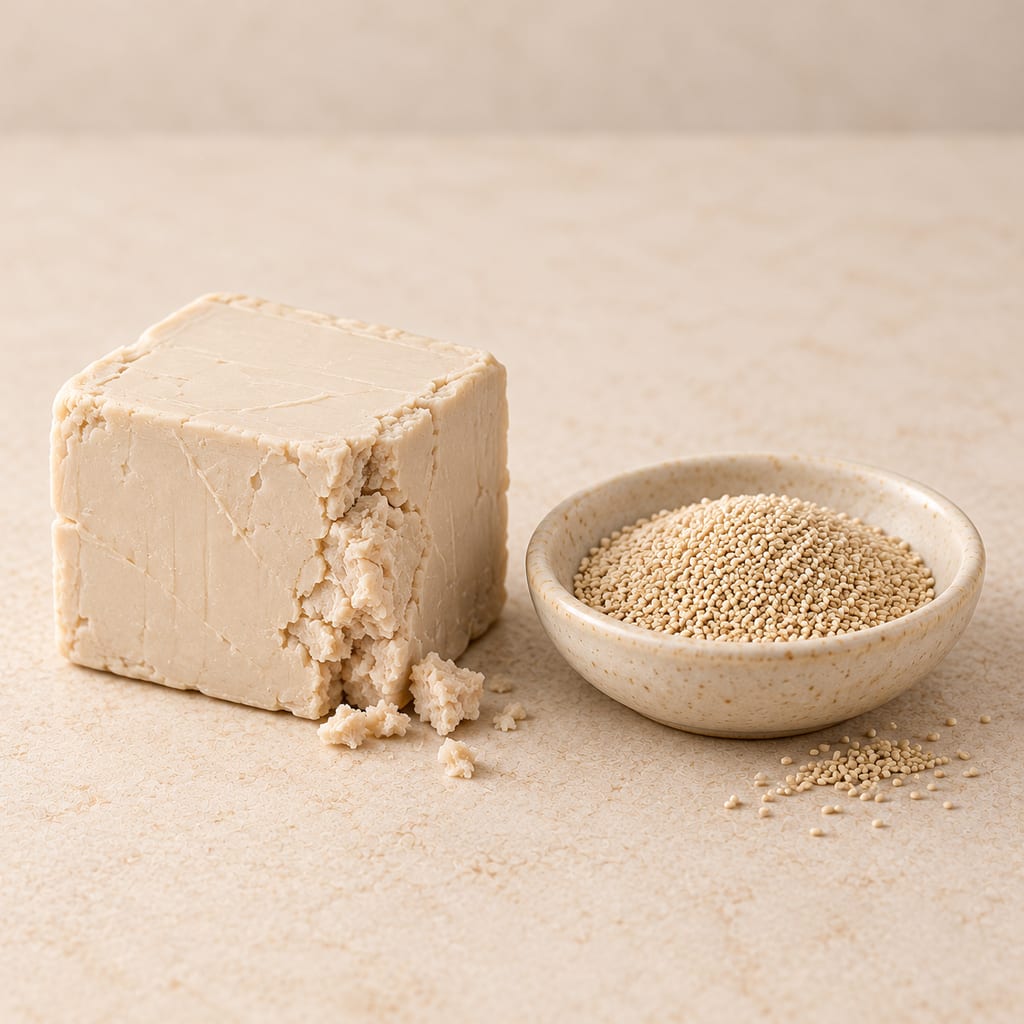
Baker's yeast
Baker's yeast is a cultivated living leavener, commonly sold fresh or dried. In dough, selected Saccharomyces cerevisiae cells make gas that can raise bread.
 FermenteaWhere food goes to change
Modern method
Sourdough Pretzels
Unfed sourdough starter flavours a soft pretzel dough raised with instant yeast. After a short rest, the dough is shaped, brushed with a sweet wash, salted and baked without a final proof.
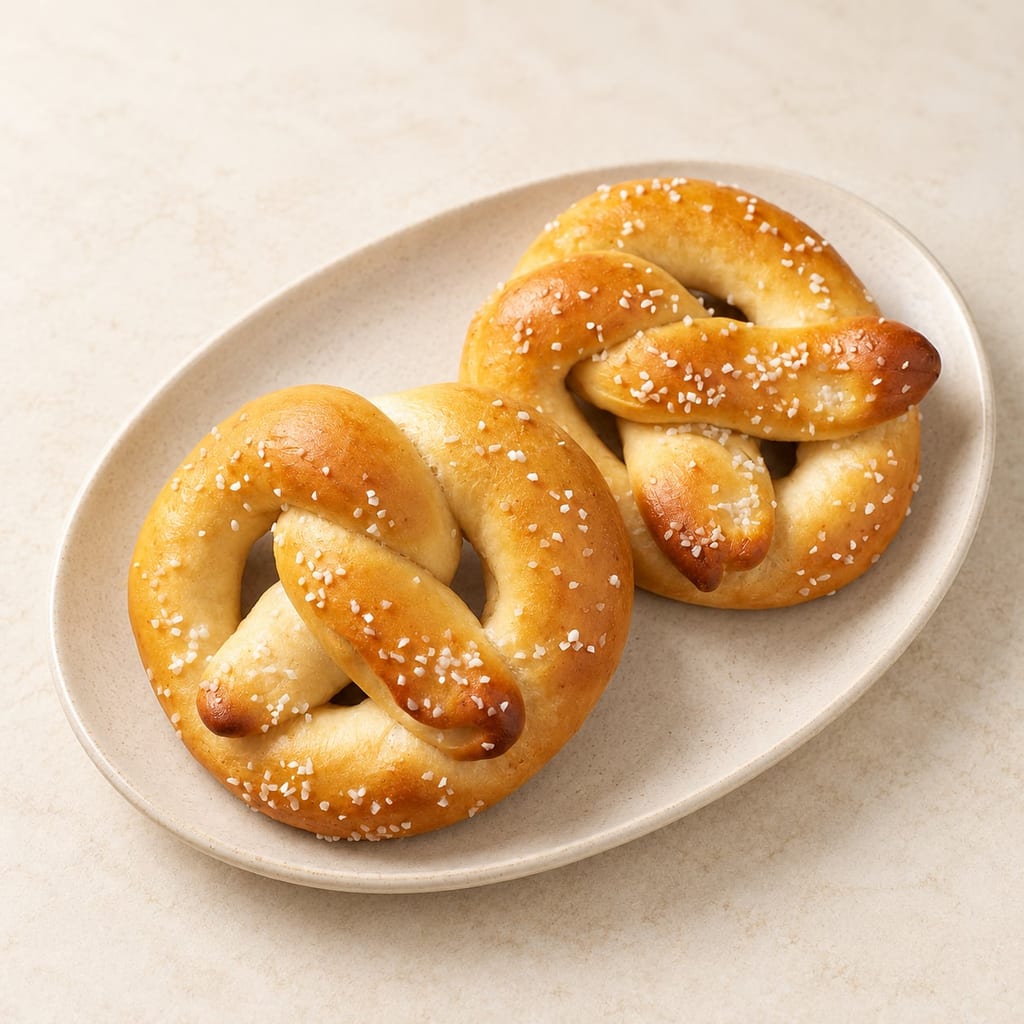
PJ Hamel's 2011 account presents these pretzels as one use for starter removed during routine feeding. The recipe combines that unfed starter with instant yeast, giving home bakers a short-rest dough rather than relying on a refreshed starter alone. Its publication documents this modern version; it does not date the beginning of pretzel baking.
Hamel also explains the sweet wash as a recipe-development choice for browning, reporting blotchy results in her own baking-soda trials. That observation describes the testing behind this particular formula, not a reason to reject other bakers' alkaline-bath methods.
King Arthur's German-style recipe is a separate ten-piece batch: it uses a boiling baking-soda bath and a 450°F oven, with soda replacing an original lye treatment. The twelve discard pretzels here receive a sugar-or-malt wash and bake at 350°F without a final proof. A shared knot shape does not make the washes, doughs or bake schedules interchangeable.
The starter gives this batch a sourdough connection, while the listed instant yeast remains part of its raising method.
Soft pretzels have many regional traditions, but this is a modern discard-starter version developed for home bakers. PJ Hamel described making pretzels with starter removed during routine feeding in 2011. The discard brings sourdough flavour, while added instant yeast raises the dough quickly; the shaped pretzels are baked without a second proof.
Yield 12 pretzels · Scaling: source batch only
Raw flour can contain E. coli or Salmonella before baking.
Hazard sourceDo not taste uncooked dough; bake according to the recipe and wash hands, bowls, utensils and worktops after raw-flour contact.
Control sourceRaw flour can carry harmful bacteria. Do not eat the uncooked dough; bake the pretzels and wash hands, tools and worktops after handling it.
US publication of a modern sourdough-discard pretzel, not an origin claim for pretzels.
Baker's yeast is a cultivated living leavener, commonly sold fresh or dried. In dough, selected Saccharomyces cerevisiae cells make gas that can raise bread.
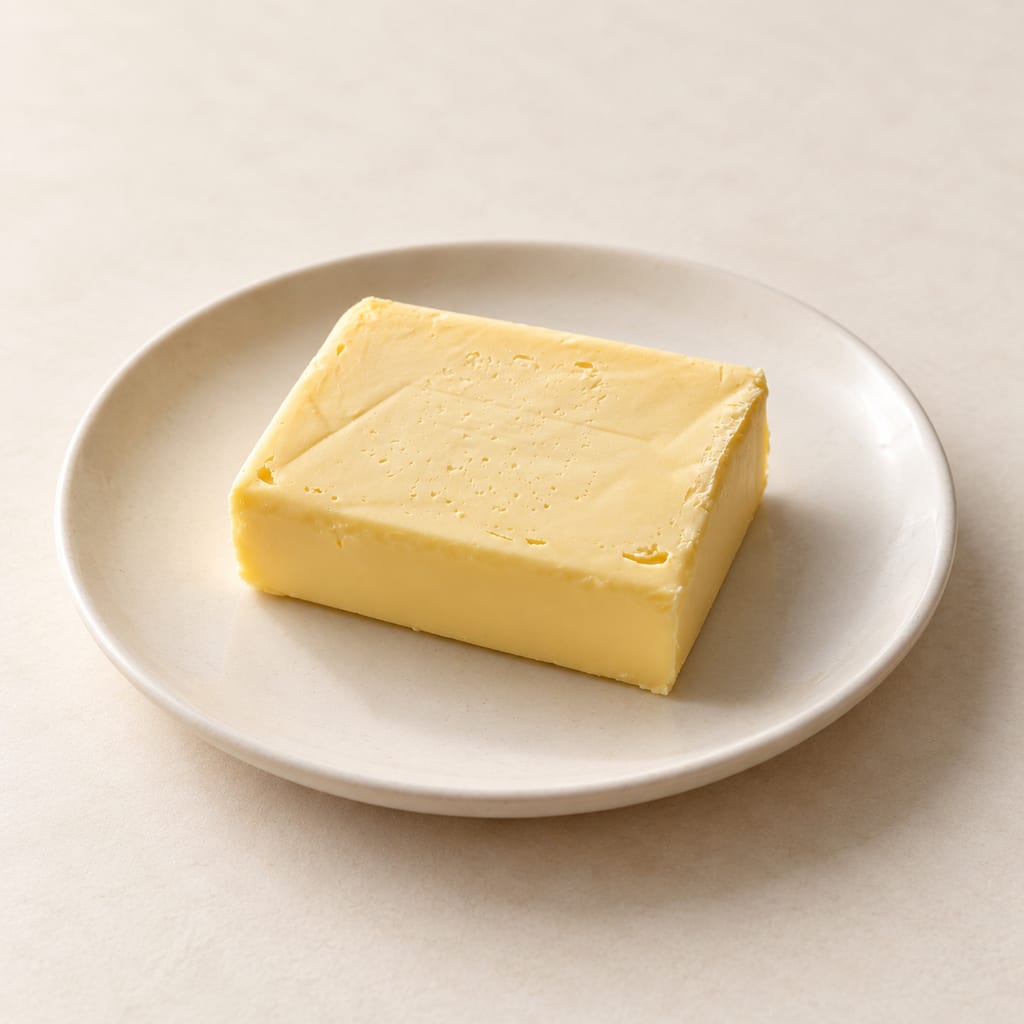
Butter is a milk-fat emulsion made by churning cream. It enriches dough or finishes bread; melted, cool and room-temperature butter serve different recipe roles.
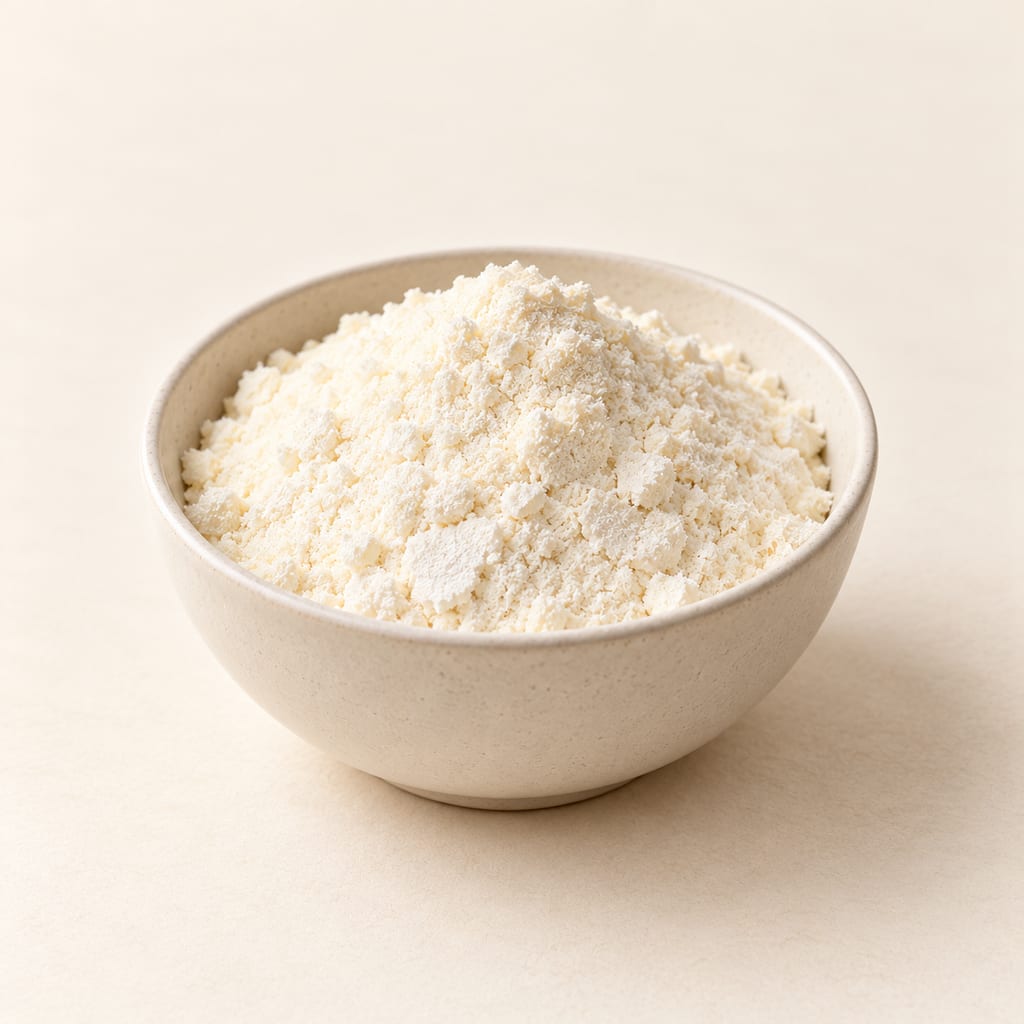
Dry milk is a family of dairy ingredients made by removing most water from milk or cream. The name includes distinct whole, partly skimmed and nonfat powders; fat level, heat treatment and particle form determine handling and use.
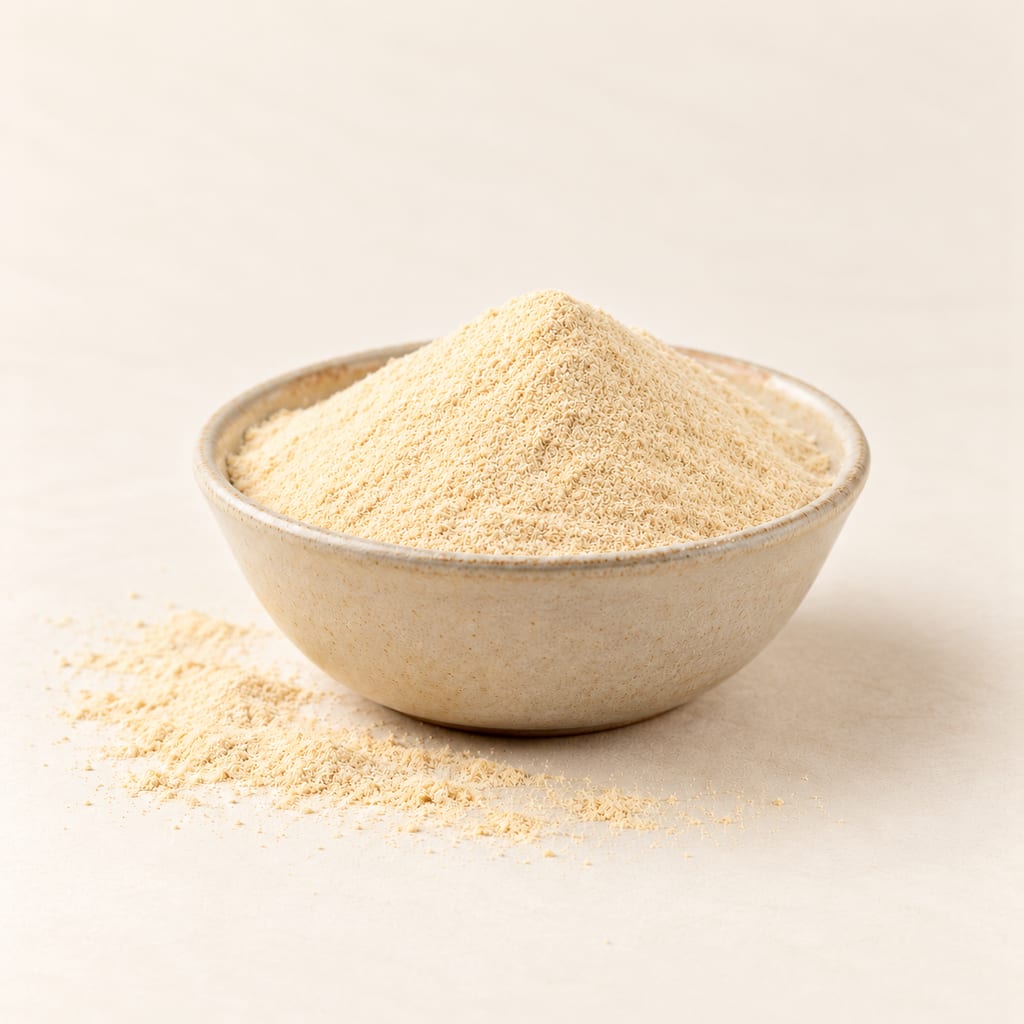
Enzyme-inactive malt powder adds malty flavor and crust color. In King Arthur's sourdough discard pretzels it is an optional choice in both the dough and a brushed wash, each with a separate sugar alternative.
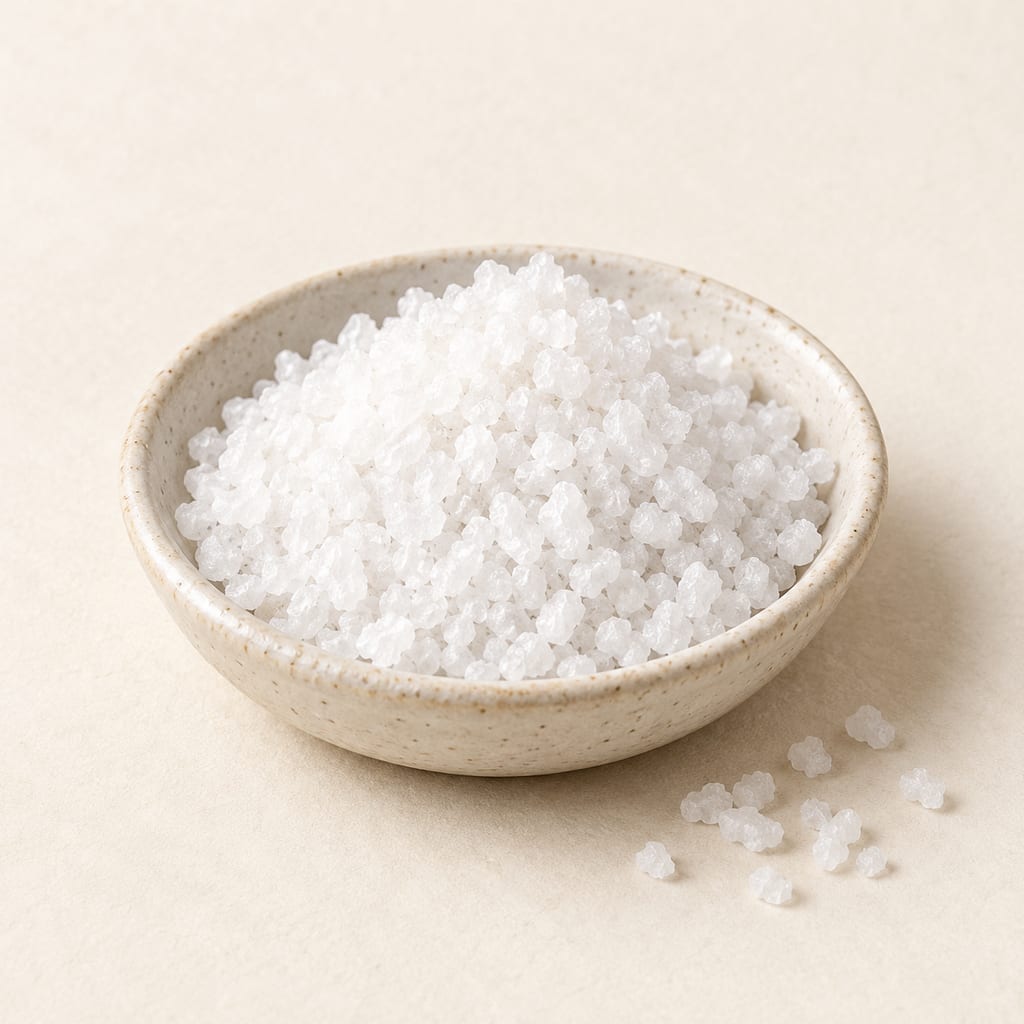
Pretzel salt is chosen for the crystals left on a baked surface. Grain size, shape and any coating determine how it adheres, dissolves and tastes.
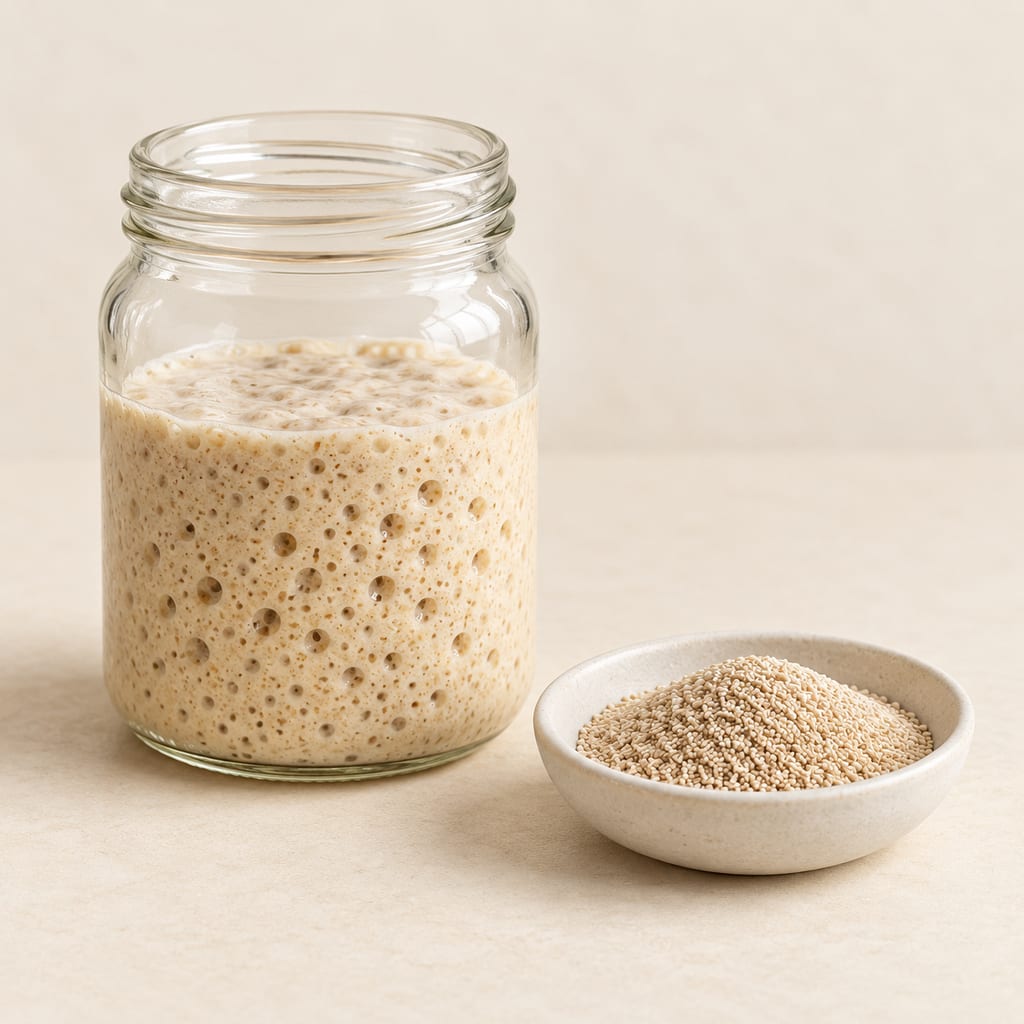
Sourdough starter is a maintained flour-and-water community of yeasts and bacteria. Commercial baker’s yeast is a separate cultured leavener, used alone or with starter in hybrid dough.
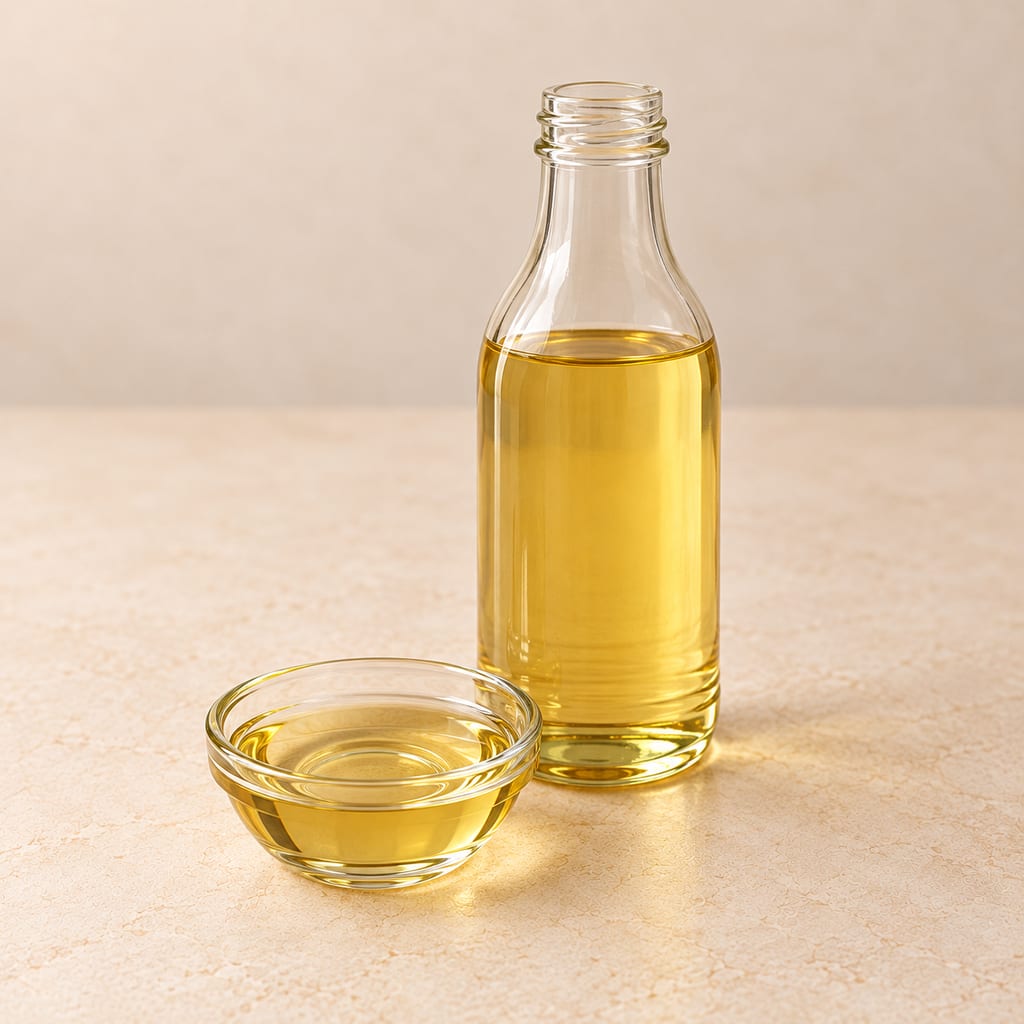
A broad kitchen label for edible oils pressed or extracted from many plant sources, each with its own flavor, composition and handling needs.
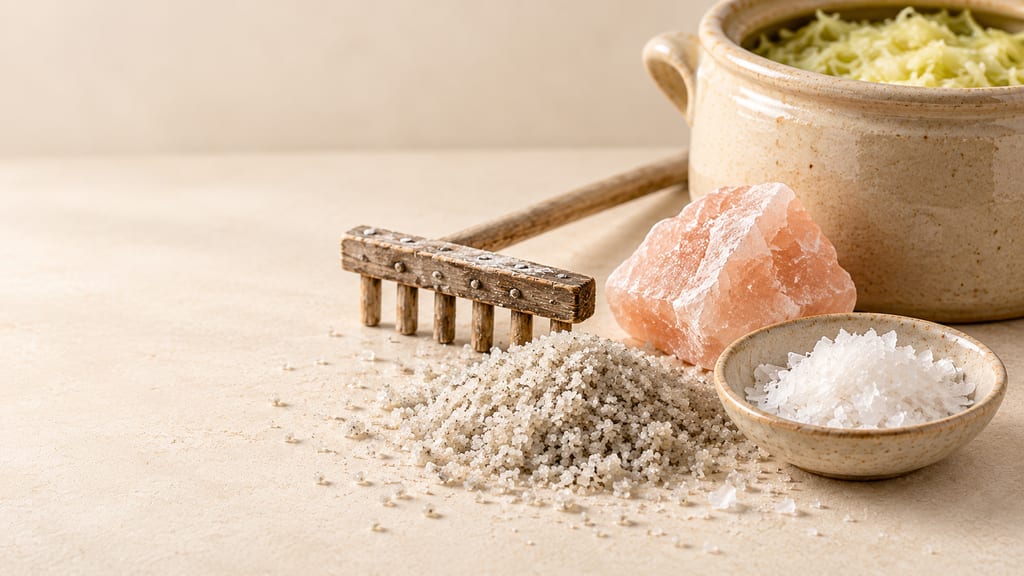
Salt seasons a meal, shapes fermentation and preserves food. Its history follows the people who mine, harvest, trade and transform it, and the choices hidden inside an ordinary packet.
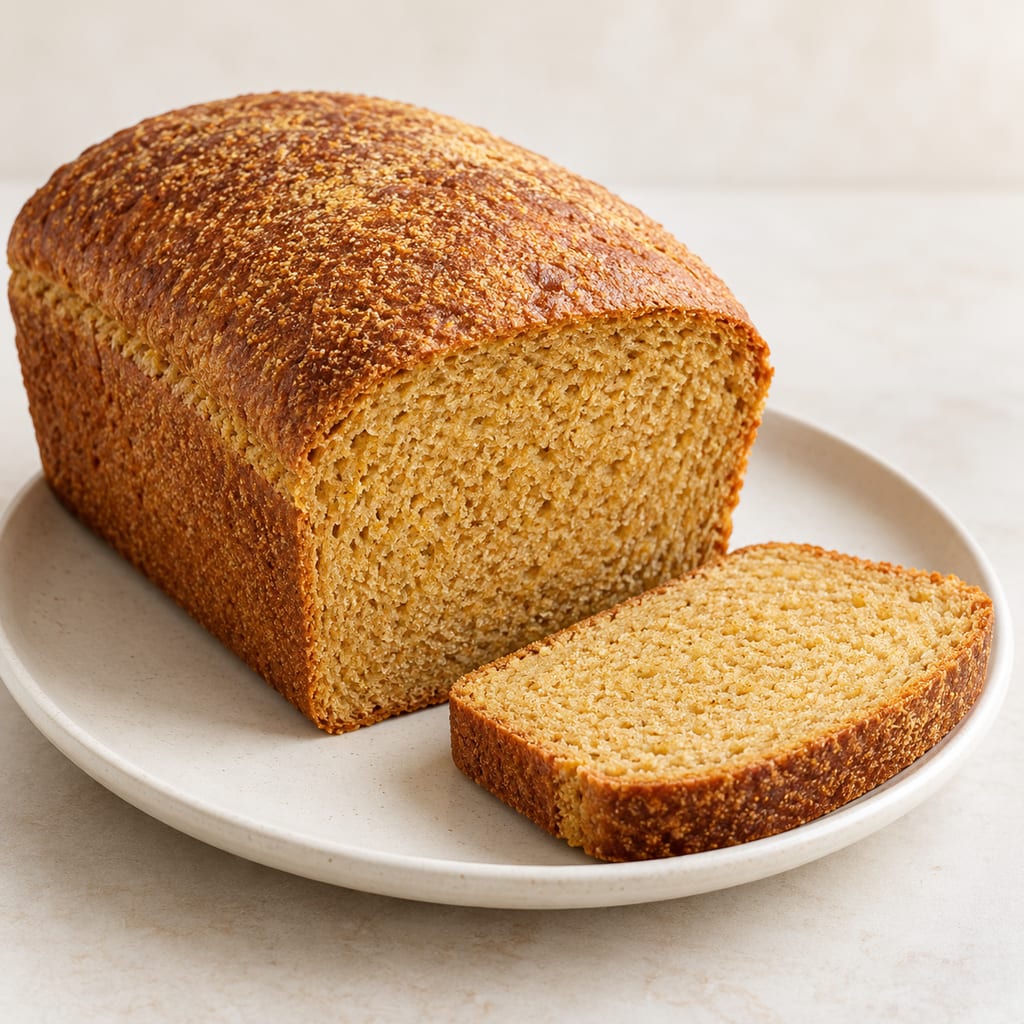
Anadama is a New England yeast loaf made with wheat flour, cornmeal and molasses. Scalded cornmeal enriches the dough, while molasses lends sweetness and a dark crust; it is especially good toasted or beside soup and baked beans.

A yeast-raised wheat ring shaped from a firm dough, briefly boiled and baked. This source-batch formula gives a gently malted crust and a chewy crumb.
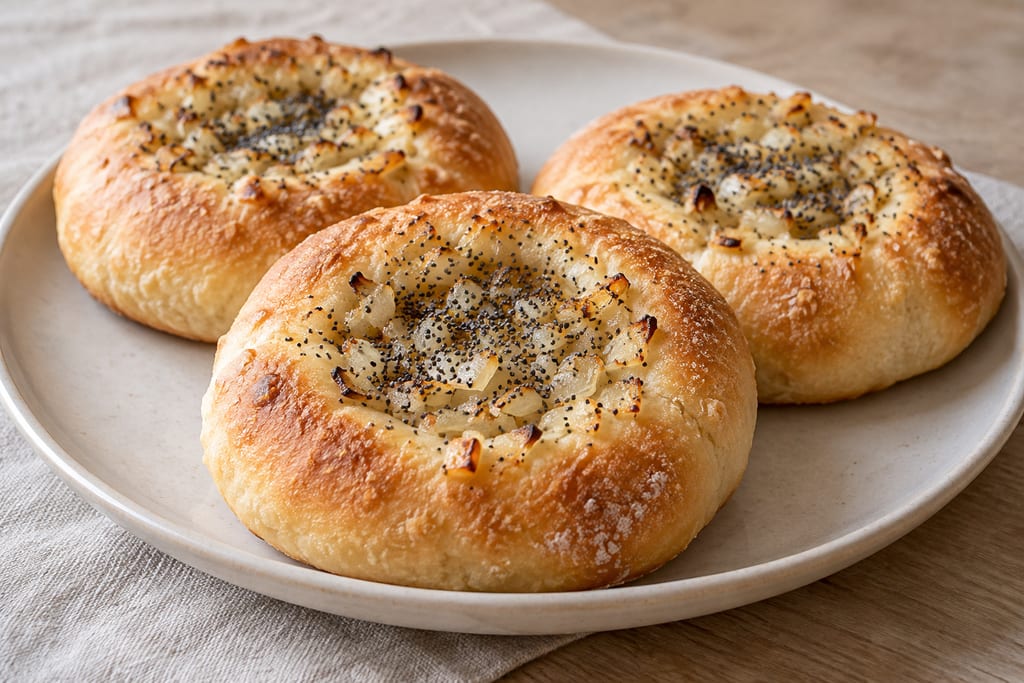
Bialys are soft, yeasted wheat rolls baked without boiling, each shaped with an onion-filled central depression instead of a hole.
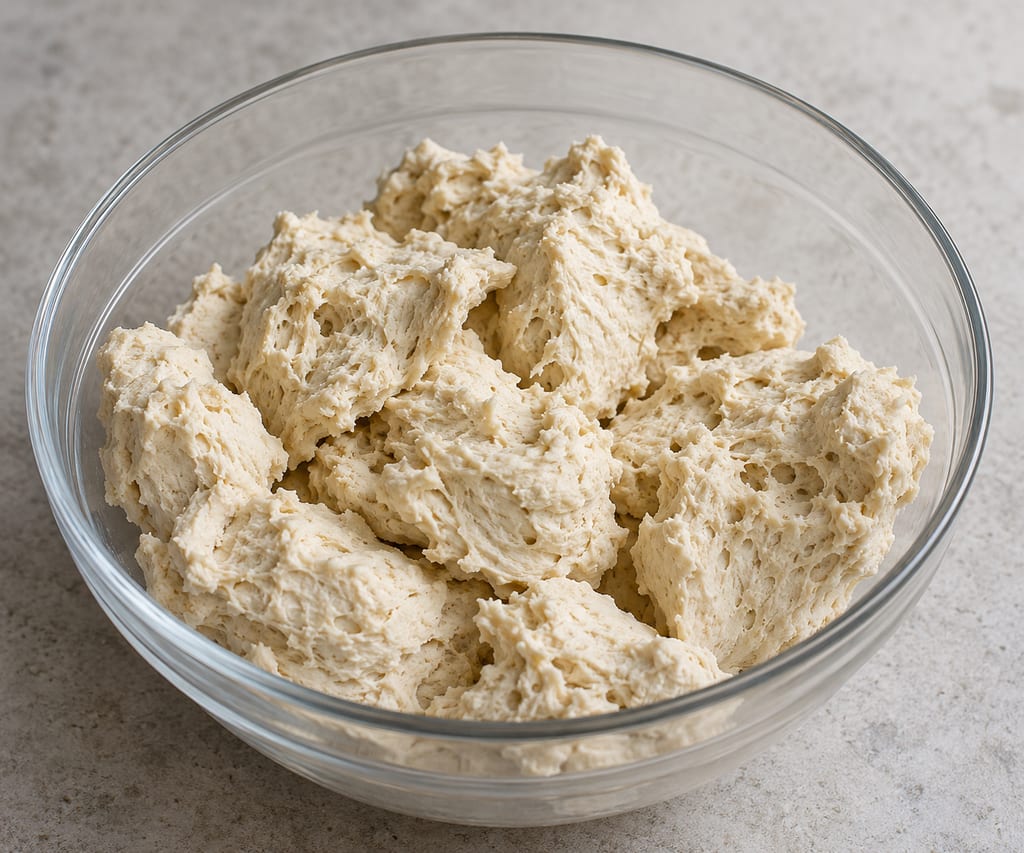
Biga is an Italian bread preferment of flour, water and a little yeast, usually a stiff unsalted mass of about 45 per cent water, fermented ahead and then mixed into the final dough.
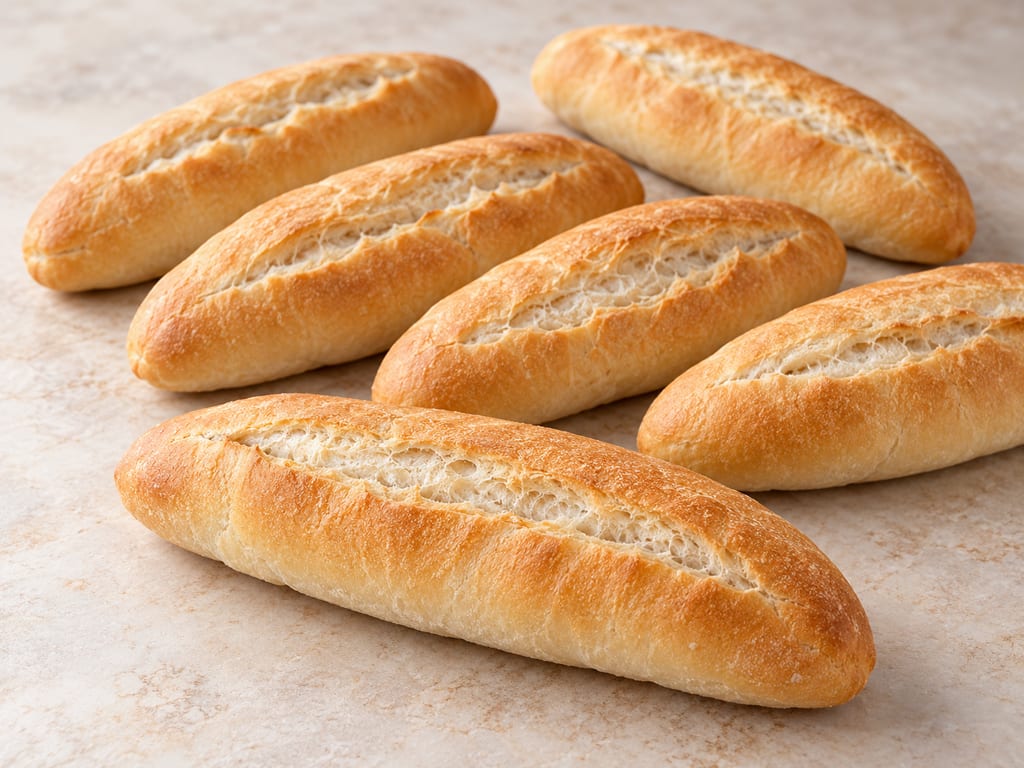
Six yeast rolls for Cuban sandwiches, shaped into long tapered loaves and slashed down the center.
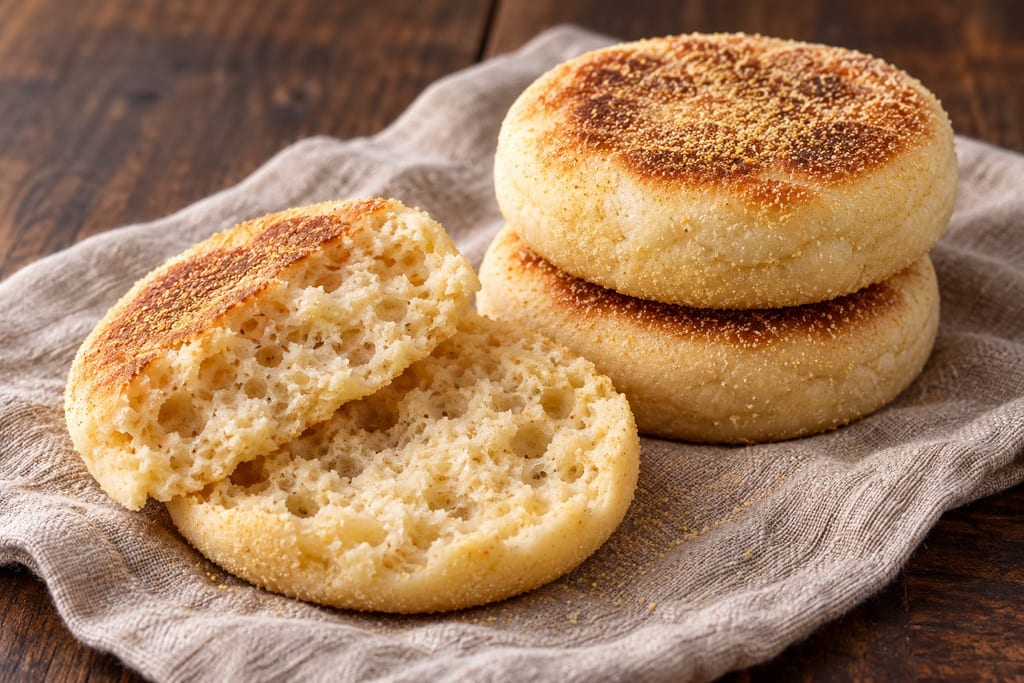
King Arthur’s six-piece English muffin batch uses a yeast preferment, two folds and a skillet or electric griddle; it is distinct from the sourdough-and-yeast version already catalogued.
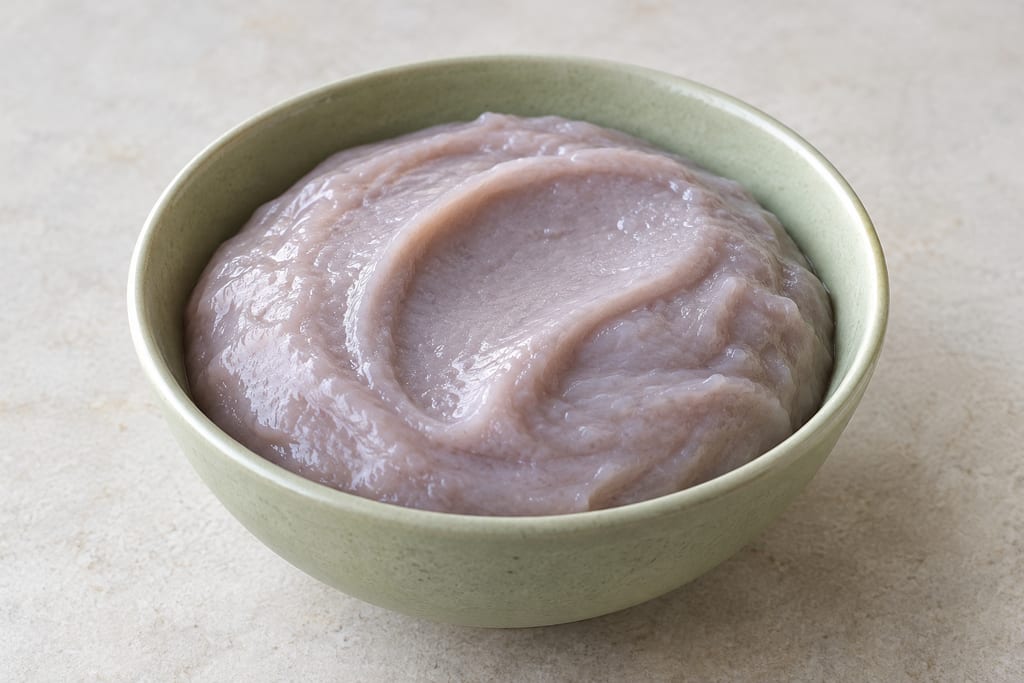
This modern introductory batch boils 500 g edible taro, then pounds it with water into fresh poi. It stops before fermentation and makes no preservation claim.
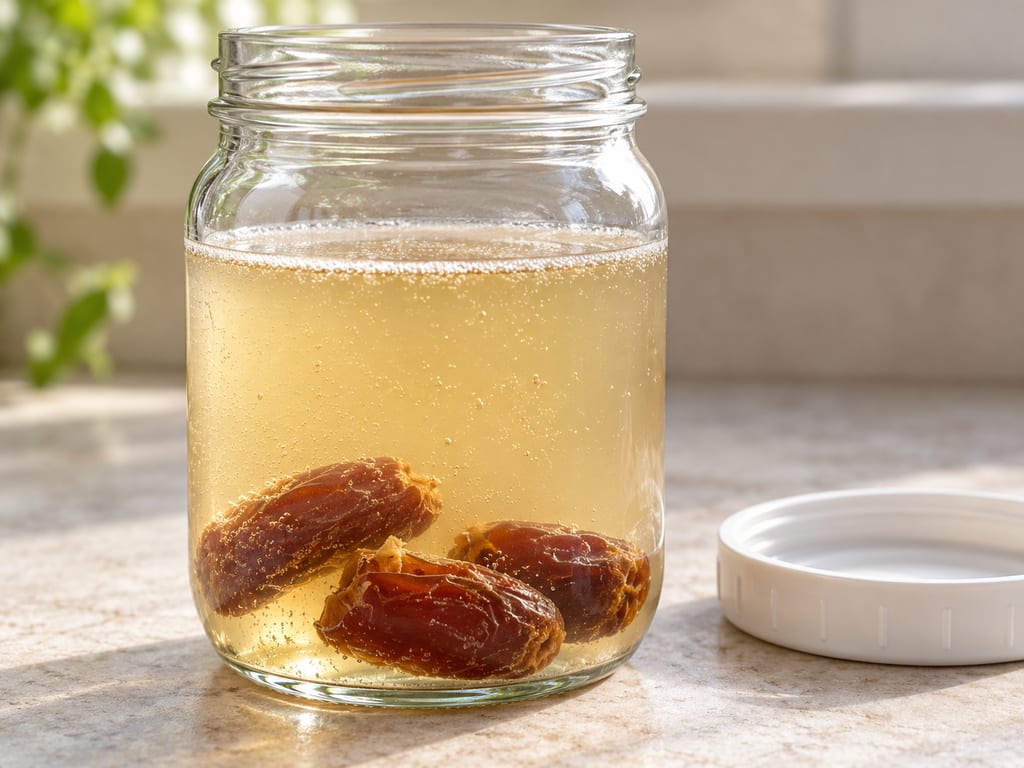
Fruit yeast water is a spontaneously fermented liquid made by soaking fruit in water, with or without sugar, to grow yeast for starting bread dough or a separate flour starter.
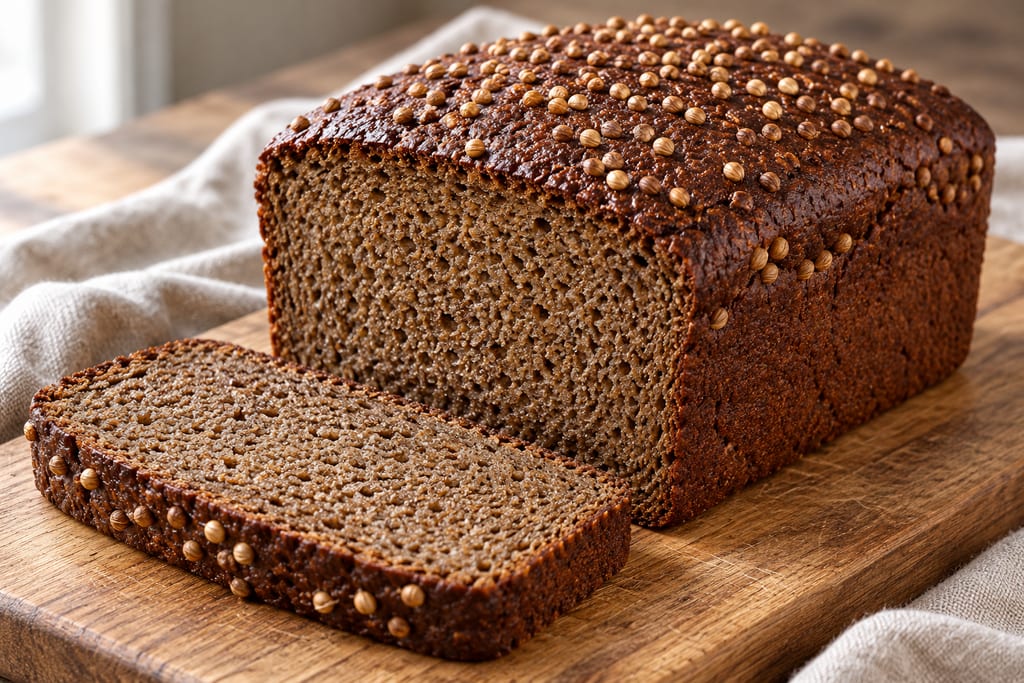
A dark rye sourdough with coriander and roasted barley-malt scald, based on Lily McCann's measured Borodinsk-ish home formula.
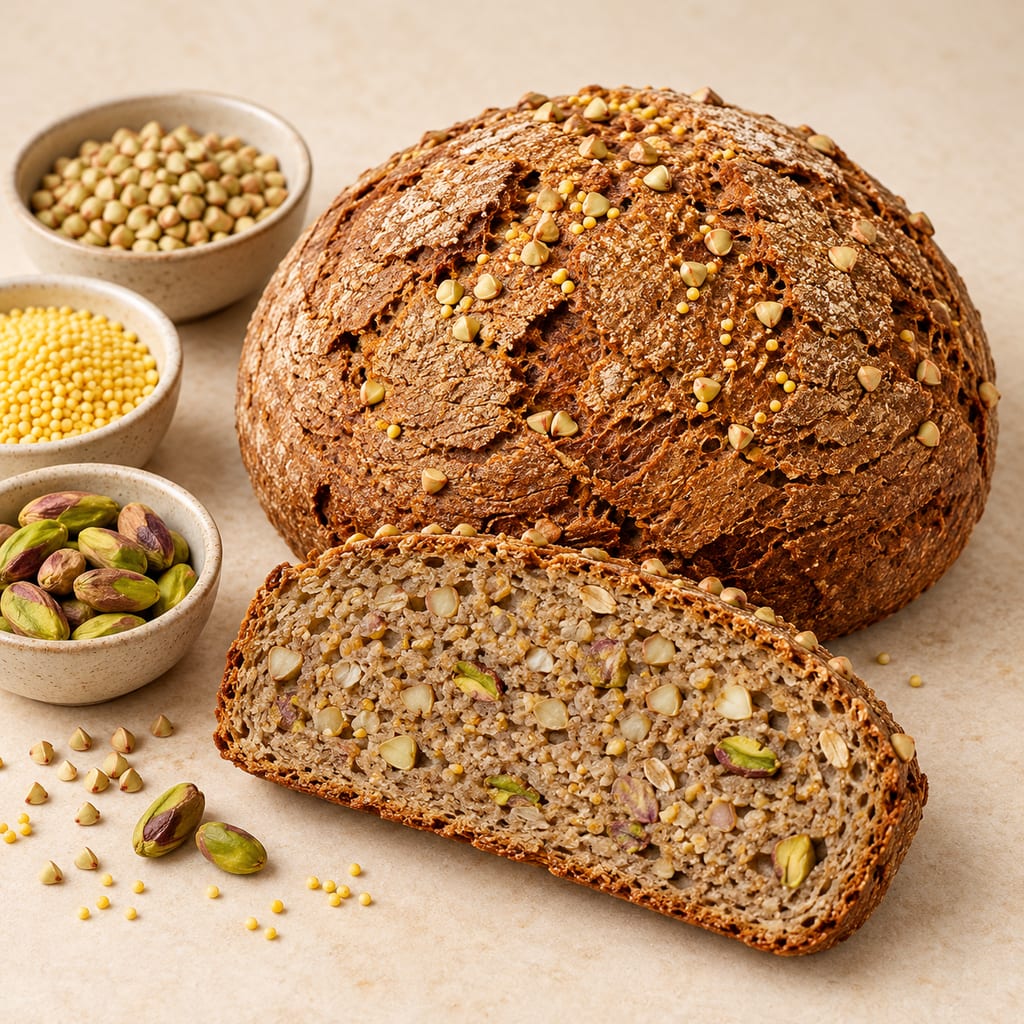
A gluten-free sourdough loaf of about 1 kg. A buckwheat and quinoa starter leavens a dough with cooked whole buckwheat groats, millet and a dark gluten-free bread mix, baked in a lidded pot.
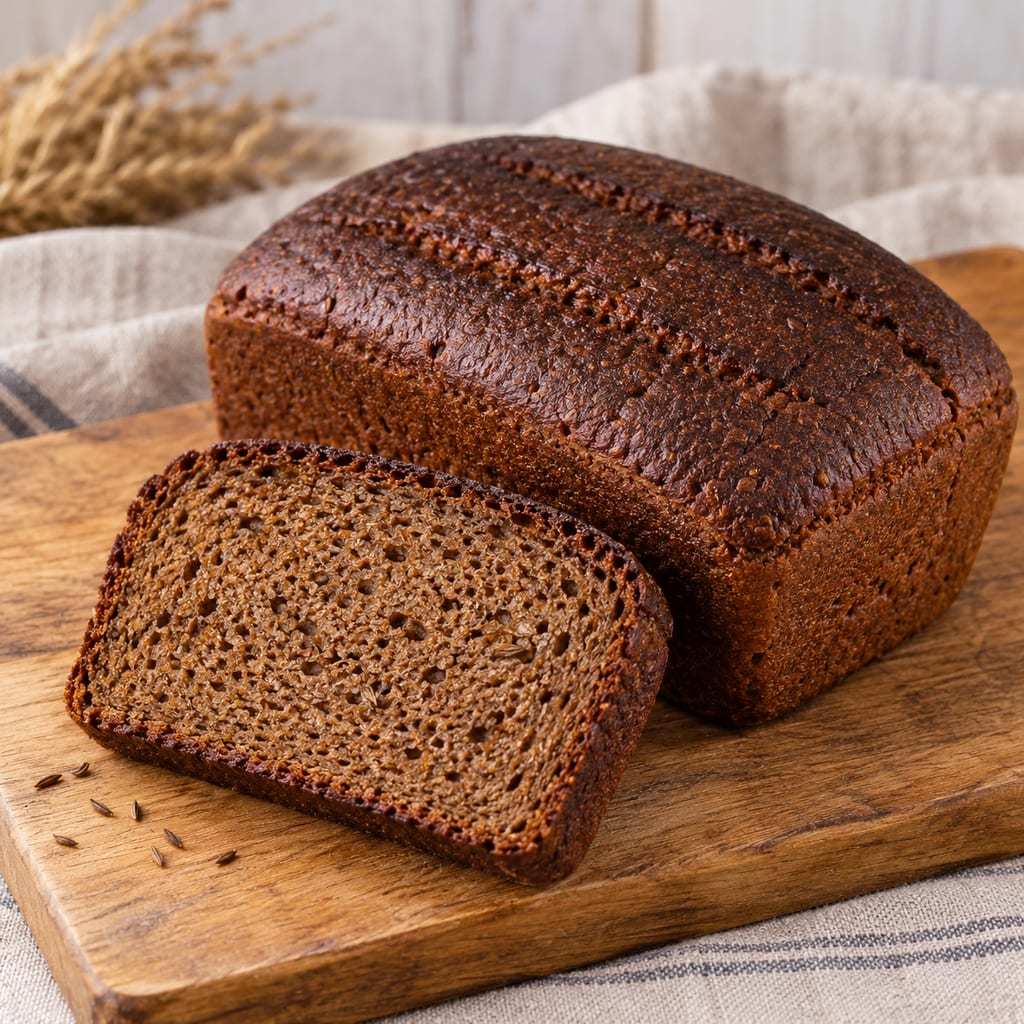
A Lithuanian dark rye loaf made with an overnight rye preferment, caraway, honey and sugar, then proofed in a loaf pan and baked in two stages.
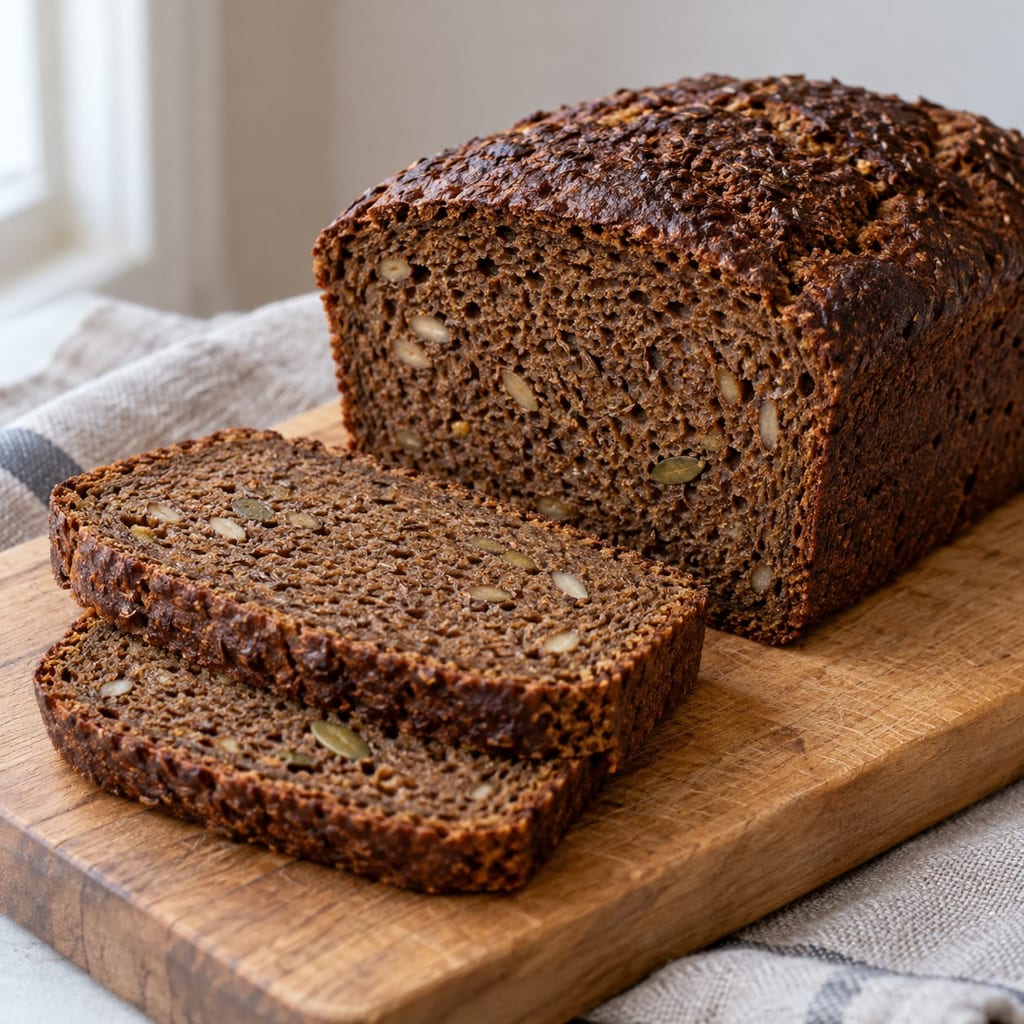
This Estonian rye loaf uses a sourdough preferment, a rye scald and soaked seeds, with a small amount of baker’s yeast. Two tins bake through a staged hot-to-moderate oven schedule.
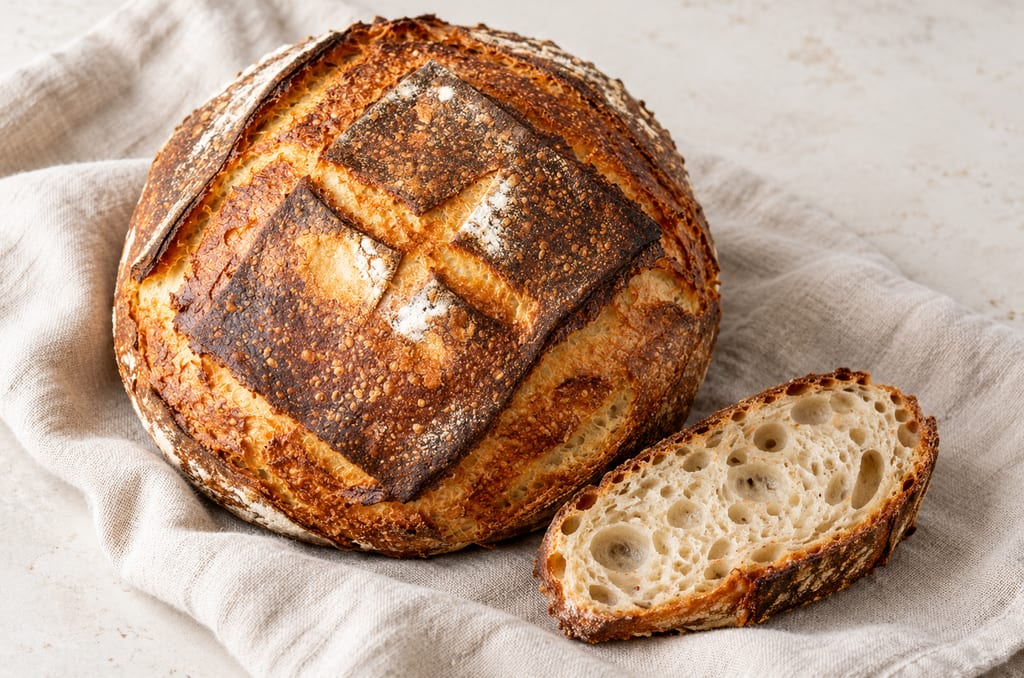
A ripe sourdough starter leavens this modern low-handling loaf. Three hourly folds organize the sticky dough before a long refrigerator rest, final proof and covered bake.
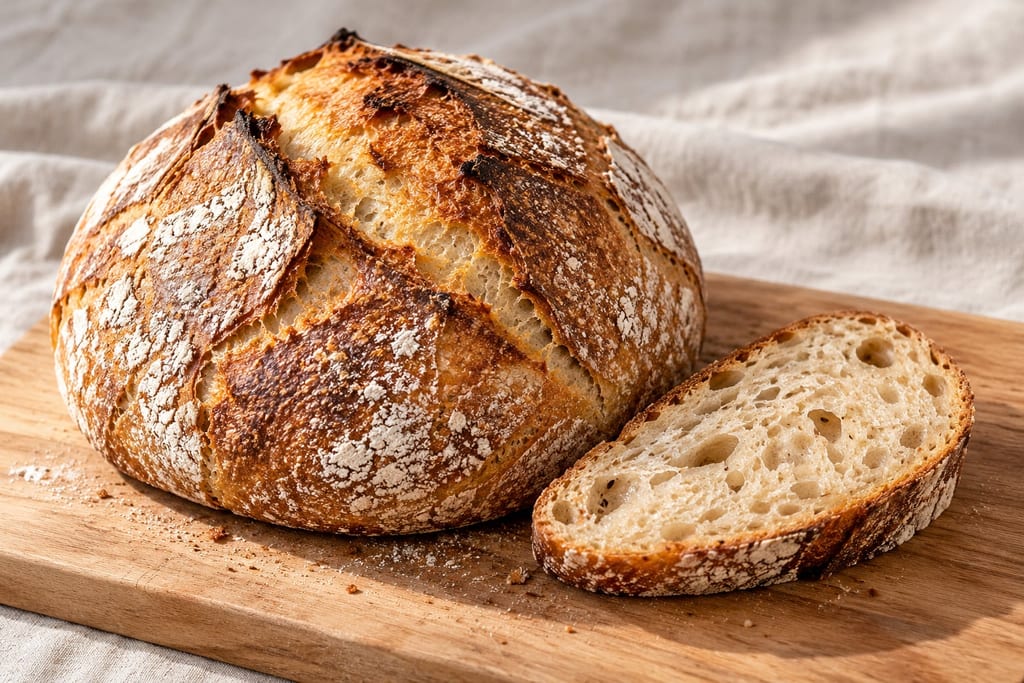
Two large French-style wheat loaves use unfed sourdough starter, whole-wheat flour, long room-temperature fermentation and a covered-pot bake.
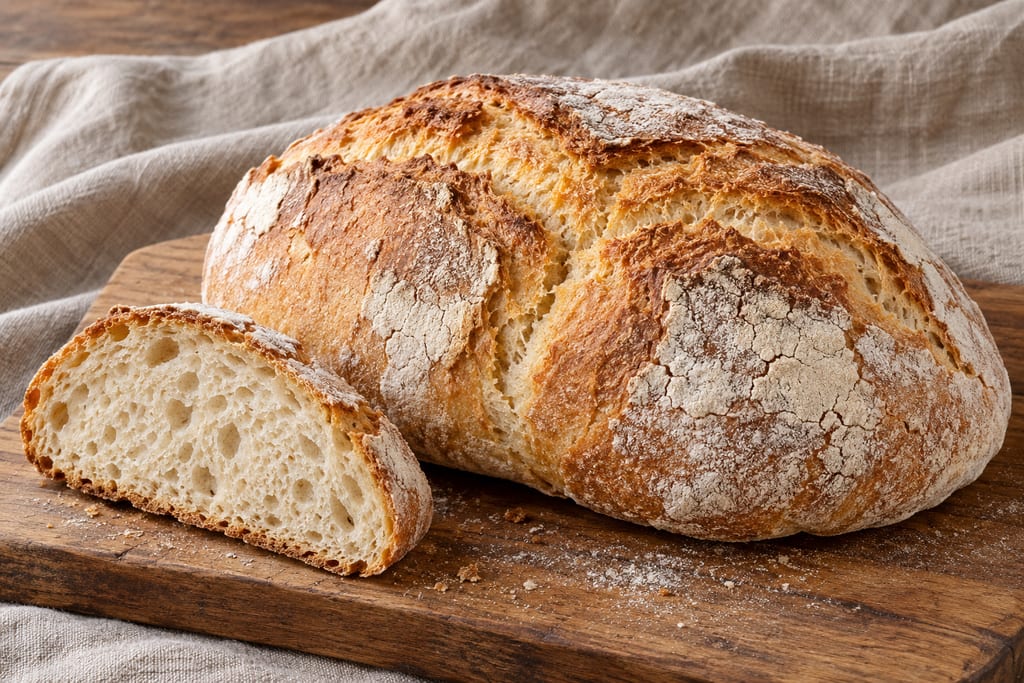
This home sourdough adaptation borrows Pan de Cea’s wheat-forward loaf and central fenda while using a domestic oven and a separately documented modern formula.
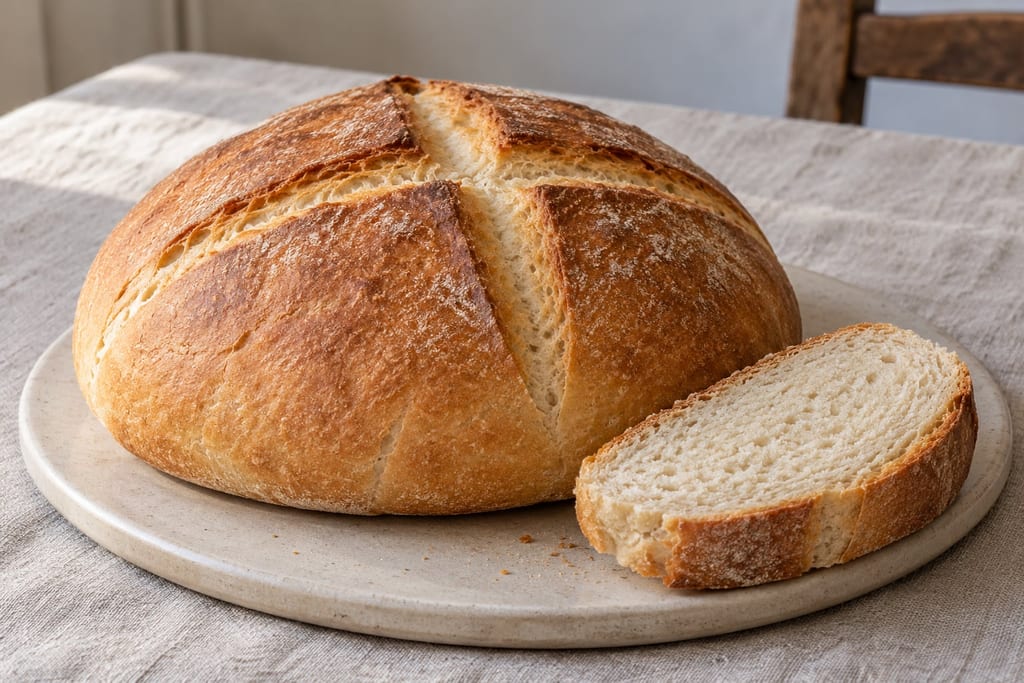
This household Pan de Cruz adaptation uses sourdough and a folded, tight-crumb wheat dough, marked with a cross and baked in a home oven.

Soft, spreadable Calabrian pork sausage made with a great deal of red chilli and fatty pork, stuffed into natural casings, sometimes smoked and matured while staying soft.

A way to add independent temperature logging to an existing food dehydrator without changing its built-in controls or protections. It is a monitoring method, not a rewiring plan.

Pleurotus cystidiosus is the abalone mushroom, a cultivated oyster-type fungus with dark brown caps that grows more slowly and is more demanding than other Pleurotus species.

A dark, balanced vinegar from Emilia-Romagna made by combining cooked or concentrated grape must with wine vinegar, then acetifying and refining it in wood under a protected specification.

A living dairy inoculum that starts controlled cream fermentation, developing acidity and aroma before sour cream or cultured butter is finished.

A small electric incubator holds jars at a selected temperature for yogurt and other documented warm food preparations. Controls, capacity and vessel arrangement vary by model.

Adygean salt is a seasoned table salt associated with Adygea and the wider North Caucasian culinary tradition. Salt is blended with garlic and a variable selection of herbs and spices; the exact mix depends on the named style and maker.

The African Caesar-group mushroom, Amanita masasiensis, is a wild ectomycorrhizal species of central and southern African woodlands, eaten locally. The genus contains deadly poisonous species, so identification needs care.
No community contributions have been published for this entry yet.
Sign in to contribute. Published comments and photos are free to read.
King Arthur BakingInspiration
Sourdough Pretzelsformula quantities
45-minute rest
12 pretzel yield
350°F (177°C) bake
Cited in: A modern use for starter removed at feeding; Keep the two pretzel methods separate
Centers for Disease Control and PreventionSafety
Raw Flour and Doughraw flour may contain pathogens; cook flour mixtures and clean after handling
King Arthur BakingHistory · Method
Make pretzels from your discard starterPJ Hamel described a sourdough discard pretzel as a way to use starter removed during feeding in 2011; this is a modern adaptation.
The 2011 development account explains that the sweet wash helps browning and reports uneven, blotchy results in the author's baking-soda trials; this is that author's recipe-development experience, not a universal failure of alkaline baths.
Cited in: A modern use for starter removed at feeding
Encyclopedia of Greater PhiladelphiaHistory · Geography · Cultural use · Variations
PretzelsThe article documents Pennsylvania Dutch and Philadelphia soft-pretzel traditions, historical depictions, the Sturgis family commercial bakery founded in 1861, later machinery, and local shape and serving practices. Its much earlier origin story is presented as received legend, not firm evidence.
Pennsylvania Center for the Book, Penn State UniversityHistory · Geography · Cultural use
Bretzel? or Pretzel?The article discusses German immigrant baker Adolph Benzel and his Altoona pretzel bakery founded in 1911, illustrating Pennsylvania's regional baking history.
King Arthur BakingTechnique · Science
YeastCommercial baker's yeast produces carbon dioxide and ethanol from fermentable sugars; gas is trapped by dough structure, while salt moderates fermentation.
Institute of Food Science & TechnologyTechnique · Science
Not all bubbles are equal: bread texture and the science of bakingMixing forms a gluten network and incorporates initial gas cells; fermentation expands those cells, and heating sets the crumb and crust.
American Society of BakingTechnique · Science
BakingDuring baking, starch gelatinizes and proteins denature as the crumb sets; browning occurs at the surface through non-enzymatic reactions.
King Arthur BakingDistinct method comparison
German-Style PretzelsSeparate ten-pretzel recipe uses a boiling baking-soda bath followed by 450°F baking; publisher says soda replaces the original lye bath. This distinguishes the related brezel recipe, not a substitution into the twelve-piece discard batch.
Cited in: Keep the two pretzel methods separate