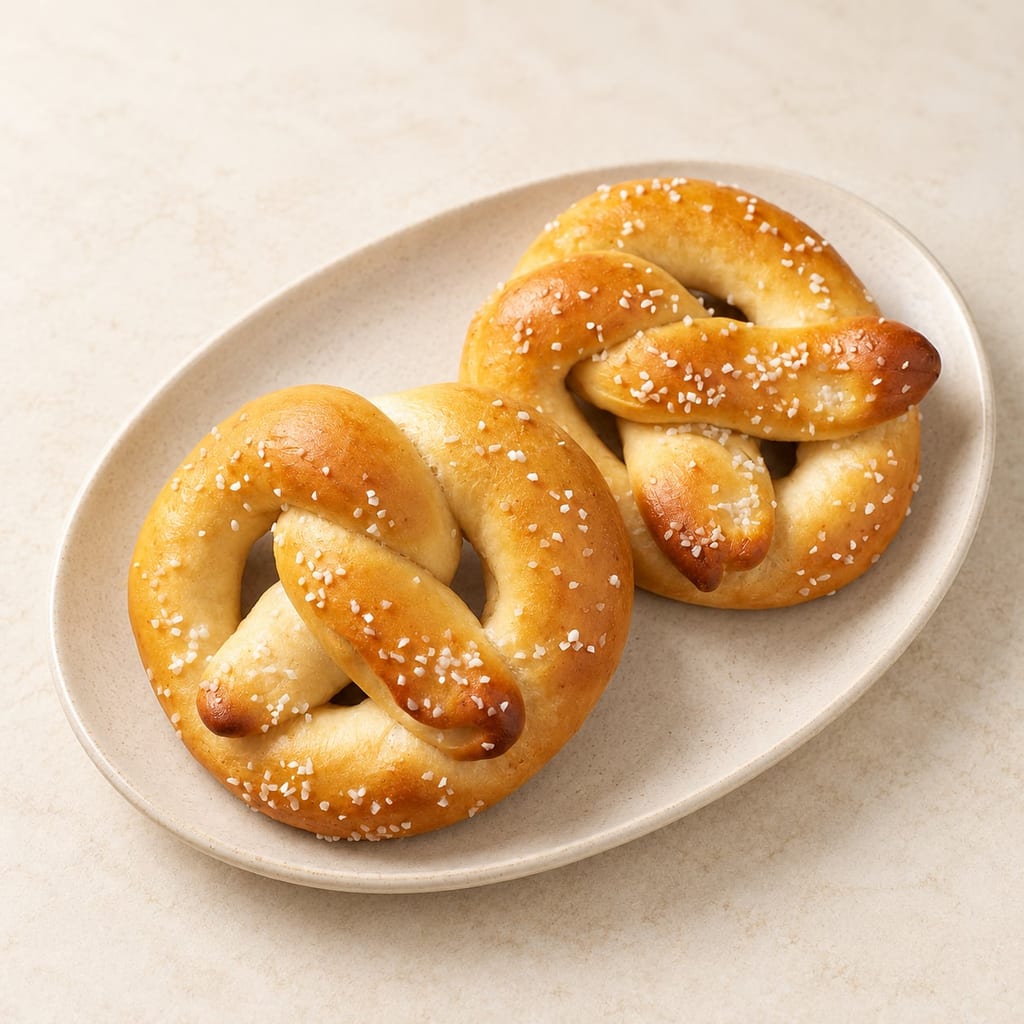
Sourdough discard pretzels
Unfed sourdough starter flavours a soft pretzel dough raised with instant yeast. After a short rest, the dough is shaped, brushed with a sweet wash, salted and baked without a final proof.
 FermenteaWhere food goes to change
Salt
Pretzel salt is chosen for the crystals left on a baked surface. Grain size, shape and any coating determine how it adheres, dissolves and tastes.
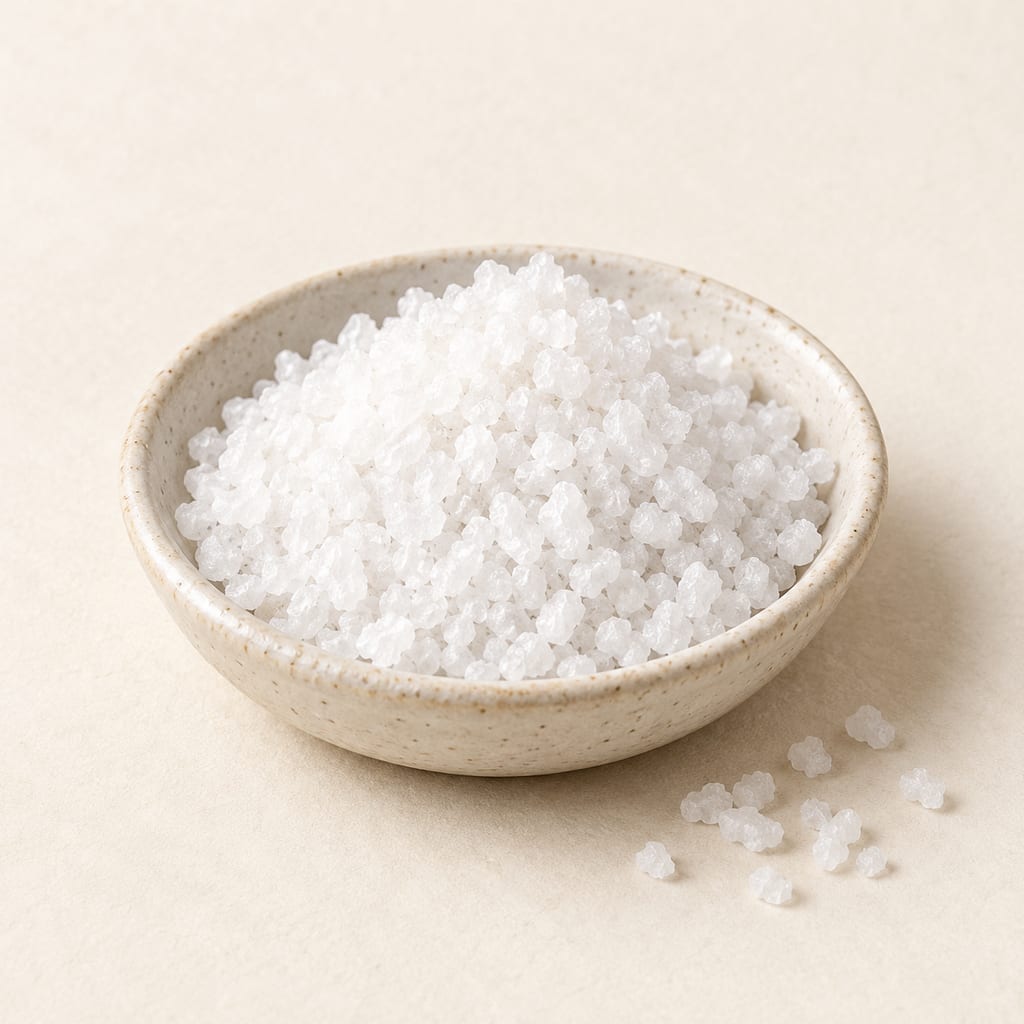
Pretzel salt is a topping selected to remain recognisable on a pretzel's surface. The visible grains contribute a separate texture and bursts of saltiness against the bread. A fine topping gives a different finish from a coarse scatter, while a coated grain can address the handling demands of a particular bakery product.
A baker can choose among medium and coarse grains, finer toppings and specially coated products. Cargill's Pretzel I and Pretzel M illustrate distinct commercial particle sizes within one manufacturer's range. Elsewhere, topping mixtures combine salt with a carrier or with other ingredients. A packet's composition and intended application therefore tell more than the word pretzel alone.
Pretzels and bagels are both documented uses for commercial topping grades. The baker is selecting for the way salt meets the surface and is encountered in a bite. This is why grain form matters even when the principal seasoning compound remains sodium chloride: the food presents the salt as a separate particle rather than as a uniform solution.
A coarse white scatter is familiar, but it is not the only documented way to salt a pretzel. In northern Bavaria, the baker Axel Schmitt describes a lye-free version sprinkled with fine salt. That example shows how the topping belongs to the character of a particular baked good. A fine finish need not be judged as a failed version of a coarse one.
Modern manufacturing has also made the grain itself a design problem. A hard-pretzel patent published in 1993 contrasts pointed crushed rock salt with flatter processed flakes and considers their different ability to remain attached. A soft-pretzel patent published in 2002 addresses another problem: moisture in a package dissolving the surface salt, with a coated product proposed as part of a particular manufacturing system.
These dated examples document engineering choices, not the first use of salt on a pretzel. The long history of the bread cannot be assigned wholesale to every modern topping grade. What can be followed more securely is the continuing relationship between a baker's desired surface, the salt's physical form and the conditions between salting, baking, packing and eating.
Salt production can begin with solid underground deposits or with brine. Mechanical rock-salt mining removes solid material from a deposit. Solution mining instead introduces water to dissolve underground salt, brings the brine to the surface and removes water to recover crystals. The origin of the mineral and the final shape of the grain are therefore related but separate parts of its history.
Solar production uses shallow ponds in which evaporation concentrates naturally salty water until crystals form. Manufactured brines can also be evaporated using heat. The resulting salt still needs the preparation appropriate to its intended market. Knowing that a salt came from a brine does not establish that it is a delicate flake, just as an underground origin does not prove that the final topping is a piece of crushed rock.
Compacted Pretzel I salt provides one product-specific example of a longer manufacturing sequence. Underground salt is dissolved by deep-well solution mining, recovered from brine by evaporation, then compacted and screened to size. The final topping's firmness and particle grade result from those later operations as well as from the source of the mineral.
A topping grain need not preserve the form in which salt first crystallised. Compaction presses crystalline salt into a firmer material, and screening sorts the resulting particles by size. In the documented Pretzel I product, resistance to breaking into finer material is a deliberate feature. Maintaining a grade matters when a baker wants a similar scatter from one batch to the next.
Crushed rock salt and processed flakes present different surfaces and edges. The hard-pretzel patent's comparison focuses on how pointed grains and flat flakes meet the crust. That is a specific manufacturing observation, but it makes the broader physical problem easy to understand: the salt is not floating in a solution. It must rest on, or attach to, a shaped piece of food.
Evaporation conditions can also create distinctive crystals. The Alberger process produces hollow forms rather than the same structure as a compacted grain. Crushing, forming and screening therefore offer manufacturers several ways to obtain a useful topping. A specification can distinguish the particle's shape and size distribution from the sodium chloride of which it is principally made.
Sorting by size is also a way to control the proportion of small particles mixed with larger ones. A topping sold as one grade can be applied more consistently when it has not broken down during transport and handling. This is a practical quality characteristic of the purchased salt, distinct from the geological source of its sodium chloride.
Fine salt dissolves more quickly than a coarse grain under comparable conditions. At the surface of food this changes how the seasoning is encountered: a fine dust can spread readily, while a larger grain remains a distinct particle for longer. The difference is physical. Making a crystal bigger does not give sodium chloride a new flavouring compound.
Shape affects how much salt fits into a spoon and how it contacts the food. Flakes and compact grains pack differently, with different spaces between their particles. An equal volume can therefore contain a different mass of salt. A mixture with a carrier adds another distinction, since part of what is measured is material other than sodium chloride.
For a pretzel topping, persistence and adherence are part of the choice. Large crystals give a visible finish but can adhere less readily than finer particles. A grain that falls away changes the amount actually eaten, even if the baker applied the same amount at the tray. The useful comparison is therefore the salt on the finished food, as well as the salt originally measured out.
The surface to which salt is applied matters as much as the grain. In the associated sourdough pretzel recipe, a sugar-water wash is brushed on before salting. The wash and the point of addition are part of that recipe's route to a topped surface. Other bakery methods create a different surface before the grains are applied, so adherence depends on the combination of topping and method.
Moisture can also dissolve the grains before the pretzel is eaten. Long waits before baking and thawing of already salted pretzels are documented causes of salt stains and loss of the visible topping. A disappearing grain has gone into solution; it has not necessarily been lost from the food. The intended crisp or granular surface can nevertheless be substantially different.
Packaging creates another setting for dissolution. Water vapour around a soft pretzel can dissolve salt and soften the crust. In the particular soft-pretzel patent, a fat-enclosed salt is applied after baking because excessive heat would melt its protective fat. That is a proposed manufacturing solution for a particular product, not an independent trial of every coated topping.
Some commercial pretzel salts contain only salt. Others are decorative mixtures or coated products. Fine salt mixed with wheat flour and salt carried on rice are documented bakery options, as are salt-and-caraway toppings. They can perform a similar visible job on a pretzel while contributing different amounts of salt and different additional ingredients.
A carrier is material that helps deliver or present another ingredient. It is not simply another name for a large salt crystal. Likewise, a coating changes the surface presented to moisture. In one soft-pretzel patent the salt is enclosed in fat; that example should not be confused with every product marketed as coated or moisture-stable. The ingredient list is needed to establish what a particular topping contains.
This matters for allergen handling as well as taste. A wheat-flour topping mixture introduces wheat; plain salt does not acquire wheat merely because it is sold for pretzels. Read the actual product's declaration rather than assigning one universal allergen profile to the category. The bread and its topping also need to be considered separately when accounting for all the ingredients of the finished food.
The associated sourdough pretzel recipe gives table salt in the dough and lists pretzel salt separately in the topping. Its dough contains 9 g of table salt; that number is not the topping quantity. Retaining the separation lets the baker follow the actual formula instead of treating a decorative finish as part of an unspecified total.
Salt mixed into dough is distributed through the bread and contributes to its flavour. A surface topping remains a separate physical element, selected partly for the grains that survive until eating. The two additions consequently affect different parts of the experience: seasoning within the bread and local concentrations at its exterior. Timing and the point of addition make those roles distinct.
Preservation recipes make a further distinction. Salt concentration and the prescribed salt type can matter to a fermented pickle, where salt is part of the formulation rather than a decorative finish. Flake salts vary in density, and anticaking ingredients can cloud a brine. Follow the salt specified for that preparation instead of treating a suitable bakery topping as evidence of equal performance in preservation.
Choose food-grade salt intended for direct food use. The product description and ingredient list should distinguish plain sodium chloride from a mixture or a coated topping, and identify the intended grain size. Plain additive-free commercial grades and deliberately formulated carrier mixtures both exist; the right information is the composition of the product being selected.
The desired finish guides the choice. A baker seeking distinct visible grains has a different aim from one seeking an even fine seasoning. A product intended to withstand a particular frozen-dough workflow addresses a further need. There is no reason to rank all of these uses by coarseness: the grade should fit the food's surface and the way it will be handled.
For repeated results, keep the product's identity with the recipe notes rather than recording only salt. That is particularly helpful when switching between a compact grain, a flake and a carrier mixture. The change may alter coverage, adhesion and the amount of sodium chloride delivered, even before differences in the rest of the dough or baking method are considered.
Dry storage protects the handling quality of a topping salt. Moisture-resistant packaging and a covered, dry storage area help keep grains usable rather than caked or partly dissolved. Follow the directions for the actual product, especially when it contains a carrier or coating. A plain salt specification should not be borrowed as a storage guarantee for a more complex mixture.
When a baked topping dissolves or stains, consider where moisture entered the sequence: storage, a wait on the tray, thawing or the package around a soft product. A grain that has dissolved can still leave salt on the food, while one that falls onto the tray has physically left its intended place. These are different causes of a changed finish and call for different adjustments to handling.
The pretzel salt named in the associated recipe has no established supplier, mineral source, coating or additive profile. Its known job is topping the bread. Those remaining details can be supplied by the product actually chosen, without inventing an ancient origin for a modern grade or changing the practical formula that called for it.
The recipe names a pretzel topping but supplies no supplier, mine, manufacturing location or birthplace for this grade. Regional baking examples do not establish the origin of the source batch.
Axel Schmitt describes a regional lye-free pretzel finished with fine salt. This is a baking-use association, not the origin of a salt grade or the source batch.
Unfed sourdough starter flavours a soft pretzel dough raised with instant yeast. After a short rest, the dough is shaped, brushed with a sweet wash, salted and baked without a final proof.
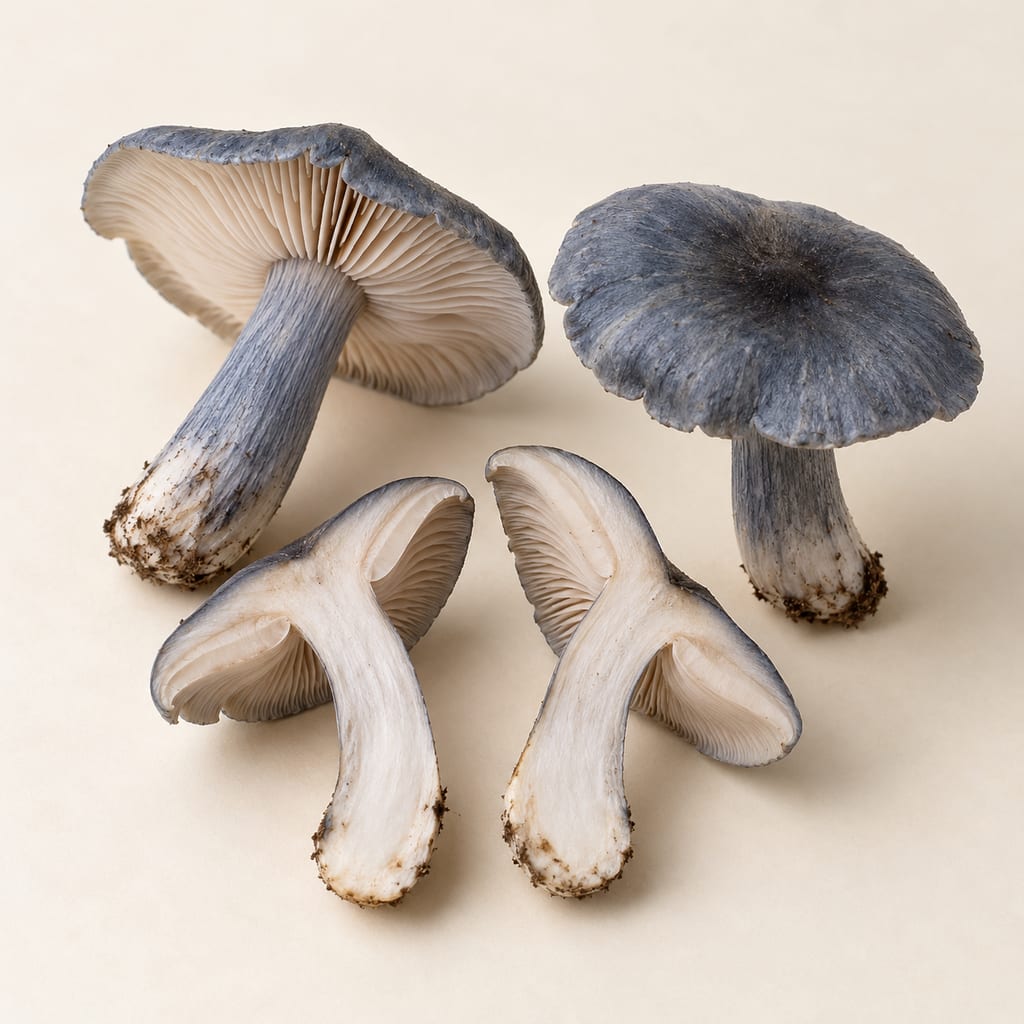
Bloxam's entoloma is a rare pink-gilled mushroom of old grasslands. Historical sources call it edible, but food-use evidence and older identifications remain uncertain; this does not recommend gathering or eating it.
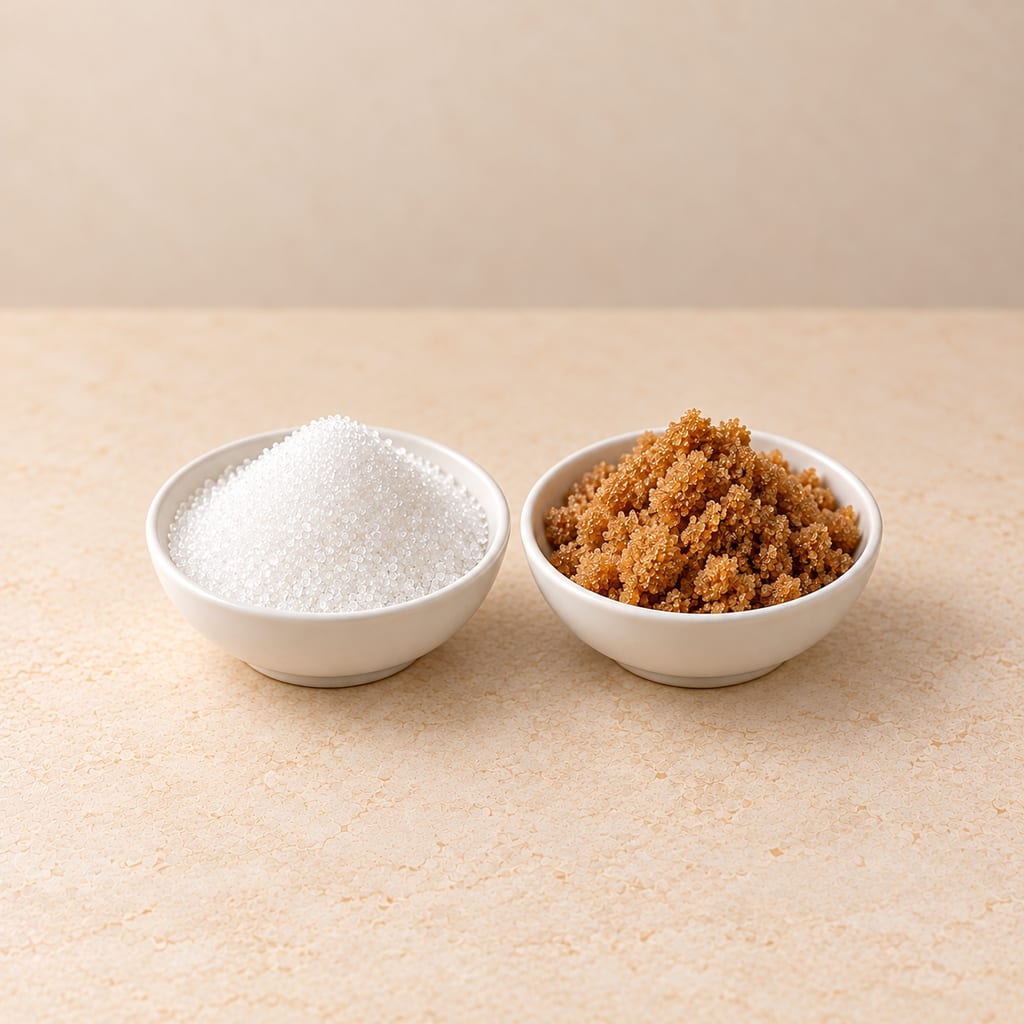
White sugar is refined sucrose, almost pure; brown sugar is sucrose with molasses, left in or added back. Molasses makes brown sugar moister, darker and more strongly flavoured.
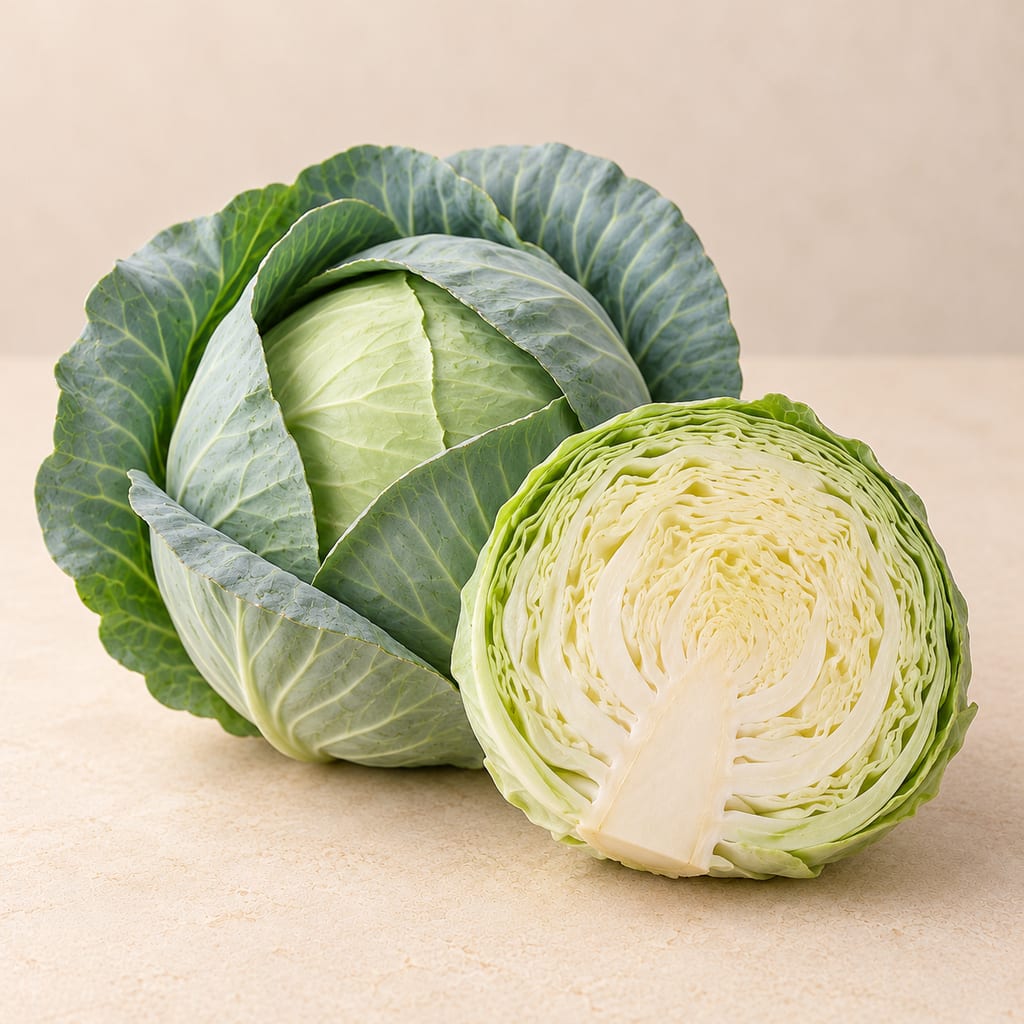
Cabbage is the dense leafy head of Brassica oleracea, a European vegetable that keeps for months and is the classic raw material for sauerkraut, with napa cabbage the base of kimchi.
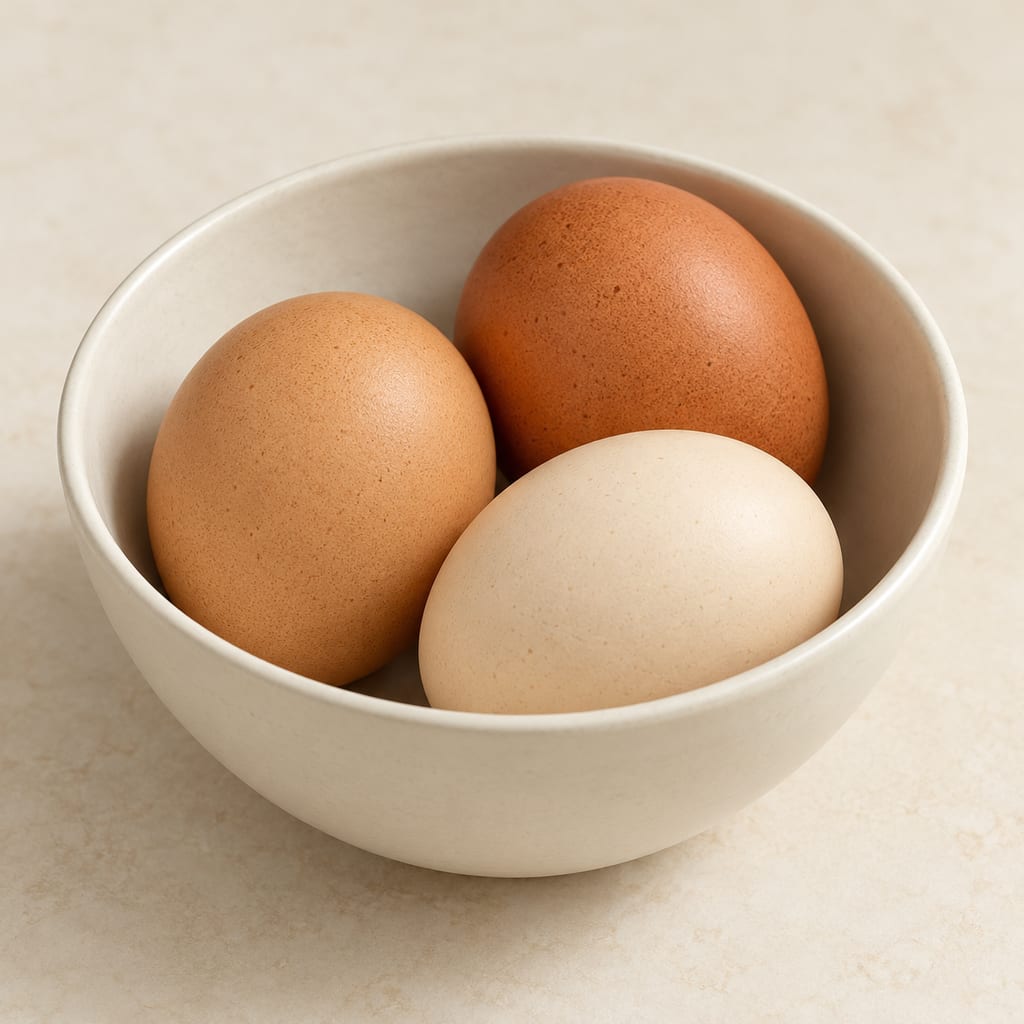
Chicken eggs supply proteins and yolk fats that set and emulsify. Atlas breads use them in enriched doughs, surface washes and a sourdough pancake batter mixed after fermentation.
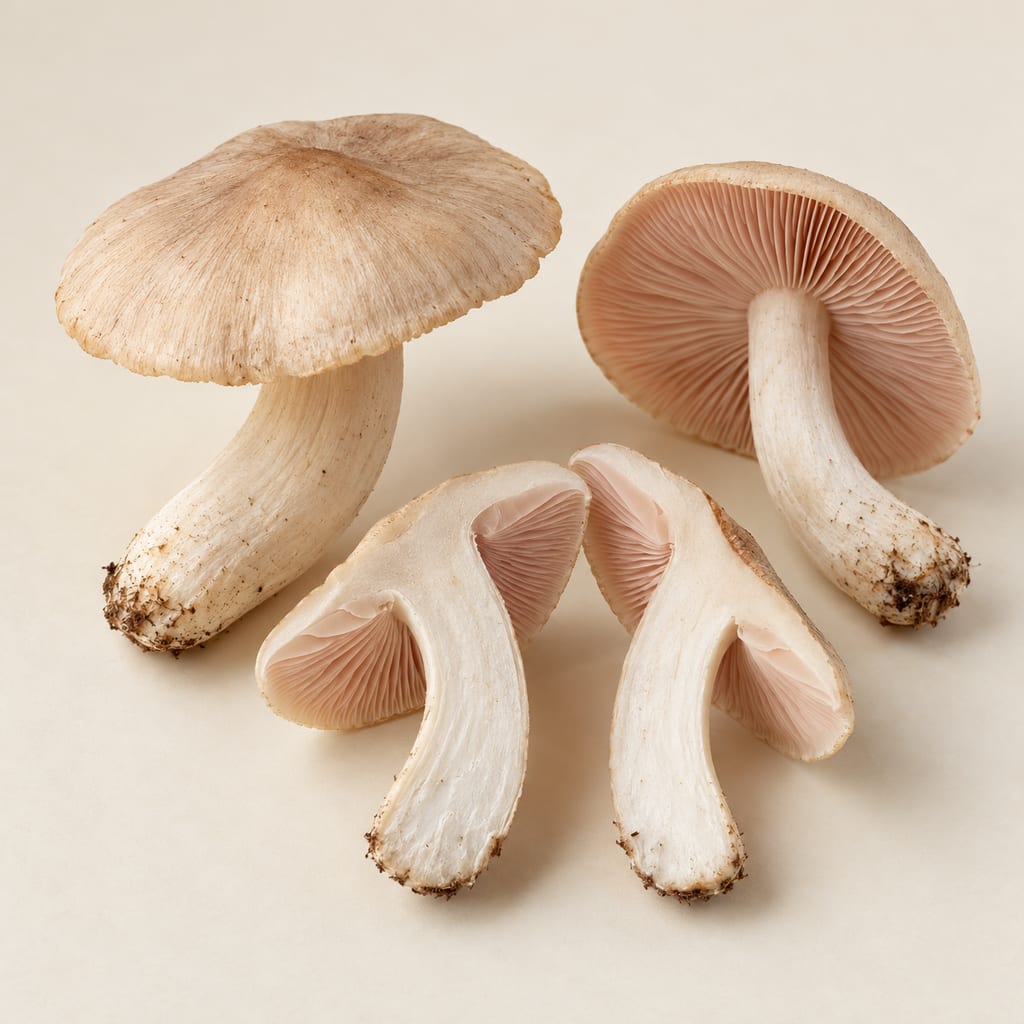
Entoloma sepium is a spring pinkgill associated with Rosaceae. Chinese and European sources list it as edible or conditionally edible, while taxonomic uncertainty and a poisonous lookalike warrant caution.
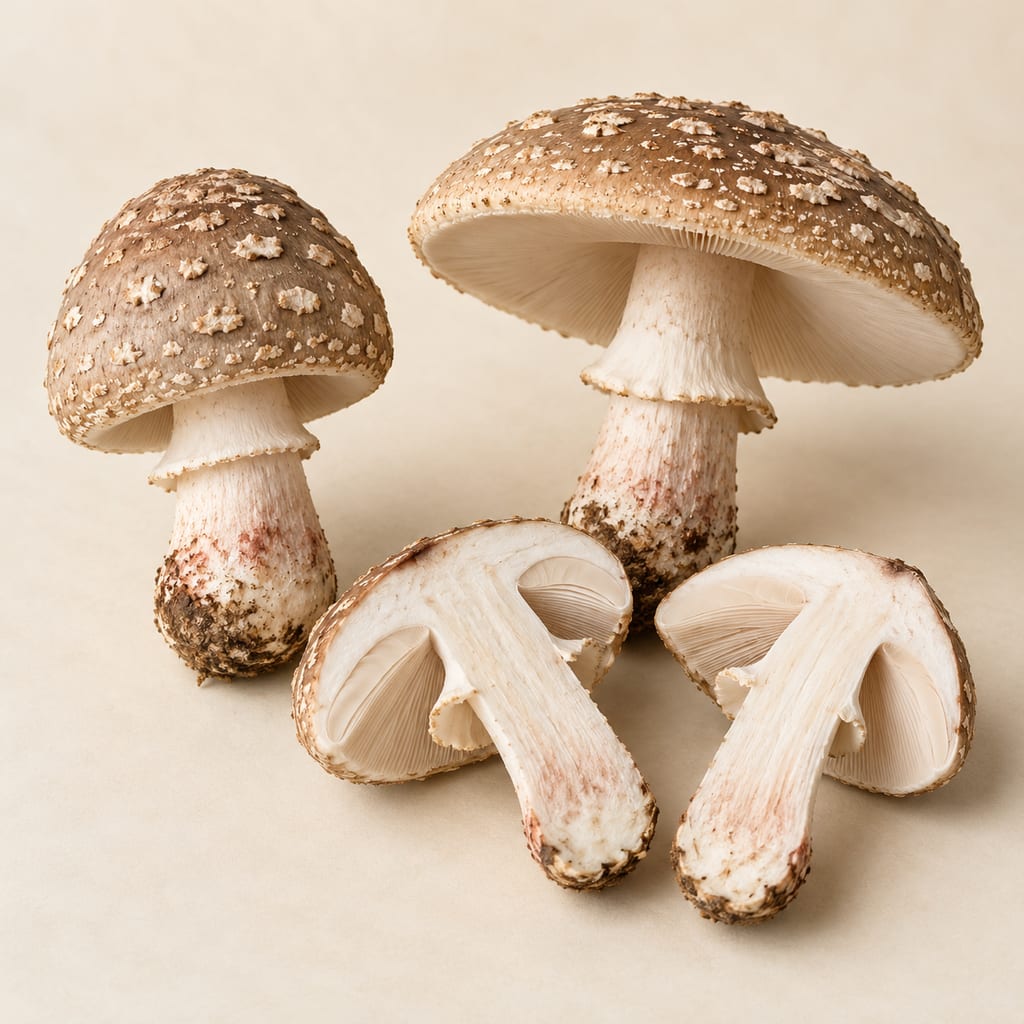
The European blusher, Amanita rubescens, is a woodland amanita whose flesh turns pink when cut. It is eaten only well cooked and is easily confused with the poisonous panthercap.
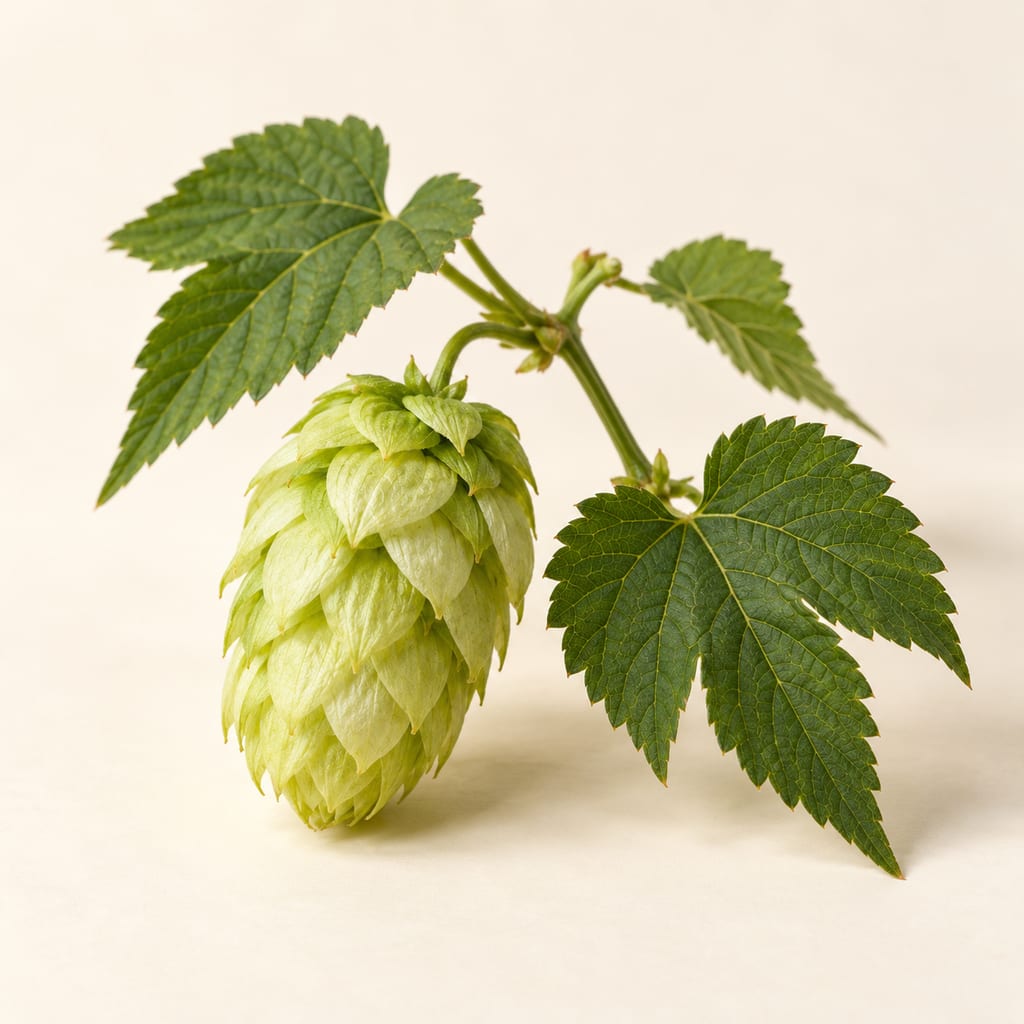
A traditional German aroma-hop land variety, associated with the Hallertau and described with herbal, spicy and floral notes. Cultivar identity, crop analysis and the growing place of a particular lot remain separate facts.
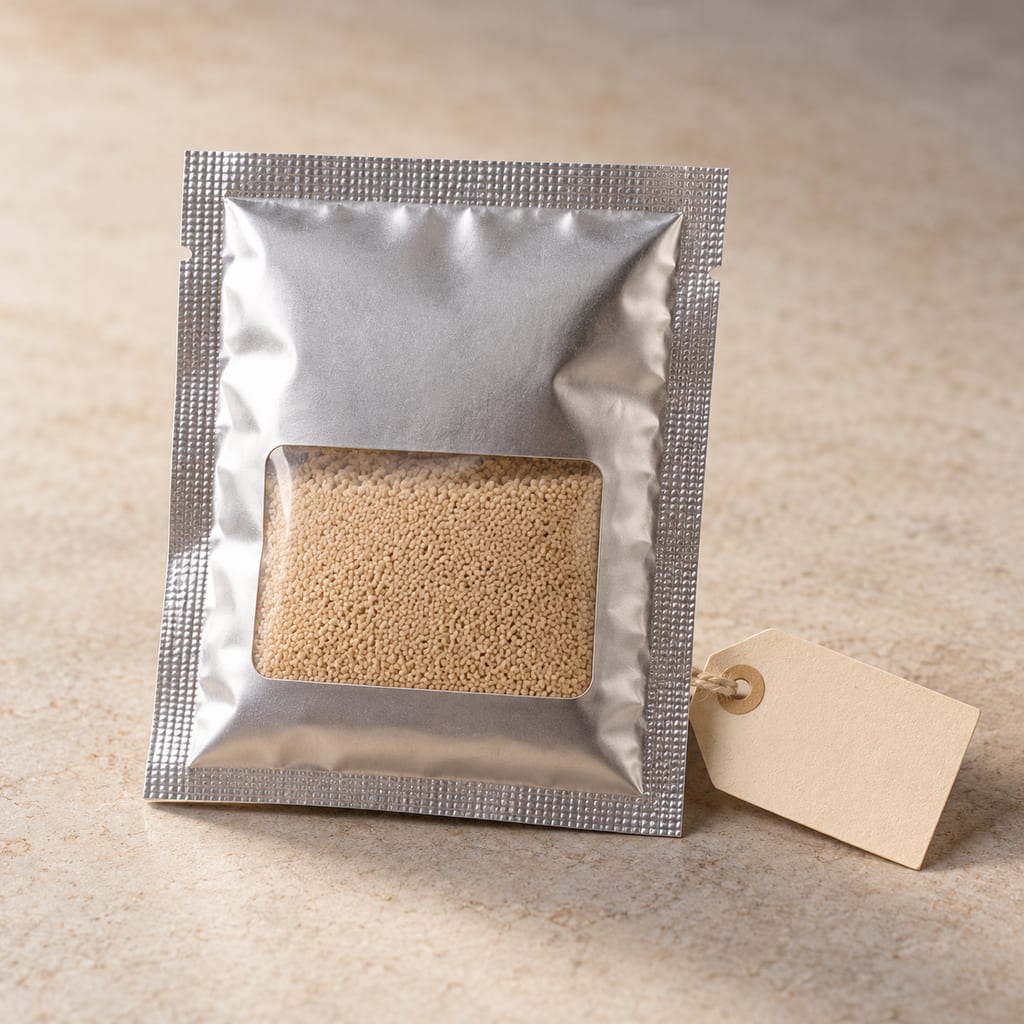
Lager yeast is the bottom-fermenting brewing yeast Saccharomyces pastorianus, a hybrid of S. cerevisiae and S. eubayanus, sold and kept as named strains that are not interchangeable.
No community contributions have been published for this entry yet.
Sign in to contribute. Published comments and photos are free to read.
King Arthur BakingInspiration · Culinary use
Sourdough PretzelsThe formula separates 9 g of table salt in the dough from pretzel salt applied as a topping. A sugar-water wash precedes the topping.
Cited in: The salt that stays on the surface; Adhesion and the moisture that makes salt disappear; Topping salt and dough fermentation have different jobs
CargillIngredient context
Pretzel SaltsPretzel I and Pretzel M are respectively medium and coarse food-grade topping salts for pretzels and bagels. The manufacturer describes these named products as containing no additives.
Cited in: The salt that stays on the surface; When a topping is a mixture; Choosing a grade for the food being made; Keeping the grains dry and the claims precise
CargillIngredient context
Technical Information — Pretzel I SaltPretzel I is produced through solution mining, evaporation, compaction and size screening. Its resistance to breaking into fines and its dry, covered storage requirements are product-specific.
Cited in: Underground deposits and evaporating brines; Crystals can be formed, crushed and compacted; Keeping the grains dry and the claims precise
CargillIngredient context
Cargill's Salt Production and Manufacturing ProcessesMechanical mining, solar pond evaporation, solution mining and heated brine evaporation are distinct salt-production routes. The Alberger process produces hollow crystal forms.
Cited in: Underground deposits and evaporating brines; Crystals can be formed, crushed and compacted
CargillIngredient context
Do Salt Crystal Sizes Really Make a Difference?Fine and coarse crystals differ in dissolution speed, adherence and blending behaviour; particle form affects the timing and distribution of saltiness.
Cited in: Size changes the timing of saltiness; Choosing a grade for the food being made
IREKSIngredient context
Pretzel salt and alternative toppingsBakery toppings include coarse and fine salt, a wheat-flour mixture, rice-carrier coated salt and salt-caraway. Long waits and thawing can dissolve surface salt and cause stains.
Cited in: The salt that stays on the surface; Adhesion and the moisture that makes salt disappear; When a topping is a mixture; Choosing a grade for the food being made; Keeping the grains dry and the claims precise
United States patent, reproduced by Google PatentsHistory · Technical context
Method for making hard pretzels — US5238693AA patent published on 24 August 1993 contrasts pointed crushed rock salt and flat processed flakes in a particular hard-pretzel manufacturing method; it is a technical proposal rather than an independent performance trial.
Cited in: Bakers' choices and modern engineering; Crystals can be formed, crushed and compacted; Size changes the timing of saltiness; Topping salt and dough fermentation have different jobs
United States patent, reproduced by Google PatentsHistory · Technical context
Method for making a shelf-stable soft pretzel — US6444244B1A patent published on 3 September 2002 describes water-vapour-related salt dissolution and fat-enclosed salt applied after baking in a specific soft-pretzel manufacturing system.
Cited in: Bakers' choices and modern engineering; Adhesion and the moisture that makes salt disappear; When a topping is a mixture
Goethe-InstitutCulinary use
The Story of the BreznAxel Schmitt describes a northern Bavarian lye-free pretzel sprinkled with fine salt, documenting a regional baking example.
Cited in: Bakers' choices and modern engineering
National Center for Home Food PreservationSafety · Ingredient context
Salts Used in PicklingPickling guidance distinguishes salt types and measurements: flake salts vary in density, and anticaking ingredients can cloud brine. This guidance concerns preservation formulations.
Cited in: Size changes the timing of saltiness; Topping salt and dough fermentation have different jobs