
All-purpose wheat flour
A refined common-wheat flour blended for a broad range of baking; its protein and behavior vary with wheat, milling and market.
 FermenteaWhere food goes to change
Modern method
Sourdough English Muffins
A soft English muffin dough combines sourdough starter with baker’s yeast, then rises, is cut into rounds and cooks on a griddle. The starter adds tang; the added yeast helps it rise.
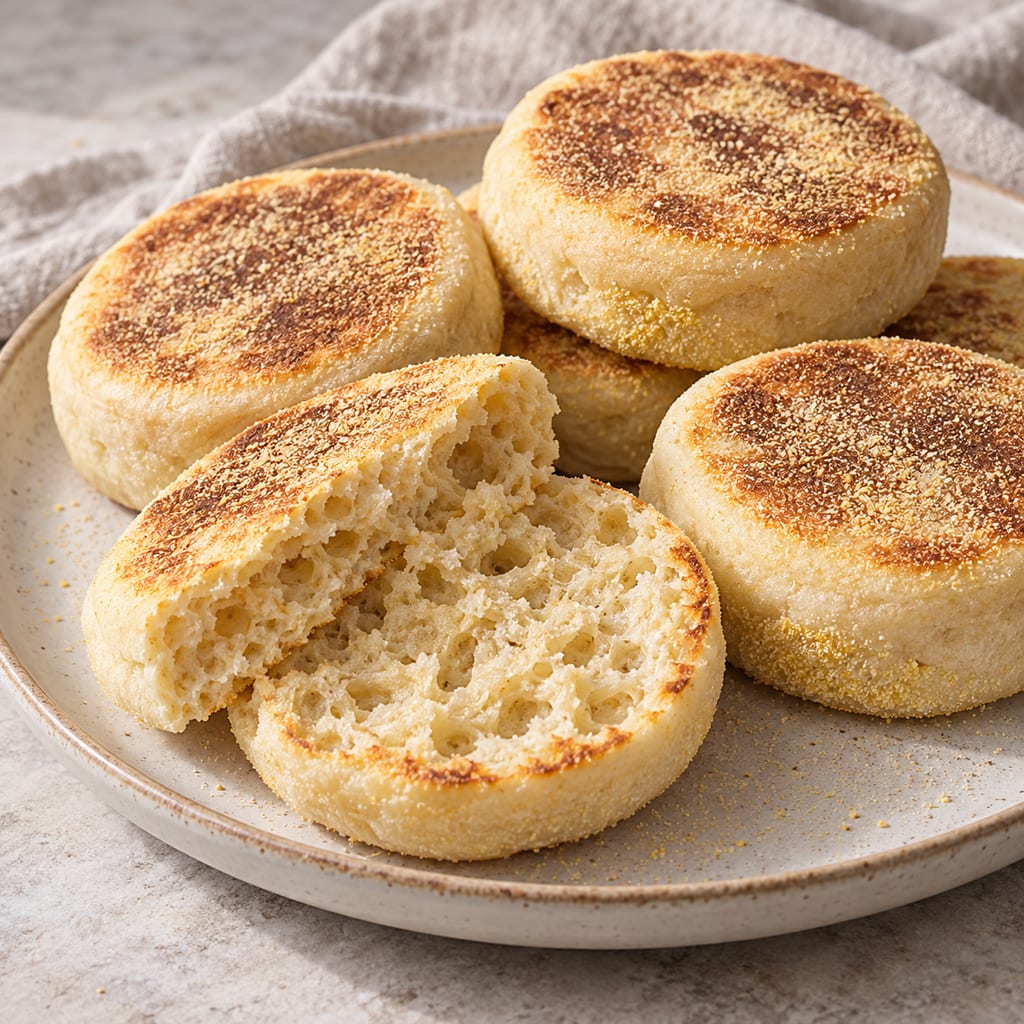
An English muffin is a small, round, yeast-raised bread cooked on a flat griddle or in a pan. This version is a soft wheat dough that combines a maintained sourdough culture with a measured addition of baker’s yeast. The rounds develop brown faces while remaining pale at their sides; once cooked and split, the centre is tender and irregularly open. Those pockets catch butter, jam, or the juices of a breakfast filling. The griddle surface gives the muffin a distinct pair of browned faces rather than the continuous crust of an oven loaf.
The name can mislead readers who know only the sweet, domed cake sold in North America as a muffin. The historical museum distinguishes the yeast-risen English kind from the chemically leavened American quick bread: its manuscript recipe called “speedy muffins” uses bicarbonate of soda, sour milk, sweet milk, butter, eggs and flour, with no yeast rise. The two foods share a word, but they are different doughs and use different ways of making gas. This recipe belongs to the griddle-bread family, not to the cake-like quick muffin.
This is a hybrid leavened dough rather than a pure sourdough formula. The starter gives it a fermented character, but the recipe also relies on commercial yeast. That distinction matters when interpreting its rise and flavour: the formula is not a test of what a particular household starter could raise on its own. King Arthur’s published method describes a same-day option and a longer refrigerated rest for a stronger sour note, while keeping the same basic round shape and griddle finish.
The English muffin has a history that predates the sourdough version described here. The Macculloch Hall Historical Museum places yeast-raised muffins in English household and street food traditions, describing them as inexpensive food in nineteenth-century London as well as a food eaten at wealthier tables. Its account recalls the “muffin man,” who called customers by ringing a bell while carrying a basket. The museum’s handwritten cookbook belonged to Louisa Macculloch, who lived from 1785 to 1863; the muffin recipes appear among bread, rolls and biscuits, but the manuscript does not date them. That is useful evidence of a household recipe tradition, not a precise invention date.
Samuel Bath Thomas immigrated from England to New York in 1874 and soon began making English muffins there, according to the museum. That business helped establish the name in American bakeries. In Britain, the food is commonly called simply a muffin, whereas the American quick bread acquired the same name in a separate baking tradition. The English muffin’s griddle cooking and yeast-risen dough are the features that distinguish it from that quick bread in the museum’s comparison.
The current recipe is a modern adaptation made by a U.S. baking publisher, not a recovered nineteenth-century formula. It puts sourdough starter into a dough that still includes baker’s yeast, dry milk and butter. Neither the museum’s undated household recipe nor Thomas’s New York bakery history documents this exact combination. The honest historical connection is therefore the bread form and its griddle method; the starter-and-yeast formula belongs to present-day home baking. Keeping those histories separate avoids turning a later recipe into an invented origin story.
A sourdough starter is not a single named organism. It is a maintained flour-and-water culture whose community can include yeasts and lactic acid bacteria, with its composition shaped by the starter’s ingredients and how it is refreshed and held. The review of sourdough starters describes yeast as a source of carbon dioxide that raises dough, while lactic acid bacteria contribute organic acids and aroma compounds. Those activities help explain why a starter can influence both expansion and flavour. They do not establish a species list for the starter used in this recipe, so none is assigned to this batch.
The added baker’s yeast supplies another leavening source. Because the published method combines it with ripe starter or discard, the rise is a joint result of the formula and its conditions rather than a reliable measure of starter strength alone. King Arthur says ripe starter gives a more vigorous rise than discard, and the optional citric acid is included for a more sour flavour. Those are recipe-specific observations and options; they do not make citric acid a culture or show that a more sour taste means a more active fermentation.
During the rests, gas cells expand inside a dough made from wheat flour and water. Kneading develops an elastic dough, and the proteins in wheat flour form a network capable of holding gas. A bread-science review describes baked bread as a structure in which starch and proteins form the crumb around gas spaces. As heat reaches the dough, starch changes and proteins set; together, these changes turn a soft, expanding mass into a stable interior. This is the physical setting of the crumb, distinct from microbial fermentation, which occurs before and during the early part of cooking.
The combination matters for the result. Fermentation supplies gas and flavour before the muffins meet the pan; shaping distributes the dough into small rounds; cooking browns the outside and sets the centre. The formula’s open interior is not made by sourness alone. It depends on a dough that can retain gas, enough proofing for the rounds to puff, and a cooking path that brings the centre through without leaving wet dough.
All-purpose wheat flour supplies most of the dough’s bulk and its gluten-forming proteins. Water hydrates the flour, dissolves the sugar and salt, and gives the dough the softness described by the recipe. The flour-to-water balance is what makes the dough kneadable and elastic rather than a loose batter. King Arthur’s recipe says to add flour only if needed to reach a soft, elastic dough that is not particularly sticky; it does not specify an extra amount. That is a tactile adjustment, not permission to change the measured formula indiscriminately.
The starter and baker’s yeast are the leavening ingredients, but they are not interchangeable. The starter is a mixed culture that contributes fermented flavour as well as gas-producing organisms. Commercial baker’s yeast is a separate, deliberately added leavener. The recipe allows active dry or instant yeast and lists one tablespoon; it does not call for combining both forms. Its note that ripe starter makes the rise more vigorous gives a practical distinction between the two starter conditions without supplying a new time or temperature.
Granulated sugar is part of the dough’s measured formula, while table salt seasons it. Butter and dry milk make this an enriched dough: both are mixed into the flour rather than brushed onto the outside. The recipe calls for room-temperature butter and nonfat dry milk or its named baking product. It does not give alternatives such as fresh milk or oil, so those should not be treated as direct swaps. Ingredient choices change hydration and dough behaviour, and a different formula would need its own method.
Citric acid is optional and is described as a way to increase sour flavour. It is an added acid, not a substitute for the starter. For the outer coating, the recipe gives semolina or yellow cornmeal as alternatives and uses them on the baking sheets and muffin surfaces. Their role in the documented method is to coat the rounds during proofing and transfer; the publisher’s separate English muffin article also highlights the contrast between a crisp, coloured griddle surface and a light interior. Neither coating is mixed into the dough.
The first mix brings the measured ingredients together, after which kneading continues until the dough is smooth, soft and elastic. This develops a cohesive structure that can retain fermentation gas. The covered bowl keeps the surface from drying as the dough rises. For the same-day route, King Arthur gives about an hour and a half, or until the dough looks noticeably puffy. For a more pronounced sour flavour, the source instead sends the covered dough directly to the refrigerator for 24 hours before any first rise. These are two documented routes through the same formula, not stages to combine by leaving the dough warm first and refrigerating it afterwards.
After the first rest, gently deflating the dough redistributes it for portioning; a short covered rest lets it relax before rolling. Rolling to half an inch and cutting three-inch rounds gives the muffins their regular outline. Re-rolling scraps makes more rounds, though the source does not promise that every scrap round will match the first-cut pieces. The alternative is to divide the dough into 24 pieces, round them and flatten them. King Arthur notes that trimming the edges of flattened balls can help them rise more evenly during cooking. That is a shaping choice within this recipe, not a second dough.
The dusted rounds proof on baking sheets, covered, until light and puffy. The same-day timing is about 45 to 60 minutes; after the cold rest it is about two hours. The endpoint description matters alongside the clock, because a cool kitchen or the refrigerated route can change how quickly the dough responds. The source does not give a numerical proof temperature. It is better to retain that uncertainty than to insert a made-up warm spot or an extra rise.
Cooking starts on a 350°F electric griddle or a medium-low ungreased pan. The first side cooks for about five minutes, then a flat pan or baking sheet rests lightly over the rounds while they cook for about seven minutes more. The weight helps keep them flat, while the griddle browns their faces. Once turned, they finish without the weight until the centre reads 190°F. The thermometer is a doneness measure for this formula; it is not a fermentation target. If browning runs ahead of the centre, King Arthur gives a specific fallback: brown both faces and finish in a 350°F oven until there is no wet dough in the centre, about ten minutes. Cooling on a rack completes the method before splitting.
The clearest variation within this recipe is the schedule. The same-day path moves through a covered rise and a shorter final proof. The refrigerated path holds the mixed dough cold for 24 hours before shaping and takes longer at the final proof; the publisher associates that route with a stronger sour flavour. The method keeps the batch size and cooking approach, so a reader can compare the effect of time without also changing the ingredients. It does not state that every starter will taste equally sour after the same cold rest.
Ripe starter and discard are both allowed, but they are not described as identical. The recipe says ripe starter produces a more vigorous rise. Optional citric acid gives a separate way to increase sourness within the published formula. Cut rounds and flattened balls are two shape paths; the source’s trimming note favours cut edges when a more even rise while cooking is desired. Semolina and yellow cornmeal are coating alternatives. Each choice changes one part of the work without creating an undocumented new recipe.
English muffins also vary beyond this sourdough formula. King Arthur’s 2024 class handout documents a yeast-only version with eight muffins, a short rise, a final proof and cooking on a 300°F griddle; it also offers an oven route. Its ingredients and timings differ from the 24-muffin sourdough-and-yeast dough here. The handout is useful as a comparison because it shows how a related muffin can use a different leavening plan and pan schedule, not because its directions should be mixed into this batch.
The museum’s chemically leavened “speedy muffin” is another separate food, closer to a quick bread than to either griddle yeast recipe. These distinctions help with names: a breakfast muffin may mean a flat English-style yeast bread, a sourdough hybrid like this one, a yeast-only formula, or a sweet quick muffin depending on place and context. A reliable recipe keeps one method’s quantities and endpoints together instead of combining them into a supposedly universal English muffin.
Let the cooked muffins cool on a rack before splitting. King Arthur suggests using a fork to preserve the irregular interior, often called the muffin’s “nooks and crannies.” A knife can make a flatter cut; the fork pulls apart the crumb more unevenly, leaving more edges and cavities for melted butter or jam. The recipe serves them toasted or at room temperature. The publisher’s technique article describes the appeal of a light inside against a crisp, coloured outside, especially when toasted. Butter, jam, or a poached-egg-and-Hollandaise topping are serving suggestions from that article, not ingredients in the dough.
A finished muffin should have browned faces, a set centre and no wet raw dough. If the outside colours before the centre cooks, the oven finish in the recipe addresses that mismatch; simply turning the heat higher could darken the surface faster without solving the centre. A dense result can reflect a tight crumb rather than a failure of sourdough itself. The King Arthur article explicitly values a more open structure because it toasts well, while this recipe gives proofing endpoints and a centre temperature to guide the cook. Those cues describe this formula; they do not diagnose the health of a starter.
The dough contains raw flour before it is cooked. The CDC warns that flour can carry harmful bacteria and that uncooked dough should not be tasted. Wash hands, tools and surfaces after handling it, and cook the muffins through. A rising dough, a pleasantly sour aroma, or a browned outside does not show whether raw flour has been made safe; the interior must be cooked as directed. The structured method’s 190°F centre target and the source’s oven-finish instruction remain the useful controls for this version.
The formula makes 24 large muffins from 840 g all-purpose flour, 227 g starter, 454 g water and the listed additions. It is a substantial batch, and the publisher separately notes that it can be halved, but the listed page keeps the source batch intact. Leftover storage is described by King Arthur as tightly wrapped at room temperature for four or five days, with freezing for longer storage. Those are the publisher’s storage directions for its recipe. Toasting revives the browned faces and warms the centre, making the same batch work as a simple breakfast bread or the base for a sandwich.
King Arthur's separate English Muffins recipe from The Big Book of Bread begins with a freshly mixed flour, milk, water and instant-yeast preferment and yields six muffins. It lists no maintained sourdough culture. The word preferment alone therefore does not identify the starter used in this recipe.
The 24-muffin formula here instead includes 227 g of ripe starter or discard as well as baker's yeast. Its same-day and refrigerated options belong to that measured dough. The six-piece preferment batch remains a separate recipe; neither its ingredient quantities nor its fermentation schedule is transferred here.
Yeast-raised griddle muffins circulated in nineteenth-century London, and Samuel Bath Thomas brought an English muffin business to New York after emigrating in 1874. This contemporary home-baking version brings sourdough starter into a dough that still uses commercial yeast. It can be served toasted or at room temperature, split to expose its craggy interior.
Yield 24 large English muffins · Scaling: source batch only
Raw flour can carry E. coli or Salmonella before cooking.
Hazard sourceDo not eat raw dough; cook the muffins following the griddle instructions and wash hands, utensils and worktops after flour contact.
Control sourceRaw flour may carry harmful bacteria. Do not taste the uncooked dough; cook the muffins through and wash hands, tools and surfaces after handling it.
Country of the contemporary baking formula; no origin claim.
The museum documents English muffins in London, not this sourdough-and-yeast formula.
Samuel Bath Thomas's English muffin business; not an attestation of this recipe.
A refined common-wheat flour blended for a broad range of baking; its protein and behavior vary with wheat, milling and market.
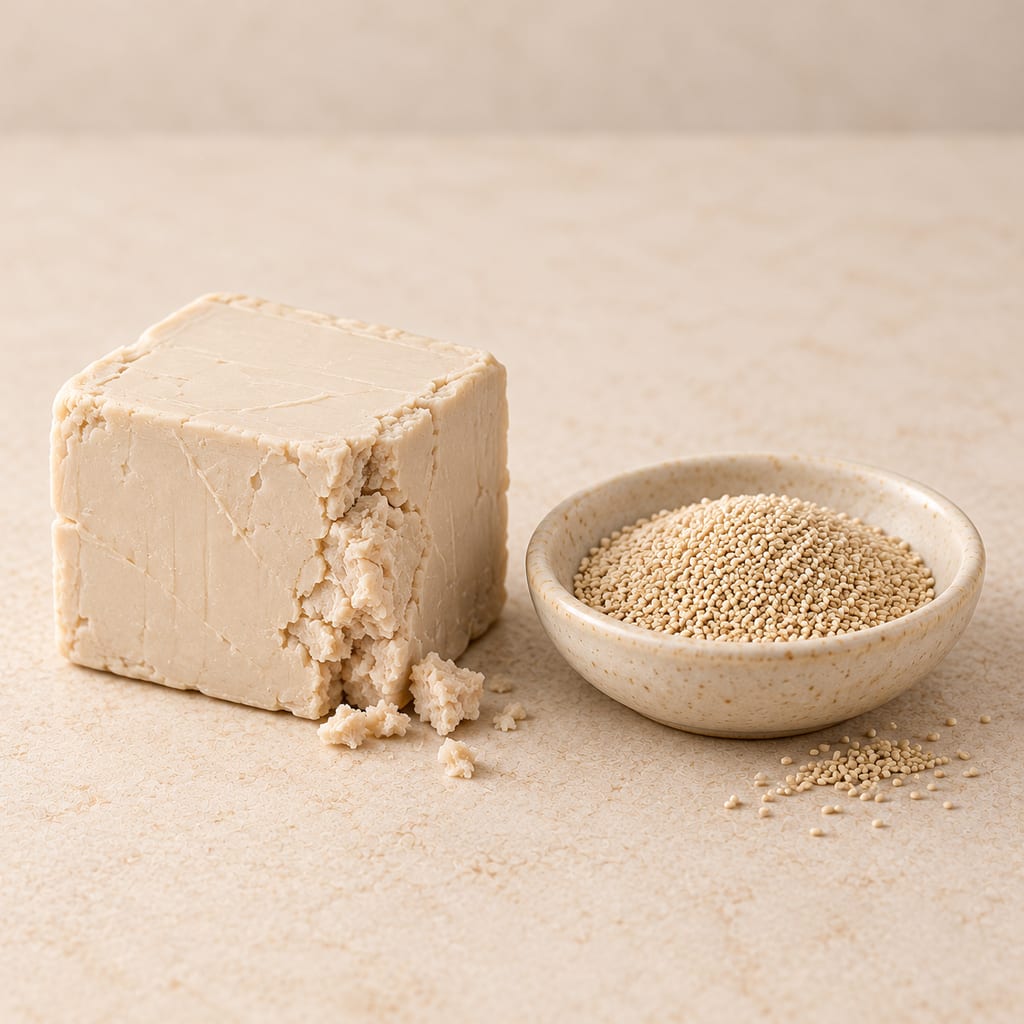
Baker's yeast is a cultivated living leavener, commonly sold fresh or dried. In dough, selected Saccharomyces cerevisiae cells make gas that can raise bread.
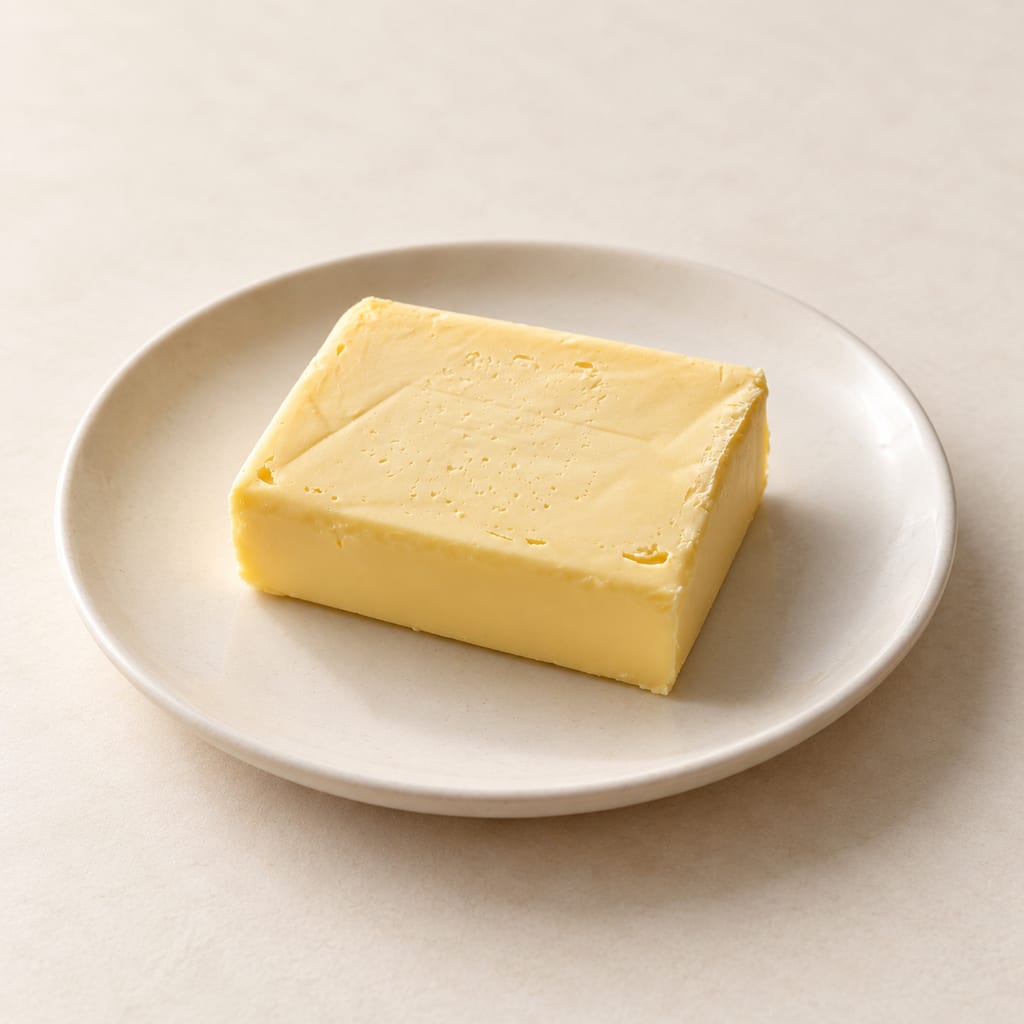
Butter is a milk-fat emulsion made by churning cream. It enriches dough or finishes bread; melted, cool and room-temperature butter serve different recipe roles.
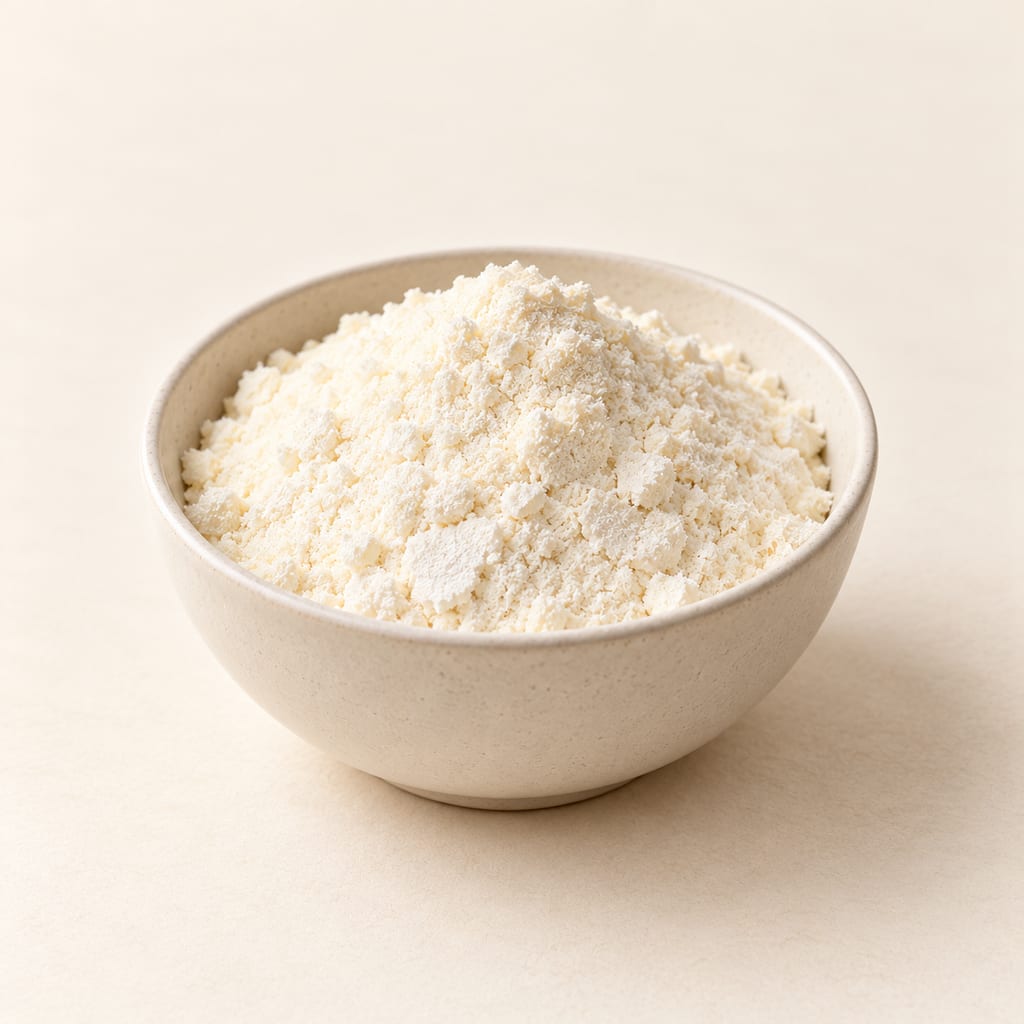
Dry milk is a family of dairy ingredients made by removing most water from milk or cream. The name includes distinct whole, partly skimmed and nonfat powders; fat level, heat treatment and particle form determine handling and use.
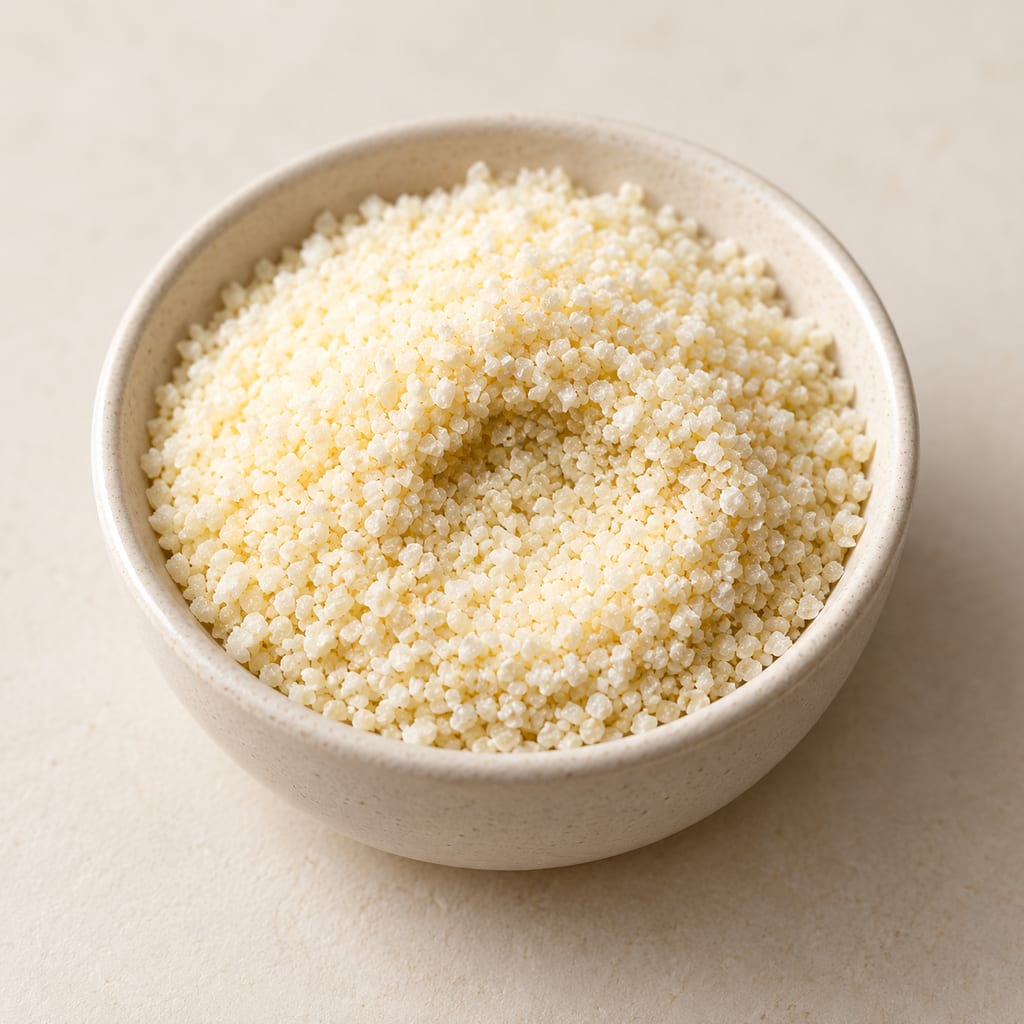
Semolina is a granular wheat milling product; in many markets it means durum, while some standards also use the name for other wheat. In sourdough English muffins, it is an optional surface coating, not the main flour.
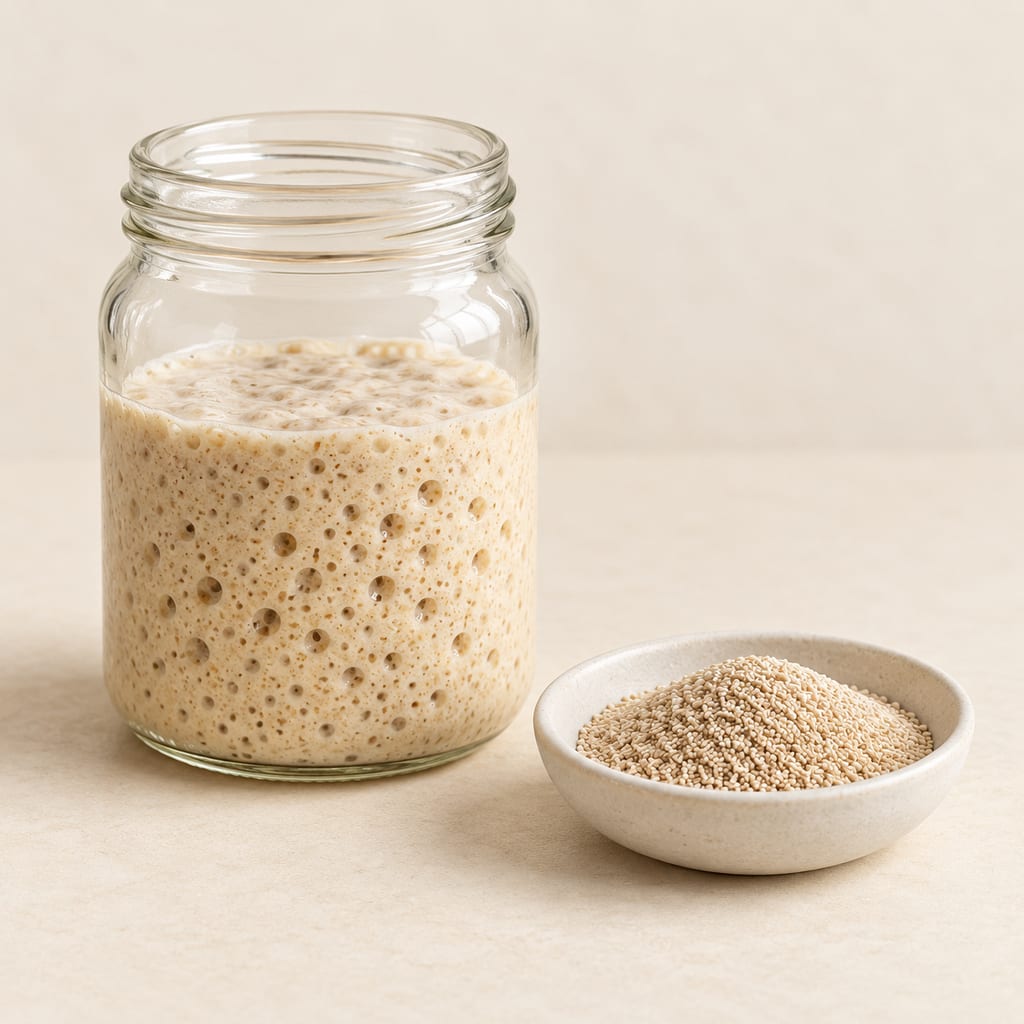
Sourdough starter is a maintained flour-and-water community of yeasts and bacteria. Commercial baker’s yeast is a separate cultured leavener, used alone or with starter in hybrid dough.
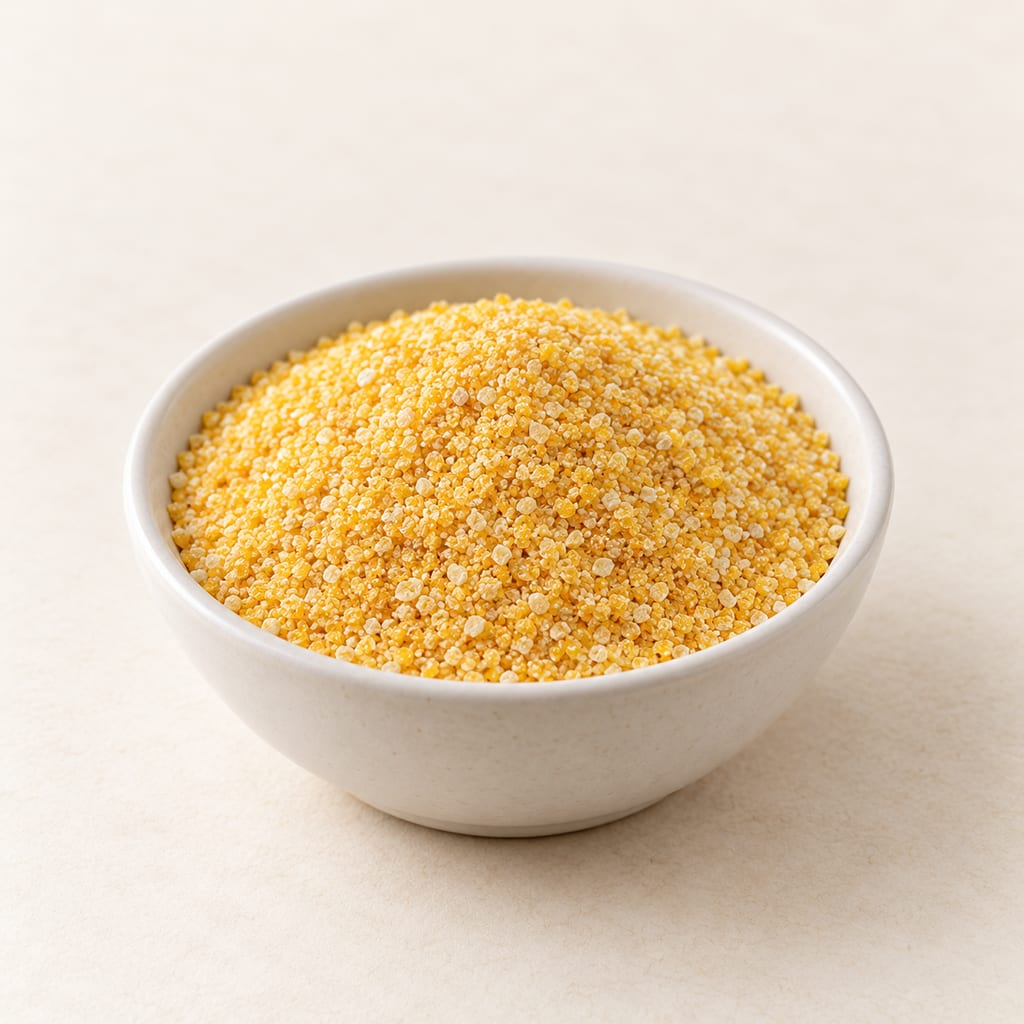
Yellow cornmeal is ground dried maize. Its particle size and milling treatment shape its texture and keeping quality; in the cited sourdough English muffin method, it is an exterior coating rather than part of the dough.
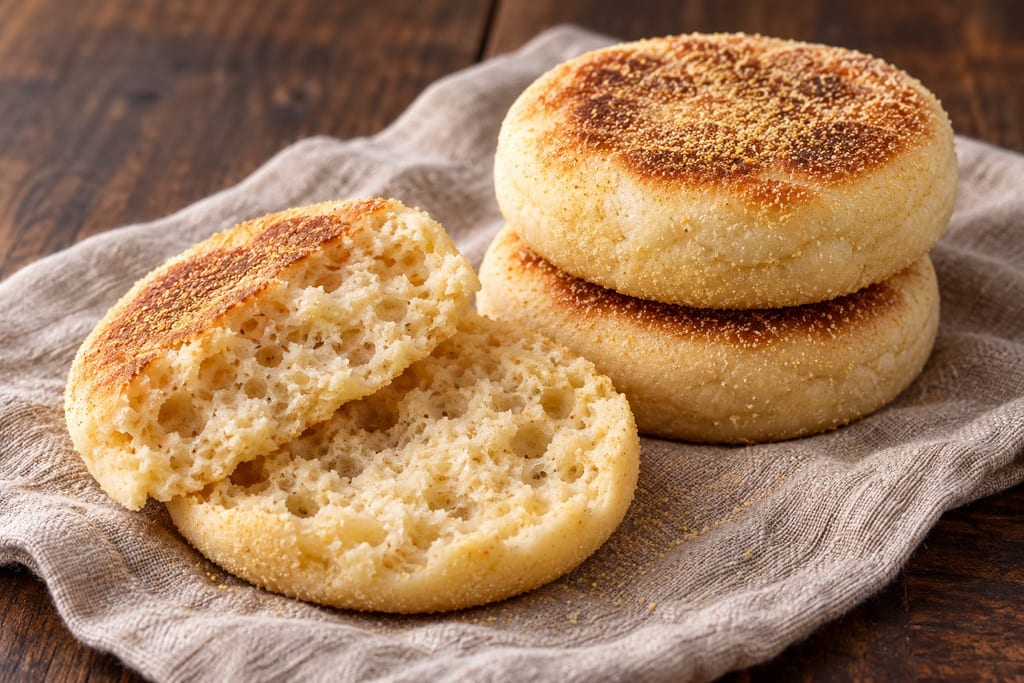
King Arthur’s six-piece English muffin batch uses a yeast preferment, two folds and a skillet or electric griddle; it is distinct from the sourdough-and-yeast version already catalogued.
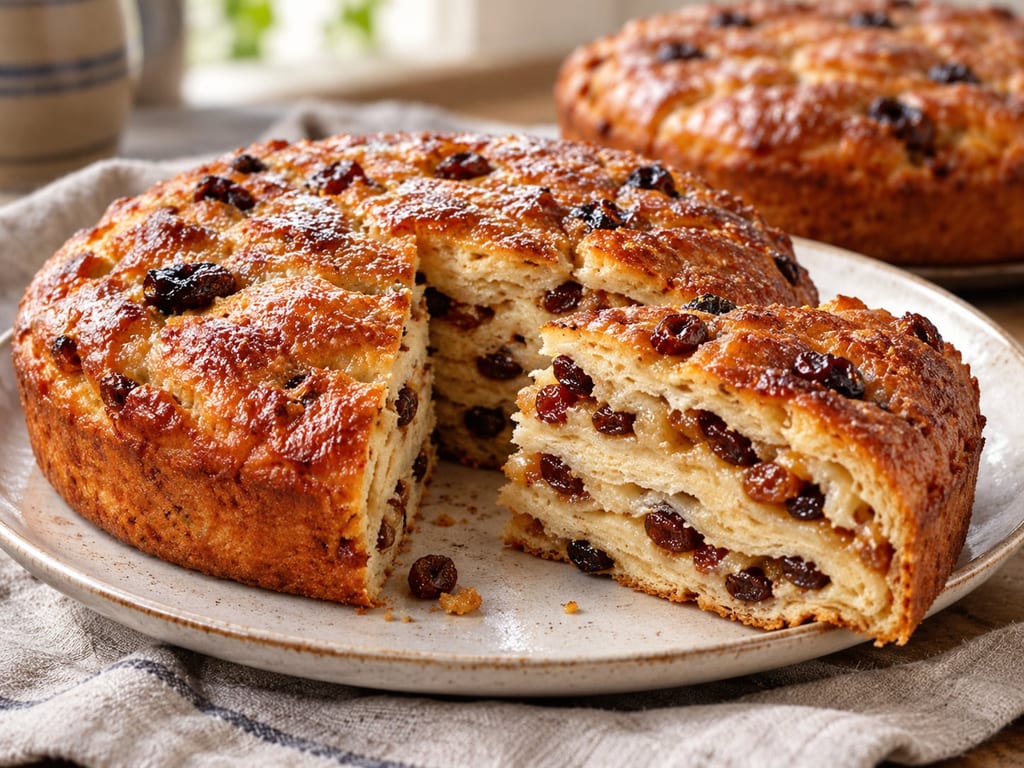
A yeast dough is folded around sweetened lard and dried fruit, then baked in tins until the bottom caramelizes.
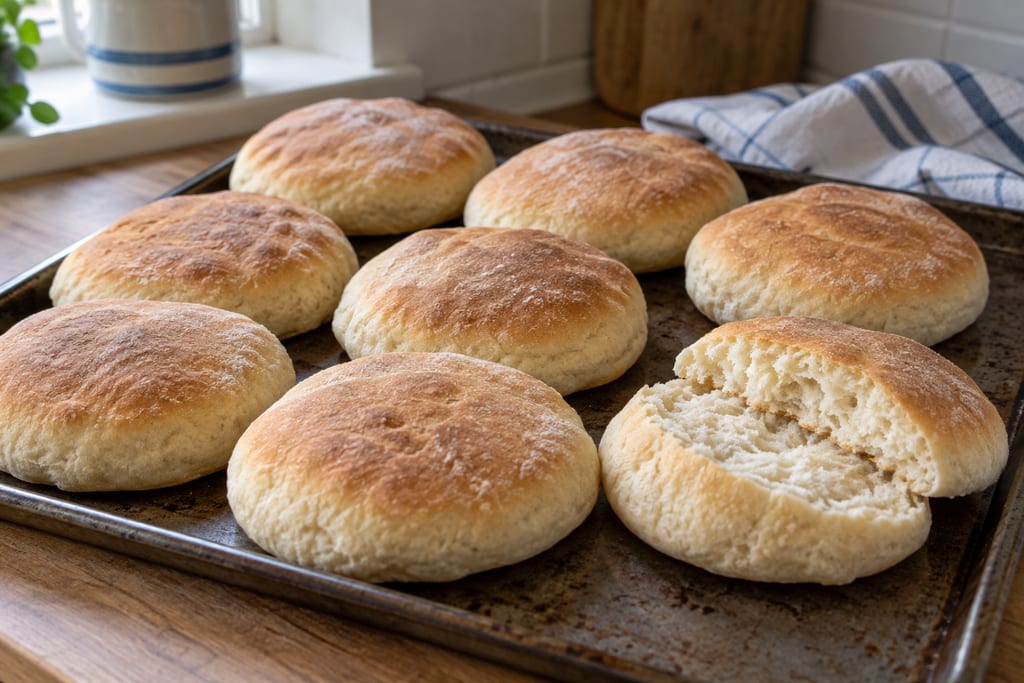
A North East England yeast bread baked as flat round cakes. Terence Laybourne's Newcastle home recipe makes twelve rounds about 1 inch thick and serves them warm.
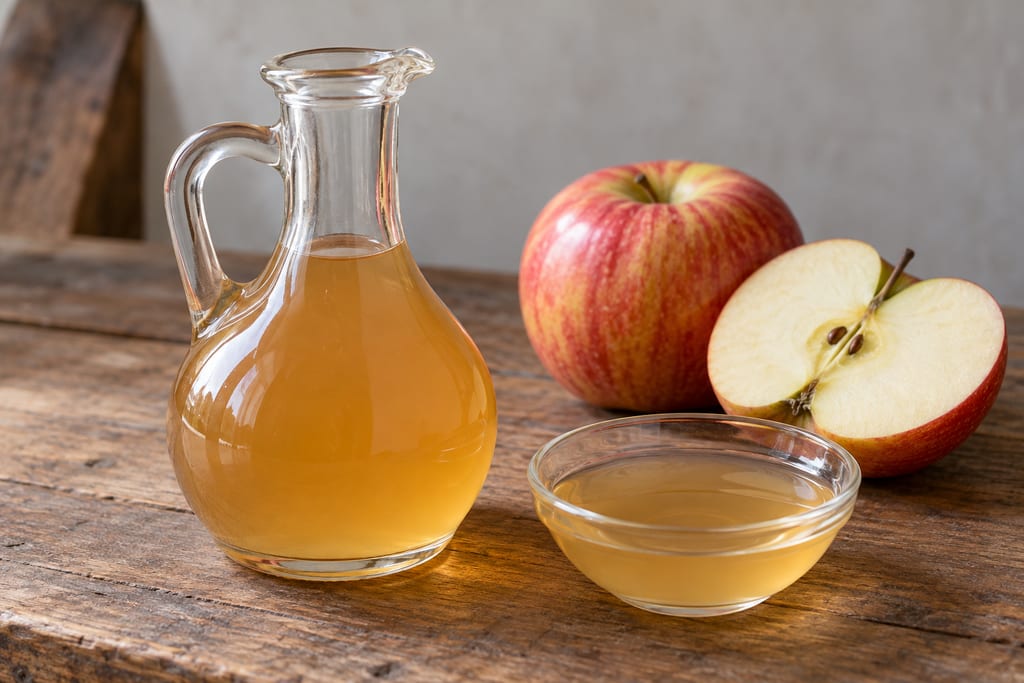
Cider vinegar is made when acetic-acid bacteria use oxygen to turn the alcohol in dry apple cider into acetic acid. This historical cask method begins with fermented cider and differs from apple-scrap vinegar made with sugar and water.
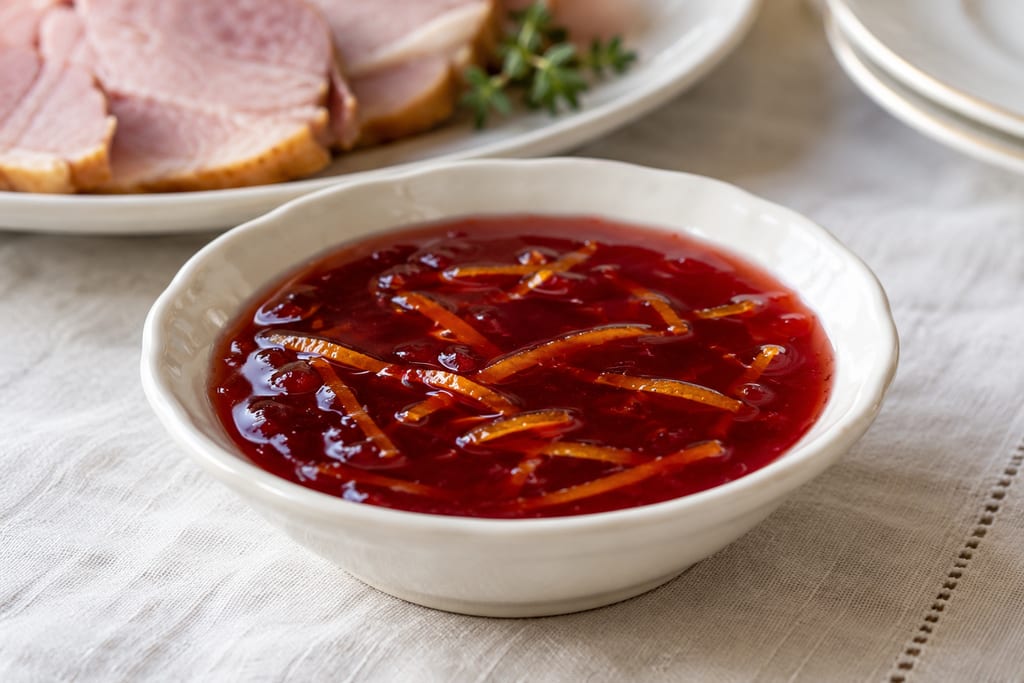
Cumberland sauce is a British condiment of redcurrant jelly, mustard, blanched orange peel and port, traditionally served cold with ham, game and cold meats.
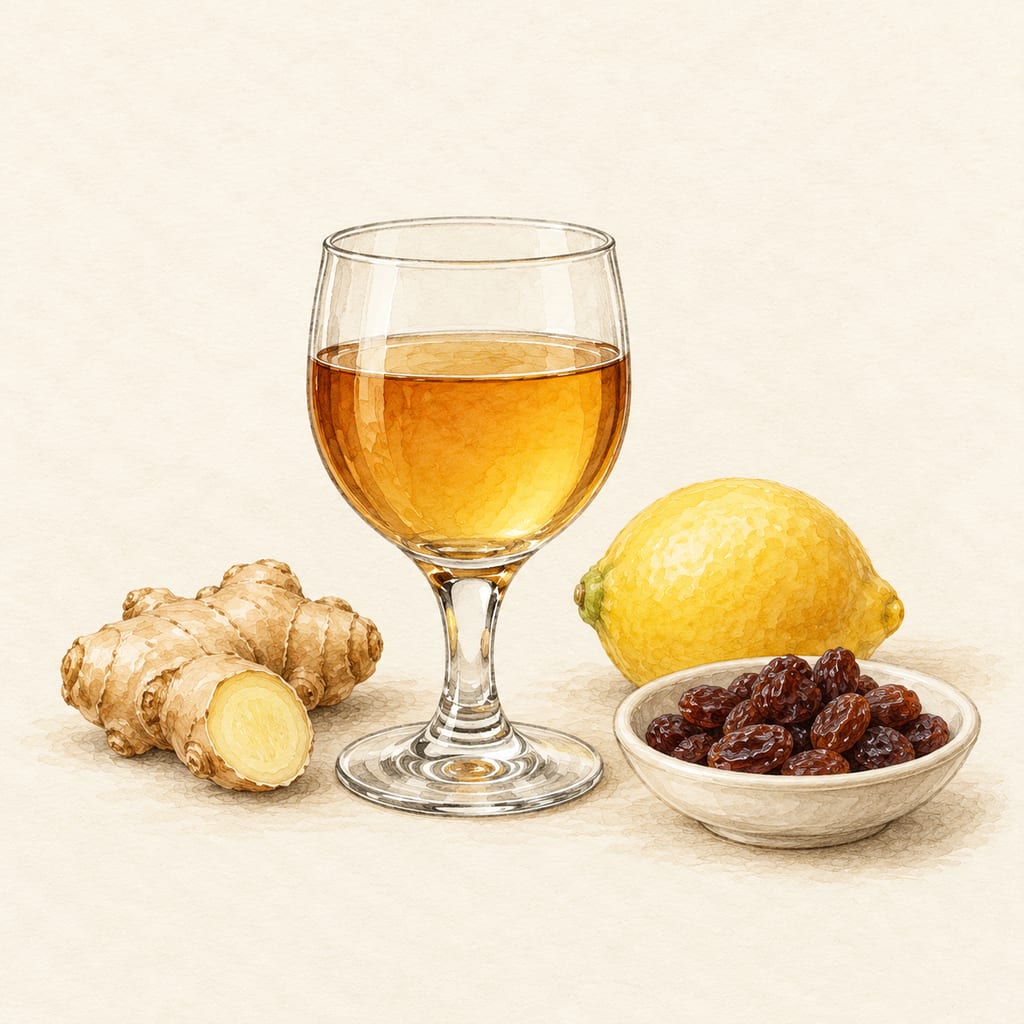
A Victorian household wine of boiled sugar, lemon and bruised ginger, worked on raisins in a cask for a fortnight and finished with brandy, made nine gallons at a time.
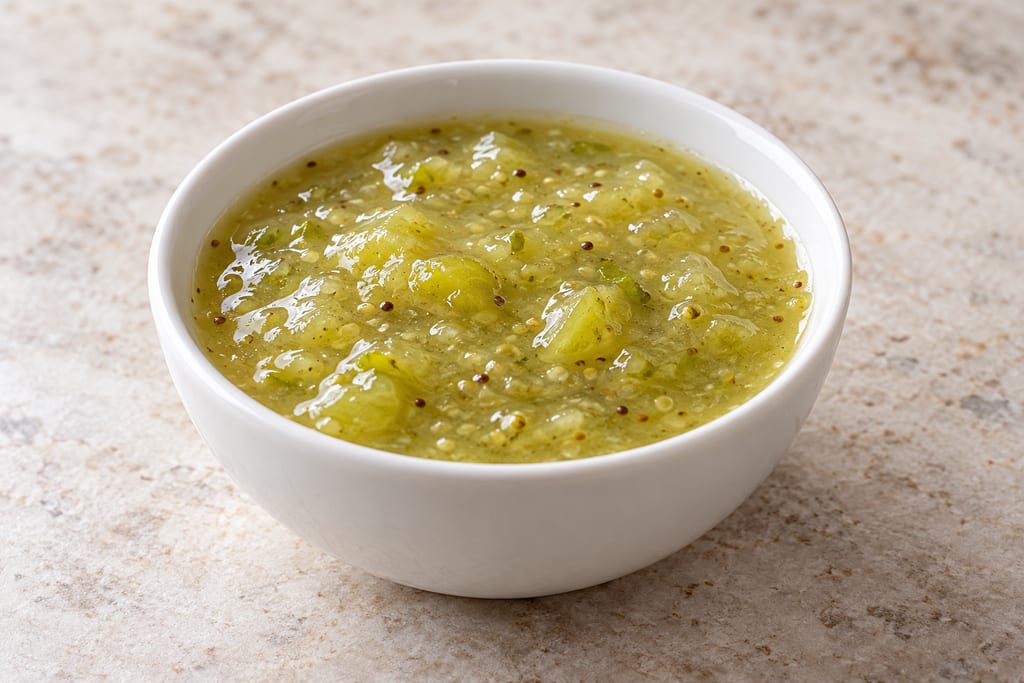
Gooseberry sauce is a soft, tart sauce of cooked green gooseberries, sharpened with wine or vinegar and lightly sweetened, traditionally served with mackerel.
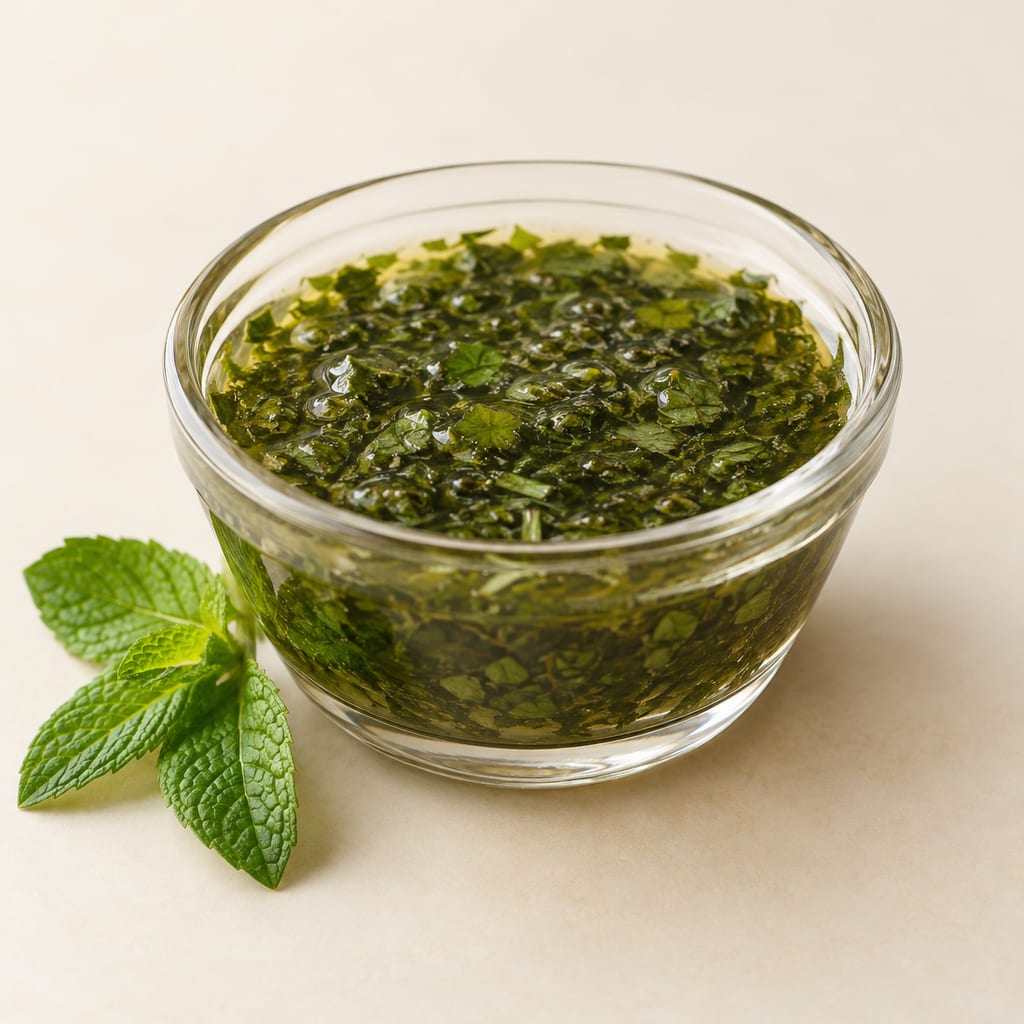
Finely chopped fresh mint steeped in a sweet and sharp liquid of white wine vinegar, sugar and water, the sauce traditionally served with roast lamb in Britain.
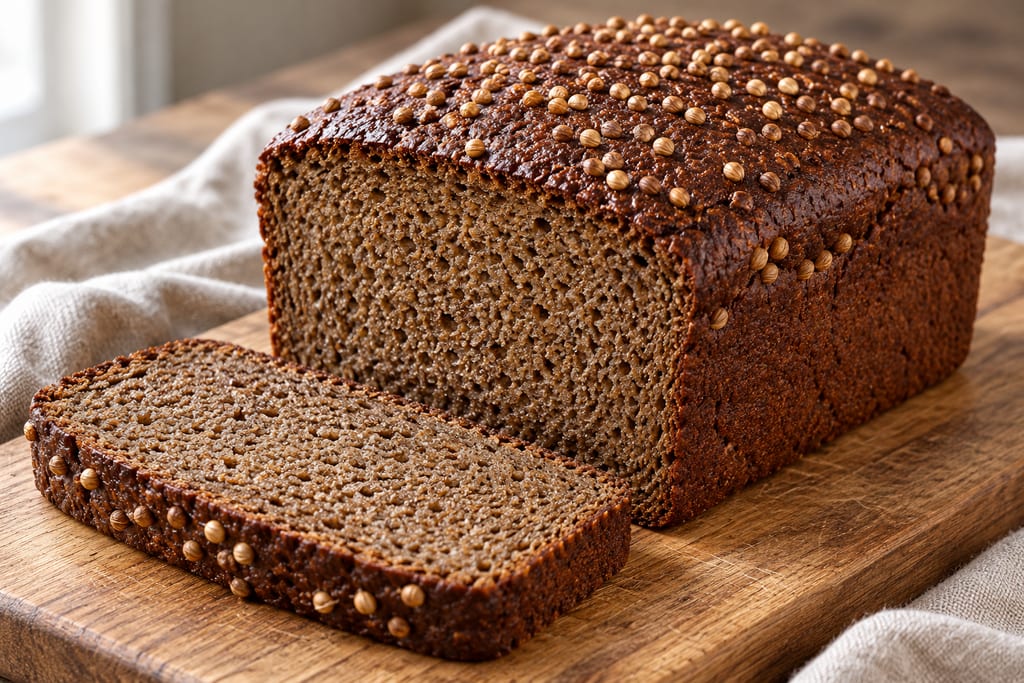
A dark rye sourdough with coriander and roasted barley-malt scald, based on Lily McCann's measured Borodinsk-ish home formula.
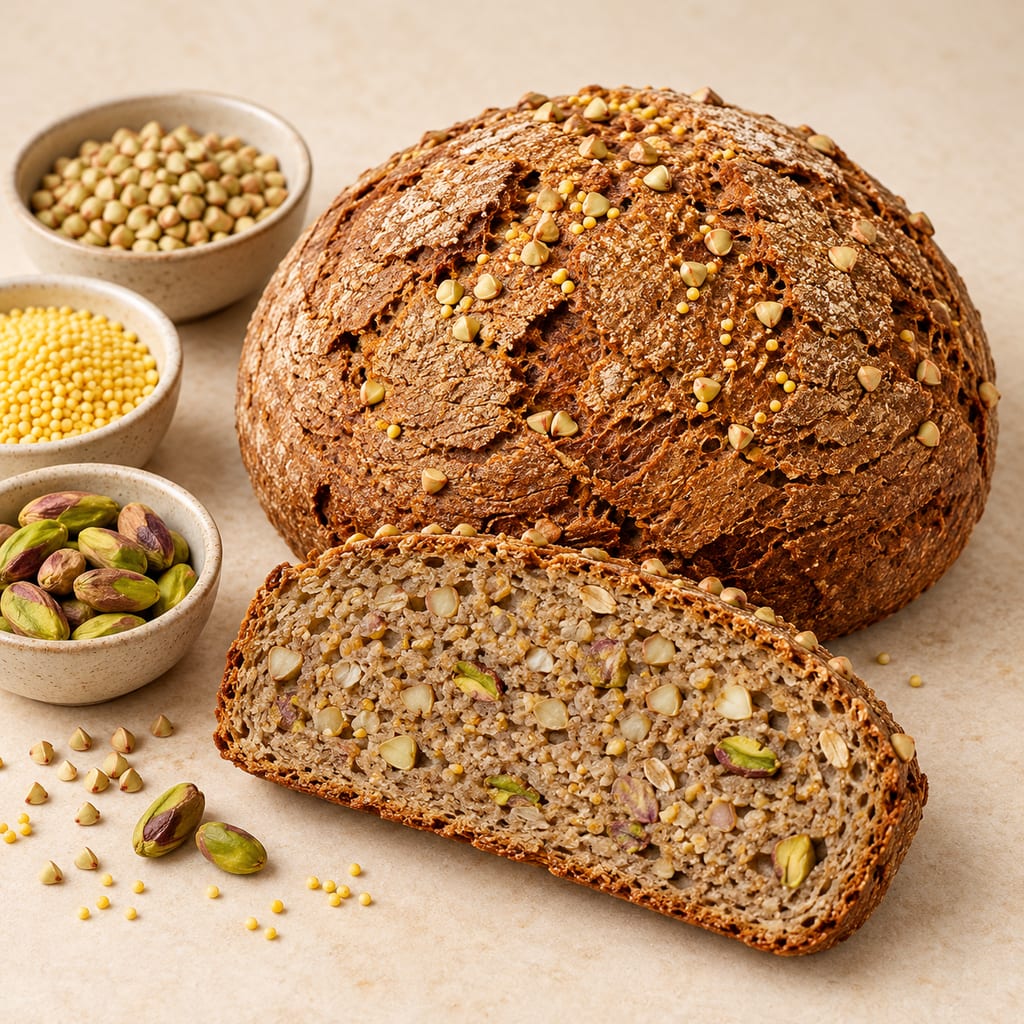
A gluten-free sourdough loaf of about 1 kg. A buckwheat and quinoa starter leavens a dough with cooked whole buckwheat groats, millet and a dark gluten-free bread mix, baked in a lidded pot.
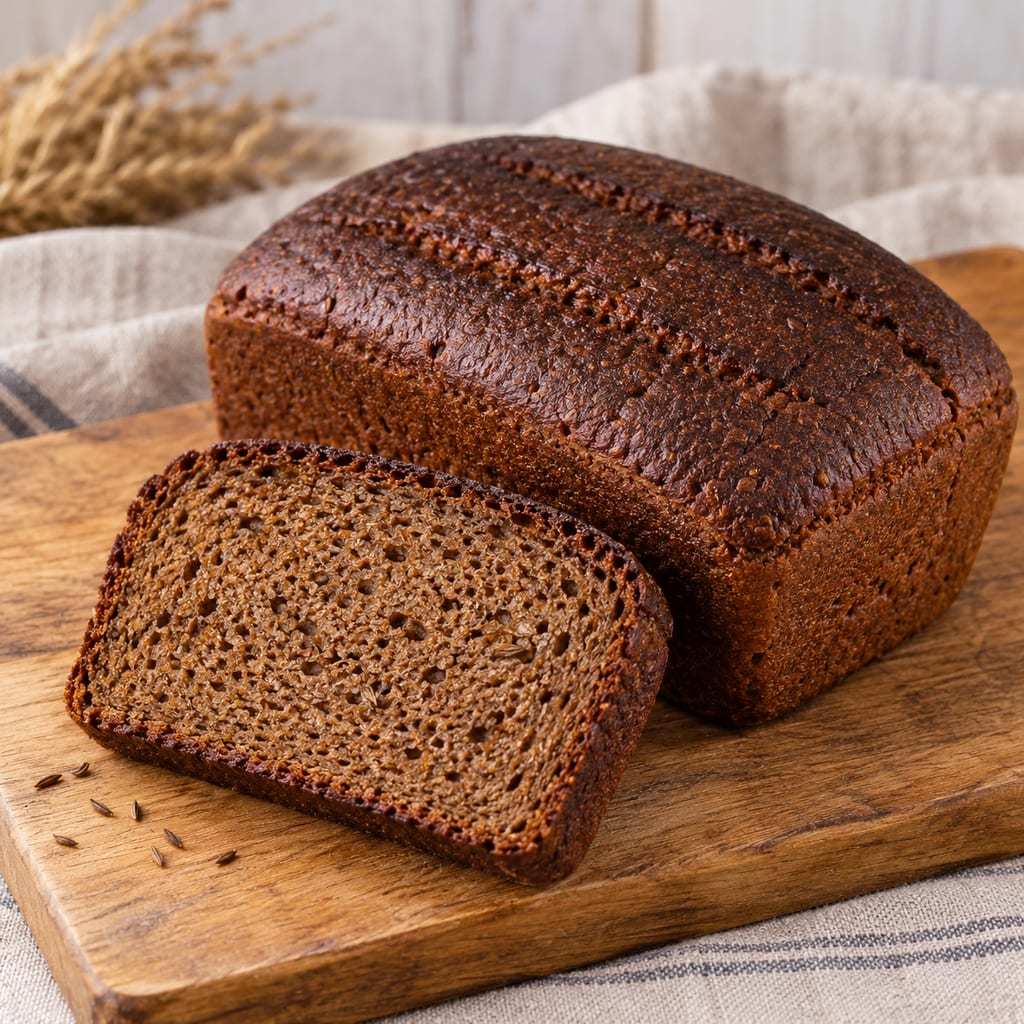
A Lithuanian dark rye loaf made with an overnight rye preferment, caraway, honey and sugar, then proofed in a loaf pan and baked in two stages.
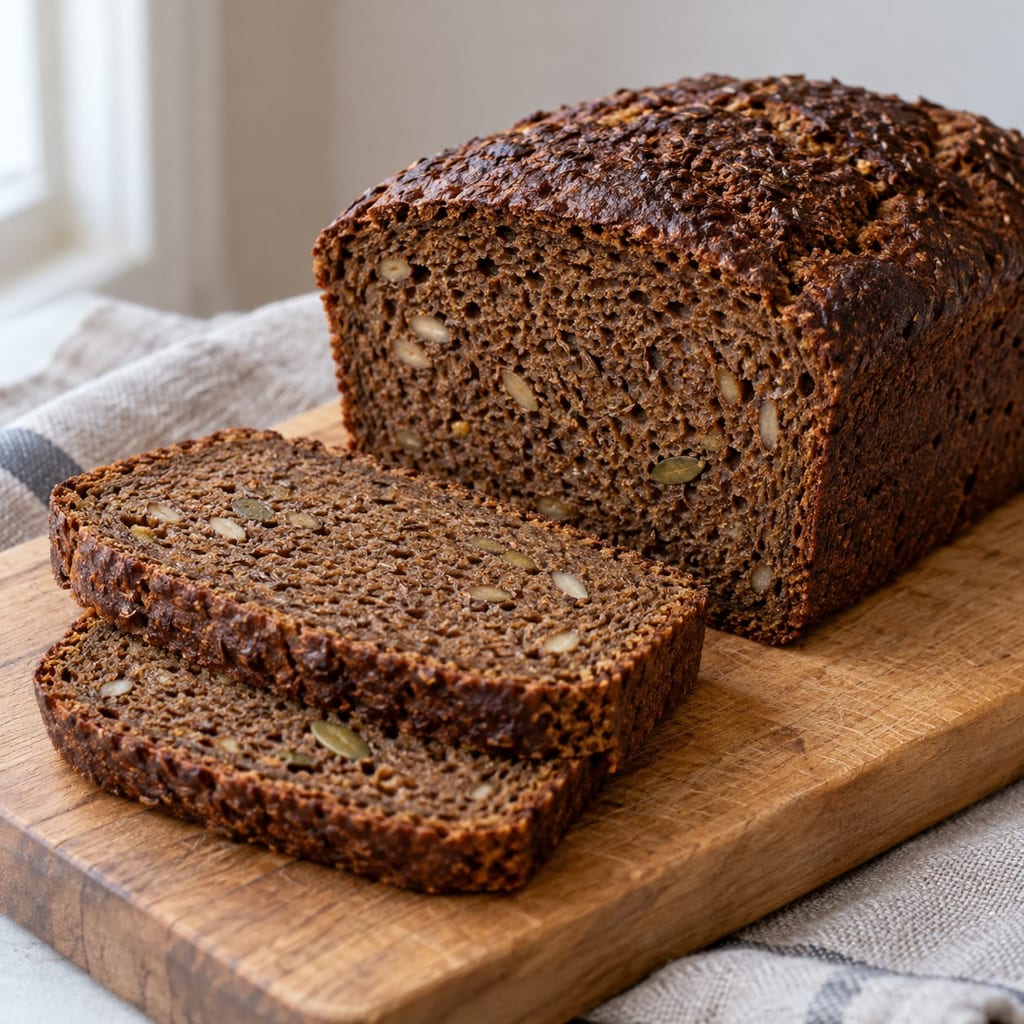
This Estonian rye loaf uses a sourdough preferment, a rye scald and soaked seeds, with a small amount of baker’s yeast. Two tins bake through a staged hot-to-moderate oven schedule.
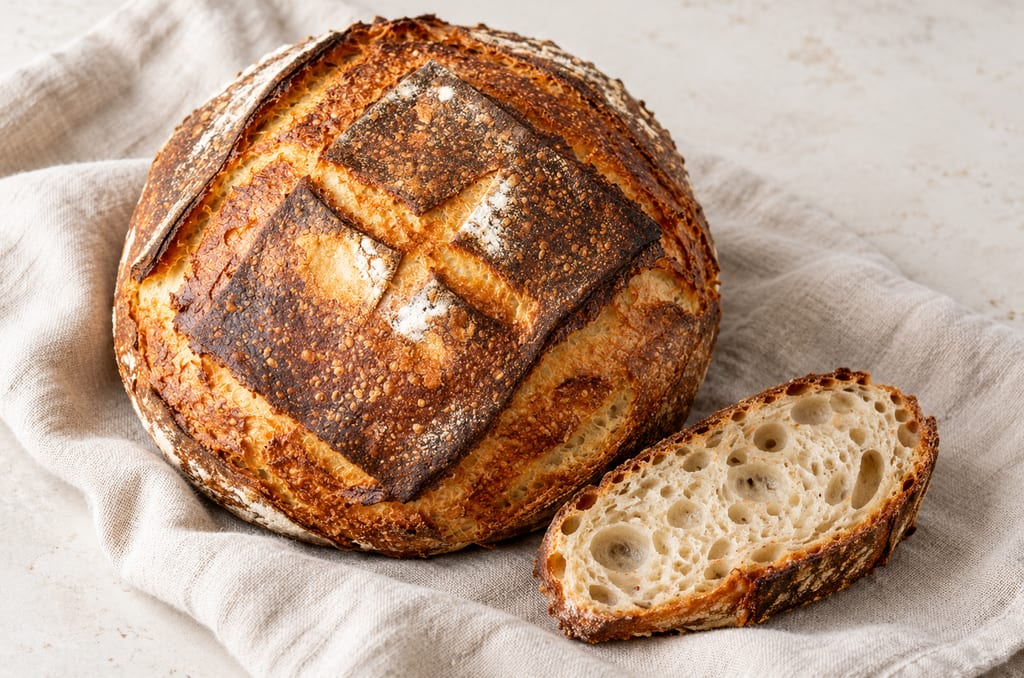
A ripe sourdough starter leavens this modern low-handling loaf. Three hourly folds organize the sticky dough before a long refrigerator rest, final proof and covered bake.
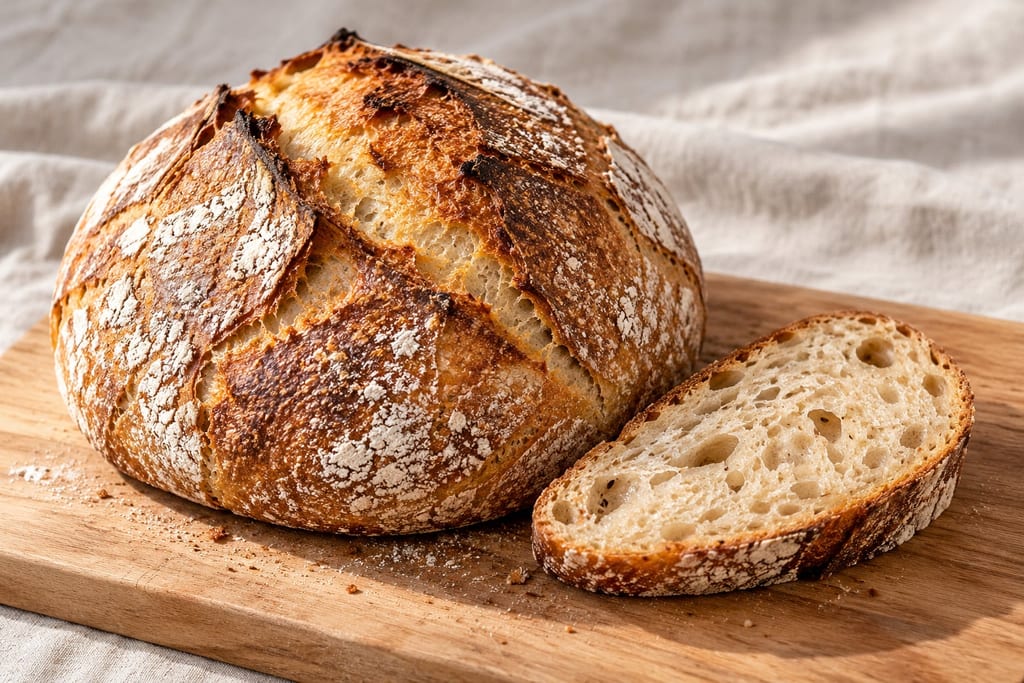
Two large French-style wheat loaves use unfed sourdough starter, whole-wheat flour, long room-temperature fermentation and a covered-pot bake.
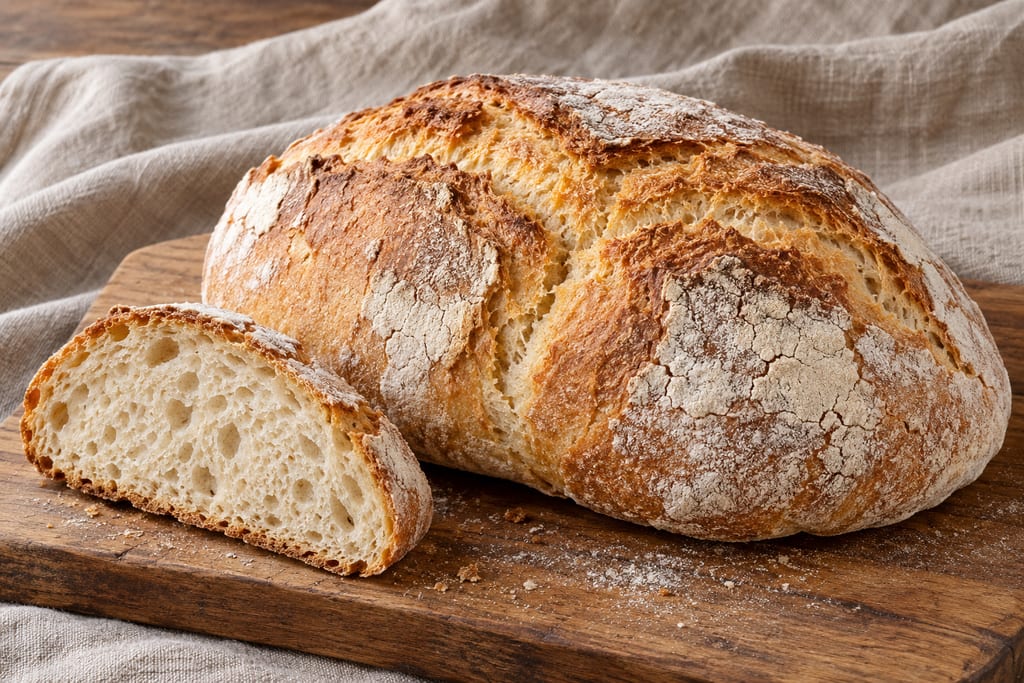
This home sourdough adaptation borrows Pan de Cea’s wheat-forward loaf and central fenda while using a domestic oven and a separately documented modern formula.
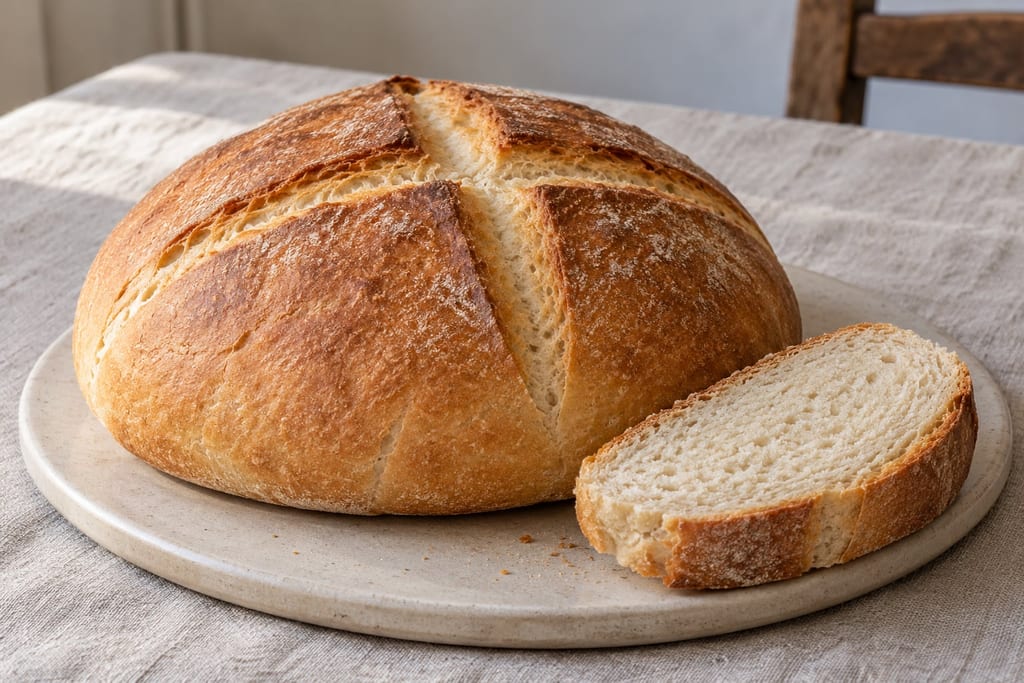
This household Pan de Cruz adaptation uses sourdough and a folded, tight-crumb wheat dough, marked with a cross and baked in a home oven.

Soft, spreadable Calabrian pork sausage made with a great deal of red chilli and fatty pork, stuffed into natural casings, sometimes smoked and matured while staying soft.

A way to add independent temperature logging to an existing food dehydrator without changing its built-in controls or protections. It is a monitoring method, not a rewiring plan.

Pleurotus cystidiosus is the abalone mushroom, a cultivated oyster-type fungus with dark brown caps that grows more slowly and is more demanding than other Pleurotus species.

A dark, balanced vinegar from Emilia-Romagna made by combining cooked or concentrated grape must with wine vinegar, then acetifying and refining it in wood under a protected specification.

A living dairy inoculum that starts controlled cream fermentation, developing acidity and aroma before sour cream or cultured butter is finished.

A small electric incubator holds jars at a selected temperature for yogurt and other documented warm food preparations. Controls, capacity and vessel arrangement vary by model.

Adygean salt is a seasoned table salt associated with Adygea and the wider North Caucasian culinary tradition. Salt is blended with garlic and a variable selection of herbs and spices; the exact mix depends on the named style and maker.

The African Caesar-group mushroom, Amanita masasiensis, is a wild ectomycorrhizal species of central and southern African woodlands, eaten locally. The genus contains deadly poisonous species, so identification needs care.
No community contributions have been published for this entry yet.
Sign in to contribute. Published comments and photos are free to read.
King Arthur BakingInspiration
Sourdough English Muffinsingredient weights and warm-water range
hybrid yeast and starter leavening
yield and griddle method
Cited in: A griddle muffin, not a cupcake; An English food and an American bakery name; Two leavens share the work; What the ingredients contribute; Resting, shaping and cooking; Choices that change the muffin; Splitting, eating and reading the result; A preferment is not necessarily a sourdough starter
Centers for Disease Control and PreventionSafety
Raw Flour and Doughraw flour may contain pathogens; cook flour mixtures and clean after handling
Cited in: Splitting, eating and reading the result
Macculloch Hall Historical MuseumHistory
Mrs. Macculloch’s Speedy MuffinsEnglish muffins were sold in nineteenth-century London and brought into New York commercial baking by Samuel Bath Thomas after his 1874 migration; the museum distinguishes yeast muffins from chemically leavened American muffins.
Cited in: A griddle muffin, not a cupcake; An English food and an American bakery name; Choices that change the muffin
PeerJScience · Fermentation
A review of sourdough starters: ecology, practices, and sensory quality with applications for baking and recommendations for future researchSourdough starters contain variable communities of yeasts and lactic acid bacteria; yeasts produce carbon dioxide for leavening; bacteria contribute organic acids and volatile compounds; starter ecology and sensory qualities depend on ingredients and propagation conditions.
Cited in: Two leavens share the work
FoodsScience · Baking
Technological and Nutritional Aspects of Bread Production: An Overview of Current Status and Future ChallengesWheat bread structure is a gas-containing crumb of starch and protein; baking changes starch and proteins, while surface drying and heat contribute to crust colour and flavour.
Cited in: Two leavens share the work; What the ingredients contribute; Resting, shaping and cooking
King Arthur BakingTechnique · Serving
Navigating the nooks and cranniesOpen internal structure is valued for toasting; a crisp, coloured griddle exterior contrasts with a light interior; fermentation contributes flavour.
Cited in: Resting, shaping and cooking; Splitting, eating and reading the result
King Arthur BakingVariation · Method
Traditional English MuffinsA documented yeast-only English muffin class formula offers a distinct griddle and oven method; it is not the sourdough-and-yeast formula on this page.
Cited in: Choices that change the muffin
King Arthur Baking; The Big Book of BreadDistinct method comparison
English MuffinsDirectly inspected separate six-muffin recipe makes a fresh flour/milk/water preferment using instant yeast, with no maintained sourdough starter listed.
This differs from the 24-muffin Sourdough English Muffins formula's 227 g ripe starter or discard plus baker's yeast. The comparison identifies distinct formulations, not interchangeable schedules or permission to transfer proofing or safety controls.
Cited in: A preferment is not necessarily a sourdough starter