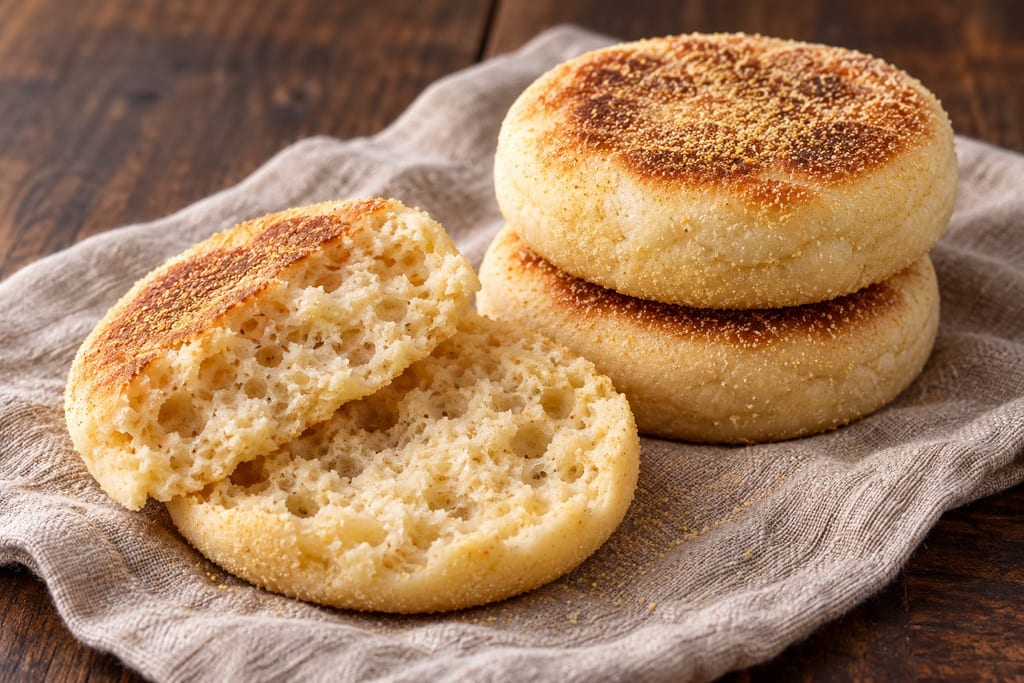
English muffins: King Arthur yeast-preferment version
King Arthur’s six-piece English muffin batch uses a yeast preferment, two folds and a skillet or electric griddle; it is distinct from the sourdough-and-yeast version already catalogued.
 FermenteaWhere food goes to change
Traditional method
Stotty cake · Stotty · Stotty cake · Stottie bread
A North East England yeast bread baked as flat round cakes. Terence Laybourne's Newcastle home recipe makes twelve rounds about 1 inch thick and serves them warm.
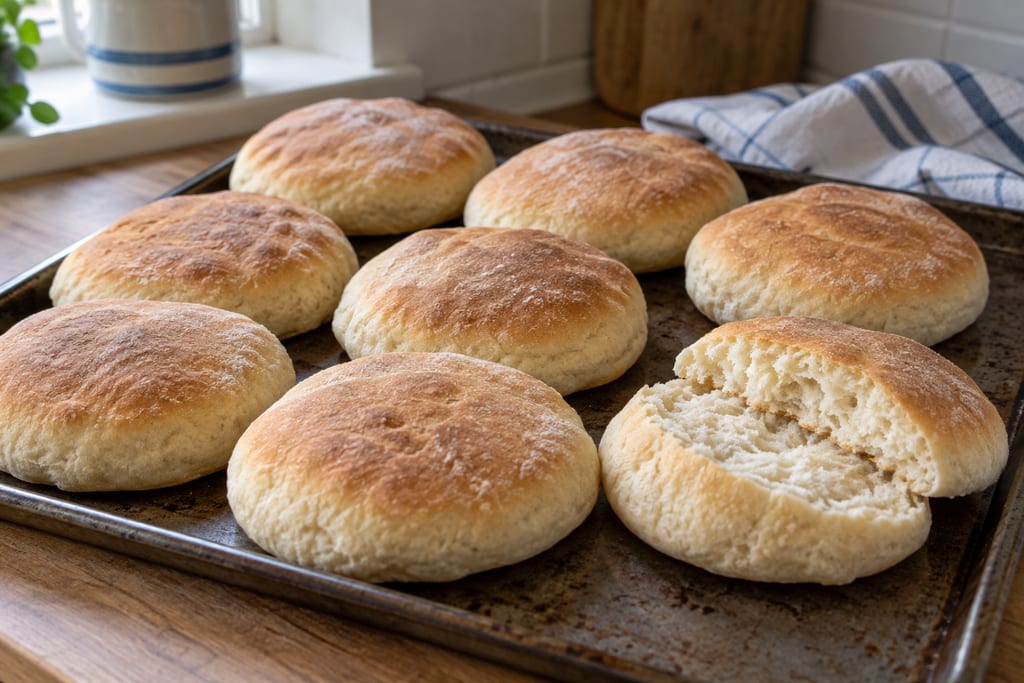
Terence Laybourne's 1994 Newcastle account describes stotty cake as a local yeast bread traditionally made from leftover dough and baked on the coolest part of a coal-fired oven. The low oven heat let yeast continue working and gave the bread a chewy crumb. His mother's measured home recipe makes twelve rounds rather than one large commercial cake.
The University of Leeds Dialect and Heritage Project identifies stottie or stotty cake as a North East food and describes the broader loaf as flat and round with a central indentation. Laybourne's measured recipe does not specify a dimple, so this version follows only its described shape and method.
This dough is made from plain flour, salt, sugar, fresh yeast, white pepper and tepid water. The yeast is first mixed with some of the water, sugar and pepper and left for 15 minutes. After kneading, the dough rises at room temperature for about an hour or until doubled, then is divided into twelve rounds about 1 inch thick.
The source gives different oven settings by type: 180°C convection or 200°C conventional (Gas 5). It directs a 20-minute bake, with the rounds turned after 15 minutes. Its printed flour amount is 3/4 lb (350 g), and the yeast and water amounts also include approximate imperial and metric equivalents.
Do not taste uncooked dough. The Food Standards Agency advises washing hands before and after handling flour and cleaning bowls, utensils and work surfaces after use.
Terence Laybourne, a Newcastle-born chef, described stotty cake in 1994 as a local bread traditionally made from leftover dough and baked on the cool sole of a coal-fired oven. His printed home method is a distinct measured version yielding twelve rounds. A University of Leeds Dialect and Heritage Project identifies stottie or stotty cake among North East foods and describes the broader loaf as flat and round with a central indentation; that indentation is not specified in Laybourne's recipe.
Yield 12 stottie cakes · Scaling: source batch only
Wheat flour can carry harmful bacteria before cooking; do not taste raw dough.
Hazard sourceDo not eat or taste uncooked dough. Wash hands before and after handling flour and clean bowls, utensils and surfaces after use.
Control sourceDo not taste the uncooked dough. Bake the rounds using the source's oven setting and time.
Terence Laybourne's article identifies the stotty as a Newcastle and North East bread; it does not claim an exclusive birthplace.
Both sources place stottie/stotty cake in the North East; the heritage project summarizes it as a flat, round loaf with a central indentation.
King Arthur’s six-piece English muffin batch uses a yeast preferment, two folds and a skillet or electric griddle; it is distinct from the sourdough-and-yeast version already catalogued.
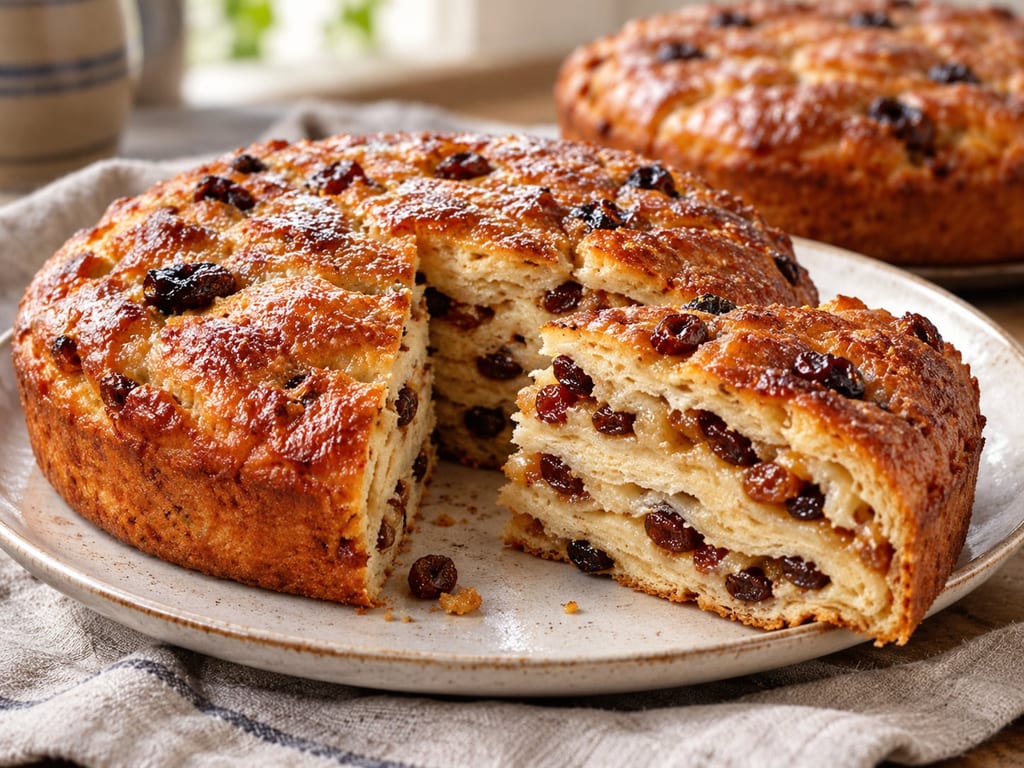
A yeast dough is folded around sweetened lard and dried fruit, then baked in tins until the bottom caramelizes.
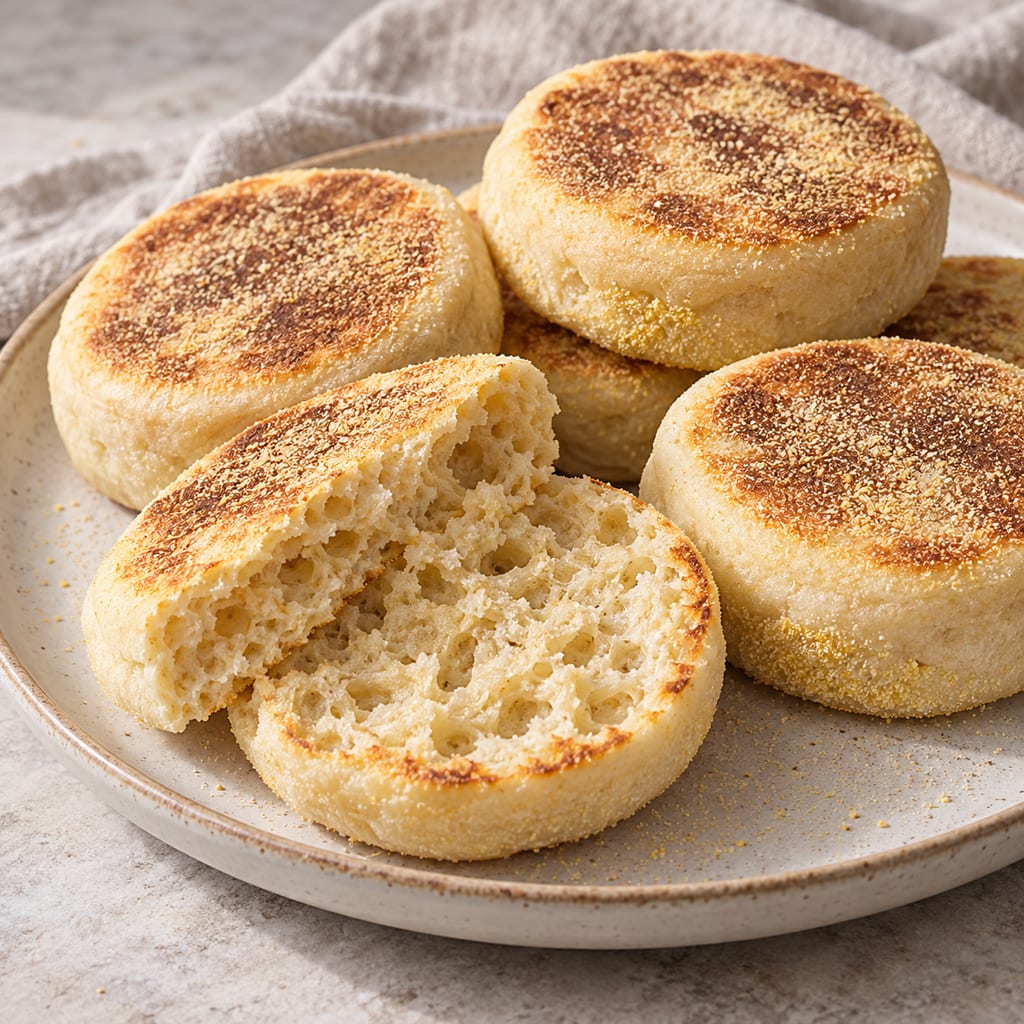
A soft English muffin dough combines sourdough starter with baker’s yeast, then rises, is cut into rounds and cooks on a griddle. The starter adds tang; the added yeast helps it rise.
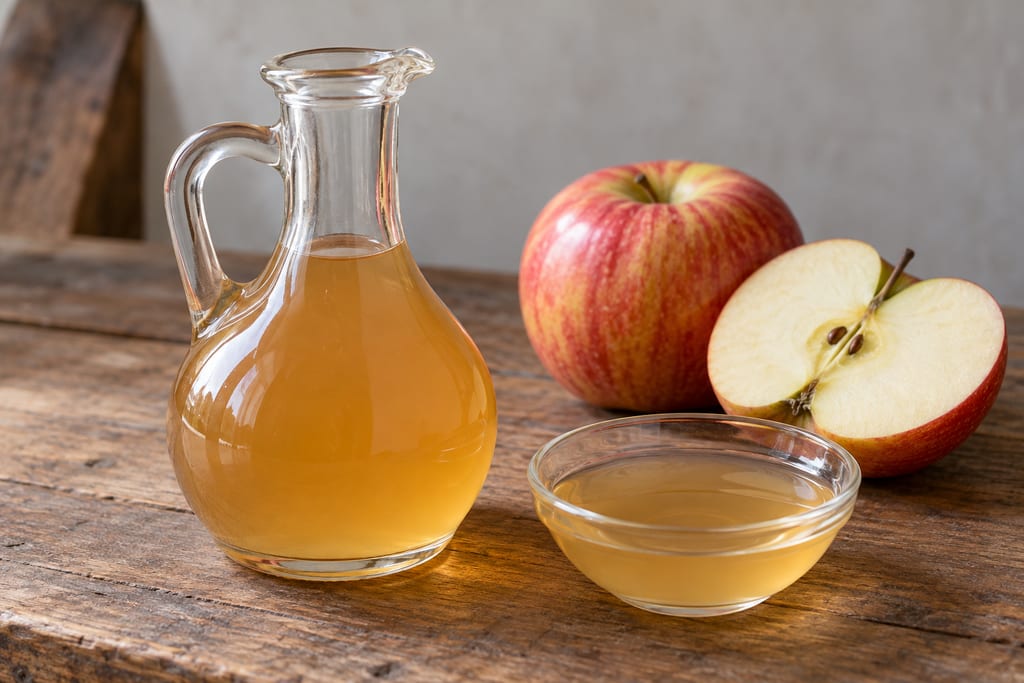
Cider vinegar is made when acetic-acid bacteria use oxygen to turn the alcohol in dry apple cider into acetic acid. This historical cask method begins with fermented cider and differs from apple-scrap vinegar made with sugar and water.
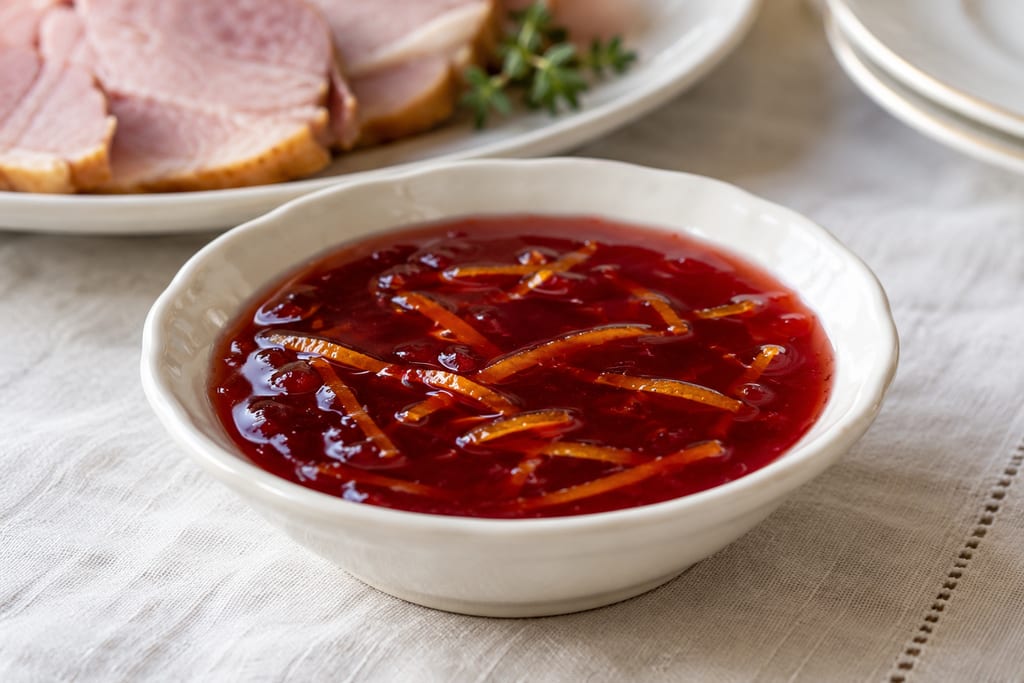
Cumberland sauce is a British condiment of redcurrant jelly, mustard, blanched orange peel and port, traditionally served cold with ham, game and cold meats.
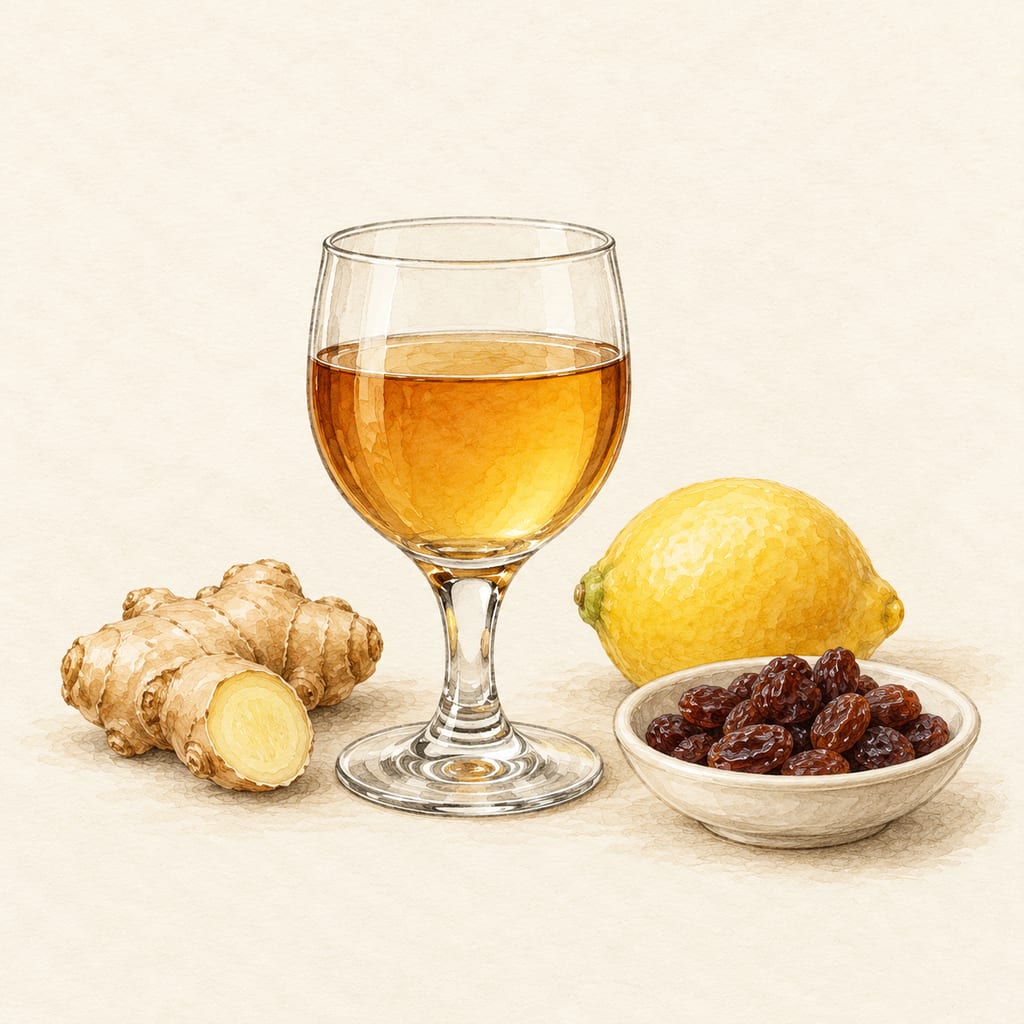
A Victorian household wine of boiled sugar, lemon and bruised ginger, worked on raisins in a cask for a fortnight and finished with brandy, made nine gallons at a time.
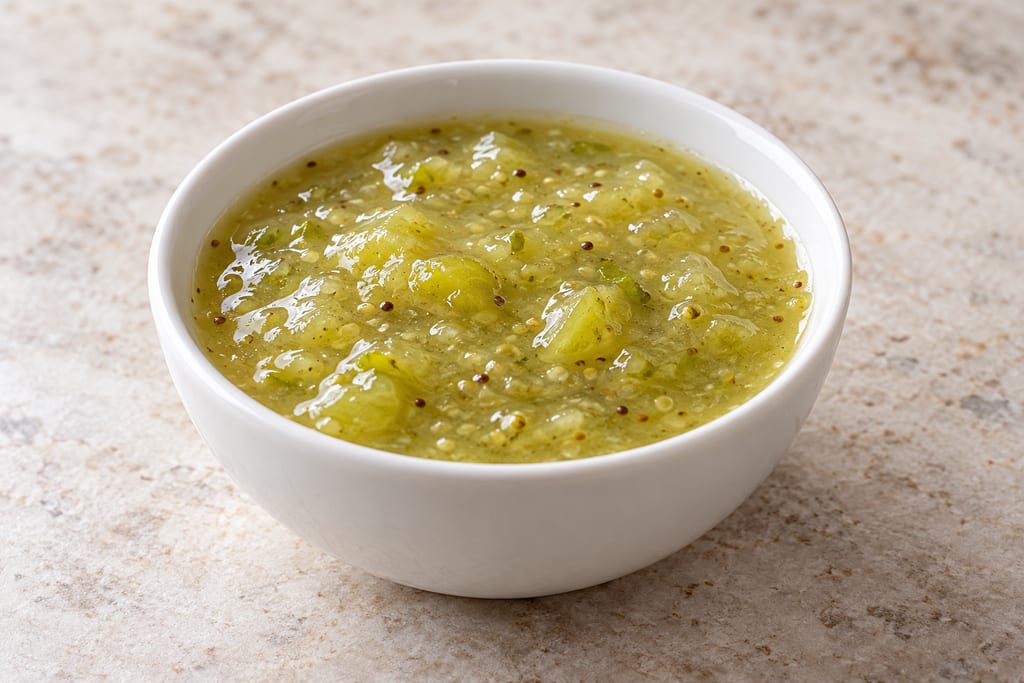
Gooseberry sauce is a soft, tart sauce of cooked green gooseberries, sharpened with wine or vinegar and lightly sweetened, traditionally served with mackerel.
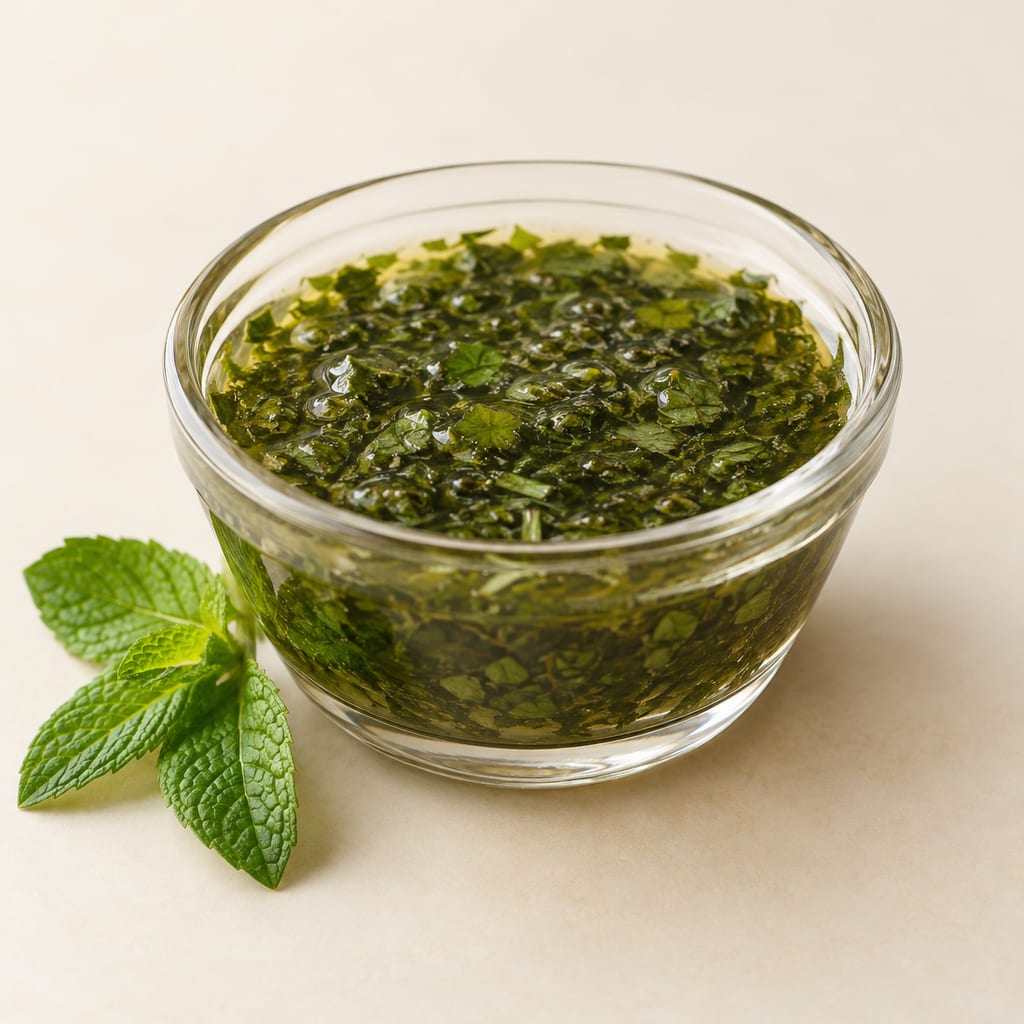
Finely chopped fresh mint steeped in a sweet and sharp liquid of white wine vinegar, sugar and water, the sauce traditionally served with roast lamb in Britain.
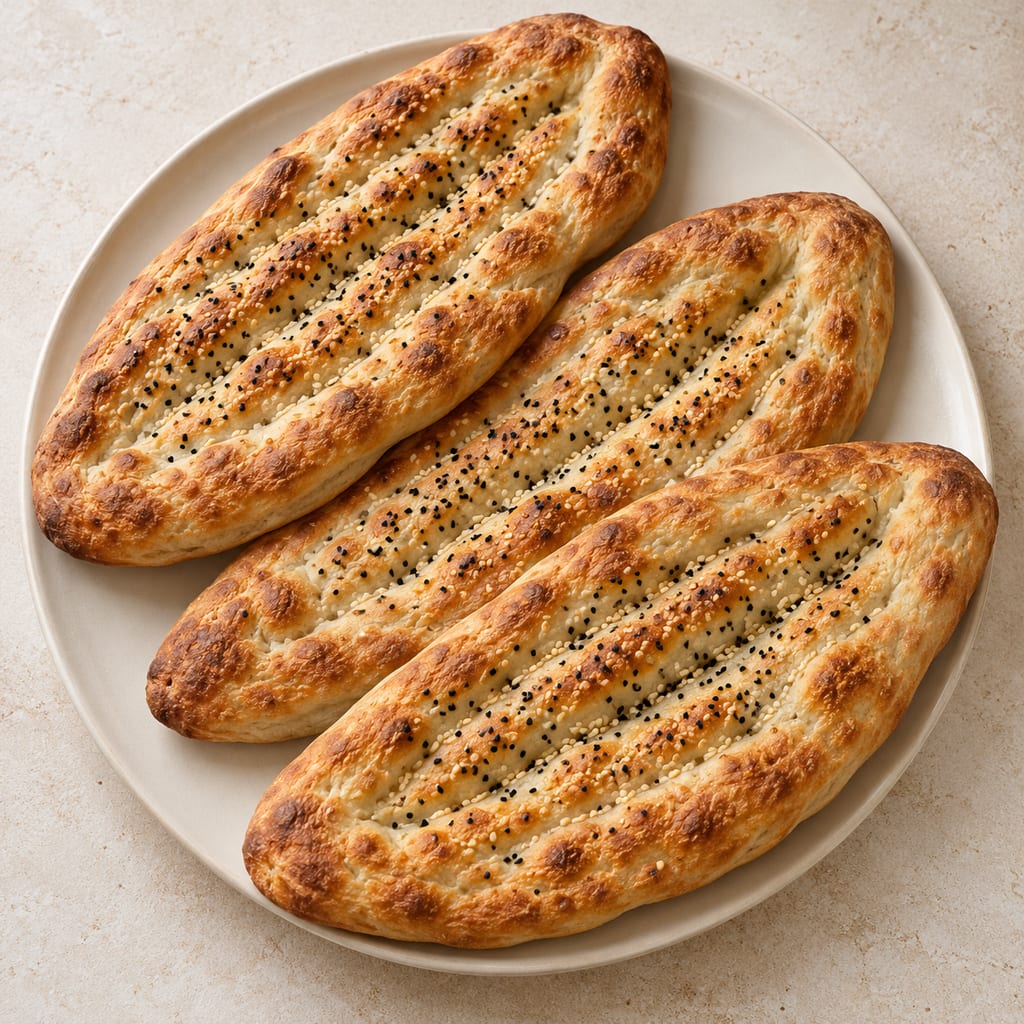
A long oval Afghan wheat bread, leavened with yeast, grooved along its length and baked until crisp outside and chewy within.
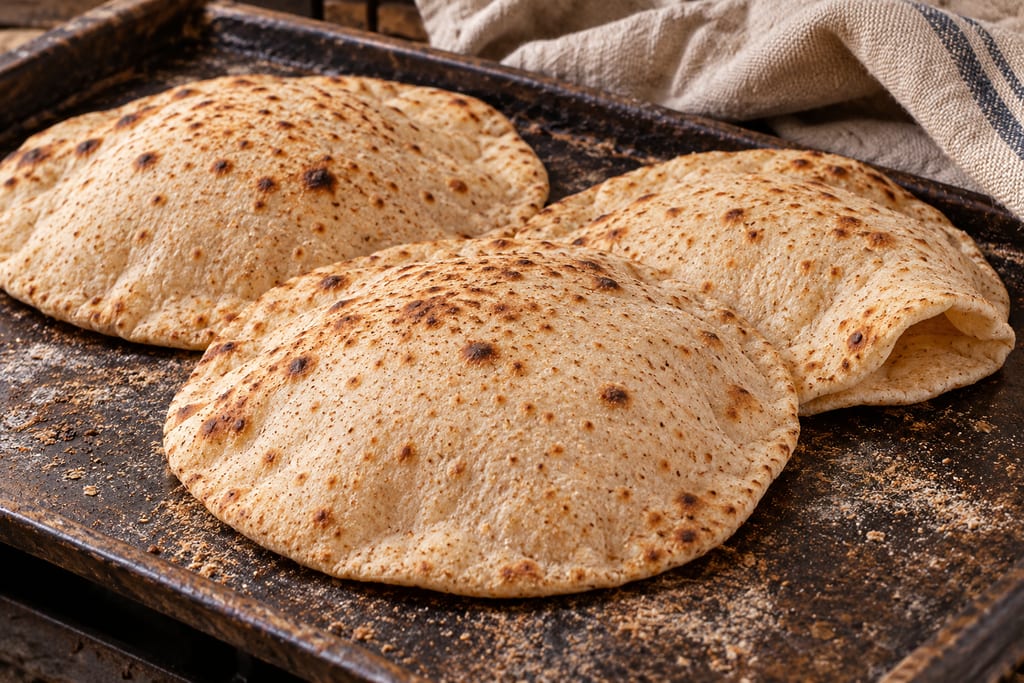
This home adaptation of Egyptian aish baladi uses a refrigerated yeast biga, whole-wheat dough, bran dusting and a very hot baking surface to make 16 pocketed rounds.
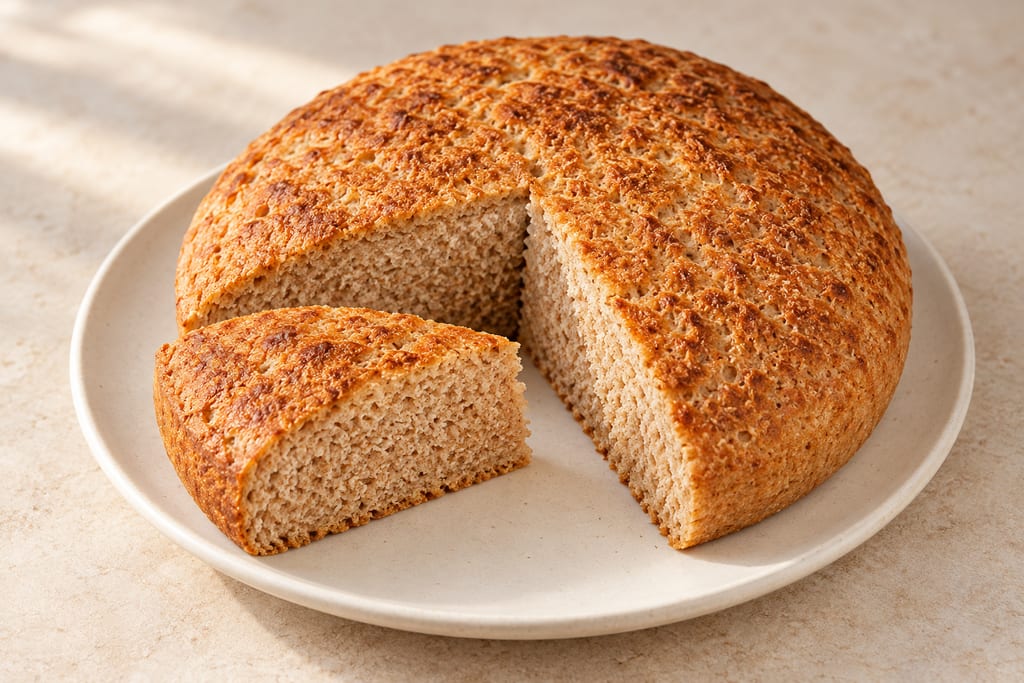
This oven-baked Amdo balep uses yeast, whole-wheat and white flour, a long covered rise and a two-sided bake in a heavy oven-safe pot.
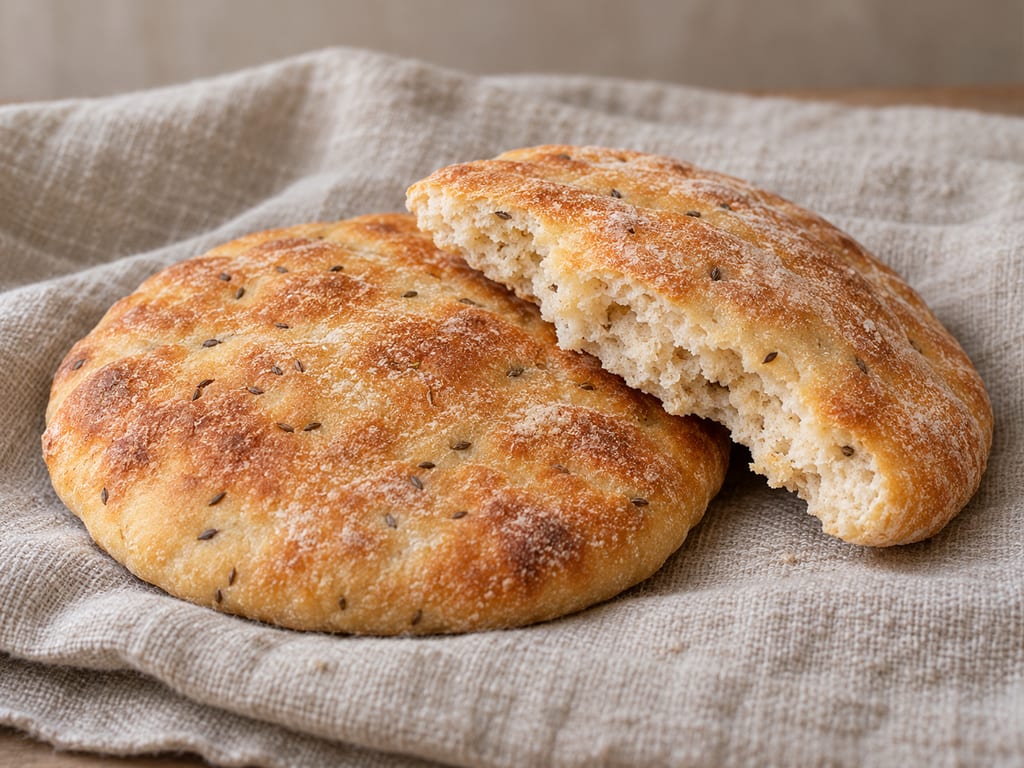
A measured, yeast-raised Ayacucho chapla home method shared by Thermomix Peru presenter Roxanna Salaverry. It makes thin, anise-scented rounds baked at 240°C; the historic qunchu-leavened form is documented separately.
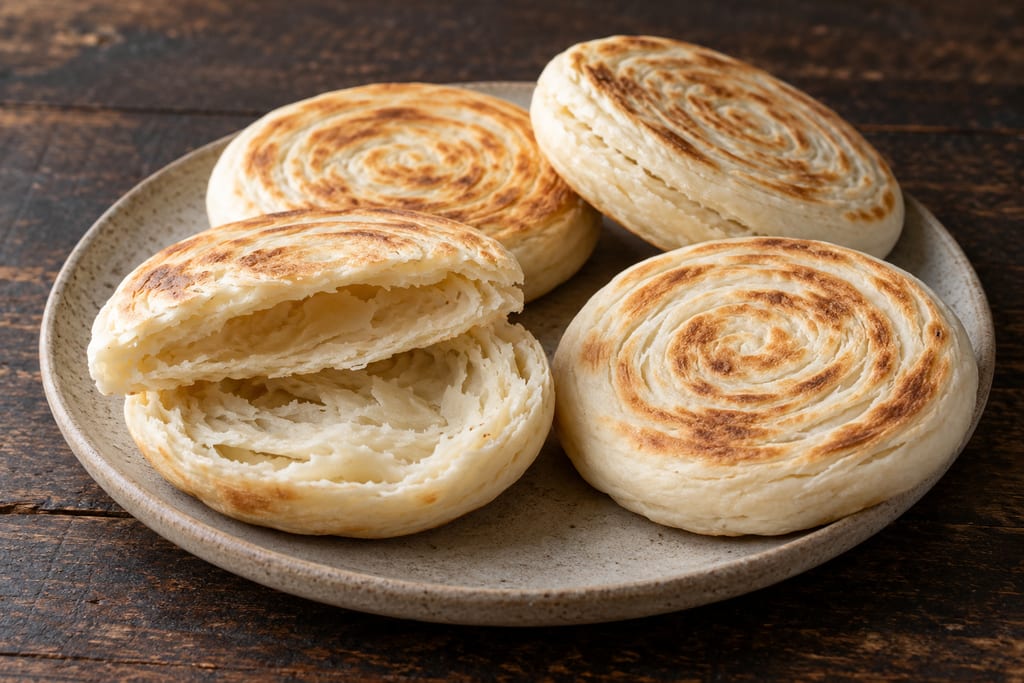
This Shaanxi-associated yeast flatbread uses a simple water dough, coiled shaping and a skillet bake. It is the bread used in roujiamo, not the filled meat dish.
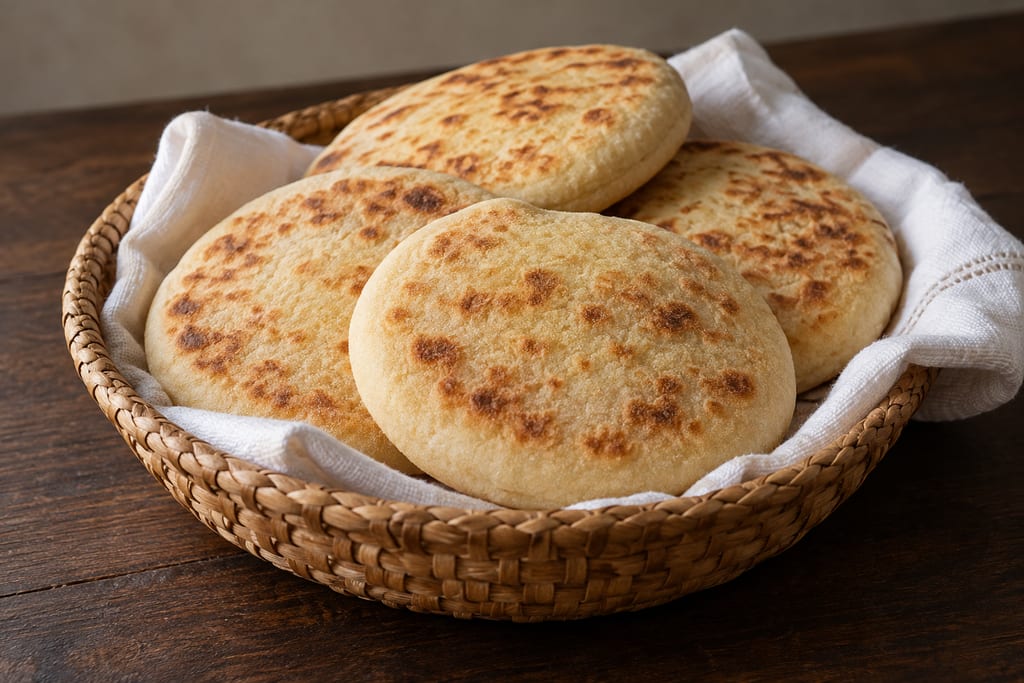
A Moroccan yeast-raised semolina pocket bread cooked on a dry pan or griddle; this measured batch makes about twenty 4-inch rounds.
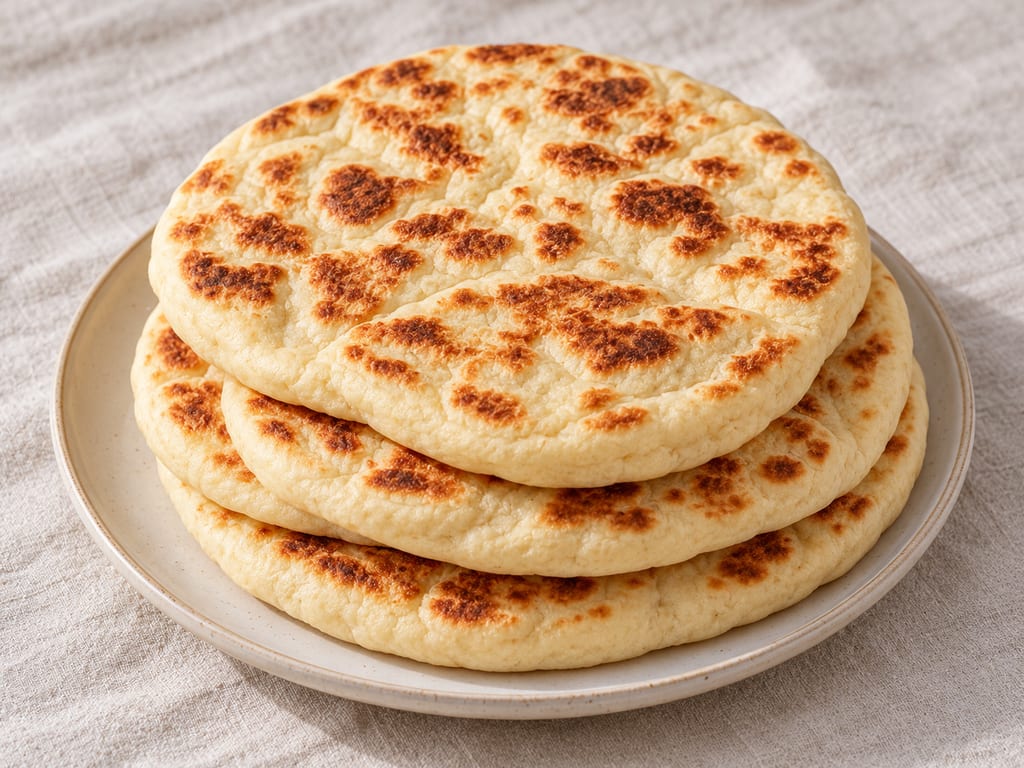
This Turkish bazlama uses yeast, plain yogurt and olive oil for a soft dough cooked in a skillet. Shape it into twelve small or six larger rounds, flip as bubbles appear, and wrap the breads to keep them soft.
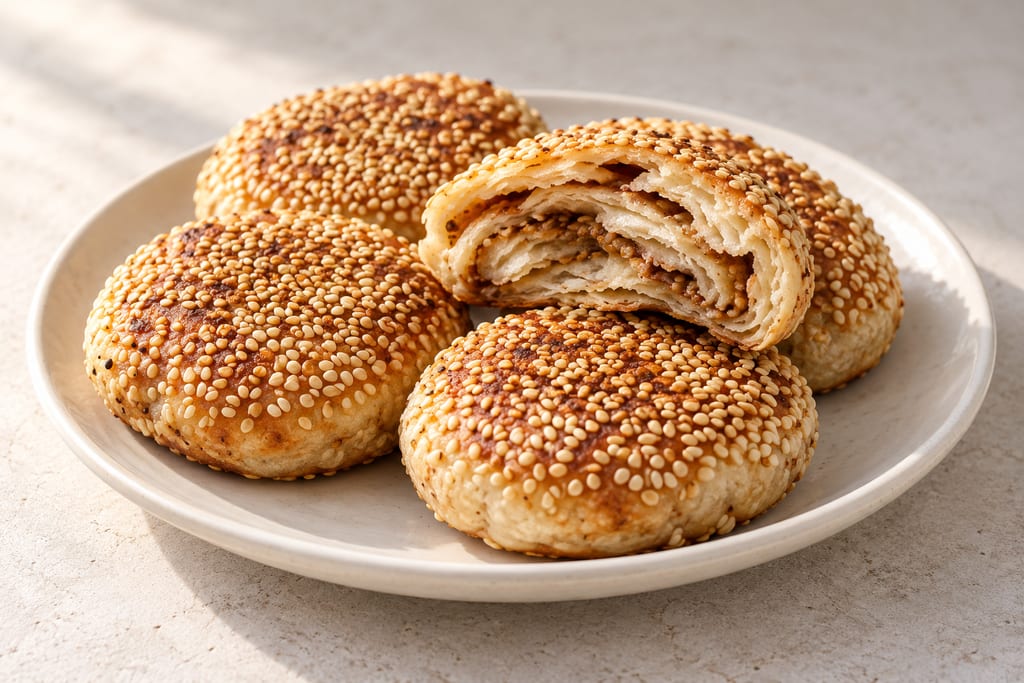
A Beijing-style yeast dough is layered with seasoned sesame paste, sealed into small buns, briefly pan-fried, seeded, and baked.
No community contributions have been published for this entry yet.
Sign in to contribute. Published comments and photos are free to read.
The IndependentMethod · Ingredients · History · Geography
Regional passions: The Newcastle stotty bounces backThe article describes stotty cake as a North East bread traditionally made from leftover dough and baked on the coolest part of a coal-fired oven; lower heat lets the yeast work longer and gives a chewy crumb.
Laybourne's mother's home recipe makes twelve rounds from flour, salt, sugar, fresh yeast, white pepper and tepid water. It activates yeast for 15 minutes, proofs the dough about an hour at room temperature or until doubled, shapes twelve rounds about 1 inch thick, and bakes 20 minutes, turning after 15 minutes. The source lists flour as 3/4 lb (350 g), yeast as 1/2 oz (15 g), and water as 1/2 pint (300 mL).
Cited in: A North East bread, not a flatbread; Laybourne's twelve-round home recipe
University of Leeds, Dialect and Heritage ProjectIdentity · Geography
Gan canny: North East lifeThe project includes stottie or stotty cake among North East foods and describes it as a flat, round loaf with a central indentation. It supplies no recipe method.
Cited in: A North East bread, not a flatbread
Food Standards AgencySafety
Handling flour and flour products safelyFSA advises not to eat uncooked flour or dough and recommends washing hands before and after handling flour and cleaning bowls, utensils and surfaces after use.
Cited in: Flour handling
Hadrian School, NewcastleCultural context · Identity · Source limitations
Big River Bakery VisitThe school's firsthand account dated 12 February 2020 records a visit by Big River Bakery founder Andy Haddon on 11 February. Within a food-origin humanities topic, the class discussed the stottie as a particularly North East, flat bread.
This is a specific documented use of stottie knowledge in local education, not evidence of a first inventor, precise historical date or a universal production method. The account does not validate Laybourne's formula or prove a planned later baking visit occurred. No pupil photographs or names are reproduced; no open image licence established.
Big River BakeryCultural context · Identity · Source limitations
April 2024 UpdateThe bakery's own April 2024 update describes a Geordie Afternoon Tea offering that pairs stottie with ham and pease pudding, alongside other foods. It also describes an online stottie-baking course among its fundraising rewards. These document this bakery's serving and teaching uses at that time.
This is a local producer's account of its own activity, not proof that one filling or format defines all stotties, a current stock claim or evidence of the bread's earliest history. It supplies no controls for the selected Laybourne home method. No photograph licence is established and no media or recipe copied.
Wikimedia CommonsImage reference · Rights exclusion
Stotty1.JPG — image provenance and rights exclusionThe file page identifies a stottie/stotty cake cut in half, originally uploaded by Mariegriffiths on English Wikipedia on 15 September 2006 and transferred to Commons by Liftarn in May 2007. It records 1632 × 1224 pixels and 303899 original bytes.
The individually inspected licence is GFDL 1.2-or-later and CC BY-SA 3.0, not PD/CC0; exclude it from the required reference count. No visual identity approval is claimed: the original-image fetch timed out. Direct source URL: https://upload.wikimedia.org/wikipedia/commons/5/5d/Stotty1.JPG . No bytes downloaded or reused.
A separate search lead claiming mostly CC0/public-domain roll assets proved derivative: https://raw.githubusercontent.com/jordan-lee-code/rolldle/main/src/lib/data/credits.js explicitly credits its stottie.jpg to this same Commons file under CC BY-SA 3.0. Generic CC0 roll-pool claims do not relicense that photo or establish exact stottie identity. Count neither duplicate nor generic rolls.
Flickr's stottie tag index surfaced named leads but its direct opening timed out. Individual source licences, exact subjects and original bytes were not established there; these remain unverified, not qualifying references. Current individually verified eligible count remains 0/5; no hero generated.
